SteroidSSteroidS
BY
HAriSHANKAr SAHU
B.PHArMA FiNAL YeAr
SriP,KUMHAri
HAriSHANKAr SAHU
B.PHArMA FiNAL YeAr
SriP,KUMHAri
SteroidSSteroidS
These rings are synthesized by biochemical processes from cyclization of a
thirty-carbon chain, squalene, into lanosterol or cycloartenol.
Hundreds of distinct steroids are found in animals, fungi, plants, and else
where and many steroids are necessary to life at all levels.
They include cholesterol, the sex hormones estradiol and testosterone, bile
acids, and drugs such as the anti-inflammatory agent dexamethasone.
These rings are synthesized by biochemical processes from cyclization of a
thirty-carbon chain, squalene, into lanosterol or cycloartenol.
Hundreds of distinct steroids are found in animals, fungi, plants, and else
where and many steroids are necessary to life at all levels.
They include cholesterol, the sex hormones estradiol and testosterone, bile
acids, and drugs such as the anti-inflammatory agent dexamethasone.
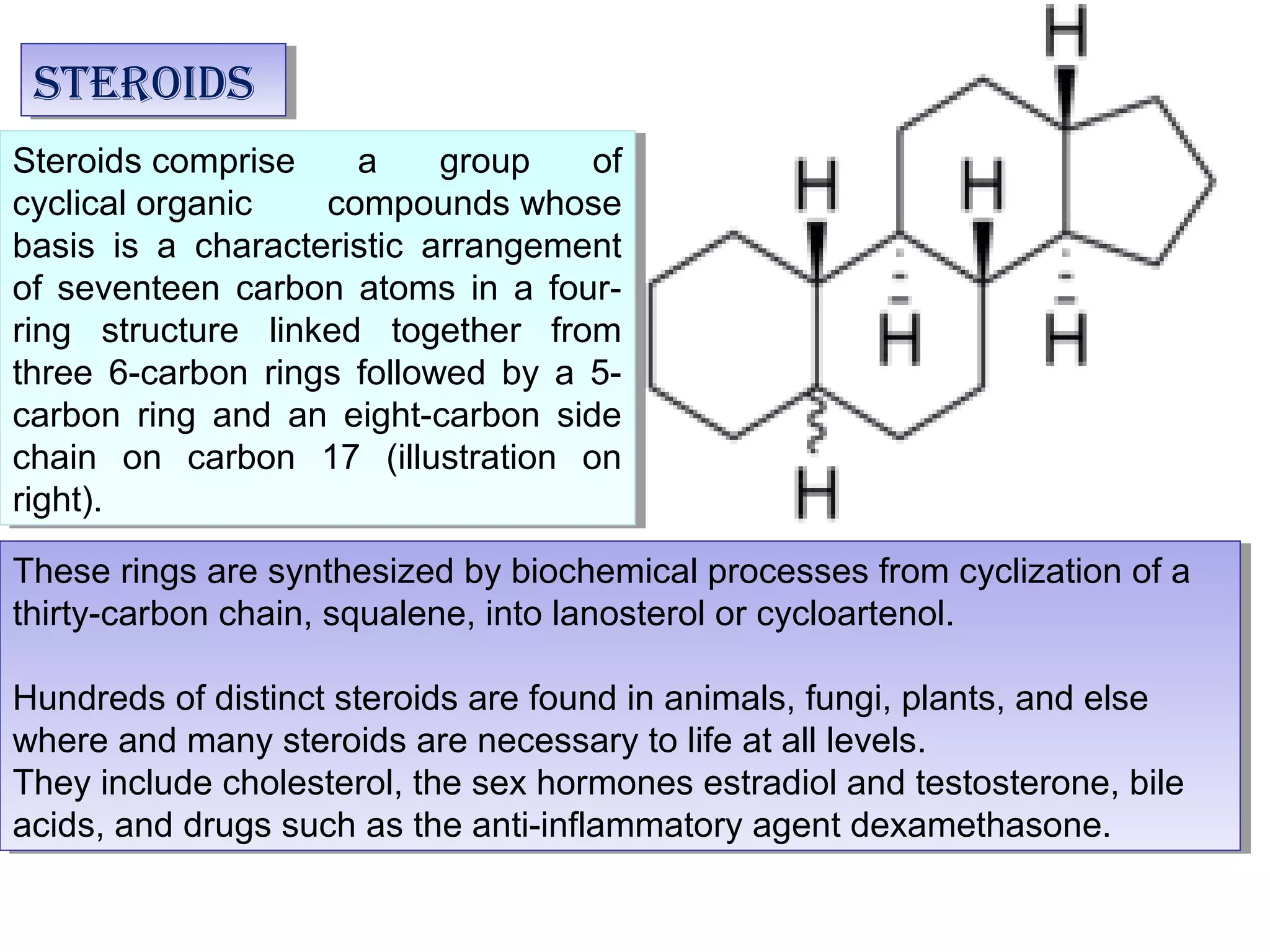
Steroids comprise a group of
cyclical organic compounds whose
basis is a characteristic arrangement
of seventeen carbon atoms in a four-
ring structure linked together from
three 6-carbon rings followed by a 5-
carbon ring and an eight-carbon side
chain on carbon 17 (illustration on
right).
Steroids comprise a group of
cyclical organic compounds whose
basis is a characteristic arrangement
of seventeen carbon atoms in a four-
ring structure linked together from
three 6-carbon rings followed by a 5-
carbon ring and an eight-carbon side
chain on carbon 17 (illustration on
right).
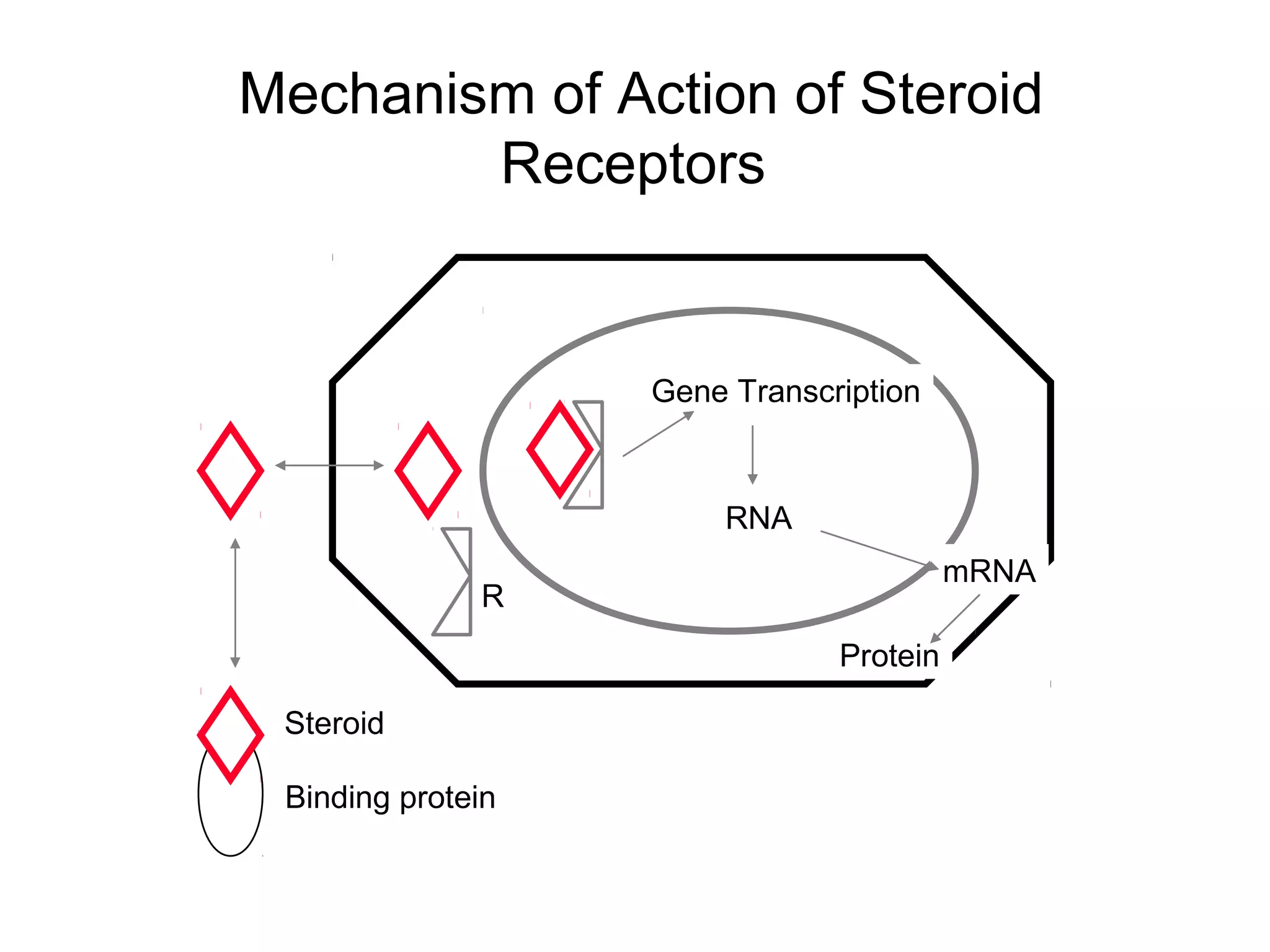
Mechanism of Action of Steroid
Receptors
Binding protein
Steroid
R
Gene Transcription
RNA
mRNA
Protein
cLASSiFicAtioN
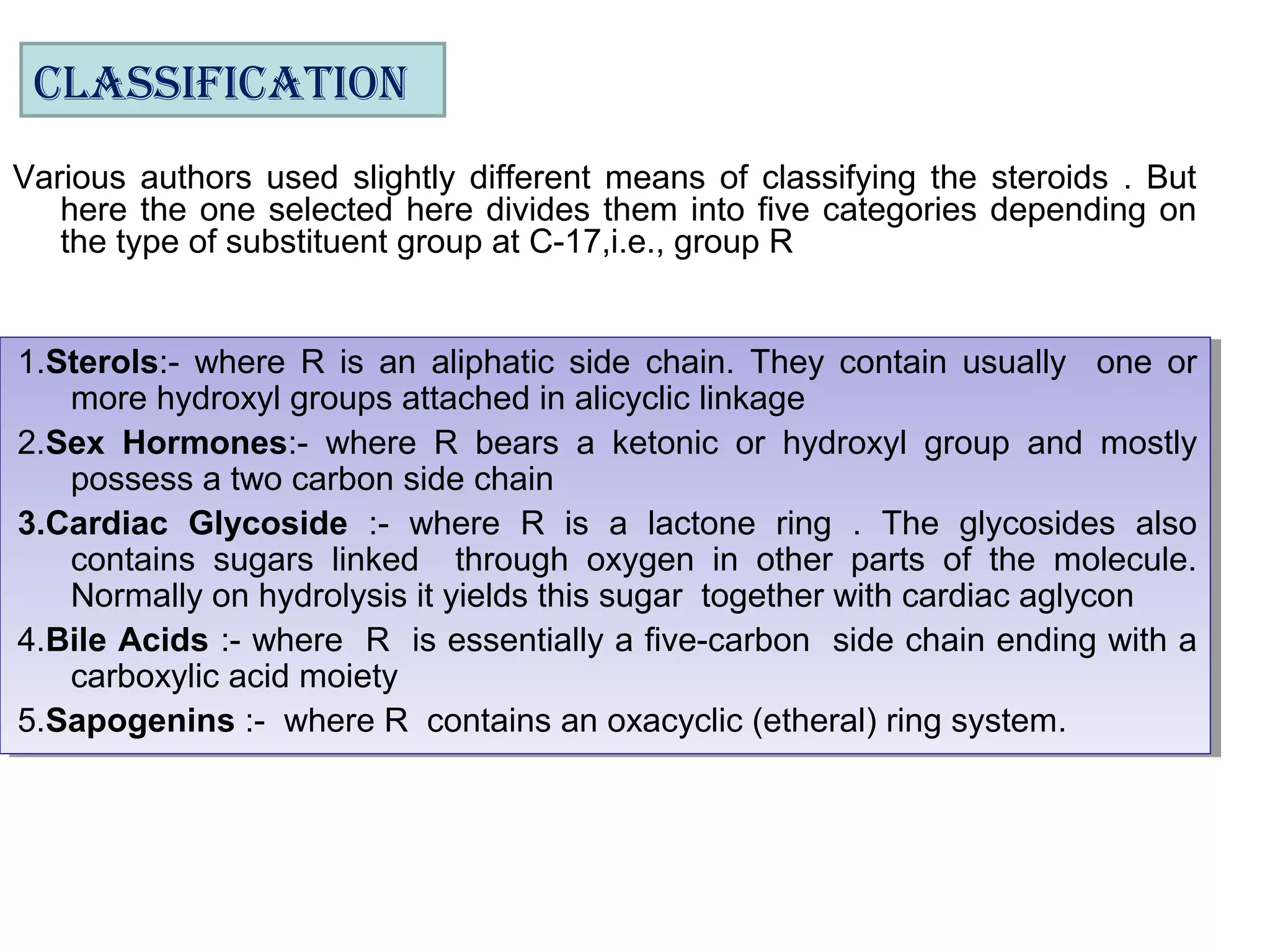
Various authors used slightly different means of classifying the steroids . But
here the one selected here divides them into five categories depending on
the type of substituent group at C-17,i.e., group R
1.Sterols:- where R is an aliphatic side chain. They contain usually one or
more hydroxyl groups attached in alicyclic linkage
2.Sex Hormones:- where R bears a ketonic or hydroxyl group and mostly
possess a two carbon side chain
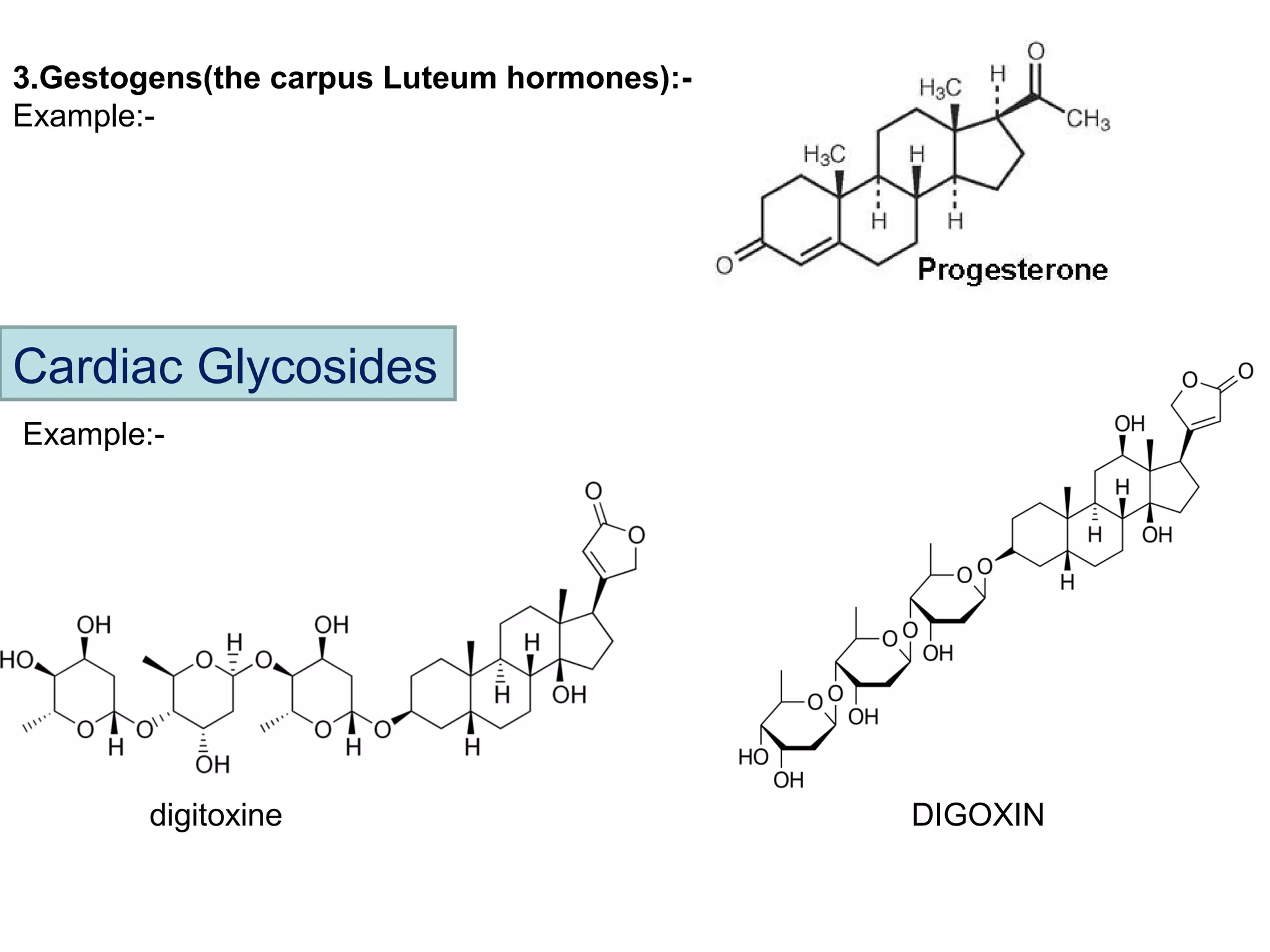
3.Cardiac Glycoside :- where R is a lactone ring . The glycosides also
contains sugars linked through oxygen in other parts of the molecule.
Normally on hydrolysis it yields this sugar together with cardiac aglycon
4.Bile Acids :- where R is essentially a five-carbon side chain ending with a
carboxylic acid moiety
5.Sapogenins :- where R contains an oxacyclic (etheral) ring system.
1.Sterols:- where R is an aliphatic side chain. They contain usually one or
more hydroxyl groups attached in alicyclic linkage
2.Sex Hormones:- where R bears a ketonic or hydroxyl group and mostly
possess a two carbon side chain
3.Cardiac Glycoside :- where R is a lactone ring . The glycosides also
contains sugars linked through oxygen in other parts of the molecule.
Normally on hydrolysis it yields this sugar together with cardiac aglycon
4.Bile Acids :- where R is essentially a five-carbon side chain ending with a
carboxylic acid moiety
5.Sapogenins :- where R contains an oxacyclic (etheral) ring system.
SterolsSterols
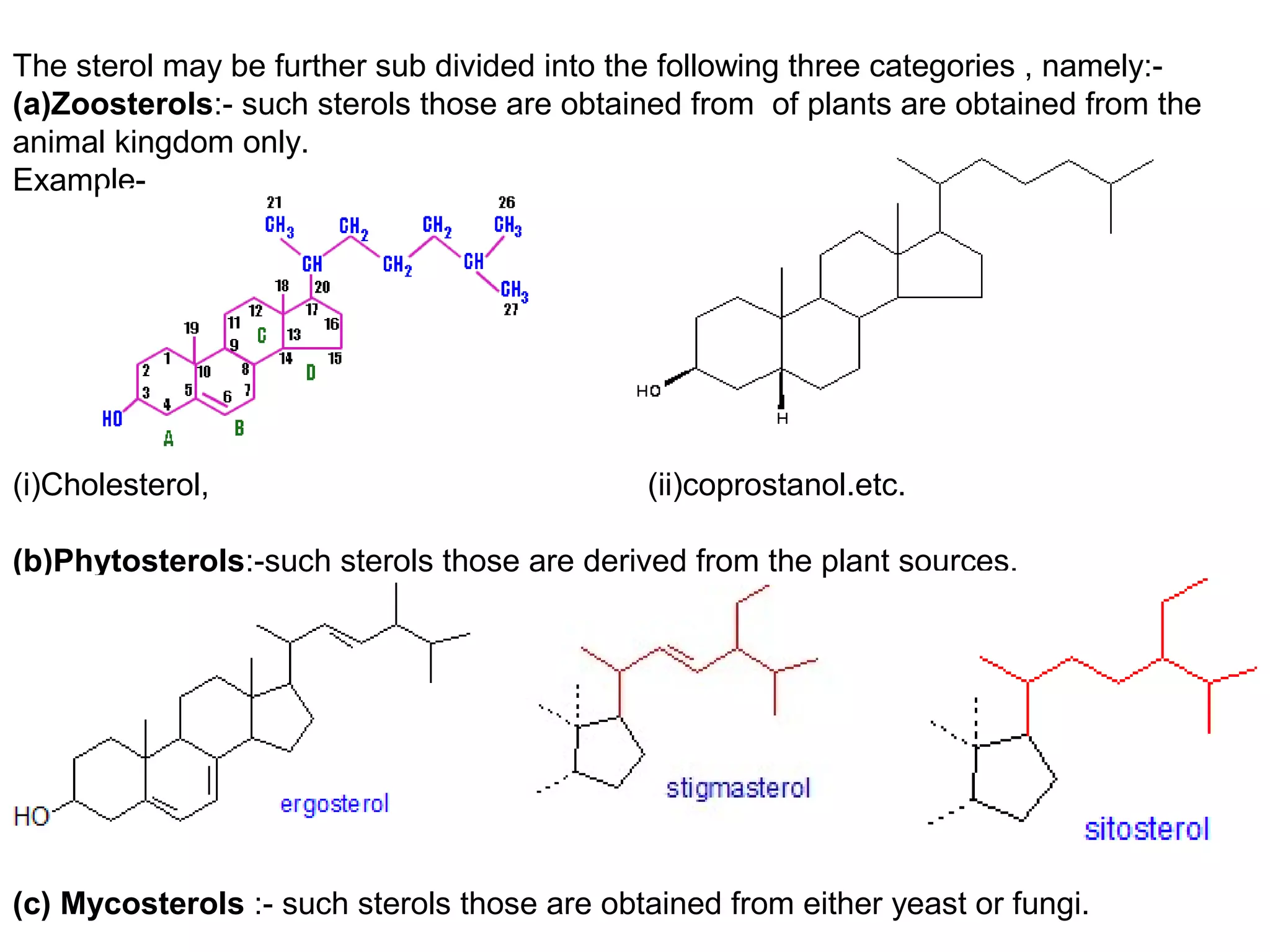
The sterol may be further sub divided into the following three categories , namely:-
(a)Zoosterols:- such sterols those are obtained from of plants are obtained from the
animal kingdom only.
Example-
(i)Cholesterol, (ii)coprostanol.etc.
(b)Phytosterols:-such sterols those are derived from the plant sources.
(c) Mycosterols :- such sterols those are obtained from either yeast or fungi.
Sex hormone are usually classified under the following three heads ,namely:-
1. Androgens(male hormones):-
2.Oestrogens(female hormones):-
(i)oestrone
(ii)oestradiol
(iii)stilbesterol
(iv)hexesterol etc.
Sex Hormones
Cardiac Glycosides
3.Gestogens(the carpus Luteum hormones):-
Example:-
Example:-
digitoxine DIGOXIN
Bile salt
The liver secretion a clear, golden yellow viscous liquid known as ‘bile’ .It is stored in gall
bladder and is useful for digestive system.
Examples:-
Cholic acid deoxycholic acid
Sapogenins
Sapogenins are the aglycones, or non-saccharide, portions of the family of natural
products known as saponins. Sapogenins contain steroid or other triterpene
frameworks as their key organic feature.
Examples:-
digitonin diosgenin
Androgens & anabolic steroidsAndrogens & anabolic steroidsAndrogens & anabolic steroidsAndrogens & anabolic steroids
The term androgens includes a number of natural and synthetic
compounds that exibite the masclinizing and anabolic action of
testosterone.
The main physiological , endogenic , and androgenic hormonese.
Androgen , commonly referred to as male sex hormones or
anabolic steroids , in perticular ,testosteron ,are produced by male
sex glands in the male body.
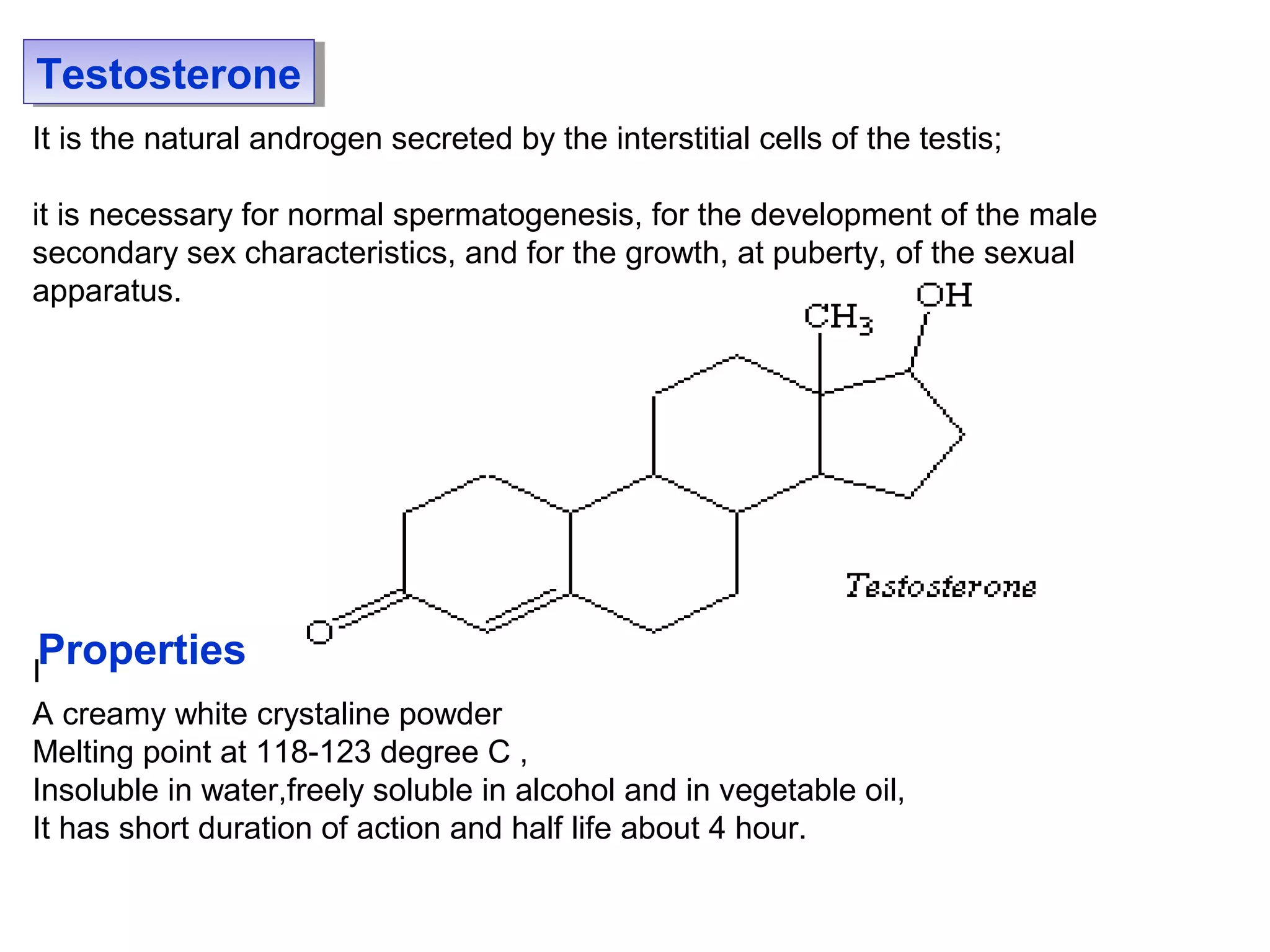
TestosteroneTestosterone
It is the natural androgen secreted by the interstitial cells of the testis;
it is necessary for normal spermatogenesis, for the development of the male
secondary sex characteristics, and for the growth, at puberty, of the sexual
apparatus.
I
.
Properties
A creamy white crystaline powder
Melting point at 118-123 degree C ,
Insoluble in water,freely soluble in alcohol and in vegetable oil,
It has short duration of action and half life about 4 hour.
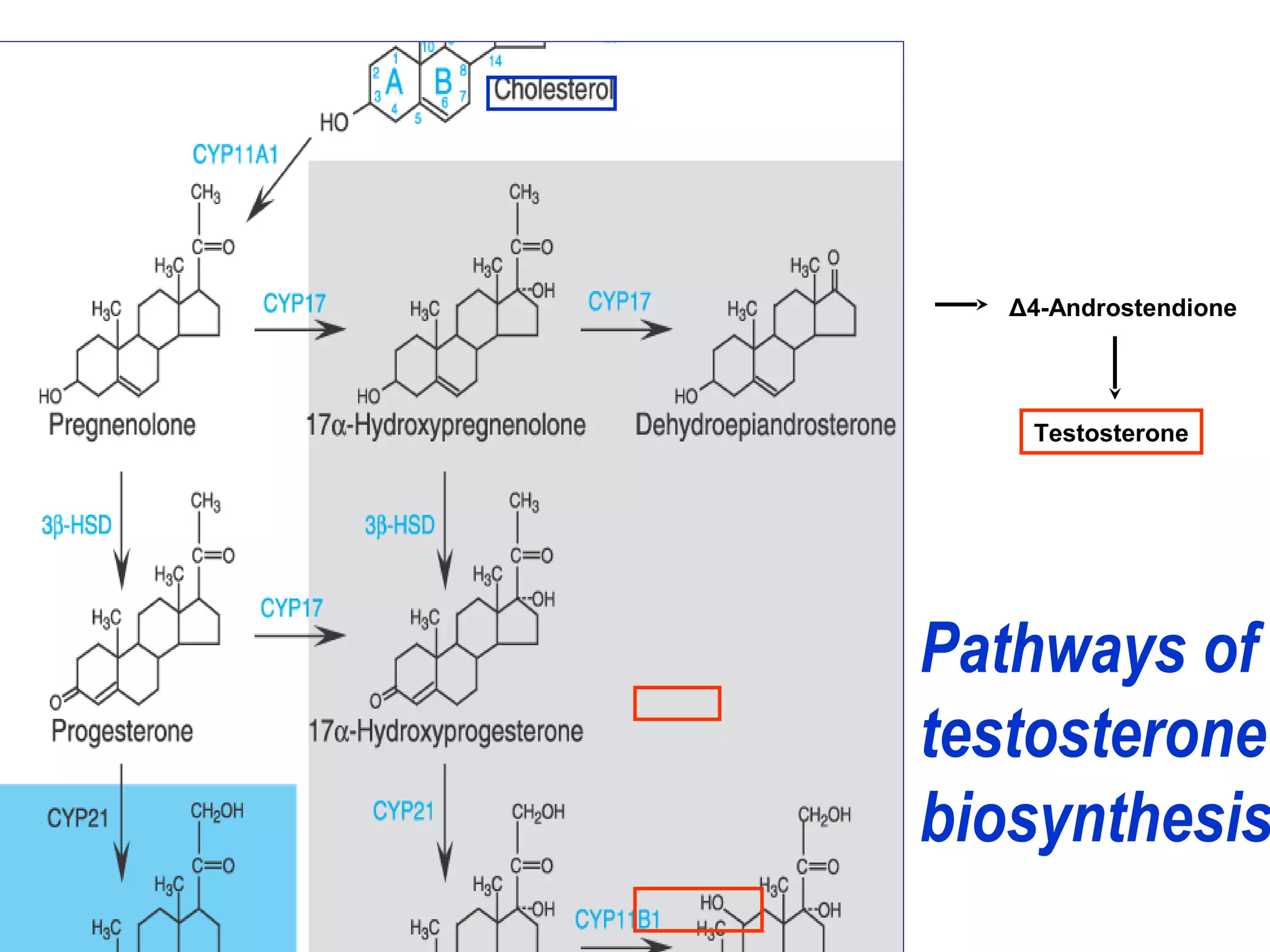
Pathways of
testosterone
biosynthesis
Δ4-Androstendione
Testosterone
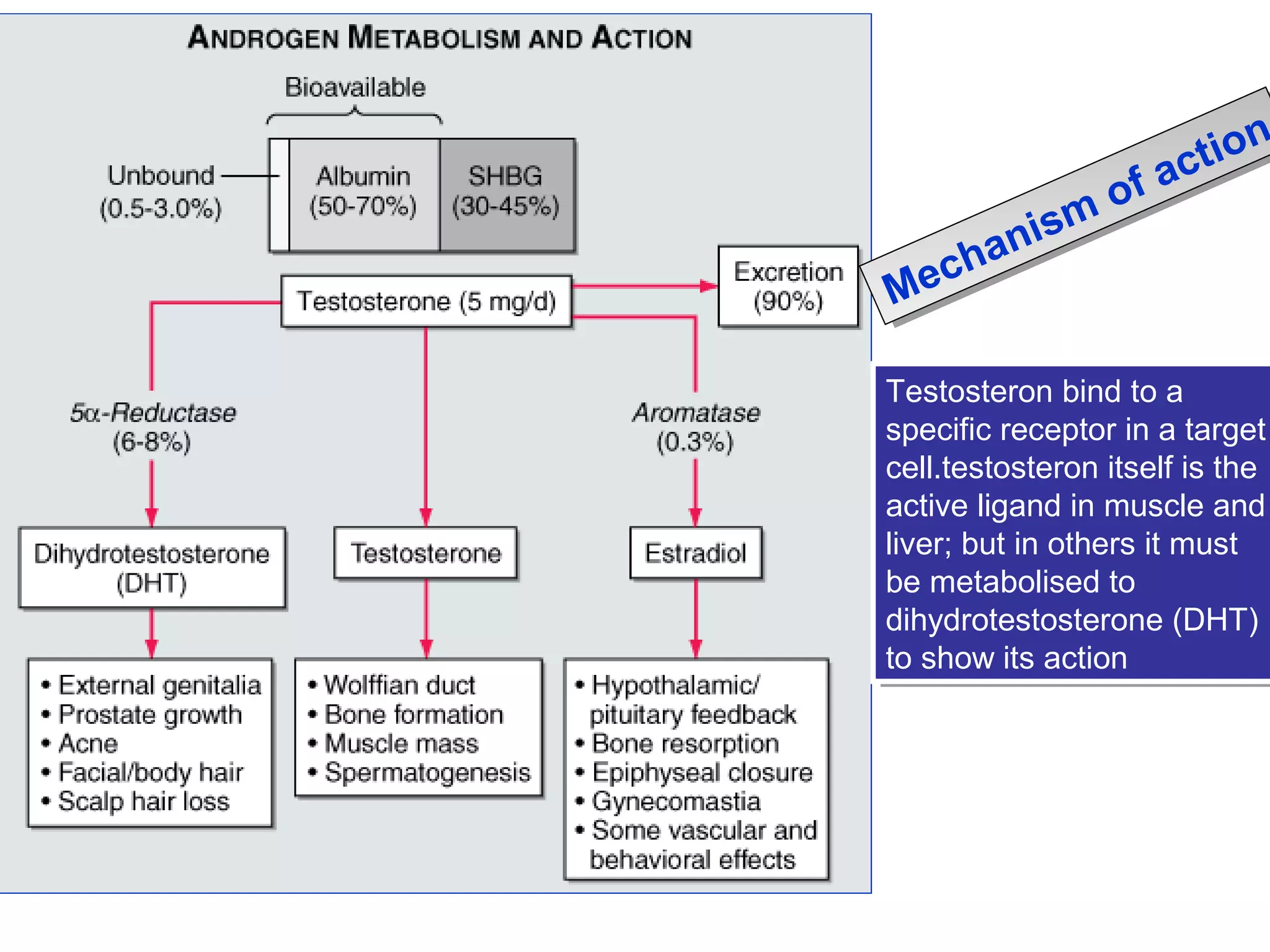
Mechanism of action
Mechanism of action
Testosteron bind to a
specific receptor in a target
cell.testosteron itself is the
active ligand in muscle and
liver; but in others it must
be metabolised to
dihydrotestosterone (DHT)
to show its action
Testosteron bind to a
specific receptor in a target
cell.testosteron itself is the
active ligand in muscle and
liver; but in others it must
be metabolised to
dihydrotestosterone (DHT)
to show its action
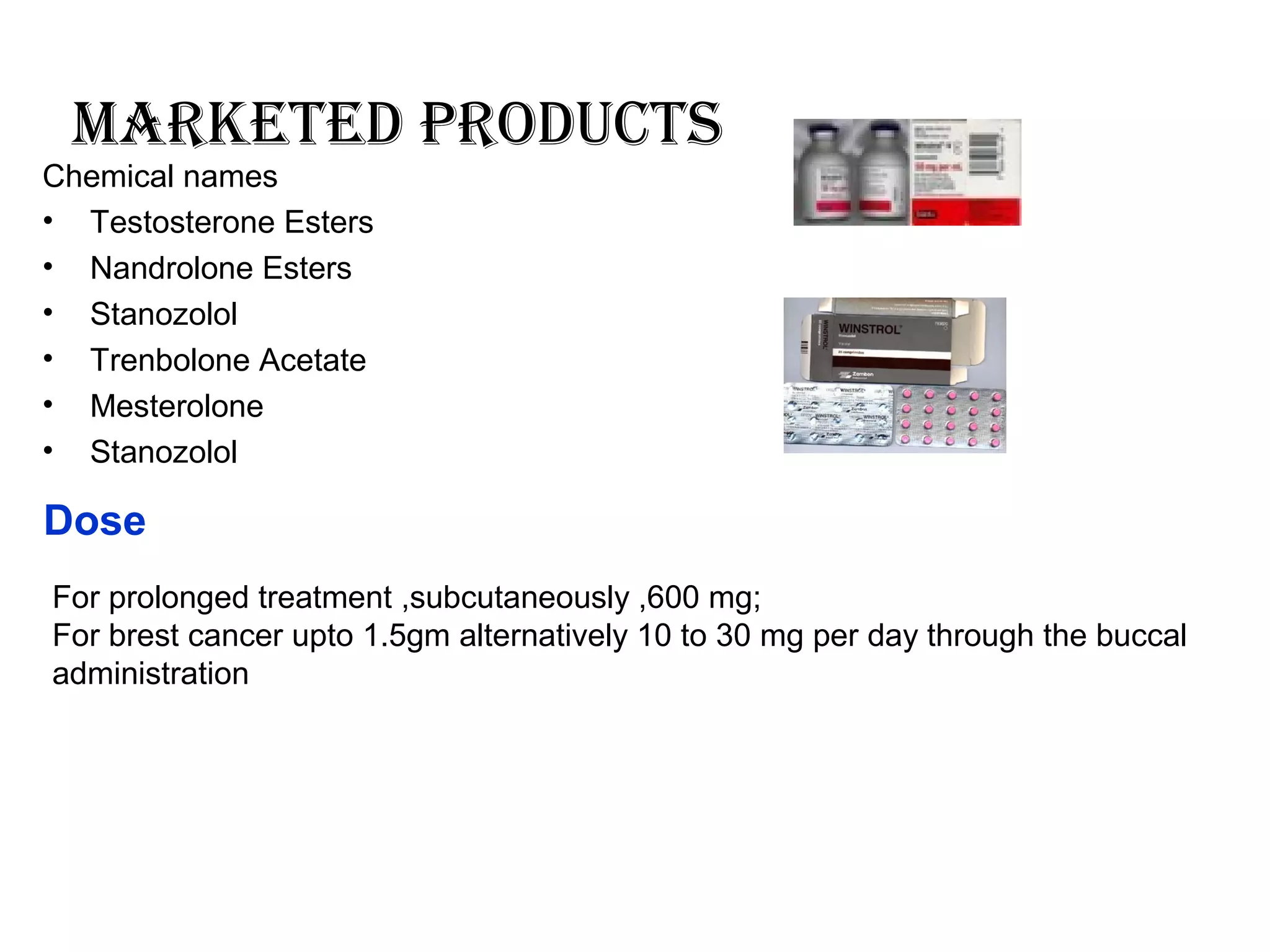
Marketed products
Chemical names
• Testosterone Esters
• Nandrolone Esters
• Stanozolol
• Trenbolone Acetate
• Mesterolone
• Stanozolol
Dose
For prolonged treatment ,subcutaneously ,600 mg;
For brest cancer upto 1.5gm alternatively 10 to 30 mg per day through the buccal
administration
side effects
• Negative Effects
- Depression
- Violent behavior
- Bad breath
- Cancer causing
- Heart attack & Stroke
- Abdominal pain
- Possible infertility
USES:-
Treatment of breast cancer
Growth and development of male sex organs
Important for (male) sex drive and performance
Development of secondary sexual characteristics
Important role in spermatogenesis
Testosterone is necessary for normal sperm development.
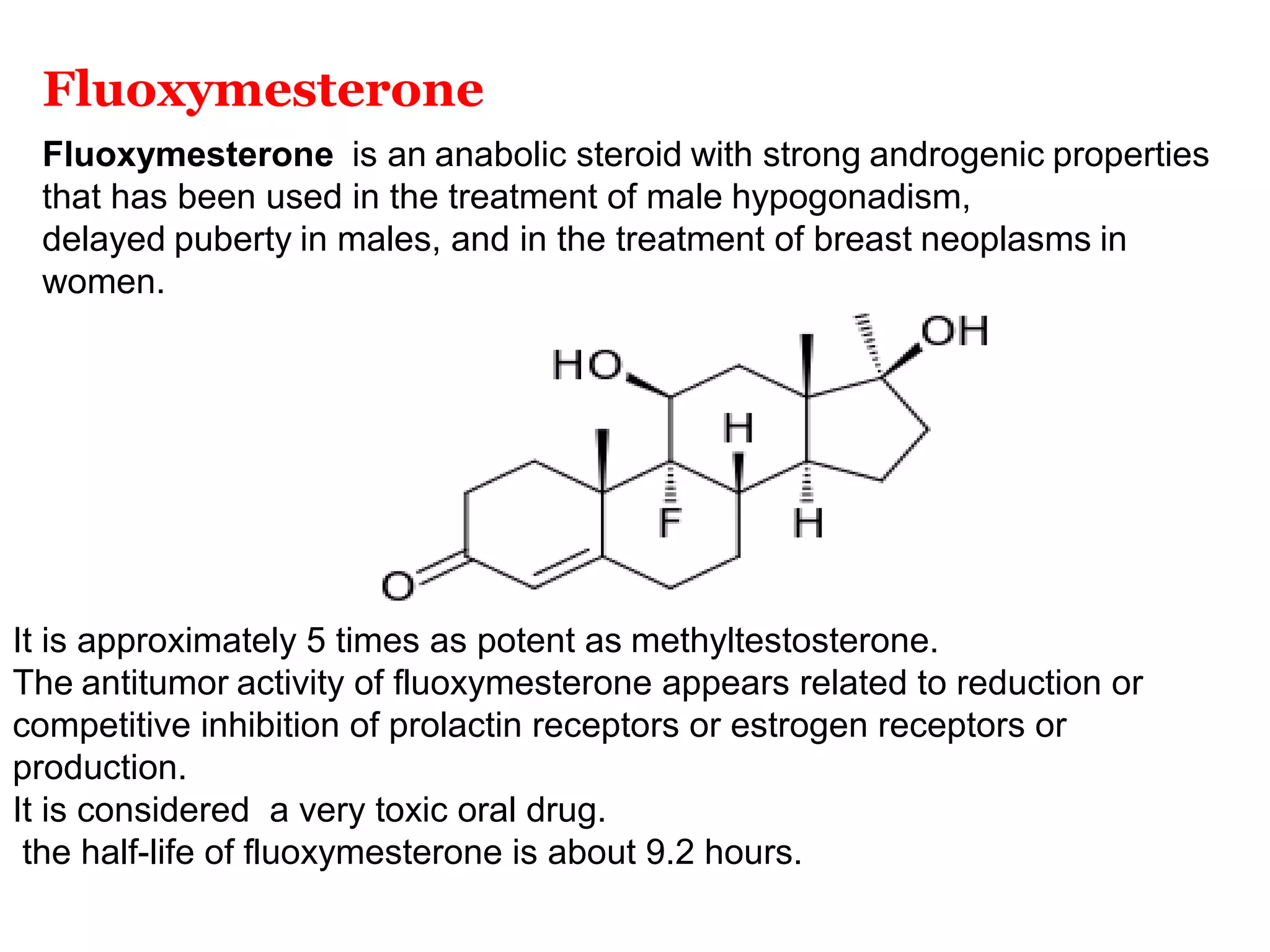
Fluoxymesterone
Fluoxymesterone  is an anabolic steroid with strong androgenic properties
that has been used in the treatment of male hypogonadism,
delayed puberty in males, and in the treatment of breast neoplasms in
women.
It is approximately 5 times as potent as methyltestosterone.
The antitumor activity of fluoxymesterone appears related to reduction or
competitive inhibition of prolactin receptors or estrogen receptors or
production.
It is considered a very toxic oral drug.
the half-life of fluoxymesterone is about 9.2 hours.
Fluoxymesterone facilitates formation of body muscle mass and
strengthens the process of tissue development.
The main indications for using Fluoxymesterone , as well as
other anabolic steroids , are abnormal protein anabolism
asthenia ,diseases accompanied by protein loss, adrenal
insuficieny ,steroid diabetes ,and prolonged condition of
sluggishness
Fluoxymesterone facilitates formation of body muscle mass and
strengthens the process of tissue development.
The main indications for using Fluoxymesterone , as well as
other anabolic steroids , are abnormal protein anabolism
asthenia ,diseases accompanied by protein loss, adrenal
insuficieny ,steroid diabetes ,and prolonged condition of
sluggishness
SAR of AndrogensSAR of Androgens
1.For a substance to have activity ,it must contain the andostane skeleton.
2.Oxygen at C-3 and C-17 are not essential for the androgenic activity.
3.The basic nucleus having 5-beta-androstane which having androgenic activity
,whereas 5-alpha-androstane having no activity.
4.There should not be chain constriction or extension because it leads to finished the
activity.
5.Introduction of 3-hydroxy group and 3-keto group enhance the activity.
6.Hydroxy group at C-17 position has no androgenic or anabolic activity.
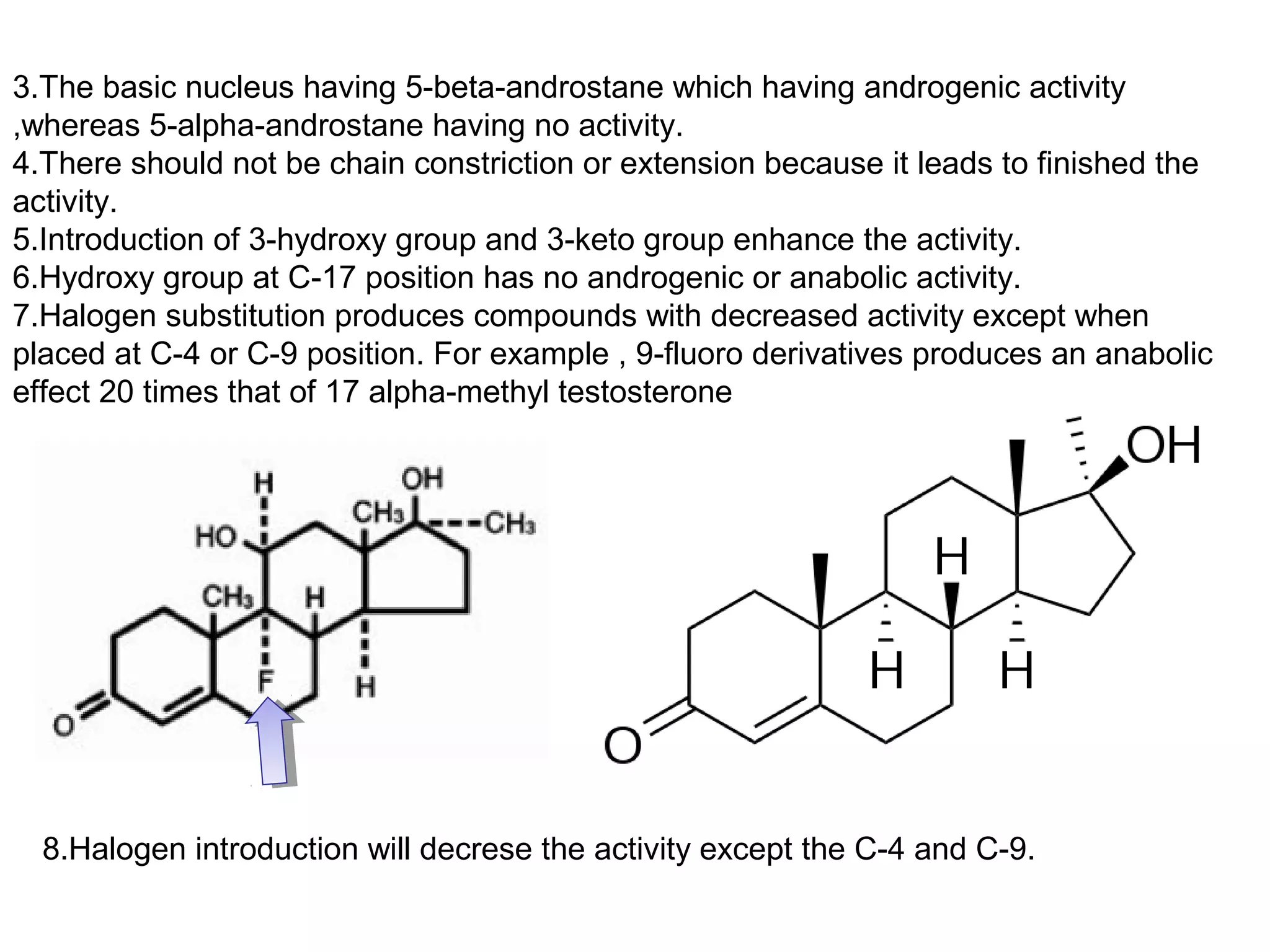
7.Halogen substitution produces compounds with decreased activity except when
placed at C-4 or C-9 position. For example , 9-fluoro derivatives produces an anabolic
effect 20 times that of 17 alpha-methyl testosterone
8.Halogen introduction will decrese the activity except the C-4 and C-9.
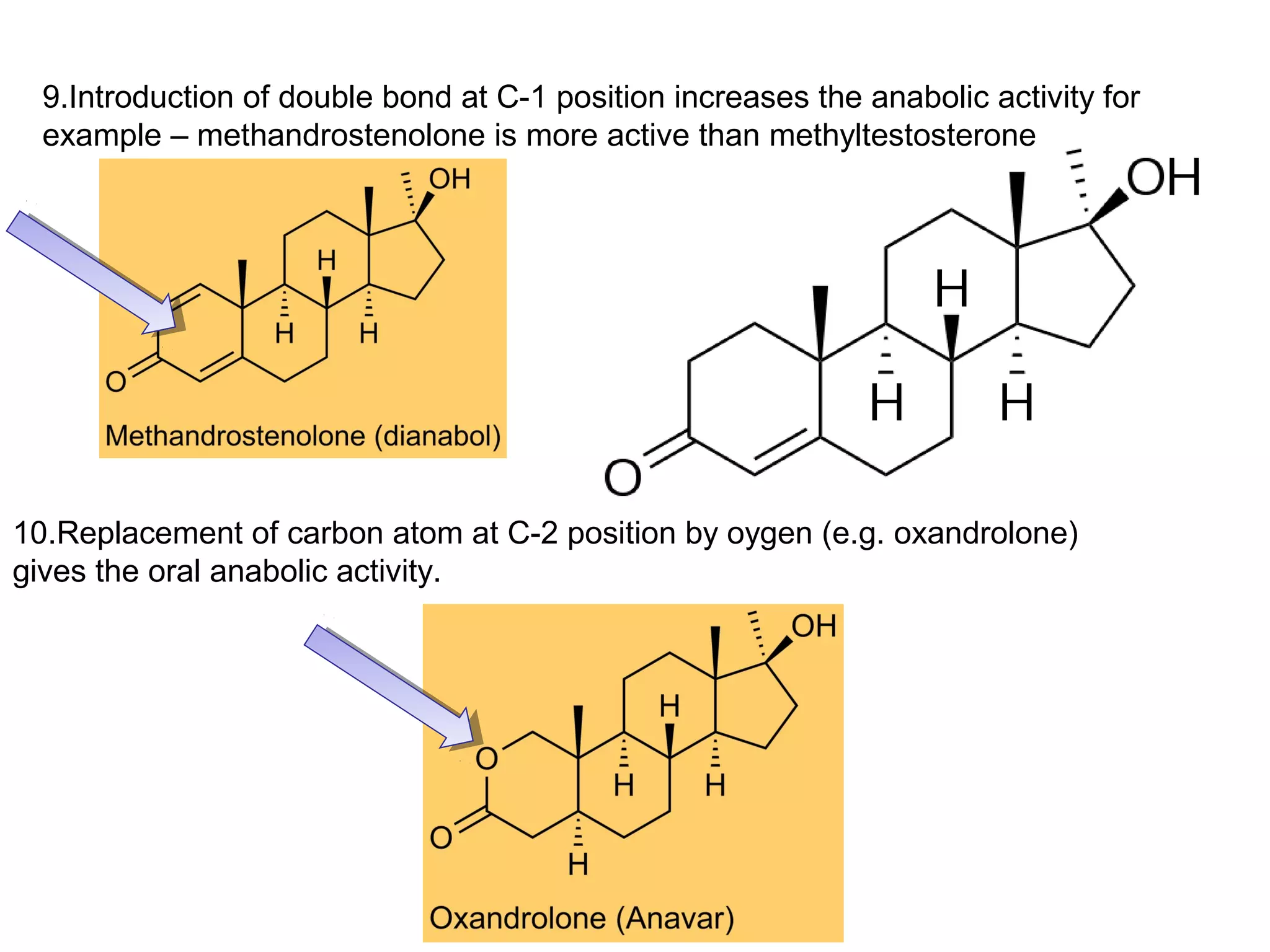
9.Introduction of double bond at C-1 position increases the anabolic activity for
example – methandrostenolone is more active than methyltestosterone
10.Replacement of carbon atom at C-2 position by oygen (e.g. oxandrolone)
gives the oral anabolic activity.
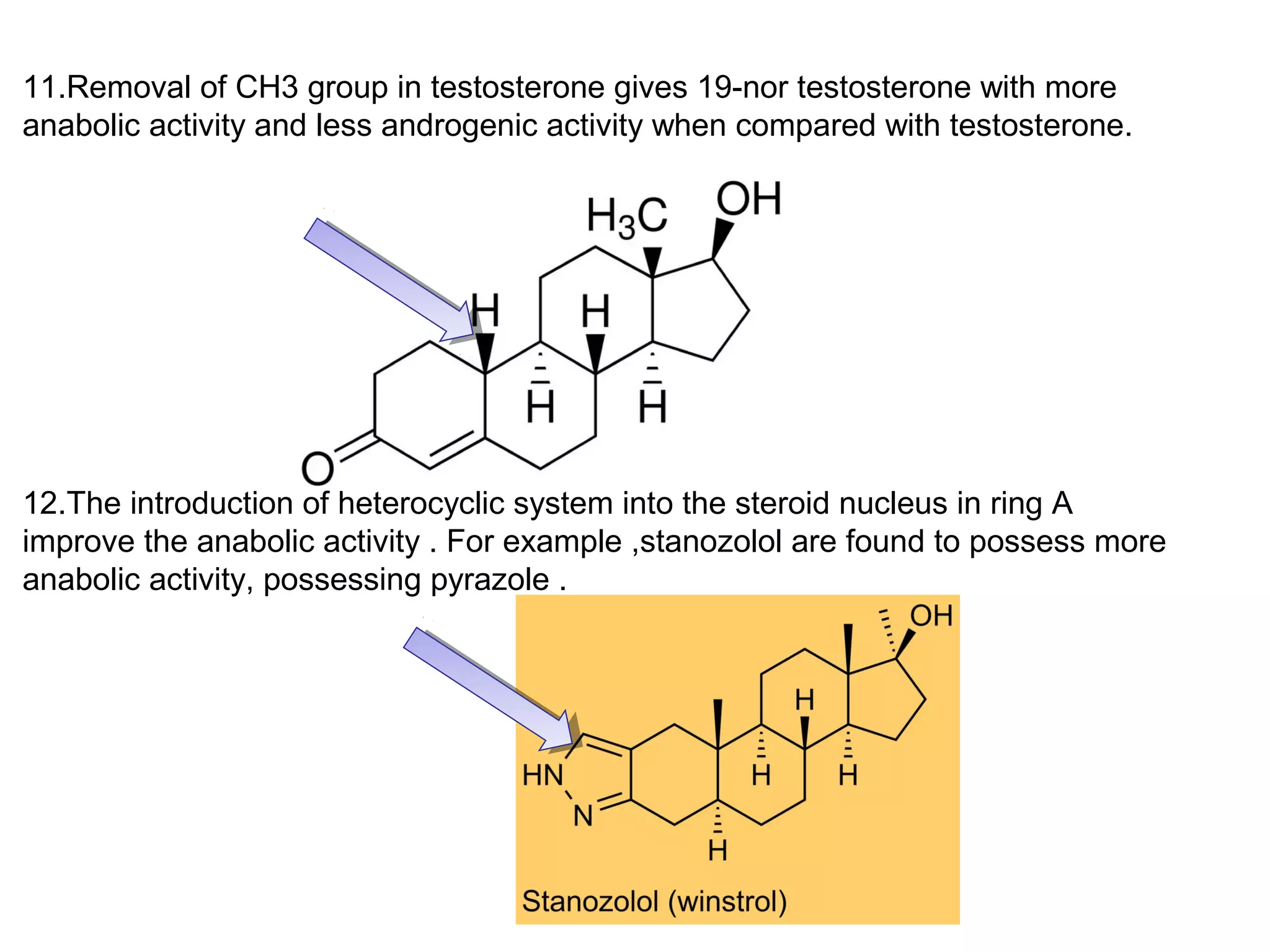
11.Removal of CH3 group in testosterone gives 19-nor testosterone with more
anabolic activity and less androgenic activity when compared with testosterone.
12.The introduction of heterocyclic system into the steroid nucleus in ring A
improve the anabolic activity . For example ,stanozolol are found to possess more
anabolic activity, possessing pyrazole .
EstrogensEstrogens
Estrogen are a group of steroid compounds that function as the primary
female sex hormones.
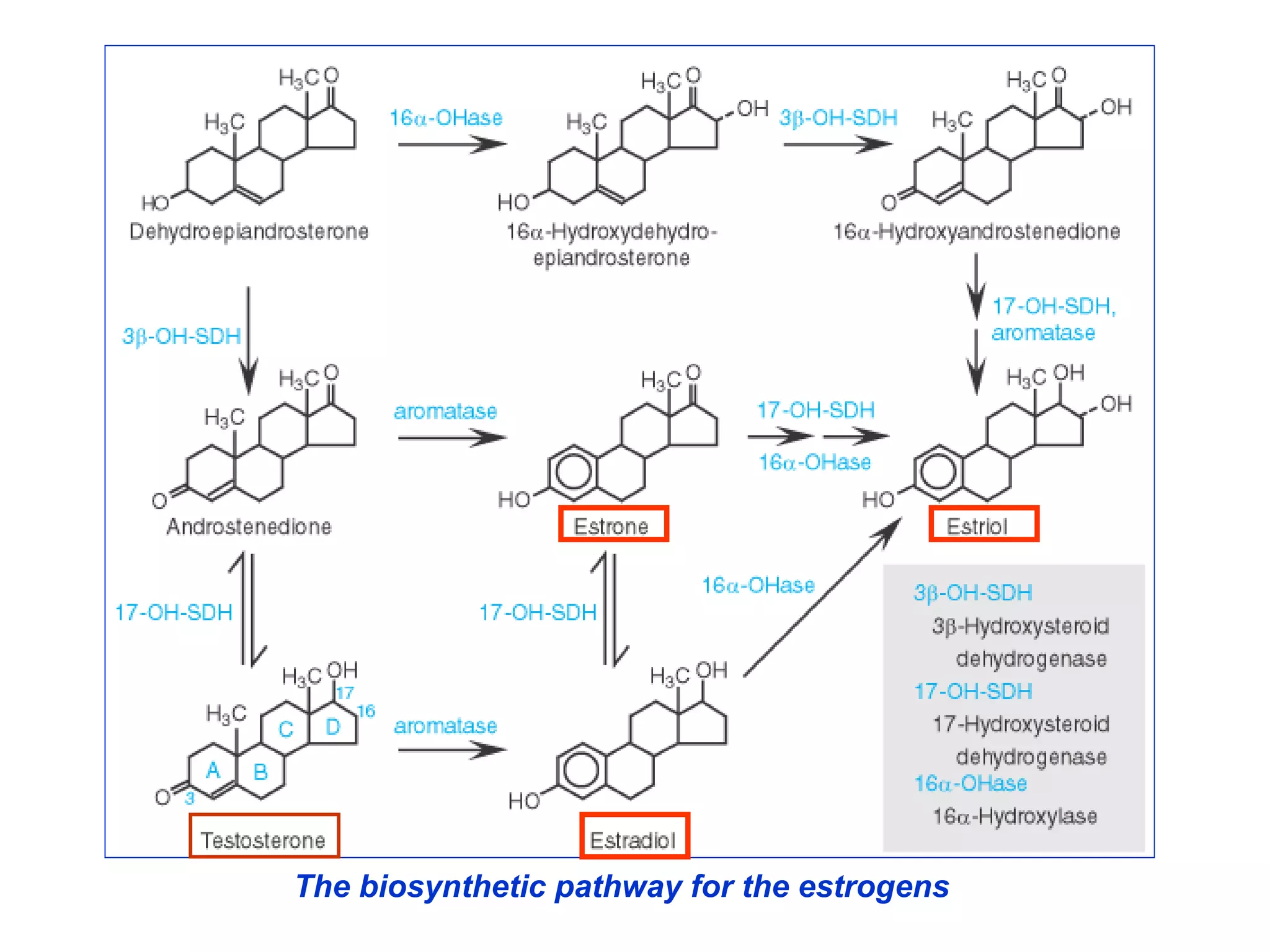
Three naturally occuring estrogen are estradiol,estriol and estrone ,In
the body these are all produced from androgens through enzyme action.
SOURCE:-
Estrogen are produced by developing follicles in the ovaries , the corpus
luteum and the placenta, some estrogens are also produced in smaller
amounts by other tissues such as liver, adrenal glands and the breasts .
These secondary source of estrogen are especially important in post
menopausal women.
The biosynthetic pathway for the estrogens
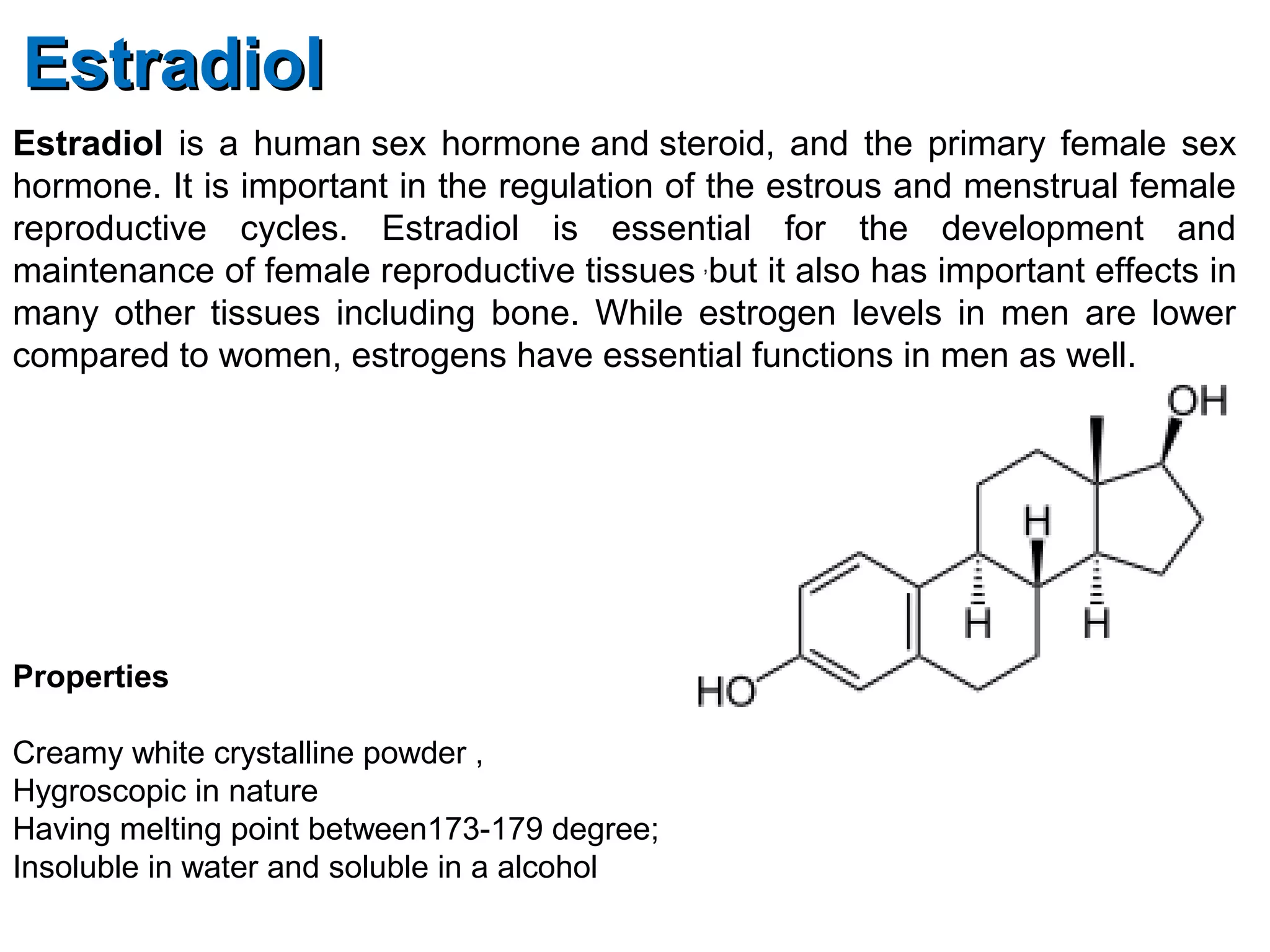
EstradiolEstradiol
Estradiol is a human sex hormone and steroid, and the primary female sex
hormone. It is important in the regulation of the estrous and menstrual female
reproductive cycles. Estradiol is essential for the development and
maintenance of female reproductive tissues ,
but it also has important effects in
many other tissues including bone. While estrogen levels in men are lower
compared to women, estrogens have essential functions in men as well.
Properties
Creamy white crystalline powder ,
Hygroscopic in nature
Having melting point between173-179 degree;
Insoluble in water and soluble in a alcohol
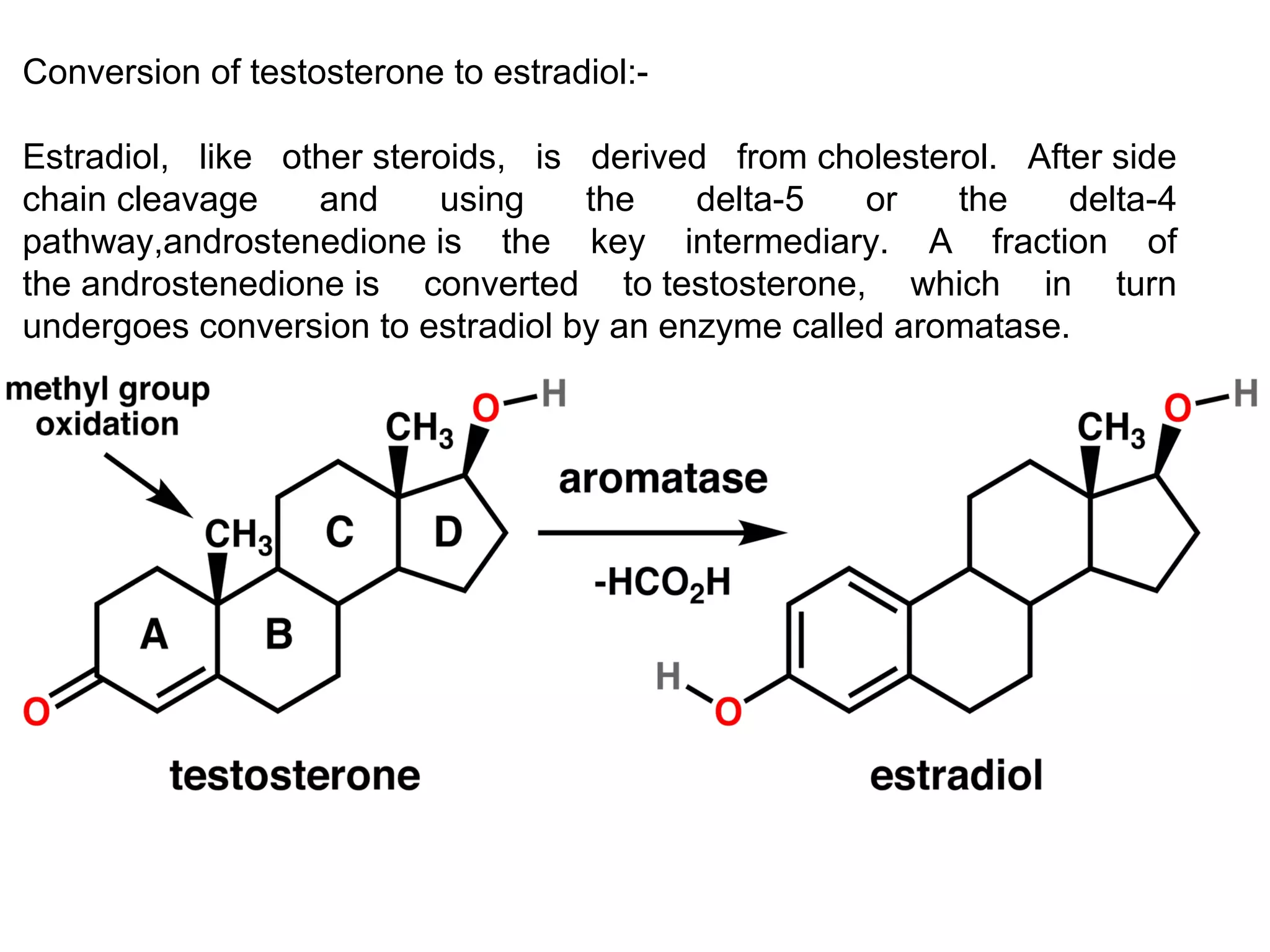
Conversion of testosterone to estradiol:-
Estradiol, like other steroids, is derived from cholesterol. After side
chain cleavage and using the delta-5 or the delta-4
pathway,androstenedione is the key intermediary. A fraction of
the androstenedione is converted to testosterone, which in turn
undergoes conversion to estradiol by an enzyme called aromatase.
Mechanism of action:-
Estradiol acts primarily as an agonist of the estrogen receptor (ER), a nuclear
steroid hormone receptor.
There are two subtypes of the ER, ERα and ERβ, and
estradiol potently binds to and activates both of these receptors. The result of
ER activation is a modulation of gene transcription and expression in ER
expressing cells, which is the predominant mechanism by which estradiol
mediates its biological effects in the body.
DOSE:-
Oral,2mg per day; intramuscular ,1.5 mg 2 or 3 times weekly
UESE:-
-- It helps to regulate and subsequent maintence of female sex organs, certain
function of the uterus and all the secondary sex features and the mammary
glands.
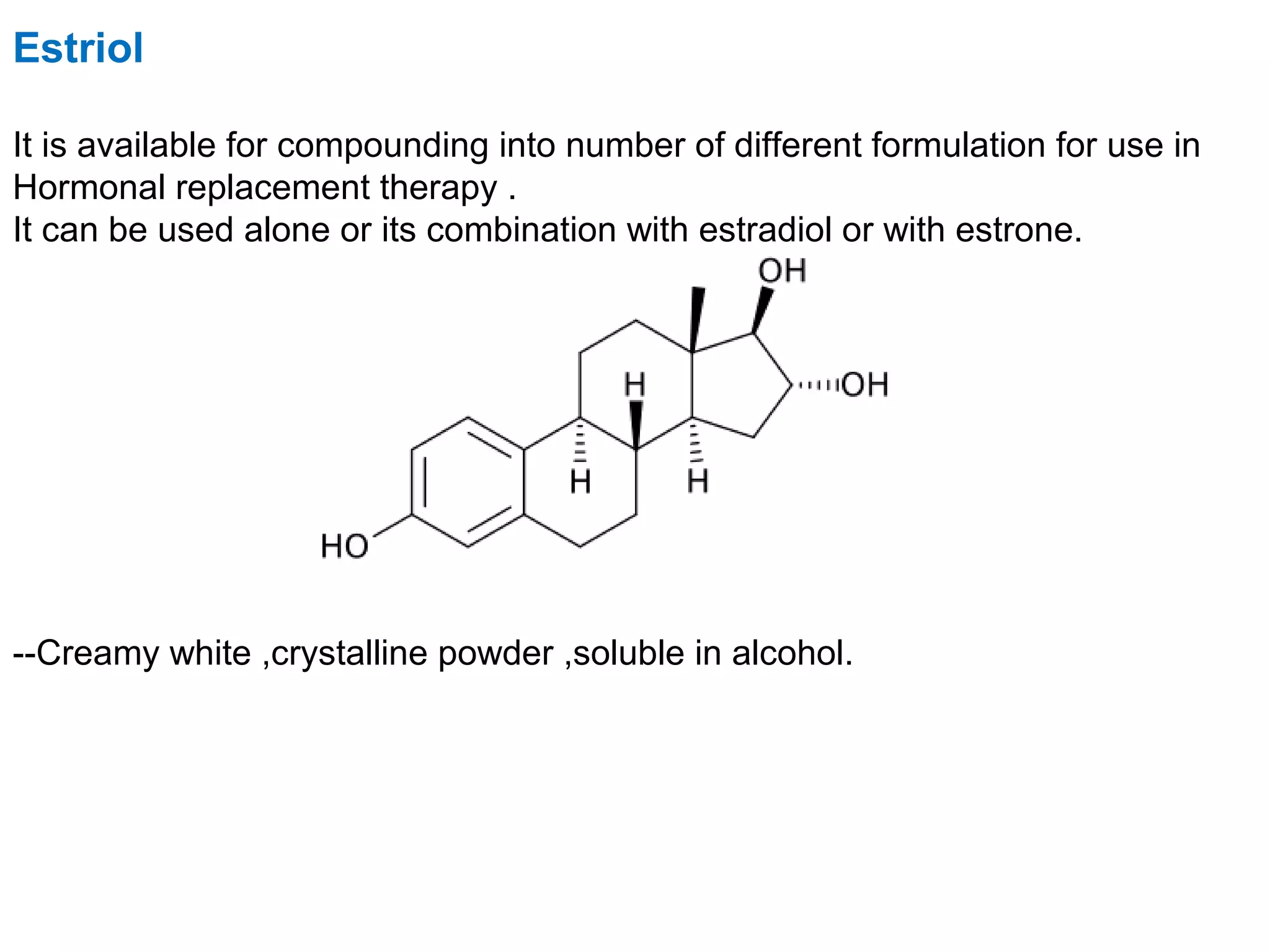
Estriol
It is available for compounding into number of different formulation for use in
Hormonal replacement therapy .
It can be used alone or its combination with estradiol or with estrone.
--Creamy white ,crystalline powder ,soluble in alcohol.
The biosynthetic pathway for the estrogens
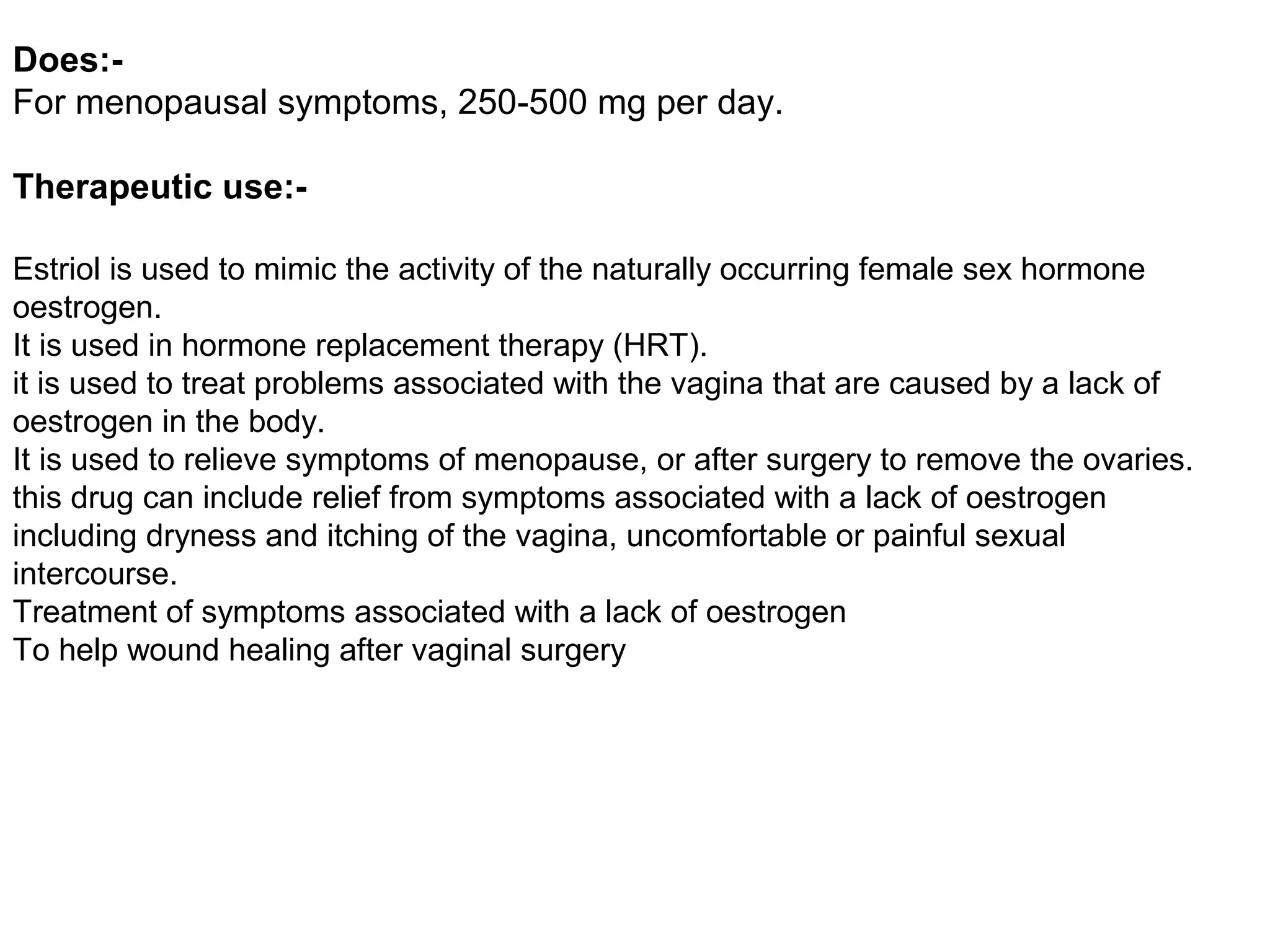
Does:-
For menopausal symptoms, 250-500 mg per day.
Therapeutic use:-
Estriol is used to mimic the activity of the naturally occurring female sex hormone
oestrogen.
It is used in hormone replacement therapy (HRT).
it is used to treat problems associated with the vagina that are caused by a lack of
oestrogen in the body.
It is used to relieve symptoms of menopause, or after surgery to remove the ovaries.
this drug can include relief from symptoms associated with a lack of oestrogen
including dryness and itching of the vagina, uncomfortable or painful sexual
intercourse.
Treatment of symptoms associated with a lack of oestrogen
To help wound healing after vaginal surgery
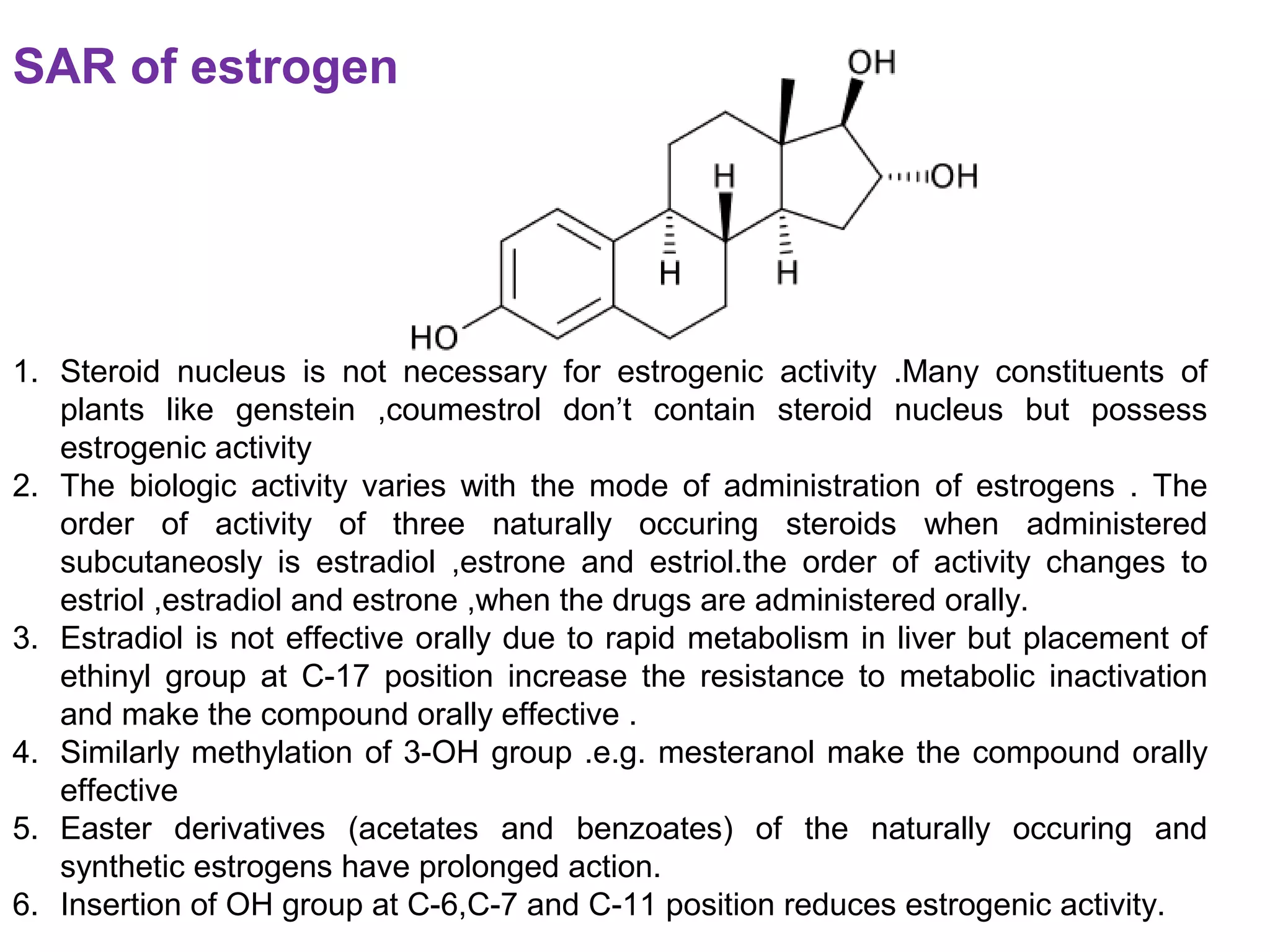
SAR of estrogen
1. Steroid nucleus is not necessary for estrogenic activity .Many constituents of
plants like genstein ,coumestrol don’t contain steroid nucleus but possess
estrogenic activity
2. The biologic activity varies with the mode of administration of estrogens . The
order of activity of three naturally occuring steroids when administered
subcutaneosly is estradiol ,estrone and estriol.the order of activity changes to
estriol ,estradiol and estrone ,when the drugs are administered orally.
3. Estradiol is not effective orally due to rapid metabolism in liver but placement of
ethinyl group at C-17 position increase the resistance to metabolic inactivation
and make the compound orally effective .
4. Similarly methylation of 3-OH group .e.g. mesteranol make the compound orally
effective
5. Easter derivatives (acetates and benzoates) of the naturally occuring and
synthetic estrogens have prolonged action.
6. Insertion of OH group at C-6,C-7 and C-11 position reduces estrogenic activity.
Progestational agentProgestational agentProgestational agentProgestational agent
They also called luteum hormoens ,mostly secreted by the
corpus luteum portion of the ovary and the metabolised to
various inactive products ,e.g. pregnanediol.
The metabolites are essentially excreated through urine.
The natural progestational hormone is progesterone , which is
secreated by the corpus luteum in the second part of the menstrual
cycle.
Small amounts are also secreted by the testis in the male and the
adrenal cortex in both sex and large amounts are secreted by the
placenta.
PROGESTERONEPROGESTERONE
Synthesis:-
Acetylation of diosgenin at 200 degree C gives the corresponding diosgenyl
diacetate which upon oxidation with chromium-6-oxide removes the side chain at C-17 and the
resulting product on reduction followed by hydrolysis yields pregnelone .This on being subjected to
Oppenauer oxidation affords the official compound.
uses
1.Prevent habitual abortion.
2.For treatment of functional uterine bleeding resulting due to the lack of oestrogens
and progesterone
3.For treatment of dysmenorrhoea or painful menstruation
4.Pregnancy diagnosis,
5.Oral contraceptives,
6.For treatment of an advanced carcinoma of breasts.
7.To treat premature discomfort in the breasts
8.Progesterone can be used to treat catamenial epilepsy.
9.Progesterone also has a role in skin elasticity and bone strength, in respiration, in
nerve tissue and in female sexuality, and the presence of progesterone receptors in
certain muscle and fat tissue.
DOSE:-
10-100 mg intra muscular
Side effects:-
The commonly asociated side-effects with progestin therapy are nausea, vomiting,
drowsiness,edema ,irregular bleeding etc.
AdrenocorticosteroidsAdrenocorticosteroids
Glucocorticoids 
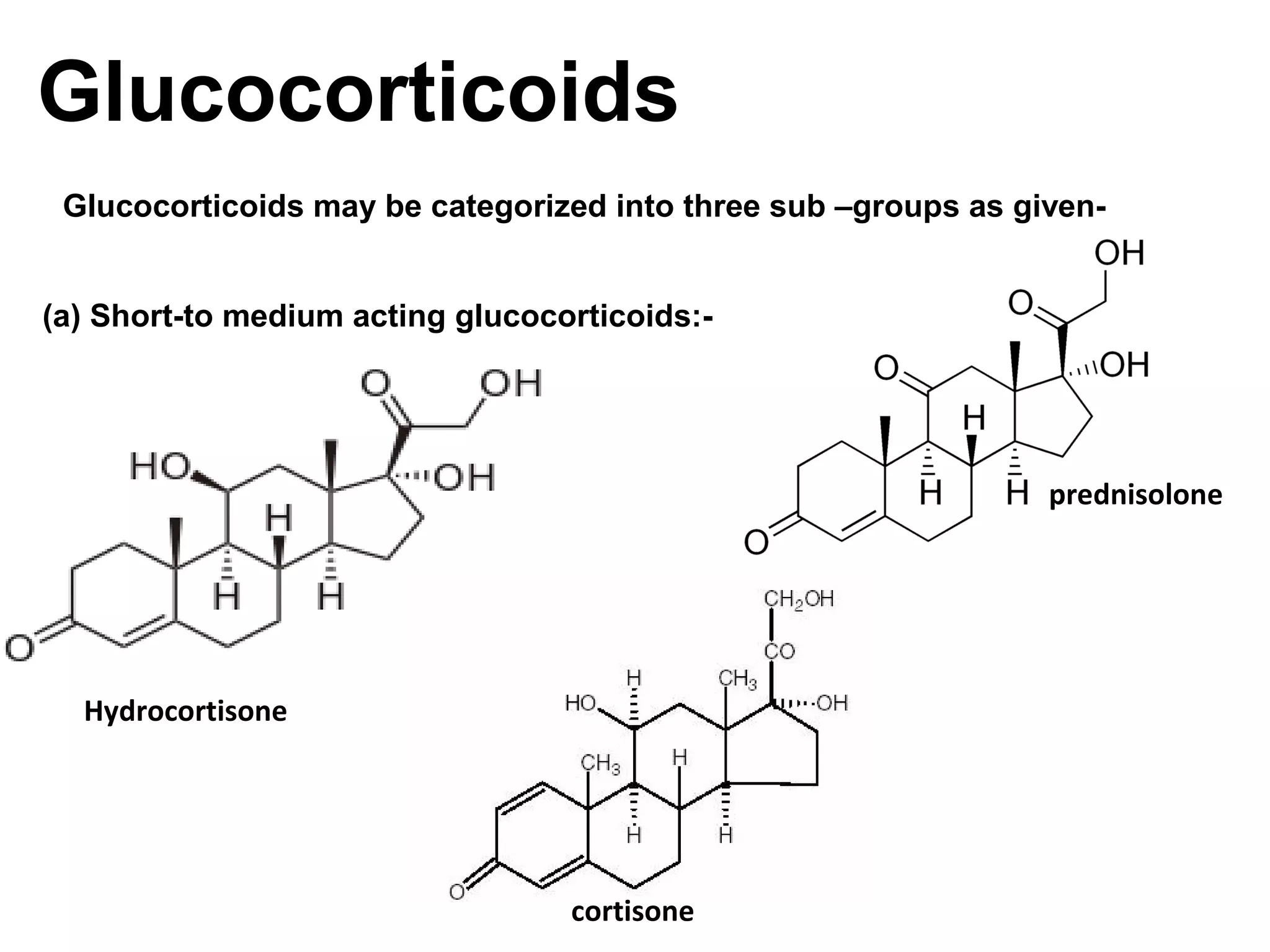
Glucocorticoids may be categorized into three sub –groups as given- 
(a) Short-to medium acting glucocorticoids:-
Hydrocortisone 
cortisone 
prednisolone 
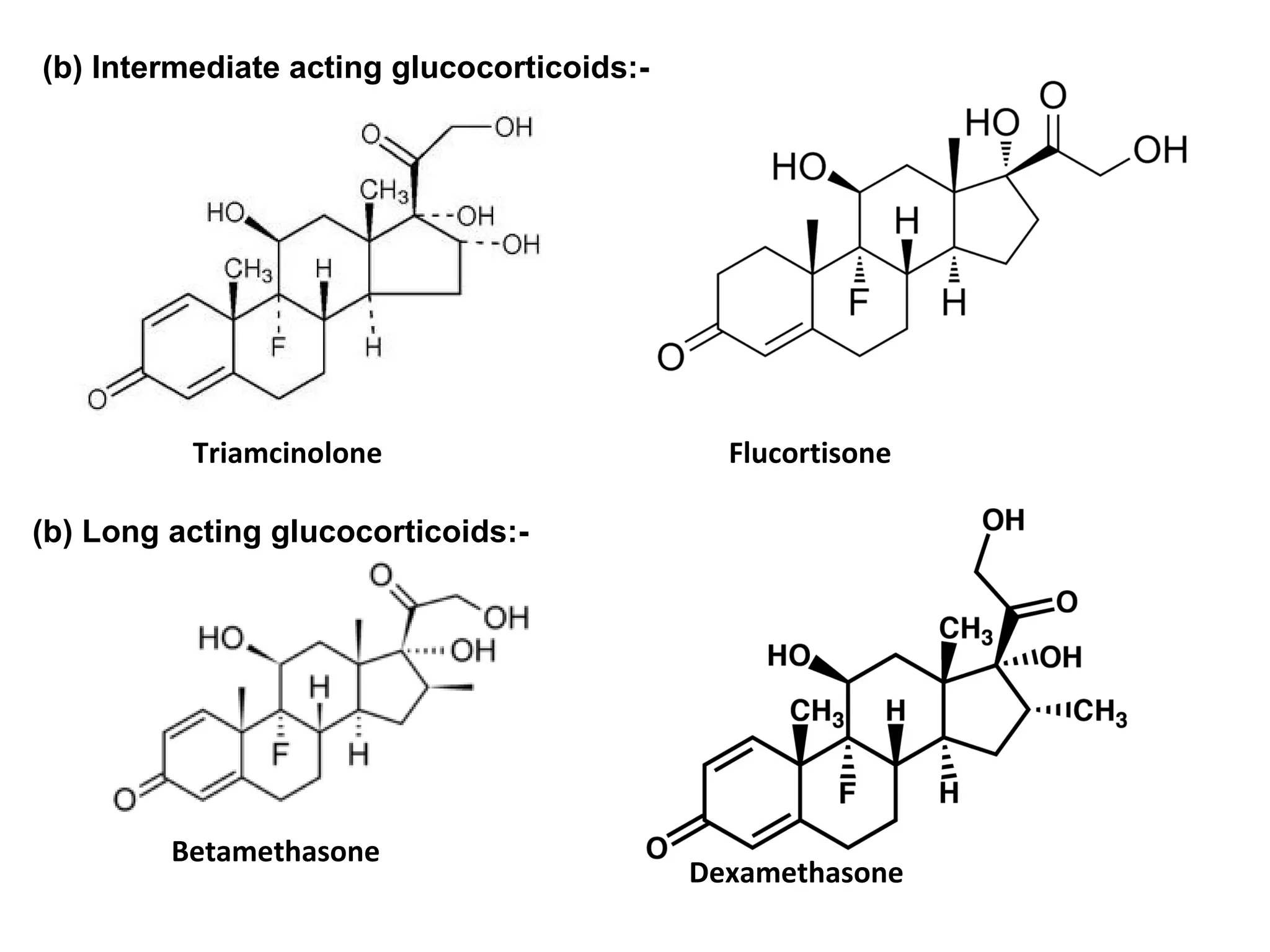
(b) Intermediate acting glucocorticoids:-
(b) Long acting glucocorticoids:-
Triamcinolone  Flucortisone
Betamethasone 
Dexamethasone
 
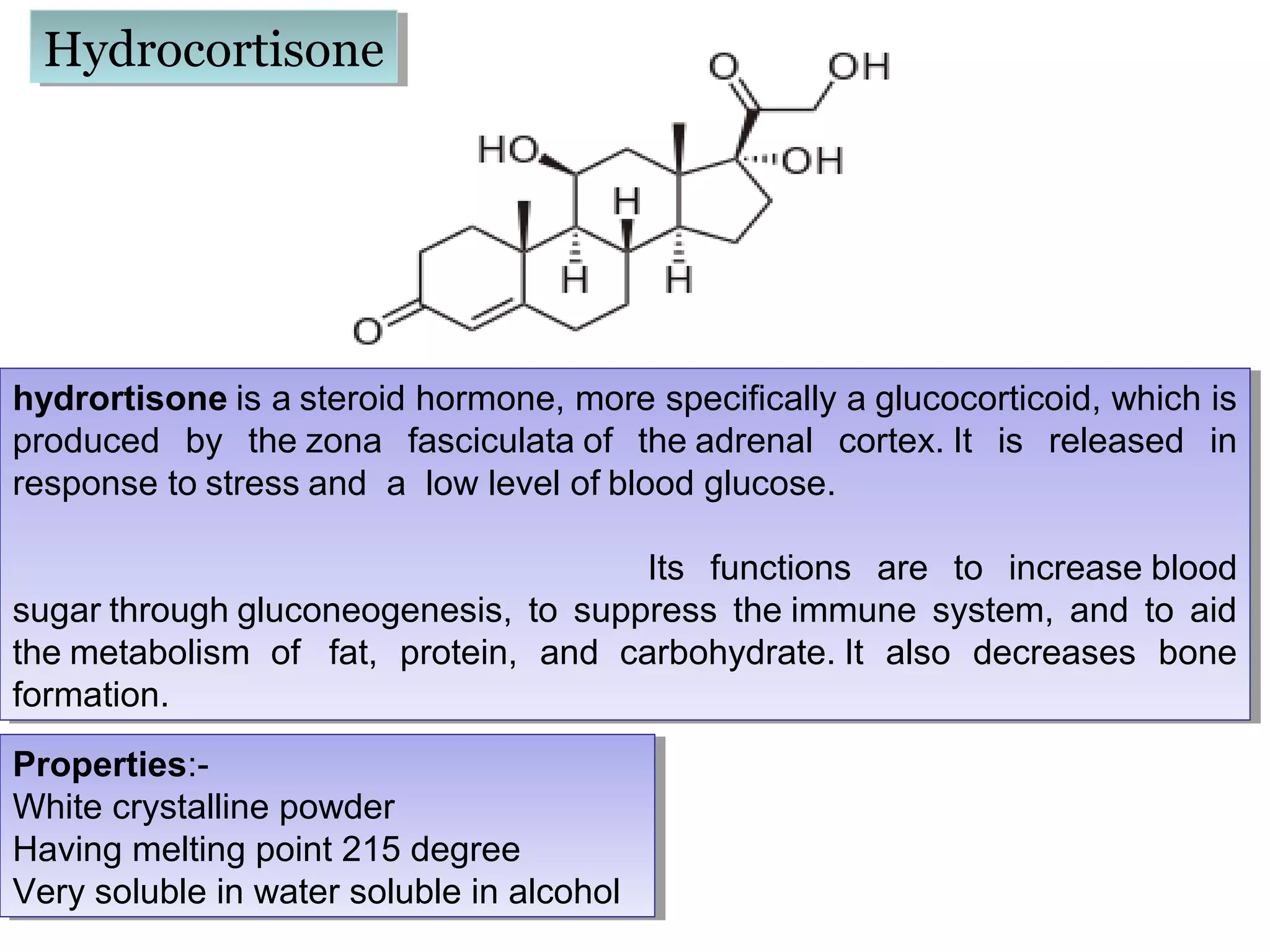
HydrocortisoneHydrocortisone
hydrortisone is a steroid hormone, more specifically a glucocorticoid, which is
produced by the zona fasciculata of the adrenal cortex. It is released in
response to stress and a low level of blood glucose.
Its functions are to increase blood
sugar through gluconeogenesis, to suppress the immune system, and to aid
the metabolism  of   fat, protein, and  carbohydrate. It also decreases bone
formation.
hydrortisone is a steroid hormone, more specifically a glucocorticoid, which is
produced by the zona fasciculata of the adrenal cortex. It is released in
response to stress and a low level of blood glucose.
Its functions are to increase blood
sugar through gluconeogenesis, to suppress the immune system, and to aid
the metabolism  of   fat, protein, and  carbohydrate. It also decreases bone
formation.
Properties:-
White crystalline powder
Having melting point 215 degree
Very soluble in water soluble in alcohol
Properties:-
White crystalline powder
Having melting point 215 degree
Very soluble in water soluble in alcohol
Mechanism of action:-
Dose:-
Adult ,oral for replacement ,25-50 mg/day ,
for anti inflammatory use, 20-240 mg a day.
Dose:-
Adult ,oral for replacement ,25-50 mg/day ,
for anti inflammatory use, 20-240 mg a day.
• Cushing’s syndrome
• Osteoporosis
• Tendency to hyperglycaemia
• Negative nitrogen balance
• Increased appetite
• Increased susceptibility
to infections
• Obesity, etc.
AdverseAdverse
effects ofeffects of
Glucocorti-Glucocorti-
costeroidscosteroids
Cushing’s
syndrome
Contraindications
•Peptic ulcer
•Diabetes mellitus
•Hypertension
•Pregnancy (risk foetal defects)
•Psychosis
•Epilepsy
•Chronic heart failure
•Renal failure
Clinical uses:
• Allergic Rhinitis
• Rheumatoid Arthritis
• Asthma
• Multiple Sclerosis
• Carpal Tunnel Syndrome
• Gout
• Psoriasis
• Inflammatory Bowel Disease
• Sinusitis
• Lupus Erythematosus
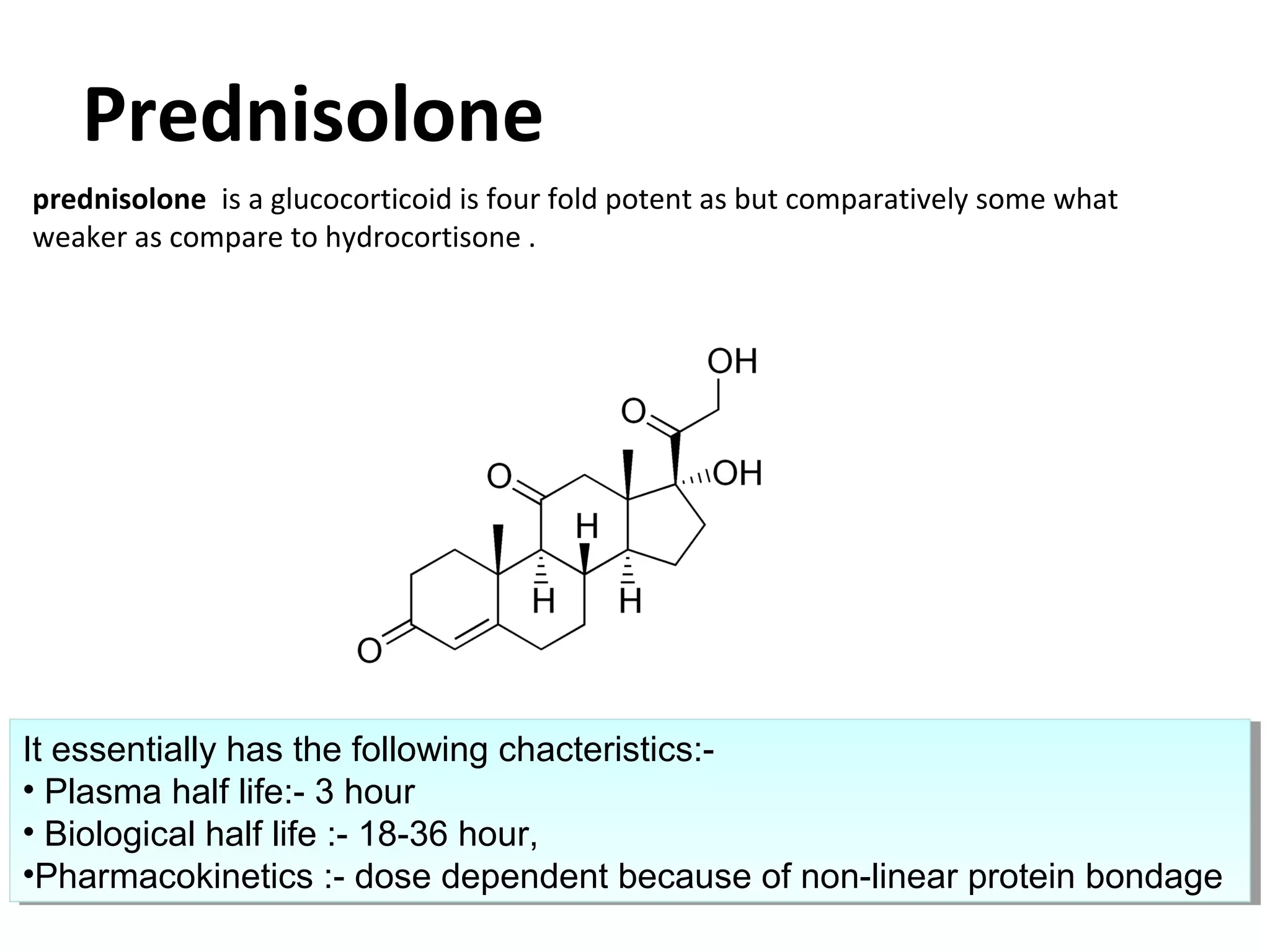
prednisolone  is a glucocorticoid is four fold potent as but comparatively some what 
weaker as compare to hydrocortisone .
Prednisolone 
It essentially has the following chacteristics:-
• Plasma half life:- 3 hour
• Biological half life :- 18-36 hour,
•Pharmacokinetics :- dose dependent because of non-linear protein bondage
It essentially has the following chacteristics:-
• Plasma half life:- 3 hour
• Biological half life :- 18-36 hour,
•Pharmacokinetics :- dose dependent because of non-linear protein bondage
Prednisolone is prepared by the microbiological method starting with hydrocortisone
using Corynebacterium simplex, which selectively cause dehydrogenation of the initial
product at C-1 and C-2 position
Hydrocortisone 
prednisolone 
Incubation with
Corynebacterium
simplex
Dose:- Adult oral:5-60 mg per day;
IM/IV injection :10-40 mg ;
topical : 0.25%
Dose:- Adult oral:5-60 mg per day;
IM/IV injection :10-40 mg ;
topical : 0.25%
MineralocorticoidsMineralocorticoidsMineralocorticoidsMineralocorticoids
deoxycorticosteronedeoxycorticosterone
FludrocorticosoneFludrocorticosone
AldosteronAldosteron
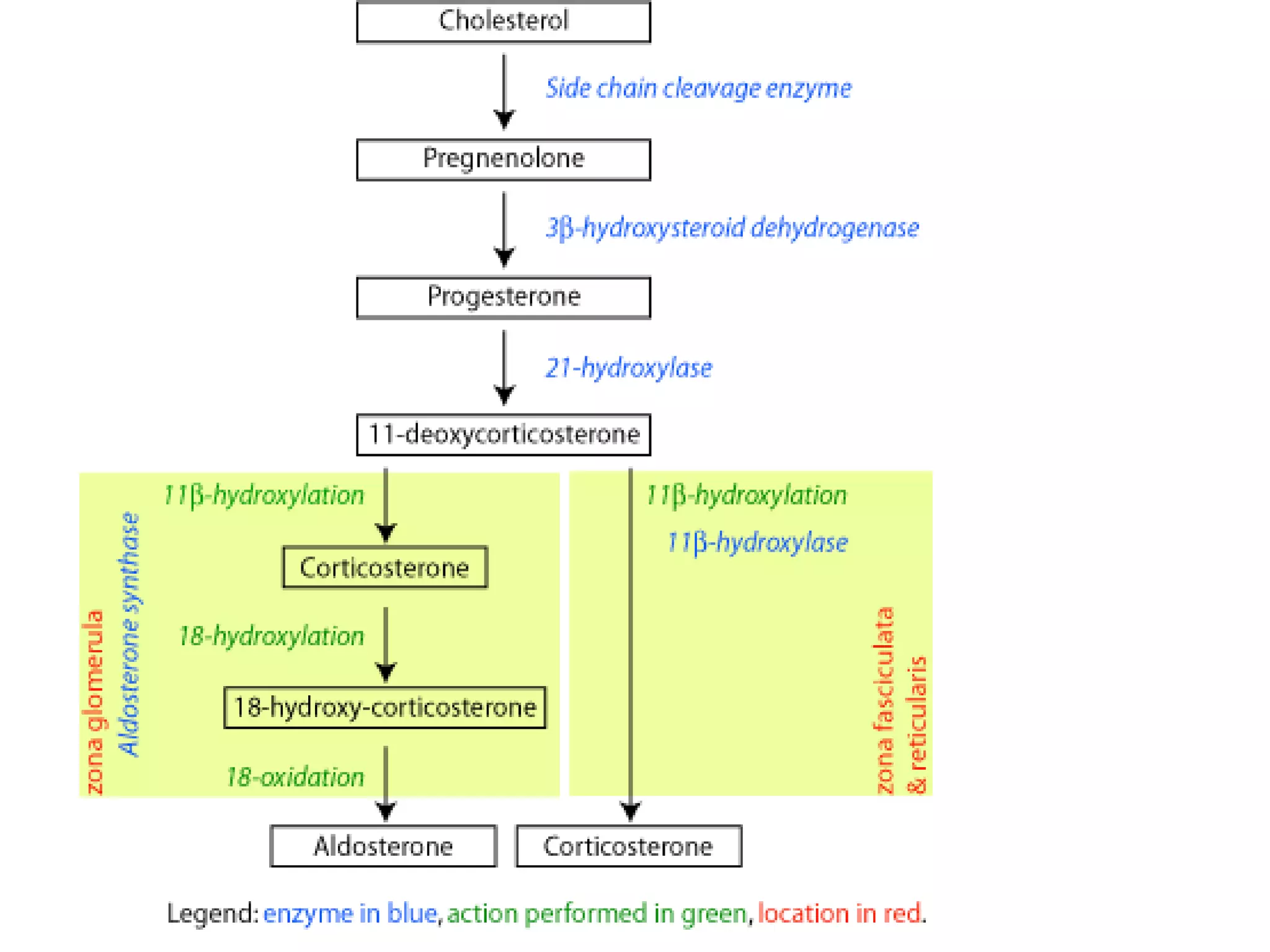
Aldosterone is a steroid hormone (mineralocorticoid family) produced by the
outer section (zona glomerulosa) of the adrenal cortex in the adrenal gland.
•It plays a central role in the regulation of blood pressure,
•increasing reabsorption of ions and water in the kidney,
•aldosterone is pathogenic and contributes to the development and
progression of cardiovascular and renal disease,
•Aldosterone has exactly the opposite function of the atrial natriuretic
hormone secreted by the heart.
•It plays a central role in the regulation of blood pressure,
•increasing reabsorption of ions and water in the kidney,
•aldosterone is pathogenic and contributes to the development and
progression of cardiovascular and renal disease,
•Aldosterone has exactly the opposite function of the atrial natriuretic
hormone secreted by the heart.
21-o-acetyl corticosterone
Nitrite derivatives
Oxime
Semiacetal
aldosterone
NaNO2
NOCl
CH3COOH
OH
SAR of Adreno corticosteroidsSAR of Adreno corticosteroids
1.All cortical steroids contains alpha, beta-unsaturated ketones in ring A and
COCH2OH moiety attached to C-17 that has beta-configuration. These
requirement are essential for mineralo corticoid activity
2.Oxygen at C-11 is essential for glucocorticoid activity.A hydroxy group is
superior to C-11 keto group.
3.A 17 alpha-hydroxy increases glucorticoid activity.
4.Introduction of a fluoro to 6alpha or 9 alpha position increases both
mineracorticoid and glucocorticoid activity.
6.Introduction of methyl or hydroxy at C-16 diminishes the minerao corticoid
but has little effect on the antiinflammatory action.
5.Insertion of double bond at C-1, 2 position enhance the glucocorticoid and
anti-inflammatory activity.
Thank
you…

Steroids

  • 1.
    SteroidSSteroidS BY HAriSHANKAr SAHU B.PHArMA FiNALYeAr SriP,KUMHAri HAriSHANKAr SAHU B.PHArMA FiNAL YeAr SriP,KUMHAri
  • 2.
    SteroidSSteroidS These rings aresynthesized by biochemical processes from cyclization of a thirty-carbon chain, squalene, into lanosterol or cycloartenol. Hundreds of distinct steroids are found in animals, fungi, plants, and else where and many steroids are necessary to life at all levels. They include cholesterol, the sex hormones estradiol and testosterone, bile acids, and drugs such as the anti-inflammatory agent dexamethasone. These rings are synthesized by biochemical processes from cyclization of a thirty-carbon chain, squalene, into lanosterol or cycloartenol. Hundreds of distinct steroids are found in animals, fungi, plants, and else where and many steroids are necessary to life at all levels. They include cholesterol, the sex hormones estradiol and testosterone, bile acids, and drugs such as the anti-inflammatory agent dexamethasone. Steroids comprise a group of cyclical organic compounds whose basis is a characteristic arrangement of seventeen carbon atoms in a four- ring structure linked together from three 6-carbon rings followed by a 5- carbon ring and an eight-carbon side chain on carbon 17 (illustration on right). Steroids comprise a group of cyclical organic compounds whose basis is a characteristic arrangement of seventeen carbon atoms in a four- ring structure linked together from three 6-carbon rings followed by a 5- carbon ring and an eight-carbon side chain on carbon 17 (illustration on right).
  • 3.
    Mechanism of Actionof Steroid Receptors Binding protein Steroid R Gene Transcription RNA mRNA Protein
  • 4.
    cLASSiFicAtioN Various authors usedslightly different means of classifying the steroids . But here the one selected here divides them into five categories depending on the type of substituent group at C-17,i.e., group R 1.Sterols:- where R is an aliphatic side chain. They contain usually one or more hydroxyl groups attached in alicyclic linkage 2.Sex Hormones:- where R bears a ketonic or hydroxyl group and mostly possess a two carbon side chain 3.Cardiac Glycoside :- where R is a lactone ring . The glycosides also contains sugars linked through oxygen in other parts of the molecule. Normally on hydrolysis it yields this sugar together with cardiac aglycon 4.Bile Acids :- where R is essentially a five-carbon side chain ending with a carboxylic acid moiety 5.Sapogenins :- where R contains an oxacyclic (etheral) ring system. 1.Sterols:- where R is an aliphatic side chain. They contain usually one or more hydroxyl groups attached in alicyclic linkage 2.Sex Hormones:- where R bears a ketonic or hydroxyl group and mostly possess a two carbon side chain 3.Cardiac Glycoside :- where R is a lactone ring . The glycosides also contains sugars linked through oxygen in other parts of the molecule. Normally on hydrolysis it yields this sugar together with cardiac aglycon 4.Bile Acids :- where R is essentially a five-carbon side chain ending with a carboxylic acid moiety 5.Sapogenins :- where R contains an oxacyclic (etheral) ring system.
  • 5.
  • 6.
    The sterol maybe further sub divided into the following three categories , namely:- (a)Zoosterols:- such sterols those are obtained from of plants are obtained from the animal kingdom only. Example- (i)Cholesterol, (ii)coprostanol.etc. (b)Phytosterols:-such sterols those are derived from the plant sources. (c) Mycosterols :- such sterols those are obtained from either yeast or fungi.
  • 7.
    Sex hormone areusually classified under the following three heads ,namely:- 1. Androgens(male hormones):- 2.Oestrogens(female hormones):- (i)oestrone (ii)oestradiol (iii)stilbesterol (iv)hexesterol etc. Sex Hormones
  • 8.
    Cardiac Glycosides 3.Gestogens(the carpusLuteum hormones):- Example:- Example:- digitoxine DIGOXIN
  • 9.
    Bile salt The liversecretion a clear, golden yellow viscous liquid known as ‘bile’ .It is stored in gall bladder and is useful for digestive system. Examples:- Cholic acid deoxycholic acid
  • 10.
    Sapogenins Sapogenins are theaglycones, or non-saccharide, portions of the family of natural products known as saponins. Sapogenins contain steroid or other triterpene frameworks as their key organic feature. Examples:- digitonin diosgenin
  • 11.
    Androgens & anabolicsteroidsAndrogens & anabolic steroidsAndrogens & anabolic steroidsAndrogens & anabolic steroids The term androgens includes a number of natural and synthetic compounds that exibite the masclinizing and anabolic action of testosterone. The main physiological , endogenic , and androgenic hormonese. Androgen , commonly referred to as male sex hormones or anabolic steroids , in perticular ,testosteron ,are produced by male sex glands in the male body.
  • 12.
    TestosteroneTestosterone It is thenatural androgen secreted by the interstitial cells of the testis; it is necessary for normal spermatogenesis, for the development of the male secondary sex characteristics, and for the growth, at puberty, of the sexual apparatus. I . Properties A creamy white crystaline powder Melting point at 118-123 degree C , Insoluble in water,freely soluble in alcohol and in vegetable oil, It has short duration of action and half life about 4 hour.
  • 13.
  • 14.
    Mechanism of action Mechanismof action Testosteron bind to a specific receptor in a target cell.testosteron itself is the active ligand in muscle and liver; but in others it must be metabolised to dihydrotestosterone (DHT) to show its action Testosteron bind to a specific receptor in a target cell.testosteron itself is the active ligand in muscle and liver; but in others it must be metabolised to dihydrotestosterone (DHT) to show its action
  • 15.
    Marketed products Chemical names •Testosterone Esters • Nandrolone Esters • Stanozolol • Trenbolone Acetate • Mesterolone • Stanozolol Dose For prolonged treatment ,subcutaneously ,600 mg; For brest cancer upto 1.5gm alternatively 10 to 30 mg per day through the buccal administration
  • 16.
    side effects • NegativeEffects - Depression - Violent behavior - Bad breath - Cancer causing - Heart attack & Stroke - Abdominal pain - Possible infertility USES:- Treatment of breast cancer Growth and development of male sex organs Important for (male) sex drive and performance Development of secondary sexual characteristics Important role in spermatogenesis Testosterone is necessary for normal sperm development.
  • 17.
    Fluoxymesterone Fluoxymesterone  is an anabolicsteroid with strong androgenic properties that has been used in the treatment of male hypogonadism, delayed puberty in males, and in the treatment of breast neoplasms in women. It is approximately 5 times as potent as methyltestosterone. The antitumor activity of fluoxymesterone appears related to reduction or competitive inhibition of prolactin receptors or estrogen receptors or production. It is considered a very toxic oral drug. the half-life of fluoxymesterone is about 9.2 hours.
  • 18.
    Fluoxymesterone facilitates formationof body muscle mass and strengthens the process of tissue development. The main indications for using Fluoxymesterone , as well as other anabolic steroids , are abnormal protein anabolism asthenia ,diseases accompanied by protein loss, adrenal insuficieny ,steroid diabetes ,and prolonged condition of sluggishness Fluoxymesterone facilitates formation of body muscle mass and strengthens the process of tissue development. The main indications for using Fluoxymesterone , as well as other anabolic steroids , are abnormal protein anabolism asthenia ,diseases accompanied by protein loss, adrenal insuficieny ,steroid diabetes ,and prolonged condition of sluggishness
  • 19.
    SAR of AndrogensSARof Androgens 1.For a substance to have activity ,it must contain the andostane skeleton. 2.Oxygen at C-3 and C-17 are not essential for the androgenic activity.
  • 20.
    3.The basic nucleushaving 5-beta-androstane which having androgenic activity ,whereas 5-alpha-androstane having no activity. 4.There should not be chain constriction or extension because it leads to finished the activity. 5.Introduction of 3-hydroxy group and 3-keto group enhance the activity. 6.Hydroxy group at C-17 position has no androgenic or anabolic activity. 7.Halogen substitution produces compounds with decreased activity except when placed at C-4 or C-9 position. For example , 9-fluoro derivatives produces an anabolic effect 20 times that of 17 alpha-methyl testosterone 8.Halogen introduction will decrese the activity except the C-4 and C-9.
  • 21.
    9.Introduction of doublebond at C-1 position increases the anabolic activity for example – methandrostenolone is more active than methyltestosterone 10.Replacement of carbon atom at C-2 position by oygen (e.g. oxandrolone) gives the oral anabolic activity.
  • 22.
    11.Removal of CH3group in testosterone gives 19-nor testosterone with more anabolic activity and less androgenic activity when compared with testosterone. 12.The introduction of heterocyclic system into the steroid nucleus in ring A improve the anabolic activity . For example ,stanozolol are found to possess more anabolic activity, possessing pyrazole .
  • 23.
    EstrogensEstrogens Estrogen are agroup of steroid compounds that function as the primary female sex hormones. Three naturally occuring estrogen are estradiol,estriol and estrone ,In the body these are all produced from androgens through enzyme action. SOURCE:- Estrogen are produced by developing follicles in the ovaries , the corpus luteum and the placenta, some estrogens are also produced in smaller amounts by other tissues such as liver, adrenal glands and the breasts . These secondary source of estrogen are especially important in post menopausal women.
  • 24.
    The biosynthetic pathwayfor the estrogens
  • 25.
    EstradiolEstradiol Estradiol is ahuman sex hormone and steroid, and the primary female sex hormone. It is important in the regulation of the estrous and menstrual female reproductive cycles. Estradiol is essential for the development and maintenance of female reproductive tissues , but it also has important effects in many other tissues including bone. While estrogen levels in men are lower compared to women, estrogens have essential functions in men as well. Properties Creamy white crystalline powder , Hygroscopic in nature Having melting point between173-179 degree; Insoluble in water and soluble in a alcohol
  • 26.
    Conversion of testosteroneto estradiol:- Estradiol, like other steroids, is derived from cholesterol. After side chain cleavage and using the delta-5 or the delta-4 pathway,androstenedione is the key intermediary. A fraction of the androstenedione is converted to testosterone, which in turn undergoes conversion to estradiol by an enzyme called aromatase.
  • 27.
    Mechanism of action:- Estradiolacts primarily as an agonist of the estrogen receptor (ER), a nuclear steroid hormone receptor. There are two subtypes of the ER, ERα and ERβ, and estradiol potently binds to and activates both of these receptors. The result of ER activation is a modulation of gene transcription and expression in ER expressing cells, which is the predominant mechanism by which estradiol mediates its biological effects in the body. DOSE:- Oral,2mg per day; intramuscular ,1.5 mg 2 or 3 times weekly UESE:- -- It helps to regulate and subsequent maintence of female sex organs, certain function of the uterus and all the secondary sex features and the mammary glands.
  • 28.
    Estriol It is availablefor compounding into number of different formulation for use in Hormonal replacement therapy . It can be used alone or its combination with estradiol or with estrone. --Creamy white ,crystalline powder ,soluble in alcohol.
  • 29.
    The biosynthetic pathwayfor the estrogens
  • 30.
    Does:- For menopausal symptoms,250-500 mg per day. Therapeutic use:- Estriol is used to mimic the activity of the naturally occurring female sex hormone oestrogen. It is used in hormone replacement therapy (HRT). it is used to treat problems associated with the vagina that are caused by a lack of oestrogen in the body. It is used to relieve symptoms of menopause, or after surgery to remove the ovaries. this drug can include relief from symptoms associated with a lack of oestrogen including dryness and itching of the vagina, uncomfortable or painful sexual intercourse. Treatment of symptoms associated with a lack of oestrogen To help wound healing after vaginal surgery
  • 31.
    SAR of estrogen 1.Steroid nucleus is not necessary for estrogenic activity .Many constituents of plants like genstein ,coumestrol don’t contain steroid nucleus but possess estrogenic activity 2. The biologic activity varies with the mode of administration of estrogens . The order of activity of three naturally occuring steroids when administered subcutaneosly is estradiol ,estrone and estriol.the order of activity changes to estriol ,estradiol and estrone ,when the drugs are administered orally. 3. Estradiol is not effective orally due to rapid metabolism in liver but placement of ethinyl group at C-17 position increase the resistance to metabolic inactivation and make the compound orally effective . 4. Similarly methylation of 3-OH group .e.g. mesteranol make the compound orally effective 5. Easter derivatives (acetates and benzoates) of the naturally occuring and synthetic estrogens have prolonged action. 6. Insertion of OH group at C-6,C-7 and C-11 position reduces estrogenic activity.
  • 32.
    Progestational agentProgestational agentProgestationalagentProgestational agent They also called luteum hormoens ,mostly secreted by the corpus luteum portion of the ovary and the metabolised to various inactive products ,e.g. pregnanediol. The metabolites are essentially excreated through urine.
  • 33.
    The natural progestationalhormone is progesterone , which is secreated by the corpus luteum in the second part of the menstrual cycle. Small amounts are also secreted by the testis in the male and the adrenal cortex in both sex and large amounts are secreted by the placenta. PROGESTERONEPROGESTERONE
  • 34.
    Synthesis:- Acetylation of diosgeninat 200 degree C gives the corresponding diosgenyl diacetate which upon oxidation with chromium-6-oxide removes the side chain at C-17 and the resulting product on reduction followed by hydrolysis yields pregnelone .This on being subjected to Oppenauer oxidation affords the official compound.
  • 35.
    uses 1.Prevent habitual abortion. 2.Fortreatment of functional uterine bleeding resulting due to the lack of oestrogens and progesterone 3.For treatment of dysmenorrhoea or painful menstruation 4.Pregnancy diagnosis, 5.Oral contraceptives, 6.For treatment of an advanced carcinoma of breasts. 7.To treat premature discomfort in the breasts 8.Progesterone can be used to treat catamenial epilepsy. 9.Progesterone also has a role in skin elasticity and bone strength, in respiration, in nerve tissue and in female sexuality, and the presence of progesterone receptors in certain muscle and fat tissue. DOSE:- 10-100 mg intra muscular Side effects:- The commonly asociated side-effects with progestin therapy are nausea, vomiting, drowsiness,edema ,irregular bleeding etc.
  • 36.
  • 37.
    Glucocorticoids  Glucocorticoids may becategorized into three sub –groups as given-  (a) Short-to medium acting glucocorticoids:- Hydrocortisone  cortisone  prednisolone 
  • 38.
    (b) Intermediate actingglucocorticoids:- (b) Long acting glucocorticoids:- Triamcinolone  Flucortisone Betamethasone  Dexamethasone  
  • 39.
    HydrocortisoneHydrocortisone hydrortisone is a steroid hormone,more specifically a glucocorticoid, which is produced by the zona fasciculata of the adrenal cortex. It is released in response to stress and a low level of blood glucose. Its functions are to increase blood sugar through gluconeogenesis, to suppress the immune system, and to aid the metabolism  of   fat, protein, and  carbohydrate. It also decreases bone formation. hydrortisone is a steroid hormone, more specifically a glucocorticoid, which is produced by the zona fasciculata of the adrenal cortex. It is released in response to stress and a low level of blood glucose. Its functions are to increase blood sugar through gluconeogenesis, to suppress the immune system, and to aid the metabolism  of   fat, protein, and  carbohydrate. It also decreases bone formation. Properties:- White crystalline powder Having melting point 215 degree Very soluble in water soluble in alcohol Properties:- White crystalline powder Having melting point 215 degree Very soluble in water soluble in alcohol
  • 40.
    Mechanism of action:- Dose:- Adult,oral for replacement ,25-50 mg/day , for anti inflammatory use, 20-240 mg a day. Dose:- Adult ,oral for replacement ,25-50 mg/day , for anti inflammatory use, 20-240 mg a day.
  • 41.
    • Cushing’s syndrome •Osteoporosis • Tendency to hyperglycaemia • Negative nitrogen balance • Increased appetite • Increased susceptibility to infections • Obesity, etc. AdverseAdverse effects ofeffects of Glucocorti-Glucocorti- costeroidscosteroids Cushing’s syndrome
  • 42.
    Contraindications •Peptic ulcer •Diabetes mellitus •Hypertension •Pregnancy(risk foetal defects) •Psychosis •Epilepsy •Chronic heart failure •Renal failure Clinical uses: • Allergic Rhinitis • Rheumatoid Arthritis • Asthma • Multiple Sclerosis • Carpal Tunnel Syndrome • Gout • Psoriasis • Inflammatory Bowel Disease • Sinusitis • Lupus Erythematosus
  • 43.
    prednisolone  is a glucocorticoid is four fold potent as but comparatively some what  weaker as compare to hydrocortisone . Prednisolone  It essentially hasthe following chacteristics:- • Plasma half life:- 3 hour • Biological half life :- 18-36 hour, •Pharmacokinetics :- dose dependent because of non-linear protein bondage It essentially has the following chacteristics:- • Plasma half life:- 3 hour • Biological half life :- 18-36 hour, •Pharmacokinetics :- dose dependent because of non-linear protein bondage
  • 44.
    Prednisolone is preparedby the microbiological method starting with hydrocortisone using Corynebacterium simplex, which selectively cause dehydrogenation of the initial product at C-1 and C-2 position Hydrocortisone  prednisolone  Incubation with Corynebacterium simplex Dose:- Adult oral:5-60 mg per day; IM/IV injection :10-40 mg ; topical : 0.25% Dose:- Adult oral:5-60 mg per day; IM/IV injection :10-40 mg ; topical : 0.25%
  • 45.
  • 46.
    AldosteronAldosteron Aldosterone is asteroid hormone (mineralocorticoid family) produced by the outer section (zona glomerulosa) of the adrenal cortex in the adrenal gland. •It plays a central role in the regulation of blood pressure, •increasing reabsorption of ions and water in the kidney, •aldosterone is pathogenic and contributes to the development and progression of cardiovascular and renal disease, •Aldosterone has exactly the opposite function of the atrial natriuretic hormone secreted by the heart. •It plays a central role in the regulation of blood pressure, •increasing reabsorption of ions and water in the kidney, •aldosterone is pathogenic and contributes to the development and progression of cardiovascular and renal disease, •Aldosterone has exactly the opposite function of the atrial natriuretic hormone secreted by the heart.
  • 48.
  • 49.
    SAR of AdrenocorticosteroidsSAR of Adreno corticosteroids 1.All cortical steroids contains alpha, beta-unsaturated ketones in ring A and COCH2OH moiety attached to C-17 that has beta-configuration. These requirement are essential for mineralo corticoid activity 2.Oxygen at C-11 is essential for glucocorticoid activity.A hydroxy group is superior to C-11 keto group. 3.A 17 alpha-hydroxy increases glucorticoid activity. 4.Introduction of a fluoro to 6alpha or 9 alpha position increases both mineracorticoid and glucocorticoid activity.
  • 50.
    6.Introduction of methylor hydroxy at C-16 diminishes the minerao corticoid but has little effect on the antiinflammatory action. 5.Insertion of double bond at C-1, 2 position enhance the glucocorticoid and anti-inflammatory activity.
  • 51.