PAVITHRA M
FUNCTIONS OF
GASTROINTESTINAL TRACT
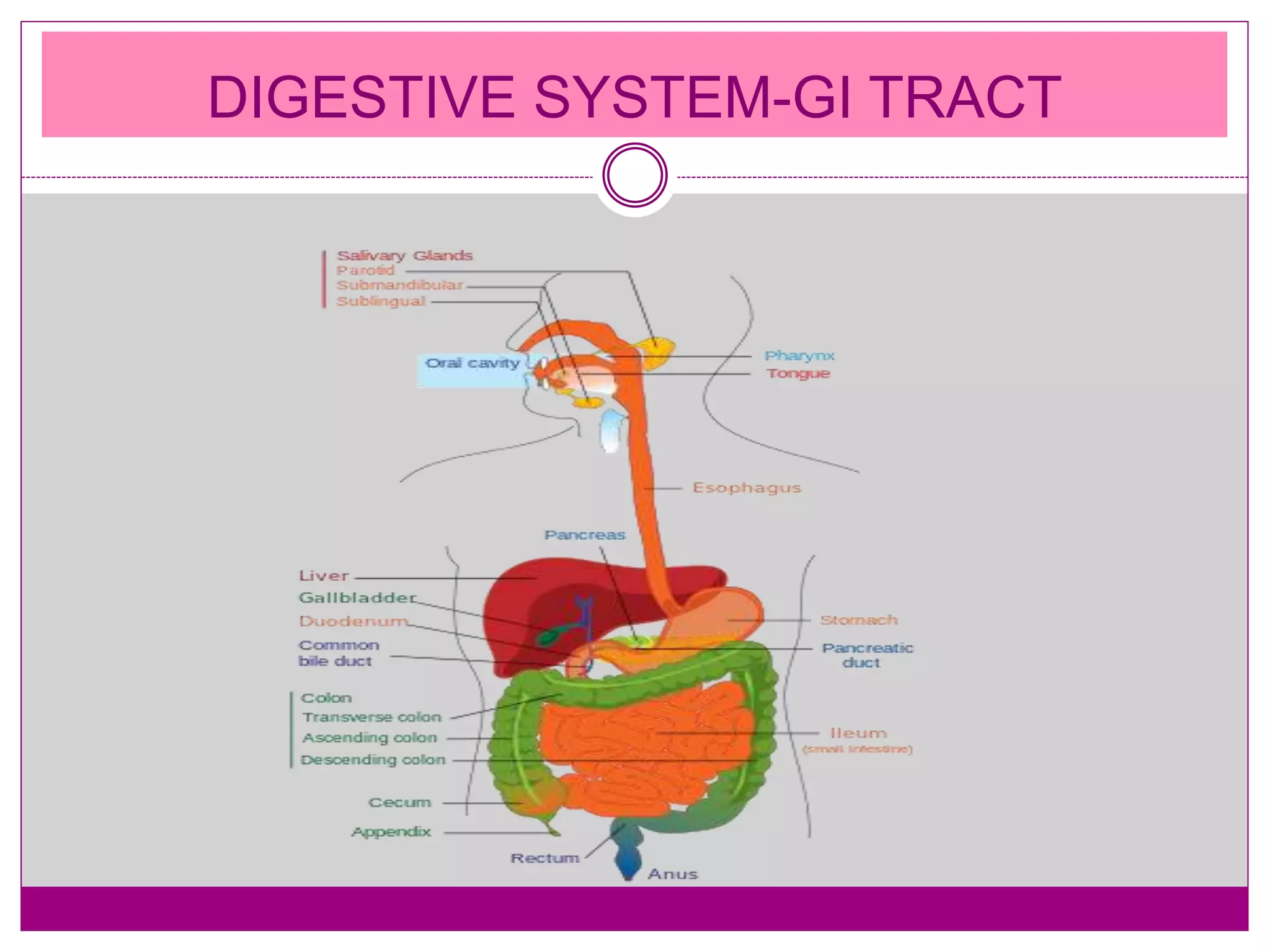
DIGESTIVE SYSTEM-GI TRACT
The Major functions - GI Tract
1.Motility: This refers to the movement of food through digestive
tract through the processes of
 a. Ingestion: Taking food into the mouth.
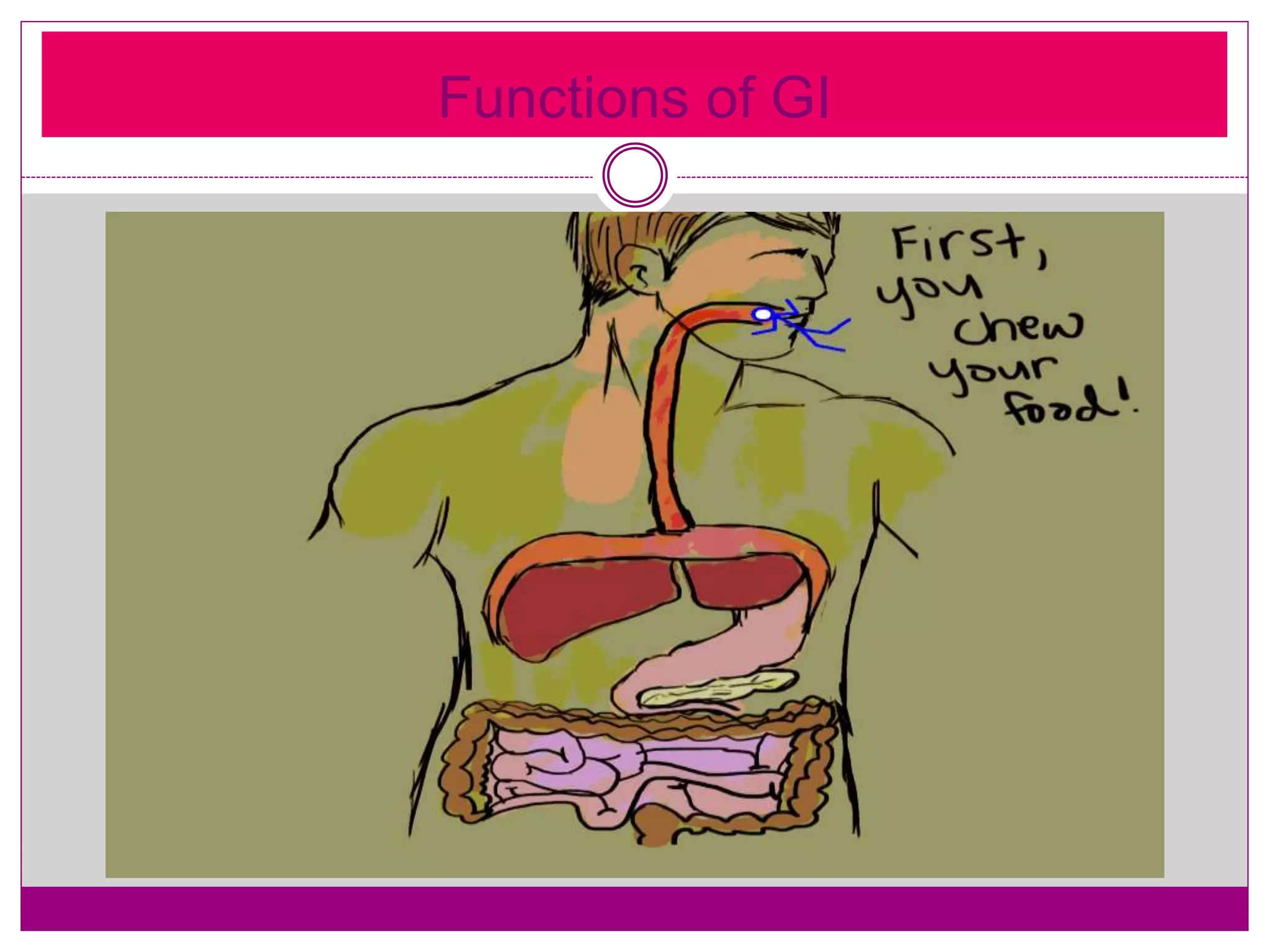
 b. Mastication: Chewing the food and mixing it with saliva.
 c. Deglutition: Swallowing food.
 d. Peristalsis and segmentation: Rhythmic, wavelike
contractions (peristalsis), and mixing contractions in
different segments (segmentation), move food through the
gastrointestinal tract.
 2. Secretion: This includes both exocrine and endocrine
secretions.
 a. Exocrine secretions: Water, hydrochloric acid,
bicarbonate, and many digestive enzymes are secreted into
the lumen of the gastrointestinal tract.The stomach alone,
for example, secretes 2 to 3 liters of gastric juice a day.
 b. Endocrine secretions: The stomach and small intestine
secrete a number of hormones that help to regulate the
digestive system
 3. Digestion:
 This refers to the breakdown of food molecules into their
smaller subunits, which can be absorbed.
 4. Absorption:
 This refers to the passage of digested end products into the
blood or lymph.
 5. Storage and elimination:
 This refers to the temporary storage and subsequent
elimination of indigestible food molecules.
 6. Immune barrier:
 The simple columnar epithelium that lines the intestine,
with its tight junctions betweencells, provides a physical
barrier to the penetration of pathological organisms and
their toxins. Also, cells of the immune system reside in the
connective tissue located just under the epithelium to
promote immune responses.
Functions of GI
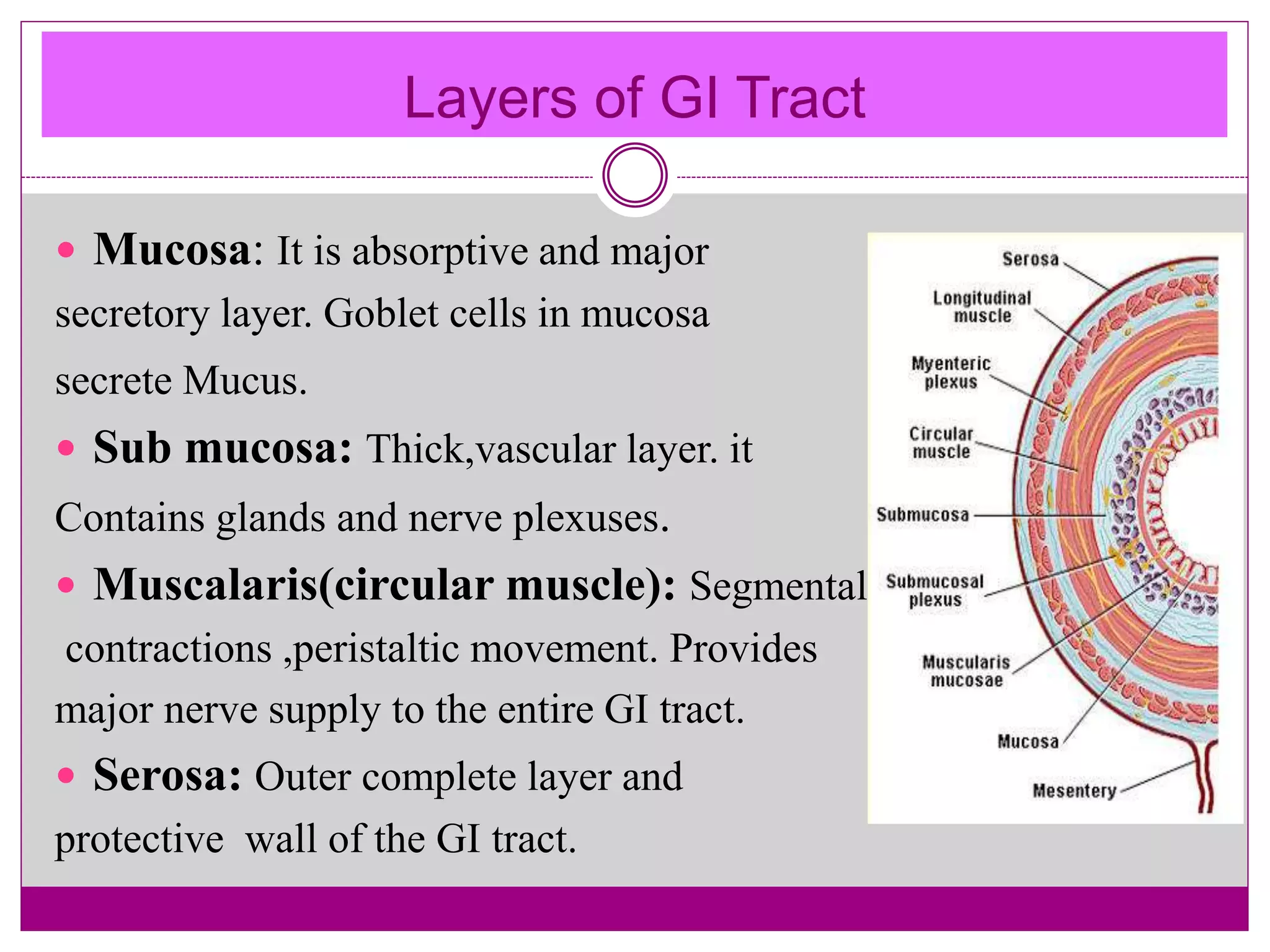
Layers of GI Tract
 Mucosa: It is absorptive and major
secretory layer. Goblet cells in mucosa
secrete Mucus.
 Sub mucosa: Thick,vascular layer. it
Contains glands and nerve plexuses.
 Muscalaris(circular muscle): Segmental
contractions ,peristaltic movement. Provides
major nerve supply to the entire GI tract.
 Serosa: Outer complete layer and
protective wall of the GI tract.
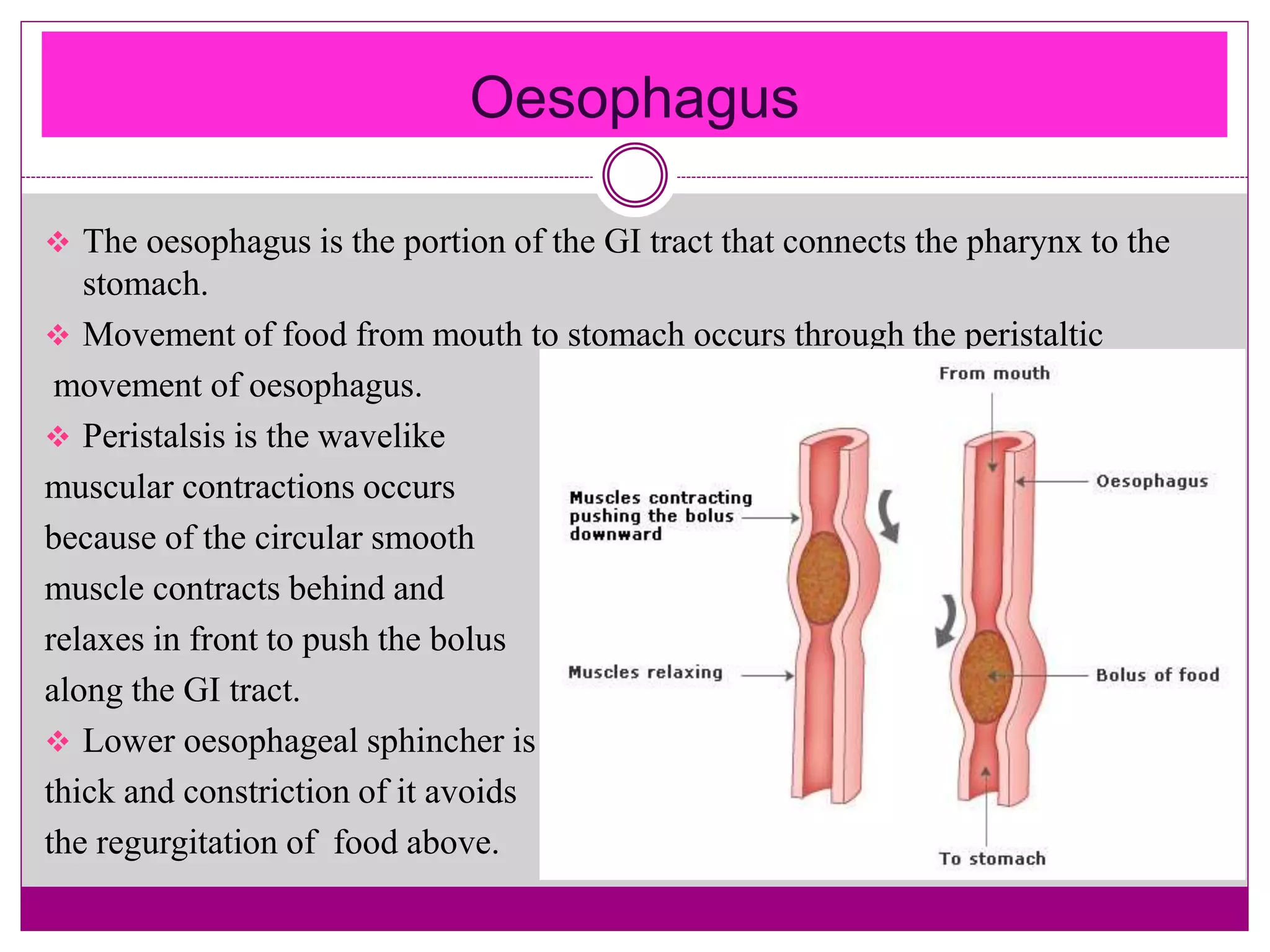
Oesophagus
 The oesophagus is the portion of the GI tract that connects the pharynx to the
stomach.
 Movement of food from mouth to stomach occurs through the peristaltic
movement of oesophagus.
 Peristalsis is the wavelike
muscular contractions occurs
because of the circular smooth
muscle contracts behind and
relaxes in front to push the bolus
along the GI tract.
 Lower oesophageal sphincher is
thick and constriction of it avoids
the regurgitation of food above.
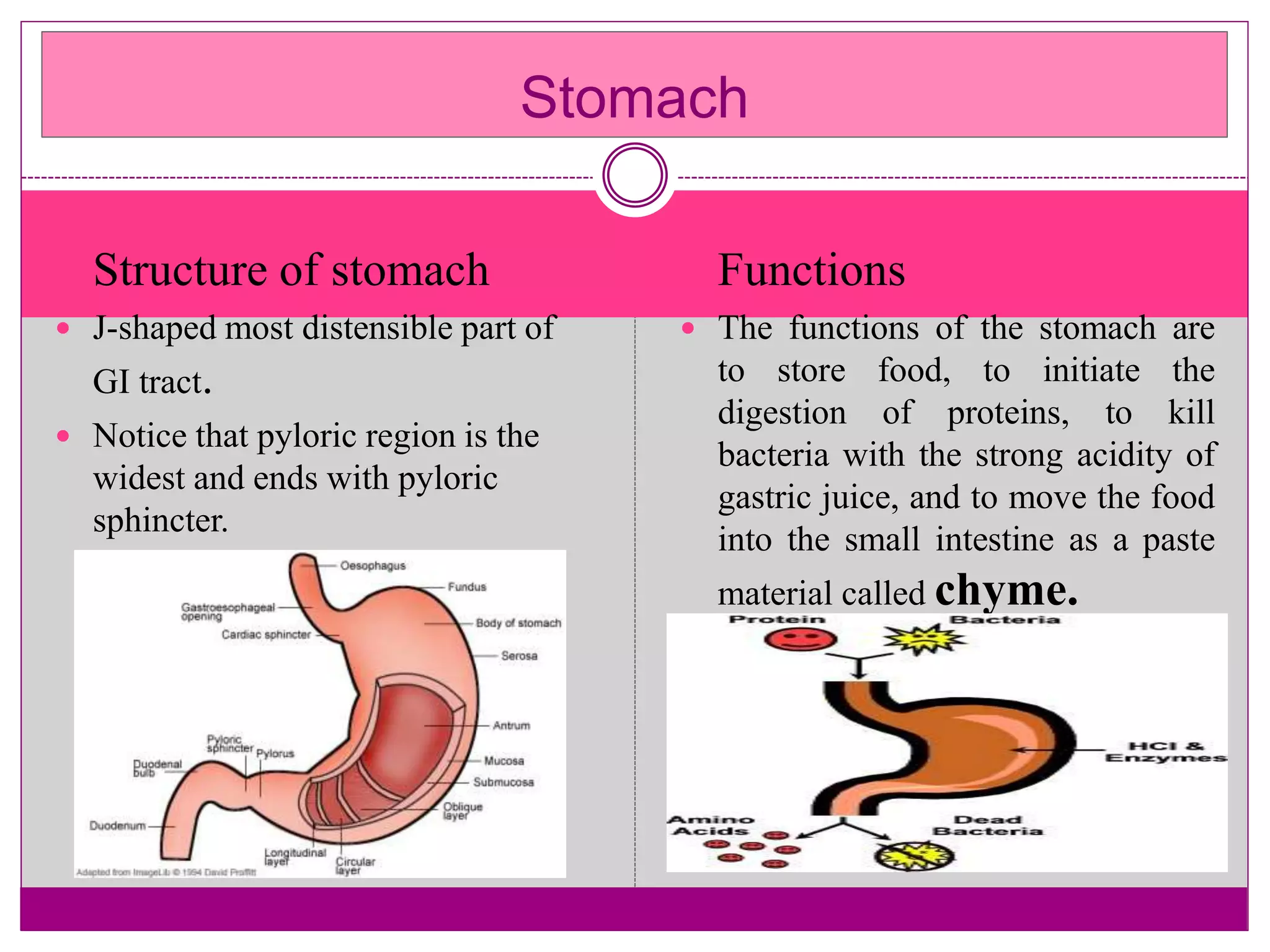
 Structure of stomach
 J-shaped most distensible part of
GI tract.
 Notice that pyloric region is the
widest and ends with pyloric
sphincter.
 Functions
 The functions of the stomach are
to store food, to initiate the
digestion of proteins, to kill
bacteria with the strong acidity of
gastric juice, and to move the food
into the small intestine as a paste
material called chyme.
Stomach
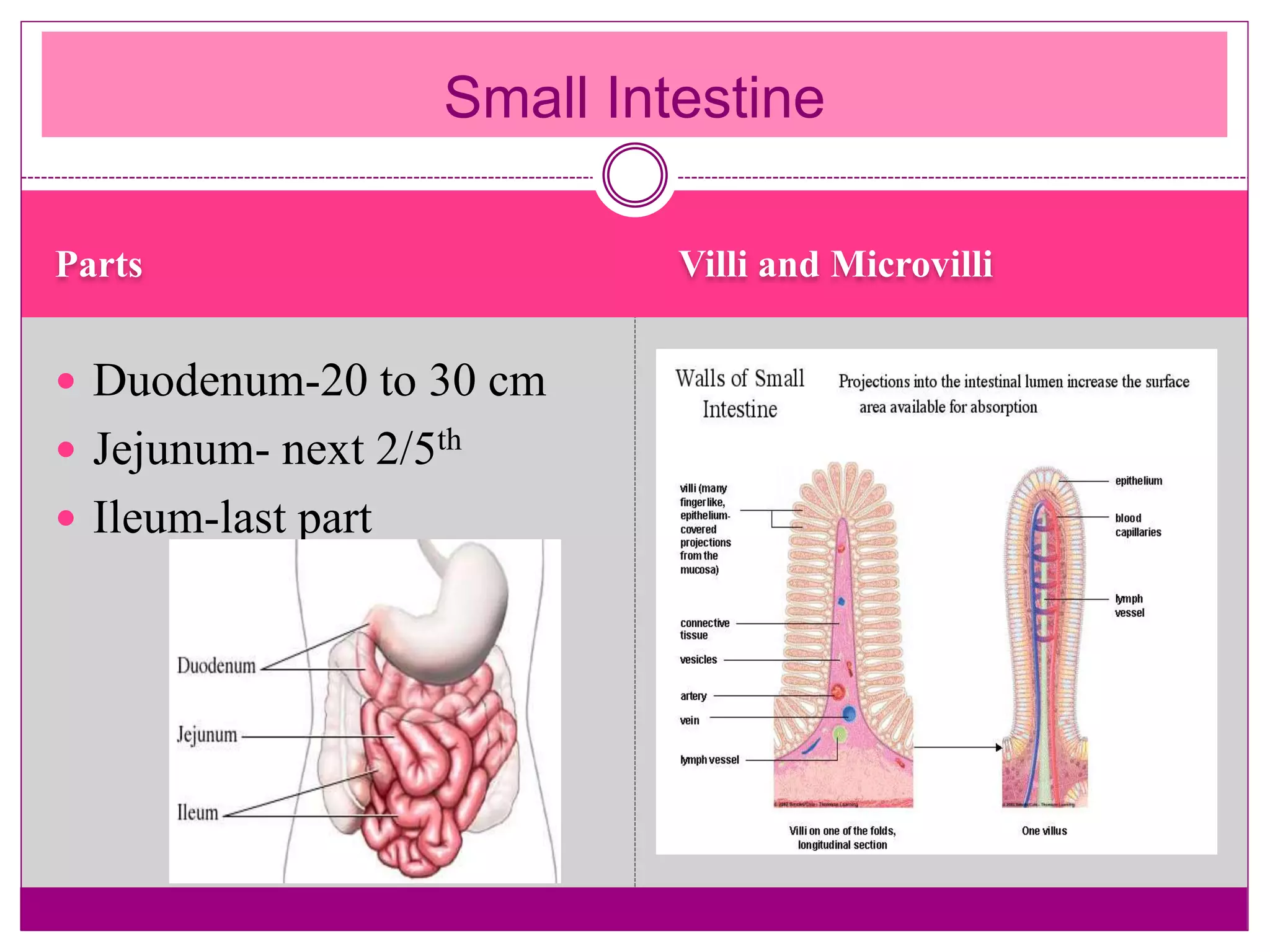
Parts Villi and Microvilli
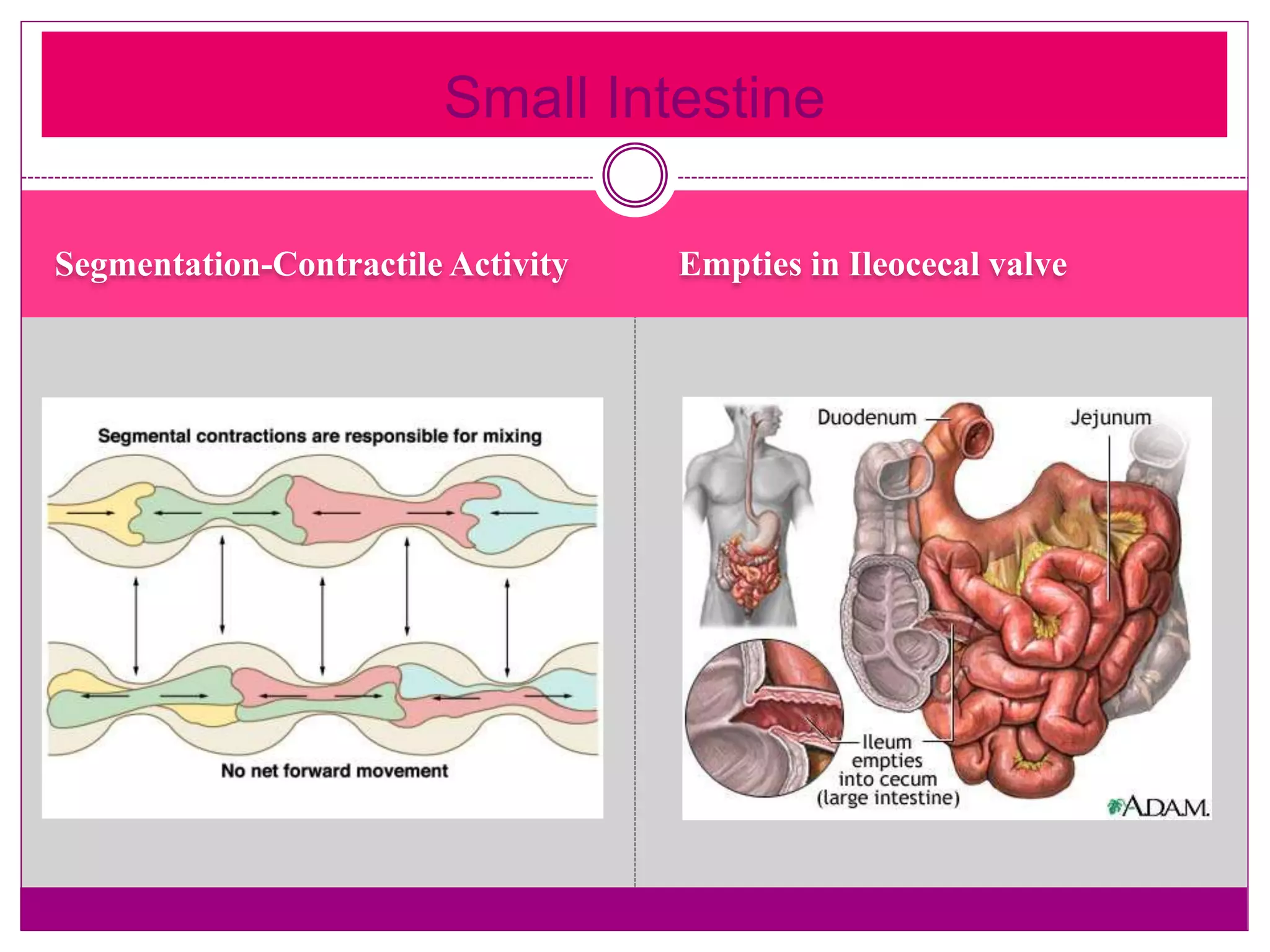
Small Intestine
 Duodenum-20 to 30 cm
 Jejunum- next 2/5th
 Ileum-last part
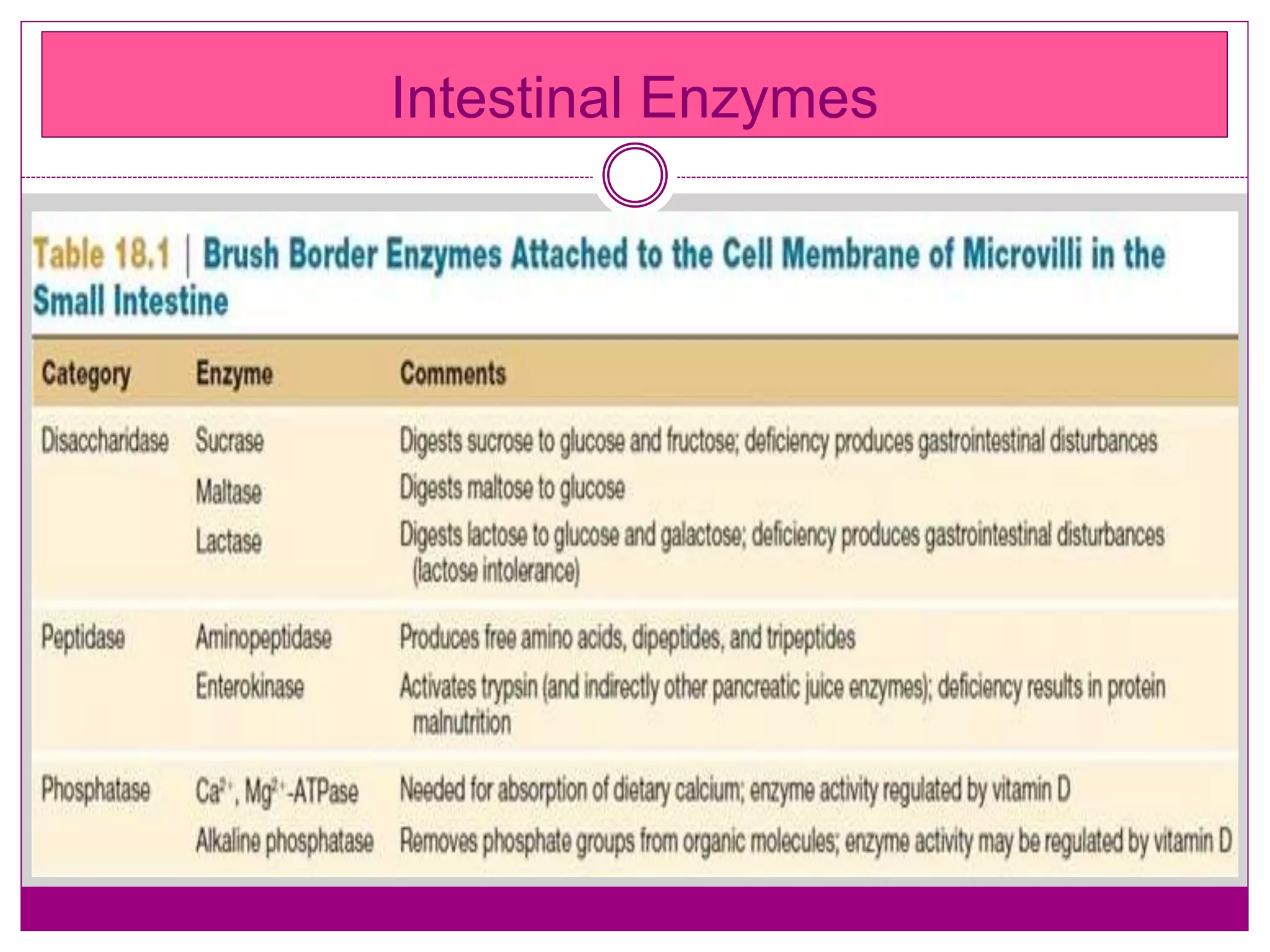
Intestinal Enzymes
Segmentation-Contractile Activity Empties in Ileocecal valve
Small Intestine
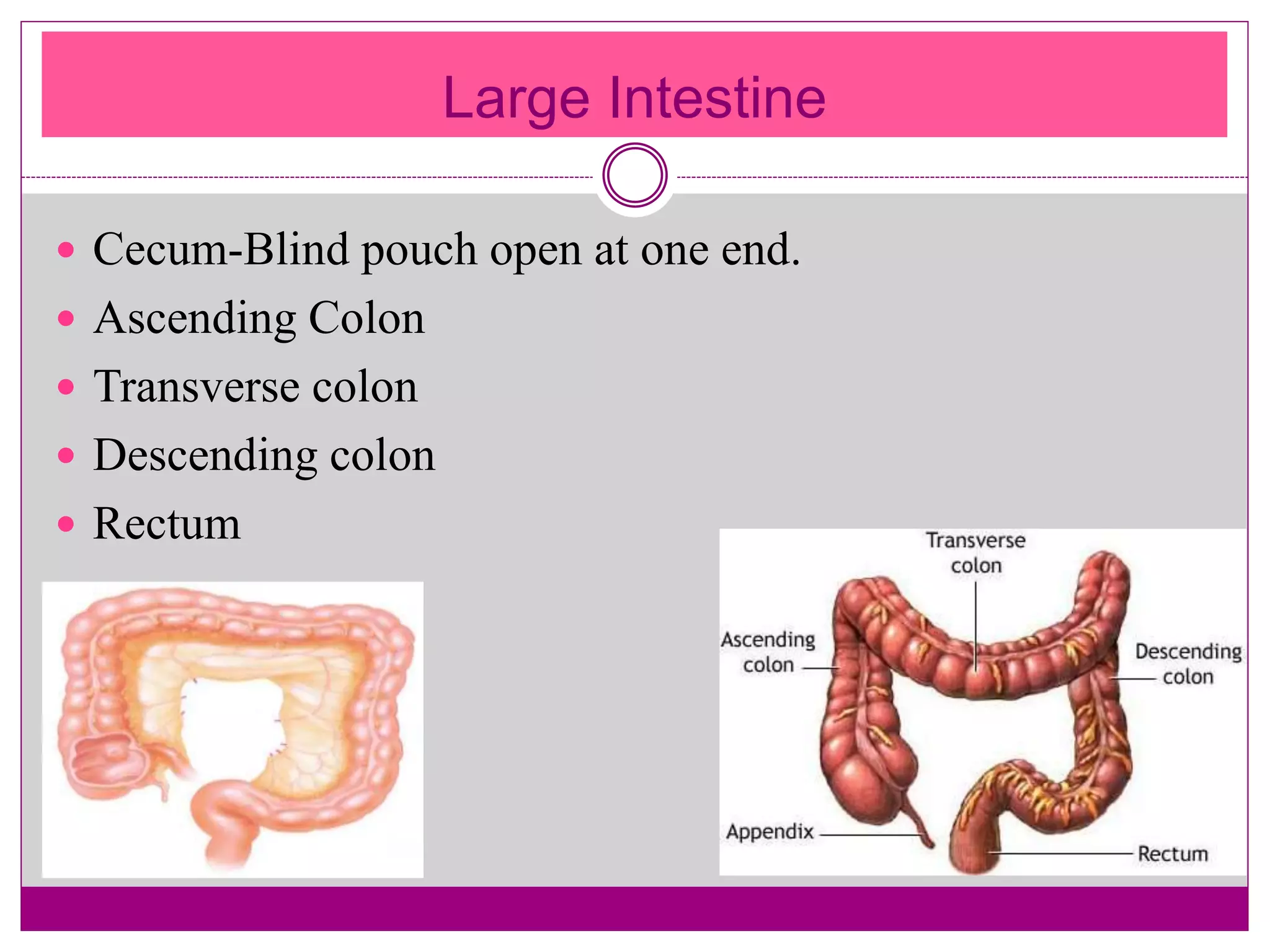
Large Intestine
 Cecum-Blind pouch open at one end.
 Ascending Colon
 Transverse colon
 Descending colon
 Rectum
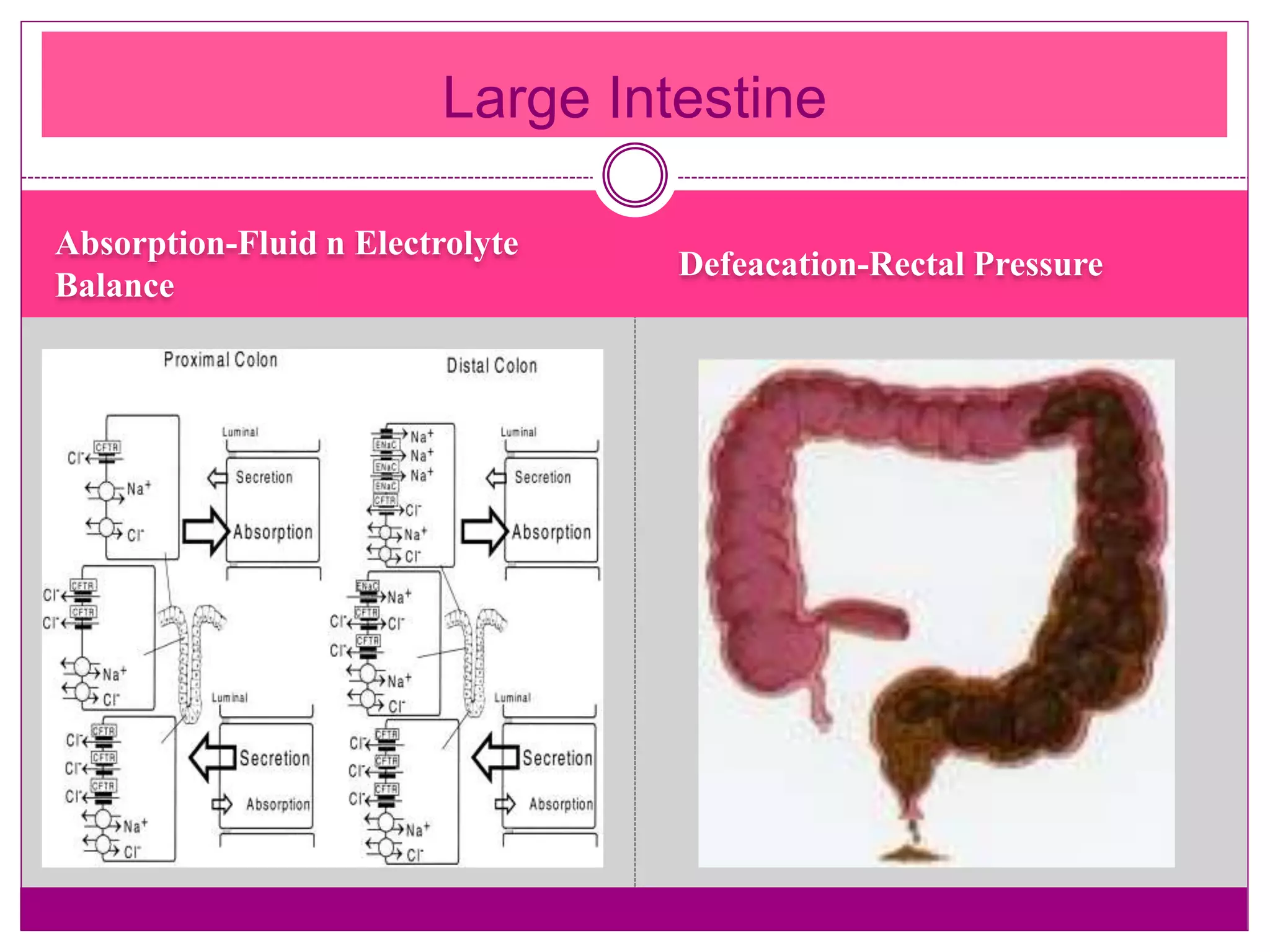
Absorption-Fluid n Electrolyte
Balance
Defeacation-Rectal Pressure
Large Intestine
Liver
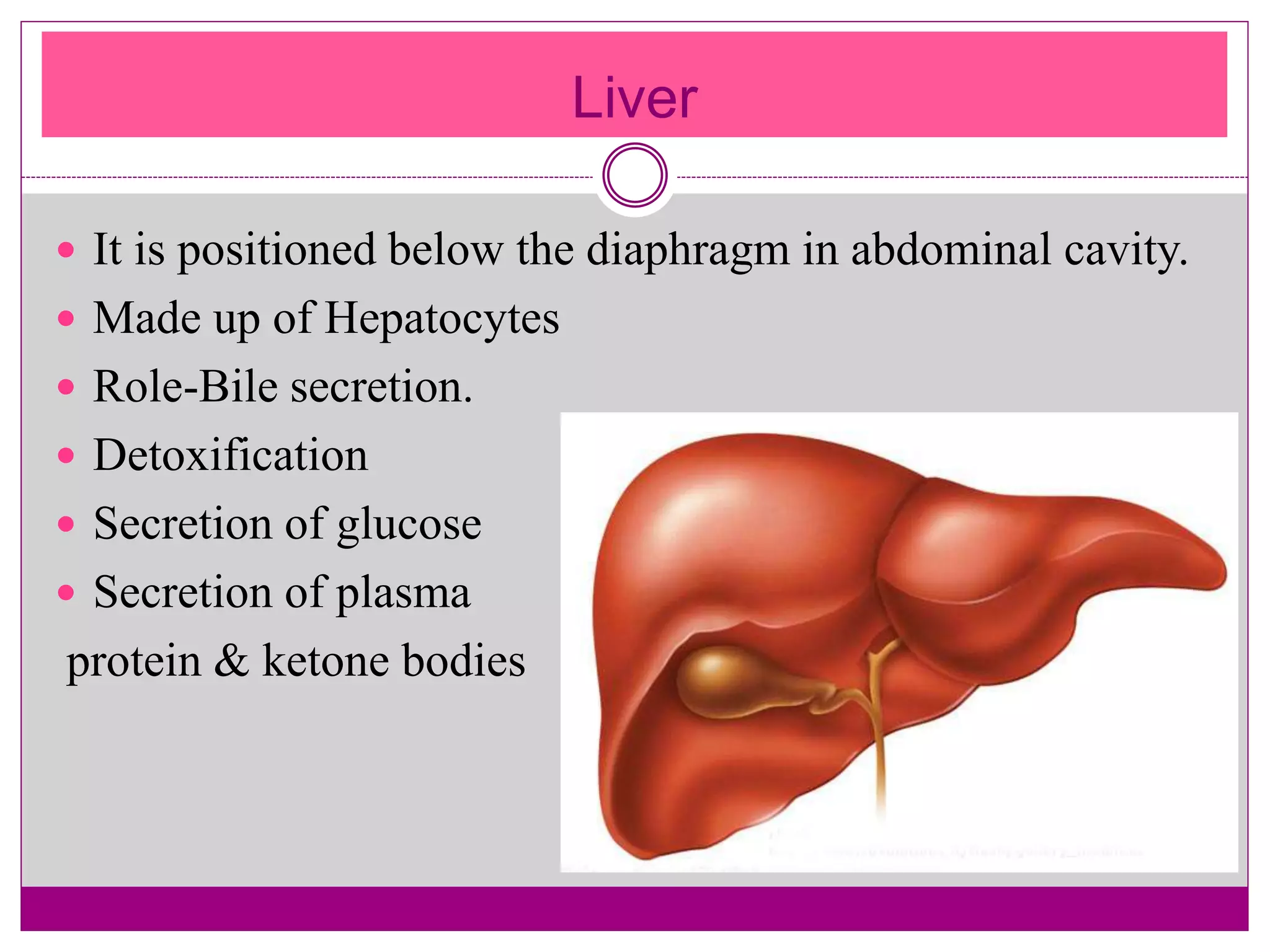
 It is positioned below the diaphragm in abdominal cavity.
 Made up of Hepatocytes
 Role-Bile secretion.
 Detoxification
 Secretion of glucose
 Secretion of plasma
protein & ketone bodies
Gall Bladder
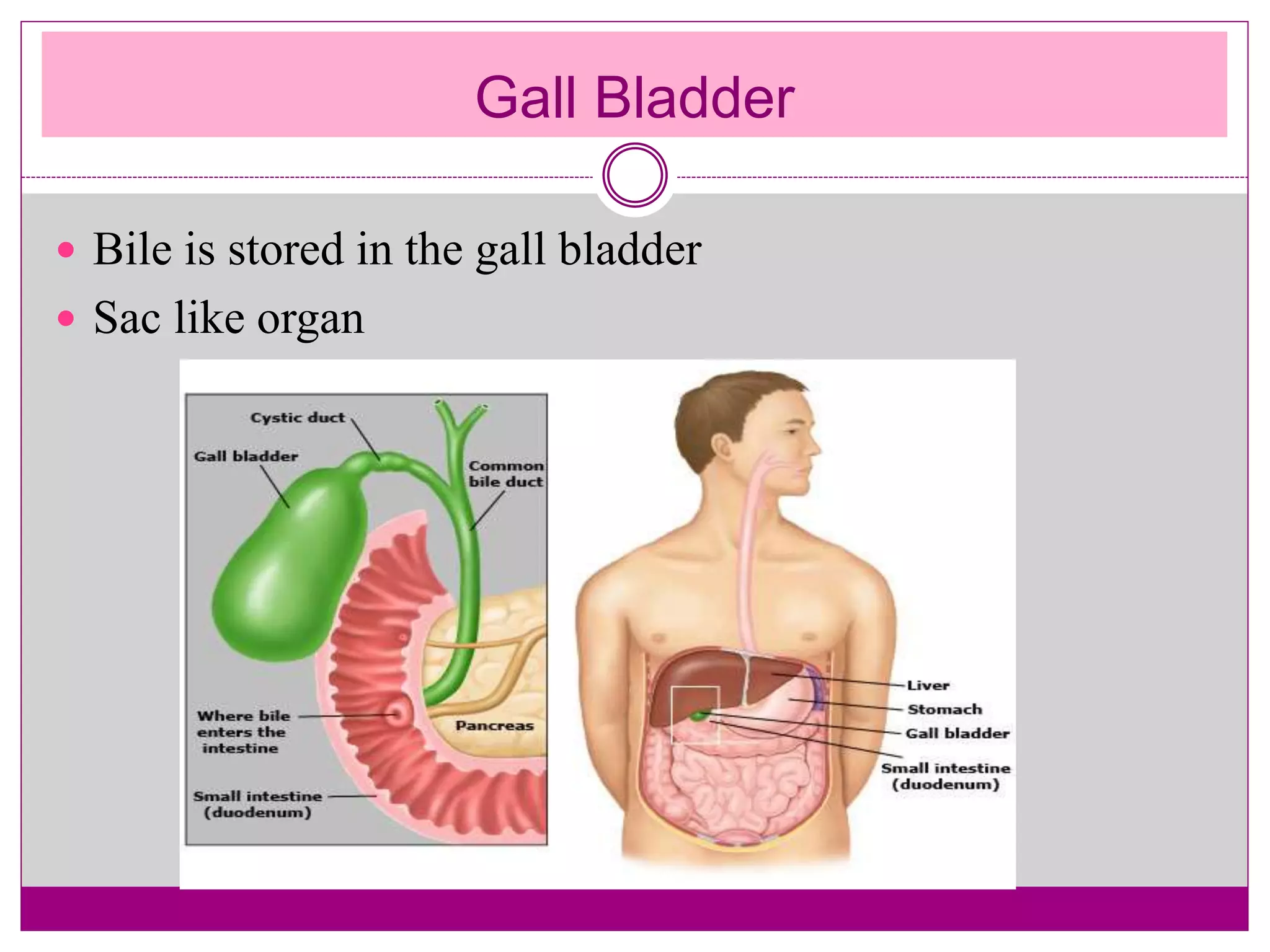
 Bile is stored in the gall bladder
 Sac like organ
Pancreas
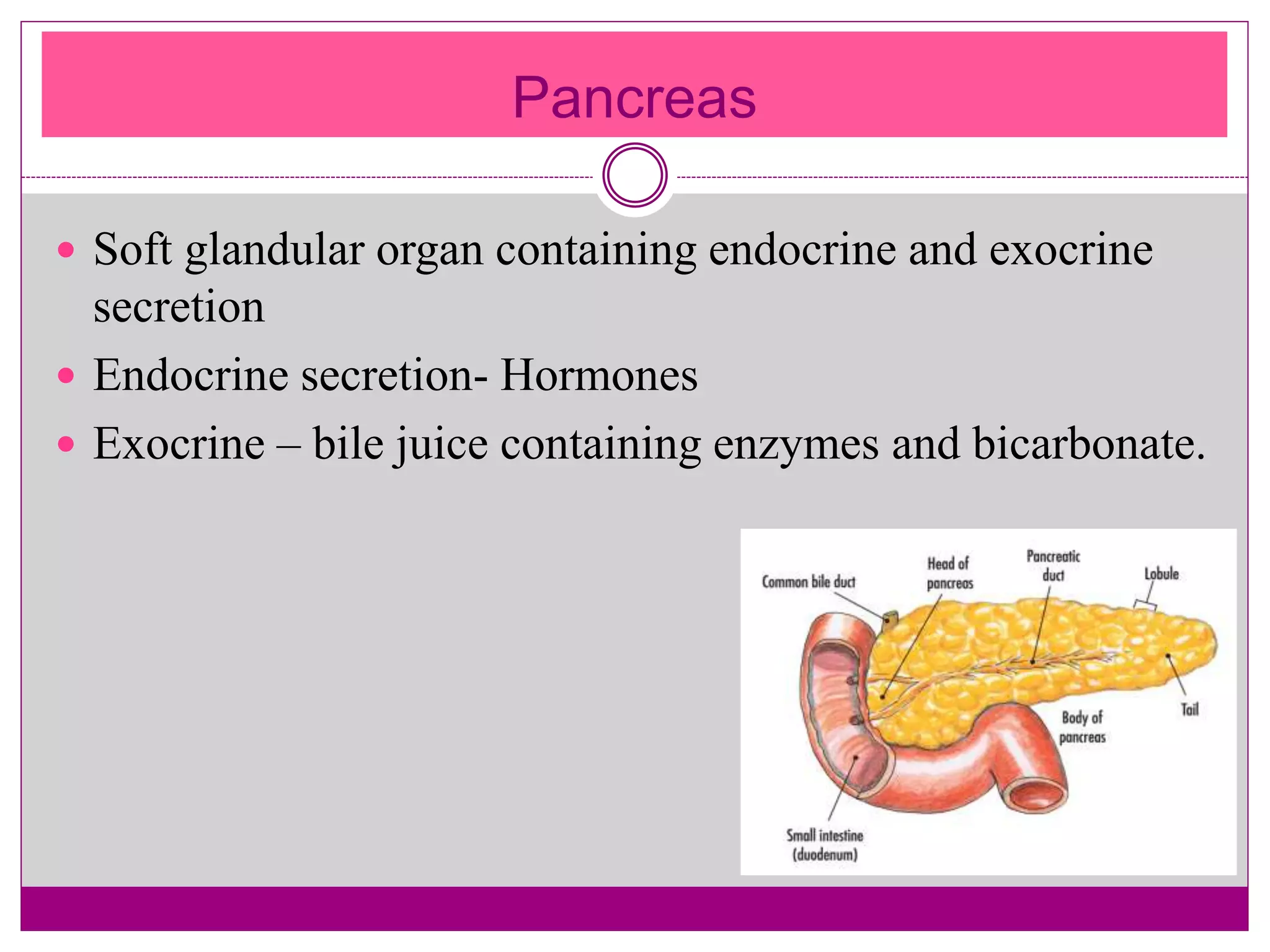
 Soft glandular organ containing endocrine and exocrine
secretion
 Endocrine secretion- Hormones
 Exocrine – bile juice containing enzymes and bicarbonate.
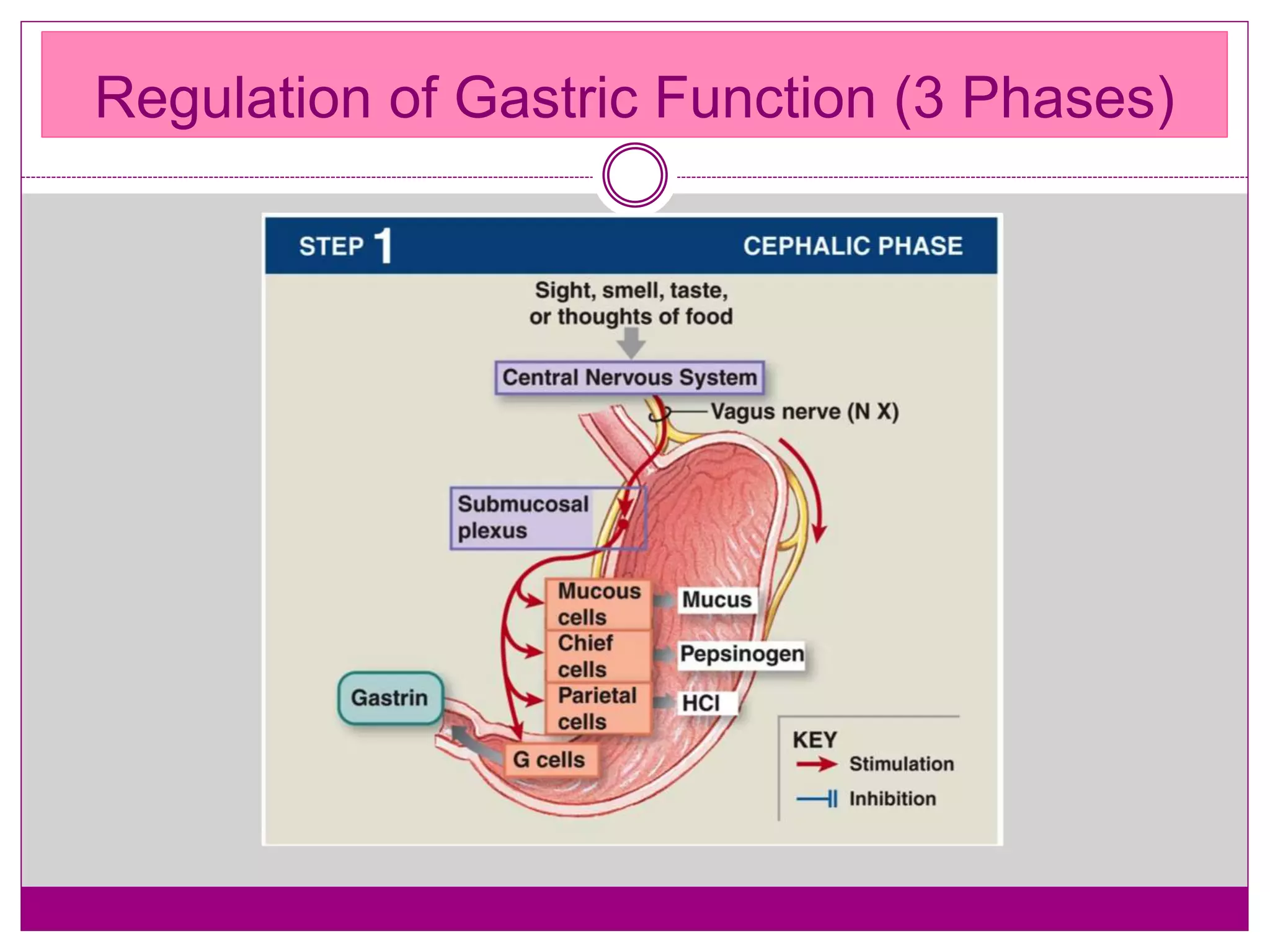
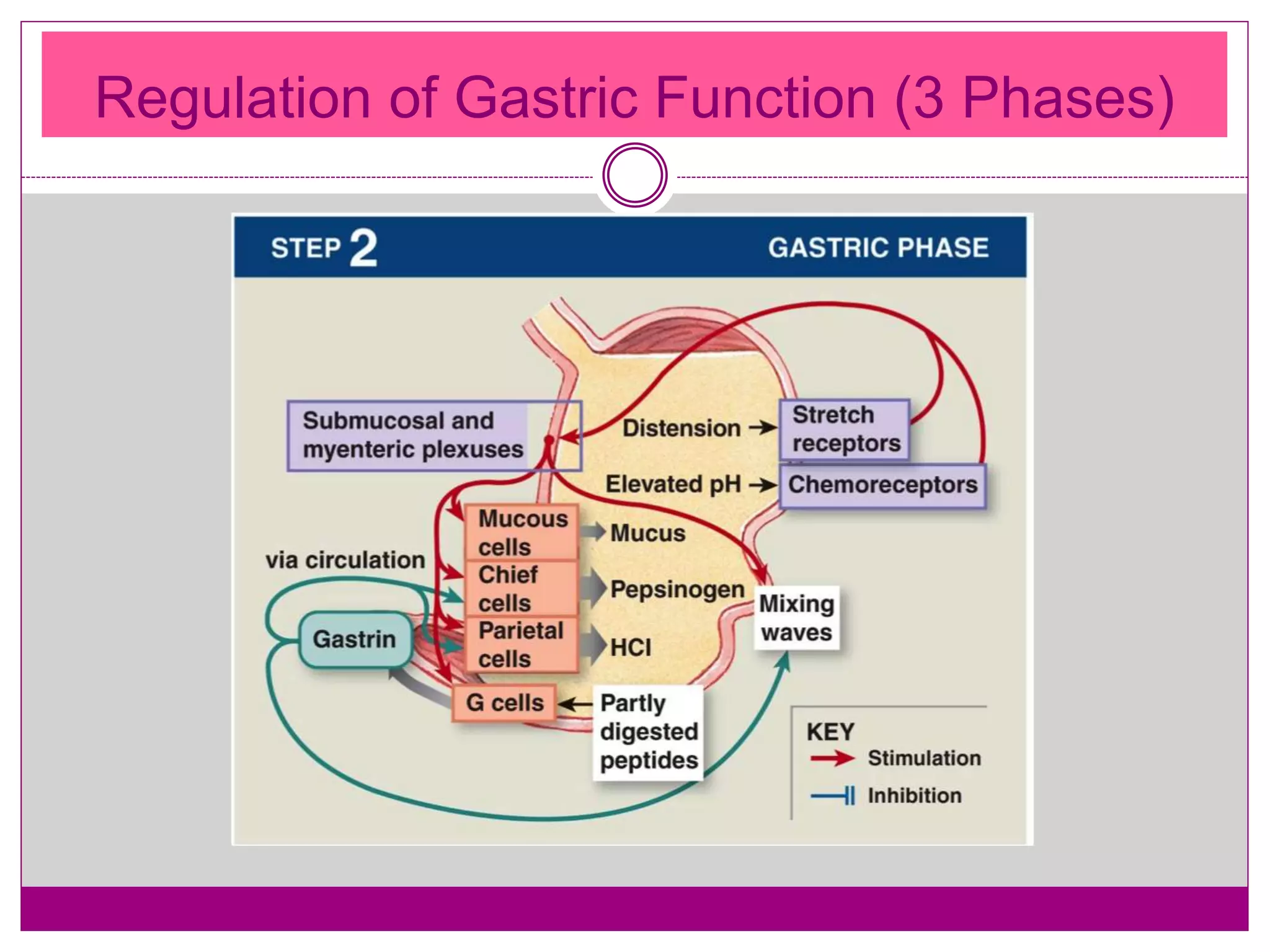
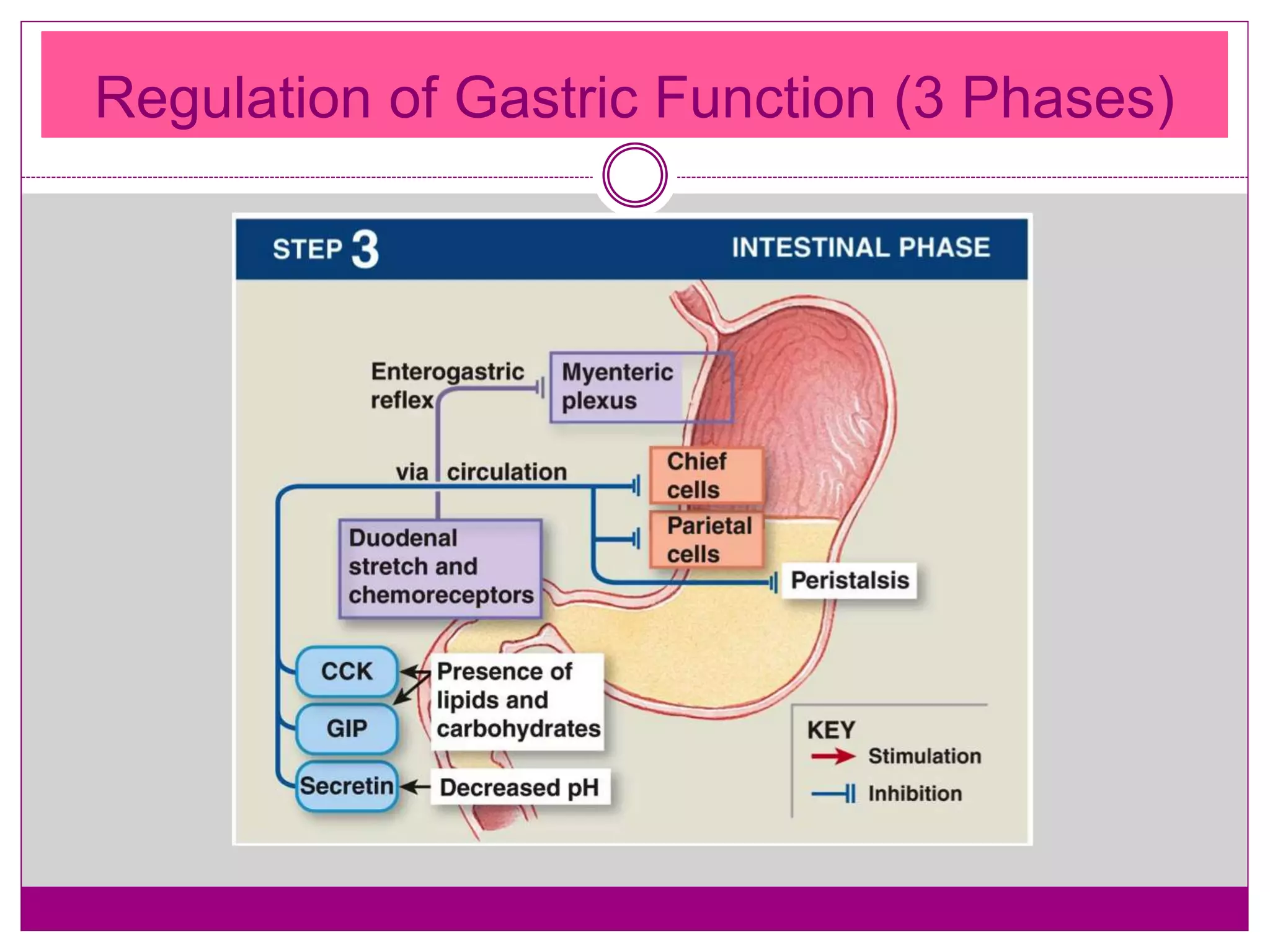
Regulation of Gastric Function (3 Phases)
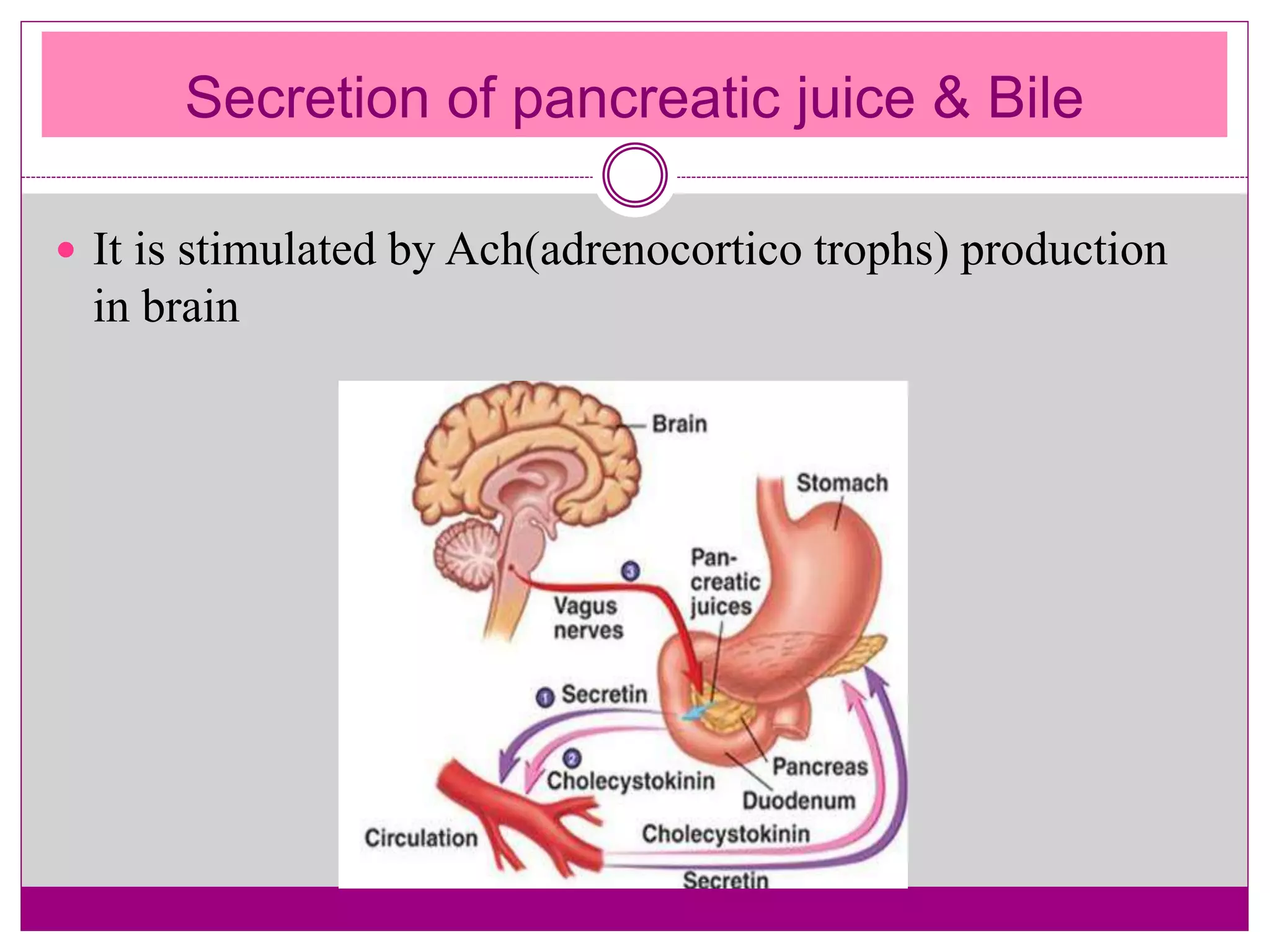
Secretion of pancreatic juice & Bile
 It is stimulated by Ach(adrenocortico trophs) production
in brain
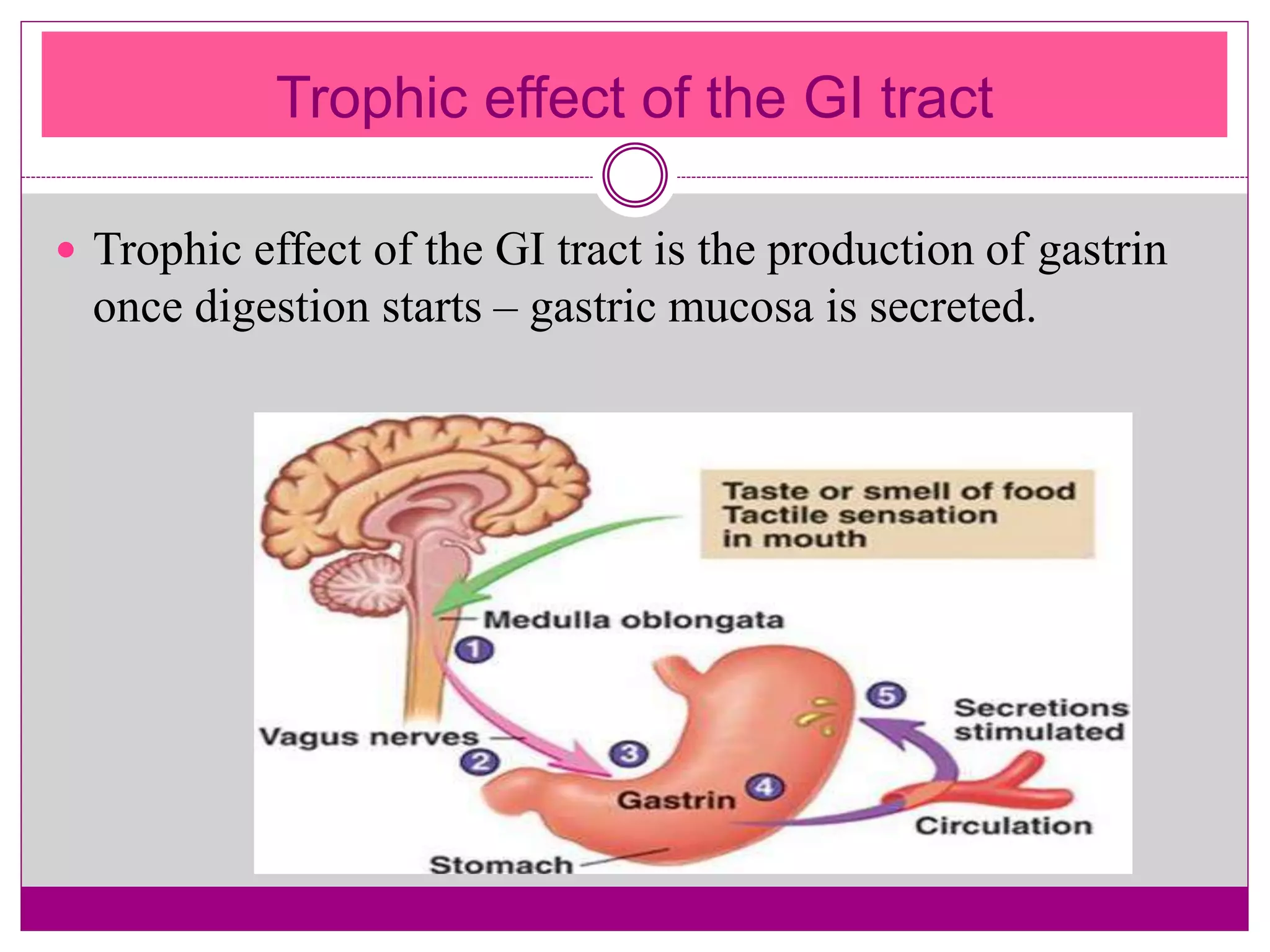
Trophic effect of the GI tract
 Trophic effect of the GI tract is the production of gastrin
once digestion starts – gastric mucosa is secreted.
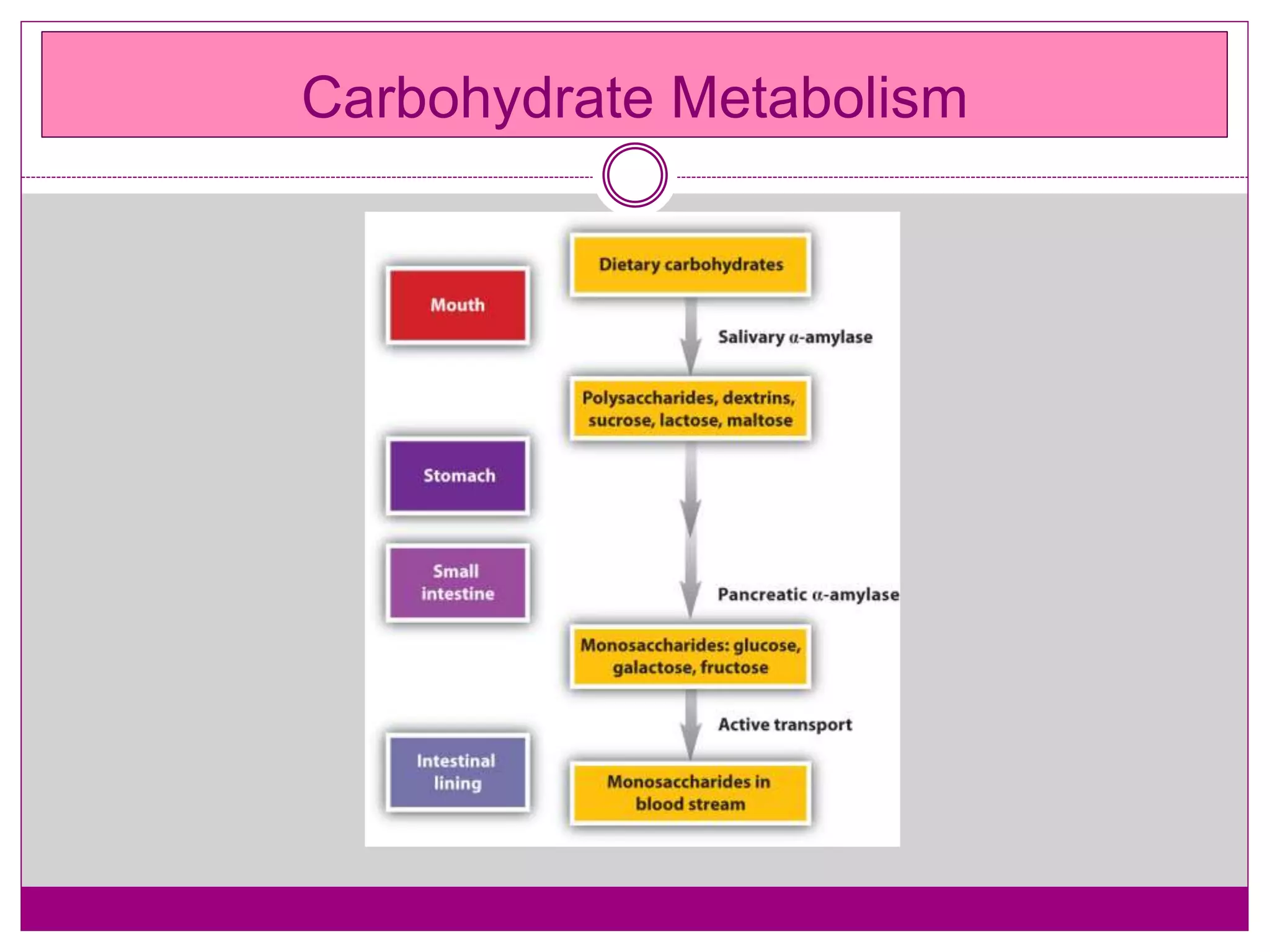
Carbohydrate Metabolism
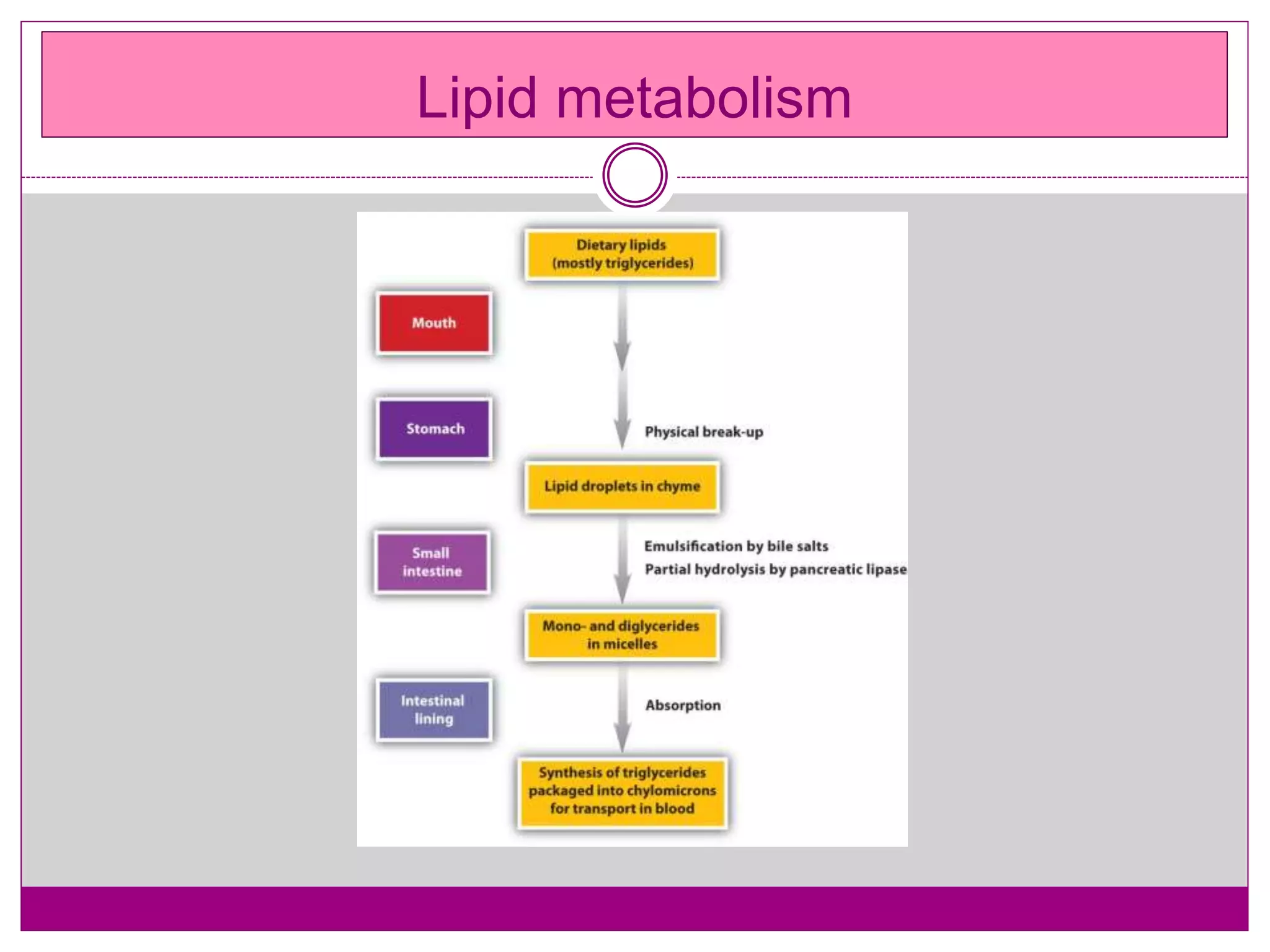
Lipid metabolism
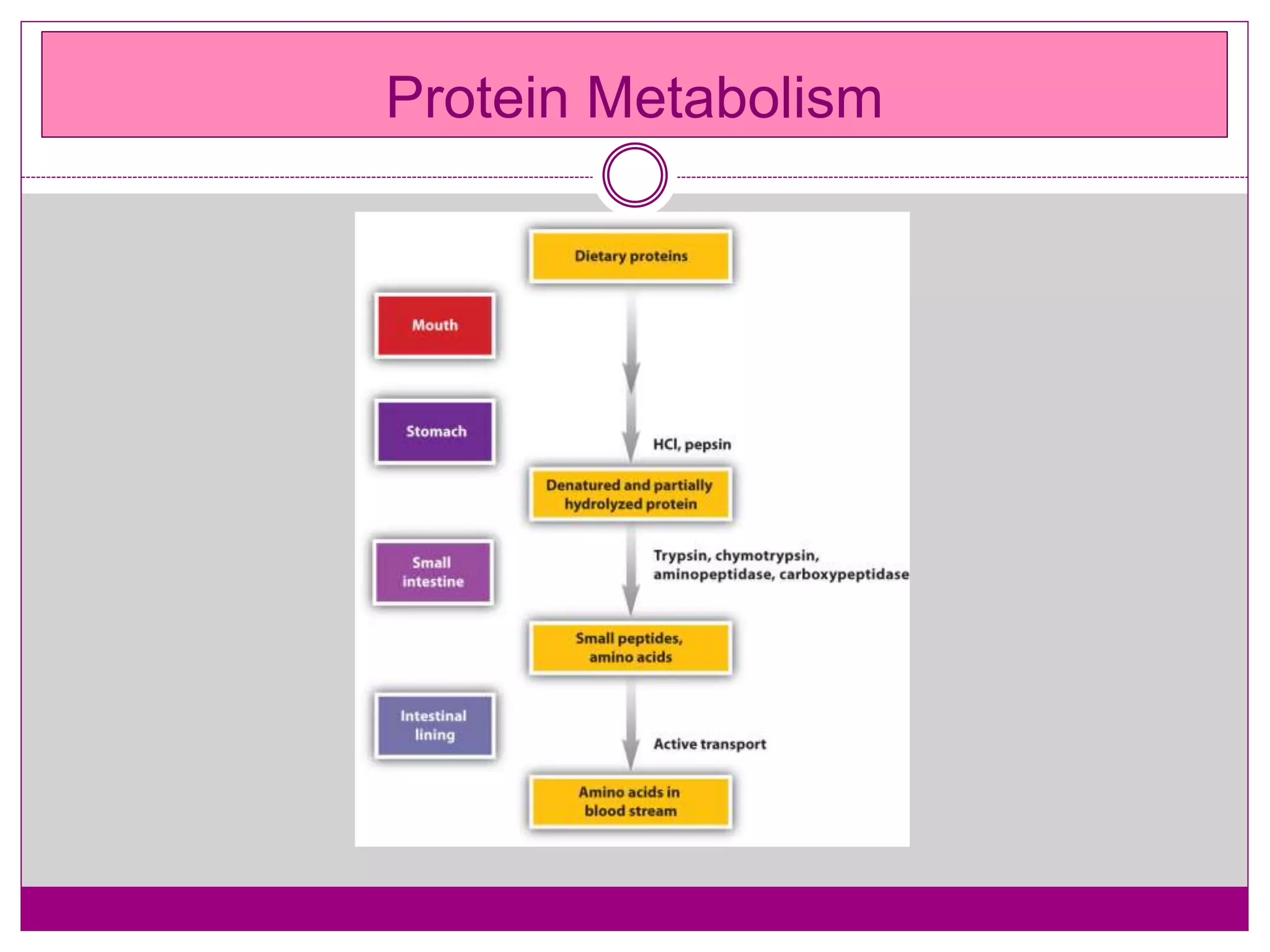
Protein Metabolism
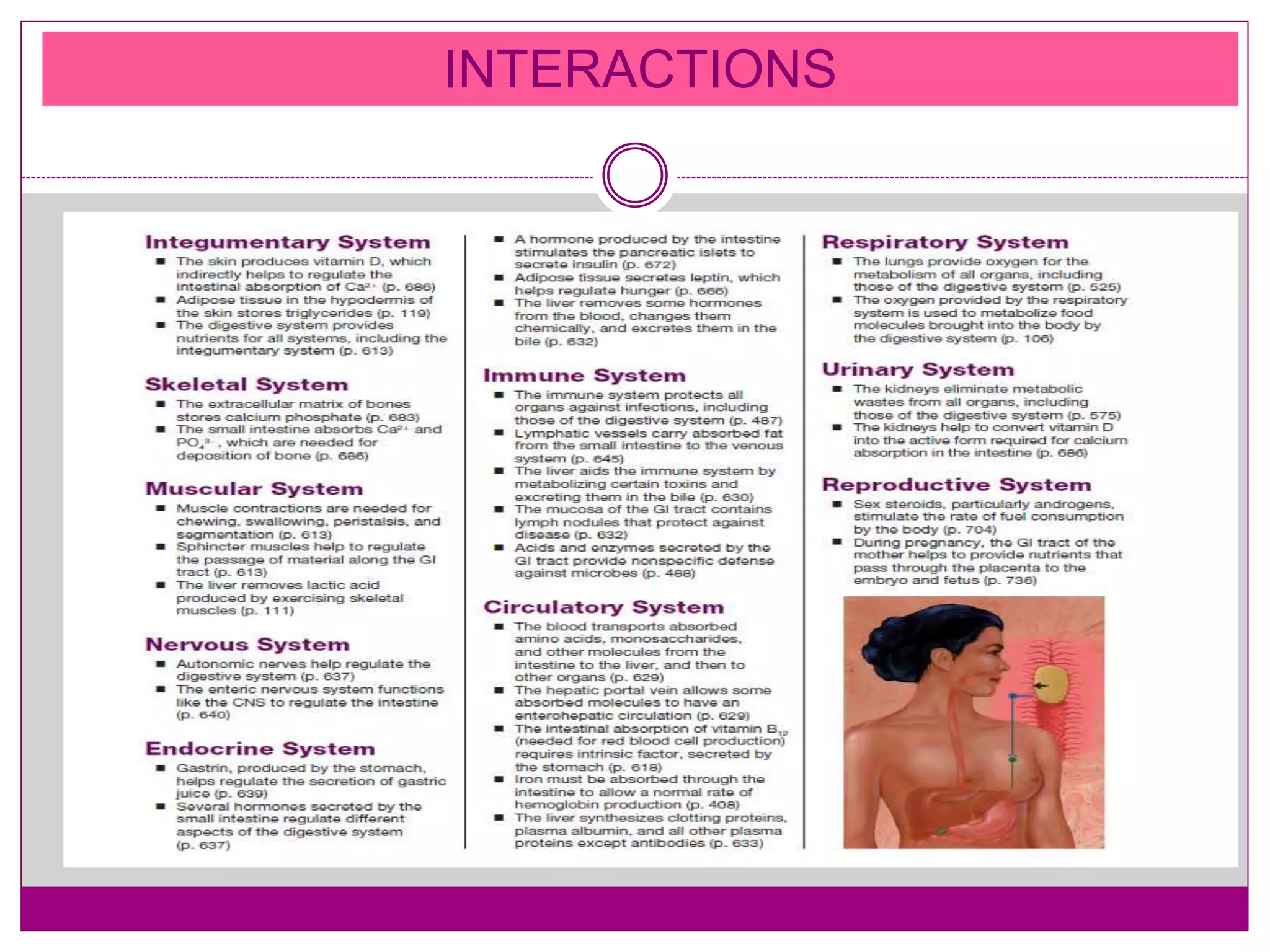
INTERACTIONS
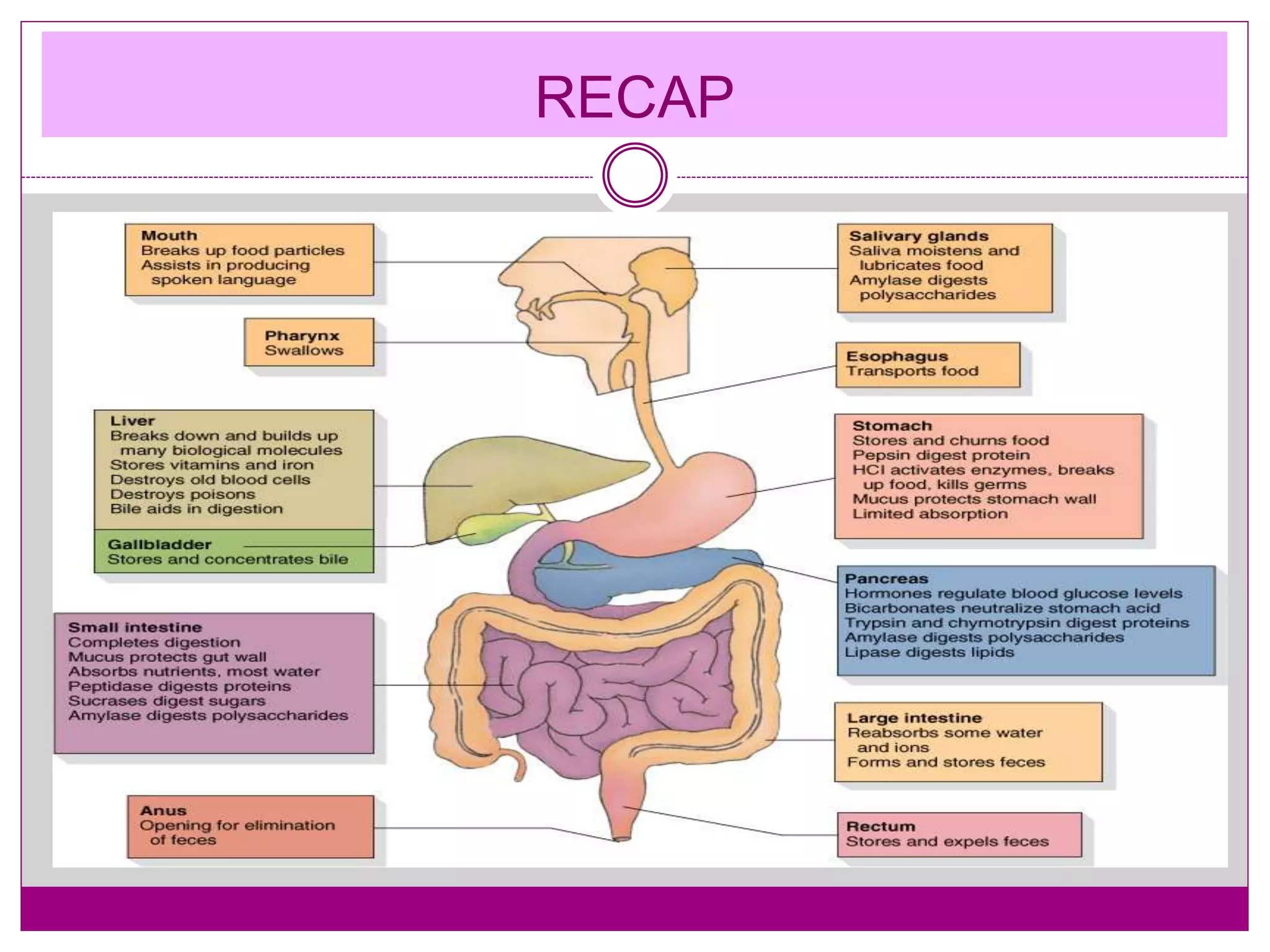
RECAP
GI FUNCTION
Functions of gastrointestinal tract

Functions of gastrointestinal tract

  • 1.
  • 2.
  • 3.
    The Major functions- GI Tract 1.Motility: This refers to the movement of food through digestive tract through the processes of  a. Ingestion: Taking food into the mouth.  b. Mastication: Chewing the food and mixing it with saliva.  c. Deglutition: Swallowing food.  d. Peristalsis and segmentation: Rhythmic, wavelike contractions (peristalsis), and mixing contractions in different segments (segmentation), move food through the gastrointestinal tract.  2. Secretion: This includes both exocrine and endocrine secretions.  a. Exocrine secretions: Water, hydrochloric acid, bicarbonate, and many digestive enzymes are secreted into the lumen of the gastrointestinal tract.The stomach alone, for example, secretes 2 to 3 liters of gastric juice a day.  b. Endocrine secretions: The stomach and small intestine secrete a number of hormones that help to regulate the digestive system  3. Digestion:  This refers to the breakdown of food molecules into their smaller subunits, which can be absorbed.  4. Absorption:  This refers to the passage of digested end products into the blood or lymph.  5. Storage and elimination:  This refers to the temporary storage and subsequent elimination of indigestible food molecules.  6. Immune barrier:  The simple columnar epithelium that lines the intestine, with its tight junctions betweencells, provides a physical barrier to the penetration of pathological organisms and their toxins. Also, cells of the immune system reside in the connective tissue located just under the epithelium to promote immune responses.
  • 4.
  • 5.
    Layers of GITract  Mucosa: It is absorptive and major secretory layer. Goblet cells in mucosa secrete Mucus.  Sub mucosa: Thick,vascular layer. it Contains glands and nerve plexuses.  Muscalaris(circular muscle): Segmental contractions ,peristaltic movement. Provides major nerve supply to the entire GI tract.  Serosa: Outer complete layer and protective wall of the GI tract.
  • 6.
    Oesophagus  The oesophagusis the portion of the GI tract that connects the pharynx to the stomach.  Movement of food from mouth to stomach occurs through the peristaltic movement of oesophagus.  Peristalsis is the wavelike muscular contractions occurs because of the circular smooth muscle contracts behind and relaxes in front to push the bolus along the GI tract.  Lower oesophageal sphincher is thick and constriction of it avoids the regurgitation of food above.
  • 7.
     Structure ofstomach  J-shaped most distensible part of GI tract.  Notice that pyloric region is the widest and ends with pyloric sphincter.  Functions  The functions of the stomach are to store food, to initiate the digestion of proteins, to kill bacteria with the strong acidity of gastric juice, and to move the food into the small intestine as a paste material called chyme. Stomach
  • 8.
    Parts Villi andMicrovilli Small Intestine  Duodenum-20 to 30 cm  Jejunum- next 2/5th  Ileum-last part
  • 9.
  • 10.
    Segmentation-Contractile Activity Emptiesin Ileocecal valve Small Intestine
  • 11.
    Large Intestine  Cecum-Blindpouch open at one end.  Ascending Colon  Transverse colon  Descending colon  Rectum
  • 12.
  • 13.
    Liver  It ispositioned below the diaphragm in abdominal cavity.  Made up of Hepatocytes  Role-Bile secretion.  Detoxification  Secretion of glucose  Secretion of plasma protein & ketone bodies
  • 14.
    Gall Bladder  Bileis stored in the gall bladder  Sac like organ
  • 15.
    Pancreas  Soft glandularorgan containing endocrine and exocrine secretion  Endocrine secretion- Hormones  Exocrine – bile juice containing enzymes and bicarbonate.
  • 16.
    Regulation of GastricFunction (3 Phases)
  • 17.
    Regulation of GastricFunction (3 Phases)
  • 18.
    Regulation of GastricFunction (3 Phases)
  • 19.
    Secretion of pancreaticjuice & Bile  It is stimulated by Ach(adrenocortico trophs) production in brain
  • 20.
    Trophic effect ofthe GI tract  Trophic effect of the GI tract is the production of gastrin once digestion starts – gastric mucosa is secreted.
  • 21.
  • 22.
  • 23.
  • 24.
  • 25.
  • 26.