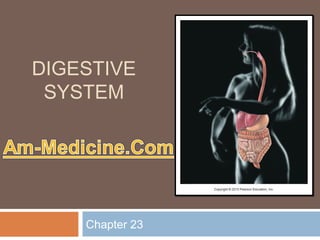
DIGESTIVE
SYSTEM
Chapter 23
Nutrition
 Nutrient: substance in food used to promote
growth, maintenance, and repair
 Majornutrients:
 Carbohydrates – sugars & starches
 Lipids – saturated/unsaturated fats
 Proteins – eggs, milk, meat (co m ple te – all
AA); legumes, nuts, cereals (inco m ple te )
 Vitamins – A, B, C, E, D, K
 Minerals – Ca, P, K, S, Na, Cl, Mg
Functions
1. Ingestion - mouth
2. Digestion
A. Mechanical – fragment food into smaller
particles (teeth, tongue, stomach, SI)
B. Chemical – e nz ym e s, water
 Mouth = carbs
 Stomach = proteins
 SI = carbs, proteins, fats, nucleic acids
1. Absorption – transport from SI to blood
2. Defecation – eliminate indigestible residues
Anatomy
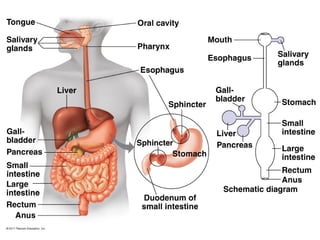
 Alimentary canalAlimentary canal
 Gastrointestinal (GI) tract
 Mouth  pharynx  esophagus  stomach
 small intestine  large intestine
 Accessory digestive organsAccessory digestive organs
 Teeth, tongue, digestive glands
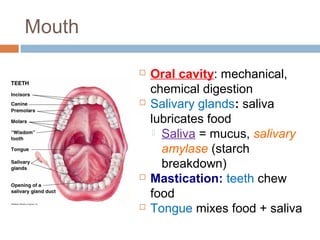
Mouth
 Oral cavity: mechanical,
chemical digestion
 Salivary glands: saliva
lubricates food
 Saliva = mucus, salivary
amylase (starch
breakdown)
 Mastication: teeth chew
food
 Tongue mixes food + saliva
 Pharynx: back of throat
 Epiglottis: flap of cartilage, covers trachea
when swallowing
 Pe ristalsis (involuntary waves of muscle
contraction)
 Esophagus (gullet): passageway to stomach
Stomach
 Stores food & breaks down food
 Mechanical – churn, mix
 Chemical – protein digestion
 Gastric juice: converts meal to acidic chyme
 HCl: pH 2, kills bacteria, denatures proteins
 Pepsin: enzyme breaks down proteins
 Rugae = large folds
 Mucus = protects lining of stomach
Small Intestine
 Digestion & absorption
 Duodenum: (1st
section) digestive juices, major
chemical digestion
 Jejunum (2nd
): absorb nutrients
 Ileum (3rd
): absorb Vit. B12, bile salts, remaining
nutrients
Folds, villi and microvilli increase surface area
for absorption
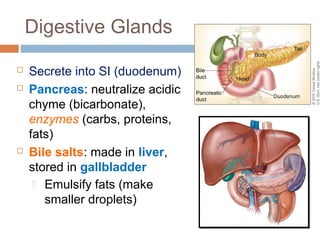
Digestive Glands
 Secrete into SI (duodenum)
 Pancreas: neutralize acidic
chyme (bicarbonate),
enzymes (carbs, proteins,
fats)
 Bile salts: made in liver,
stored in gallbladder
 Emulsify fats (make
smaller droplets)
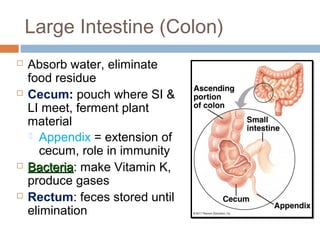
Large Intestine (Colon)
 Absorb water, eliminate
food residue
 Cecum: pouch where SI &
LI meet, ferment plant
material
 Appendix = extension of
cecum, role in immunity
 BacteriaBacteria: make Vitamin K,
produce gases
 Rectum: feces stored until
elimination
HOMEOSTATIC
IMBALANCES OF DIGESTIVE
SYSTEM
Gastric Ulcers
 Lesions in the stomach lining
 Caused mainly by bacterium Heliobacter pylori
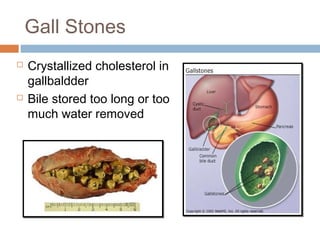
Gall Stones
 Crystallized cholesterol in
gallbaldder
 Bile stored too long or too
much water removed
Appendicitis
 Inflammation of appendix
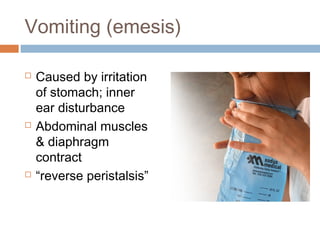
Vomiting (emesis)
 Caused by irritation
of stomach; inner
ear disturbance
 Abdominal muscles
& diaphragm
contract
 “reverse peristalsis”
Diverticulosis
 When diet lacks bulk (low-fiber diet)
 Diverticula: pouches form on colon wall
 Dive rticulitis: when diverticula become inflamed
 feces gets trapped, bacteria grow in pouch
Hepatitis
 Inflammation of liver
 Viral infection from contaminated water, blood
transfusions, needles
Jaundice
Cirrhosis
 Chronic inflammation of liver
 Severe damage  hard and
fibrous liver
 Alcoholism

Anatomy & Physiology Lecture Notes - Digestive system

  • 1.
  • 2.
    Nutrition  Nutrient: substancein food used to promote growth, maintenance, and repair  Majornutrients:  Carbohydrates – sugars & starches  Lipids – saturated/unsaturated fats  Proteins – eggs, milk, meat (co m ple te – all AA); legumes, nuts, cereals (inco m ple te )  Vitamins – A, B, C, E, D, K  Minerals – Ca, P, K, S, Na, Cl, Mg
  • 3.
    Functions 1. Ingestion -mouth 2. Digestion A. Mechanical – fragment food into smaller particles (teeth, tongue, stomach, SI) B. Chemical – e nz ym e s, water  Mouth = carbs  Stomach = proteins  SI = carbs, proteins, fats, nucleic acids 1. Absorption – transport from SI to blood 2. Defecation – eliminate indigestible residues
  • 4.
    Anatomy  Alimentary canalAlimentarycanal  Gastrointestinal (GI) tract  Mouth  pharynx  esophagus  stomach  small intestine  large intestine  Accessory digestive organsAccessory digestive organs  Teeth, tongue, digestive glands
  • 6.
    Mouth  Oral cavity:mechanical, chemical digestion  Salivary glands: saliva lubricates food  Saliva = mucus, salivary amylase (starch breakdown)  Mastication: teeth chew food  Tongue mixes food + saliva
  • 7.
     Pharynx: backof throat  Epiglottis: flap of cartilage, covers trachea when swallowing  Pe ristalsis (involuntary waves of muscle contraction)  Esophagus (gullet): passageway to stomach
  • 9.
    Stomach  Stores food& breaks down food  Mechanical – churn, mix  Chemical – protein digestion  Gastric juice: converts meal to acidic chyme  HCl: pH 2, kills bacteria, denatures proteins  Pepsin: enzyme breaks down proteins  Rugae = large folds  Mucus = protects lining of stomach
  • 11.
    Small Intestine  Digestion& absorption  Duodenum: (1st section) digestive juices, major chemical digestion  Jejunum (2nd ): absorb nutrients  Ileum (3rd ): absorb Vit. B12, bile salts, remaining nutrients
  • 12.
    Folds, villi andmicrovilli increase surface area for absorption
  • 13.
    Digestive Glands  Secreteinto SI (duodenum)  Pancreas: neutralize acidic chyme (bicarbonate), enzymes (carbs, proteins, fats)  Bile salts: made in liver, stored in gallbladder  Emulsify fats (make smaller droplets)
  • 14.
    Large Intestine (Colon) Absorb water, eliminate food residue  Cecum: pouch where SI & LI meet, ferment plant material  Appendix = extension of cecum, role in immunity  BacteriaBacteria: make Vitamin K, produce gases  Rectum: feces stored until elimination
  • 15.
  • 16.
    Gastric Ulcers  Lesionsin the stomach lining  Caused mainly by bacterium Heliobacter pylori
  • 17.
    Gall Stones  Crystallizedcholesterol in gallbaldder  Bile stored too long or too much water removed
  • 18.
  • 19.
    Vomiting (emesis)  Causedby irritation of stomach; inner ear disturbance  Abdominal muscles & diaphragm contract  “reverse peristalsis”
  • 20.
    Diverticulosis  When dietlacks bulk (low-fiber diet)  Diverticula: pouches form on colon wall  Dive rticulitis: when diverticula become inflamed  feces gets trapped, bacteria grow in pouch
  • 21.
    Hepatitis  Inflammation ofliver  Viral infection from contaminated water, blood transfusions, needles Jaundice
  • 22.
    Cirrhosis  Chronic inflammationof liver  Severe damage  hard and fibrous liver  Alcoholism