BIRLA
INSTITUTE
OF
TECHNOLOGY
TOPIC – DNA STRUCTURE
DIVYANSH
PARMARTHI
ROLL NO. :-
MCA/25016/18
• Deoxyribonucleic acid, more commonly known
as DNA, is a complex molecule that contains all of the
information necessary to build and maintain an organism.
• DNA is found inside a special area of the cell called the
nucleus.
• The cell is very small, and because organisms have
many DNA molecules per cell, each DNA molecule must
be tightly packaged. This packaged form of the DNA is
called a chromosome.
• Nearly every cell in a multicellular organism
possesses the full set of DNA required for that
organism.
• A small amount of DNA can also be found in the
mitochondria where it is called mitochondrial DNA
or mtDNA.
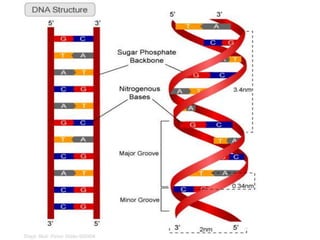
• DNA is a molecule composed of two chains that coil
around each other to form a double helix.
• The outsides of the molecule are made of deoxyribose
sugars alternating with phosphates. This part of the
molecule is sometimes called the “backbone”.
• the strands run in opposite directions this is indicated
by the 3-prime (3') and 5-prime (5') notation, and are
referred to as "anti-parallel".
• DNA is made up of molecules called nucleotides.
• The inside of the molecule are made of the
nucleotide bases Cytosine, Guanine, Adenine, and
Thymine.
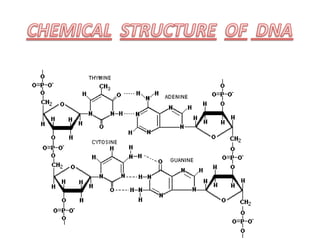
• C bonds to G by three hydrogen bonds. A bonds to
T by two hydrogen bonds.
• A and G are double ringed structures called
"purines". C and T are single ringed structures
called "pyramidines".
• These nucleotide bases are the information carrying
part of the molecule, and it is the differences in the
repeating sequence of Cs, Gs, As and Ts that make
us all unique.
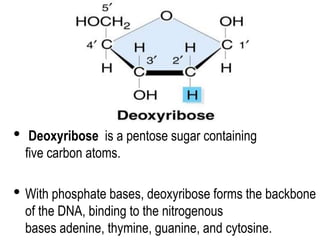
• Deoxyribose is a pentose sugar containing
five carbon atoms.
• With phosphate bases, deoxyribose forms the backbone
of the DNA, binding to the nitrogenous
bases adenine, thymine, guanine, and cytosine.
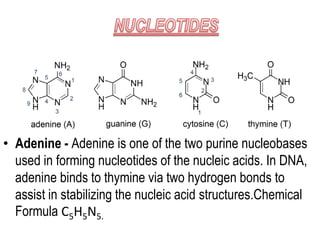
• Adenine - Adenine is one of the two purine nucleobases
used in forming nucleotides of the nucleic acids. In DNA,
adenine binds to thymine via two hydrogen bonds to
assist in stabilizing the nucleic acid structures.Chemical
Formula C5H5N5.
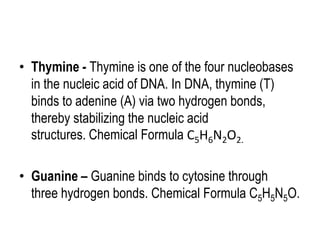
• Thymine - Thymine is one of the four nucleobases
in the nucleic acid of DNA. In DNA, thymine (T)
binds to adenine (A) via two hydrogen bonds,
thereby stabilizing the nucleic acid
structures. Chemical Formula C5H6N2O2.
• Guanine – Guanine binds to cytosine through
three hydrogen bonds. Chemical Formula C5H5N5O.
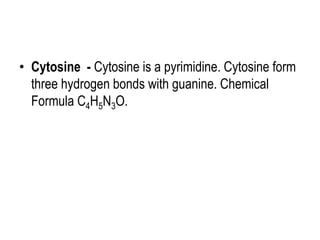
• Cytosine - Cytosine is a pyrimidine. Cytosine form
three hydrogen bonds with guanine. Chemical
Formula C4H5N3O.
DNA Structure
DNA Structure

DNA Structure

  • 1.
    BIRLA INSTITUTE OF TECHNOLOGY TOPIC – DNASTRUCTURE DIVYANSH PARMARTHI ROLL NO. :- MCA/25016/18
  • 2.
    • Deoxyribonucleic acid,more commonly known as DNA, is a complex molecule that contains all of the information necessary to build and maintain an organism. • DNA is found inside a special area of the cell called the nucleus. • The cell is very small, and because organisms have many DNA molecules per cell, each DNA molecule must be tightly packaged. This packaged form of the DNA is called a chromosome.
  • 3.
    • Nearly everycell in a multicellular organism possesses the full set of DNA required for that organism. • A small amount of DNA can also be found in the mitochondria where it is called mitochondrial DNA or mtDNA.
  • 4.
    • DNA isa molecule composed of two chains that coil around each other to form a double helix. • The outsides of the molecule are made of deoxyribose sugars alternating with phosphates. This part of the molecule is sometimes called the “backbone”. • the strands run in opposite directions this is indicated by the 3-prime (3') and 5-prime (5') notation, and are referred to as "anti-parallel". • DNA is made up of molecules called nucleotides.
  • 6.
    • The insideof the molecule are made of the nucleotide bases Cytosine, Guanine, Adenine, and Thymine. • C bonds to G by three hydrogen bonds. A bonds to T by two hydrogen bonds. • A and G are double ringed structures called "purines". C and T are single ringed structures called "pyramidines".
  • 7.
    • These nucleotidebases are the information carrying part of the molecule, and it is the differences in the repeating sequence of Cs, Gs, As and Ts that make us all unique.
  • 8.
    • Deoxyribose isa pentose sugar containing five carbon atoms. • With phosphate bases, deoxyribose forms the backbone of the DNA, binding to the nitrogenous bases adenine, thymine, guanine, and cytosine.
  • 9.
    • Adenine -Adenine is one of the two purine nucleobases used in forming nucleotides of the nucleic acids. In DNA, adenine binds to thymine via two hydrogen bonds to assist in stabilizing the nucleic acid structures.Chemical Formula C5H5N5.
  • 10.
    • Thymine -Thymine is one of the four nucleobases in the nucleic acid of DNA. In DNA, thymine (T) binds to adenine (A) via two hydrogen bonds, thereby stabilizing the nucleic acid structures. Chemical Formula C5H6N2O2. • Guanine – Guanine binds to cytosine through three hydrogen bonds. Chemical Formula C5H5N5O.
  • 11.
    • Cytosine -Cytosine is a pyrimidine. Cytosine form three hydrogen bonds with guanine. Chemical Formula C4H5N3O.