DECISION MAKING
BY-
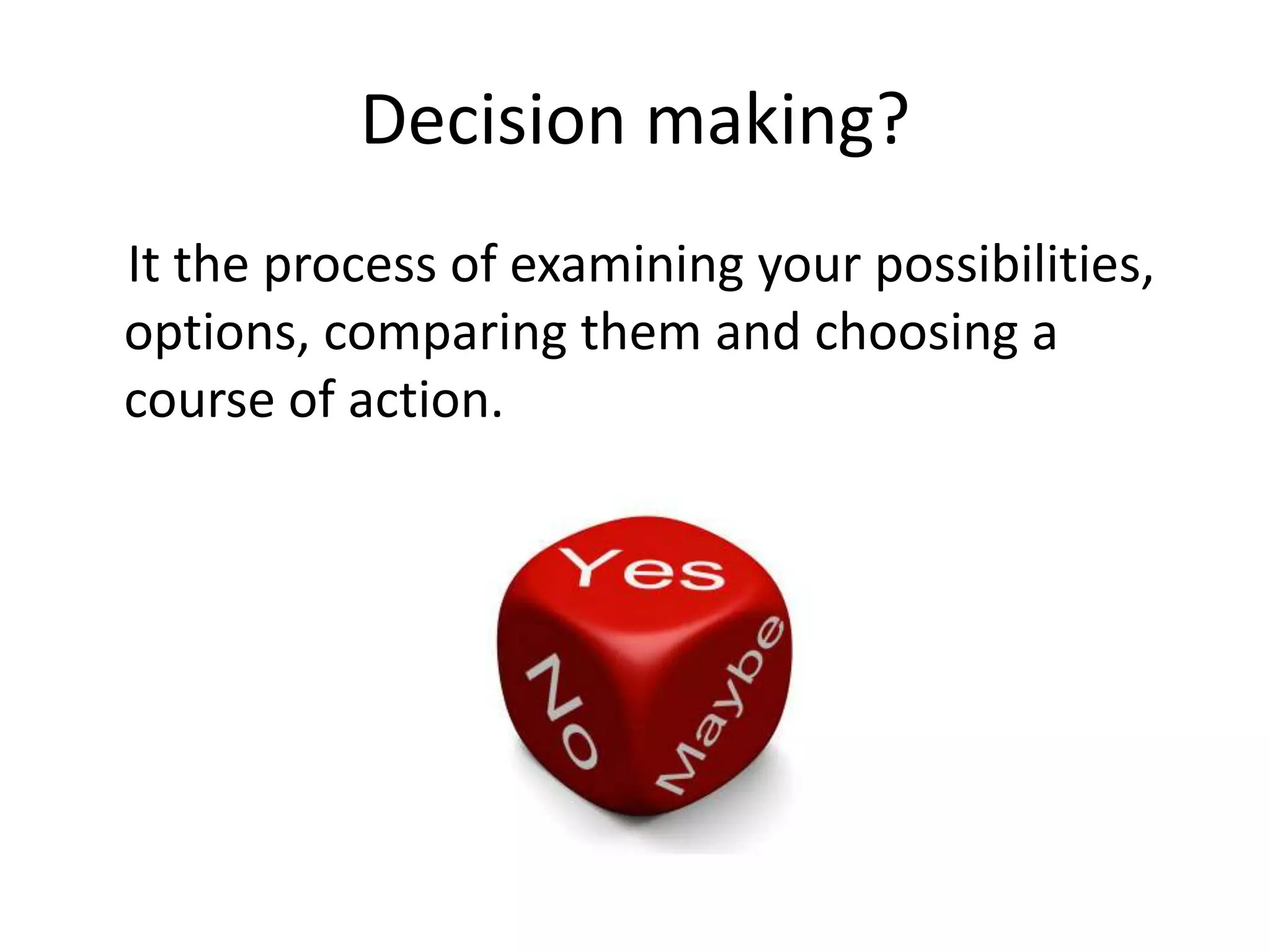
Decision making?
It the process of examining your possibilities,
options, comparing them and choosing a
course of action.
Decision can be either
programmed or non
programmed.
• Programmed : decisions that
are simple and routine and
have a pre established
decision making plan.
• Non programmed : decisions
that are new and
complicated and require
thought and creativity.
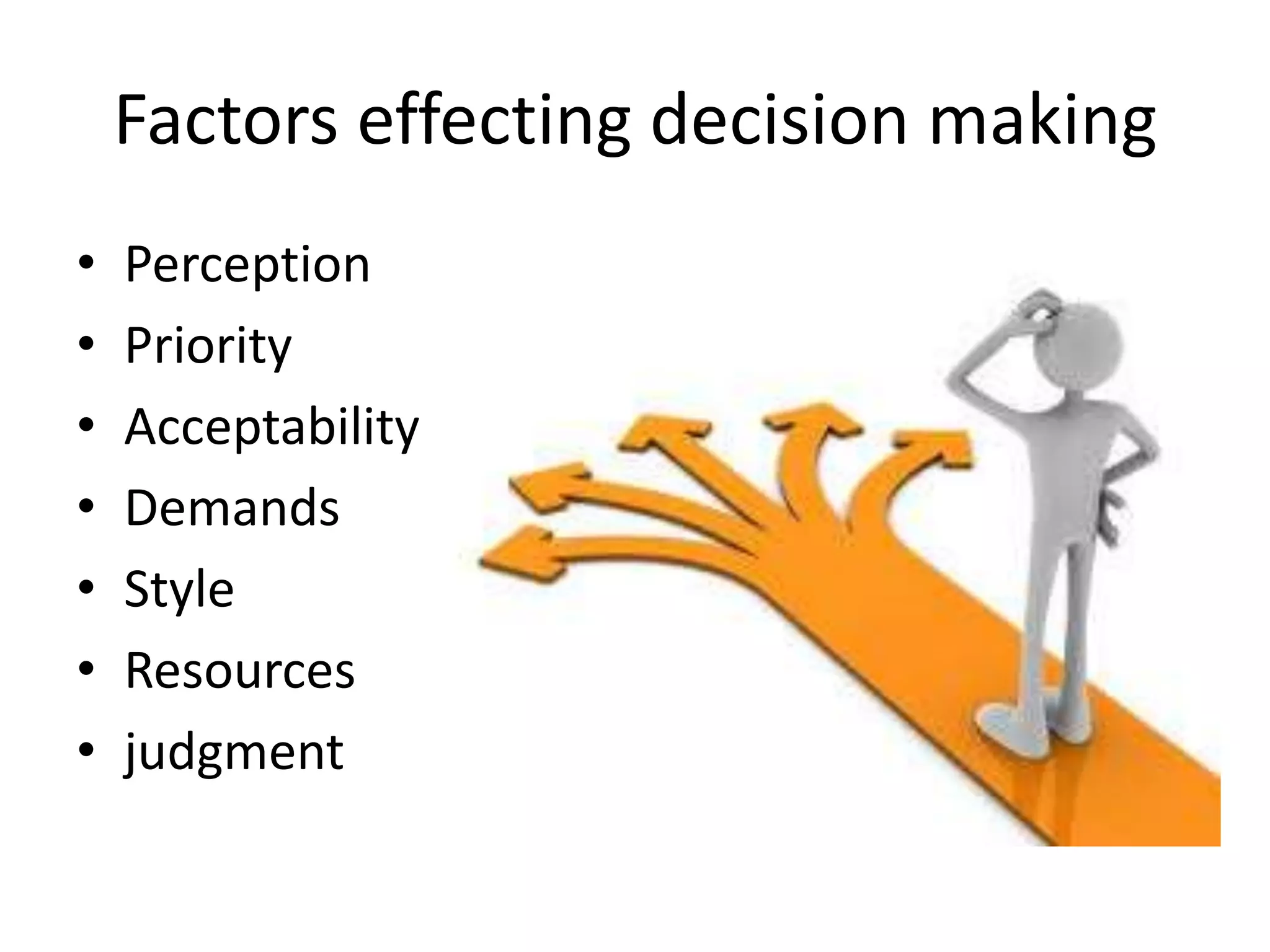
Factors effecting decision making
• Perception
• Priority
• Acceptability
• Demands
• Style
• Resources
• judgment
• Perception – “know before you
make.”
• Priority – without knowing what
you want there cant be any
decision made about.
• Acceptability – accept whether its
hard or easy if you think your
decision is correct.
• Demands – make sure that no one
gets hurt by your decision.
• Style – don’t be outdated.
• Resources – make your way with
what is available. don’t ask for
more in the region of scarcity.
• Judgment – go on with the correct
decision.
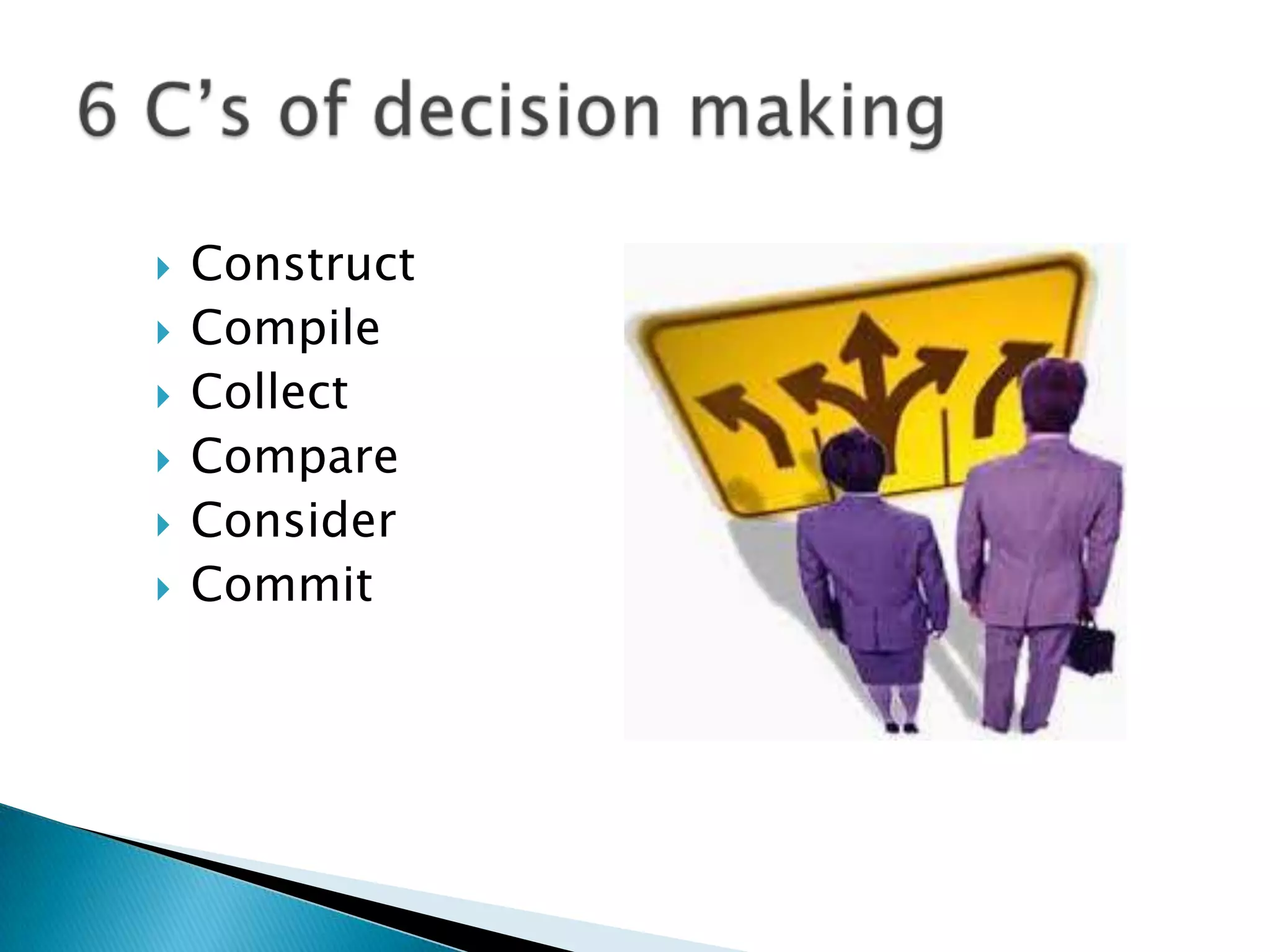
 Construct
 Compile
 Collect
 Compare
 Consider
 Commit
• Construct a clear picture of precisely what
must be decided.
• Compile a list of requirements that must be
met.
• Collect information on alternatives that meet
the requirements
• Compare alternatives that meet your
requirements.
• Consider the WHAT MIGHT GO WRONG
factor with each alternative.
• Commit to a decision and follow through
with it.
Don'ts
• Don’t fear to express your decision.
• Don’t let your ego change your decision.
Remember you shouldn’t hurt others.
• Don’t mke decisions which are outside your
realm of authority.
• Don’t crave for unanimous approval. You may
not be correct always.
• Don’t get a conclusion without having an over
look.
• Don’t make a decision without following the
C’s in decision making.
Queries???

Decision making

  • 1.
  • 2.
    Decision making? It theprocess of examining your possibilities, options, comparing them and choosing a course of action.
  • 3.
    Decision can beeither programmed or non programmed. • Programmed : decisions that are simple and routine and have a pre established decision making plan. • Non programmed : decisions that are new and complicated and require thought and creativity.
  • 4.
    Factors effecting decisionmaking • Perception • Priority • Acceptability • Demands • Style • Resources • judgment
  • 5.
    • Perception –“know before you make.” • Priority – without knowing what you want there cant be any decision made about. • Acceptability – accept whether its hard or easy if you think your decision is correct. • Demands – make sure that no one gets hurt by your decision. • Style – don’t be outdated. • Resources – make your way with what is available. don’t ask for more in the region of scarcity. • Judgment – go on with the correct decision.
  • 7.
     Construct  Compile Collect  Compare  Consider  Commit
  • 8.
    • Construct aclear picture of precisely what must be decided. • Compile a list of requirements that must be met. • Collect information on alternatives that meet the requirements
  • 9.
    • Compare alternativesthat meet your requirements. • Consider the WHAT MIGHT GO WRONG factor with each alternative. • Commit to a decision and follow through with it.
  • 11.
    Don'ts • Don’t fearto express your decision. • Don’t let your ego change your decision. Remember you shouldn’t hurt others. • Don’t mke decisions which are outside your realm of authority.
  • 12.
    • Don’t cravefor unanimous approval. You may not be correct always. • Don’t get a conclusion without having an over look. • Don’t make a decision without following the C’s in decision making.
  • 15.