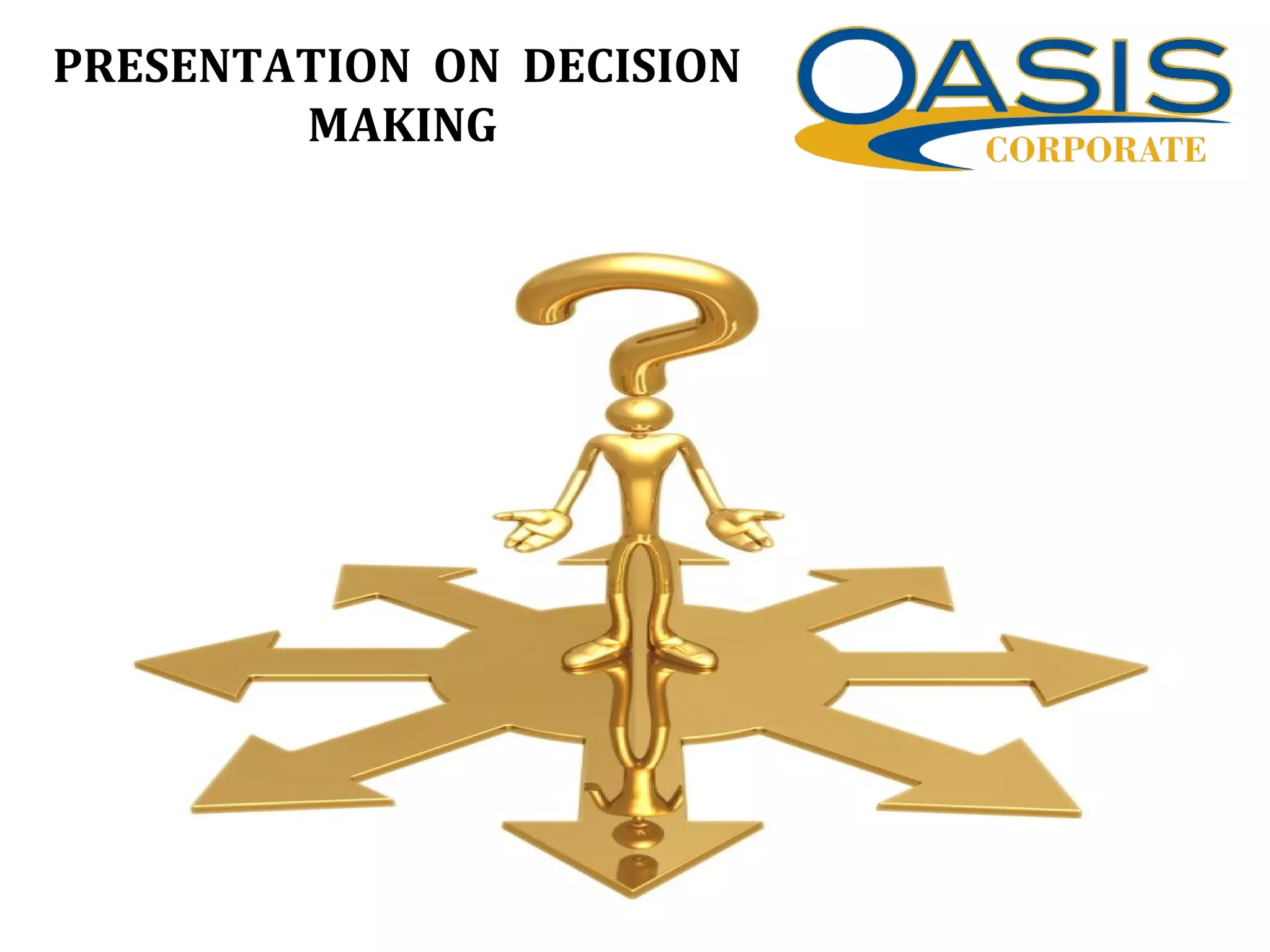
PRESENTATION ON DECISION
MAKING
Presentation Layout
• Define of Decision Making.
• Situation of Decision Making.
• Factors of an Effective Decision Making.
• Four Functions of Decision Making.
• Models of Decision Making.
• 6 C’s of Decision Making.
• Managing Diversity.
• Overcoming Barriers to an Effective Decision Making.
• Conclusion.
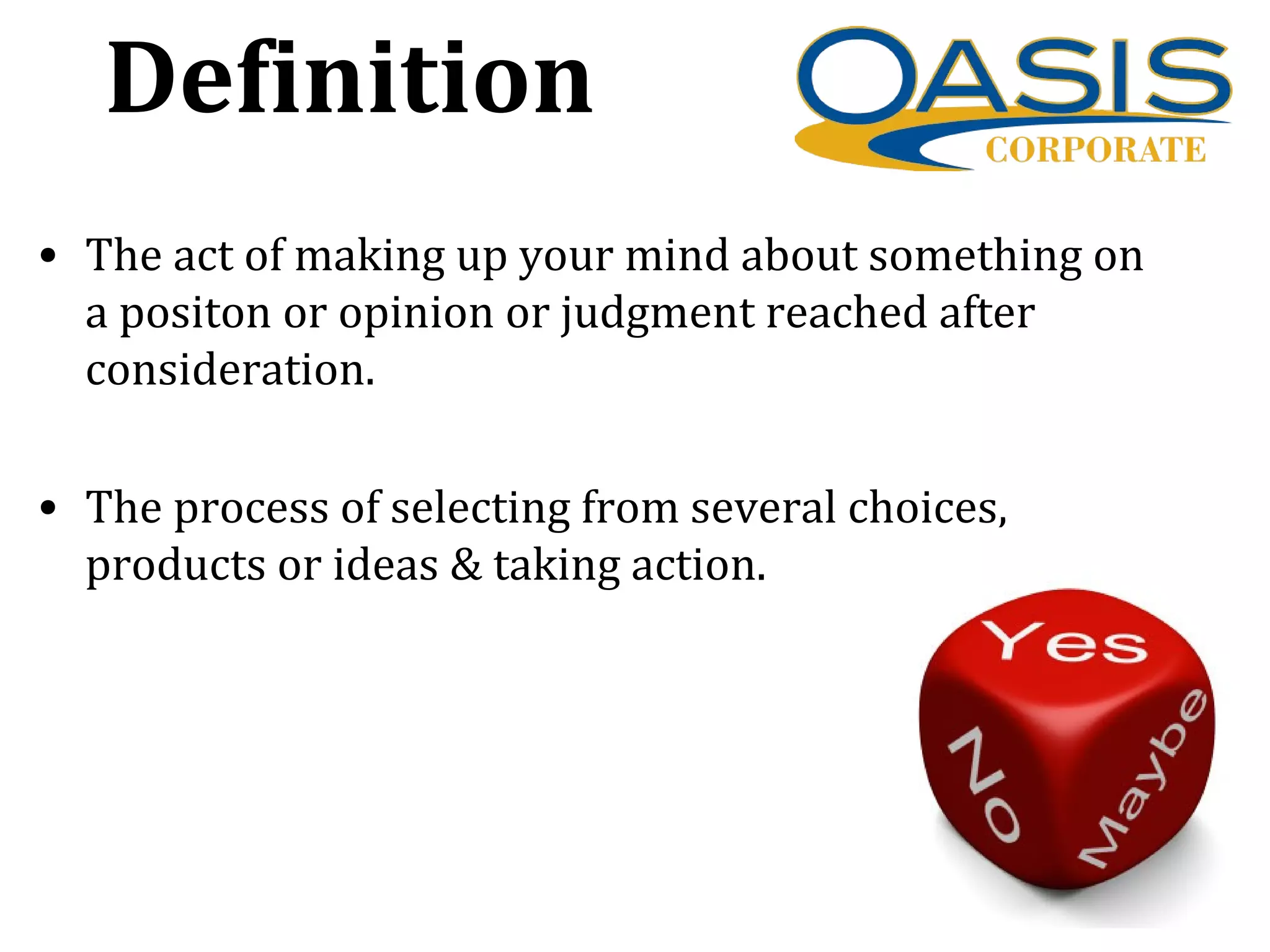
Definition
• The act of making up your mind about something on
a positon or opinion or judgment reached after
consideration.
• The process of selecting from several choices,
products or ideas & taking action.
Differences in Decision Making
Situation
• There are Two Situation
 Programmed Decision Making
Programmed Decision are those made in routine, repetitive, well
structured situation through the use of predetermined Decision rules.
 Non- Programmed Decision Making
Non-Programmed Decision are those for which predetermined decision
rules are impractical because the situations are novel and/or relatively ill
structured.
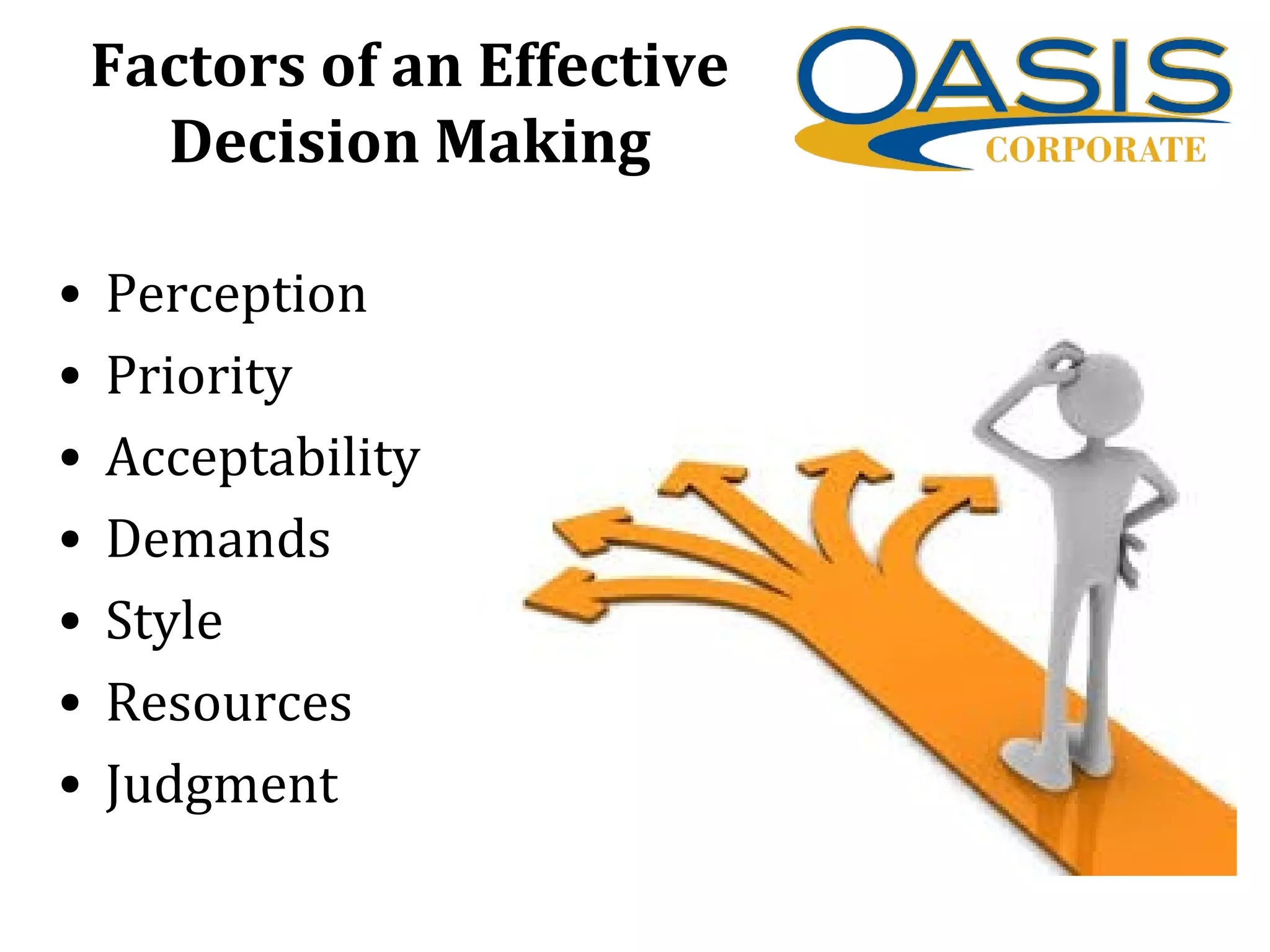
Factors of an Effective
Decision Making
• Perception
• Priority
• Acceptability
• Demands
• Style
• Resources
• Judgment
• PERCEPTION – “know before you make.”
• PRIORITY – without knowing what you want there cant be any decision
made about.
• ACCEPTABILITY – accept whether its hard or easy if you think your
decision is correct.
• DEMANDS – make sure that no one gets hurt by your decision.
• RESOURCES – make your way with what is available. don’t ask for more in
the region of scarcity.
• JUDGMENT – go on with the correct decision.
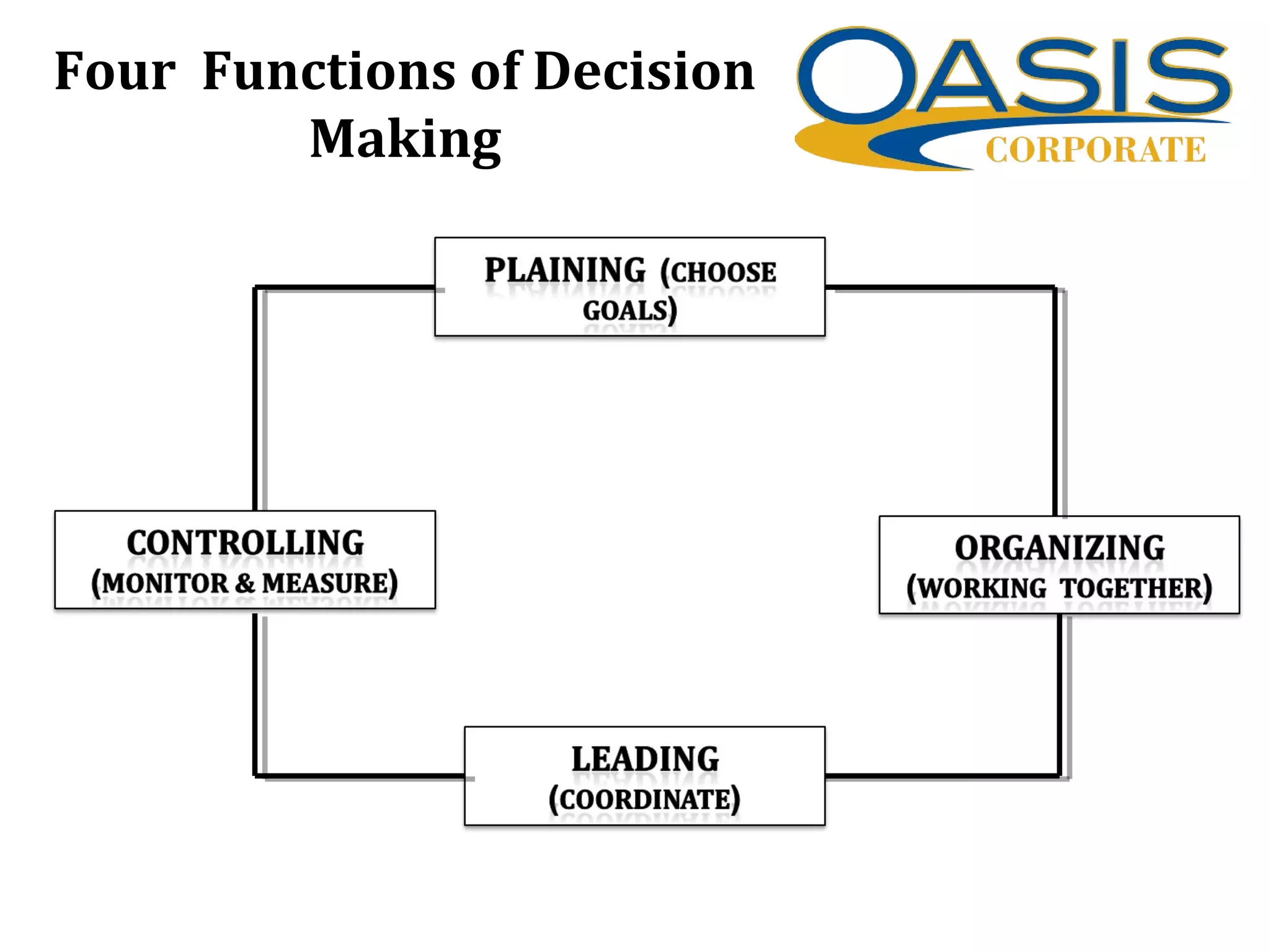
Four Functions of Decision
Making
Planning
• Planning is an art and science of converting a
set of objectives to realization through a
series of steps executed in an organized and
predicted way so that there will be less
requirement of changes in the plan later on
the old saying “Plan the work, Work the plan”.
Controlling
• Controlling phase is undertaken during the actual project
implementation.
• Project controlling is a mechanism established to
determine deviations from the project base schedule,
to re-plan & reschedule during implementation to
compensate the deviations on the basis of
commissioning minima, flow of resources like
finance, manpower, equipment & application techniques.
Organizing
• Organizing is the process of creating a
structure of relationship to enable employees
to carry out management’s plans & achieve
their goals.
• Organizing involves establishing an intentional
structure of roles for people to fill in an
organization.
Leading
• Leading involves the social and informal sources of influence
that you use to inspire action taken by others..
• Guiding & motivating employees to make effectively to
accomplish organizational goals & objectives.
• Explaining Routines.
• Clarifying Polices.
• Providing feedback on performances.
• Rational Model
 Most popular type of model.
 Based around a cognitive judgment.
 Pros and cons of various options.
• Non- Rational Models
 Satisficing Model.
 Incremental Model.
 Garbage Can Model.
Models of Decision
Making
Satisficing Model.
Managers seek alternatives.
One that looks Satisfactory.
Not seeking the optional decision.
Incremental Model.
Mangers make the smallest response possible.
This reduce the problem to at least a tolerable level.
Garbage Can Model
Managers behave in virtually a random pattern.
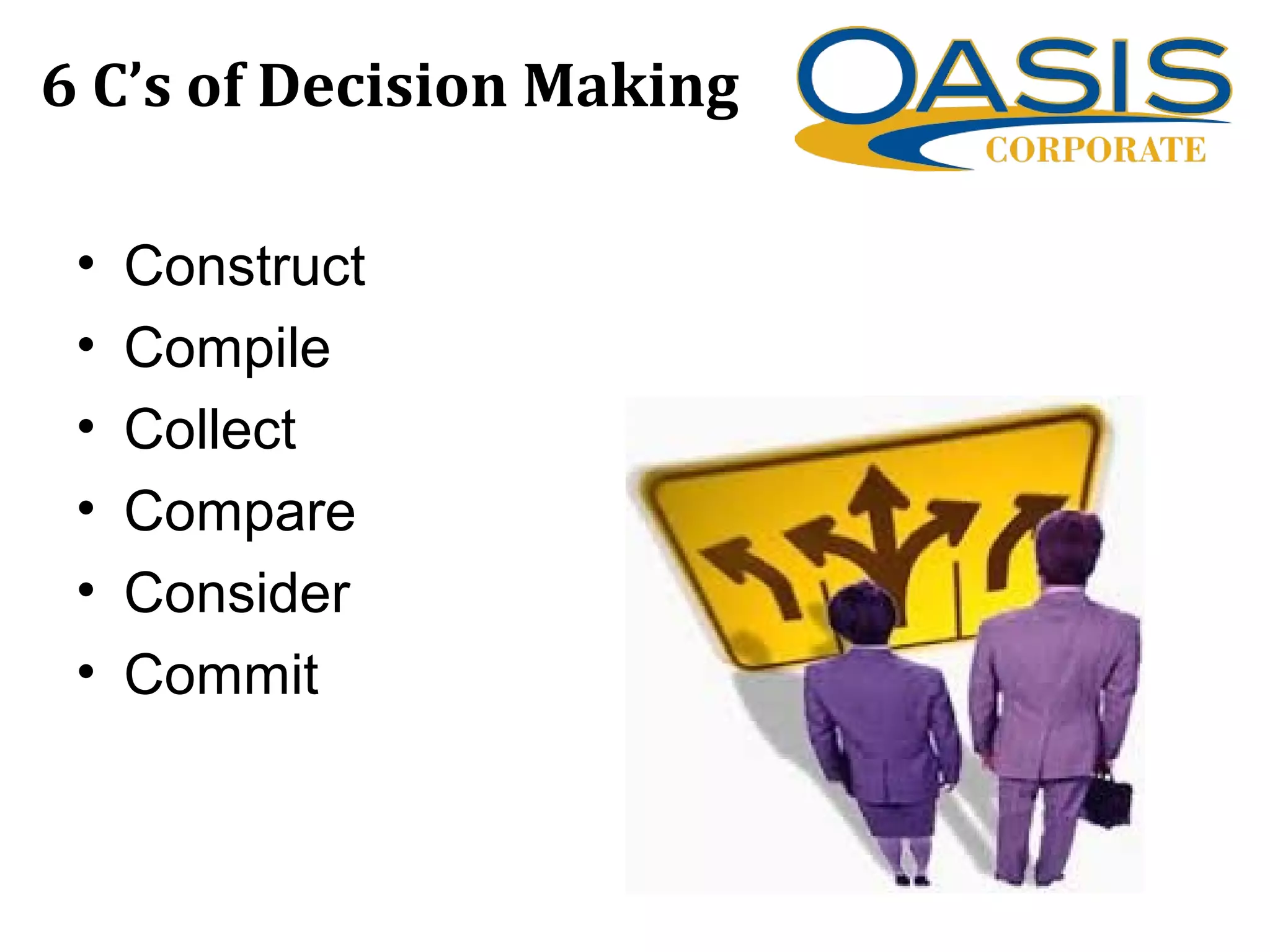
6 C’s of Decision Making
• Construct
• Compile
• Collect
• Compare
• Consider
• Commit
• Construct a clear picture of precisely what
must be decided.
• Compile a list of requirements that must be
met.
• Collect information on alternatives that
meet the requirements
• Compare alternatives that meet your
requirements.
• Consider the WHAT MIGHT GO WRONG
factor with each alternative.
• Commit to a decision and follow through
with it.
Managing Diversity
Group Decision Making
•Decision Making by more than one person
•Usually followed in organizations.
•It has some advantages & some
disadvantages.
Advantages
 More information and
knowledge is focused on the
issue.
 An increased number and
diversity of alternatives can
be developed.
 Greater understand
acceptance of the final
decision are likely.
 Members develop
knowledge and skills for use.
Disadvantages
 It is usually more time-
Consuming.
 Disagreements may delay
decisions and cause hard
feelings.
 The discussion may be
dominated by one or a few
group members.
 Group think may cause
members to overemphasis
achieving agreement.
Overcoming Barriers to
Effective Decision Making
Means of Overcoming Decision Making
Barriers.
•Accepting the problem challenge.
•Searching for sufficient alternatives.
•Recognizing common Decision Making Bases.
•Avoiding the Decision Escalation Phenomenon.
Conclusion
• Decisions Determines Destiny.
• Decisions are very important factors that
determine the growth of organization
and help achieve the goals.
Presentation on Decision Making

Presentation on Decision Making

  • 1.
  • 2.
    Presentation Layout • Defineof Decision Making. • Situation of Decision Making. • Factors of an Effective Decision Making. • Four Functions of Decision Making. • Models of Decision Making. • 6 C’s of Decision Making. • Managing Diversity. • Overcoming Barriers to an Effective Decision Making. • Conclusion.
  • 3.
    Definition • The actof making up your mind about something on a positon or opinion or judgment reached after consideration. • The process of selecting from several choices, products or ideas & taking action.
  • 4.
    Differences in DecisionMaking Situation • There are Two Situation  Programmed Decision Making Programmed Decision are those made in routine, repetitive, well structured situation through the use of predetermined Decision rules.  Non- Programmed Decision Making Non-Programmed Decision are those for which predetermined decision rules are impractical because the situations are novel and/or relatively ill structured.
  • 5.
    Factors of anEffective Decision Making • Perception • Priority • Acceptability • Demands • Style • Resources • Judgment
  • 6.
    • PERCEPTION –“know before you make.” • PRIORITY – without knowing what you want there cant be any decision made about. • ACCEPTABILITY – accept whether its hard or easy if you think your decision is correct. • DEMANDS – make sure that no one gets hurt by your decision. • RESOURCES – make your way with what is available. don’t ask for more in the region of scarcity. • JUDGMENT – go on with the correct decision.
  • 7.
    Four Functions ofDecision Making
  • 8.
    Planning • Planning isan art and science of converting a set of objectives to realization through a series of steps executed in an organized and predicted way so that there will be less requirement of changes in the plan later on the old saying “Plan the work, Work the plan”.
  • 9.
    Controlling • Controlling phaseis undertaken during the actual project implementation. • Project controlling is a mechanism established to determine deviations from the project base schedule, to re-plan & reschedule during implementation to compensate the deviations on the basis of commissioning minima, flow of resources like finance, manpower, equipment & application techniques.
  • 10.
    Organizing • Organizing isthe process of creating a structure of relationship to enable employees to carry out management’s plans & achieve their goals. • Organizing involves establishing an intentional structure of roles for people to fill in an organization.
  • 11.
    Leading • Leading involvesthe social and informal sources of influence that you use to inspire action taken by others.. • Guiding & motivating employees to make effectively to accomplish organizational goals & objectives. • Explaining Routines. • Clarifying Polices. • Providing feedback on performances.
  • 12.
    • Rational Model Most popular type of model.  Based around a cognitive judgment.  Pros and cons of various options. • Non- Rational Models  Satisficing Model.  Incremental Model.  Garbage Can Model. Models of Decision Making
  • 13.
    Satisficing Model. Managers seekalternatives. One that looks Satisfactory. Not seeking the optional decision. Incremental Model. Mangers make the smallest response possible. This reduce the problem to at least a tolerable level. Garbage Can Model Managers behave in virtually a random pattern.
  • 14.
    6 C’s ofDecision Making • Construct • Compile • Collect • Compare • Consider • Commit
  • 15.
    • Construct aclear picture of precisely what must be decided. • Compile a list of requirements that must be met. • Collect information on alternatives that meet the requirements
  • 16.
    • Compare alternativesthat meet your requirements. • Consider the WHAT MIGHT GO WRONG factor with each alternative. • Commit to a decision and follow through with it.
  • 17.
    Managing Diversity Group DecisionMaking •Decision Making by more than one person •Usually followed in organizations. •It has some advantages & some disadvantages.
  • 18.
    Advantages  More informationand knowledge is focused on the issue.  An increased number and diversity of alternatives can be developed.  Greater understand acceptance of the final decision are likely.  Members develop knowledge and skills for use. Disadvantages  It is usually more time- Consuming.  Disagreements may delay decisions and cause hard feelings.  The discussion may be dominated by one or a few group members.  Group think may cause members to overemphasis achieving agreement.
  • 19.
    Overcoming Barriers to EffectiveDecision Making Means of Overcoming Decision Making Barriers. •Accepting the problem challenge. •Searching for sufficient alternatives. •Recognizing common Decision Making Bases. •Avoiding the Decision Escalation Phenomenon.
  • 20.
    Conclusion • Decisions DeterminesDestiny. • Decisions are very important factors that determine the growth of organization and help achieve the goals.