Problem
Solving
What is Problem Solving
Problem solving is the act of defining a
problem; determining the cause of the
problem; identifying, prioritizing, and
selecting alternatives for a solution; and
implementing a solution.
Learning Outcomes
Discuss ways to solve a problem;
Solve problems using inductive
and deductive reasoning;
Solve problems using Polya’s
strategy.
THE PROBLEM-
SOLVING PROCESS
1. Define the
Problem
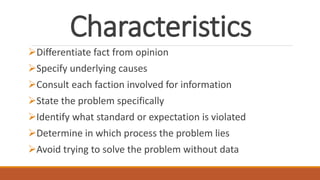
Characteristics
Differentiate fact from opinion
Specify underlying causes
Consult each faction involved for information
State the problem specifically
Identify what standard or expectation is violated
Determine in which process the problem lies
Avoid trying to solve the problem without data
2. Generate
alternative solutions
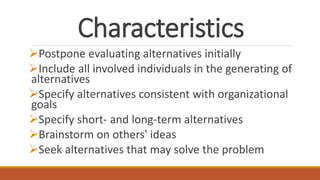
Characteristics
Postpone evaluating alternatives initially
Include all involved individuals in the generating of
alternatives
Specify alternatives consistent with organizational
goals
Specify short- and long-term alternatives
Brainstorm on others' ideas
Seek alternatives that may solve the problem
3. Evaluate and Select an
Alternative
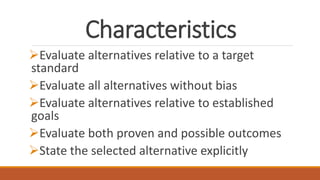
Characteristics
Evaluate alternatives relative to a target
standard
Evaluate all alternatives without bias
Evaluate alternatives relative to established
goals
Evaluate both proven and possible outcomes
State the selected alternative explicitly
4. Implement and follow up on the
solution
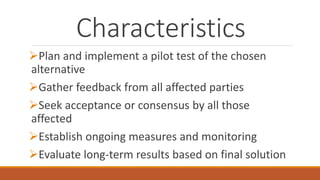
Characteristics
Plan and implement a pilot test of the chosen
alternative
Gather feedback from all affected parties
Seek acceptance or consensus by all those
affected
Establish ongoing measures and monitoring
Evaluate long-term results based on final solution
Problem solving
Problem solving
Problem solving
Problem solving
Problem solving
Problem solving

Problem solving