Making Decisions

                   By Jaklin H.
                   Speech 104
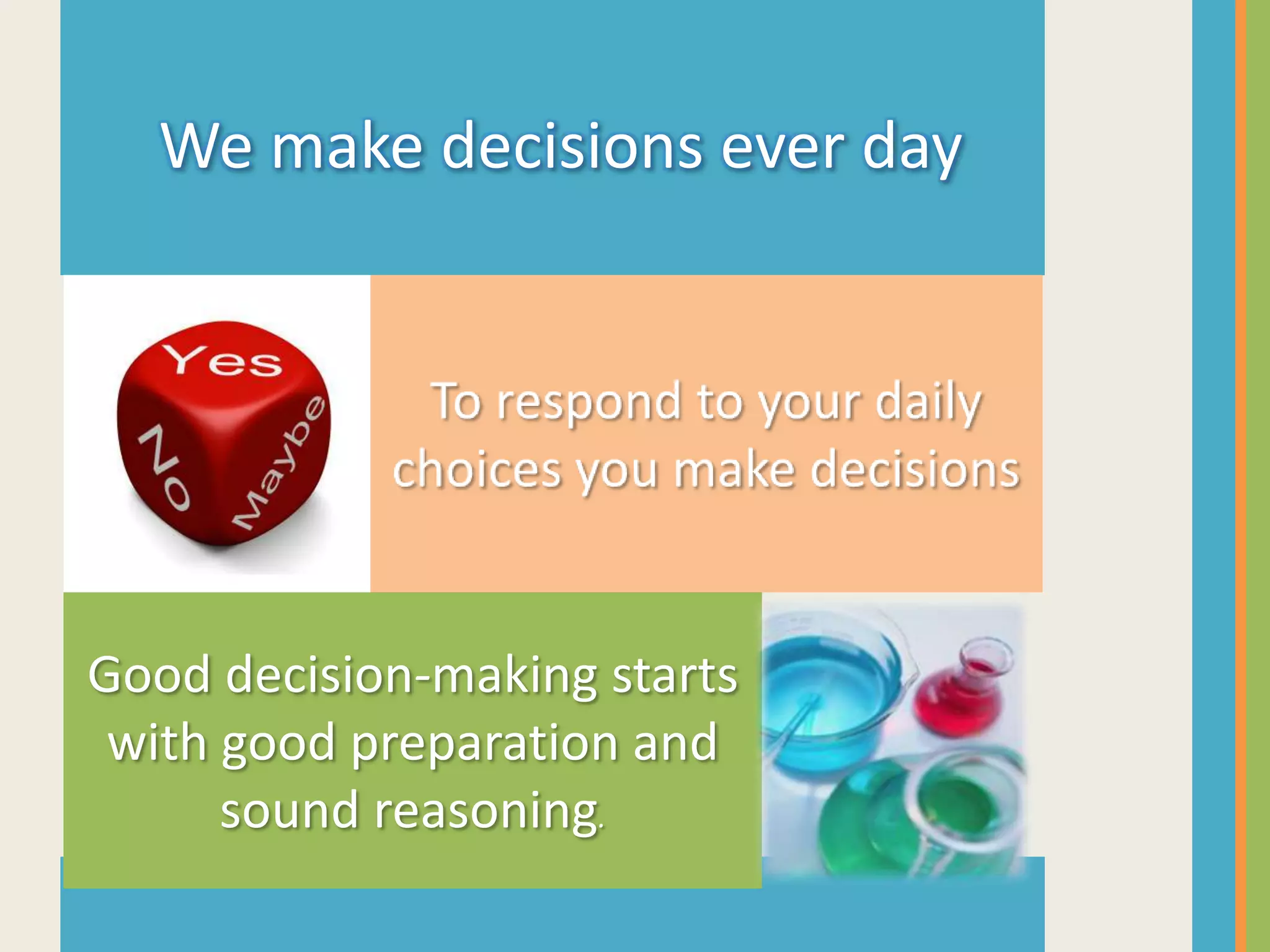
We make decisions ever day


Good decision-making starts
 with good preparation and
      sound reasoning.
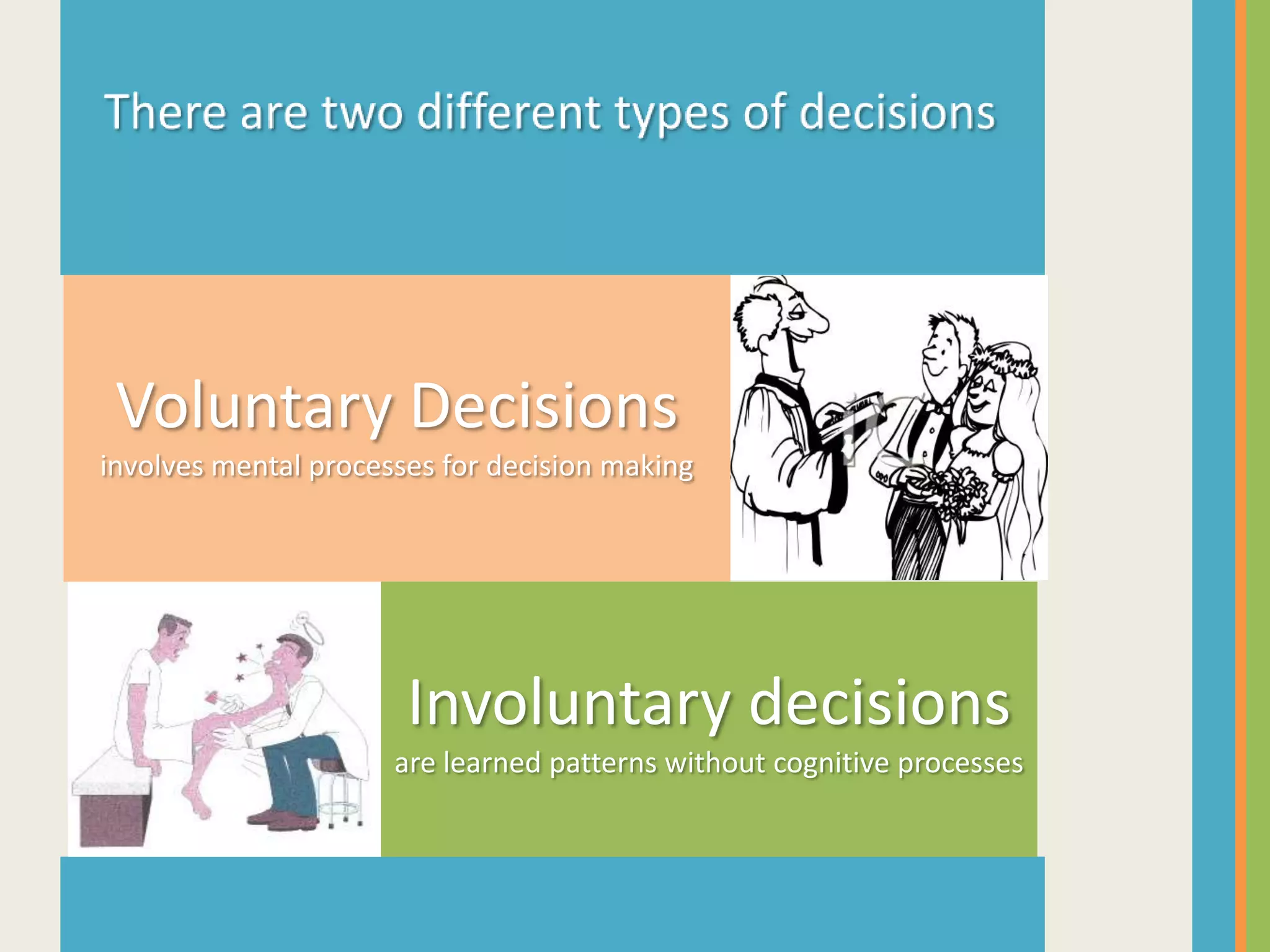
Voluntary Decisions
involves mental processes for decision making


                       Involuntary decisions
                      are learned patterns without cognitive processes
What is Hidden Persuaders?
            Hidden Persuaders are used to alter
         our decisions such as purchasing decisions.
    The purpose of hidden Persuaders is to influence
         our decisions without our awareness.

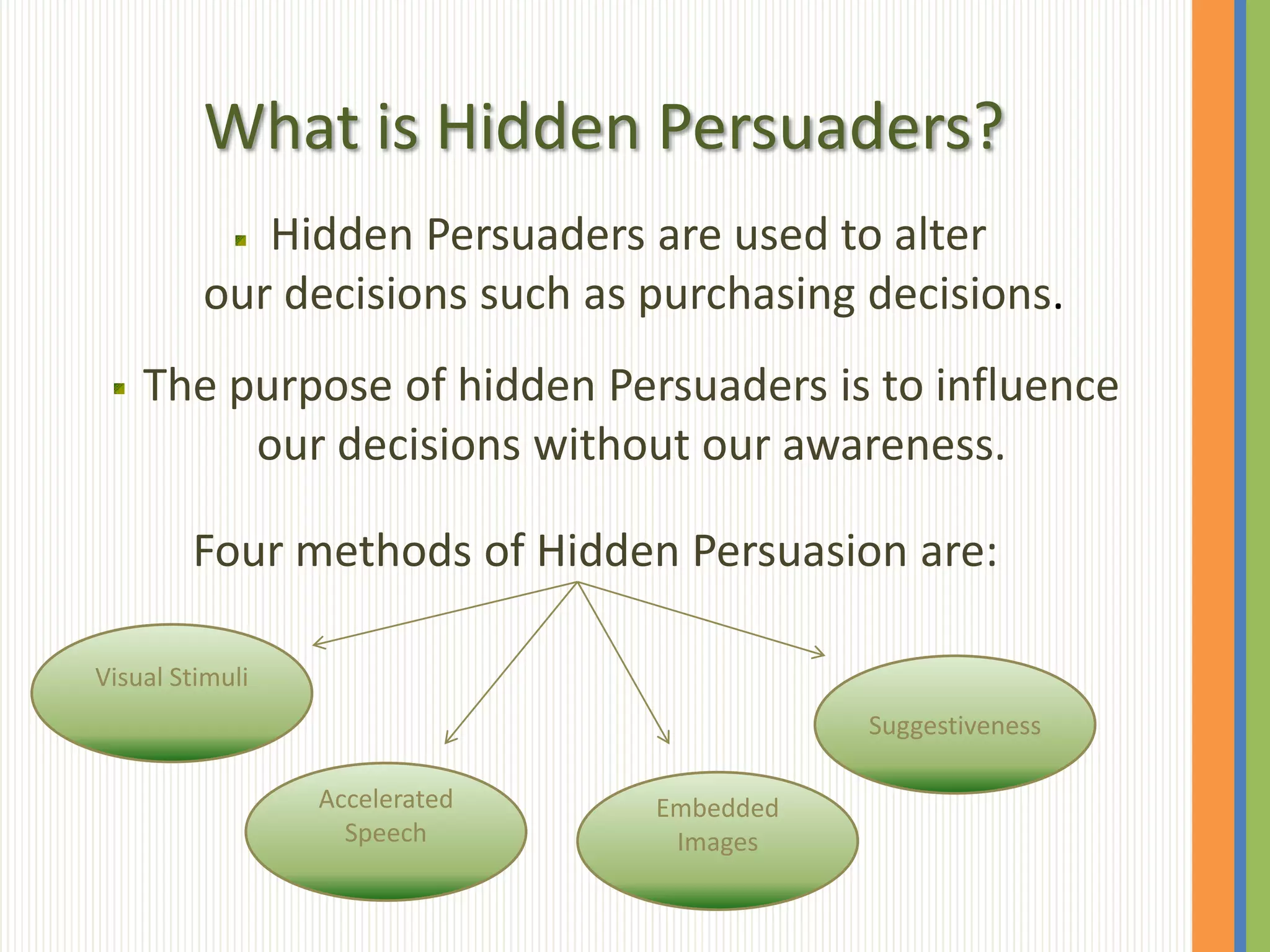
        Four methods of Hidden Persuasion are:

Visual Stimuli
                                          Suggestiveness

                 Accelerated   Embedded
                   Speech       Images
More Facts about Voluntary Decision Making

The voluntary decision making consumes
more time and it is more difficult

Voluntary decision makers are the main
contributor in the process of making a decision.
Requires active participation

Requires more energy and cognitive process

Voluntary decision makers examine all the information
available in order to make the final decision
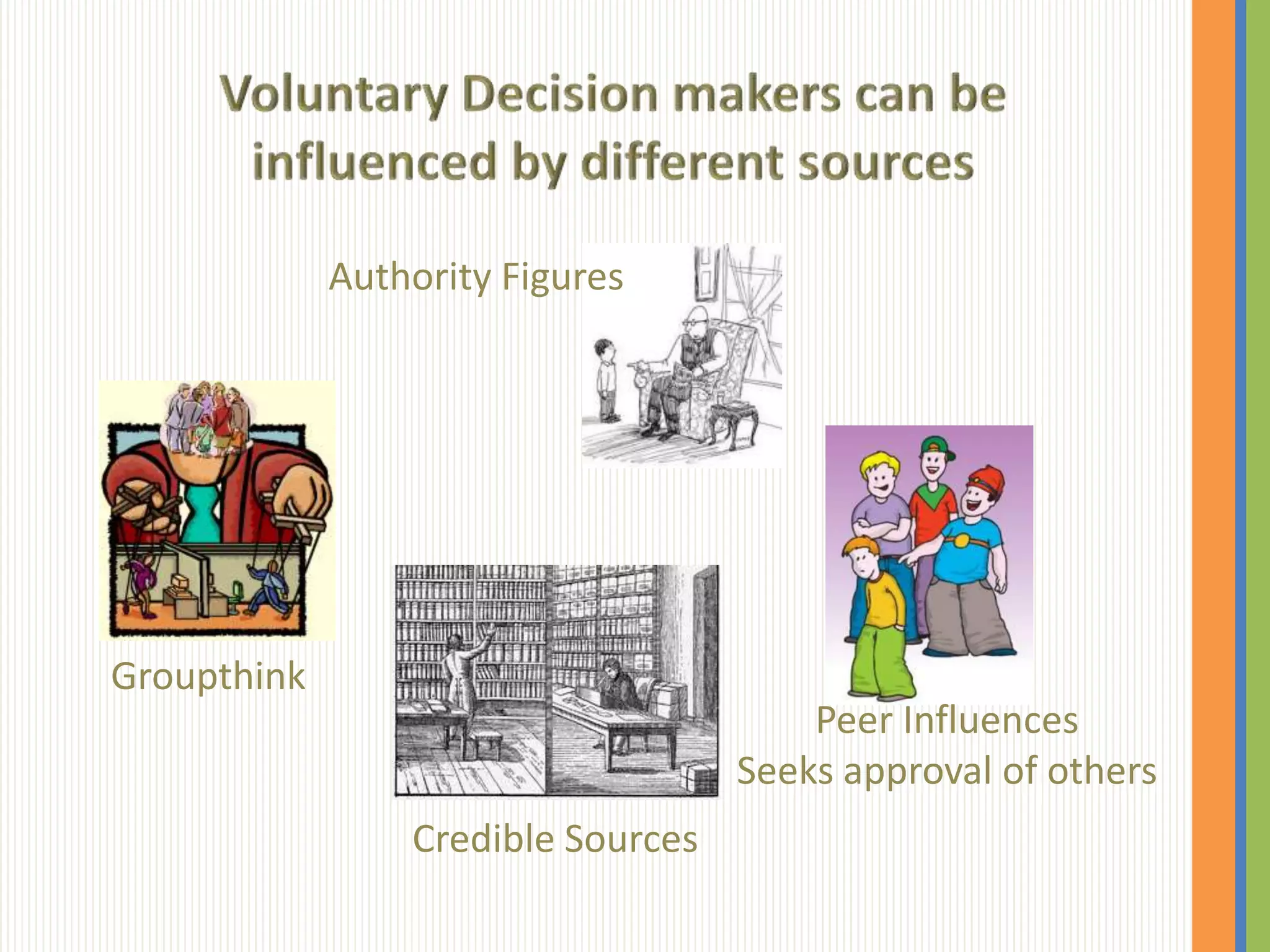
Authority Figures


Groupthink
                                        Peer Influences
                                    Seeks approval of others
                 Credible Sources
To be a good decision maker you need to know your style.

With a small investment of time researching your decision making style
the more likely you will arrive at a well informed decision.


                           Driver
                         Expressive
                          Amiable
                         Analytical
Driver

They appear to want to make their own decisions.

They give the impression that they know what they want.

They know where they are going and how to make their final decision.
They focus on the present to make a decision rather than pleasing other.

They are more independent and competitive individuals.
Expressive

They appear communicative, warm, exciting and approachable.

Their main focus is on the future and they don’t
pay attention to practical detail in present.

They tend to take risks based on their own
or other’s reasoning instead of facts.

They are more creative and imaginative compared to others.
Amiable

They value friendships and close relationships.
They are very people oriented and have cooperative behavior.

They are not a risk taker and often stick with the comfortable and known.
They tend to move slowly with less time discipline.

They need to feel safe in the decision-making process.
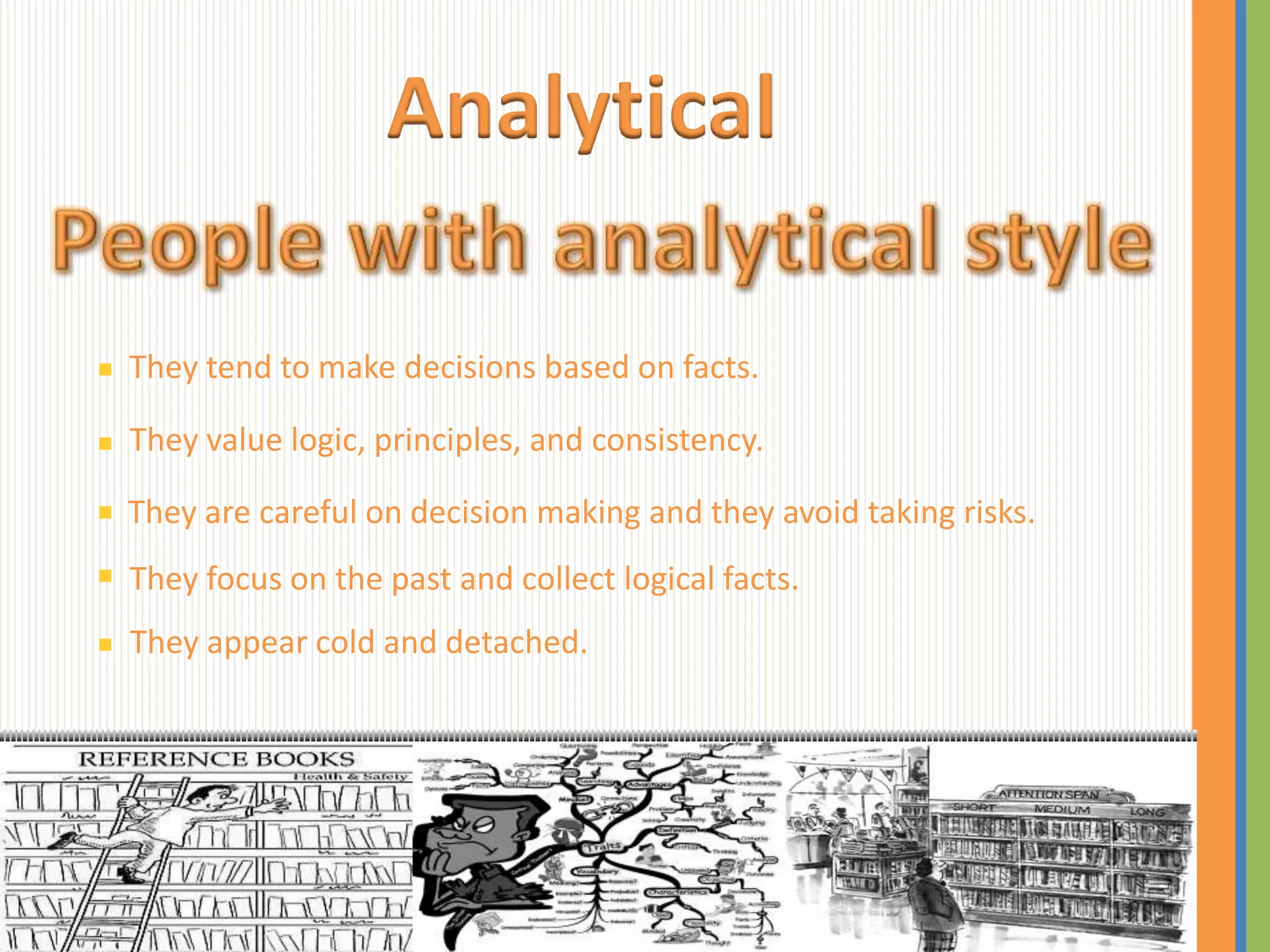
Analytical

They tend to make decisions based on facts.

They value logic, principles, and consistency.

They are careful on decision making and they avoid taking risks.
They focus on the past and collect logical facts.
They appear cold and detached.
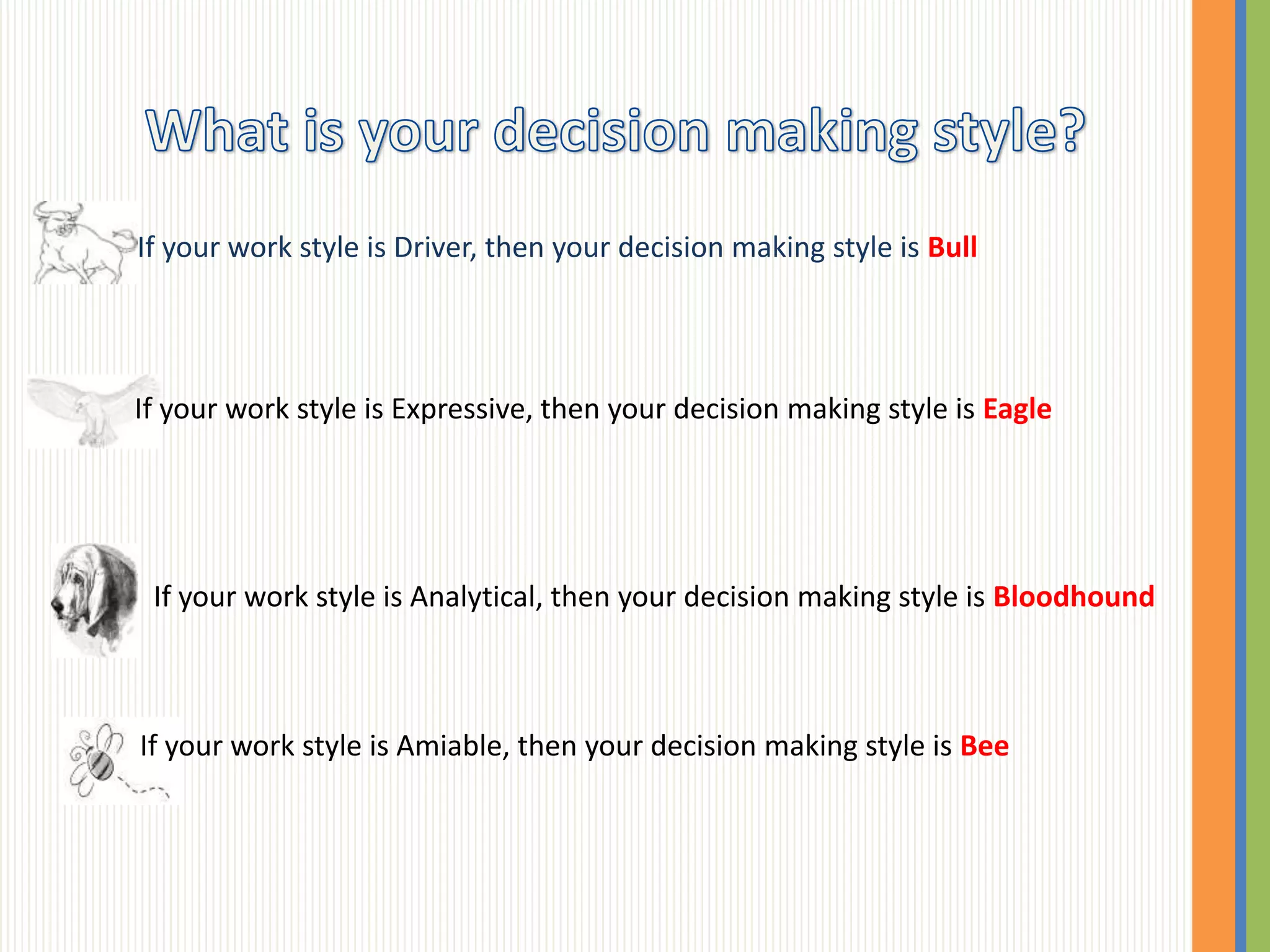
If your work style is Driver, then your decision making style is Bull


If your work style is Expressive, then your decision making style is Eagle


 If your work style is Analytical, then your decision making style is Bloodhound


If your work style is Amiable, then your decision making style is Bee
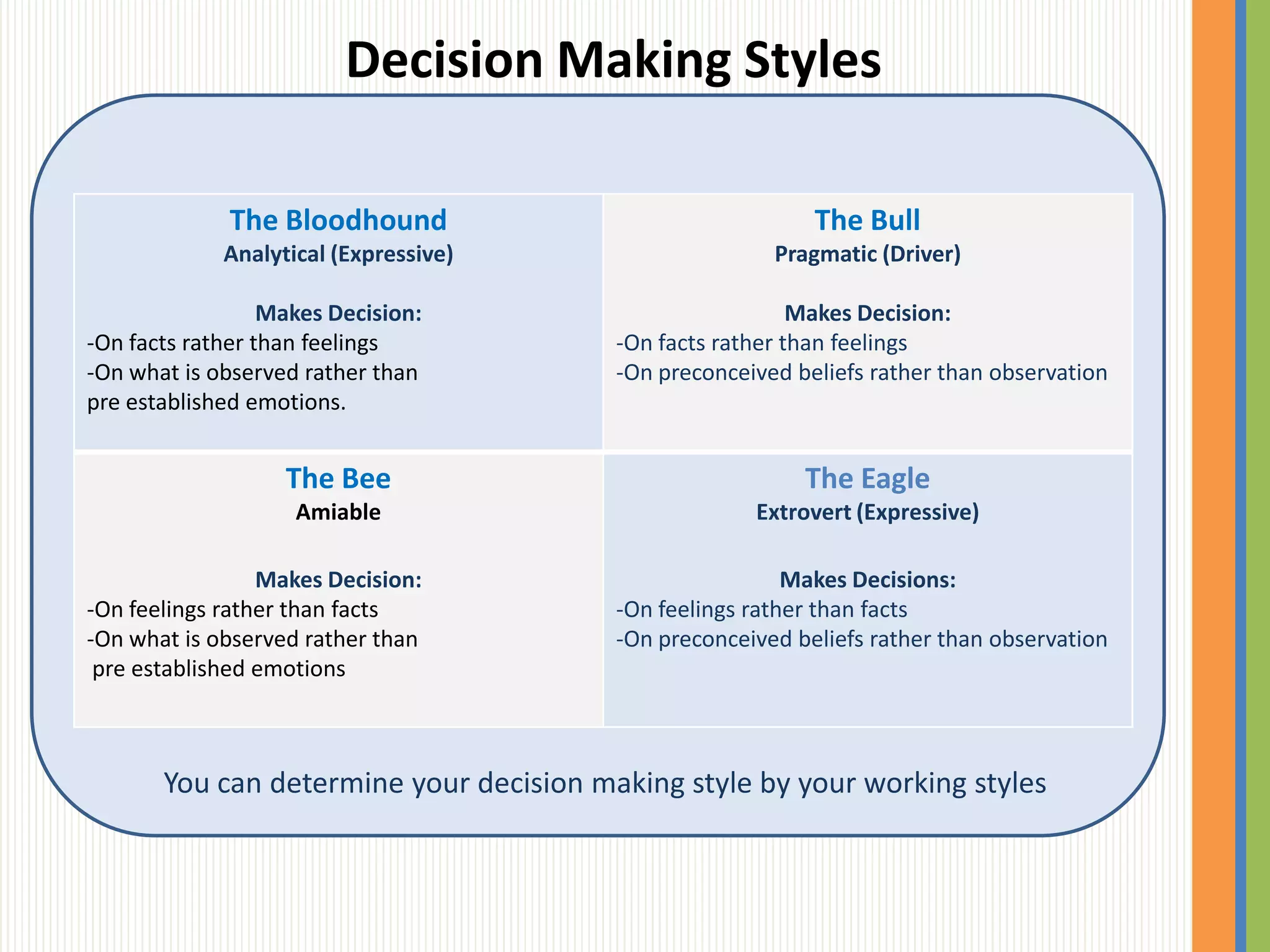
Decision Making Styles

              The Bloodhound                                The Bull
             Analytical (Expressive)                    Pragmatic (Driver)

                  Makes Decision:                          Makes Decision:
-On facts rather than feelings           -On facts rather than feelings
-On what is observed rather than         -On preconceived beliefs rather than observation
pre established emotions.


                   The Bee                                 The Eagle
                    Amiable                           Extrovert (Expressive)

                 Makes Decision:                          Makes Decisions:
-On feelings rather than facts           -On feelings rather than facts
-On what is observed rather than         -On preconceived beliefs rather than observation
 pre established emotions


       You can determine your decision making style by your working styles
There are two types of decision making
                   “Voluntary” and “Involuntary”


          Critical thinkers know the difference between
voluntary and involuntary decision making, and because of that,
    they grasp the importance of their key decisions deriving
                  from voluntary decision making.
    However, involuntary decision making is not disregarded
  because critical thinkers know that it's an ability for survival.

Decision making

  • 1.
    Making Decisions By Jaklin H. Speech 104
  • 3.
    We make decisionsever day Good decision-making starts with good preparation and sound reasoning.
  • 4.
    Voluntary Decisions involves mentalprocesses for decision making Involuntary decisions are learned patterns without cognitive processes
  • 5.
    What is HiddenPersuaders? Hidden Persuaders are used to alter our decisions such as purchasing decisions. The purpose of hidden Persuaders is to influence our decisions without our awareness. Four methods of Hidden Persuasion are: Visual Stimuli Suggestiveness Accelerated Embedded Speech Images
  • 6.
    More Facts aboutVoluntary Decision Making The voluntary decision making consumes more time and it is more difficult Voluntary decision makers are the main contributor in the process of making a decision. Requires active participation Requires more energy and cognitive process Voluntary decision makers examine all the information available in order to make the final decision
  • 7.
    Authority Figures Groupthink Peer Influences Seeks approval of others Credible Sources
  • 8.
    To be agood decision maker you need to know your style. With a small investment of time researching your decision making style the more likely you will arrive at a well informed decision. Driver Expressive Amiable Analytical
  • 9.
    Driver They appear towant to make their own decisions. They give the impression that they know what they want. They know where they are going and how to make their final decision. They focus on the present to make a decision rather than pleasing other. They are more independent and competitive individuals.
  • 10.
    Expressive They appear communicative,warm, exciting and approachable. Their main focus is on the future and they don’t pay attention to practical detail in present. They tend to take risks based on their own or other’s reasoning instead of facts. They are more creative and imaginative compared to others.
  • 11.
    Amiable They value friendshipsand close relationships. They are very people oriented and have cooperative behavior. They are not a risk taker and often stick with the comfortable and known. They tend to move slowly with less time discipline. They need to feel safe in the decision-making process.
  • 12.
    Analytical They tend tomake decisions based on facts. They value logic, principles, and consistency. They are careful on decision making and they avoid taking risks. They focus on the past and collect logical facts. They appear cold and detached.
  • 13.
    If your workstyle is Driver, then your decision making style is Bull If your work style is Expressive, then your decision making style is Eagle If your work style is Analytical, then your decision making style is Bloodhound If your work style is Amiable, then your decision making style is Bee
  • 14.
    Decision Making Styles The Bloodhound The Bull Analytical (Expressive) Pragmatic (Driver) Makes Decision: Makes Decision: -On facts rather than feelings -On facts rather than feelings -On what is observed rather than -On preconceived beliefs rather than observation pre established emotions. The Bee The Eagle Amiable Extrovert (Expressive) Makes Decision: Makes Decisions: -On feelings rather than facts -On feelings rather than facts -On what is observed rather than -On preconceived beliefs rather than observation pre established emotions You can determine your decision making style by your working styles
  • 15.
    There are twotypes of decision making “Voluntary” and “Involuntary” Critical thinkers know the difference between voluntary and involuntary decision making, and because of that, they grasp the importance of their key decisions deriving from voluntary decision making. However, involuntary decision making is not disregarded because critical thinkers know that it's an ability for survival.