Decision Making
Presented by
 Naseeb ul Hassan
 Muhammad Ali kayani
 Abdul Raheem Abbasi
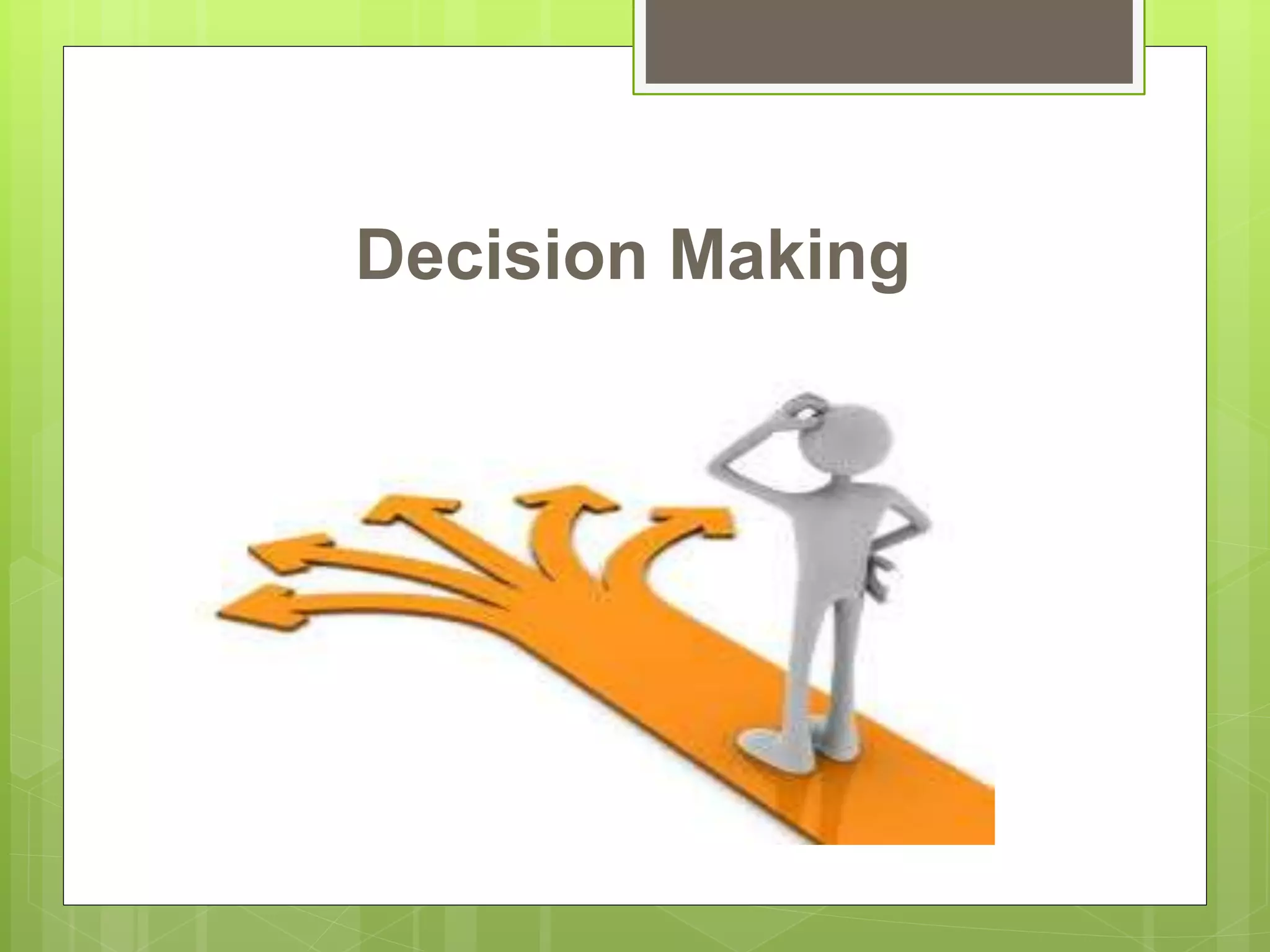
Decision Making
Decision Making
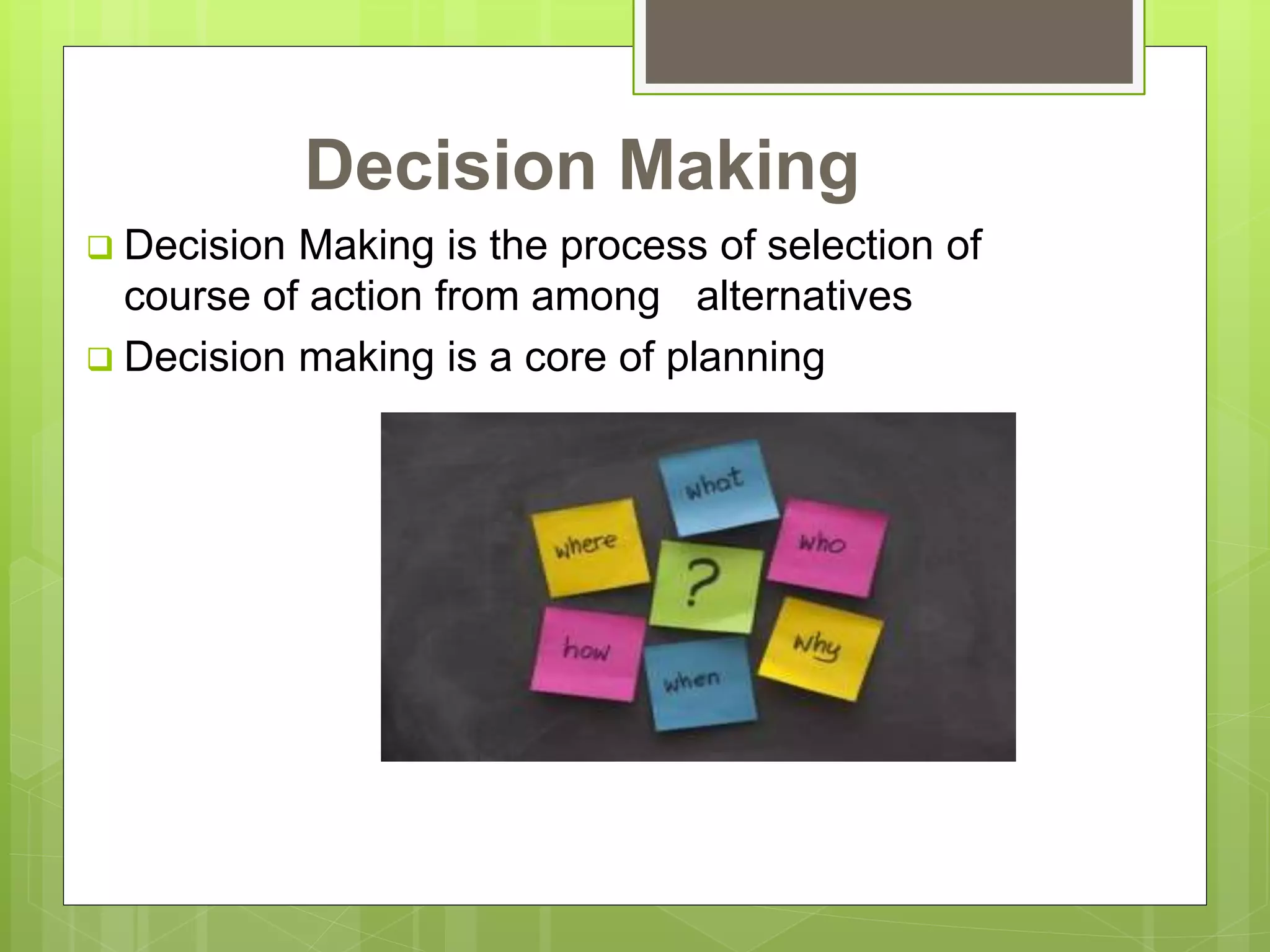
 Decision Making is the process of selection of
course of action from among alternatives
 Decision making is a core of planning
Rationality in Decision Making
 Making consistent, value maximizing choices
within specific constraints
 A logical, multi-step model for choosing
between alternatives that follows an orderly
path from problem identification through
solution.
 Effective decision making must be rational
Limited Rationality
 Human mind has only limited capacity to
evaluate and process the information that is
available
 Satisfy … good enough
Development of Alternatives
Identifying viable Alternatives
Alternatives are listed (without
evaluation)
Compare them with limiting factors
that stand in the way of
accomplishing desired objective.
Evaluating Alternative
 Quantitative --measurable/Fixed e.g. cost
time, and budget etc.
 Qualitative--- Non measurable/Intangible e.g.
moral of employee/ labor relation
Marginal Analysis
 Evaluating alternatives involves evaluating
additional revenue arising from additional cost
 Additional revenue = additional cost
 Linear relation between revenue and cost
Cost-Effectiveness Analysis
 Seeks best ratio of benefit and cost
 Finding least costly way to reaching an
objective
 Getting maximum benefit for given
expenditure
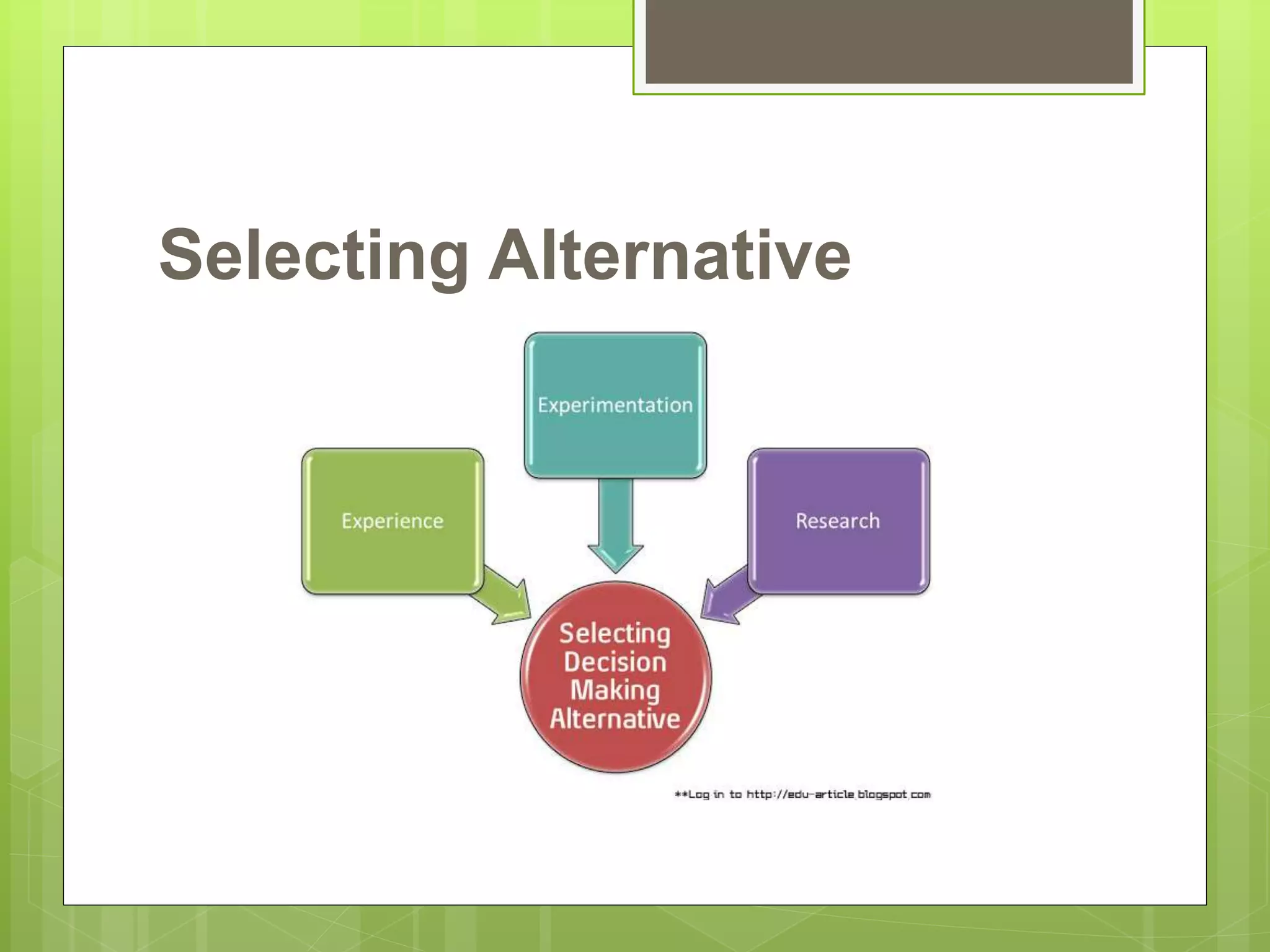
Selecting Alternative
Experience
 Reliance on past decisions
 Experience is the best teacher
 It could be dangerous
 Good decisions must be evaluate on the basis
of future effect whereas experience relates to
the past
 Analysis of experience in the light of current
situation
Experimentation
 Try one alternative and then see what
happen?
 Testing in limited sphere.
 Expensive ---- involve cost/capital
 Results may doubtful
Research and Analysis
 Pencil-and-Paper or computer-and-printout
method
 When major decisions are involved
 Less expensive than experimentation
 E.g. (3-D model of building)
Programmed Decisions
 Used for structure and routine work
 Specifications and rules that tell them how to
work in organization
 Almost are used in every organization
Non-Programmed Decisions
Used for unstructured novel and ill
defined situation of a nonrecurring
nature
These decision made by top level
management
Decision Making
 Under Certainty
• People are reasonably sure about what will happen when
they make decision
 Under Uncertainty
• People are very unsure about results
 Under Risk
• Factual information may exist, but it may be incomplete
Creativity and Innovation
 Creative Process
• Unconscious Scanning
• Intuition
• Insight
• Logical formation
Invention And Innovation
 INVENTION
• Development or discovery of something new
 INNOVATION
• Enhancement, adaption or commercialization
of new products, services
Conclusion / Recommendation
 All decision-making involves elements of risk and reward. For
every decision there are risks. Many organizations are
structured so that major decisions are taken at the highest
levels. This is because decisions at the top can have major
effects for the whole organization. At the tactical and
operational levels, the risks are smaller. People at all levels
are encouraged and empowered to make decisions informed
by accurate information. By using the skills of people by
giving ongoing support and training, is able to rely on good
quality decision-making at all levels. That is how they make
more effective, secure and correct decisions.
Thanks for
Watching

Decision Making in An Organization

  • 1.
    Decision Making Presented by Naseeb ul Hassan  Muhammad Ali kayani  Abdul Raheem Abbasi
  • 2.
  • 3.
    Decision Making  DecisionMaking is the process of selection of course of action from among alternatives  Decision making is a core of planning
  • 4.
    Rationality in DecisionMaking  Making consistent, value maximizing choices within specific constraints  A logical, multi-step model for choosing between alternatives that follows an orderly path from problem identification through solution.  Effective decision making must be rational
  • 5.
    Limited Rationality  Humanmind has only limited capacity to evaluate and process the information that is available  Satisfy … good enough
  • 6.
    Development of Alternatives Identifyingviable Alternatives Alternatives are listed (without evaluation) Compare them with limiting factors that stand in the way of accomplishing desired objective.
  • 7.
    Evaluating Alternative  Quantitative--measurable/Fixed e.g. cost time, and budget etc.  Qualitative--- Non measurable/Intangible e.g. moral of employee/ labor relation
  • 8.
    Marginal Analysis  Evaluatingalternatives involves evaluating additional revenue arising from additional cost  Additional revenue = additional cost  Linear relation between revenue and cost
  • 9.
    Cost-Effectiveness Analysis  Seeksbest ratio of benefit and cost  Finding least costly way to reaching an objective  Getting maximum benefit for given expenditure
  • 10.
  • 11.
    Experience  Reliance onpast decisions  Experience is the best teacher  It could be dangerous  Good decisions must be evaluate on the basis of future effect whereas experience relates to the past  Analysis of experience in the light of current situation
  • 12.
    Experimentation  Try onealternative and then see what happen?  Testing in limited sphere.  Expensive ---- involve cost/capital  Results may doubtful
  • 13.
    Research and Analysis Pencil-and-Paper or computer-and-printout method  When major decisions are involved  Less expensive than experimentation  E.g. (3-D model of building)
  • 14.
    Programmed Decisions  Usedfor structure and routine work  Specifications and rules that tell them how to work in organization  Almost are used in every organization
  • 15.
    Non-Programmed Decisions Used forunstructured novel and ill defined situation of a nonrecurring nature These decision made by top level management
  • 16.
    Decision Making  UnderCertainty • People are reasonably sure about what will happen when they make decision  Under Uncertainty • People are very unsure about results  Under Risk • Factual information may exist, but it may be incomplete
  • 17.
    Creativity and Innovation Creative Process • Unconscious Scanning • Intuition • Insight • Logical formation
  • 18.
    Invention And Innovation INVENTION • Development or discovery of something new  INNOVATION • Enhancement, adaption or commercialization of new products, services
  • 19.
    Conclusion / Recommendation All decision-making involves elements of risk and reward. For every decision there are risks. Many organizations are structured so that major decisions are taken at the highest levels. This is because decisions at the top can have major effects for the whole organization. At the tactical and operational levels, the risks are smaller. People at all levels are encouraged and empowered to make decisions informed by accurate information. By using the skills of people by giving ongoing support and training, is able to rely on good quality decision-making at all levels. That is how they make more effective, secure and correct decisions.
  • 20.