Data Collection
and Sampling
Techniques
Data Collection
• Telephone surveys
• Mailed questionnaire
• Personal interview surveys
• Surveying Records or direct observation of
situations
Sampling Techniques
• Random Sampling
• Systematic Sampling
• Stratified Sampling
• Cluster Sampling
• Other Sampling Methods
Random Sampling
• Random samples are selected by using
chance methods or random numbers.
■ One such method is to number each subject
in the population. Then place numbered cards
in a bowl, mix them thoroughly, and select as
many cards as needed. The subjects whose
numbers are selected constitute the sample.
■ Random number generator
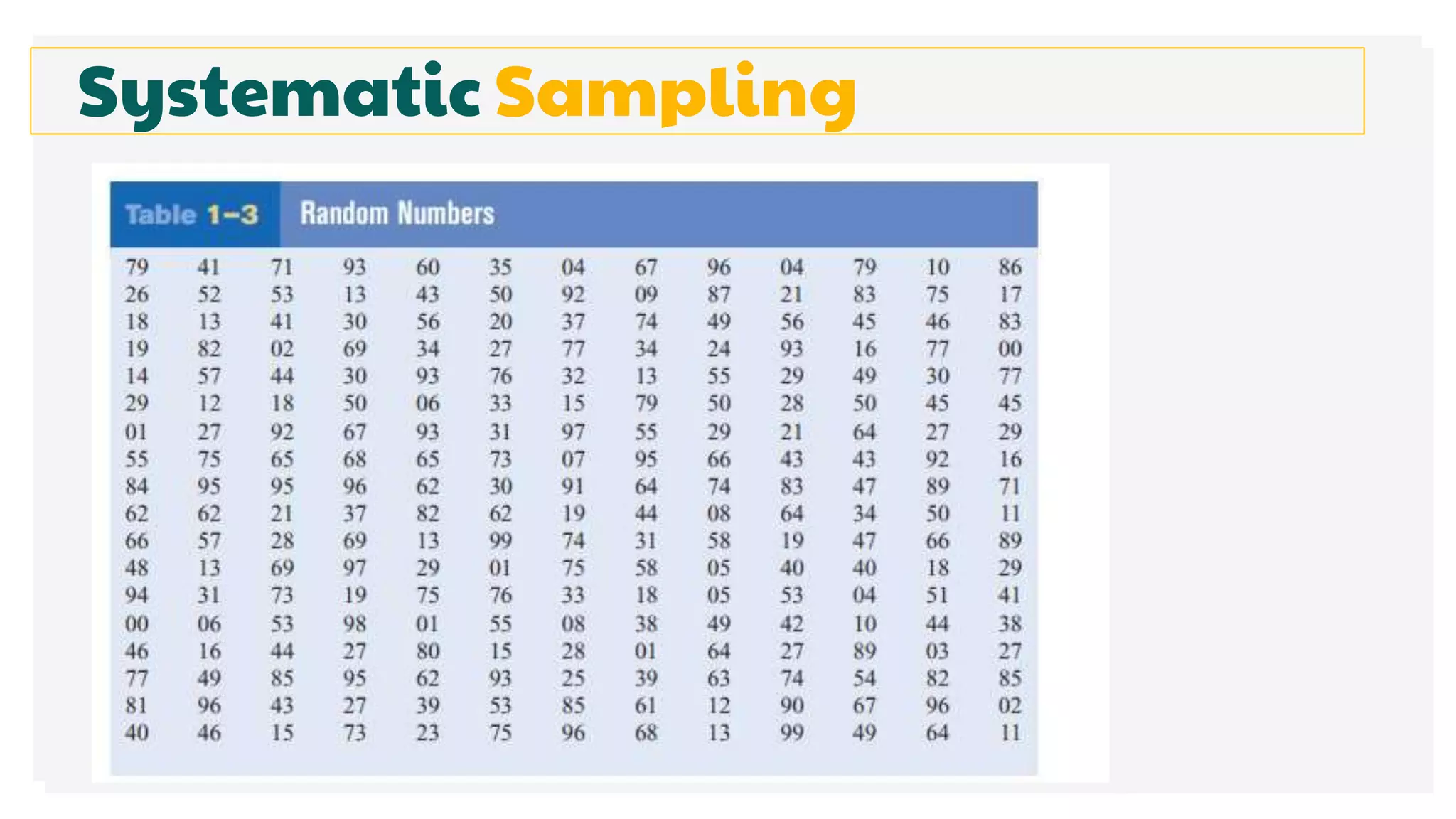
Systematic Sampling
• Researchers obtain systematic samples by
numbering each subject of the population
and then selecting every kth subject.
■ For example, suppose there were 2000
subjects in the population and a sample of
50 subjects were needed. Since 2000 50
40, then k=40
■ First number from 1-40 would be selected
randomly
Systematic Sampling
• Researchers obtain systematic samples by
numbering each subject of the population
and then selecting every kth subject.
■ For example, suppose there were 2000
subjects in the population and a sample of
50 subjects were needed. Since 2000 50
40, then k=40
■ First number from 1-40 would be selected
randomly
Systematic Sampling
Stratefied Sampling
• Researchers obtain stratified samples by
dividing the population into groups (called
strata) according to some characteristic that
is important to the study, then sampling from
each group.
Cluster Sampling
• Here the population is divided into groups
called clusters by some means such as
geographic area or schools in a large school
district, etc.
• Then the researcher randomly selects some
of these clusters and uses all members of the
• selected clusters as the subjects of the
samples.
Sampling Techniques
• Random Sampling
• Systematic Sampling
• Stratified Sampling
• Cluster Sampling
• Other Sampling Methods

Data Collection and Sampling Techniques.pptx

  • 1.
  • 2.
    Data Collection • Telephonesurveys • Mailed questionnaire • Personal interview surveys • Surveying Records or direct observation of situations
  • 3.
    Sampling Techniques • RandomSampling • Systematic Sampling • Stratified Sampling • Cluster Sampling • Other Sampling Methods
  • 4.
    Random Sampling • Randomsamples are selected by using chance methods or random numbers. ■ One such method is to number each subject in the population. Then place numbered cards in a bowl, mix them thoroughly, and select as many cards as needed. The subjects whose numbers are selected constitute the sample. ■ Random number generator
  • 5.
    Systematic Sampling • Researchersobtain systematic samples by numbering each subject of the population and then selecting every kth subject. ■ For example, suppose there were 2000 subjects in the population and a sample of 50 subjects were needed. Since 2000 50 40, then k=40 ■ First number from 1-40 would be selected randomly
  • 6.
    Systematic Sampling • Researchersobtain systematic samples by numbering each subject of the population and then selecting every kth subject. ■ For example, suppose there were 2000 subjects in the population and a sample of 50 subjects were needed. Since 2000 50 40, then k=40 ■ First number from 1-40 would be selected randomly
  • 7.
  • 8.
    Stratefied Sampling • Researchersobtain stratified samples by dividing the population into groups (called strata) according to some characteristic that is important to the study, then sampling from each group.
  • 9.
    Cluster Sampling • Herethe population is divided into groups called clusters by some means such as geographic area or schools in a large school district, etc. • Then the researcher randomly selects some of these clusters and uses all members of the • selected clusters as the subjects of the samples.
  • 10.
    Sampling Techniques • RandomSampling • Systematic Sampling • Stratified Sampling • Cluster Sampling • Other Sampling Methods