Sampling Techniques
By Tristan L. Robles
11 - Jeremiah
Introduction
● Sampling techniques are crucial in research for
selecting a subset of individuals or items from a larger
population.
● This presentation provides an overview of common
sampling techniques and their characteristics.
Objectives
● Basic concept of sampling methods
● How sampling applied and function
● There is two type of sampling methods
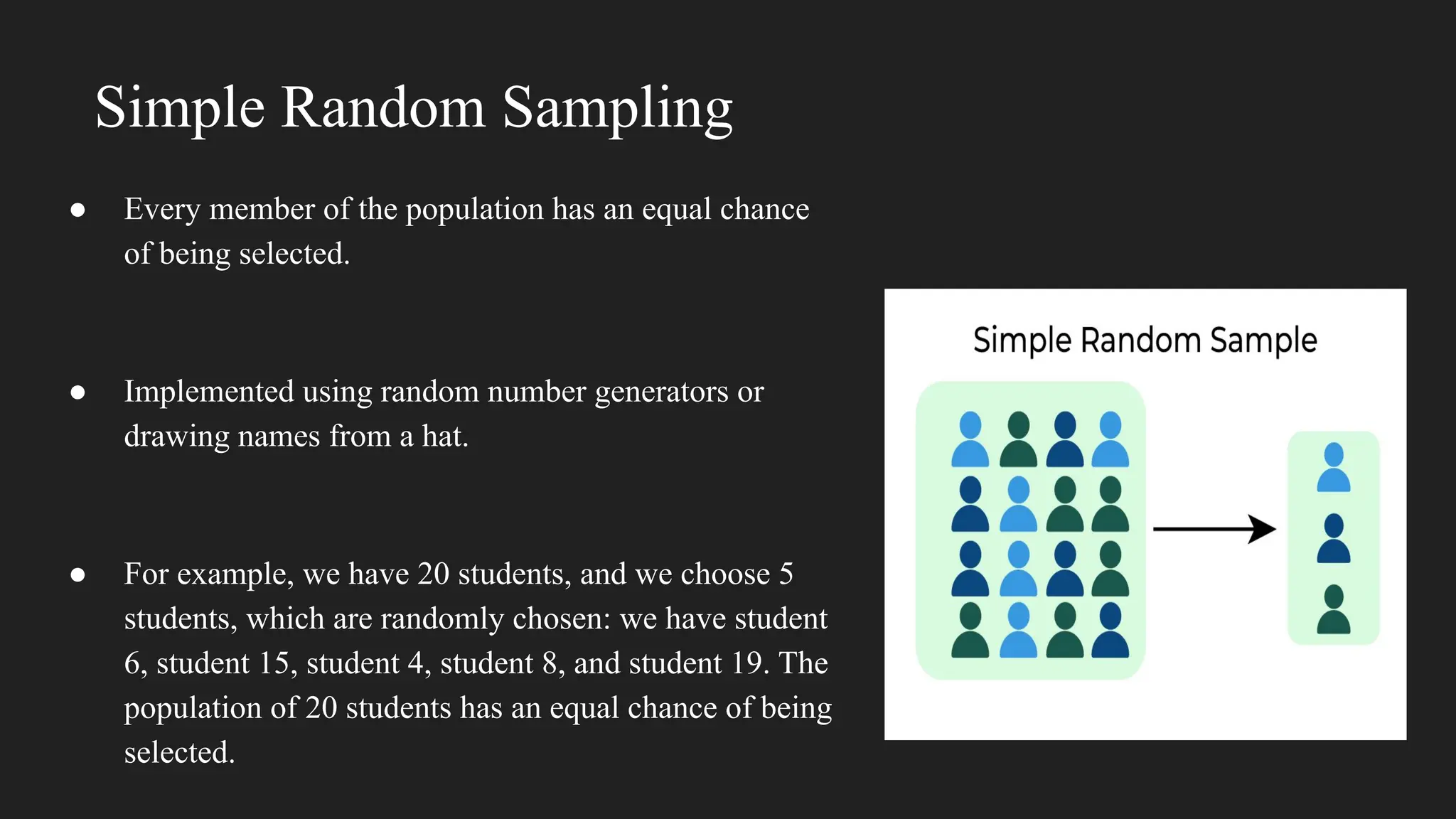
Simple Random Sampling
● Every member of the population has an equal chance
of being selected.
● Implemented using random number generators or
drawing names from a hat.
● For example, we have 20 students, and we choose 5
students, which are randomly chosen: we have student
6, student 15, student 4, student 8, and student 19. The
population of 20 students has an equal chance of being
selected.
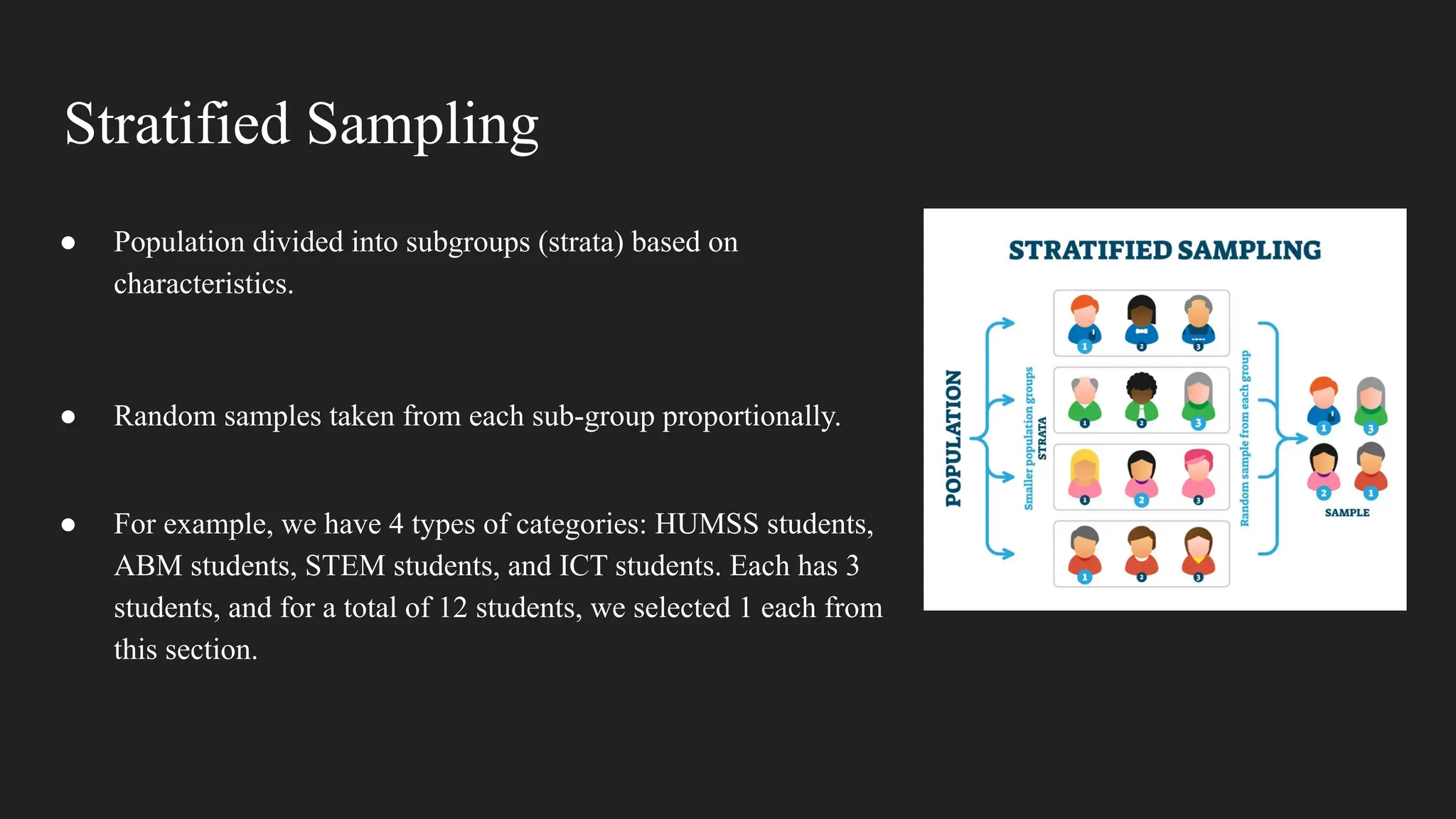
Stratified Sampling
● Population divided into subgroups (strata) based on
characteristics.
● Random samples taken from each sub-group proportionally.
● For example, we have 4 types of categories: HUMSS students,
ABM students, STEM students, and ICT students. Each has 3
students, and for a total of 12 students, we selected 1 each from
this section.
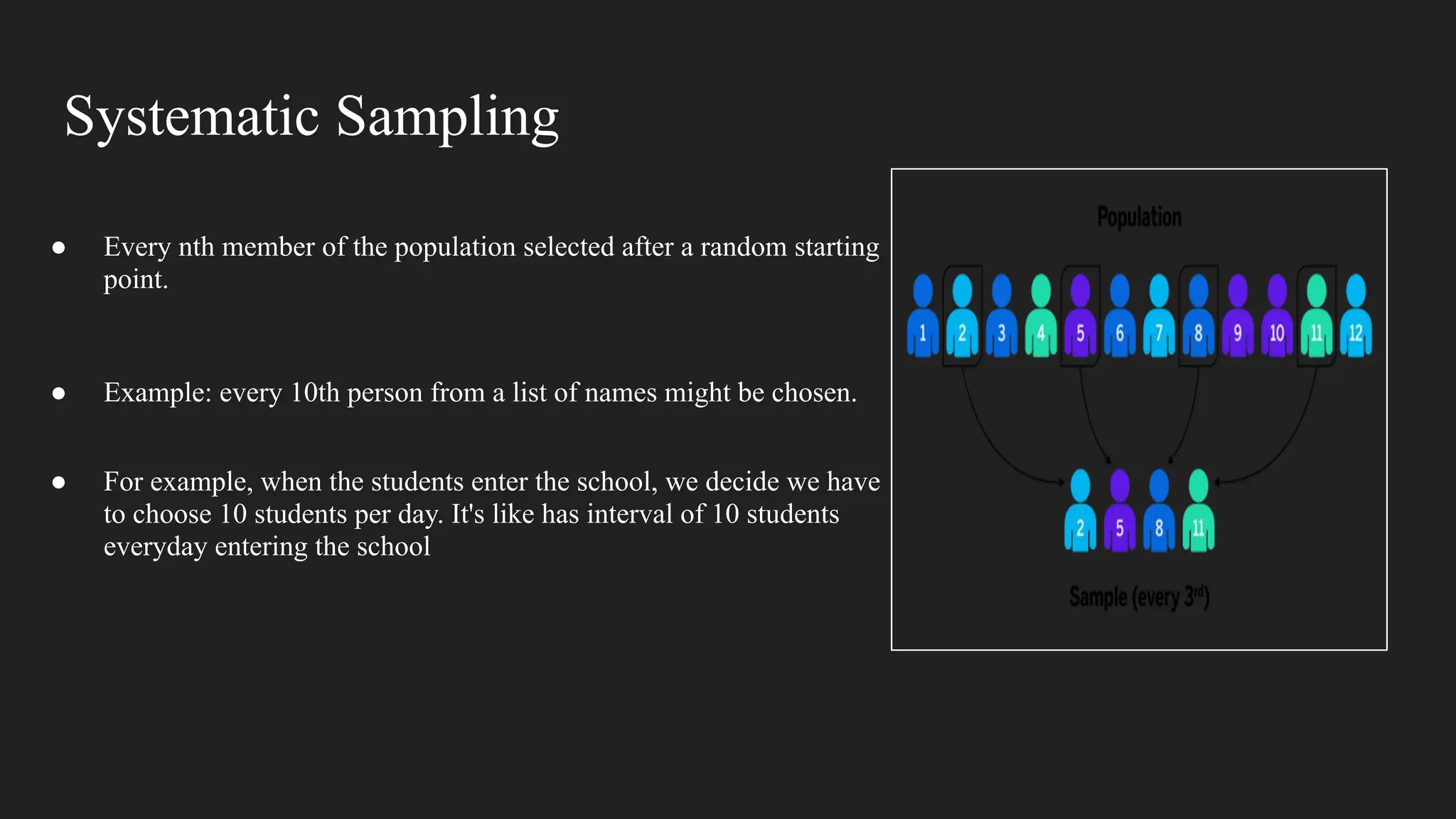
Systematic Sampling
● Every nth member of the population selected after a random starting
point.
● Example: every 10th person from a list of names might be chosen.
● For example, when the students enter the school, we decide we have
to choose 10 students per day. It's like has interval of 10 students
everyday entering the school
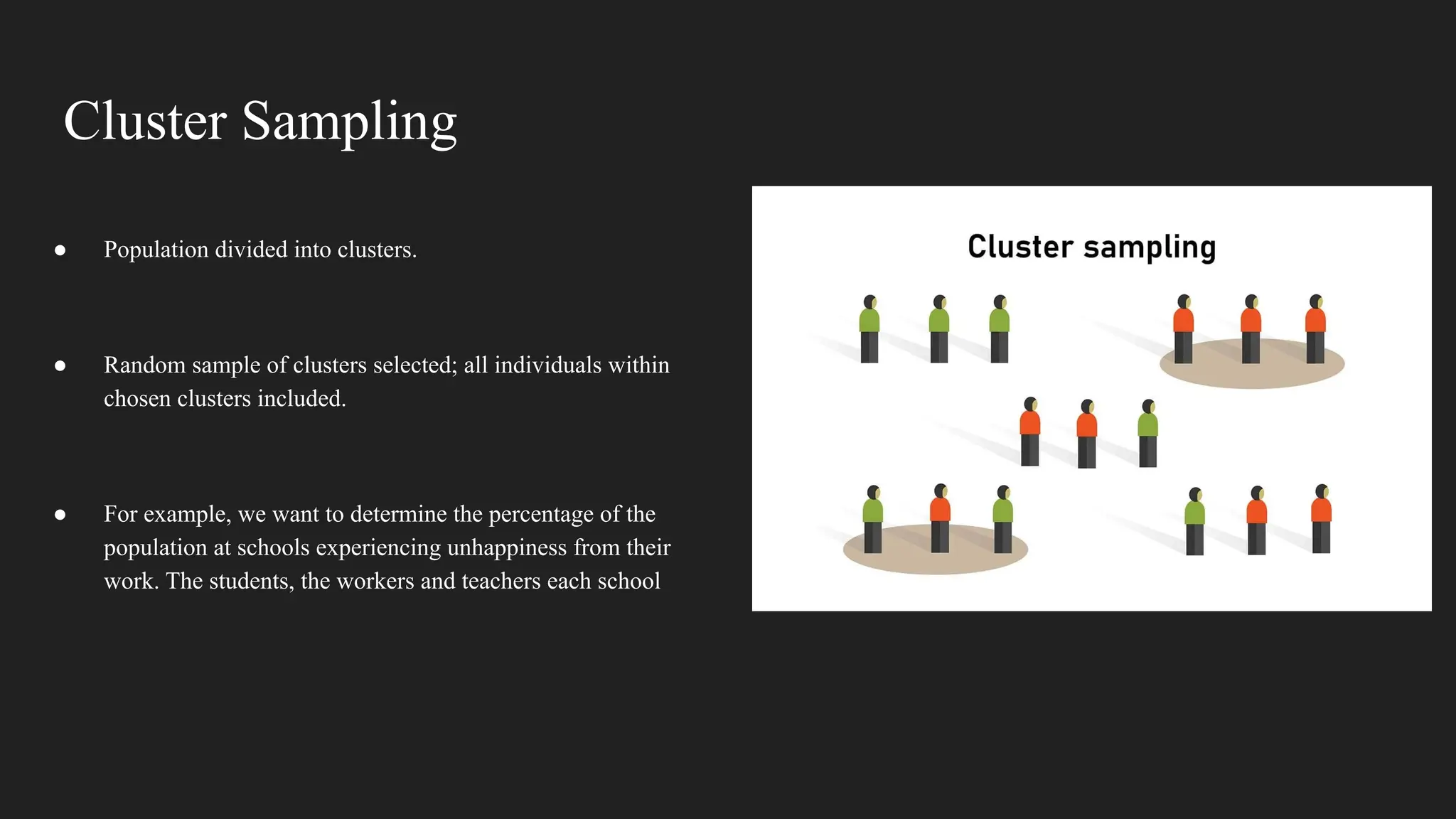
Cluster Sampling
● Population divided into clusters.
● Random sample of clusters selected; all individuals within
chosen clusters included.
● For example, we want to determine the percentage of the
population at schools experiencing unhappiness from their
work. The students, the workers and teachers each school
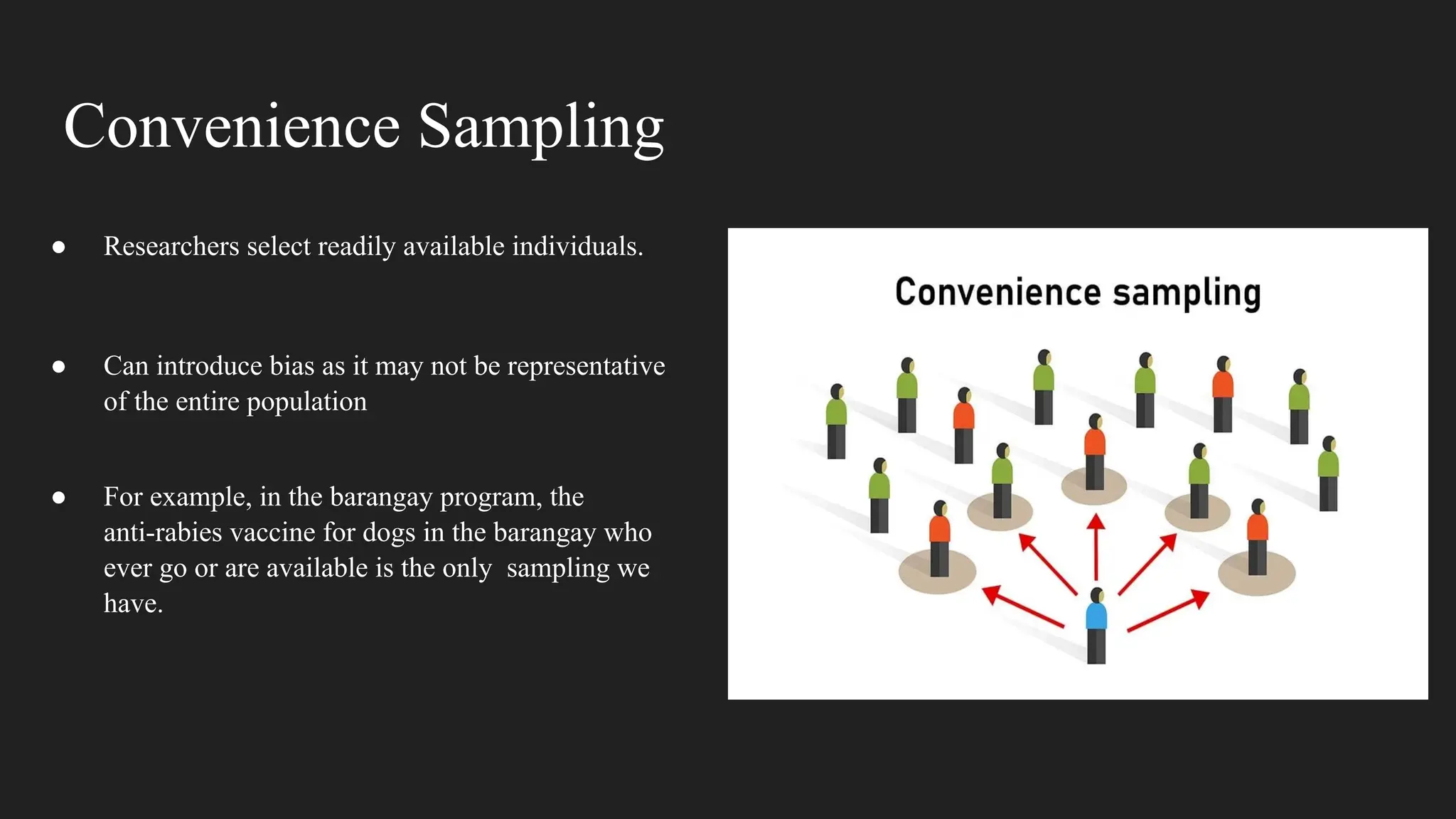
Convenience Sampling
● Researchers select readily available individuals.
● Can introduce bias as it may not be representative
of the entire population
● For example, in the barangay program, the
anti-rabies vaccine for dogs in the barangay who
ever go or are available is the only sampling we
have.
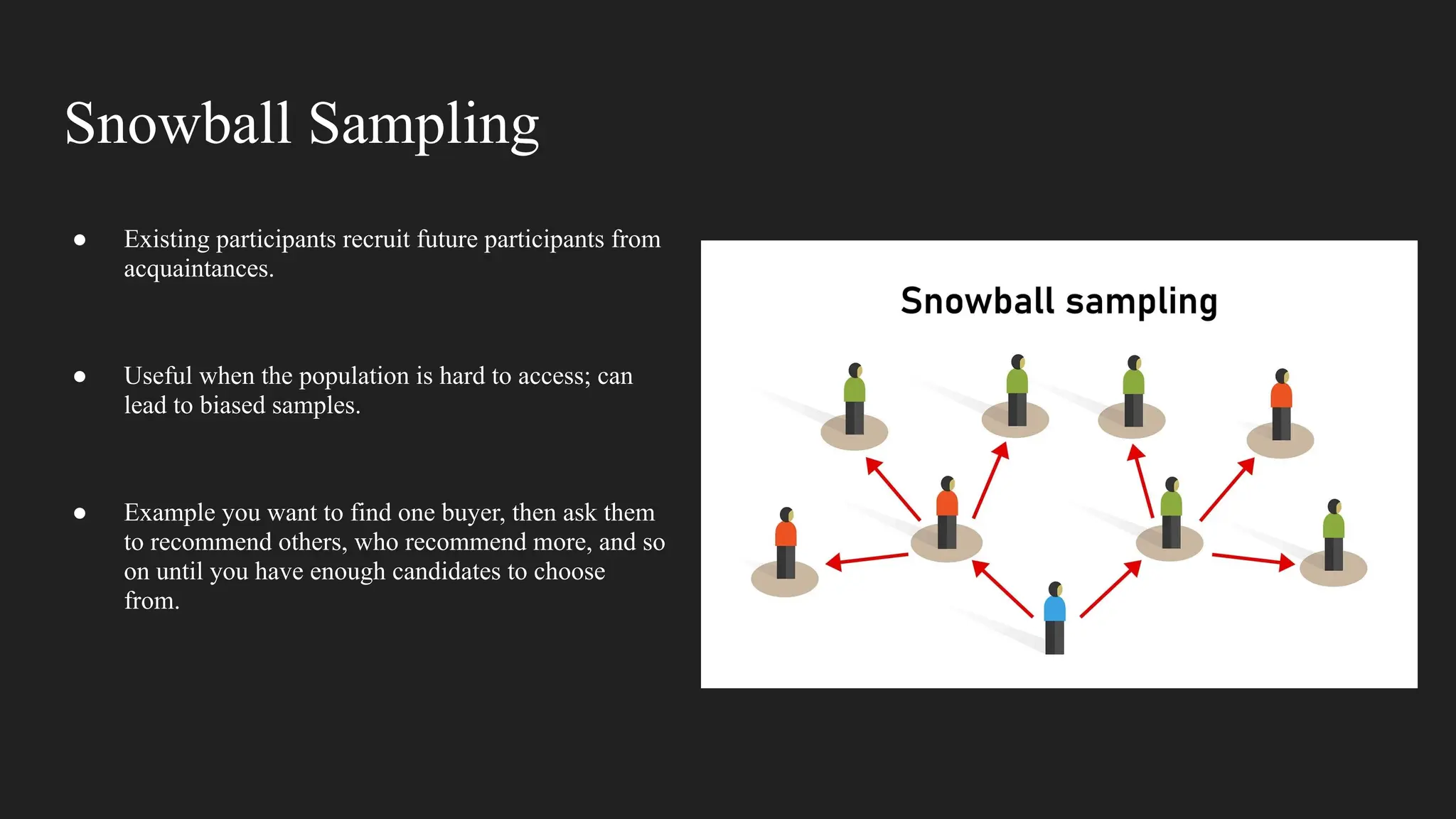
Snowball Sampling
● Existing participants recruit future participants from
acquaintances.
● Useful when the population is hard to access; can
lead to biased samples.
● Example you want to find one buyer, then ask them
to recommend others, who recommend more, and so
on until you have enough candidates to choose
from.
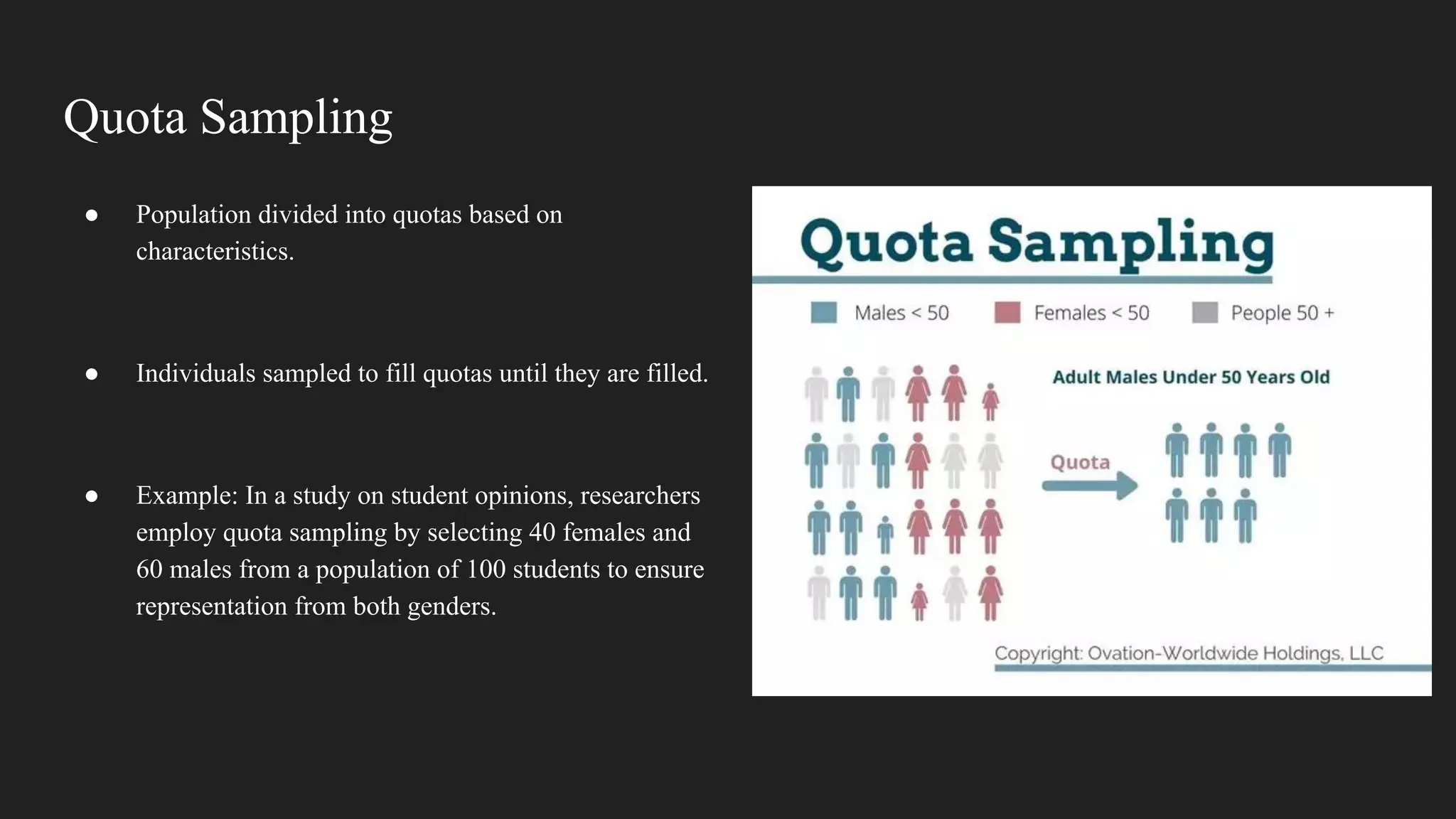
Quota Sampling
● Population divided into quotas based on
characteristics.
● Individuals sampled to fill quotas until they are filled.
● Example: In a study on student opinions, researchers
employ quota sampling by selecting 40 females and
60 males from a population of 100 students to ensure
representation from both genders.
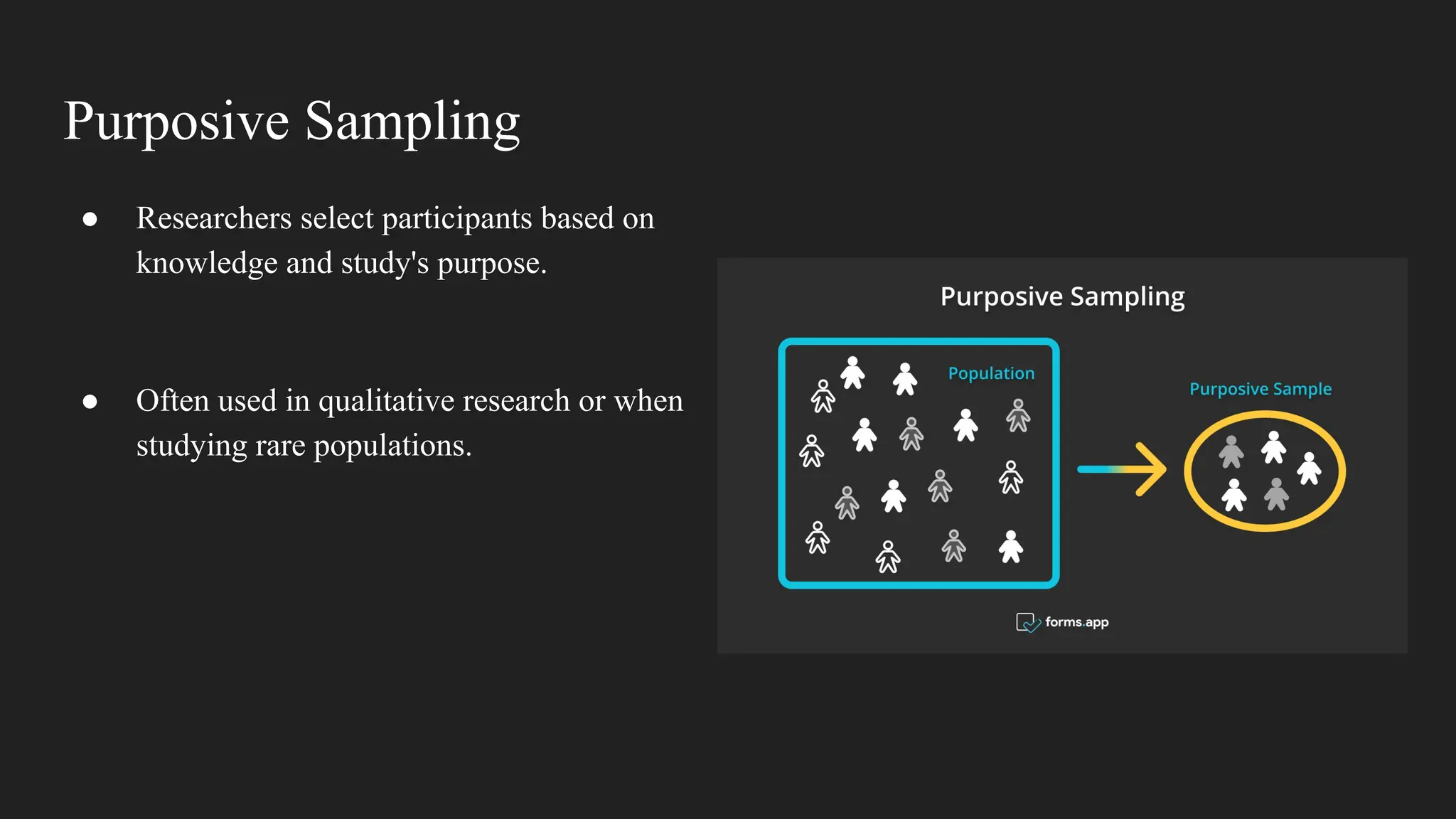
Purposive Sampling
● Researchers select participants based on
knowledge and study's purpose.
● Often used in qualitative research or when
studying rare populations.
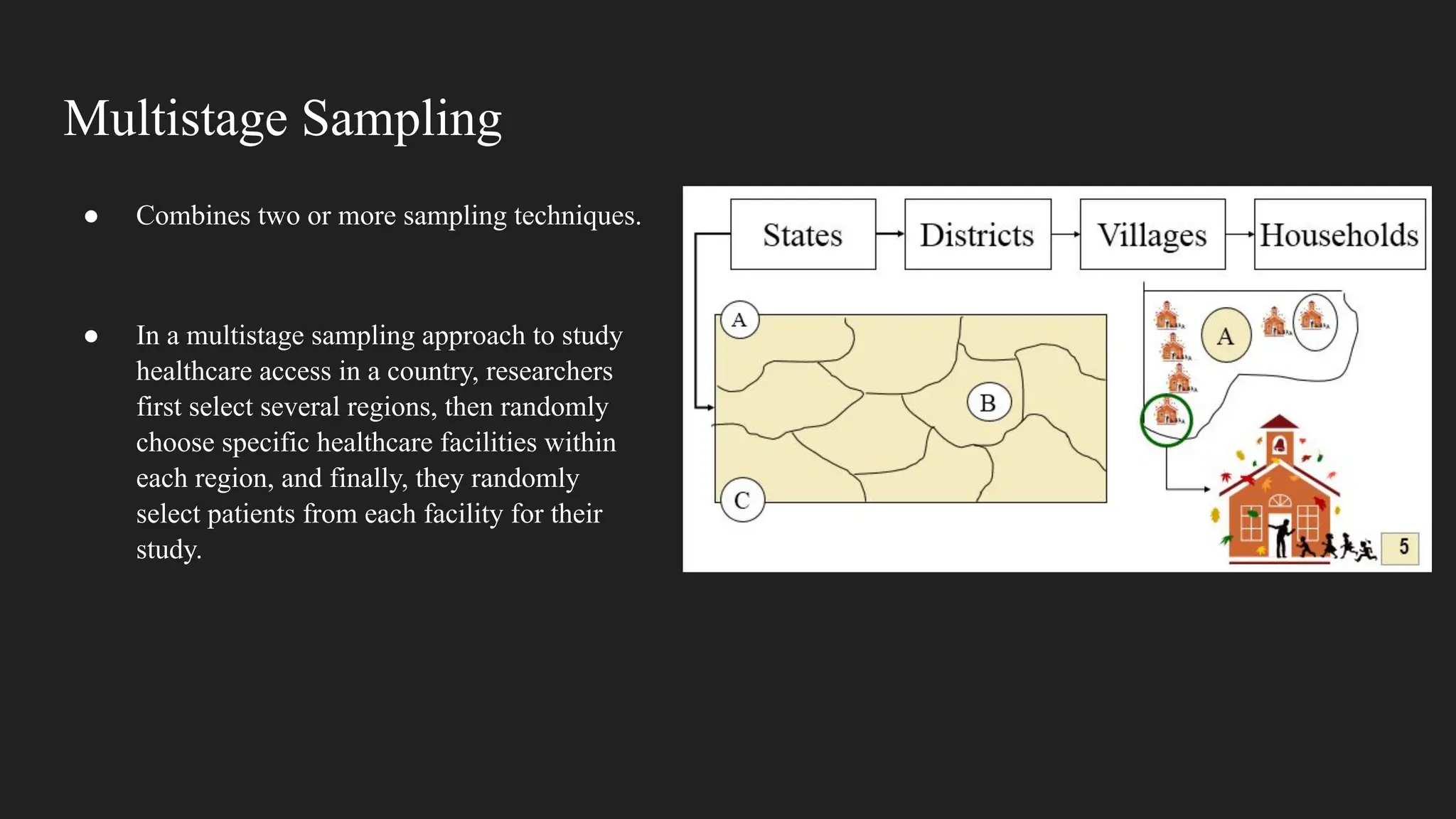
Multistage Sampling
● Combines two or more sampling techniques.
● In a multistage sampling approach to study
healthcare access in a country, researchers
first select several regions, then randomly
choose specific healthcare facilities within
each region, and finally, they randomly
select patients from each facility for their
study.
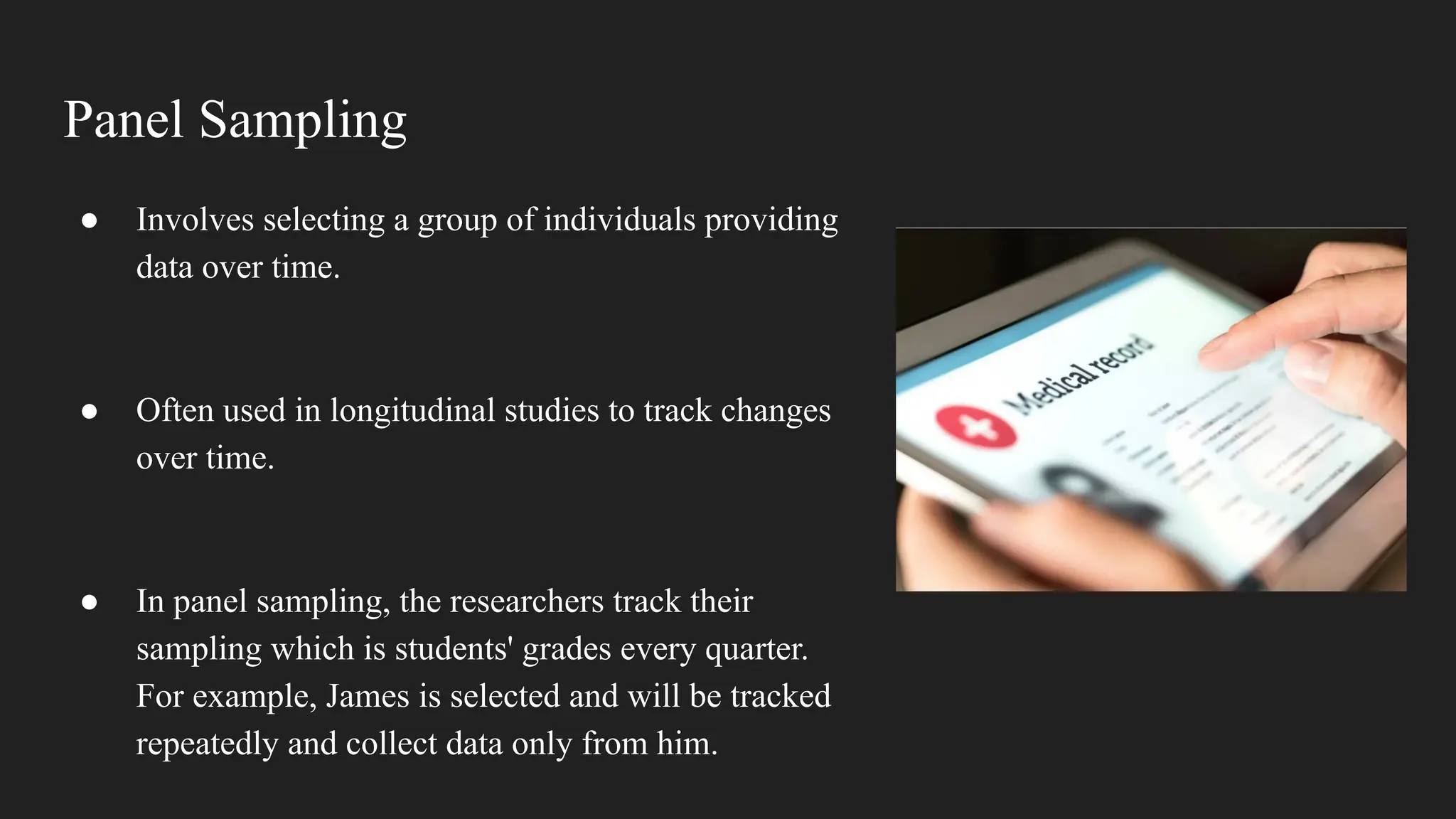
Panel Sampling
● Involves selecting a group of individuals providing
data over time.
● Often used in longitudinal studies to track changes
over time.
● In panel sampling, the researchers track their
sampling which is students' grades every quarter.
For example, James is selected and will be tracked
repeatedly and collect data only from him.
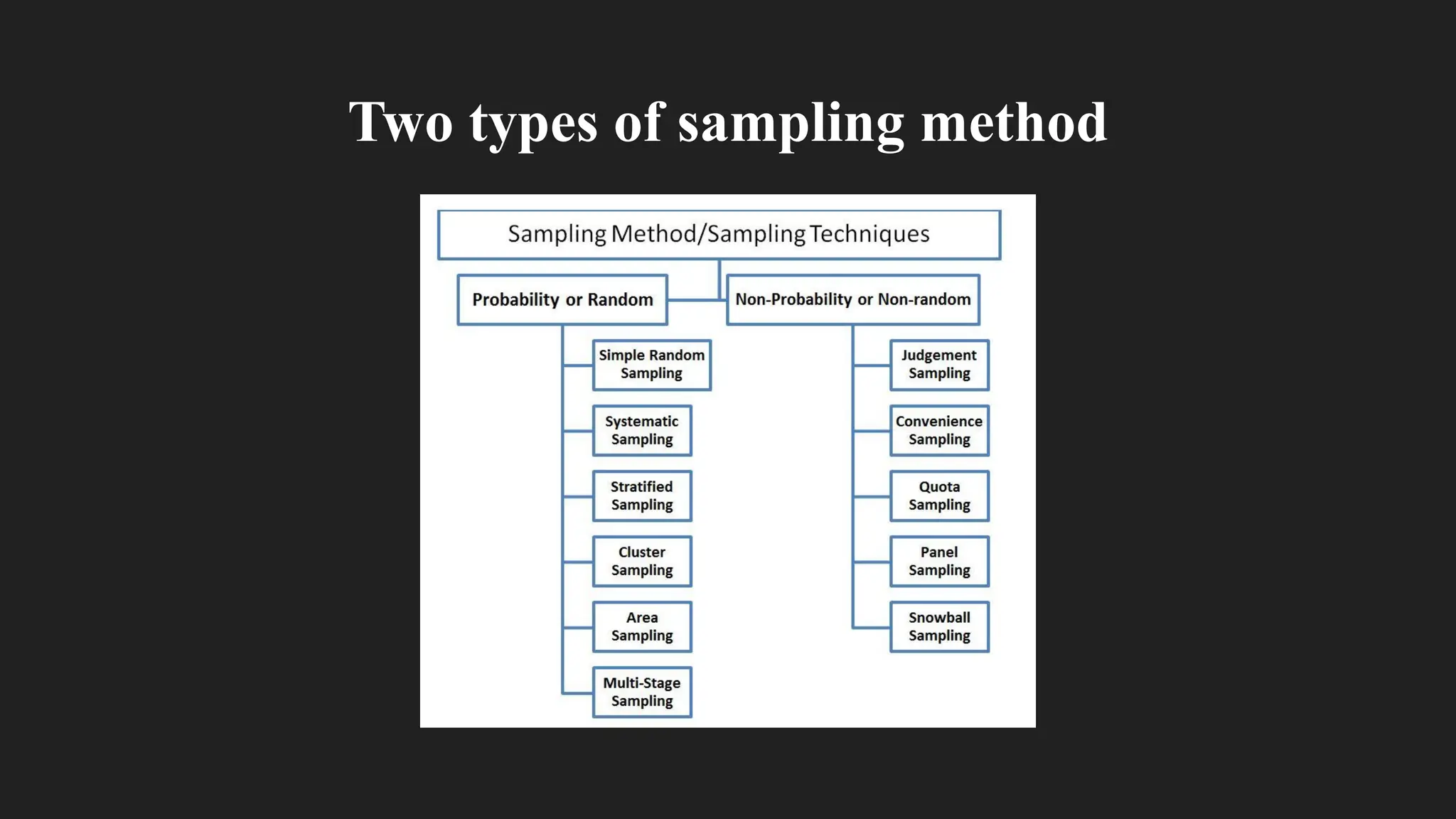
Two types of sampling method
Thank you for
listening

Sampling Techniques statistics and probability grade 11

  • 1.
    Sampling Techniques By TristanL. Robles 11 - Jeremiah
  • 2.
    Introduction ● Sampling techniquesare crucial in research for selecting a subset of individuals or items from a larger population. ● This presentation provides an overview of common sampling techniques and their characteristics.
  • 3.
    Objectives ● Basic conceptof sampling methods ● How sampling applied and function ● There is two type of sampling methods
  • 4.
    Simple Random Sampling ●Every member of the population has an equal chance of being selected. ● Implemented using random number generators or drawing names from a hat. ● For example, we have 20 students, and we choose 5 students, which are randomly chosen: we have student 6, student 15, student 4, student 8, and student 19. The population of 20 students has an equal chance of being selected.
  • 5.
    Stratified Sampling ● Populationdivided into subgroups (strata) based on characteristics. ● Random samples taken from each sub-group proportionally. ● For example, we have 4 types of categories: HUMSS students, ABM students, STEM students, and ICT students. Each has 3 students, and for a total of 12 students, we selected 1 each from this section.
  • 6.
    Systematic Sampling ● Everynth member of the population selected after a random starting point. ● Example: every 10th person from a list of names might be chosen. ● For example, when the students enter the school, we decide we have to choose 10 students per day. It's like has interval of 10 students everyday entering the school
  • 7.
    Cluster Sampling ● Populationdivided into clusters. ● Random sample of clusters selected; all individuals within chosen clusters included. ● For example, we want to determine the percentage of the population at schools experiencing unhappiness from their work. The students, the workers and teachers each school
  • 8.
    Convenience Sampling ● Researchersselect readily available individuals. ● Can introduce bias as it may not be representative of the entire population ● For example, in the barangay program, the anti-rabies vaccine for dogs in the barangay who ever go or are available is the only sampling we have.
  • 9.
    Snowball Sampling ● Existingparticipants recruit future participants from acquaintances. ● Useful when the population is hard to access; can lead to biased samples. ● Example you want to find one buyer, then ask them to recommend others, who recommend more, and so on until you have enough candidates to choose from.
  • 10.
    Quota Sampling ● Populationdivided into quotas based on characteristics. ● Individuals sampled to fill quotas until they are filled. ● Example: In a study on student opinions, researchers employ quota sampling by selecting 40 females and 60 males from a population of 100 students to ensure representation from both genders.
  • 11.
    Purposive Sampling ● Researchersselect participants based on knowledge and study's purpose. ● Often used in qualitative research or when studying rare populations.
  • 12.
    Multistage Sampling ● Combinestwo or more sampling techniques. ● In a multistage sampling approach to study healthcare access in a country, researchers first select several regions, then randomly choose specific healthcare facilities within each region, and finally, they randomly select patients from each facility for their study.
  • 13.
    Panel Sampling ● Involvesselecting a group of individuals providing data over time. ● Often used in longitudinal studies to track changes over time. ● In panel sampling, the researchers track their sampling which is students' grades every quarter. For example, James is selected and will be tracked repeatedly and collect data only from him.
  • 14.
    Two types ofsampling method
  • 15.