ROY SULLIVAN
1942-
1977
ELECTRIC CHARGE
AND STATIC
ELECTRICITY
ELECTRIC CHARGE
• All matter is made up of atoms
• Atoms contain
• Protons (+)
• Neutrons (0)
• Electrons (-)
LAW OF ELECTRIC CHARGES
• Like charges repel, and opposite
charges attract.
• Protons→positively charged and
electrons→negatively charged,
thus attract each other.
• Without this attraction, electrons
would not be held in atoms.
LAW OF ELECTRIC CHARGES
• Like charges repel, and opposite
charges attract.
• Protons→positively charged and
electrons→negatively charged,
thus attract each other.
• Without this attraction, electrons
would not be held in atoms.
LAW OF ELECTRIC CHARGES
ELECTRIC FORCE
The force between the
charged objects is an
electric force.
The size of the electric force depends on 2 things:
1. The amount of charge (the greater the charge, the
greater the force)
2. The distance between charges (the further the
distance, the less the force)
ELECTRIC FIELD
An electric field is the region around a
charged object where electric forces can be
exerted on another charged object.
(Repelled or attracted)
CHARGED OBJECTS
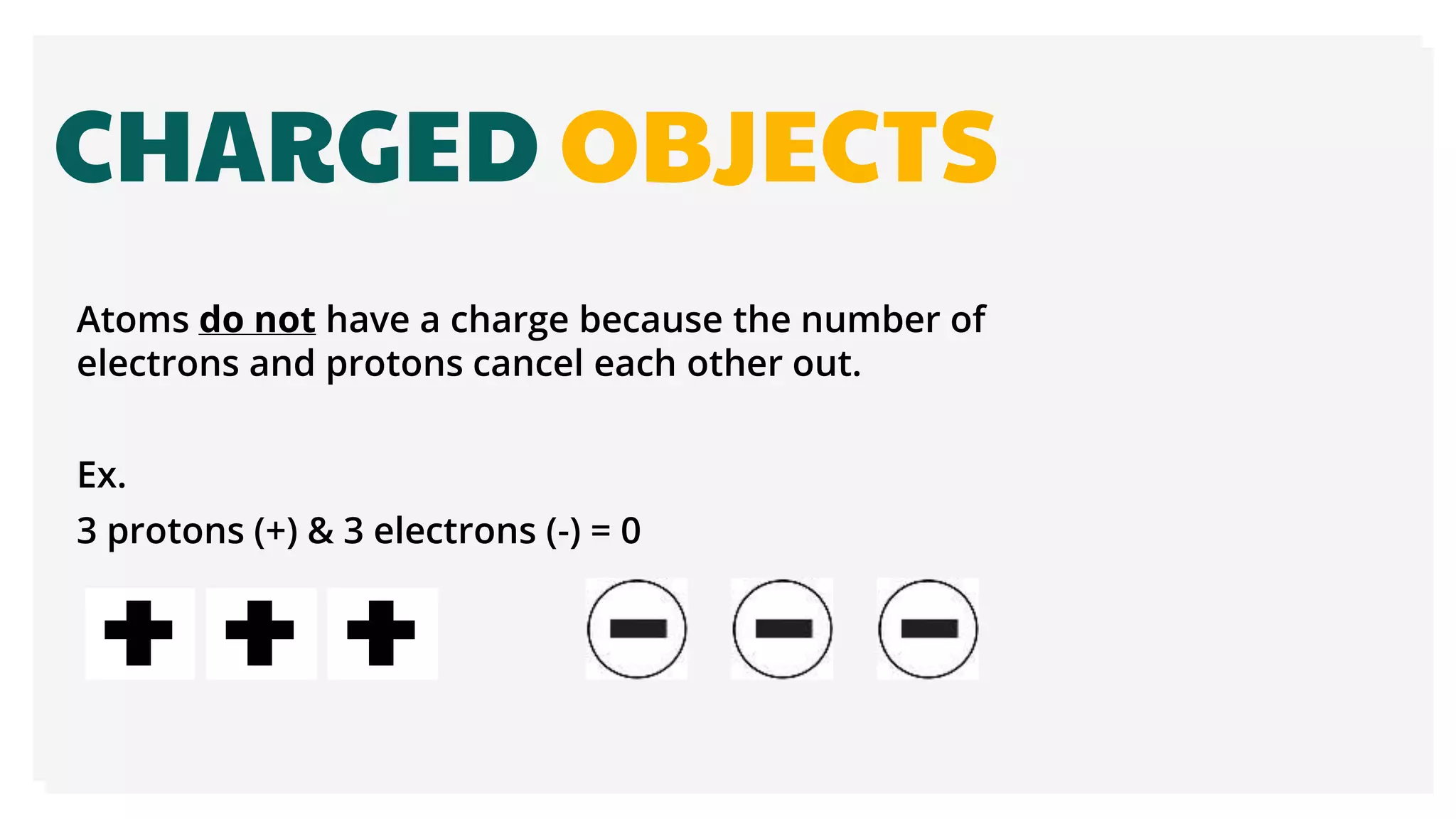
Atoms do not have a charge because the number of
electrons and protons cancel each other out.
Ex.
3 protons (+) & 3 electrons (-) = 0
How do objects get charged?
• They either gain or lose electrons.
• Why not protons?
Ex.
3 protons (+) & 5 electrons (-) =
7 protons (+) & 2 electrons (-) =
CHARGED OBJECTS
HOW CAN YOU CHARGE THE
OBJECTS?
There are 3 ways objects can be charged:
1. Friction
2. Conduction
3. Induction
**In each of these, only the electrons move. The
protons stay in the nucleus**
FRICTION
Charging by friction occurs when electrons
are “wiped” from one object onto another.
Ex.
If you use a cloth to rub a plastic ruler,
electrons move from the cloth to the ruler.
The ruler gains electrons and the cloth loses
electrons.
CONDUCTION
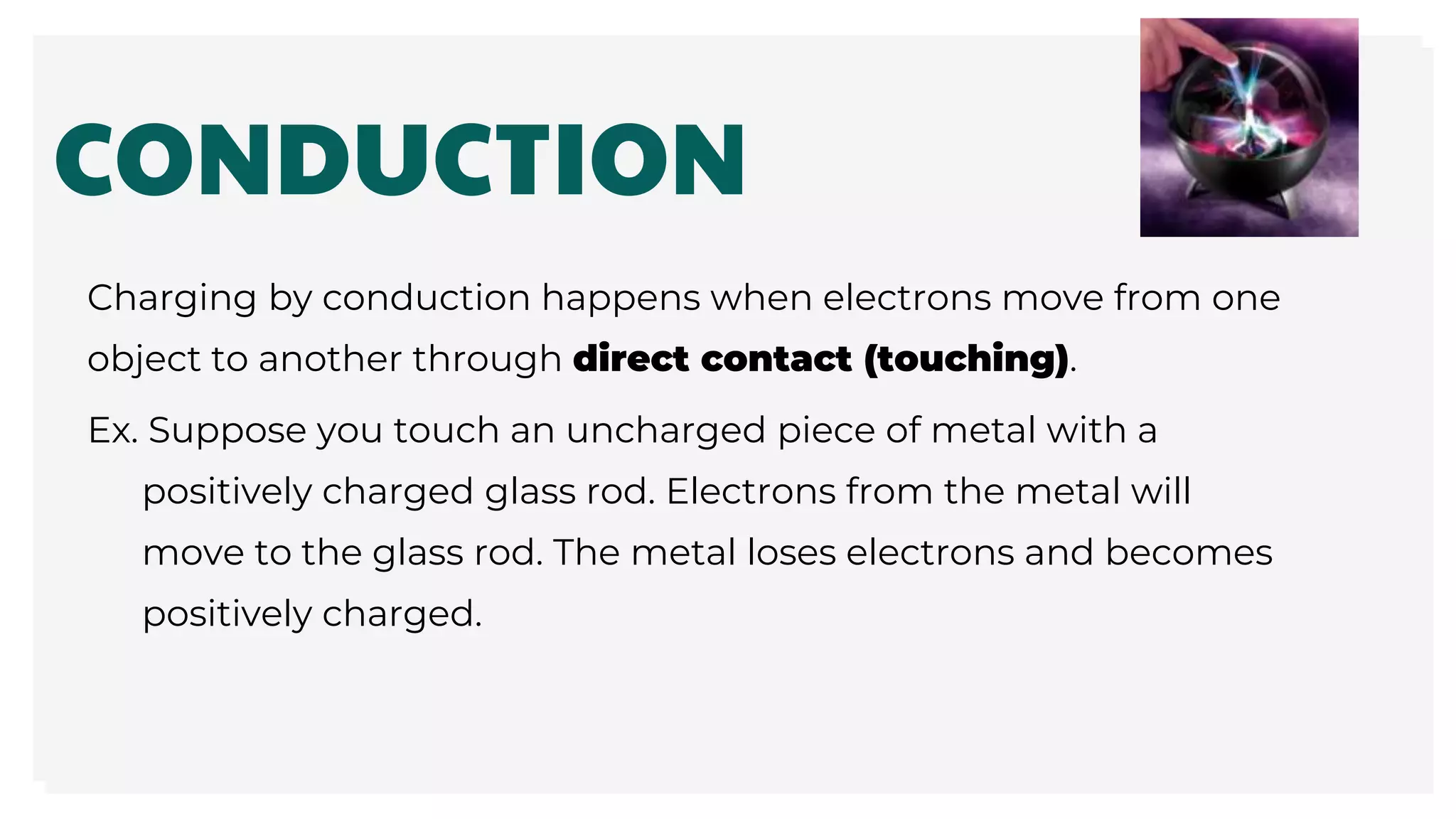
Charging by conduction happens when electrons move from one
object to another through direct contact (touching).
Ex. Suppose you touch an uncharged piece of metal with a
positively charged glass rod. Electrons from the metal will
move to the glass rod. The metal loses electrons and becomes
positively charged.
INDUCTION
Charging by induction happens when charges in
an uncharged object are rearranged without
direct contact with a charged object.
Ex. If you charge up a balloon through friction
and place the balloon near pieces of paper,
the charges of the paper will be rearranged
and the paper will be attracted to the
balloon.
CONSERVATION OF CHARGE
• When you charge something by any method, no charges are
created or destroyed.
• The numbers of electrons and protons stay the same. Electrons
simply move from one atom to another, which makes areas that
have different charges.
CONDUCTORS AND INSULATORS
• An electrical conductor is a material in
which charges can move easily.
• Most metals are good conductors because
some of their electrons are free to move.
• Conductors are used to make wires. For
example, a lamp cord has metal wire and
metal prongs.
• Copper, aluminum, and mercury are good
conductors.
• An electrical insulator is a material in
which charges cannot move easily.
• Insulators do not conduct charges very well
because their electrons cannot flow freely.
The electrons are tightly held in the atoms of
the insulator.
• The insulating material in a lamp cord stops
charges from leaving the wire and protects
you from electric shock.
• Plastic, rubber, glass, wood, and air are good
insulators.
CONDUCTORS AND INSULATORS
STATIC ELECTRICITY
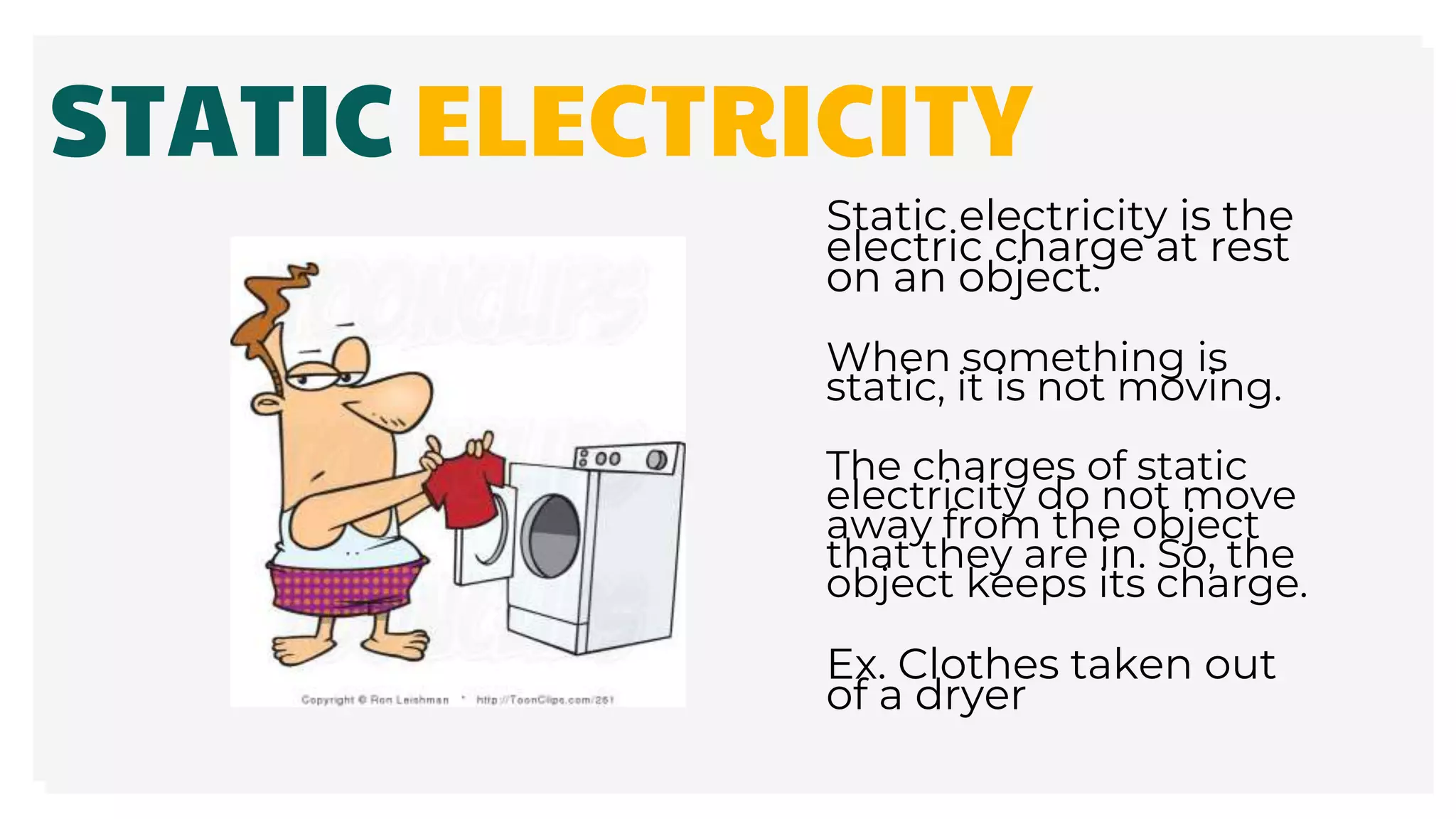
Static electricity is the
electric charge at rest
on an object.
When something is
static, it is not moving.
The charges of static
electricity do not move
away from the object
that they are in. So, the
object keeps its charge.
Ex. Clothes taken out
of a dryer
ELECTRIC DISCHARGE
The loss of static electricity as charges move
off an object is called electric discharge.
Sometimes,
electric
discharge
happens slowly.
Ex: static on
clothes
Sometimes, electric
discharge happens
quickly.
Ex. wearing rubber-
soled shoes on carpet,
lightning
HOW LIGHTNING FORMS
LIGHTNING
• Lightning usually strikes the highest point in a charged area
because that point provides the shortest path for the charges
to reach the ground.
• Anything that sticks up or out in an area can provide a path for
lightning.
• A lightning rod is a pointed rod connected to the ground by a
wire.
• Objects, such as a lightning rod, that are joined to Earth by a
conductor, such as a wire, are “grounded.” Any object that is
grounded provides a path for electric charges to move to Earth.
• Because Earth is so large, it can give up or absorb charges
without being damaged.
• When lightning strikes a lightning rod, the electric charges are
carried safely to Earth through the rod’s wire. By directing the
charge to Earth, the rods prevent lightning from damaging
buildings.

Electric Charge and Static Electricity PPT.pptx

  • 2.
  • 3.
  • 5.
  • 6.
    ELECTRIC CHARGE • Allmatter is made up of atoms • Atoms contain • Protons (+) • Neutrons (0) • Electrons (-)
  • 7.
    LAW OF ELECTRICCHARGES • Like charges repel, and opposite charges attract. • Protons→positively charged and electrons→negatively charged, thus attract each other. • Without this attraction, electrons would not be held in atoms.
  • 8.
    LAW OF ELECTRICCHARGES • Like charges repel, and opposite charges attract. • Protons→positively charged and electrons→negatively charged, thus attract each other. • Without this attraction, electrons would not be held in atoms.
  • 9.
  • 10.
    ELECTRIC FORCE The forcebetween the charged objects is an electric force. The size of the electric force depends on 2 things: 1. The amount of charge (the greater the charge, the greater the force) 2. The distance between charges (the further the distance, the less the force)
  • 11.
    ELECTRIC FIELD An electricfield is the region around a charged object where electric forces can be exerted on another charged object. (Repelled or attracted)
  • 12.
    CHARGED OBJECTS Atoms donot have a charge because the number of electrons and protons cancel each other out. Ex. 3 protons (+) & 3 electrons (-) = 0
  • 13.
    How do objectsget charged? • They either gain or lose electrons. • Why not protons? Ex. 3 protons (+) & 5 electrons (-) = 7 protons (+) & 2 electrons (-) = CHARGED OBJECTS
  • 14.
    HOW CAN YOUCHARGE THE OBJECTS? There are 3 ways objects can be charged: 1. Friction 2. Conduction 3. Induction **In each of these, only the electrons move. The protons stay in the nucleus**
  • 15.
    FRICTION Charging by frictionoccurs when electrons are “wiped” from one object onto another. Ex. If you use a cloth to rub a plastic ruler, electrons move from the cloth to the ruler. The ruler gains electrons and the cloth loses electrons.
  • 16.
    CONDUCTION Charging by conductionhappens when electrons move from one object to another through direct contact (touching). Ex. Suppose you touch an uncharged piece of metal with a positively charged glass rod. Electrons from the metal will move to the glass rod. The metal loses electrons and becomes positively charged.
  • 17.
    INDUCTION Charging by inductionhappens when charges in an uncharged object are rearranged without direct contact with a charged object. Ex. If you charge up a balloon through friction and place the balloon near pieces of paper, the charges of the paper will be rearranged and the paper will be attracted to the balloon.
  • 18.
    CONSERVATION OF CHARGE •When you charge something by any method, no charges are created or destroyed. • The numbers of electrons and protons stay the same. Electrons simply move from one atom to another, which makes areas that have different charges.
  • 19.
    CONDUCTORS AND INSULATORS •An electrical conductor is a material in which charges can move easily. • Most metals are good conductors because some of their electrons are free to move. • Conductors are used to make wires. For example, a lamp cord has metal wire and metal prongs. • Copper, aluminum, and mercury are good conductors.
  • 20.
    • An electricalinsulator is a material in which charges cannot move easily. • Insulators do not conduct charges very well because their electrons cannot flow freely. The electrons are tightly held in the atoms of the insulator. • The insulating material in a lamp cord stops charges from leaving the wire and protects you from electric shock. • Plastic, rubber, glass, wood, and air are good insulators. CONDUCTORS AND INSULATORS
  • 21.
    STATIC ELECTRICITY Static electricityis the electric charge at rest on an object. When something is static, it is not moving. The charges of static electricity do not move away from the object that they are in. So, the object keeps its charge. Ex. Clothes taken out of a dryer
  • 22.
    ELECTRIC DISCHARGE The lossof static electricity as charges move off an object is called electric discharge. Sometimes, electric discharge happens slowly. Ex: static on clothes Sometimes, electric discharge happens quickly. Ex. wearing rubber- soled shoes on carpet, lightning
  • 23.
  • 24.
    LIGHTNING • Lightning usuallystrikes the highest point in a charged area because that point provides the shortest path for the charges to reach the ground. • Anything that sticks up or out in an area can provide a path for lightning. • A lightning rod is a pointed rod connected to the ground by a wire. • Objects, such as a lightning rod, that are joined to Earth by a conductor, such as a wire, are “grounded.” Any object that is grounded provides a path for electric charges to move to Earth. • Because Earth is so large, it can give up or absorb charges without being damaged. • When lightning strikes a lightning rod, the electric charges are carried safely to Earth through the rod’s wire. By directing the charge to Earth, the rods prevent lightning from damaging buildings.