Isolating content between domains since 1996
Riyaz Walikar | @riyazwalikar | www.riyazwalikar.com
whoami
• WebAppSec Consultant, Penetration Tester, Bug Bounty
Hunter for Google, Facebook, Paypal, Mozilla and other
bounty programs
• One of the null Security Community Bangalore Chapter
Moderator
• Work at a Big4 and have conducted several Penetration Tests
all over the world.
• Spoken at several international security conferences
Imagine the Internet if
• fabekook.cn was able to read DOM values from facebook.com
from another browser tab
• gmaail.br was able to read your address book from
http://mail.google.com/mail/c/data/contactstore?type=4&ma
x=-1
• boinkofindia.com was able to read your account balance and
obtain a list of all your transactions from your internet
banking account while you are logged in.
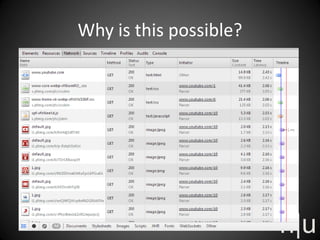
Why is this possible?
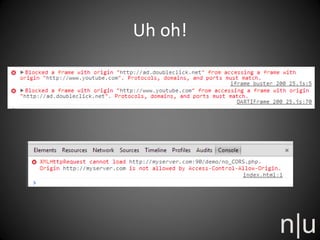
Uh oh!
What is SOP?
• SOP restricts how a document or script loaded
from one origin can interact with a resource
from another origin
• Earliest available implementation – Netscape
Navigator 2.0 (1996)
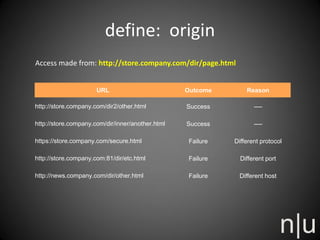
define: origin
URL Outcome Reason
http://store.company.com/dir2/other.html Success ----
http://store.company.com/dir/inner/another.html Success ----
https://store.company.com/secure.html Failure Different protocol
http://store.company.com:81/dir/etc.html Failure Different port
http://news.company.com/dir/other.html Failure Different host
Access made from: http://store.company.com/dir/page.html
Changing 'origins'
• Setting document.domain to a suffix of the
current domain.
• Setting document.domain to another domain
altogether isn’t allowed.
Demo
A document.domain change set
Cross Origin Network Access
• Origin is permitted to send data to another
origin but not read
• Interactions between origins are placed in three
categories:
– Cross origin writes (redirects, links, form action etc.)
– Cross origin embedding (html tag with src/hrefs)
– Cross origin reads (not allowed without CORS etc.)
Cross Origin Embedding
• JavaScript <script src="..."></script>.
• CSS with <link rel="stylesheet" href="...">.
• Images with <img>.
• Media files with <video> and <audio> tags.
• Plug-ins with <object>, <embed> and <applet>.
• Fonts with @font-face.
• Anything with <frame> and <iframe>.
Prevent Cross Origin Access
• To prevent Cross origin writes, use a CSRF token
• To prevent Cross origin embedding, ensure
resource is not interpreted as any of the formats
discussed earlier.
• To prevent Cross Origin reads of a resource, ensure
that it is non-embeddable.
• For iframes the X-Frame-Options header can be
used to control access to the page.
Cross Origin Resource Sharing
• W3C specification that allows cross domain
communication from the browser
• Works by adding new HTTP headers that
describe the set of origins that are permitted to
read across domains
3 Pointers
• Browsers prevent data from being accessed
cross domain via the Same Origin Policy
• In case a page loads another domain via a
frame, X-Frame-Options can be used to control
access
• CORS is used to relax the Same Origin Policy for
legitimate and trusted requests.
References

• https://developer.mozilla.org/en-
US/docs/Web/JavaScript/Same_origin_policy_for_JavaScript
• http://www.w3.org/Security/wiki/Same_Origin_Policy
• http://code.google.com/p/browsersec/wiki/Part2
Allowing Cross origin resource sharing since March 2004
Riyaz Walikar | @riyazwalikar | www.riyazwalikar.com
What is CORS?
• W3C working draft that defines how the browser
and server must communicate when accessing
sources across origins
• Implemented via HTTP headers that servers set
and browsers enforce
• Can be categorized into
– Simple requests
– Requests that need a ‘preflight’
Demo
A simple cross origin request without CORS
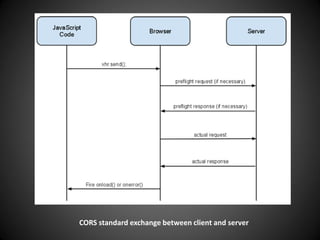
CORS standard exchange between client and server
Why is CORS needed?
• For legitimate and trusted requests to gain access
to authorized data from other domains
• Think cross application data sharing models
• Allows data to be exchanged with trusted sites
while using a relaxed Same Origin policy mode.
• Application APIs exposed via web services and
trusted domains require CORS to be accessible
over the SOP
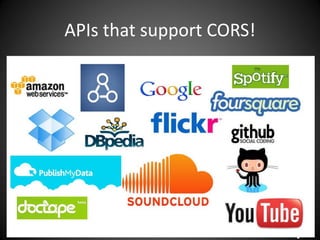
APIs that support CORS!
CORS – Simple Requests
• Preflight is not needed if
– Request is a HEAD/GET/POST via XHR
– No Custom headers
– Body is text/plain
• Server responds with a CORS header
– Browser determines access
– Neither the request, nor response contain cookies
CORS Headers – Simple Request
• Origin
– Header set by the client for every CORS request
– Value is the current domain that made the request
• Access-Control-Allow-Origin
– Set by the server and used by the browser to
determine if the response is to be allowed or not.
– Can be set to * to make resources public (bad
practice!)
Demo
A cross origin request with CORS for a simple request
CORS – Requests with Preflight
• Preflight requests are made if
– Request is a method other than HEAD/GET/POST
via XHR (PUT, DELETE etc.)
– Custom headers are present (X-PINGBACK etc.)
– Content-Type other than application/x-www-
form-urlencoded, multipart/form-data, or
text/plain
• A transparent request is made to the server
requesting access information using OPTIONS
CORS – Requests with Preflight
• Browser sends
– Origin header
– Access-Control-Request-Method
– Access-Control-Request-Headers – (Optional)
• Server sends set of CORS headers that the
browser uses to determine if the actual
request has to be made or not
CORS Headers – Request with Preflight
(Preflight Browser Request)
• Origin
– Header set by the client for every CORS request
– Value is the current domain that made the request
• Access-Control-Request-Method:
– Set by the browser, along with Origin.
– Value is the method that the request wants to use
• Access-Control-Request-Headers (Optional):
– A comma separated list of the custom headers being
used.
CORS Headers – Request with Preflight
(Preflight Server Response)
• Access-Control-Allow-Origin
– Same as in Simple requests
• Access-Control-Allow-Methods:
– a comma separated list of allowed methods
• Access-Control-Allow-Headers:
– a comma separated list of headers that the server will
allow.
• Access-Control-Max-Age:
– the amount of time in seconds that this preflight
request should be cached for.
Demo
A cross origin request with CORS for a preflight request
CORS (In)security?
• Several security issues arise from the improper
implementation of CORS, most commonly using a
universal allow notation (*) in the server headers
• Clients should not trust the received content
completely and eval or render content without
sanitization which could result in misplaced trust
• The application that allows CORS may become
vulnerable to CSRF attacks
CORS (In)security?
• Prolonged caching of Preflight responses could
lead to attacks arising out of abuse of the
Preflight Client Cache
• Access control decisions based on the Origin
header could result in vulnerabilities as this
can be spoofed by an attacker
CORS Security - Universal Allow
• Setting the 'Access-Control-Allow-Origin' header to *
• Effectively turns the content into a public resource,
allowing access from any domain
• Scenarios?
– An attacker can steal data from an intranet site that has set
this header to * by enticing a user to visit an attacker
controlled site on the Internet.
– An attacker can perform attacks on other remote apps via
a victim’s browser when the victim navigates to an attacker
controlled site.
Demo
A universal allow for the Access-Control-Allow-Origin header
CORS Security – Misplaced Trust
• Data exchange between two domains is based on trust
• If one of the servers involved in the exchange of data is
compromised then the model of CORS is put at risk
• Scenarios?
– An attacker can compromise site A and host malicious
content knowing site B trusts the data that site A sends to
site B via CORS request resulting in XSS and other attacks.
– An attacker can compromise site B and use the exposed
CORS functionality in site A to attack users in site A.
CSRF with CORS
• Server may process client request to change server side
data while verifying that the Origin header was set
• An attacker can use the .withCredentials = “true” property
of XHR to replay any cookies to the application on which
the victim is logged in
• Scenarios?
– An attacker sets the Origin header or uses a trusted site A to
send a non idempotent request to site B
– The victim who is logged into site B when he is viewing the
trusted site A causes site B to create a user account without
his knowledge via a CSRF attack
Demo
A CSRF attack that creates a user using a trusted site via CORS
CORS – Caching of Preflight responses
• The Access-Control-Max-Age header is set to a high
value, allowing browsers to cache Preflight
responses
• Caching the preflight response for longer duration
can pose a security risk.
• If the COR access-control policy is changed on the
server the browser would still follow the old policy
available in the Preflight Result Cache
CORS – Access Control based on Origin
• The Origin header indicates that the request is from
a particular domain, but does not guarantee it
• Spoofing the Origin header allows access to the page
if access is based on this header
• Scenarios?
– An attacker sets the Origin header to view sensitive
information that is restricted
– Attacker uses cURL to set a custom origin header:
curl --header 'origin:http://someserver.com'
http://myserver.com:90/demo/origin_spoof.php
Demo
Sensitive information revealed via weak Access Control based on
the Origin header
References
• http://www.html5rocks.com/en/tutorials/cors/
• https://code.google.com/p/html5security/wiki/CrossOriginRequestSecurity
• http://arunranga.com/examples/access-control/
• http://www.nczonline.net/blog/2010/05/25/cross-domain-ajax-with-cross-origin-
resource-sharing/
Questions?
And hopefully answers as well
Riyaz Walikar | @riyazwalikar | karniv0re@null.co.in

CORS and (in)security

  • 1.
    Isolating content betweendomains since 1996 Riyaz Walikar | @riyazwalikar | www.riyazwalikar.com
  • 2.
    whoami • WebAppSec Consultant,Penetration Tester, Bug Bounty Hunter for Google, Facebook, Paypal, Mozilla and other bounty programs • One of the null Security Community Bangalore Chapter Moderator • Work at a Big4 and have conducted several Penetration Tests all over the world. • Spoken at several international security conferences
  • 3.
    Imagine the Internetif • fabekook.cn was able to read DOM values from facebook.com from another browser tab • gmaail.br was able to read your address book from http://mail.google.com/mail/c/data/contactstore?type=4&ma x=-1 • boinkofindia.com was able to read your account balance and obtain a list of all your transactions from your internet banking account while you are logged in.
  • 4.
    Why is thispossible?
  • 5.
  • 6.
    What is SOP? •SOP restricts how a document or script loaded from one origin can interact with a resource from another origin • Earliest available implementation – Netscape Navigator 2.0 (1996)
  • 7.
    define: origin URL OutcomeReason http://store.company.com/dir2/other.html Success ---- http://store.company.com/dir/inner/another.html Success ---- https://store.company.com/secure.html Failure Different protocol http://store.company.com:81/dir/etc.html Failure Different port http://news.company.com/dir/other.html Failure Different host Access made from: http://store.company.com/dir/page.html
  • 8.
    Changing 'origins' • Settingdocument.domain to a suffix of the current domain. • Setting document.domain to another domain altogether isn’t allowed.
  • 9.
  • 10.
    Cross Origin NetworkAccess • Origin is permitted to send data to another origin but not read • Interactions between origins are placed in three categories: – Cross origin writes (redirects, links, form action etc.) – Cross origin embedding (html tag with src/hrefs) – Cross origin reads (not allowed without CORS etc.)
  • 11.
    Cross Origin Embedding •JavaScript <script src="..."></script>. • CSS with <link rel="stylesheet" href="...">. • Images with <img>. • Media files with <video> and <audio> tags. • Plug-ins with <object>, <embed> and <applet>. • Fonts with @font-face. • Anything with <frame> and <iframe>.
  • 12.
    Prevent Cross OriginAccess • To prevent Cross origin writes, use a CSRF token • To prevent Cross origin embedding, ensure resource is not interpreted as any of the formats discussed earlier. • To prevent Cross Origin reads of a resource, ensure that it is non-embeddable. • For iframes the X-Frame-Options header can be used to control access to the page.
  • 13.
    Cross Origin ResourceSharing • W3C specification that allows cross domain communication from the browser • Works by adding new HTTP headers that describe the set of origins that are permitted to read across domains
  • 14.
    3 Pointers • Browsersprevent data from being accessed cross domain via the Same Origin Policy • In case a page loads another domain via a frame, X-Frame-Options can be used to control access • CORS is used to relax the Same Origin Policy for legitimate and trusted requests.
  • 15.
  • 16.
    Allowing Cross originresource sharing since March 2004 Riyaz Walikar | @riyazwalikar | www.riyazwalikar.com
  • 17.
    What is CORS? •W3C working draft that defines how the browser and server must communicate when accessing sources across origins • Implemented via HTTP headers that servers set and browsers enforce • Can be categorized into – Simple requests – Requests that need a ‘preflight’
  • 18.
    Demo A simple crossorigin request without CORS
  • 19.
    CORS standard exchangebetween client and server
  • 20.
    Why is CORSneeded? • For legitimate and trusted requests to gain access to authorized data from other domains • Think cross application data sharing models • Allows data to be exchanged with trusted sites while using a relaxed Same Origin policy mode. • Application APIs exposed via web services and trusted domains require CORS to be accessible over the SOP
  • 21.
  • 22.
    CORS – SimpleRequests • Preflight is not needed if – Request is a HEAD/GET/POST via XHR – No Custom headers – Body is text/plain • Server responds with a CORS header – Browser determines access – Neither the request, nor response contain cookies
  • 23.
    CORS Headers –Simple Request • Origin – Header set by the client for every CORS request – Value is the current domain that made the request • Access-Control-Allow-Origin – Set by the server and used by the browser to determine if the response is to be allowed or not. – Can be set to * to make resources public (bad practice!)
  • 24.
    Demo A cross originrequest with CORS for a simple request
  • 25.
    CORS – Requestswith Preflight • Preflight requests are made if – Request is a method other than HEAD/GET/POST via XHR (PUT, DELETE etc.) – Custom headers are present (X-PINGBACK etc.) – Content-Type other than application/x-www- form-urlencoded, multipart/form-data, or text/plain • A transparent request is made to the server requesting access information using OPTIONS
  • 26.
    CORS – Requestswith Preflight • Browser sends – Origin header – Access-Control-Request-Method – Access-Control-Request-Headers – (Optional) • Server sends set of CORS headers that the browser uses to determine if the actual request has to be made or not
  • 27.
    CORS Headers –Request with Preflight (Preflight Browser Request) • Origin – Header set by the client for every CORS request – Value is the current domain that made the request • Access-Control-Request-Method: – Set by the browser, along with Origin. – Value is the method that the request wants to use • Access-Control-Request-Headers (Optional): – A comma separated list of the custom headers being used.
  • 28.
    CORS Headers –Request with Preflight (Preflight Server Response) • Access-Control-Allow-Origin – Same as in Simple requests • Access-Control-Allow-Methods: – a comma separated list of allowed methods • Access-Control-Allow-Headers: – a comma separated list of headers that the server will allow. • Access-Control-Max-Age: – the amount of time in seconds that this preflight request should be cached for.
  • 29.
    Demo A cross originrequest with CORS for a preflight request
  • 30.
    CORS (In)security? • Severalsecurity issues arise from the improper implementation of CORS, most commonly using a universal allow notation (*) in the server headers • Clients should not trust the received content completely and eval or render content without sanitization which could result in misplaced trust • The application that allows CORS may become vulnerable to CSRF attacks
  • 31.
    CORS (In)security? • Prolongedcaching of Preflight responses could lead to attacks arising out of abuse of the Preflight Client Cache • Access control decisions based on the Origin header could result in vulnerabilities as this can be spoofed by an attacker
  • 32.
    CORS Security -Universal Allow • Setting the 'Access-Control-Allow-Origin' header to * • Effectively turns the content into a public resource, allowing access from any domain • Scenarios? – An attacker can steal data from an intranet site that has set this header to * by enticing a user to visit an attacker controlled site on the Internet. – An attacker can perform attacks on other remote apps via a victim’s browser when the victim navigates to an attacker controlled site.
  • 33.
    Demo A universal allowfor the Access-Control-Allow-Origin header
  • 34.
    CORS Security –Misplaced Trust • Data exchange between two domains is based on trust • If one of the servers involved in the exchange of data is compromised then the model of CORS is put at risk • Scenarios? – An attacker can compromise site A and host malicious content knowing site B trusts the data that site A sends to site B via CORS request resulting in XSS and other attacks. – An attacker can compromise site B and use the exposed CORS functionality in site A to attack users in site A.
  • 35.
    CSRF with CORS •Server may process client request to change server side data while verifying that the Origin header was set • An attacker can use the .withCredentials = “true” property of XHR to replay any cookies to the application on which the victim is logged in • Scenarios? – An attacker sets the Origin header or uses a trusted site A to send a non idempotent request to site B – The victim who is logged into site B when he is viewing the trusted site A causes site B to create a user account without his knowledge via a CSRF attack
  • 36.
    Demo A CSRF attackthat creates a user using a trusted site via CORS
  • 37.
    CORS – Cachingof Preflight responses • The Access-Control-Max-Age header is set to a high value, allowing browsers to cache Preflight responses • Caching the preflight response for longer duration can pose a security risk. • If the COR access-control policy is changed on the server the browser would still follow the old policy available in the Preflight Result Cache
  • 38.
    CORS – AccessControl based on Origin • The Origin header indicates that the request is from a particular domain, but does not guarantee it • Spoofing the Origin header allows access to the page if access is based on this header • Scenarios? – An attacker sets the Origin header to view sensitive information that is restricted – Attacker uses cURL to set a custom origin header: curl --header 'origin:http://someserver.com' http://myserver.com:90/demo/origin_spoof.php
  • 39.
    Demo Sensitive information revealedvia weak Access Control based on the Origin header
  • 40.
    References • http://www.html5rocks.com/en/tutorials/cors/ • https://code.google.com/p/html5security/wiki/CrossOriginRequestSecurity •http://arunranga.com/examples/access-control/ • http://www.nczonline.net/blog/2010/05/25/cross-domain-ajax-with-cross-origin- resource-sharing/
  • 41.
  • 42.
    Riyaz Walikar |@riyazwalikar | karniv0re@null.co.in