






Cross-domain requests 
with CORS 
Vladimir Dzhuvinov 
@dzhuvinov
History 
● 1989 The web and HTTP get invented 
● 1994 Netscape Navigator 
● 1995 JavaScript 
● 1999 IE 5 brings XMLHttpRequest 
● 2000+ The web becomes dynamic :-)
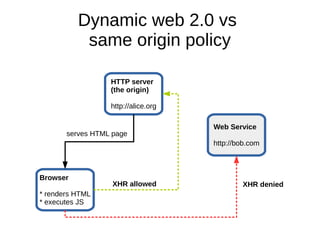
Dynamic web 2.0 vs 
same origin policy 
Browser 
* renders HTML 
* executes JS 
HTTP server 
(the origin) 
http://alice.org 
Web Service 
http://bob.com 
serves HTML page 
XHR allowed XHR denied
The future of the web is 
cross-domain, not same origin
The first approach at solving 
the cross-domain problem 
● JSONp 
● Ugly hack 
● Relies on dynamic 
loading of <script> tags 
from servers that are not 
on the same domain
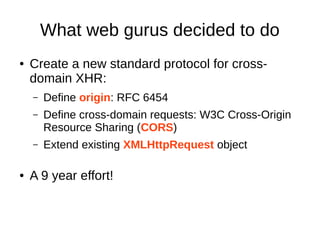
What web gurus decided to do 
● Create a new standard protocol for cross-domain 
XHR: 
– Define origin: RFC 6454 
– Define cross-domain requests: W3C Cross-Origin 
Resource Sharing (CORS) 
– Extend existing XMLHttpRequest object 
● A 9 year effort!
Gurus such as...
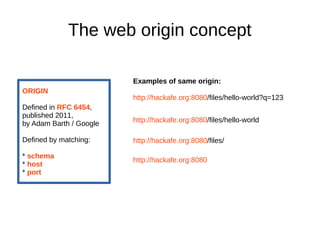
The web origin concept 
Examples of same origin: 
http://hackafe.org:8080/files/hello-world?q=123 
ORIGIN 
Defined in RFC 6454, 
published 2011, 
by Adam Barth / Google 
Defined by matching: 
* schema 
* host 
* port 
http://hackafe.org:8080/files/hello-world 
http://hackafe.org:8080/files/ 
http://hackafe.org:8080
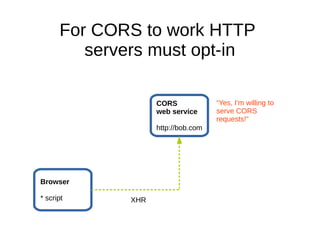
For CORS to work HTTP 
servers must opt-in 
CORS 
web service 
http://bob.com 
Browser 
* script XHR 
“Yes, I'm willing to 
serve CORS 
requests!”
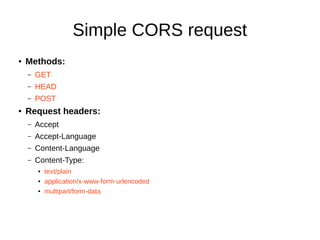
Simple CORS request 
● Methods: 
– GET 
– HEAD 
– POST 
● Request headers: 
– Accept 
– Accept-Language 
– Content-Language 
– Content-Type: 
● text/plain 
● application/x-www-form-urlencoded 
● multipart/form-data
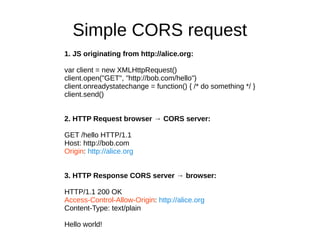
Simple CORS request 
1. JS originating from http://alice.org: 
var client = new XMLHttpRequest() 
client.open("GET", "http://bob.com/hello") 
client.onreadystatechange = function() { /* do something */ } 
client.send() 
2. HTTP Request browser → CORS server: 
GET /hello HTTP/1.1 
Host: http://bob.com 
Origin: http://alice.org 
3. HTTP Response CORS server → browser: 
HTTP/1.1 200 OK 
Access-Control-Allow-Origin: http://alice.org 
Content-Type: text/plain 
Hello world!
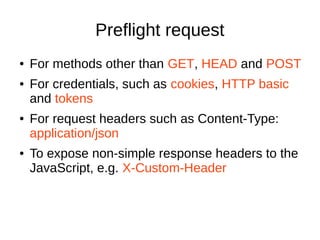
Preflight request 
● For methods other than GET, HEAD and POST 
● For credentials, such as cookies, HTTP basic 
and tokens 
● For request headers such as Content-Type: 
application/json 
● To expose non-simple response headers to the 
JavaScript, e.g. X-Custom-Header
Preflight request with HTTP 
OPTIONS 
1. HTTP Request browser → CORS server: 
OPTIONS /hello HTTP/1.1 
Host: http://bob.com 
Origin: http://alice.org 
Access-Control-Request-Method: PUT 
Access-Control-Request-Headers: Content-Type, Authorization 
2. HTTP Response CORS server → browser: 
HTTP/1.1 200 OK 
Access-Control-Allow-Origin: http://alice.org 
Access-Control-Allow-Methods: GET, POST, PUT, DELETE 
Access-Control-Allow-Headers: Content-Type, Authorization 
Access-Control-Expose-Headers: X-Custom-Header 
Access-Control-Allow-Credentials: true 
Access-Control-Max-Age: 3600
Handling CORS on the server side 
Servlets 
CORS Filter Cross-origin 
resources 
Java Web Server 
Incoming HTTP 
requests 
JSP 
Static files 
http://software.dzhuvinov.com/cors-filter.html 
You don't need to code anything, use 
existing CORS filters or modules
How to detect CORS support 
in the browser 
function browserSupportsCors() { 
if ("withCredentials" in new XMLHttpRequest()) 
return true; 
else if (typeof XDomainRequest == "object") 
return true; 
else 
return false; 
}
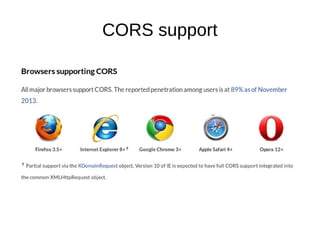
CORS support
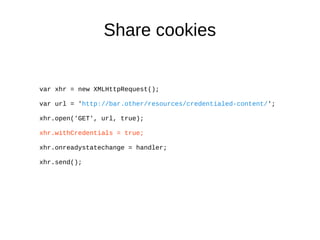
Share cookies 
var xhr = new XMLHttpRequest(); 
var url = 'http://bar.other/resources/credentialed-content/'; 
xhr.open('GET', url, true); 
xhr.withCredentials = true; 
xhr.onreadystatechange = handler; 
xhr.send();
Thank you! 
Q + A?

Cross-domain requests with CORS

  • 1.
    Cross-domain requests withCORS Vladimir Dzhuvinov @dzhuvinov
  • 2.
    History ● 1989The web and HTTP get invented ● 1994 Netscape Navigator ● 1995 JavaScript ● 1999 IE 5 brings XMLHttpRequest ● 2000+ The web becomes dynamic :-)
  • 3.
    Dynamic web 2.0vs same origin policy Browser * renders HTML * executes JS HTTP server (the origin) http://alice.org Web Service http://bob.com serves HTML page XHR allowed XHR denied
  • 4.
    The future ofthe web is cross-domain, not same origin
  • 5.
    The first approachat solving the cross-domain problem ● JSONp ● Ugly hack ● Relies on dynamic loading of <script> tags from servers that are not on the same domain
  • 6.
    What web gurusdecided to do ● Create a new standard protocol for cross-domain XHR: – Define origin: RFC 6454 – Define cross-domain requests: W3C Cross-Origin Resource Sharing (CORS) – Extend existing XMLHttpRequest object ● A 9 year effort!
  • 7.
  • 8.
    The web originconcept Examples of same origin: http://hackafe.org:8080/files/hello-world?q=123 ORIGIN Defined in RFC 6454, published 2011, by Adam Barth / Google Defined by matching: * schema * host * port http://hackafe.org:8080/files/hello-world http://hackafe.org:8080/files/ http://hackafe.org:8080
  • 9.
    For CORS towork HTTP servers must opt-in CORS web service http://bob.com Browser * script XHR “Yes, I'm willing to serve CORS requests!”
  • 10.
    Simple CORS request ● Methods: – GET – HEAD – POST ● Request headers: – Accept – Accept-Language – Content-Language – Content-Type: ● text/plain ● application/x-www-form-urlencoded ● multipart/form-data
  • 11.
    Simple CORS request 1. JS originating from http://alice.org: var client = new XMLHttpRequest() client.open("GET", "http://bob.com/hello") client.onreadystatechange = function() { /* do something */ } client.send() 2. HTTP Request browser → CORS server: GET /hello HTTP/1.1 Host: http://bob.com Origin: http://alice.org 3. HTTP Response CORS server → browser: HTTP/1.1 200 OK Access-Control-Allow-Origin: http://alice.org Content-Type: text/plain Hello world!
  • 12.
    Preflight request ●For methods other than GET, HEAD and POST ● For credentials, such as cookies, HTTP basic and tokens ● For request headers such as Content-Type: application/json ● To expose non-simple response headers to the JavaScript, e.g. X-Custom-Header
  • 13.
    Preflight request withHTTP OPTIONS 1. HTTP Request browser → CORS server: OPTIONS /hello HTTP/1.1 Host: http://bob.com Origin: http://alice.org Access-Control-Request-Method: PUT Access-Control-Request-Headers: Content-Type, Authorization 2. HTTP Response CORS server → browser: HTTP/1.1 200 OK Access-Control-Allow-Origin: http://alice.org Access-Control-Allow-Methods: GET, POST, PUT, DELETE Access-Control-Allow-Headers: Content-Type, Authorization Access-Control-Expose-Headers: X-Custom-Header Access-Control-Allow-Credentials: true Access-Control-Max-Age: 3600
  • 14.
    Handling CORS onthe server side Servlets CORS Filter Cross-origin resources Java Web Server Incoming HTTP requests JSP Static files http://software.dzhuvinov.com/cors-filter.html You don't need to code anything, use existing CORS filters or modules
  • 15.
    How to detectCORS support in the browser function browserSupportsCors() { if ("withCredentials" in new XMLHttpRequest()) return true; else if (typeof XDomainRequest == "object") return true; else return false; }
  • 16.
  • 17.
    Share cookies varxhr = new XMLHttpRequest(); var url = 'http://bar.other/resources/credentialed-content/'; xhr.open('GET', url, true); xhr.withCredentials = true; xhr.onreadystatechange = handler; xhr.send();
  • 18.