COR PULMONALE
HARISREE.V
ROLL NO.29
2017 REGULAR
• Definition
• Types
• Aetiology
• Pathogenesis
• Clinical features-signs and symptoms
• Investigations
• Treatment
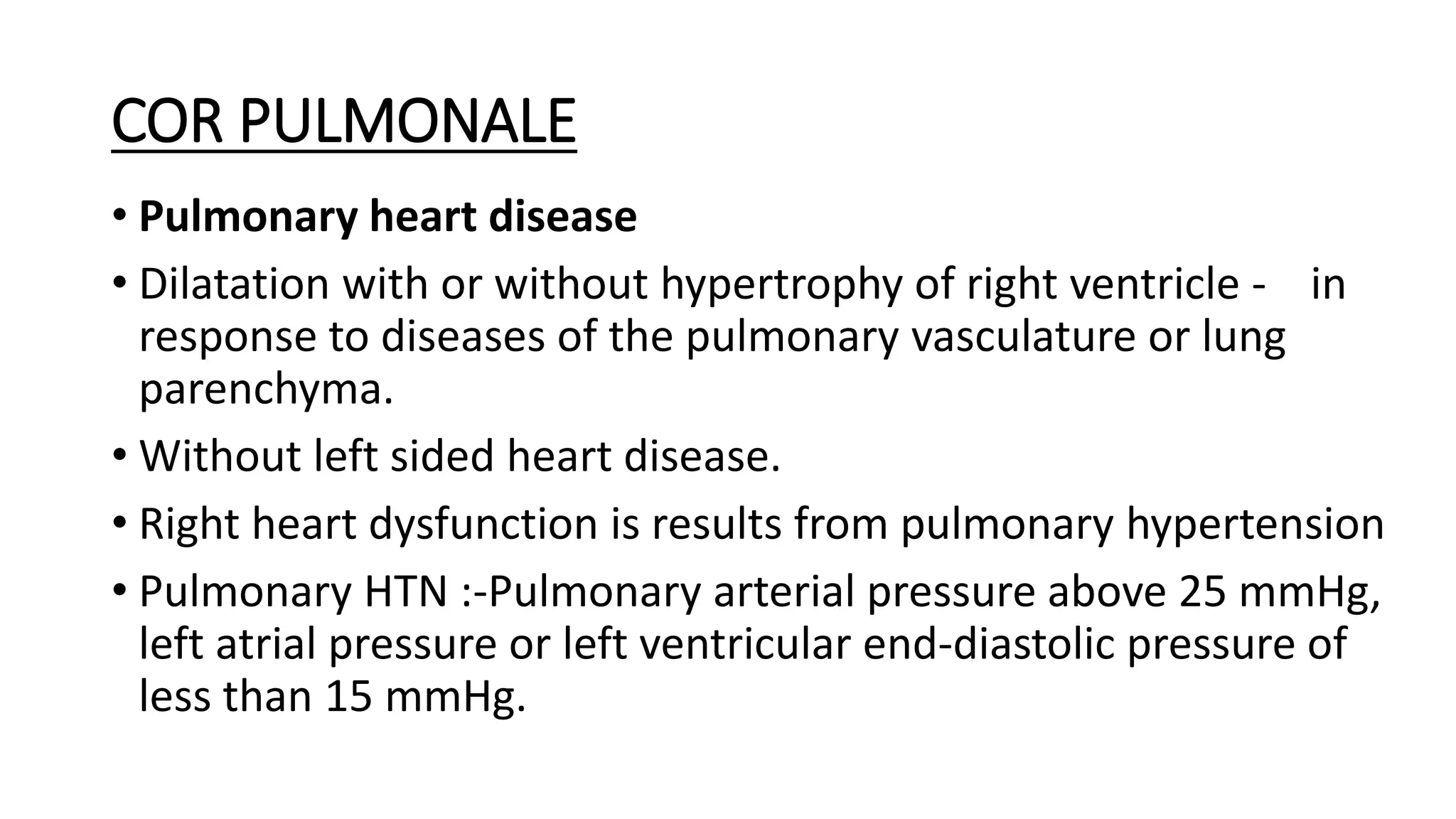
COR PULMONALE
• Pulmonary heart disease
• Dilatation with or without hypertrophy of right ventricle - in
response to diseases of the pulmonary vasculature or lung
parenchyma.
• Without left sided heart disease.
• Right heart dysfunction is results from pulmonary hypertension
• Pulmonary HTN :-Pulmonary arterial pressure above 25 mmHg,
left atrial pressure or left ventricular end-diastolic pressure of
less than 15 mmHg.
TYPES
• ACUTE COR PULMONALE
• CHRONIC COR PULMONALE
ACUTE COR PULMONALE
• Occurs following a massive pulmonary embolism- sufficient enough
to obstruct more than 60 % of pulmonary circulation.
• Leads to acute pulmonary hypertension → Acute right ventricular
dilatation → failure.
CLINICAL FEATURES :-
 Signs of deep vein thrombosis
 Acute dyspnoea, Haemoptysis
 Syncope or cardiac arrest
 Tachypnoea , Tachycardia ,Hypotension
 Chest pain
CLINICAL FEATURES (cond)
 Signs of acute right ventricular failure
. Raised JVP
. Parasternal heave
. Right ventricular 3rd heart sound and gallop
CHRONIC COR PULMONALE
• Combination of hypertrophy and dilatation of right ventricle
• Secondary to pulmonary hypertension, results from diseases of lung,
pulmonary circulation or thorax .
ETIOLOGY
DISEASES OF LUNG DISEASES OF PULMONARY
CIRCULATION
 COPD  Recurrent pulmonary
Thromboembolism
 Chronic bronchial asthma  Primary pulmonary HTN
 Pulmonary tuberculosis  Collagen vascular diseases
 Interstitial lung disease  Chronic liver disease
 Cystic fibrosis
 Pleural fibrosis
ETIOLOGY (Cond)
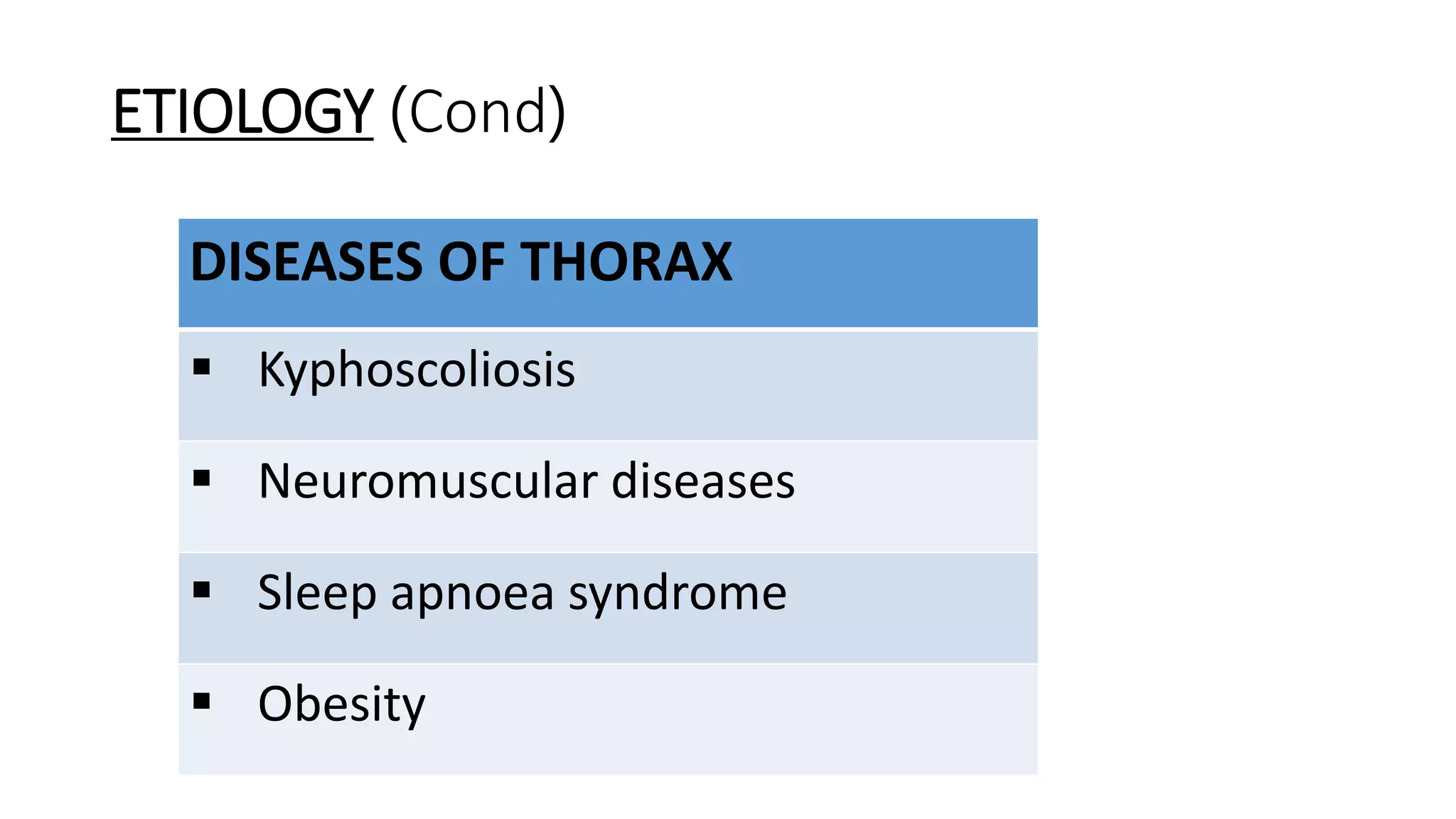
DISEASES OF THORAX
 Kyphoscoliosis
 Neuromuscular diseases
 Sleep apnoea syndrome
 Obesity
ETIOLOGY Cond….
• COPD including chronic bronchitis and emphysema
• Causes more than 50 % cases of chronic cor pulmanale.
• Patients with chronic bronchitis develop
erythrocytosis,oedema and early onset of cor pulmonale -
BLUE BLOATERS
• Patients with emphysema develop cor pulmonale later -
PINK PUFFERS
PATHOGENESIS
• Increased pulmonary vascular resistance
Pulmonary hypertension central mechanisms
in chronic cor pulmonale
• Hypoxaemia- Promotes vasoconstriction and Vascular remodelling by
stimulating smooth muscle proliferation
PATHOGENESIS
PULMONARY DISEASES
↓
HYPOXIA,HYPERCAPNIA/ ACIDOSIS
PULMONARY DESTRUCTION OF CAPPILLARY BED BLOOD VOLUME ↑
VASOCONSTRICTION BLOOD VISCOSITY ↑
PULMONARY HYPERTENSION
RIGHT VENTRICULAR HYPERTROPHY
RIGHT HEART FAILURE
CLINICAL FEATURES
SYMPTOMS:-
• Dyspnoea, not relieved by sitting up -due to pulmonary hypertension
• Dry cough
• Fatigue
• Atypical anterior chest pain -due to dilatation of the root of
pulmonary artery
• Exercise- induced peripheral cyanosis and excessive day time
somnolence
SIGNS
• Tachypnoea ,even on mild exertion
• Ankle oedema
• Prominent a waves on JVP
• Right ventricular heave in left parasternal region and epigastrium
• Loud pulmonary component (P2) of second heart sound
• Right sided fourth heart sound
• Pulmonary ejection sound
• Ejection systolic murmur at pulmonary area
• Pan systolic murmur of tricuspid regurgitation – with very high
pulmonary arterial pressure
• Early diastolic murmur of pulmonary regurgitation- with very high
pulmonary arterial pressure
OVERT RIGHT HEART FAILURE
• Overt RHF in a patient with chronic cor pulmonale is suggested
by the following signs:
Increasing peripheral oedema
Raised JVP and positive hepatojugular reflux
Tender hepatomegaly
Cardiac enlargement
Right ventricular third heart sound and a gallop rhythm
Right sided fourth heart sound
INVESTIGATIONS
• Chest X-ray –Cardiac enlargement due to dilatation of right ventricle
• ECG –Features of right atrial enlargement and right ventricular hypertrophy
• ABG studies –HYPOXIA and HYPERCAPNEA
• Echocardiography –Chamber hypertrophy and enlargement
• BNP –Useful biomarker for pulmonary HTN on patients with COPD
• Nuclear scan – for pulmonary embolism
MANAGEMENET OF COR PULMONALE
General measures
 Treatment to decrease pulmonary hypertension
 Treatment of right heart failure
Additional measures in COPD induced cor pulmonale
Surgical treatment
GENERAL MEASURES :-
I. TREATMENT TO DECREASE PULMORY HYPERTENTION
• Treatment of underlying disease
• OXYGEN THERAPY-Most imp treatment in reducing pulmonary
hypertension
 Initiated if arterial oxygen tension is 55mmHg or less
Oxygen should be administered in a controlled manner .The inspired
oxygen concentration is adjusted to produce PaO2 of 60 mmHg or
more.
Oxygen administered for a minimum period of 12-15 hours / day .
2. TREATMENT OF RIGHT HEART FAILURE
• Diuretics
• Phlebotomy when haematocrit is more than 60%
• Sildenafil, a phosphodiesterase-4 inhibitor-used for pulmonary
hypertension
• Digoxin
• Salt restriction
ADDITIONAL MEASURES IN COPD -INDUCED COR PULMONALE
• Avoidance of airway irritants like tobacco smoke
• Bronchial toilet for removal of secretions
• Treatment of respiratory infections with antibiotic
• Bronchodilators
• Corticosteroids in patients with bronchospasm
• Tranquillisers , sedatives and narcotics are preferably avoided
SURGICAL TREATMENT :-
• Pulmonary embolectomy in unresolved pulmonary emboli
• Heart - Lung transplantation in patients with primary pulmonary
hypertension
• Unilateral lung transplantation in patients with interstitial lung
disease.
THANK YOU

Cor Pulmonale Medicine

  • 1.
  • 2.
    • Definition • Types •Aetiology • Pathogenesis • Clinical features-signs and symptoms • Investigations • Treatment
  • 3.
    COR PULMONALE • Pulmonaryheart disease • Dilatation with or without hypertrophy of right ventricle - in response to diseases of the pulmonary vasculature or lung parenchyma. • Without left sided heart disease. • Right heart dysfunction is results from pulmonary hypertension • Pulmonary HTN :-Pulmonary arterial pressure above 25 mmHg, left atrial pressure or left ventricular end-diastolic pressure of less than 15 mmHg.
  • 4.
    TYPES • ACUTE CORPULMONALE • CHRONIC COR PULMONALE
  • 5.
    ACUTE COR PULMONALE •Occurs following a massive pulmonary embolism- sufficient enough to obstruct more than 60 % of pulmonary circulation. • Leads to acute pulmonary hypertension → Acute right ventricular dilatation → failure.
  • 6.
    CLINICAL FEATURES :- Signs of deep vein thrombosis  Acute dyspnoea, Haemoptysis  Syncope or cardiac arrest  Tachypnoea , Tachycardia ,Hypotension  Chest pain
  • 7.
    CLINICAL FEATURES (cond) Signs of acute right ventricular failure . Raised JVP . Parasternal heave . Right ventricular 3rd heart sound and gallop
  • 8.
    CHRONIC COR PULMONALE •Combination of hypertrophy and dilatation of right ventricle • Secondary to pulmonary hypertension, results from diseases of lung, pulmonary circulation or thorax .
  • 9.
    ETIOLOGY DISEASES OF LUNGDISEASES OF PULMONARY CIRCULATION  COPD  Recurrent pulmonary Thromboembolism  Chronic bronchial asthma  Primary pulmonary HTN  Pulmonary tuberculosis  Collagen vascular diseases  Interstitial lung disease  Chronic liver disease  Cystic fibrosis  Pleural fibrosis
  • 10.
    ETIOLOGY (Cond) DISEASES OFTHORAX  Kyphoscoliosis  Neuromuscular diseases  Sleep apnoea syndrome  Obesity
  • 11.
    ETIOLOGY Cond…. • COPDincluding chronic bronchitis and emphysema • Causes more than 50 % cases of chronic cor pulmanale. • Patients with chronic bronchitis develop erythrocytosis,oedema and early onset of cor pulmonale - BLUE BLOATERS • Patients with emphysema develop cor pulmonale later - PINK PUFFERS
  • 12.
    PATHOGENESIS • Increased pulmonaryvascular resistance Pulmonary hypertension central mechanisms in chronic cor pulmonale • Hypoxaemia- Promotes vasoconstriction and Vascular remodelling by stimulating smooth muscle proliferation
  • 13.
    PATHOGENESIS PULMONARY DISEASES ↓ HYPOXIA,HYPERCAPNIA/ ACIDOSIS PULMONARYDESTRUCTION OF CAPPILLARY BED BLOOD VOLUME ↑ VASOCONSTRICTION BLOOD VISCOSITY ↑ PULMONARY HYPERTENSION RIGHT VENTRICULAR HYPERTROPHY RIGHT HEART FAILURE
  • 14.
    CLINICAL FEATURES SYMPTOMS:- • Dyspnoea,not relieved by sitting up -due to pulmonary hypertension • Dry cough • Fatigue • Atypical anterior chest pain -due to dilatation of the root of pulmonary artery • Exercise- induced peripheral cyanosis and excessive day time somnolence
  • 15.
    SIGNS • Tachypnoea ,evenon mild exertion • Ankle oedema • Prominent a waves on JVP • Right ventricular heave in left parasternal region and epigastrium • Loud pulmonary component (P2) of second heart sound • Right sided fourth heart sound • Pulmonary ejection sound • Ejection systolic murmur at pulmonary area • Pan systolic murmur of tricuspid regurgitation – with very high pulmonary arterial pressure • Early diastolic murmur of pulmonary regurgitation- with very high pulmonary arterial pressure
  • 16.
    OVERT RIGHT HEARTFAILURE • Overt RHF in a patient with chronic cor pulmonale is suggested by the following signs: Increasing peripheral oedema Raised JVP and positive hepatojugular reflux Tender hepatomegaly Cardiac enlargement Right ventricular third heart sound and a gallop rhythm Right sided fourth heart sound
  • 17.
    INVESTIGATIONS • Chest X-ray–Cardiac enlargement due to dilatation of right ventricle • ECG –Features of right atrial enlargement and right ventricular hypertrophy • ABG studies –HYPOXIA and HYPERCAPNEA • Echocardiography –Chamber hypertrophy and enlargement • BNP –Useful biomarker for pulmonary HTN on patients with COPD • Nuclear scan – for pulmonary embolism
  • 18.
    MANAGEMENET OF CORPULMONALE General measures  Treatment to decrease pulmonary hypertension  Treatment of right heart failure Additional measures in COPD induced cor pulmonale Surgical treatment
  • 19.
    GENERAL MEASURES :- I.TREATMENT TO DECREASE PULMORY HYPERTENTION • Treatment of underlying disease • OXYGEN THERAPY-Most imp treatment in reducing pulmonary hypertension  Initiated if arterial oxygen tension is 55mmHg or less Oxygen should be administered in a controlled manner .The inspired oxygen concentration is adjusted to produce PaO2 of 60 mmHg or more. Oxygen administered for a minimum period of 12-15 hours / day .
  • 20.
    2. TREATMENT OFRIGHT HEART FAILURE • Diuretics • Phlebotomy when haematocrit is more than 60% • Sildenafil, a phosphodiesterase-4 inhibitor-used for pulmonary hypertension • Digoxin • Salt restriction
  • 21.
    ADDITIONAL MEASURES INCOPD -INDUCED COR PULMONALE • Avoidance of airway irritants like tobacco smoke • Bronchial toilet for removal of secretions • Treatment of respiratory infections with antibiotic • Bronchodilators • Corticosteroids in patients with bronchospasm • Tranquillisers , sedatives and narcotics are preferably avoided
  • 22.
    SURGICAL TREATMENT :- •Pulmonary embolectomy in unresolved pulmonary emboli • Heart - Lung transplantation in patients with primary pulmonary hypertension • Unilateral lung transplantation in patients with interstitial lung disease.
  • 23.