MBB 604: Advances in crop biotechnology
Presented by
Ekatpure Sachin Chandrakant
PhD research Scholar
Department of Plant Biotechnology
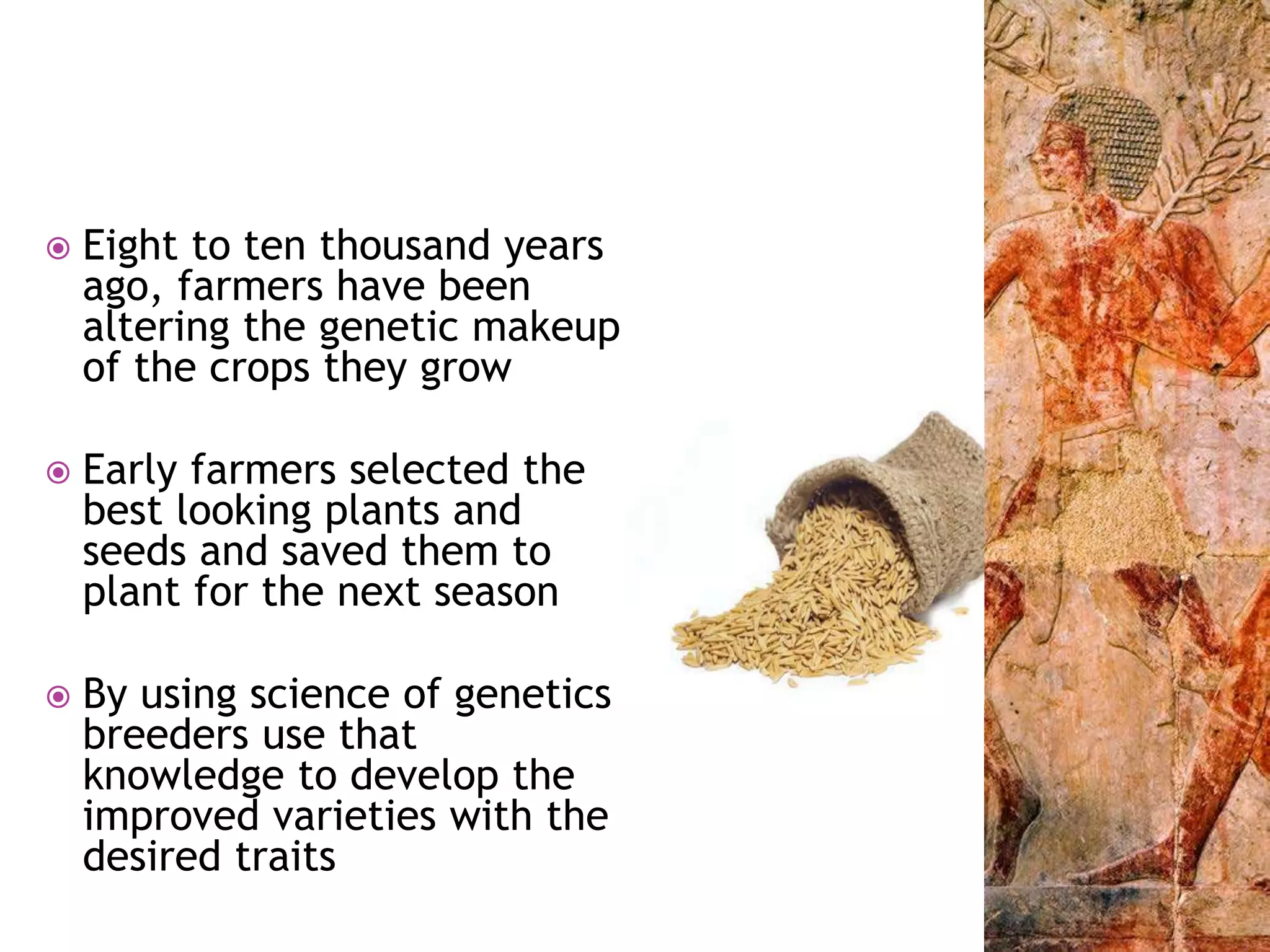
 Eight to ten thousand years
ago, farmers have been
altering the genetic makeup
of the crops they grow
 Early farmers selected the
best looking plants and
seeds and saved them to
plant for the next season
 By using science of genetics
breeders use that
knowledge to develop the
improved varieties with the
desired traits
 The selection for features such as
 faster growth,
 higher yields,
 pest and disease resistance,
 larger seeds,
 sweeter fruits
 Has dramatically changed domesticated plant
species compared to their wild relatives
 For example
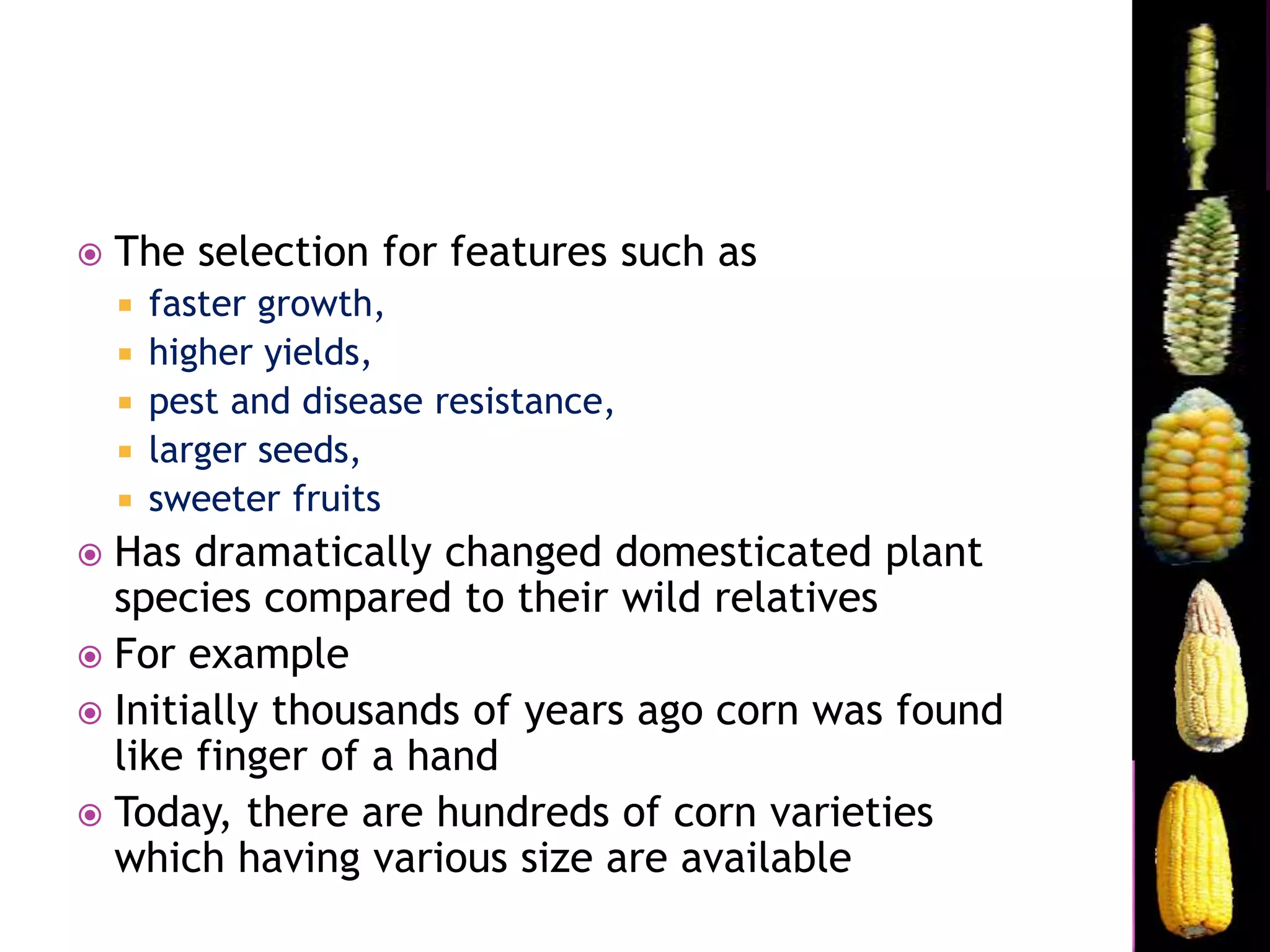
 Initially thousands of years ago corn was found
like finger of a hand
 Today, there are hundreds of corn varieties
which having various size are available
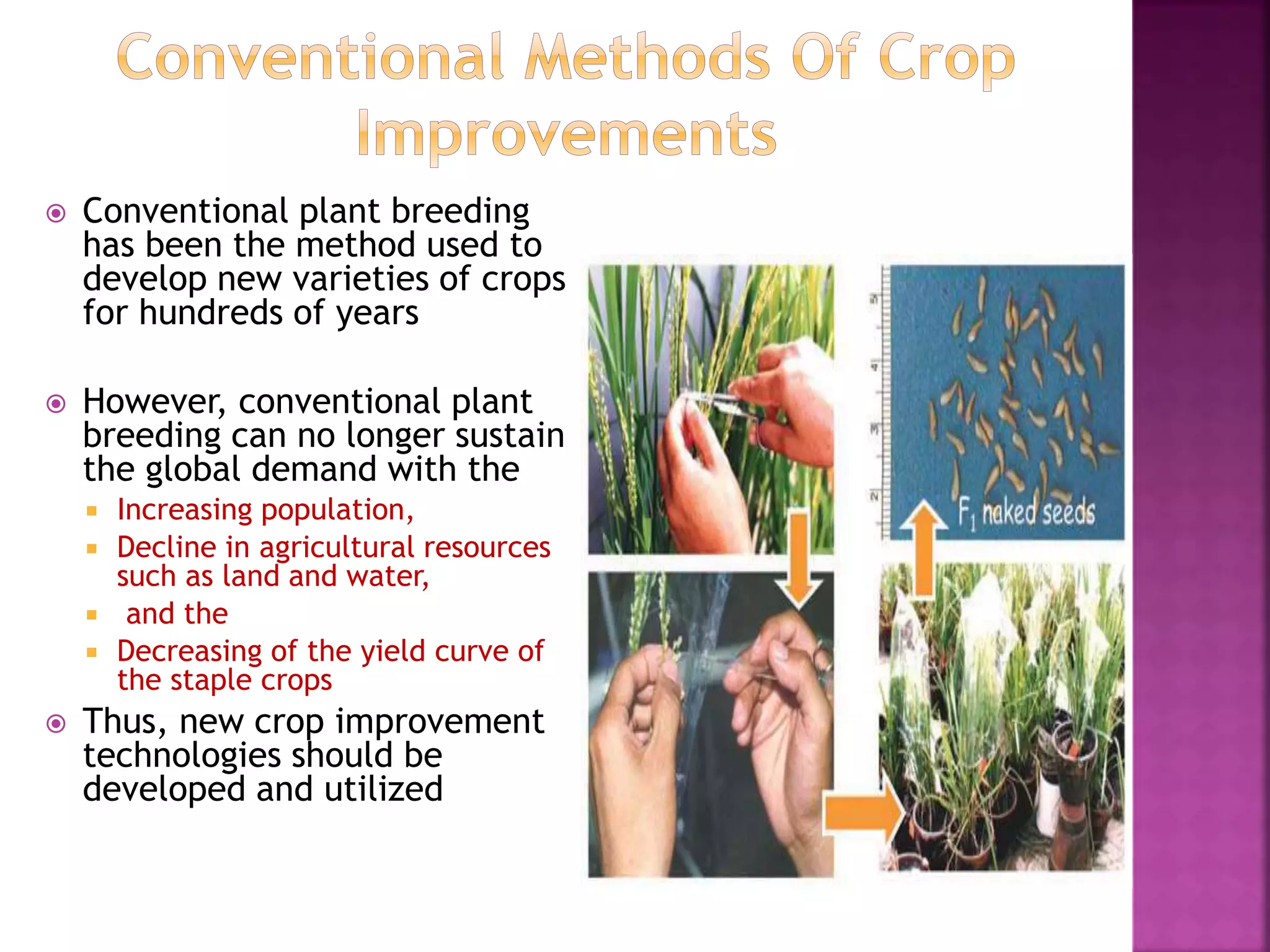
 Conventional plant breeding
has been the method used to
develop new varieties of crops
for hundreds of years
 However, conventional plant
breeding can no longer sustain
the global demand with the
 Increasing population,
 Decline in agricultural resources
such as land and water,
 and the
 Decreasing of the yield curve of
the staple crops
 Thus, new crop improvement
technologies should be
developed and utilized
 Recognizing desirable traits and use them into
future generations is very important in plant
breeding
 A few superior traits occasionally arise
spontaneously through a process called mutation
 But the natural rate of mutation is very slow
 In 1920s, researchers discovered that they could
greatly increase the number of these variations
or mutations by exposing plants to X-rays and
mutation-inducing chemicals
 Mutation breeding” accelerated after World War II,
when the techniques of the nuclear age became
widely available
 Plants were exposed to gamma rays, protons,
neutrons, alpha particles, and beta particles to see
if these would induce useful mutations
 Chemicals such as sodium azide and ethyl
methanesulphonate, were also used to cause
mutations
 Mutation breeding efforts continue around the world
today.
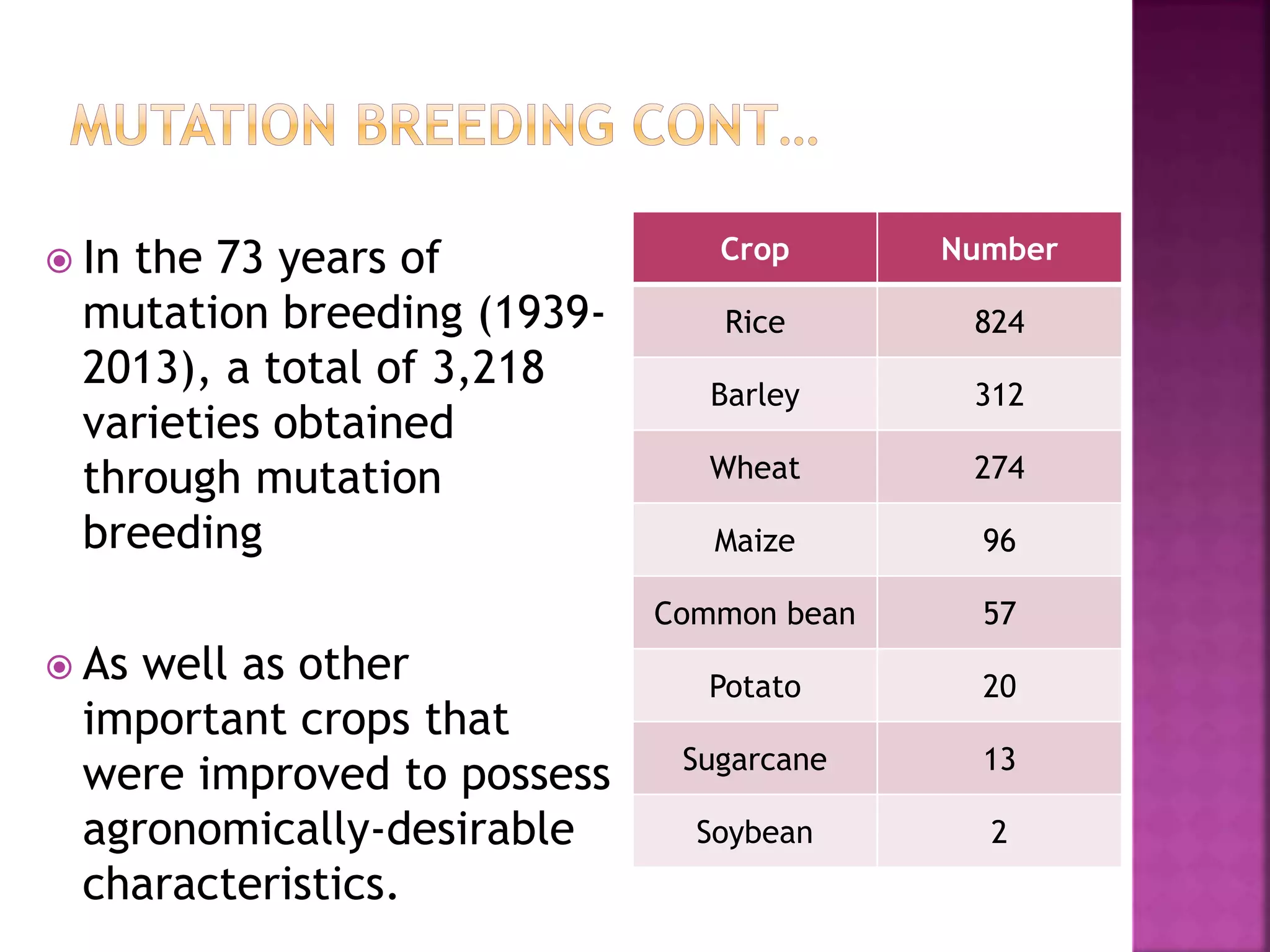
 In the 73 years of
mutation breeding (1939-
2013), a total of 3,218
varieties obtained
through mutation
breeding
 As well as other
important crops that
were improved to possess
agronomically-desirable
characteristics.
Crop Number
Rice 824
Barley 312
Wheat 274
Maize 96
Common bean 57
Potato 20
Sugarcane 13
Soybean 2
Parent BParent A
Hybrid
Pure stable
line (Inbreds)
Repeated Self
pollination and
selection
Hybridization
F6
F5
F4
F3
F2
F1
X
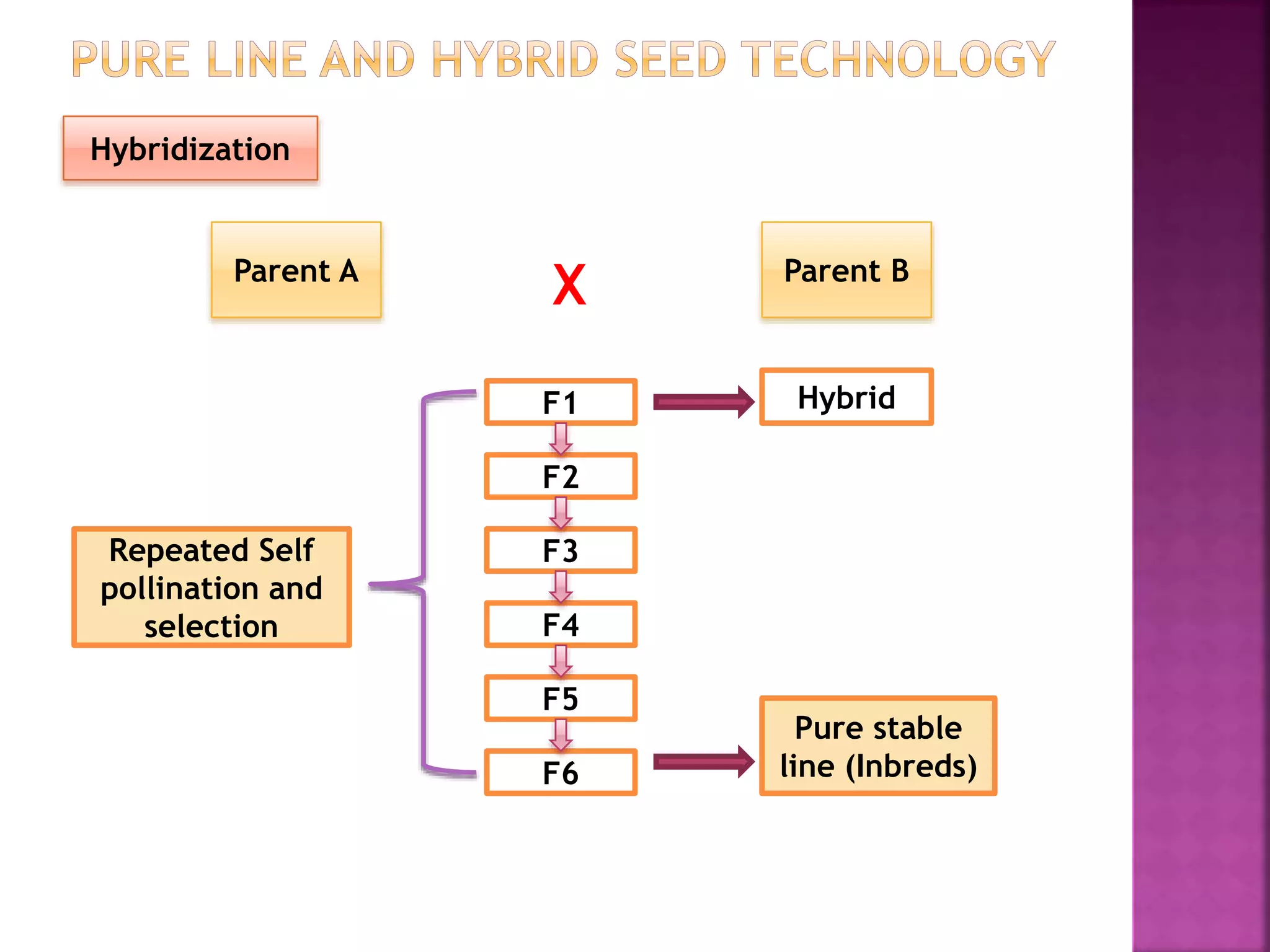
 In hybrid seed technology, two pure lines with
complementing traits and are derived from
diversely related parents are bred together by
hand
 F1 hybrids are tested for hybrid vigor in all
agronomic and yield parameters and compared
to both parents
 The resulting offspring's will usually perform
more vigorously than either parents.
 In China increased production from 140
million tons in 1978 to 188 million tons in
1990 using the hybrid seed technology
 With the proven impact of hybrid seed
technology, new tools for hybrid breeding
were discovered
 Utilized for self-pollinating crops including
development of CMS lines
 In this methods of crop improvement hybrid varieties
has had a tremendous impact on agricultural
productivity over the last decades
 While an extremely important tool, conventional plant
breeding also has its limitations
 1. Breeding can only be done between two plants that can
sexually mate with each other
 This limits the new traits that can be added to those that
already exist in that species
 2. when plants are crossed, many traits are transferred
along with the trait of interest including traits with
undesirable effects on yield potential
 Over the last 50 years, the field of genetic
engineering has developed rapidly due to the
greater understanding of DNA
 DNA having code from which genes are made
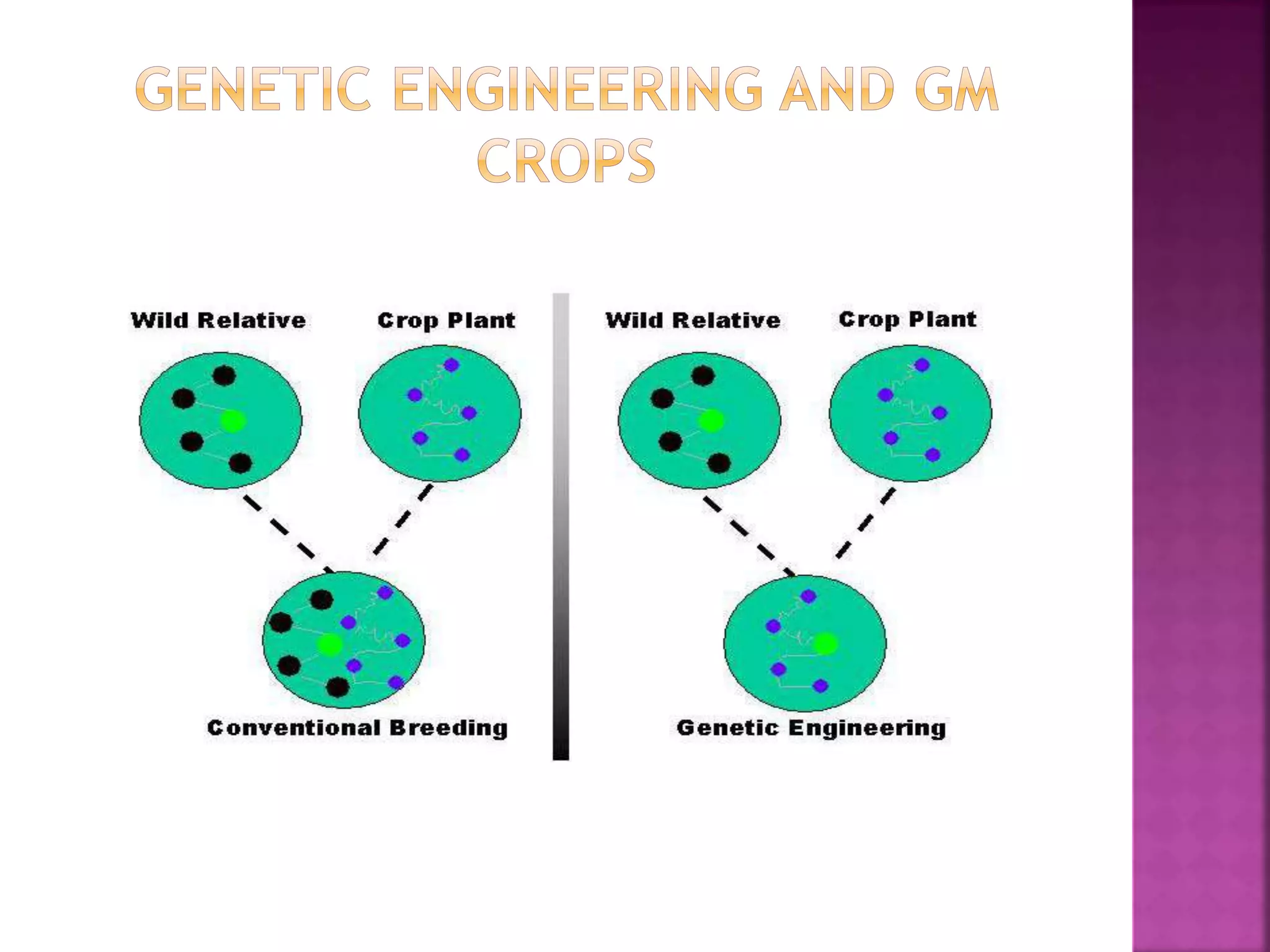
 The term genetic engineering is used to
describe the process by which the genetic
makeup of an organism can be altered using
“recombinant DNA technology
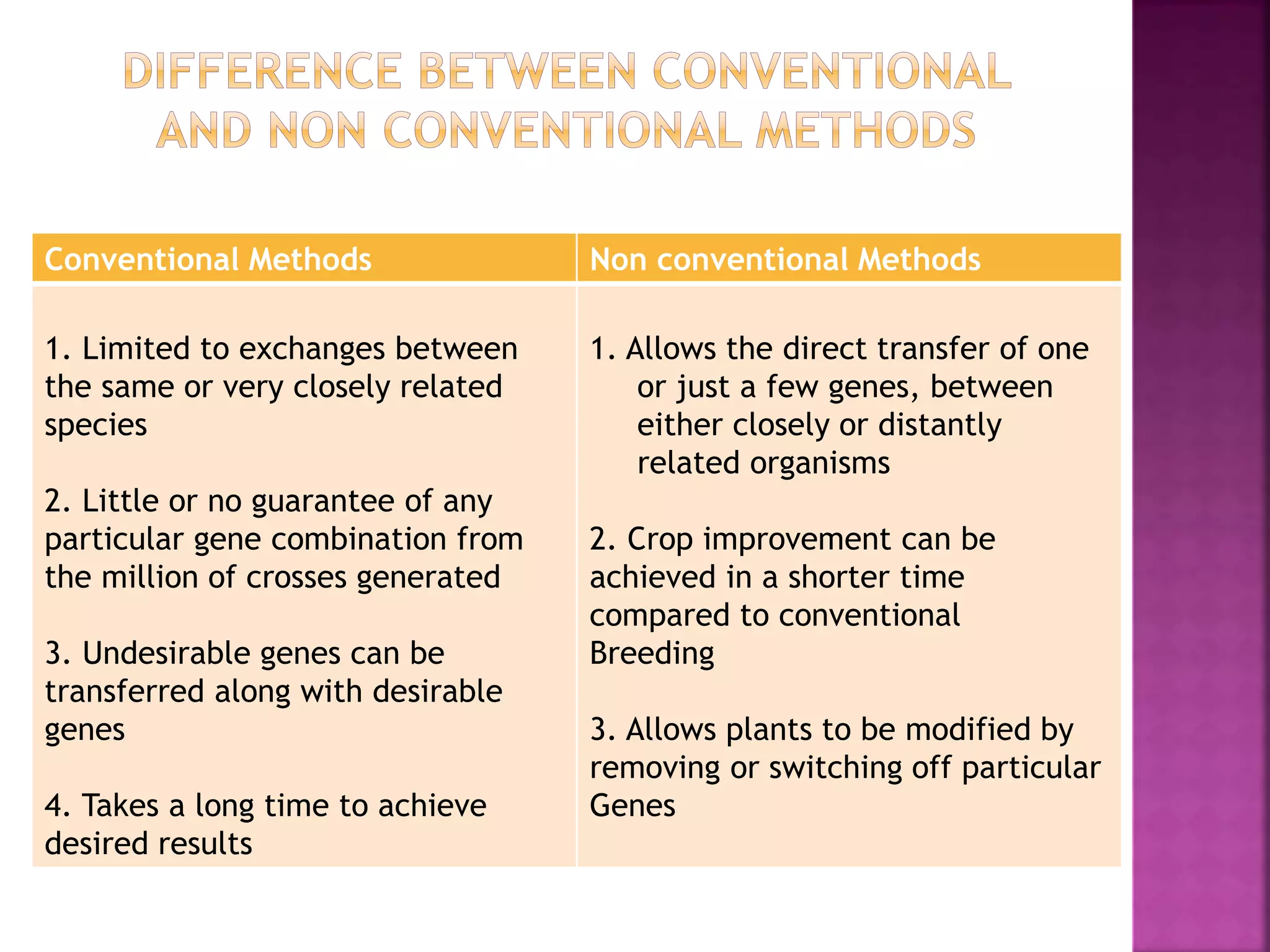
Conventional Methods Non conventional Methods
1. Limited to exchanges between
the same or very closely related
species
2. Little or no guarantee of any
particular gene combination from
the million of crosses generated
3. Undesirable genes can be
transferred along with desirable
genes
4. Takes a long time to achieve
desired results
1. Allows the direct transfer of one
or just a few genes, between
either closely or distantly
related organisms
2. Crop improvement can be
achieved in a shorter time
compared to conventional
Breeding
3. Allows plants to be modified by
removing or switching off particular
Genes
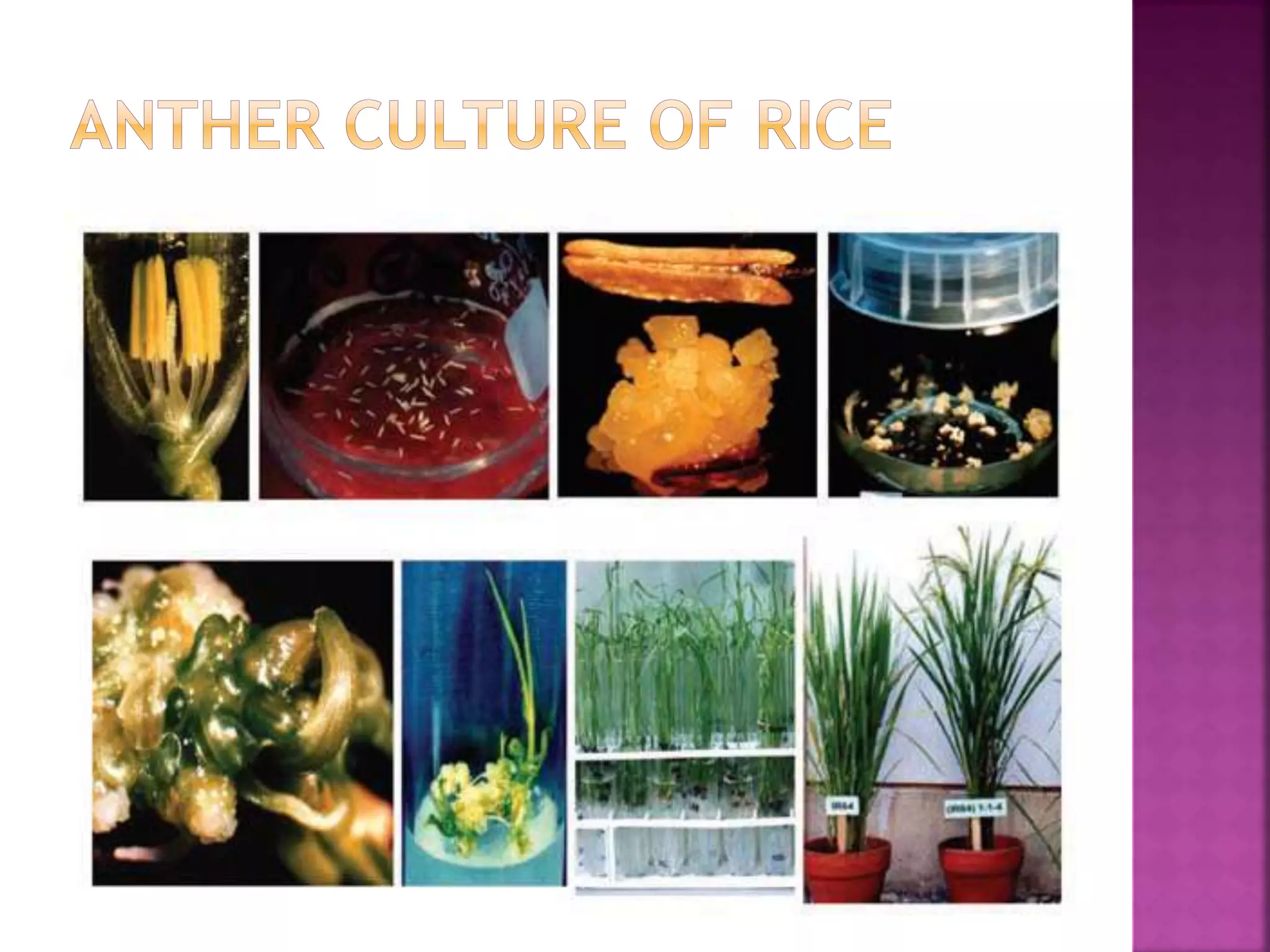
 Tissue culture is the cultivation of plant cells,
tissues, or organs on specially formulated
nutrient media
 Under the right conditions, an entire plant can
be regenerated from a single cell
 Plant tissue culture is a technique that has been
around for more than 30 years
 There are several types of tissue culture
depending on the part of the plant (explant)
used.
 Micro propagation
 Embryo Rescue
 Somaclonal Variation
 Pollen culture
 Ovary culture..etc..
 plant breeders now use molecular marker-assisted selection
 To help identify specific genes, scientist use what are called molecular
markers
 Which are short strings or sequence of nucleic acid which makes up a
segment of DNA.
 The markers are located near the DNA sequence of the desired gene
 Since the markers and the genes are close together on the same
chromosome, they tend to stay together as each generation of plants
is produced
 This is called genetic linkage
 This linkage helps to predict whether a plant will have the desired
gene
Thank You

Conventional and non conventional methods of crop improvement

  • 1.
    MBB 604: Advancesin crop biotechnology Presented by Ekatpure Sachin Chandrakant PhD research Scholar Department of Plant Biotechnology
  • 2.
     Eight toten thousand years ago, farmers have been altering the genetic makeup of the crops they grow  Early farmers selected the best looking plants and seeds and saved them to plant for the next season  By using science of genetics breeders use that knowledge to develop the improved varieties with the desired traits
  • 3.
     The selectionfor features such as  faster growth,  higher yields,  pest and disease resistance,  larger seeds,  sweeter fruits  Has dramatically changed domesticated plant species compared to their wild relatives  For example  Initially thousands of years ago corn was found like finger of a hand  Today, there are hundreds of corn varieties which having various size are available
  • 4.
     Conventional plantbreeding has been the method used to develop new varieties of crops for hundreds of years  However, conventional plant breeding can no longer sustain the global demand with the  Increasing population,  Decline in agricultural resources such as land and water,  and the  Decreasing of the yield curve of the staple crops  Thus, new crop improvement technologies should be developed and utilized
  • 5.
     Recognizing desirabletraits and use them into future generations is very important in plant breeding  A few superior traits occasionally arise spontaneously through a process called mutation  But the natural rate of mutation is very slow  In 1920s, researchers discovered that they could greatly increase the number of these variations or mutations by exposing plants to X-rays and mutation-inducing chemicals
  • 6.
     Mutation breeding”accelerated after World War II, when the techniques of the nuclear age became widely available  Plants were exposed to gamma rays, protons, neutrons, alpha particles, and beta particles to see if these would induce useful mutations  Chemicals such as sodium azide and ethyl methanesulphonate, were also used to cause mutations  Mutation breeding efforts continue around the world today.
  • 7.
     In the73 years of mutation breeding (1939- 2013), a total of 3,218 varieties obtained through mutation breeding  As well as other important crops that were improved to possess agronomically-desirable characteristics. Crop Number Rice 824 Barley 312 Wheat 274 Maize 96 Common bean 57 Potato 20 Sugarcane 13 Soybean 2
  • 8.
    Parent BParent A Hybrid Purestable line (Inbreds) Repeated Self pollination and selection Hybridization F6 F5 F4 F3 F2 F1 X
  • 9.
     In hybridseed technology, two pure lines with complementing traits and are derived from diversely related parents are bred together by hand  F1 hybrids are tested for hybrid vigor in all agronomic and yield parameters and compared to both parents  The resulting offspring's will usually perform more vigorously than either parents.
  • 10.
     In Chinaincreased production from 140 million tons in 1978 to 188 million tons in 1990 using the hybrid seed technology  With the proven impact of hybrid seed technology, new tools for hybrid breeding were discovered  Utilized for self-pollinating crops including development of CMS lines
  • 11.
     In thismethods of crop improvement hybrid varieties has had a tremendous impact on agricultural productivity over the last decades  While an extremely important tool, conventional plant breeding also has its limitations  1. Breeding can only be done between two plants that can sexually mate with each other  This limits the new traits that can be added to those that already exist in that species  2. when plants are crossed, many traits are transferred along with the trait of interest including traits with undesirable effects on yield potential
  • 13.
     Over thelast 50 years, the field of genetic engineering has developed rapidly due to the greater understanding of DNA  DNA having code from which genes are made  The term genetic engineering is used to describe the process by which the genetic makeup of an organism can be altered using “recombinant DNA technology
  • 14.
    Conventional Methods Nonconventional Methods 1. Limited to exchanges between the same or very closely related species 2. Little or no guarantee of any particular gene combination from the million of crosses generated 3. Undesirable genes can be transferred along with desirable genes 4. Takes a long time to achieve desired results 1. Allows the direct transfer of one or just a few genes, between either closely or distantly related organisms 2. Crop improvement can be achieved in a shorter time compared to conventional Breeding 3. Allows plants to be modified by removing or switching off particular Genes
  • 16.
     Tissue cultureis the cultivation of plant cells, tissues, or organs on specially formulated nutrient media  Under the right conditions, an entire plant can be regenerated from a single cell  Plant tissue culture is a technique that has been around for more than 30 years  There are several types of tissue culture depending on the part of the plant (explant) used.
  • 18.
     Micro propagation Embryo Rescue  Somaclonal Variation  Pollen culture  Ovary culture..etc..
  • 19.
     plant breedersnow use molecular marker-assisted selection  To help identify specific genes, scientist use what are called molecular markers  Which are short strings or sequence of nucleic acid which makes up a segment of DNA.  The markers are located near the DNA sequence of the desired gene  Since the markers and the genes are close together on the same chromosome, they tend to stay together as each generation of plants is produced  This is called genetic linkage  This linkage helps to predict whether a plant will have the desired gene
  • 23.