Biosafety of Genetically Modified CropsBiosafety of Genetically Modified Crops
Ekatpure Sachin Chandrakant
2
Biosafety of GM Crops
Policies and procedure adopted to ensure environmental
safety during the course of development and
commercialization of genetically modified organism
2
3
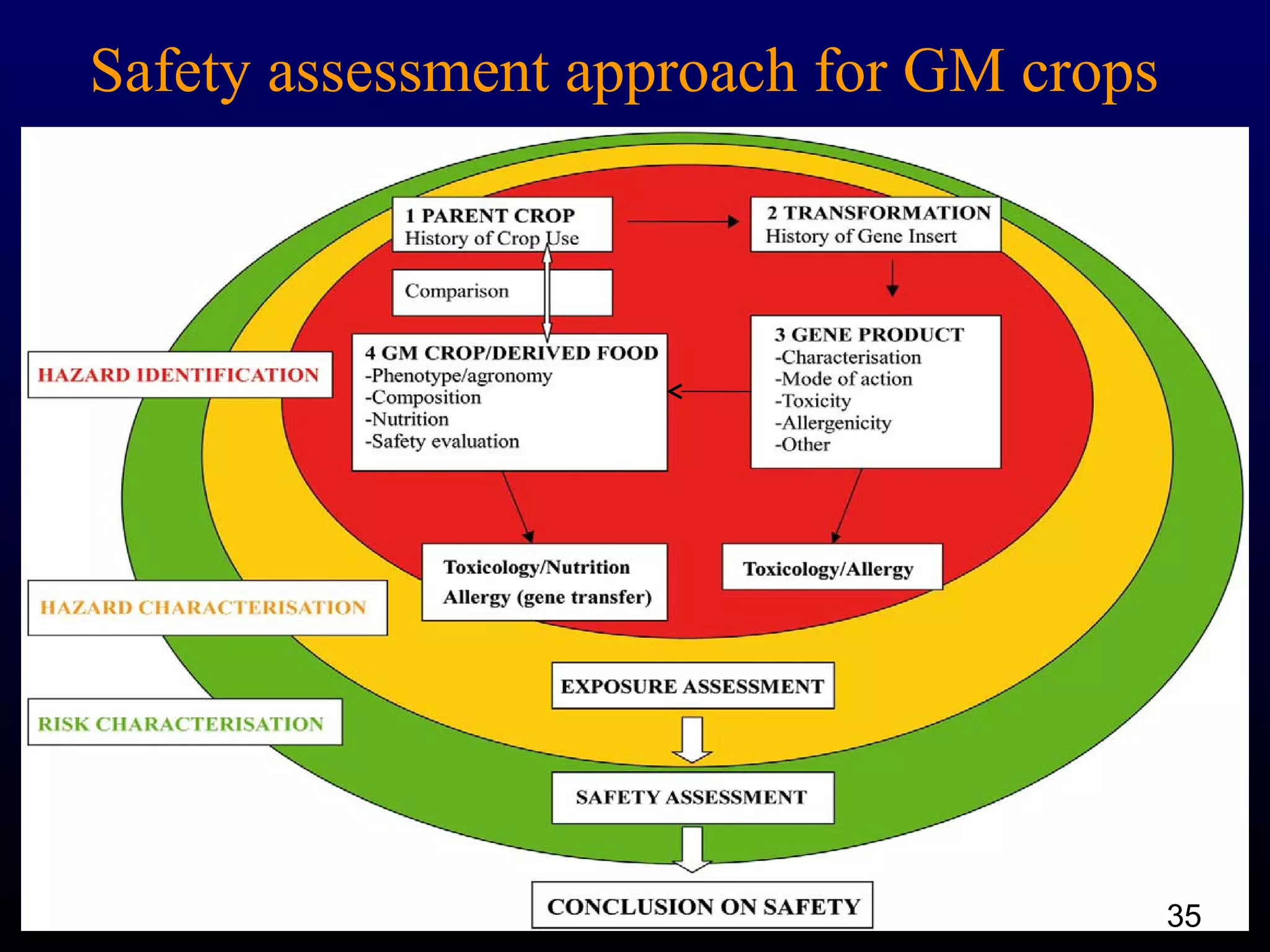
Safety assessment approach for GM crops
3
35
4
Elements of assessment
4
36
5
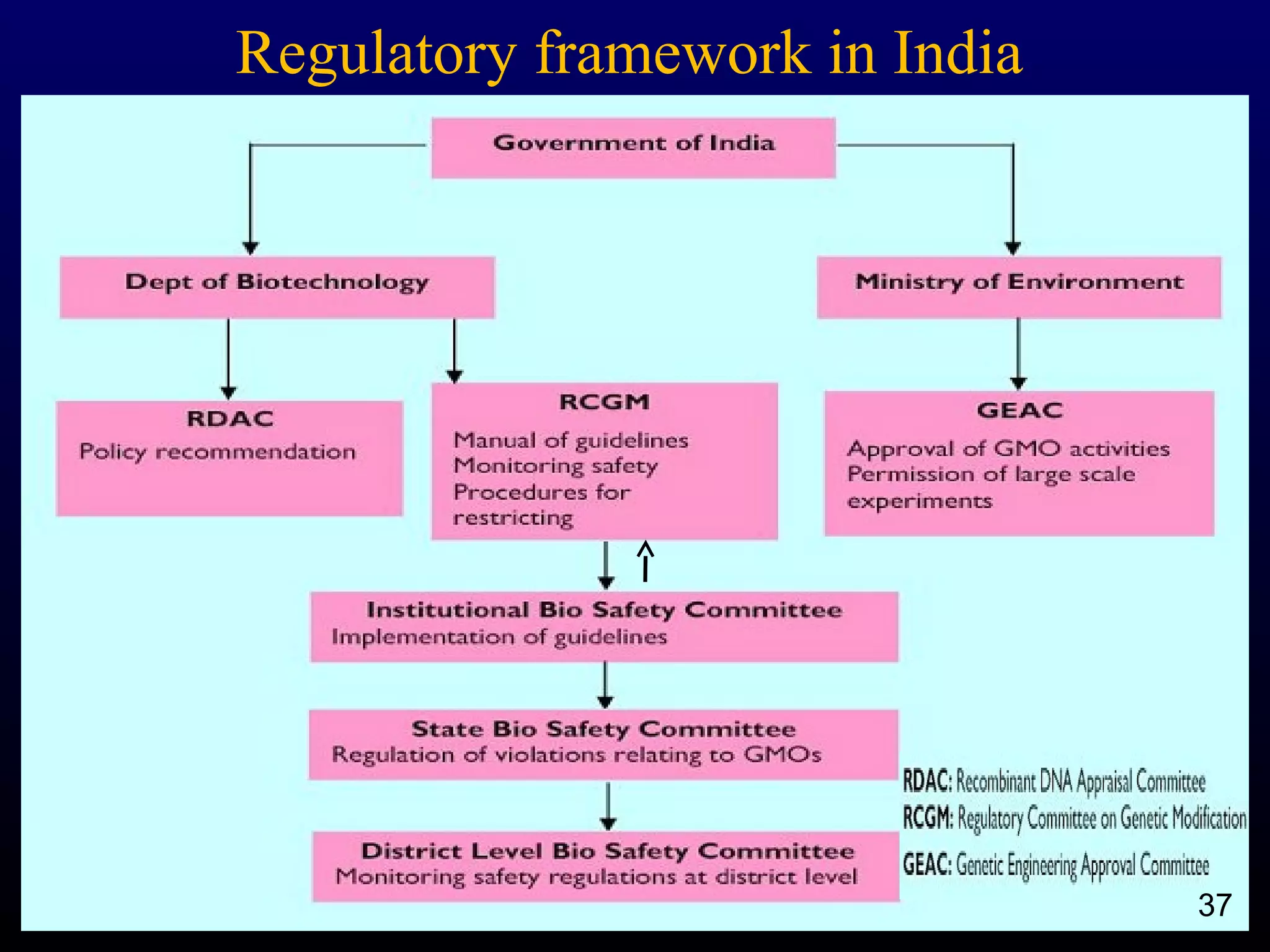
Regulatory framework in India
5
37
6
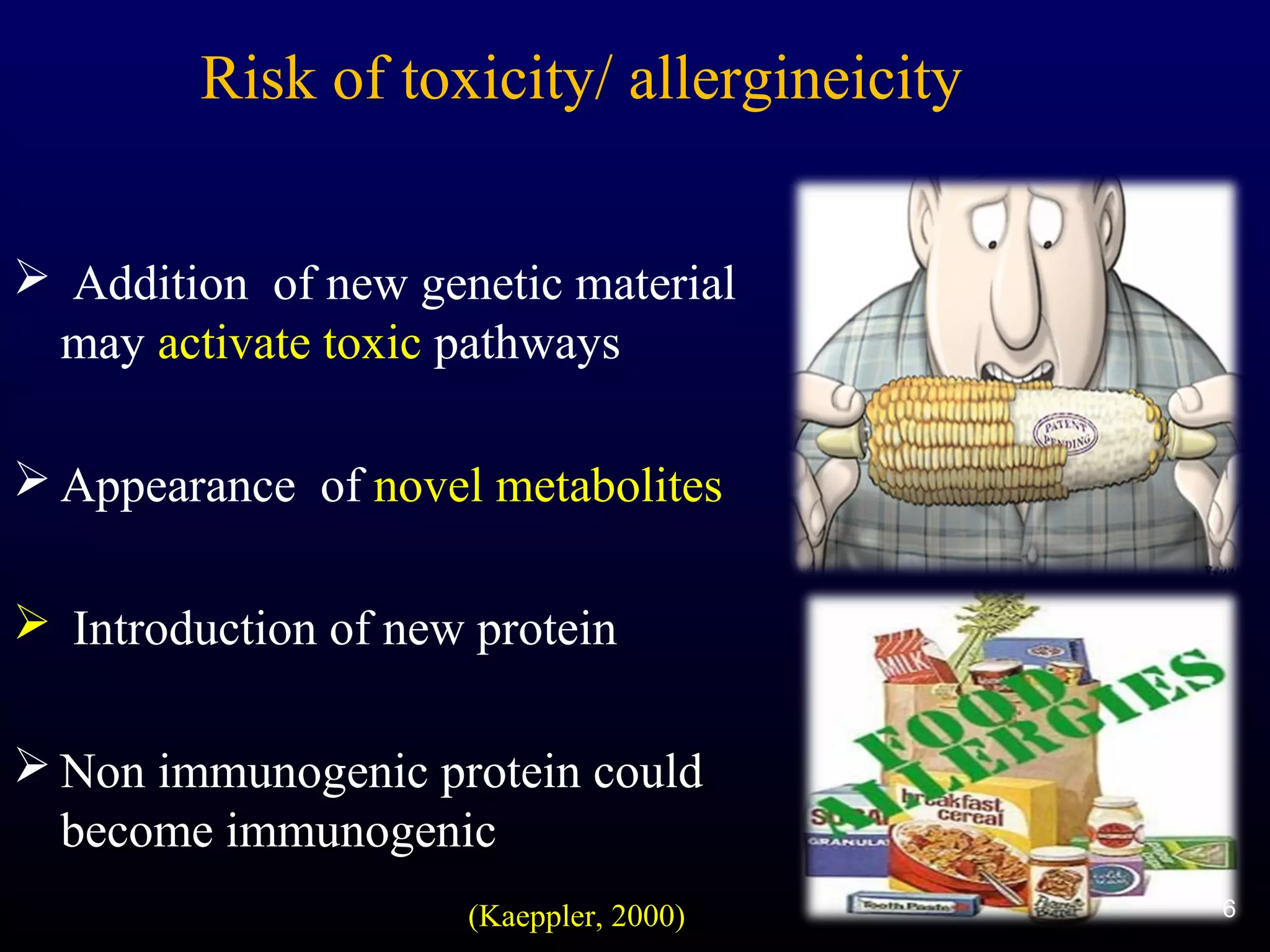
Risk of toxicity/ allergineicity
 Addition of new genetic material
may activate toxic pathways
 Appearance of novel metabolites
 Introduction of new protein
 Non immunogenic protein could
become immunogenic
6(Kaeppler, 2000)
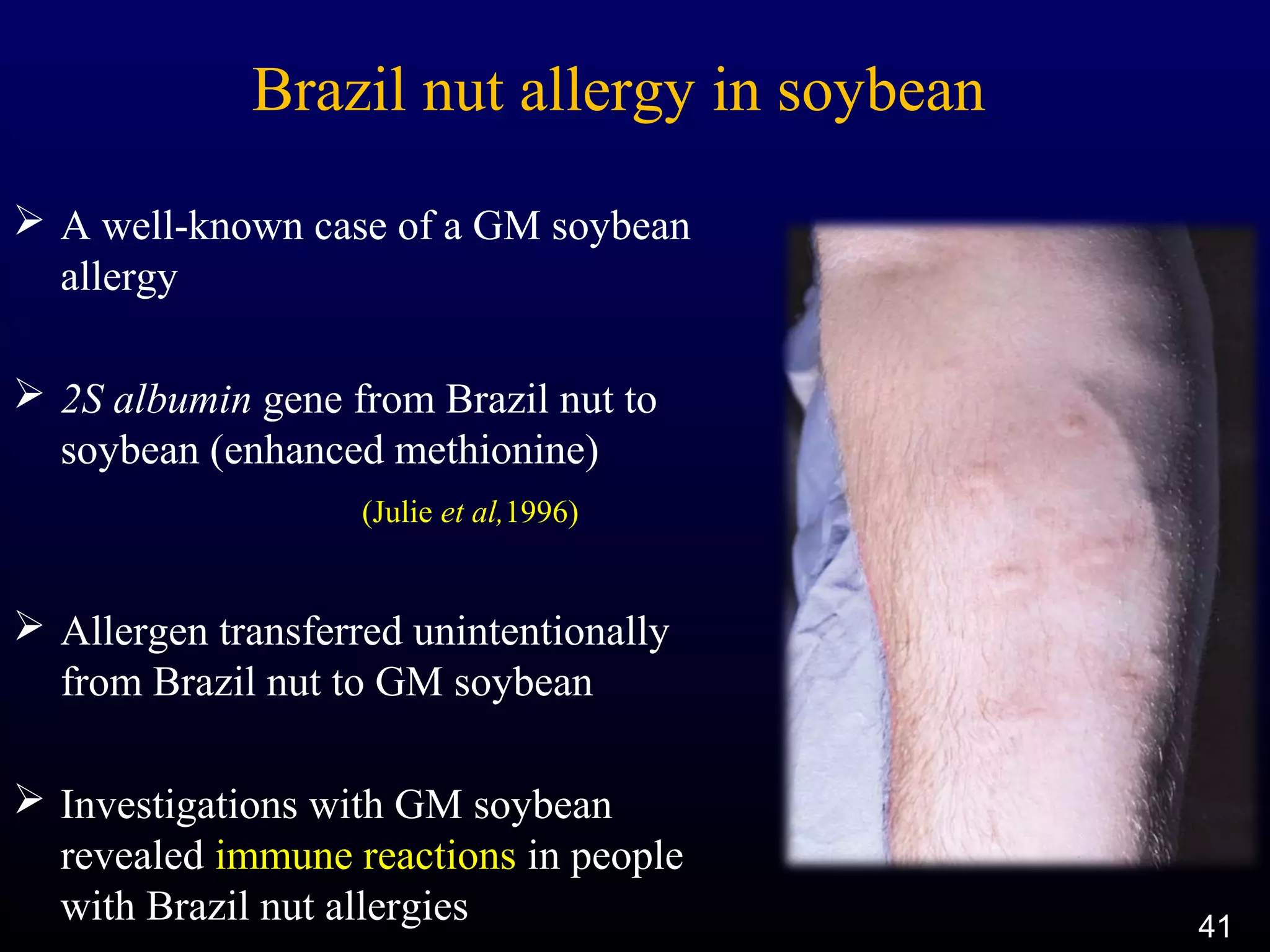
Brazil nut allergy in soybean
 A well-known case of a GM soybean
allergy
 2S albumin gene from Brazil nut to
soybean (enhanced methionine)
(Julie et al,1996)
 Allergen transferred unintentionally
from Brazil nut to GM soybean
 Investigations with GM soybean
revealed immune reactions in people
with Brazil nut allergies 41
8
Antibiotic resistance
 Marker gene could induce antibiotic resistance
 Would reduce effectiveness of antibiotics to fight diseases
 Conditions for HGT (horizontal gene transfer) :
 DNA must be free from the cells
 Bacterial recipient must be competent
 Integration depends on sequence homology
 Acid environment of human stomach
 HGT of nptII gene can occur 1 in 10 billion
 Specificity of promoter
8(Redenbaugh et al,1994)
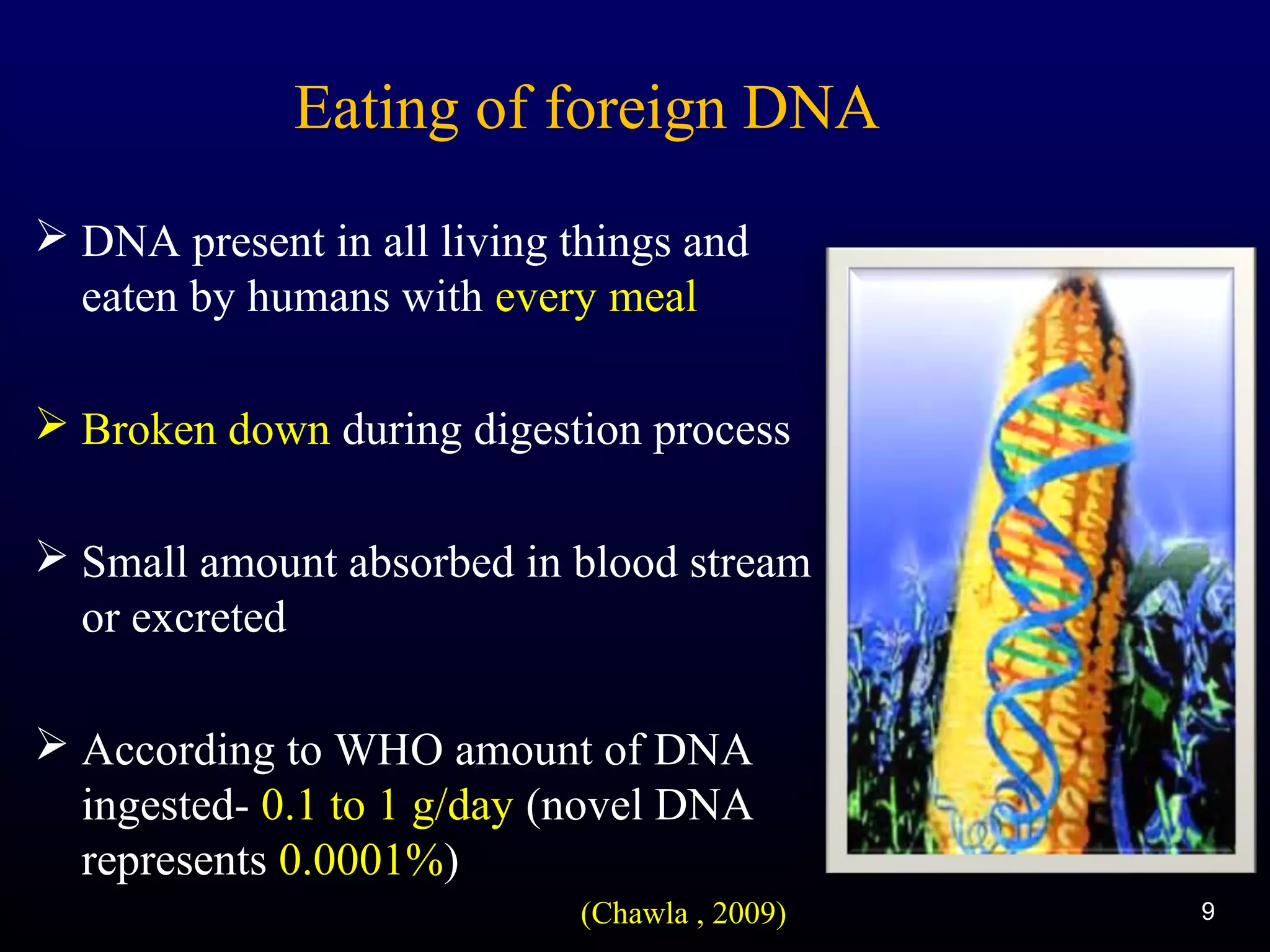
Eating of foreign DNA
 DNA present in all living things and
eaten by humans with every meal
 Broken down during digestion process
 Small amount absorbed in blood stream
or excreted
 According to WHO amount of DNA
ingested- 0.1 to 1 g/day (novel DNA
represents 0.0001%)
(Chawla , 2009) 9
Use of promoters of virus origin
 Concerns expressed regarding human health
eg. 35S promoter of CaMV
 It might be harmful if it invades human cells and turns
on certain genes
 Probability is very low and no such report so far
10
Changes in nutrition level
 Accidental changes in nutritional component of GM crop
 Report spread in 1997 that Roundup Ready soybean
produces large quantities of phytoestrogen (causes breast
cancer) after glyphosate spray
 Investigation revealed no such increase
11
(SAG report, 1997)
12
Gene Flow
 Accidental cross between GM
plant and traditional local varieties
or weedy relative
 Contaminate local variety with
transgene (eg.superweeds)
 Ryegrass highly resistant to
glyphosate already found in
Austrailia
12
(Gaur et al.,2010)
13
Report on corn contaminated by GM genes
in Mexico
 David Quist and Ignacio Chapela in Nov 2001 reported
transgenic DNA construct 35s promoter sequence found
in Creole maize at Oaxacan state of Mexico
 CIMMYT amplified 28 accessions from Oaxacan
landraces with CaMV 35s promoter primer
 Samples did not show presence of 35s promoter
13(CIMMYT report,2001)
Strategies to prevent gene flow
 Isolation zone
 Trap crop
 Male sterility
 Chloroplast
transformation
 Clean gene technology
- Devoid of vegetation
- Use of non-transgenic variety
- Inactive pollens
- Gene construct introduced into
chloroplast
- Markerless GM
14(Chawla,2009)
15
Resistance of target species
 Insect/ virus population rapidly adapt to environmental
pressure
 Development of new strains
 Gene pyramiding - Best solution
15
16
Impact on biodiversity
 Reduction in genetic diversity by development and global
spread of improved varieties
 Sustainable agriculture depends on mixed cropping and
crop rotation
 Not unique to GM but is relevant to all improved varieties
 Bt protein is highly unstable rapidly degraded in stomach
juices of vertebrates and in soil
16
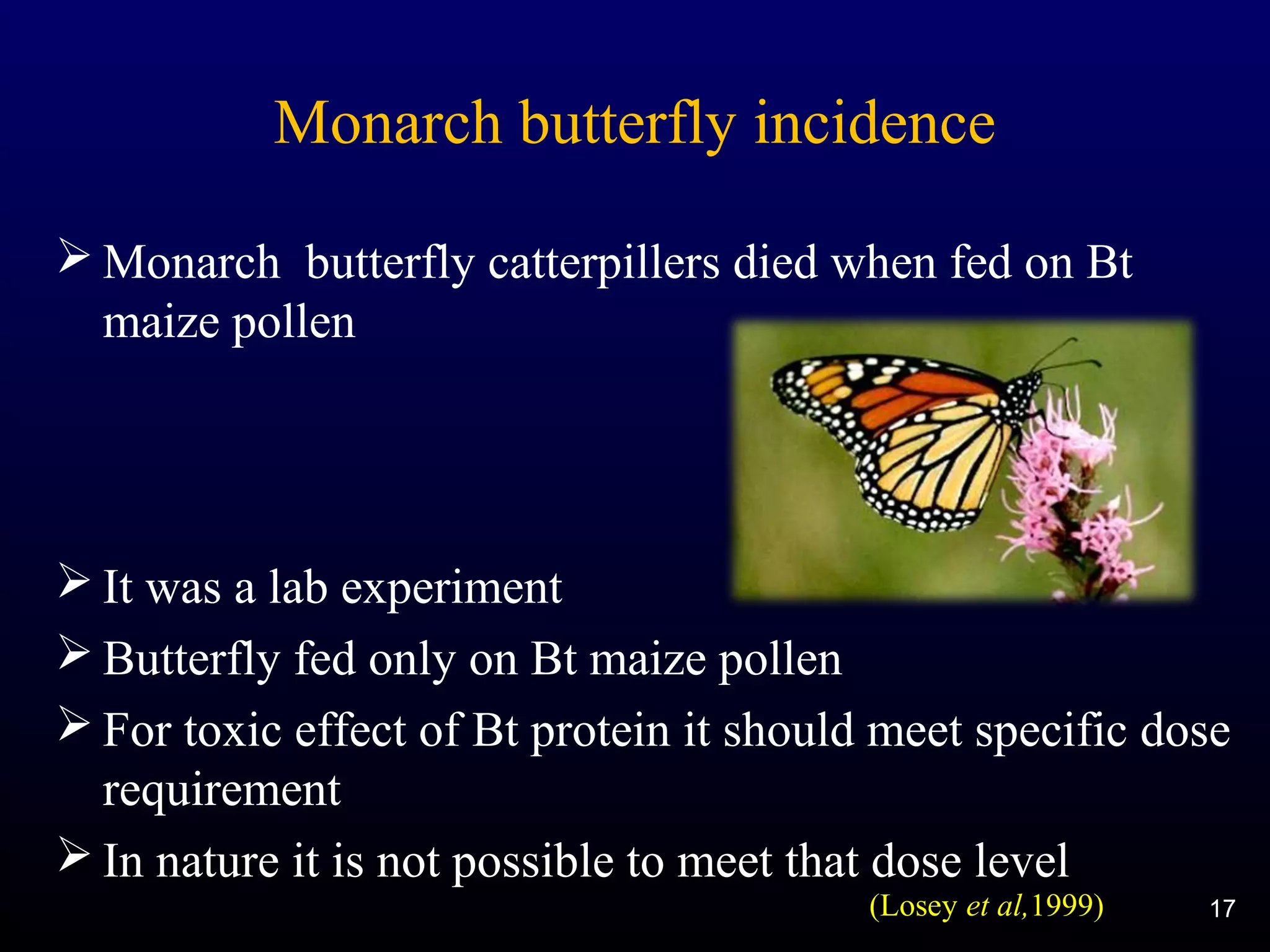
Monarch butterfly incidence
 Monarch butterfly catterpillers died when fed on Bt
maize pollen
 It was a lab experiment
 Butterfly fed only on Bt maize pollen
 For toxic effect of Bt protein it should meet specific dose
requirement
 In nature it is not possible to meet that dose level
17(Losey et al,1999)
Warangal Attempt
 Farmers of Warangal district of Andhra Pradesh reported cattle
and sheep dying on consuming Bt cotton plants
 No one has so far conclusively proved that Bt protein in the Bt
cotton plants was the real culprit
 Why do the cattle die eating Bt cotton only in the Telngana
region of Andhra Pradesh ?
 Clearly a mischievous and cheap attempt to denigrate and
discredit the Bt technology
(Rao, 2007)
58
Ethical issues
 Unacceptable intervention in “God’s creation
violating barriers in natural world”
 Objections to consuming animal genes in plants
and vice-versa
 Demand for GM and Non GM food labelling
19
Biosafety of gm crops

Biosafety of gm crops

  • 1.
    Biosafety of GeneticallyModified CropsBiosafety of Genetically Modified Crops Ekatpure Sachin Chandrakant
  • 2.
    2 Biosafety of GMCrops Policies and procedure adopted to ensure environmental safety during the course of development and commercialization of genetically modified organism 2
  • 3.
  • 4.
  • 5.
  • 6.
    6 Risk of toxicity/allergineicity  Addition of new genetic material may activate toxic pathways  Appearance of novel metabolites  Introduction of new protein  Non immunogenic protein could become immunogenic 6(Kaeppler, 2000)
  • 7.
    Brazil nut allergyin soybean  A well-known case of a GM soybean allergy  2S albumin gene from Brazil nut to soybean (enhanced methionine) (Julie et al,1996)  Allergen transferred unintentionally from Brazil nut to GM soybean  Investigations with GM soybean revealed immune reactions in people with Brazil nut allergies 41
  • 8.
    8 Antibiotic resistance  Markergene could induce antibiotic resistance  Would reduce effectiveness of antibiotics to fight diseases  Conditions for HGT (horizontal gene transfer) :  DNA must be free from the cells  Bacterial recipient must be competent  Integration depends on sequence homology  Acid environment of human stomach  HGT of nptII gene can occur 1 in 10 billion  Specificity of promoter 8(Redenbaugh et al,1994)
  • 9.
    Eating of foreignDNA  DNA present in all living things and eaten by humans with every meal  Broken down during digestion process  Small amount absorbed in blood stream or excreted  According to WHO amount of DNA ingested- 0.1 to 1 g/day (novel DNA represents 0.0001%) (Chawla , 2009) 9
  • 10.
    Use of promotersof virus origin  Concerns expressed regarding human health eg. 35S promoter of CaMV  It might be harmful if it invades human cells and turns on certain genes  Probability is very low and no such report so far 10
  • 11.
    Changes in nutritionlevel  Accidental changes in nutritional component of GM crop  Report spread in 1997 that Roundup Ready soybean produces large quantities of phytoestrogen (causes breast cancer) after glyphosate spray  Investigation revealed no such increase 11 (SAG report, 1997)
  • 12.
    12 Gene Flow  Accidentalcross between GM plant and traditional local varieties or weedy relative  Contaminate local variety with transgene (eg.superweeds)  Ryegrass highly resistant to glyphosate already found in Austrailia 12 (Gaur et al.,2010)
  • 13.
    13 Report on corncontaminated by GM genes in Mexico  David Quist and Ignacio Chapela in Nov 2001 reported transgenic DNA construct 35s promoter sequence found in Creole maize at Oaxacan state of Mexico  CIMMYT amplified 28 accessions from Oaxacan landraces with CaMV 35s promoter primer  Samples did not show presence of 35s promoter 13(CIMMYT report,2001)
  • 14.
    Strategies to preventgene flow  Isolation zone  Trap crop  Male sterility  Chloroplast transformation  Clean gene technology - Devoid of vegetation - Use of non-transgenic variety - Inactive pollens - Gene construct introduced into chloroplast - Markerless GM 14(Chawla,2009)
  • 15.
    15 Resistance of targetspecies  Insect/ virus population rapidly adapt to environmental pressure  Development of new strains  Gene pyramiding - Best solution 15
  • 16.
    16 Impact on biodiversity Reduction in genetic diversity by development and global spread of improved varieties  Sustainable agriculture depends on mixed cropping and crop rotation  Not unique to GM but is relevant to all improved varieties  Bt protein is highly unstable rapidly degraded in stomach juices of vertebrates and in soil 16
  • 17.
    Monarch butterfly incidence Monarch butterfly catterpillers died when fed on Bt maize pollen  It was a lab experiment  Butterfly fed only on Bt maize pollen  For toxic effect of Bt protein it should meet specific dose requirement  In nature it is not possible to meet that dose level 17(Losey et al,1999)
  • 18.
    Warangal Attempt  Farmersof Warangal district of Andhra Pradesh reported cattle and sheep dying on consuming Bt cotton plants  No one has so far conclusively proved that Bt protein in the Bt cotton plants was the real culprit  Why do the cattle die eating Bt cotton only in the Telngana region of Andhra Pradesh ?  Clearly a mischievous and cheap attempt to denigrate and discredit the Bt technology (Rao, 2007) 58
  • 19.
    Ethical issues  Unacceptableintervention in “God’s creation violating barriers in natural world”  Objections to consuming animal genes in plants and vice-versa  Demand for GM and Non GM food labelling 19