Alfred Wegener
LET’S FIT IT!
Assembling a puzzle can reveal a hidden
meaning.
Procedure:
 Choose a page of a magazine with pictures.
 Cut the page of a magazine into not more than
20pcs.
 Insert the pieces inside the brown envelope.
 Trade the envelope with the other groups.
 Try to fit the pieces of magazine together.
What evidence did you use to put the
pieces together?
What features of the magazine helped
you to connect the pieces perfectly?
How do the lines of prints or texts in
the help you to confirm that you have
reassembled the magazine page?
How do your pieces serve as a model
of CDT?
List of dominant species of plants and
animals found in the continents before
and after drifting away from each
other
photocopy of the seven continents
(letter size)
world map
pair of scissors
Tell the possible direction of motion of
the continents as they drifted away.
Draw fossils of plants and animals as
evidences found in the present
continents that will help solve the
puzzle in the fitting of the drifted
continents.
Reconstruct and describe Pangaea.
Predict what will happen to the world
as the continents continuously move.
Cut carefully the traces of the
seven continents.
Sketch the dominant species of
plants and animals found in the
continents before and after
drifting away from each other.
Put the cut-outs together.
Answer: Q13-16.
Make sure that you put fitting edges of
the continents side by side to form the
supercontinent Pangaea.
Answer: Q17-20
Compare Pangaea with the world map.
Now move one continent relative to its
current location. Observe carefully the
direction of its motion as it assumes
its current location and position.
Record your observation.
Do the same
procedure to the other
continents. Record
your observations.
Answer: Q21
Coal deposits have also
been found beneath the ice
of Antarctica. But coal only
forms in warm swamps. Use
Wegener’s theory to explain
how coal could be found so
near the poles.
refer to
Plate Tectonic Theory History PPT
 Continents were not
stationary, but actually
moving or drifting away from
one another.
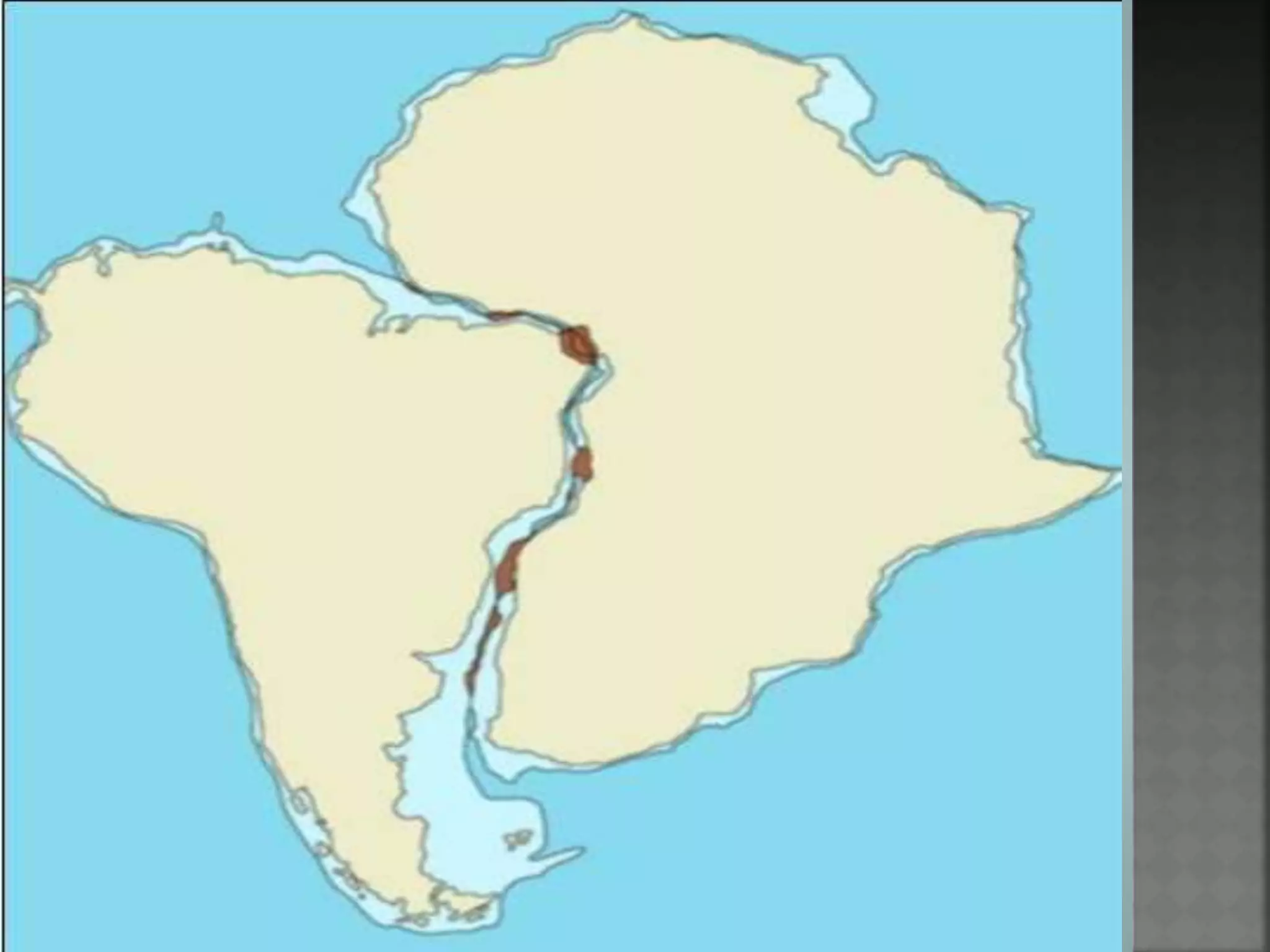
 Inspection of any global
map will show that the
edges of continents such
as South America and
Africa appear to match.
 This apparent jigsaw-like
fit is no coincidence - the
two continents split
apart from one
landmass during the
Cretaceous period, and
oceanic crust developed
in between them.
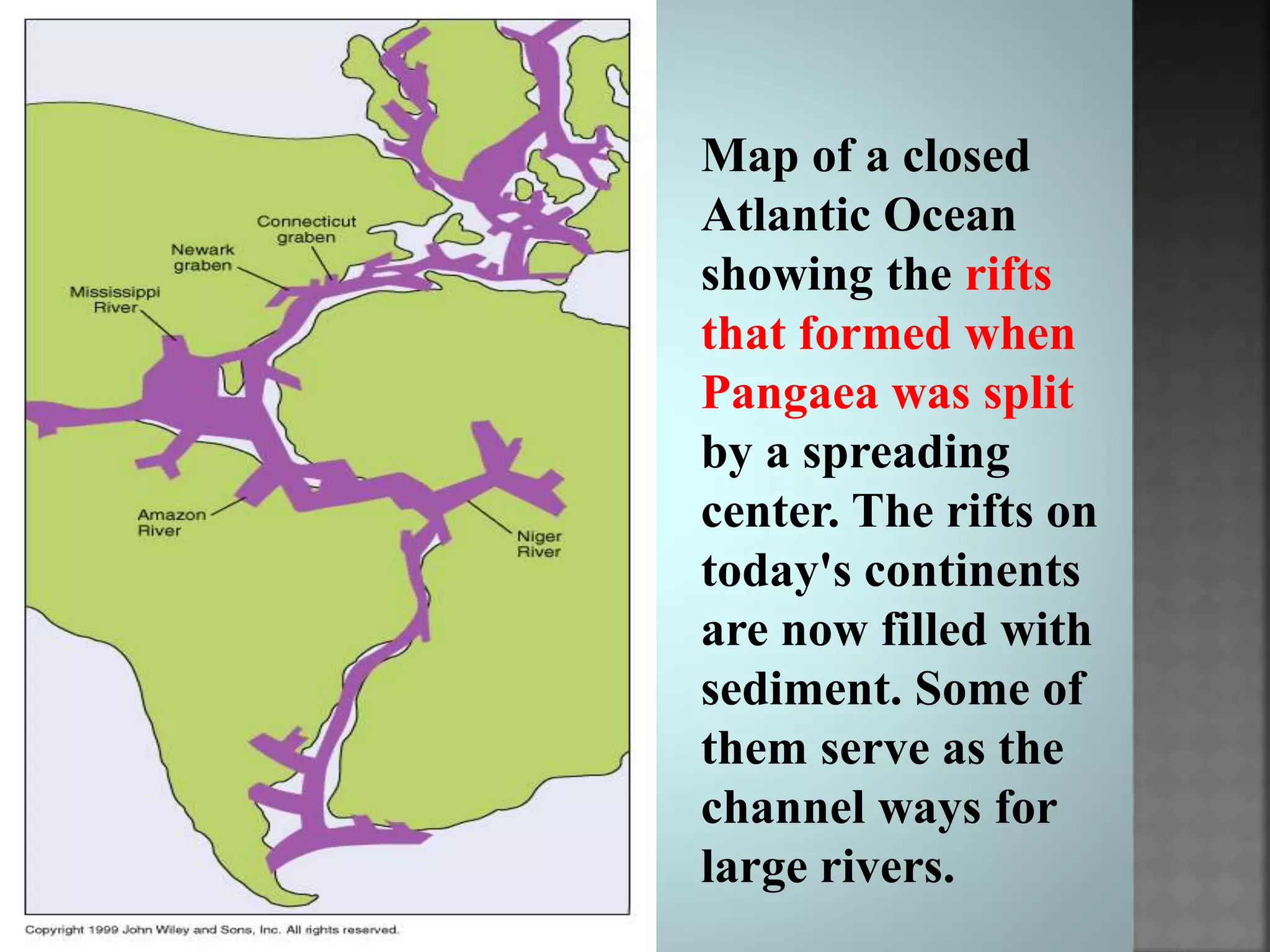
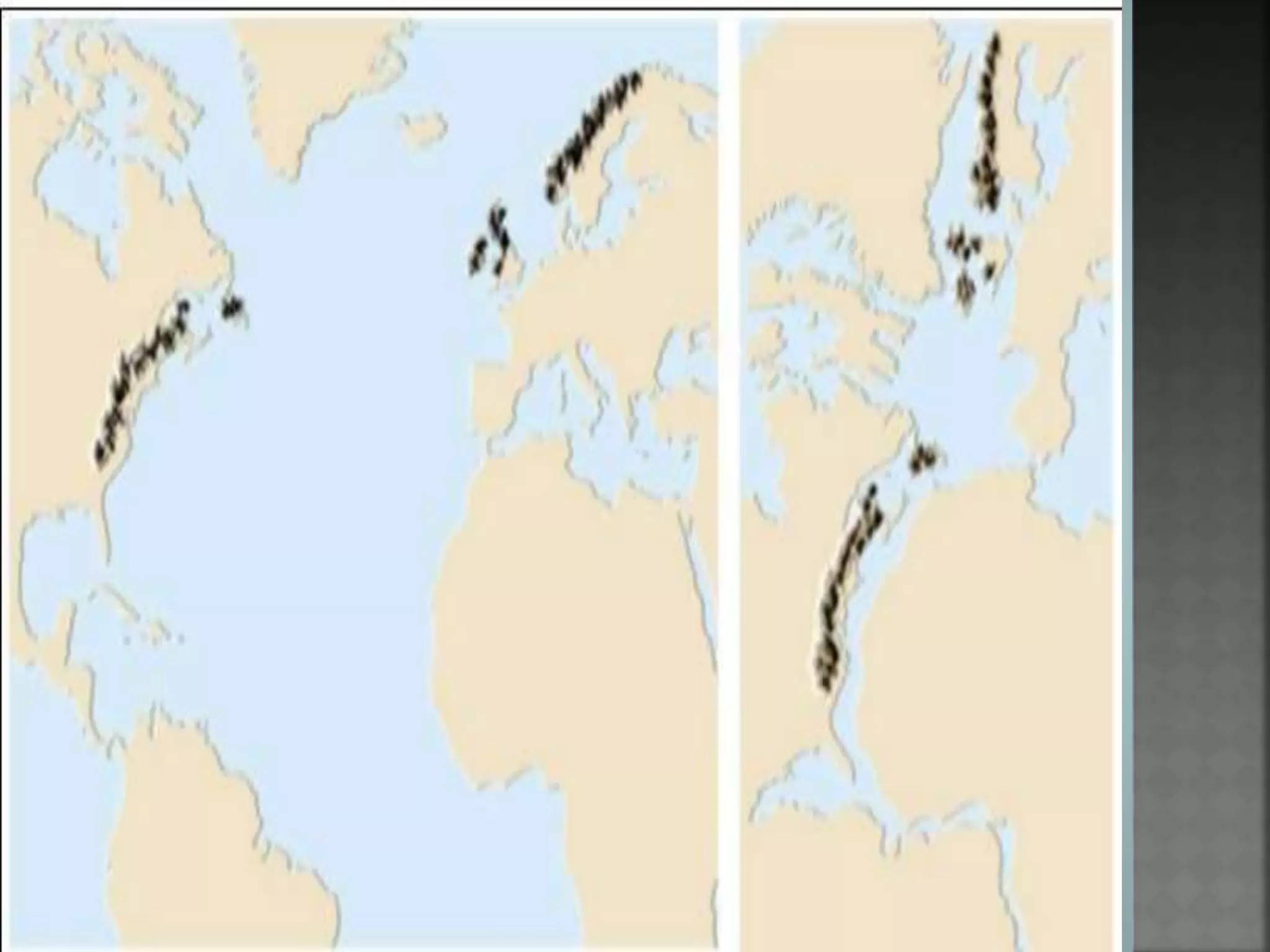
Map of a closed
Atlantic Ocean
showing the rifts
that formed when
Pangaea was split
by a spreading
center. The rifts on
today's continents
are now filled with
sediment. Some of
them serve as the
channel ways for
large rivers.
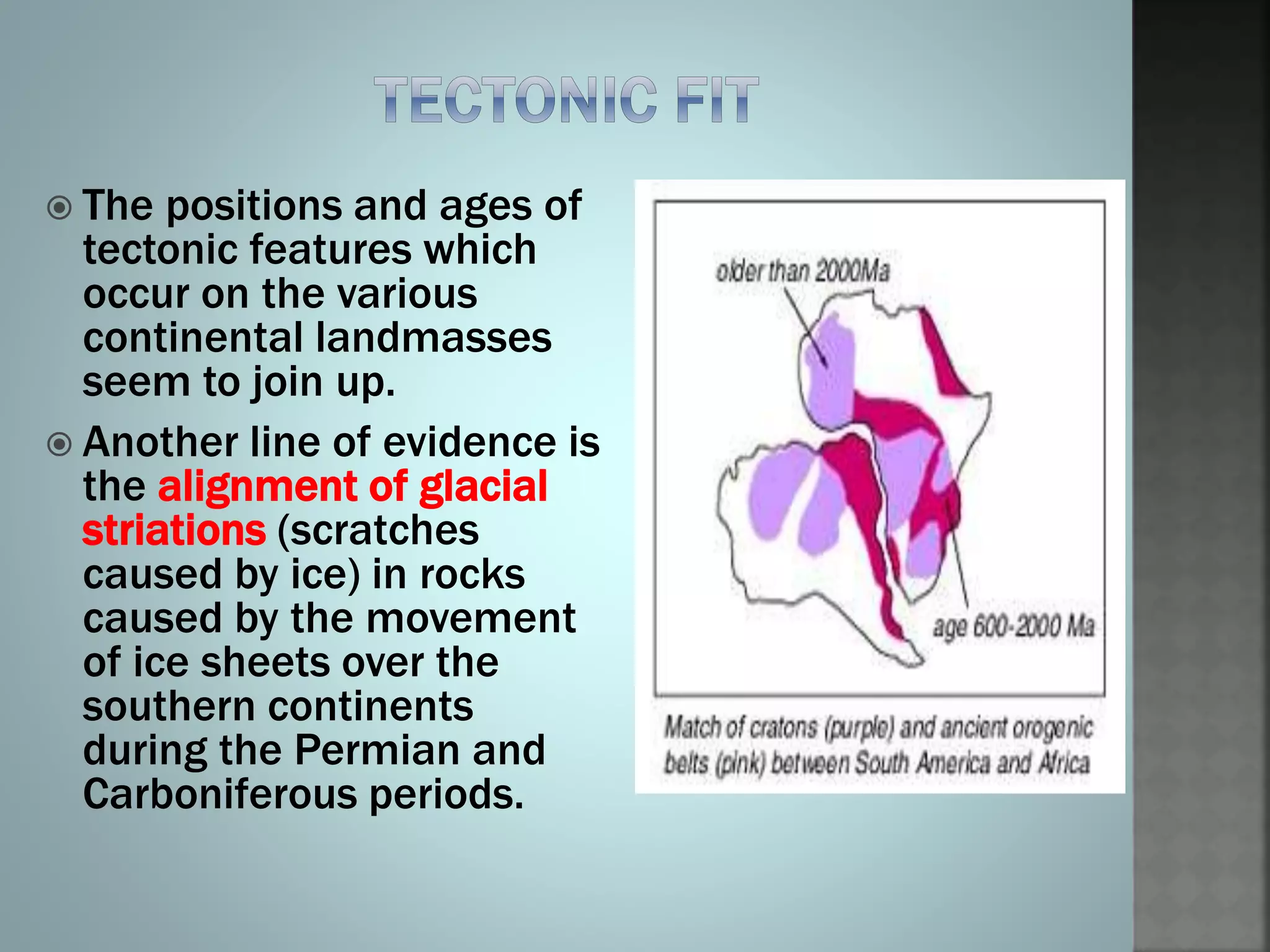
 The positions and ages of
tectonic features which
occur on the various
continental landmasses
seem to join up.
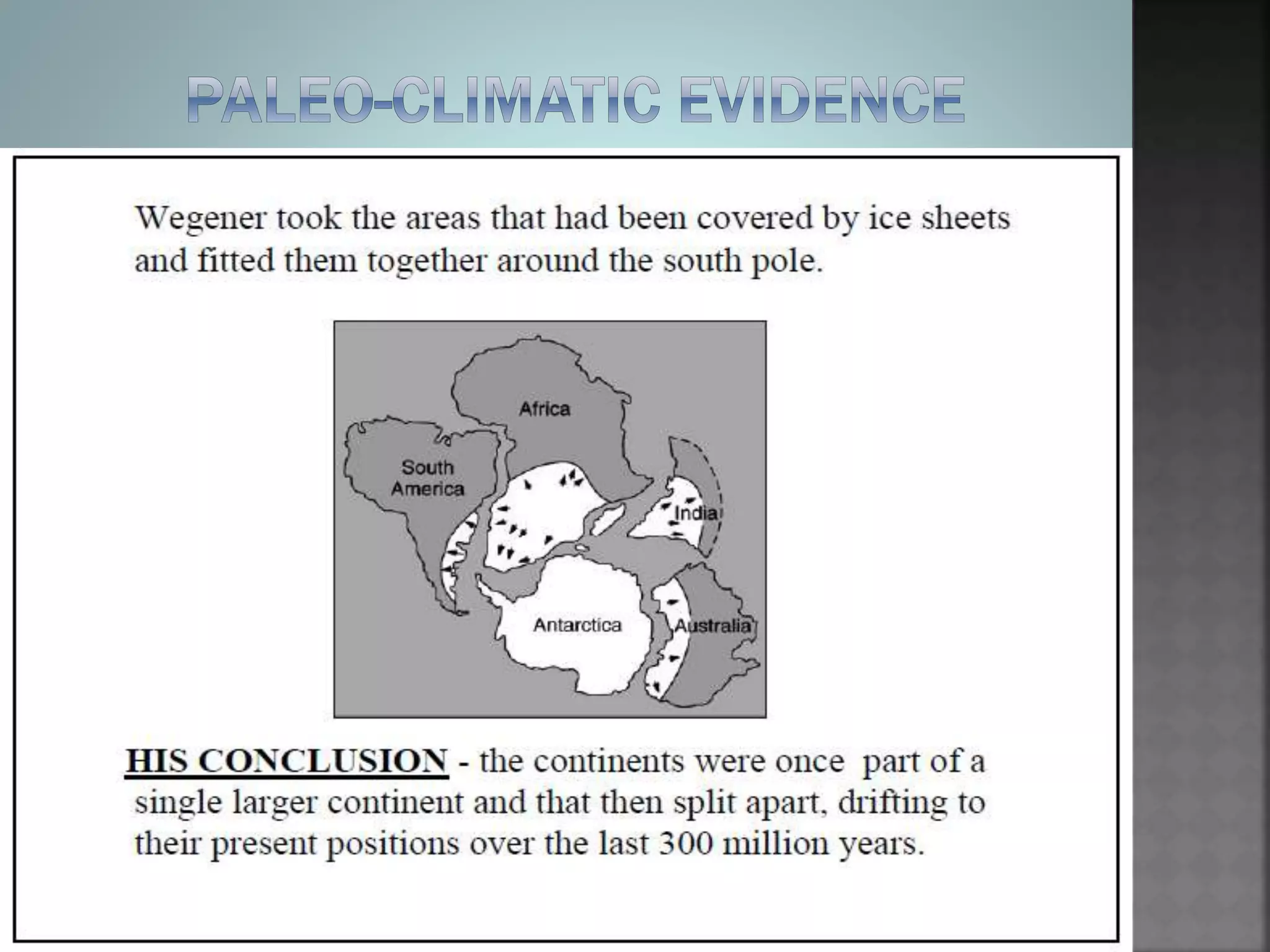
 Another line of evidence is
the alignment of glacial
striations (scratches
caused by ice) in rocks
caused by the movement
of ice sheets over the
southern continents
during the Permian and
Carboniferous periods.
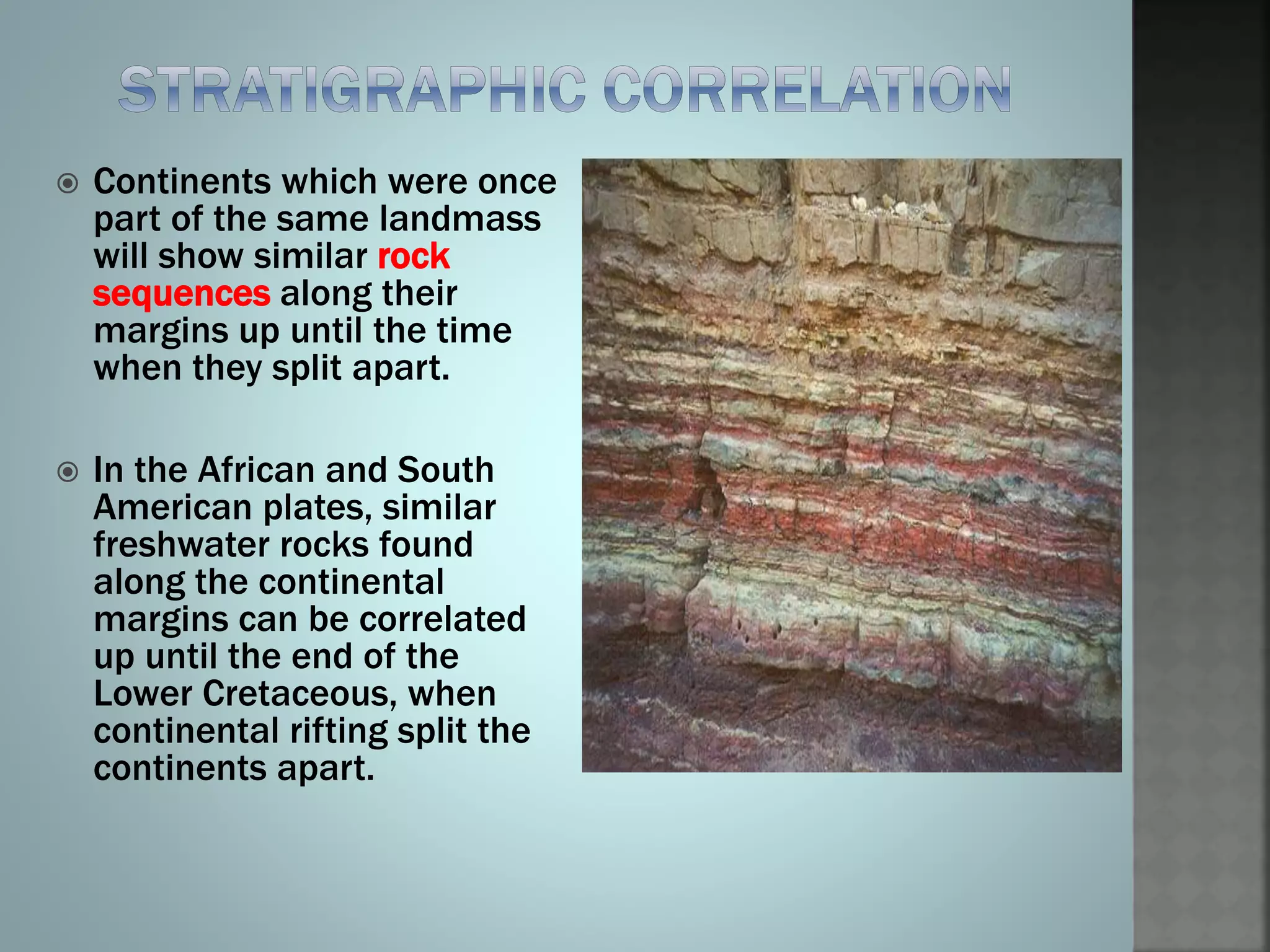
 Continents which were once
part of the same landmass
will show similar rock
sequences along their
margins up until the time
when they split apart.
 In the African and South
American plates, similar
freshwater rocks found
along the continental
margins can be correlated
up until the end of the
Lower Cretaceous, when
continental rifting split the
continents apart.
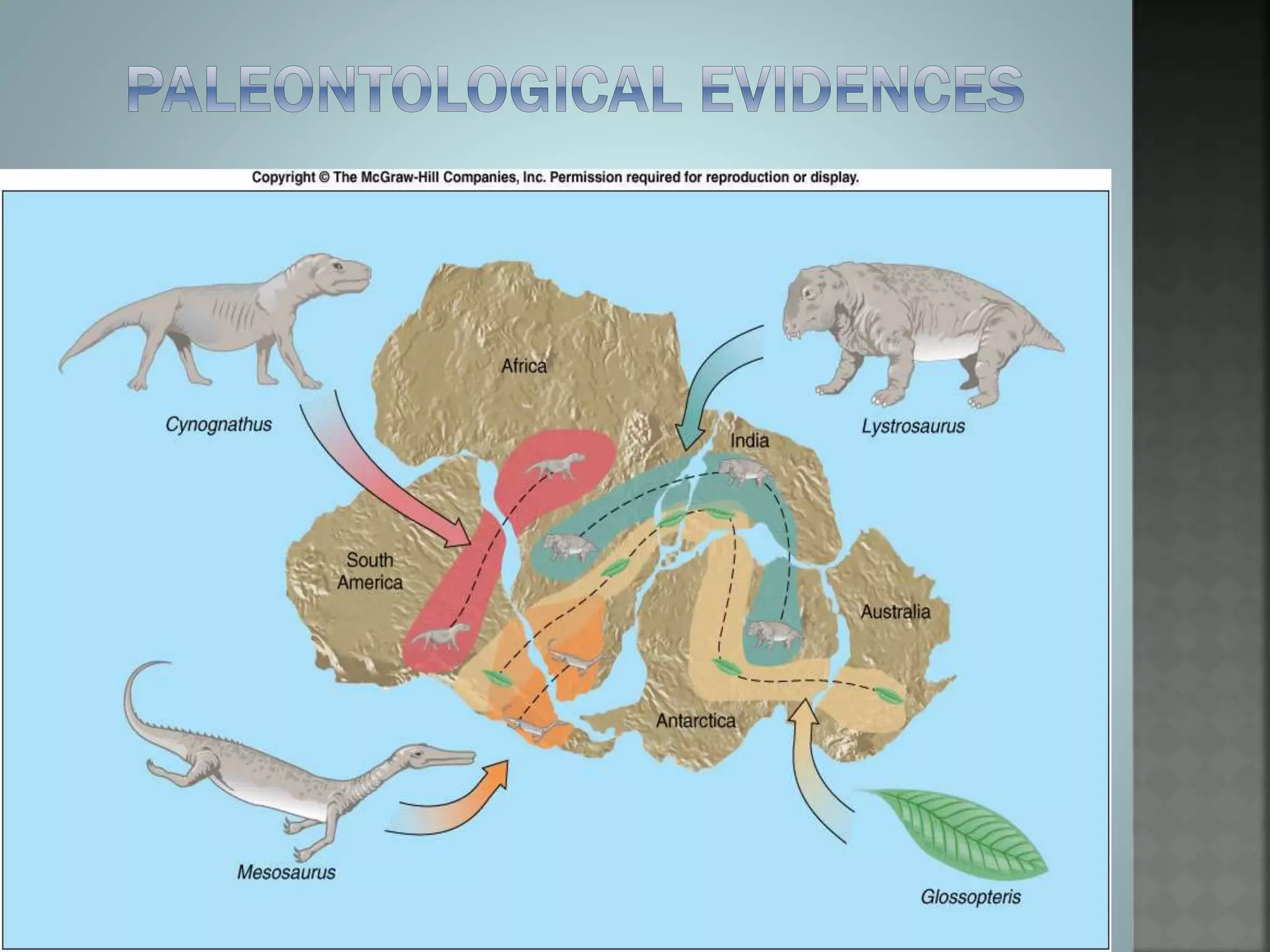
Fossils contained within stratigraphic
sequences which are now located on
different continents can indicate that the
two landmasses were once joined.
Mesosaurus fossils found in early Permian
freshwater shales in both Brazil and
southern Africa
Glossopteris, Cygnonathus, and
Lystrosaurus are among others
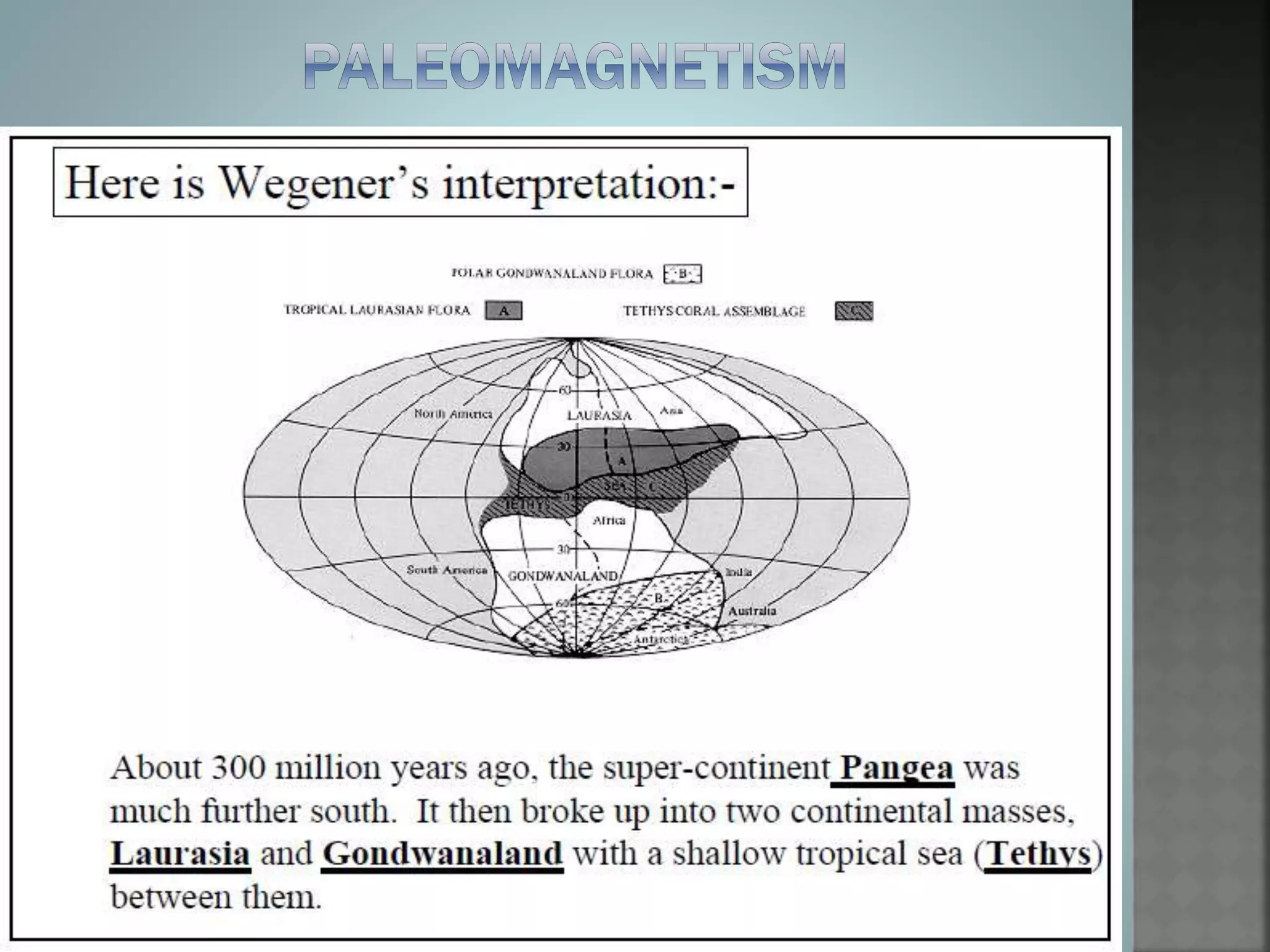
 1950’s: discovery
of ancient rocks
had magnetic
directions and
inclinations that
did not
correspond with
the present
magnetic pole
position.

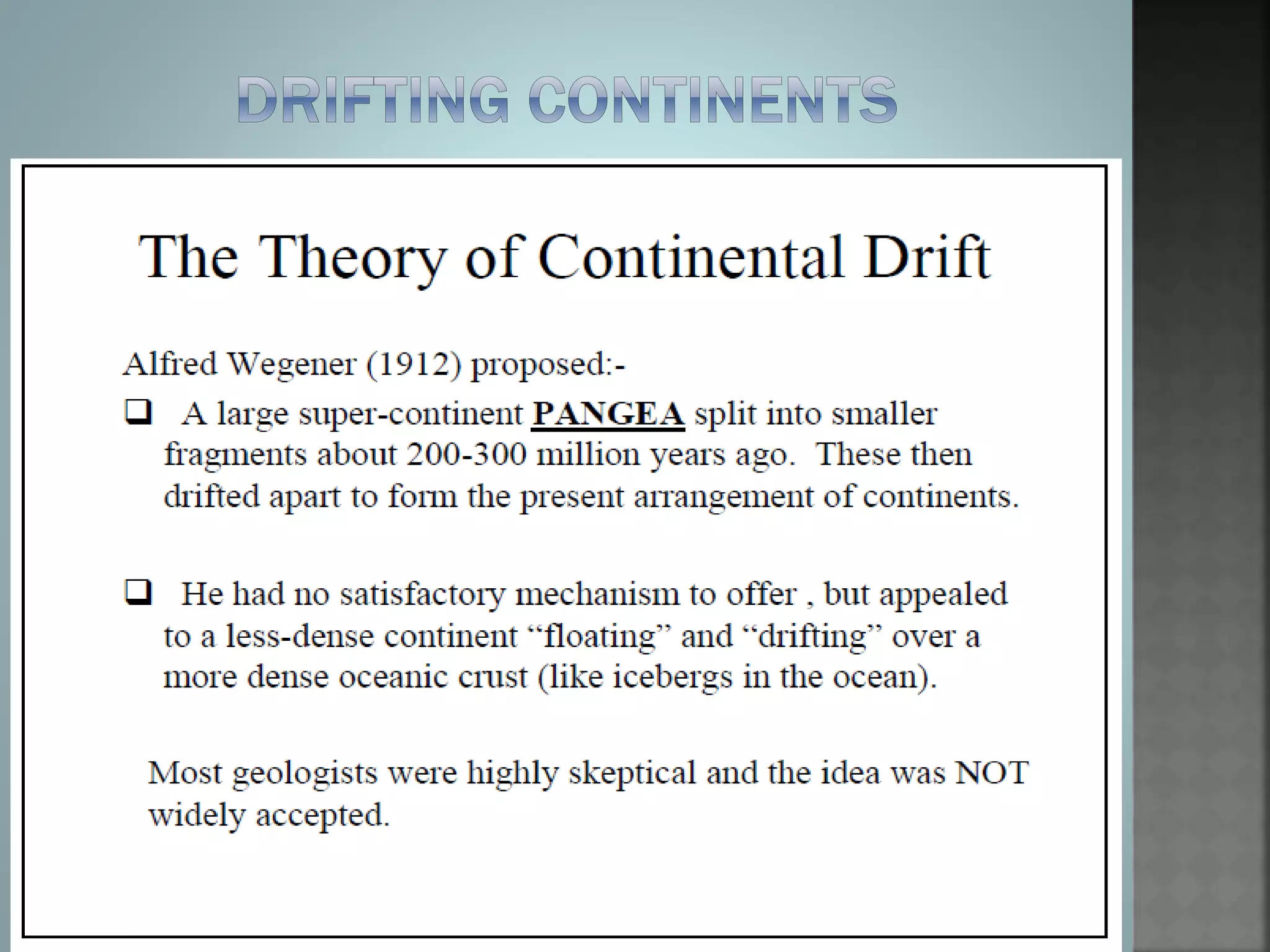
Continental Drift Theory

  • 1.
  • 2.
    LET’S FIT IT! Assemblinga puzzle can reveal a hidden meaning. Procedure:  Choose a page of a magazine with pictures.  Cut the page of a magazine into not more than 20pcs.  Insert the pieces inside the brown envelope.  Trade the envelope with the other groups.  Try to fit the pieces of magazine together.
  • 3.
    What evidence didyou use to put the pieces together? What features of the magazine helped you to connect the pieces perfectly? How do the lines of prints or texts in the help you to confirm that you have reassembled the magazine page? How do your pieces serve as a model of CDT?
  • 4.
    List of dominantspecies of plants and animals found in the continents before and after drifting away from each other photocopy of the seven continents (letter size) world map pair of scissors
  • 5.
    Tell the possibledirection of motion of the continents as they drifted away. Draw fossils of plants and animals as evidences found in the present continents that will help solve the puzzle in the fitting of the drifted continents. Reconstruct and describe Pangaea. Predict what will happen to the world as the continents continuously move.
  • 6.
    Cut carefully thetraces of the seven continents. Sketch the dominant species of plants and animals found in the continents before and after drifting away from each other. Put the cut-outs together. Answer: Q13-16.
  • 7.
    Make sure thatyou put fitting edges of the continents side by side to form the supercontinent Pangaea. Answer: Q17-20 Compare Pangaea with the world map. Now move one continent relative to its current location. Observe carefully the direction of its motion as it assumes its current location and position. Record your observation.
  • 8.
    Do the same procedureto the other continents. Record your observations. Answer: Q21
  • 9.
    Coal deposits havealso been found beneath the ice of Antarctica. But coal only forms in warm swamps. Use Wegener’s theory to explain how coal could be found so near the poles.
  • 10.
    refer to Plate TectonicTheory History PPT
  • 13.
     Continents werenot stationary, but actually moving or drifting away from one another.
  • 14.
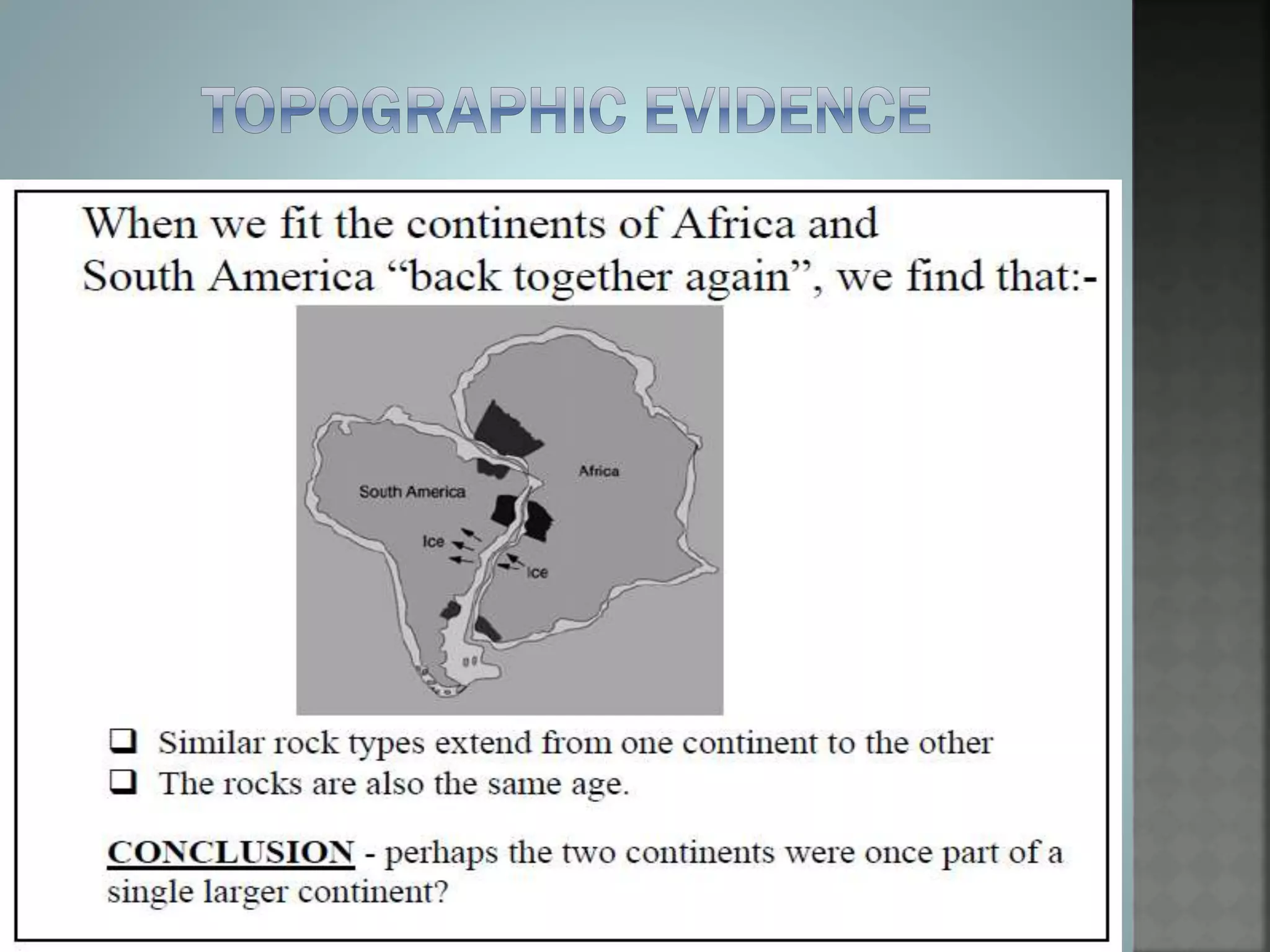
     Inspection ofany global map will show that the edges of continents such as South America and Africa appear to match.  This apparent jigsaw-like fit is no coincidence - the two continents split apart from one landmass during the Cretaceous period, and oceanic crust developed in between them.
  • 18.
    Map of aclosed Atlantic Ocean showing the rifts that formed when Pangaea was split by a spreading center. The rifts on today's continents are now filled with sediment. Some of them serve as the channel ways for large rivers.
  • 19.
     The positionsand ages of tectonic features which occur on the various continental landmasses seem to join up.  Another line of evidence is the alignment of glacial striations (scratches caused by ice) in rocks caused by the movement of ice sheets over the southern continents during the Permian and Carboniferous periods.
  • 20.
     Continents whichwere once part of the same landmass will show similar rock sequences along their margins up until the time when they split apart.  In the African and South American plates, similar freshwater rocks found along the continental margins can be correlated up until the end of the Lower Cretaceous, when continental rifting split the continents apart.
  • 23.
    Fossils contained withinstratigraphic sequences which are now located on different continents can indicate that the two landmasses were once joined. Mesosaurus fossils found in early Permian freshwater shales in both Brazil and southern Africa Glossopteris, Cygnonathus, and Lystrosaurus are among others
  • 32.
     1950’s: discovery ofancient rocks had magnetic directions and inclinations that did not correspond with the present magnetic pole position.