Measures of
Central Tendency
Chapter 4
Homework: 1, 2, 3, 5, 6, 13
Ignore parts with eye-ball estimation
3 essential characteristics
of distributions
 Conveys most info for most distributions
1. Where is middle of distribution?
2. How wide is distribution?
3. What is shape of the distribution? ~
Central Tendency
 Middle of distribution
 measures: mode, median, mean
 Portable & compact communication
 further simplification of data
 lose more detail
 Which most appropriate?
 Depends on level of measurement
 intent of your communication ~
Mode
 Most frequently occurring value
 appropriate for any measurement
level
nominal, ordinal, interval/ratio ~
Computing the Mode
 Frequency distribution
 most frequently occurring value
 Grouped frequency distribution
 find interval with highest frequency
 report midpoint
e.g., interval: 150 to 160
report: (160 + 150)/2 = 155
 Methods may produce different
results ~
Frequency Distribution
X f
19 1
18 2
16 3
15 3
14 5
13 2
12 6
11 7
10 3
9 6
8 5
7 3
6 2
5 2
50
mode = 11
Computing the Mode
Grouped
Frequency
Distribution
X f
19-20 1
17-18 2
15-16 6
13-14 7
11-12 13
9-10 9
7- 8 8
5- 6 4
50
mode =
Grouped
Frequency
Distribution
X f
81-100 1
61-80 3
41-60 4
21-40 9
1-20 2
mode =
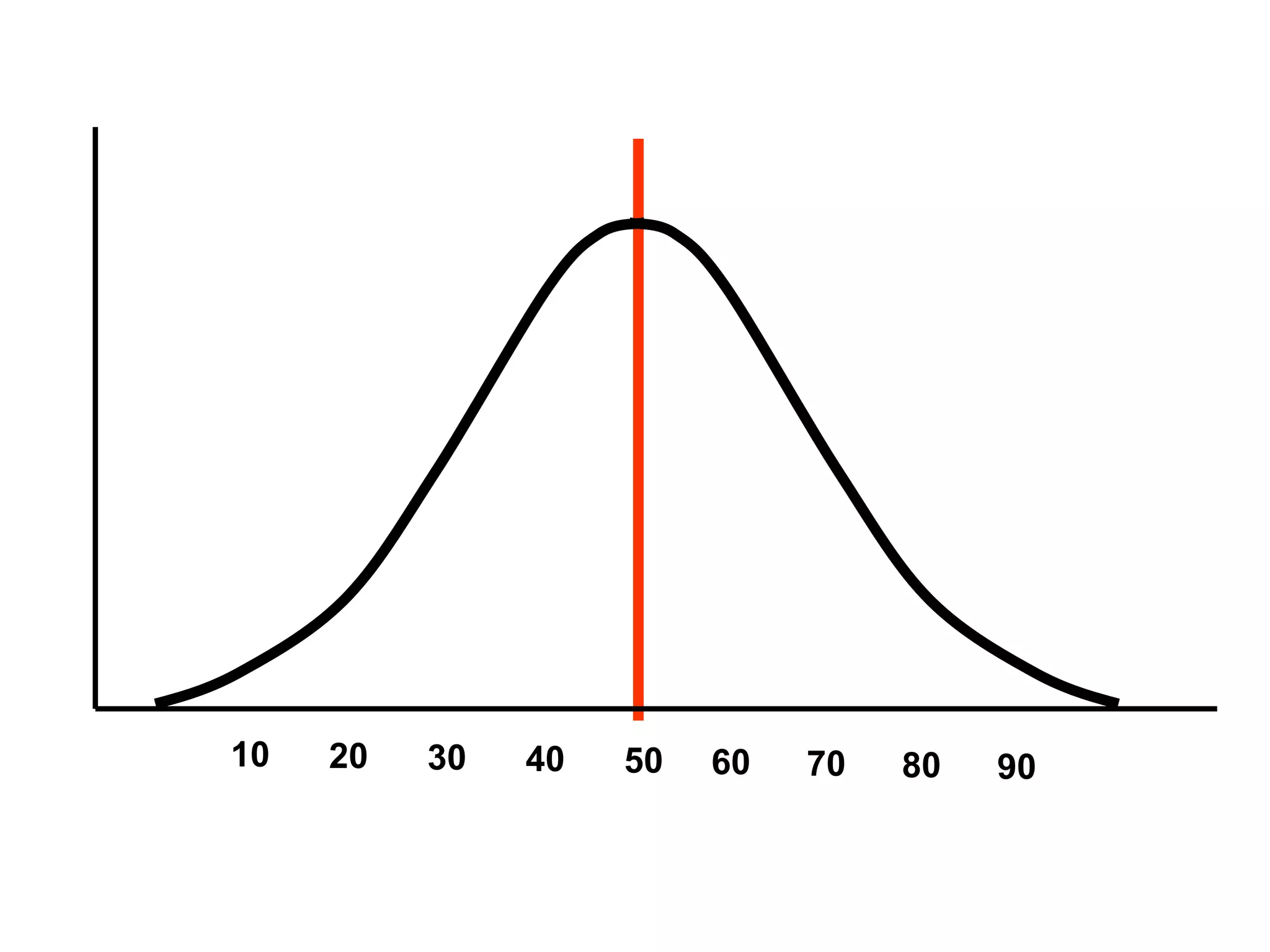
Median
 Midpoint of a data set
 values ½ smaller, ½ larger
 appropriate for ordinal & interval/ratio
NOT nominal ~
10 20 30 40 50 60 70 80 90
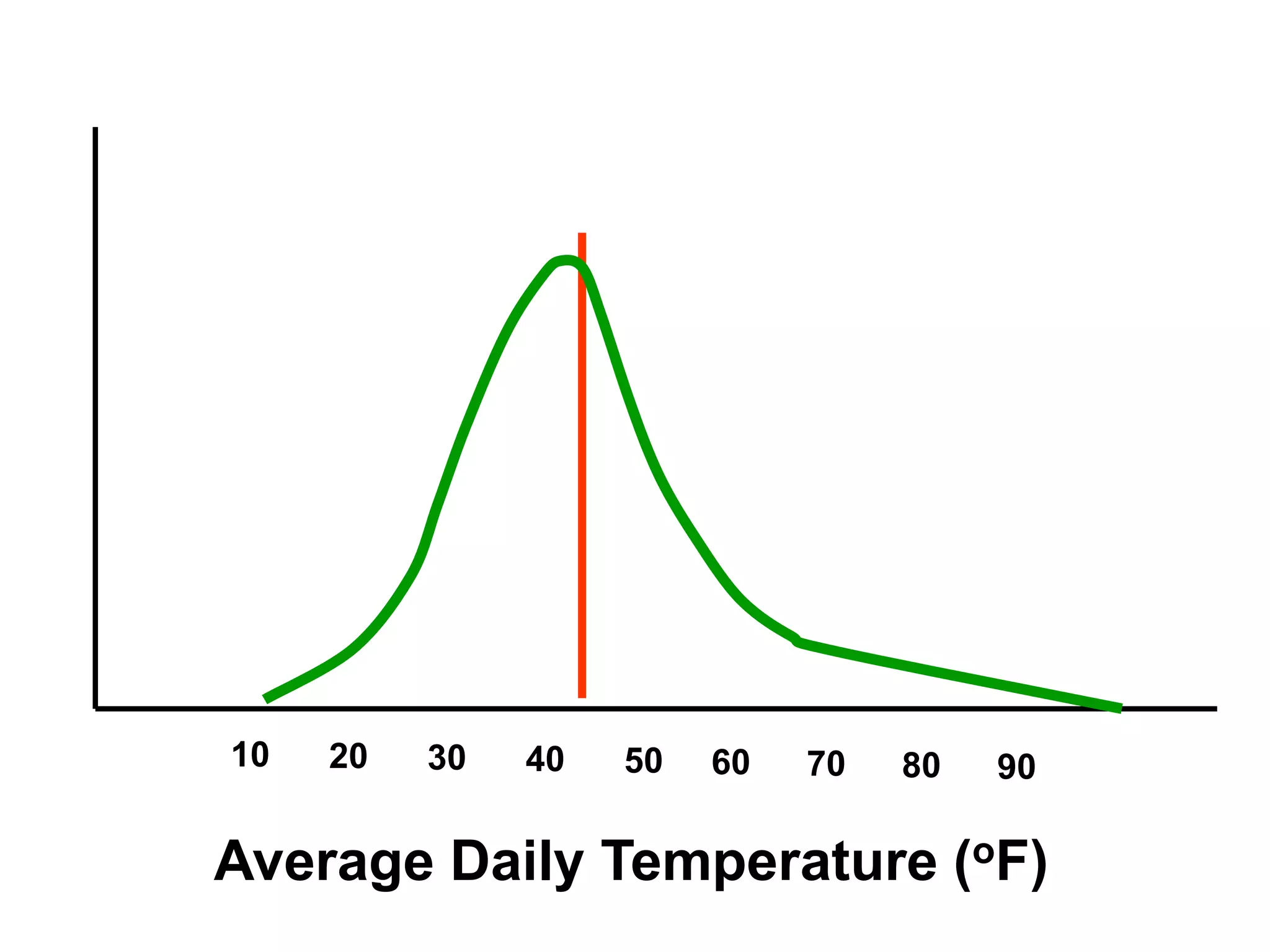
10 20 30 40 50 60 70 80 90
Average Daily Temperature (oF)
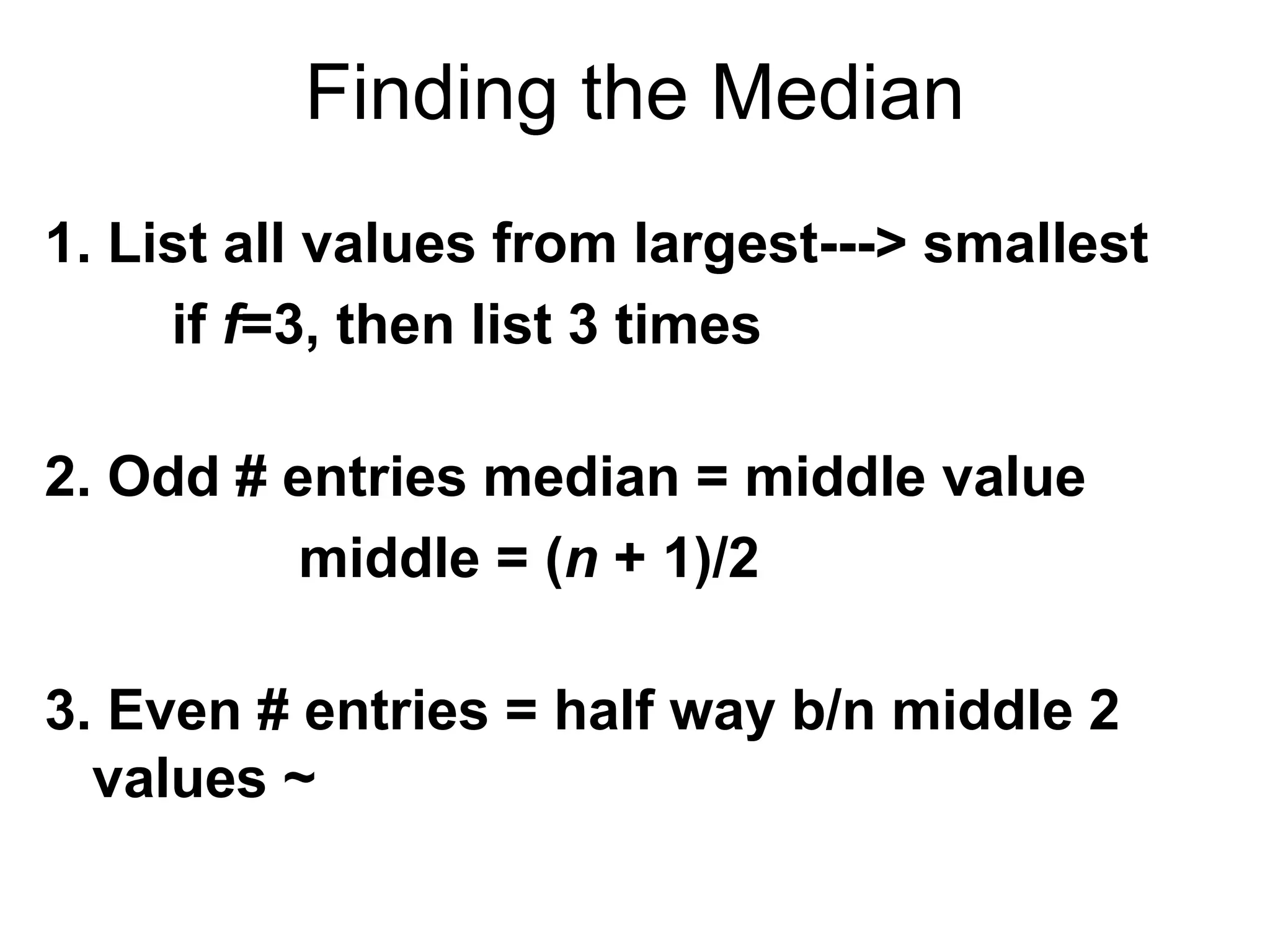
Finding the Median
1. List all values from largest---> smallest
if f=3, then list 3 times
2. Odd # entries median = middle value
middle = (n + 1)/2
3. Even # entries = half way b/n middle 2
values ~
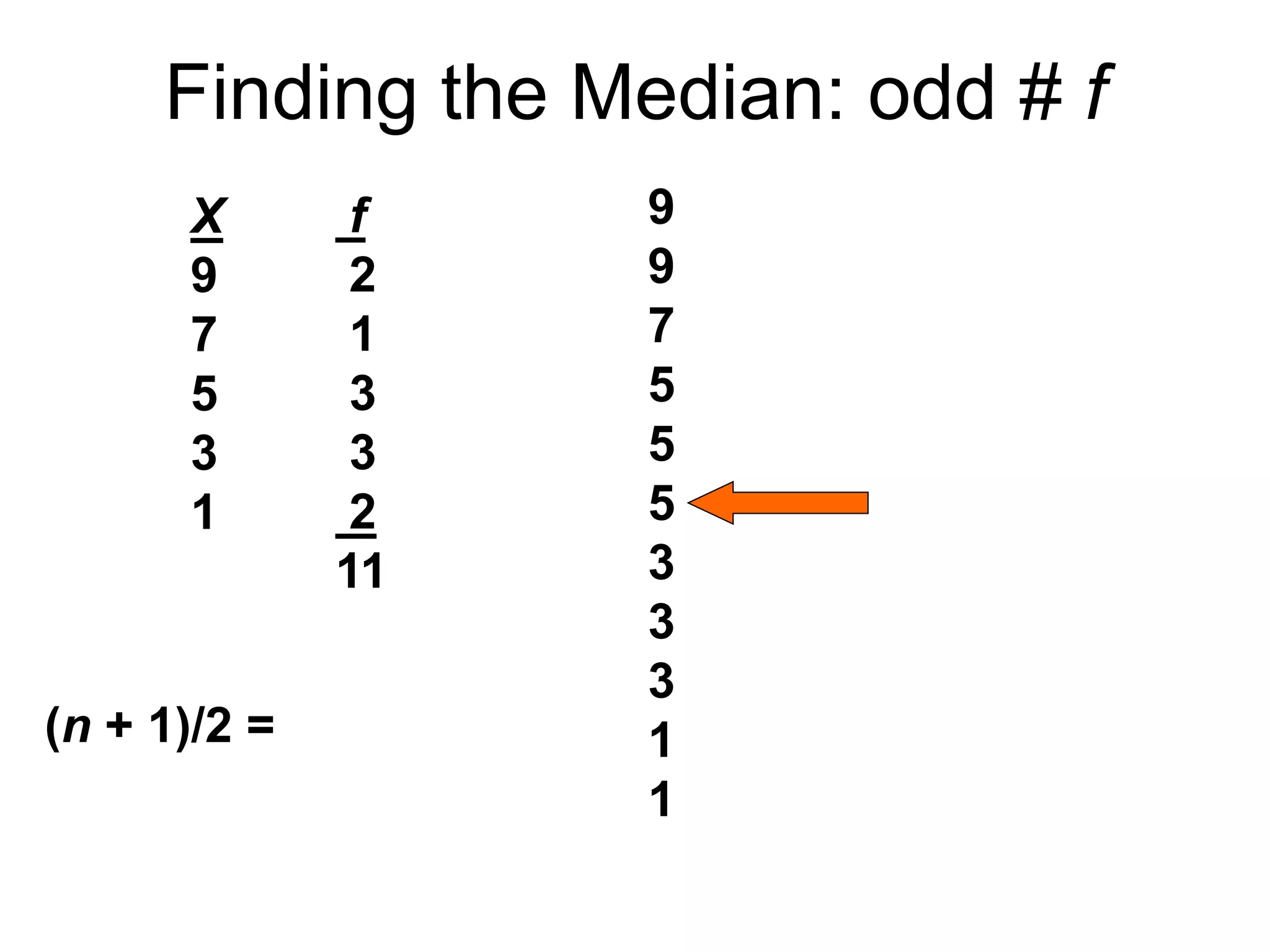
Finding the Median: odd # f
X
9
7
5
3
1
f
2
1
3
3
2
11
9
9
7
5
5
5
3
3
3
1
1
(n + 1)/2 =
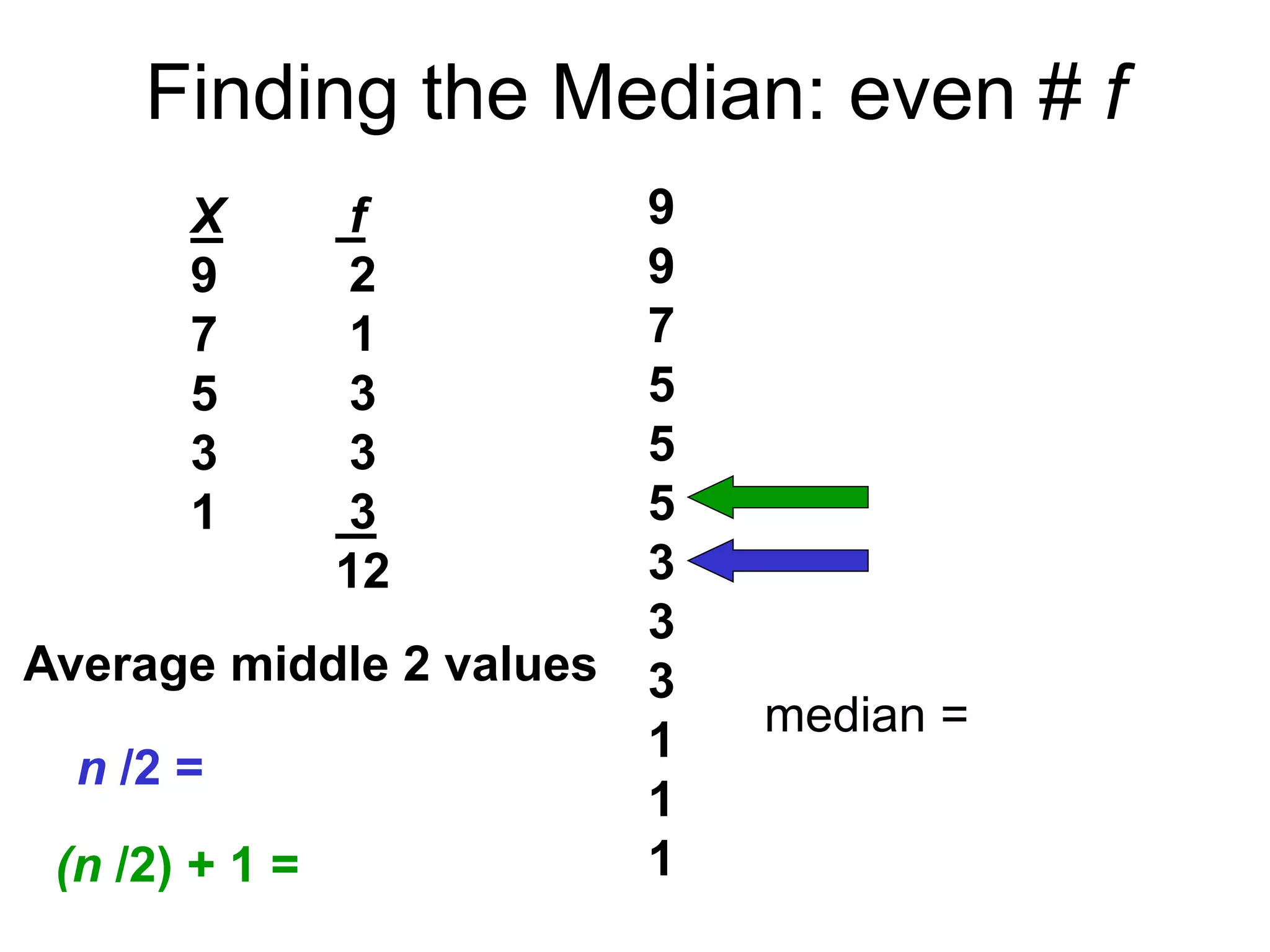
Finding the Median: even # f
X
9
7
5
3
1
f
2
1
3
3
3
12
9
9
7
5
5
5
3
3
3
1
1
1
n /2 =
(n /2) + 1 =
median =
Average middle 2 values
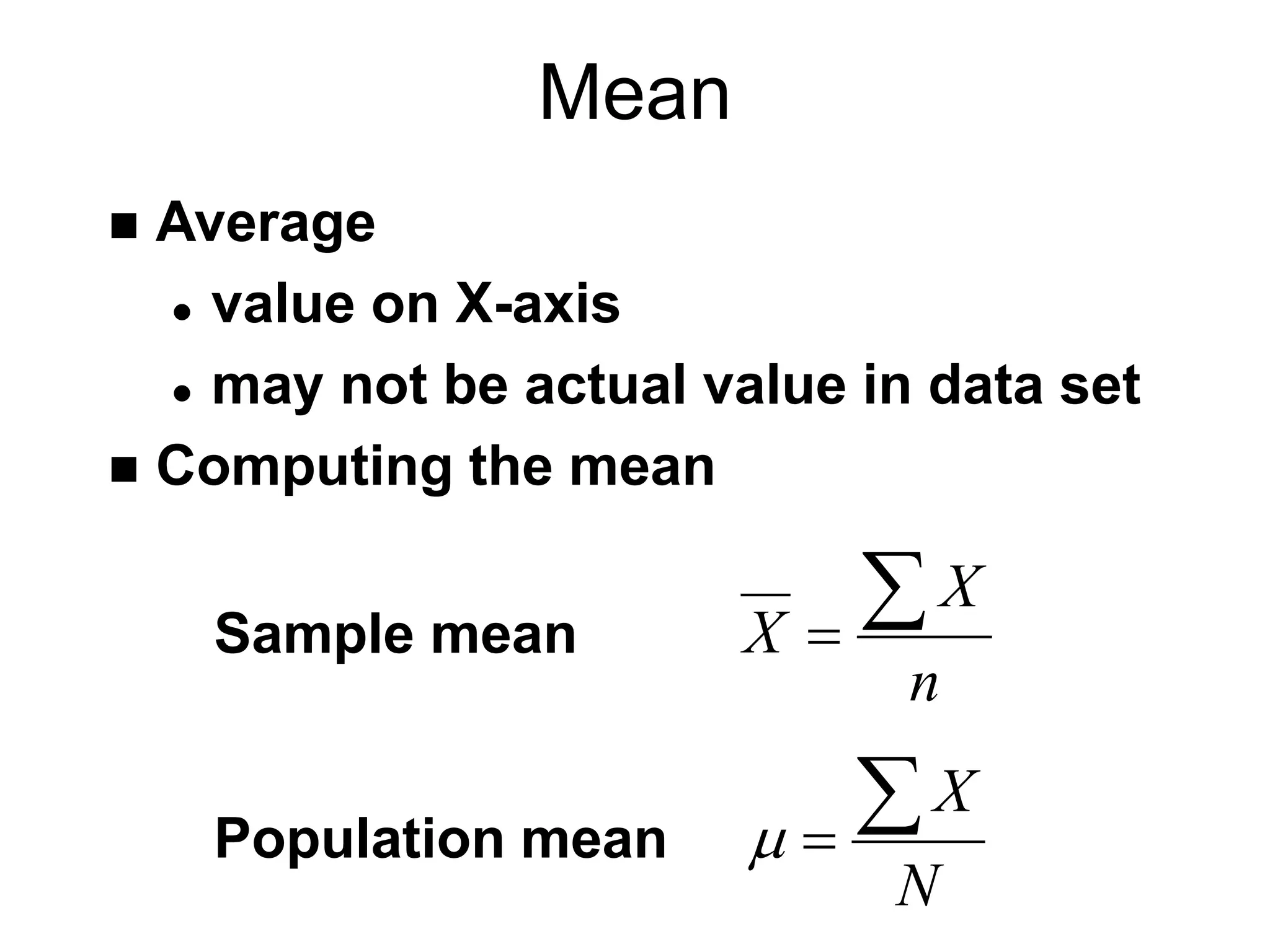
Mean
 Average
 value on X-axis
 may not be actual value in data set
 Computing the mean
Sample mean
n
X
X

Population mean
N
X
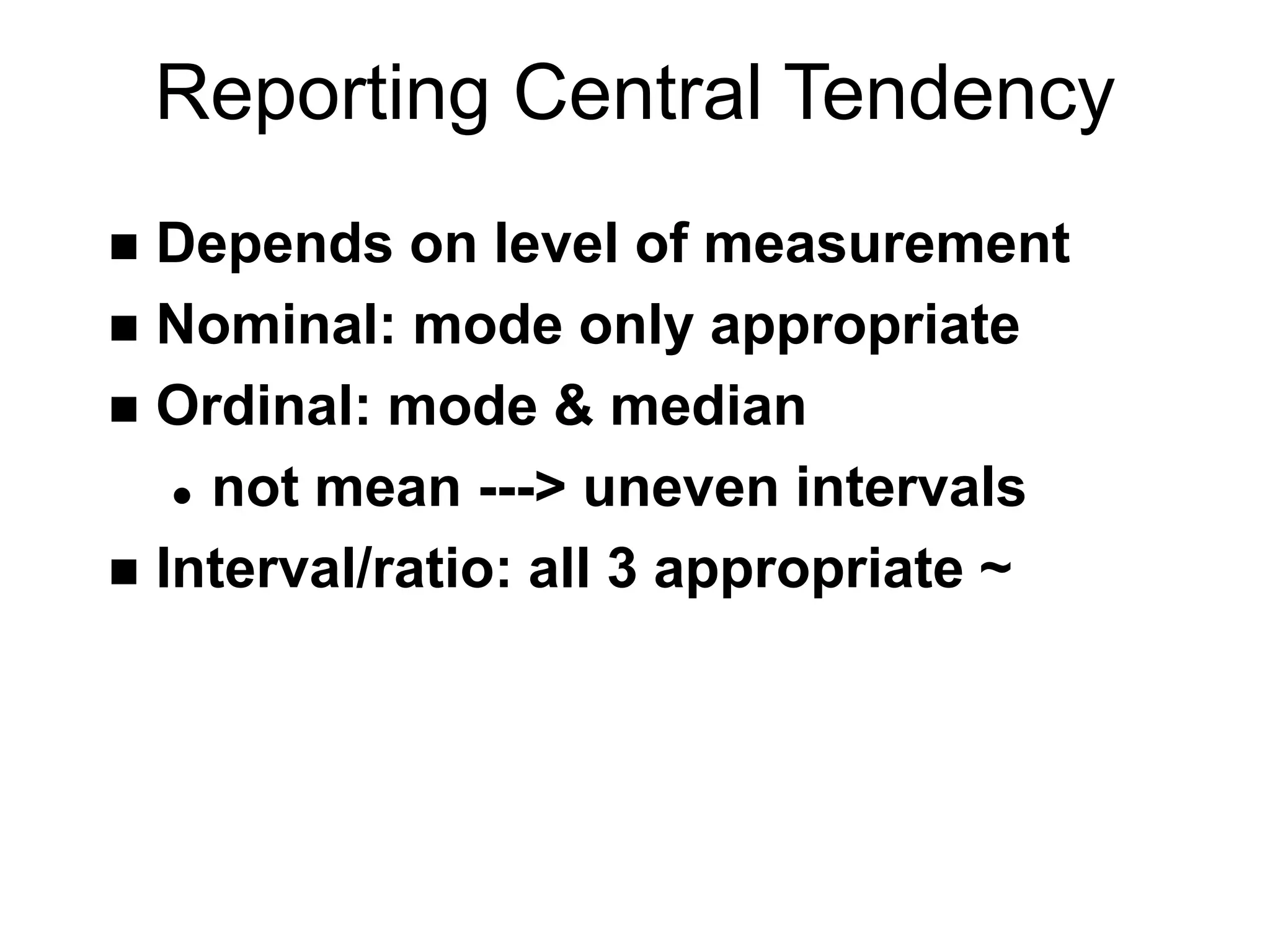
Reporting Central Tendency
 Depends on level of measurement
 Nominal: mode only appropriate
 Ordinal: mode & median
 not mean ---> uneven intervals
 Interval/ratio: all 3 appropriate ~
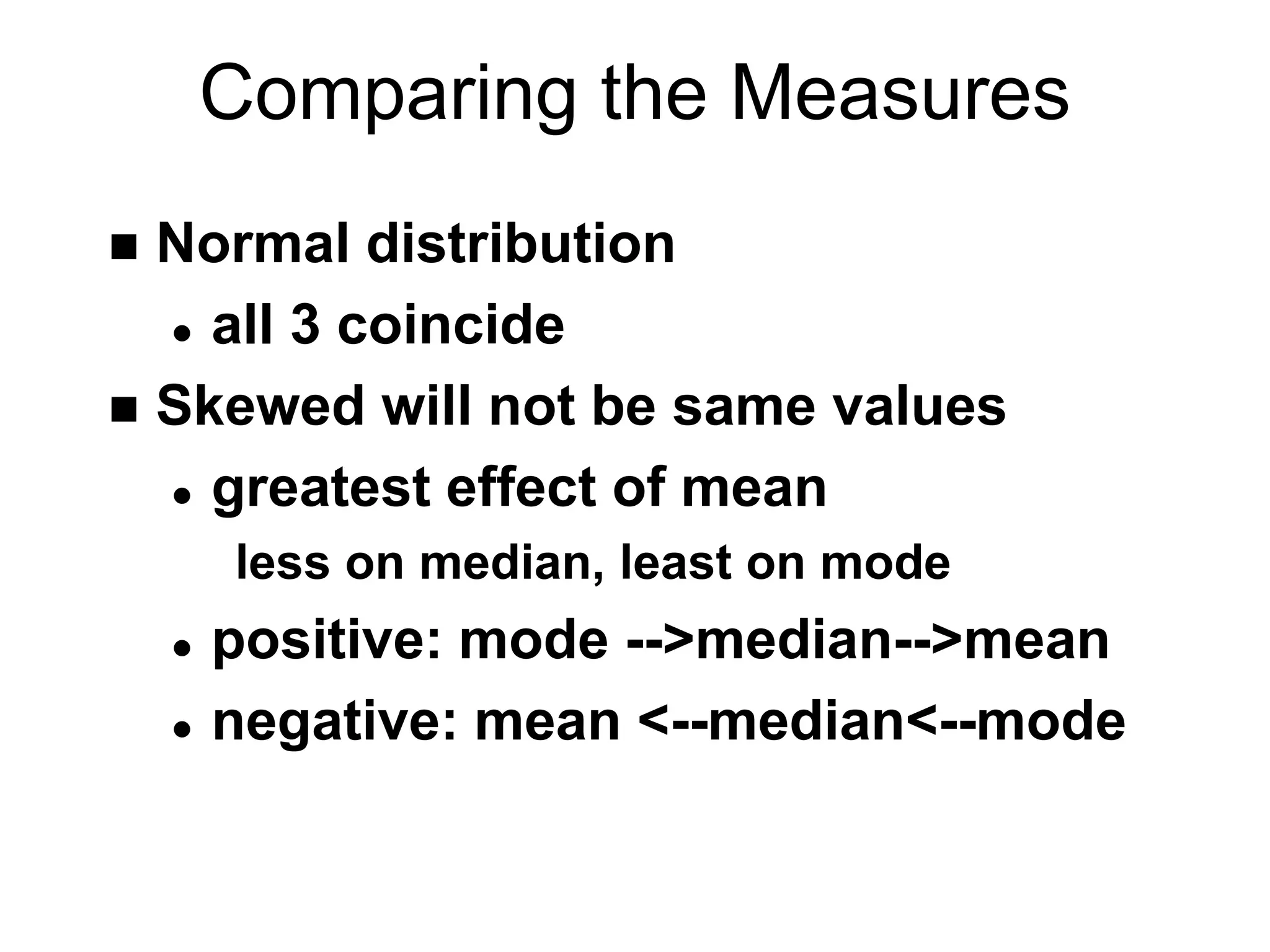
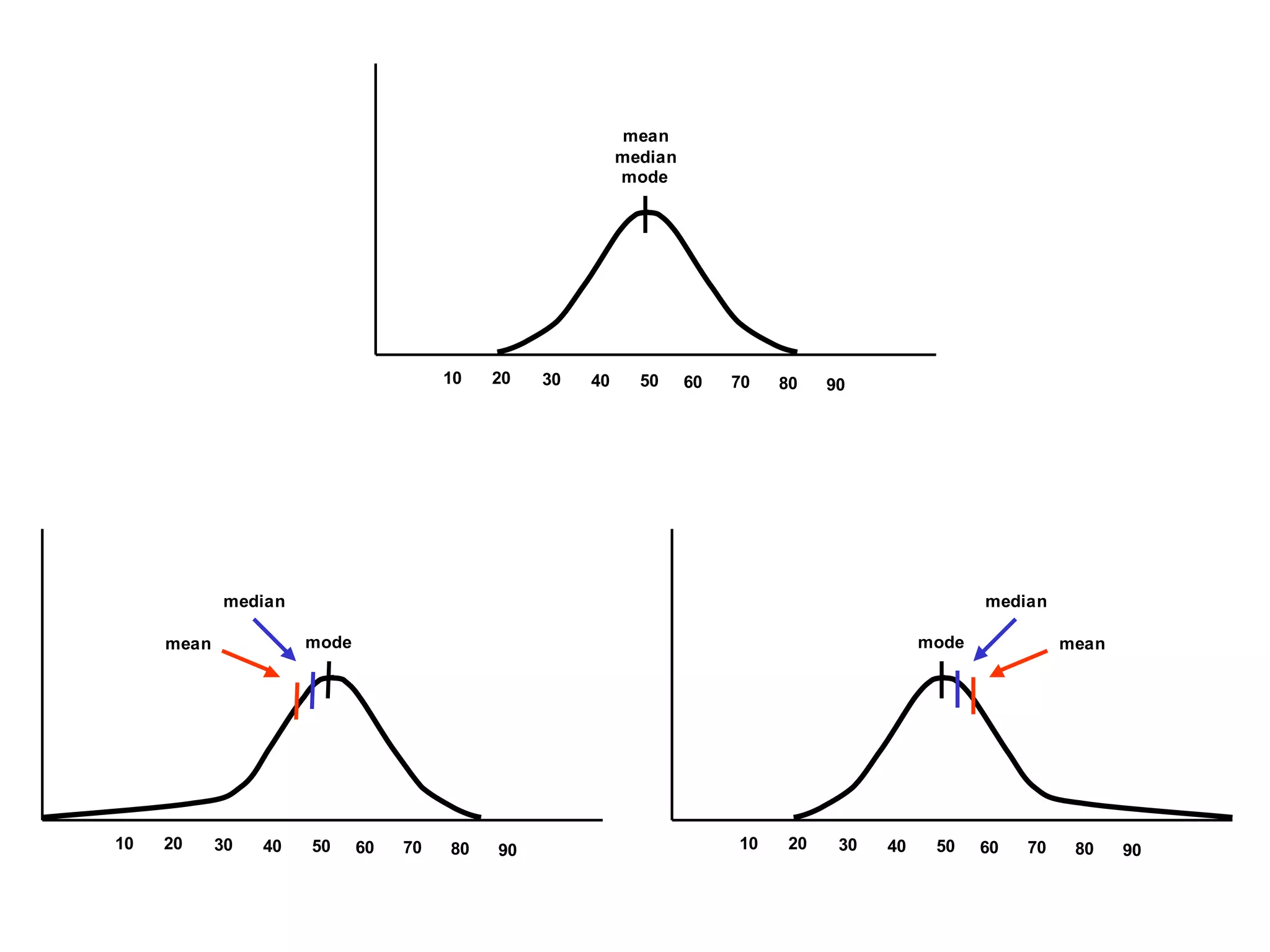
Comparing the Measures
 Normal distribution
 all 3 coincide
 Skewed will not be same values
 greatest effect of mean
less on median, least on mode
 positive: mode -->median-->mean
 negative: mean <--median<--mode
10 20 30 40 50 60 70 80 90
mode
median
mean
10 20 30 40 50 60 70 80 90
mode
median
mean
10 20 30 40 50 60 70 80 90
mode
median
mean

Central tendency discuss 2

  • 1.
    Measures of Central Tendency Chapter4 Homework: 1, 2, 3, 5, 6, 13 Ignore parts with eye-ball estimation
  • 2.
    3 essential characteristics ofdistributions  Conveys most info for most distributions 1. Where is middle of distribution? 2. How wide is distribution? 3. What is shape of the distribution? ~
  • 3.
    Central Tendency  Middleof distribution  measures: mode, median, mean  Portable & compact communication  further simplification of data  lose more detail  Which most appropriate?  Depends on level of measurement  intent of your communication ~
  • 4.
    Mode  Most frequentlyoccurring value  appropriate for any measurement level nominal, ordinal, interval/ratio ~
  • 5.
    Computing the Mode Frequency distribution  most frequently occurring value  Grouped frequency distribution  find interval with highest frequency  report midpoint e.g., interval: 150 to 160 report: (160 + 150)/2 = 155  Methods may produce different results ~
  • 6.
    Frequency Distribution X f 191 18 2 16 3 15 3 14 5 13 2 12 6 11 7 10 3 9 6 8 5 7 3 6 2 5 2 50 mode = 11 Computing the Mode Grouped Frequency Distribution X f 19-20 1 17-18 2 15-16 6 13-14 7 11-12 13 9-10 9 7- 8 8 5- 6 4 50 mode =
  • 7.
  • 8.
    Median  Midpoint ofa data set  values ½ smaller, ½ larger  appropriate for ordinal & interval/ratio NOT nominal ~
  • 9.
    10 20 3040 50 60 70 80 90
  • 10.
    10 20 3040 50 60 70 80 90 Average Daily Temperature (oF)
  • 11.
    Finding the Median 1.List all values from largest---> smallest if f=3, then list 3 times 2. Odd # entries median = middle value middle = (n + 1)/2 3. Even # entries = half way b/n middle 2 values ~
  • 12.
    Finding the Median:odd # f X 9 7 5 3 1 f 2 1 3 3 2 11 9 9 7 5 5 5 3 3 3 1 1 (n + 1)/2 =
  • 13.
    Finding the Median:even # f X 9 7 5 3 1 f 2 1 3 3 3 12 9 9 7 5 5 5 3 3 3 1 1 1 n /2 = (n /2) + 1 = median = Average middle 2 values
  • 14.
    Mean  Average  valueon X-axis  may not be actual value in data set  Computing the mean Sample mean n X X  Population mean N X
  • 15.
    Reporting Central Tendency Depends on level of measurement  Nominal: mode only appropriate  Ordinal: mode & median  not mean ---> uneven intervals  Interval/ratio: all 3 appropriate ~
  • 16.
    Comparing the Measures Normal distribution  all 3 coincide  Skewed will not be same values  greatest effect of mean less on median, least on mode  positive: mode -->median-->mean  negative: mean <--median<--mode
  • 17.
    10 20 3040 50 60 70 80 90 mode median mean 10 20 30 40 50 60 70 80 90 mode median mean 10 20 30 40 50 60 70 80 90 mode median mean