Module 3:Processes and Landforms Along Plate Boundaries
Science Quarter 1
Lesson 1:
Processes and
Landforms Along with
Convergence of Plates
Convergent plate
boundaries
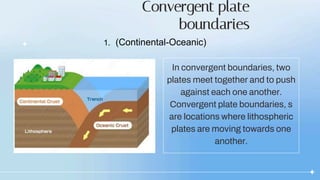
In convergent boundaries, two
plates meet together and to push
against each one another.
Convergent plate boundaries, s
are locations where lithospheric
plates are moving towards one
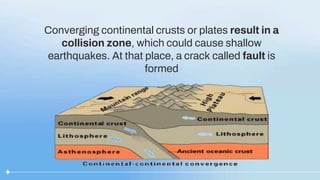
another.
1. (Continental-Oceanic)
Convergent plate
boundaries
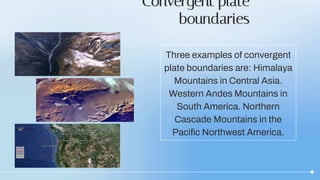
Three examples of convergent
plate boundaries are: Himalaya
Mountains in Central Asia.
Western Andes Mountains in
South America. Northern
Cascade Mountains in the
Pacific Northwest America.
● DRY FOAM
● LESSER DENSITY
● ON THE TROP OF
OCEANIC CRUST
● WET FOAM
● GREATER
DENSITY(HEAVIER)
● STAY BELOW
TRENCH
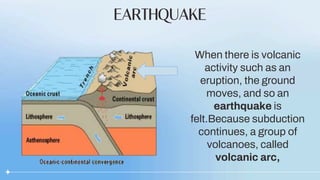
When an oceanic crust converges with a continental crust, a
crack between the crusts underwater, called trench, is formed
SUBDUCTION
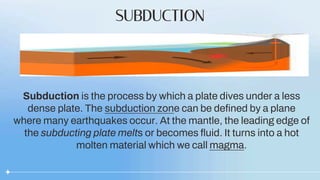
Subduction is the process by which a plate dives under a less
dense plate. The subduction zone can be defined by a plane
where many earthquakes occur. At the mantle, the leading edge of
the subducting plate melts or becomes fluid. It turns into a hot
molten material which we call magma.
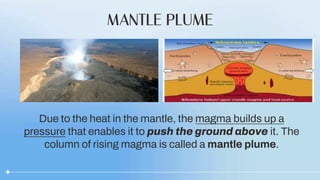
MANTLE PLUME
Due to the heat in the mantle, the magma builds up a
pressure that enables it to push the ground above it. The
column of rising magma is called a mantle plume.
EARTHQUAKE
When there is volcanic
activity such as an
eruption, the ground
moves, and so an
earthquake is
felt.Because subduction
continues, a group of
volcanoes, called
volcanic arc,
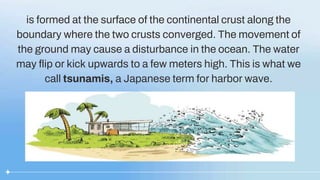
is formed at the surface of the continental crust along the
boundary where the two crusts converged. The movement of
the ground may cause a disturbance in the ocean. The water
may flip or kick upwards to a few meters high. This is what we
call tsunamis, a Japanese term for harbor wave.
01
There are three types of Convergent Boundaries:
(Oceanic-Oceanic)
02
(Continental-Oceanic)
03
(Continental-Continental)
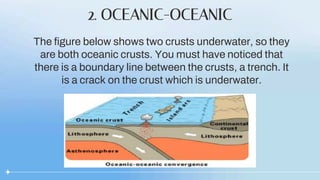
2. OCEANIC-OCEANIC
The figure below shows two crusts underwater, so they
are both oceanic crusts. You must have noticed that
there is a boundary line between the crusts, a trench. It
is a crack on the crust which is underwater.
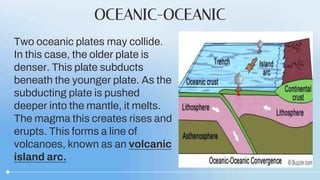
OCEANIC-OCEANIC
Two oceanic plates may collide.
In this case, the older plate is
denser. This plate subducts
beneath the younger plate. As the
subducting plate is pushed
deeper into the mantle, it melts.
The magma this creates rises and
erupts. This forms a line of
volcanoes, known as an volcanic
island arc.
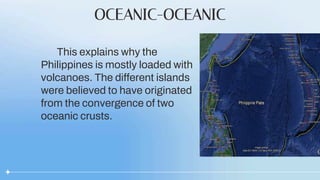
OCEANIC-OCEANIC
This explains why the
Philippines is mostly loaded with
volcanoes. The different islands
were believed to have originated
from the convergence of two
oceanic crusts.
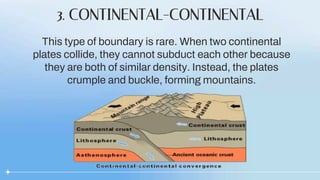
3. CONTINENTAL-CONTINENTAL
This type of boundary is rare. When two continental
plates collide, they cannot subduct each other because
they are both of similar density. Instead, the plates
crumple and buckle, forming mountains.
Converging continental crusts or plates result in a
collision zone, which could cause shallow
earthquakes. At that place, a crack called fault is
formed
The impact of convergence plates on the
Earth's geology and environment is
significant and wide-ranging. Convergence
plates play a crucial role in shaping the
planet's surface and driving various
geological processes.
Q & A:
1. What are the three types of convergent plate boundary?
-
-
-
1. What is the term used when a crack is made by collision of 2 continental
crust?
2. A boundary line between the crusts, a _____. It is a crack on the crust which is
underwater.
3. When two oceanic plates converge, the denser plate subducts. Once its
leading edge reaches the mantle, it melts into a magma, builds up a pressure
that makes it push the ground above it, forming a ______.
● https://depedtambayan.net/wp-content/uploads/2021/10/Science10_q1_mod3_processes-an
● https://flexbooks.ck12.org/cbook/ck-12-middle-school-earth-science-flexbook-
2.0/section/5.15/primary/lesson/continent-continent-convergent-plate-boundaries-ms-es/
● https://oceanexplorer.noaa.gov/facts/tectonic-features.html
● https://stock.adobe.com/ph/images/continental-crust-and-oceanic-crust-3-dimensions-view-
vector-illustration/287872031
Resources
- GIALOLO
- TIMON
- BRETANIA
- OLVIDO
- ASEJO
- GASPE
Group 5 MEMBERS:
CREDITS: This presentation template was
created by Slidesgo, and includes icons by
Flaticon, and infographics & images by Freepik
Thanks!

Science10-Quarter-1-Module-3-Lesson-1_-Processes-and-Landforms-Along-with-Convergence-of-Plates.pptx

  • 1.
    Module 3:Processes andLandforms Along Plate Boundaries Science Quarter 1 Lesson 1: Processes and Landforms Along with Convergence of Plates
  • 2.
    Convergent plate boundaries In convergentboundaries, two plates meet together and to push against each one another. Convergent plate boundaries, s are locations where lithospheric plates are moving towards one another. 1. (Continental-Oceanic)
  • 3.
    Convergent plate boundaries Three examplesof convergent plate boundaries are: Himalaya Mountains in Central Asia. Western Andes Mountains in South America. Northern Cascade Mountains in the Pacific Northwest America.
  • 4.
    ● DRY FOAM ●LESSER DENSITY ● ON THE TROP OF OCEANIC CRUST ● WET FOAM ● GREATER DENSITY(HEAVIER) ● STAY BELOW
  • 5.
    TRENCH When an oceaniccrust converges with a continental crust, a crack between the crusts underwater, called trench, is formed
  • 6.
    SUBDUCTION Subduction is theprocess by which a plate dives under a less dense plate. The subduction zone can be defined by a plane where many earthquakes occur. At the mantle, the leading edge of the subducting plate melts or becomes fluid. It turns into a hot molten material which we call magma.
  • 7.
    MANTLE PLUME Due tothe heat in the mantle, the magma builds up a pressure that enables it to push the ground above it. The column of rising magma is called a mantle plume.
  • 8.
    EARTHQUAKE When there isvolcanic activity such as an eruption, the ground moves, and so an earthquake is felt.Because subduction continues, a group of volcanoes, called volcanic arc,
  • 9.
    is formed atthe surface of the continental crust along the boundary where the two crusts converged. The movement of the ground may cause a disturbance in the ocean. The water may flip or kick upwards to a few meters high. This is what we call tsunamis, a Japanese term for harbor wave.
  • 10.
    01 There are threetypes of Convergent Boundaries: (Oceanic-Oceanic) 02 (Continental-Oceanic) 03 (Continental-Continental)
  • 11.
    2. OCEANIC-OCEANIC The figurebelow shows two crusts underwater, so they are both oceanic crusts. You must have noticed that there is a boundary line between the crusts, a trench. It is a crack on the crust which is underwater.
  • 12.
    OCEANIC-OCEANIC Two oceanic platesmay collide. In this case, the older plate is denser. This plate subducts beneath the younger plate. As the subducting plate is pushed deeper into the mantle, it melts. The magma this creates rises and erupts. This forms a line of volcanoes, known as an volcanic island arc.
  • 13.
    OCEANIC-OCEANIC This explains whythe Philippines is mostly loaded with volcanoes. The different islands were believed to have originated from the convergence of two oceanic crusts.
  • 14.
    3. CONTINENTAL-CONTINENTAL This typeof boundary is rare. When two continental plates collide, they cannot subduct each other because they are both of similar density. Instead, the plates crumple and buckle, forming mountains.
  • 15.
    Converging continental crustsor plates result in a collision zone, which could cause shallow earthquakes. At that place, a crack called fault is formed
  • 16.
    The impact ofconvergence plates on the Earth's geology and environment is significant and wide-ranging. Convergence plates play a crucial role in shaping the planet's surface and driving various geological processes.
  • 17.
    Q & A: 1.What are the three types of convergent plate boundary? - - - 1. What is the term used when a crack is made by collision of 2 continental crust? 2. A boundary line between the crusts, a _____. It is a crack on the crust which is underwater. 3. When two oceanic plates converge, the denser plate subducts. Once its leading edge reaches the mantle, it melts into a magma, builds up a pressure that makes it push the ground above it, forming a ______.
  • 18.
    ● https://depedtambayan.net/wp-content/uploads/2021/10/Science10_q1_mod3_processes-an ● https://flexbooks.ck12.org/cbook/ck-12-middle-school-earth-science-flexbook- 2.0/section/5.15/primary/lesson/continent-continent-convergent-plate-boundaries-ms-es/ ●https://oceanexplorer.noaa.gov/facts/tectonic-features.html ● https://stock.adobe.com/ph/images/continental-crust-and-oceanic-crust-3-dimensions-view- vector-illustration/287872031 Resources
  • 19.
    - GIALOLO - TIMON -BRETANIA - OLVIDO - ASEJO - GASPE Group 5 MEMBERS:
  • 20.
    CREDITS: This presentationtemplate was created by Slidesgo, and includes icons by Flaticon, and infographics & images by Freepik Thanks!