CONCEPTS & DIMENSIONS OF
LEARNING
DR. MAHESWARI JAIKUMAR
maheswarijaikumar2103@gmail.com
BASICS OF LEARNING
• Learning is defined as “the
acquisition of knowledge or
skills through study,
experience, or being taught”.
• Learning style refers to the
preferred way that one
acquires, processes, and
retains information at the
best.
Basically there are three
dimensions of learning.
1. IDEATIONAL LEARNING.
2. SKILL LEARNING.
3. EMOTIONAL LEARNING.
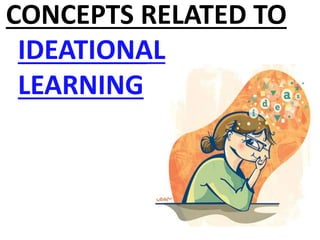
CONCEPTS RELATED TO
IDEATIONAL
LEARNING
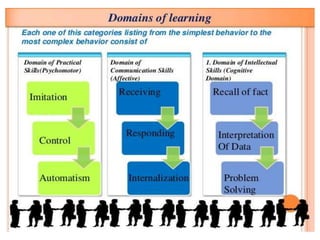
IDEATIONAL LEARNING
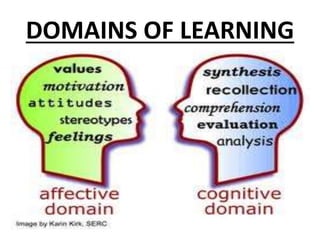
• Ideational learning occurs in
the cognitive domain of the
intellect.
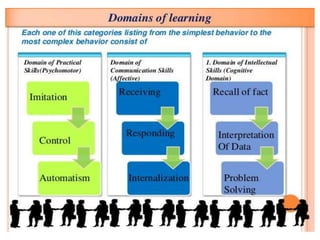
DOMAINS OF LEARNING
• Cognition refers to the
processes wherein an
individual obtains knowledge
about anything-perceiving,
generalizing, evaluating,
imaging thinking, problem
solving & creating.
• The terms used to describe
the components of ideational
learning are knowledge,
understanding-facts concepts,
meanings, generalizations &
principles.
CONCEPT
• Concept is the mental image
or abstraction formed by
generalization from many
experiences with particulars
and make reflective thinking
possible.
• Concept is the fundamental
unit of thought. It is an idea of
what a thing is.
• By means of concept an
individual generalizes &
differentiates one’s
experiences and recognizes
the essential features of
objects, events, situations
etc.,
FACT
Fact refers to “something”
that has happened, or an
event, an actual state of
affairs.
SENSATION
• Sensation is a specific type of
conscious experience having
immediate dependence on
one of the organs of sense.
PERCEPTION
• Refers to mental function by
which various stimuli are
interpreted. Perception has its
origin in sensation.
• Through perception the
incoming sensations are
assimilated as appropriate
images and pertinent
categories of past
experiences. It gives meaning
to the sensation.
PERCEPT
• A percept is a mental
image/picture of something,
immediately present to the
senses, while at the same time
being stored in the memory and
subject to recall in the future in
helping to develop concepts.
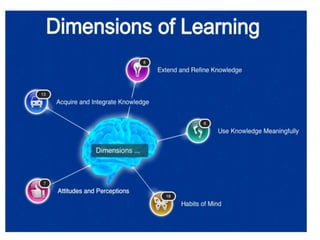
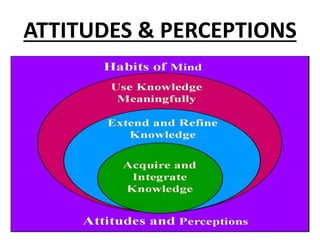
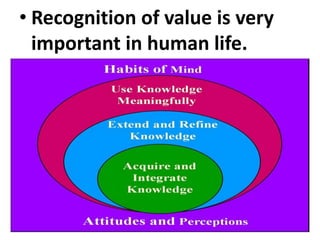
ATTITUDES & PERCEPTIONS
PRINCIPLE
• Principle refers to special form
of generalization that implies
action. It is a statement that
explains a large number of
related phenomenon which
may serve as a guide to
action.
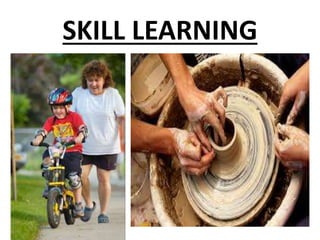
SKILL LEARNING
• Skill learning is carried out in
the connative or psychomotor
domain. A skill is defined as ‘
a refined pattern’ or
movement or performance
based upon demands of a
situation.
• Skill is the sum total result of
progressive attempts to reach
a certain goal in the most
effective way possible with
the aim of a goal to be
achieved.
• The development of a skill
includes FORMATION OF A
SKILL & EXECUTION OF A
SKILL.
FORMATION OF SKILL
• A skill can be acquired by
following means:
1. Listening to directions &
explanations.
2. Reading a description.
3. Seeing a demonstration.
4. Paying attention.
• In case of skill learning a
teacher and the learner
should have a lot of patience
because it involves many
trials & tends to vary
according to the learners’
ability.
EXECUTION OF SKILL
• Execution is the actual
performance of a skill. A good
execution consists of
elimination of excessive &
unwanted movements and
requires force & co-
ordination.
ACCURACY & SPEED
• For accuracy and speed
practice is required. This
includes the attitude of the
learner, will to perform,
eradication of mistakes &
practice till perfection is
reached.
• The acquisition of skill
depends upon the complexity
of the skill required, the
ability of the learner and
attention put forth by the
learner.
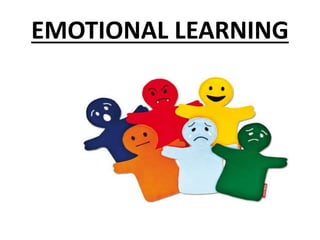
EMOTIONAL LEARNING
• Emotional learning refers to
affective learning. The end
products of emotional
learning are : attitudes, values
and ideals. They determine an
individual’s character and
motive power.
• Acceptance and rejection are
involved in emotion. There
are certain basic components
of emotion & they are :
attitudes, values & ideals.
ATTITUDES
• Refers to disposition, a
readiness, an inclination, a
tendency to act towards
specific object in a particular
way.
• Attitude is a feeling. The mind
set or mental attitude refers
to the readiness of a learner
to learn.
VALUES
• Value refers to the
importance attached to any
thing. Appreciation indicates a
stamp of values attached to a
thing.
• Recognition of value is very
important in human life.
IDEALS
• Ideals are attitudes that
functions as driving forces in
the realm of human conduct.
They determine what an
individual will believe in, will
accomplish in their life.
THANK YOU

CONCEPTS OF LEARNING

  • 1.
    CONCEPTS & DIMENSIONSOF LEARNING DR. MAHESWARI JAIKUMAR maheswarijaikumar2103@gmail.com
  • 2.
    BASICS OF LEARNING •Learning is defined as “the acquisition of knowledge or skills through study, experience, or being taught”.
  • 3.
    • Learning stylerefers to the preferred way that one acquires, processes, and retains information at the best.
  • 4.
    Basically there arethree dimensions of learning. 1. IDEATIONAL LEARNING. 2. SKILL LEARNING. 3. EMOTIONAL LEARNING.
  • 6.
  • 7.
    IDEATIONAL LEARNING • Ideationallearning occurs in the cognitive domain of the intellect.
  • 8.
  • 9.
    • Cognition refersto the processes wherein an individual obtains knowledge about anything-perceiving, generalizing, evaluating, imaging thinking, problem solving & creating.
  • 11.
    • The termsused to describe the components of ideational learning are knowledge, understanding-facts concepts, meanings, generalizations & principles.
  • 12.
    CONCEPT • Concept isthe mental image or abstraction formed by generalization from many experiences with particulars and make reflective thinking possible.
  • 13.
    • Concept isthe fundamental unit of thought. It is an idea of what a thing is.
  • 14.
    • By meansof concept an individual generalizes & differentiates one’s experiences and recognizes the essential features of objects, events, situations etc.,
  • 15.
    FACT Fact refers to“something” that has happened, or an event, an actual state of affairs.
  • 16.
    SENSATION • Sensation isa specific type of conscious experience having immediate dependence on one of the organs of sense.
  • 17.
    PERCEPTION • Refers tomental function by which various stimuli are interpreted. Perception has its origin in sensation.
  • 18.
    • Through perceptionthe incoming sensations are assimilated as appropriate images and pertinent categories of past experiences. It gives meaning to the sensation.
  • 19.
    PERCEPT • A perceptis a mental image/picture of something, immediately present to the senses, while at the same time being stored in the memory and subject to recall in the future in helping to develop concepts.
  • 20.
  • 21.
    PRINCIPLE • Principle refersto special form of generalization that implies action. It is a statement that explains a large number of related phenomenon which may serve as a guide to action.
  • 22.
  • 23.
    • Skill learningis carried out in the connative or psychomotor domain. A skill is defined as ‘ a refined pattern’ or movement or performance based upon demands of a situation.
  • 24.
    • Skill isthe sum total result of progressive attempts to reach a certain goal in the most effective way possible with the aim of a goal to be achieved.
  • 25.
    • The developmentof a skill includes FORMATION OF A SKILL & EXECUTION OF A SKILL.
  • 26.
    FORMATION OF SKILL •A skill can be acquired by following means: 1. Listening to directions & explanations. 2. Reading a description. 3. Seeing a demonstration. 4. Paying attention.
  • 27.
    • In caseof skill learning a teacher and the learner should have a lot of patience because it involves many trials & tends to vary according to the learners’ ability.
  • 28.
    EXECUTION OF SKILL •Execution is the actual performance of a skill. A good execution consists of elimination of excessive & unwanted movements and requires force & co- ordination.
  • 30.
    ACCURACY & SPEED •For accuracy and speed practice is required. This includes the attitude of the learner, will to perform, eradication of mistakes & practice till perfection is reached.
  • 31.
    • The acquisitionof skill depends upon the complexity of the skill required, the ability of the learner and attention put forth by the learner.
  • 32.
  • 33.
    • Emotional learningrefers to affective learning. The end products of emotional learning are : attitudes, values and ideals. They determine an individual’s character and motive power.
  • 34.
    • Acceptance andrejection are involved in emotion. There are certain basic components of emotion & they are : attitudes, values & ideals.
  • 35.
    ATTITUDES • Refers todisposition, a readiness, an inclination, a tendency to act towards specific object in a particular way.
  • 36.
    • Attitude isa feeling. The mind set or mental attitude refers to the readiness of a learner to learn.
  • 37.
    VALUES • Value refersto the importance attached to any thing. Appreciation indicates a stamp of values attached to a thing.
  • 38.
    • Recognition ofvalue is very important in human life.
  • 39.
    IDEALS • Ideals areattitudes that functions as driving forces in the realm of human conduct. They determine what an individual will believe in, will accomplish in their life.
  • 40.