FACTORS AFFECTING
LEARNING
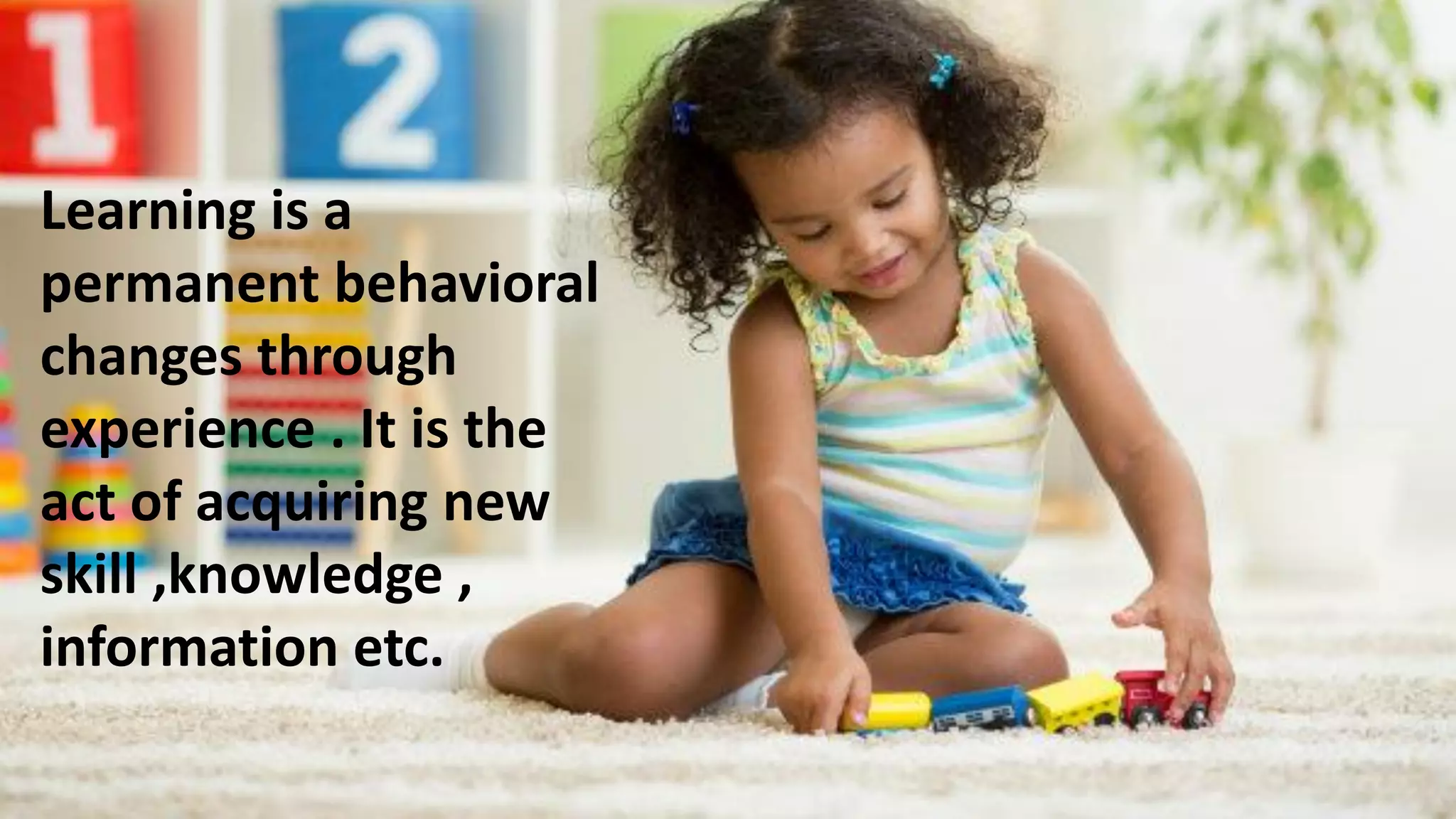
Learning is a
permanent behavioral
changes through
experience . It is the
act of acquiring new
skill ,knowledge ,
information etc.
Some of the important factors which may
affect the learning process are
Individual variable
Method variable
Task variable
Individual variable
It includes cognitive and
affective factors. They are
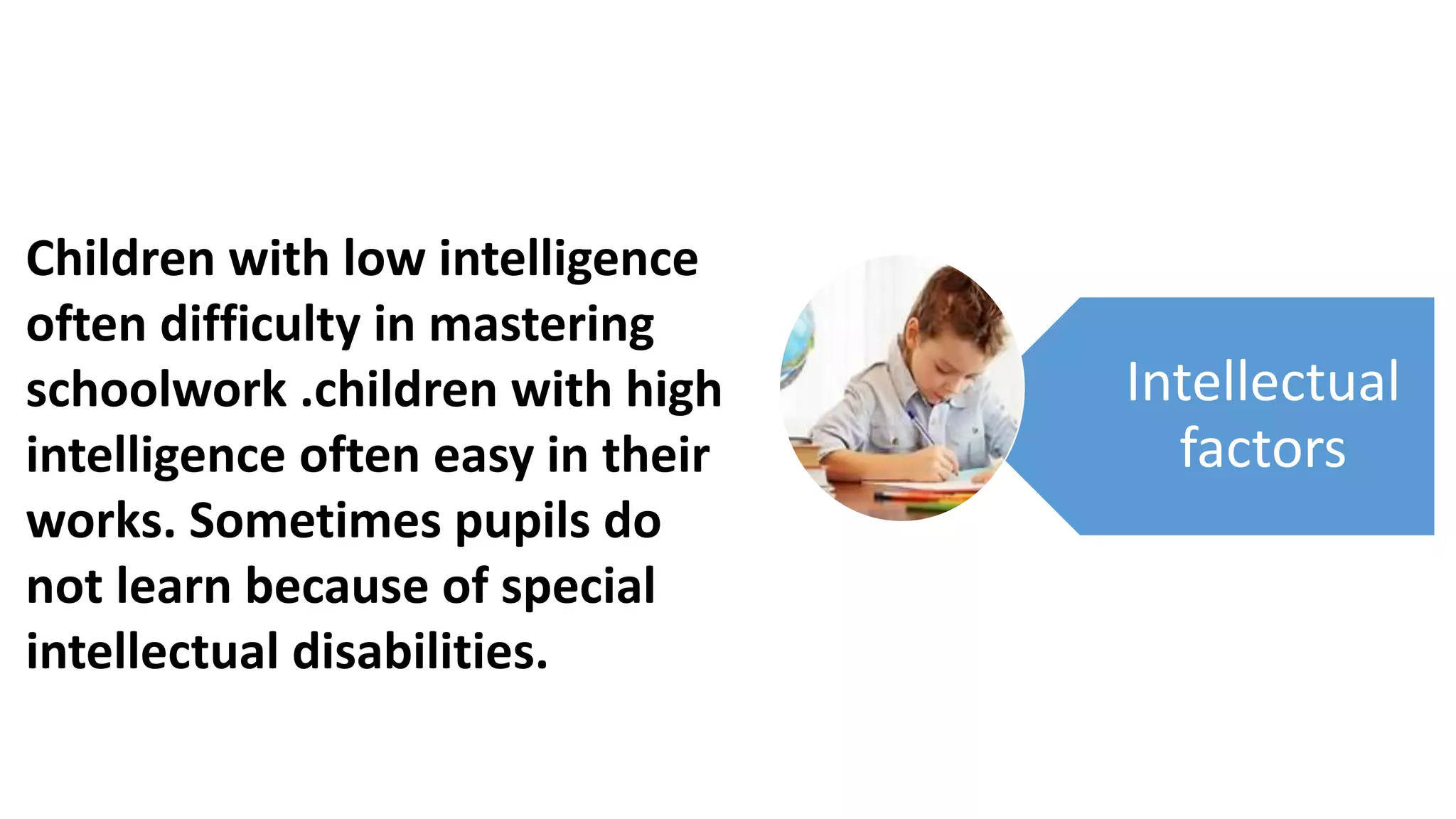
Children with low intelligence
often difficulty in mastering
schoolwork .children with high
intelligence often easy in their
works. Sometimes pupils do
not learn because of special
intellectual disabilities.
Intellectual
factors
Interest , attitude , aptitude
are also important in the
field of learning . They play
a vital role in the mental
and general behavior of the
individual . These things are
increases the rate of
learning .
Mental factors
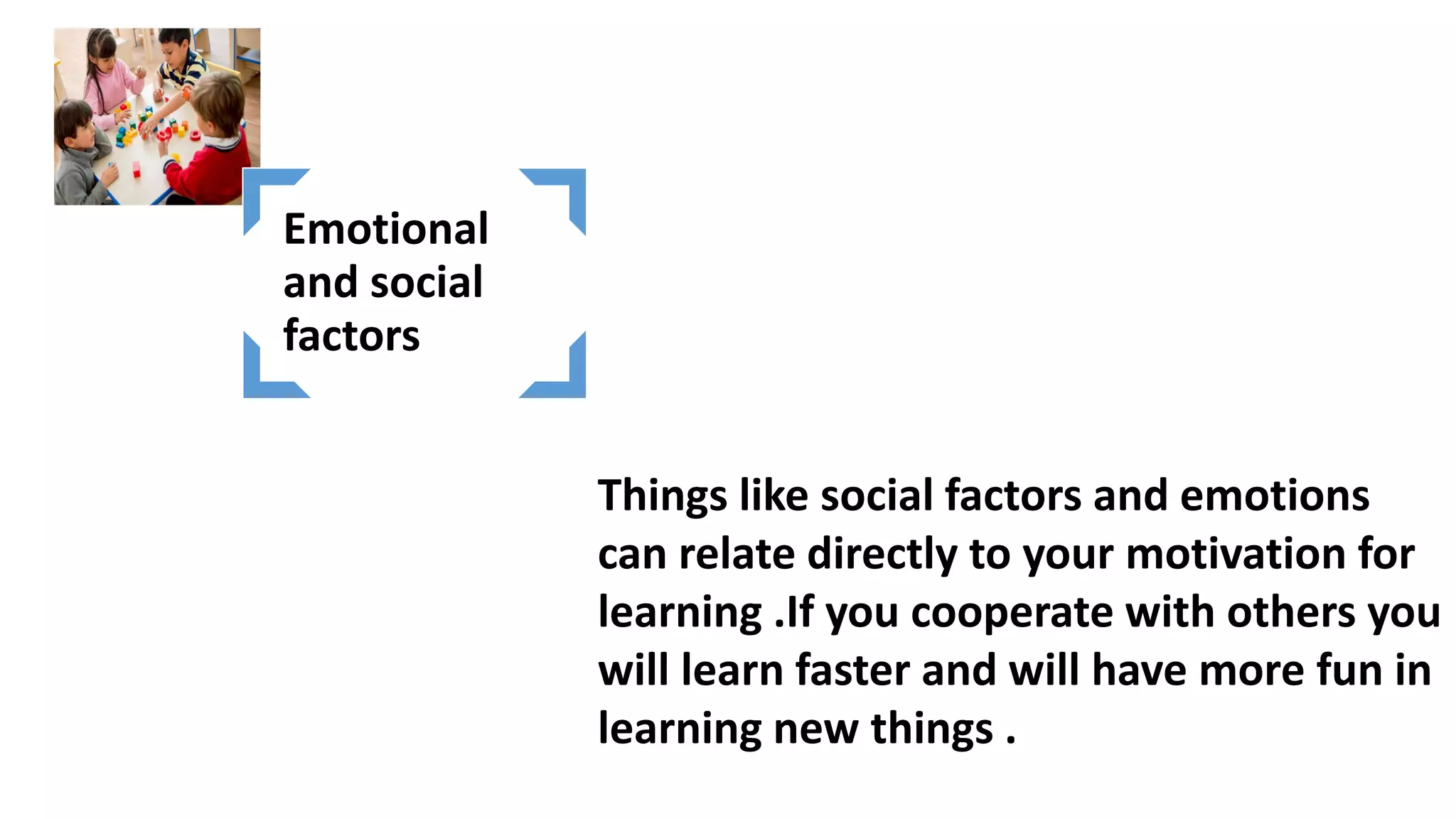
Things like social factors and emotions
can relate directly to your motivation for
learning .If you cooperate with others you
will learn faster and will have more fun in
learning new things .
Emotional
and social
factors
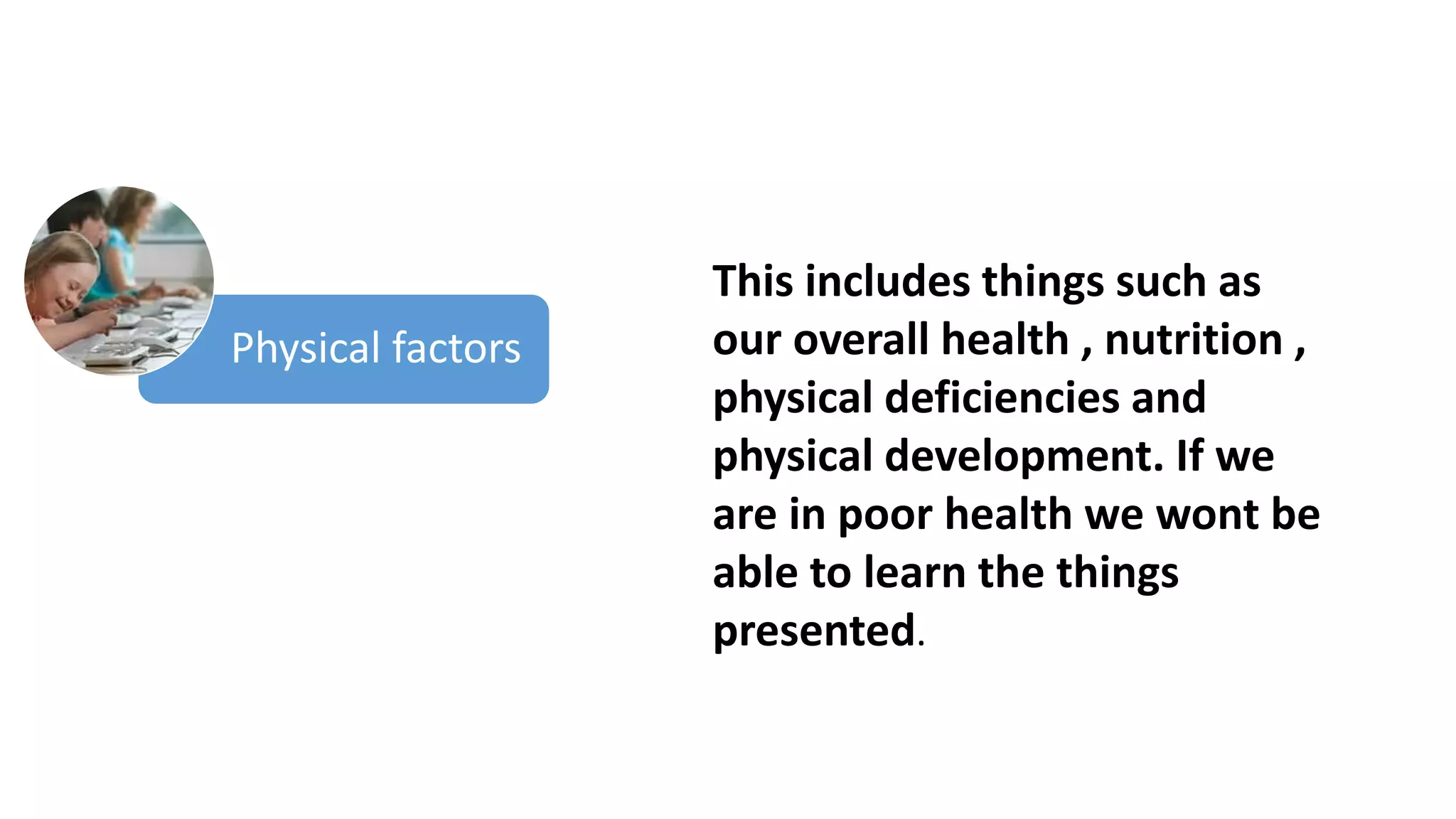
This includes things such as
our overall health , nutrition ,
physical deficiencies and
physical development. If we
are in poor health we wont be
able to learn the things
presented.
Physical factors
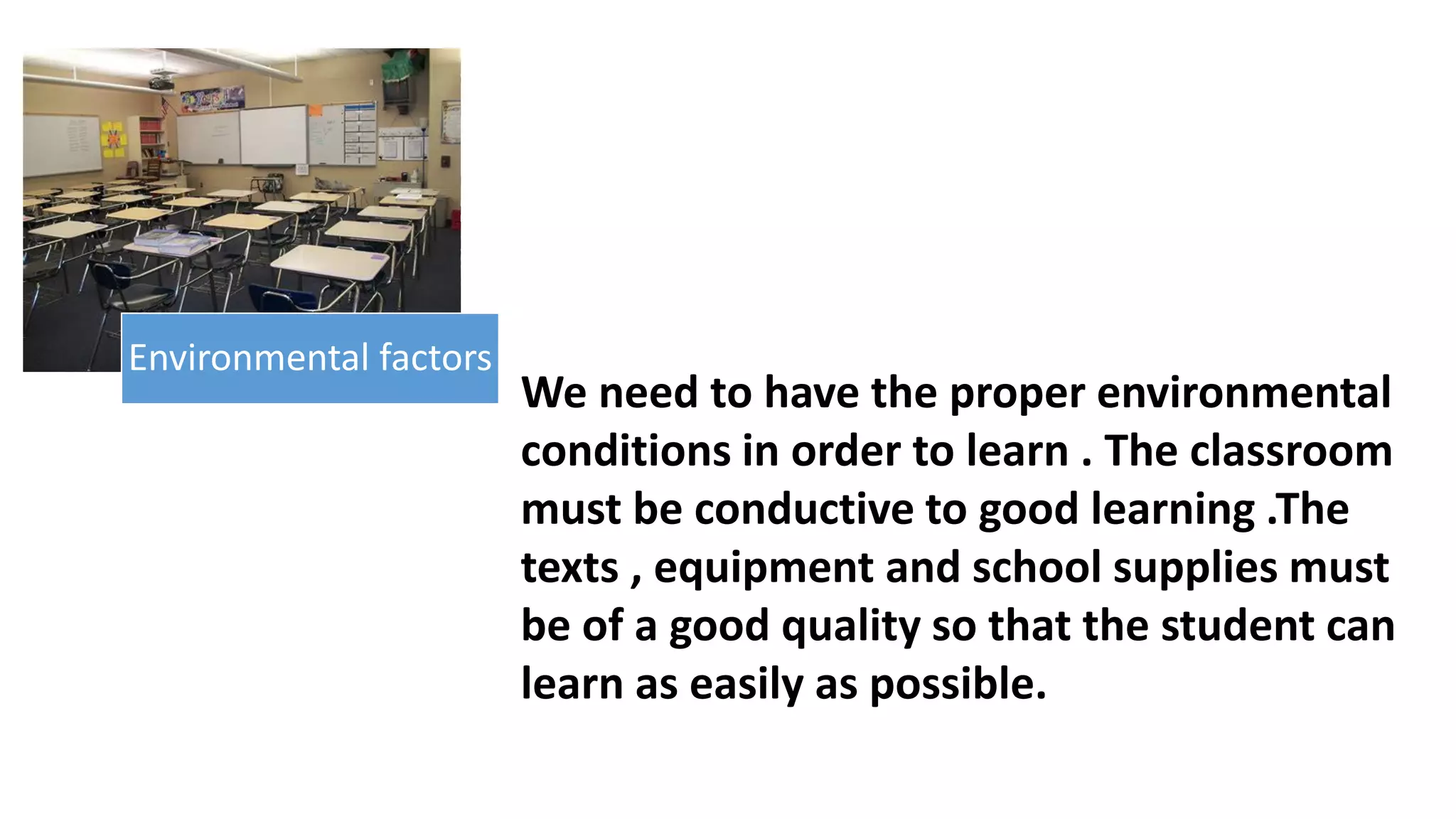
We need to have the proper environmental
conditions in order to learn . The classroom
must be conductive to good learning .The
texts , equipment and school supplies must
be of a good quality so that the student can
learn as easily as possible.
Environmental factors
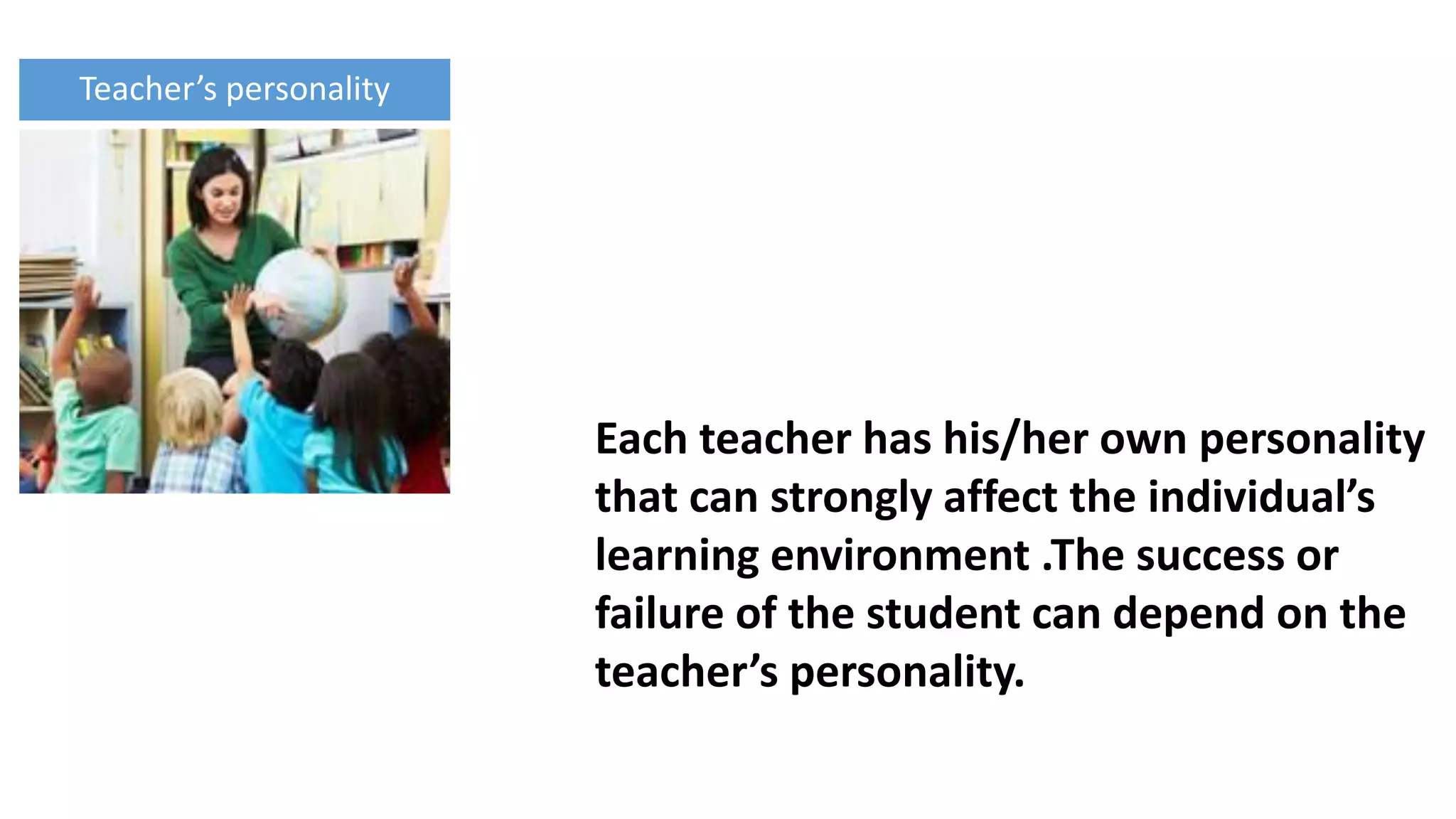
Each teacher has his/her own personality
that can strongly affect the individual’s
learning environment .The success or
failure of the student can depend on the
teacher’s personality.
Teacher’s personality
If the learner is ready to
learn ,he will develop
motivation to learn .
Readiness will help to
develop a positive
attitude in learner .
Readiness
Method variable
Effective learning depends upon the
methods of study also. There are certain
methods which save the energy and
time of the learner.
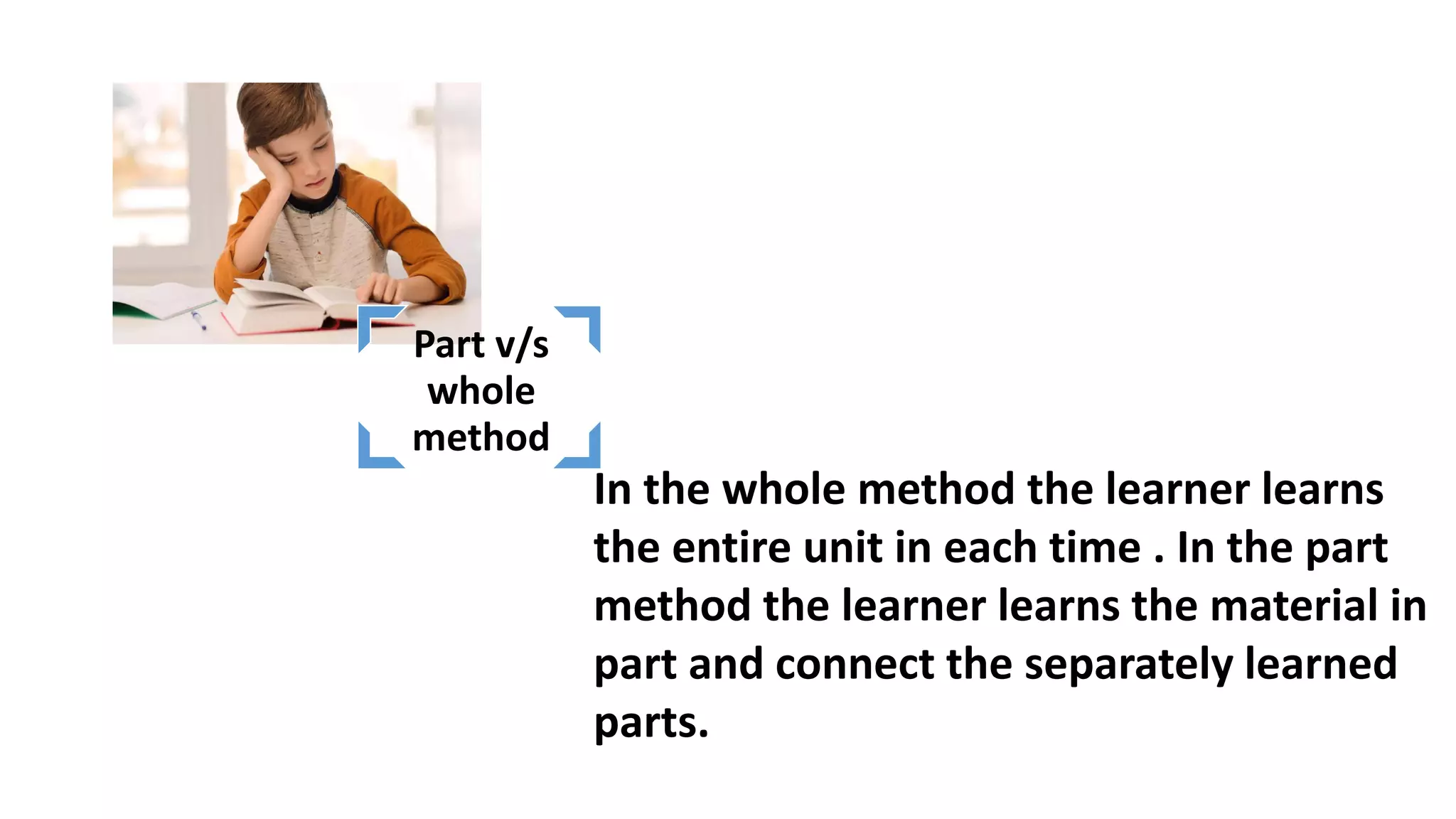
In the whole method the learner learns
the entire unit in each time . In the part
method the learner learns the material in
part and connect the separately learned
parts.
Part v/s
whole
method
In the case of spaced learning
the learner learns the material
with rest interval.
In the case of un-spaced
learning the learner learns the
material without rest interval.
Spaced v/s
un-spaced
method
Just repetition of lessons becomes rote
learning in which changes of forgetting are
more . In recitation the learner will check the
weak points which may be forgotten and put
more emphasis on those points . This points
will help to overcome missing of points from
the memory.
Recitation
v/s
Repetition
Task variable
It is based on the nature of the learning materials
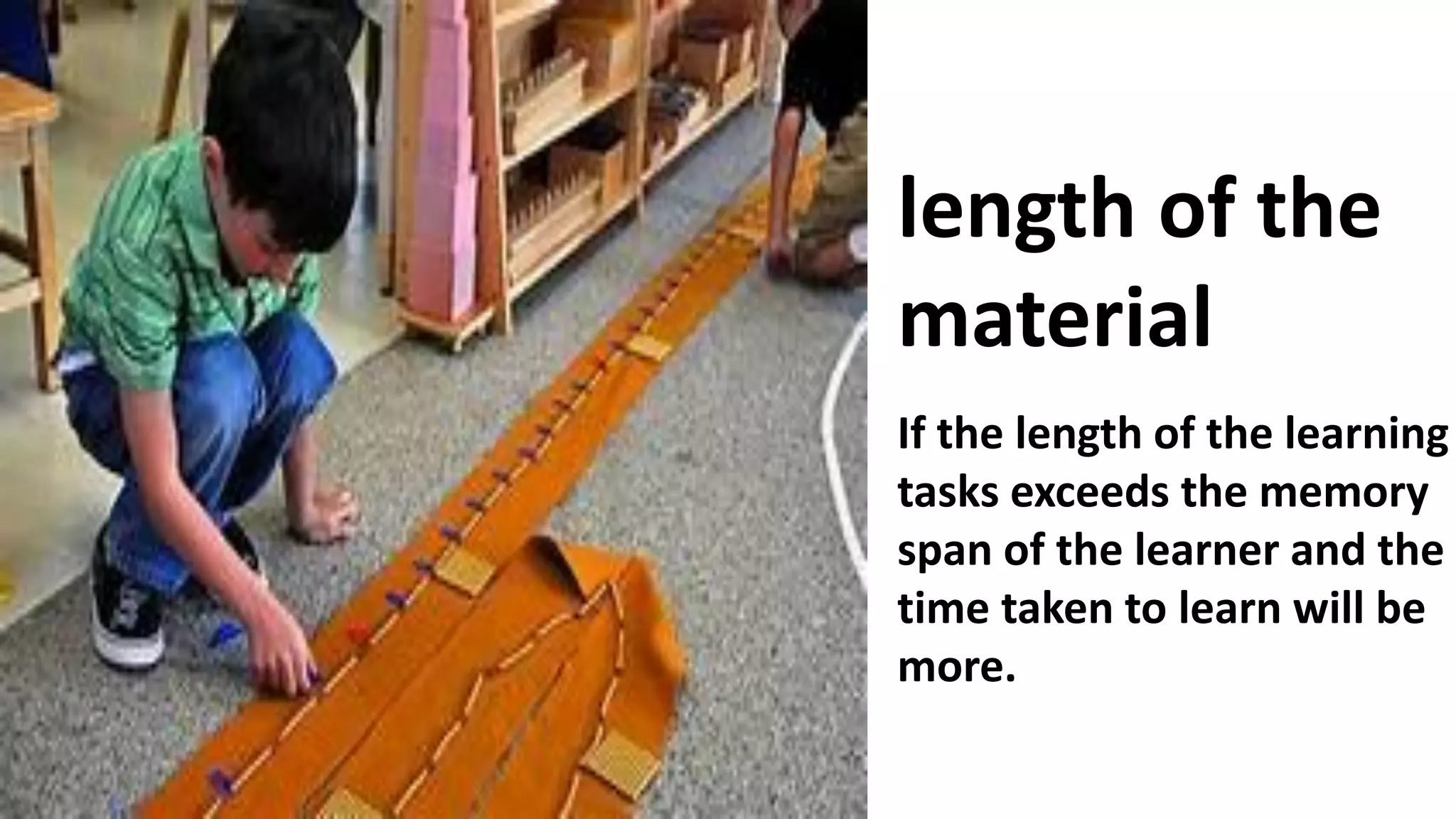
length of the
material
If the length of the learning
tasks exceeds the memory
span of the learner and the
time taken to learn will be
more.
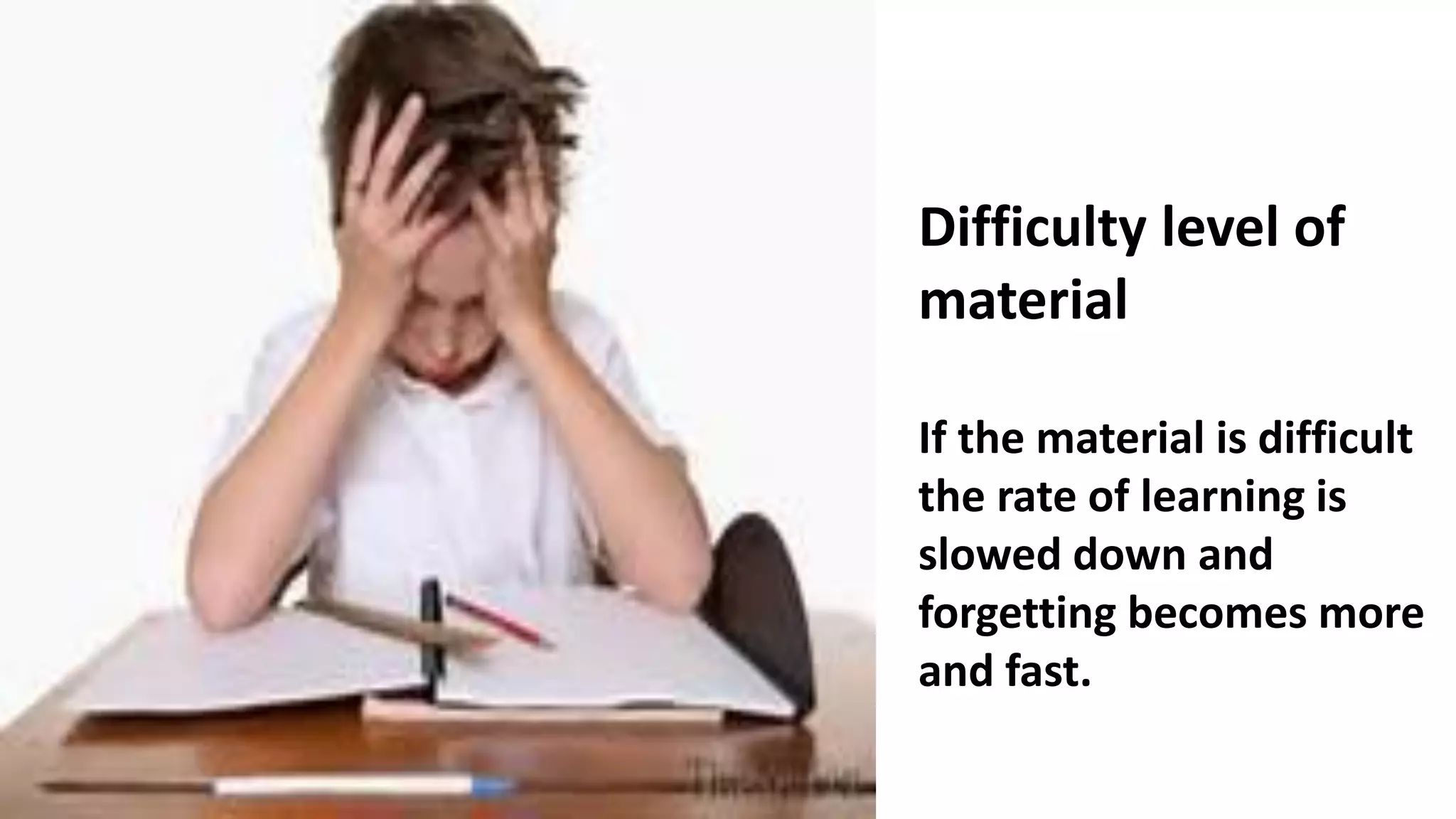
Difficulty level of
material
If the material is difficult
the rate of learning is
slowed down and
forgetting becomes more
and fast.
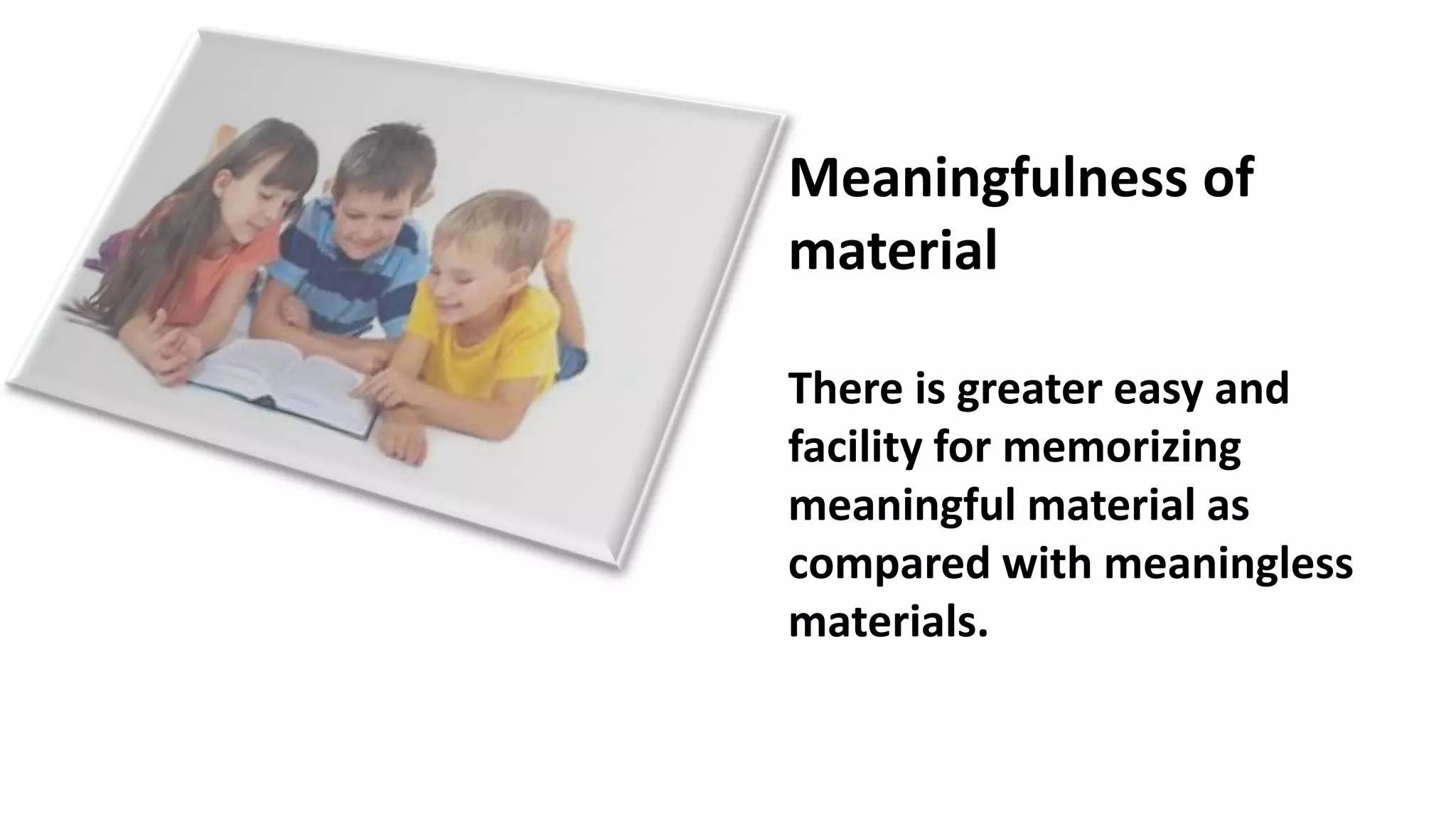
Meaningfulness of
material
There is greater easy and
facility for memorizing
meaningful material as
compared with meaningless
materials.
Thank you

Factors affecting learning

  • 1.
  • 2.
    Learning is a permanentbehavioral changes through experience . It is the act of acquiring new skill ,knowledge , information etc.
  • 3.
    Some of theimportant factors which may affect the learning process are Individual variable Method variable Task variable
  • 4.
    Individual variable It includescognitive and affective factors. They are
  • 5.
    Children with lowintelligence often difficulty in mastering schoolwork .children with high intelligence often easy in their works. Sometimes pupils do not learn because of special intellectual disabilities. Intellectual factors
  • 6.
    Interest , attitude, aptitude are also important in the field of learning . They play a vital role in the mental and general behavior of the individual . These things are increases the rate of learning . Mental factors
  • 7.
    Things like socialfactors and emotions can relate directly to your motivation for learning .If you cooperate with others you will learn faster and will have more fun in learning new things . Emotional and social factors
  • 8.
    This includes thingssuch as our overall health , nutrition , physical deficiencies and physical development. If we are in poor health we wont be able to learn the things presented. Physical factors
  • 9.
    We need tohave the proper environmental conditions in order to learn . The classroom must be conductive to good learning .The texts , equipment and school supplies must be of a good quality so that the student can learn as easily as possible. Environmental factors
  • 10.
    Each teacher hashis/her own personality that can strongly affect the individual’s learning environment .The success or failure of the student can depend on the teacher’s personality. Teacher’s personality
  • 11.
    If the learneris ready to learn ,he will develop motivation to learn . Readiness will help to develop a positive attitude in learner . Readiness
  • 12.
    Method variable Effective learningdepends upon the methods of study also. There are certain methods which save the energy and time of the learner.
  • 13.
    In the wholemethod the learner learns the entire unit in each time . In the part method the learner learns the material in part and connect the separately learned parts. Part v/s whole method
  • 14.
    In the caseof spaced learning the learner learns the material with rest interval. In the case of un-spaced learning the learner learns the material without rest interval. Spaced v/s un-spaced method
  • 15.
    Just repetition oflessons becomes rote learning in which changes of forgetting are more . In recitation the learner will check the weak points which may be forgotten and put more emphasis on those points . This points will help to overcome missing of points from the memory. Recitation v/s Repetition
  • 16.
    Task variable It isbased on the nature of the learning materials
  • 17.
    length of the material Ifthe length of the learning tasks exceeds the memory span of the learner and the time taken to learn will be more.
  • 18.
    Difficulty level of material Ifthe material is difficult the rate of learning is slowed down and forgetting becomes more and fast.
  • 19.
    Meaningfulness of material There isgreater easy and facility for memorizing meaningful material as compared with meaningless materials.
  • 20.