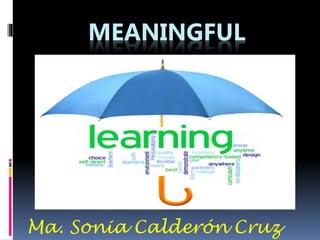
MEANINGFUL
Ma. Sonia Calderón Cruz
 Do you ever wonder whether your students care
about your course material?
 Do you question whether your students
appreciate how the information you address in
class is relevant to them?
 Do you feel like there is often a mismatch
between your intentions for your class and what
your students actually want to learn?
 How can we teach them in order to encourage
their interest?
 Students are more likely to pay attention and be
excited about your course when they view the
class as relevant to themselves and connected to
their interests.
What is learning?
 Learning
 Knowles defines learning as the process of gaining knowledge or
expertise.(Knowles, 1998, p. 17) another definition of learning by E. A.
Haggard states that learning is a change in behavior as a result of
experience. (Haggard, 1963, p. 20.)
 Meaningful learning
 Meaningful learning refers to the concept that the learned knowledge is
fully understood by the individual and that the individual knows how
that specific fact relates to other stored facts stored in your brain.
(ausebel)
 The construction and reconstruction of meanings by learners requires
that they actively seek to integrate new knowledge with knowledge
already in their cognitive structure.
 Meaningful learning, in short, is learning that makes a difference in ones
mind and in ones life.
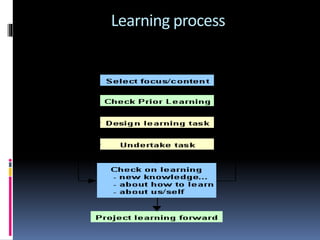
Learning process
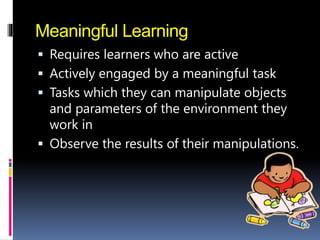
Meaningful Learning
 Requires learners who are active
 Actively engaged by a meaningful task
 Tasks which they can manipulate objects
and parameters of the environment they
work in
 Observe the results of their manipulations.
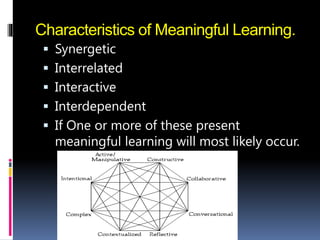
Characteristics of Meaningful Learning.
 Synergetic
 Interrelated
 Interactive
 Interdependent
 If One or more of these present
meaningful learning will most likely occur.
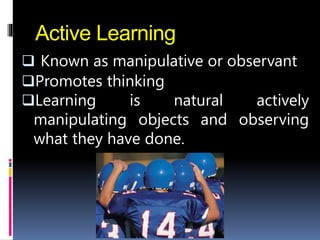
Active Learning
 Known as manipulative or observant
Promotes thinking
Learning is natural actively
manipulating objects and observing
what they have done.
Constructive Learning
 Articulate/reflective learning
 Encourage reflection on learning by children
 Activity is necessary but not sufficient for
learning.
 Integrate new experiences with prior
knowledge
 Establish learning goals
Intentional Learning
 Goal directed/Regulatory
 User knows the end
 Think and learn more by fulfilling their goal.
 Using computers for planning everyday tasks
– learning meaningfully.
Authentic Learning
 Complex/contextual
 Realistic for children
 Relevant / real life
 Relate ideas to real-world contexts
 Simulations or problem-based learning
 Transferred to new situations
 Create an authentic experience
Cooperative Learning
 Collaborative/Conversational
 Engaged
 Group work/small groups
 Naturally work together
 Seek out others for help
 Connect learners in same classroom,
across town or around the world.
It’s all about the thinking!
 Students learn from thinking
 Thinking about what they are doing
 Thinking about what they believe
 Thinking about what others have done
and believe
 Just thinking and reasoning
 LEARNING RESULTS FROM THINKING!
video
How does Technology Facilitate
meaningful Learning?
 Use the computer to represent
what they know, not what the
teachers or textbooks tell them!
 Provides rich and flexible media for
learning.
 Think that technologies are learning
tools that students learn with, not
from
TECHNOLOGY ENGAGING
LEARNERS
 Meaningful learning will result when
technologies engage learners by:
 Knowledge construction, not reproduction
 Conversation, not reception
 Articulation, not repetition
 Collaboration, not competition
 Reflection, not prescription
Meaningful learning

Meaningful learning

  • 1.
  • 2.
     Do youever wonder whether your students care about your course material?  Do you question whether your students appreciate how the information you address in class is relevant to them?  Do you feel like there is often a mismatch between your intentions for your class and what your students actually want to learn?  How can we teach them in order to encourage their interest?  Students are more likely to pay attention and be excited about your course when they view the class as relevant to themselves and connected to their interests.
  • 3.
    What is learning? Learning  Knowles defines learning as the process of gaining knowledge or expertise.(Knowles, 1998, p. 17) another definition of learning by E. A. Haggard states that learning is a change in behavior as a result of experience. (Haggard, 1963, p. 20.)  Meaningful learning  Meaningful learning refers to the concept that the learned knowledge is fully understood by the individual and that the individual knows how that specific fact relates to other stored facts stored in your brain. (ausebel)  The construction and reconstruction of meanings by learners requires that they actively seek to integrate new knowledge with knowledge already in their cognitive structure.  Meaningful learning, in short, is learning that makes a difference in ones mind and in ones life.
  • 4.
  • 6.
    Meaningful Learning  Requireslearners who are active  Actively engaged by a meaningful task  Tasks which they can manipulate objects and parameters of the environment they work in  Observe the results of their manipulations.
  • 7.
    Characteristics of MeaningfulLearning.  Synergetic  Interrelated  Interactive  Interdependent  If One or more of these present meaningful learning will most likely occur.
  • 8.
    Active Learning  Knownas manipulative or observant Promotes thinking Learning is natural actively manipulating objects and observing what they have done.
  • 9.
    Constructive Learning  Articulate/reflectivelearning  Encourage reflection on learning by children  Activity is necessary but not sufficient for learning.  Integrate new experiences with prior knowledge  Establish learning goals
  • 10.
    Intentional Learning  Goaldirected/Regulatory  User knows the end  Think and learn more by fulfilling their goal.  Using computers for planning everyday tasks – learning meaningfully.
  • 11.
    Authentic Learning  Complex/contextual Realistic for children  Relevant / real life  Relate ideas to real-world contexts  Simulations or problem-based learning  Transferred to new situations  Create an authentic experience
  • 12.
    Cooperative Learning  Collaborative/Conversational Engaged  Group work/small groups  Naturally work together  Seek out others for help  Connect learners in same classroom, across town or around the world.
  • 13.
    It’s all aboutthe thinking!  Students learn from thinking  Thinking about what they are doing  Thinking about what they believe  Thinking about what others have done and believe  Just thinking and reasoning  LEARNING RESULTS FROM THINKING!
  • 14.
  • 15.
    How does TechnologyFacilitate meaningful Learning?  Use the computer to represent what they know, not what the teachers or textbooks tell them!  Provides rich and flexible media for learning.  Think that technologies are learning tools that students learn with, not from
  • 16.
    TECHNOLOGY ENGAGING LEARNERS  Meaningfullearning will result when technologies engage learners by:  Knowledge construction, not reproduction  Conversation, not reception  Articulation, not repetition  Collaboration, not competition  Reflection, not prescription