ROLE OF THE TEACHER
IN FACILITATING
GROWTH AND
DEVELOPMENT
Some of the following
positive training in self
direction and self control
should be given to students:
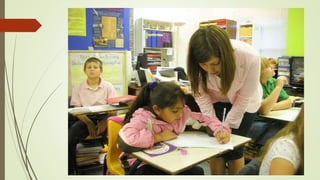
 Control and guidance
must come from the
student himself under
the teachers supervision
Harsh, strict and unsympathetic
control an prescription of every
detail of conduct leaving no
place, for self control and self
direction are not conducive to
students mental health and
adjustment to life’s event.
Proper guidance, rational
shifts of treatment, and
principles of autonomy
should be judiciously applied
to ensure smooth passage
through the turbulent period
of student.
social facilitation
the phenomenon called when studies
have indicated that in certain tasks a
student’s performance would improve
when others (teachers) are around.
On your own words, what is
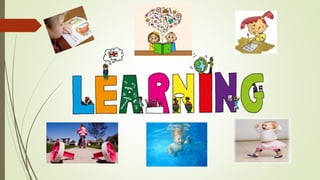
LEARNING
Learning is the process by which a relatively lasting change in
potential behavior occurs because of practice or experience.
Learning is also a process of acquiring
modifications in existing knowledge, skills, habits, or
tendencies through experience, practice, or
exercise.
Gates and others
“Learning is the modification of behavior
through experience”
Henry P. Smith
“Learning is the acquisition of new behavior
or strengthening or weakening of old behavior
as a result of experience”
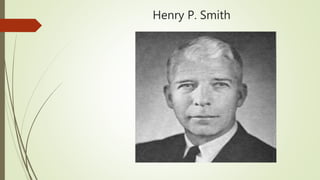
Henry P. Smith
Crow and Crow
“Learning is he acquisition of habits, knowledge
and attitudes. It involves new ways of doing things,
and it operates in an individual’s attempt to
overcome obstacles or to adjust to new situations.”
Skinner
“Learning is the process of progressive
behavior adaptation.
Munn
“To learn is to modify behavior and
experience.
M.L. Bigge
“Learning may be considered as change in
insights, behavior, perception, motivation or a
combination of these.
Four Attributes of Learning
1. As process: the first is that learning is permanent change in behavior.
2. It does not include change due to illness, fatigue, maturation and use of intoxicant.
3. The learning is not directly observable but manifests in the activities of the individuals.
4. Learning depends on practice and experience.
Characteristics
of Learning
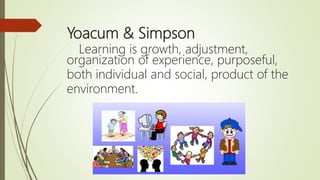
Yoacum & Simpson
Learning is growth, adjustment,
organization of experience, purposeful,
both individual and social, product of the
environment.
According to W. R Mc law learning has the
following characteristics
1. Learning is a continuous modification of
behavior continuous throughout life.
2. Learning is pervasive. It reaches into all
aspects of human life.
3. Leaning involves the whole person, socially,
emotionally & intellectually.
4. Learning is often a change in the
of behavior.
5. Learning is developmental. Time is one of its
dimensions.
6. Learning is responsive to incentives. In most cases
positive incentives such as rewards are most
effective than negative incentives such as
punishment.
7. Learning is always concerned with goals. These
goals can be expressed in terms of observable
behavior.
8. Interest & learning are positively related.
9. Learning depends on maturation and motivation.
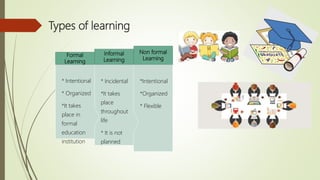
Types of learning
*Intentional
*Organized
* Flexible
Non formal
Learning
* Incidental
*It takes
place
throughout
life
* It is not
planned
Informal
Learning
* Intentional
* Organized
*It takes
place in
formal
education
institution
Formal
Learning
Individual or Group learning
learning is called depending upon
the number of individuals involved in
learning process.
Another classification involves the type of
activity
a. motor learning
b. discrimination learning
c. verbal learning
d. concept learning
e. sensory learning
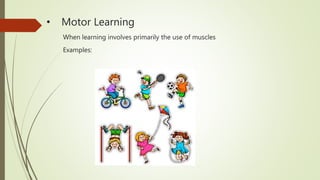
• Motor Learning
When learning involves primarily the use of muscles
Examples:
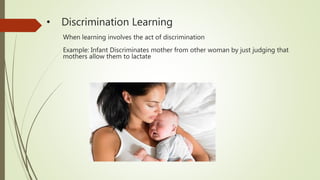
• Discrimination Learning
When learning involves the act of discrimination
Example: Infant Discriminates mother from other woman by just judging that
mothers allow them to lactate
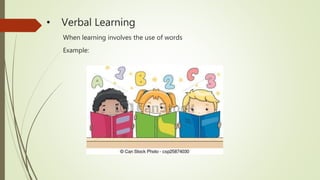
• Verbal Learning
When learning involves the use of words
Example:
• Concept Learning
When learning involves the formation of concept.
Usually describing the cause and effect relationships and answering the
“why”
Examples: Shouting is not good inside the classroom because my teacher
got angry. Hence, I will not shout again inside the classroom
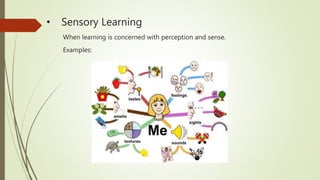
• Sensory Learning
When learning is concerned with perception and sense.
Examples:
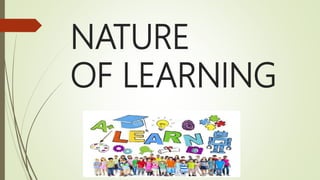
NATURE
OF LEARNING
NATURE OF LEARNING
A. Learning is adaptation or adjustment.
B. Learning is improvement
C. Learning is organizing experience
D. Learning brings behavioural changes
E. Learning is active
F. Learning is goal directed
G. Learning is universal and continuous
Process
of
Learning
Steps in learning process
a. A motivate or a drive
b. An attractive goal
c. A block to the attainment of the goal
End….

Learning

  • 1.
    ROLE OF THETEACHER IN FACILITATING GROWTH AND DEVELOPMENT
  • 5.
    Some of thefollowing positive training in self direction and self control should be given to students:
  • 6.
     Control andguidance must come from the student himself under the teachers supervision
  • 8.
    Harsh, strict andunsympathetic control an prescription of every detail of conduct leaving no place, for self control and self direction are not conducive to students mental health and adjustment to life’s event.
  • 10.
    Proper guidance, rational shiftsof treatment, and principles of autonomy should be judiciously applied to ensure smooth passage through the turbulent period of student.
  • 12.
    social facilitation the phenomenoncalled when studies have indicated that in certain tasks a student’s performance would improve when others (teachers) are around.
  • 15.
    On your ownwords, what is LEARNING
  • 16.
    Learning is theprocess by which a relatively lasting change in potential behavior occurs because of practice or experience. Learning is also a process of acquiring modifications in existing knowledge, skills, habits, or tendencies through experience, practice, or exercise.
  • 17.
    Gates and others “Learningis the modification of behavior through experience” Henry P. Smith “Learning is the acquisition of new behavior or strengthening or weakening of old behavior as a result of experience”
  • 18.
  • 19.
    Crow and Crow “Learningis he acquisition of habits, knowledge and attitudes. It involves new ways of doing things, and it operates in an individual’s attempt to overcome obstacles or to adjust to new situations.”
  • 20.
    Skinner “Learning is theprocess of progressive behavior adaptation. Munn “To learn is to modify behavior and experience. M.L. Bigge “Learning may be considered as change in insights, behavior, perception, motivation or a combination of these.
  • 21.
    Four Attributes ofLearning 1. As process: the first is that learning is permanent change in behavior. 2. It does not include change due to illness, fatigue, maturation and use of intoxicant. 3. The learning is not directly observable but manifests in the activities of the individuals. 4. Learning depends on practice and experience.
  • 22.
  • 23.
    Yoacum & Simpson Learningis growth, adjustment, organization of experience, purposeful, both individual and social, product of the environment.
  • 24.
    According to W.R Mc law learning has the following characteristics 1. Learning is a continuous modification of behavior continuous throughout life. 2. Learning is pervasive. It reaches into all aspects of human life. 3. Leaning involves the whole person, socially, emotionally & intellectually. 4. Learning is often a change in the of behavior. 5. Learning is developmental. Time is one of its dimensions.
  • 25.
    6. Learning isresponsive to incentives. In most cases positive incentives such as rewards are most effective than negative incentives such as punishment. 7. Learning is always concerned with goals. These goals can be expressed in terms of observable behavior. 8. Interest & learning are positively related. 9. Learning depends on maturation and motivation.
  • 26.
    Types of learning *Intentional *Organized *Flexible Non formal Learning * Incidental *It takes place throughout life * It is not planned Informal Learning * Intentional * Organized *It takes place in formal education institution Formal Learning
  • 27.
    Individual or Grouplearning learning is called depending upon the number of individuals involved in learning process.
  • 28.
    Another classification involvesthe type of activity a. motor learning b. discrimination learning c. verbal learning d. concept learning e. sensory learning
  • 29.
    • Motor Learning Whenlearning involves primarily the use of muscles Examples:
  • 30.
    • Discrimination Learning Whenlearning involves the act of discrimination Example: Infant Discriminates mother from other woman by just judging that mothers allow them to lactate
  • 31.
    • Verbal Learning Whenlearning involves the use of words Example:
  • 32.
    • Concept Learning Whenlearning involves the formation of concept. Usually describing the cause and effect relationships and answering the “why” Examples: Shouting is not good inside the classroom because my teacher got angry. Hence, I will not shout again inside the classroom
  • 33.
    • Sensory Learning Whenlearning is concerned with perception and sense. Examples:
  • 35.
  • 36.
    NATURE OF LEARNING A.Learning is adaptation or adjustment. B. Learning is improvement C. Learning is organizing experience D. Learning brings behavioural changes E. Learning is active F. Learning is goal directed G. Learning is universal and continuous
  • 37.
  • 38.
    Steps in learningprocess a. A motivate or a drive b. An attractive goal c. A block to the attainment of the goal
  • 39.