Comfort testing
TEGEWA Drop test
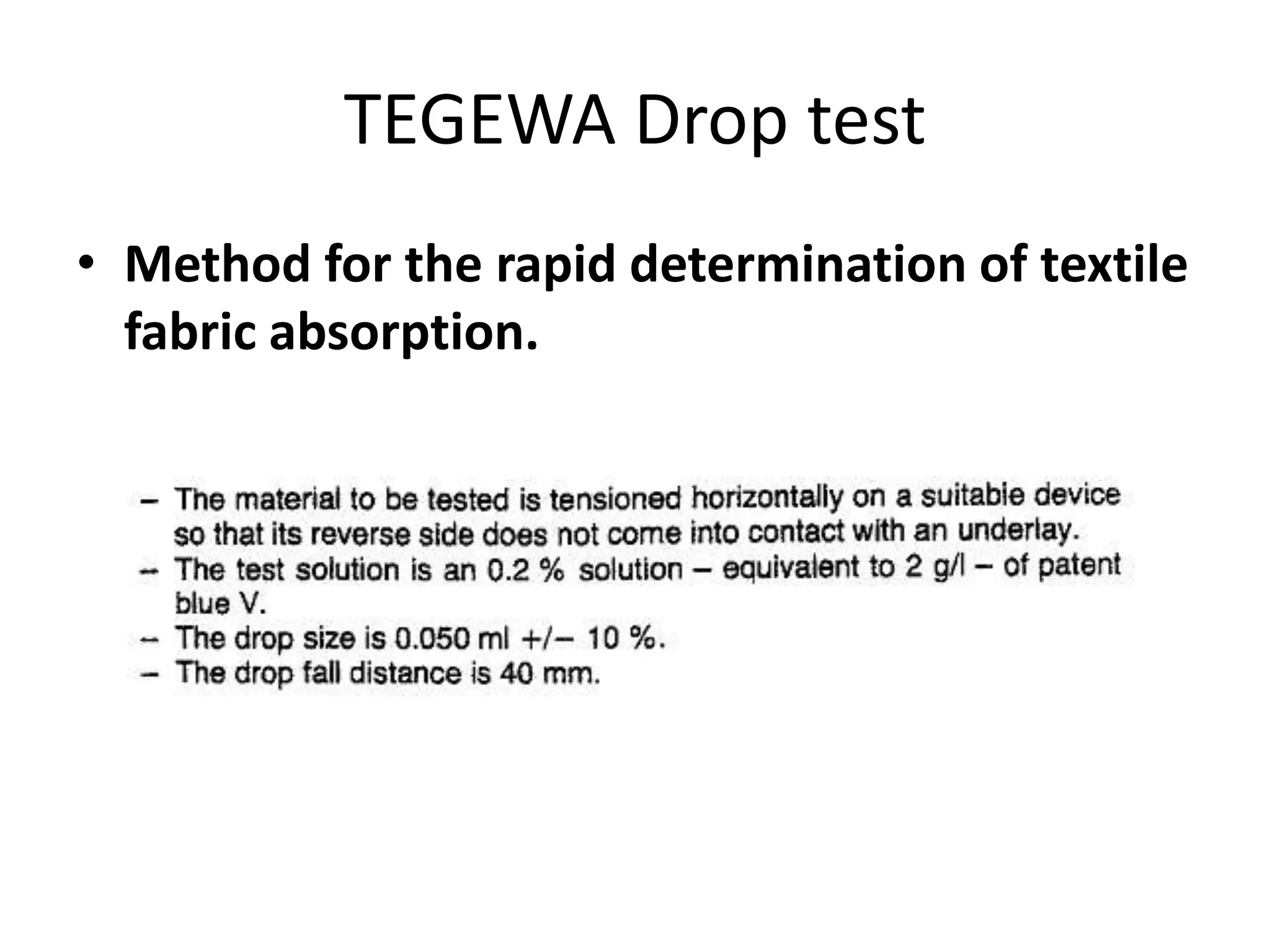
• Method for the rapid determination of textile
fabric absorption.
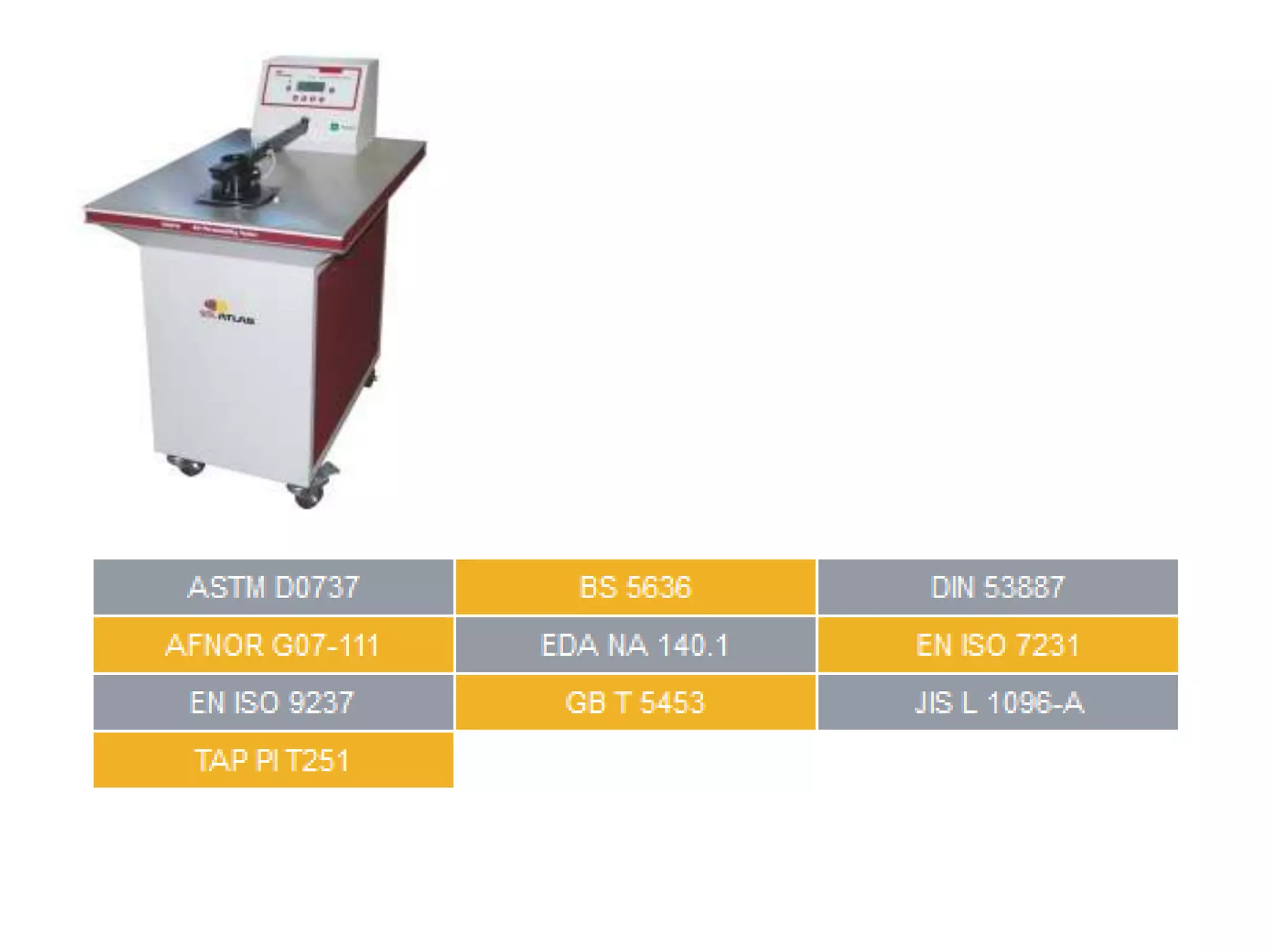
Air Permeability Tester
• The Digital Air Permeability Tester accurately
and swiftly determines the resistance of
fabrics (woven, knitted and non woven textile
materials ) to the passage of air (air flow)
under constant pre-set air pressure while
firmly clamped in the test rig of selected test
head/area.
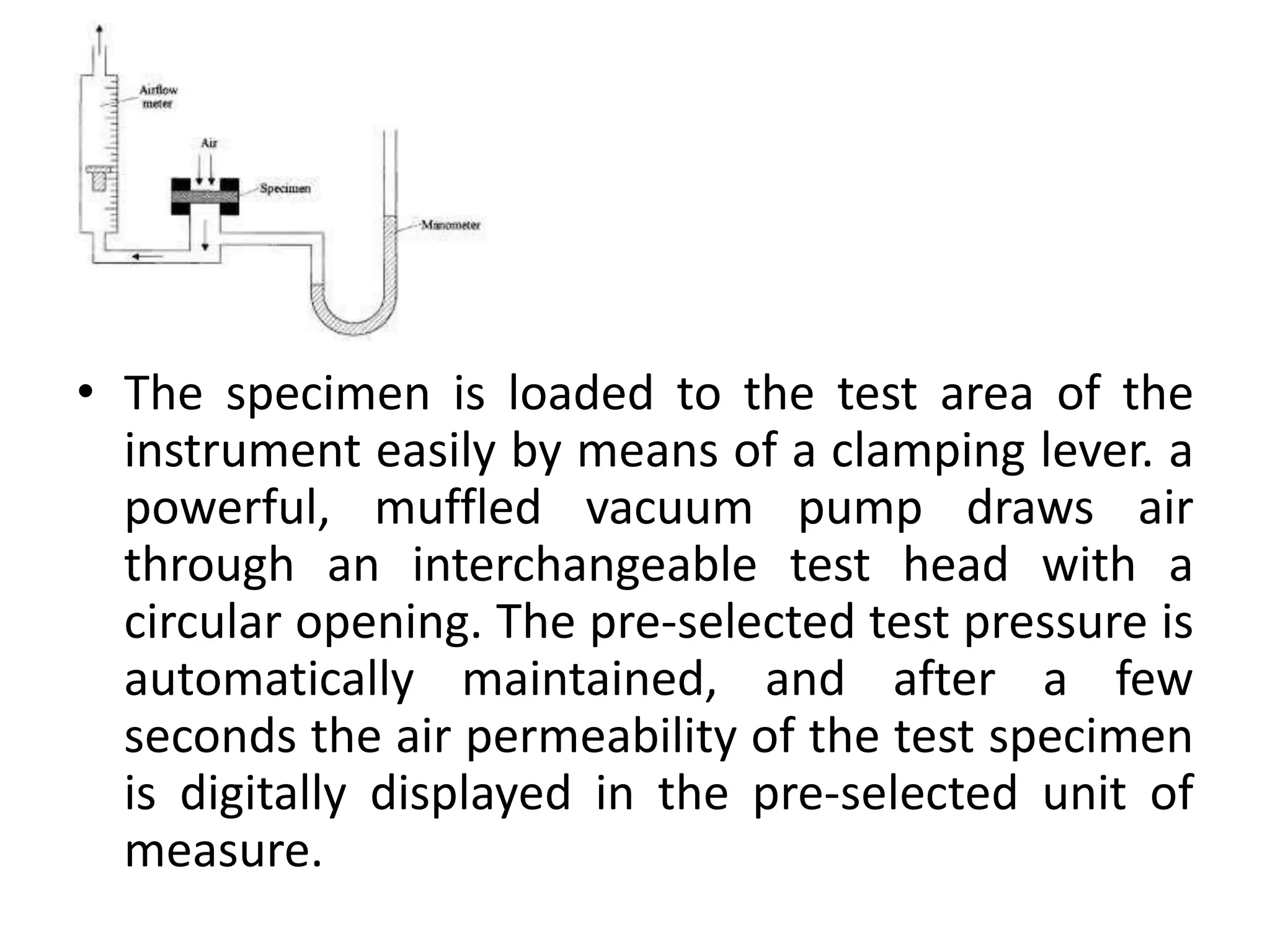
• The specimen is loaded to the test area of the
instrument easily by means of a clamping lever. a
powerful, muffled vacuum pump draws air
through an interchangeable test head with a
circular opening. The pre-selected test pressure is
automatically maintained, and after a few
seconds the air permeability of the test specimen
is digitally displayed in the pre-selected unit of
measure.
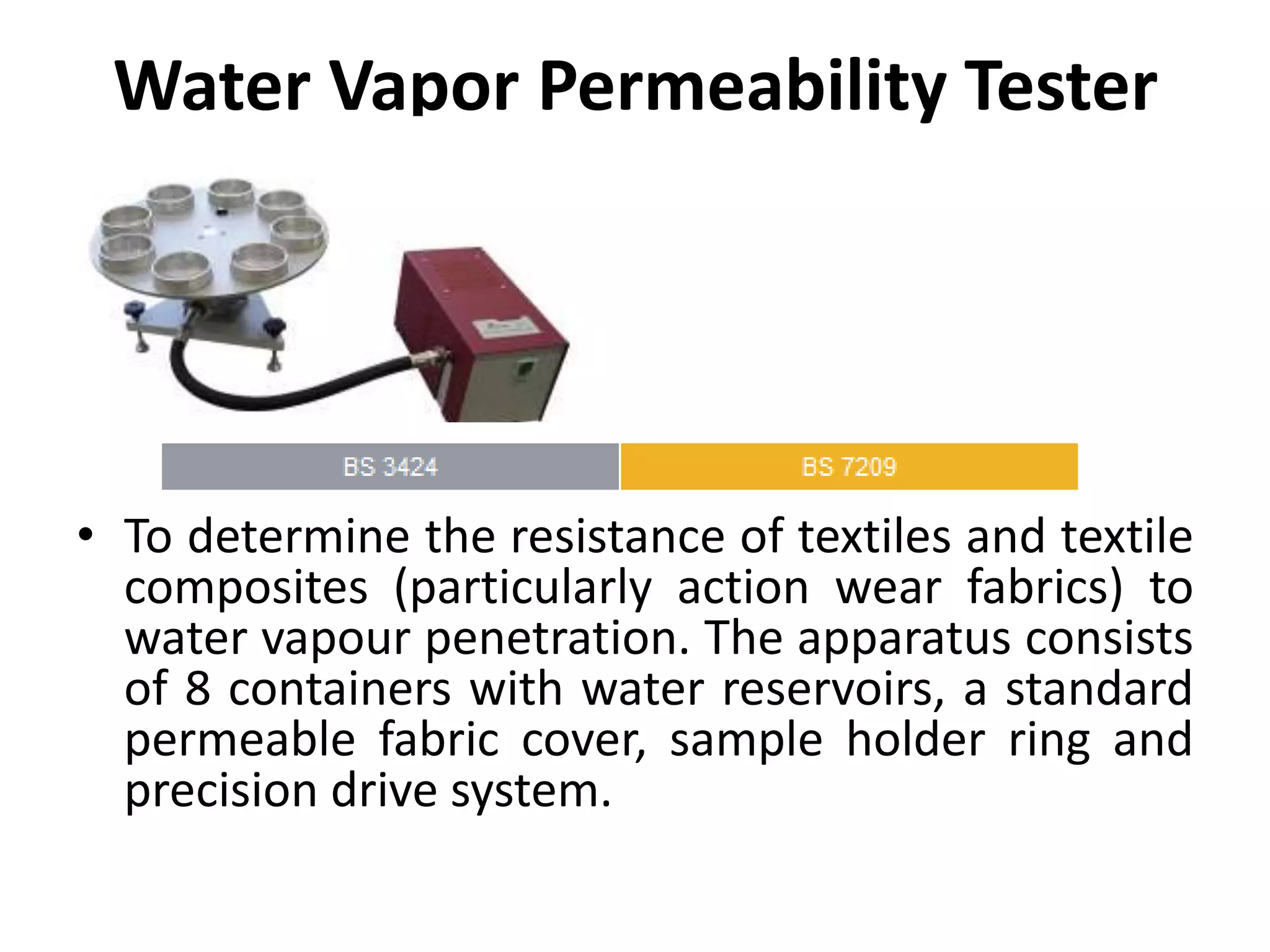
Water Vapor Permeability Tester
• To determine the resistance of textiles and textile
composites (particularly action wear fabrics) to
water vapour penetration. The apparatus consists
of 8 containers with water reservoirs, a standard
permeable fabric cover, sample holder ring and
precision drive system.
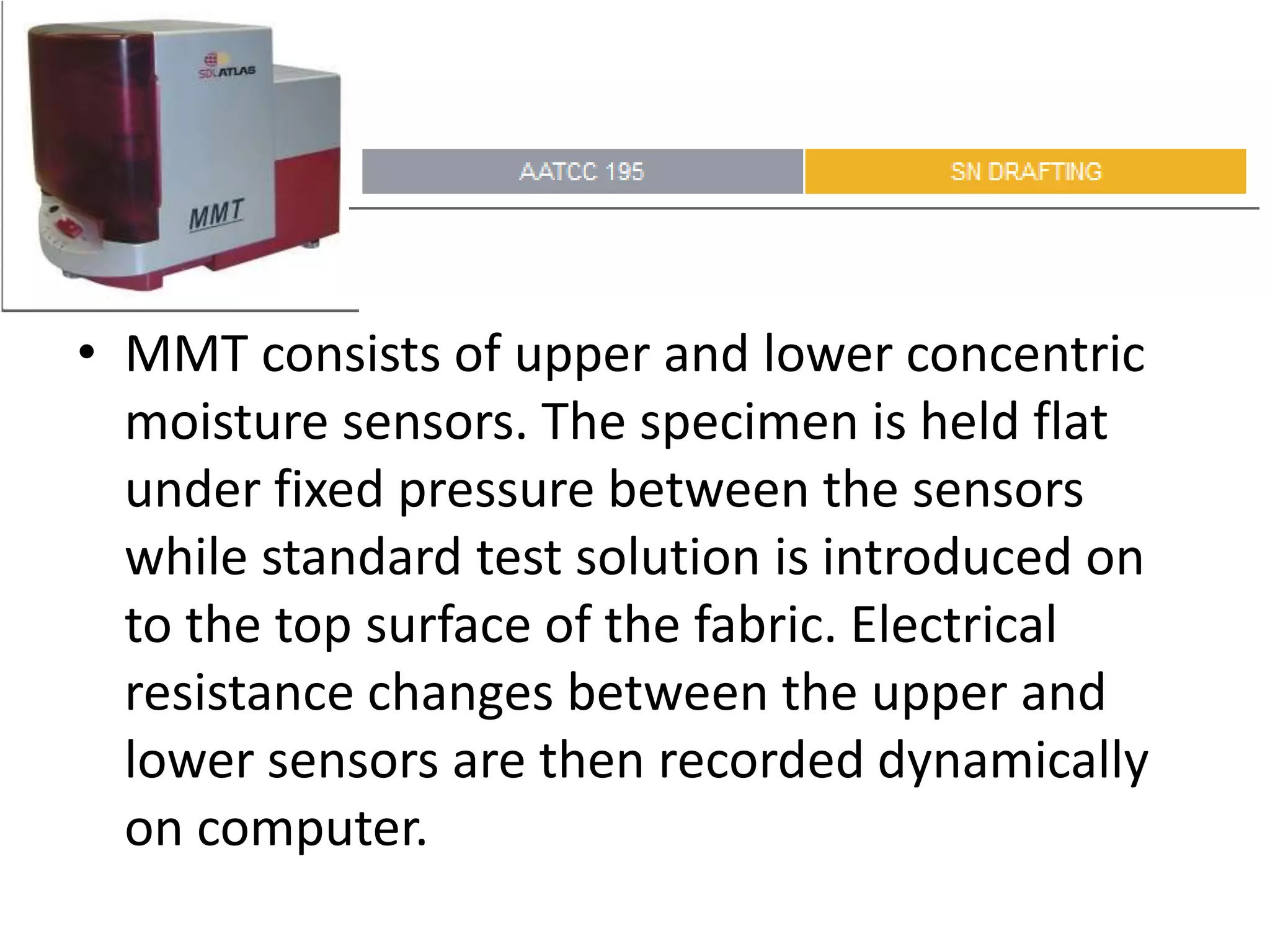
MMT Moisture Management Tester
• Fabric liquid moisture transport properties in
multi-dimensions, called moisture management
properties, influence the human perception of
moisture sensations. To improve the comfort of
today's clothing, especially in sportswear, it is
important to know the liquid moisture
management properties. Although some test
methods exist for evaluating absorbency, wicking
and strike-through time, existing standards are
unable to measure the behavior of liquid transfer
in clothing materials dynamically.
• The Moisture Management Tester (MMT) was
developed to measure dynamic liquid
transport properties of knit and woven fabrics
in three dimensions...
1. Absorption Rate - Moisture absorbing time
of the fabric's inner and outer surfaces.
2. One-way Transportation Capability - One-
way transfer from fabric's inner surface to
outer surface.
3. Spreading/Drying Rate - Speed of liquid
moisture spreading on fabric's inner and outer
surfaces.
• MMT consists of upper and lower concentric
moisture sensors. The specimen is held flat
under fixed pressure between the sensors
while standard test solution is introduced on
to the top surface of the fabric. Electrical
resistance changes between the upper and
lower sensors are then recorded dynamically
on computer.
• MMT permits the measurement of the following
indexes:
- Wetting Time Top/Bottom (WTT/WTB)
- Absorption Rate Top/Bottom (TAR/BAR)
- Maximum Wetted Radius Top/Bottom
(MWRT/MWRB)
- Spreading Speed Top/Bottom (TSS/BSS)
- Accumulative One-Way Transport Capacity (R)
- Overall Moisture Management Capacity
(OMMC)
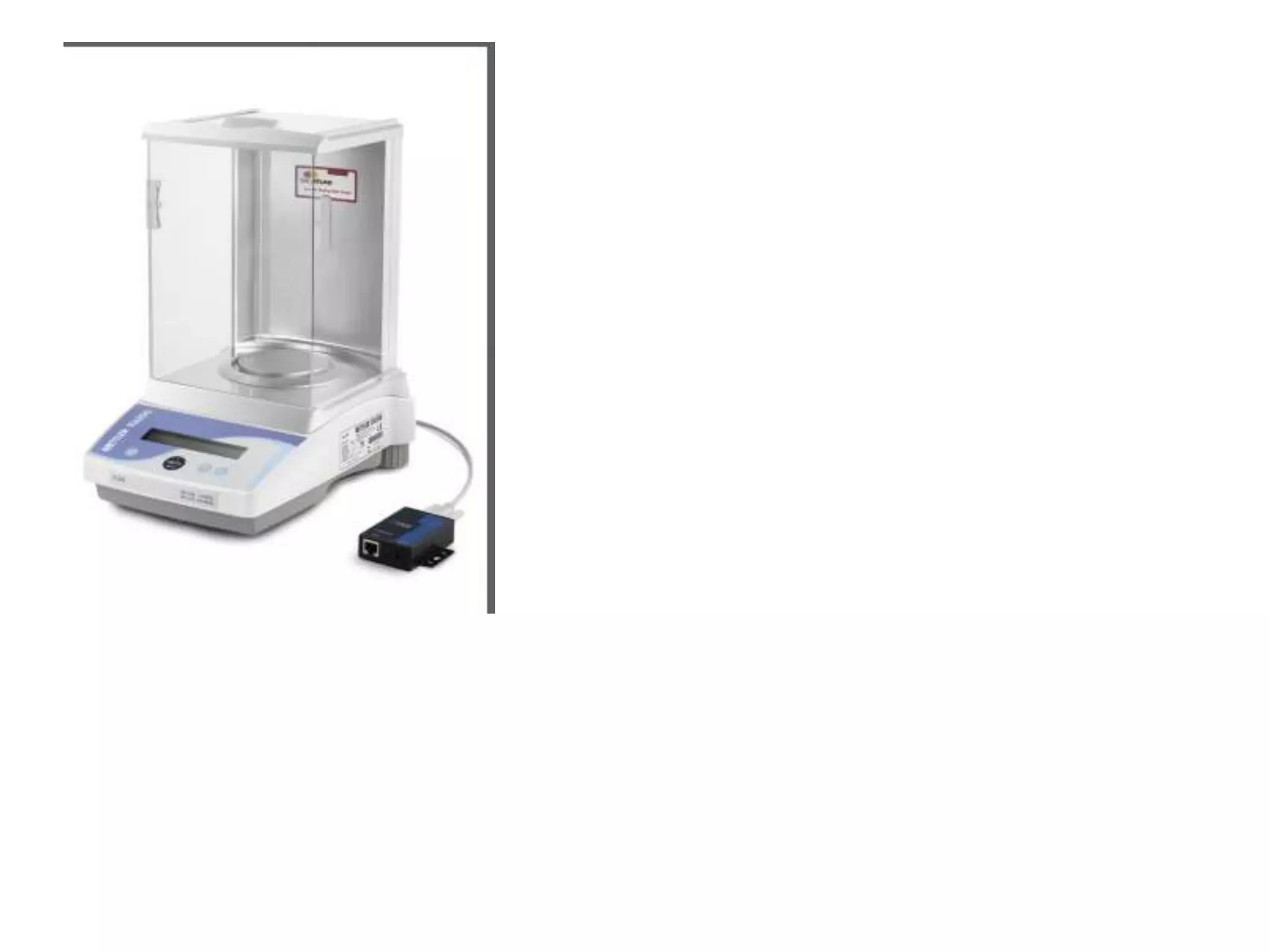
Drying Rate Tester
• The Drying Rate Tester gives retailers, fabric
manufacturers, and textile additive producers
a consistent method of measuring the drying
rate of a fabric. This device can be used
independently to find a drying rate or in
conjunction with the SDL Atlas Moisture
Management Tester (MMT) in order to obtain
a more complete understanding of the
moisture management properties of a
performance fabric.
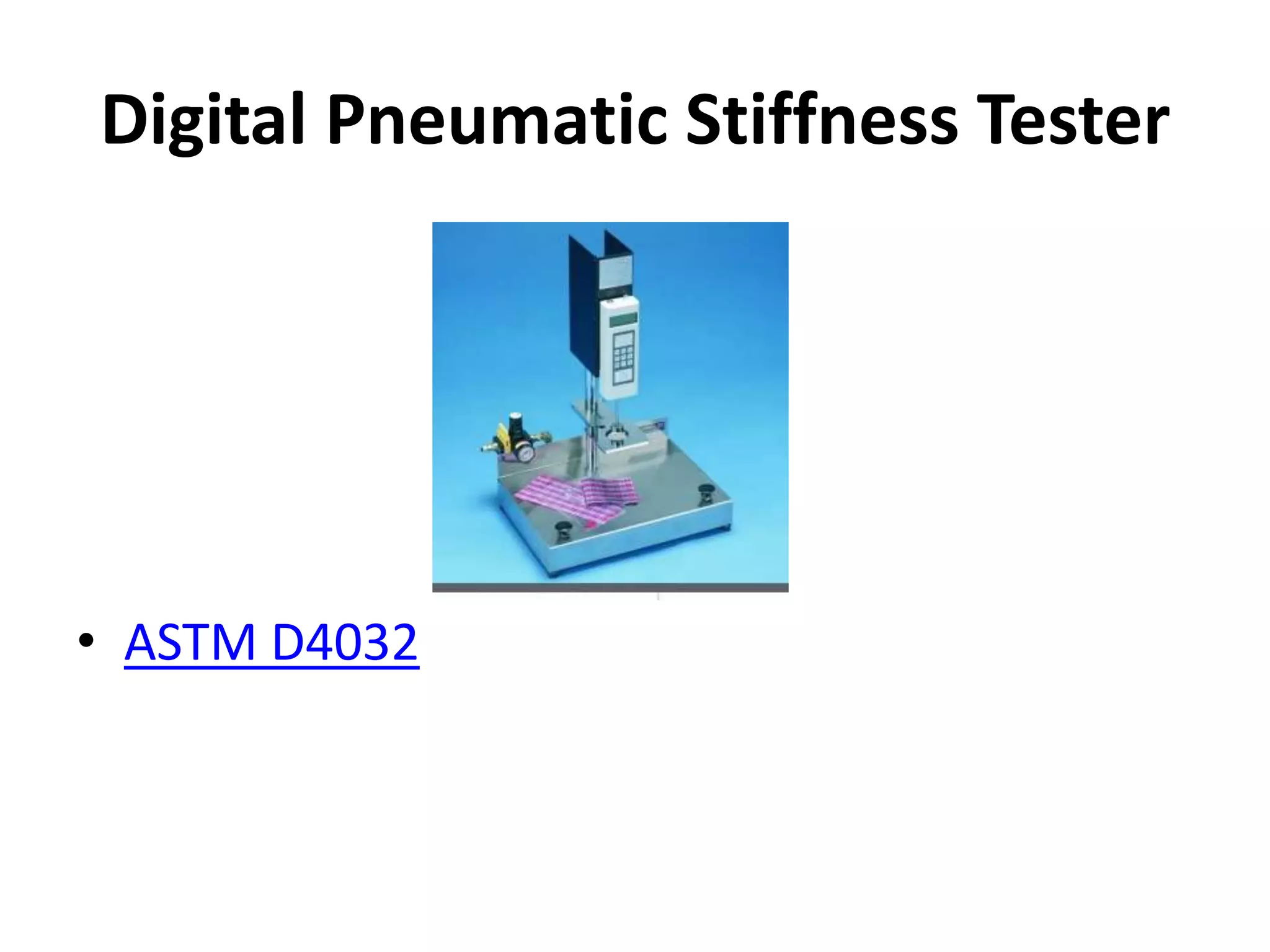
Digital Pneumatic Stiffness Tester
• ASTM D4032
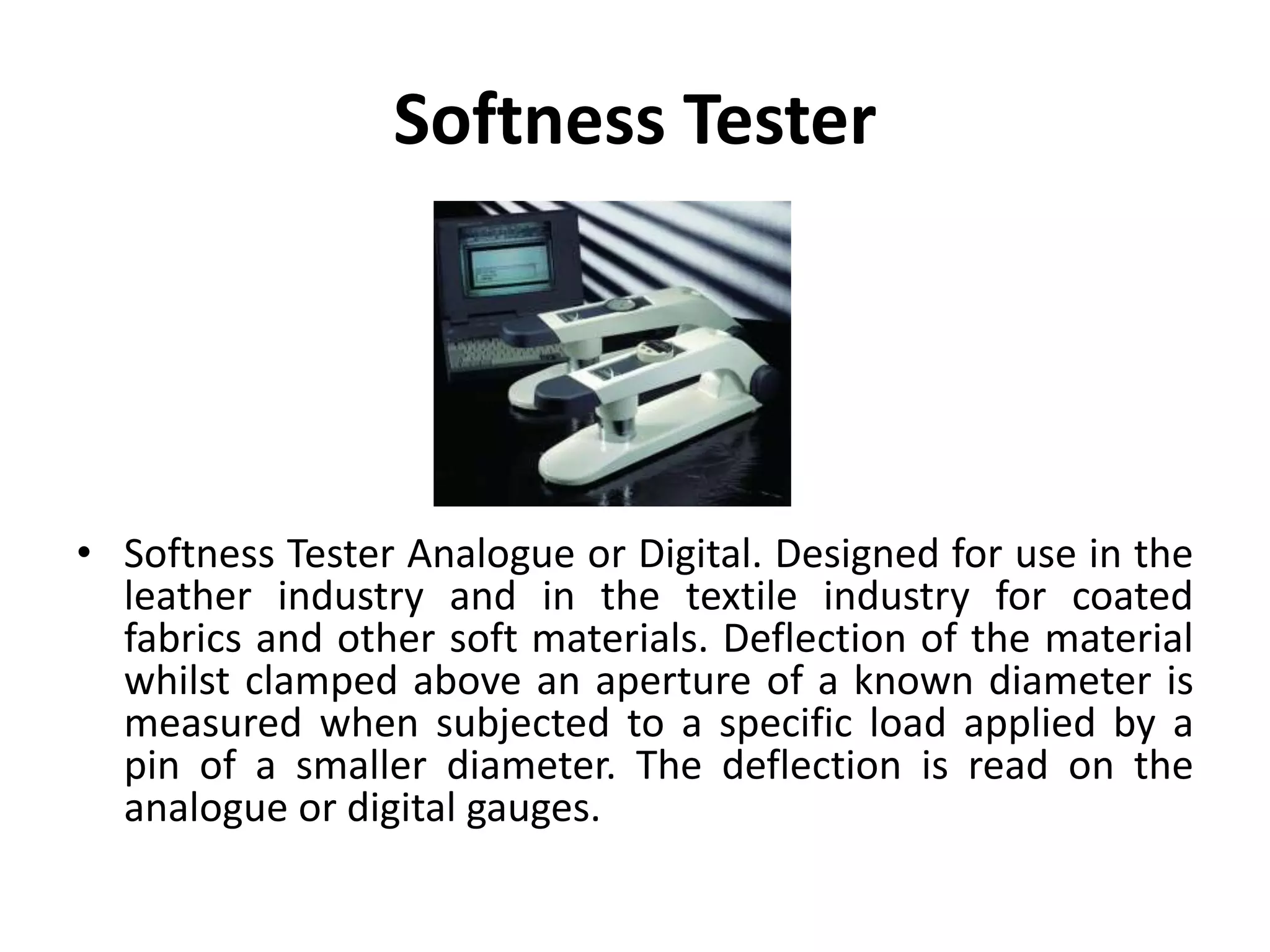
Softness Tester
• Softness Tester Analogue or Digital. Designed for use in the
leather industry and in the textile industry for coated
fabrics and other soft materials. Deflection of the material
whilst clamped above an aperture of a known diameter is
measured when subjected to a specific load applied by a
pin of a smaller diameter. The deflection is read on the
analogue or digital gauges.
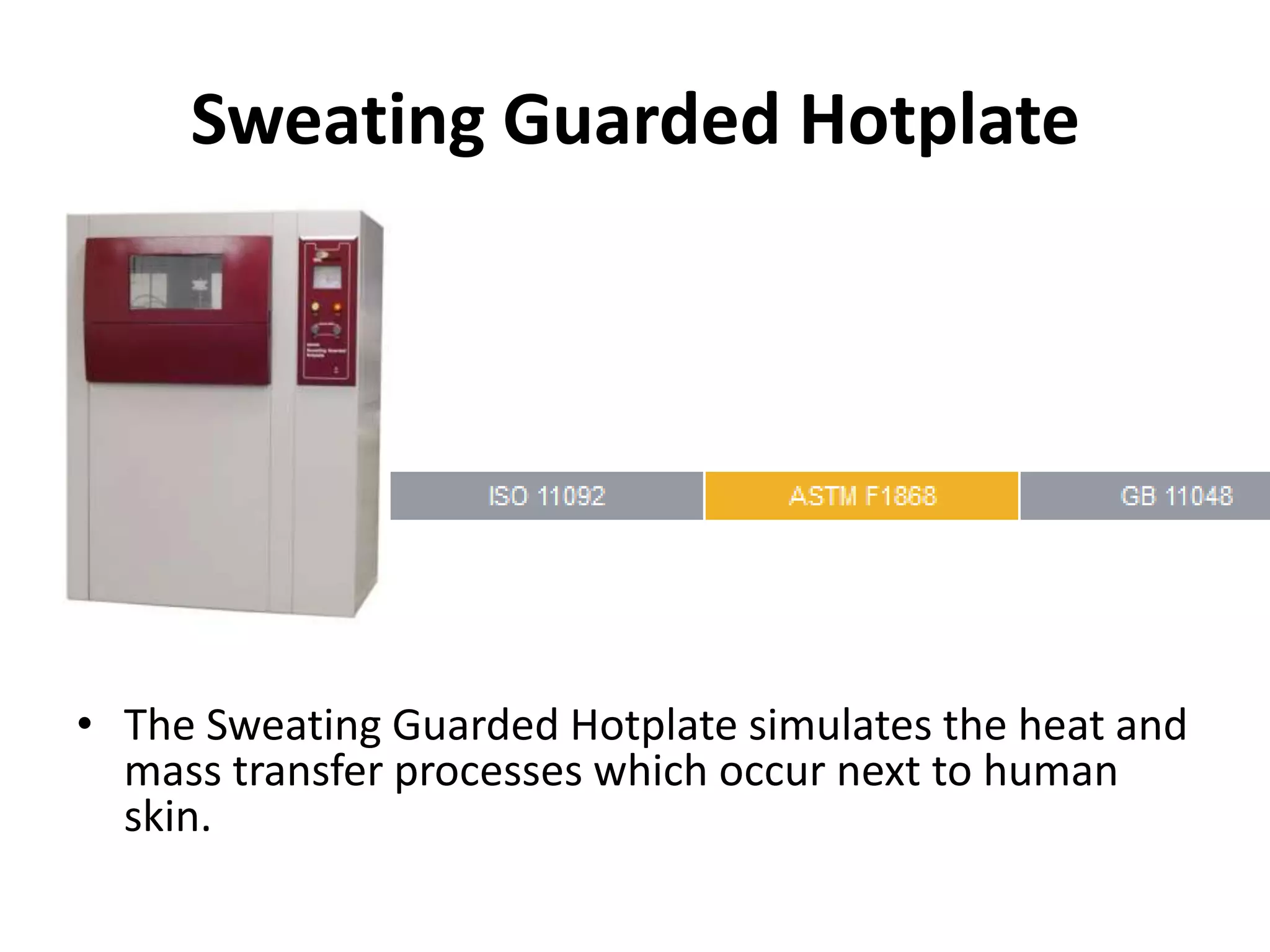
Sweating Guarded Hotplate
• The Sweating Guarded Hotplate simulates the heat and
mass transfer processes which occur next to human
skin.
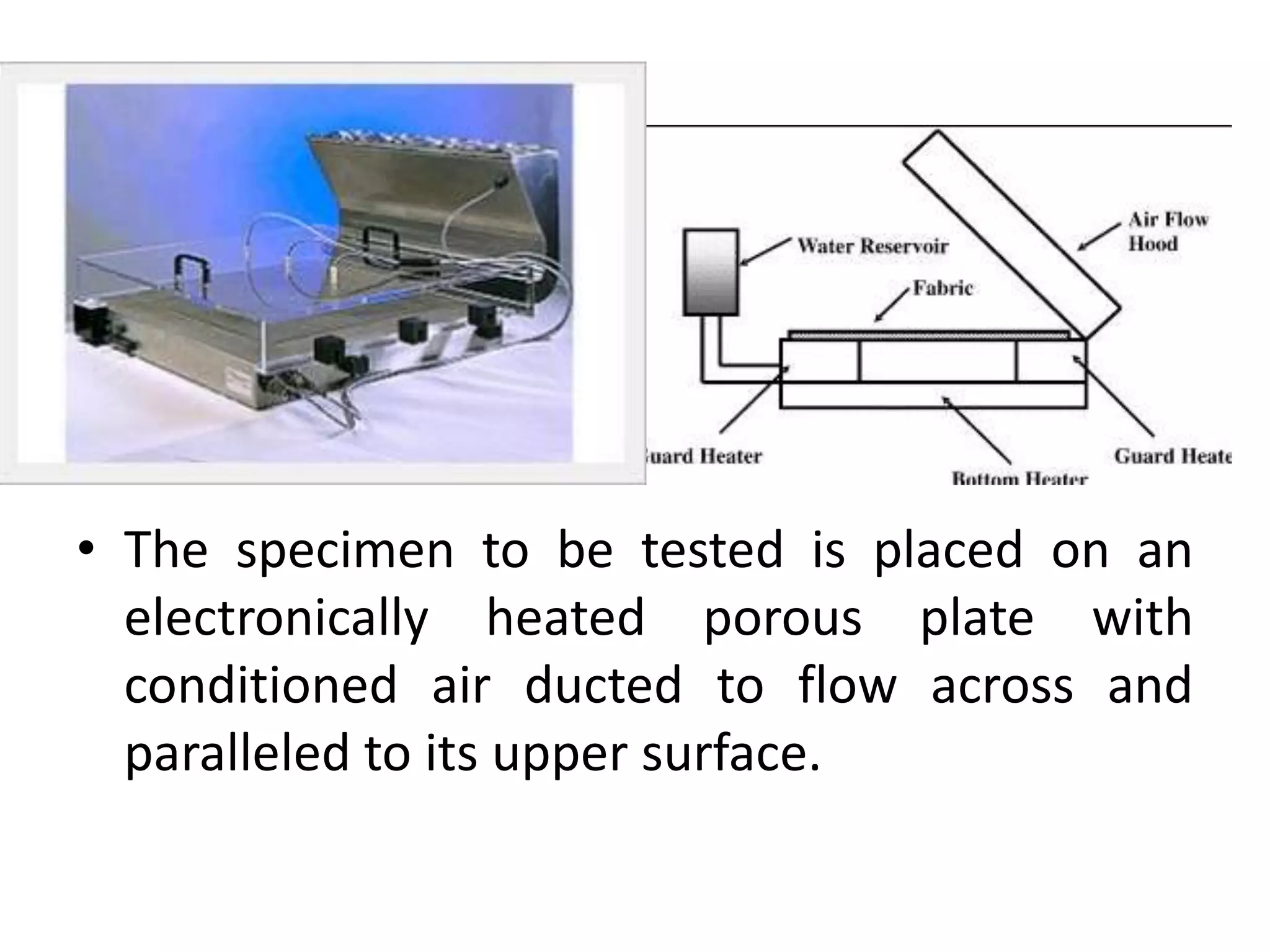
• The specimen to be tested is placed on an
electronically heated porous plate with
conditioned air ducted to flow across and
paralleled to its upper surface.
• The instrument includes the test enclosure
into which is constructed the measuring unit
and thermal guard, and in which the ambient
air temperature, air speed and relative
humidity are controlled, However the entire
system must be operated in conditions
conforming to ISO 139:2005 Textiles-Standard
Atmospheres for Conditioning and Testing.
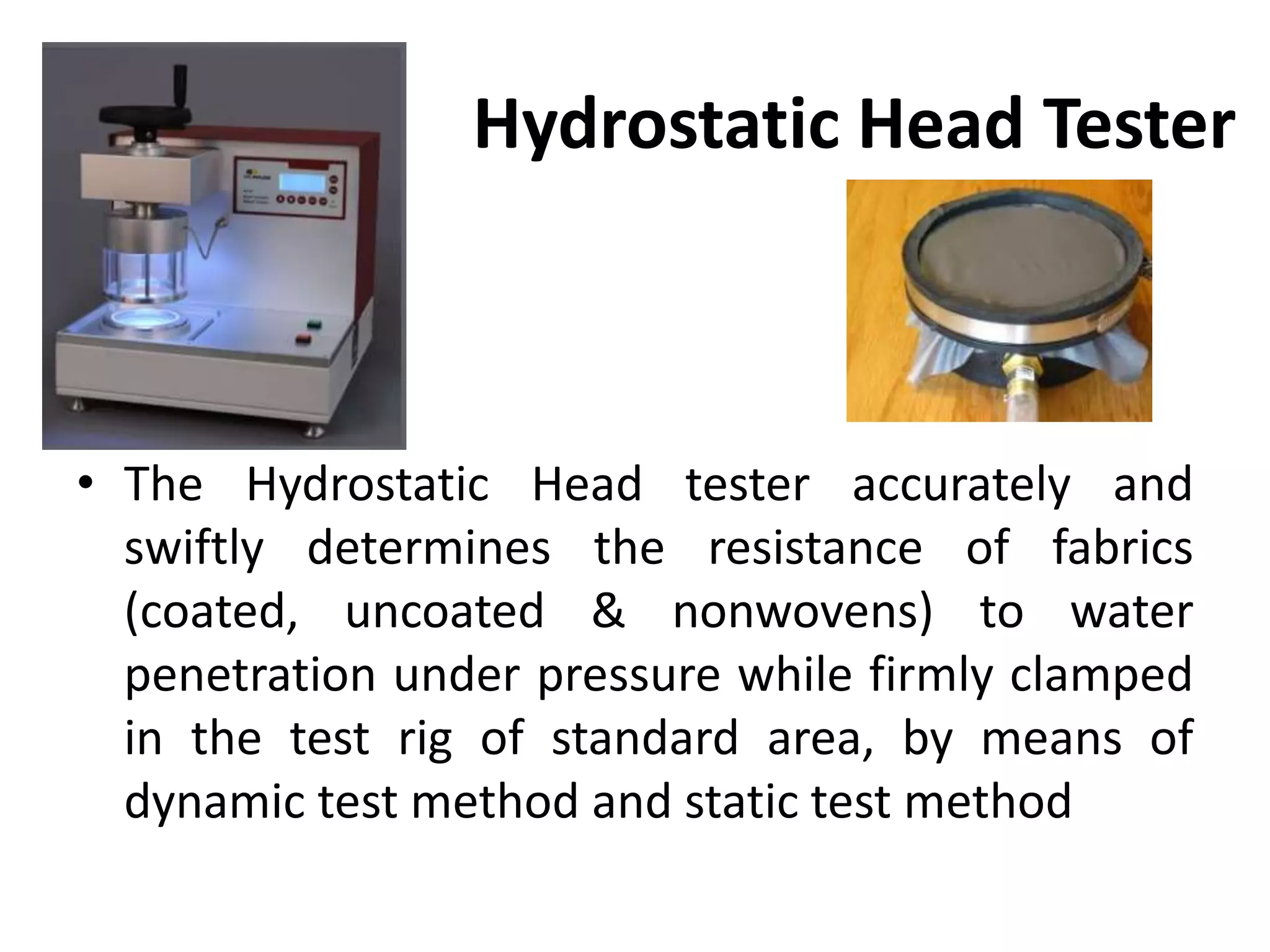
Hydrostatic Head Tester
• The Hydrostatic Head tester accurately and
swiftly determines the resistance of fabrics
(coated, uncoated & nonwovens) to water
penetration under pressure while firmly clamped
in the test rig of standard area, by means of
dynamic test method and static test method
• Laboratory standard compressed air supply is required
to produce the pressure from 0-3 bar inside a built-in
water tank filled with distilled water. The bank is linked
to a test head to which the specimen is clamped
quickly and easily by means of a hand wheel.
After the test has been started, the test pressure is
automatically controlled. The test specimen is
observed visually for evidence of penetration by water.
The test area is well illuminated and an unobstructed
observation of the sample is from all sides greatly
facilitates the visual drop detection. 100cm2 test head
is included with the instrument.
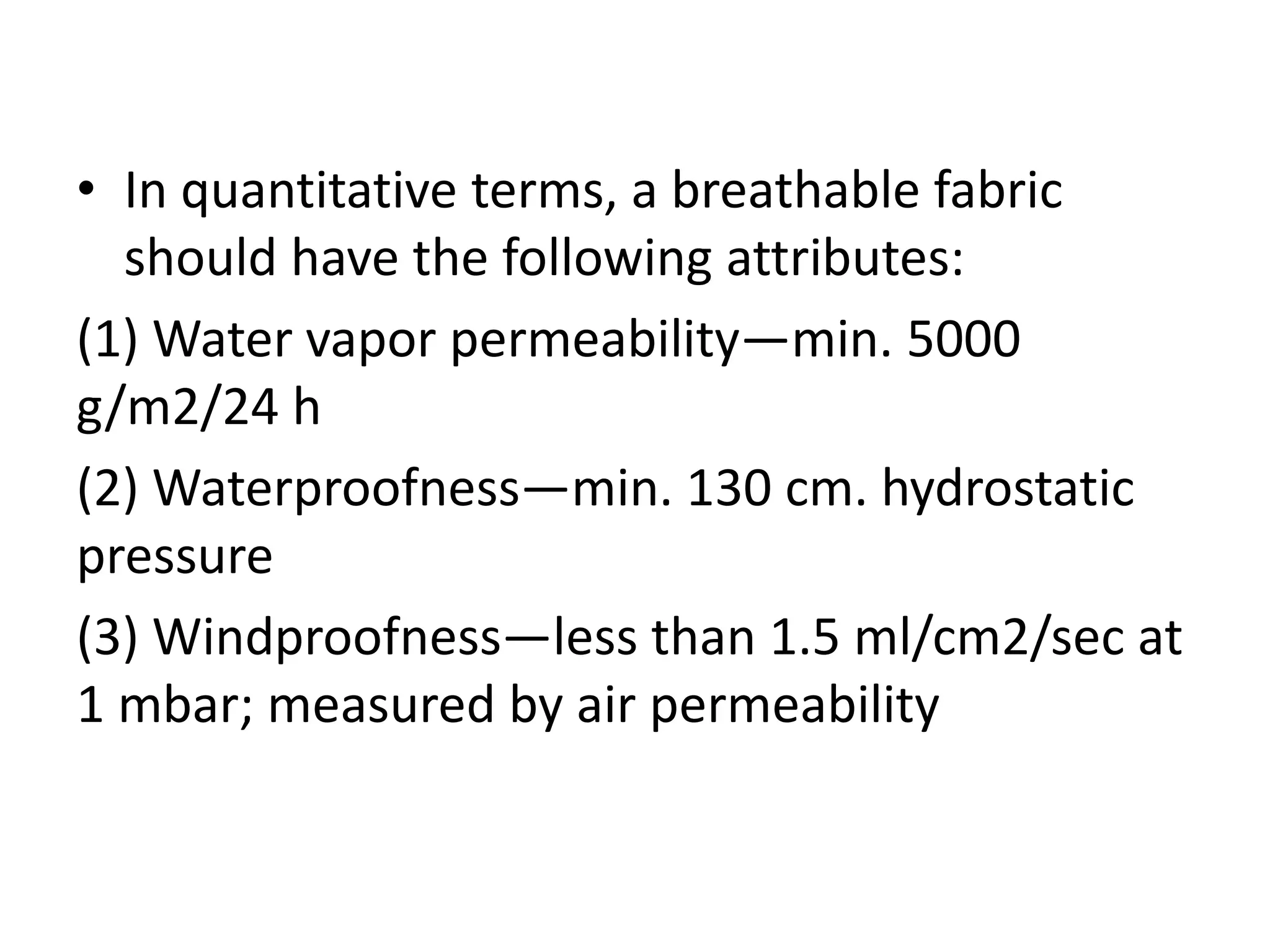
• In quantitative terms, a breathable fabric
should have the following attributes:
(1) Water vapor permeability—min. 5000
g/m2/24 h
(2) Waterproofness—min. 130 cm. hydrostatic
pressure
(3) Windproofness—less than 1.5 ml/cm2/sec at
1 mbar; measured by air permeability
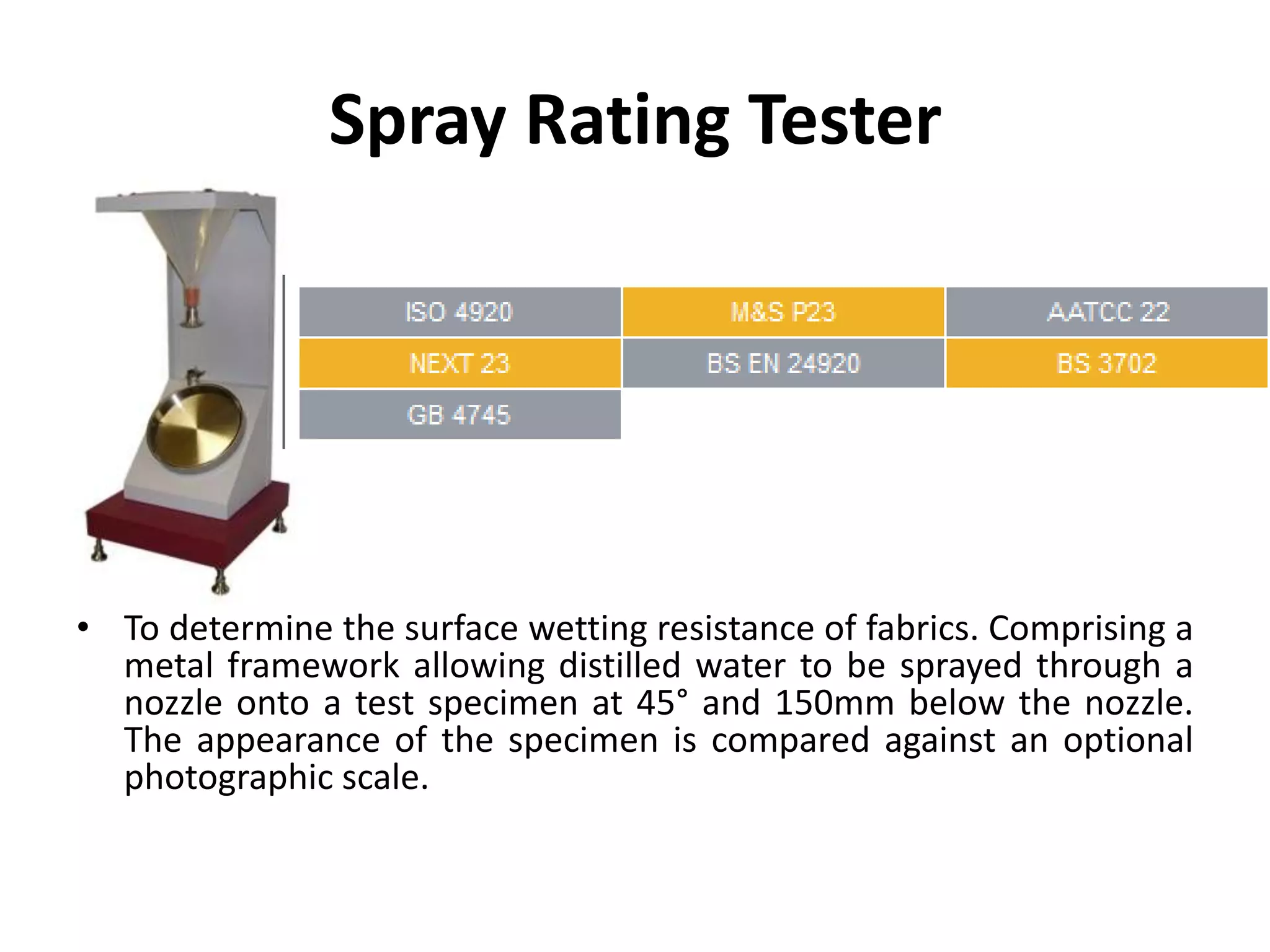
Spray Rating Tester
• To determine the surface wetting resistance of fabrics. Comprising a
metal framework allowing distilled water to be sprayed through a
nozzle onto a test specimen at 45° and 150mm below the nozzle.
The appearance of the specimen is compared against an optional
photographic scale.
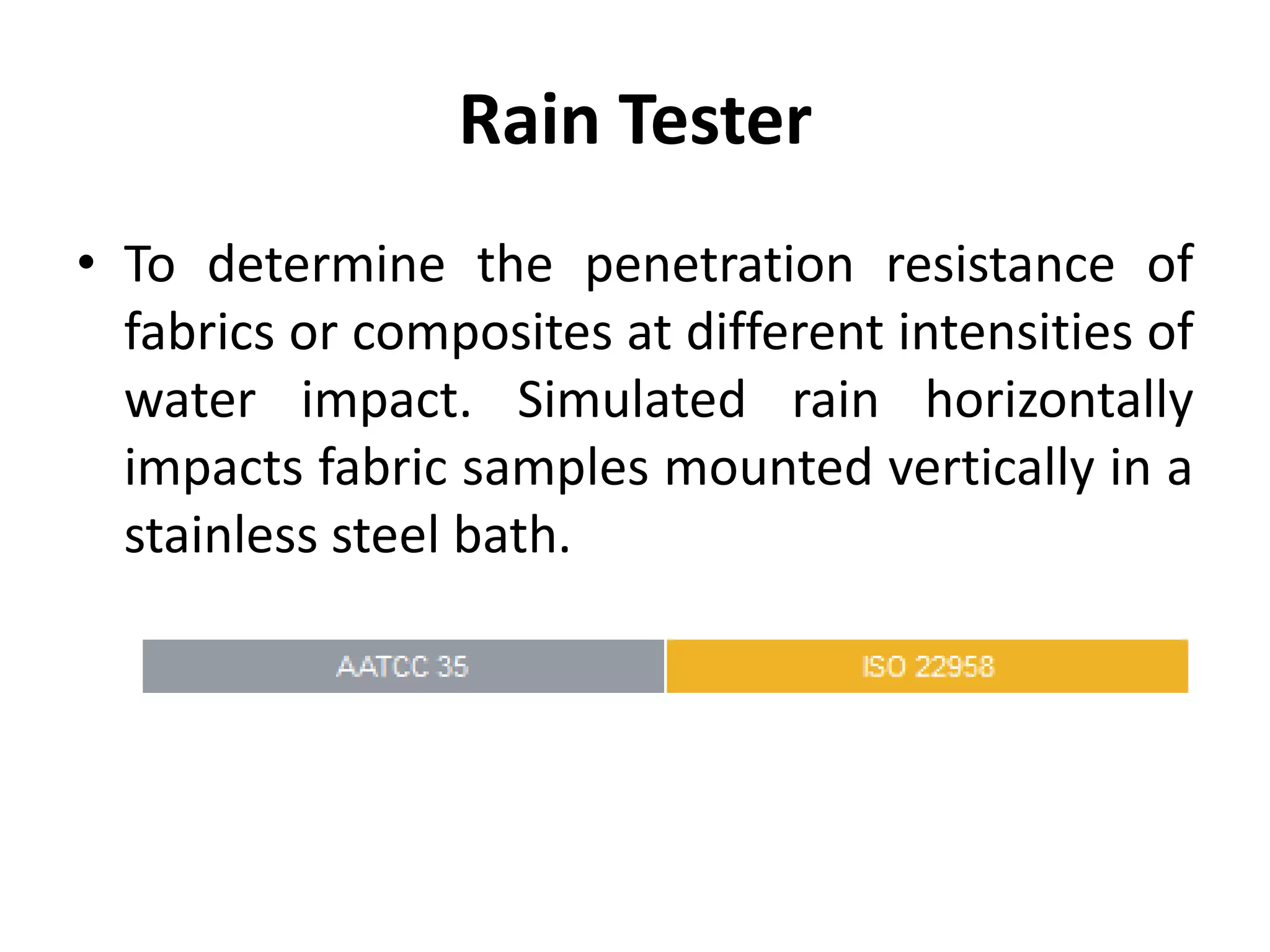
Rain Tester
• To determine the penetration resistance of
fabrics or composites at different intensities of
water impact. Simulated rain horizontally
impacts fabric samples mounted vertically in a
stainless steel bath.
• Samples are backed with a standardized blotting
paper which is weighed before and after each
test. The rain is formed by a column of water
which can be adjusted from 600mm (24in) to
1500mm (60in) or 2400mm (96in) depending on
model in 10mm (3/8in) increments, applied via a
standardized nozzle.
Provided with color touchscreen controller with
preset AATCC and ISO test
conditions, automatically controlling water
pressure, temperature and test time, built in
calibration functions, and automatic water level.
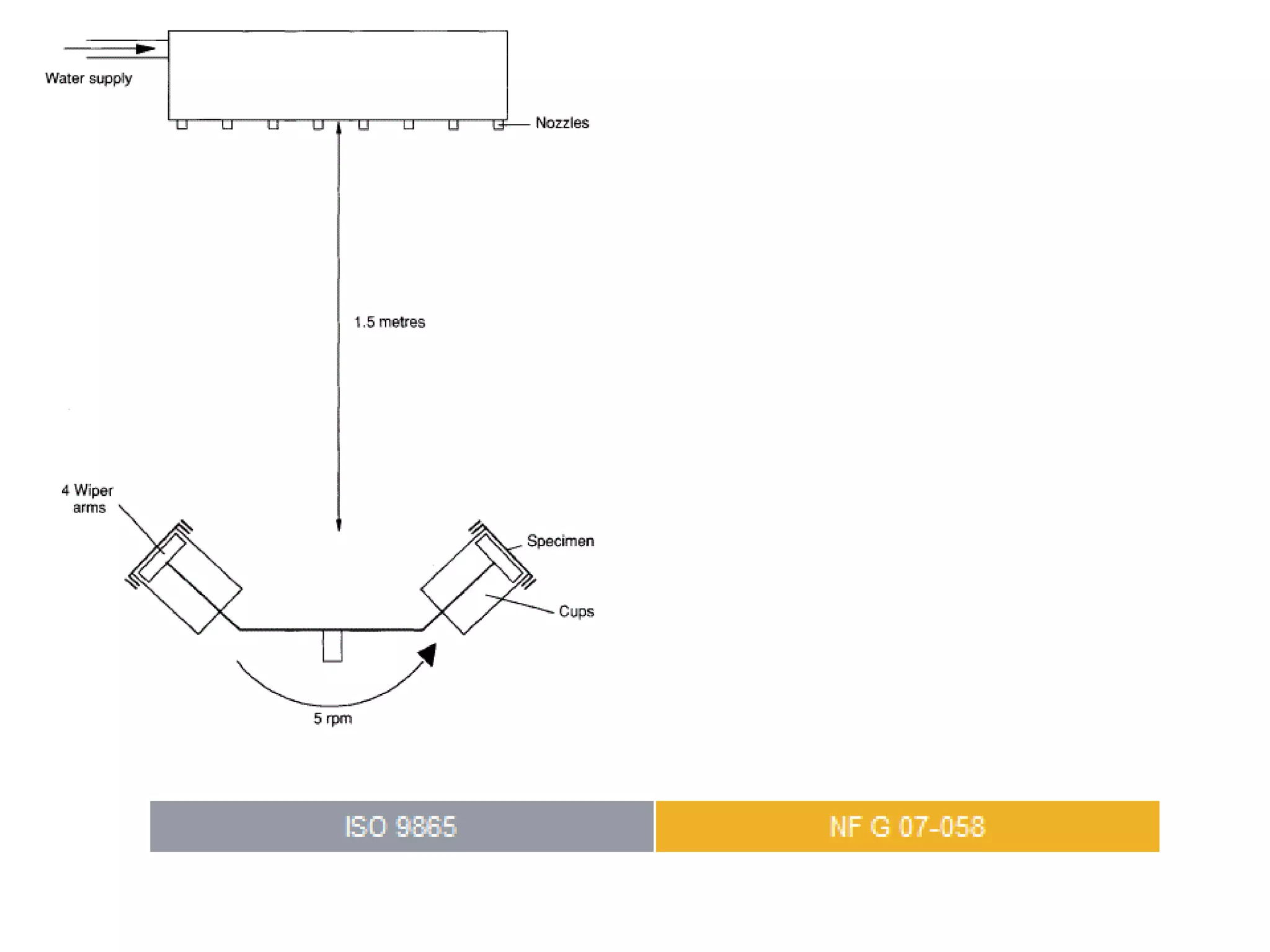
Bundesmann Water Repellency Tester
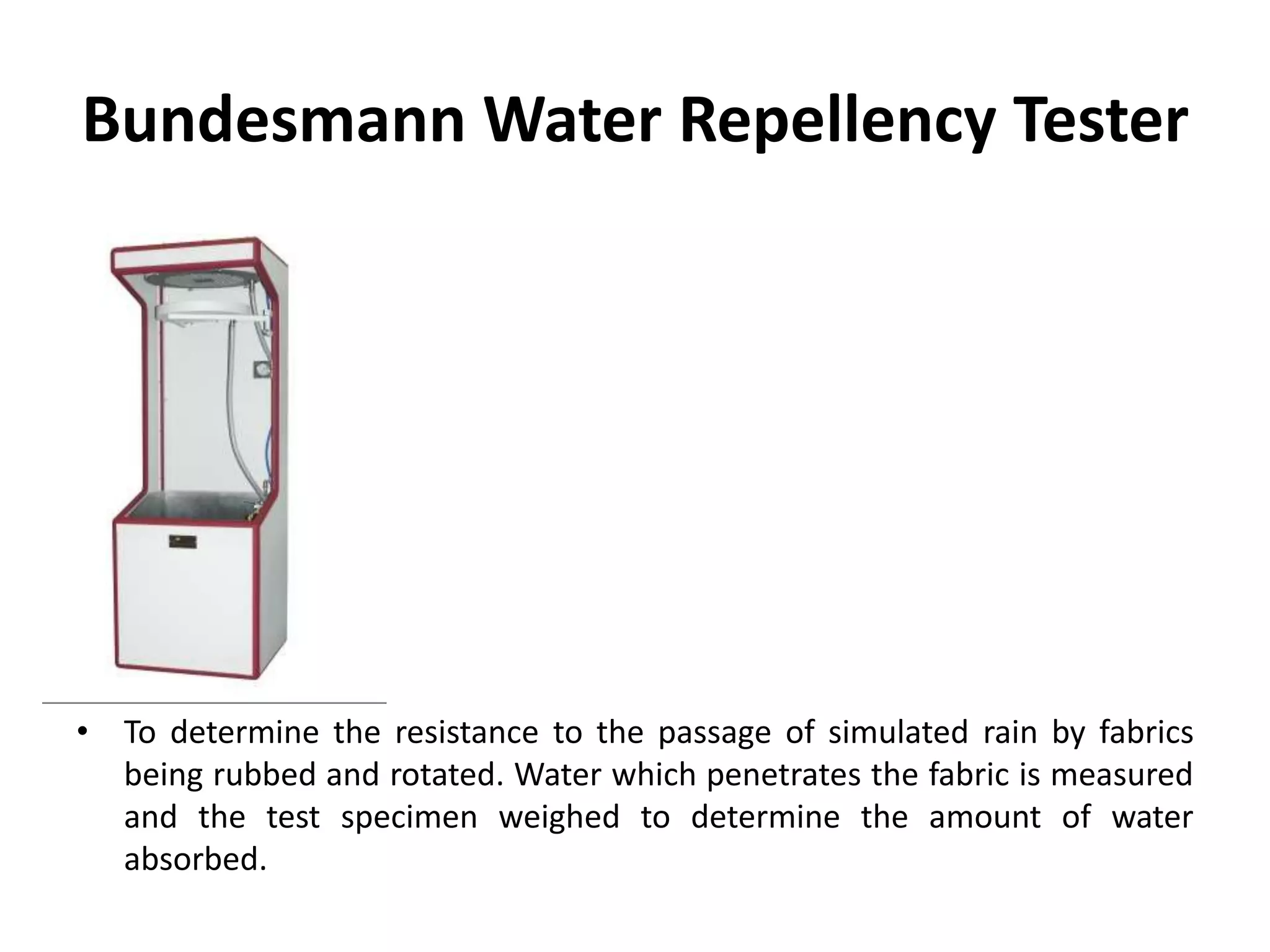
• To determine the resistance to the passage of simulated rain by fabrics
being rubbed and rotated. Water which penetrates the fabric is measured
and the test specimen weighed to determine the amount of water
absorbed.
• The tester consists of 4 specimen holders of
100mm diameter placed over cups with a
rotating member rubbing the underside. Rain
is produced using filtered water under
pressure and is allowed to fall from a height of
150cm through 304 bronze drop formers.
Optional centrifuge to remove excess surface
water from tested samples for evaluation.

Comfort testing

  • 1.
  • 2.
    TEGEWA Drop test •Method for the rapid determination of textile fabric absorption.
  • 3.
    Air Permeability Tester •The Digital Air Permeability Tester accurately and swiftly determines the resistance of fabrics (woven, knitted and non woven textile materials ) to the passage of air (air flow) under constant pre-set air pressure while firmly clamped in the test rig of selected test head/area.
  • 4.
    • The specimenis loaded to the test area of the instrument easily by means of a clamping lever. a powerful, muffled vacuum pump draws air through an interchangeable test head with a circular opening. The pre-selected test pressure is automatically maintained, and after a few seconds the air permeability of the test specimen is digitally displayed in the pre-selected unit of measure.
  • 6.
    Water Vapor PermeabilityTester • To determine the resistance of textiles and textile composites (particularly action wear fabrics) to water vapour penetration. The apparatus consists of 8 containers with water reservoirs, a standard permeable fabric cover, sample holder ring and precision drive system.
  • 7.
    MMT Moisture ManagementTester • Fabric liquid moisture transport properties in multi-dimensions, called moisture management properties, influence the human perception of moisture sensations. To improve the comfort of today's clothing, especially in sportswear, it is important to know the liquid moisture management properties. Although some test methods exist for evaluating absorbency, wicking and strike-through time, existing standards are unable to measure the behavior of liquid transfer in clothing materials dynamically.
  • 8.
    • The MoistureManagement Tester (MMT) was developed to measure dynamic liquid transport properties of knit and woven fabrics in three dimensions... 1. Absorption Rate - Moisture absorbing time of the fabric's inner and outer surfaces. 2. One-way Transportation Capability - One- way transfer from fabric's inner surface to outer surface. 3. Spreading/Drying Rate - Speed of liquid moisture spreading on fabric's inner and outer surfaces.
  • 9.
    • MMT consistsof upper and lower concentric moisture sensors. The specimen is held flat under fixed pressure between the sensors while standard test solution is introduced on to the top surface of the fabric. Electrical resistance changes between the upper and lower sensors are then recorded dynamically on computer.
  • 10.
    • MMT permitsthe measurement of the following indexes: - Wetting Time Top/Bottom (WTT/WTB) - Absorption Rate Top/Bottom (TAR/BAR) - Maximum Wetted Radius Top/Bottom (MWRT/MWRB) - Spreading Speed Top/Bottom (TSS/BSS) - Accumulative One-Way Transport Capacity (R) - Overall Moisture Management Capacity (OMMC)
  • 11.
    Drying Rate Tester •The Drying Rate Tester gives retailers, fabric manufacturers, and textile additive producers a consistent method of measuring the drying rate of a fabric. This device can be used independently to find a drying rate or in conjunction with the SDL Atlas Moisture Management Tester (MMT) in order to obtain a more complete understanding of the moisture management properties of a performance fabric.
  • 13.
    Digital Pneumatic StiffnessTester • ASTM D4032
  • 14.
    Softness Tester • SoftnessTester Analogue or Digital. Designed for use in the leather industry and in the textile industry for coated fabrics and other soft materials. Deflection of the material whilst clamped above an aperture of a known diameter is measured when subjected to a specific load applied by a pin of a smaller diameter. The deflection is read on the analogue or digital gauges.
  • 15.
    Sweating Guarded Hotplate •The Sweating Guarded Hotplate simulates the heat and mass transfer processes which occur next to human skin.
  • 16.
    • The specimento be tested is placed on an electronically heated porous plate with conditioned air ducted to flow across and paralleled to its upper surface.
  • 17.
    • The instrumentincludes the test enclosure into which is constructed the measuring unit and thermal guard, and in which the ambient air temperature, air speed and relative humidity are controlled, However the entire system must be operated in conditions conforming to ISO 139:2005 Textiles-Standard Atmospheres for Conditioning and Testing.
  • 18.
    Hydrostatic Head Tester •The Hydrostatic Head tester accurately and swiftly determines the resistance of fabrics (coated, uncoated & nonwovens) to water penetration under pressure while firmly clamped in the test rig of standard area, by means of dynamic test method and static test method
  • 19.
    • Laboratory standardcompressed air supply is required to produce the pressure from 0-3 bar inside a built-in water tank filled with distilled water. The bank is linked to a test head to which the specimen is clamped quickly and easily by means of a hand wheel. After the test has been started, the test pressure is automatically controlled. The test specimen is observed visually for evidence of penetration by water. The test area is well illuminated and an unobstructed observation of the sample is from all sides greatly facilitates the visual drop detection. 100cm2 test head is included with the instrument.
  • 21.
    • In quantitativeterms, a breathable fabric should have the following attributes: (1) Water vapor permeability—min. 5000 g/m2/24 h (2) Waterproofness—min. 130 cm. hydrostatic pressure (3) Windproofness—less than 1.5 ml/cm2/sec at 1 mbar; measured by air permeability
  • 22.
    Spray Rating Tester •To determine the surface wetting resistance of fabrics. Comprising a metal framework allowing distilled water to be sprayed through a nozzle onto a test specimen at 45° and 150mm below the nozzle. The appearance of the specimen is compared against an optional photographic scale.
  • 23.
    Rain Tester • Todetermine the penetration resistance of fabrics or composites at different intensities of water impact. Simulated rain horizontally impacts fabric samples mounted vertically in a stainless steel bath.
  • 24.
    • Samples arebacked with a standardized blotting paper which is weighed before and after each test. The rain is formed by a column of water which can be adjusted from 600mm (24in) to 1500mm (60in) or 2400mm (96in) depending on model in 10mm (3/8in) increments, applied via a standardized nozzle. Provided with color touchscreen controller with preset AATCC and ISO test conditions, automatically controlling water pressure, temperature and test time, built in calibration functions, and automatic water level.
  • 25.
    Bundesmann Water RepellencyTester • To determine the resistance to the passage of simulated rain by fabrics being rubbed and rotated. Water which penetrates the fabric is measured and the test specimen weighed to determine the amount of water absorbed.
  • 27.
    • The testerconsists of 4 specimen holders of 100mm diameter placed over cups with a rotating member rubbing the underside. Rain is produced using filtered water under pressure and is allowed to fall from a height of 150cm through 304 bronze drop formers. Optional centrifuge to remove excess surface water from tested samples for evaluation.