Downloaded 518 times
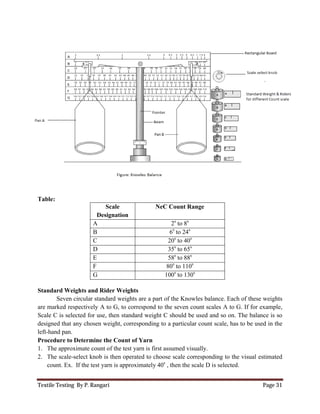
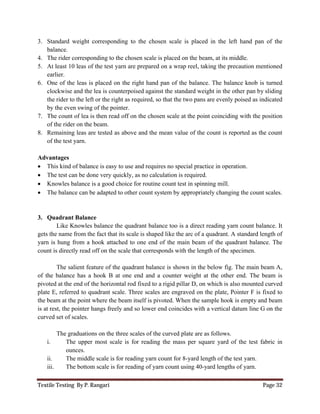
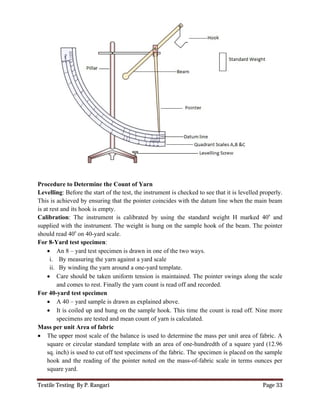
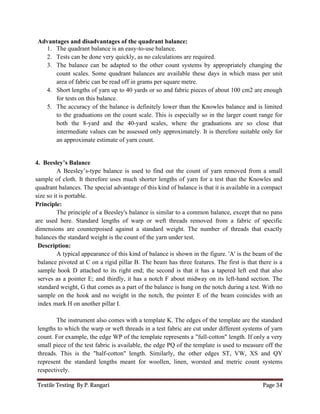
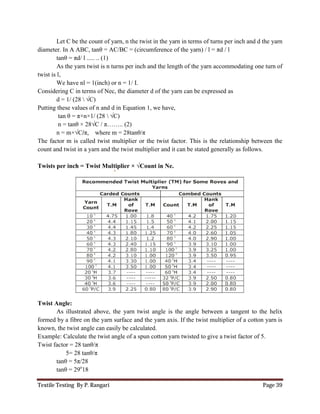
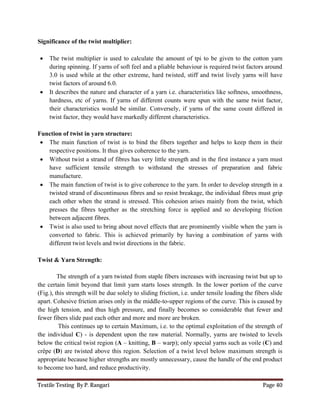
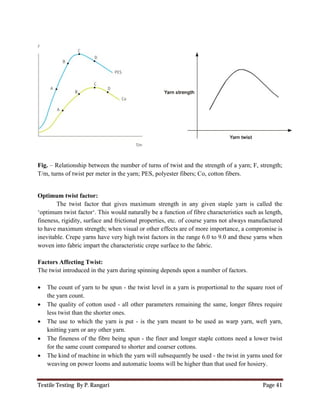
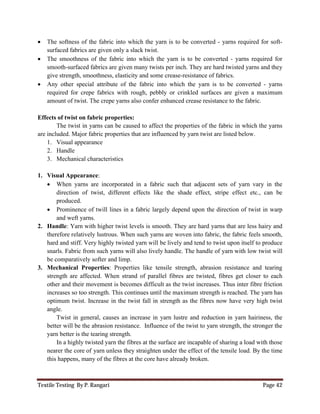
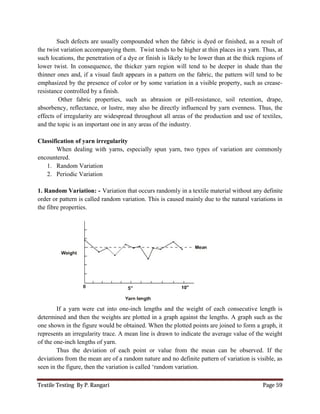
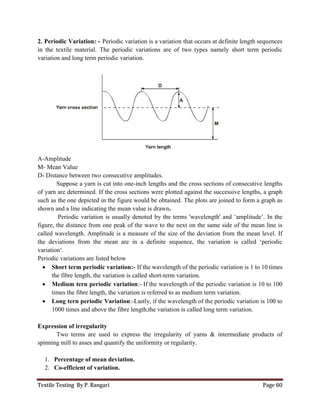
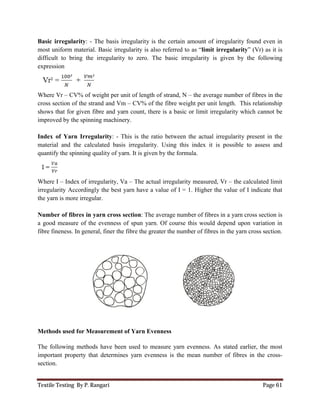
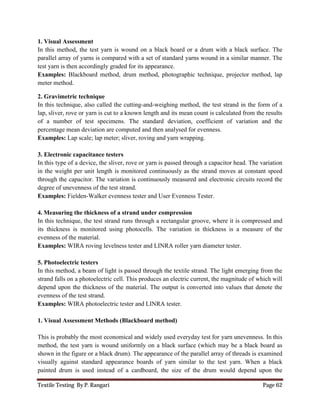
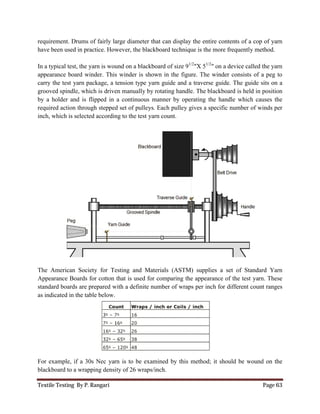
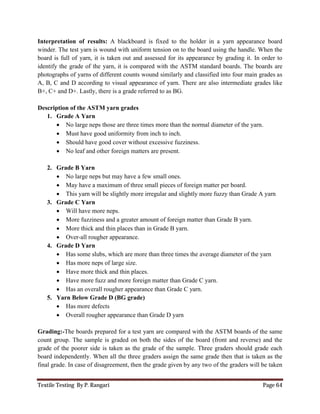
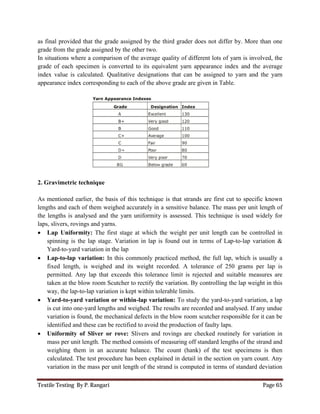
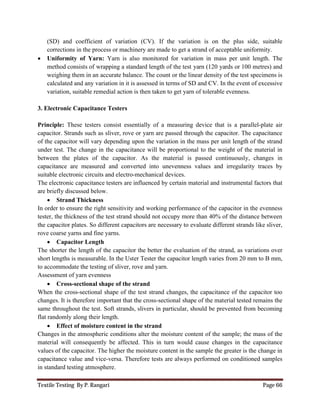
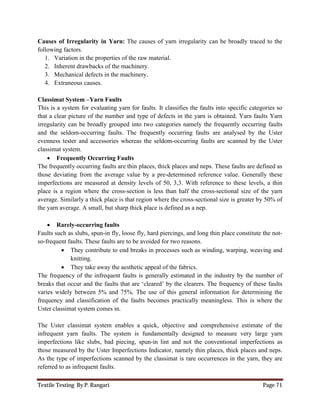
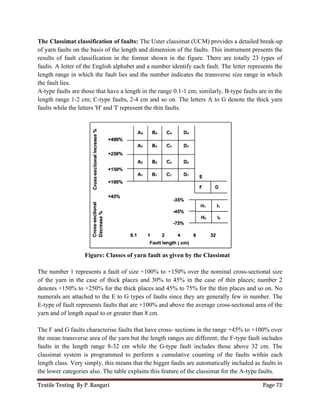
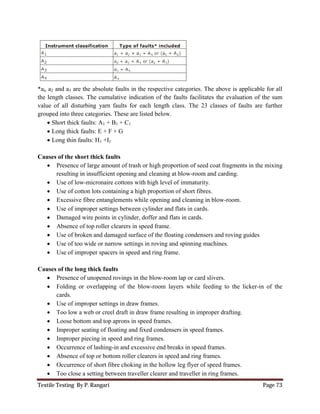
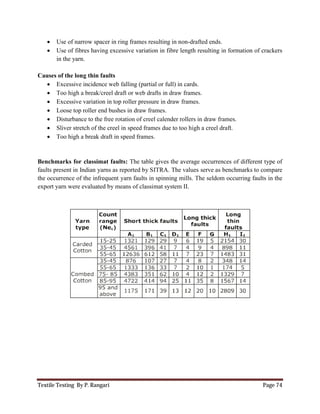
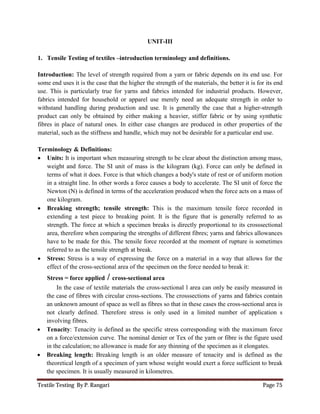
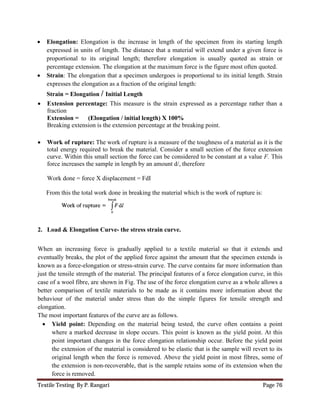
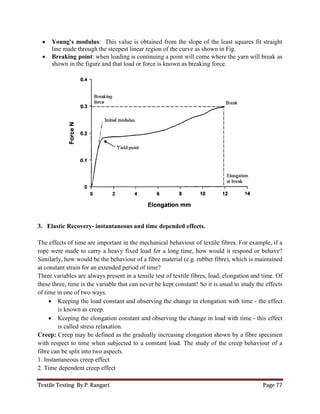
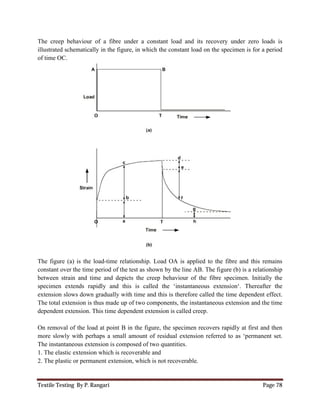
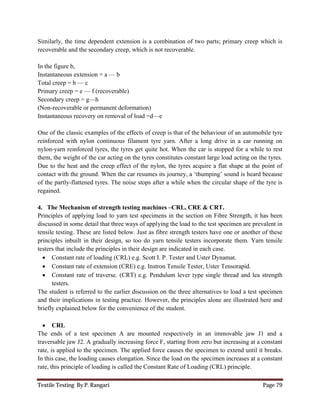
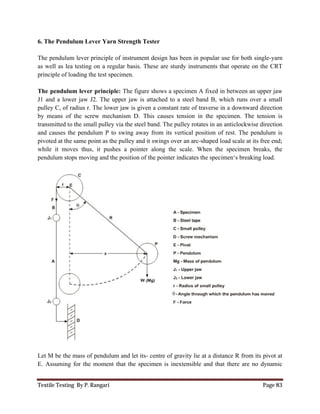
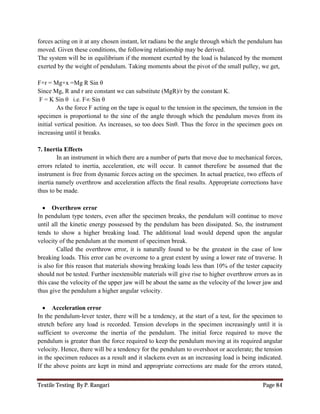
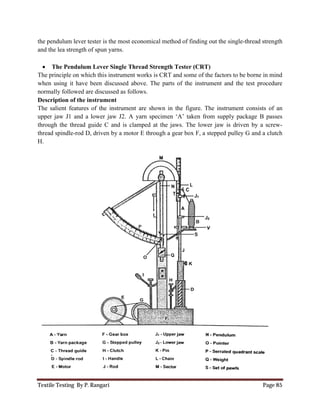
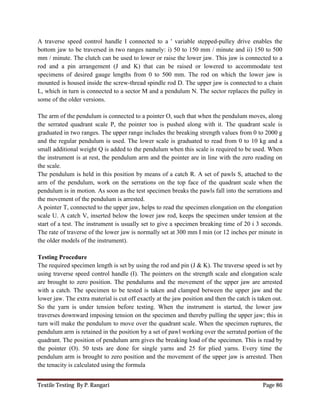
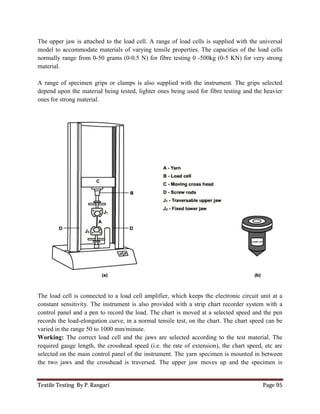
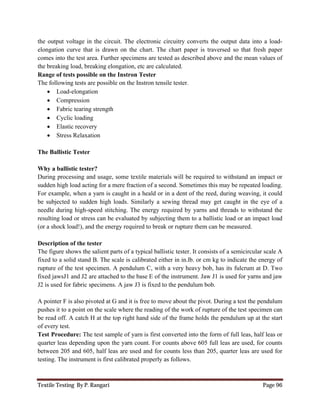
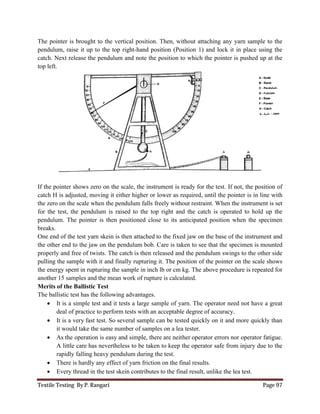
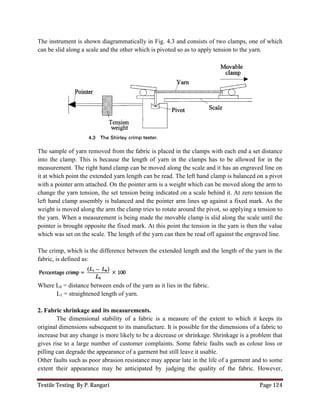
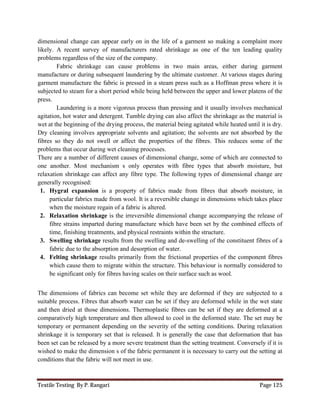
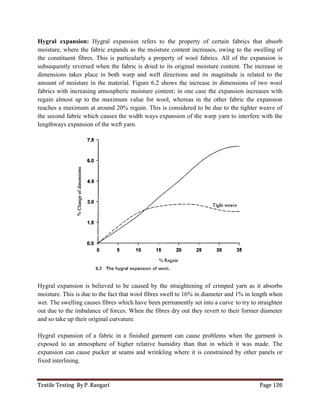
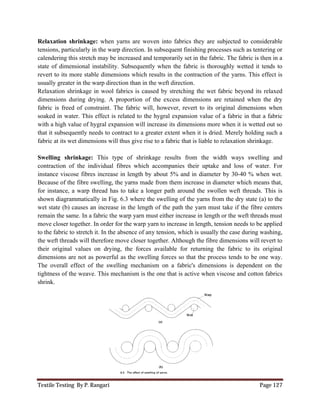
![Textile Testing By P. Rangari Page 98
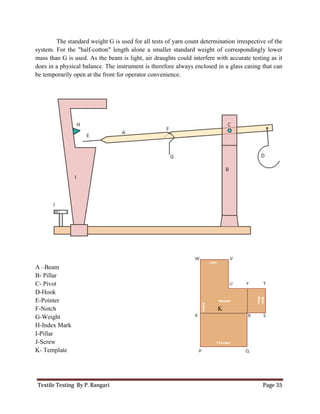
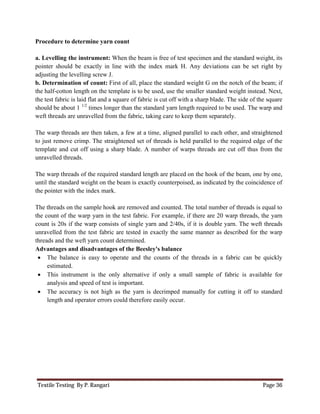
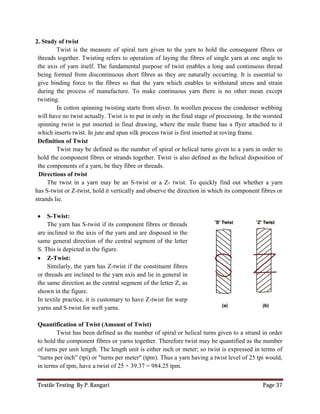
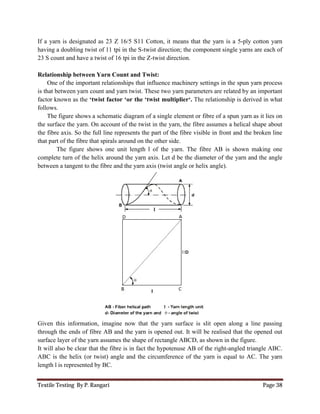
The ruptured lea may be used for determination of yarn count. So like the lea tester, two
properties are simultaneously evaluated.
The ballistic test is capable of highlighting weak places in the yarn and yarn evenness
with greater consistency than a lea test.
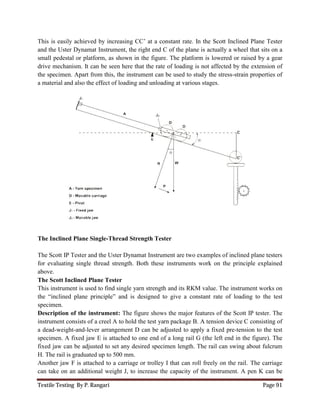
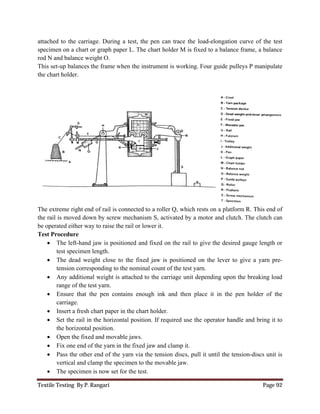
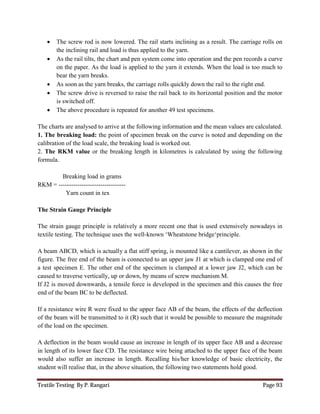
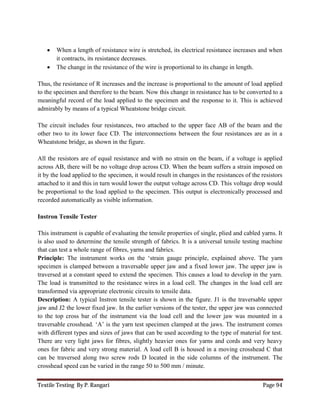
The work of rupture is a good indicator of the breaking load and the breaking extension
of a yarn. The ballistic test thus indirectly provides a combined measure of these two
important yarn properties.
CSP & CORRECTED CSP
Lea Count Strength Product (Break Factor or Yarn Factor)
The product of the count of a yarn in Ne and its lea strength in pounds is called the Lea Count
Strength Product or the Lea CSP. It has also been referred to as the break factor or the ‘yarn
factor‘. The lea CSP is used even today as an important yarn parameter. It has been found to be
very useful in the assessment of the character of a given cotton yarn from the strength point of
view. It also enables comparisons to be made between yarns of similar, but not necessarily,
identical count. The count strength product of a yarn tested under a given set of conditions can be
calculated for another set of conditions. The formula given below can be used.
80 x N x S
Count Strength Product (CSP) = —————
W
Where
S — Average yarn breaking load (lea strength) in lb (kg 2 206)
N — Average yarn count in an indirect system
W — number of wraps (strands) in skein
Simplified Formula
CSP = N×S
Corrected CSP
The actual count of a spun yarn would generally be slightly different from its nominal count, i.e.
the desired count. A yarn of 40s nominal count could turn out to have a mean actual count of
39.7 or sometimes 40.2, and so on. The yarn manufacturer usually labels all the yarn bundles
produced with the CSP values in terms of the nominal count of the yarn. The actual mean CSP of
a given yarn thus needs to be corrected to the nominal yarn count.
The following ASTM formula, applicable to American Upland-type cottons, is used to get the
corrected strength.
S2 = [N1S1-18.27 (N2-N1)] / N2
Where, N1 = actual count, S1 = actual strength in lb, N2 = nominal count, S2 = corrected strength
in lb. The CSP corrected to nominal yarn count = N2S2.](https://image.slidesharecdn.com/textiletesting-150204210451-conversion-gate01/85/Textile-testing-99-320.jpg)
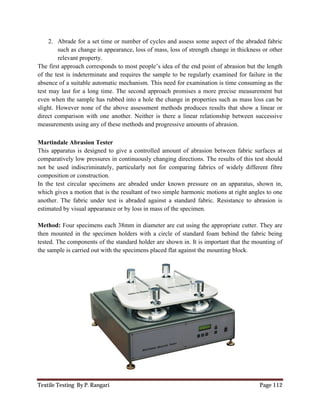
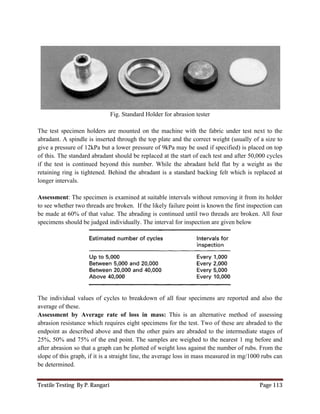
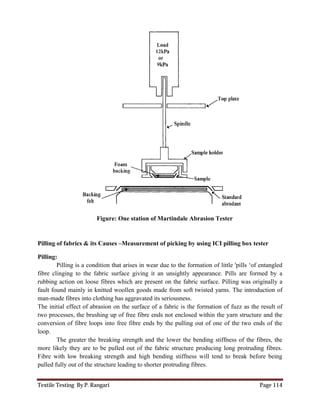
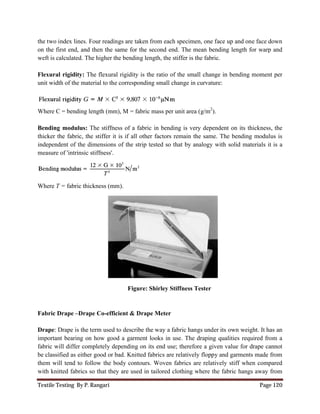
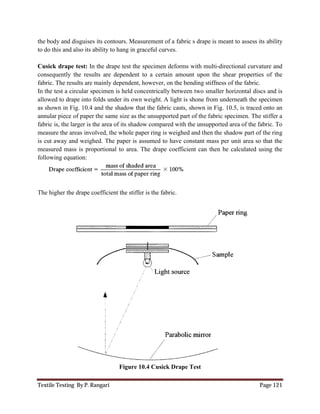
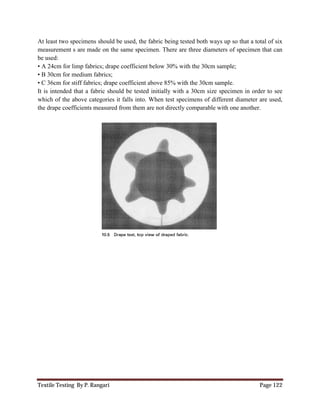
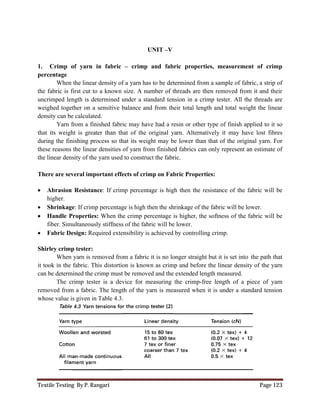

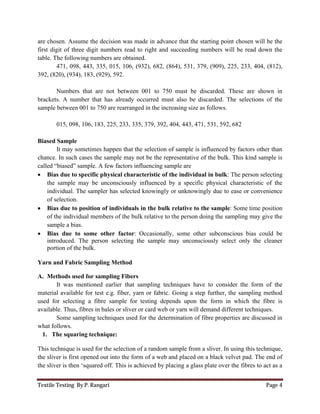
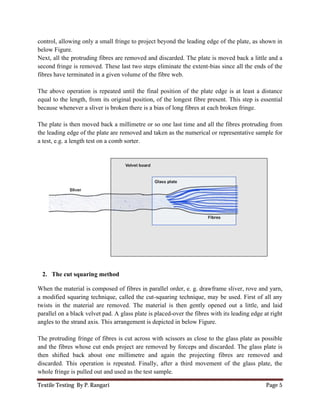
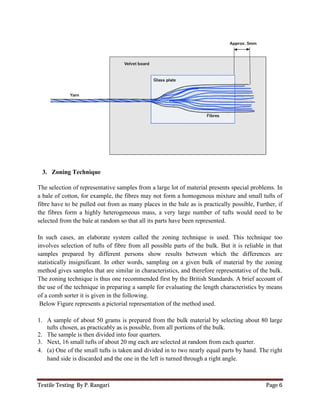
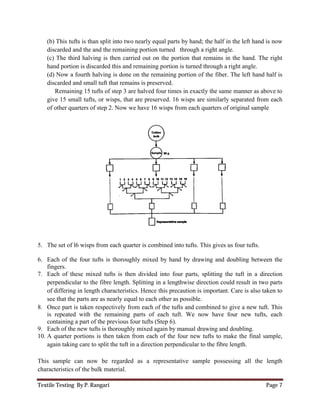
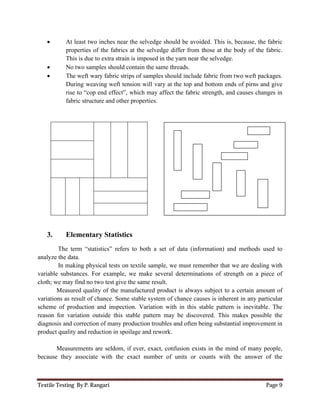
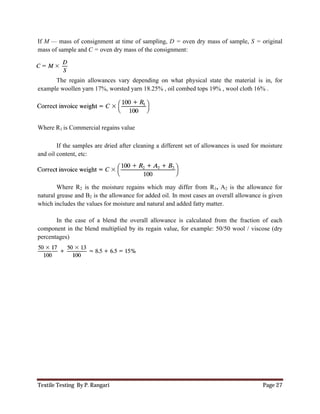
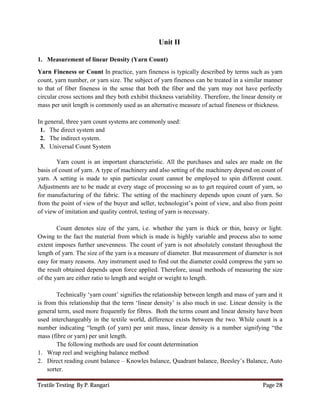
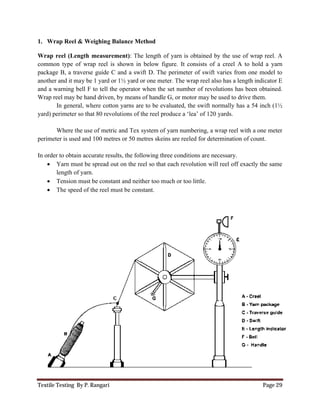
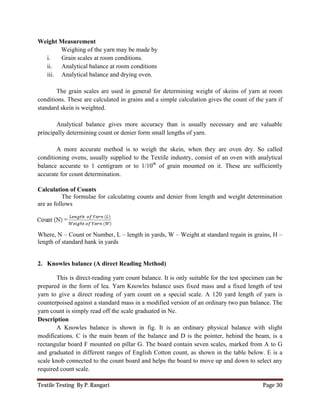
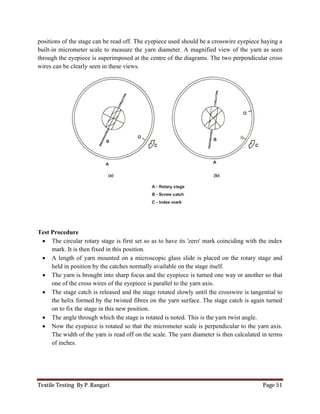
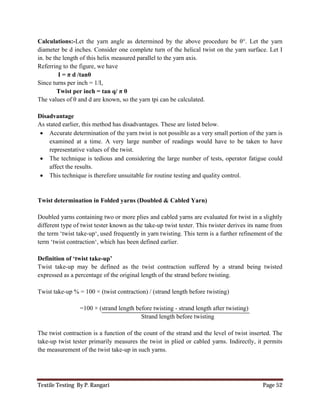
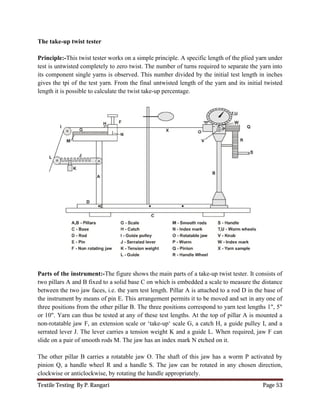
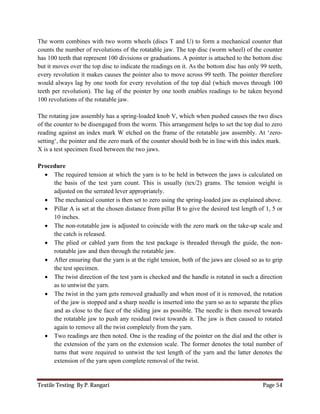
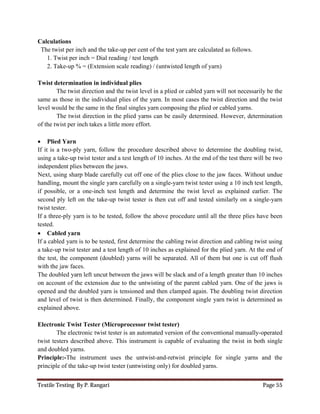
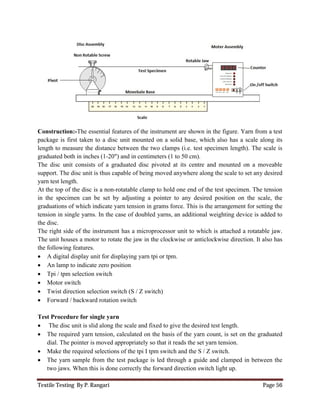
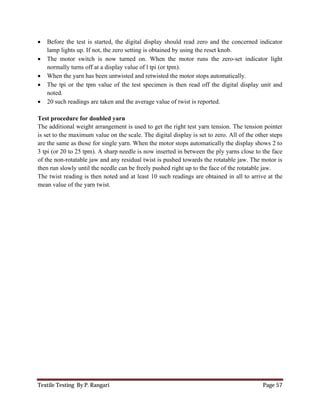
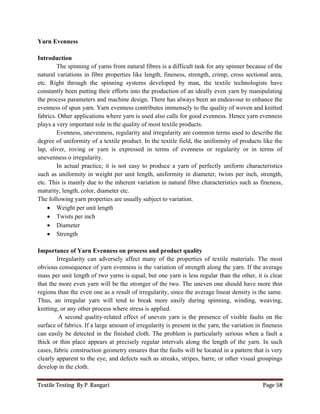
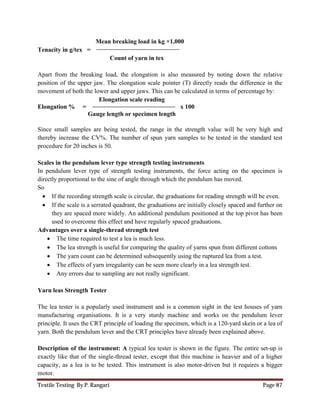
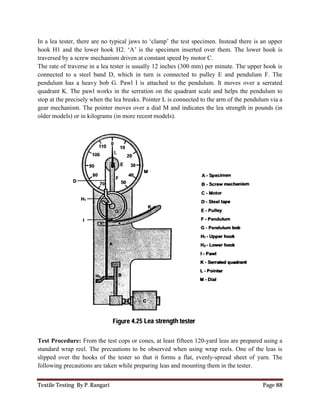
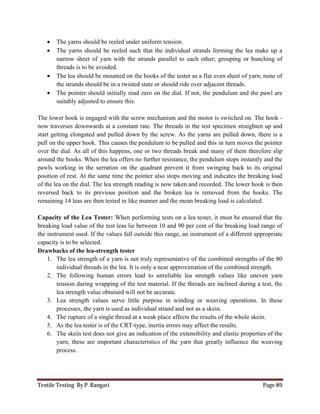
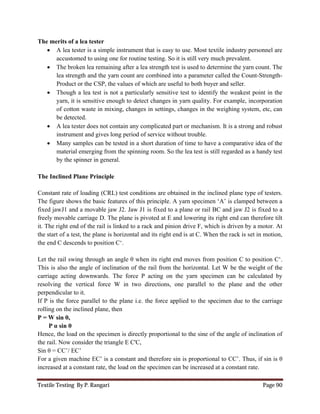
Textile testing involves measuring properties and characteristics of textiles using techniques, tools, instruments, and machines in the laboratory. It is important for quality control in the textile industry and helps establish standards and specifications. There are various sampling techniques used for textile testing depending on the form of the material (fiber, yarn, fabric), amount of material, type of test, and information required. Random sampling aims to select samples randomly to represent the bulk material, while biased sampling may be influenced by other factors. Common fiber sampling techniques include squaring, cut squaring, and zoning to select representative samples.


