Electrical Conductivity


Materials
   1.   250ml beaker
   2.   100 ml water
   3.   Electrical conductivity tester
   4.   NaCl
   5.   Timer
   6.   Goggle
   7.   Balance
   8.   May be more


Design
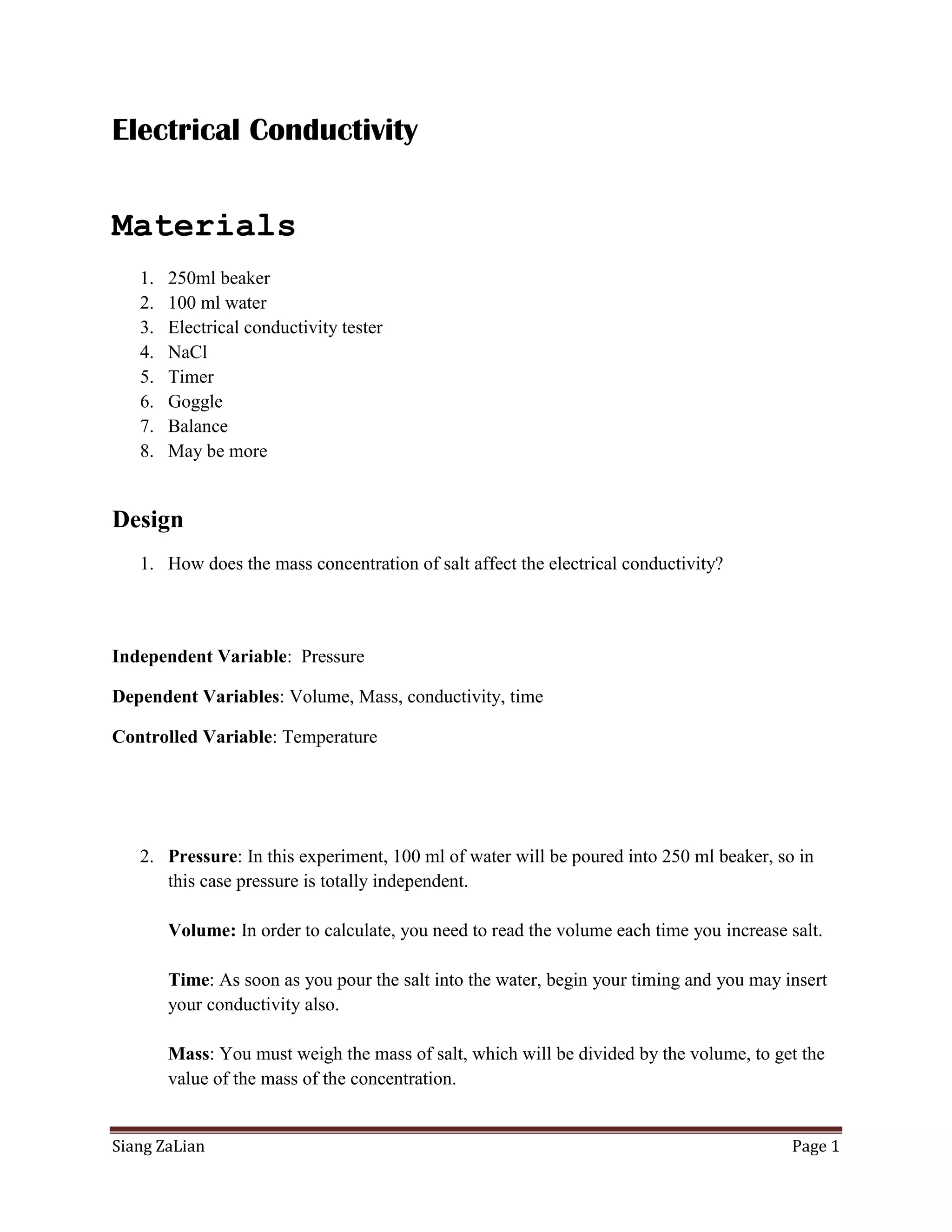
   1. How does the mass concentration of salt affect the electrical conductivity?


Independent Variable: Pressure

Dependent Variables: Volume, Mass, conductivity, time

Controlled Variable: Temperature


   2. Pressure: In this experiment, 100 ml of water will be poured into 250 ml beaker, so in
      this case pressure is totally independent.

        Volume: In order to calculate, you need to read the volume each time you increase salt.

        Time: As soon as you pour the salt into the water, begin your timing and you may insert
        your conductivity also.

        Mass: You must weigh the mass of salt, which will be divided by the volume, to get the
        value of the mass of the concentration.


Siang ZaLian                                                                              Page 1
Conductivity: This is the most vital part; you need to record the conductivity data on
       your table each time you repeat.

       Temperature: Temperature is the one variable that you want to keep constant as possible
       as you can, because as result of the temperature change the reaction rate will vary also.

       Procedure

       1. Be ready with your materials.
       2. Put 100ml of water in 250ml beaker.
       3. Weight 10 g of salt and add to the water. (Stir little bit) Don’t forget to time the rate
          of reaction.
       4. After they dissolve completely, insert the conductivity tester into the water and
          record the data in Volt or depending on what kind of tester you use.
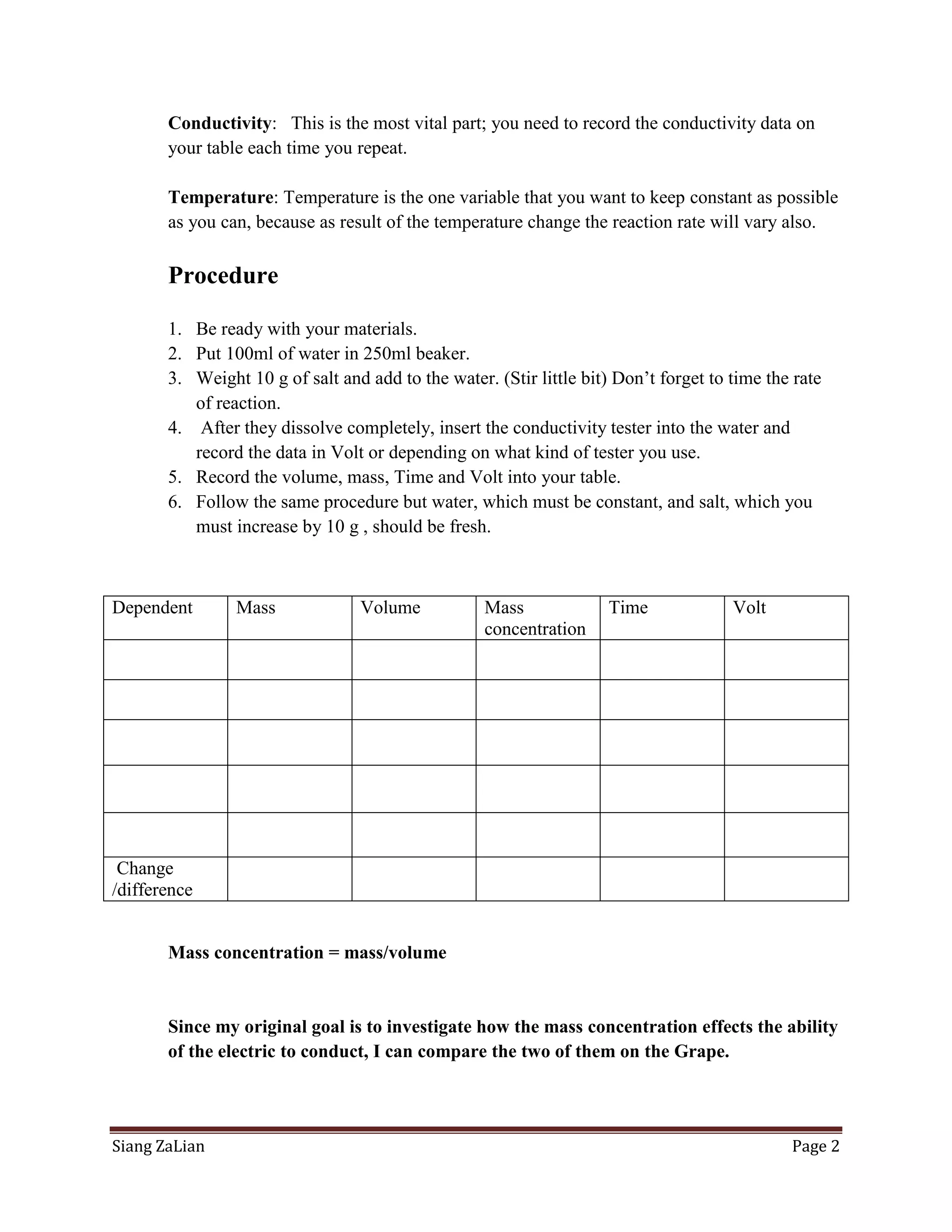
       5. Record the volume, mass, Time and Volt into your table.
       6. Follow the same procedure but water, which must be constant, and salt, which you
          must increase by 10 g , should be fresh.


Dependent       Mass              Volume           Mass              Time             Volt
                                                   concentration


 Change
/difference


       Mass concentration = mass/volume


       Since my original goal is to investigate how the mass concentration effects the ability
       of the electric to conduct, I can compare the two of them on the Grape.


Siang ZaLian                                                                                  Page 2

Electrical conductivity

  • 1.
    Electrical Conductivity Materials 1. 250ml beaker 2. 100 ml water 3. Electrical conductivity tester 4. NaCl 5. Timer 6. Goggle 7. Balance 8. May be more Design 1. How does the mass concentration of salt affect the electrical conductivity? Independent Variable: Pressure Dependent Variables: Volume, Mass, conductivity, time Controlled Variable: Temperature 2. Pressure: In this experiment, 100 ml of water will be poured into 250 ml beaker, so in this case pressure is totally independent. Volume: In order to calculate, you need to read the volume each time you increase salt. Time: As soon as you pour the salt into the water, begin your timing and you may insert your conductivity also. Mass: You must weigh the mass of salt, which will be divided by the volume, to get the value of the mass of the concentration. Siang ZaLian Page 1
  • 2.
    Conductivity: This isthe most vital part; you need to record the conductivity data on your table each time you repeat. Temperature: Temperature is the one variable that you want to keep constant as possible as you can, because as result of the temperature change the reaction rate will vary also. Procedure 1. Be ready with your materials. 2. Put 100ml of water in 250ml beaker. 3. Weight 10 g of salt and add to the water. (Stir little bit) Don’t forget to time the rate of reaction. 4. After they dissolve completely, insert the conductivity tester into the water and record the data in Volt or depending on what kind of tester you use. 5. Record the volume, mass, Time and Volt into your table. 6. Follow the same procedure but water, which must be constant, and salt, which you must increase by 10 g , should be fresh. Dependent Mass Volume Mass Time Volt concentration Change /difference Mass concentration = mass/volume Since my original goal is to investigate how the mass concentration effects the ability of the electric to conduct, I can compare the two of them on the Grape. Siang ZaLian Page 2