

Prepared by
 Takbir Ahmed
 29th Batch
 Dept. Of Textile Engineering.
 Daffodil International University.
Water repellency & proofness,
Flame retardancy and
proofness of fabric and test
methods
Water repellency & proofness
 water repellent fabrics are those which resist being wetted by
water, water drops will roll off the fabric.
 A fabric’s resistance to water will depend on
• the nature of the fiber surface,
• the porosity of the fabric
• the dynamic force behind the impacting water spray.
Importance of the property
 A number of fabric particularly those where fabric is used out
of doors require the material to be more or less impermeable
to rain. These outwear such as anoraks,cagoules and raincoats
and industrial fabrics such as tents etc.
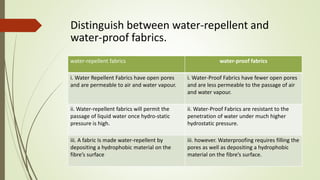
Distinguish between water-repellent and
water-proof fabrics.
water-repellent fabrics water-proof fabrics
i. Water Repellent Fabrics have open pores
and are permeable to air and water vapour.
i. Water-Proof Fabrics have fewer open pores
and are less permeable to the passage of air
and water vapour.
ii. Water-repellent fabrics will permit the
passage of liquid water once hydro-static
pressure is high.
ii. Water-Proof Fabrics are resistant to the
penetration of water under much higher
hydrostatic pressure.
iii. A fabric Is made water-repellent by
depositing a hydrophobic material on the
fibre’s surface
iii. however. Waterproofing requires filling the
pores as well as depositing a hydrophobic
material on the fibre’s surface.
Several test methods of water repellency of
fabrics
 AATCC TM22: Water Repellency-Spray Test
 AATCC TM35: Water Resistance: Rain Test
 AATCC TM42: Water Resistance: Impact Penetration Test
 AATCC TM70: Water Repellency-Tumble Jar Dynamic Absorption Test
 AATCC TM127: Water Resistance: Hydrostatic Pressure Test
Water Repellency-Spray Test
 Sample specification:
 3 samples are tested. Samples are cut 180mm square.
 Apparatus:
 Spray tester
 Water
 Fabric
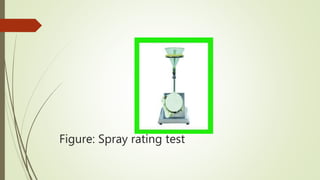
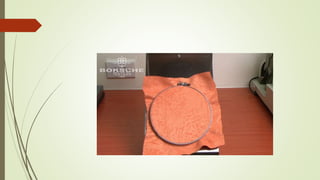
Figure: Spray rating test
Steps of spray test,
 The sample fabric is mounted on a metal hoop
 Then the metal hoop attached with sample fabric is fixed on the
instrument at 45ᵒ angle.
 Now the beaker is filled with 250 cc water. pour the distilled water
into the funnel.
 spray the whole quantity of water on the test specimen for a period
of 25 - 30 sec.
 After spraying has finished the sample holder is removed and the
surplus water removed by tapping the frame 6 times against a solid
object.
Assessment
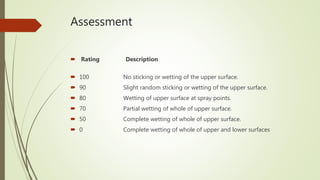
 Rating Description
 100 No sticking or wetting of the upper surface.
 90 Slight random sticking or wetting of the upper surface.
 80 Wetting of upper surface at spray points.
 70 Partial wetting of whole of upper surface.
 50 Complete wetting of whole of upper surface.
 0 Complete wetting of whole of upper and lower surfaces
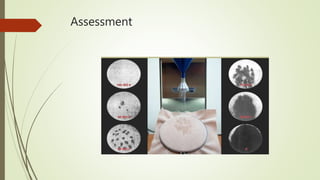
Assessment
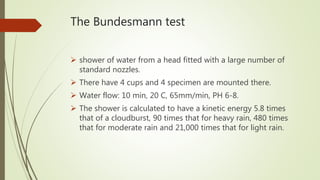
The Bundesmann test
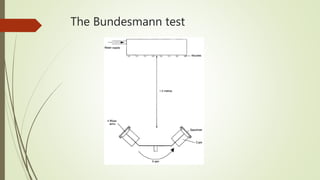
 shower of water from a head fitted with a large number of
standard nozzles.
 There have 4 cups and 4 specimen are mounted there.
 Water flow: 10 min, 20 C, 65mm/min, PH 6-8.
 The shower is calculated to have a kinetic energy 5.8 times
that of a cloudburst, 90 times that for heavy rain, 480 times
that for moderate rain and 21,000 times that for light rain.
The Bundesmann test
The Bundesmann test
The Bundesmann test
 Two fabric parameters are determined from the test:
1.Penetration of water through the fabric: the water collected in the cups is
measured to the nearest ml.
 2 Absorption of water by the fabric: in order to do this the specimen is weighed
before the test and then after the shower. To remove excess water the fabric is
shaken ten times using a mechanical shaker and then weighed in an airtight
container.
Flame retardancy and proofness of fabric.
 Flame resistance is defined by ASTM “The property of a
material whereby flaming combustion is prevented ,
terminated or inhibited following application of a flaming or
non-flaming source of ignition , with or without the
subsequent removal of the ignition source”
Importance of the property
 Flammability of textile is an important contributor to series
injuries and loss of life and property in fires. Flame retardant
finish will save cloth from fire.
Flame Retardants
Also knows as Fire-Retardants
 Water soluble compounds of phosphorus, antimony and boron.
 Phosphates and borates ( for temporary flame retardancy )
 Phosphorous containing methylol compounds like tetrakis (
Hydroxy methyl ) phosphonium chloride and oxide ( THPC and
THPOH ),
 Oligomeric Vinyl Phosphonate ( Permanent flame retardants )
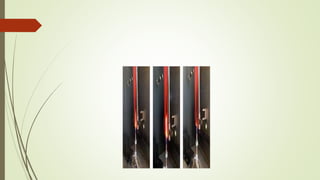
Flame retardency test.
VERTICAL FLAME TEST:
o Fabric is mounted in a vertical holder and exposed to an
open flame for a specified amount of time. Once the
flame is removed, the after flame and char length of the
test sample are measured against various code standards
to establish a classification.
o ASTM D6413
Conclusion
 Water repellency and flame retardancy is very important
properties in textile. We can make fabric fire retardant finish
that will not catch fire and will safe the fabric from fire. Those
fabric has more water absobption quality that can make water
replleant finishes.

Water Repellency and flame reterdent

  • 1.
    Prepared by  TakbirAhmed  29th Batch  Dept. Of Textile Engineering.  Daffodil International University.
  • 2.
    Water repellency &proofness, Flame retardancy and proofness of fabric and test methods
  • 3.
    Water repellency &proofness  water repellent fabrics are those which resist being wetted by water, water drops will roll off the fabric.  A fabric’s resistance to water will depend on • the nature of the fiber surface, • the porosity of the fabric • the dynamic force behind the impacting water spray.
  • 4.
    Importance of theproperty  A number of fabric particularly those where fabric is used out of doors require the material to be more or less impermeable to rain. These outwear such as anoraks,cagoules and raincoats and industrial fabrics such as tents etc.
  • 5.
    Distinguish between water-repellentand water-proof fabrics. water-repellent fabrics water-proof fabrics i. Water Repellent Fabrics have open pores and are permeable to air and water vapour. i. Water-Proof Fabrics have fewer open pores and are less permeable to the passage of air and water vapour. ii. Water-repellent fabrics will permit the passage of liquid water once hydro-static pressure is high. ii. Water-Proof Fabrics are resistant to the penetration of water under much higher hydrostatic pressure. iii. A fabric Is made water-repellent by depositing a hydrophobic material on the fibre’s surface iii. however. Waterproofing requires filling the pores as well as depositing a hydrophobic material on the fibre’s surface.
  • 6.
    Several test methodsof water repellency of fabrics  AATCC TM22: Water Repellency-Spray Test  AATCC TM35: Water Resistance: Rain Test  AATCC TM42: Water Resistance: Impact Penetration Test  AATCC TM70: Water Repellency-Tumble Jar Dynamic Absorption Test  AATCC TM127: Water Resistance: Hydrostatic Pressure Test
  • 7.
    Water Repellency-Spray Test Sample specification:  3 samples are tested. Samples are cut 180mm square.  Apparatus:  Spray tester  Water  Fabric
  • 8.
  • 9.
    Steps of spraytest,  The sample fabric is mounted on a metal hoop  Then the metal hoop attached with sample fabric is fixed on the instrument at 45ᵒ angle.  Now the beaker is filled with 250 cc water. pour the distilled water into the funnel.  spray the whole quantity of water on the test specimen for a period of 25 - 30 sec.  After spraying has finished the sample holder is removed and the surplus water removed by tapping the frame 6 times against a solid object.
  • 11.
    Assessment  Rating Description 100 No sticking or wetting of the upper surface.  90 Slight random sticking or wetting of the upper surface.  80 Wetting of upper surface at spray points.  70 Partial wetting of whole of upper surface.  50 Complete wetting of whole of upper surface.  0 Complete wetting of whole of upper and lower surfaces
  • 12.
  • 13.
    The Bundesmann test shower of water from a head fitted with a large number of standard nozzles.  There have 4 cups and 4 specimen are mounted there.  Water flow: 10 min, 20 C, 65mm/min, PH 6-8.  The shower is calculated to have a kinetic energy 5.8 times that of a cloudburst, 90 times that for heavy rain, 480 times that for moderate rain and 21,000 times that for light rain.
  • 14.
  • 15.
  • 16.
    The Bundesmann test Two fabric parameters are determined from the test: 1.Penetration of water through the fabric: the water collected in the cups is measured to the nearest ml.  2 Absorption of water by the fabric: in order to do this the specimen is weighed before the test and then after the shower. To remove excess water the fabric is shaken ten times using a mechanical shaker and then weighed in an airtight container.
  • 17.
    Flame retardancy andproofness of fabric.  Flame resistance is defined by ASTM “The property of a material whereby flaming combustion is prevented , terminated or inhibited following application of a flaming or non-flaming source of ignition , with or without the subsequent removal of the ignition source”
  • 18.
    Importance of theproperty  Flammability of textile is an important contributor to series injuries and loss of life and property in fires. Flame retardant finish will save cloth from fire.
  • 19.
    Flame Retardants Also knowsas Fire-Retardants  Water soluble compounds of phosphorus, antimony and boron.  Phosphates and borates ( for temporary flame retardancy )  Phosphorous containing methylol compounds like tetrakis ( Hydroxy methyl ) phosphonium chloride and oxide ( THPC and THPOH ),  Oligomeric Vinyl Phosphonate ( Permanent flame retardants )
  • 20.
    Flame retardency test. VERTICALFLAME TEST: o Fabric is mounted in a vertical holder and exposed to an open flame for a specified amount of time. Once the flame is removed, the after flame and char length of the test sample are measured against various code standards to establish a classification. o ASTM D6413
  • 22.
    Conclusion  Water repellencyand flame retardancy is very important properties in textile. We can make fabric fire retardant finish that will not catch fire and will safe the fabric from fire. Those fabric has more water absobption quality that can make water replleant finishes.