Sub. To - Sub. By -
Dr. Rajani Joshi Bhagraj Godara
Dr. Kanchan Jangir Roll No. 06
Dr. Krupa Soni B.V.Sc &A.H 3rd
Year
DEPARTMENT OF VET. PUBLIC HEALTH
 Introduction
 History
 Epidemiology
 Transmission
 Pathogenesis
 Disease in Humans
 Disease in Animals
 Treatment
 Diagnosis
 Prevention and Control
 Class : Clostridia
 Order : Clostridiale
 Family : Clostridiaceae
 Genus : Clostridium
 Species : C. botulinum
Clostridium botulinum -
Gram positive rods
Spore forming – Inactivated at higher temp
Anaerobic bacteria
Produces toxin that causes botulism
Toxin: Destroyed by boiling
Seven neurotoxic subtypes, labeled
A-G - All cause flaccid paralysis
Cooked Meat medieum
Natrual Habitate – Endospore in soil and
aquatic environment
Horse blood – Narrow zone of hemolysis
 Botulism is a neuroparalytic disease
 is caused by the potent protein toxin released from C.
botulinum
 it binds to the acetylcholine receptors in the neuromuscular
junction
 It alters the mechanism for acetylcholine release, making the
neuron unresponsive to action potentials
 Three major types: Infant, food-borne, and wound
 Potential bio-weapon due to its potency
1793, Justinius Kerner (Kerner’s disease.)
• “Wurstgift’’
“Botulus” = Latin for sausage
1895, Emile von Ermengem
• Isolated organism during Belgium outbreak
 In U.S., average 110 cases each year
• Approximately 25% food-borne
• Approximately 72% infant form
• Remainder wound form
 1977, Largest botulism outbreak
Poorly preserved jalapeno peppers
 Alaska
• 27% of U.S. foodborne botulism cases
• 1950-2000
 226 cases from 114 outbreaks
Ingestion
• Organism
• Spores
• Neurotoxin
Wound contamination
Inhalation
 Incubation period
• ingestion: unknown
• foodborne: 6 hours-8 days
• wound: 4-14 days
• inhalation: (estimated) 24-36 hours
 Toxin enters bloodstream from mucosal surface or wound
 Binds to peripheral cholinergic nerve endings
 Inhibits release of acetylcholine, preventing muscles from
contracting
 Symmetrical, descending paralysis occurs beginning with
cranial nerves and progressing downward
Can result from airway obstruction or
paralysis of respiratory muscles
Secondary complications related to
prolonged ventilatory support and intensive
care
Three forms
• Foodborne
• Wound
• Infant
All forms fatal and a medical emergency
Incubation period: 12-36 hours
 Second most common form
 Caused by - toxin ingested from contaminated
food
 Most common from home-canned foods
Signs and Symptoms
 12 – 36 hrs after
 Muscle weakness,
 Diarrhea
 Blurred vision
 Vomiting
 Eventual Paralysis
Organism enters wound
• Develops under anaerobic conditions
• From ground-in dirt or gravel
• It does not penetrate intact skin
• Associated with addicts of black-tar heroin
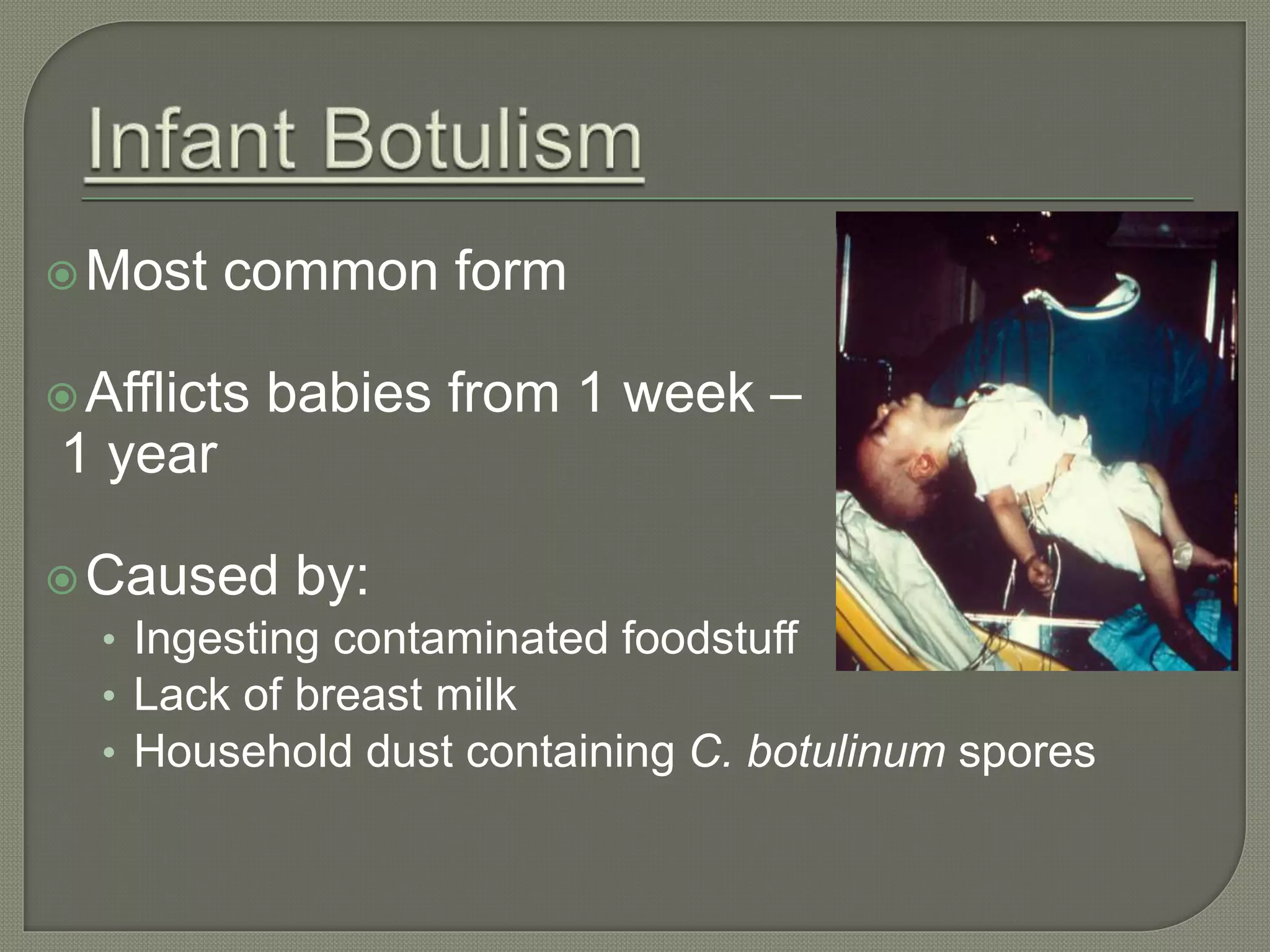
Most common form
Afflicts babies from 1 week –
1 year
Caused by:
• Ingesting contaminated foodstuff
• Lack of breast milk
• Household dust containing C. botulinum spores
Poor feeding (weak sucking)
Weak gag
Weak cry
Decreased movement
Appearing lethargic
Flat, blunted facial expression
 Nausea, vomiting, diarrhea
 Double vision
 Difficulty speaking or swallowing
 Descending weakness or paralysis
• Shoulders to arms to thighs to calves
 Symmetrical flaccid paralysis
 Respiratory muscle paralysis
 Clinical signs
 Toxin in serum, stool, gastric aspirate,
suspected food
 Culture of stool or gastric aspirate
• Takes 5-7 days
 Electromyography also diagnostic
 Mouse neutralization test
• Results in 48 hours
Intensive care immediately
• Ventilator for respiratory failure
Botulinum antitoxin
• Derived from equine source
• Used on a case-by-case basis
Botulism immune globulin
 Inspect canned food for
• Bulging
• Loose lids
• Mold
• Odor
Proper home canning procedures:
• Hygiene
• Time schedule,
• Proper processing method
• Equipment
 Avoiding home canning or cheaply produced commercial
food
 Cattle and sheep
 Horses
 Birds and poultry
 Mink and ferrets
 Uncommon in dogs and pigs
• Fairly resistant
 No natural cases documented in cats
Ingestion of toxin
Incubation
• 24 hours to 7 days
Sources
• Spoiled stored silage or grain
• Silage using poultry litter or products
Phosphorus deficiency in cattle(pica)
 Progressive ascending ataxia
 Recumbent
 Head turned into flanks
 Cranial nerve dysfunction
 Rumen stasis; bloat
 Atonic bladder - loss of urination
 History
 Bloodwork and CSF tap: Normal
 ELISA test available for type C & D
 Definitive diagnosis
• Demonstration of toxin in serum, gut contents or
organs
 Electromyography (EMG)
 Symptomatic and supportive
 Nutritional
 Ventilatory support, if needed
 Metronidazole
 Antitoxin, in early stages
• Ineffective by the time clinical signs are present
• Can block further uptake of toxin
Good husbandry practices
Rodent and vermin control
Prompt disposal of carcasses
Avoid spoiled feedstuff or poor quality
silage
Vaccination in endemic areas
 Horses, especially foals, are highly sensitive
to botulism toxin
 Type B & C toxins
 Incubation period
• 24 hours to 7 days
 Sources
• Contaminated feed
• Wound infections
Forage poisoning”
• Ingest preformed toxin
Clinical Signs
• Dyspnea
• Flaccid tail
• Muscle tremors
• Severe paresis to rapid recumbency
• Unable to retract tongue, drooling
“Shaker Foal” syndrome
• Most 2 weeks to 8 months old
• On a high nutrition plane
Spores in contaminated feed
Usually type B
• Most common in KY and eastern seaboard
Clinical signs
• Paresis
• Muscle tremors
• Dysphagia
constipation, urine retention
• Death due to respiratory paralysis
Mortality greater than 90%
Good husbandry
Rodent and vermin control
Avoid spoiled feed
Prophylactic vaccine for pregnant mares
• Currently only type B botulinum toxoid available
for horses
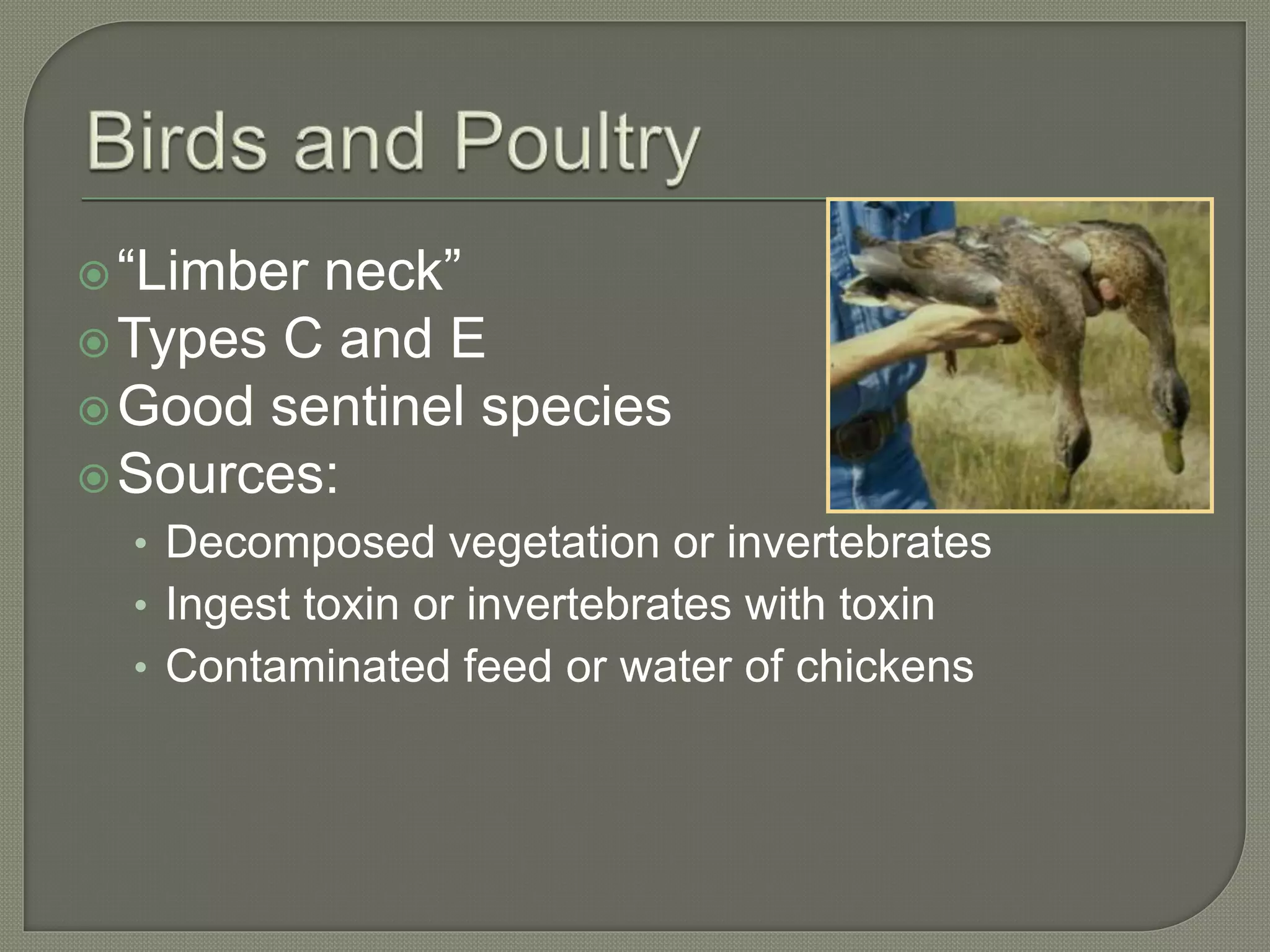
“Limber neck”
Types C and E
Good sentinel species
Sources:
• Decomposed vegetation or invertebrates
• Ingest toxin or invertebrates with toxin
• Contaminated feed or water of chickens
Occurs 12-48 hours after ingestion
Droopy head
Drowsy
Wing and leg paralysis
• Unable to hold their head up
• Unable to use their wings or legs
Eyelid paralysis
Rare
Type C; few cases type D
Source
• Ingestion of carrion
• Wetland areas with avian botulism epizootics
Incubation period
• Few hours to 6 days
Progressive symmetric ascending
weakness
• Rear limbs to forelimbs
Cranial nerve deficits
Respiratory paralysis
Lose ability to urinate and defecate
• Bloodwork and CSF: Normal
• Electromyography (EMG)
• Toxin in serum, vomitus, feces, or suspect
food/carrion
• Mouse neutralization test preferred
Treatment
• Supportive
• Antitoxin
 C. Many countries, and now terrorists, have
developed and used botulinum toxin as a
biological weapon.
 Potential Bioterrorism Threat
 Extremely potent and lethal
 Easily produced and transported
Signs of deliberate aerosol or foodborne
release of toxin
 Botulism toxin is the most poisonous substance
known
 High lethality: 1 aerosolized gram could potentially
kill 1 million people
 Isolated fairly easily from soil
 Could be released as an aerosol or as a
contaminant in the food supply
 Expensive, long-term care needed for recovery
 Center for Food Security and Public Health
• www.cfsph.iastate.edu
WHO
OIE
WIKIPEDIA
Clostridium botulinum

Clostridium botulinum

  • 1.
    Sub. To -Sub. By - Dr. Rajani Joshi Bhagraj Godara Dr. Kanchan Jangir Roll No. 06 Dr. Krupa Soni B.V.Sc &A.H 3rd Year DEPARTMENT OF VET. PUBLIC HEALTH
  • 2.
     Introduction  History Epidemiology  Transmission  Pathogenesis  Disease in Humans  Disease in Animals  Treatment  Diagnosis  Prevention and Control
  • 3.
     Class :Clostridia  Order : Clostridiale  Family : Clostridiaceae  Genus : Clostridium  Species : C. botulinum
  • 4.
    Clostridium botulinum - Grampositive rods Spore forming – Inactivated at higher temp Anaerobic bacteria Produces toxin that causes botulism Toxin: Destroyed by boiling
  • 5.
    Seven neurotoxic subtypes,labeled A-G - All cause flaccid paralysis Cooked Meat medieum Natrual Habitate – Endospore in soil and aquatic environment Horse blood – Narrow zone of hemolysis
  • 6.
     Botulism isa neuroparalytic disease  is caused by the potent protein toxin released from C. botulinum  it binds to the acetylcholine receptors in the neuromuscular junction  It alters the mechanism for acetylcholine release, making the neuron unresponsive to action potentials  Three major types: Infant, food-borne, and wound  Potential bio-weapon due to its potency
  • 7.
    1793, Justinius Kerner(Kerner’s disease.) • “Wurstgift’’ “Botulus” = Latin for sausage 1895, Emile von Ermengem • Isolated organism during Belgium outbreak
  • 8.
     In U.S.,average 110 cases each year • Approximately 25% food-borne • Approximately 72% infant form • Remainder wound form  1977, Largest botulism outbreak Poorly preserved jalapeno peppers  Alaska • 27% of U.S. foodborne botulism cases • 1950-2000  226 cases from 114 outbreaks
  • 9.
    Ingestion • Organism • Spores •Neurotoxin Wound contamination Inhalation
  • 10.
     Incubation period •ingestion: unknown • foodborne: 6 hours-8 days • wound: 4-14 days • inhalation: (estimated) 24-36 hours  Toxin enters bloodstream from mucosal surface or wound  Binds to peripheral cholinergic nerve endings  Inhibits release of acetylcholine, preventing muscles from contracting  Symmetrical, descending paralysis occurs beginning with cranial nerves and progressing downward
  • 11.
    Can result fromairway obstruction or paralysis of respiratory muscles Secondary complications related to prolonged ventilatory support and intensive care
  • 12.
    Three forms • Foodborne •Wound • Infant All forms fatal and a medical emergency Incubation period: 12-36 hours
  • 13.
     Second mostcommon form  Caused by - toxin ingested from contaminated food  Most common from home-canned foods Signs and Symptoms  12 – 36 hrs after  Muscle weakness,  Diarrhea  Blurred vision  Vomiting  Eventual Paralysis
  • 14.
    Organism enters wound •Develops under anaerobic conditions • From ground-in dirt or gravel • It does not penetrate intact skin • Associated with addicts of black-tar heroin
  • 15.
    Most common form Afflictsbabies from 1 week – 1 year Caused by: • Ingesting contaminated foodstuff • Lack of breast milk • Household dust containing C. botulinum spores
  • 16.
    Poor feeding (weaksucking) Weak gag Weak cry Decreased movement Appearing lethargic Flat, blunted facial expression
  • 17.
     Nausea, vomiting,diarrhea  Double vision  Difficulty speaking or swallowing  Descending weakness or paralysis • Shoulders to arms to thighs to calves  Symmetrical flaccid paralysis  Respiratory muscle paralysis
  • 18.
     Clinical signs Toxin in serum, stool, gastric aspirate, suspected food  Culture of stool or gastric aspirate • Takes 5-7 days  Electromyography also diagnostic  Mouse neutralization test • Results in 48 hours
  • 19.
    Intensive care immediately •Ventilator for respiratory failure Botulinum antitoxin • Derived from equine source • Used on a case-by-case basis Botulism immune globulin
  • 20.
     Inspect cannedfood for • Bulging • Loose lids • Mold • Odor Proper home canning procedures: • Hygiene • Time schedule, • Proper processing method • Equipment  Avoiding home canning or cheaply produced commercial food
  • 21.
     Cattle andsheep  Horses  Birds and poultry  Mink and ferrets  Uncommon in dogs and pigs • Fairly resistant  No natural cases documented in cats
  • 22.
    Ingestion of toxin Incubation •24 hours to 7 days Sources • Spoiled stored silage or grain • Silage using poultry litter or products Phosphorus deficiency in cattle(pica)
  • 23.
     Progressive ascendingataxia  Recumbent  Head turned into flanks  Cranial nerve dysfunction  Rumen stasis; bloat  Atonic bladder - loss of urination
  • 24.
     History  Bloodworkand CSF tap: Normal  ELISA test available for type C & D  Definitive diagnosis • Demonstration of toxin in serum, gut contents or organs  Electromyography (EMG)
  • 25.
     Symptomatic andsupportive  Nutritional  Ventilatory support, if needed  Metronidazole  Antitoxin, in early stages • Ineffective by the time clinical signs are present • Can block further uptake of toxin
  • 26.
    Good husbandry practices Rodentand vermin control Prompt disposal of carcasses Avoid spoiled feedstuff or poor quality silage Vaccination in endemic areas
  • 27.
     Horses, especiallyfoals, are highly sensitive to botulism toxin  Type B & C toxins  Incubation period • 24 hours to 7 days  Sources • Contaminated feed • Wound infections
  • 28.
    Forage poisoning” • Ingestpreformed toxin Clinical Signs • Dyspnea • Flaccid tail • Muscle tremors • Severe paresis to rapid recumbency • Unable to retract tongue, drooling
  • 29.
    “Shaker Foal” syndrome •Most 2 weeks to 8 months old • On a high nutrition plane Spores in contaminated feed Usually type B • Most common in KY and eastern seaboard
  • 30.
    Clinical signs • Paresis •Muscle tremors • Dysphagia constipation, urine retention • Death due to respiratory paralysis Mortality greater than 90%
  • 31.
    Good husbandry Rodent andvermin control Avoid spoiled feed Prophylactic vaccine for pregnant mares • Currently only type B botulinum toxoid available for horses
  • 32.
    “Limber neck” Types Cand E Good sentinel species Sources: • Decomposed vegetation or invertebrates • Ingest toxin or invertebrates with toxin • Contaminated feed or water of chickens
  • 33.
    Occurs 12-48 hoursafter ingestion Droopy head Drowsy Wing and leg paralysis • Unable to hold their head up • Unable to use their wings or legs Eyelid paralysis
  • 34.
    Rare Type C; fewcases type D Source • Ingestion of carrion • Wetland areas with avian botulism epizootics Incubation period • Few hours to 6 days
  • 35.
    Progressive symmetric ascending weakness •Rear limbs to forelimbs Cranial nerve deficits Respiratory paralysis Lose ability to urinate and defecate
  • 36.
    • Bloodwork andCSF: Normal • Electromyography (EMG) • Toxin in serum, vomitus, feces, or suspect food/carrion • Mouse neutralization test preferred Treatment • Supportive • Antitoxin
  • 37.
     C. Manycountries, and now terrorists, have developed and used botulinum toxin as a biological weapon.  Potential Bioterrorism Threat  Extremely potent and lethal  Easily produced and transported Signs of deliberate aerosol or foodborne release of toxin
  • 38.
     Botulism toxinis the most poisonous substance known  High lethality: 1 aerosolized gram could potentially kill 1 million people  Isolated fairly easily from soil  Could be released as an aerosol or as a contaminant in the food supply  Expensive, long-term care needed for recovery
  • 39.
     Center forFood Security and Public Health • www.cfsph.iastate.edu WHO OIE WIKIPEDIA