STAPHYLOCOCCUS
 Gram   positive cocci arranged in grape like
  clusters
 Commonest cause of localized suppurative
  lesions in humans
 Habitat includes skin ,hair,anterior nasal area

 Imp sps- S.aureus,
  S.epidermidis,S.saprophyticus etc
Staphylococcus aureus
MORPHOLOGY
 Gram poitive ,Arranged in grape like
  clusters,Non motile, Non sporing, Non
  capsulated
 1 micrometer in diameter
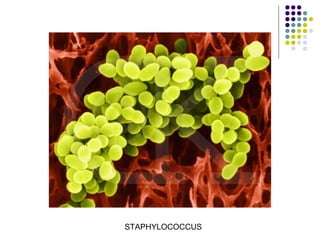
STAPHYLOCOCCUS
CULTURAL CHARACTERS
 Grow readly on ordinary media
 Temp range-10-42 degree Celsius,
  Optimum-37
 Ph-7.4-7.6

 They are aerobes and facultative anaerobes

 Common media are Nutrient agar & Blood
  agar
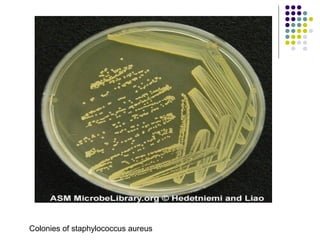
On Nutrient agar

 2-4mm diameter colony.circular ,smooth
 ,convex ,Most strains produce golden yellow
 pigment
Colonies of staphylococcus aureus
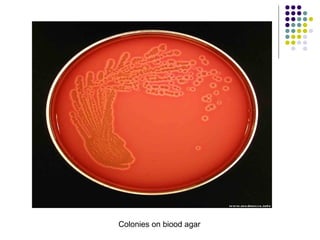
On Blood agar
 Produce   beta hemolytic colonies
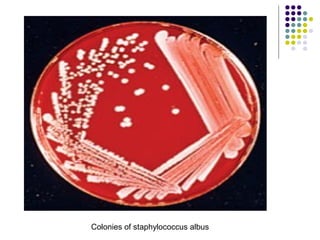
Colonies of staphylococcus albus
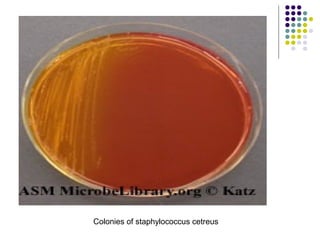
Colonies of staphylococcus cetreus
Colonies on biood agar
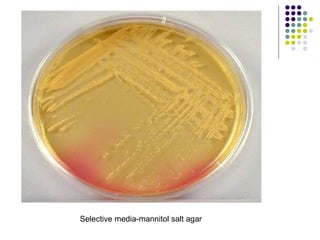
 Selectivemedia is Mannitol salt agar
 Produce yellow colonies on mannitol salt
  agar
Selective media-mannitol salt agar
Biochemical propertis
 Catalase  +
 Oxidase   –
 Coagulase +
Following properties are imp to
distigush S.aureus from other non
pathogenic sps
 Coagulase   production
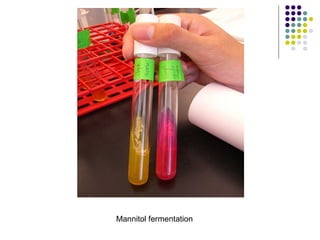
 Mannilol fermentation

 Golden yellow pigment

 Liquefy gelatin

 Phosphatase production

 DNase production
ANTIGENIC STRUCTURE &
VIRULANCE FACTORS
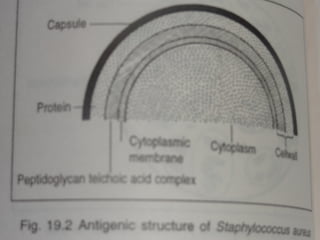
ANTIGENIC STRUCTURE
Capsule
 Some strains have a capsule. That inhibit phagocytosis, they
  inhibit opsonisation
 Capsulated strains are more virulent

Peptidoglycan
 Give rigidity to the cell wall, activtes compliment

Teichoic acid
 Major antigenic component
 Protect cell from compliment mediated opsonisation

Protein A
 It has chemotactic,antiphagocytic & anti complimentary action
TOXINS & ENZYMES
Staph aureus produce a number of toxins &
   extra cellular enzymes
TOXINS
1. Cytolytic toxin

2. Entero toxin

3. Toxic shock syndrome toxin

4. Exfoliative(epidrmolytic toxin)
CYTOLYTIC TOXIN

2  Types HEMOLYSIN & LEUCOCIDINS
HEMOLYSIN
 Lyse RBCs
 4 types ie, alpha, beta ,gamma & delta

LEUCOCIDINS
 Damage polymorphonuclear lecocytes
ENTERO TOXIN
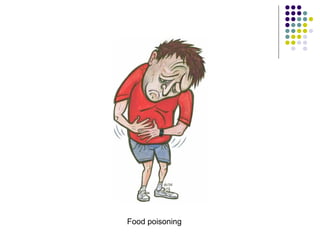
 Responsible   for staphylococcal food
  poisoning
 Nosiea,vomitting & diarrhea in 2-6 hrs after
  consumption of contaminated food
 Meat ,fish ,milk & milks products are the main
  foods responsible for this condition
 Source of infection is a food handler who is a
  carrier.
TOXIC SHOCK SYNDROME
TOXIN
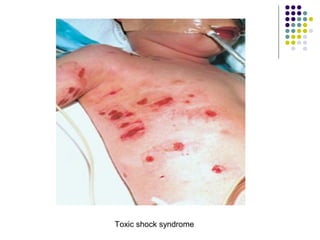
 Causing    toxic shock syndrome
 It is a fatal multi system disease with fever
  ,hypotension,myalgia,vomitting, diarrhea,
  erythematous rashes etc
 It is potentially a a fatal diasease
Exfoliative (epidermolytic)
toxin
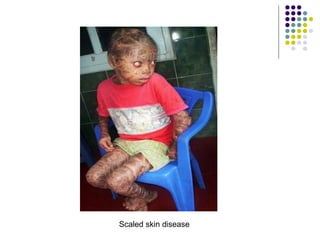
 Responsible   for staphylococcal scaled skin
  disease
 Here the outer layer of epidermis gets
  separated from the underlying tissue
ENZYMES
COAGULASE
 It is the most important enzyme which brings the clotting of
  human or rabbit plasma
 2 types of coagulase engyme-
 Bound coagulase-which is bound to the cell wall
 Free coagulase-which is liberated free in to the surrounding
  medium
 This enzyme can be demonstrated by COAGULASE TEST
 Coagulase test is the standard criteria for the identification of
  Staph aureus
 SLIDE Test (For bound coagulase) & TUBE Test(for free
  coagulase) are there
Other enzymes
 Lipases

 Hyaluronidase

 Nuclease
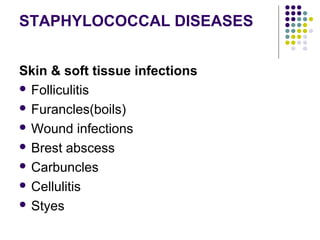
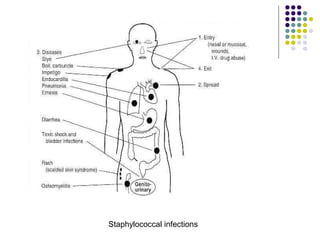
STAPHYLOCOCCAL DISEASES


Skin & soft tissue infections
 Folliculitis

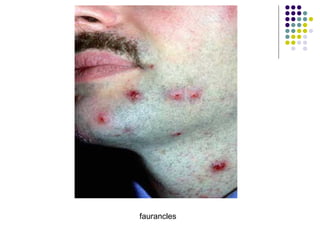
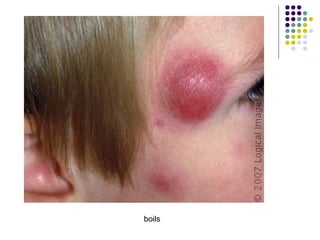
 Furancles(boils)

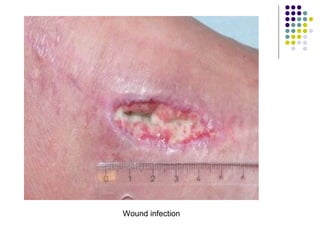
 Wound infections

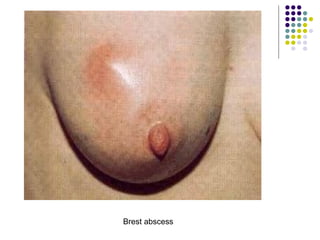
 Brest abscess

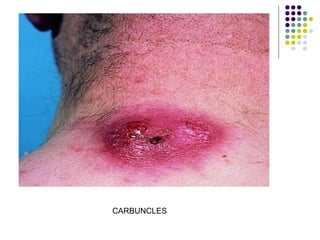
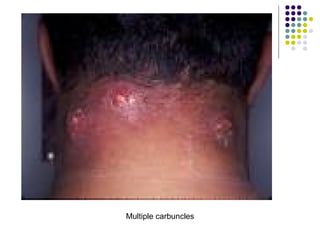
 Carbuncles

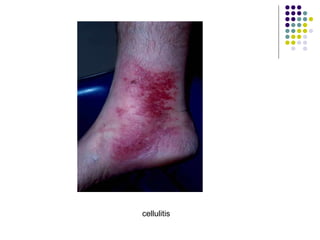
 Cellulitis

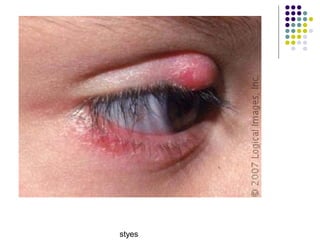
 Styes
CARBUNCLES
Multiple carbuncles
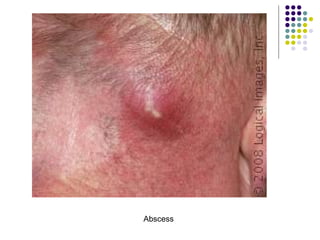
Abscess
Wound infection
cellulitis
faurancles
boils
styes
Brest abscess
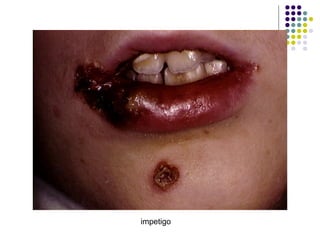
impetigo
MUSCULOSKELETAL
INFECTIONS

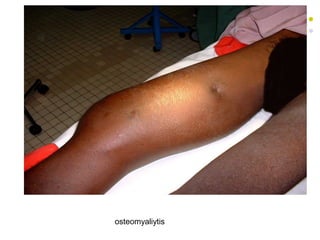
 Osteomyelitis

 Arthritis   etc
osteomyaliytis
RESPIRATORY INFECTIONS

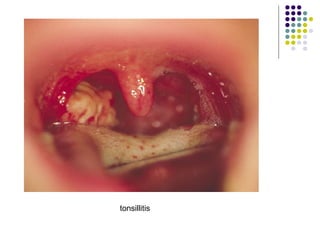
 Tonsillitis

 Pharyngitis

 Sinusitis

 Otis

 Broncho npneumonia
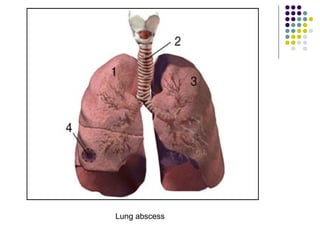
 Lung abscess

 Empyemia
Lung abscess
tonsillitis
CNS INFECTIONS
 Brainabscess
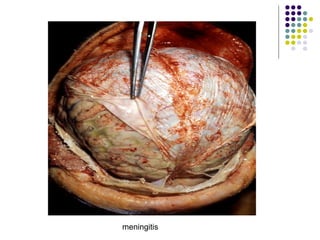
 Meningitis etc
meningitis
Endo vascular infections
 Bacteremia

 Septicemia

 Pyemia

 Endocarditis

URINARY INFECTIONS
 Staph are uncommon in UTI, but may cause
  infections in association with lacal
  instrumentation, implants or diabetes
TOXIN ASSOCIATED DISEASES
Food poisoning
Toxic shock syndrome
Scaled skin disease
Staphylococcal infections
LAB DIAGNOSIS
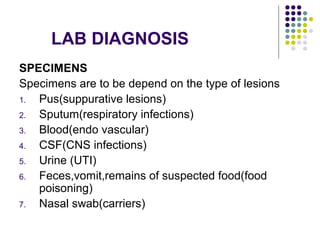
SPECIMENS
Specimens are to be depend on the type of lesions
1. Pus(suppurative lesions)
2. Sputum(respiratory infections)
3. Blood(endo vascular)
4. CSF(CNS infections)
5. Urine (UTI)
6. Feces,vomit,remains of suspected food(food
   poisoning)
7. Nasal swab(carriers)
METHODS
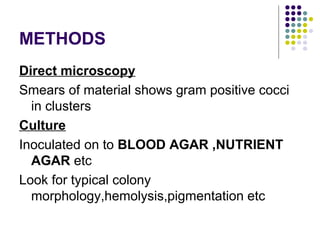
Direct microscopy
Smears of material shows gram positive cocci
  in clusters
Culture
Inoculated on to BLOOD AGAR ,NUTRIENT
  AGAR etc
Look for typical colony
  morphology,hemolysis,pigmentation etc
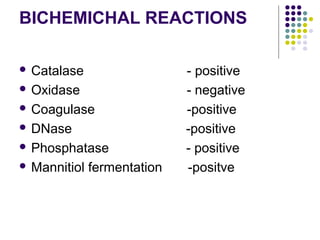
BICHEMICHAL REACTIONS

 Catalase                   - positive
 Oxidase                    - negative
 Coagulase                  -positive
 DNase                      -positive
 Phosphatase                - positive
 Mannitiol   fermentation   -positve
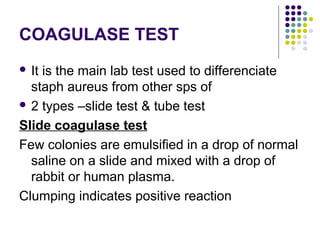
COAGULASE TEST
 Itis the main lab test used to differenciate
  staph aureus from other sps of
 2 types –slide test & tube test

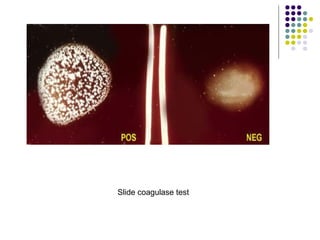
Slide coagulase test
Few colonies are emulsified in a drop of normal
  saline on a slide and mixed with a drop of
  rabbit or human plasma.
Clumping indicates positive reaction
Slide coagulase test
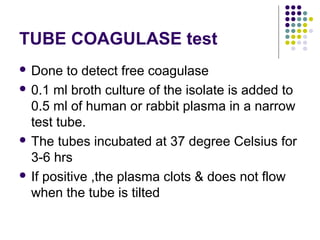
TUBE COAGULASE test
 Done   to detect free coagulase
 0.1 ml broth culture of the isolate is added to
  0.5 ml of human or rabbit plasma in a narrow
  test tube.
 The tubes incubated at 37 degree Celsius for
  3-6 hrs
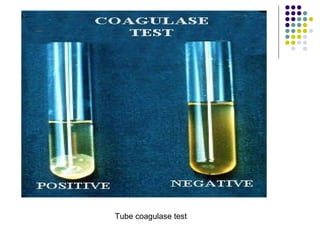
 If positive ,the plasma clots & does not flow
  when the tube is tilted
Tube coagulase test
Mannitol fermentation
tretment
 Benzyl penicillin is most effective
 Methicillin ,cloxacillin etc can be used in
  penicillinase producing strains
MRSA(Methicillin resistant staph aureus)
They are causing grate problem to clinicians
They are resistant to penicillins & other beta lactam
  antibiotics
They can be treated by vancomycin &teicoplanin
Treatment of carriers by local application of
  antibiotics like as bacitracin

Staphylococcus