Class Mammalia
Characteristics

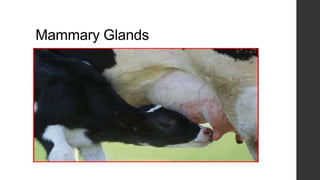
•Mammary glands
•Hair
•Diaphragm
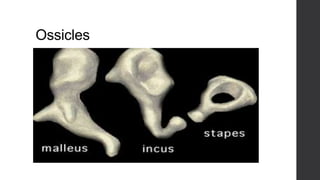
•Three middle ear ossicles
Characteristics

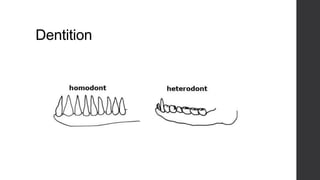
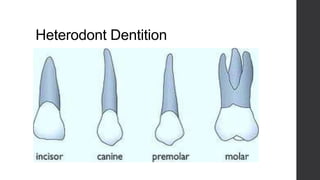
•Heterodont dentition
•Sweat, sebaceous, scent glands
•Four chambered heart
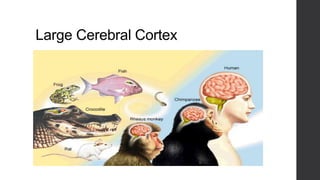
•Large cerebral cortext
Mammary Glands
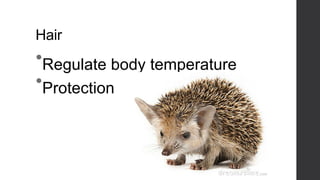
Hair

•Regulate body temperature
•Protection
Ossicles
Dentition
Heterodont Dentition
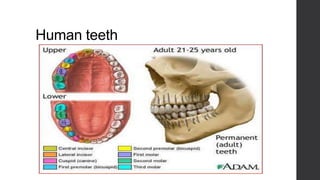
Human teeth
Large Cerebral Cortex
Types of Mammals

•Monotremes
•Marsupials
•Placental
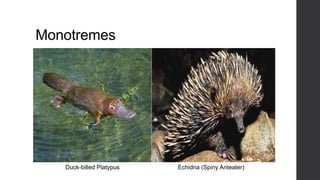
Monotremes

Duck-billed Platypus

Echidna (Spiny Anteater)
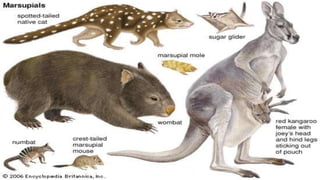
Marsupials
• Pouched
• Not

mammals

well develop young
Placental Mammals
• Gives

birth to young that remain
inside the mother’s body until their
body system are able to function
independently.
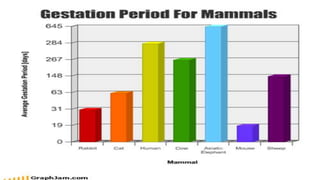
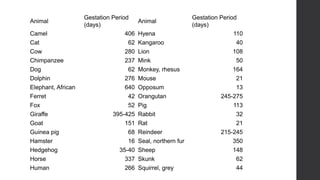
Gestation Period
• The

time the young spend inside
the mother’s uterus.
Animal
Camel
Cat
Cow
Chimpanzee
Dog
Dolphin
Elephant, African
Ferret
Fox
Giraffe
Goat
Guinea pig
Hamster
Hedgehog
Horse
Human

Gestation Period
(days)
406
62
280
237
62
276
640
42
52
395-425
151
68
16
35-40
337
266

Animal
Hyena
Kangaroo
Lion
Mink
Monkey, rhesus
Mouse
Opposum
Orangutan
Pig
Rabbit
Rat
Reindeer
Seal, northern fur
Sheep
Skunk
Squirrel, grey

Gestation Period
(days)
110
40
108
50
164
21
13
245-275
113
32
21
215-245
350
148
62
44
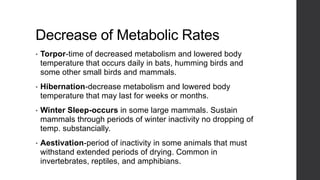
Decrease of Metabolic Rates
•

Torpor-time of decreased metabolism and lowered body
temperature that occurs daily in bats, humming birds and
some other small birds and mammals.

•

Hibernation-decrease metabolism and lowered body
temperature that may last for weeks or months.

•

Winter Sleep-occurs in some large mammals. Sustain
mammals through periods of winter inactivity no dropping of
temp. substancially.

•

Aestivation-period of inactivity in some animals that must
withstand extended periods of drying. Common in
invertebrates, reptiles, and amphibians.
Class Mammalia

Class Mammalia