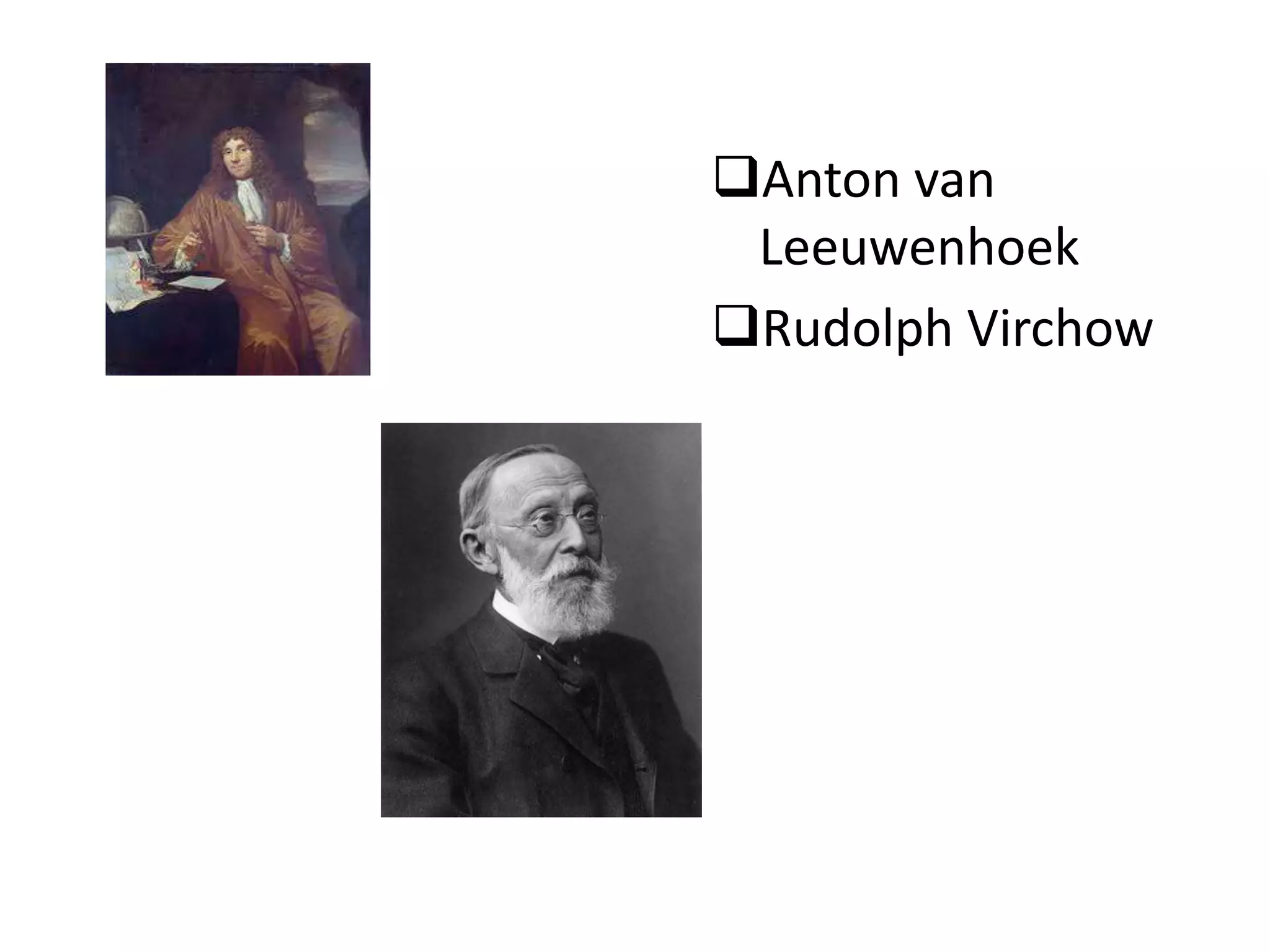
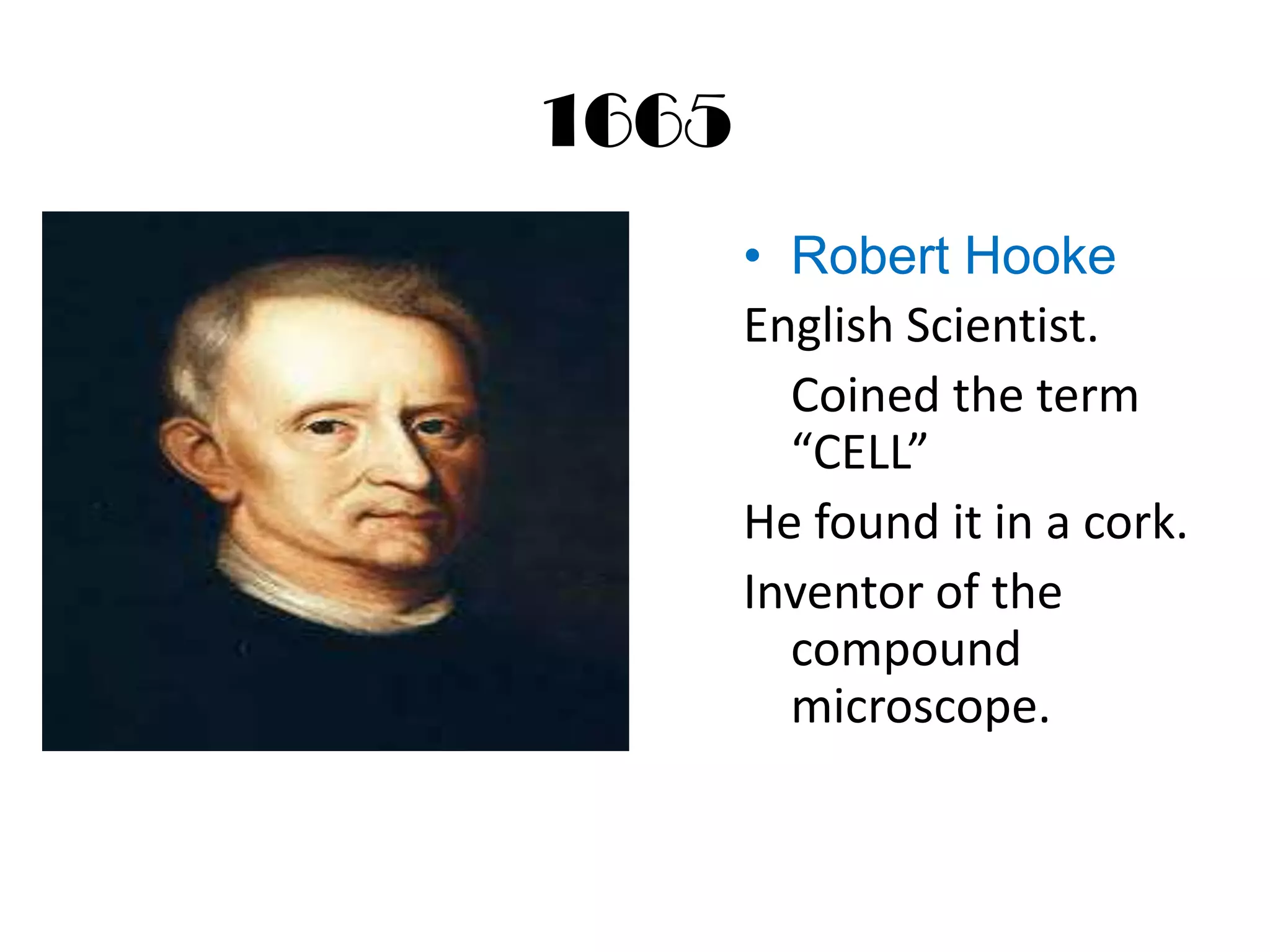
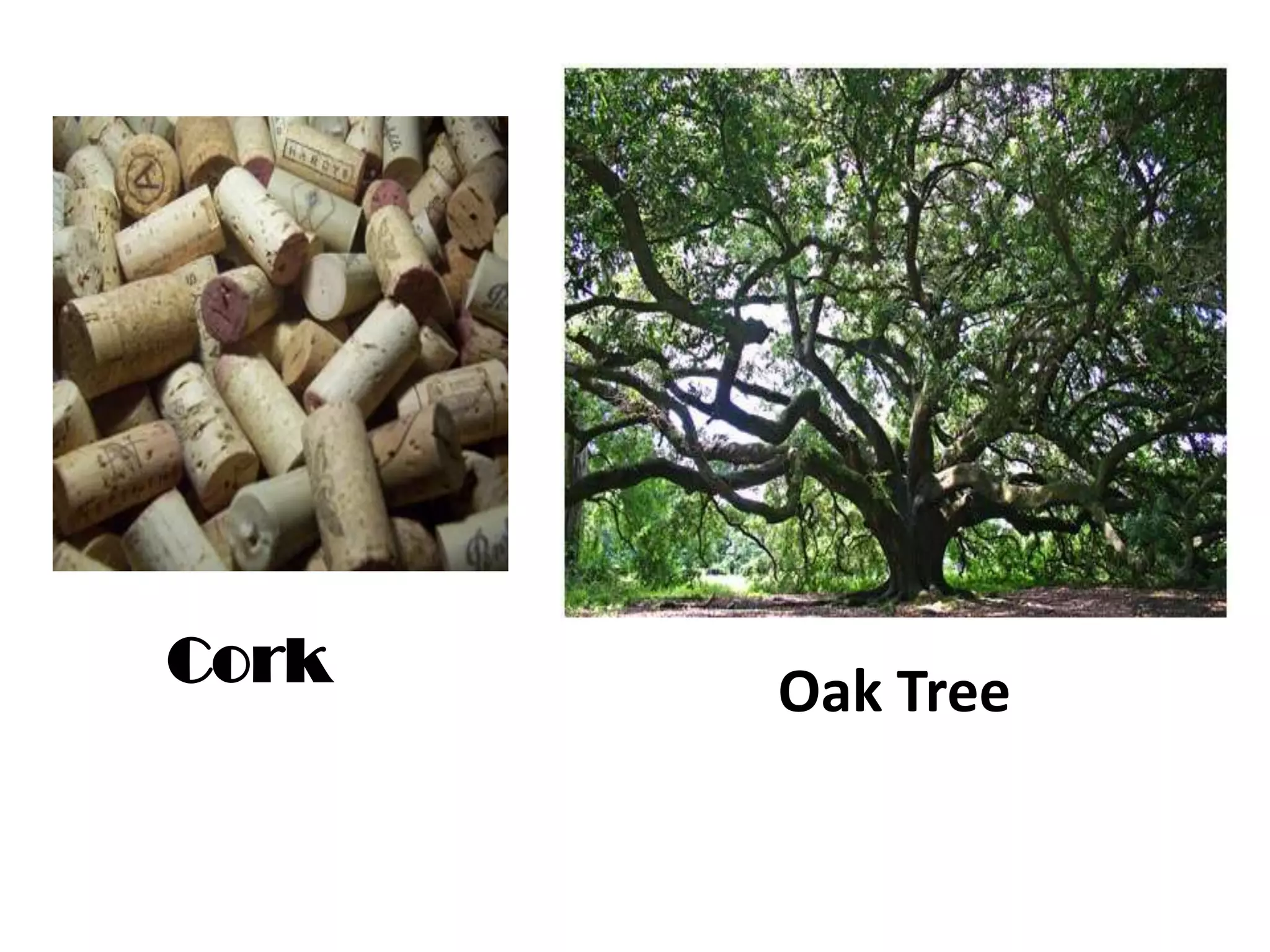
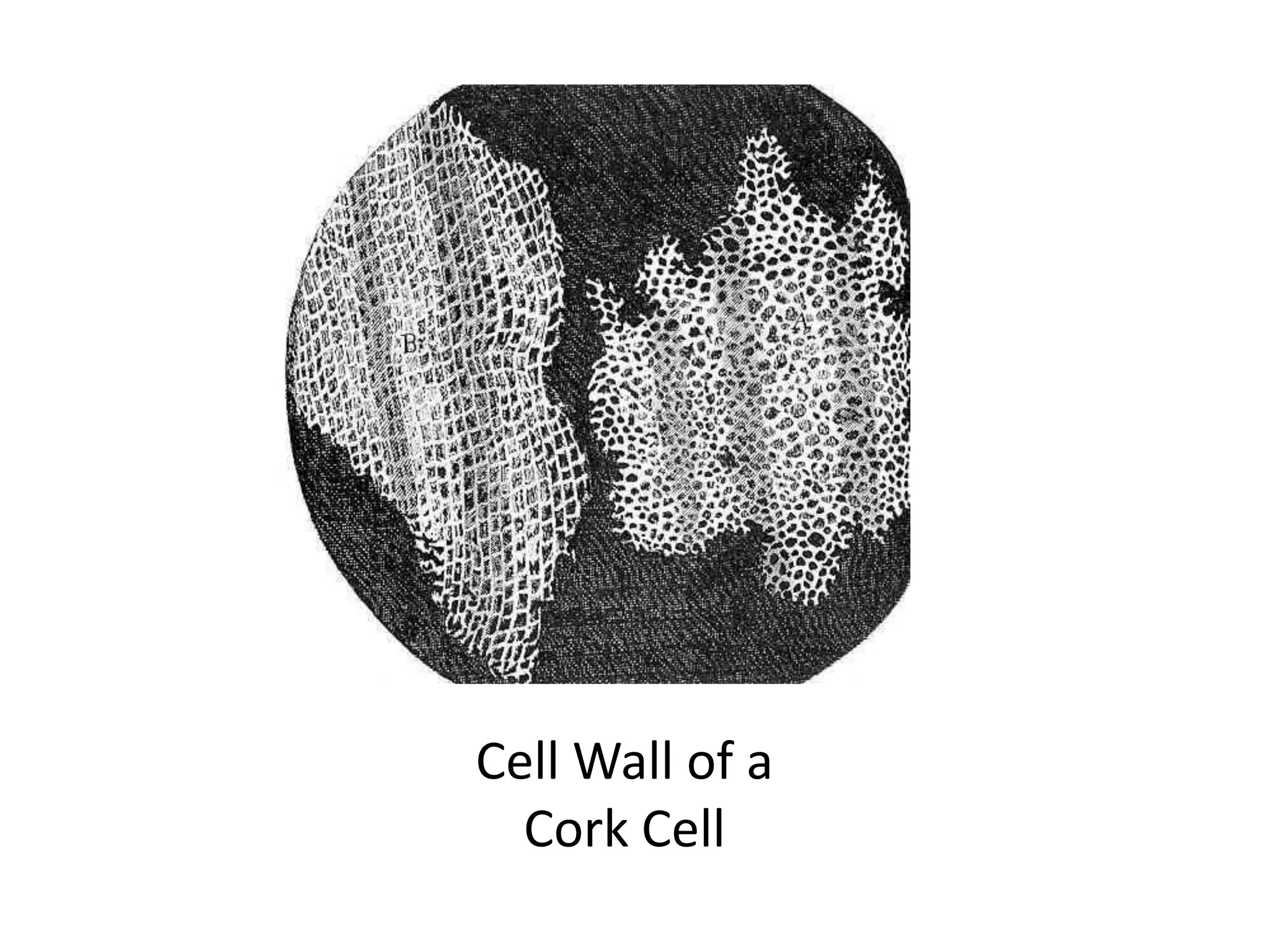
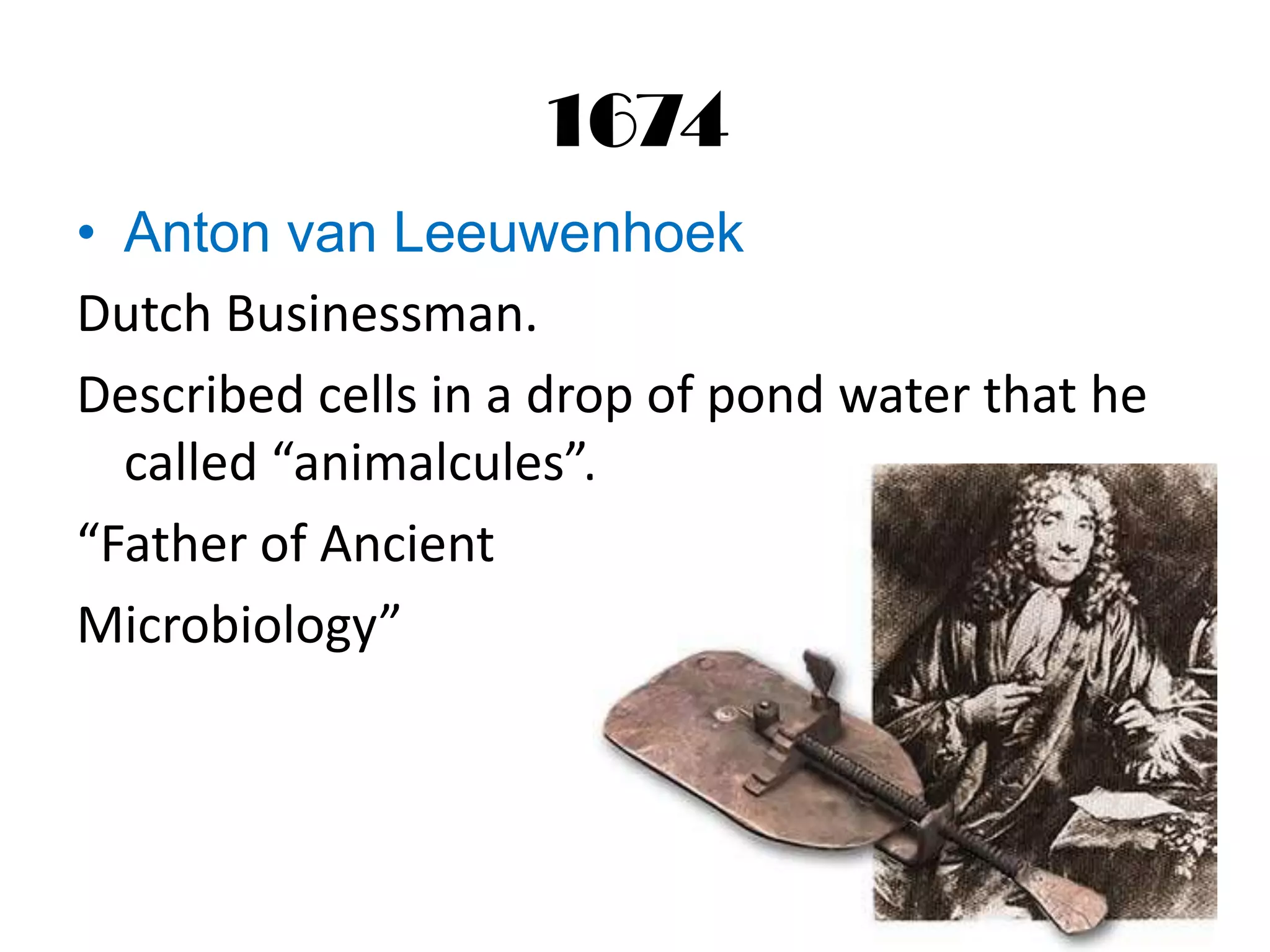
The document discusses the history and key figures in the discovery and establishment of the cell theory. It notes that cells were first observed in the 1600s using early microscopes. Key contributors included Hooke, who first observed cells in cork in 1665 and coined the term "cell", and van Leeuwenhoek who observed single-celled organisms in pond water in the 1670s. In the 1830s, Schleiden and Schwann established that plants and animals are composed of cells, respectively, and Schwann proposed the original cell theory. Virchow later expanded on this in 1858 by stating that all cells come from pre-existing cells.
In this document
Powered by AI
Overview of the presentation on cell discovery and theory by Joevani S. Peñol.
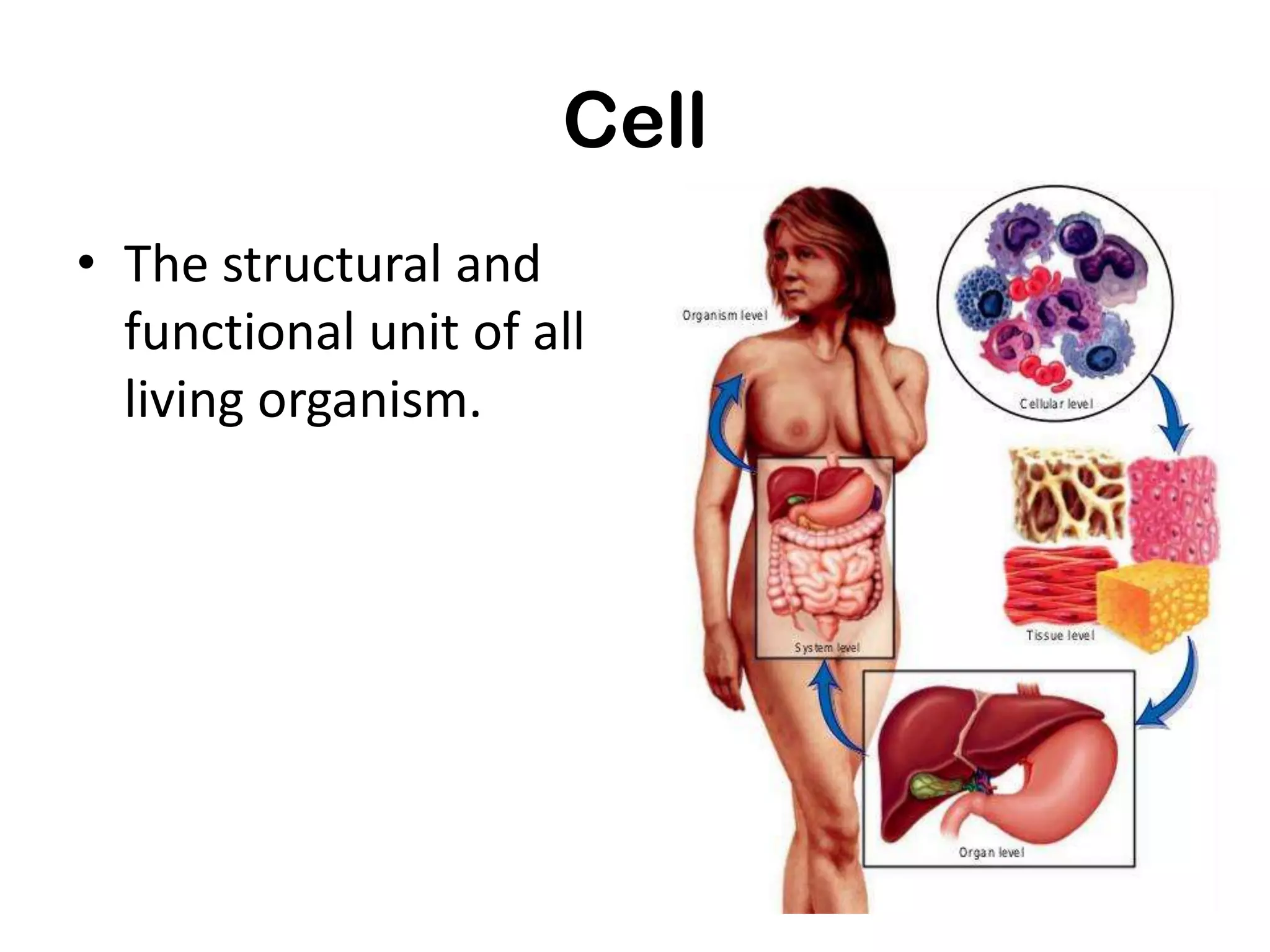
Definition of a cell as the structural and functional unit of all living organisms.
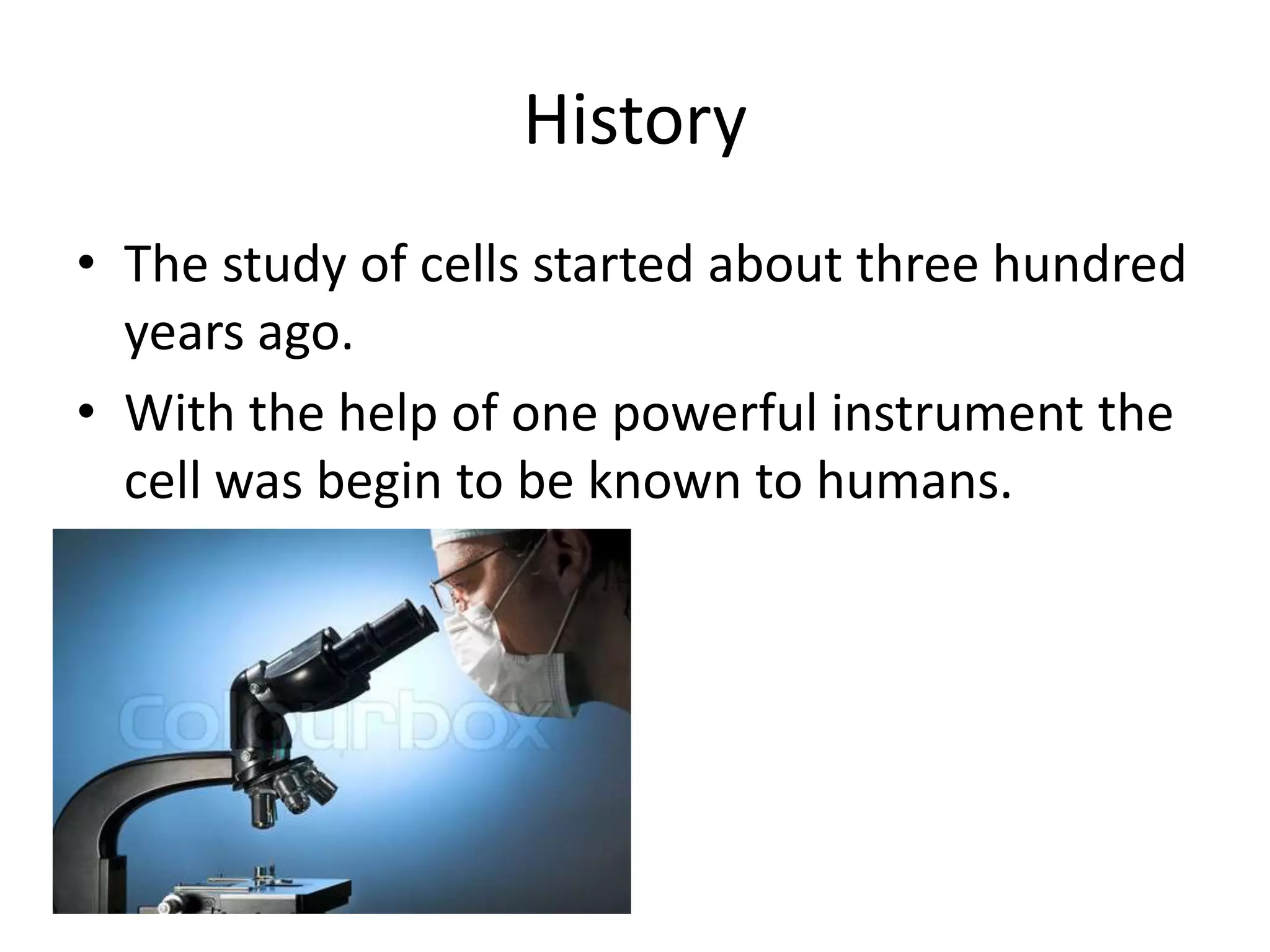
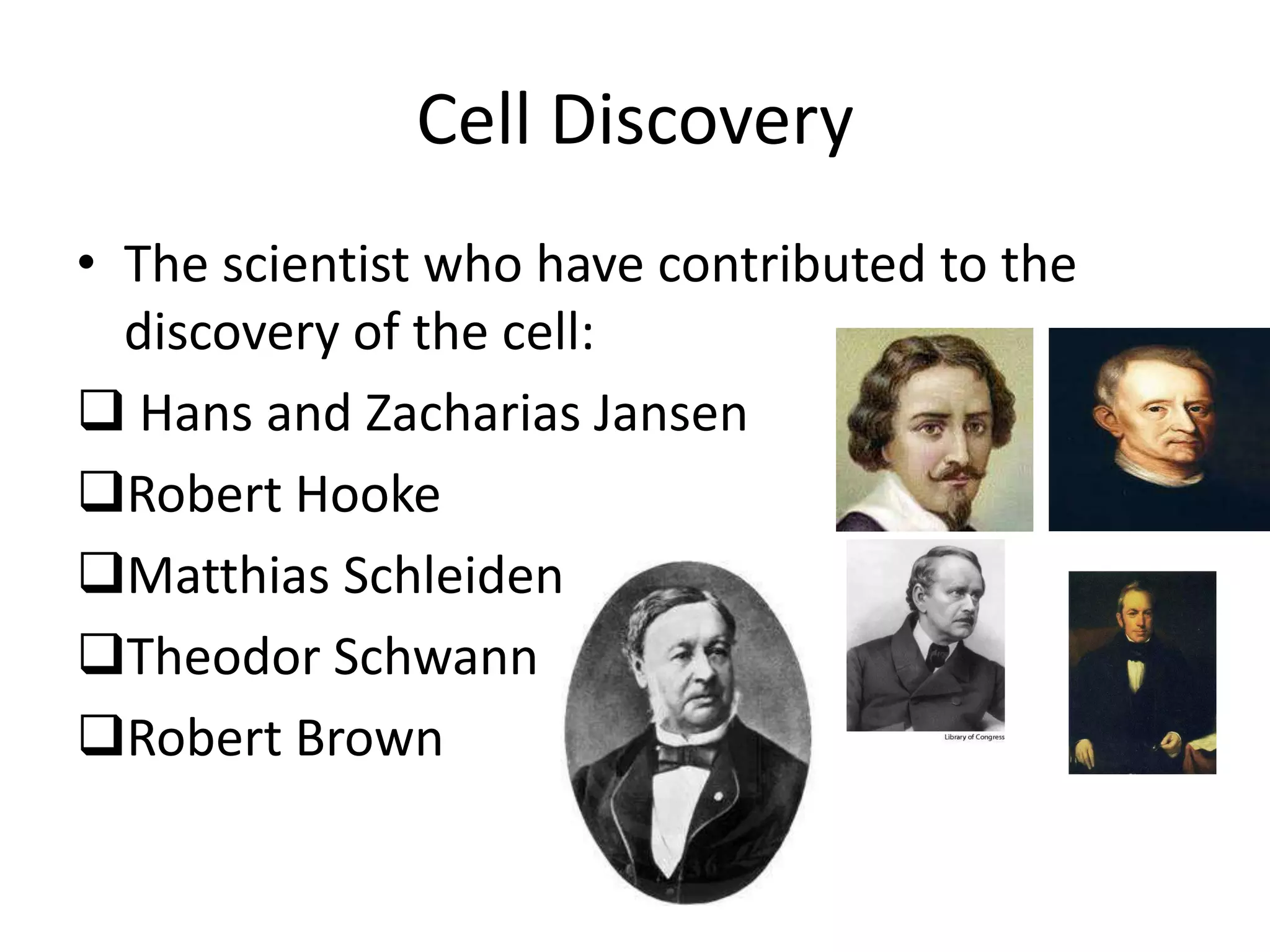
Overview of the history of cell study dating back 300 years, highlighting contributions from early scientists.Lists key scientists who discovered crucial elements of cell theory: Jansen, Hooke, Schleiden, Schwann, Brown, and Virchow.
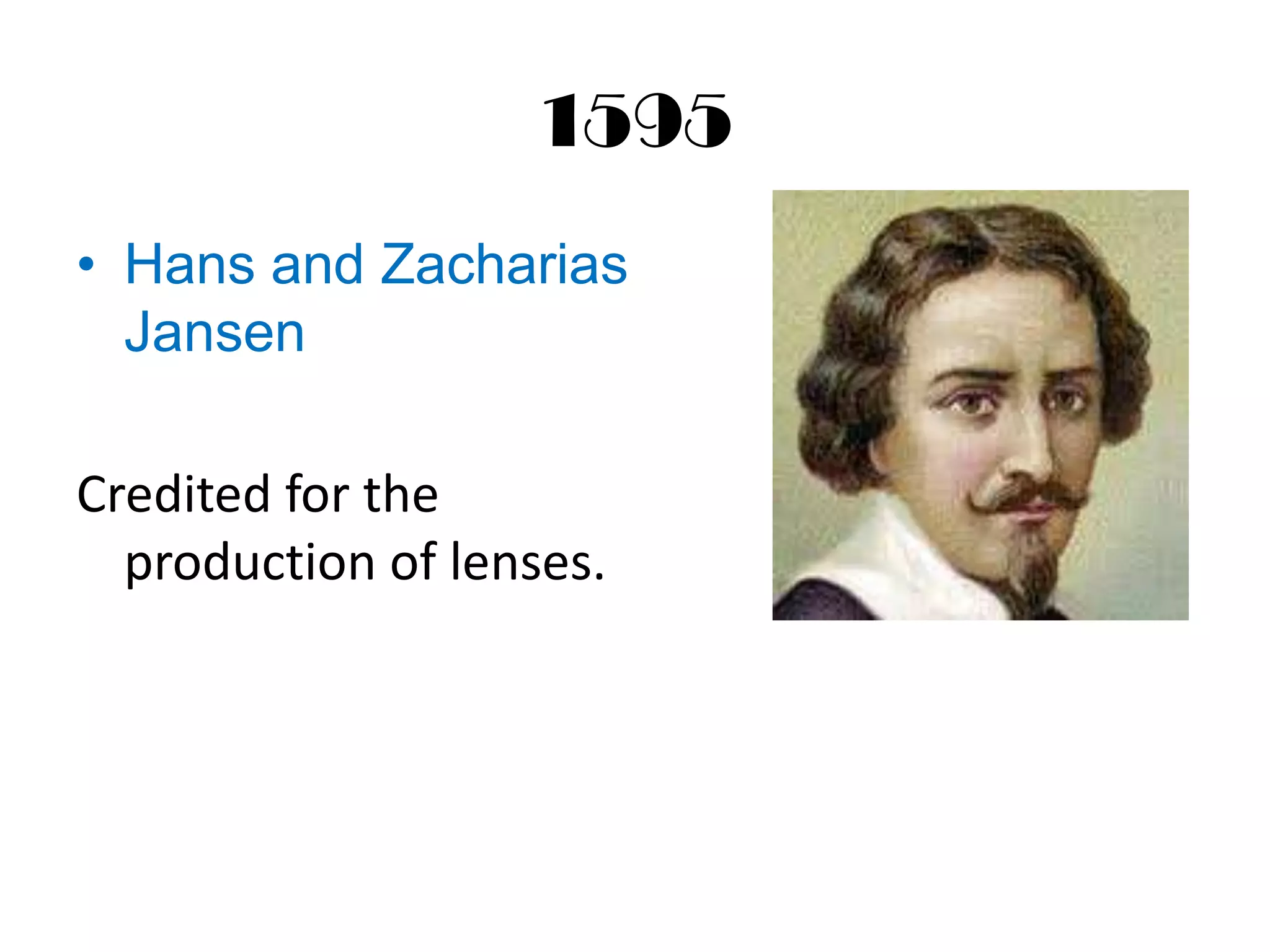
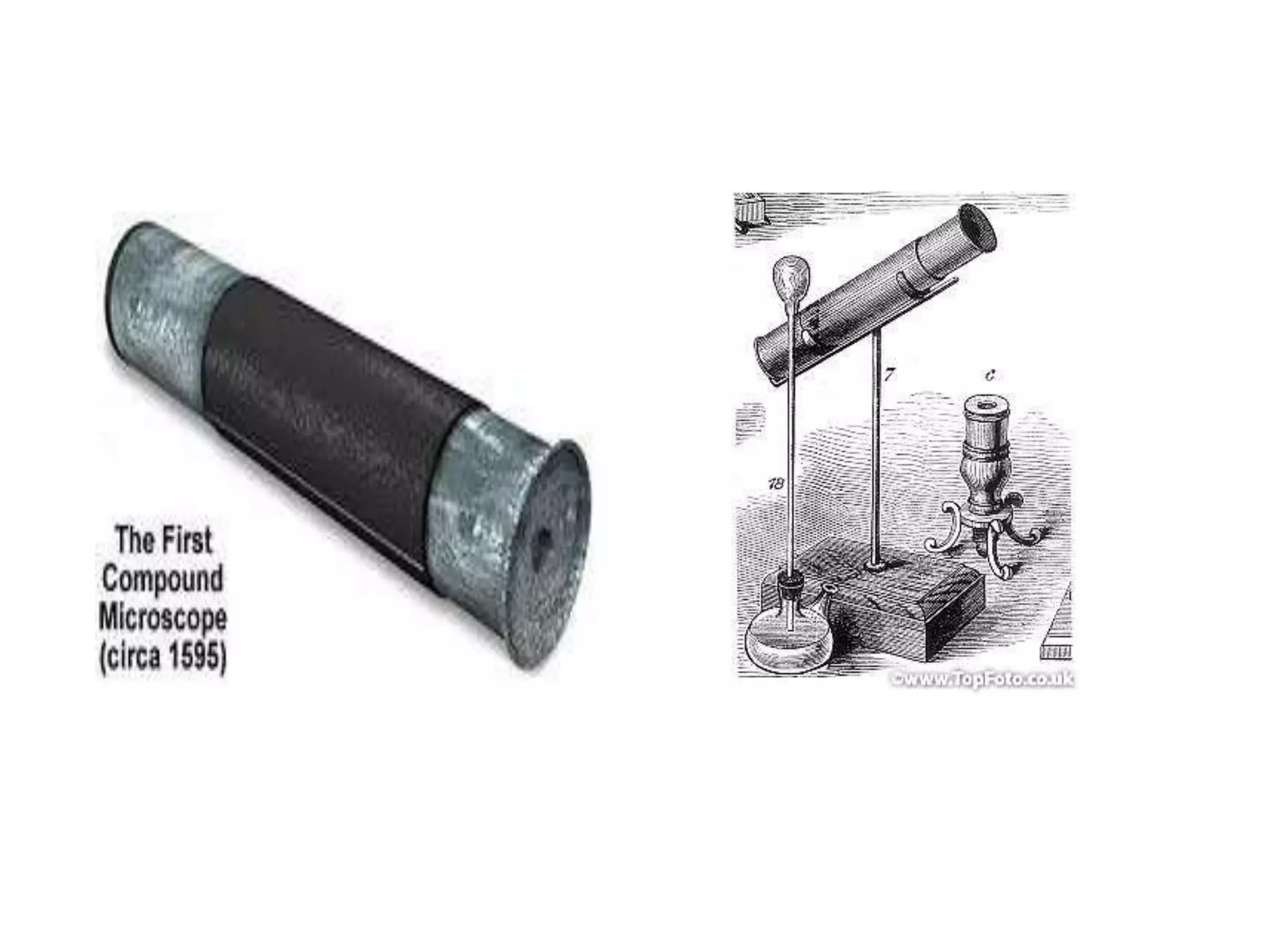
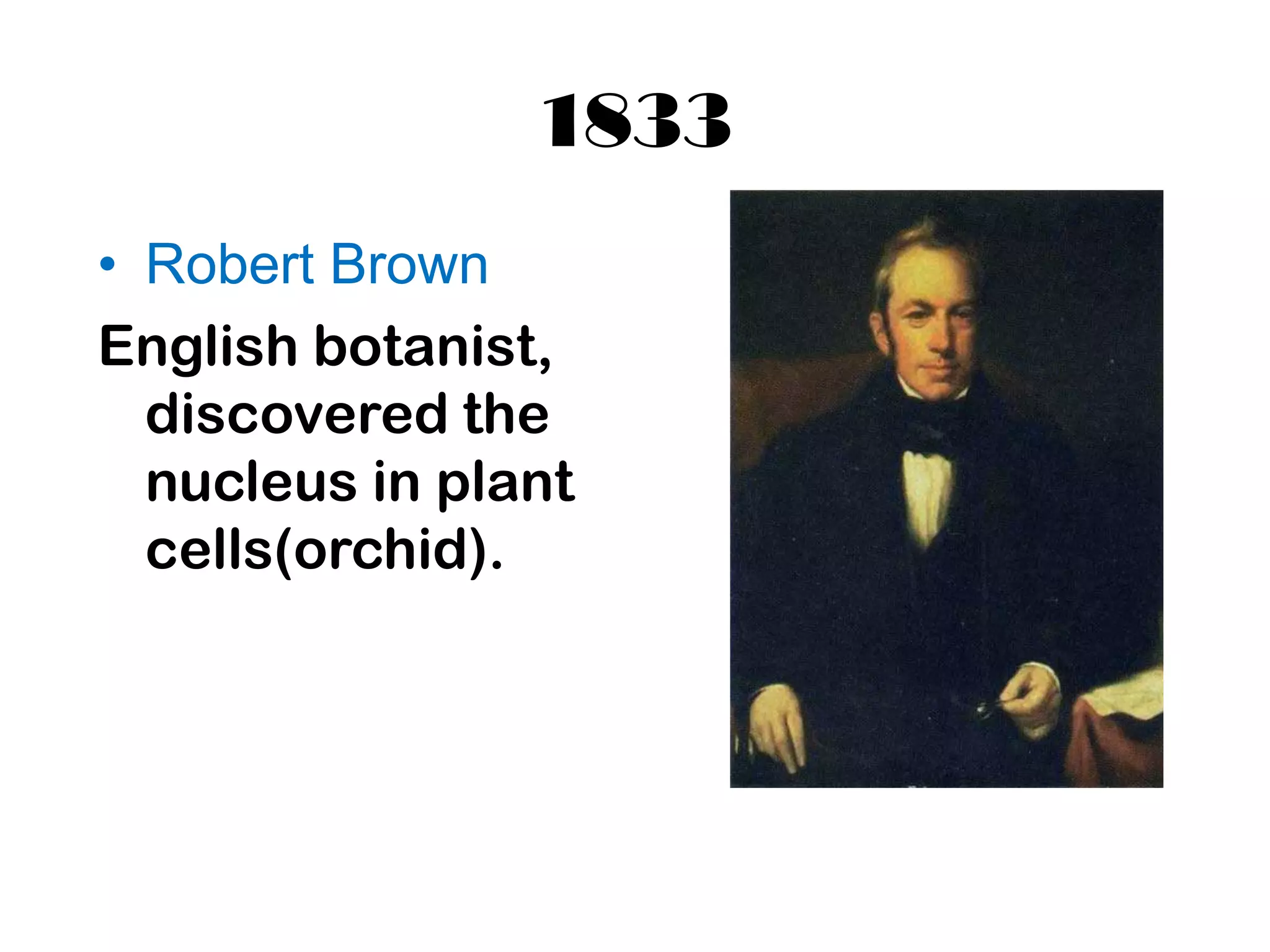
Timeline of significant discoveries, including lens invention by Jansen, Hooke's term 'cell', Leeuwenhoek's observations of 'animalcules', and Brown's nucleus discovery.
Schleiden and Schwann's conclusions that all plant and animal tissues are made up of cells, leading to the development of cell theory.
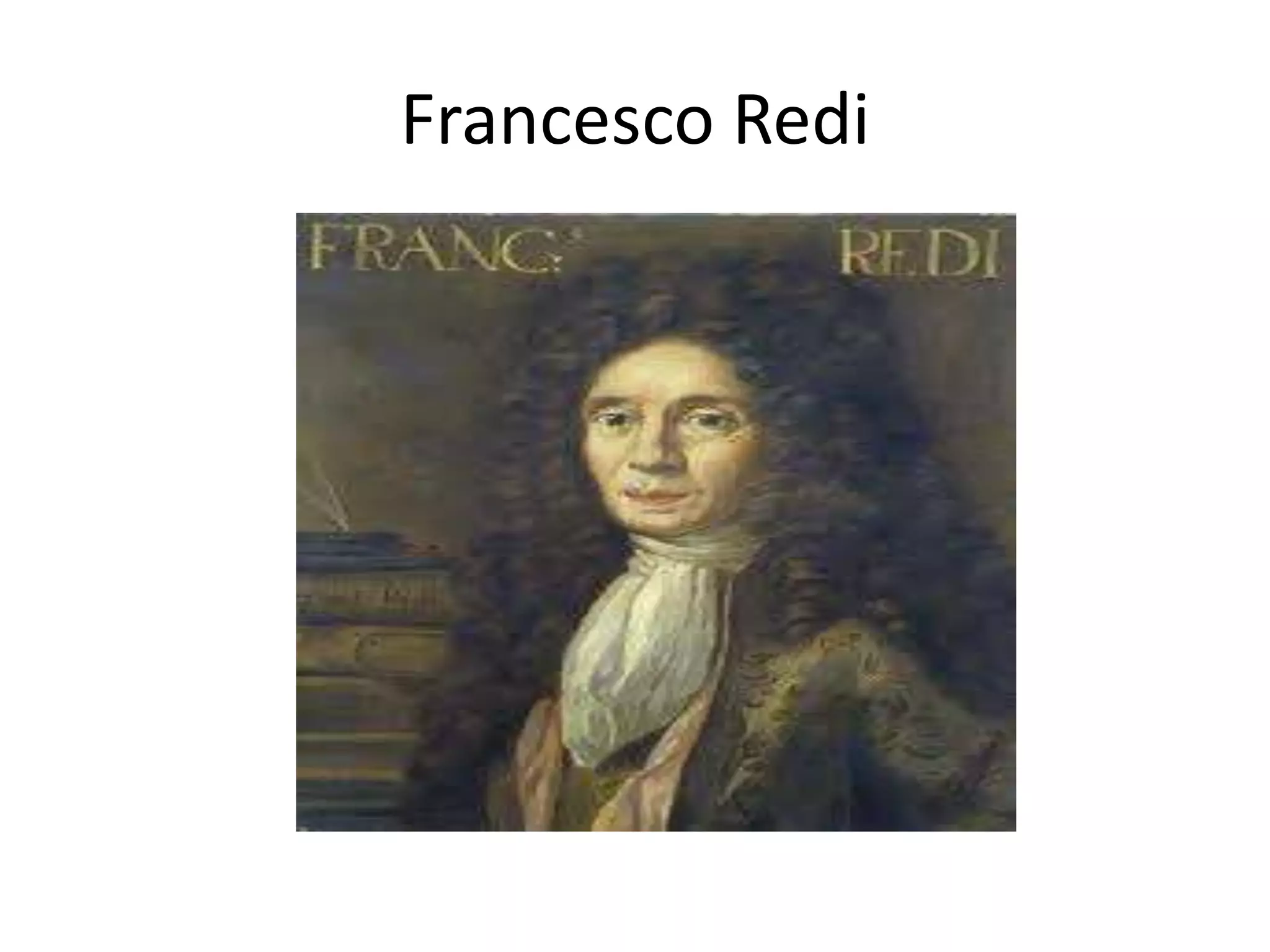
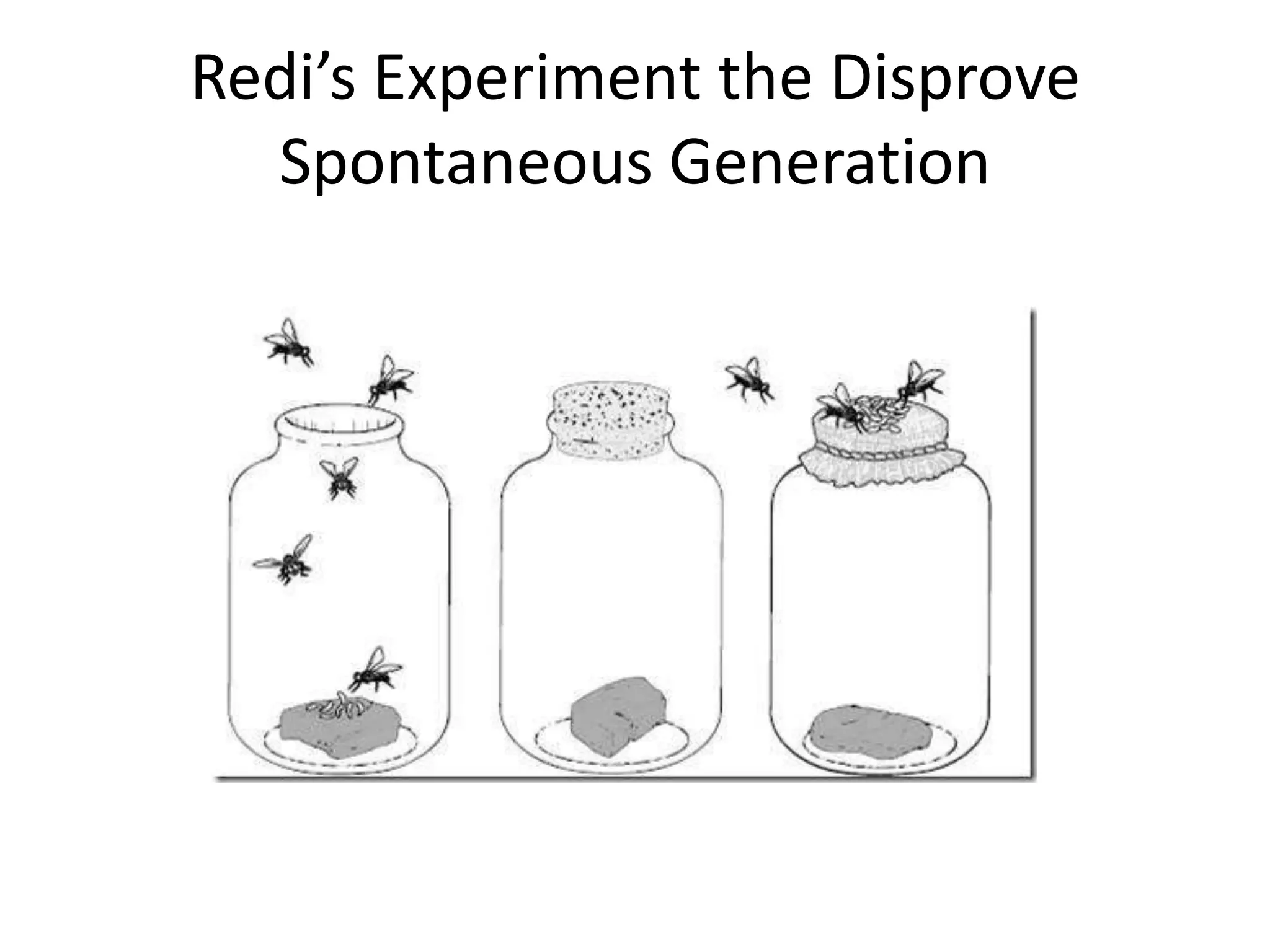
Outlined cell theory by Schwann and its subsequent revision by Virchow, emphasizing the structural unit of life and the concept of cells arising from existing cells.Discussion of spontaneous generation and Francesco Redi's experiments that disproved this theory.
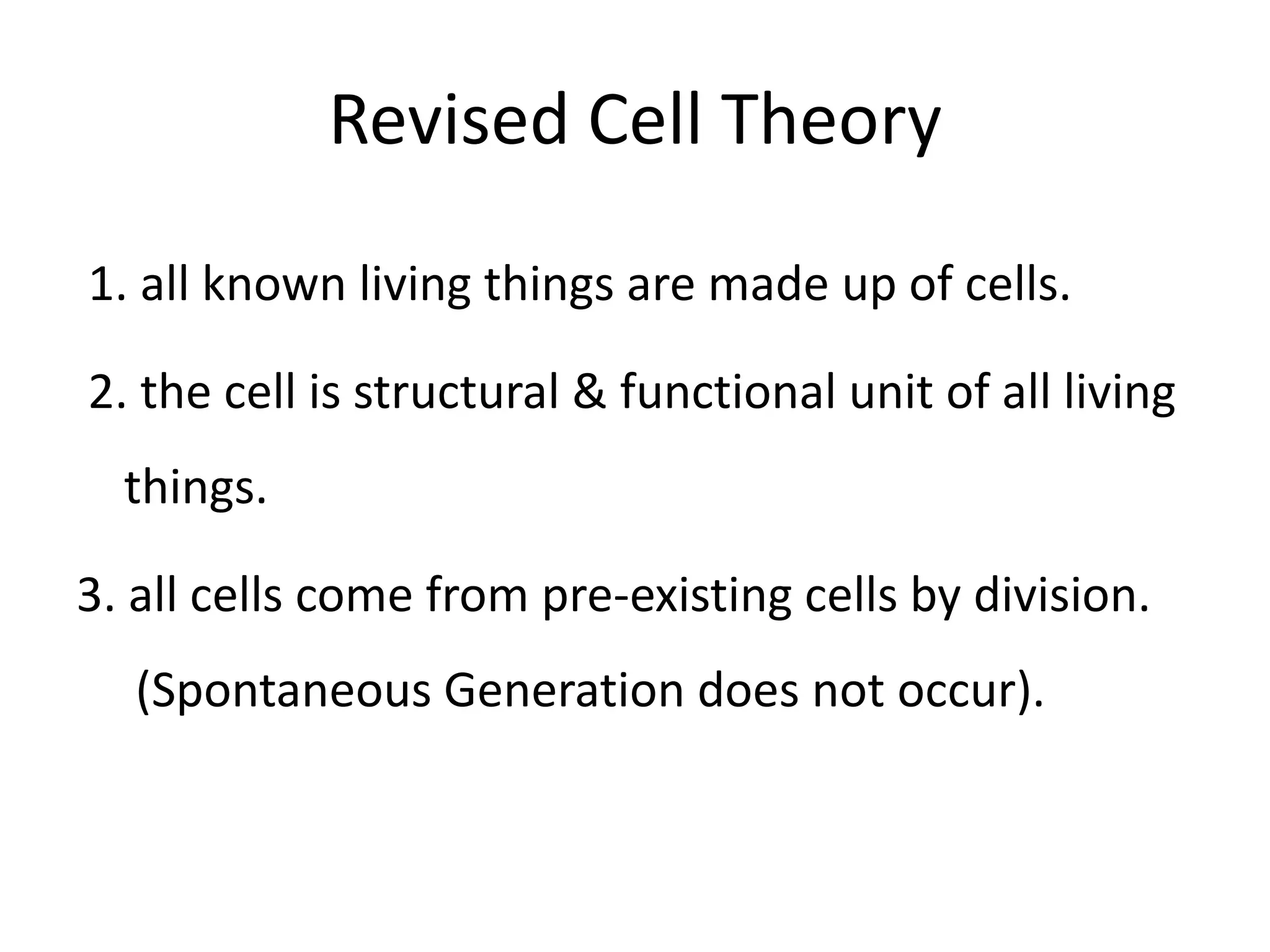
Summarization of the revised cell theory emphasizing that all living things are composed of cells and debunking spontaneous generation.
Cited references for further reading on cell theory and its historical context.
A series of quiz questions addressing key concepts of cell theory and contributions of various scientists.
History
• The studyof cells started about three hundred
years ago.
• With the help of one powerful instrument the
cell was begin to be known to humans.
5.
Cell Discovery
• Thescientist who have contributed to the
discovery of the cell:
Hans and Zacharias Jansen
Robert Hooke
Matthias Schleiden
Theodor Schwann
Robert Brown
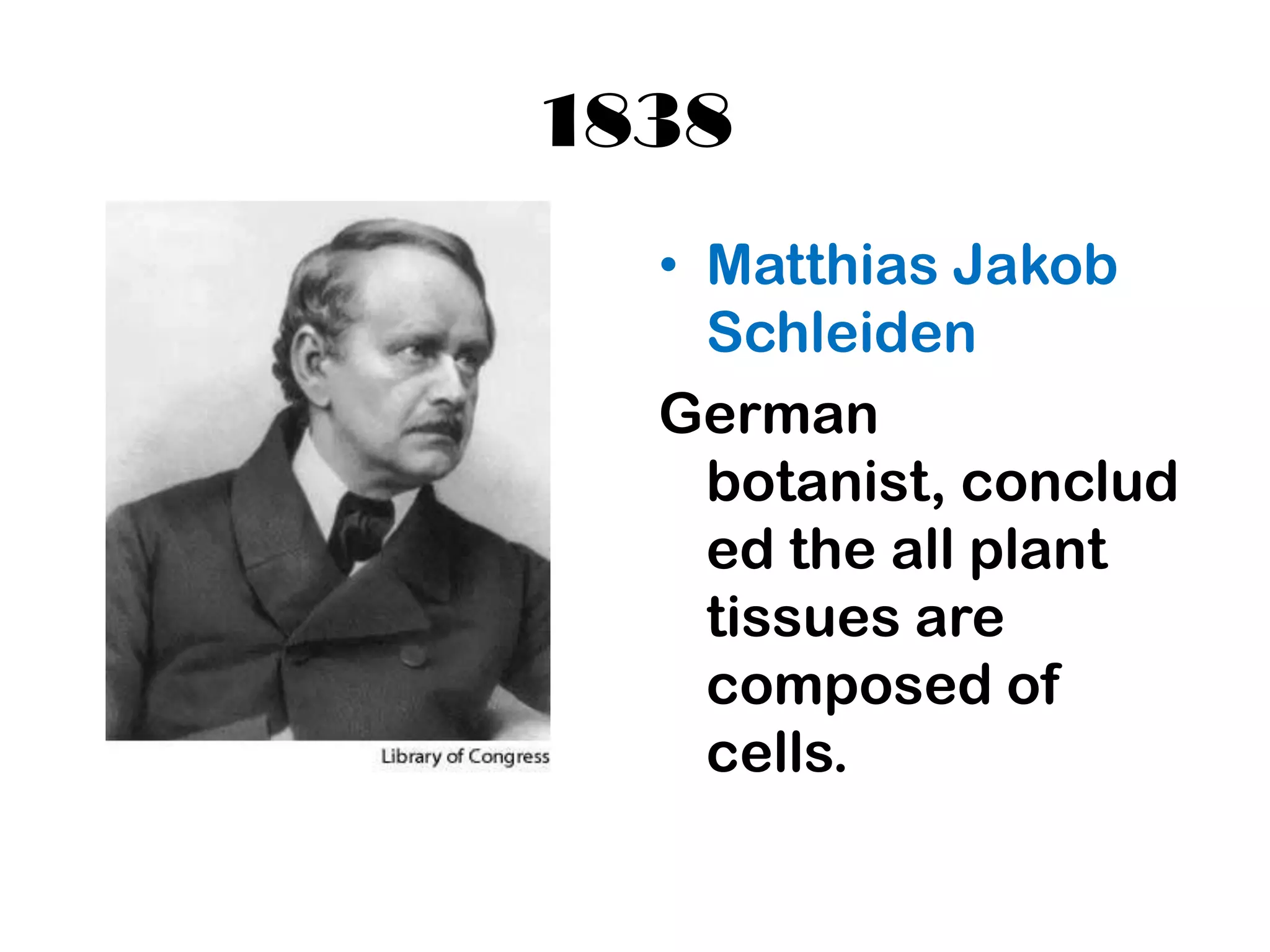
1838
•Matthias Jakob
Schleiden
German
botanist, conclud
ed the all plant
tissues are
composed of
cells.
17.
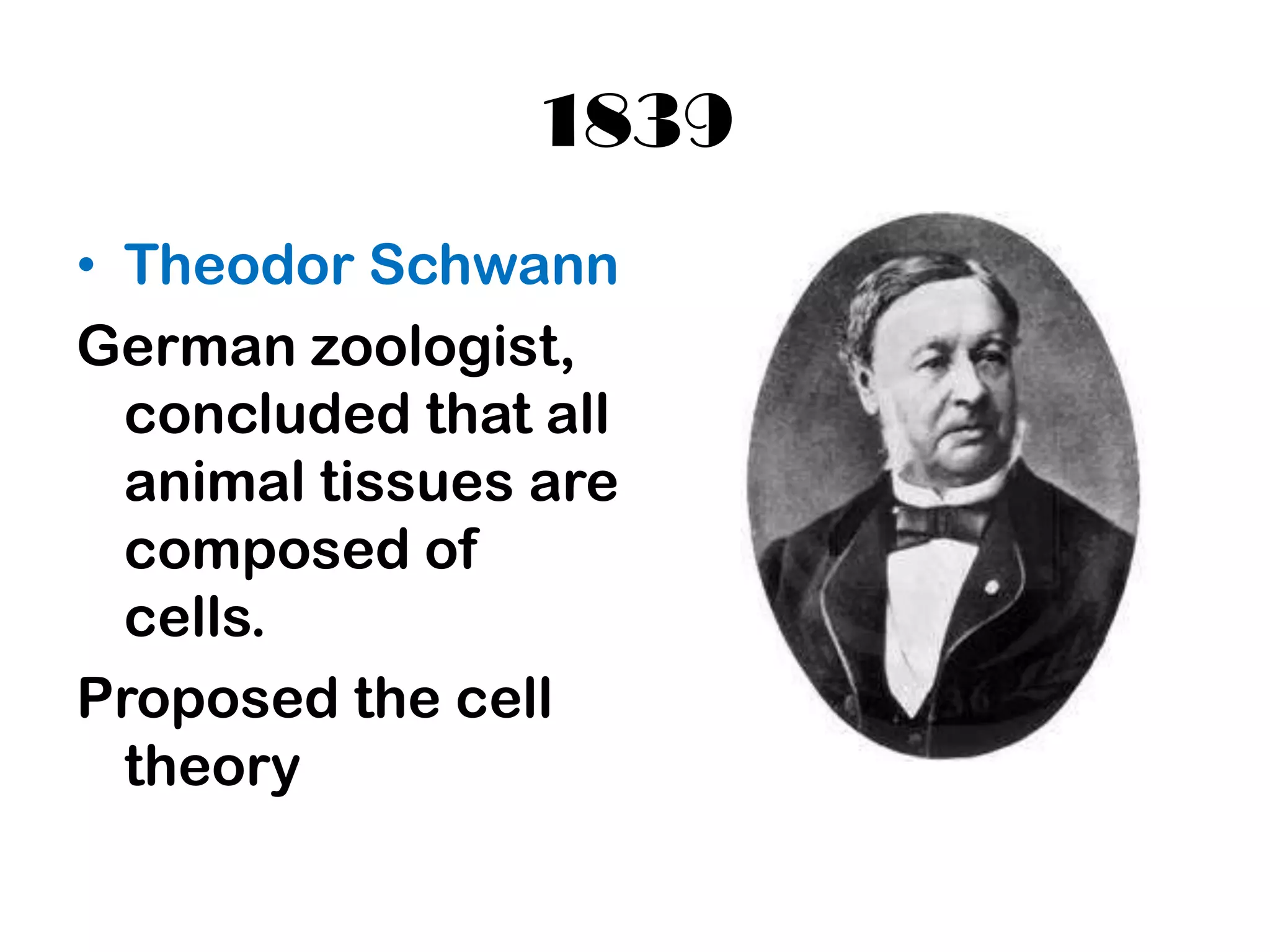
1839
• Theodor Schwann
Germanzoologist,
concluded that all
animal tissues are
composed of
cells.
Proposed the cell
theory
18.
1858
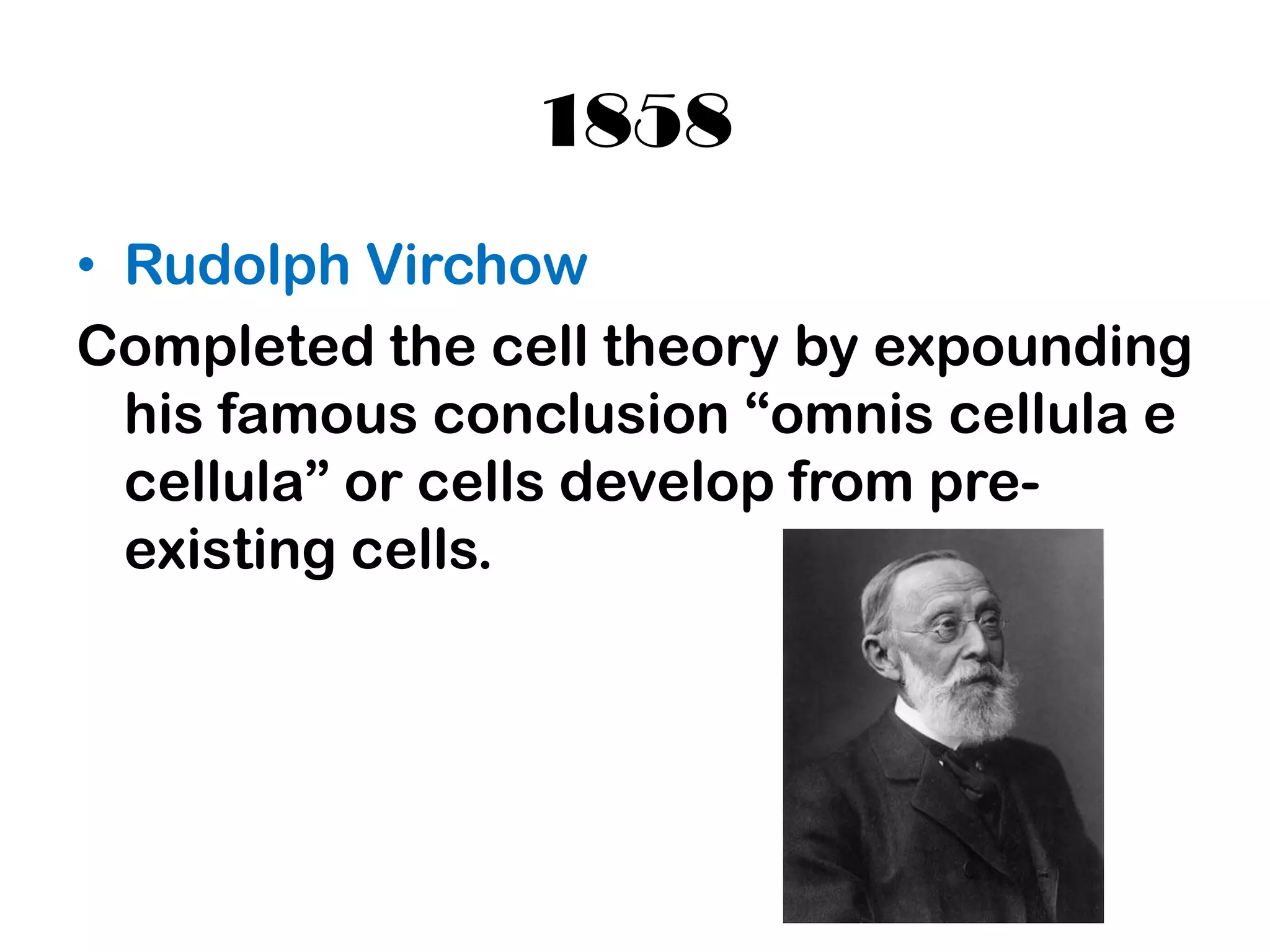
• Rudolph Virchow
Completedthe cell theory by expounding
his famous conclusion “omnis cellula e
cellula” or cells develop from pre-
existing cells.
19.
Cell Theory Accordingto Schwann
1) The cell is the unit of structure,
physiology, and organization in living
things.
2) The cell retains a dual existence as
a distinct entity and a building block
in the construction of organisms.
20.
Continued…
3) Cells formby free-cell formation,
similar to the formation of crystals
(spontaneous generation).
Revised Cell Theory
1.all known living things are made up of cells.
2. the cell is structural & functional unit of all living
things.
3. all cells come from pre-existing cells by division.
(Spontaneous Generation does not occur).
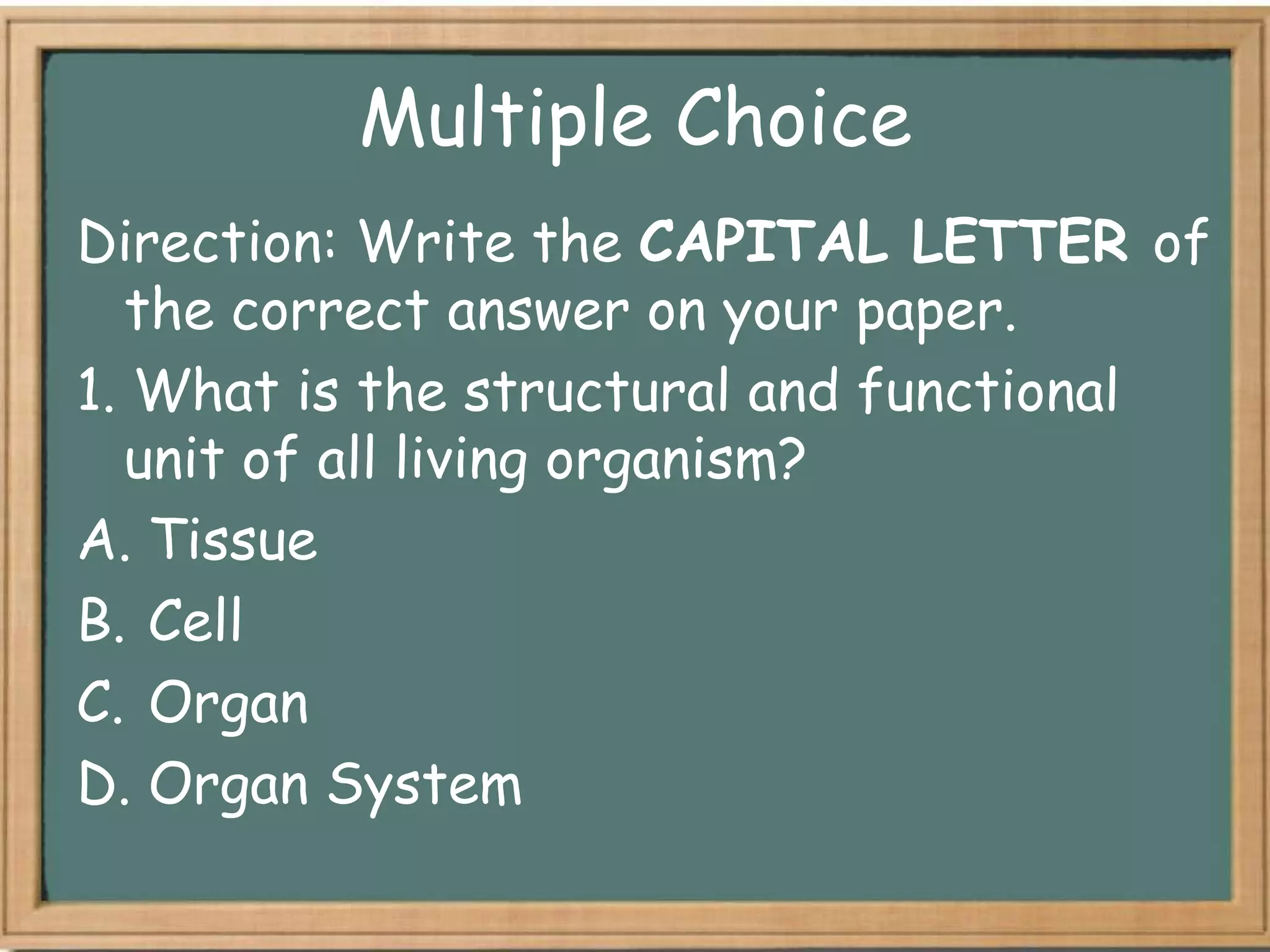
Multiple Choice
Direction: Writethe CAPITAL LETTER of
the correct answer on your paper.
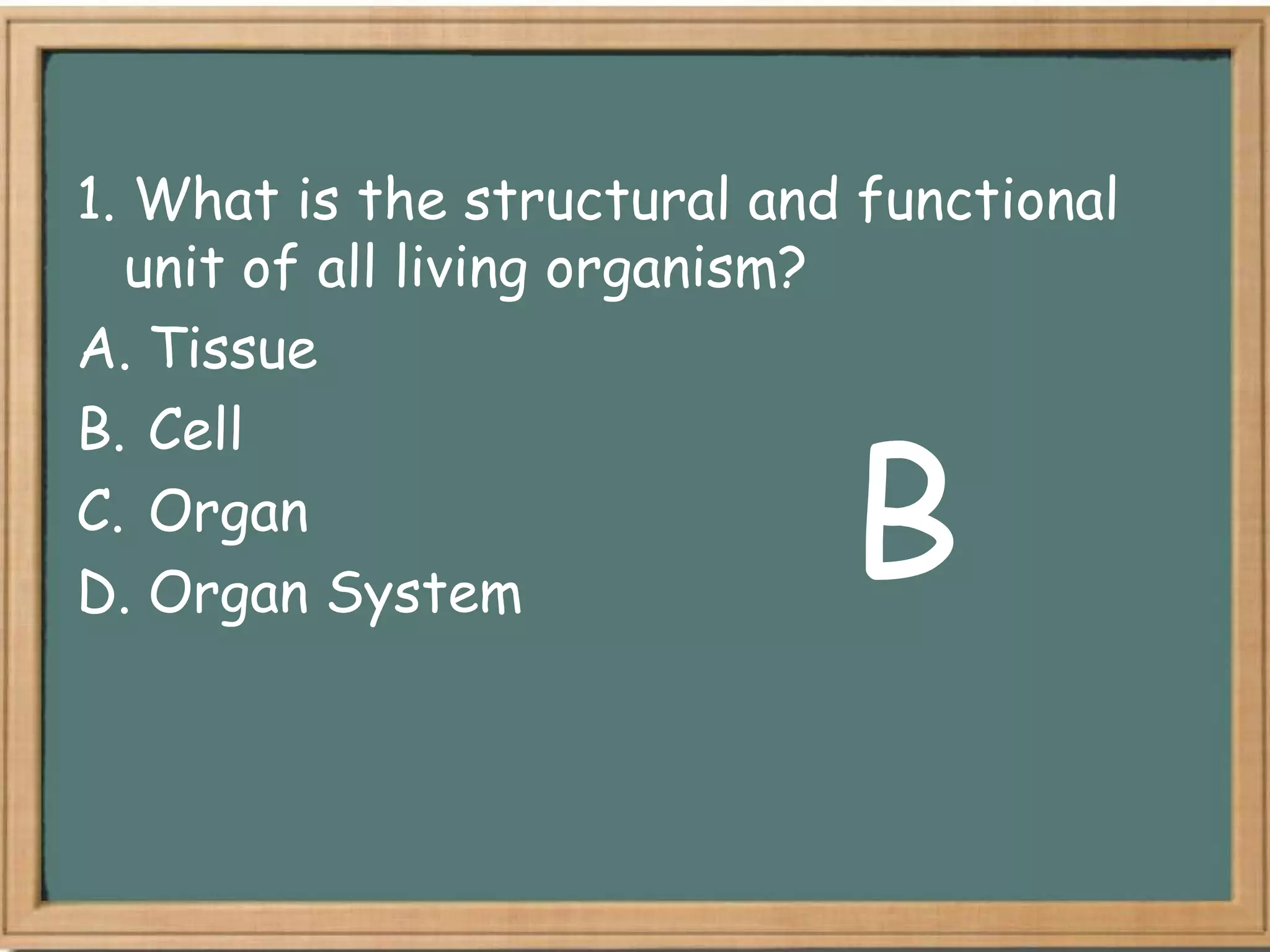
1. What is the structural and functional
unit of all living organism?
A. Tissue
B. Cell
C. Organ
D. Organ System
28.
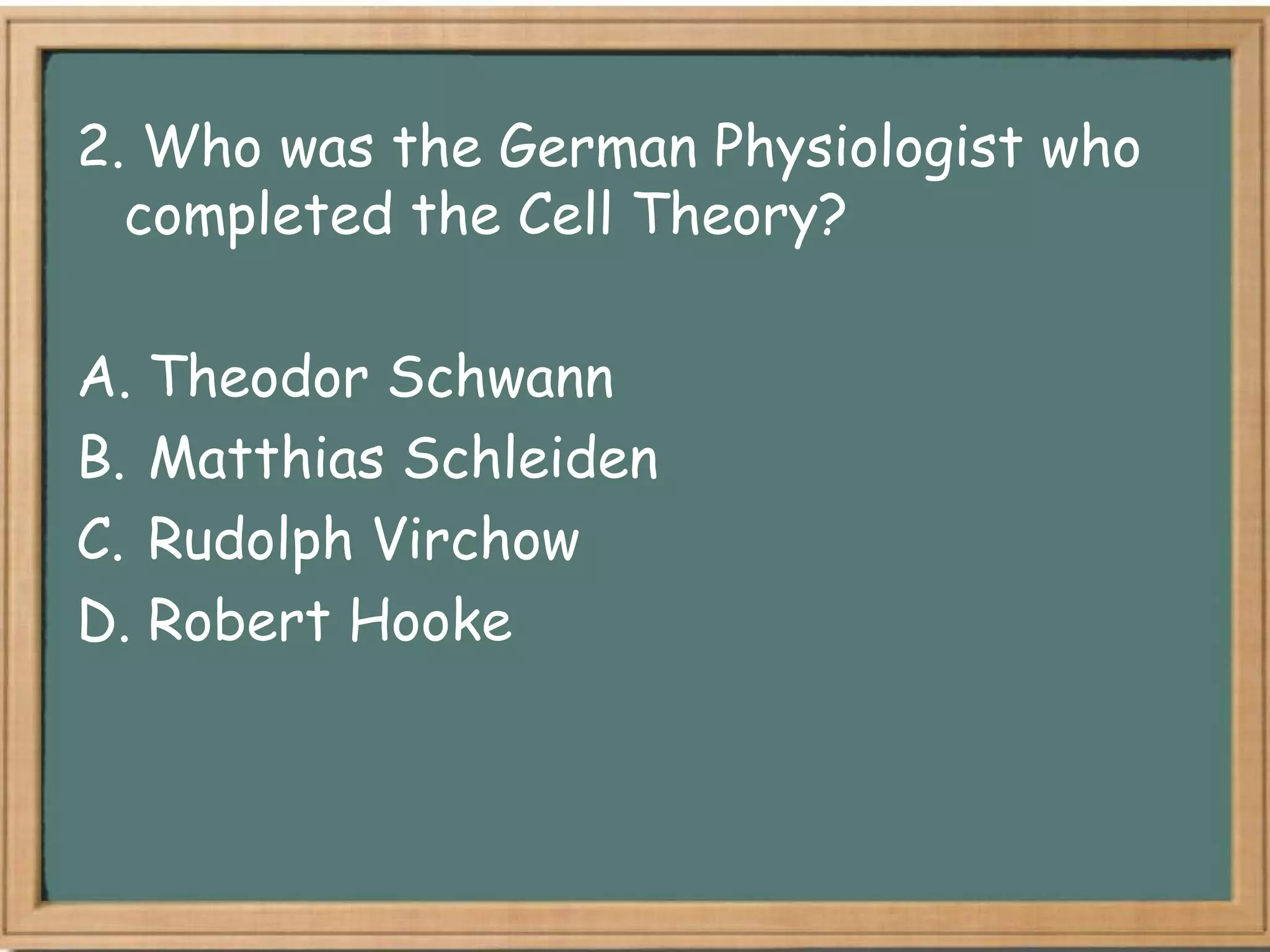
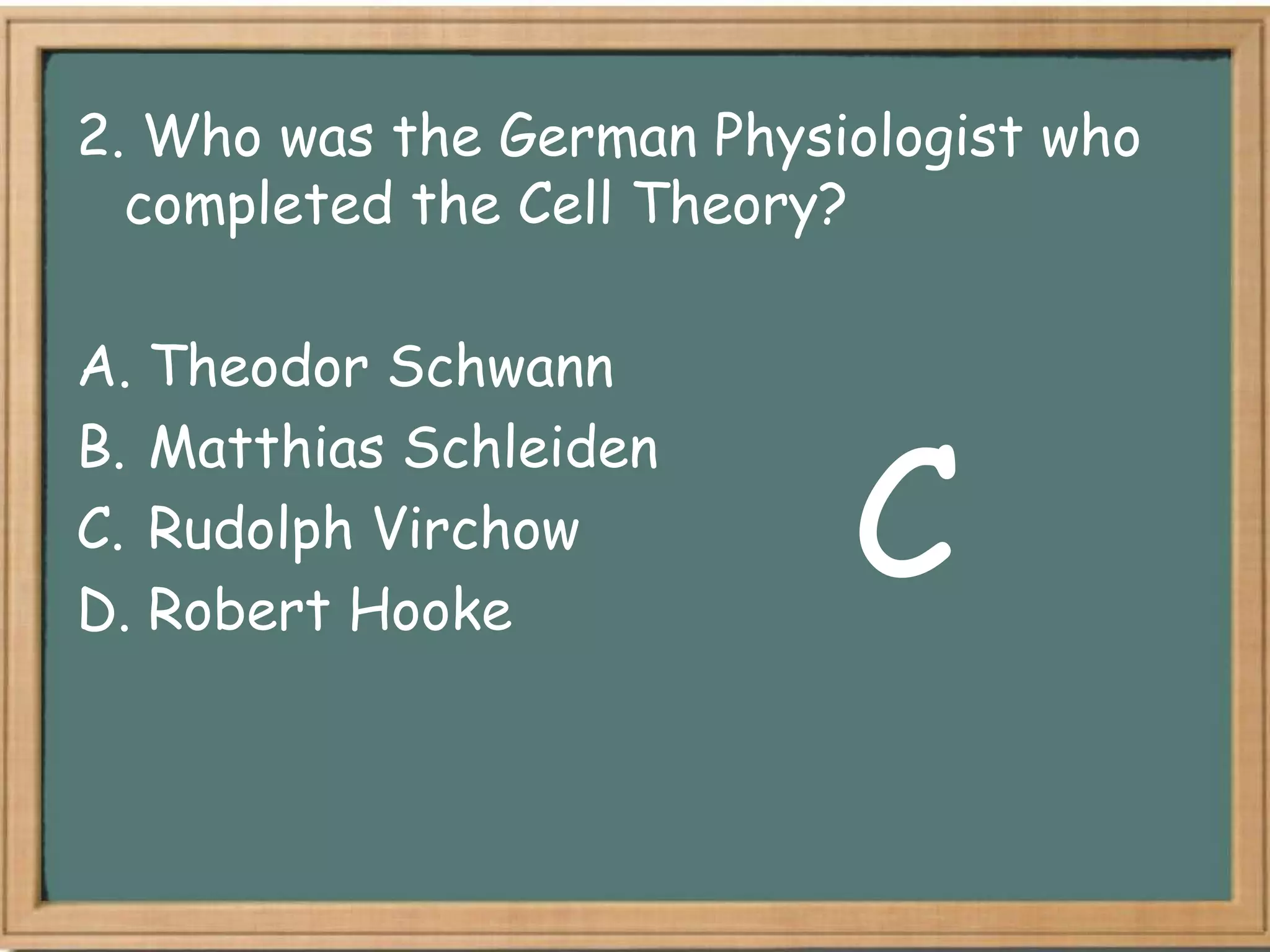
2. Who wasthe German Physiologist who
completed the Cell Theory?
A. Theodor Schwann
B. Matthias Schleiden
C. Rudolph Virchow
D. Robert Hooke
29.
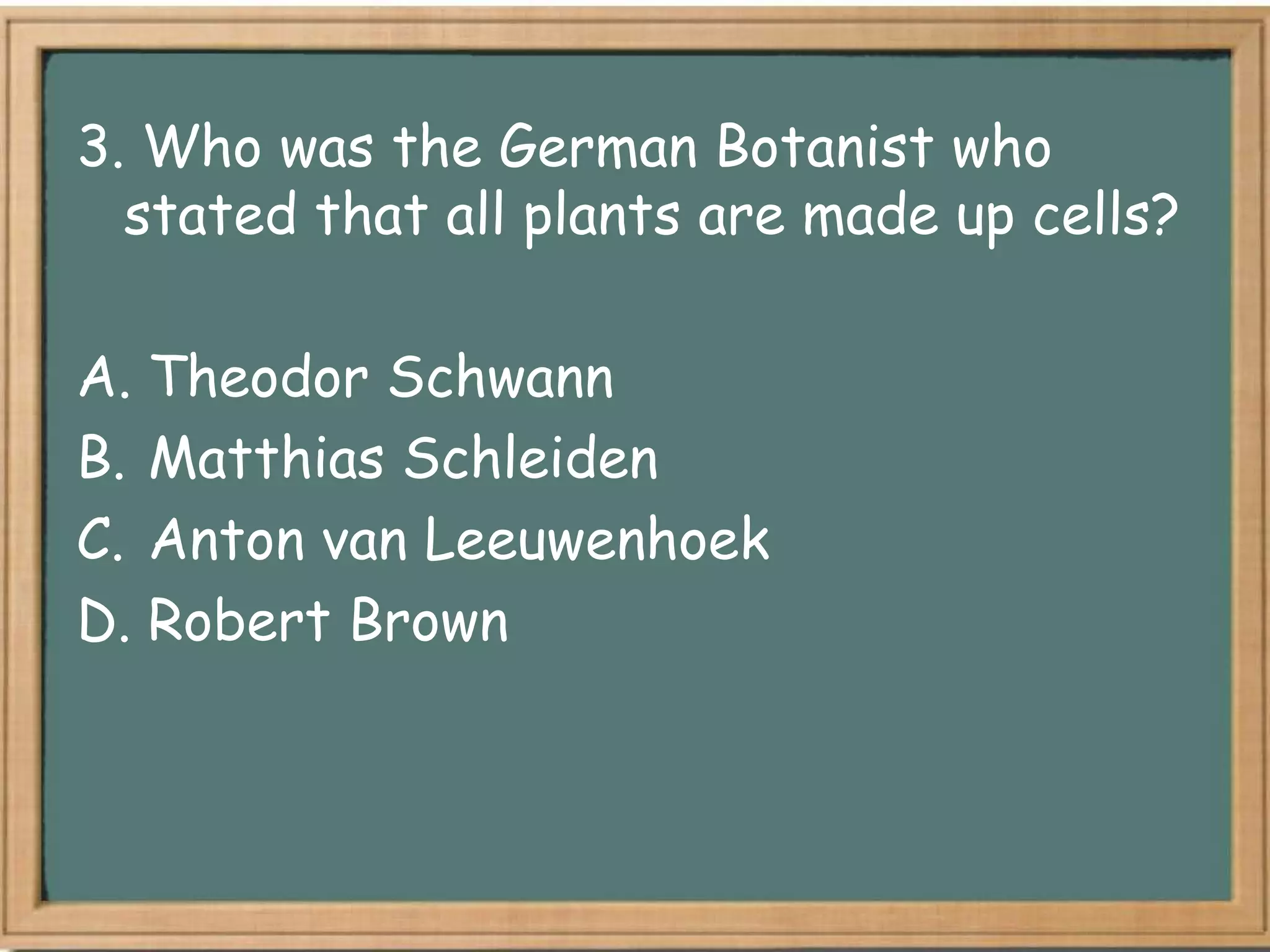
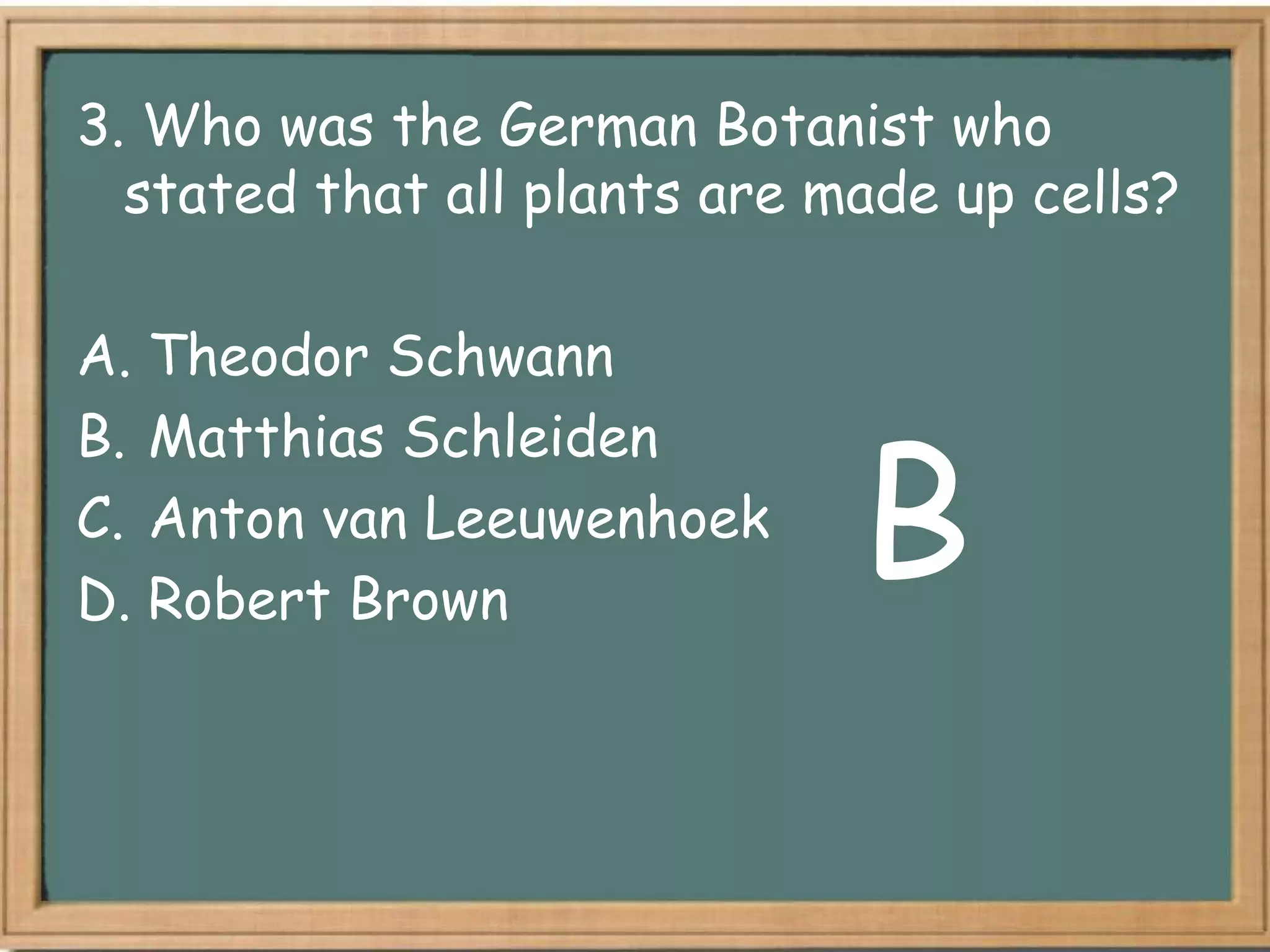
3. Who wasthe German Botanist who
stated that all plants are made up cells?
A. Theodor Schwann
B. Matthias Schleiden
C. Anton van Leeuwenhoek
D. Robert Brown
30.
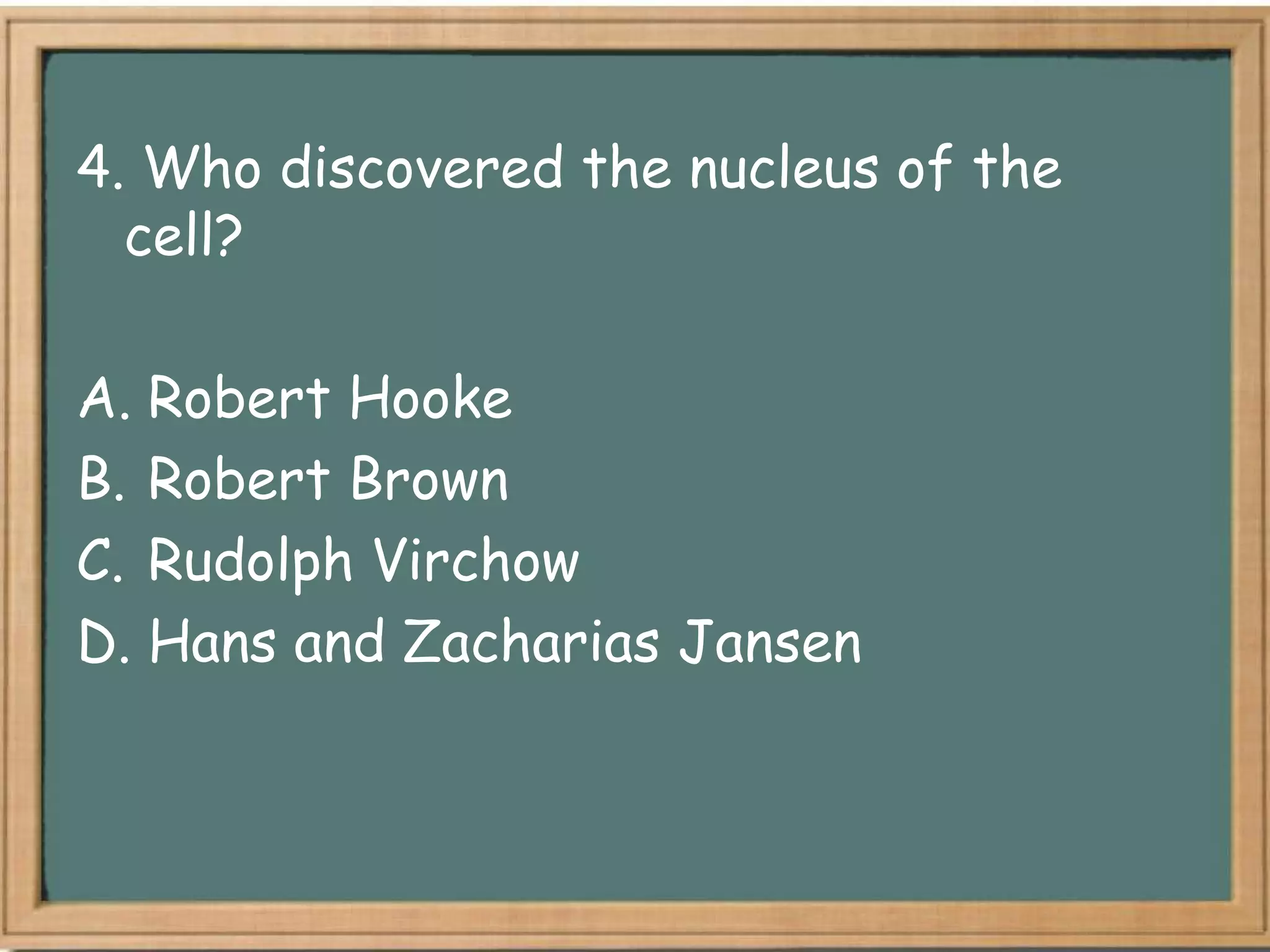
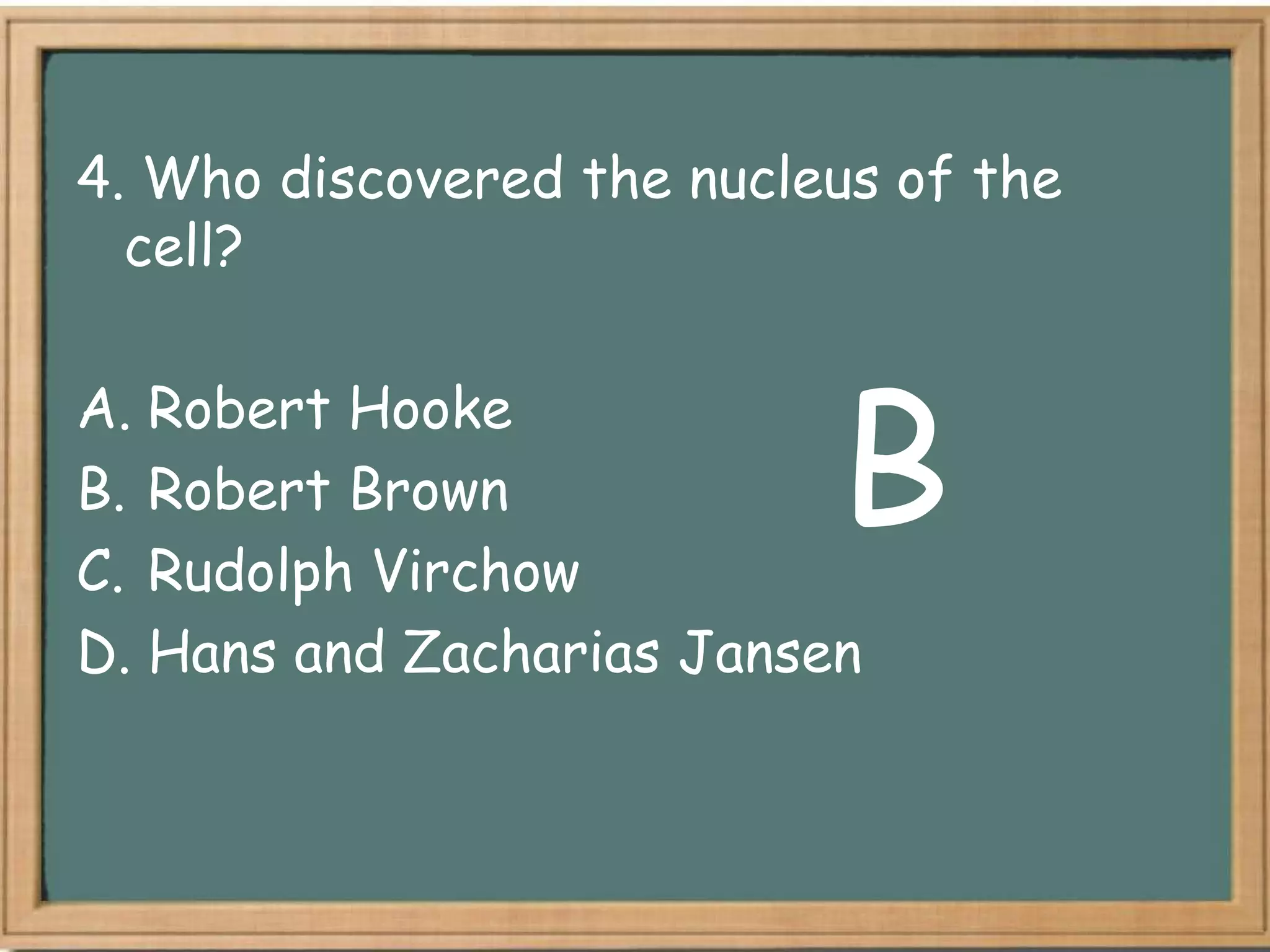
4. Who discoveredthe nucleus of the
cell?
A. Robert Hooke
B. Robert Brown
C. Rudolph Virchow
D. Hans and Zacharias Jansen
31.
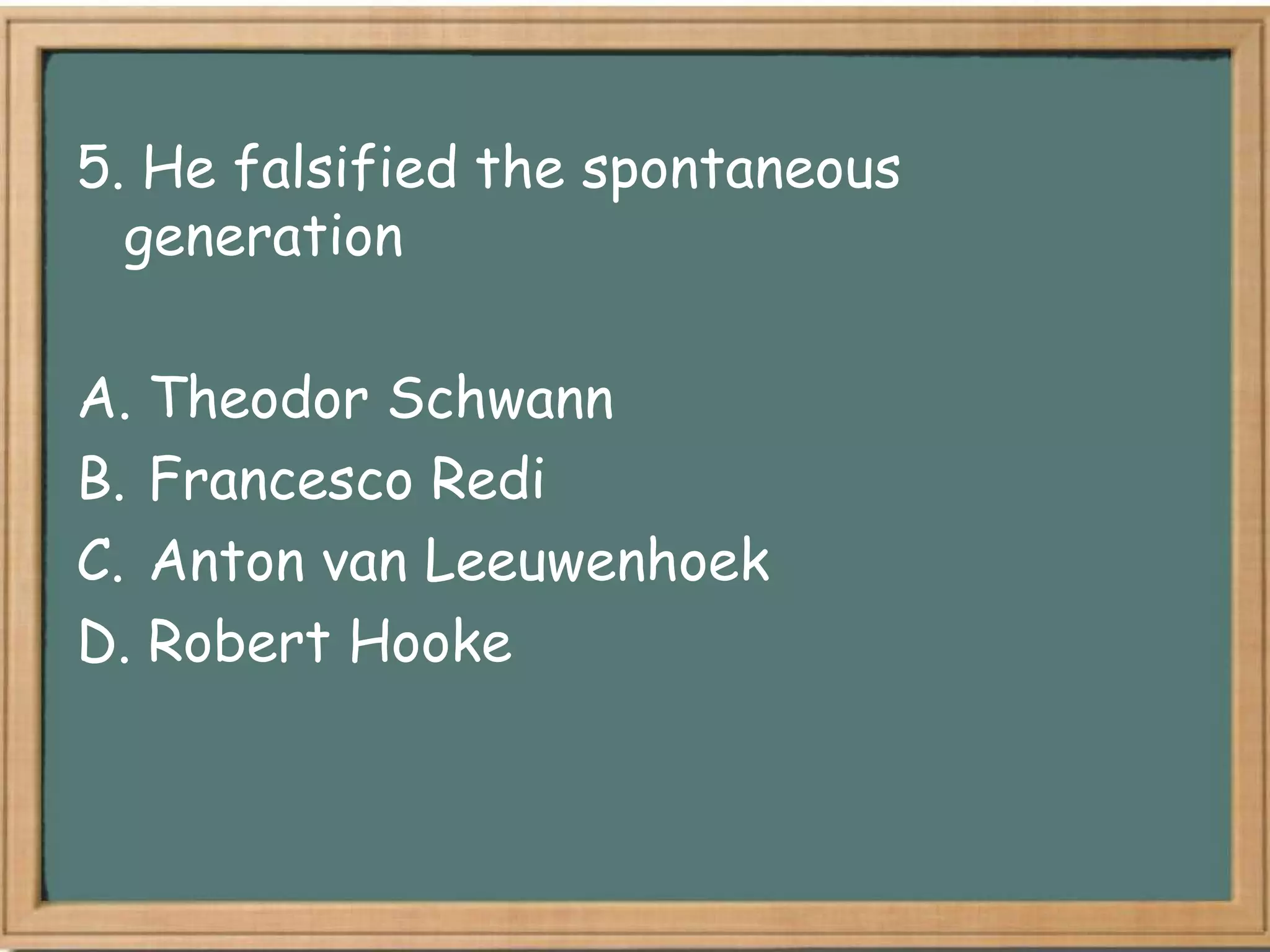
5. He falsifiedthe spontaneous
generation
A. Theodor Schwann
B. Francesco Redi
C. Anton van Leeuwenhoek
D. Robert Hooke
32.
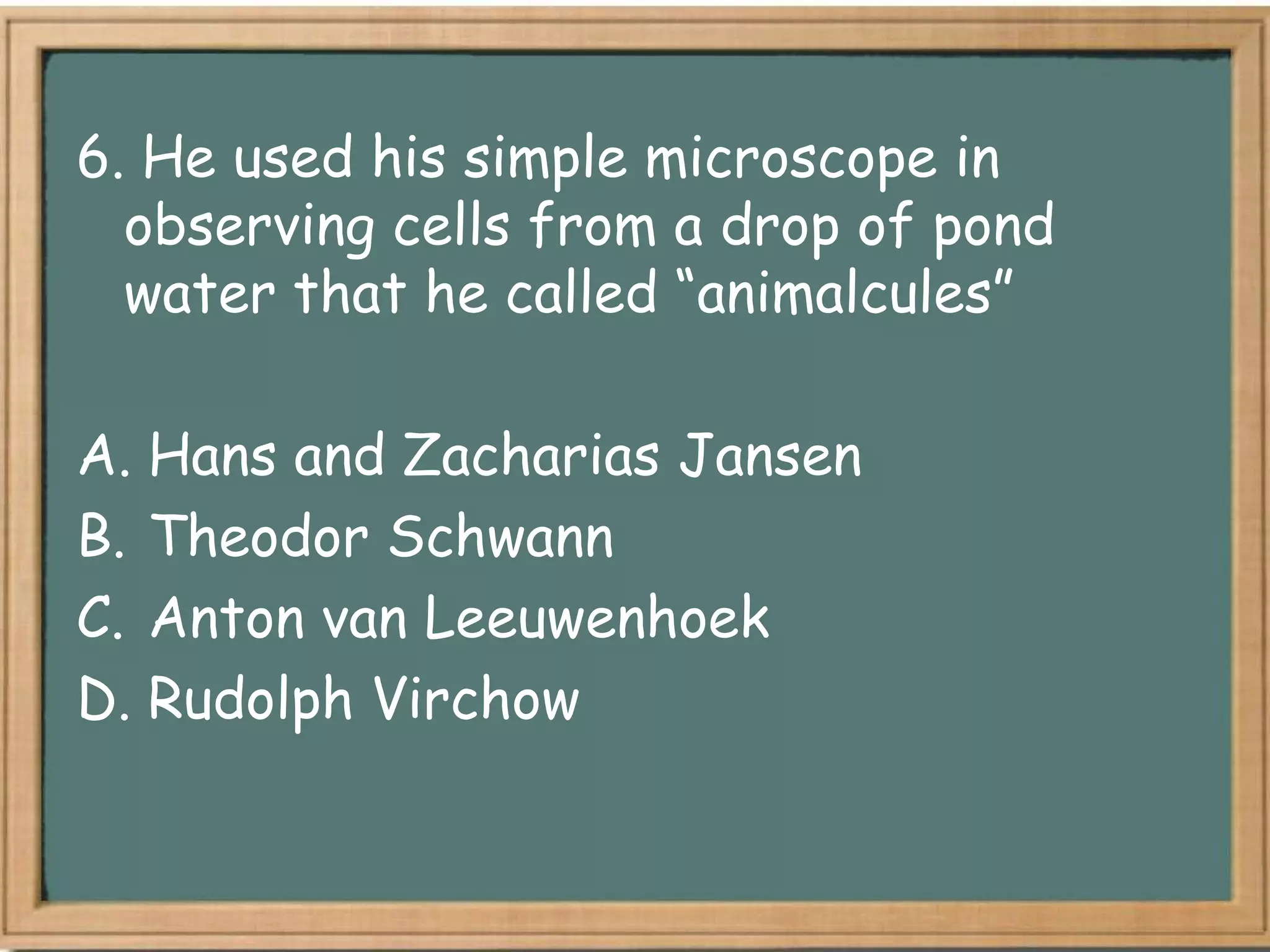
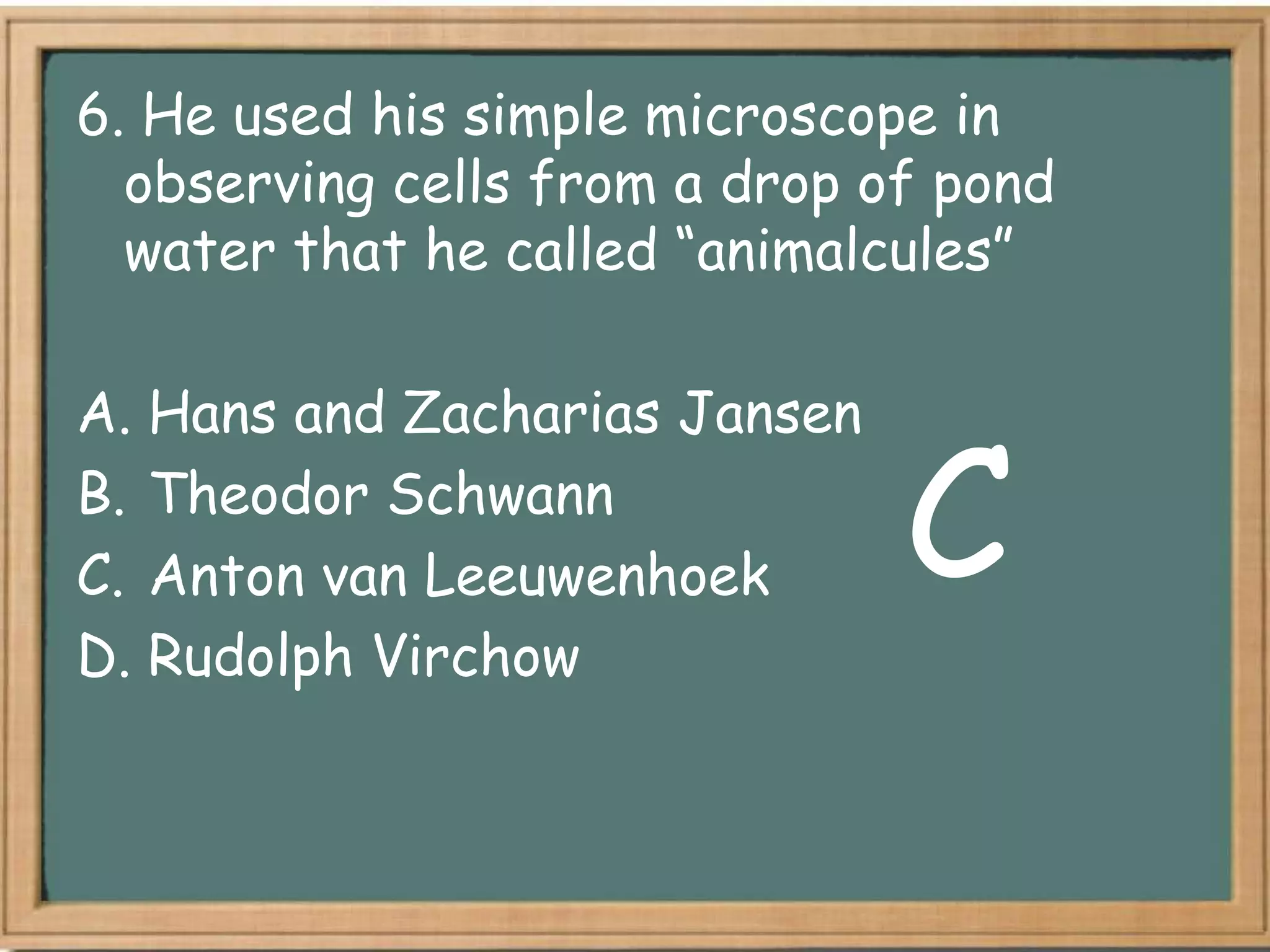
6. He usedhis simple microscope in
observing cells from a drop of pond
water that he called “animalcules”
A. Hans and Zacharias Jansen
B. Theodor Schwann
C. Anton van Leeuwenhoek
D. Rudolph Virchow
33.
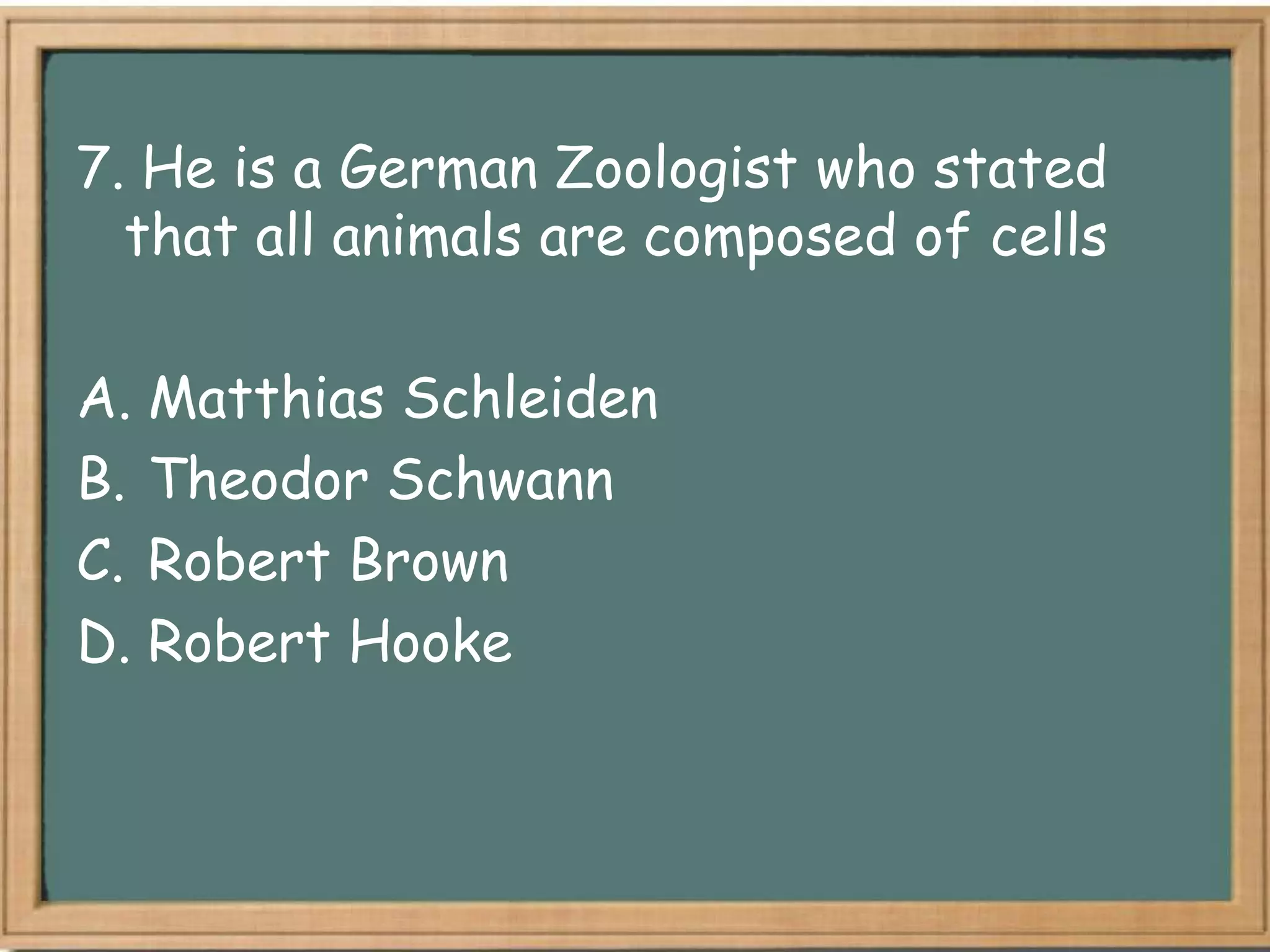
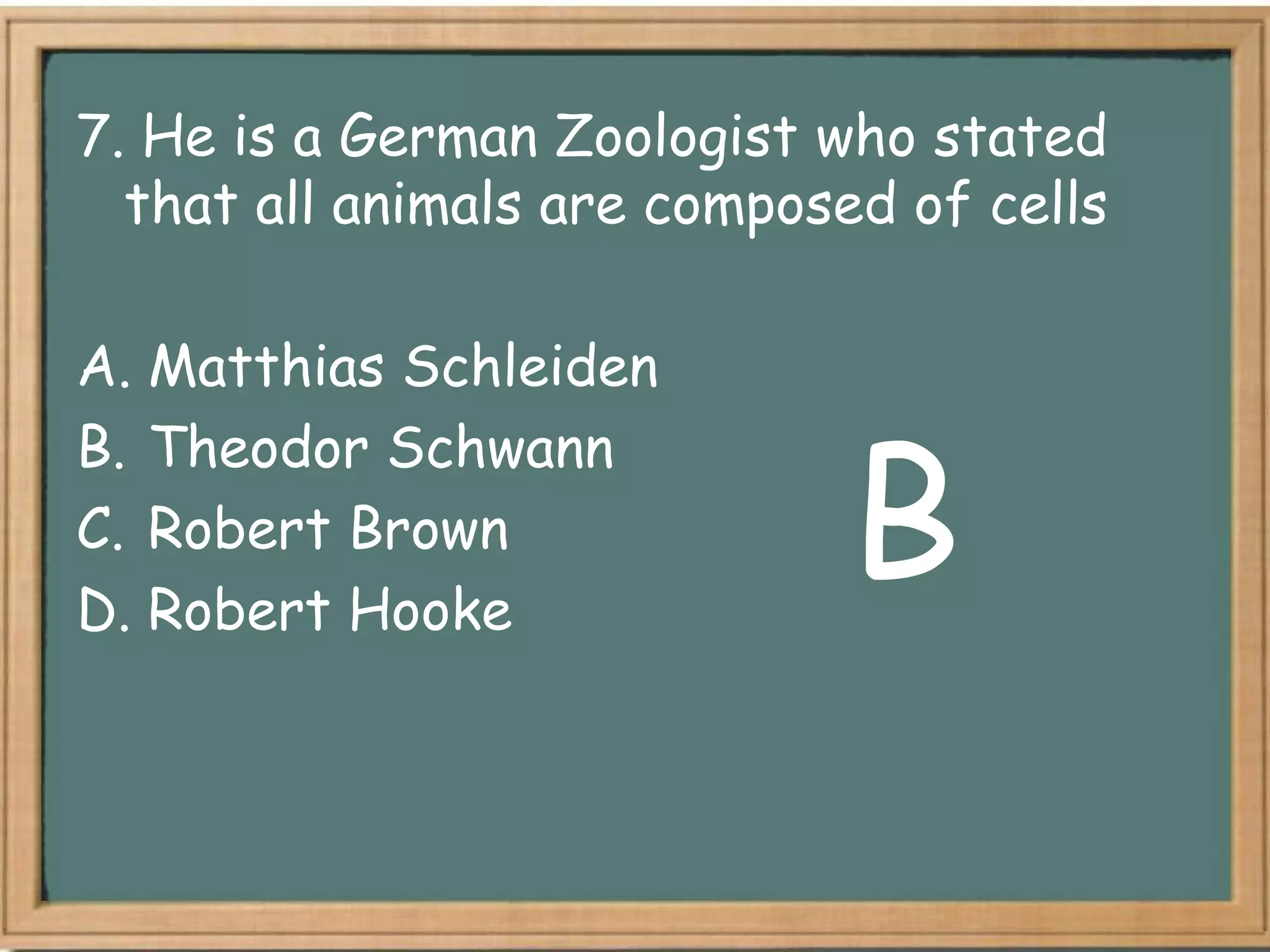
7. He isa German Zoologist who stated
that all animals are composed of cells
A. Matthias Schleiden
B. Theodor Schwann
C. Robert Brown
D. Robert Hooke
1. What isthe structural and functional
unit of all living organism?
A. Tissue
B
B. Cell
C. Organ
D. Organ System
37.
2. Who wasthe German Physiologist who
completed the Cell Theory?
A. Theodor Schwann
C
B. Matthias Schleiden
C. Rudolph Virchow
D. Robert Hooke
38.
3. Who wasthe German Botanist who
stated that all plants are made up cells?
A. Theodor Schwann
B
B. Matthias Schleiden
C. Anton van Leeuwenhoek
D. Robert Brown
39.
4. Who discoveredthe nucleus of the
cell?
B
A. Robert Hooke
B. Robert Brown
C. Rudolph Virchow
D. Hans and Zacharias Jansen
40.
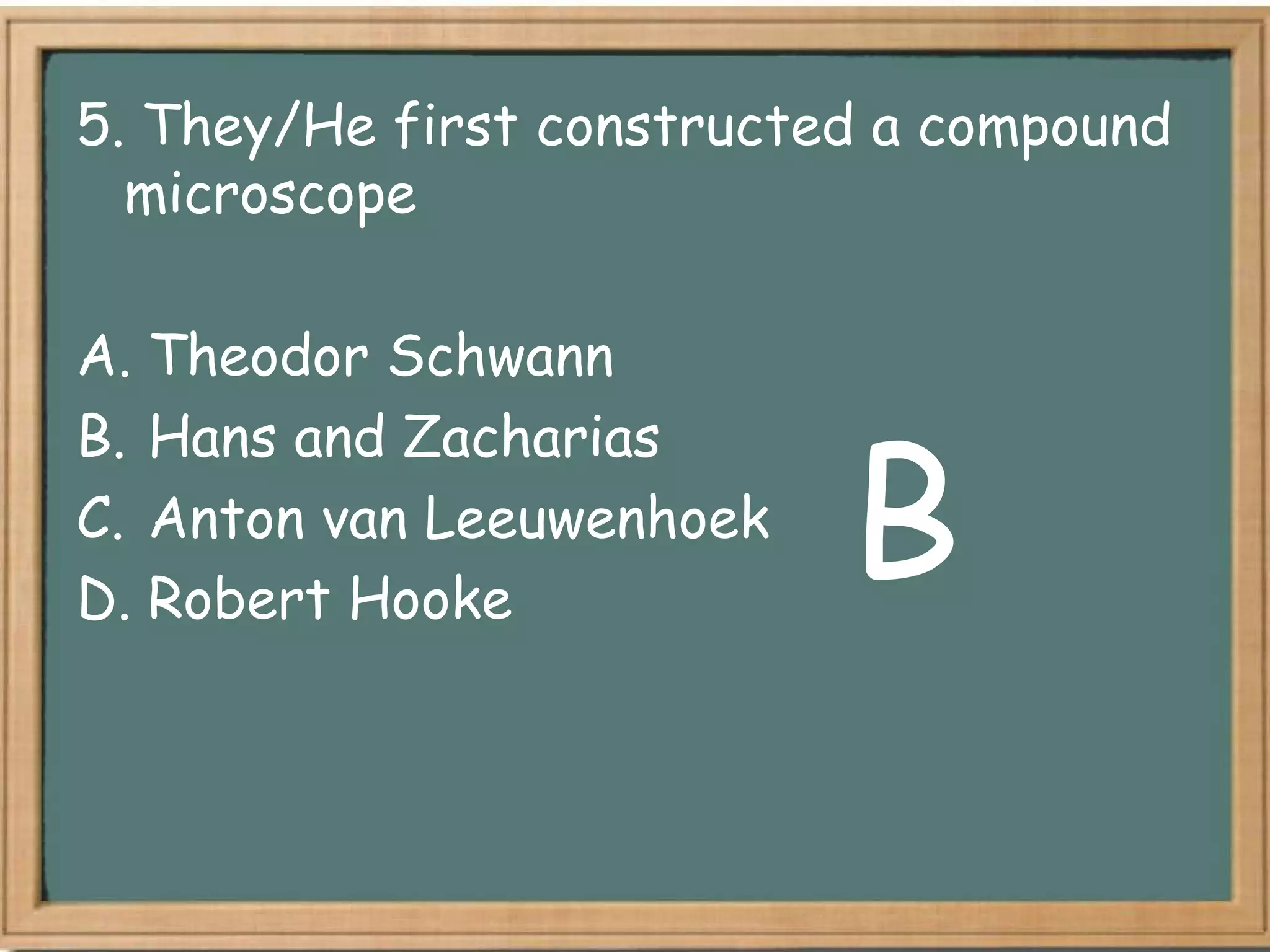
5. They/He firstconstructed a compound
microscope
A. Theodor Schwann
B
B. Hans and Zacharias
C. Anton van Leeuwenhoek
D. Robert Hooke
41.
6. He usedhis simple microscope in
observing cells from a drop of pond
water that he called “animalcules”
A. Hans and Zacharias Jansen
B. Theodor Schwann
C. Anton van Leeuwenhoek C
D. Rudolph Virchow
42.
7. He isa German Zoologist who stated
that all animals are composed of cells
A. Matthias Schleiden
B
B. Theodor Schwann
C. Robert Brown
D. Robert Hooke
43.
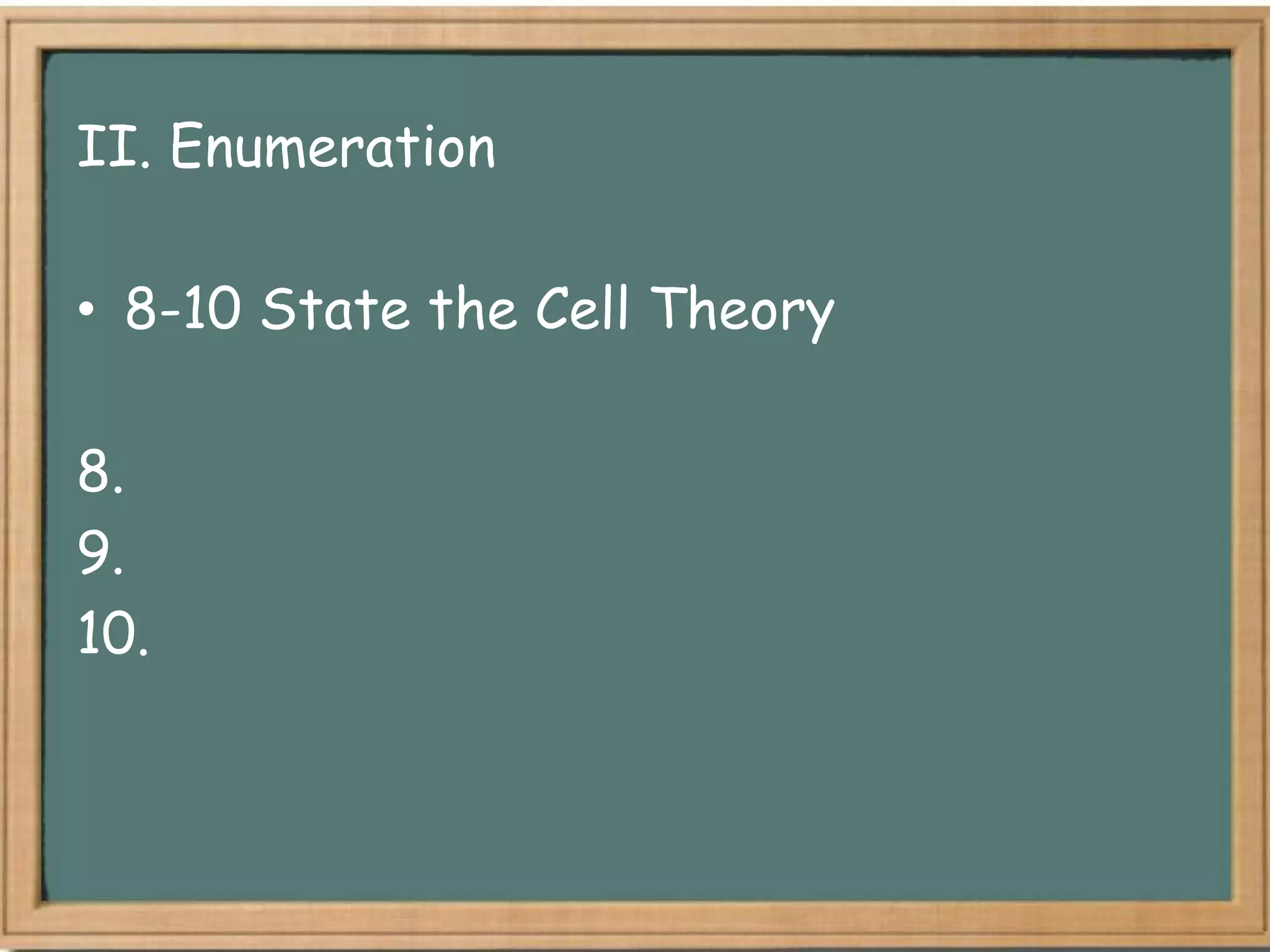
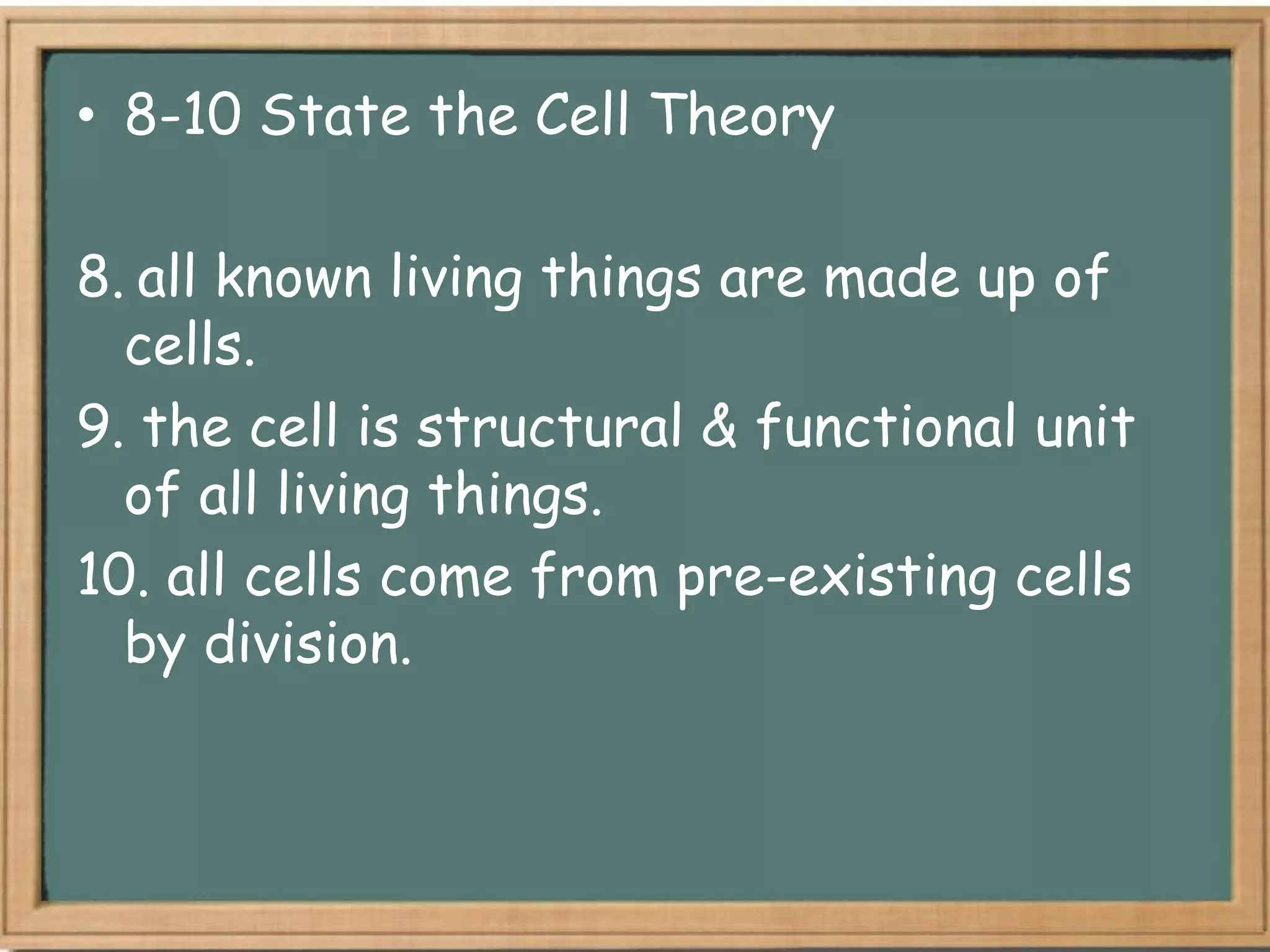
• 8-10 Statethe Cell Theory
8. all known living things are made up of
cells.
9. the cell is structural & functional unit
of all living things.
10. all cells come from pre-existing cells
by division.