Mycobacterium
Saddam Ansari
Tbilisi State Medical University
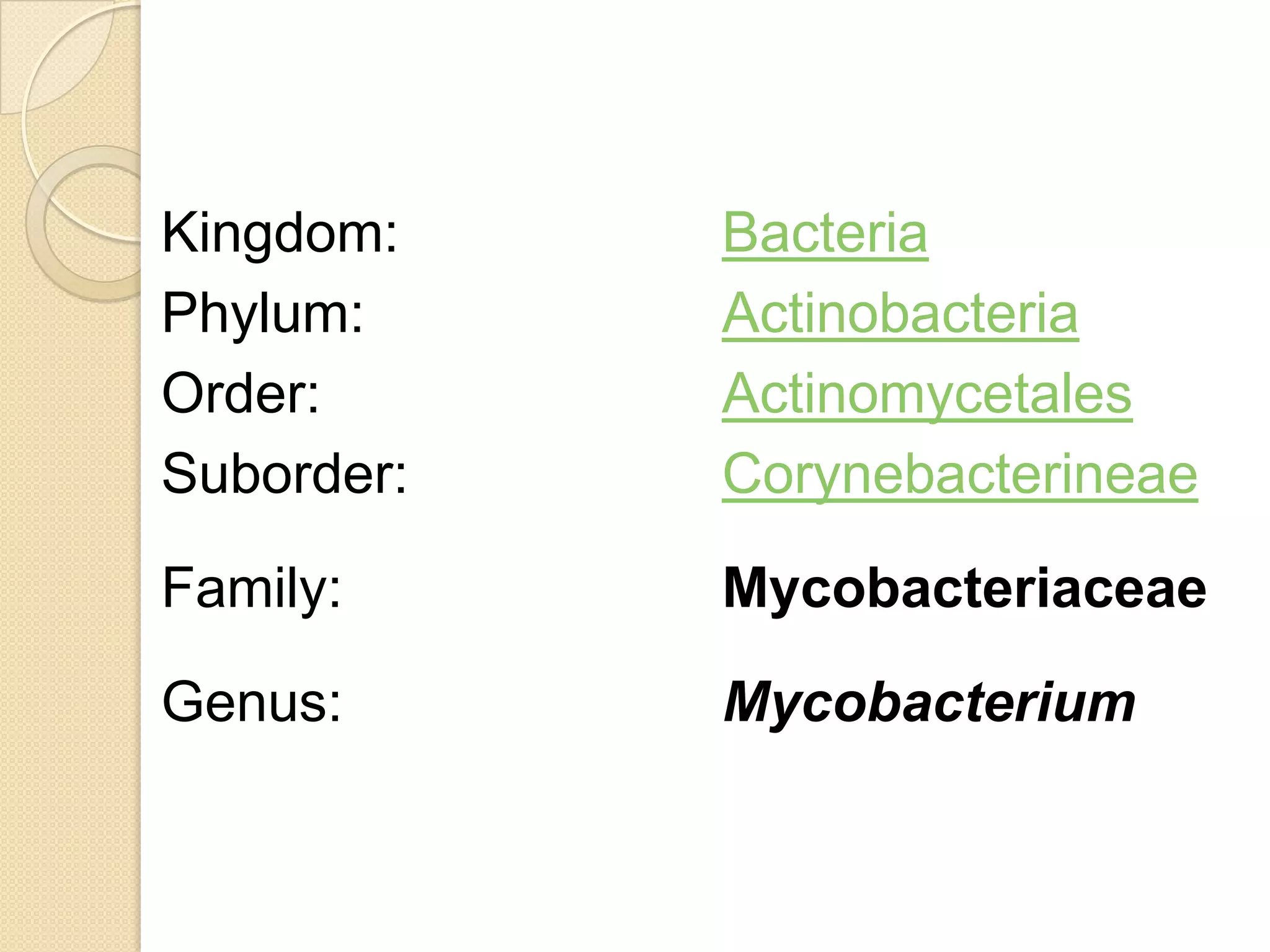
Kingdom: Bacteria
Phylum: Actinobacteria
Order: Actinomycetales
Suborder: Corynebacterineae
Family: Mycobacteriaceae
Genus: Mycobacterium
 Mycobacterium Tuberculosis
 Mycobacterium Leprae
(uncommon)
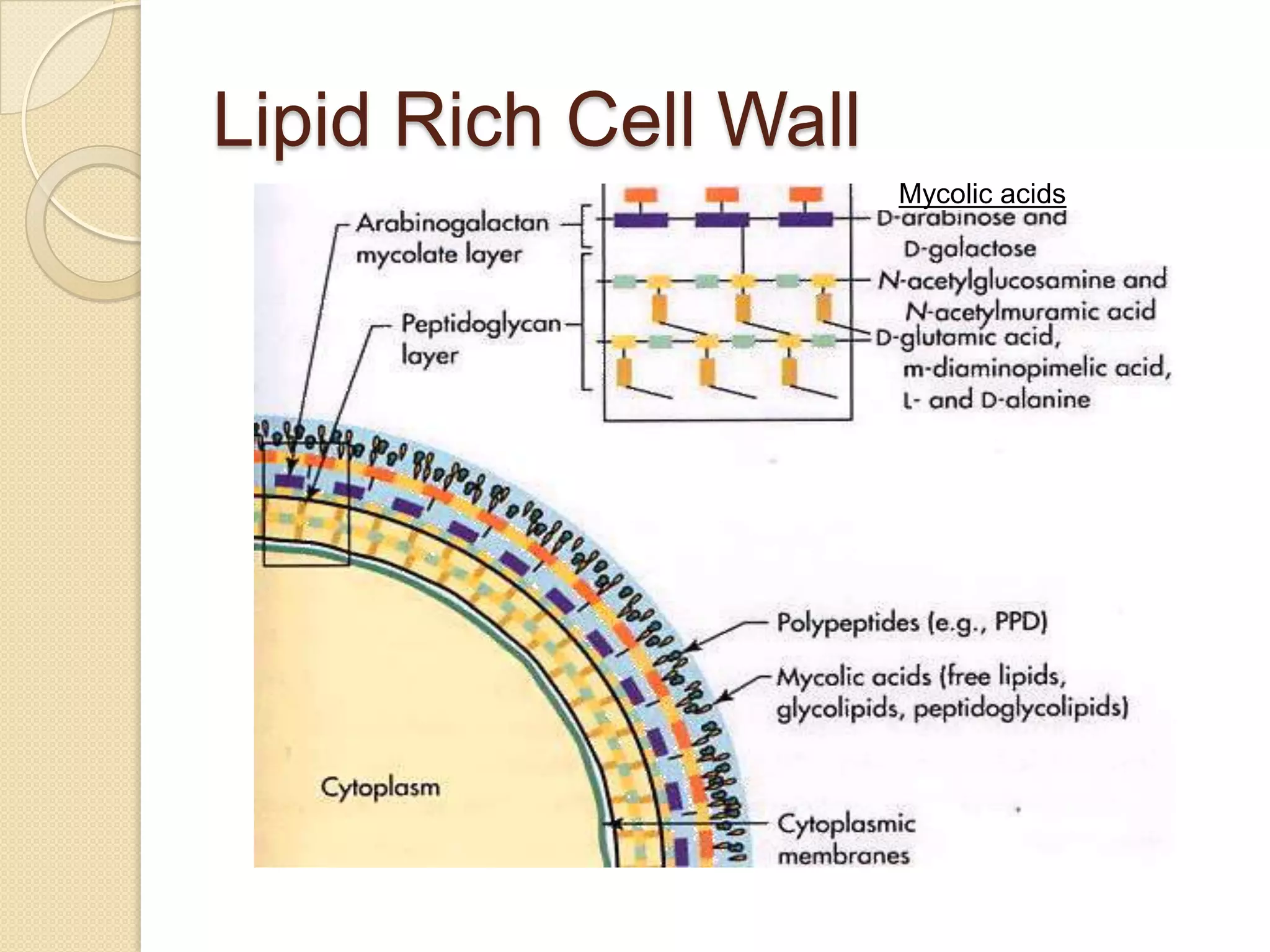
Lipid Rich Cell Wall
Mycolic acids
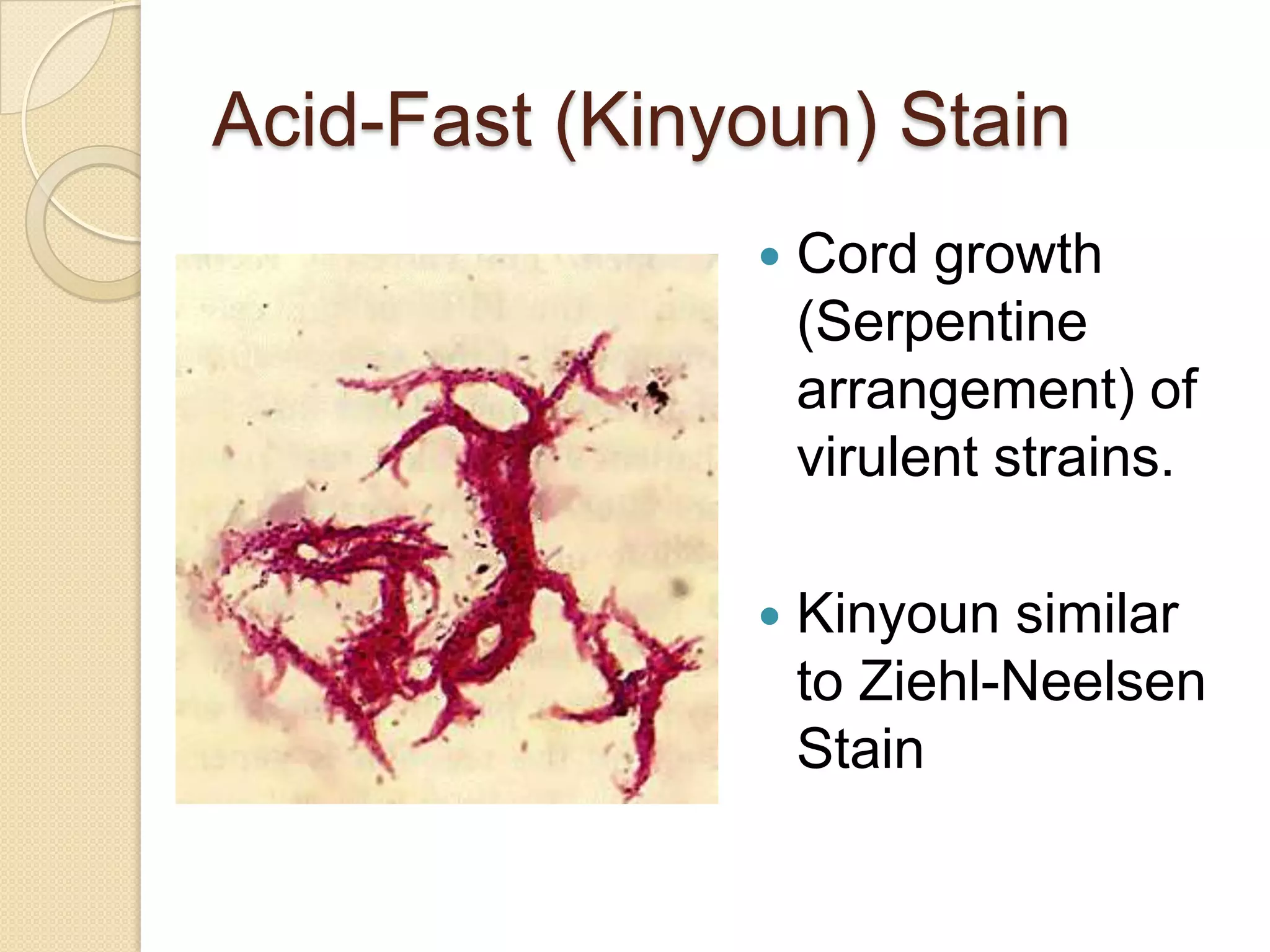
Acid-Fast (Kinyoun) Stain
 Cord growth
(Serpentine
arrangement) of
virulent strains.
 Kinyoun similar
to Ziehl-Neelsen
Stain
Ziehl-Neelsen Stain
Procedure
 1. Cover with tissue paper or if not
then without paper its possible.
 2. Flood slide with carbolfuchsin, the
primary stain, for 3-5 minutes while
heating with steam or heating on hot
plate.
Continued…
 3. Remove paper cover, decolorize
slide with a mixture of hydrochloric
acid and ethanol.
 4. Counterstain with methylene blue or
Malachite green.
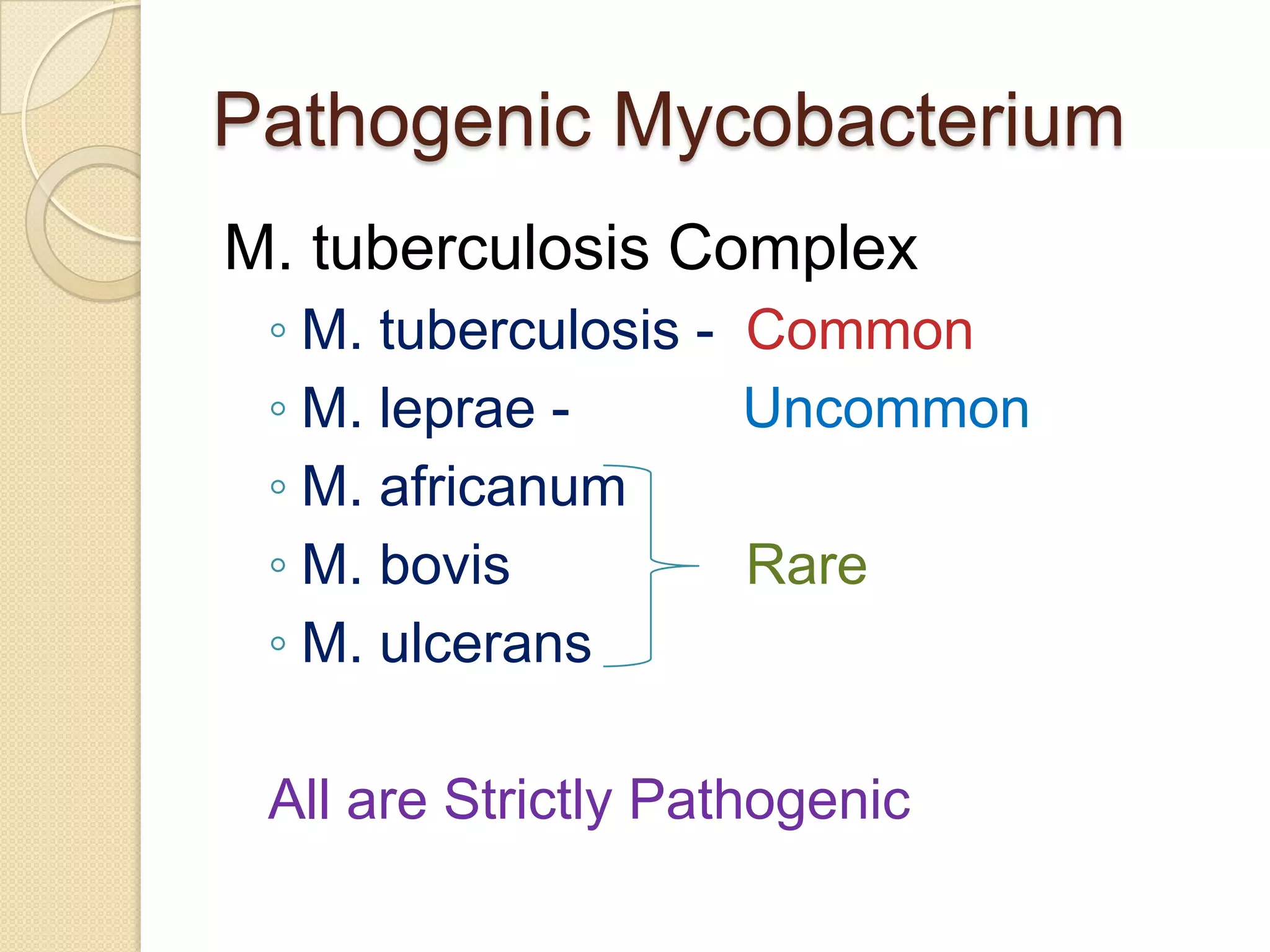
Pathogenic Mycobacterium
M. tuberculosis Complex
◦ M. tuberculosis - Common
◦ M. leprae - Uncommon
◦ M. africanum
◦ M. bovis Rare
◦ M. ulcerans
All are Strictly Pathogenic
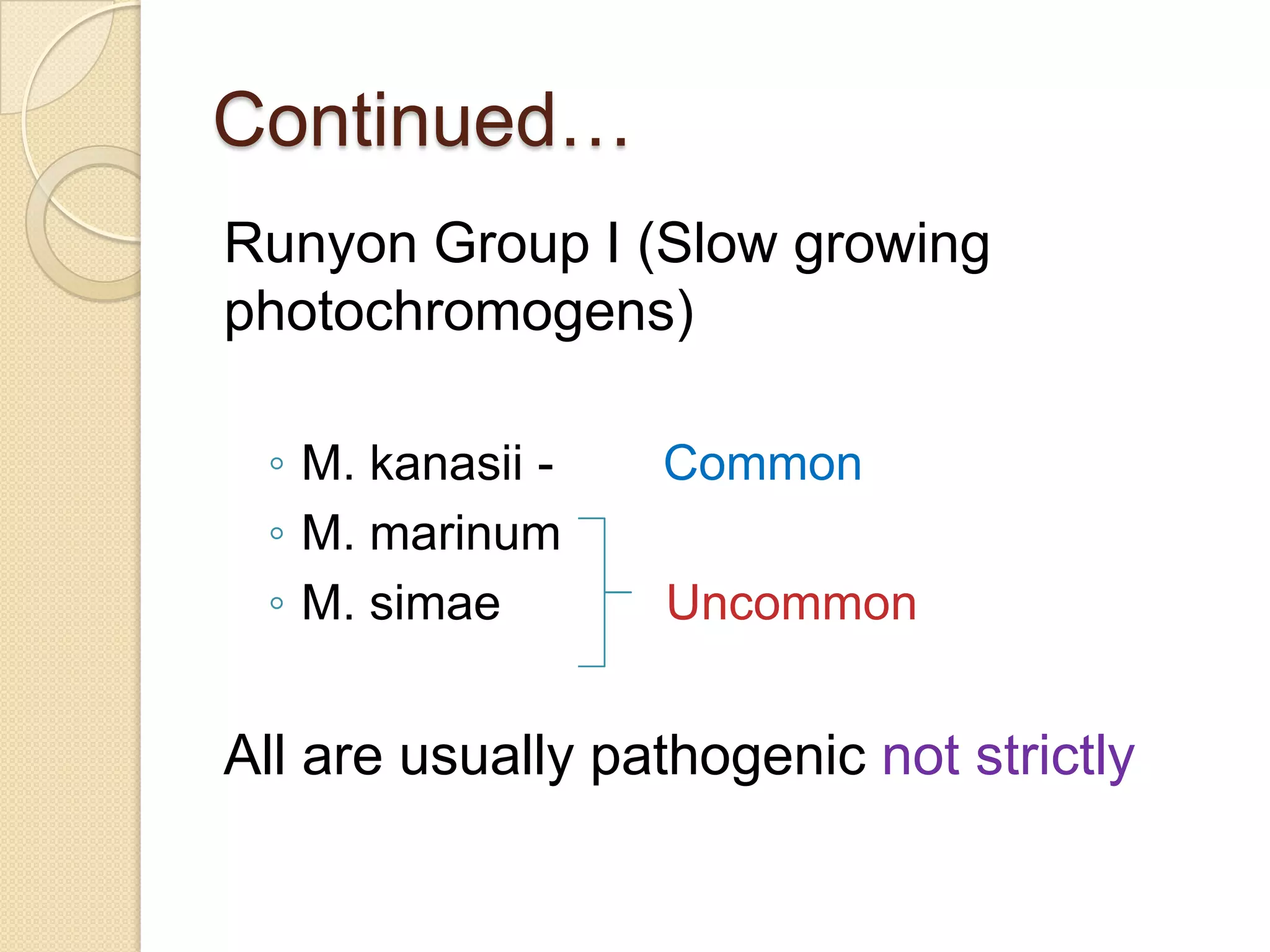
Continued…
Runyon Group I (Slow growing
photochromogens)
◦ M. kanasii - Common
◦ M. marinum
◦ M. simae Uncommon
All are usually pathogenic not strictly
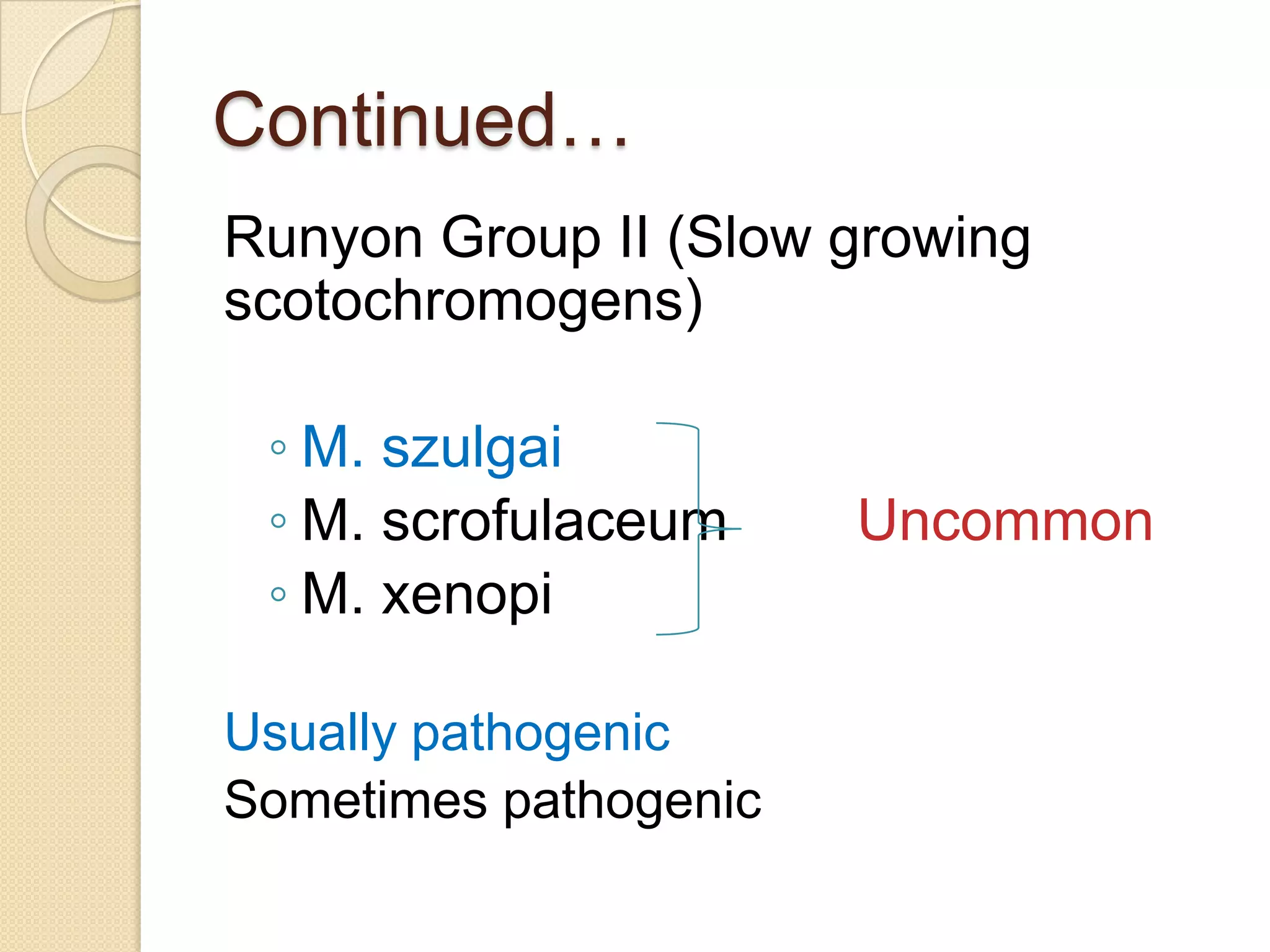
Continued…
Runyon Group II (Slow growing
scotochromogens)
◦ M. szulgai
◦ M. scrofulaceum Uncommon
◦ M. xenopi
Usually pathogenic
Sometimes pathogenic
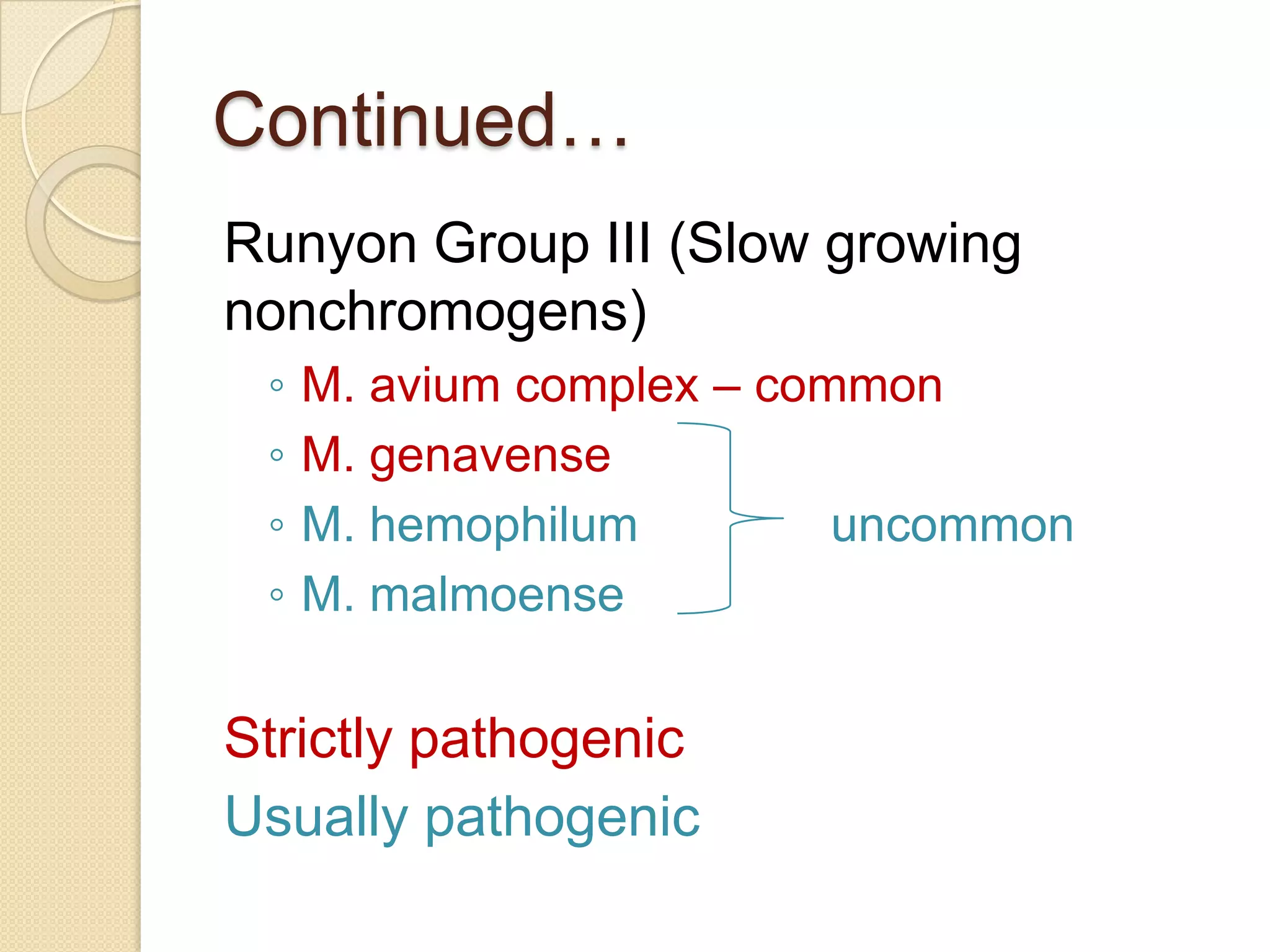
Continued…
Runyon Group III (Slow growing
nonchromogens)
◦ M. avium complex – common
◦ M. genavense
◦ M. hemophilum uncommon
◦ M. malmoense
Strictly pathogenic
Usually pathogenic
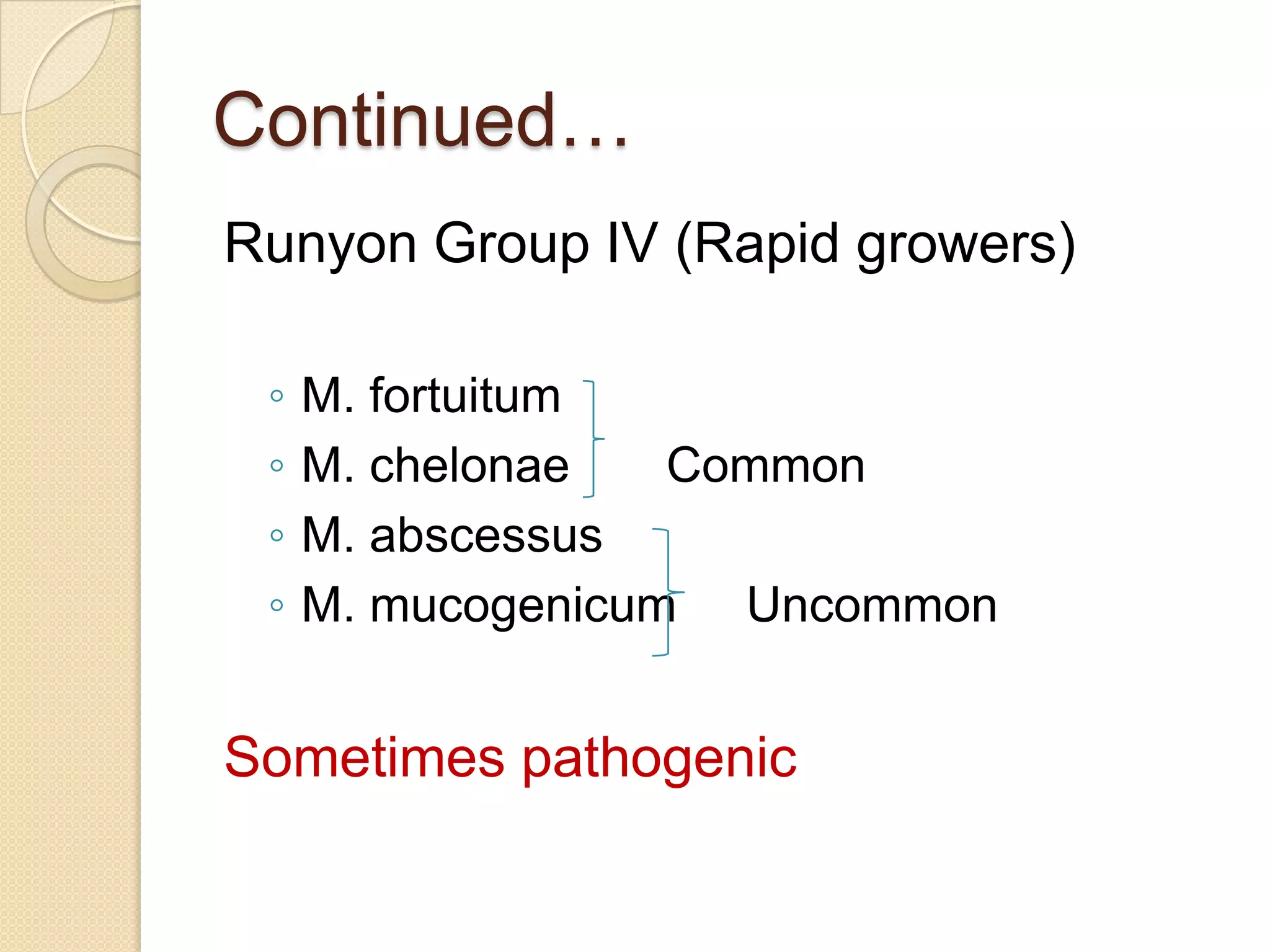
Continued…
Runyon Group IV (Rapid growers)
◦ M. fortuitum
◦ M. chelonae Common
◦ M. abscessus
◦ M. mucogenicum Uncommon
Sometimes pathogenic
MYCOBATERIUM
TUBERCULOSIS
Structure and Physiology
 Weakly gram positive
 Strongly acid fast
 Aerobic bacilli
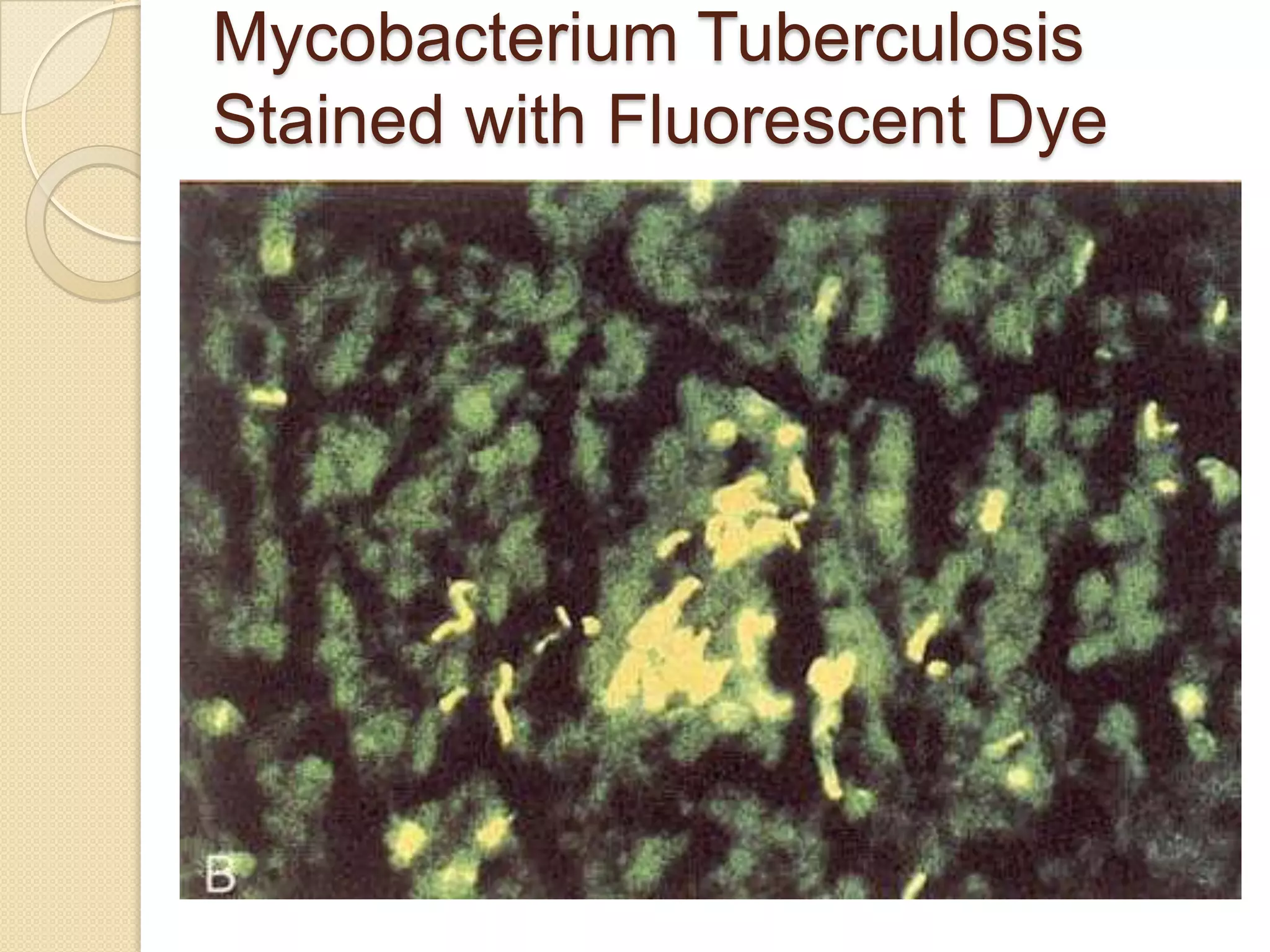
Mycobacterium Tuberculosis
Stained with Fluorescent Dye
Lipid rich cell wall, makes organism
resistant to
◦ Disinfectants
◦ Detergents
◦ Common antibacterial antibiotic
Virulence
 Capable of intracellular growth in
unactivated alveolar macrophages
 Disease primarily host response to
infection
Epidemiology
 Worldwide , one third of the population
is infected
 16 million existing cases and 8 million
new cases
 Most common in Southeast Asia,
Sub- Shaharan Africa and Eastern
Europe
Continued…
Patients at the greatest risk are the
◦ Immunocompromised patients (HIV)
◦ Drug and alcohol abusers
◦ Homeless
◦ Individuals exposed to infected patients
Humans are only the reservoir
Person to person infection by aerosols
Diseases
 Primary infection is lungs
 Dissemination to any other site occurs
mostly in the immunocompromised
and untreated persons
Diagnosis
 Positive PPD
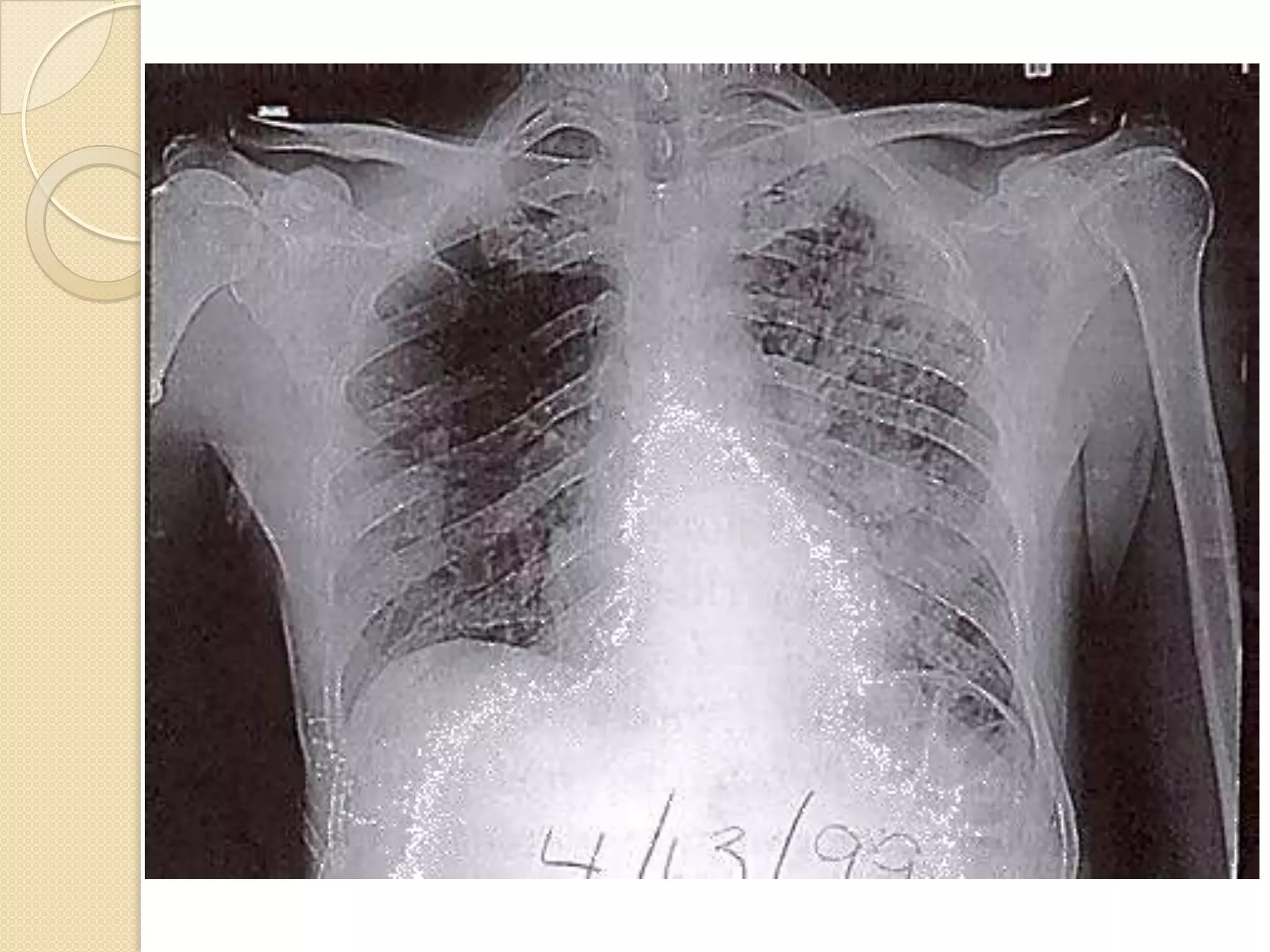
 Chest X-Ray
 Microscopy and culture – it is sensitive
Treatment, Prevention and
Control
 Multiple drugs regimens and
prolonged treatment are required to
prevent development of drug
resistance strains
 MDR-TB is global health threat
Continued…
 Treatment include isoniazid and
rifampin for 9 months + pyrazinamide
+ ethambutol or streptomycin
 Immunoprophylaxis with BCG in
endemic countries
 Control- active surveillance ,
prophylactic and therapeutic
interventions and monitoring of the
case
Progression of Pulmonary TB
Pneumonia
Granuloma formation with fibrosis
Caseous necrosis
• Tissue becomes dry & amorphous (resembling
cheese)
• Mixture of protein & fat (assimilated very slowly)
Calcification
• Ca++ salts deposited
Cavity formation
• Center liquefies & empties into bronchi
MYCOBACTRIUM
LEPRAE
Structure and Physiology
 Weakly gram positive
 Strongly acid fast bacilli
 Lipid rich cell wall
 Unable to culture on artificial
medium
Virulence
 Capable of intracellular growth
 Disease primarily from host response
to infection
Epidemiology
 Common in Africa and Asia
 Armadillos are naturally infected and
are reservoir
 Lepromatous form of disease is highly
infectious
 Spreads by inhalation of aerosols
 Individual in direct contact with
patients are at greater risk
Forms of Diseases
 Tuberculoid form of leprosy
 Lepromatous form of leprosy
 Intermediate form of leprosy
Diagnosis
 Microscopy is sensitive for the
lepromatous but not for tuberculoid
form
 Skin testing is required for tuberculoid
leprosy
 Culture cannot be used
Treatment, Prevention and
Control
 Dapsone with or without rifampin is used
to treat tuberculoid form
 Clofazimine is added for the lepromatous
form
 Therapy is usually prolonged
 For prophylaxis –DAPSONE
 Control – by prompt recognition and
treatment of infected patients
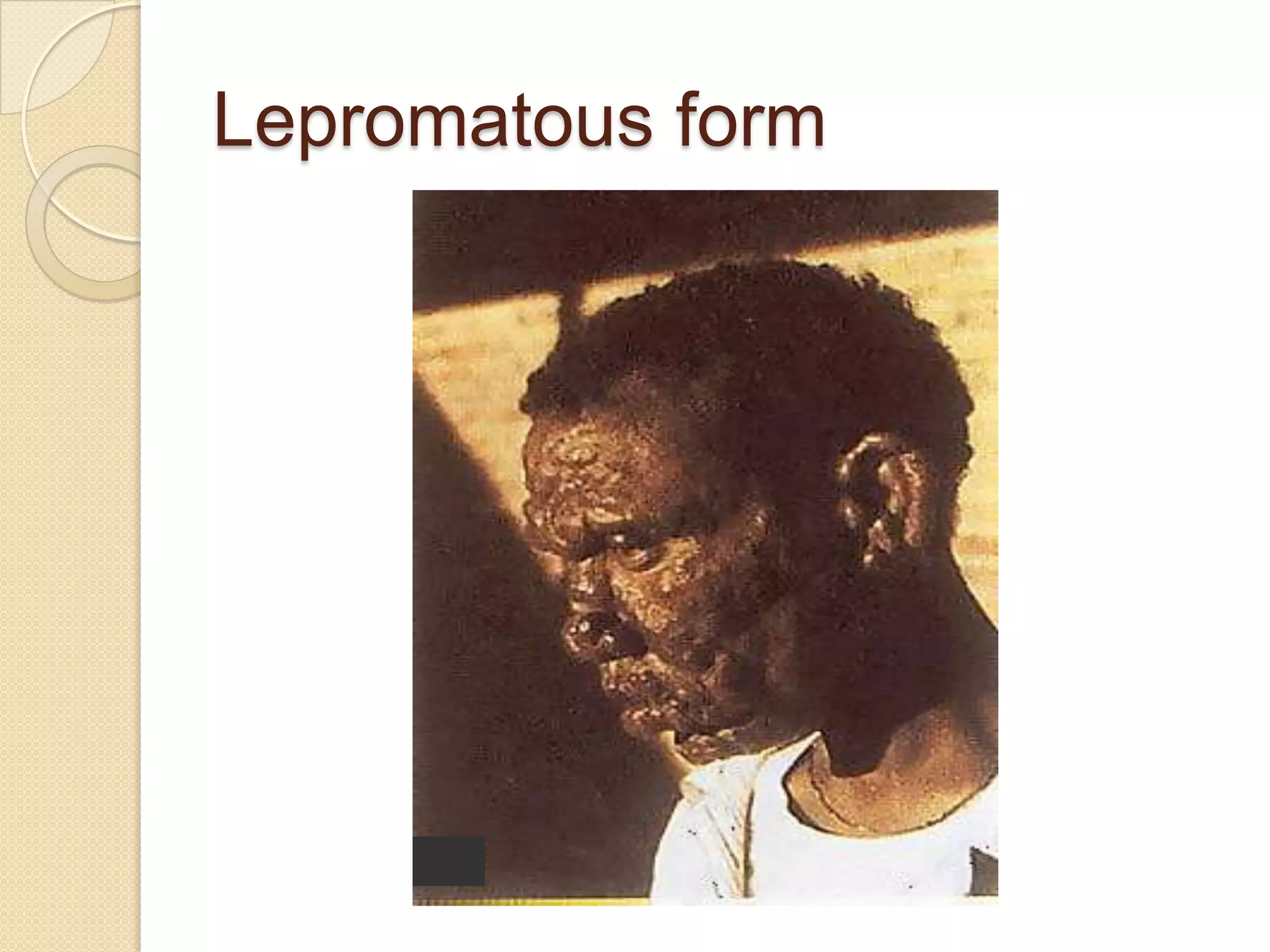
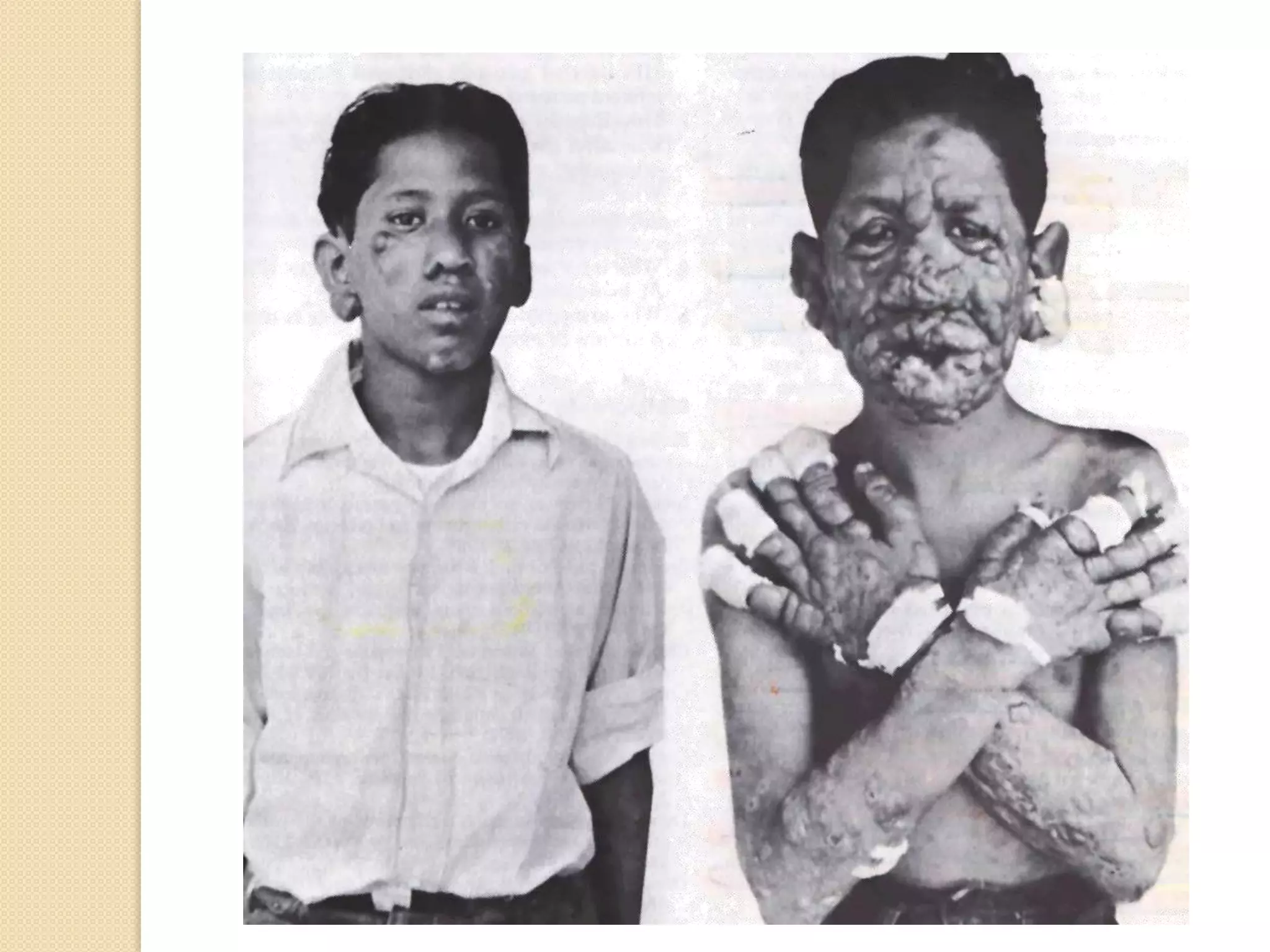
Lepromatous form
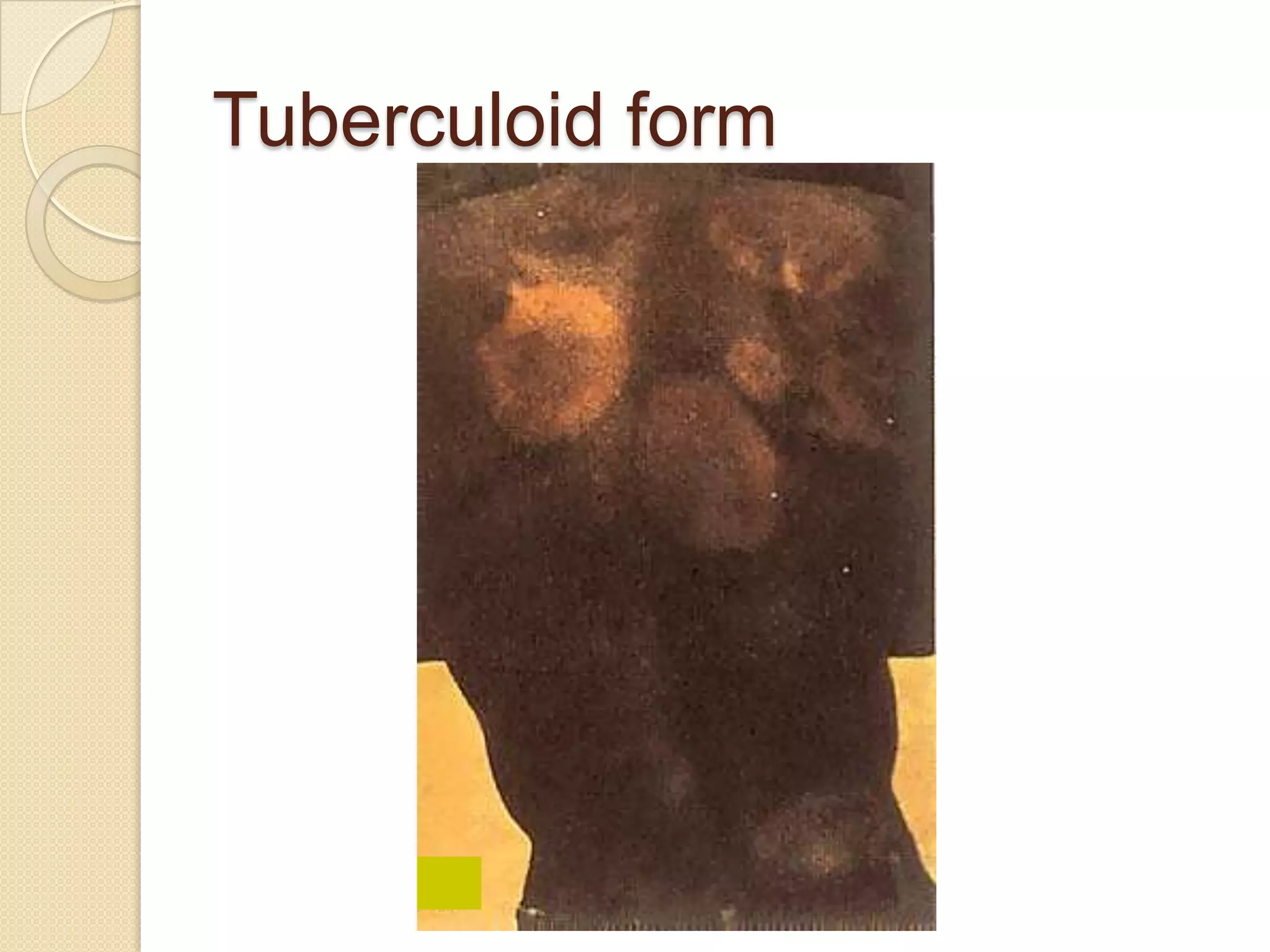
Tuberculoid form
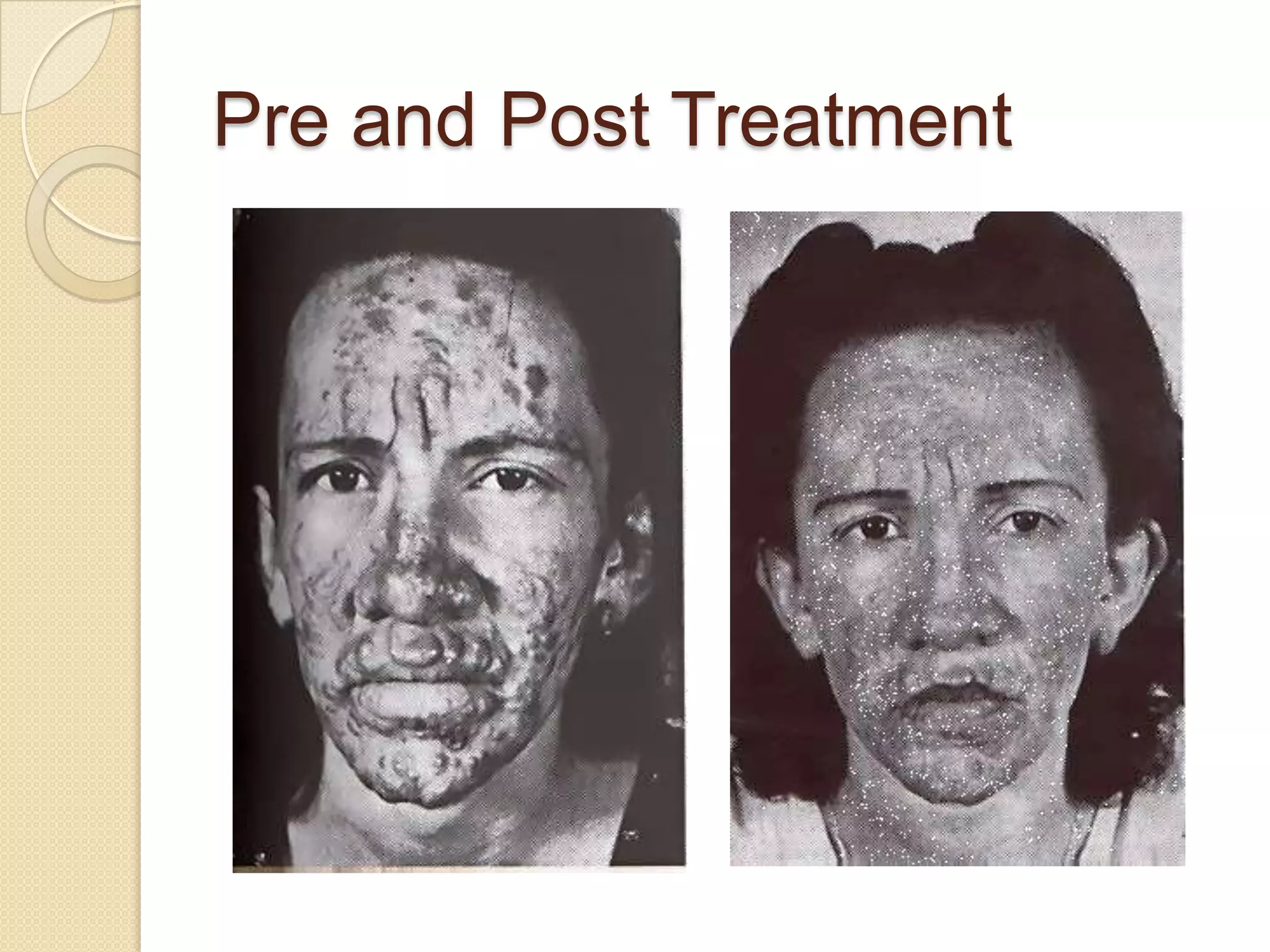
Pre and Post Treatment
Mycobacterium

Mycobacterium

  • 1.
  • 2.
    Kingdom: Bacteria Phylum: Actinobacteria Order:Actinomycetales Suborder: Corynebacterineae Family: Mycobacteriaceae Genus: Mycobacterium
  • 3.
     Mycobacterium Tuberculosis Mycobacterium Leprae (uncommon)
  • 4.
    Lipid Rich CellWall Mycolic acids
  • 5.
    Acid-Fast (Kinyoun) Stain Cord growth (Serpentine arrangement) of virulent strains.  Kinyoun similar to Ziehl-Neelsen Stain
  • 6.
    Ziehl-Neelsen Stain Procedure  1.Cover with tissue paper or if not then without paper its possible.  2. Flood slide with carbolfuchsin, the primary stain, for 3-5 minutes while heating with steam or heating on hot plate.
  • 7.
    Continued…  3. Removepaper cover, decolorize slide with a mixture of hydrochloric acid and ethanol.  4. Counterstain with methylene blue or Malachite green.
  • 8.
    Pathogenic Mycobacterium M. tuberculosisComplex ◦ M. tuberculosis - Common ◦ M. leprae - Uncommon ◦ M. africanum ◦ M. bovis Rare ◦ M. ulcerans All are Strictly Pathogenic
  • 9.
    Continued… Runyon Group I(Slow growing photochromogens) ◦ M. kanasii - Common ◦ M. marinum ◦ M. simae Uncommon All are usually pathogenic not strictly
  • 10.
    Continued… Runyon Group II(Slow growing scotochromogens) ◦ M. szulgai ◦ M. scrofulaceum Uncommon ◦ M. xenopi Usually pathogenic Sometimes pathogenic
  • 11.
    Continued… Runyon Group III(Slow growing nonchromogens) ◦ M. avium complex – common ◦ M. genavense ◦ M. hemophilum uncommon ◦ M. malmoense Strictly pathogenic Usually pathogenic
  • 12.
    Continued… Runyon Group IV(Rapid growers) ◦ M. fortuitum ◦ M. chelonae Common ◦ M. abscessus ◦ M. mucogenicum Uncommon Sometimes pathogenic
  • 13.
  • 14.
    Structure and Physiology Weakly gram positive  Strongly acid fast  Aerobic bacilli
  • 15.
  • 16.
    Lipid rich cellwall, makes organism resistant to ◦ Disinfectants ◦ Detergents ◦ Common antibacterial antibiotic
  • 17.
    Virulence  Capable ofintracellular growth in unactivated alveolar macrophages  Disease primarily host response to infection
  • 18.
    Epidemiology  Worldwide ,one third of the population is infected  16 million existing cases and 8 million new cases  Most common in Southeast Asia, Sub- Shaharan Africa and Eastern Europe
  • 19.
    Continued… Patients at thegreatest risk are the ◦ Immunocompromised patients (HIV) ◦ Drug and alcohol abusers ◦ Homeless ◦ Individuals exposed to infected patients Humans are only the reservoir Person to person infection by aerosols
  • 20.
    Diseases  Primary infectionis lungs  Dissemination to any other site occurs mostly in the immunocompromised and untreated persons
  • 21.
    Diagnosis  Positive PPD Chest X-Ray  Microscopy and culture – it is sensitive
  • 22.
    Treatment, Prevention and Control Multiple drugs regimens and prolonged treatment are required to prevent development of drug resistance strains  MDR-TB is global health threat
  • 23.
    Continued…  Treatment includeisoniazid and rifampin for 9 months + pyrazinamide + ethambutol or streptomycin  Immunoprophylaxis with BCG in endemic countries  Control- active surveillance , prophylactic and therapeutic interventions and monitoring of the case
  • 24.
    Progression of PulmonaryTB Pneumonia Granuloma formation with fibrosis Caseous necrosis • Tissue becomes dry & amorphous (resembling cheese) • Mixture of protein & fat (assimilated very slowly) Calcification • Ca++ salts deposited Cavity formation • Center liquefies & empties into bronchi
  • 26.
  • 27.
    Structure and Physiology Weakly gram positive  Strongly acid fast bacilli  Lipid rich cell wall  Unable to culture on artificial medium
  • 28.
    Virulence  Capable ofintracellular growth  Disease primarily from host response to infection
  • 29.
    Epidemiology  Common inAfrica and Asia  Armadillos are naturally infected and are reservoir  Lepromatous form of disease is highly infectious  Spreads by inhalation of aerosols  Individual in direct contact with patients are at greater risk
  • 30.
    Forms of Diseases Tuberculoid form of leprosy  Lepromatous form of leprosy  Intermediate form of leprosy
  • 31.
    Diagnosis  Microscopy issensitive for the lepromatous but not for tuberculoid form  Skin testing is required for tuberculoid leprosy  Culture cannot be used
  • 32.
    Treatment, Prevention and Control Dapsone with or without rifampin is used to treat tuberculoid form  Clofazimine is added for the lepromatous form  Therapy is usually prolonged  For prophylaxis –DAPSONE  Control – by prompt recognition and treatment of infected patients
  • 33.
  • 34.
  • 36.
    Pre and PostTreatment