Clinical Neuroanatomy 
Prof. Vajira Weerasinghe 
Professor in Neurophysiology, Faculty of Medicine, 
University of Peradeniya 
& Consultant Neurophysiologist, Teaching Hospital, Peradeniya 
www.slideshare.net/vajira54
Why study nervous system? 
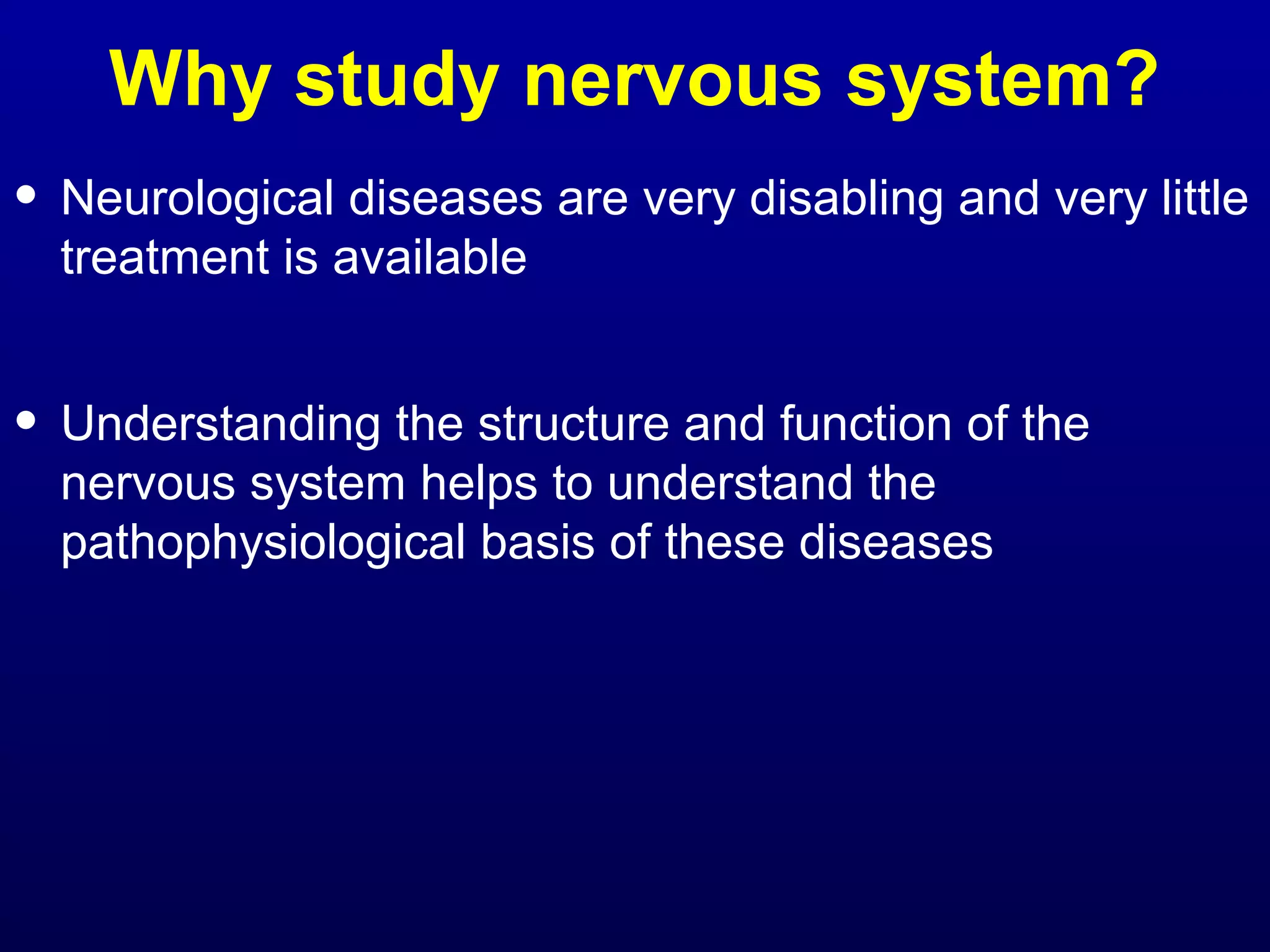
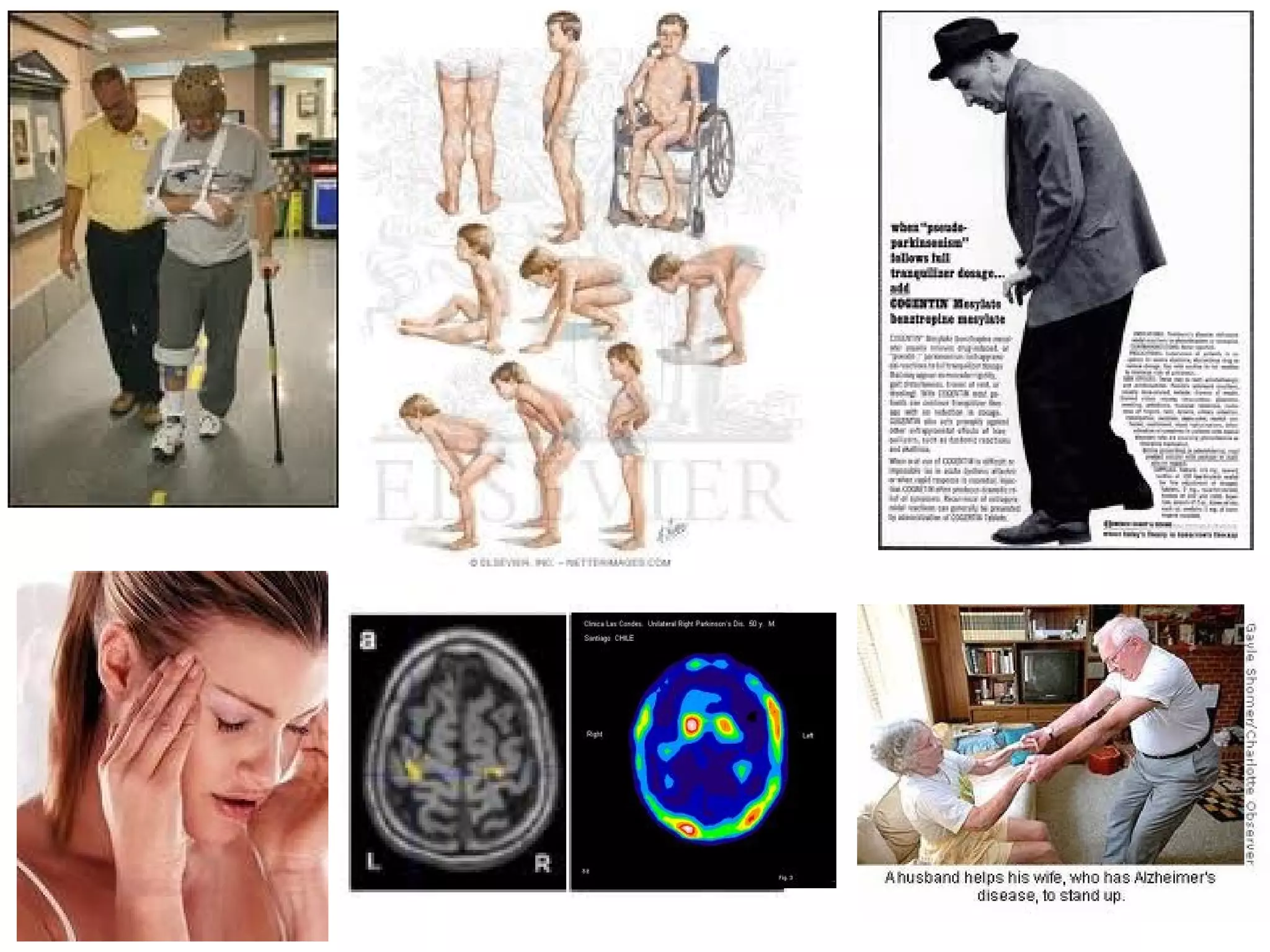
• Neurological diseases are very disabling and very little 
treatment is available 
• Understanding the structure and function of the 
nervous system helps to understand the 
pathophysiological basis of these diseases
Functional Subdivisions 
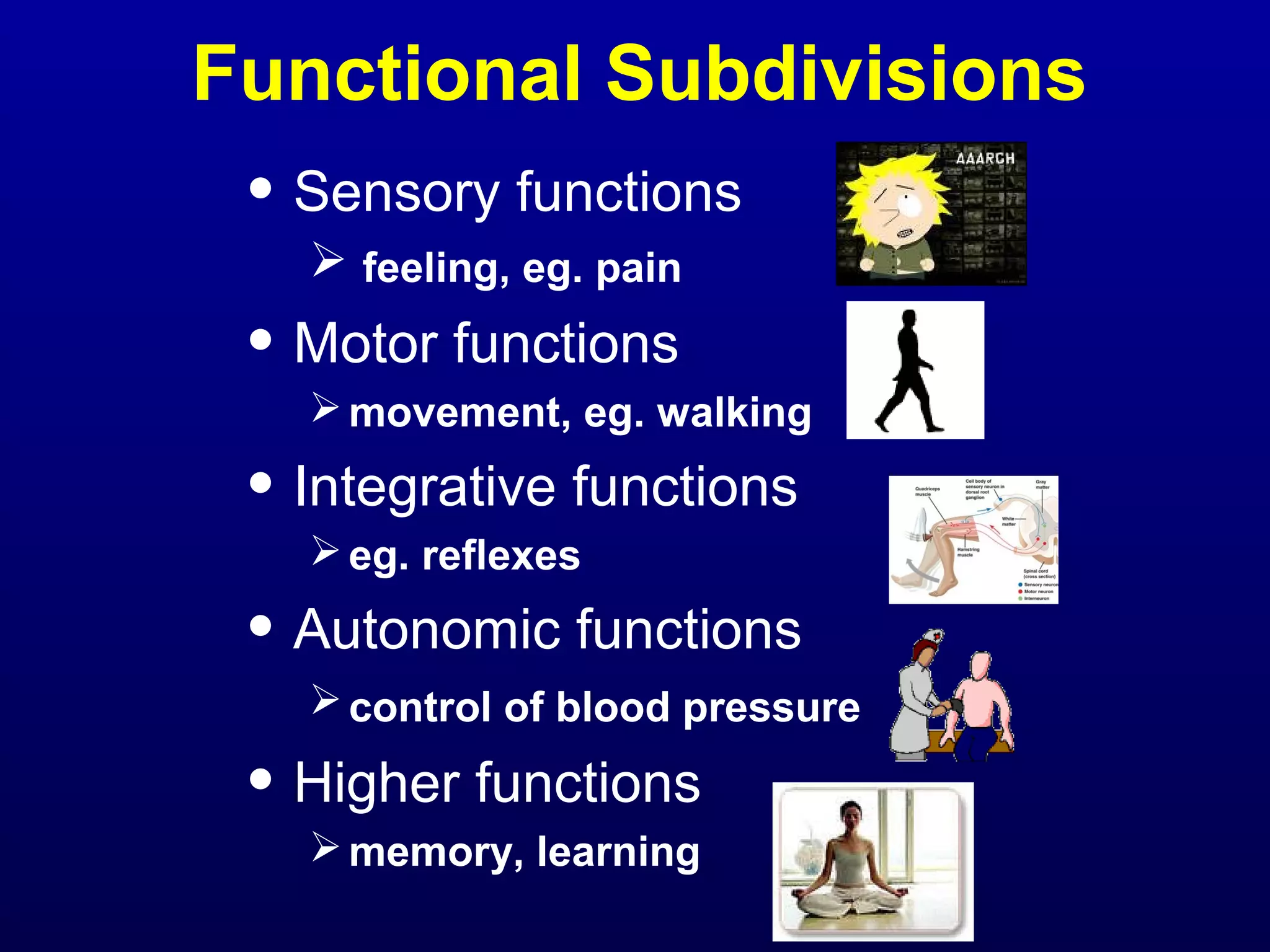
• Sensory functions 
 feeling, eg. pain 
• Motor functions 
movement, eg. walking 
• Integrative functions 
eg. reflexes 
• Autonomic functions 
control of blood pressure 
• Higher functions 
memory, learning
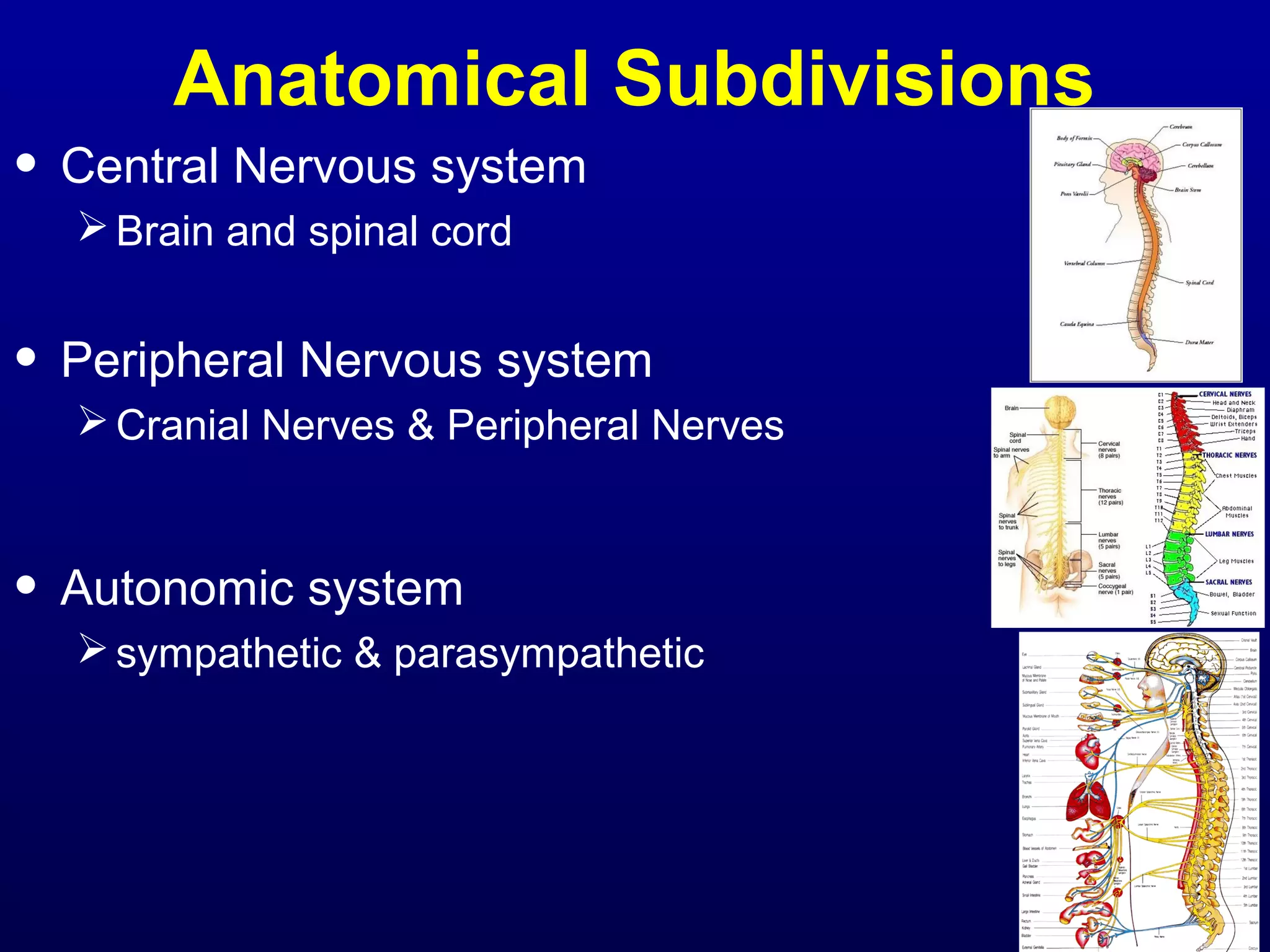
Anatomical Subdivisions 
• Central Nervous system 
Brain and spinal cord 
• Peripheral Nervous system 
Cranial Nerves & Peripheral Nerves 
• Autonomic system 
sympathetic & parasympathetic
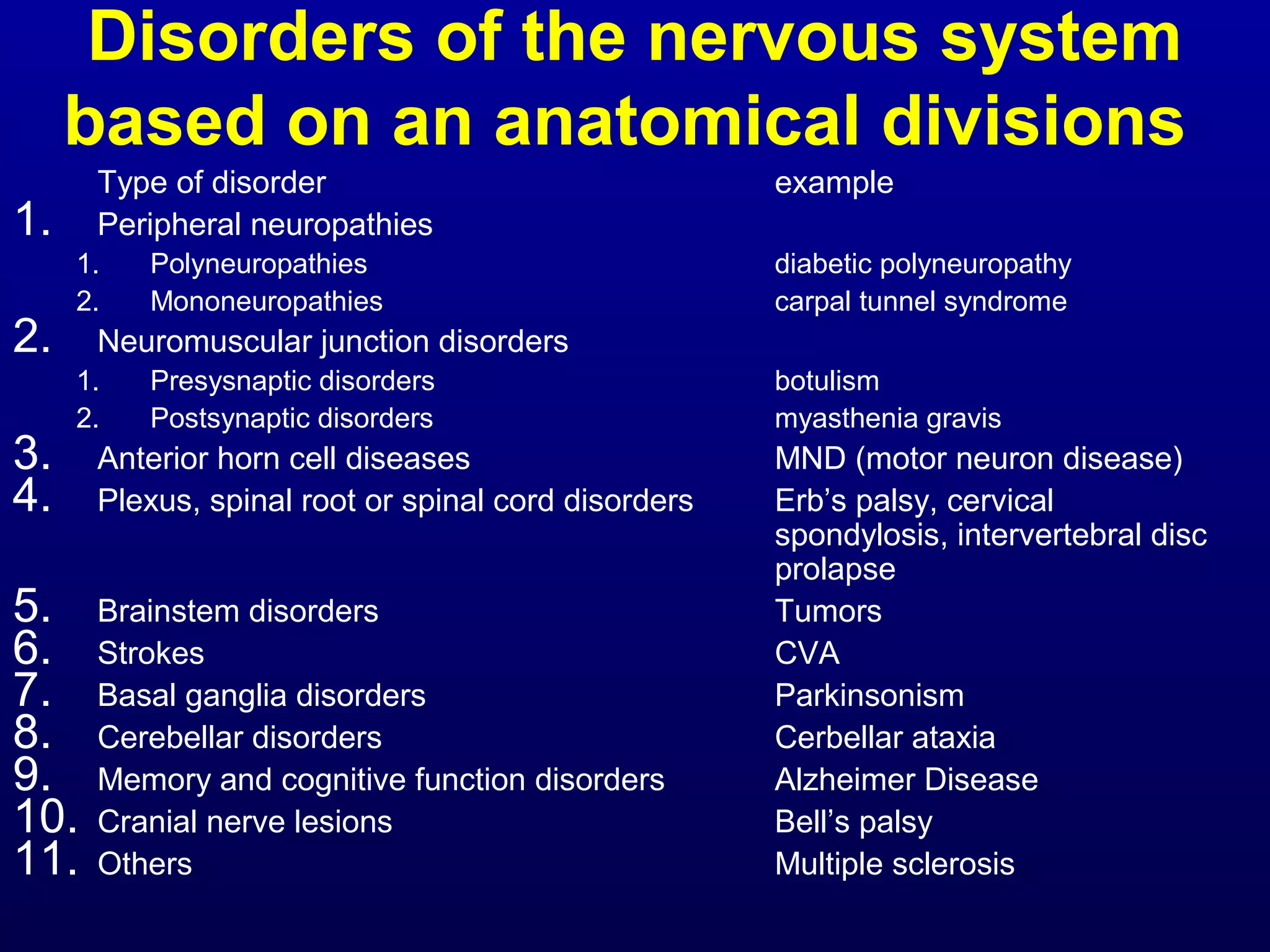
Disorders of the nervous system 
based on an anatomical divisions 
Type of disorder example 
1. Peripheral neuropathies 
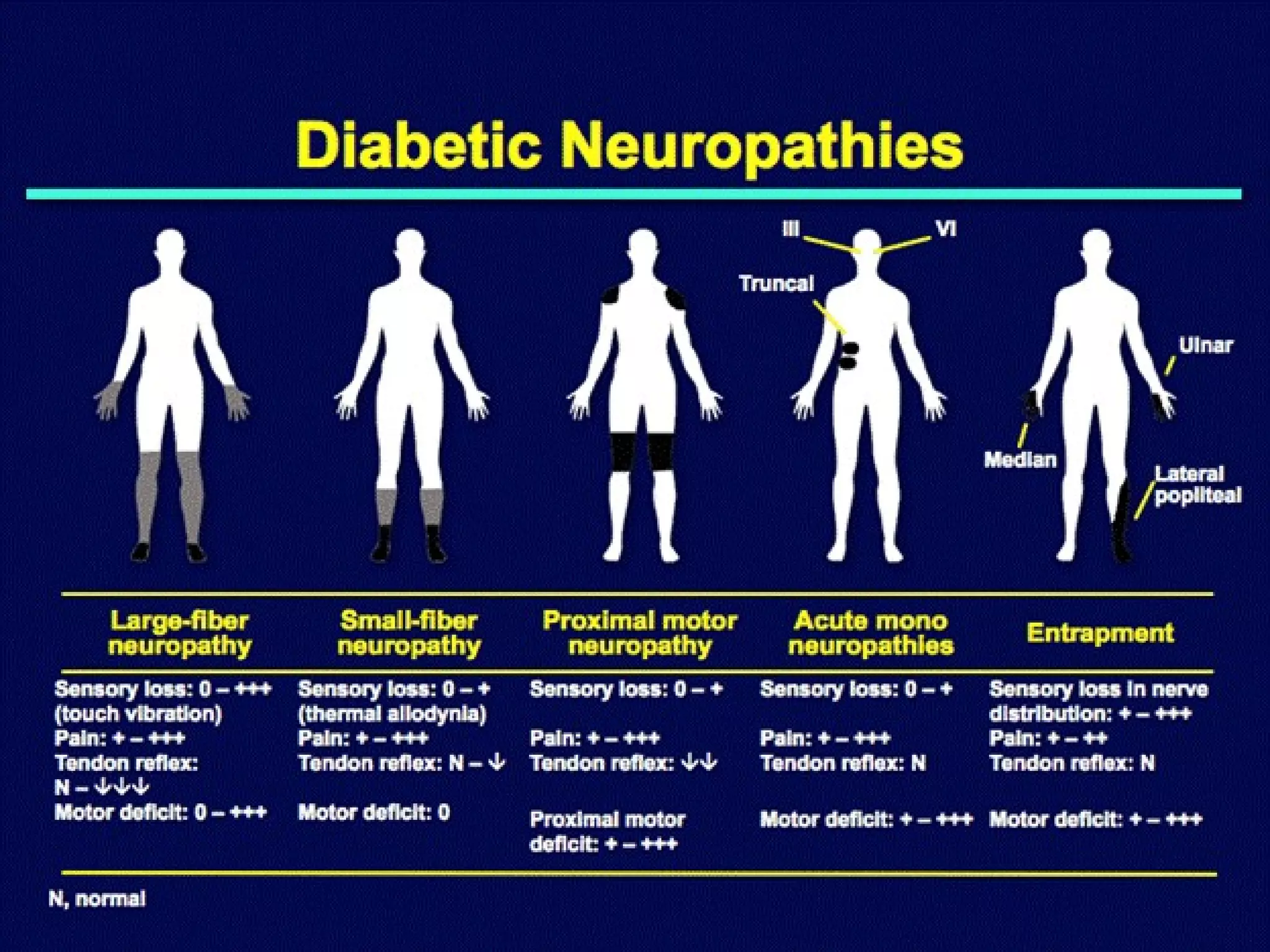
1. Polyneuropathies diabetic polyneuropathy 
2. Mononeuropathies carpal tunnel syndrome 
2. Neuromuscular junction disorders 
1. Presysnaptic disorders botulism 
2. Postsynaptic disorders myasthenia gravis 
3. Anterior horn cell diseases MND (motor neuron disease) 
4. Plexus, spinal root or spinal cord disorders Erb’s palsy, cervical 
spondylosis, intervertebral disc 
prolapse 
5. Brainstem disorders Tumors 
6. Strokes CVA 
7. Basal ganglia disorders Parkinsonism 
8. Cerebellar disorders Cerbellar ataxia 
9. Memory and cognitive function disorders Alzheimer Disease 
10. Cranial nerve lesions Bell’s palsy 
11. Others Multiple sclerosis
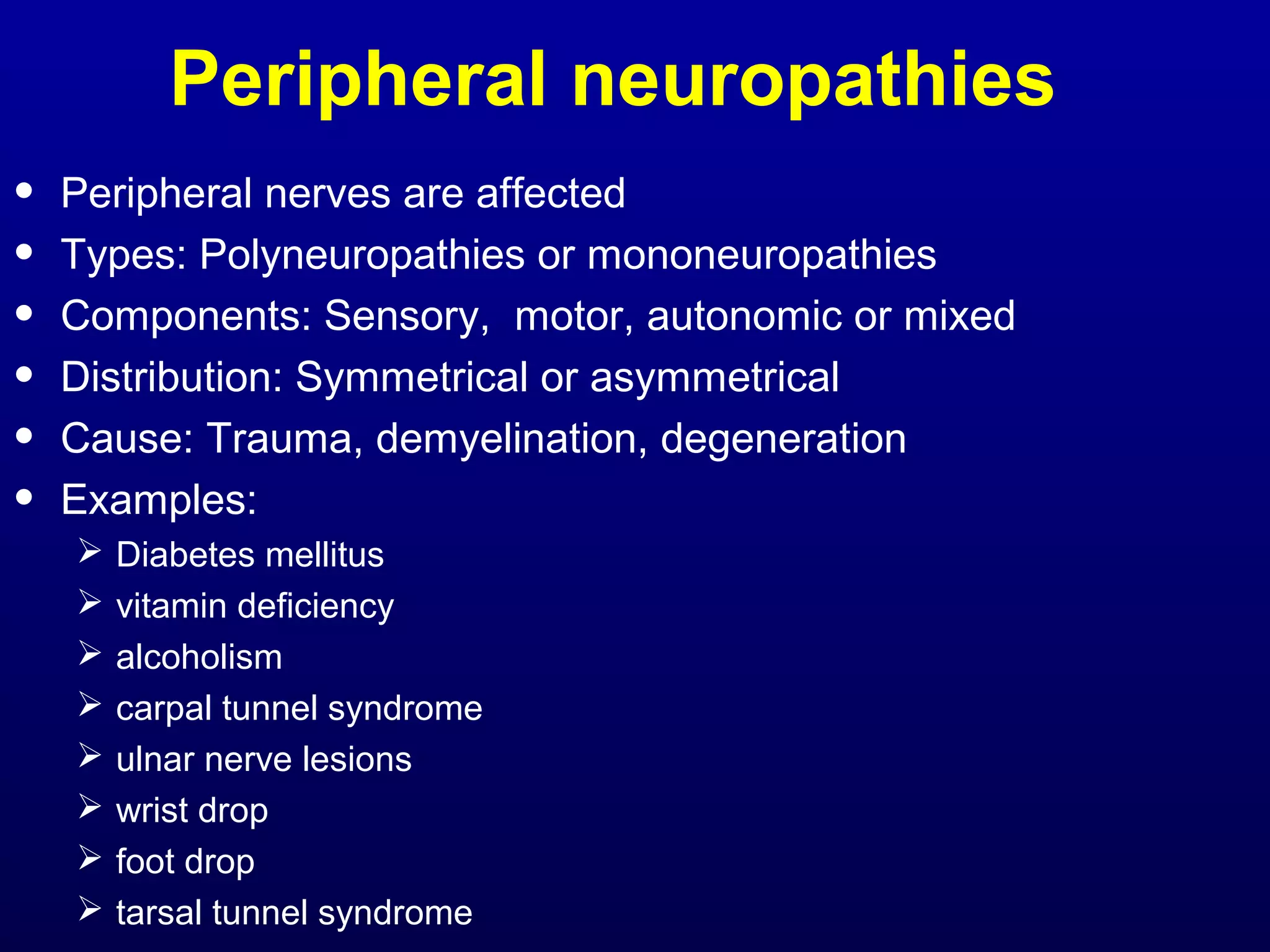
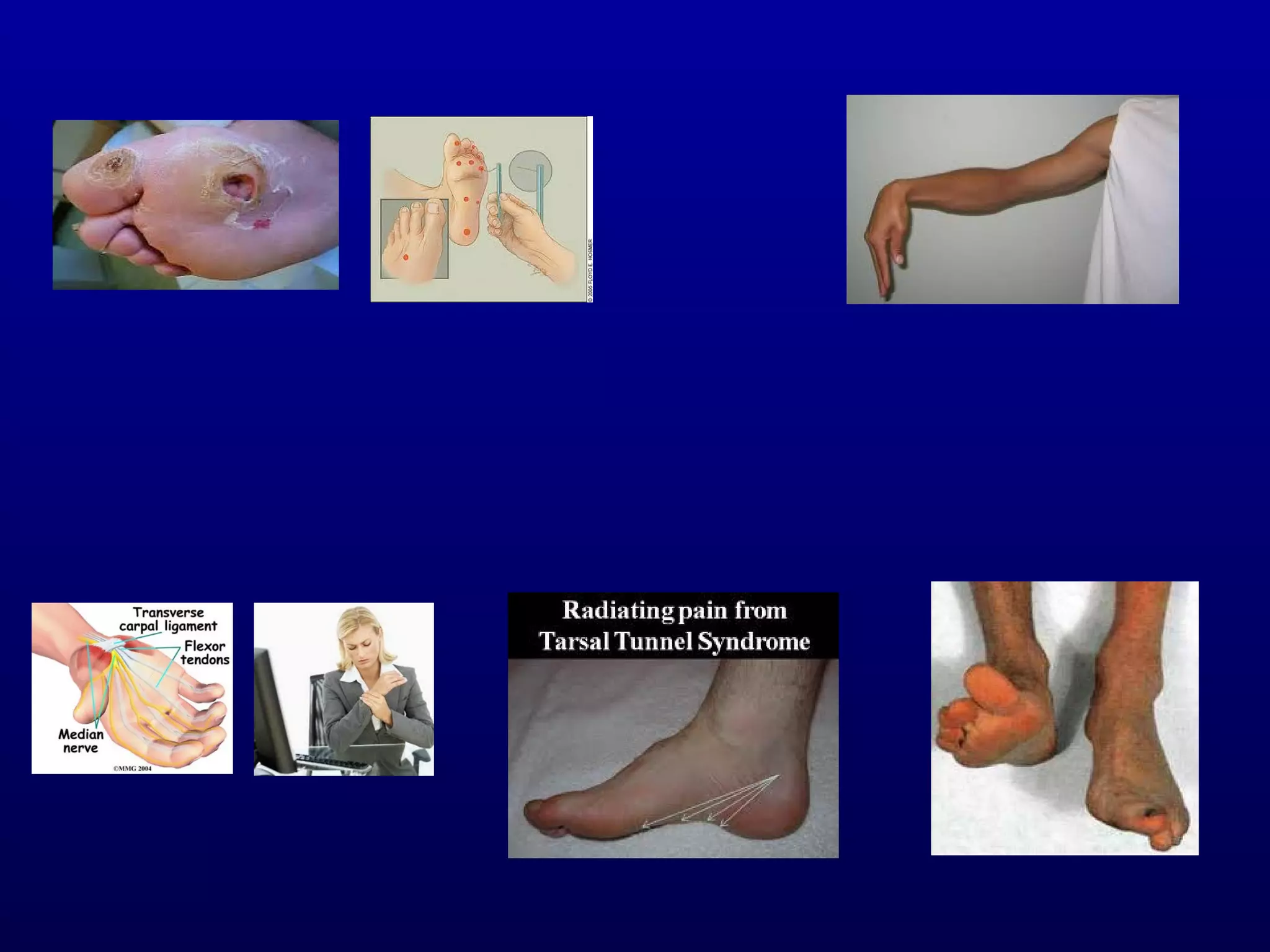
Peripheral neuropathies 
• Peripheral nerves are affected 
• Types: Polyneuropathies or mononeuropathies 
• Components: Sensory, motor, autonomic or mixed 
• Distribution: Symmetrical or asymmetrical 
• Cause: Trauma, demyelination, degeneration 
• Examples: 
 Diabetes mellitus 
 vitamin deficiency 
 alcoholism 
 carpal tunnel syndrome 
 ulnar nerve lesions 
 wrist drop 
 foot drop 
 tarsal tunnel syndrome
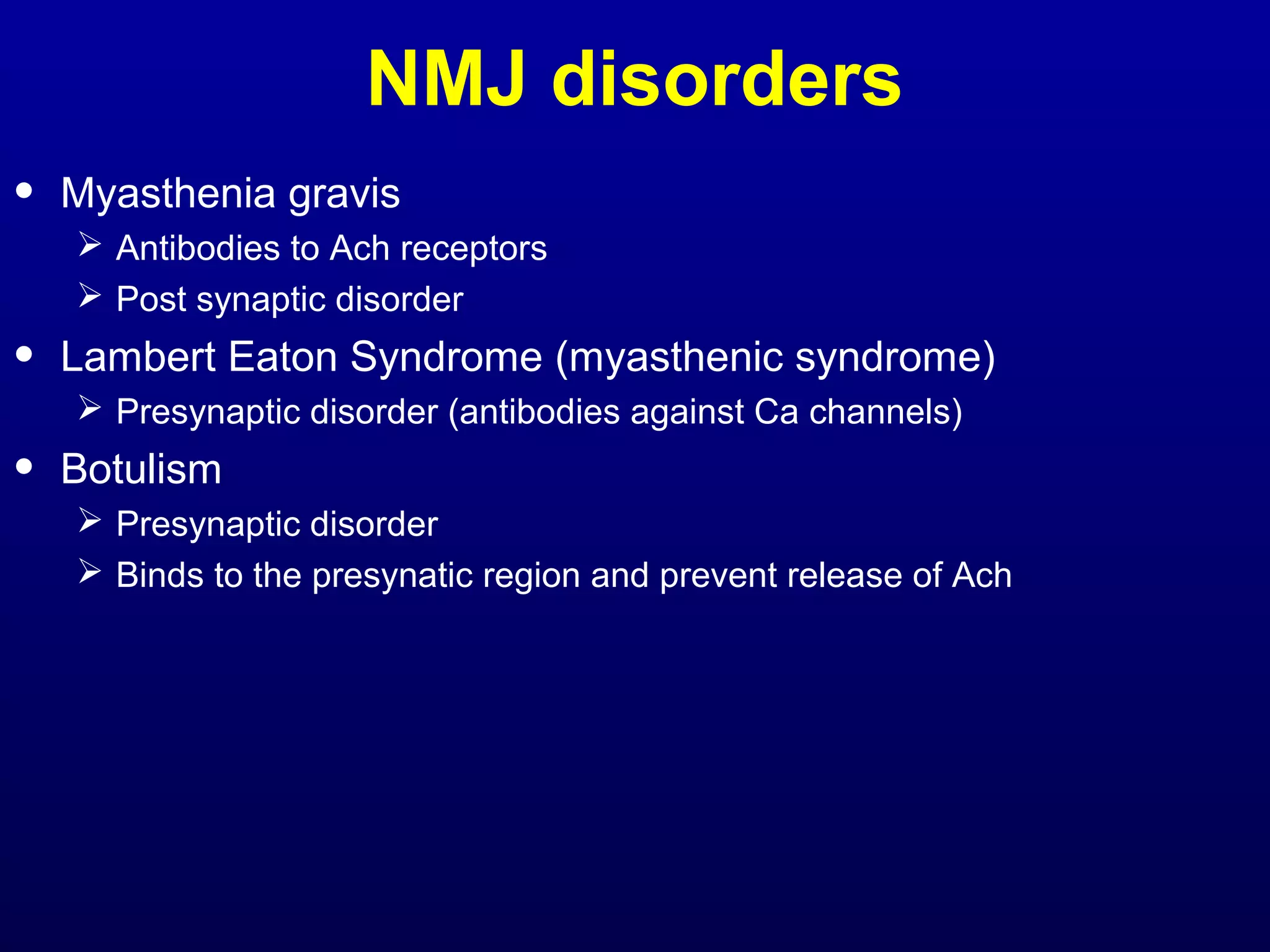
NMJ disorders 
• Myasthenia gravis 
 Antibodies to Ach receptors 
 Post synaptic disorder 
• Lambert Eaton Syndrome (myasthenic syndrome) 
 Presynaptic disorder (antibodies against Ca channels) 
• Botulism 
 Presynaptic disorder 
 Binds to the presynatic region and prevent release of Ach
NMJ disorders 
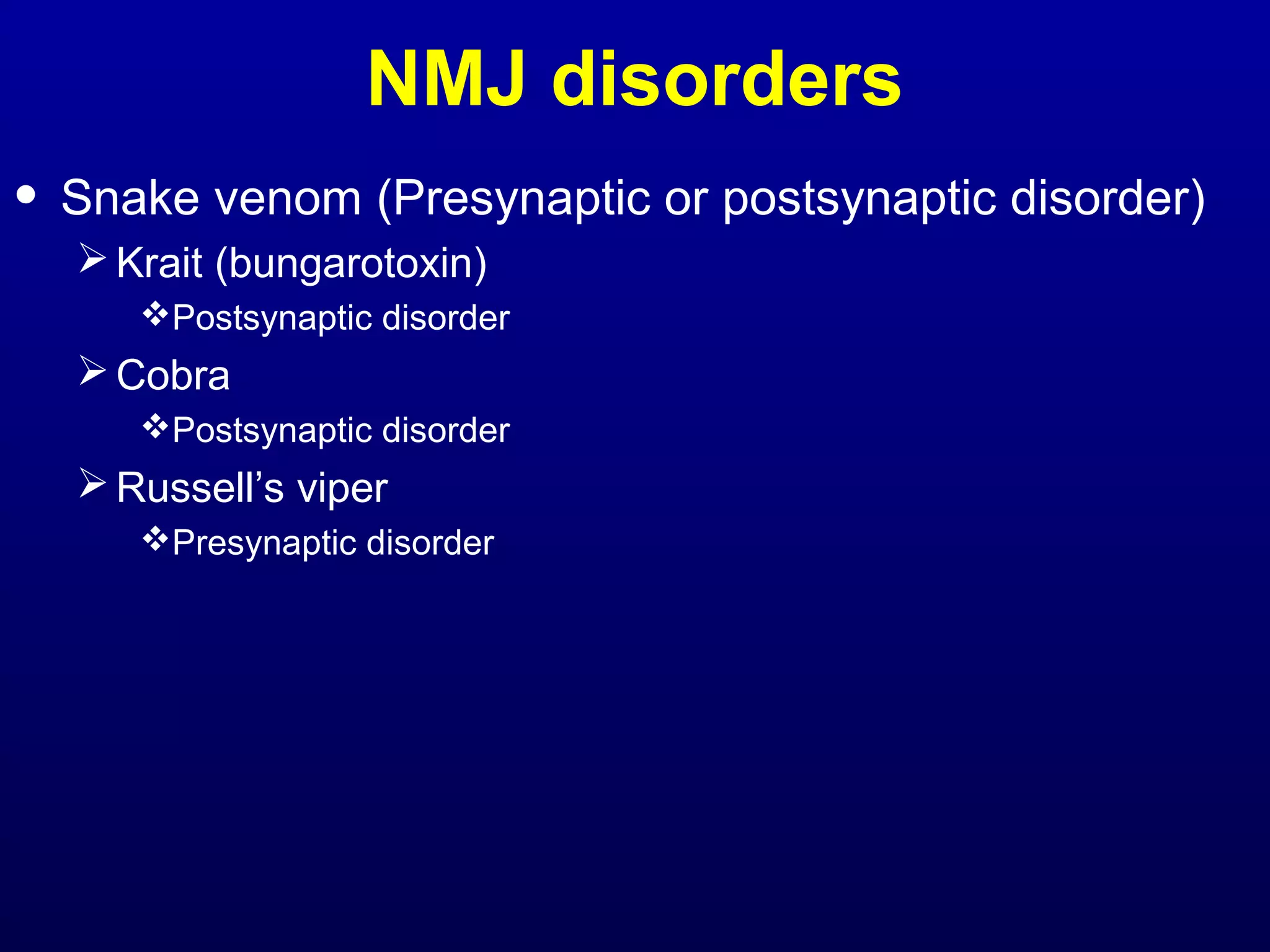
• Snake venom (Presynaptic or postsynaptic disorder) 
Krait (bungarotoxin) 
Postsynaptic disorder 
Cobra 
Postsynaptic disorder 
Russell’s viper 
Presynaptic disorder
Snake venom 
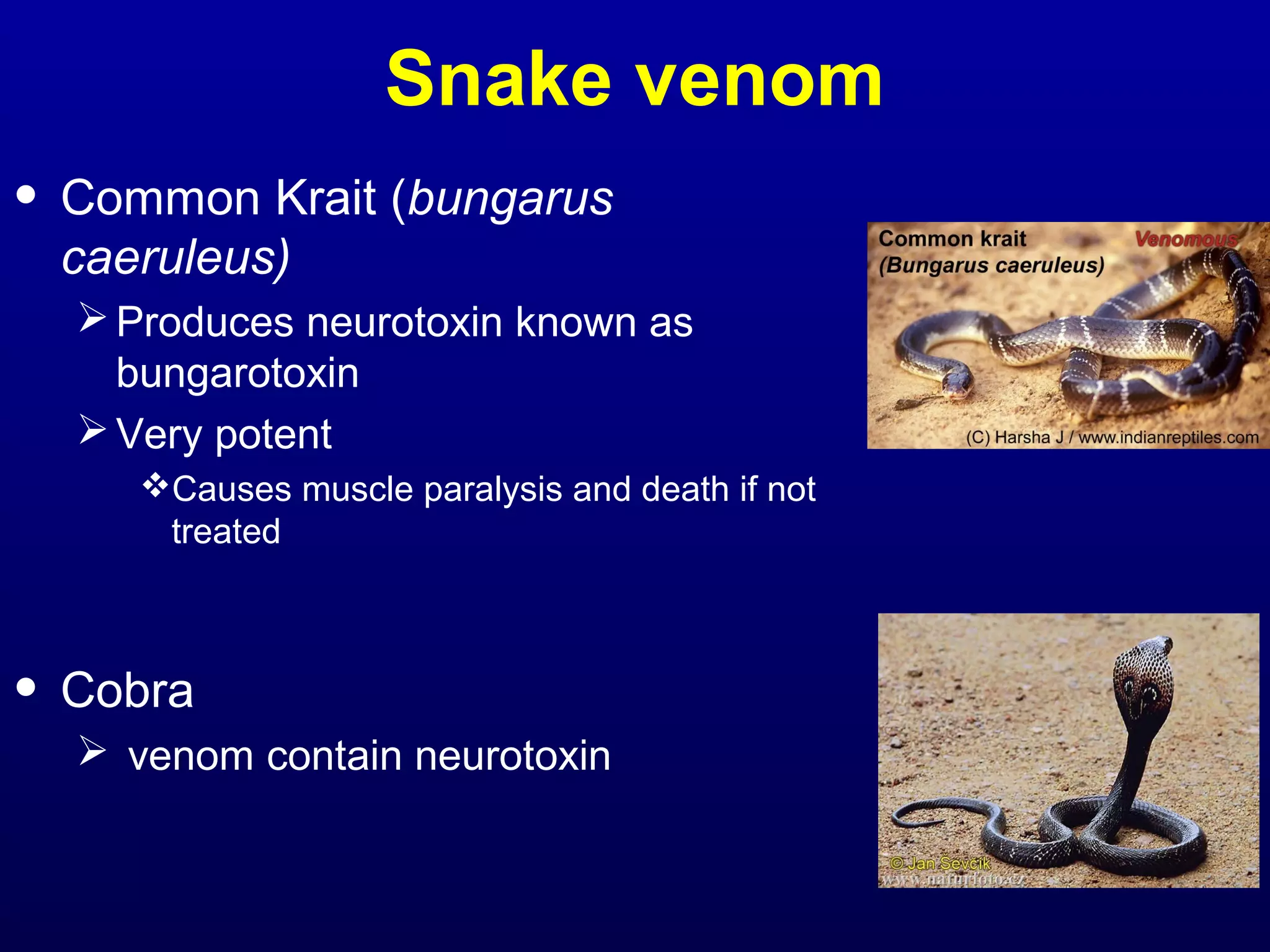
• Common Krait (bungarus 
caeruleus) 
Produces neurotoxin known as 
bungarotoxin 
Very potent 
Causes muscle paralysis and death if not 
treated 
• Cobra 
 venom contain neurotoxin
Myasthenia gravis 
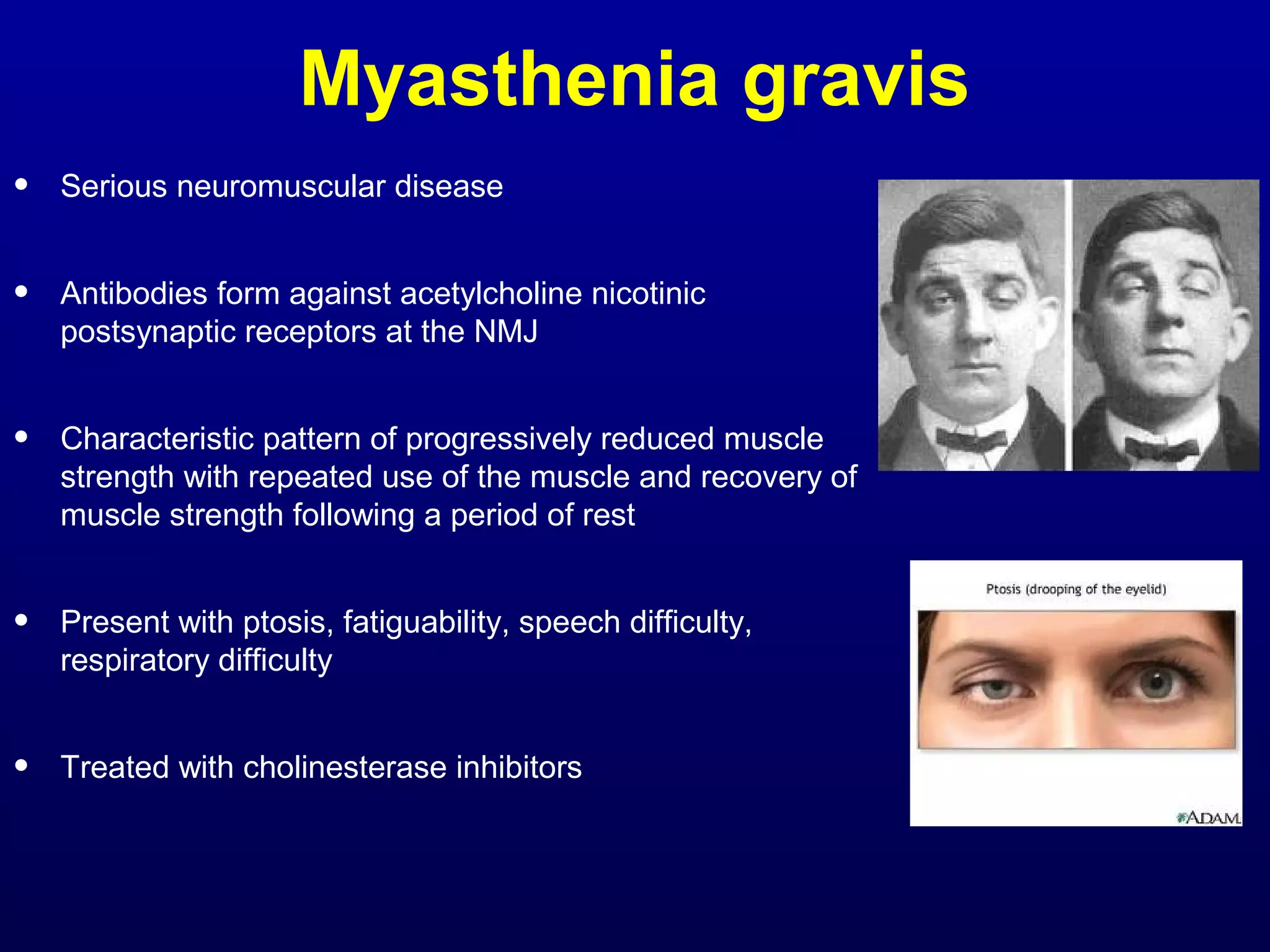
• Serious neuromuscular disease 
• Antibodies form against acetylcholine nicotinic 
postsynaptic receptors at the NMJ 
• Characteristic pattern of progressively reduced muscle 
strength with repeated use of the muscle and recovery of 
muscle strength following a period of rest 
• Present with ptosis, fatiguability, speech difficulty, 
respiratory difficulty 
• Treated with cholinesterase inhibitors
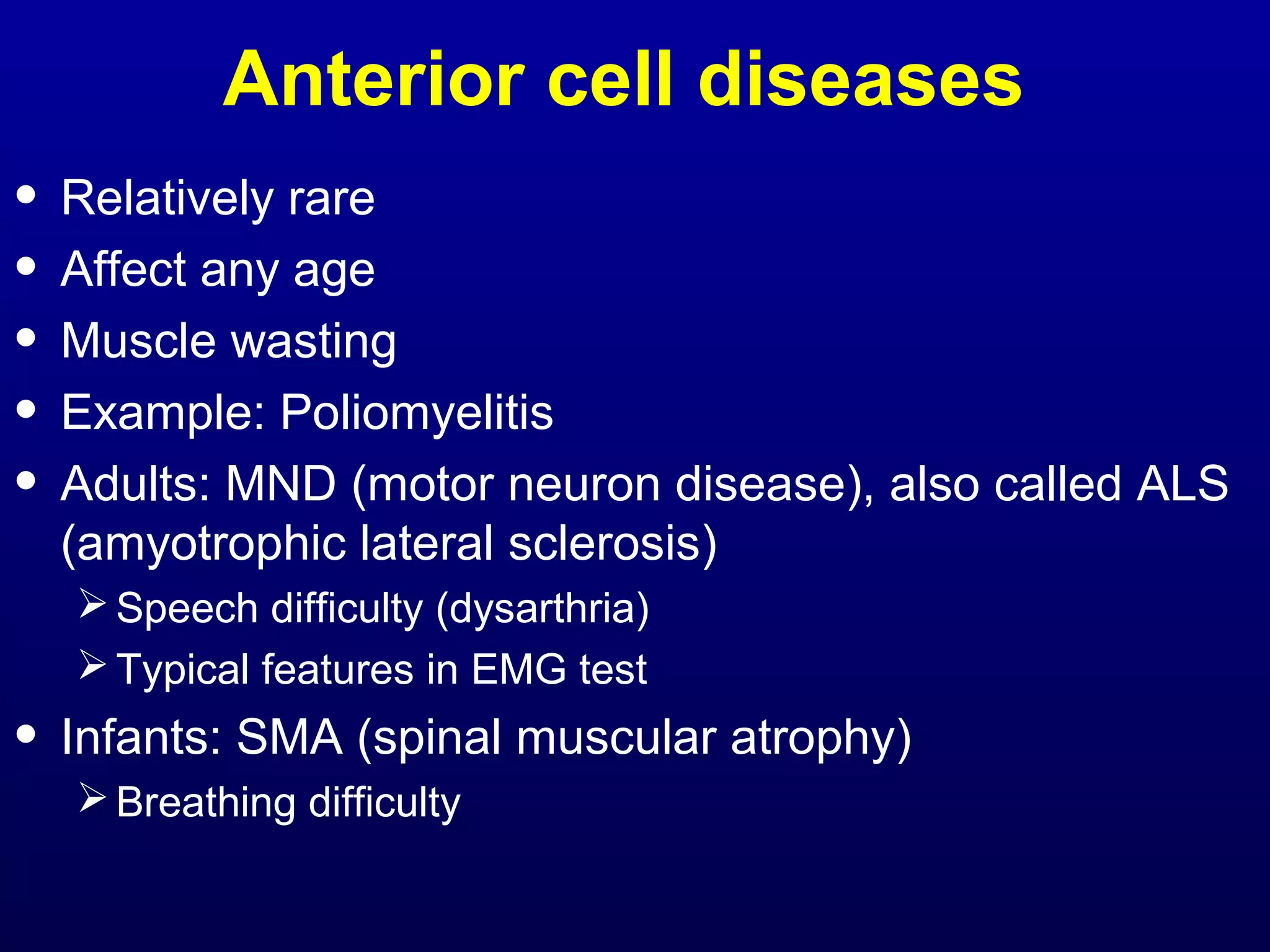
Anterior cell diseases 
• Relatively rare 
• Affect any age 
• Muscle wasting 
• Example: Poliomyelitis 
• Adults: MND (motor neuron disease), also called ALS 
(amyotrophic lateral sclerosis) 
Speech difficulty (dysarthria) 
Typical features in EMG test 
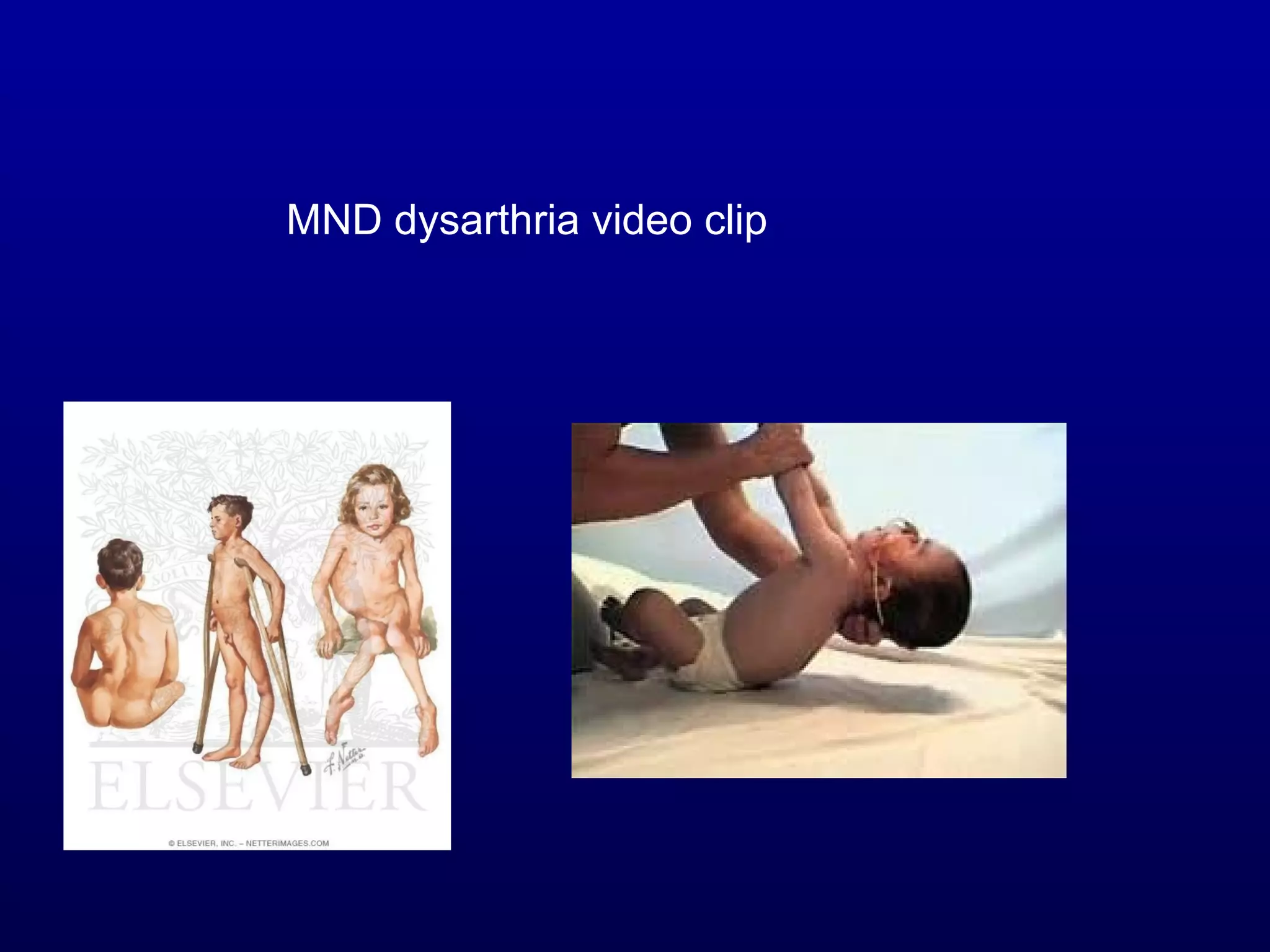
• Infants: SMA (spinal muscular atrophy) 
Breathing difficulty
MND dysarthria video clip
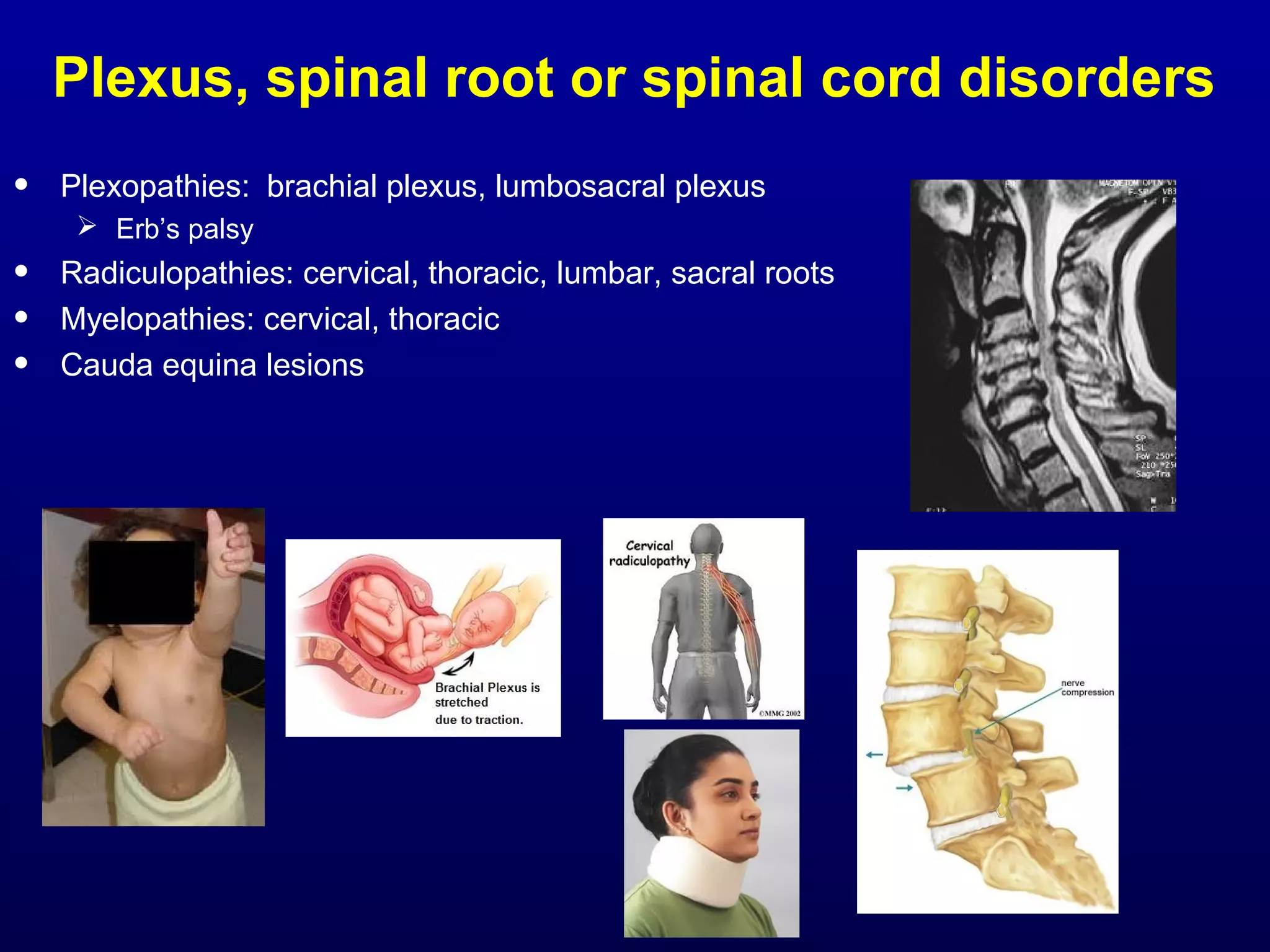
Plexus, spinal root or spinal cord disorders 
• Plexopathies: brachial plexus, lumbosacral plexus 
 Erb’s palsy 
• Radiculopathies: cervical, thoracic, lumbar, sacral roots 
• Myelopathies: cervical, thoracic 
• Cauda equina lesions
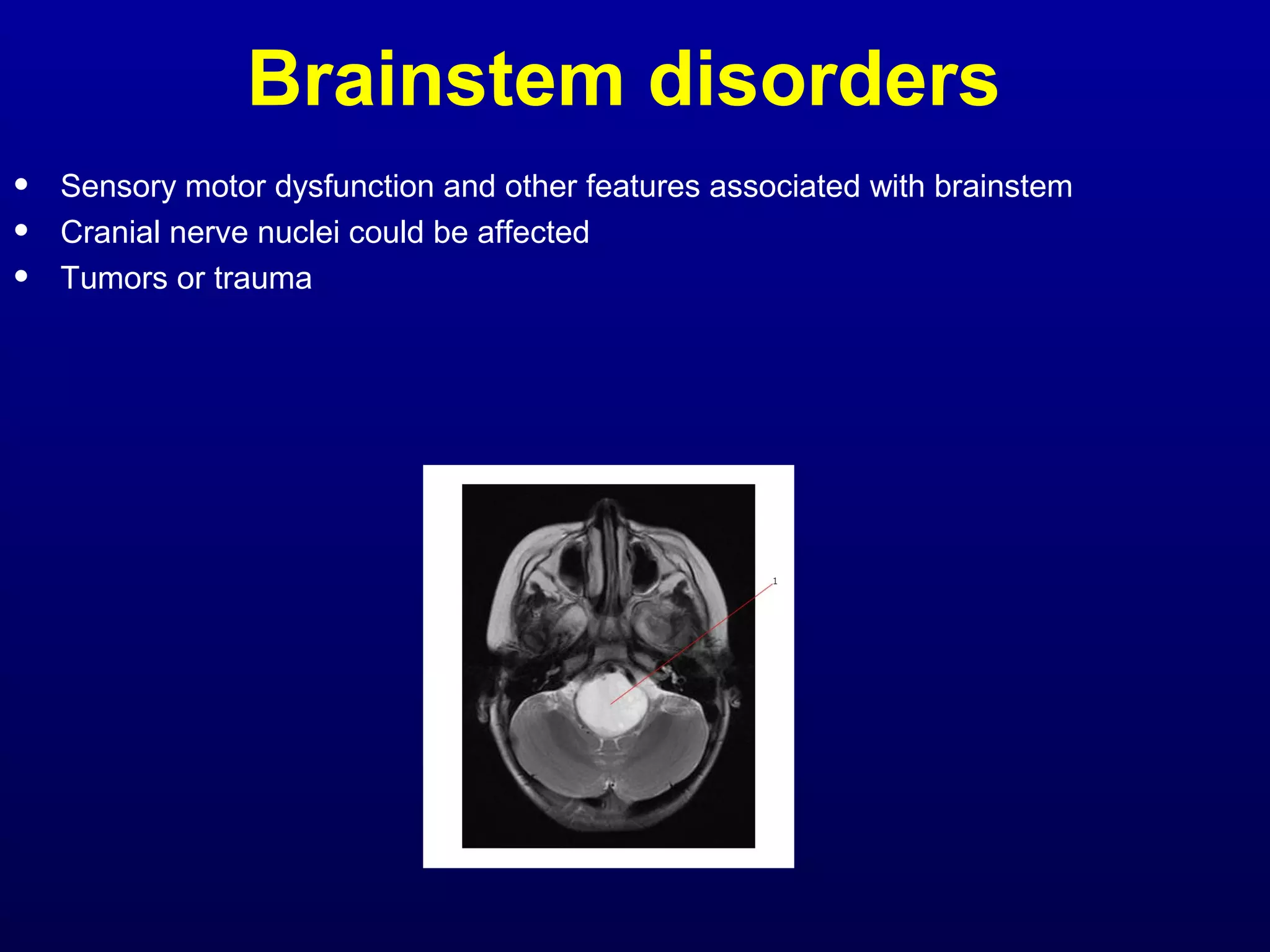
Brainstem disorders 
• Sensory motor dysfunction and other features associated with brainstem 
• Cranial nerve nuclei could be affected 
• Tumors or trauma
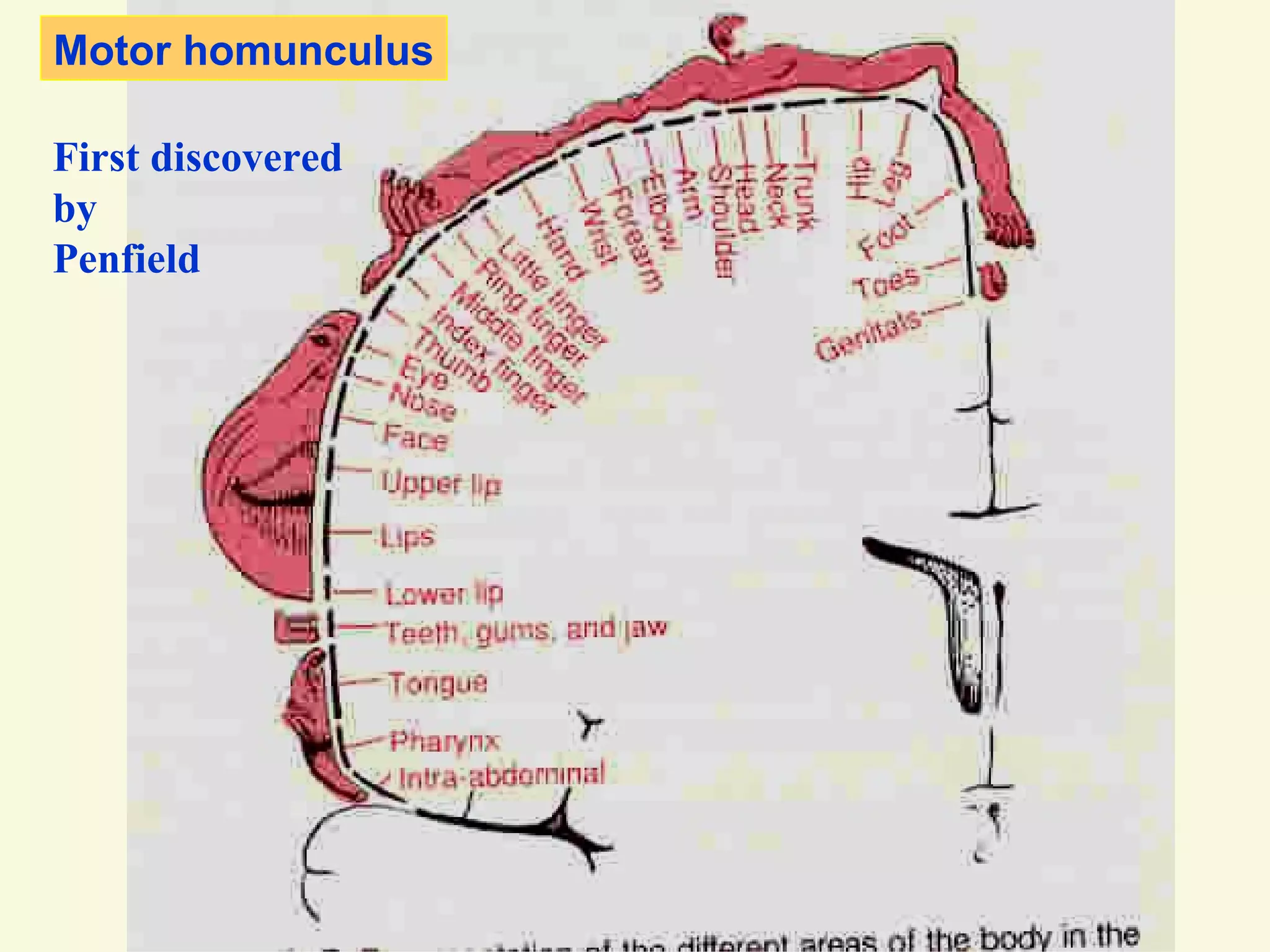
Motor homunculus 
First discovered 
by 
Penfield
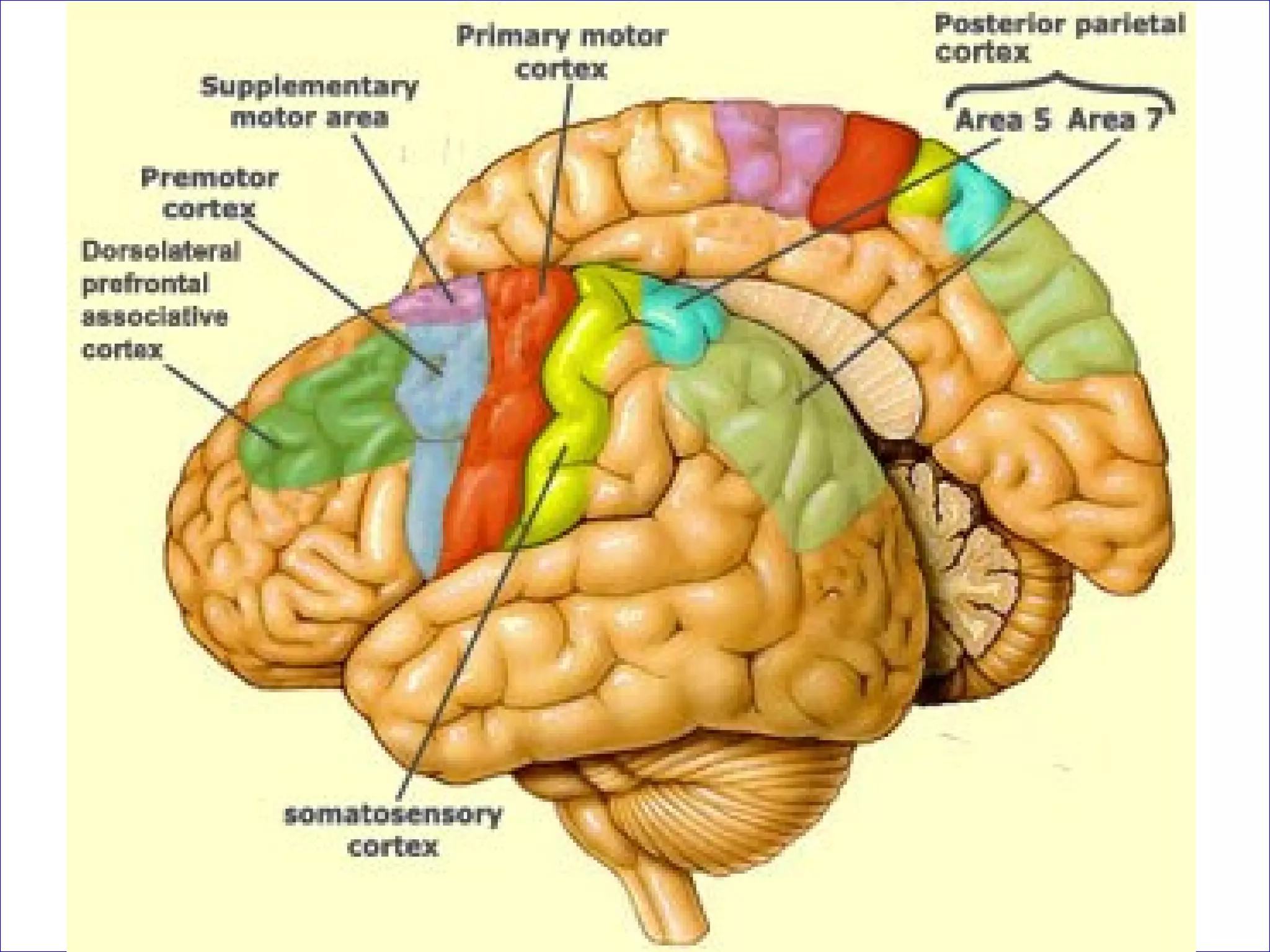
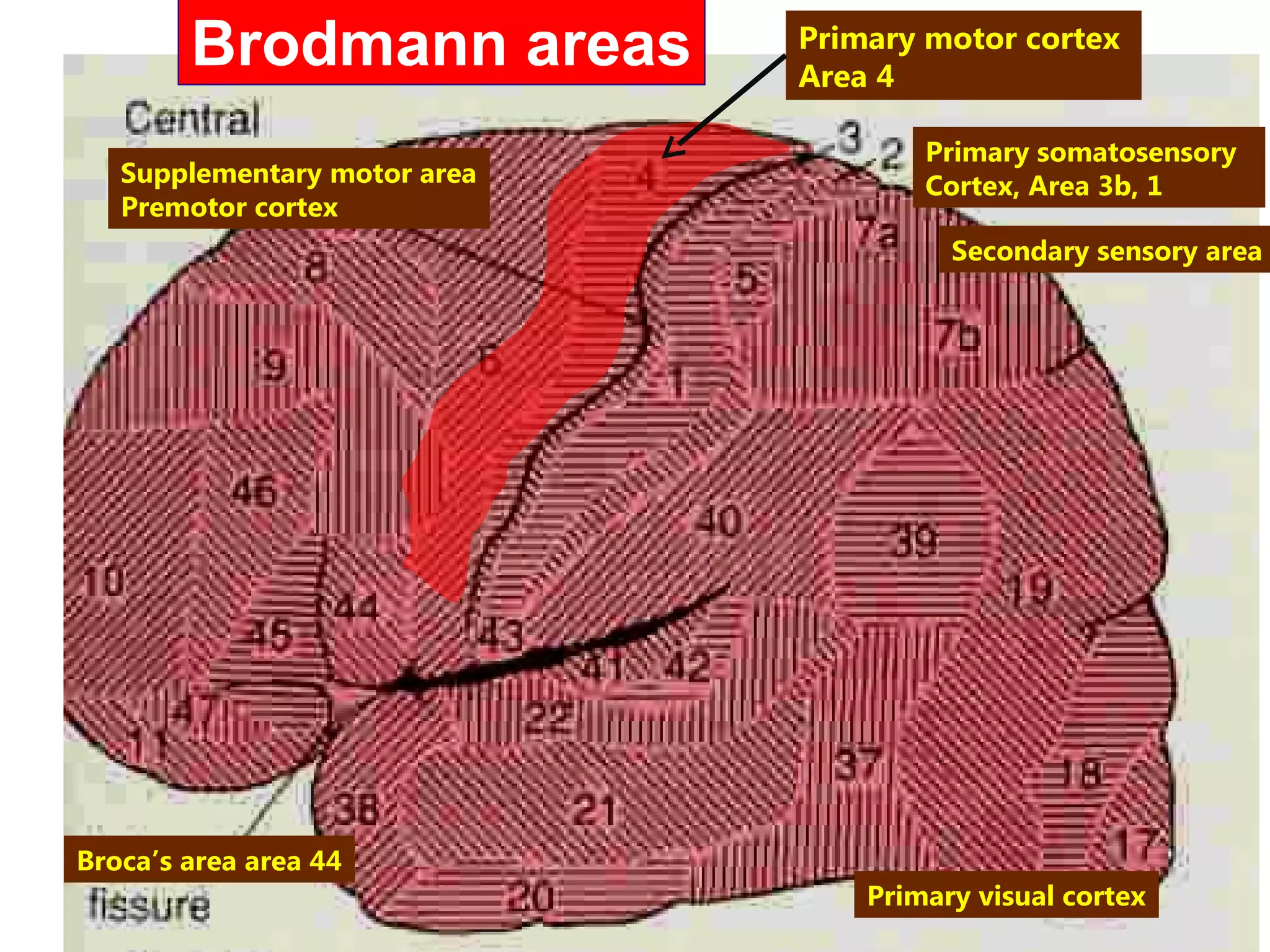
Brodmann areas Primary motor cortex 
Area 4 
Primary somatosensory 
Cortex, Area 3b, 1 
Primary visual cortex 
Supplementary motor area 
Premotor cortex 
Broca’s area area 44 
Secondary sensory area
Motor cortex 
• different areas of the body are 
represented in different cortical areas in 
the motor cortex 
• Motor homunculus 
– somatotopic representation 
– not proportionate to structures but 
proportionate to function 
– distorted map 
– upside down map
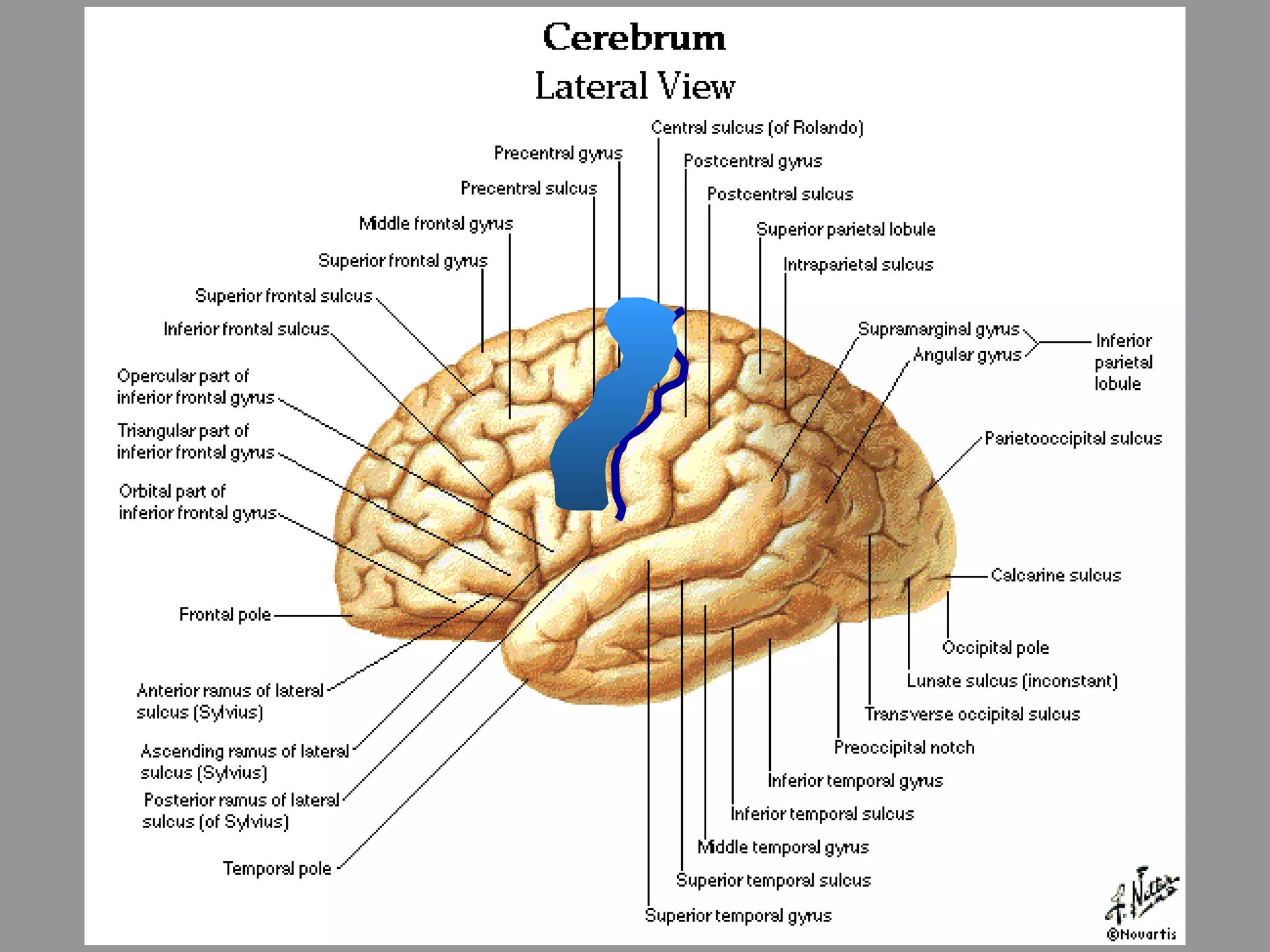
Motor cortical areas 
• primary motor cortex (MI) 
– precentral gyrus 
• secondary motor cortex (MII) 
– premotor cortex 
– supplementary motor area (SMA)
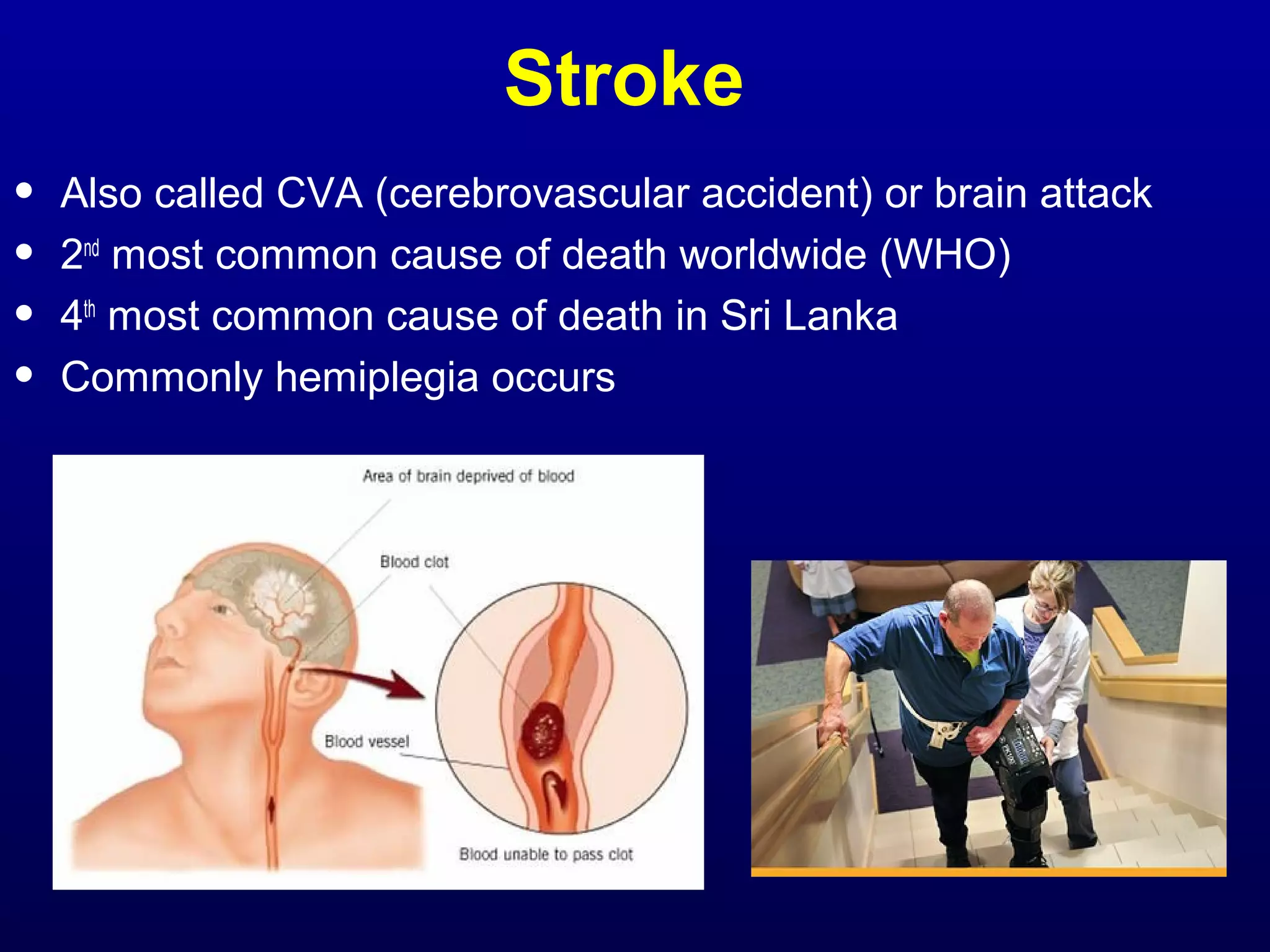
Stroke 
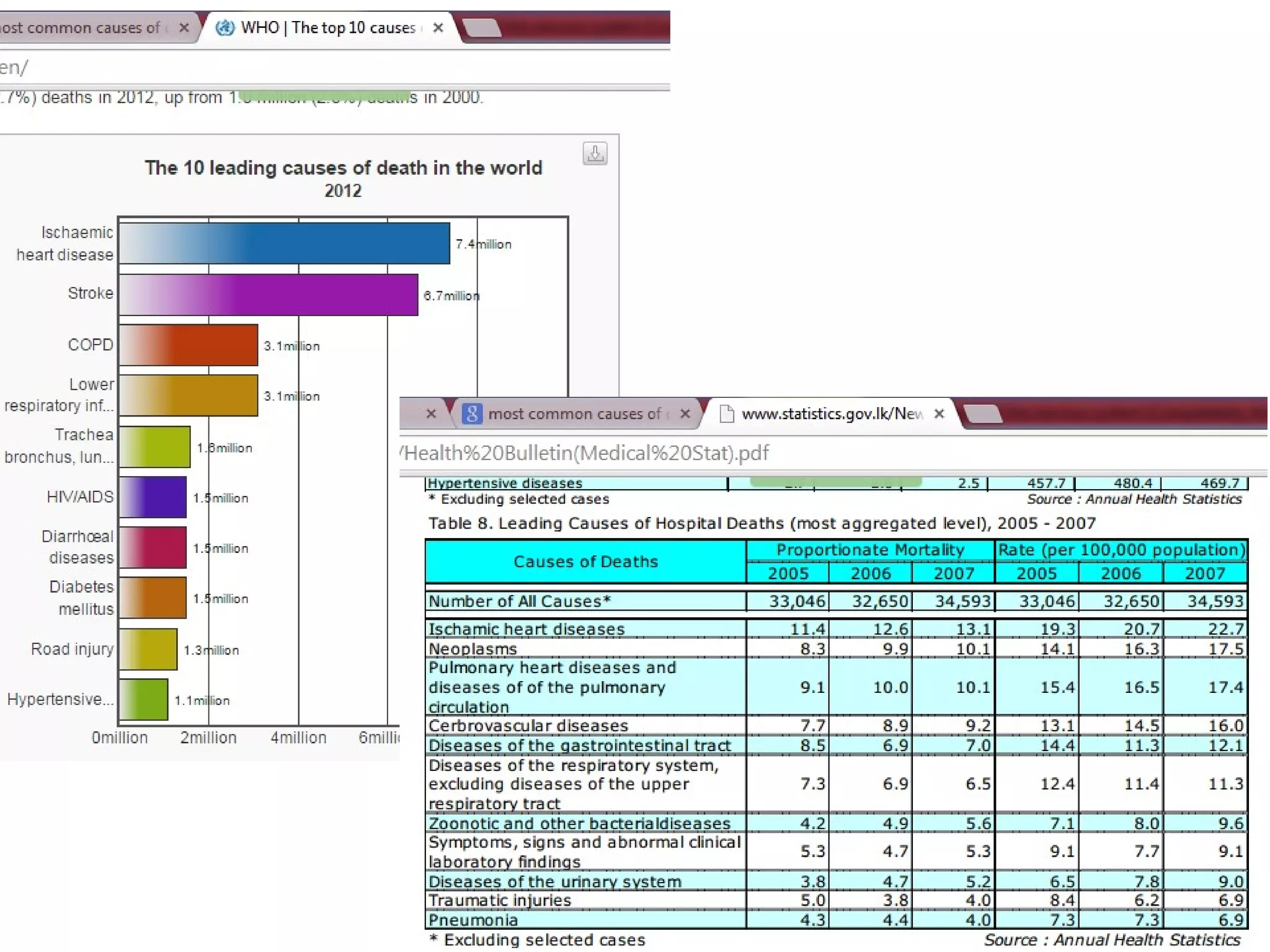
• Also called CVA (cerebrovascular accident) or brain attack 
• 2nd most common cause of death worldwide (WHO) 
• 4th most common cause of death in Sri Lanka 
• Commonly hemiplegia occurs
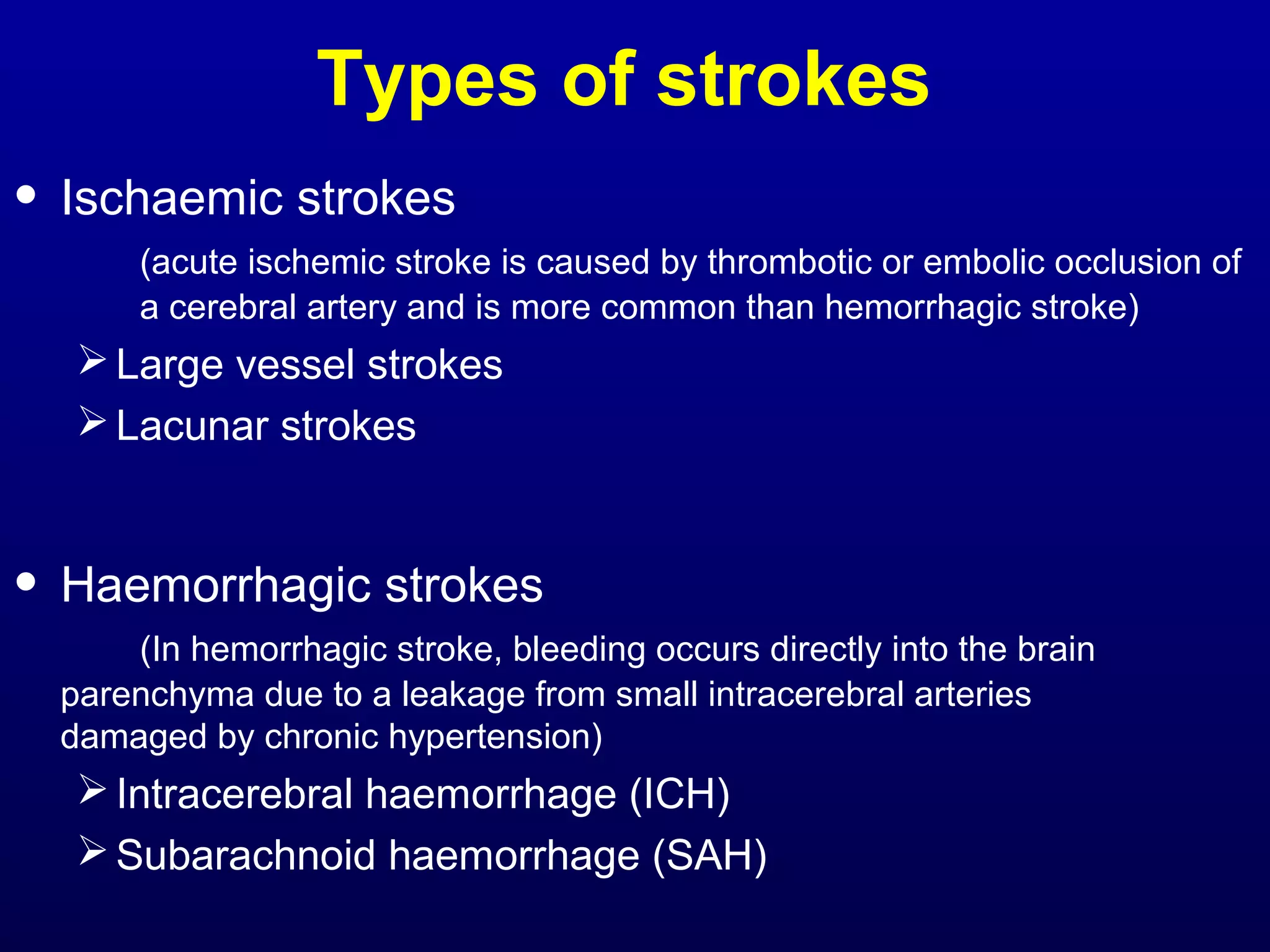
Types of strokes 
• Ischaemic strokes 
(acute ischemic stroke is caused by thrombotic or embolic occlusion of 
a cerebral artery and is more common than hemorrhagic stroke) 
Large vessel strokes 
Lacunar strokes 
• Haemorrhagic strokes 
(In hemorrhagic stroke, bleeding occurs directly into the brain 
parenchyma due to a leakage from small intracerebral arteries 
damaged by chronic hypertension) 
Intracerebral haemorrhage (ICH) 
Subarachnoid haemorrhage (SAH)
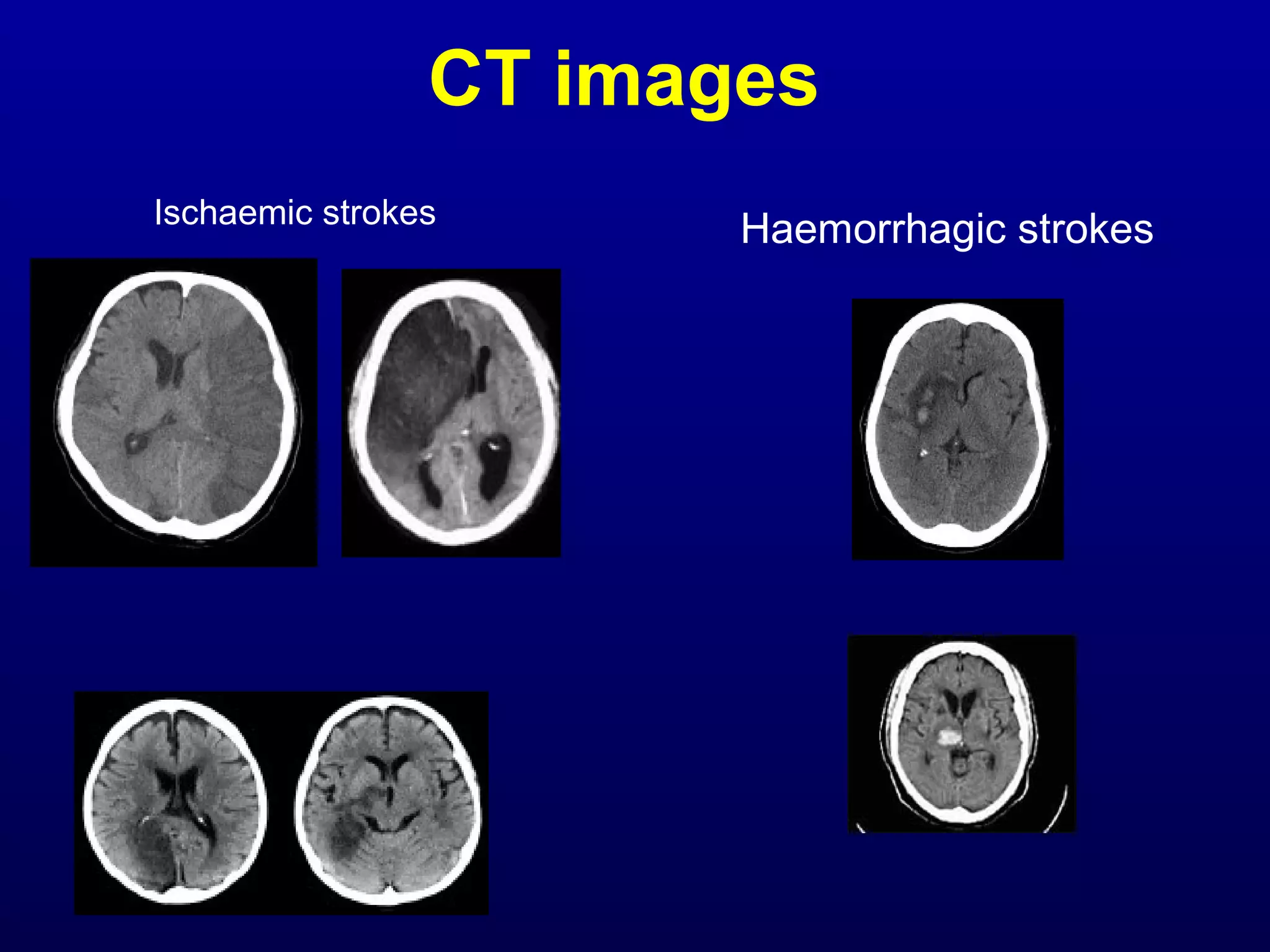
CT images 
Ischaemic strokes Haemorrhagic strokes
Lacunar Stroke 
• Lacunar infarcts or small subcortical infarcts result 
from occlusion of a single penetrating artery and 
account for one quarter of cerebral infarctions
Cerebral blood vessels 
• Anterior and middle cerebral arteries carry the anterior circulation and arise 
from the supraclinoid internal carotid arteries 
• Anterior cerebral artery (ACA) supplies the medial portion of the frontal and 
parietal lobes and anterior portions of basal ganglia and anterior internal 
capsule 
• Middle cerebral artery (MCA) supplies the lateral portions of the frontal and 
parietal lobes, as well as the anterior and lateral portions of the temporal 
lobes, and gives rise to perforating branches to the globus pallidus, 
putamen, and internal capsule 
• MCA is the dominant source of vascular supply to the hemispheres 
• Posterior cerebral arteries (PCA) arise from the basilar artery and carry the 
posterior circulation 
• PCA gives rise to perforating branches that supply the thalami and 
brainstem and the cortical branches to the posterior and medial temporal 
lobes and occipital lobes
Cerebellar arteries 
• Inferiorly by the posterior inferior cerebellar artery 
(PICA), arising from the vertebral artery 
• Superiorly by the superior cerebellar artery 
• Anterolaterally by the anterior inferior cerebellar artery 
(AICA), from the basilar artery
Lacunar infarct 
• Pure motor stroke/hemiparesis 
 This is the most common (33-50%) lacunar syndrome usually occurs with infarction of the posterior limb of the internal 
capsule, which carries the descending corticospinal and corticobulbar tracts, or the basis pontis. It is marked by 
hemiparesis or hemiplegia that typically affects the face, arm, or leg of one side. Dysarthria, dysphagia, and transient 
sensory symptoms may also be present. 
• Ataxic hemiparesis 
 This is the second most frequent lacunar syndrome and usually occurs with infarction of the posterior limb of the internal 
capsule, basis pontis, and corona radiata. It displays a combination of cerebellar and motor symptoms, including 
weakness and clumsiness, on the ipsilateral side of the body. It usually affects the leg more than it does the arm; hence, 
it is known also as homolateral ataxia and crural paresis. The onset of symptoms is often over hours or days. 
• Dysarthria/clumsy hand 
 This is sometimes considered a variant of ataxic hemiparesis (above), but usually still is classified as a separate lacunar 
syndrome. The lesion is in the pons and the main symptoms are dysarthria and clumsiness (i.e. weakness) of the hand, 
which often are most prominent when the patient is writing. 
• Pure sensory stroke 
 Marked by persistent or transient numbness, tingling, pain, burning, or another unpleasant sensation on one side of the 
body, this infarct is usually in the contralateral thalamus. 
• Mixed sensorimotor stroke 
 This lacunar syndrome involves hemiparesis or hemiplegia with ipsilateral sensory impairment, with infarct typically in the
Watershed 
• A watershed stroke or watershed infarct is defined as 
an ischemia, or blood flow blockage, that is localized 
to the border zones between the territories of two 
major arteries in the brain 
• Watershed locations are those border-zone regions in 
the brain supplied by the major cerebral arteries where 
blood supply is decreased
Basal Ganglia disorders 
• Parkinsonism 
• Athetosis 
• Chorea 
• Hemiballismus 
Basal ganglia disorders are also called extrapyramidal disorders
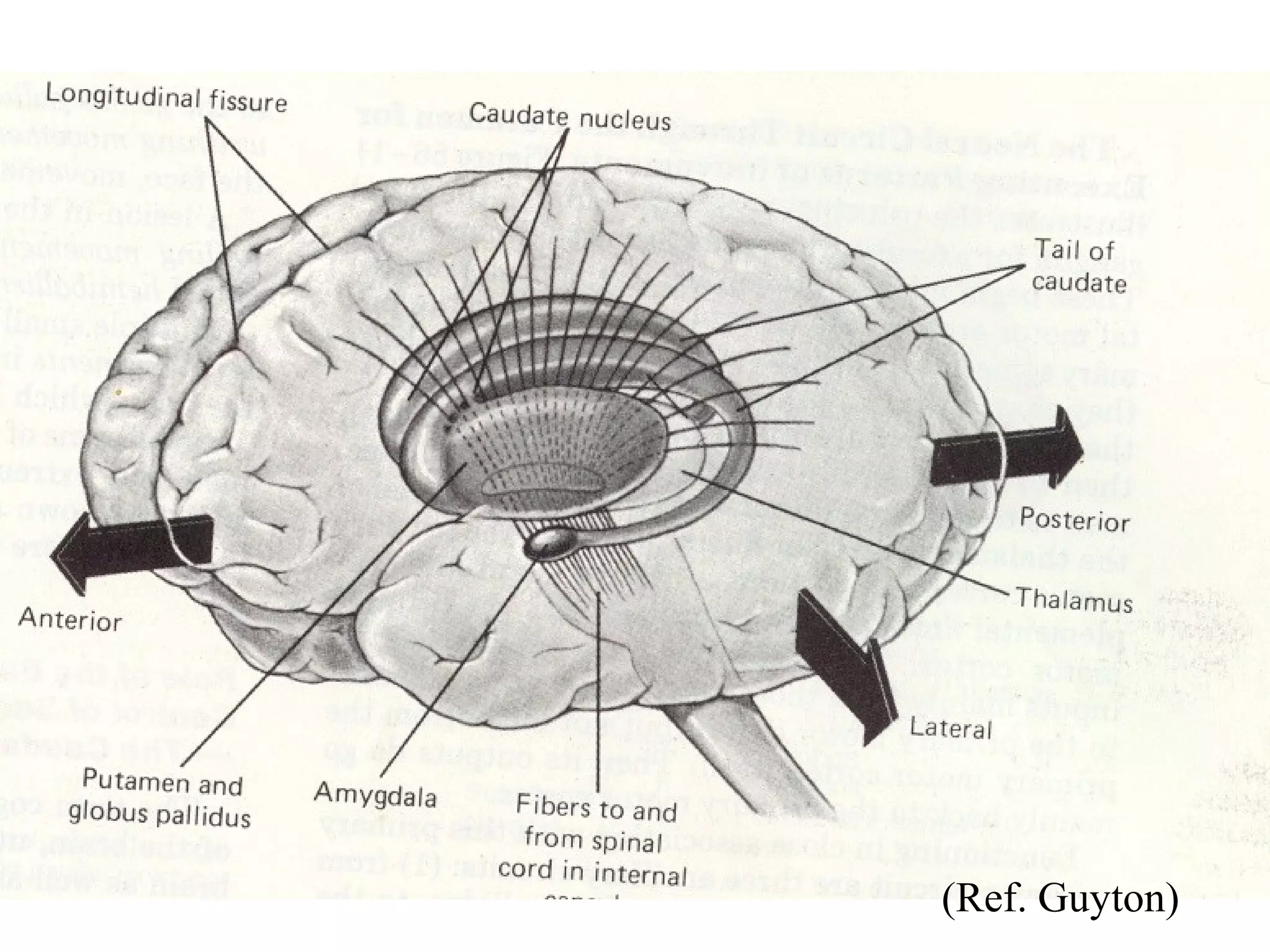
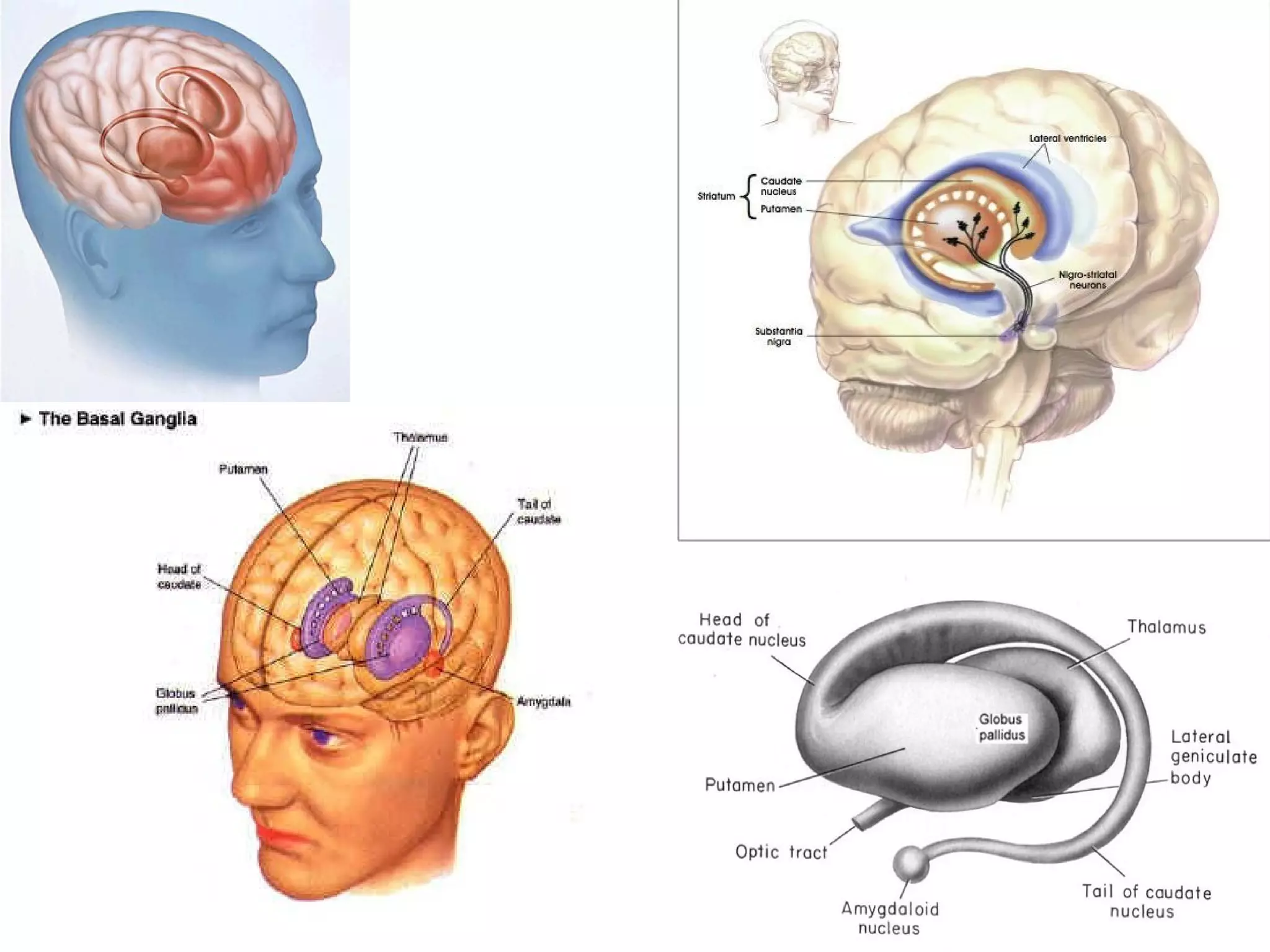
Basal ganglia 
• Caudate nucleus 
• Putamen 
• Globus pallidus 
–(internal and external) 
• Subthalamic nuclei 
• Substantia nigra 
International Basal Ganglia Society
(Ref. Guyton)
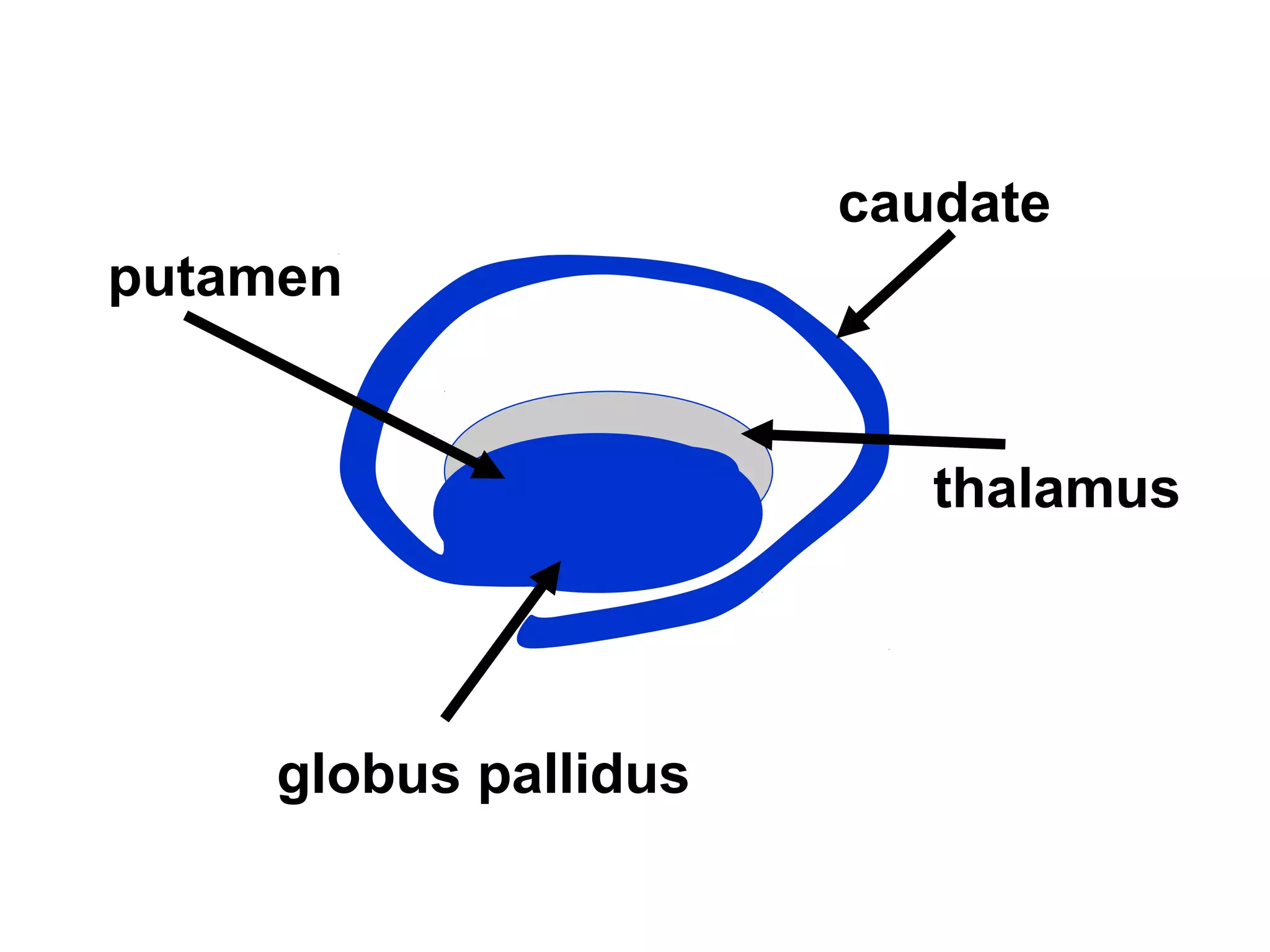
thalamus 
putamen 
globus pallidus 
caudate
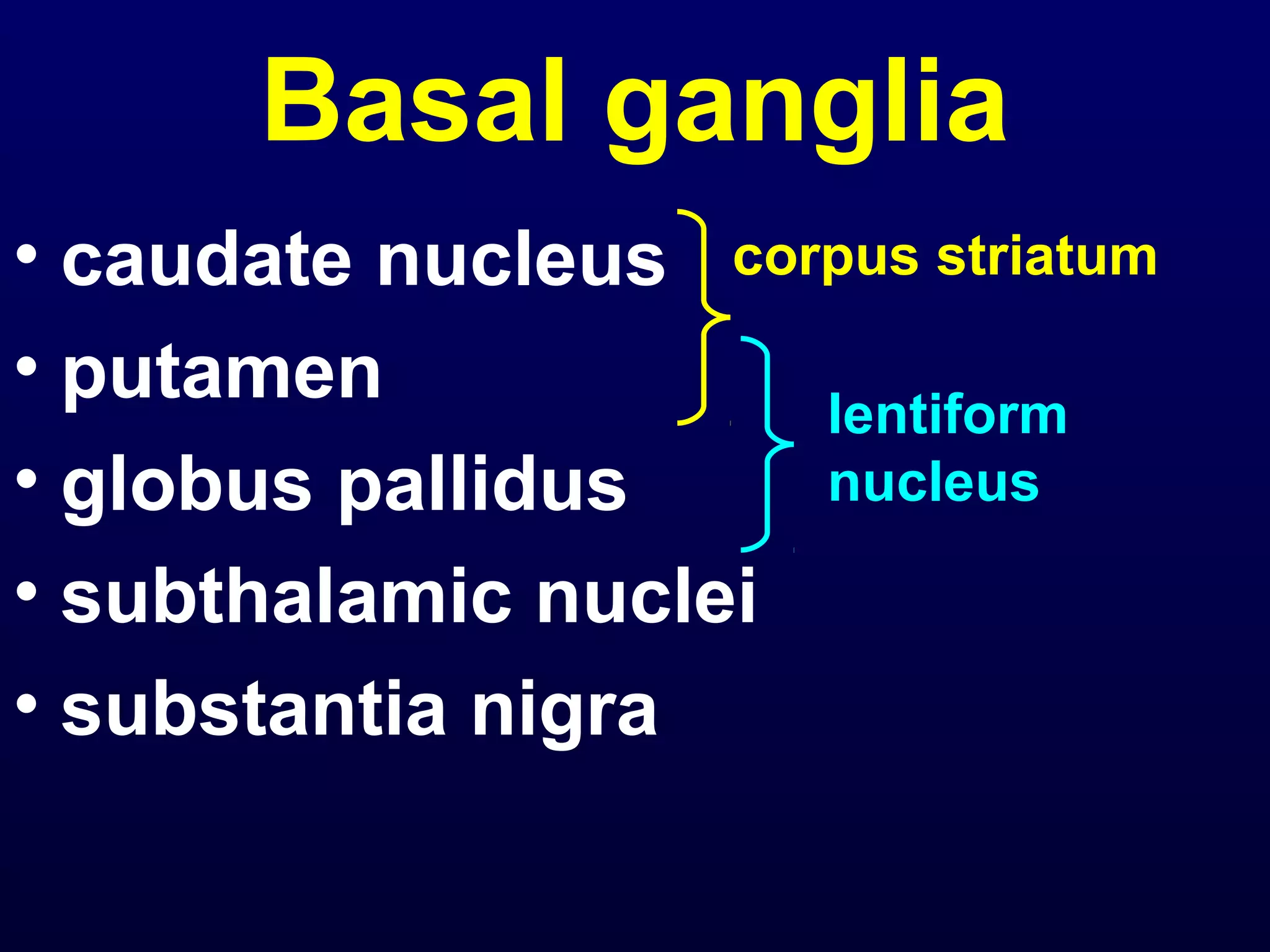
Basal ganglia 
• caudate nucleus 
• putamen 
• globus pallidus 
• subthalamic nuclei 
• substantia nigra 
corpus striatum 
lentiform 
nucleus
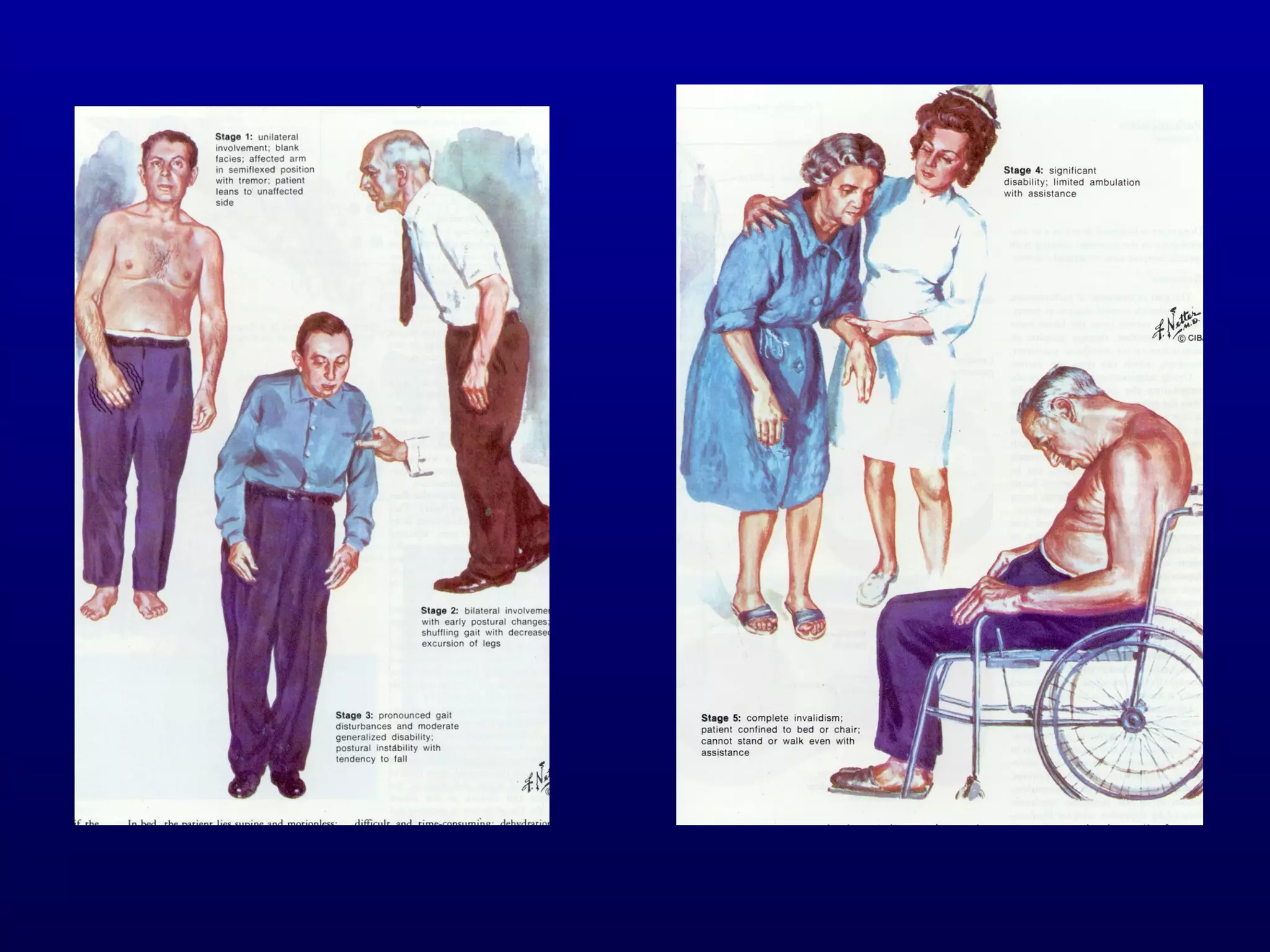
Parkinsonism 
• due to destruction of dopamine secreting pathways from 
substantia nigra to caudate and putamen. 
 also called “paralysis agitans” or “shaking palsy” 
 first described by Dr. James Parkinson in 1817. 
• In the west, it affects 1% of individuals after 60 yrs 
Classical Clinical features: 
• Tremor, resting 
• Rigidity of all the muscles 
• Akinesia (bradykinesia): very slow movements 
• Postural instability
Chorea 
• Lesions in the caudate 
nucleus 
• jerky movements of the 
hand, face and other parts 
• patient is unable to control 
them 
• may get worse with anxiety 
• disappears in sleep
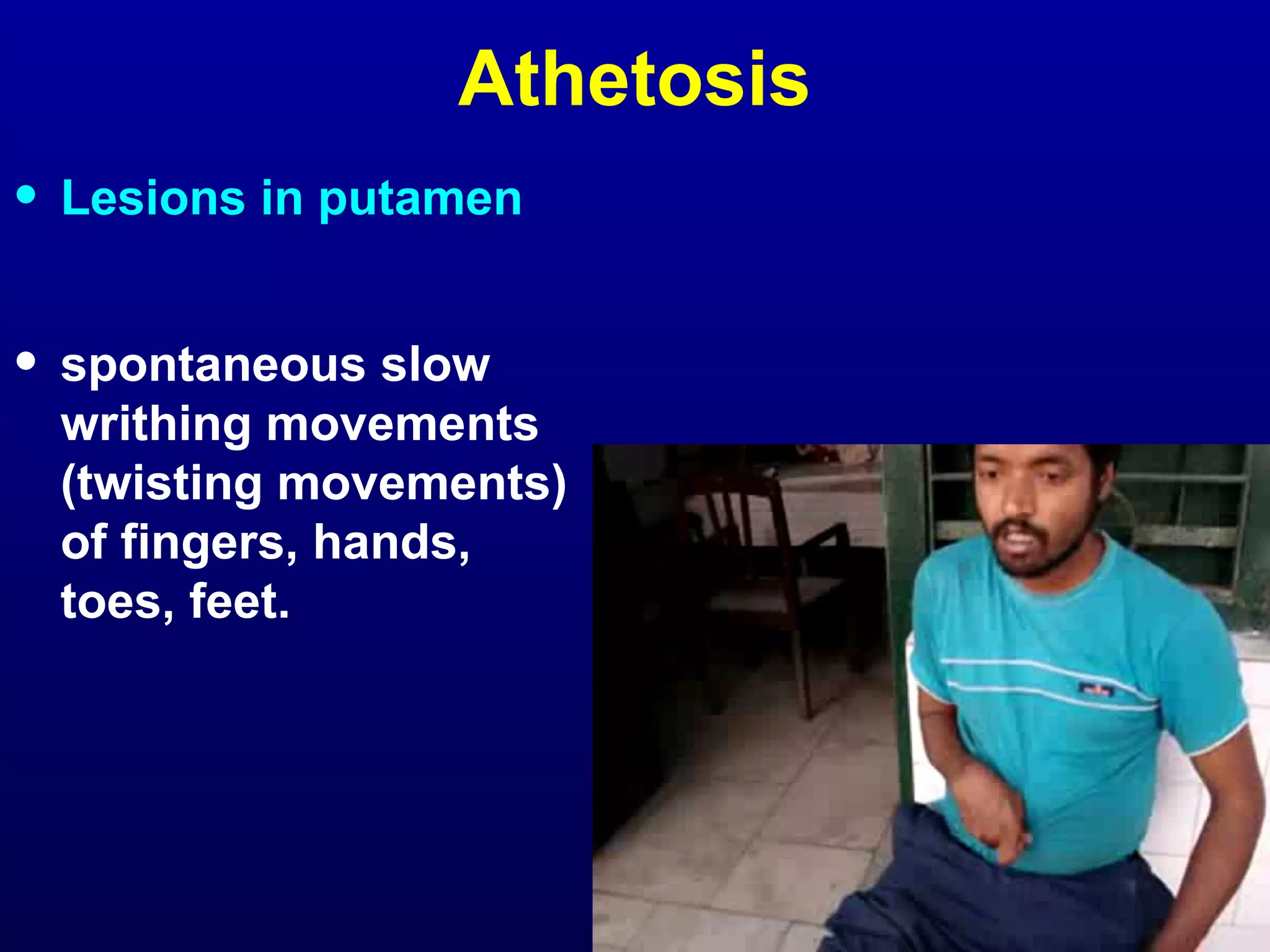
Athetosis 
• Lesions in putamen 
• spontaneous slow 
writhing movements 
(twisting movements) 
of fingers, hands, 
toes, feet.
Hemiballismus 
• Lesions in subthalamus 
• violent, flailing 
movements of arm & leg 
on one side of the body
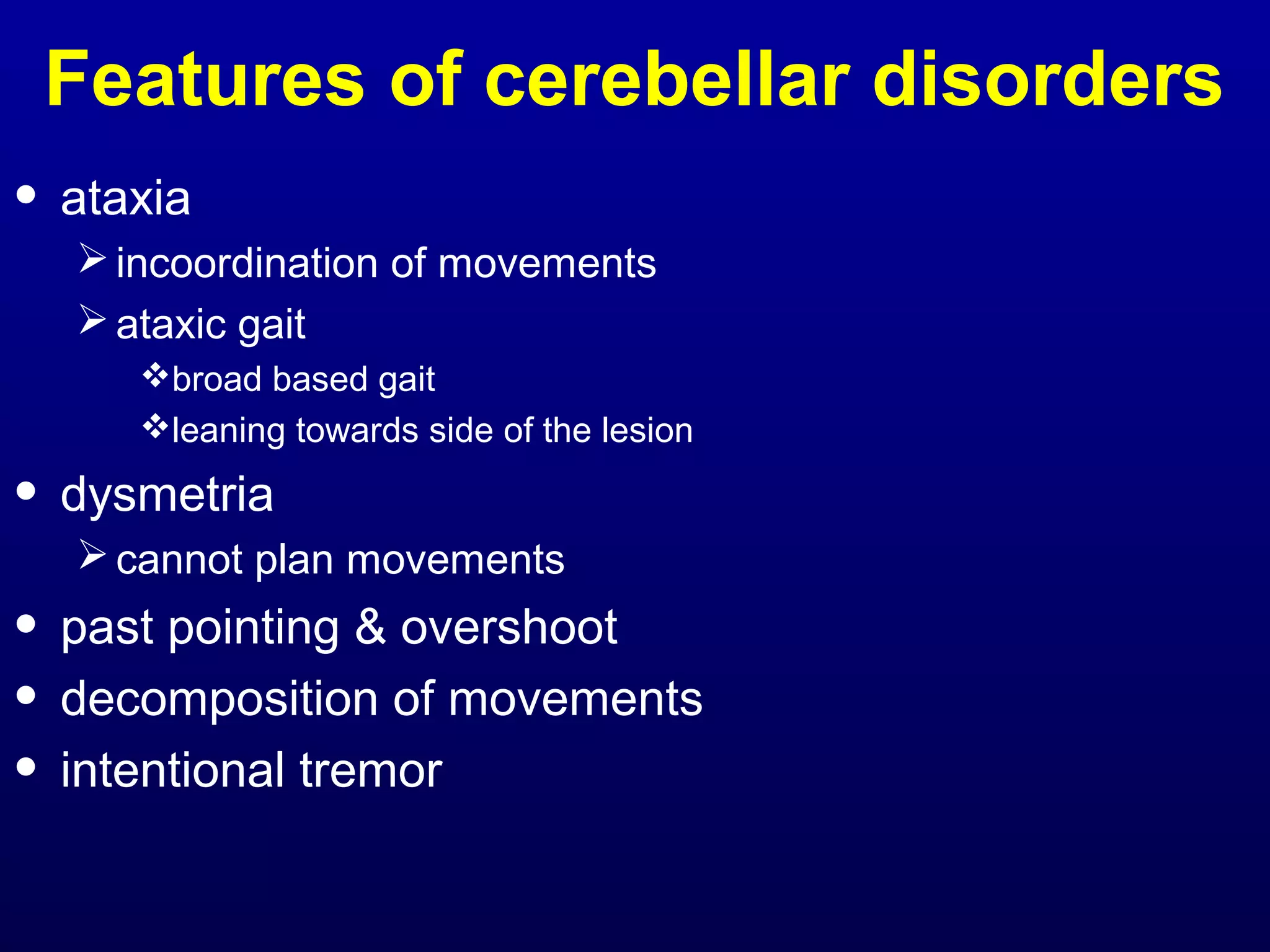
Features of cerebellar disorders 
• ataxia 
incoordination of movements 
ataxic gait 
broad based gait 
leaning towards side of the lesion 
• dysmetria 
cannot plan movements 
• past pointing & overshoot 
• decomposition of movements 
• intentional tremor
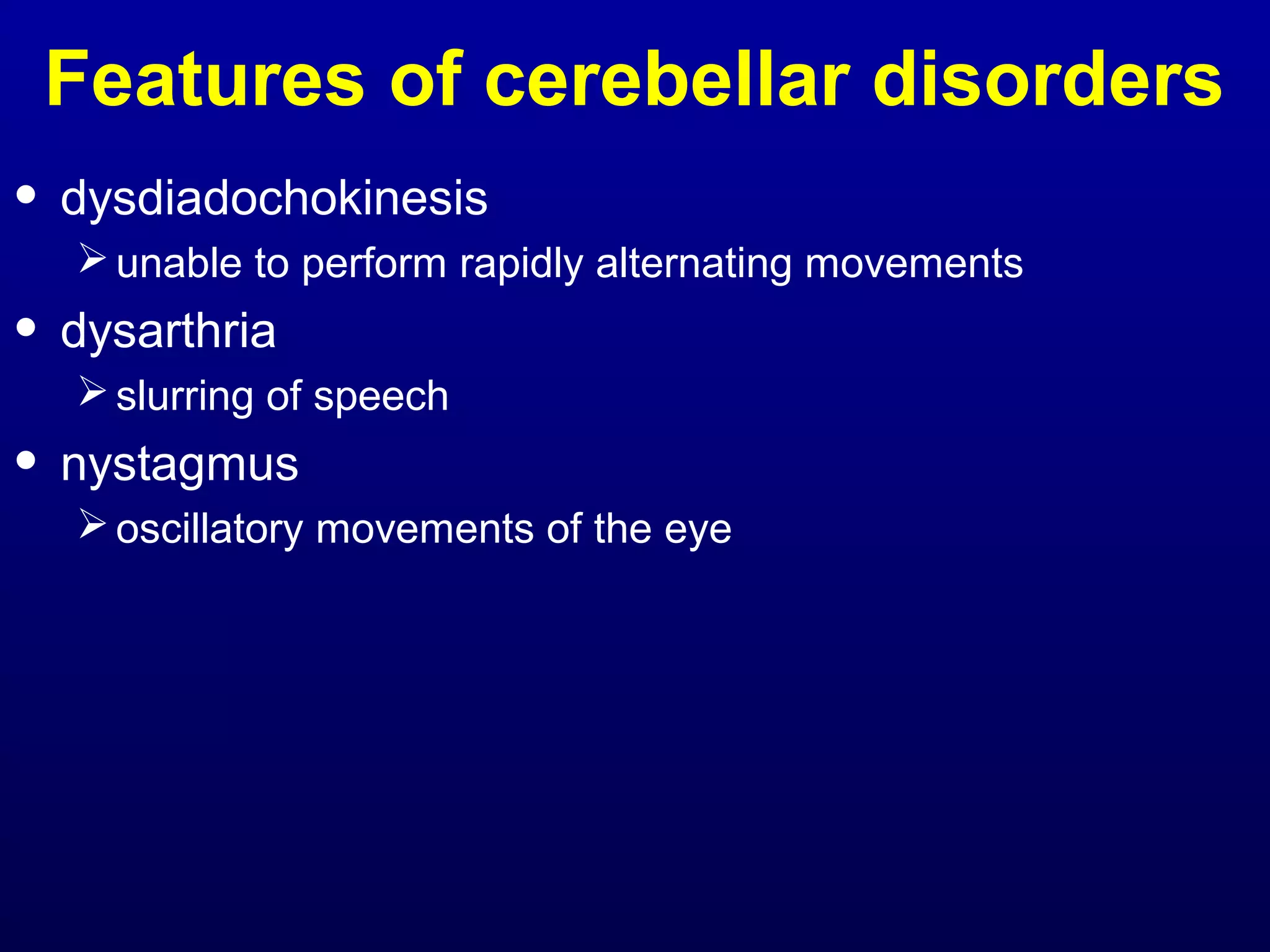
Features of cerebellar disorders 
• dysdiadochokinesis 
unable to perform rapidly alternating movements 
• dysarthria 
slurring of speech 
• nystagmus 
oscillatory movements of the eye
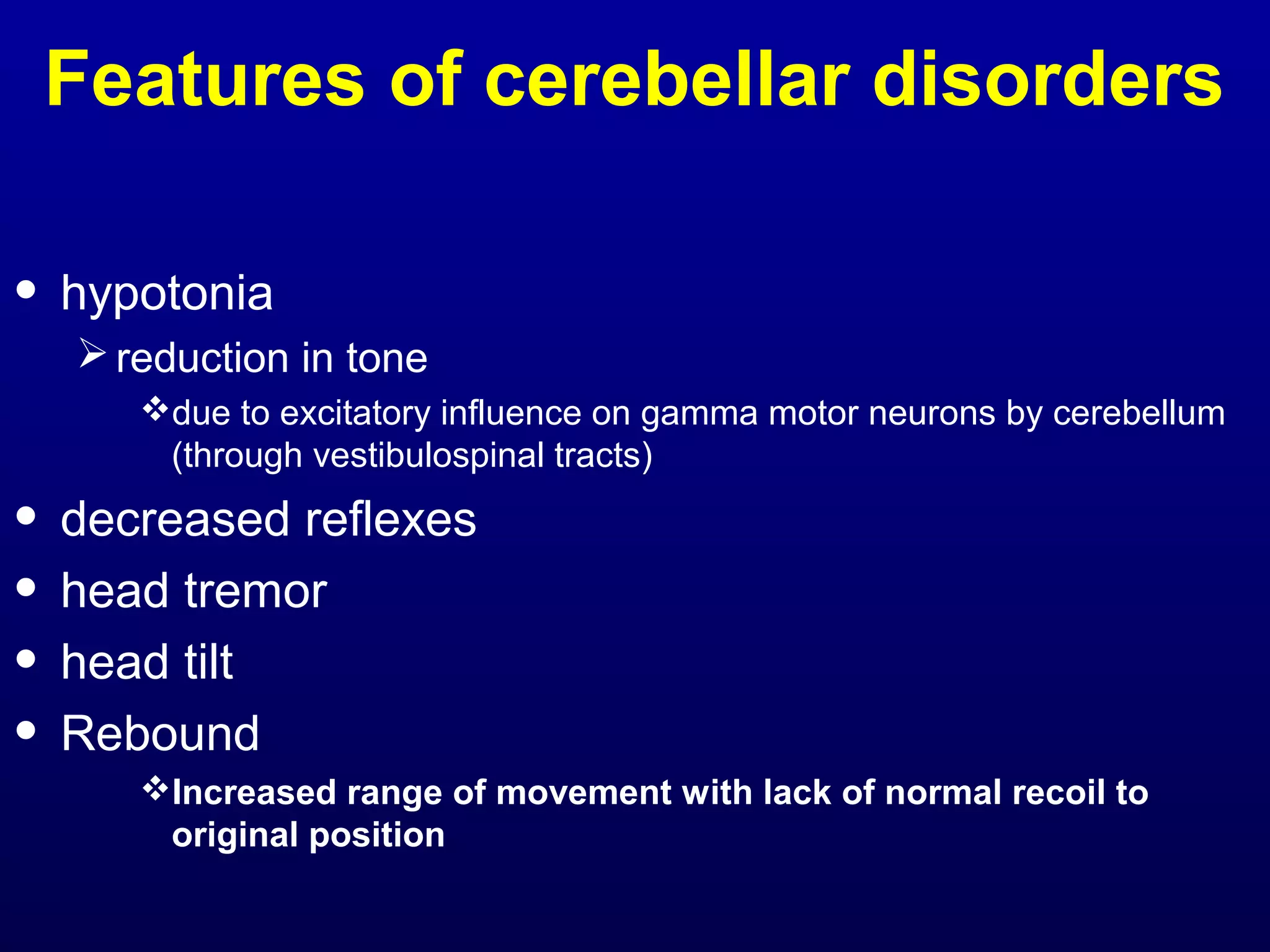
Features of cerebellar disorders 
• hypotonia 
reduction in tone 
due to excitatory influence on gamma motor neurons by cerebellum 
(through vestibulospinal tracts) 
• decreased reflexes 
• head tremor 
• head tilt 
• Rebound 
Increased range of movement with lack of normal recoil to 
original position
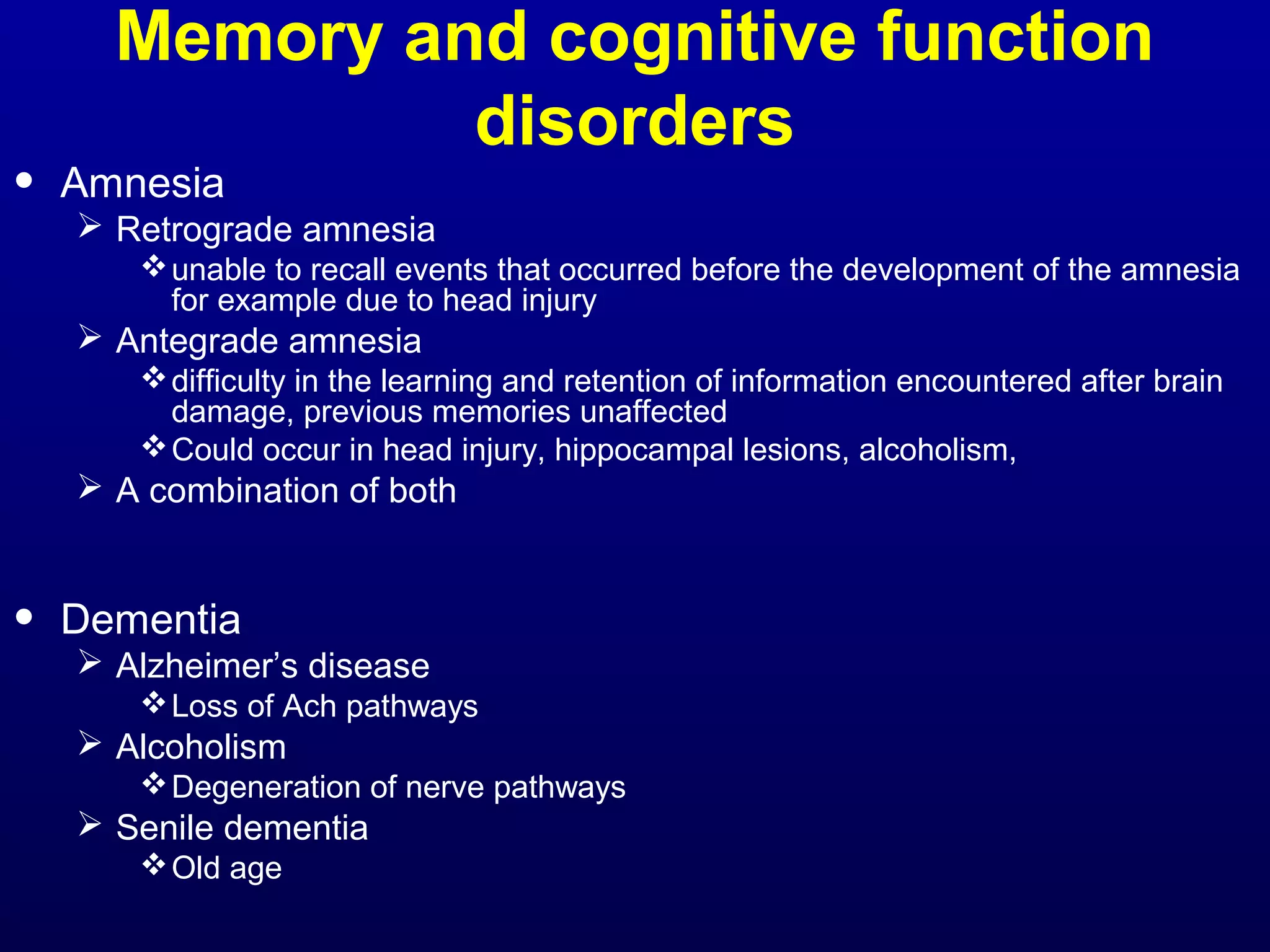
Memory and cognitive function 
disorders 
• Amnesia 
 Retrograde amnesia 
unable to recall events that occurred before the development of the amnesia 
for example due to head injury 
 Antegrade amnesia 
difficulty in the learning and retention of information encountered after brain 
damage, previous memories unaffected 
Could occur in head injury, hippocampal lesions, alcoholism, 
 A combination of both 
• Dementia 
 Alzheimer’s disease 
Loss of Ach pathways 
 Alcoholism 
Degeneration of nerve pathways 
 Senile dementia 
Old age
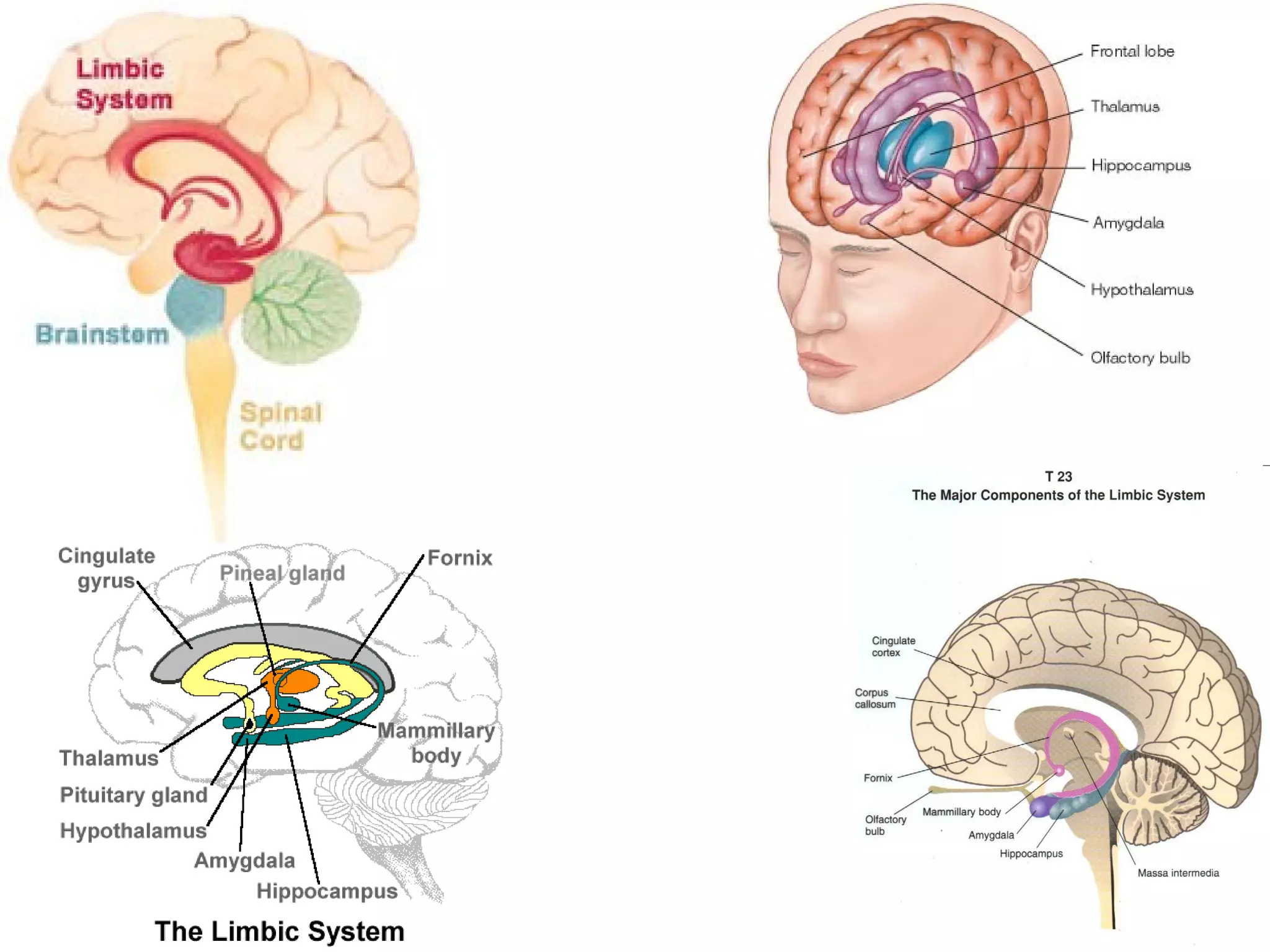
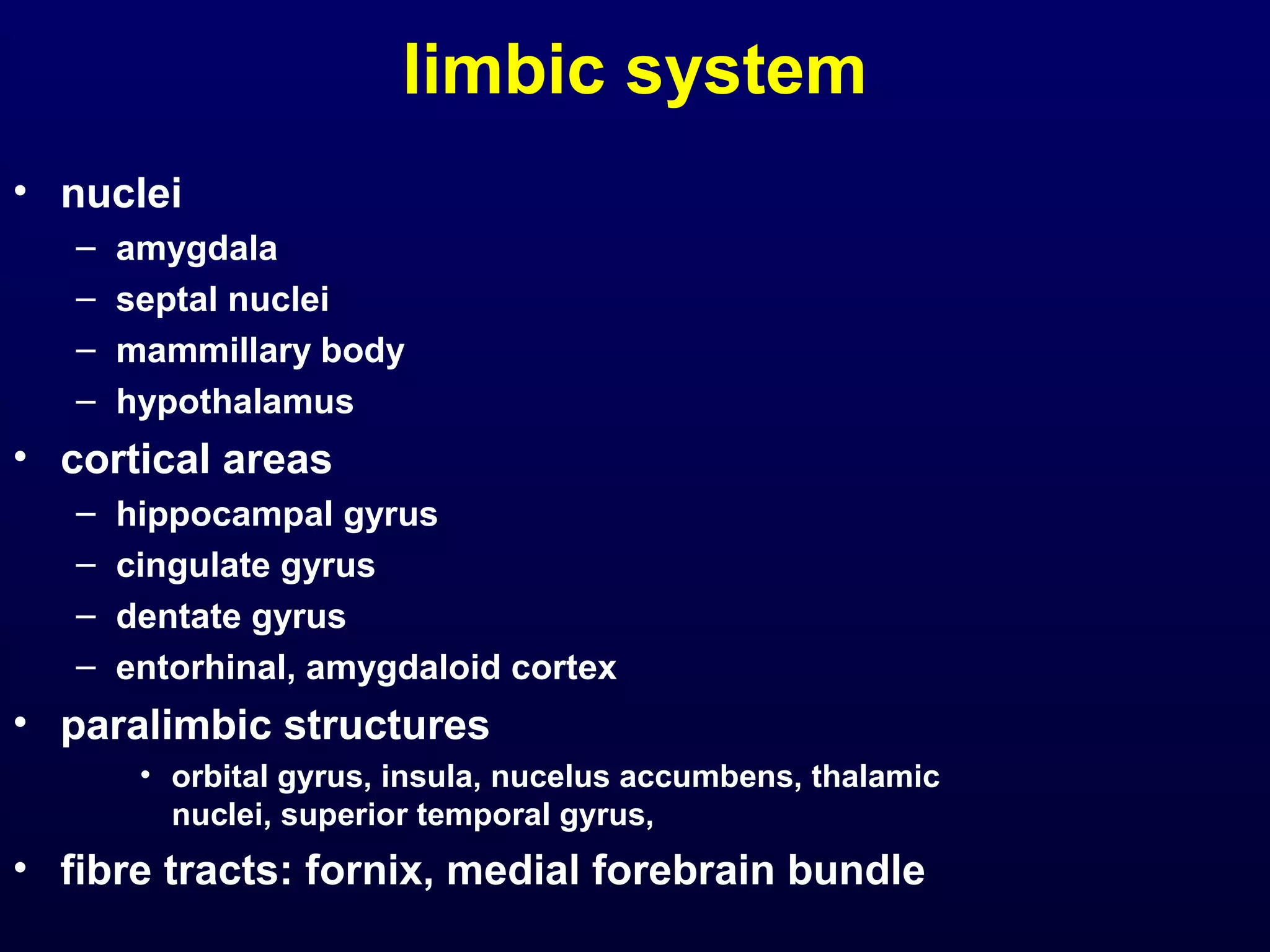
limbic system 
• nuclei 
– amygdala 
– septal nuclei 
– mammillary body 
– hypothalamus 
• cortical areas 
– hippocampal gyrus 
– cingulate gyrus 
– dentate gyrus 
– entorhinal, amygdaloid cortex 
• paralimbic structures 
• orbital gyrus, insula, nucelus accumbens, thalamic 
nuclei, superior temporal gyrus, 
• fibre tracts: fornix, medial forebrain bundle
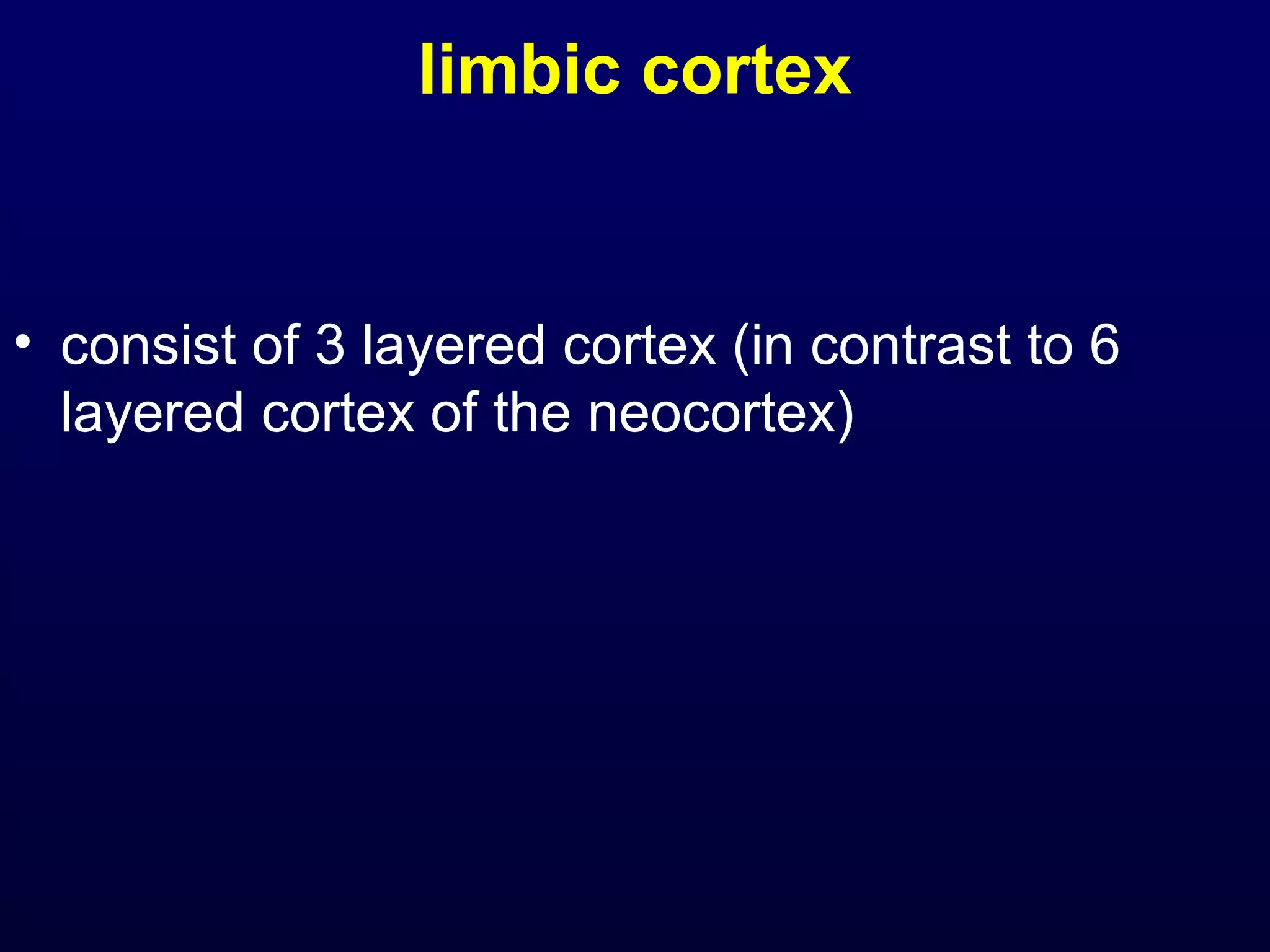
limbic cortex 
• consist of 3 layered cortex (in contrast to 6 
layered cortex of the neocortex)
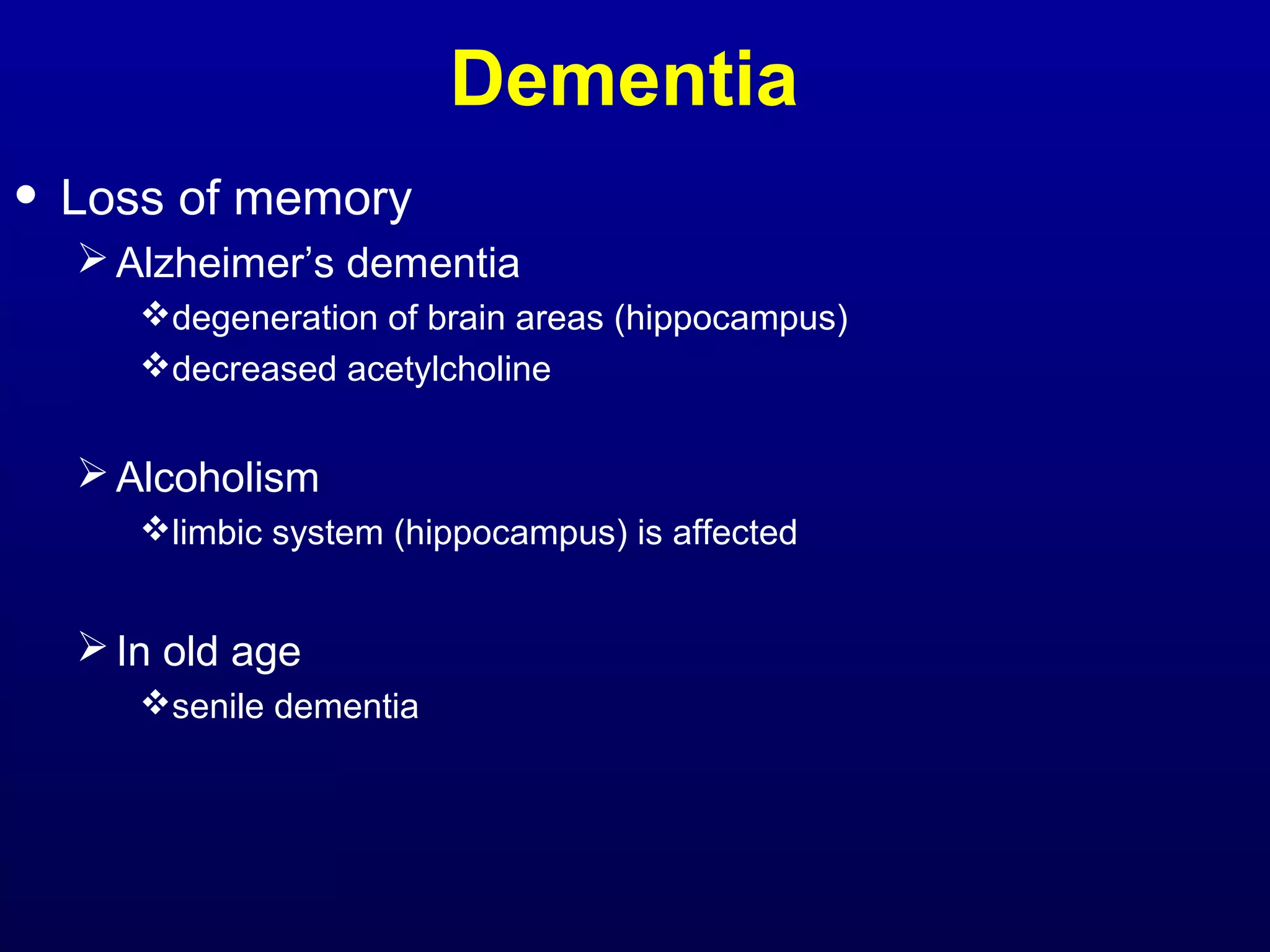
Dementia 
• Loss of memory 
Alzheimer’s dementia 
degeneration of brain areas (hippocampus) 
decreased acetylcholine 
Alcoholism 
limbic system (hippocampus) is affected 
In old age 
senile dementia
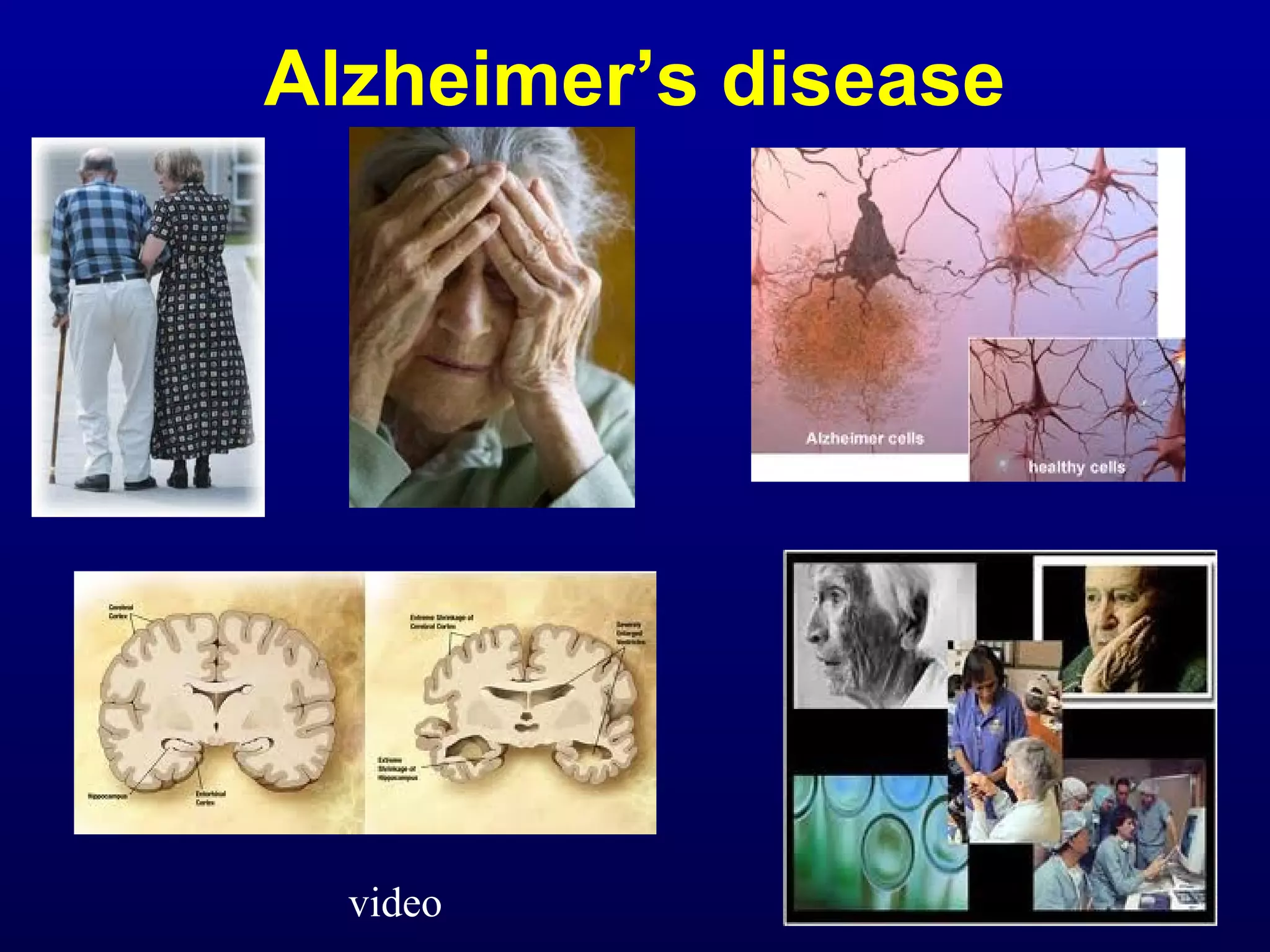
Alzheimer’s disease 
video
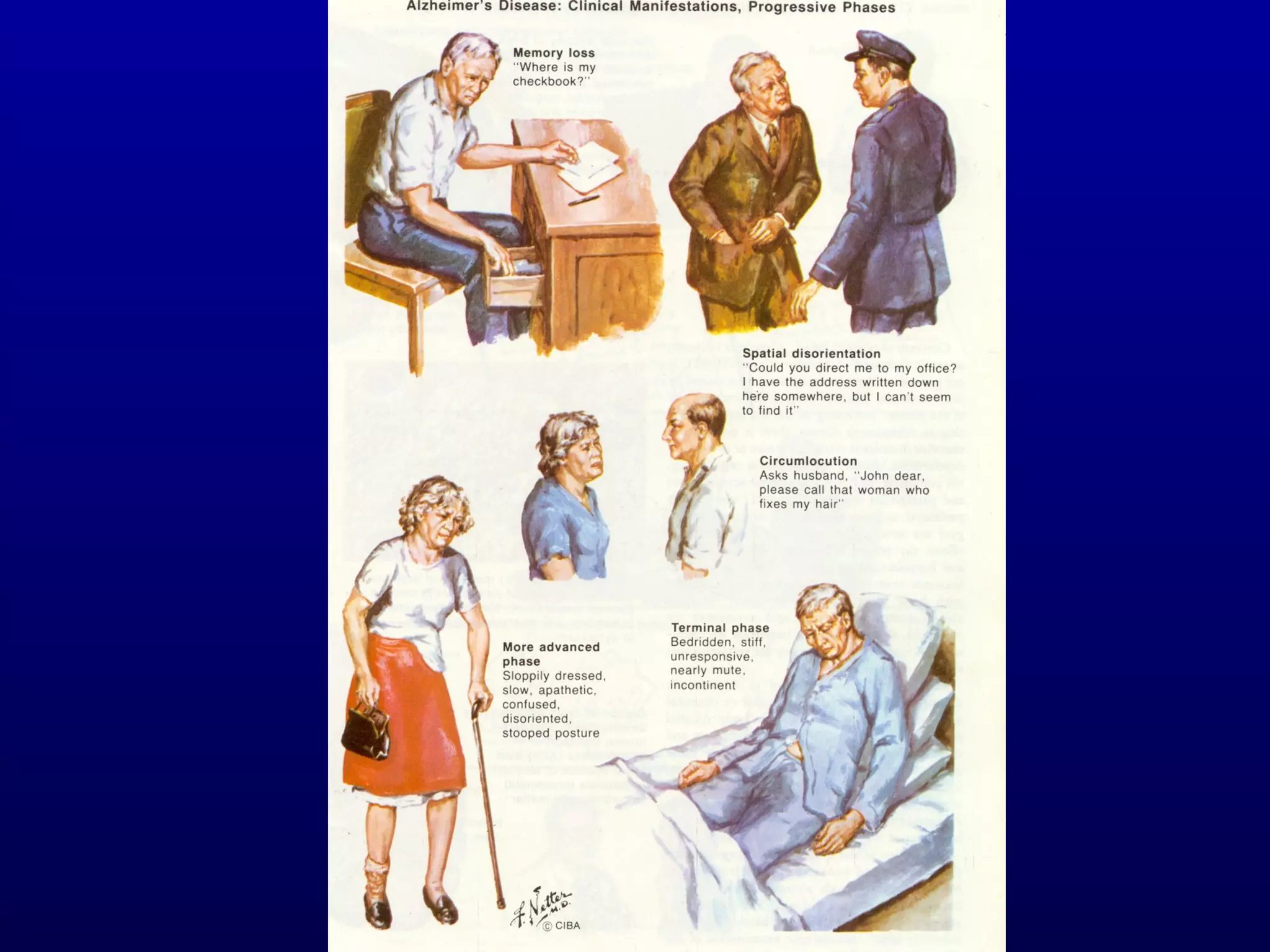
Alzheimer’s disease 
• A progressive, degenerative and fatal brain disease 
• in which cell to cell connections in the brain are lost 
• as a result, the death of brain cells occur 
• Rapid cognitive impairment
Other conditions 
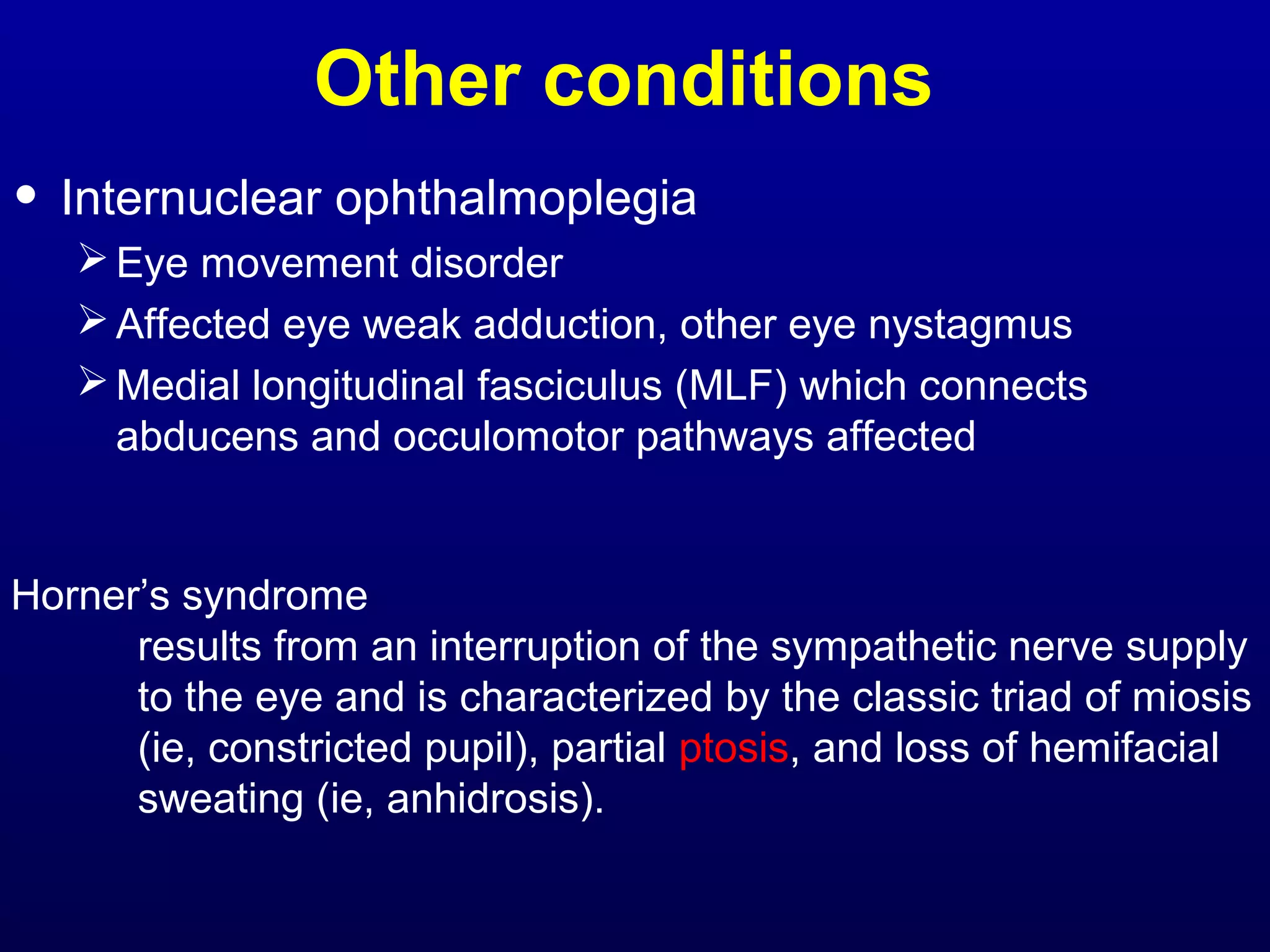
• Internuclear ophthalmoplegia 
Eye movement disorder 
Affected eye weak adduction, other eye nystagmus 
Medial longitudinal fasciculus (MLF) which connects 
abducens and occulomotor pathways affected 
Horner’s syndrome 
results from an interruption of the sympathetic nerve supply 
to the eye and is characterized by the classic triad of miosis 
(ie, constricted pupil), partial ptosis, and loss of hemifacial 
sweating (ie, anhidrosis).
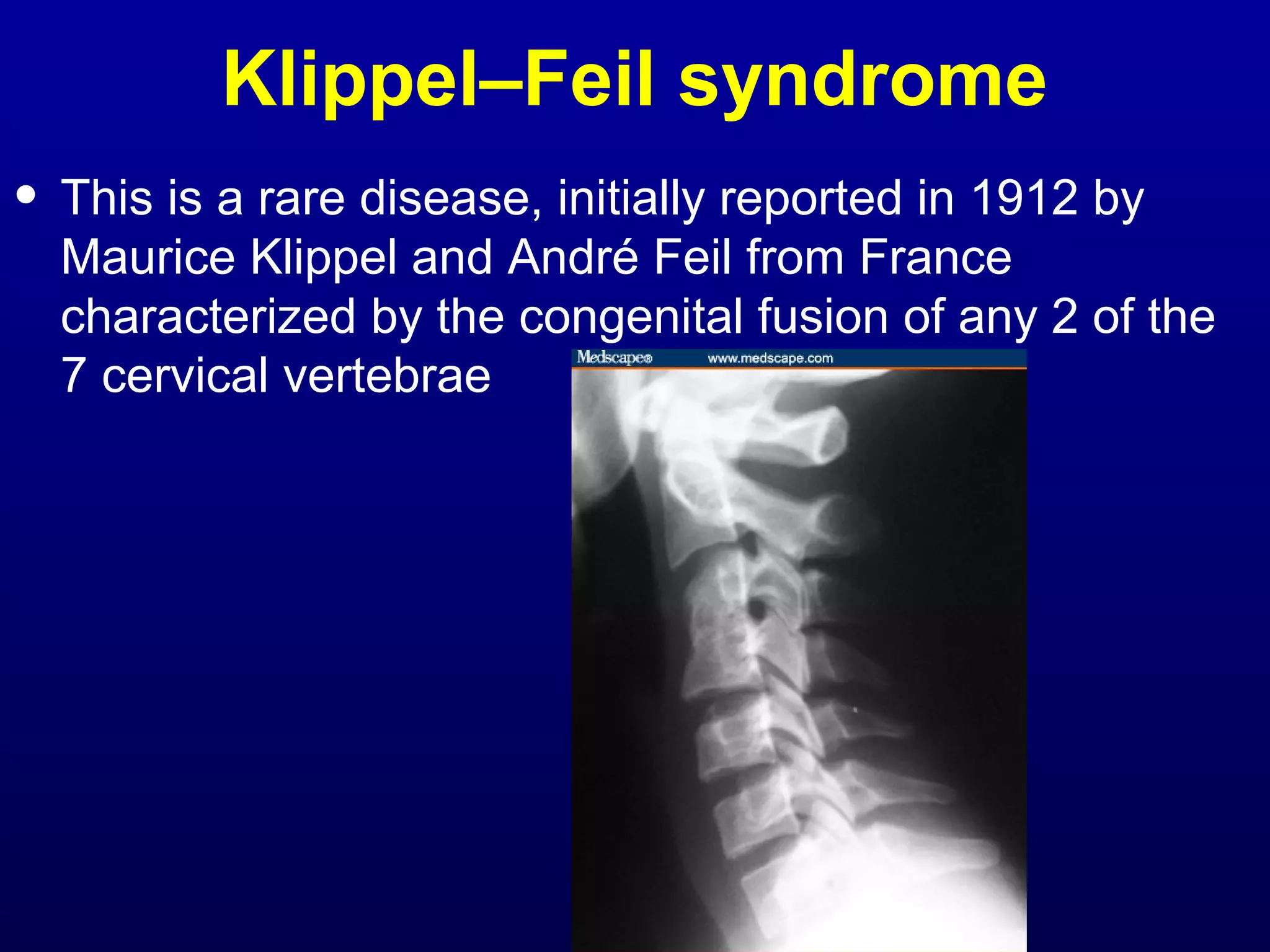
Klippel–Feil syndrome 
• This is a rare disease, initially reported in 1912 by 
Maurice Klippel and André Feil from France 
characterized by the congenital fusion of any 2 of the 
7 cervical vertebrae

Clinical aspects of the nervous system

  • 1.
    Clinical Neuroanatomy Prof.Vajira Weerasinghe Professor in Neurophysiology, Faculty of Medicine, University of Peradeniya & Consultant Neurophysiologist, Teaching Hospital, Peradeniya www.slideshare.net/vajira54
  • 2.
    Why study nervoussystem? • Neurological diseases are very disabling and very little treatment is available • Understanding the structure and function of the nervous system helps to understand the pathophysiological basis of these diseases
  • 4.
    Functional Subdivisions •Sensory functions  feeling, eg. pain • Motor functions movement, eg. walking • Integrative functions eg. reflexes • Autonomic functions control of blood pressure • Higher functions memory, learning
  • 5.
    Anatomical Subdivisions •Central Nervous system Brain and spinal cord • Peripheral Nervous system Cranial Nerves & Peripheral Nerves • Autonomic system sympathetic & parasympathetic
  • 6.
    Disorders of thenervous system based on an anatomical divisions Type of disorder example 1. Peripheral neuropathies 1. Polyneuropathies diabetic polyneuropathy 2. Mononeuropathies carpal tunnel syndrome 2. Neuromuscular junction disorders 1. Presysnaptic disorders botulism 2. Postsynaptic disorders myasthenia gravis 3. Anterior horn cell diseases MND (motor neuron disease) 4. Plexus, spinal root or spinal cord disorders Erb’s palsy, cervical spondylosis, intervertebral disc prolapse 5. Brainstem disorders Tumors 6. Strokes CVA 7. Basal ganglia disorders Parkinsonism 8. Cerebellar disorders Cerbellar ataxia 9. Memory and cognitive function disorders Alzheimer Disease 10. Cranial nerve lesions Bell’s palsy 11. Others Multiple sclerosis
  • 7.
    Peripheral neuropathies •Peripheral nerves are affected • Types: Polyneuropathies or mononeuropathies • Components: Sensory, motor, autonomic or mixed • Distribution: Symmetrical or asymmetrical • Cause: Trauma, demyelination, degeneration • Examples:  Diabetes mellitus  vitamin deficiency  alcoholism  carpal tunnel syndrome  ulnar nerve lesions  wrist drop  foot drop  tarsal tunnel syndrome
  • 10.
    NMJ disorders •Myasthenia gravis  Antibodies to Ach receptors  Post synaptic disorder • Lambert Eaton Syndrome (myasthenic syndrome)  Presynaptic disorder (antibodies against Ca channels) • Botulism  Presynaptic disorder  Binds to the presynatic region and prevent release of Ach
  • 11.
    NMJ disorders •Snake venom (Presynaptic or postsynaptic disorder) Krait (bungarotoxin) Postsynaptic disorder Cobra Postsynaptic disorder Russell’s viper Presynaptic disorder
  • 12.
    Snake venom •Common Krait (bungarus caeruleus) Produces neurotoxin known as bungarotoxin Very potent Causes muscle paralysis and death if not treated • Cobra  venom contain neurotoxin
  • 13.
    Myasthenia gravis •Serious neuromuscular disease • Antibodies form against acetylcholine nicotinic postsynaptic receptors at the NMJ • Characteristic pattern of progressively reduced muscle strength with repeated use of the muscle and recovery of muscle strength following a period of rest • Present with ptosis, fatiguability, speech difficulty, respiratory difficulty • Treated with cholinesterase inhibitors
  • 14.
    Anterior cell diseases • Relatively rare • Affect any age • Muscle wasting • Example: Poliomyelitis • Adults: MND (motor neuron disease), also called ALS (amyotrophic lateral sclerosis) Speech difficulty (dysarthria) Typical features in EMG test • Infants: SMA (spinal muscular atrophy) Breathing difficulty
  • 15.
  • 16.
    Plexus, spinal rootor spinal cord disorders • Plexopathies: brachial plexus, lumbosacral plexus  Erb’s palsy • Radiculopathies: cervical, thoracic, lumbar, sacral roots • Myelopathies: cervical, thoracic • Cauda equina lesions
  • 17.
    Brainstem disorders •Sensory motor dysfunction and other features associated with brainstem • Cranial nerve nuclei could be affected • Tumors or trauma
  • 21.
    Motor homunculus Firstdiscovered by Penfield
  • 22.
    Brodmann areas Primarymotor cortex Area 4 Primary somatosensory Cortex, Area 3b, 1 Primary visual cortex Supplementary motor area Premotor cortex Broca’s area area 44 Secondary sensory area
  • 23.
    Motor cortex •different areas of the body are represented in different cortical areas in the motor cortex • Motor homunculus – somatotopic representation – not proportionate to structures but proportionate to function – distorted map – upside down map
  • 24.
    Motor cortical areas • primary motor cortex (MI) – precentral gyrus • secondary motor cortex (MII) – premotor cortex – supplementary motor area (SMA)
  • 25.
    Stroke • Alsocalled CVA (cerebrovascular accident) or brain attack • 2nd most common cause of death worldwide (WHO) • 4th most common cause of death in Sri Lanka • Commonly hemiplegia occurs
  • 27.
    Types of strokes • Ischaemic strokes (acute ischemic stroke is caused by thrombotic or embolic occlusion of a cerebral artery and is more common than hemorrhagic stroke) Large vessel strokes Lacunar strokes • Haemorrhagic strokes (In hemorrhagic stroke, bleeding occurs directly into the brain parenchyma due to a leakage from small intracerebral arteries damaged by chronic hypertension) Intracerebral haemorrhage (ICH) Subarachnoid haemorrhage (SAH)
  • 28.
    CT images Ischaemicstrokes Haemorrhagic strokes
  • 29.
    Lacunar Stroke •Lacunar infarcts or small subcortical infarcts result from occlusion of a single penetrating artery and account for one quarter of cerebral infarctions
  • 30.
    Cerebral blood vessels • Anterior and middle cerebral arteries carry the anterior circulation and arise from the supraclinoid internal carotid arteries • Anterior cerebral artery (ACA) supplies the medial portion of the frontal and parietal lobes and anterior portions of basal ganglia and anterior internal capsule • Middle cerebral artery (MCA) supplies the lateral portions of the frontal and parietal lobes, as well as the anterior and lateral portions of the temporal lobes, and gives rise to perforating branches to the globus pallidus, putamen, and internal capsule • MCA is the dominant source of vascular supply to the hemispheres • Posterior cerebral arteries (PCA) arise from the basilar artery and carry the posterior circulation • PCA gives rise to perforating branches that supply the thalami and brainstem and the cortical branches to the posterior and medial temporal lobes and occipital lobes
  • 31.
    Cerebellar arteries •Inferiorly by the posterior inferior cerebellar artery (PICA), arising from the vertebral artery • Superiorly by the superior cerebellar artery • Anterolaterally by the anterior inferior cerebellar artery (AICA), from the basilar artery
  • 32.
    Lacunar infarct •Pure motor stroke/hemiparesis  This is the most common (33-50%) lacunar syndrome usually occurs with infarction of the posterior limb of the internal capsule, which carries the descending corticospinal and corticobulbar tracts, or the basis pontis. It is marked by hemiparesis or hemiplegia that typically affects the face, arm, or leg of one side. Dysarthria, dysphagia, and transient sensory symptoms may also be present. • Ataxic hemiparesis  This is the second most frequent lacunar syndrome and usually occurs with infarction of the posterior limb of the internal capsule, basis pontis, and corona radiata. It displays a combination of cerebellar and motor symptoms, including weakness and clumsiness, on the ipsilateral side of the body. It usually affects the leg more than it does the arm; hence, it is known also as homolateral ataxia and crural paresis. The onset of symptoms is often over hours or days. • Dysarthria/clumsy hand  This is sometimes considered a variant of ataxic hemiparesis (above), but usually still is classified as a separate lacunar syndrome. The lesion is in the pons and the main symptoms are dysarthria and clumsiness (i.e. weakness) of the hand, which often are most prominent when the patient is writing. • Pure sensory stroke  Marked by persistent or transient numbness, tingling, pain, burning, or another unpleasant sensation on one side of the body, this infarct is usually in the contralateral thalamus. • Mixed sensorimotor stroke  This lacunar syndrome involves hemiparesis or hemiplegia with ipsilateral sensory impairment, with infarct typically in the
  • 33.
    Watershed • Awatershed stroke or watershed infarct is defined as an ischemia, or blood flow blockage, that is localized to the border zones between the territories of two major arteries in the brain • Watershed locations are those border-zone regions in the brain supplied by the major cerebral arteries where blood supply is decreased
  • 34.
    Basal Ganglia disorders • Parkinsonism • Athetosis • Chorea • Hemiballismus Basal ganglia disorders are also called extrapyramidal disorders
  • 35.
    Basal ganglia •Caudate nucleus • Putamen • Globus pallidus –(internal and external) • Subthalamic nuclei • Substantia nigra International Basal Ganglia Society
  • 36.
  • 37.
    thalamus putamen globuspallidus caudate
  • 39.
    Basal ganglia •caudate nucleus • putamen • globus pallidus • subthalamic nuclei • substantia nigra corpus striatum lentiform nucleus
  • 40.
    Parkinsonism • dueto destruction of dopamine secreting pathways from substantia nigra to caudate and putamen.  also called “paralysis agitans” or “shaking palsy”  first described by Dr. James Parkinson in 1817. • In the west, it affects 1% of individuals after 60 yrs Classical Clinical features: • Tremor, resting • Rigidity of all the muscles • Akinesia (bradykinesia): very slow movements • Postural instability
  • 43.
    Chorea • Lesionsin the caudate nucleus • jerky movements of the hand, face and other parts • patient is unable to control them • may get worse with anxiety • disappears in sleep
  • 44.
    Athetosis • Lesionsin putamen • spontaneous slow writhing movements (twisting movements) of fingers, hands, toes, feet.
  • 45.
    Hemiballismus • Lesionsin subthalamus • violent, flailing movements of arm & leg on one side of the body
  • 46.
    Features of cerebellardisorders • ataxia incoordination of movements ataxic gait broad based gait leaning towards side of the lesion • dysmetria cannot plan movements • past pointing & overshoot • decomposition of movements • intentional tremor
  • 47.
    Features of cerebellardisorders • dysdiadochokinesis unable to perform rapidly alternating movements • dysarthria slurring of speech • nystagmus oscillatory movements of the eye
  • 48.
    Features of cerebellardisorders • hypotonia reduction in tone due to excitatory influence on gamma motor neurons by cerebellum (through vestibulospinal tracts) • decreased reflexes • head tremor • head tilt • Rebound Increased range of movement with lack of normal recoil to original position
  • 49.
    Memory and cognitivefunction disorders • Amnesia  Retrograde amnesia unable to recall events that occurred before the development of the amnesia for example due to head injury  Antegrade amnesia difficulty in the learning and retention of information encountered after brain damage, previous memories unaffected Could occur in head injury, hippocampal lesions, alcoholism,  A combination of both • Dementia  Alzheimer’s disease Loss of Ach pathways  Alcoholism Degeneration of nerve pathways  Senile dementia Old age
  • 51.
    limbic system •nuclei – amygdala – septal nuclei – mammillary body – hypothalamus • cortical areas – hippocampal gyrus – cingulate gyrus – dentate gyrus – entorhinal, amygdaloid cortex • paralimbic structures • orbital gyrus, insula, nucelus accumbens, thalamic nuclei, superior temporal gyrus, • fibre tracts: fornix, medial forebrain bundle
  • 52.
    limbic cortex •consist of 3 layered cortex (in contrast to 6 layered cortex of the neocortex)
  • 53.
    Dementia • Lossof memory Alzheimer’s dementia degeneration of brain areas (hippocampus) decreased acetylcholine Alcoholism limbic system (hippocampus) is affected In old age senile dementia
  • 54.
  • 55.
    Alzheimer’s disease •A progressive, degenerative and fatal brain disease • in which cell to cell connections in the brain are lost • as a result, the death of brain cells occur • Rapid cognitive impairment
  • 57.
    Other conditions •Internuclear ophthalmoplegia Eye movement disorder Affected eye weak adduction, other eye nystagmus Medial longitudinal fasciculus (MLF) which connects abducens and occulomotor pathways affected Horner’s syndrome results from an interruption of the sympathetic nerve supply to the eye and is characterized by the classic triad of miosis (ie, constricted pupil), partial ptosis, and loss of hemifacial sweating (ie, anhidrosis).
  • 58.
    Klippel–Feil syndrome •This is a rare disease, initially reported in 1912 by Maurice Klippel and André Feil from France characterized by the congenital fusion of any 2 of the 7 cervical vertebrae