Synapse, NMJ
and Neurotransmitters
Prof. Vajira Weerasinghe
Senior Professor of Physiology
Faculty of Medicine, Peradeniya &
Consultant Neurophysiologist,
Teaching Hospital, Peradeniya
www.slideshare.net/vajira54
medmoodle.pdn.ac.lk
Objectives
1. Describe the functional anatomy of a neuron.
2. Explain the mechanism of synaptic transmission.
3. Explain the terms - excitatory postsynaptic potentials (EPSP) and inhibitory
postsynaptic potentials (IPSP).
4. Describe the main components of the neuromuscular junction in a skeletal muscle
and describe how it differs in smooth muscle.
5. Describe the sequence of events during neuromuscular transmission with special
reference to acetylcholine release, acetylcholine receptors, ligand-gated ion channels,
role of Ca 2+, cholinesterases and end-plate potentials.
6. Explain different types of neurotransmitters, their receptors, mechanism of actions,
agonists and inhibitors.
7. Explain the actions of different substances that stimulate or inhibit neuromuscular
transmission.
8. Explain the derangement in neuromuscular transmission in myasthenia gravis.
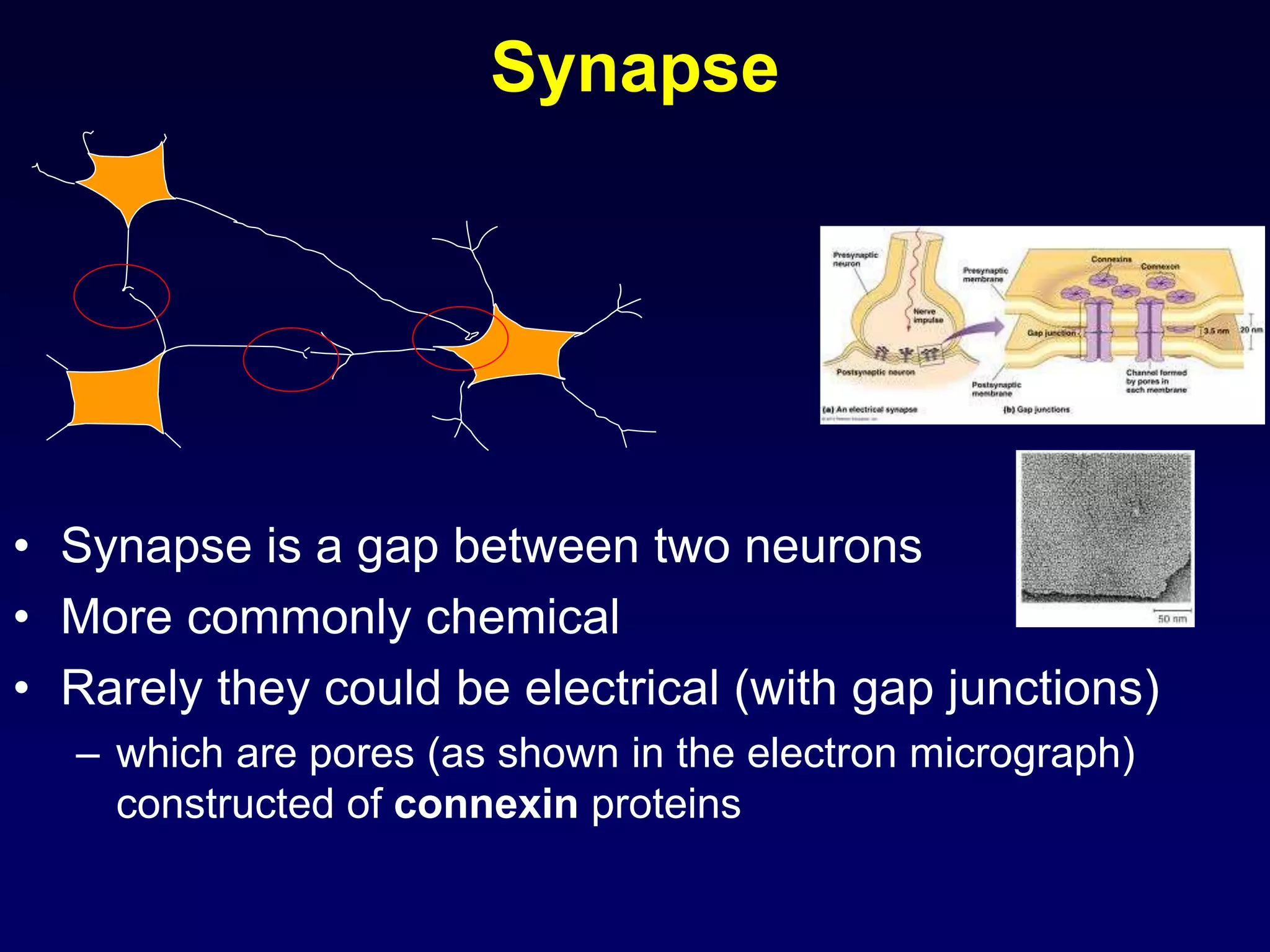
Synapse
• Synapse is a gap between two neurons
• More commonly chemical
• Rarely they could be electrical (with gap junctions)
– which are pores (as shown in the electron micrograph)
constructed of connexin proteins
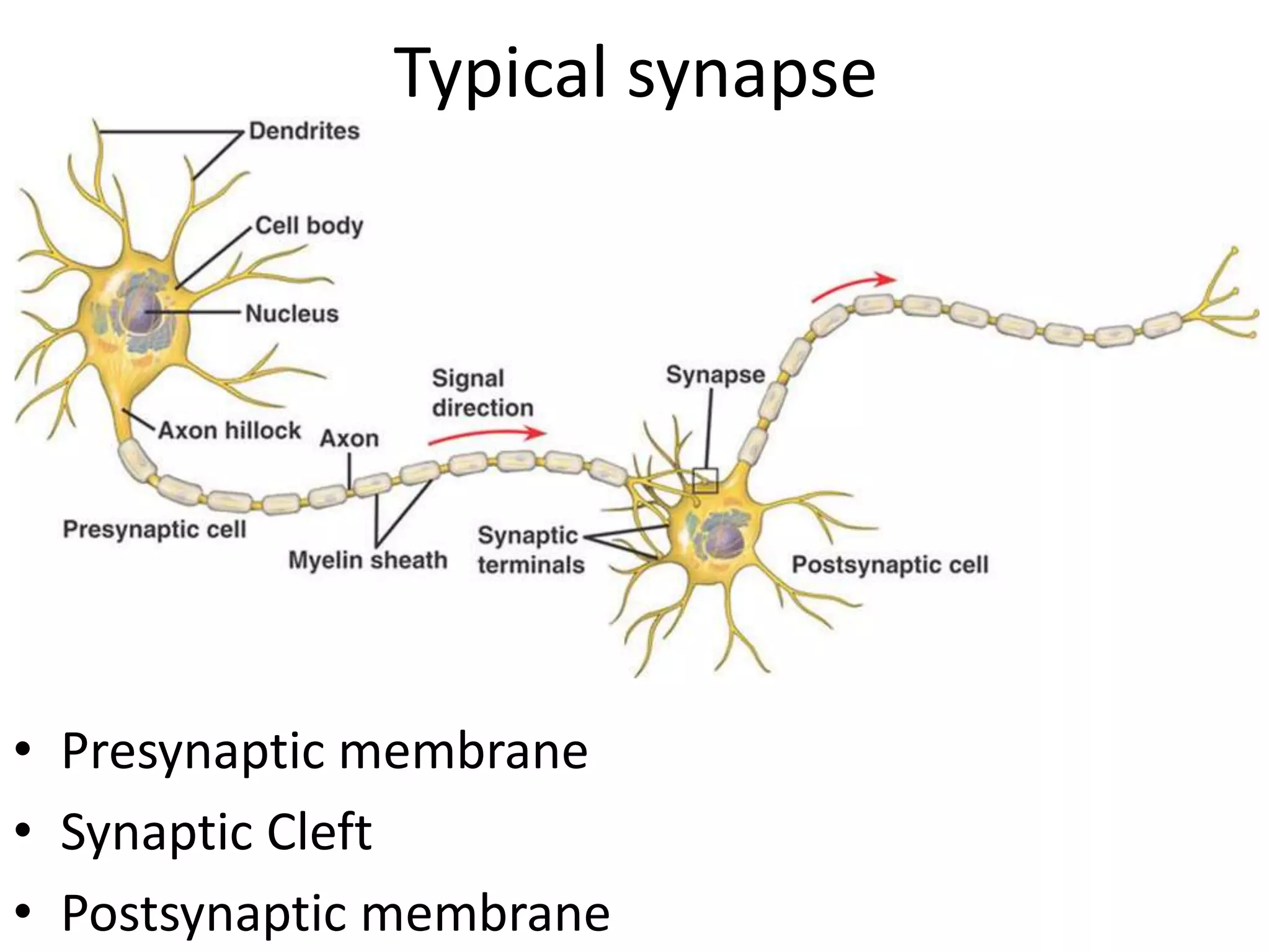
Typical synapse
• Presynaptic membrane
• Synaptic Cleft
• Postsynaptic membrane
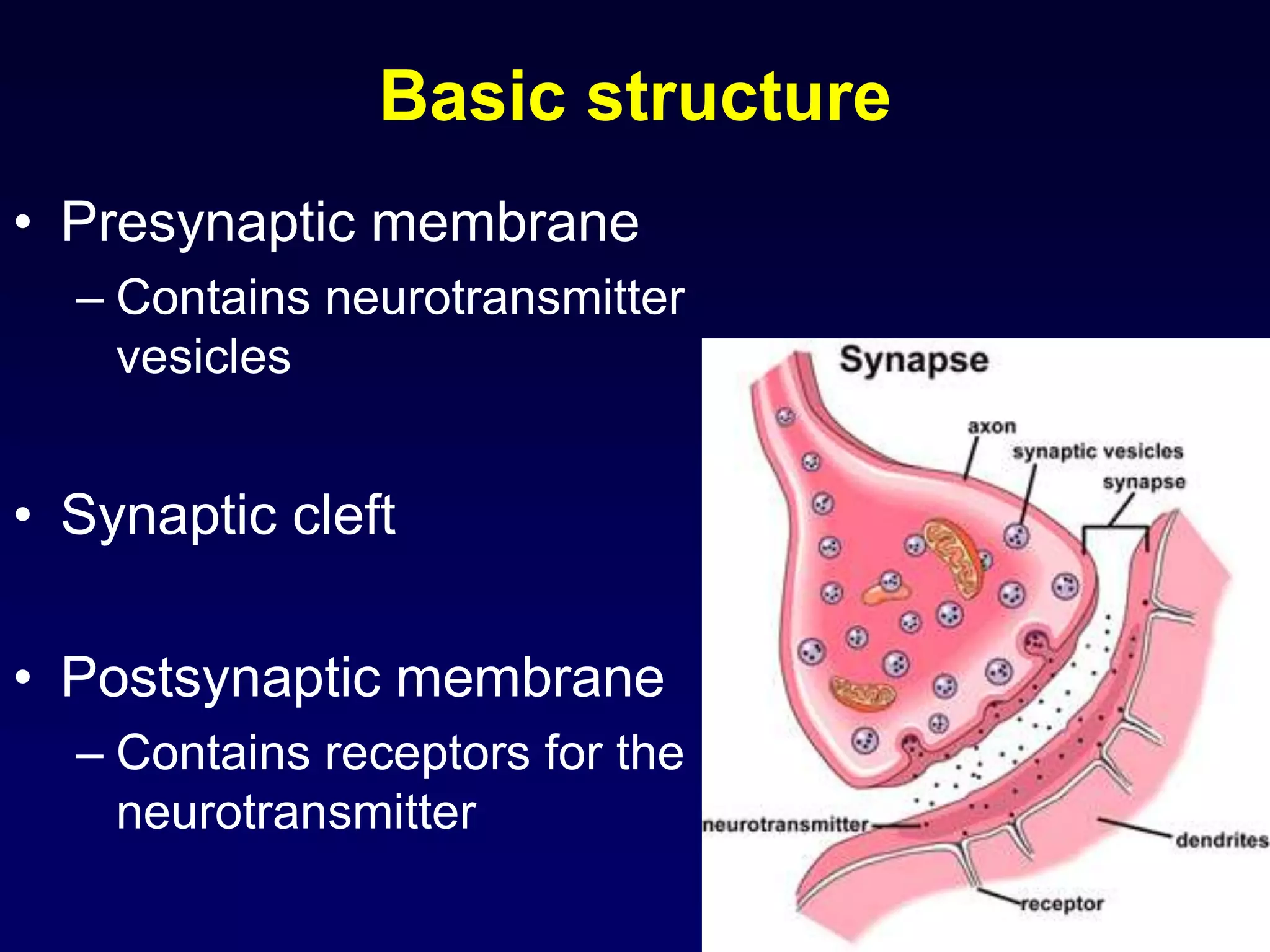
Basic structure
• Presynaptic membrane
– Contains neurotransmitter
vesicles
• Synaptic cleft
• Postsynaptic membrane
– Contains receptors for the
neurotransmitter
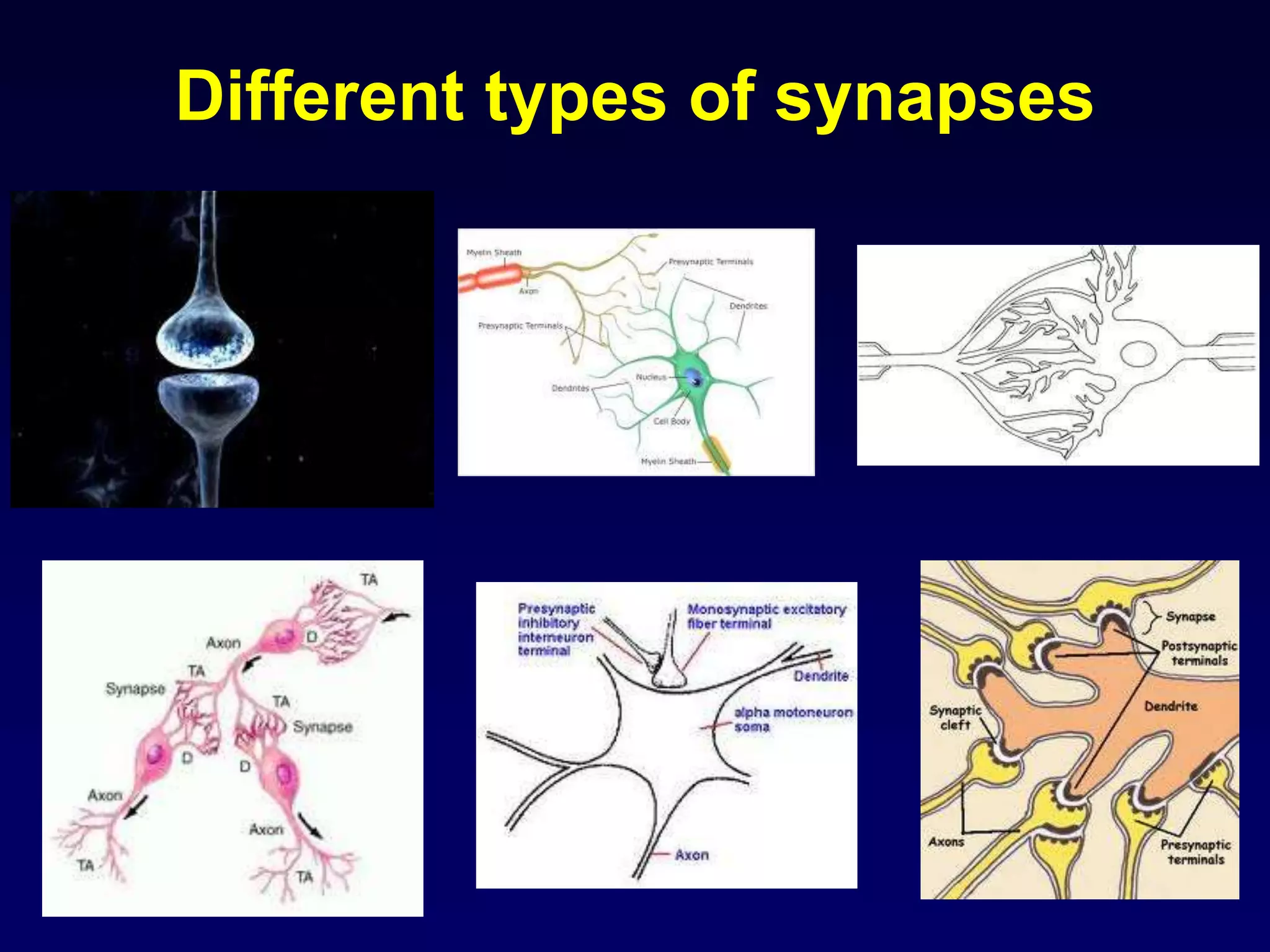
Different types of synapses
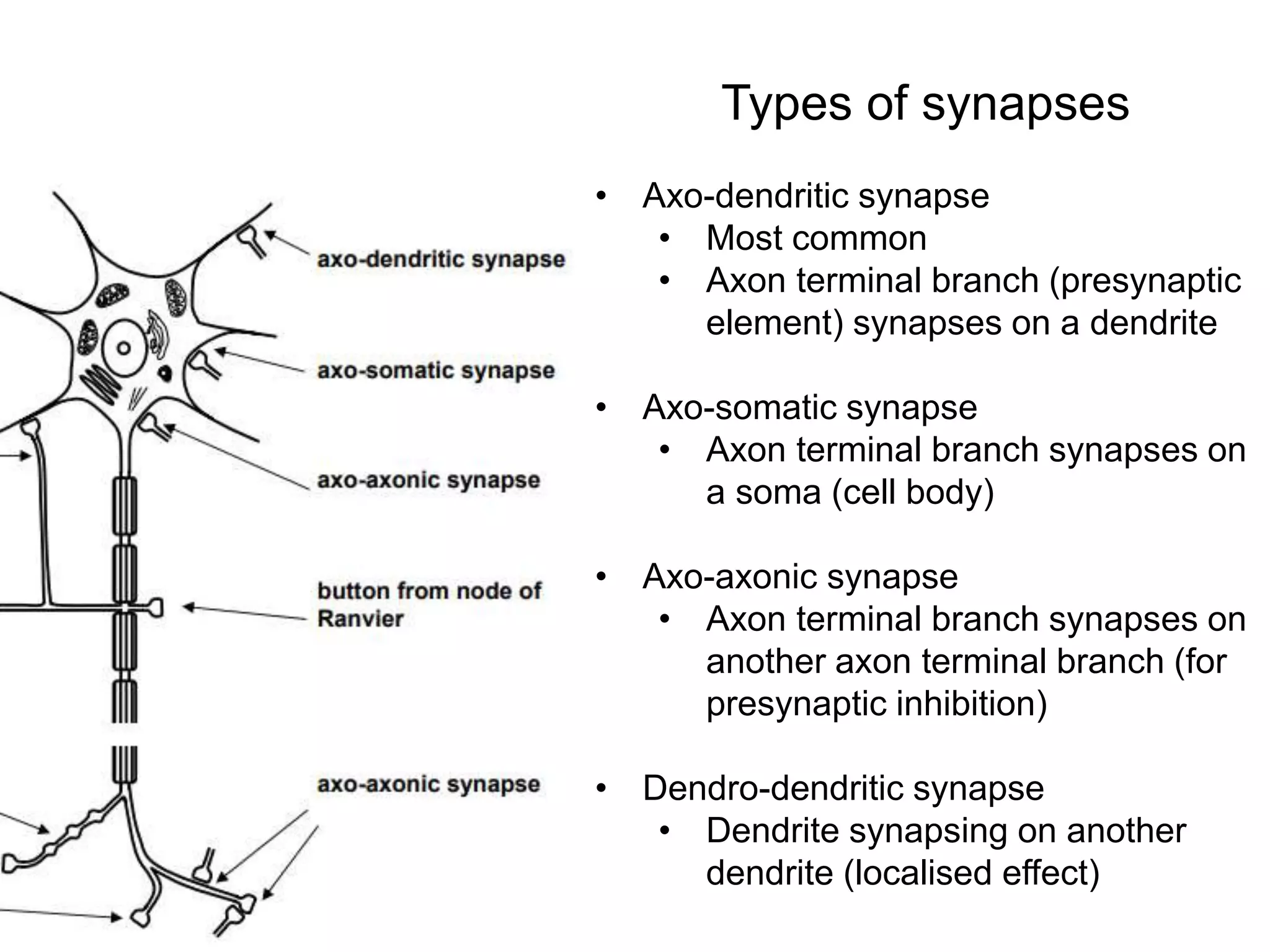
Types of synapses
• Axo-dendritic synapse
• Most common
• Axon terminal branch (presynaptic
element) synapses on a dendrite
• Axo-somatic synapse
• Axon terminal branch synapses on
a soma (cell body)
• Axo-axonic synapse
• Axon terminal branch synapses on
another axon terminal branch (for
presynaptic inhibition)
• Dendro-dendritic synapse
• Dendrite synapsing on another
dendrite (localised effect)
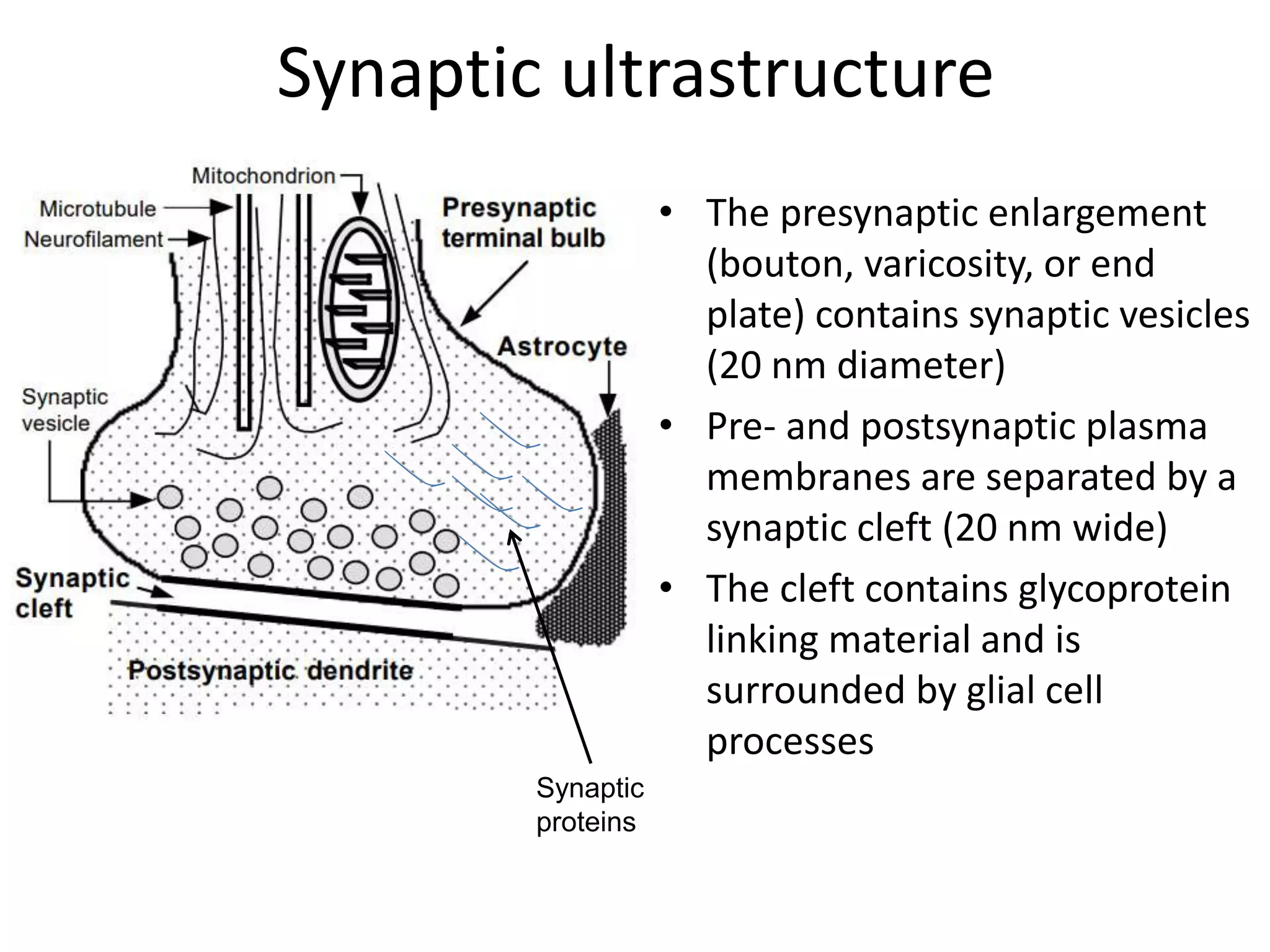
Synaptic ultrastructure
• The presynaptic enlargement
(bouton, varicosity, or end
plate) contains synaptic vesicles
(20 nm diameter)
• Pre- and postsynaptic plasma
membranes are separated by a
synaptic cleft (20 nm wide)
• The cleft contains glycoprotein
linking material and is
surrounded by glial cell
processes
Synaptic
proteins
Presynaptic events
• Presynaptic membrane contains voltage gated
calcium channels
• Membrane depolarisation opens up Ca2+ channels
• Ca2+ influx will occur
• Neurotransmitter molecules are released in
proportion to the amount of Ca2+ influx, in turn
proportional to the amount of presynaptic
membrane depolarization
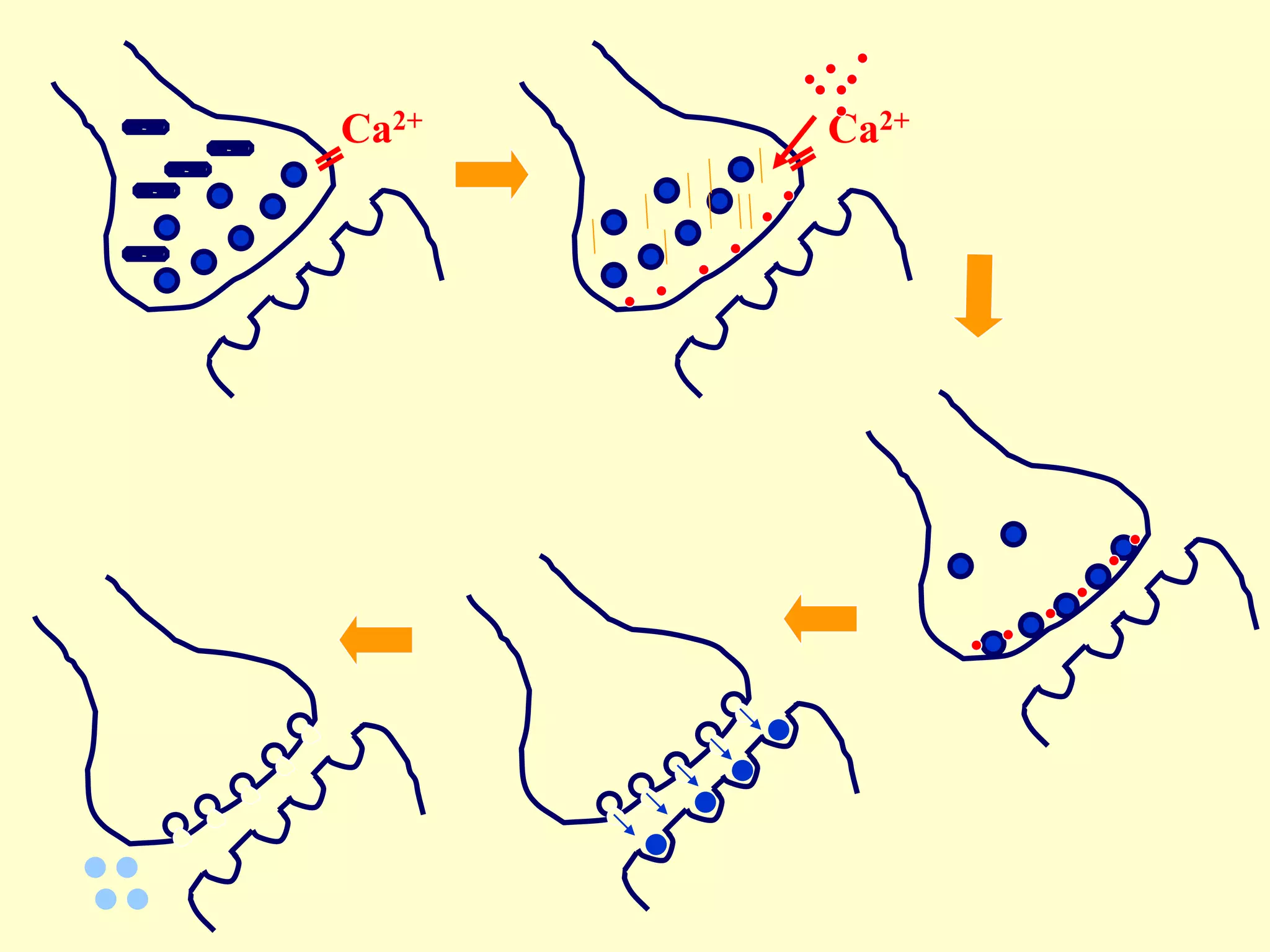
Details of presynaptic events
• in the resting state, the presynaptic membrane has resting membrane potential
• when an action potential arrives at the end of the axon
• the adjacent presynaptic membrane is depolarised
• voltage-gated Ca2+ channels open and allow Ca2+ influx (driven by [Ca2+] gradient)
• elevated [Ca2+] activates synaptic proteins
(SNARE proteins: Synaptobrevin, Syntaxin, SNAP 25) and triggers vesicle
mobilization and docking with the plasma membrane
• vesicles fuse with presynaptic plasma membrane and release neurotransmitter
molecules (about 5,000 per vesicle) by exocytosis
• neurotransmitter molecules diffuse across the cleft & bind with postsynaptic
receptor proteins
• neurotransmitter molecules are eliminated from synaptic clefts via pinocytotic
uptake by presynaptic or glial processes and/or via enzymatic degradation at the
postsynaptic membrane
• molecules are recycled
• subsequently, presynaptic plasma membrane repolarises
Ca2+ Ca2+
Neurotransmitter receptors
• Once released, the neurotransmitter molecules diffuse across
the synaptic cleft
• When they “arrive” at the postsynaptic membrane, they bind to
neurotransmitter receptors
• Two main classes of receptors:
– Ionotropic receptors
– Metabotropic receptors
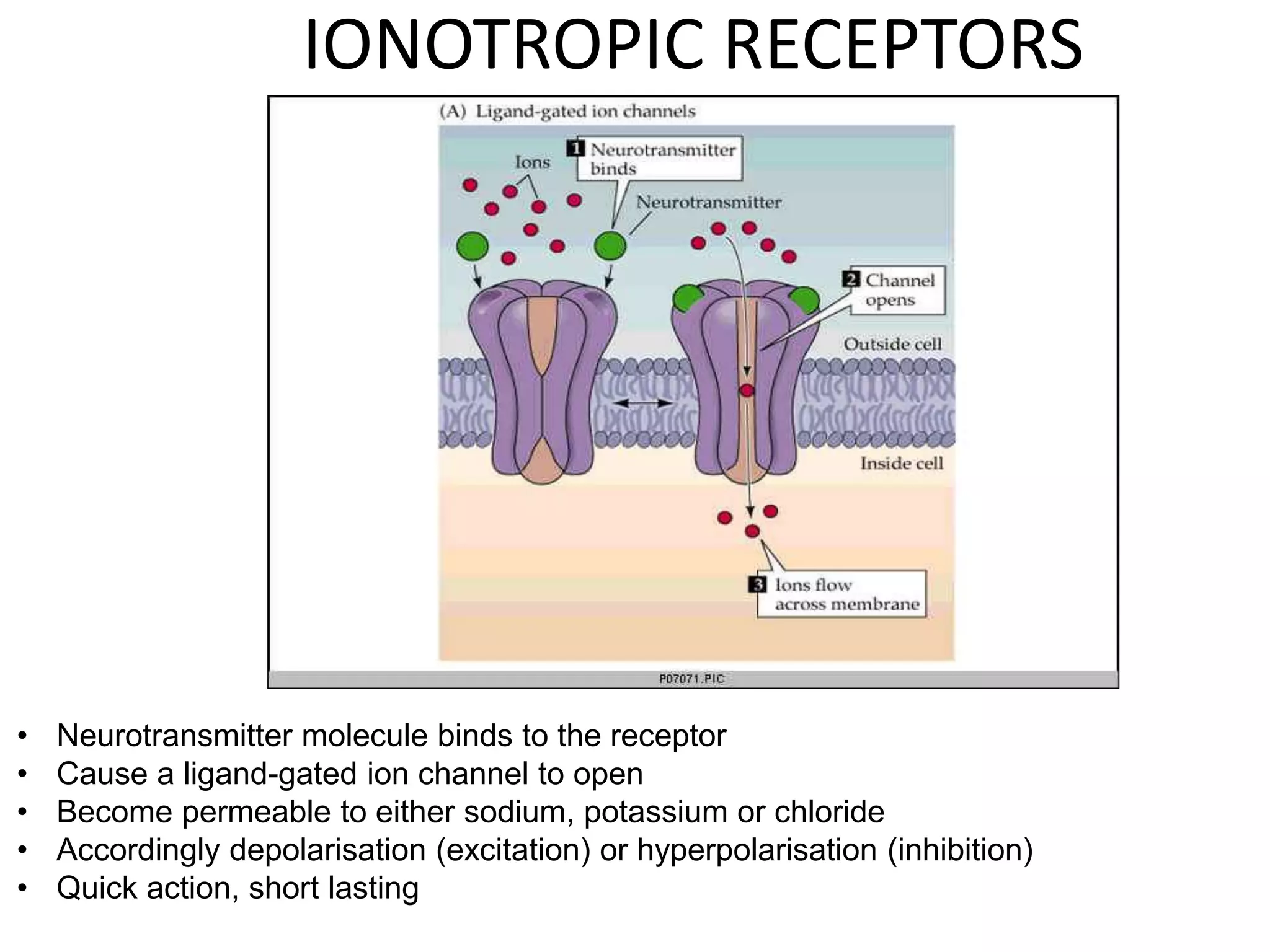
IONOTROPIC RECEPTORS
• Neurotransmitter molecule binds to the receptor
• Cause a ligand-gated ion channel to open
• Become permeable to either sodium, potassium or chloride
• Accordingly depolarisation (excitation) or hyperpolarisation (inhibition)
• Quick action, short lasting
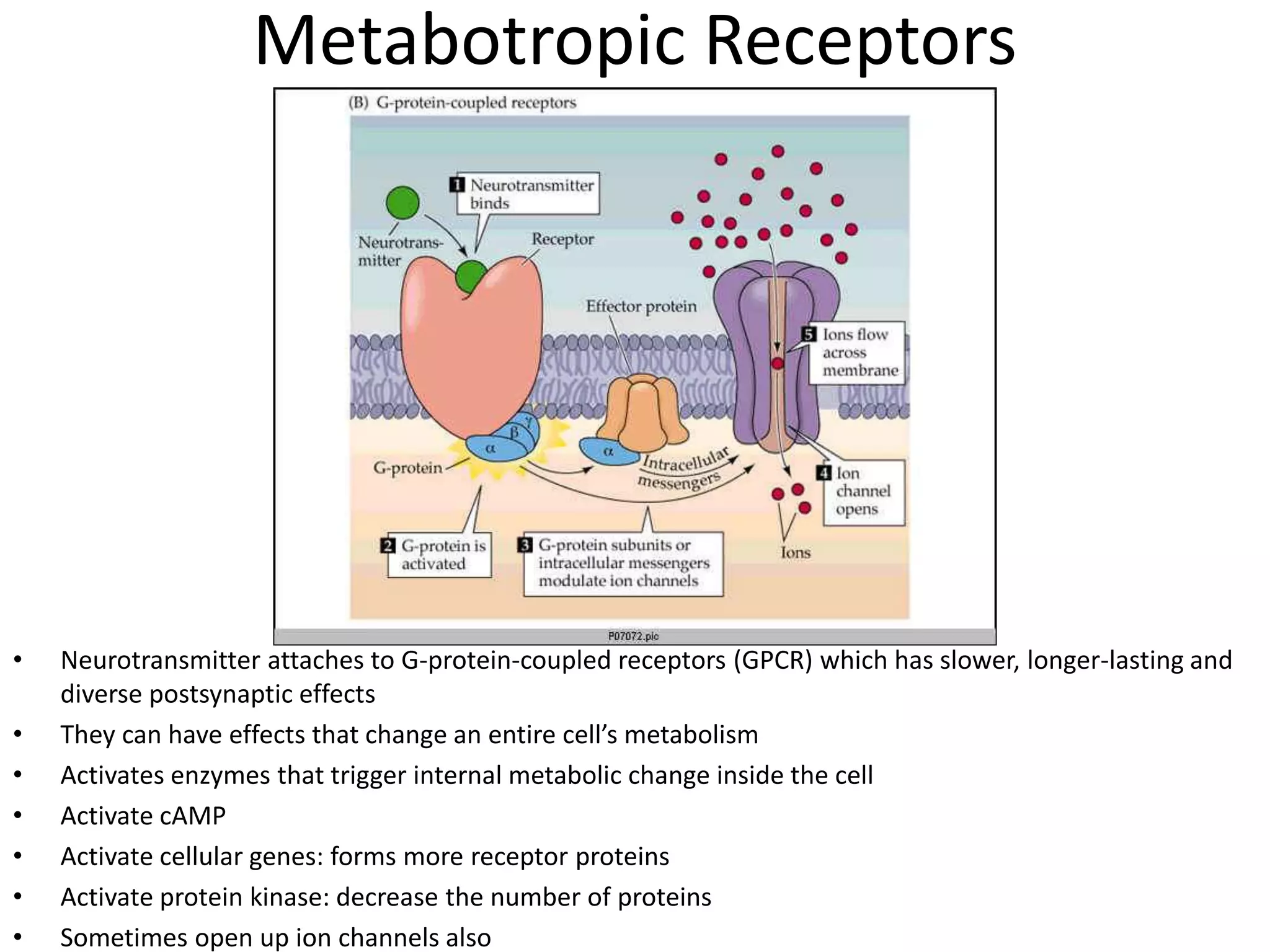
• Neurotransmitter attaches to G-protein-coupled receptors (GPCR) which has slower, longer-lasting and
diverse postsynaptic effects
• They can have effects that change an entire cell’s metabolism
• Activates enzymes that trigger internal metabolic change inside the cell
• Activate cAMP
• Activate cellular genes: forms more receptor proteins
• Activate protein kinase: decrease the number of proteins
• Sometimes open up ion channels also
Metabotropic Receptors
• Excitation
– 1. Na+ influx cause accumulation of positive charges
causing excitation (eg. Nicotinic Ach receptor)
– 2. Decreased K+ efflux or Cl- influx
– 3. various internal changes to excite cell, increase
in excitatory receptors, decrease in inhibitory
receptors.
• Inhibition
– 1. Efflux of K+
– 2. Influx of Cl- (eg. GABA A receptor)
– 3. activation of receptor enzymes to inhibit
metabolic functions or to increase inhibitory
receptors or decrease excitatory receptors
• Excitatory effects of neurotransmitters
– EPSP: excitatory post synaptic potential
• Inhibitory effects of neurotransmitters
– IPSP: inhibitory post synaptic potential
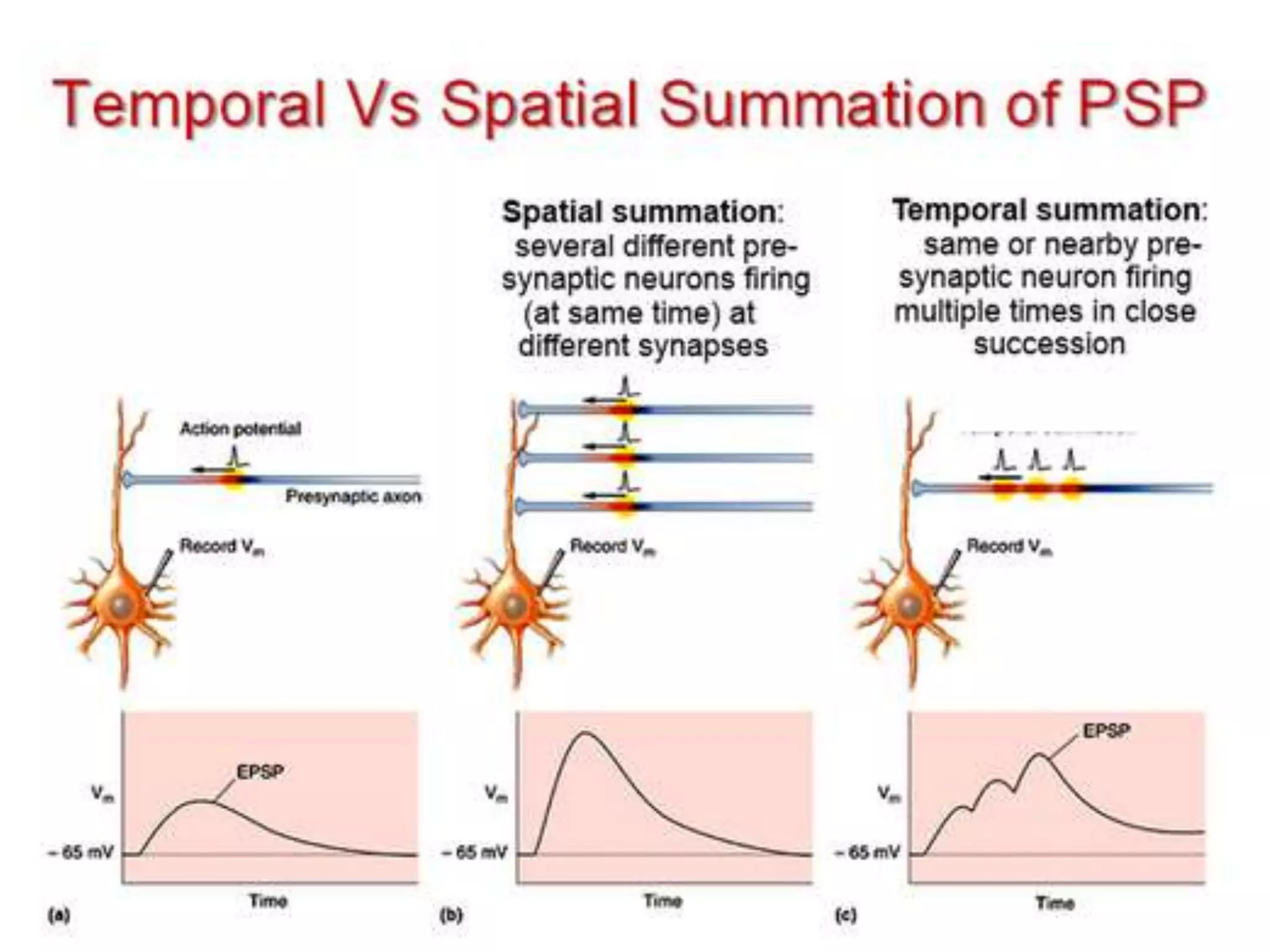
Postsynaptic activity
• Synaptic integration
– On average, each neuron in the brain receives about 10,000
synaptic connections from other neurons
– Many (but probably not all) of these connections may be
active at any given time
– Each neuron produces only one output
– One single input is usually not sufficient to trigger this output
– The neuron must integrate a large number of synaptic inputs
and “decide” whether to produce an output or not
– Constant interplay of excitatory and inhibitory activity on the
postsynaptic neuron produces a fluctuating membrane
potential that is the algebraic sum of the hyperpolarizing and
depolarizing activities
– Soma of the neuron thus acts as an integrator
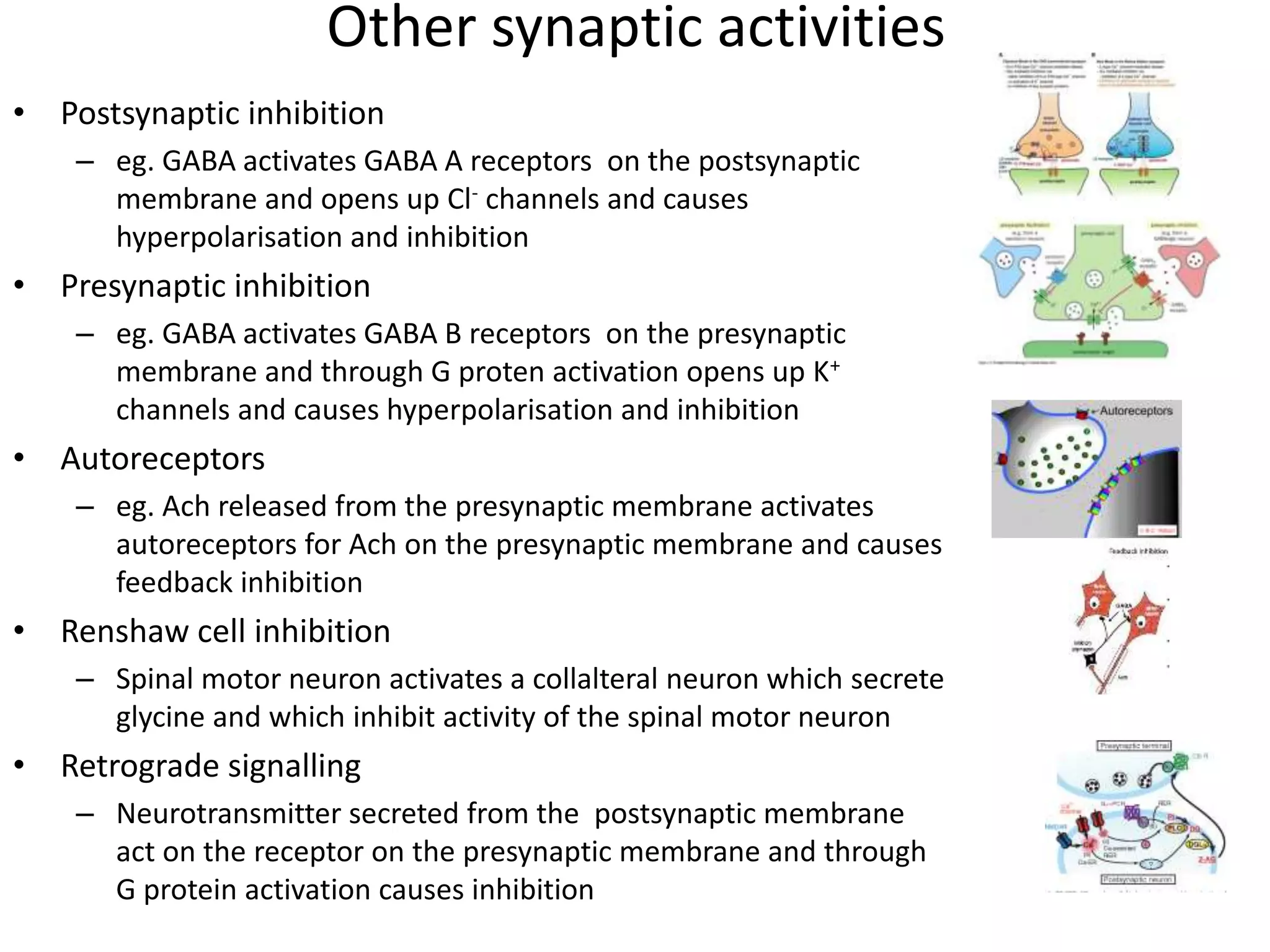
Other synaptic activities
• Postsynaptic inhibition
– eg. GABA activates GABA A receptors on the postsynaptic
membrane and opens up Cl- channels and causes
hyperpolarisation and inhibition
• Presynaptic inhibition
– eg. GABA activates GABA B receptors on the presynaptic
membrane and through G proten activation opens up K+
channels and causes hyperpolarisation and inhibition
• Autoreceptors
– eg. Ach released from the presynaptic membrane activates
autoreceptors for Ach on the presynaptic membrane and causes
feedback inhibition
• Renshaw cell inhibition
– Spinal motor neuron activates a collalteral neuron which secrete
glycine and which inhibit activity of the spinal motor neuron
• Retrograde signalling
– Neurotransmitter secreted from the postsynaptic membrane
act on the receptor on the presynaptic membrane and through
G protein activation causes inhibition
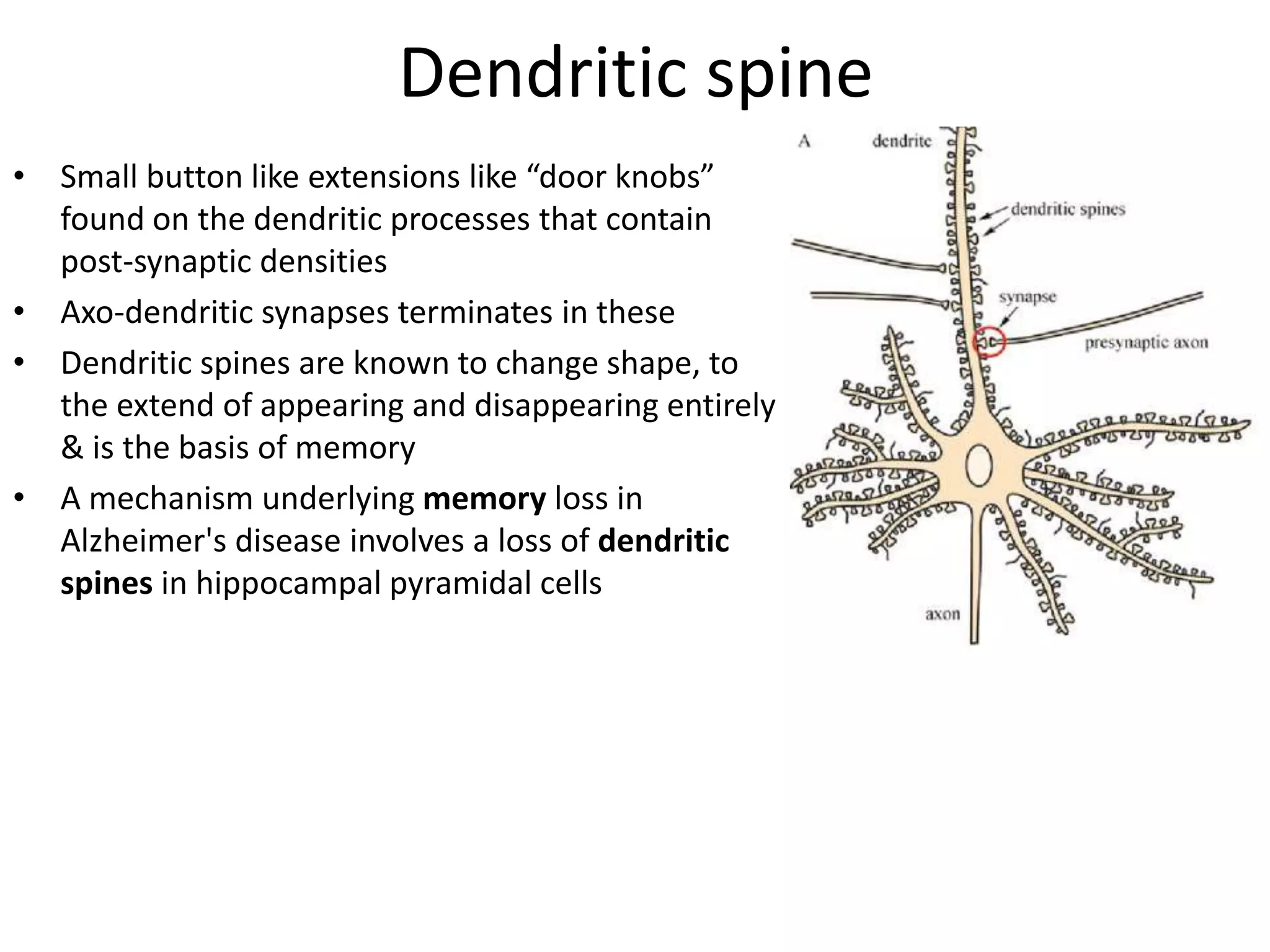
Dendritic spine
• Small button like extensions like “door knobs”
found on the dendritic processes that contain
post-synaptic densities
• Axo-dendritic synapses terminates in these
• Dendritic spines are known to change shape, to
the extend of appearing and disappearing entirely
& is the basis of memory
• A mechanism underlying memory loss in
Alzheimer's disease involves a loss of dendritic
spines in hippocampal pyramidal cells
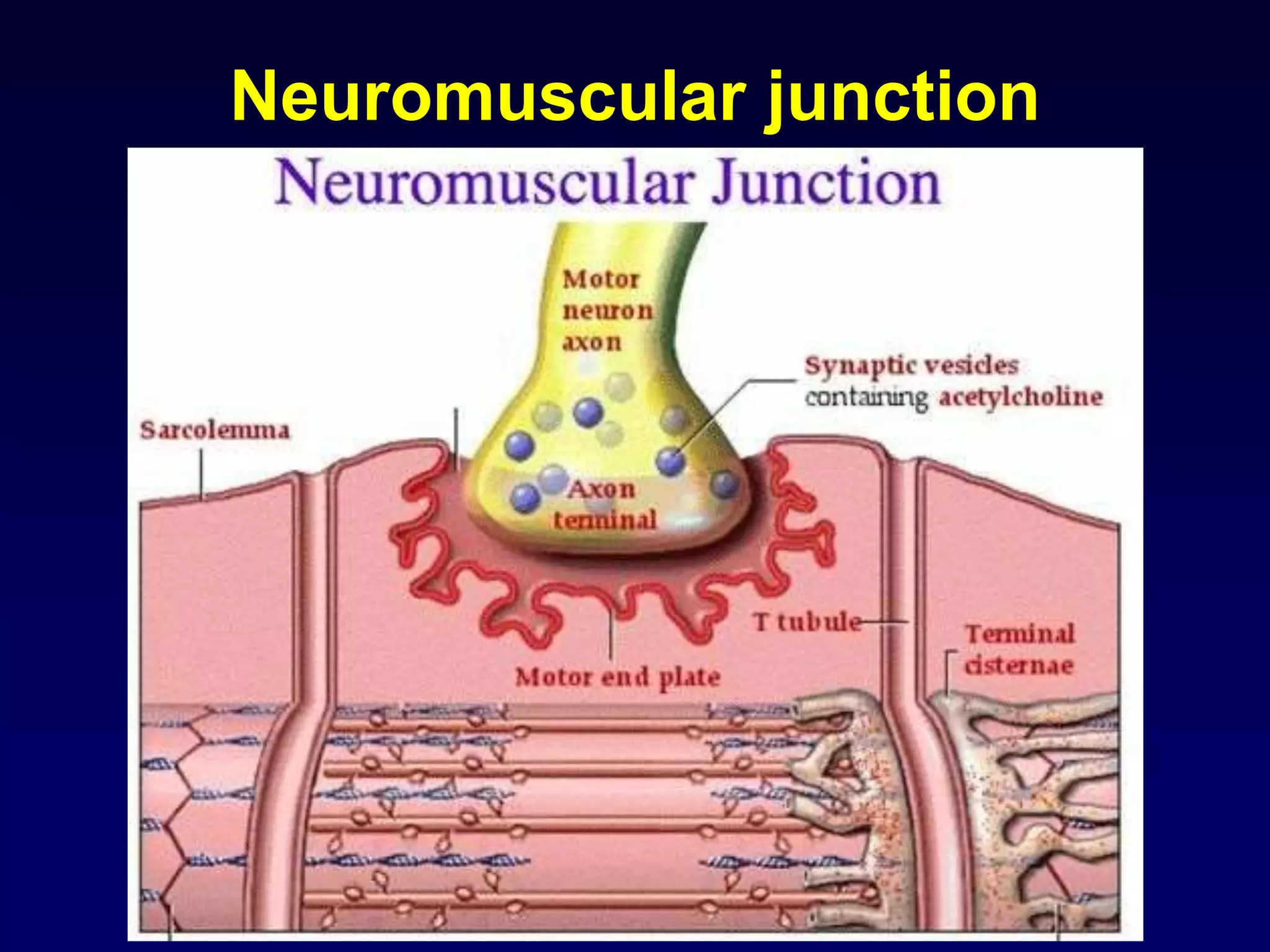
Neuromuscular junction
NMJ function
• Pre-synaptic membrane
• Ca2+ channels
• SNARE proteins
• Acetylcholine release
• Postsynaptic membrane
• Acetylcholine receptors
• Ligand-gated Na+ channels
• Synaptic cleft
• cholinesterase
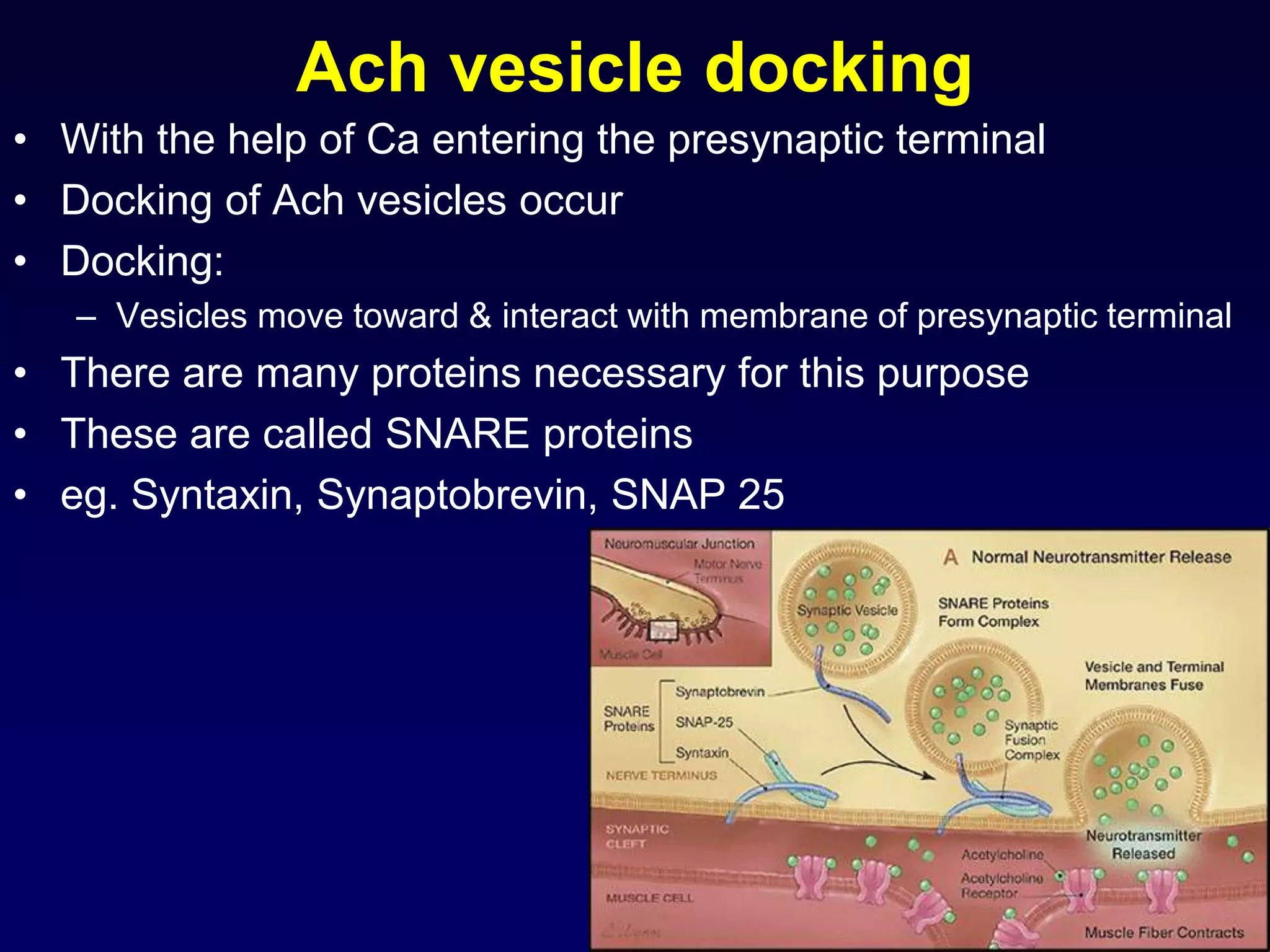
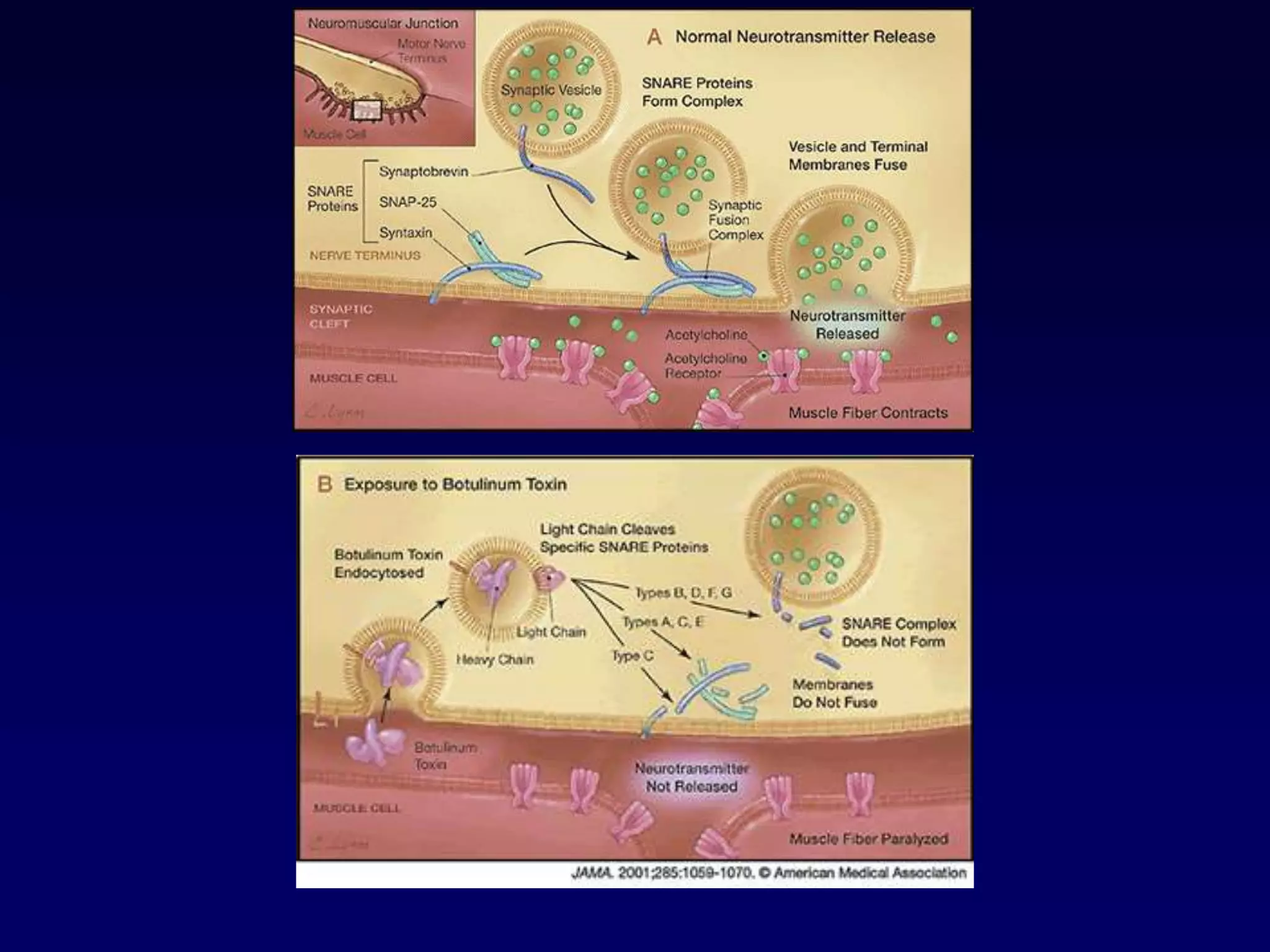
Ach vesicle docking
• With the help of Ca entering the presynaptic terminal
• Docking of Ach vesicles occur
• Docking:
– Vesicles move toward & interact with membrane of presynaptic terminal
• There are many proteins necessary for this purpose
• These are called SNARE proteins
• eg. Syntaxin, Synaptobrevin, SNAP 25
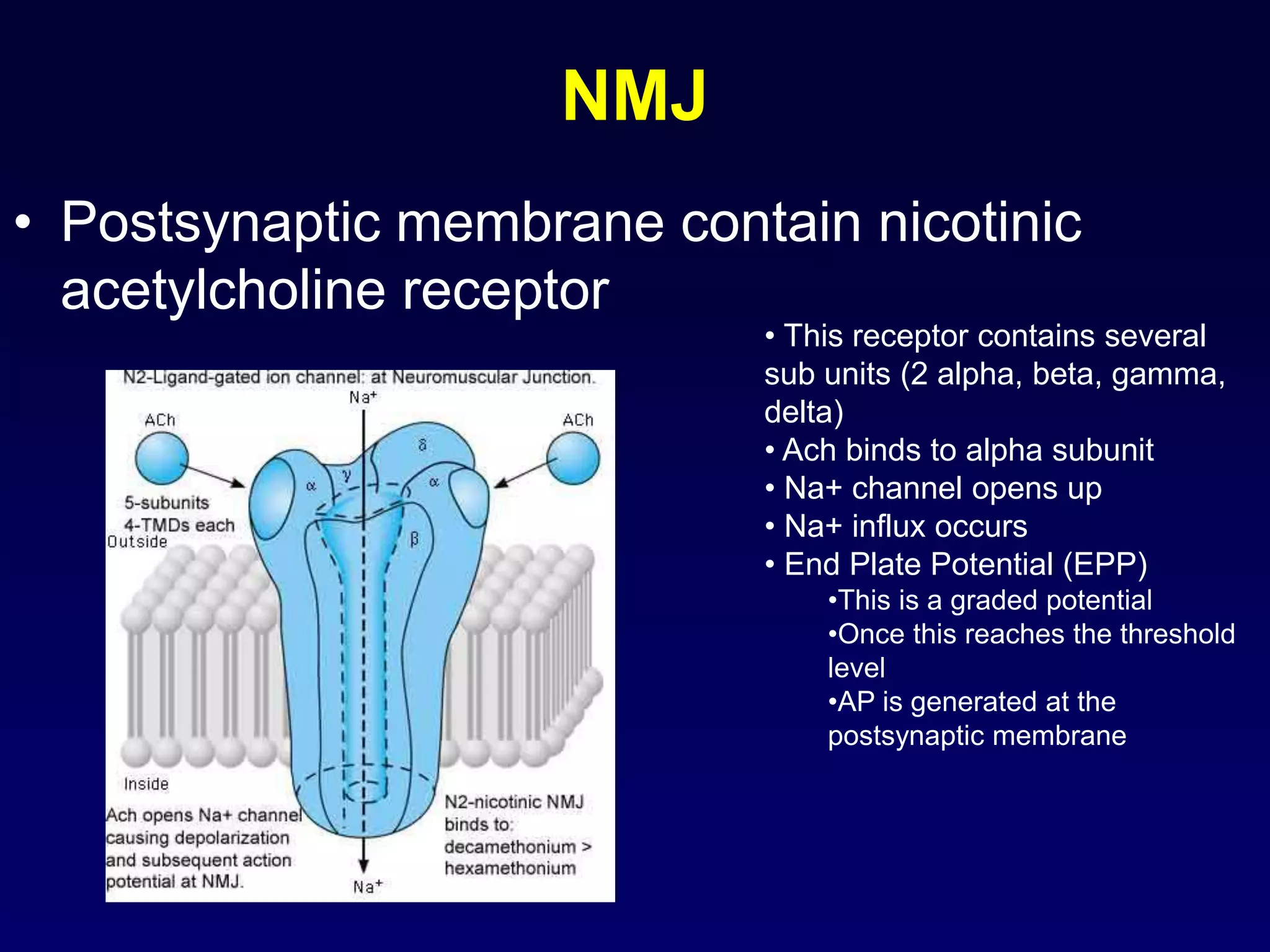
NMJ
• Postsynaptic membrane contain nicotinic
acetylcholine receptor
• This receptor contains several
sub units (2 alpha, beta, gamma,
delta)
• Ach binds to alpha subunit
• Na+ channel opens up
• Na+ influx occurs
• End Plate Potential (EPP)
•This is a graded potential
•Once this reaches the threshold
level
•AP is generated at the
postsynaptic membrane
NMJ blocking
• Useful in general anaesthesia to facilitate inserting tubes
• Muscle paralysis is useful in performing surgery
• Commonly used to paralyze patients requiring intubation
whether in an emergency as a life-saving intervention or for a
scheduled surgery and procedure
• Indications for intubation during an emergency
– failure to maintain or protect the airway
– failure to adequately ventilate or oxygenate
– anticipation of a decline in clinical status
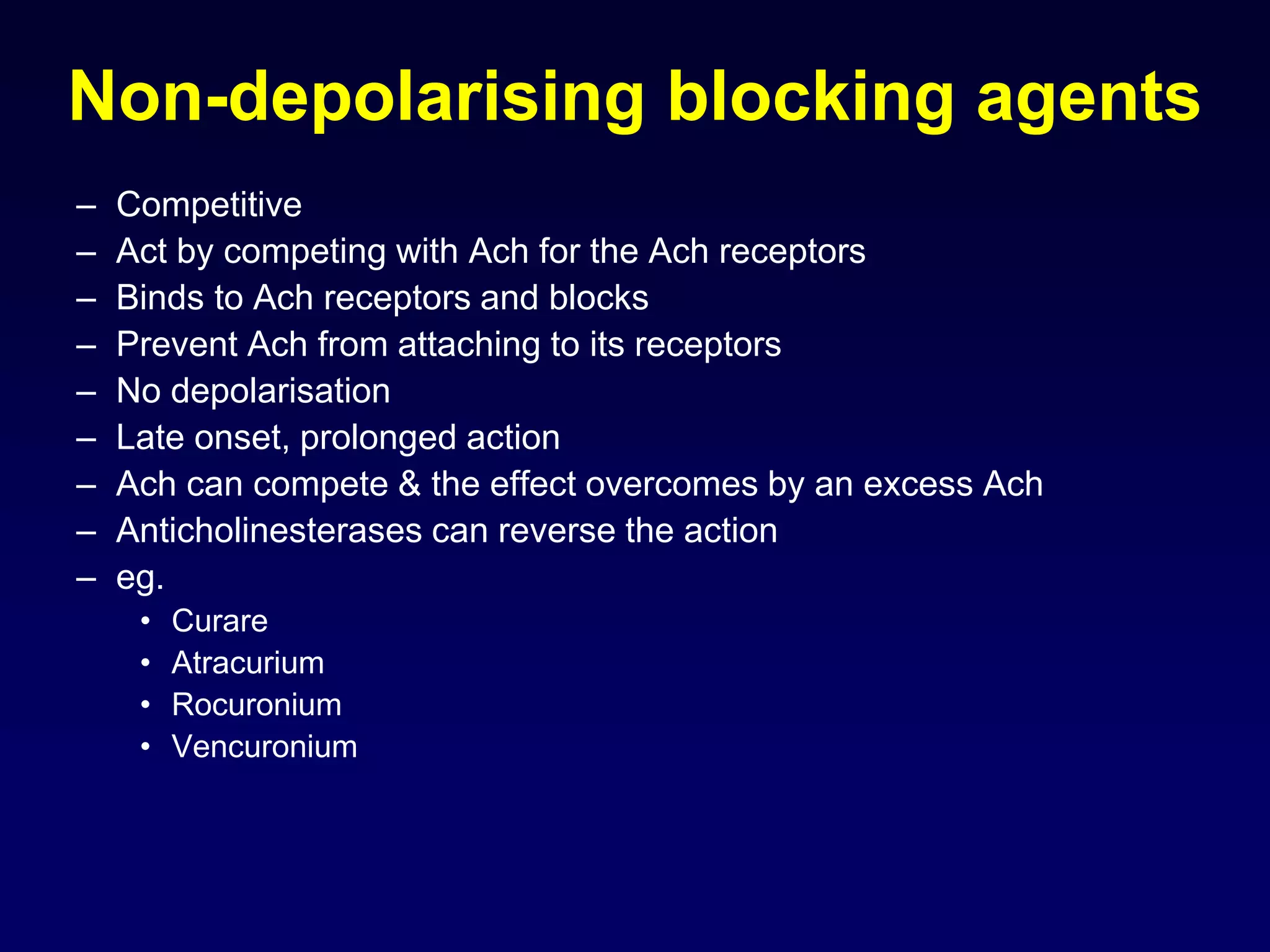
Earliest known NMJ blocker - Curare
• Curare has long been used in South America as
an extremely potent arrow poison
• Darts were tipped with curare and then
accurately fired through blowguns made of
bamboo
• Death for birds would take one to two minutes,
small mammals up to ten minutes, and large
mammals up to 20 minutes
• NMJ blocker used in patients is tubocurarine
Non-depolarising blocking agents
– Competitive
– Act by competing with Ach for the Ach receptors
– Binds to Ach receptors and blocks
– Prevent Ach from attaching to its receptors
– No depolarisation
– Late onset, prolonged action
– Ach can compete & the effect overcomes by an excess Ach
– Anticholinesterases can reverse the action
– eg.
• Curare
• Atracurium
• Rocuronium
• Vencuronium
Depolarising blocking agents
– Non-competitive, chemically act like Ach
– Bind to motor end plate and once depolarises
– Persistent depolarisation leads to a block
• Due to inactivation of Na channels
– Phase I block
• After a depolarizing agent binds to the motor end plate receptor, the agent
remains bound and thus the end plate cannot repolarize
• during this depolarizing phase the transient muscle fasciculation occur
– Phase II block
• After adequate depolarization has occurred, phase II (desensitizing phase)
sets in and the muscles are no longer receptive to acetylcholine released by
the motor neurons
• It is at this point that the depolarizing agent has fully achieved paralysis
– Ach cannot compete
– Quick action start within 30 sec, recover within 3 min and is complete
within 12–15 min
– eg. Succinylcholine
Anticholinesterases
• AchE inhibitors
– Inhibit AchE so that Ach accumulates and causes
depolarising block
• Reversible
– Competitive inhibitors of AChE
• eg. physostigmine, neostigmine, edrophonium used to diagnose and
treat myasthenia
• Irreversible
– Binds to AChE irreversibly
• eg. Insecticides (organophosphates), nerve gases (sarin)
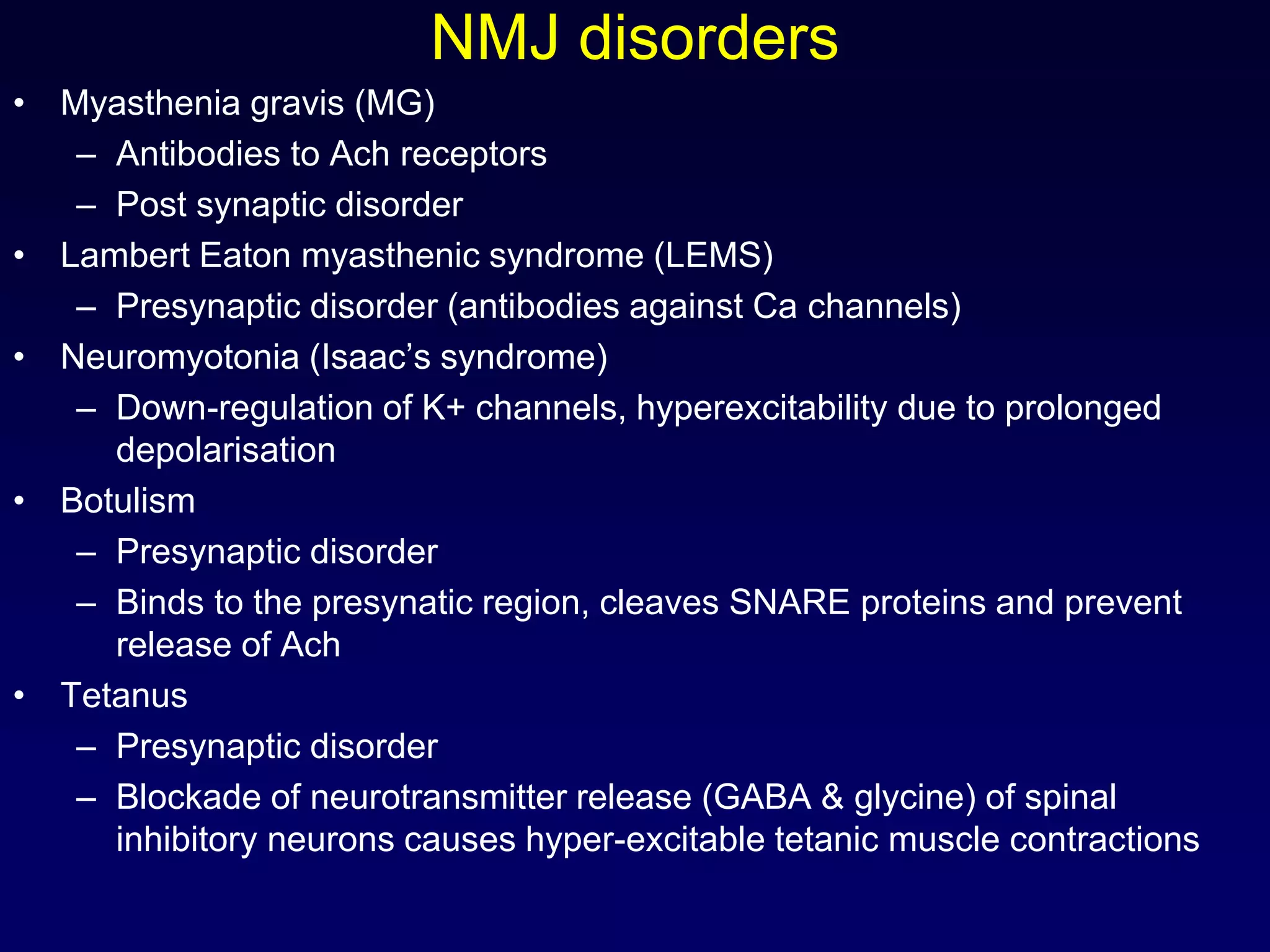
NMJ disorders
• Myasthenia gravis (MG)
– Antibodies to Ach receptors
– Post synaptic disorder
• Lambert Eaton myasthenic syndrome (LEMS)
– Presynaptic disorder (antibodies against Ca channels)
• Neuromyotonia (Isaac’s syndrome)
– Down-regulation of K+ channels, hyperexcitability due to prolonged
depolarisation
• Botulism
– Presynaptic disorder
– Binds to the presynatic region, cleaves SNARE proteins and prevent
release of Ach
• Tetanus
– Presynaptic disorder
– Blockade of neurotransmitter release (GABA & glycine) of spinal
inhibitory neurons causes hyper-excitable tetanic muscle contractions
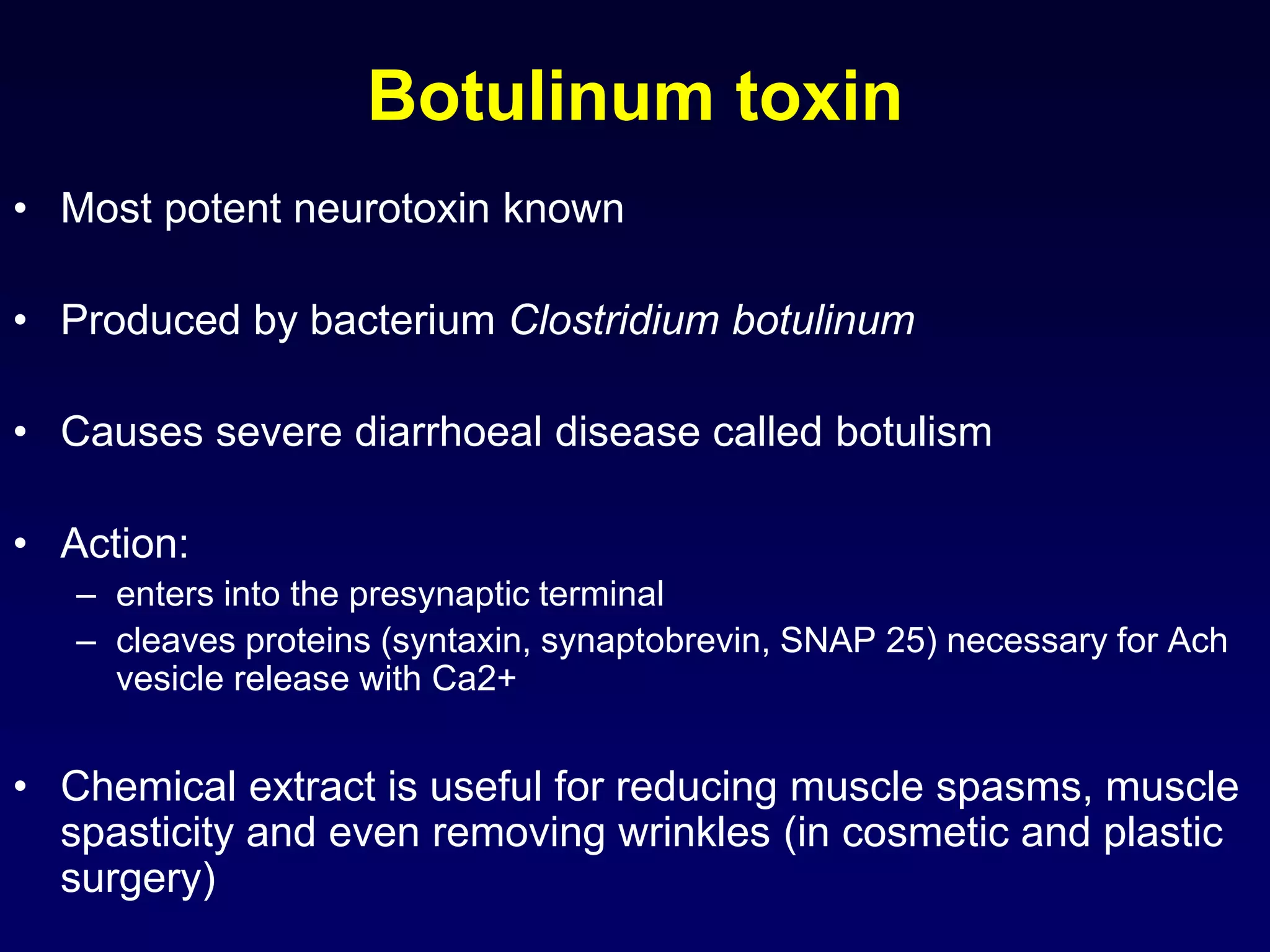
Botulinum toxin
• Most potent neurotoxin known
• Produced by bacterium Clostridium botulinum
• Causes severe diarrhoeal disease called botulism
• Action:
– enters into the presynaptic terminal
– cleaves proteins (syntaxin, synaptobrevin, SNAP 25) necessary for Ach
vesicle release with Ca2+
• Chemical extract is useful for reducing muscle spasms, muscle
spasticity and even removing wrinkles (in cosmetic and plastic
surgery)
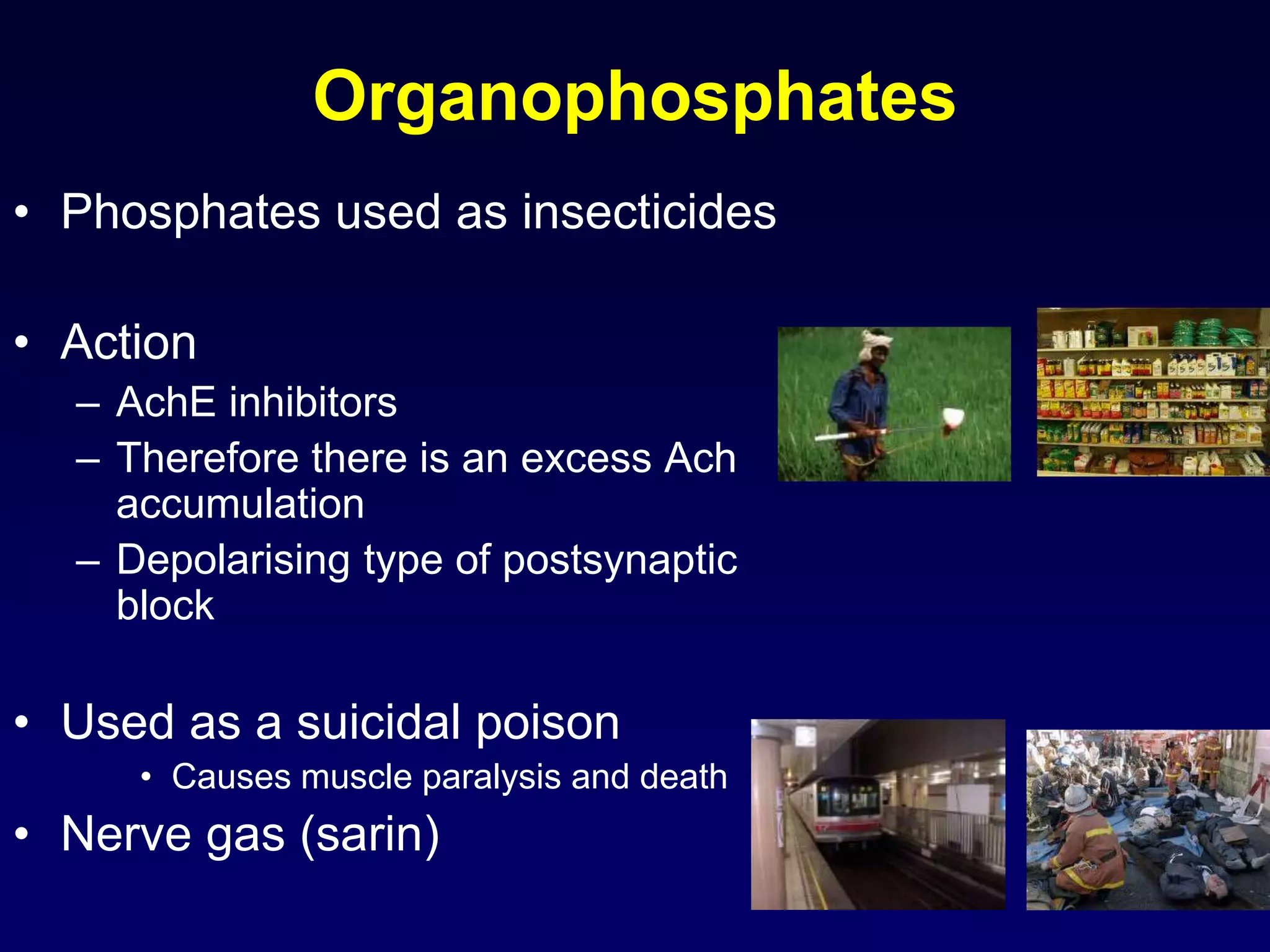
Organophosphates
• Phosphates used as insecticides
• Action
– AchE inhibitors
– Therefore there is an excess Ach
accumulation
– Depolarising type of postsynaptic
block
• Used as a suicidal poison
• Causes muscle paralysis and death
• Nerve gas (sarin)
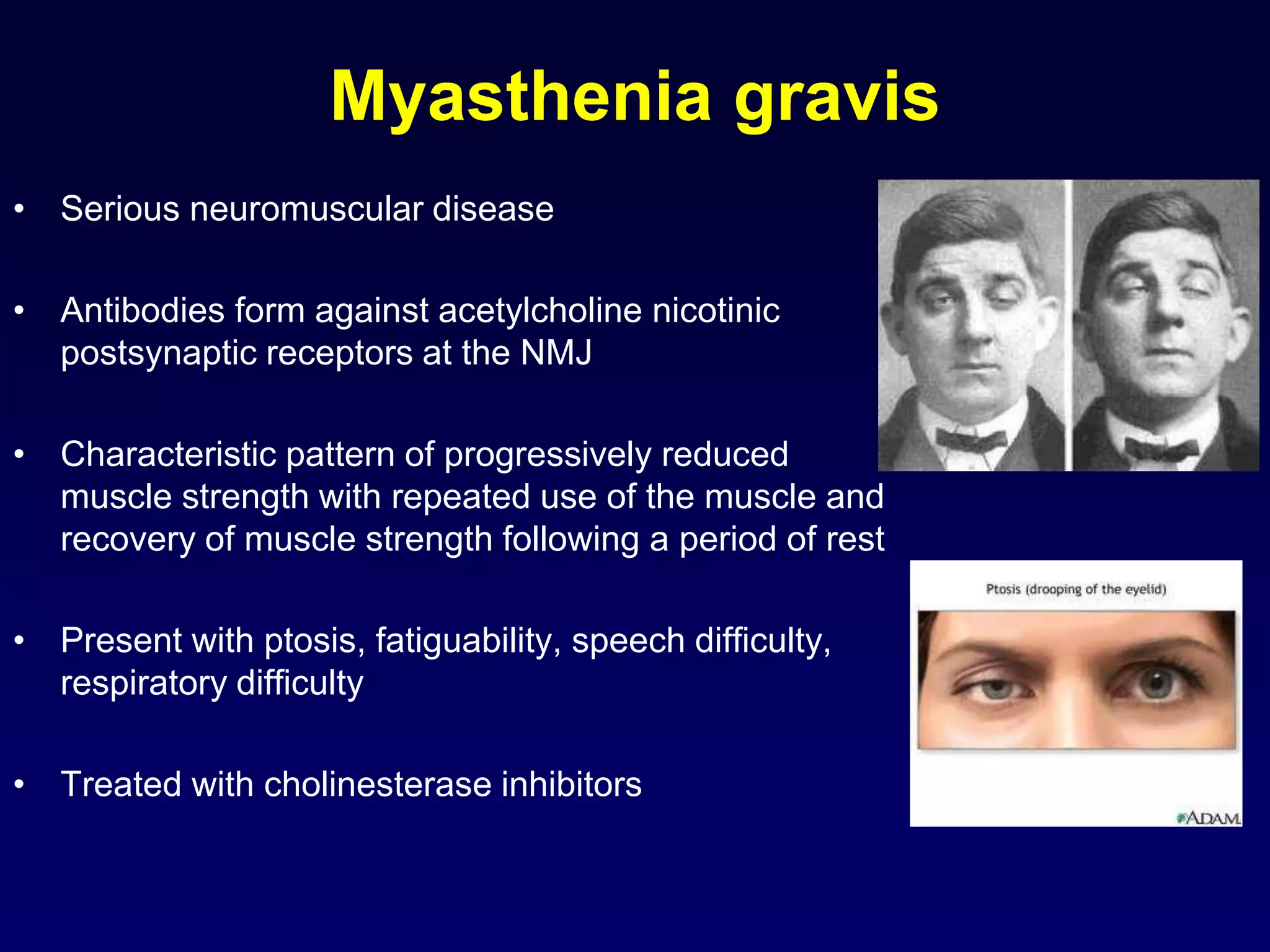
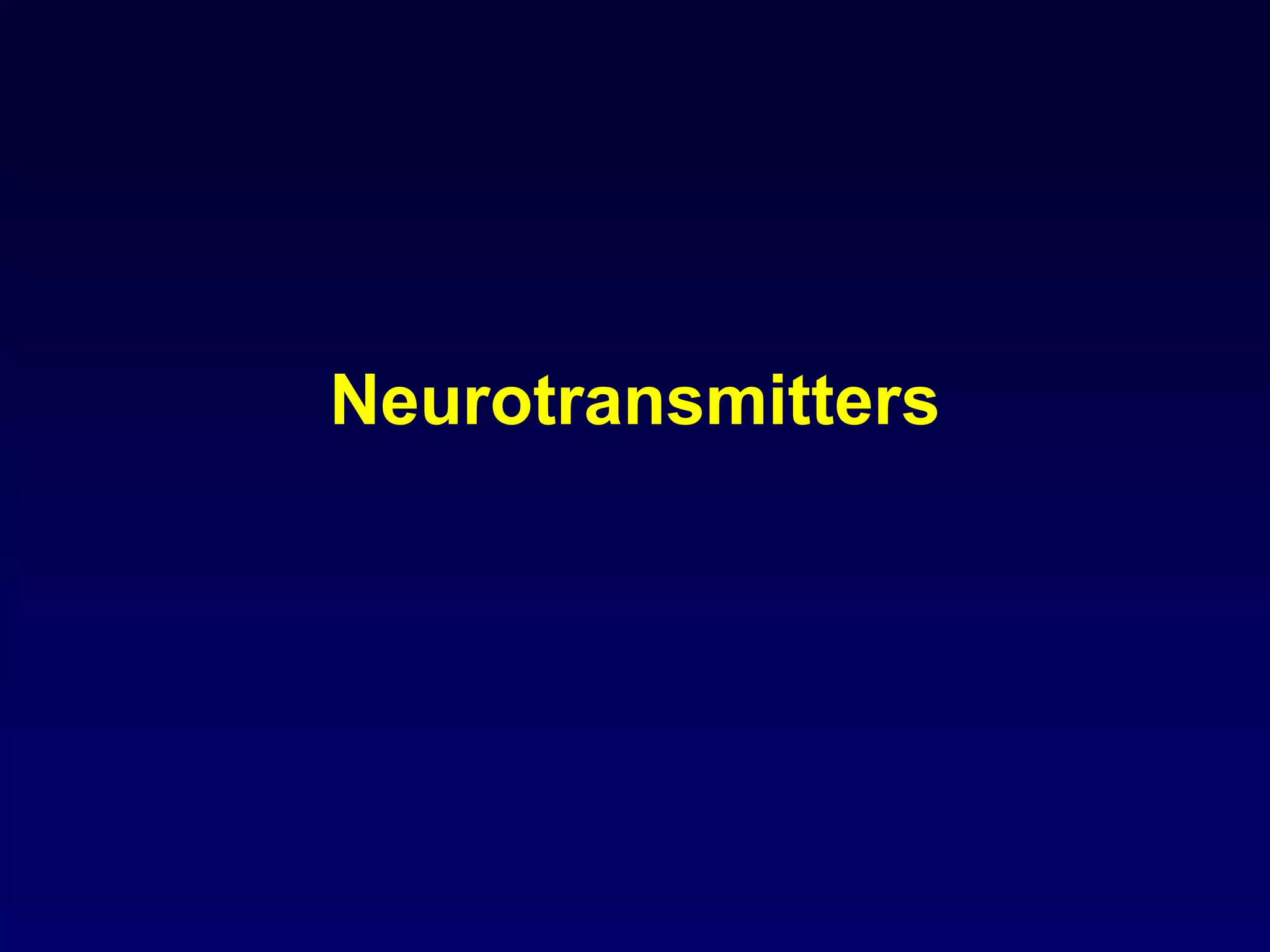
Myasthenia gravis
• Serious neuromuscular disease
• Antibodies form against acetylcholine nicotinic
postsynaptic receptors at the NMJ
• Characteristic pattern of progressively reduced
muscle strength with repeated use of the muscle and
recovery of muscle strength following a period of rest
• Present with ptosis, fatiguability, speech difficulty,
respiratory difficulty
• Treated with cholinesterase inhibitors
Neurotransmitters
Acetylcholine (Ach)
– First neurotransmitter discovered in 1914
– Secreting neurons are called cholinergic neurons
– Secreted at the neuromuscular junction (skeletal muscle contraction),
autonomic ganglia (both sympathetic and parasympathetic),
parasympathetic postganglionic nerve endings and in central pathways
in the basal forebrain and brainstem (memory, arousal, attention, rapid
eye movement (REM) sleep
– receptors
• nicotinic (NN: autonomic ganglia, NM: NMJ) – ionotropic receptors Na+ influx
• muscarinic (parasympathetc terminal)
» sub types: M1(brain), M2(heart), M3(glands, smooth muscle), M4, M5
» Metabotropic receptors with G protein and second messenger cAMP and K+
channel opening
– Agonist: nicotine, muscarine (toad poison)
– Inhibitors: NMJ blockers competitive: curare (plant poison), atracurium, depolarising: succinylcholine,
botulinum toxin (food poison), organophosphate (insecticide), atropine (muscarinic blocker), neostigmine
(AchE inhibitor)
– Loss of Ach neurons in Alzheimer’s patients: donepezil (anticholinesterase, increases Ach level)
– Pilocarpine (muscarinic chollinergic eye drops used in glaucoma)
Glutamate
– The most abundant and the main excitatory neurotransmitter in the brain
– Responsible for 75% excitatory neurotransmission in the CNS
– Ca2+ is necessary for release
– Reuptake to the presynaptic terminal by glutamate transporter or via glial cells
– receptors
• Ionotropic receptors: AMPA (Na+), Kainate (Na+), NMDA (Ca2+ and Na+)
• NMDA receptor is normally blocked by Mg2+
• When glutamate binds to AMPA receptors, Na channel open up, Na influx
occurs, membrane is depolarised, depolarisation removes Mg2+, then
glutamate and glycine binding to NMDA receptor will open up Na+ and Ca2+
channels, Ca2+ influx, activates protein kinases and several actions
• Metabotropic glutamate receptors: second messenger system, act thru
inositol phosphate and cAMP, present in presynaptic and postsynaptic
– Increased levels of glutamate causes neuronal excitotoxicity, known to be
involved in Alzheimer’s disease, NMDA antagonists are used as a treatment
– Aspartate is an agonist
– NMDA receptor activity is involved in memory processes known as long term
potentiation
– Glutamate is a mediator of pain impulse pathway, NMDA receptor antagonists
are used as pain reducing drugs
GABA
– Gamma amino butyric acid
– The main inhibitory neurotransmitter in the brain
– Responsible for 40% inhibitory neurotransmission in the CNS
– Present in both presynaptic and postsynaptic inhibition
– Reuptake up GABA transporter
– receptors
• GABA A receptor (ionotropic): postsynaptic, open up Cl- channel,
hyperpolarisation, inhibition, alcohol, antiepieptics (barbirurates),
benzodiazepine (diazepam), activate these receptors
• GABA B receptor (metabotropic): presynaptic , G protein coupled action,
increase K+ efflux, inhibit Ca2+ influx through presynaptic Ca2+ channels
• GABA C receptor is also known to be present
– Increased GABA activity causes sedative effect
– Main neurotransmitter which produces sleep
– GABA decreases serotonergic, noradrenergic, cholinergic and histaminergic
neuronal activity to cause Non-REM (rapid eye movement) sleep
Glycine
– An inhibitory neurotransmitter in the spinal cord
– It is also known to be present in retina
– Co-activates NMDA receptor with gulutamate
– It has ionotropic receptor: Activate Cl- channels and cause
hyperpolarisation
– Action of glycine is antagonised by strychnine
– Strychnine poisoning causes muscle spasms, convulsions
and muscle hyperactivity
– Reuptake by transporter
– Parallel circuits potentiate GABA inhibition
Norepinephrine & epinephrine
– present in the autonomic nerves, brain stem, hypothalamus, locus
ceruleus of the pons
– Reuptake by transporter
– Metabolised by MAO (monoamine oxidase); MAO inhibitors are used as
antidepressants
– Increases BP and HR
– Control the overall activity of the brain and the mood
– Excitatory or inhibitory depending on the receptor
– Receptors
• α1A, α1B, α1D, α2A, α2B, α2C, 1, 2, 3
– Metabotropic receptors G protein coupled, second messenger: cAMP or Ca2+
and protein kinase
• with norepinephrine having a greater affinity for α-adrenoceptors and
epinephrine for β-adrenoceptors
– Locus ceruleus is the principal site of norepinephrine in the brain,
involved in arousal, stress reaction, attention, sleep-wake cycle
Dopamine
– Dopamine (DA) is present in several important areas and pathways in the brain involved in
reward pathway
• Ventral tegmental area (VTA) of the midbrain
• Nucleus accumbens (NA) of basal forebrain (brain pleasure centre)
• Mesocortical pathway from midbrain to prefrontal cortex
• Mesolimbic pathway from midbrain to limbic system
• Nigrostriatal pathway from substantia nigra to striatum in the limbic system
– Involved in motor control, dopamine levels are low in Parkinson disease
– Involved in reward behavior and addiction and in psychiatric disorders such as schizophrenia
– Receptors (metabotropic)
• D1, D2, D3, D4 D5
• D1-like (D1 and D5) increases cAMP and D2-like (D2, D3 and D4) decreases cAMP
• Overstimulation of D2 receptors may lead to schizophrenia
– Reuptake by dopamine transporter
• Drug addiction is due to increased dopamine levels
– Cocaine and methamphetamine act by inhibiting dopamine transporters and thereby increasing
dopamine level in the brain to a unimaginably high levels ,
– Opioids and heroin act directly on DA neurons or inhibit GABA inhibition of DA neurons
– Cannabis and marijuana activate endocannabinoids which act presynaptically , inhibit GABA,
increases DA levels
– Nicotine: More complex mechanism increasing DA
Serotonin
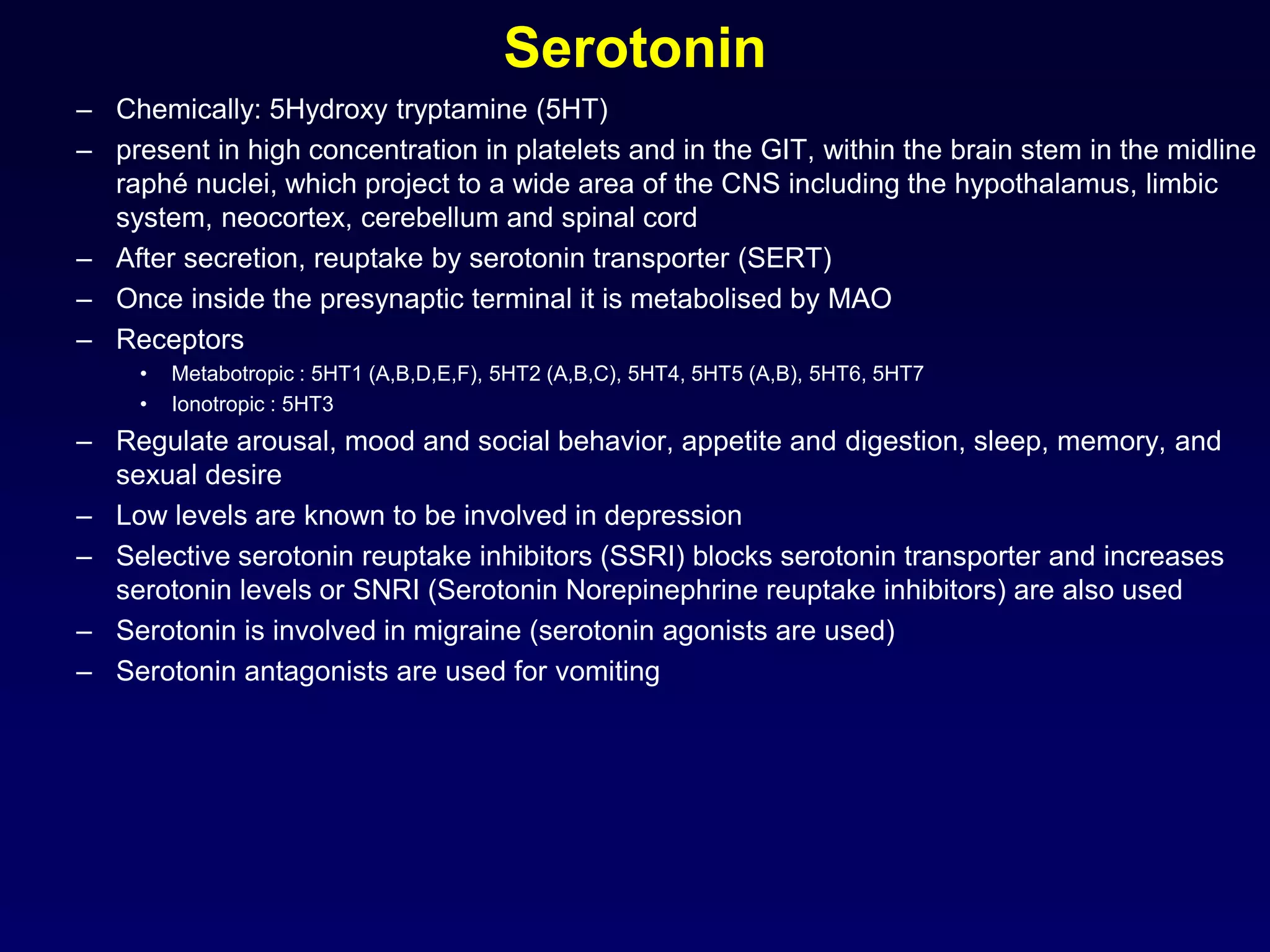
– Chemically: 5Hydroxy tryptamine (5HT)
– present in high concentration in platelets and in the GIT, within the brain stem in the midline
raphé nuclei, which project to a wide area of the CNS including the hypothalamus, limbic
system, neocortex, cerebellum and spinal cord
– After secretion, reuptake by serotonin transporter (SERT)
– Once inside the presynaptic terminal it is metabolised by MAO
– Receptors
• Metabotropic : 5HT1 (A,B,D,E,F), 5HT2 (A,B,C), 5HT4, 5HT5 (A,B), 5HT6, 5HT7
• Ionotropic : 5HT3
– Regulate arousal, mood and social behavior, appetite and digestion, sleep, memory, and
sexual desire
– Low levels are known to be involved in depression
– Selective serotonin reuptake inhibitors (SSRI) blocks serotonin transporter and increases
serotonin levels or SNRI (Serotonin Norepinephrine reuptake inhibitors) are also used
– Serotonin is involved in migraine (serotonin agonists are used)
– Serotonin antagonists are used for vomiting
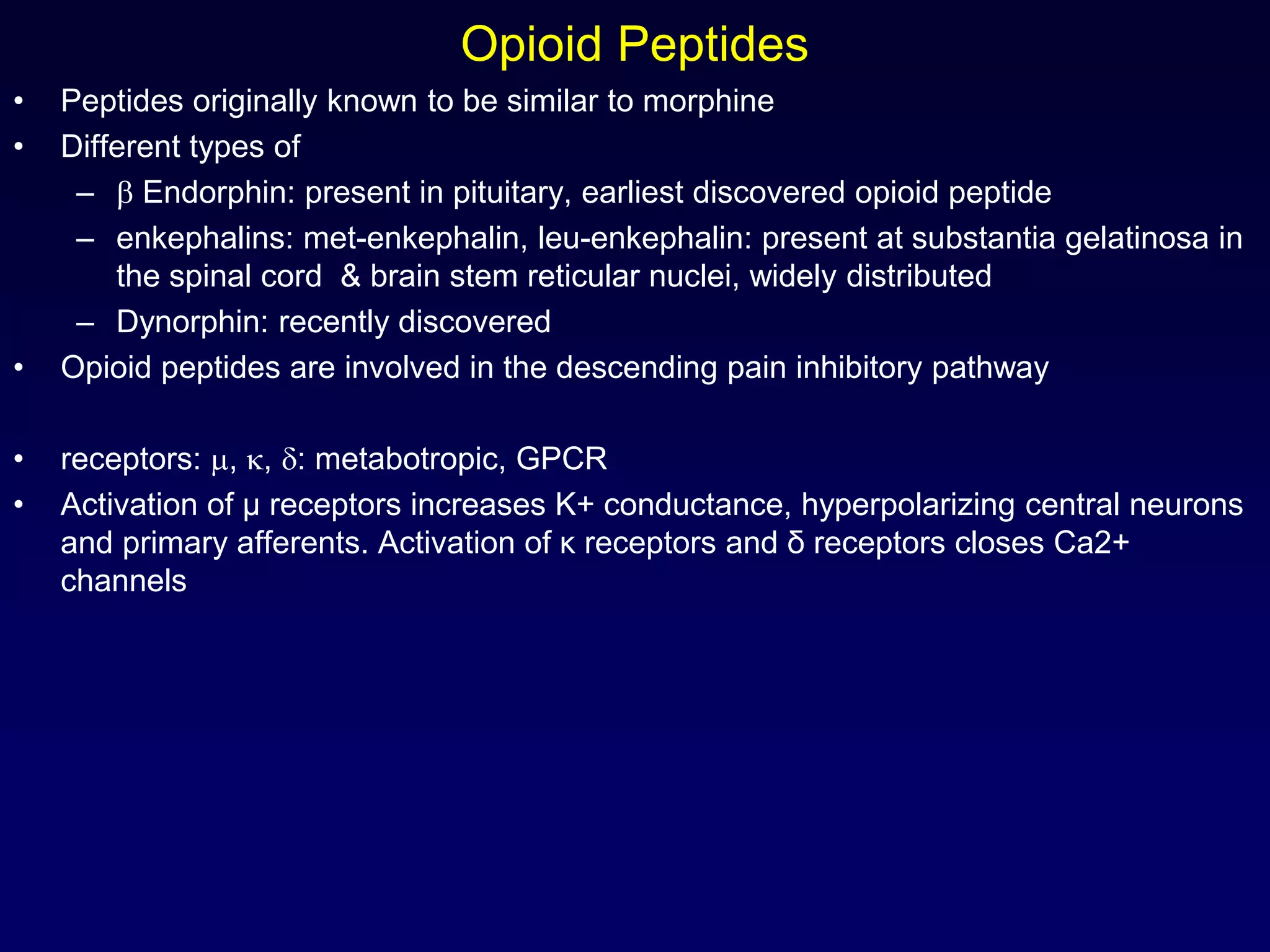
Opioid Peptides
• Peptides originally known to be similar to morphine
• Different types of
–  Endorphin: present in pituitary, earliest discovered opioid peptide
– enkephalins: met-enkephalin, leu-enkephalin: present at substantia gelatinosa in
the spinal cord & brain stem reticular nuclei, widely distributed
– Dynorphin: recently discovered
• Opioid peptides are involved in the descending pain inhibitory pathway
• receptors: , , : metabotropic, GPCR
• Activation of μ receptors increases K+ conductance, hyperpolarizing central neurons
and primary afferents. Activation of κ receptors and δ receptors closes Ca2+
channels
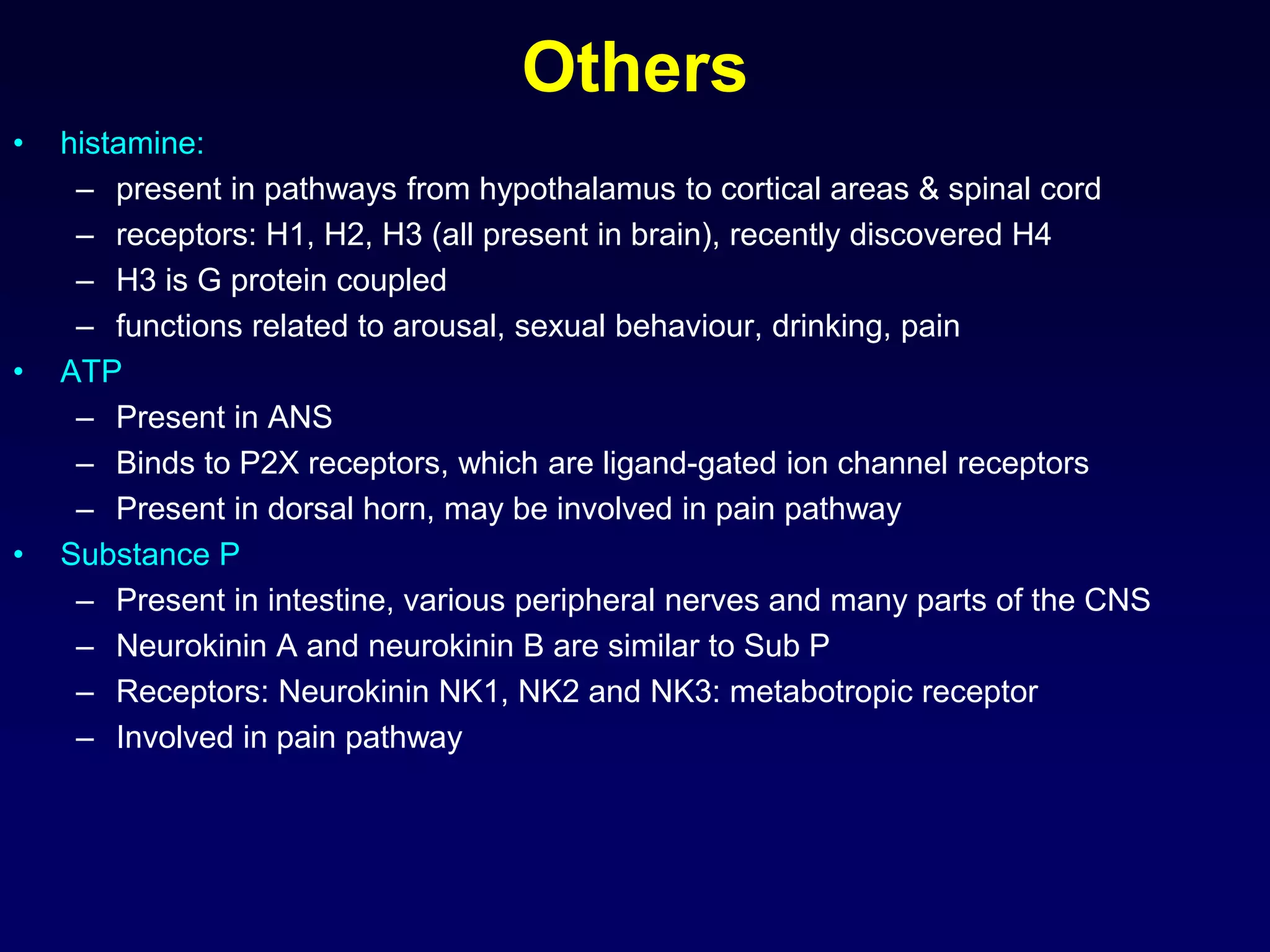
Others
• histamine:
– present in pathways from hypothalamus to cortical areas & spinal cord
– receptors: H1, H2, H3 (all present in brain), recently discovered H4
– H3 is G protein coupled
– functions related to arousal, sexual behaviour, drinking, pain
• ATP
– Present in ANS
– Binds to P2X receptors, which are ligand-gated ion channel receptors
– Present in dorsal horn, may be involved in pain pathway
• Substance P
– Present in intestine, various peripheral nerves and many parts of the CNS
– Neurokinin A and neurokinin B are similar to Sub P
– Receptors: Neurokinin NK1, NK2 and NK3: metabotropic receptor
– Involved in pain pathway
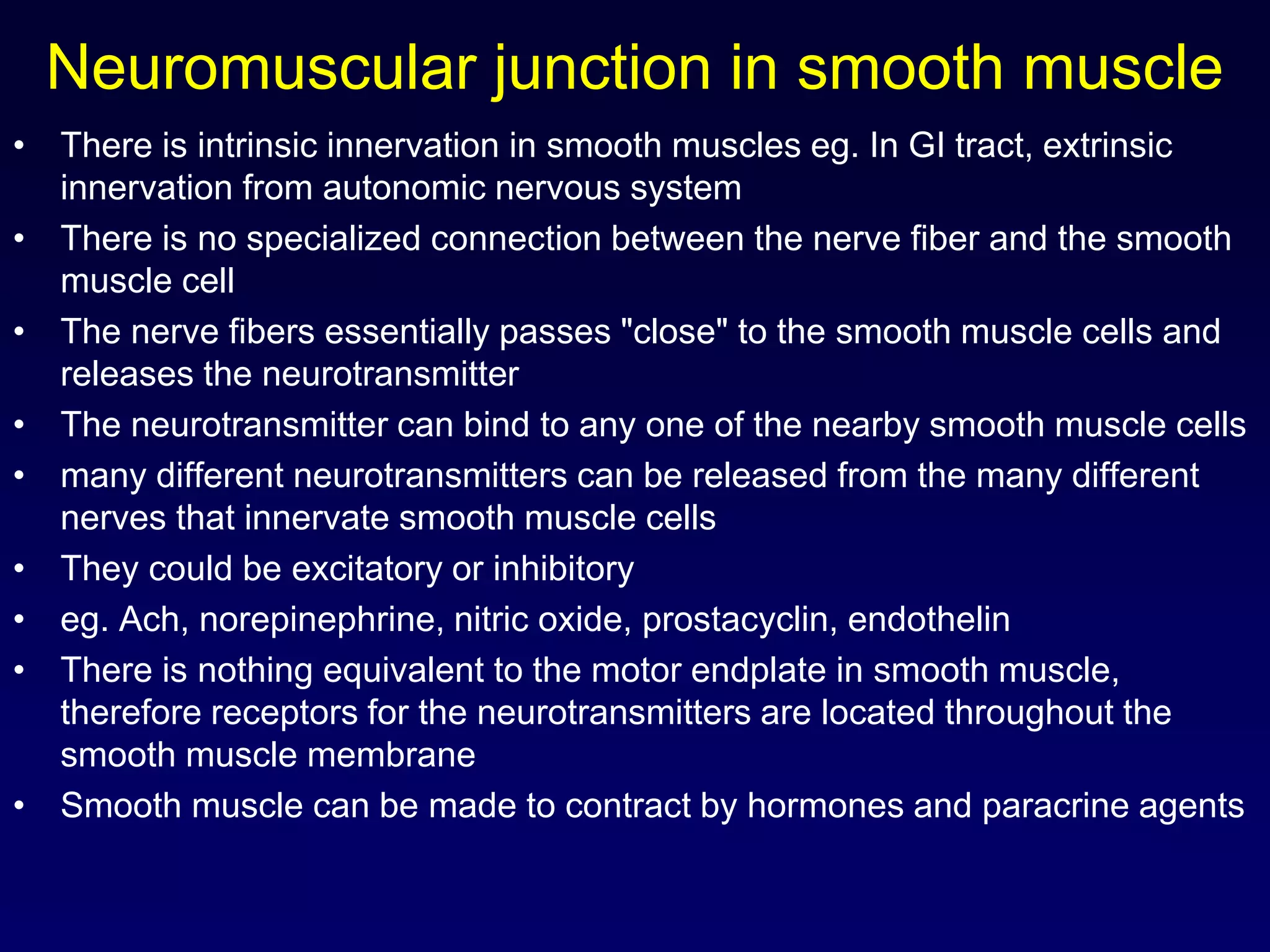
Neuromuscular junction in smooth muscle
• There is intrinsic innervation in smooth muscles eg. In GI tract, extrinsic
innervation from autonomic nervous system
• There is no specialized connection between the nerve fiber and the smooth
muscle cell
• The nerve fibers essentially passes "close" to the smooth muscle cells and
releases the neurotransmitter
• The neurotransmitter can bind to any one of the nearby smooth muscle cells
• many different neurotransmitters can be released from the many different
nerves that innervate smooth muscle cells
• They could be excitatory or inhibitory
• eg. Ach, norepinephrine, nitric oxide, prostacyclin, endothelin
• There is nothing equivalent to the motor endplate in smooth muscle,
therefore receptors for the neurotransmitters are located throughout the
smooth muscle membrane
• Smooth muscle can be made to contract by hormones and paracrine agents
Neuromodulators
• Neurotransmitters transmit an impulse from one
neuron to another
• Neuromodulator modulate regions or circuits of the
brain
• They affect a group of neurons, causing a modulation
of that group
• Neuromodulators alter neuronal activity by amplifying
or dampening synaptic activity
– eg. dopamine, serotonin, acetylcholine, histamine, glutamate

Synapse nmj y1 s1 2020 slides

  • 1.
    Synapse, NMJ and Neurotransmitters Prof.Vajira Weerasinghe Senior Professor of Physiology Faculty of Medicine, Peradeniya & Consultant Neurophysiologist, Teaching Hospital, Peradeniya www.slideshare.net/vajira54 medmoodle.pdn.ac.lk
  • 2.
    Objectives 1. Describe thefunctional anatomy of a neuron. 2. Explain the mechanism of synaptic transmission. 3. Explain the terms - excitatory postsynaptic potentials (EPSP) and inhibitory postsynaptic potentials (IPSP). 4. Describe the main components of the neuromuscular junction in a skeletal muscle and describe how it differs in smooth muscle. 5. Describe the sequence of events during neuromuscular transmission with special reference to acetylcholine release, acetylcholine receptors, ligand-gated ion channels, role of Ca 2+, cholinesterases and end-plate potentials. 6. Explain different types of neurotransmitters, their receptors, mechanism of actions, agonists and inhibitors. 7. Explain the actions of different substances that stimulate or inhibit neuromuscular transmission. 8. Explain the derangement in neuromuscular transmission in myasthenia gravis.
  • 3.
    Synapse • Synapse isa gap between two neurons • More commonly chemical • Rarely they could be electrical (with gap junctions) – which are pores (as shown in the electron micrograph) constructed of connexin proteins
  • 4.
    Typical synapse • Presynapticmembrane • Synaptic Cleft • Postsynaptic membrane
  • 5.
    Basic structure • Presynapticmembrane – Contains neurotransmitter vesicles • Synaptic cleft • Postsynaptic membrane – Contains receptors for the neurotransmitter
  • 6.
  • 7.
    Types of synapses •Axo-dendritic synapse • Most common • Axon terminal branch (presynaptic element) synapses on a dendrite • Axo-somatic synapse • Axon terminal branch synapses on a soma (cell body) • Axo-axonic synapse • Axon terminal branch synapses on another axon terminal branch (for presynaptic inhibition) • Dendro-dendritic synapse • Dendrite synapsing on another dendrite (localised effect)
  • 8.
    Synaptic ultrastructure • Thepresynaptic enlargement (bouton, varicosity, or end plate) contains synaptic vesicles (20 nm diameter) • Pre- and postsynaptic plasma membranes are separated by a synaptic cleft (20 nm wide) • The cleft contains glycoprotein linking material and is surrounded by glial cell processes Synaptic proteins
  • 9.
    Presynaptic events • Presynapticmembrane contains voltage gated calcium channels • Membrane depolarisation opens up Ca2+ channels • Ca2+ influx will occur • Neurotransmitter molecules are released in proportion to the amount of Ca2+ influx, in turn proportional to the amount of presynaptic membrane depolarization
  • 10.
    Details of presynapticevents • in the resting state, the presynaptic membrane has resting membrane potential • when an action potential arrives at the end of the axon • the adjacent presynaptic membrane is depolarised • voltage-gated Ca2+ channels open and allow Ca2+ influx (driven by [Ca2+] gradient) • elevated [Ca2+] activates synaptic proteins (SNARE proteins: Synaptobrevin, Syntaxin, SNAP 25) and triggers vesicle mobilization and docking with the plasma membrane • vesicles fuse with presynaptic plasma membrane and release neurotransmitter molecules (about 5,000 per vesicle) by exocytosis • neurotransmitter molecules diffuse across the cleft & bind with postsynaptic receptor proteins • neurotransmitter molecules are eliminated from synaptic clefts via pinocytotic uptake by presynaptic or glial processes and/or via enzymatic degradation at the postsynaptic membrane • molecules are recycled • subsequently, presynaptic plasma membrane repolarises
  • 11.
  • 12.
    Neurotransmitter receptors • Oncereleased, the neurotransmitter molecules diffuse across the synaptic cleft • When they “arrive” at the postsynaptic membrane, they bind to neurotransmitter receptors • Two main classes of receptors: – Ionotropic receptors – Metabotropic receptors
  • 13.
    IONOTROPIC RECEPTORS • Neurotransmittermolecule binds to the receptor • Cause a ligand-gated ion channel to open • Become permeable to either sodium, potassium or chloride • Accordingly depolarisation (excitation) or hyperpolarisation (inhibition) • Quick action, short lasting
  • 14.
    • Neurotransmitter attachesto G-protein-coupled receptors (GPCR) which has slower, longer-lasting and diverse postsynaptic effects • They can have effects that change an entire cell’s metabolism • Activates enzymes that trigger internal metabolic change inside the cell • Activate cAMP • Activate cellular genes: forms more receptor proteins • Activate protein kinase: decrease the number of proteins • Sometimes open up ion channels also Metabotropic Receptors
  • 15.
    • Excitation – 1.Na+ influx cause accumulation of positive charges causing excitation (eg. Nicotinic Ach receptor) – 2. Decreased K+ efflux or Cl- influx – 3. various internal changes to excite cell, increase in excitatory receptors, decrease in inhibitory receptors.
  • 16.
    • Inhibition – 1.Efflux of K+ – 2. Influx of Cl- (eg. GABA A receptor) – 3. activation of receptor enzymes to inhibit metabolic functions or to increase inhibitory receptors or decrease excitatory receptors
  • 17.
    • Excitatory effectsof neurotransmitters – EPSP: excitatory post synaptic potential • Inhibitory effects of neurotransmitters – IPSP: inhibitory post synaptic potential
  • 18.
    Postsynaptic activity • Synapticintegration – On average, each neuron in the brain receives about 10,000 synaptic connections from other neurons – Many (but probably not all) of these connections may be active at any given time – Each neuron produces only one output – One single input is usually not sufficient to trigger this output – The neuron must integrate a large number of synaptic inputs and “decide” whether to produce an output or not – Constant interplay of excitatory and inhibitory activity on the postsynaptic neuron produces a fluctuating membrane potential that is the algebraic sum of the hyperpolarizing and depolarizing activities – Soma of the neuron thus acts as an integrator
  • 20.
    Other synaptic activities •Postsynaptic inhibition – eg. GABA activates GABA A receptors on the postsynaptic membrane and opens up Cl- channels and causes hyperpolarisation and inhibition • Presynaptic inhibition – eg. GABA activates GABA B receptors on the presynaptic membrane and through G proten activation opens up K+ channels and causes hyperpolarisation and inhibition • Autoreceptors – eg. Ach released from the presynaptic membrane activates autoreceptors for Ach on the presynaptic membrane and causes feedback inhibition • Renshaw cell inhibition – Spinal motor neuron activates a collalteral neuron which secrete glycine and which inhibit activity of the spinal motor neuron • Retrograde signalling – Neurotransmitter secreted from the postsynaptic membrane act on the receptor on the presynaptic membrane and through G protein activation causes inhibition
  • 21.
    Dendritic spine • Smallbutton like extensions like “door knobs” found on the dendritic processes that contain post-synaptic densities • Axo-dendritic synapses terminates in these • Dendritic spines are known to change shape, to the extend of appearing and disappearing entirely & is the basis of memory • A mechanism underlying memory loss in Alzheimer's disease involves a loss of dendritic spines in hippocampal pyramidal cells
  • 22.
  • 23.
    NMJ function • Pre-synapticmembrane • Ca2+ channels • SNARE proteins • Acetylcholine release • Postsynaptic membrane • Acetylcholine receptors • Ligand-gated Na+ channels • Synaptic cleft • cholinesterase
  • 24.
    Ach vesicle docking •With the help of Ca entering the presynaptic terminal • Docking of Ach vesicles occur • Docking: – Vesicles move toward & interact with membrane of presynaptic terminal • There are many proteins necessary for this purpose • These are called SNARE proteins • eg. Syntaxin, Synaptobrevin, SNAP 25
  • 25.
    NMJ • Postsynaptic membranecontain nicotinic acetylcholine receptor • This receptor contains several sub units (2 alpha, beta, gamma, delta) • Ach binds to alpha subunit • Na+ channel opens up • Na+ influx occurs • End Plate Potential (EPP) •This is a graded potential •Once this reaches the threshold level •AP is generated at the postsynaptic membrane
  • 26.
    NMJ blocking • Usefulin general anaesthesia to facilitate inserting tubes • Muscle paralysis is useful in performing surgery • Commonly used to paralyze patients requiring intubation whether in an emergency as a life-saving intervention or for a scheduled surgery and procedure • Indications for intubation during an emergency – failure to maintain or protect the airway – failure to adequately ventilate or oxygenate – anticipation of a decline in clinical status
  • 27.
    Earliest known NMJblocker - Curare • Curare has long been used in South America as an extremely potent arrow poison • Darts were tipped with curare and then accurately fired through blowguns made of bamboo • Death for birds would take one to two minutes, small mammals up to ten minutes, and large mammals up to 20 minutes • NMJ blocker used in patients is tubocurarine
  • 28.
    Non-depolarising blocking agents –Competitive – Act by competing with Ach for the Ach receptors – Binds to Ach receptors and blocks – Prevent Ach from attaching to its receptors – No depolarisation – Late onset, prolonged action – Ach can compete & the effect overcomes by an excess Ach – Anticholinesterases can reverse the action – eg. • Curare • Atracurium • Rocuronium • Vencuronium
  • 29.
    Depolarising blocking agents –Non-competitive, chemically act like Ach – Bind to motor end plate and once depolarises – Persistent depolarisation leads to a block • Due to inactivation of Na channels – Phase I block • After a depolarizing agent binds to the motor end plate receptor, the agent remains bound and thus the end plate cannot repolarize • during this depolarizing phase the transient muscle fasciculation occur – Phase II block • After adequate depolarization has occurred, phase II (desensitizing phase) sets in and the muscles are no longer receptive to acetylcholine released by the motor neurons • It is at this point that the depolarizing agent has fully achieved paralysis – Ach cannot compete – Quick action start within 30 sec, recover within 3 min and is complete within 12–15 min – eg. Succinylcholine
  • 30.
    Anticholinesterases • AchE inhibitors –Inhibit AchE so that Ach accumulates and causes depolarising block • Reversible – Competitive inhibitors of AChE • eg. physostigmine, neostigmine, edrophonium used to diagnose and treat myasthenia • Irreversible – Binds to AChE irreversibly • eg. Insecticides (organophosphates), nerve gases (sarin)
  • 31.
    NMJ disorders • Myastheniagravis (MG) – Antibodies to Ach receptors – Post synaptic disorder • Lambert Eaton myasthenic syndrome (LEMS) – Presynaptic disorder (antibodies against Ca channels) • Neuromyotonia (Isaac’s syndrome) – Down-regulation of K+ channels, hyperexcitability due to prolonged depolarisation • Botulism – Presynaptic disorder – Binds to the presynatic region, cleaves SNARE proteins and prevent release of Ach • Tetanus – Presynaptic disorder – Blockade of neurotransmitter release (GABA & glycine) of spinal inhibitory neurons causes hyper-excitable tetanic muscle contractions
  • 32.
    Botulinum toxin • Mostpotent neurotoxin known • Produced by bacterium Clostridium botulinum • Causes severe diarrhoeal disease called botulism • Action: – enters into the presynaptic terminal – cleaves proteins (syntaxin, synaptobrevin, SNAP 25) necessary for Ach vesicle release with Ca2+ • Chemical extract is useful for reducing muscle spasms, muscle spasticity and even removing wrinkles (in cosmetic and plastic surgery)
  • 34.
    Organophosphates • Phosphates usedas insecticides • Action – AchE inhibitors – Therefore there is an excess Ach accumulation – Depolarising type of postsynaptic block • Used as a suicidal poison • Causes muscle paralysis and death • Nerve gas (sarin)
  • 35.
    Myasthenia gravis • Seriousneuromuscular disease • Antibodies form against acetylcholine nicotinic postsynaptic receptors at the NMJ • Characteristic pattern of progressively reduced muscle strength with repeated use of the muscle and recovery of muscle strength following a period of rest • Present with ptosis, fatiguability, speech difficulty, respiratory difficulty • Treated with cholinesterase inhibitors
  • 36.
  • 37.
    Acetylcholine (Ach) – Firstneurotransmitter discovered in 1914 – Secreting neurons are called cholinergic neurons – Secreted at the neuromuscular junction (skeletal muscle contraction), autonomic ganglia (both sympathetic and parasympathetic), parasympathetic postganglionic nerve endings and in central pathways in the basal forebrain and brainstem (memory, arousal, attention, rapid eye movement (REM) sleep – receptors • nicotinic (NN: autonomic ganglia, NM: NMJ) – ionotropic receptors Na+ influx • muscarinic (parasympathetc terminal) » sub types: M1(brain), M2(heart), M3(glands, smooth muscle), M4, M5 » Metabotropic receptors with G protein and second messenger cAMP and K+ channel opening – Agonist: nicotine, muscarine (toad poison) – Inhibitors: NMJ blockers competitive: curare (plant poison), atracurium, depolarising: succinylcholine, botulinum toxin (food poison), organophosphate (insecticide), atropine (muscarinic blocker), neostigmine (AchE inhibitor) – Loss of Ach neurons in Alzheimer’s patients: donepezil (anticholinesterase, increases Ach level) – Pilocarpine (muscarinic chollinergic eye drops used in glaucoma)
  • 38.
    Glutamate – The mostabundant and the main excitatory neurotransmitter in the brain – Responsible for 75% excitatory neurotransmission in the CNS – Ca2+ is necessary for release – Reuptake to the presynaptic terminal by glutamate transporter or via glial cells – receptors • Ionotropic receptors: AMPA (Na+), Kainate (Na+), NMDA (Ca2+ and Na+) • NMDA receptor is normally blocked by Mg2+ • When glutamate binds to AMPA receptors, Na channel open up, Na influx occurs, membrane is depolarised, depolarisation removes Mg2+, then glutamate and glycine binding to NMDA receptor will open up Na+ and Ca2+ channels, Ca2+ influx, activates protein kinases and several actions • Metabotropic glutamate receptors: second messenger system, act thru inositol phosphate and cAMP, present in presynaptic and postsynaptic – Increased levels of glutamate causes neuronal excitotoxicity, known to be involved in Alzheimer’s disease, NMDA antagonists are used as a treatment – Aspartate is an agonist – NMDA receptor activity is involved in memory processes known as long term potentiation – Glutamate is a mediator of pain impulse pathway, NMDA receptor antagonists are used as pain reducing drugs
  • 39.
    GABA – Gamma aminobutyric acid – The main inhibitory neurotransmitter in the brain – Responsible for 40% inhibitory neurotransmission in the CNS – Present in both presynaptic and postsynaptic inhibition – Reuptake up GABA transporter – receptors • GABA A receptor (ionotropic): postsynaptic, open up Cl- channel, hyperpolarisation, inhibition, alcohol, antiepieptics (barbirurates), benzodiazepine (diazepam), activate these receptors • GABA B receptor (metabotropic): presynaptic , G protein coupled action, increase K+ efflux, inhibit Ca2+ influx through presynaptic Ca2+ channels • GABA C receptor is also known to be present – Increased GABA activity causes sedative effect – Main neurotransmitter which produces sleep – GABA decreases serotonergic, noradrenergic, cholinergic and histaminergic neuronal activity to cause Non-REM (rapid eye movement) sleep
  • 40.
    Glycine – An inhibitoryneurotransmitter in the spinal cord – It is also known to be present in retina – Co-activates NMDA receptor with gulutamate – It has ionotropic receptor: Activate Cl- channels and cause hyperpolarisation – Action of glycine is antagonised by strychnine – Strychnine poisoning causes muscle spasms, convulsions and muscle hyperactivity – Reuptake by transporter – Parallel circuits potentiate GABA inhibition
  • 41.
    Norepinephrine & epinephrine –present in the autonomic nerves, brain stem, hypothalamus, locus ceruleus of the pons – Reuptake by transporter – Metabolised by MAO (monoamine oxidase); MAO inhibitors are used as antidepressants – Increases BP and HR – Control the overall activity of the brain and the mood – Excitatory or inhibitory depending on the receptor – Receptors • α1A, α1B, α1D, α2A, α2B, α2C, 1, 2, 3 – Metabotropic receptors G protein coupled, second messenger: cAMP or Ca2+ and protein kinase • with norepinephrine having a greater affinity for α-adrenoceptors and epinephrine for β-adrenoceptors – Locus ceruleus is the principal site of norepinephrine in the brain, involved in arousal, stress reaction, attention, sleep-wake cycle
  • 42.
    Dopamine – Dopamine (DA)is present in several important areas and pathways in the brain involved in reward pathway • Ventral tegmental area (VTA) of the midbrain • Nucleus accumbens (NA) of basal forebrain (brain pleasure centre) • Mesocortical pathway from midbrain to prefrontal cortex • Mesolimbic pathway from midbrain to limbic system • Nigrostriatal pathway from substantia nigra to striatum in the limbic system – Involved in motor control, dopamine levels are low in Parkinson disease – Involved in reward behavior and addiction and in psychiatric disorders such as schizophrenia – Receptors (metabotropic) • D1, D2, D3, D4 D5 • D1-like (D1 and D5) increases cAMP and D2-like (D2, D3 and D4) decreases cAMP • Overstimulation of D2 receptors may lead to schizophrenia – Reuptake by dopamine transporter • Drug addiction is due to increased dopamine levels – Cocaine and methamphetamine act by inhibiting dopamine transporters and thereby increasing dopamine level in the brain to a unimaginably high levels , – Opioids and heroin act directly on DA neurons or inhibit GABA inhibition of DA neurons – Cannabis and marijuana activate endocannabinoids which act presynaptically , inhibit GABA, increases DA levels – Nicotine: More complex mechanism increasing DA
  • 43.
    Serotonin – Chemically: 5Hydroxytryptamine (5HT) – present in high concentration in platelets and in the GIT, within the brain stem in the midline raphé nuclei, which project to a wide area of the CNS including the hypothalamus, limbic system, neocortex, cerebellum and spinal cord – After secretion, reuptake by serotonin transporter (SERT) – Once inside the presynaptic terminal it is metabolised by MAO – Receptors • Metabotropic : 5HT1 (A,B,D,E,F), 5HT2 (A,B,C), 5HT4, 5HT5 (A,B), 5HT6, 5HT7 • Ionotropic : 5HT3 – Regulate arousal, mood and social behavior, appetite and digestion, sleep, memory, and sexual desire – Low levels are known to be involved in depression – Selective serotonin reuptake inhibitors (SSRI) blocks serotonin transporter and increases serotonin levels or SNRI (Serotonin Norepinephrine reuptake inhibitors) are also used – Serotonin is involved in migraine (serotonin agonists are used) – Serotonin antagonists are used for vomiting
  • 44.
    Opioid Peptides • Peptidesoriginally known to be similar to morphine • Different types of –  Endorphin: present in pituitary, earliest discovered opioid peptide – enkephalins: met-enkephalin, leu-enkephalin: present at substantia gelatinosa in the spinal cord & brain stem reticular nuclei, widely distributed – Dynorphin: recently discovered • Opioid peptides are involved in the descending pain inhibitory pathway • receptors: , , : metabotropic, GPCR • Activation of μ receptors increases K+ conductance, hyperpolarizing central neurons and primary afferents. Activation of κ receptors and δ receptors closes Ca2+ channels
  • 45.
    Others • histamine: – presentin pathways from hypothalamus to cortical areas & spinal cord – receptors: H1, H2, H3 (all present in brain), recently discovered H4 – H3 is G protein coupled – functions related to arousal, sexual behaviour, drinking, pain • ATP – Present in ANS – Binds to P2X receptors, which are ligand-gated ion channel receptors – Present in dorsal horn, may be involved in pain pathway • Substance P – Present in intestine, various peripheral nerves and many parts of the CNS – Neurokinin A and neurokinin B are similar to Sub P – Receptors: Neurokinin NK1, NK2 and NK3: metabotropic receptor – Involved in pain pathway
  • 46.
    Neuromuscular junction insmooth muscle • There is intrinsic innervation in smooth muscles eg. In GI tract, extrinsic innervation from autonomic nervous system • There is no specialized connection between the nerve fiber and the smooth muscle cell • The nerve fibers essentially passes "close" to the smooth muscle cells and releases the neurotransmitter • The neurotransmitter can bind to any one of the nearby smooth muscle cells • many different neurotransmitters can be released from the many different nerves that innervate smooth muscle cells • They could be excitatory or inhibitory • eg. Ach, norepinephrine, nitric oxide, prostacyclin, endothelin • There is nothing equivalent to the motor endplate in smooth muscle, therefore receptors for the neurotransmitters are located throughout the smooth muscle membrane • Smooth muscle can be made to contract by hormones and paracrine agents
  • 47.
    Neuromodulators • Neurotransmitters transmitan impulse from one neuron to another • Neuromodulator modulate regions or circuits of the brain • They affect a group of neurons, causing a modulation of that group • Neuromodulators alter neuronal activity by amplifying or dampening synaptic activity – eg. dopamine, serotonin, acetylcholine, histamine, glutamate