Pons
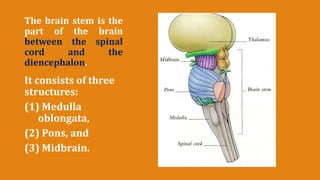
The brain stem is the
part of the brain
between the spinal
cord and the
diencephalon.
It consists of three
structures:
(1) Medulla
oblongata,
(2) Pons, and
(3) Midbrain.
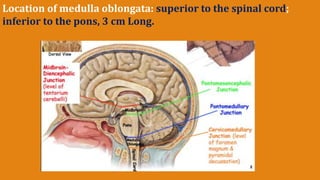
Location of medulla oblongata: superior to the spinal cord;
inferior to the pons, 3 cm Long.
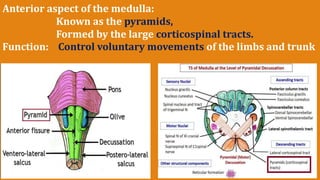
Anterior aspect of the medulla:
Known as the pyramids,
Formed by the large corticospinal tracts.
Function: Control voluntary movements of the limbs and trunk
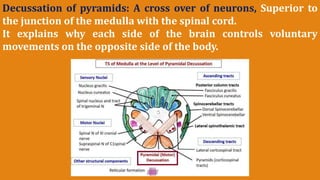
Decussation of pyramids: A cross over of neurons, Superior to
the junction of the medulla with the spinal cord.
It explains why each side of the brain controls voluntary
movements on the opposite side of the body.
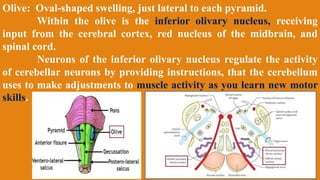
Olive: Oval-shaped swelling, just lateral to each pyramid.
Within the olive is the inferior olivary nucleus, receiving
input from the cerebral cortex, red nucleus of the midbrain, and
spinal cord.
Neurons of the inferior olivary nucleus regulate the activity
of cerebellar neurons by providing instructions, that the cerebellum
uses to make adjustments to muscle activity as you learn new motor
skills.
Nuclei for vital functions
Cardiovascular center regulates
the rate and force of the
heartbeat and the diameter of
blood vessels.
The medullary rhythmicity
area of the respiratory
center adjusts the basic
rhythm of breathing.
Gracile and cuneate nucleus: Located in the posterior part of
the medulla, associated with sensations of touch, pressure,
vibration, and conscious awareness of position.
• Gustatory pathway from the tongue to the brain; it
receives gustatory input from the taste buds of the
tongueGustation (taste)
• Auditory pathway from the inner ear to the brain;
they receive auditory input from the cochlea of the
inner ear
Audition
(hearing)
• Equilibrium pathway from the inner ear to the
brain; they receive sensory information
associated with equilibrium from proprioceptors
in the vestibular apparatus of the inner ear
Equilibrium
(balance)
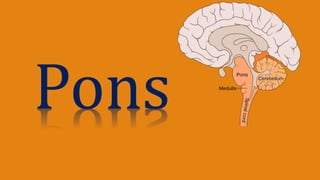
Pons
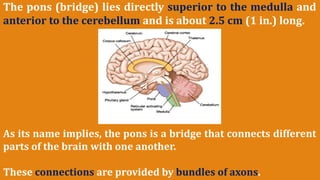
The pons (bridge) lies directly superior to the medulla and
anterior to the cerebellum and is about 2.5 cm (1 in.) long.
As its name implies, the pons is a bridge that connects different
parts of the brain with one another.
These connections are provided by bundles of axons.
Like the medulla, the pons consists
of nuclei, sensory tracts, and motor
tracts.
Signals for voluntary movements
from motor areas of the cerebral
cortex are relayed through several
pontine nuclei into the cerebellum.
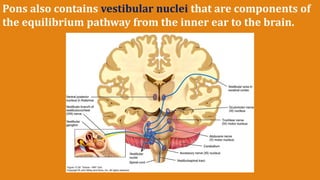
Pons also contains vestibular nuclei that are components of
the equilibrium pathway from the inner ear to the brain.
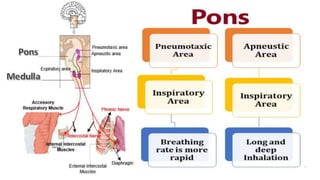
Other nuclei in the pons are the pneumotaxic area and the
apneustic area of the respiratory center.
Together with the medullary rhythmicity area, the
pneumotaxic and apneustic areas help control breathing.
The pons also contains nuclei associated with the following
four pairs of cranial nerves:
 Trigeminal (V) nerves,
 Abducens (VI) nerves,
 Facial (VII) nerves, and
 Auditory (VIII) nerves
Location : Anterior to Cerebellum
Superior to Medulla
Inferior to Mid Brain
Nuclei Present: Vestibular Nuclei
Respiratory Nuclei
1. The pneumotaxic area and
2. The apneustic area
Cranial Nerve:
 Trigeminal (V) nerves,
 Abducens (VI) nerves,
 Facial (VII) nerves, and
 Auditory (VIII) nerves
Pons

Pons

  • 1.
  • 3.
    The brain stemis the part of the brain between the spinal cord and the diencephalon. It consists of three structures: (1) Medulla oblongata, (2) Pons, and (3) Midbrain.
  • 4.
    Location of medullaoblongata: superior to the spinal cord; inferior to the pons, 3 cm Long.
  • 5.
    Anterior aspect ofthe medulla: Known as the pyramids, Formed by the large corticospinal tracts. Function: Control voluntary movements of the limbs and trunk
  • 6.
    Decussation of pyramids:A cross over of neurons, Superior to the junction of the medulla with the spinal cord. It explains why each side of the brain controls voluntary movements on the opposite side of the body.
  • 7.
    Olive: Oval-shaped swelling,just lateral to each pyramid. Within the olive is the inferior olivary nucleus, receiving input from the cerebral cortex, red nucleus of the midbrain, and spinal cord. Neurons of the inferior olivary nucleus regulate the activity of cerebellar neurons by providing instructions, that the cerebellum uses to make adjustments to muscle activity as you learn new motor skills.
  • 8.
    Nuclei for vitalfunctions Cardiovascular center regulates the rate and force of the heartbeat and the diameter of blood vessels. The medullary rhythmicity area of the respiratory center adjusts the basic rhythm of breathing.
  • 10.
    Gracile and cuneatenucleus: Located in the posterior part of the medulla, associated with sensations of touch, pressure, vibration, and conscious awareness of position.
  • 11.
    • Gustatory pathwayfrom the tongue to the brain; it receives gustatory input from the taste buds of the tongueGustation (taste) • Auditory pathway from the inner ear to the brain; they receive auditory input from the cochlea of the inner ear Audition (hearing) • Equilibrium pathway from the inner ear to the brain; they receive sensory information associated with equilibrium from proprioceptors in the vestibular apparatus of the inner ear Equilibrium (balance)
  • 13.
  • 14.
    The pons (bridge)lies directly superior to the medulla and anterior to the cerebellum and is about 2.5 cm (1 in.) long. As its name implies, the pons is a bridge that connects different parts of the brain with one another. These connections are provided by bundles of axons.
  • 15.
    Like the medulla,the pons consists of nuclei, sensory tracts, and motor tracts. Signals for voluntary movements from motor areas of the cerebral cortex are relayed through several pontine nuclei into the cerebellum.
  • 17.
    Pons also containsvestibular nuclei that are components of the equilibrium pathway from the inner ear to the brain.
  • 18.
    Other nuclei inthe pons are the pneumotaxic area and the apneustic area of the respiratory center. Together with the medullary rhythmicity area, the pneumotaxic and apneustic areas help control breathing.
  • 22.
    The pons alsocontains nuclei associated with the following four pairs of cranial nerves:  Trigeminal (V) nerves,  Abducens (VI) nerves,  Facial (VII) nerves, and  Auditory (VIII) nerves
  • 24.
    Location : Anteriorto Cerebellum Superior to Medulla Inferior to Mid Brain
  • 25.
    Nuclei Present: VestibularNuclei Respiratory Nuclei 1. The pneumotaxic area and 2. The apneustic area
  • 26.
    Cranial Nerve:  Trigeminal(V) nerves,  Abducens (VI) nerves,  Facial (VII) nerves, and  Auditory (VIII) nerves