Introduction
to
Life Science
Ms. Donna Grace Herman
Panacan National High School
E&LPPT1
Learning Competencies
The learners will be able to:
•explain the evolving concept of life based
on emerging pieces of evidence (S11/12LT-
IIa-1)
•describe classic experiments that model
conditions which may have enabled the first
forms to evolve (S11/12LT-IIa-2)
Learning Competencies
The learners will be able to:
•describe how unifying themes (e.g.,
structure and function, evolution, and
ecosystems) in the study of life show the
connections among living things and how
they interact with each other and with their
environment (S11/12LT-IIa-3)
Topic Outline
This Chapter is divided into three:
1.Historical Development of the Concept of
Life
2.Origin of the First Forms of Life
3.Unifying themes in Study of Life
Introduction to Biology
by Frank Gregorio
https://www.youtube.com/watch?
v=7L7x0BAqWis
https://www.youtube.com/watch?v=BP5fc8FgVKY
Life
by Frank Gregorio
https://www.youtube.com/watch?
v=XvMgoelauLQ
It is usually easy to
recognize life, but it is
often much harder to
define it.
• Plants, animals, human beings, and
microscopic organisms
• Life Science vs. Biology
Life Sciences
All living organisms
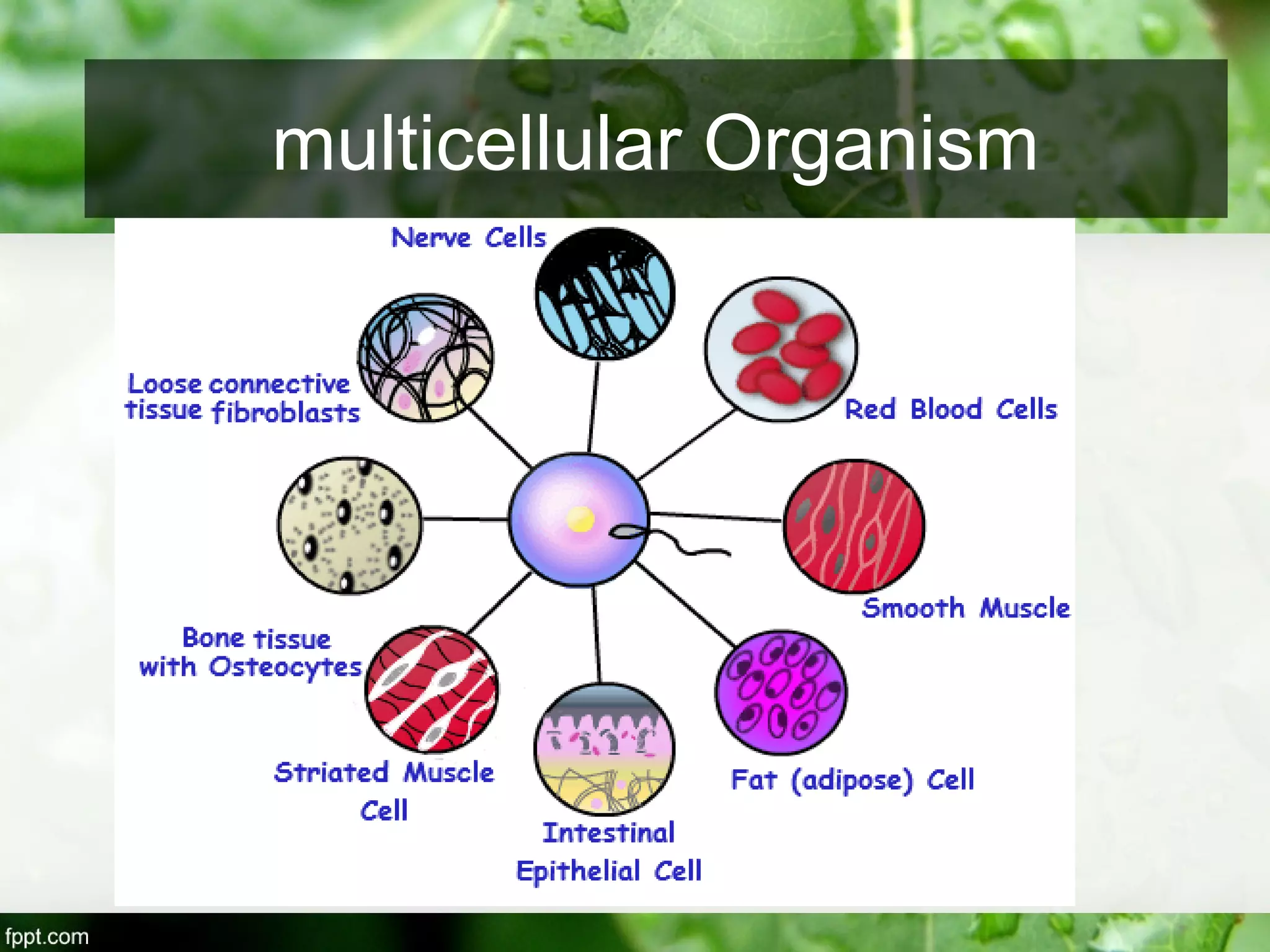
are made up of cells.
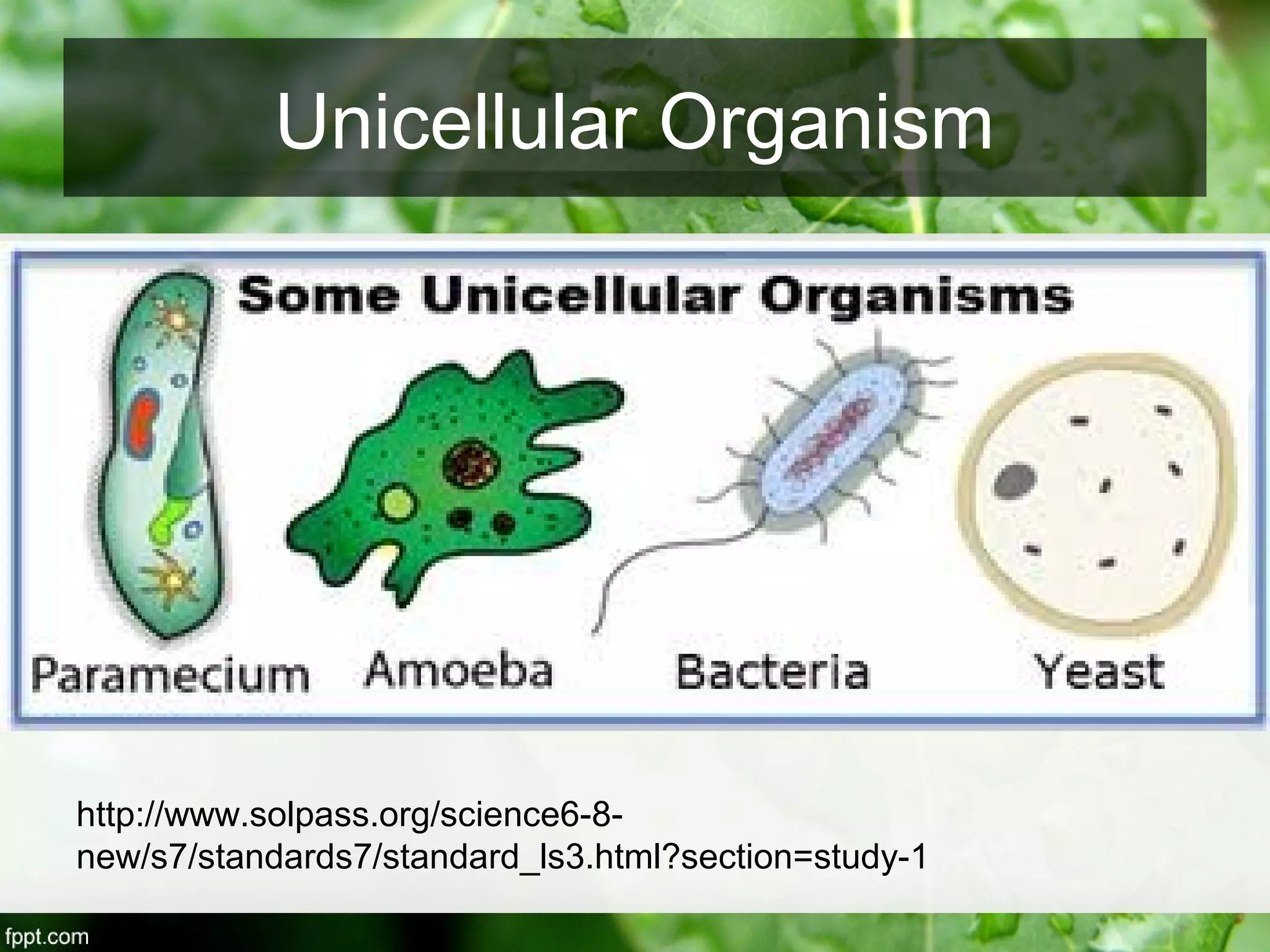
Unicellular Organism
http://www.solpass.org/science6-8-
new/s7/standards7/standard_ls3.html?section=study-1
Tutorvista.com
multicellular Organism
Tutorvista.com
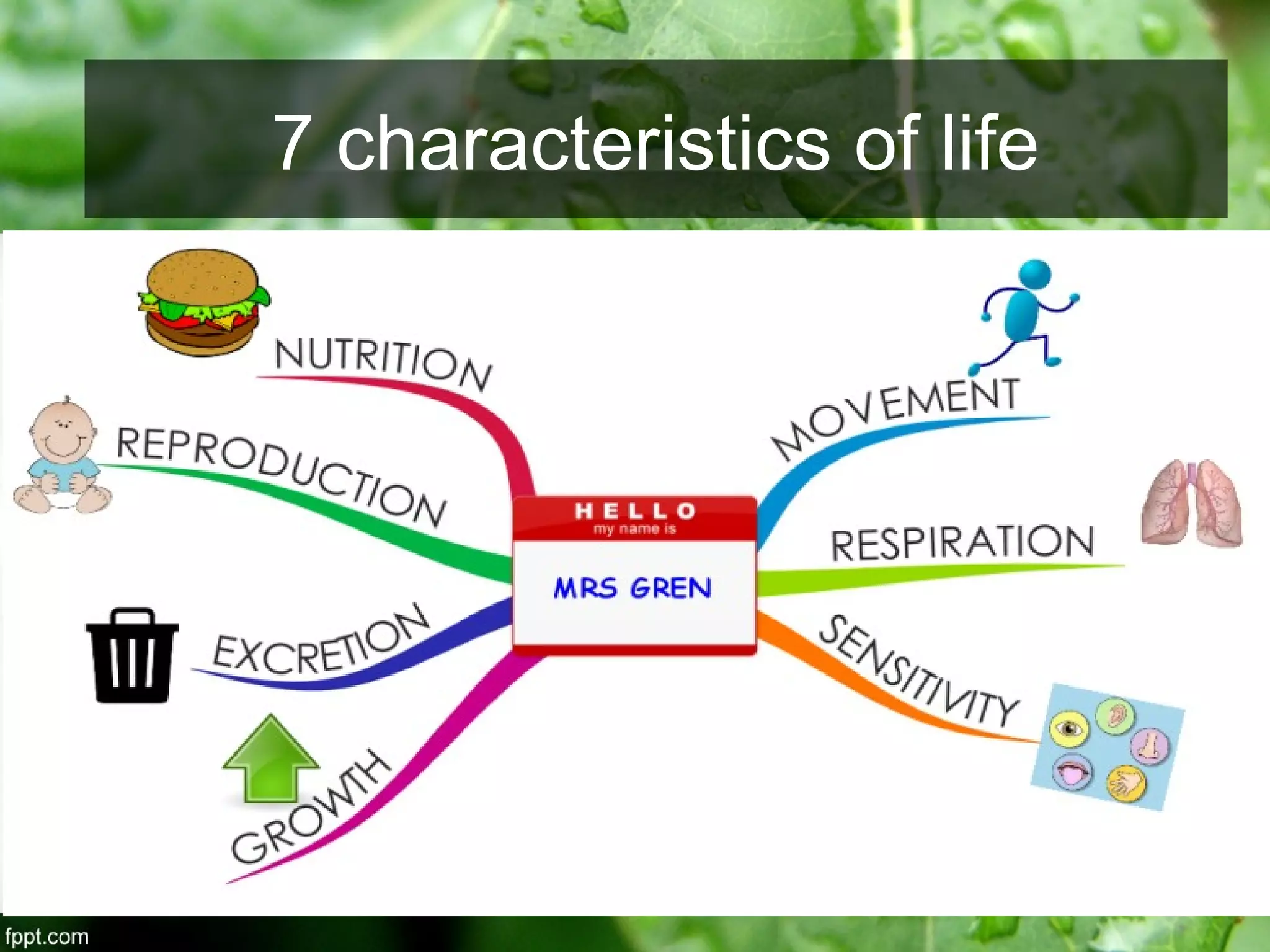
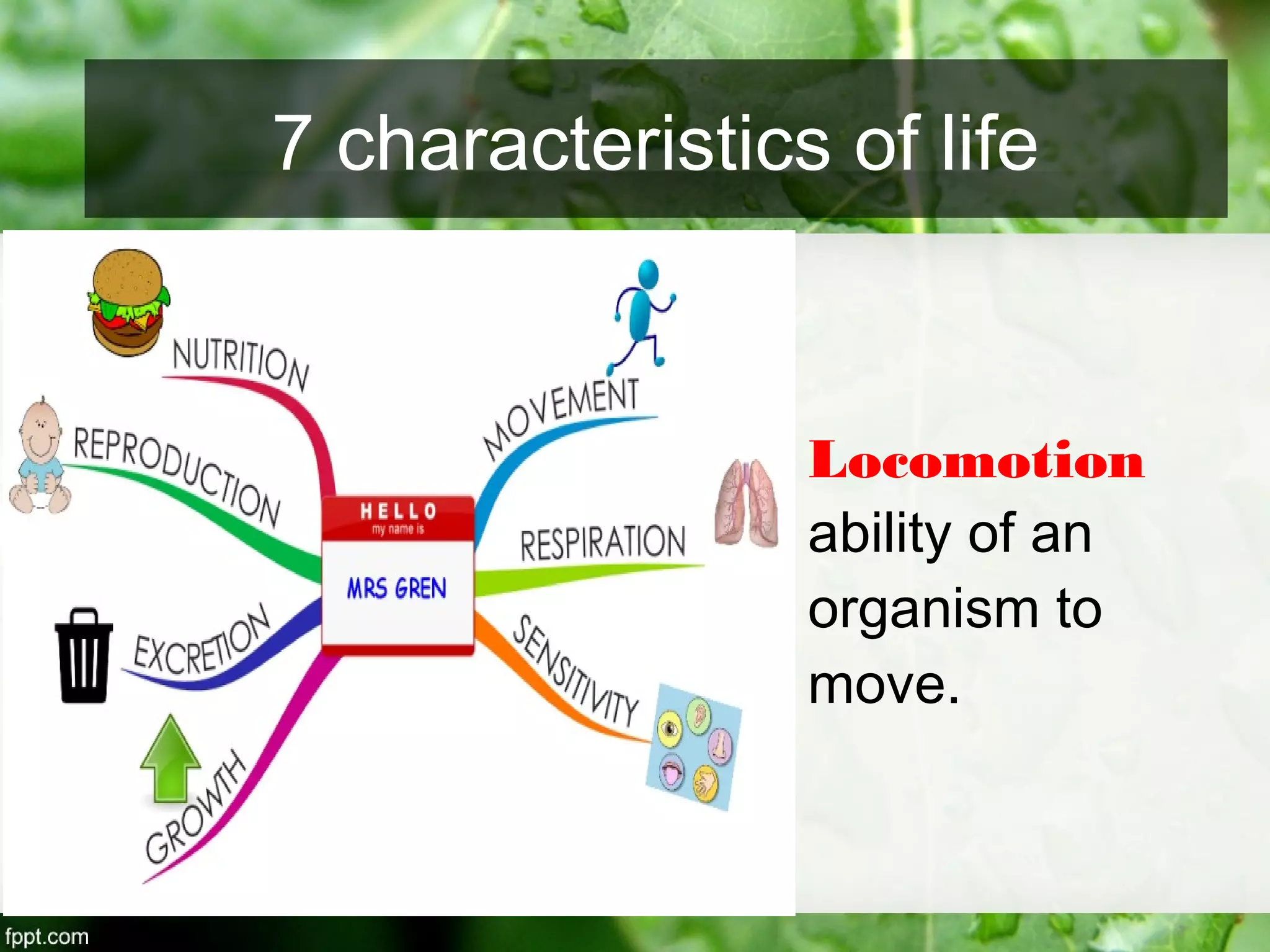
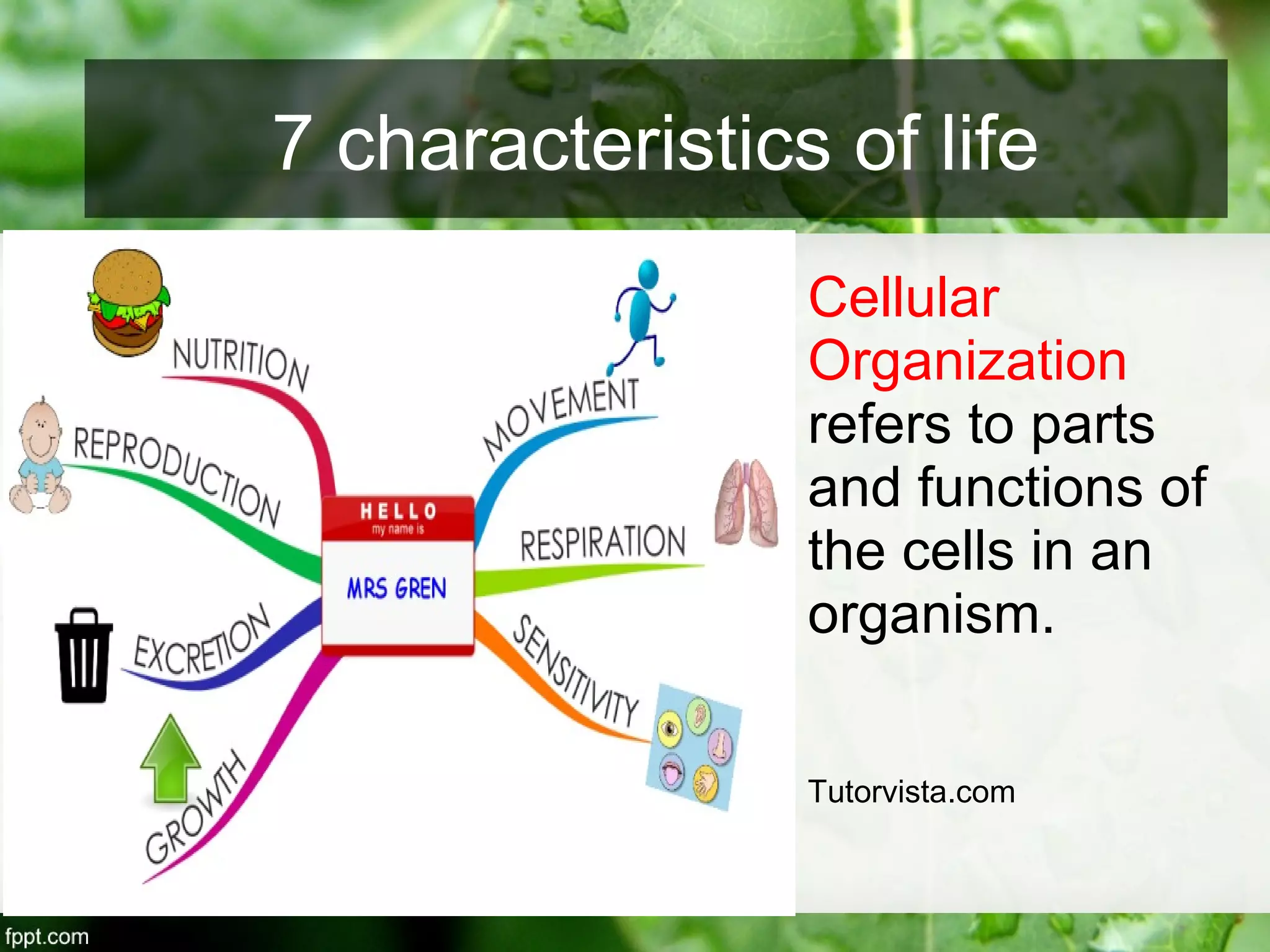
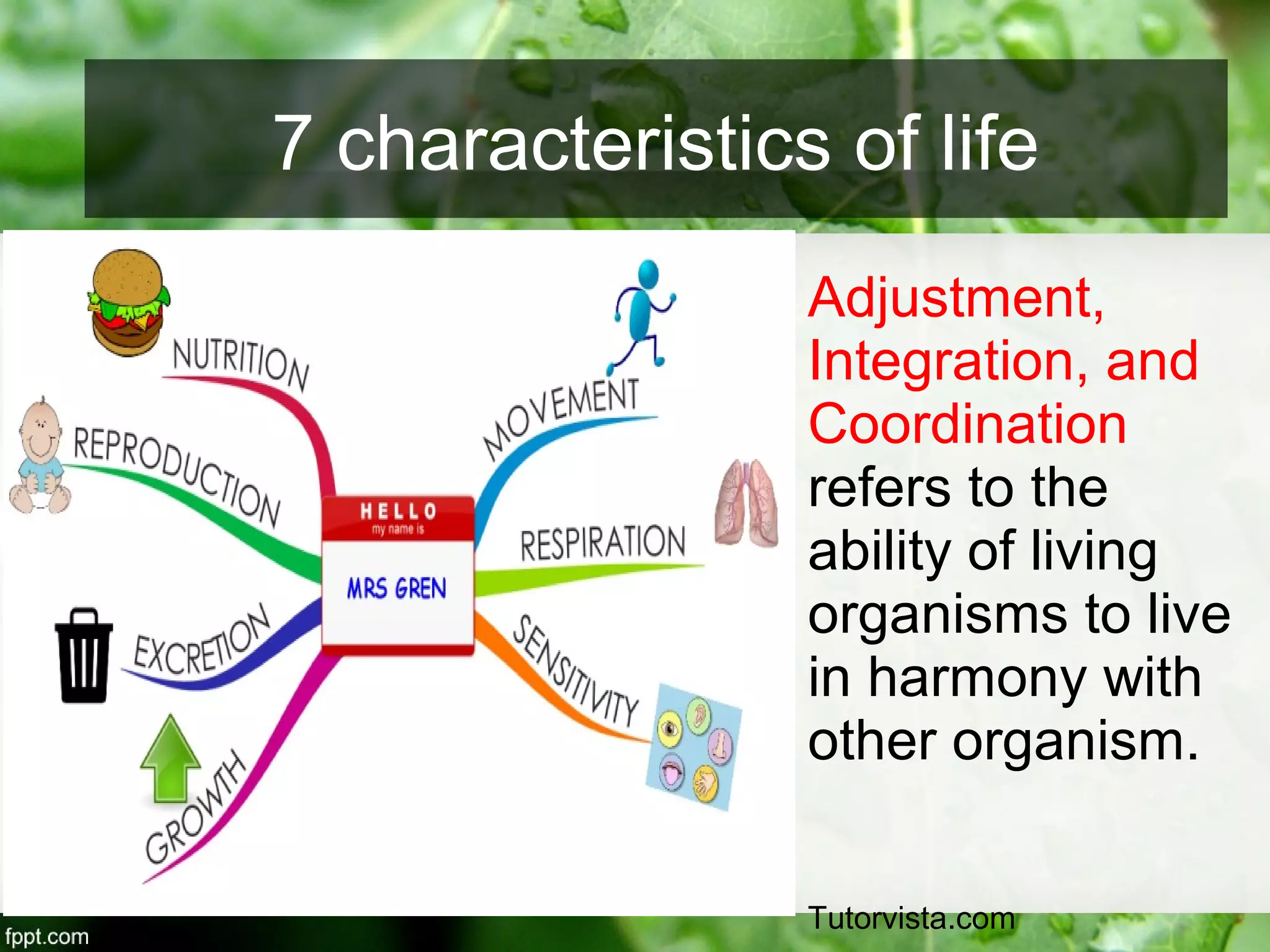
7 characteristics of life
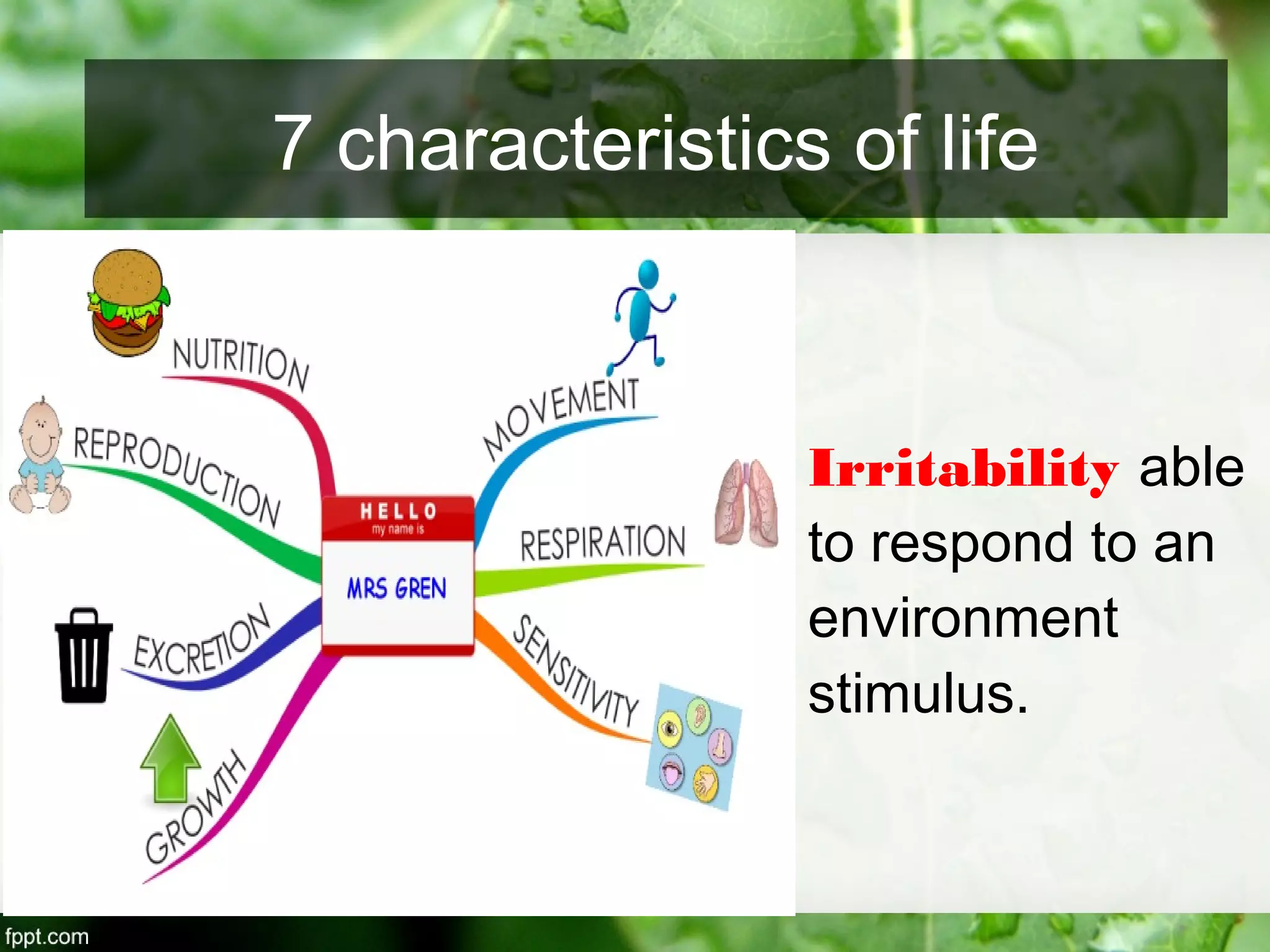
Irritability able
to respond to an
environment
stimulus.
7 characteristics of life
Responds to
light by facing
the sun
https://fineartamerica.com/featured/bloomi
ng-sunflower-in-the-blue-sky-background-
tosporn-preede.html
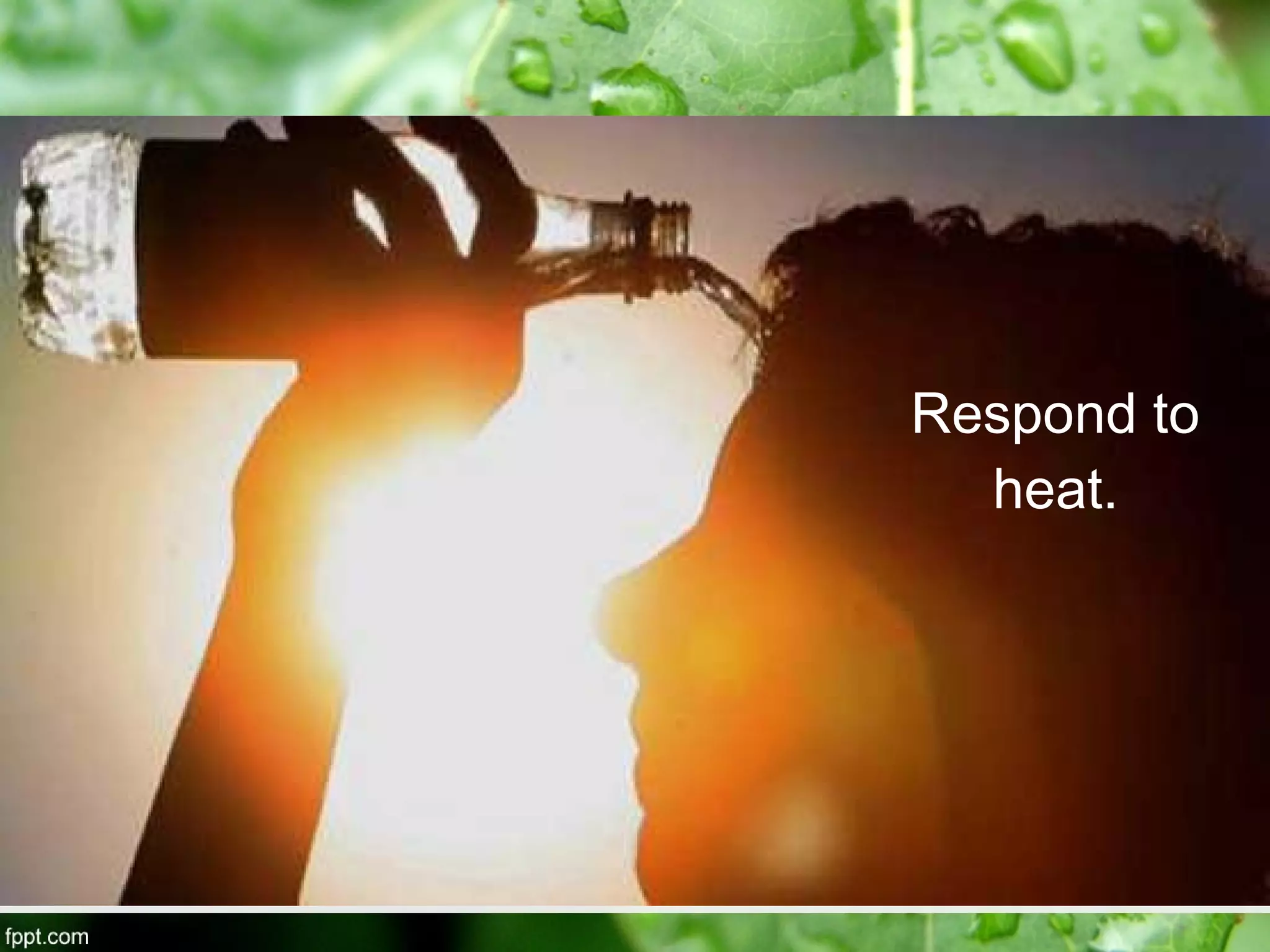
Respond to
heat.
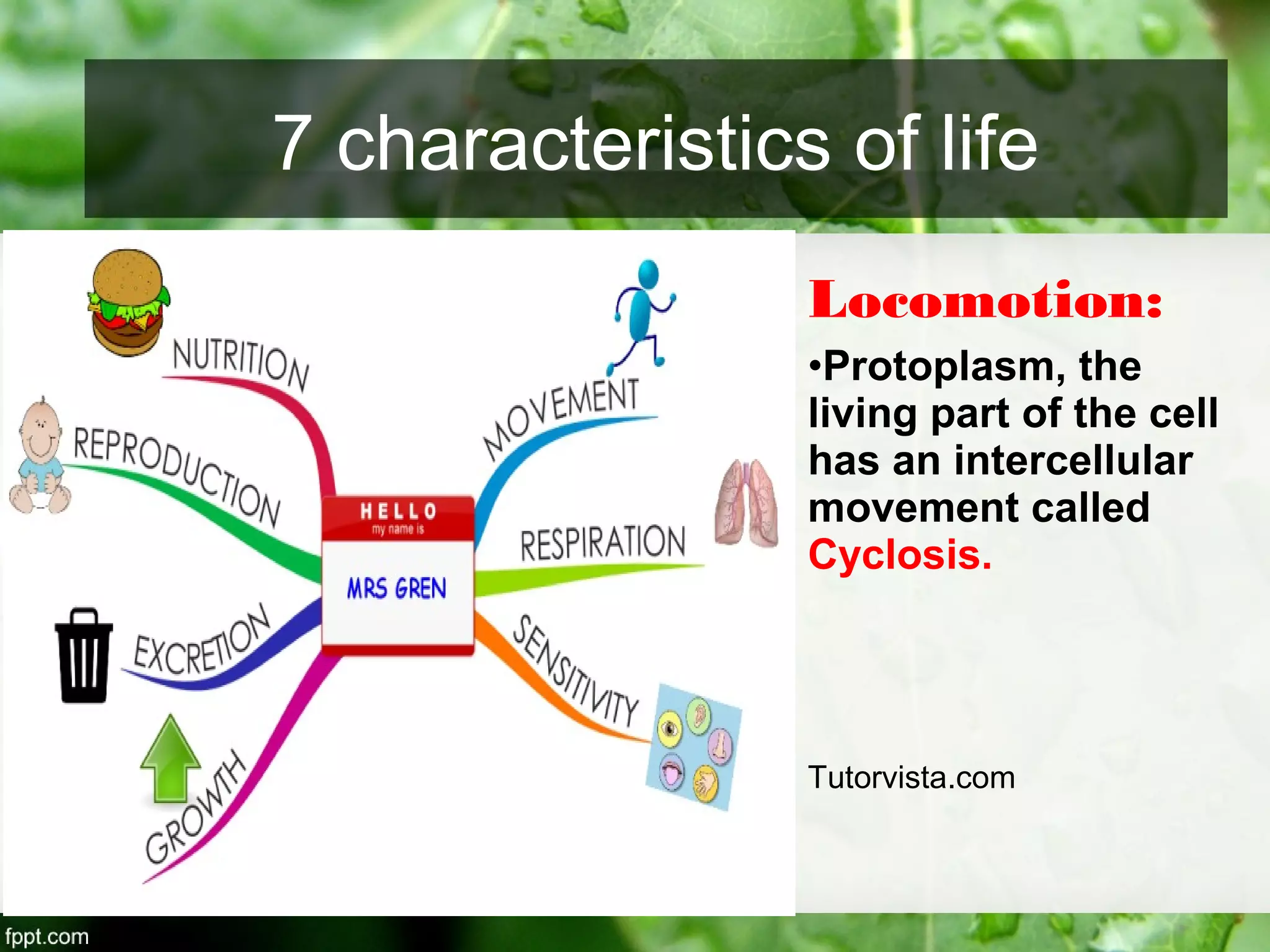
Locomotion
ability of an
organism to
move.
7 characteristics of life
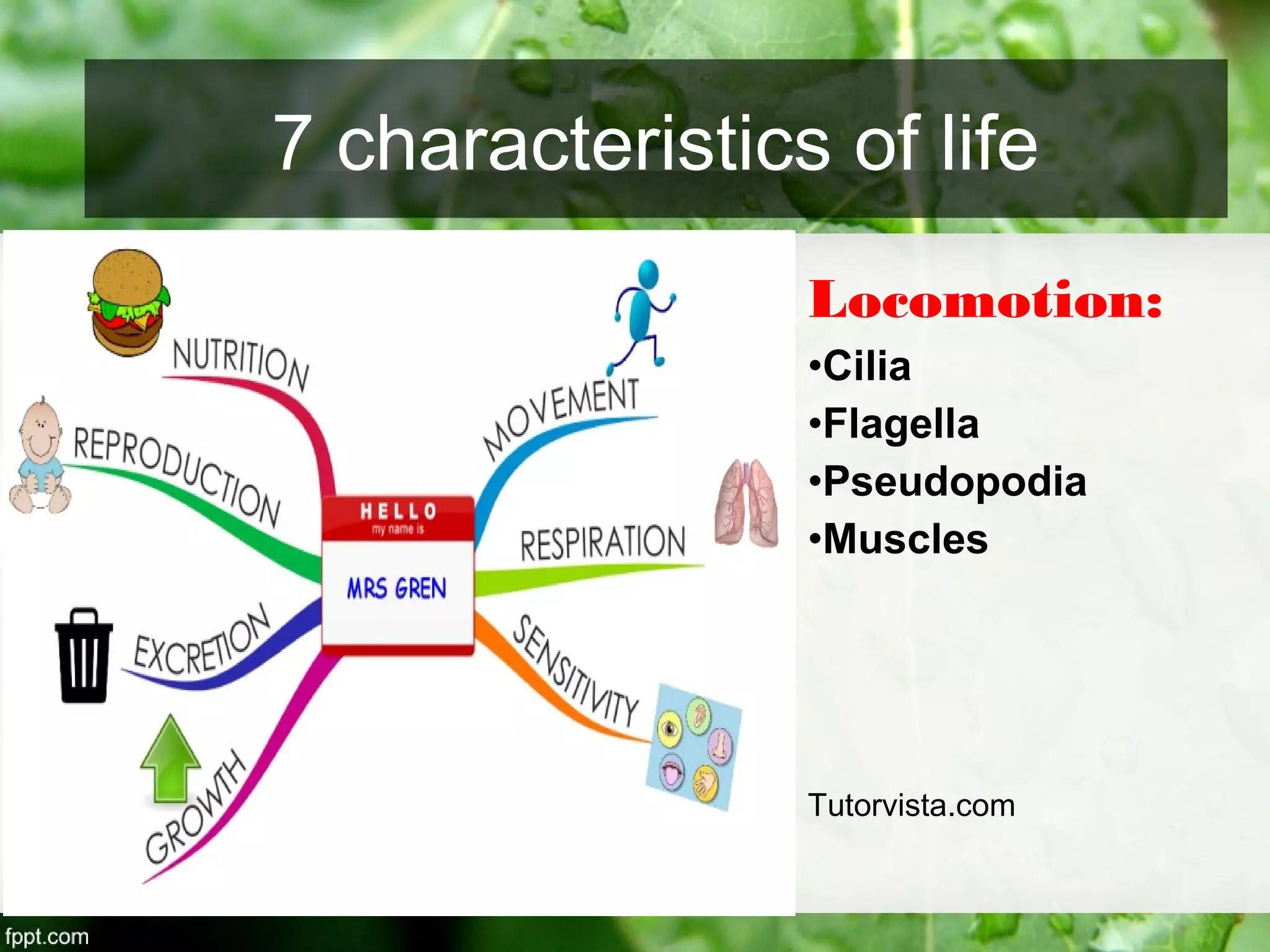
Locomotion:
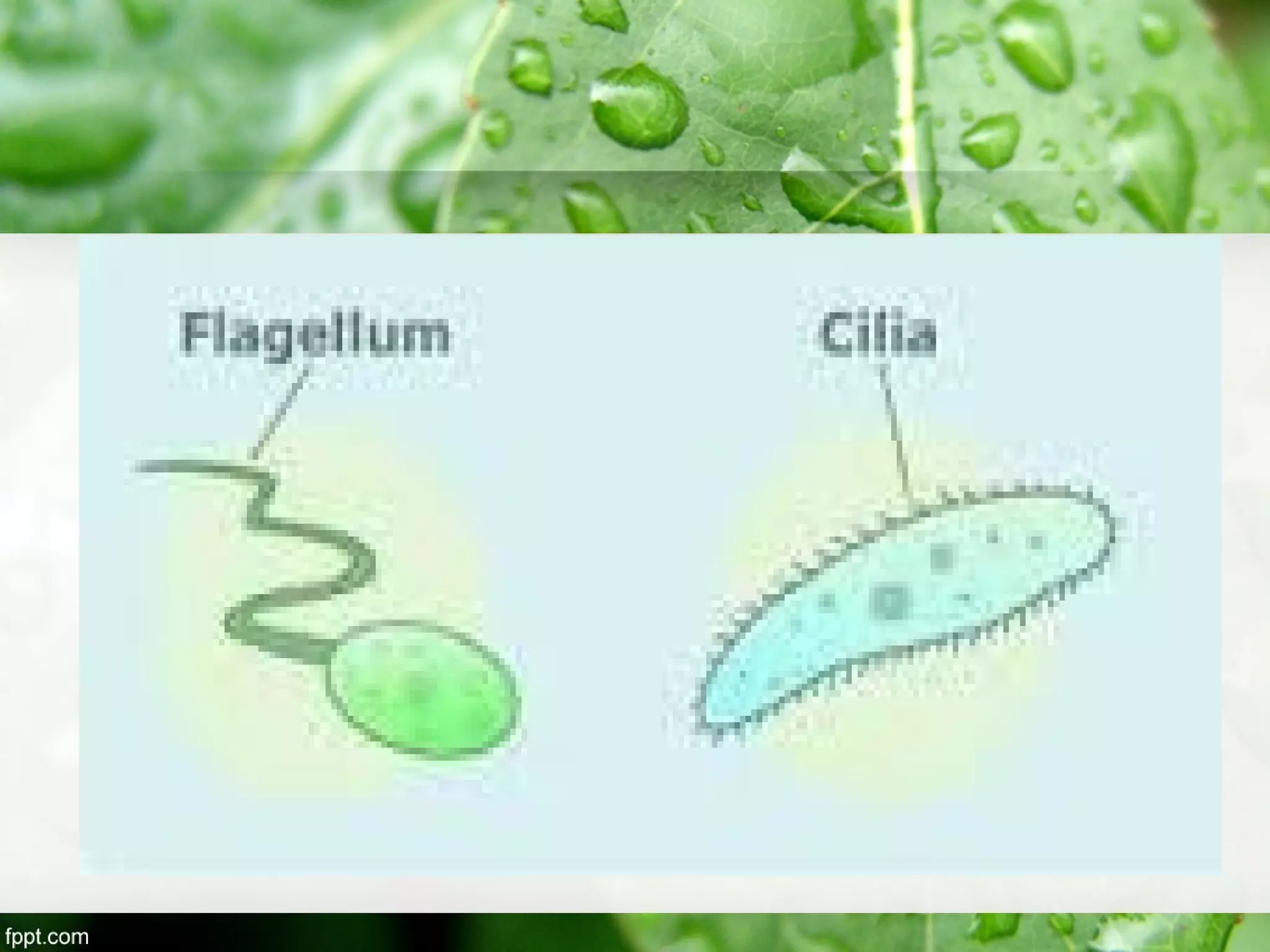
•Cilia
•Flagella
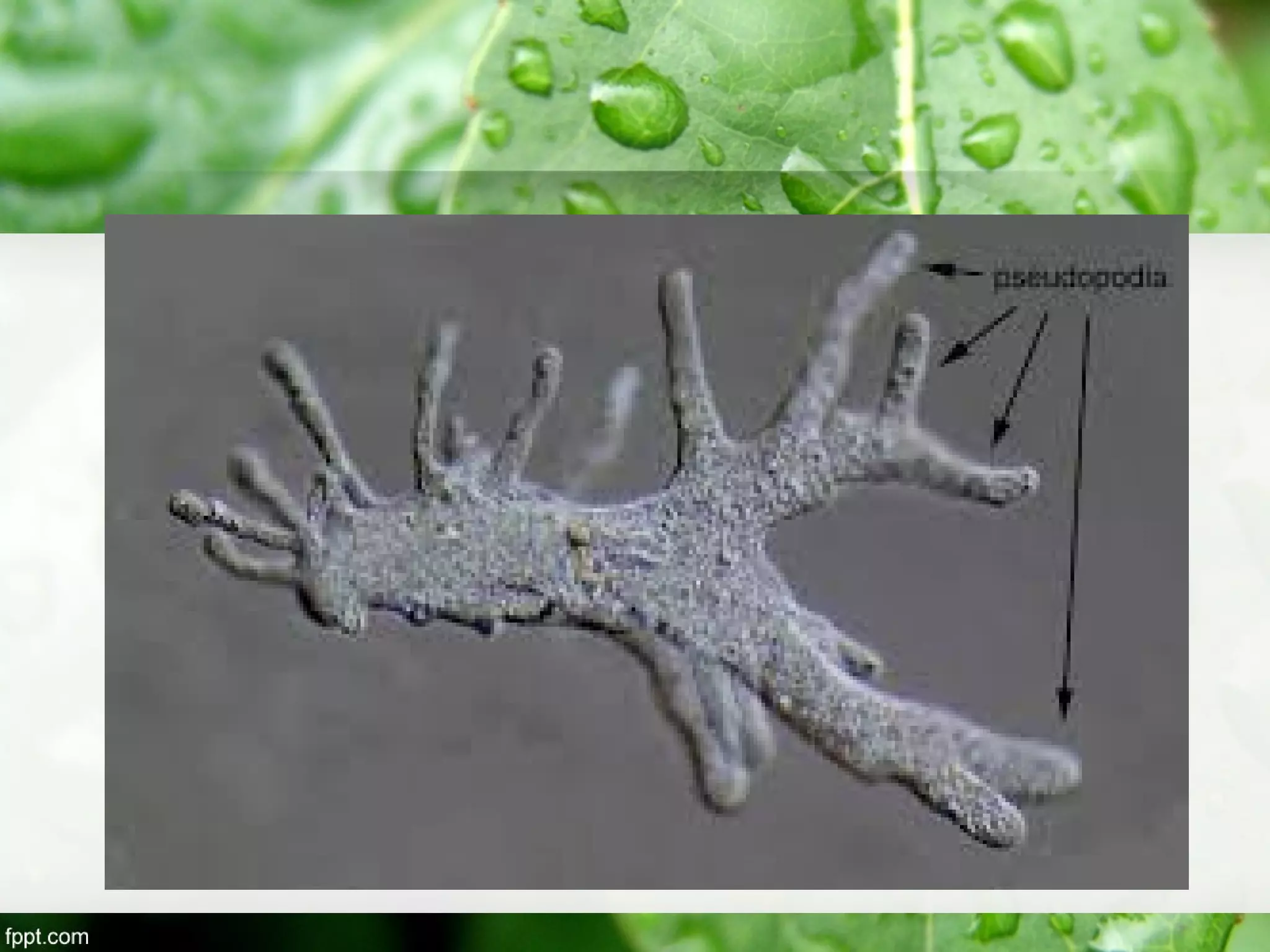
•Pseudopodia
•Muscles
Tutorvista.com
7 characteristics of life
Locomotion:
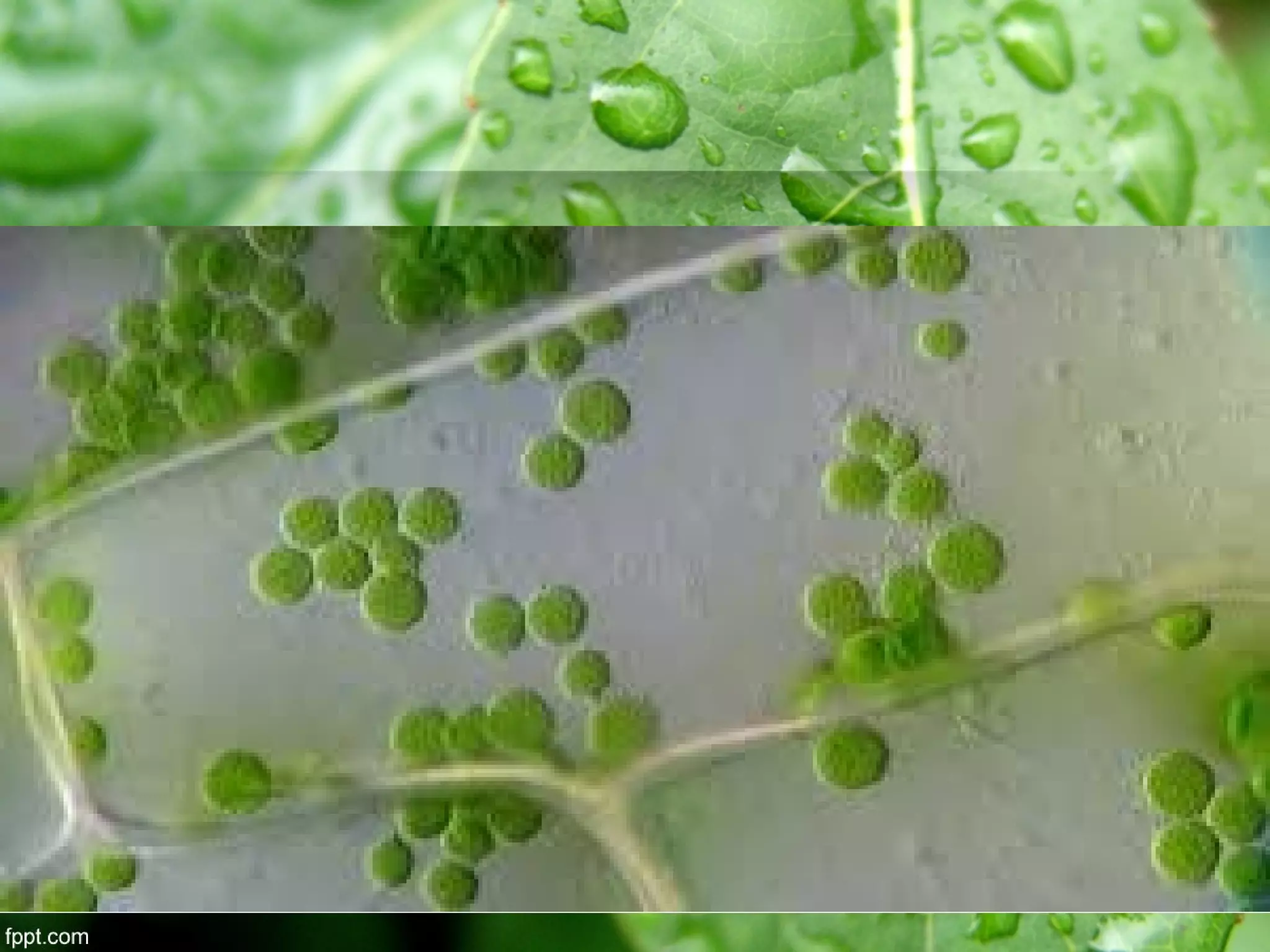
•Protoplasm, the
living part of the cell
has an intercellular
movement called
Cyclosis.
Tutorvista.com
7 characteristics of life
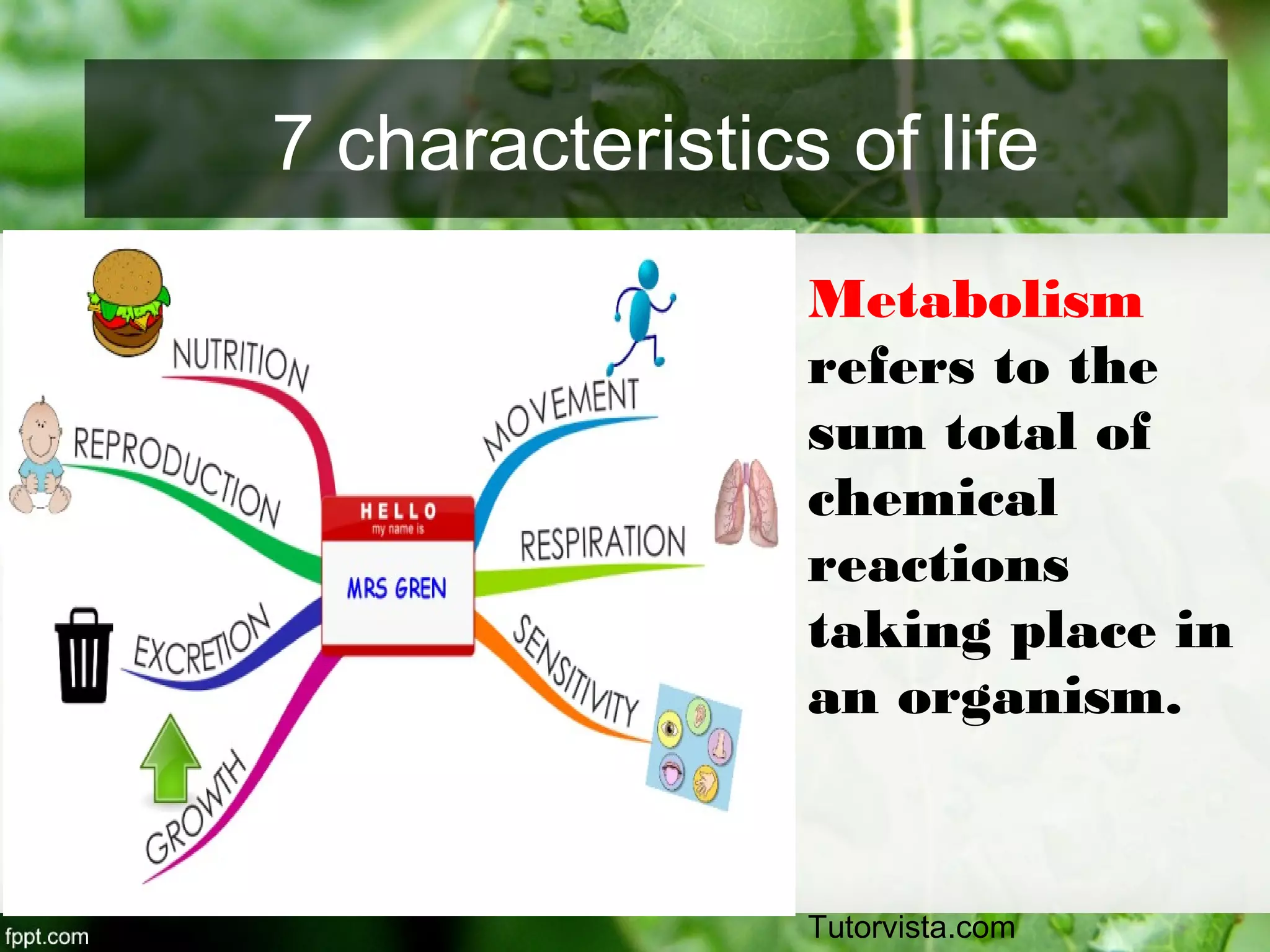
Metabolism
refers to the
sum total of
chemical
reactions
taking place in
an organism.
Tutorvista.com
7 characteristics of life
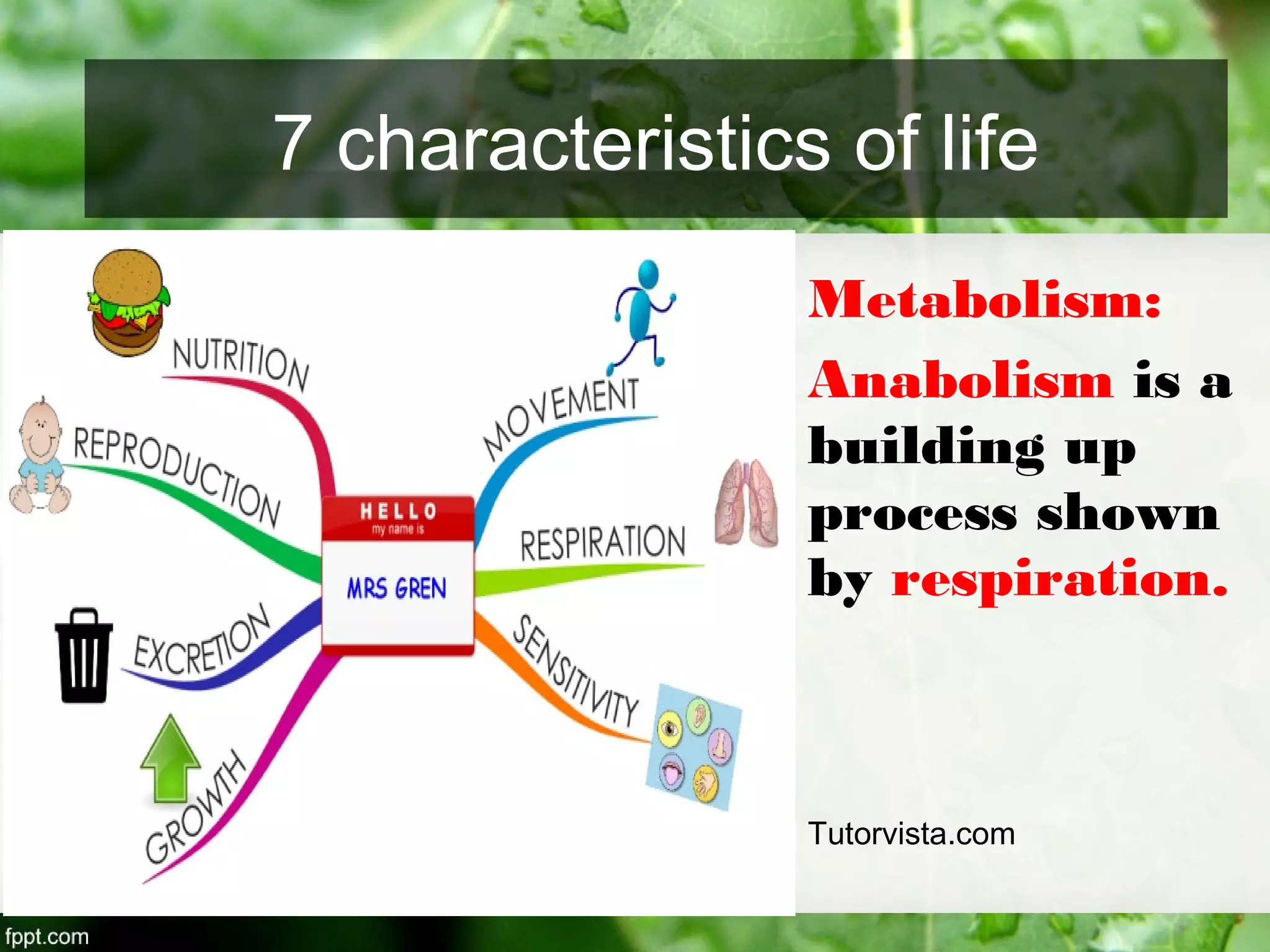
Metabolism:
Anabolism is a
building up
process shown
by respiration.
Tutorvista.com
7 characteristics of life
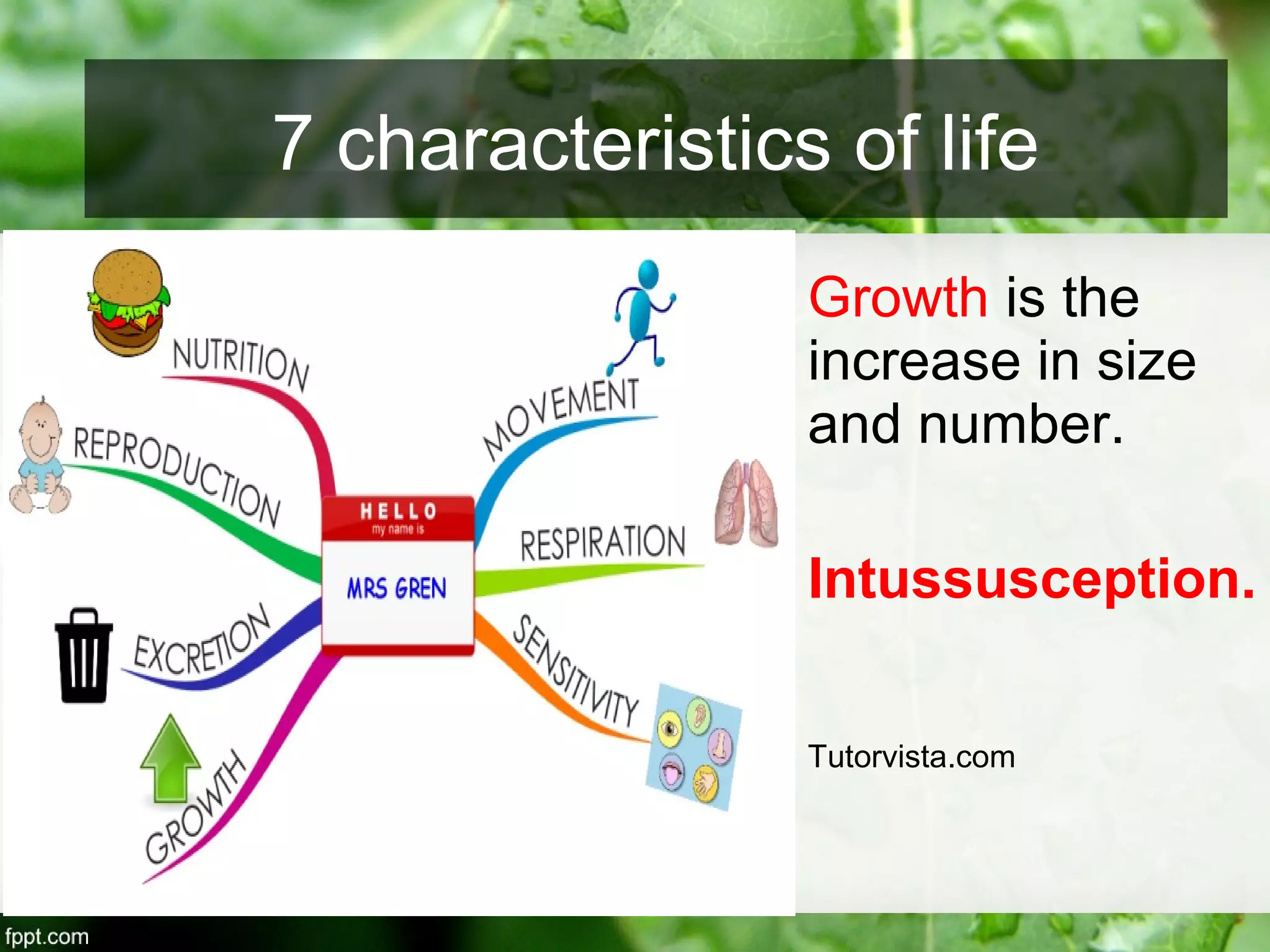
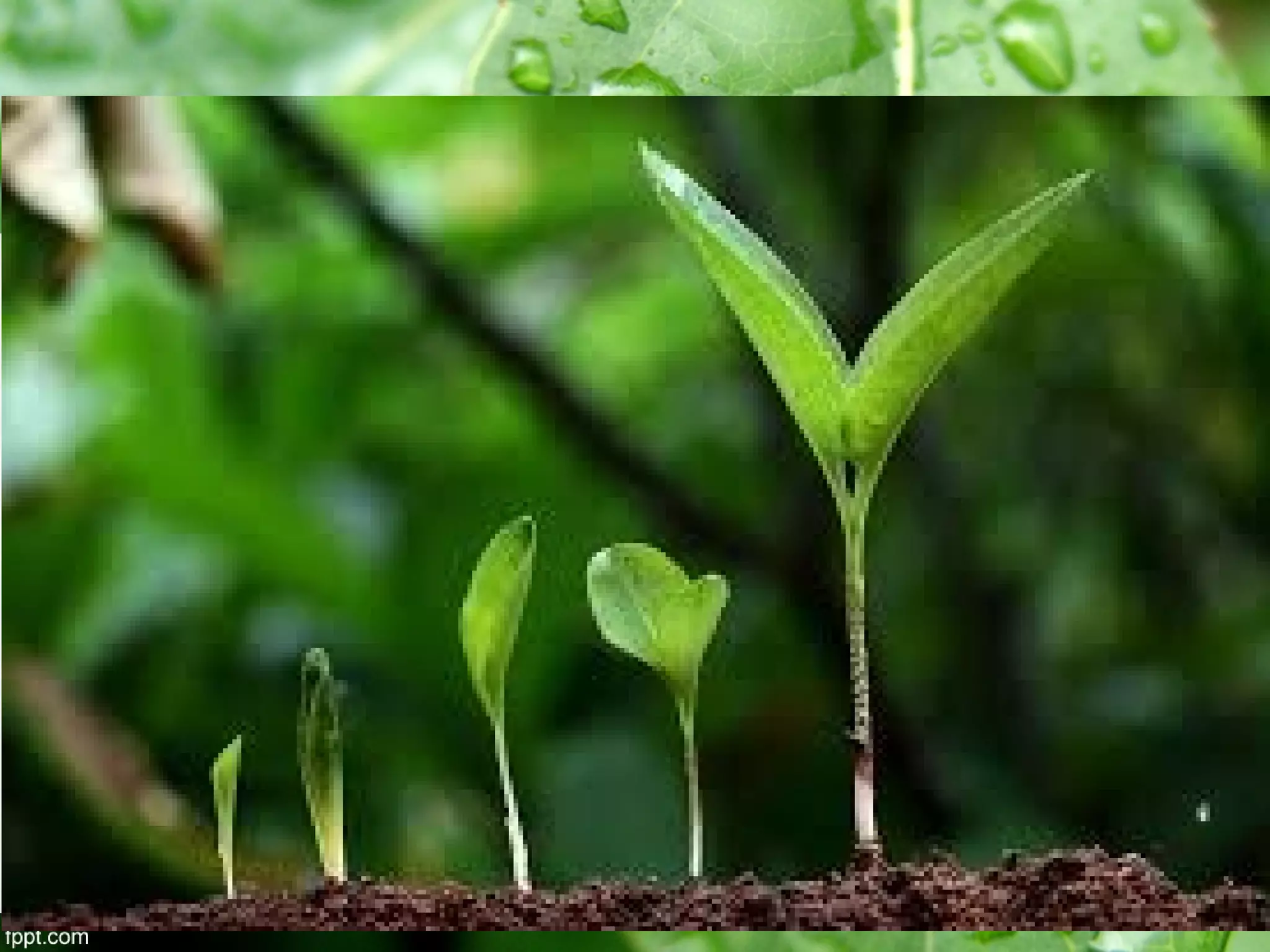
Growth is the
increase in size
and number.
Intussusception.
Tutorvista.com
7 characteristics of life
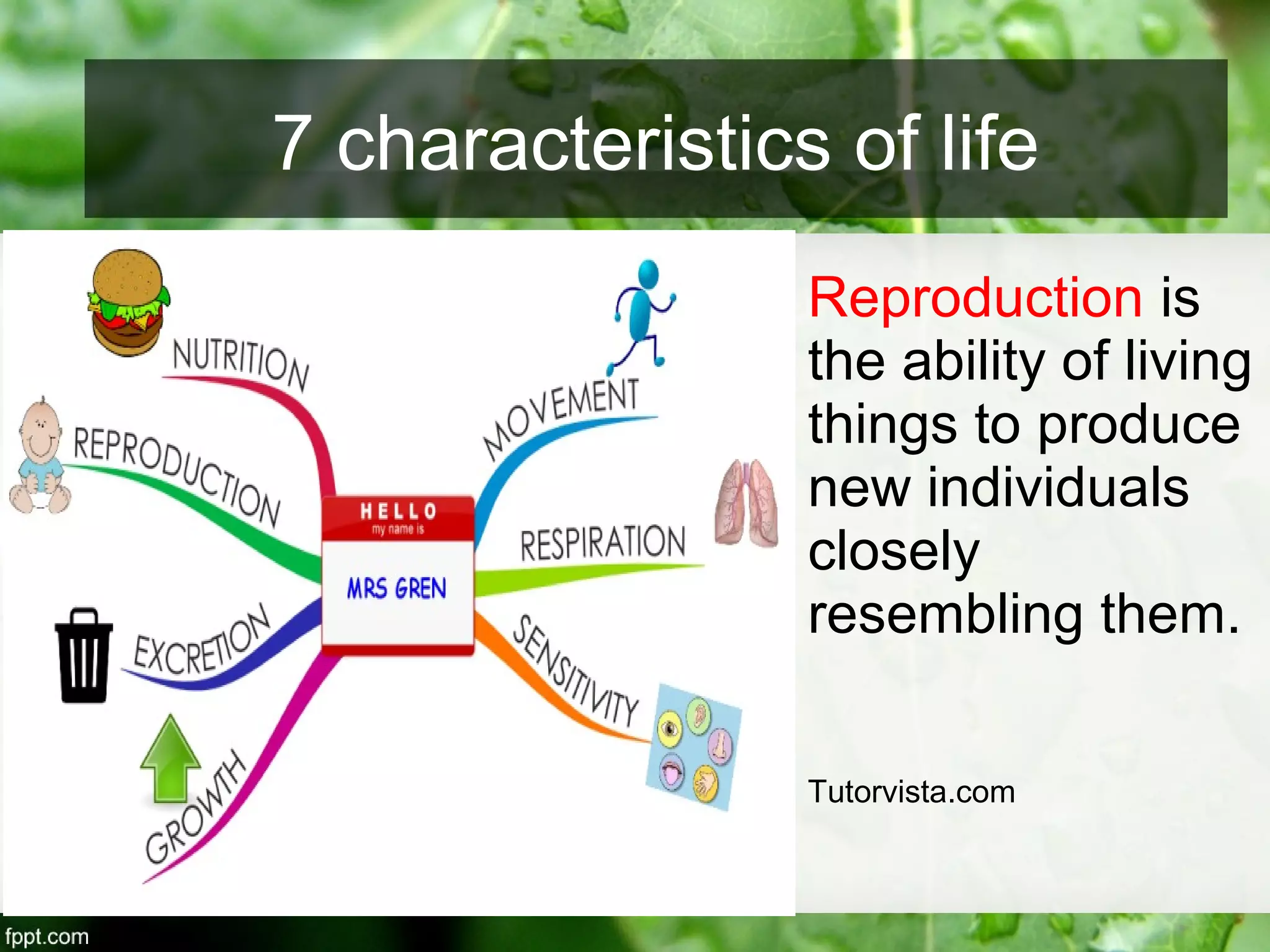
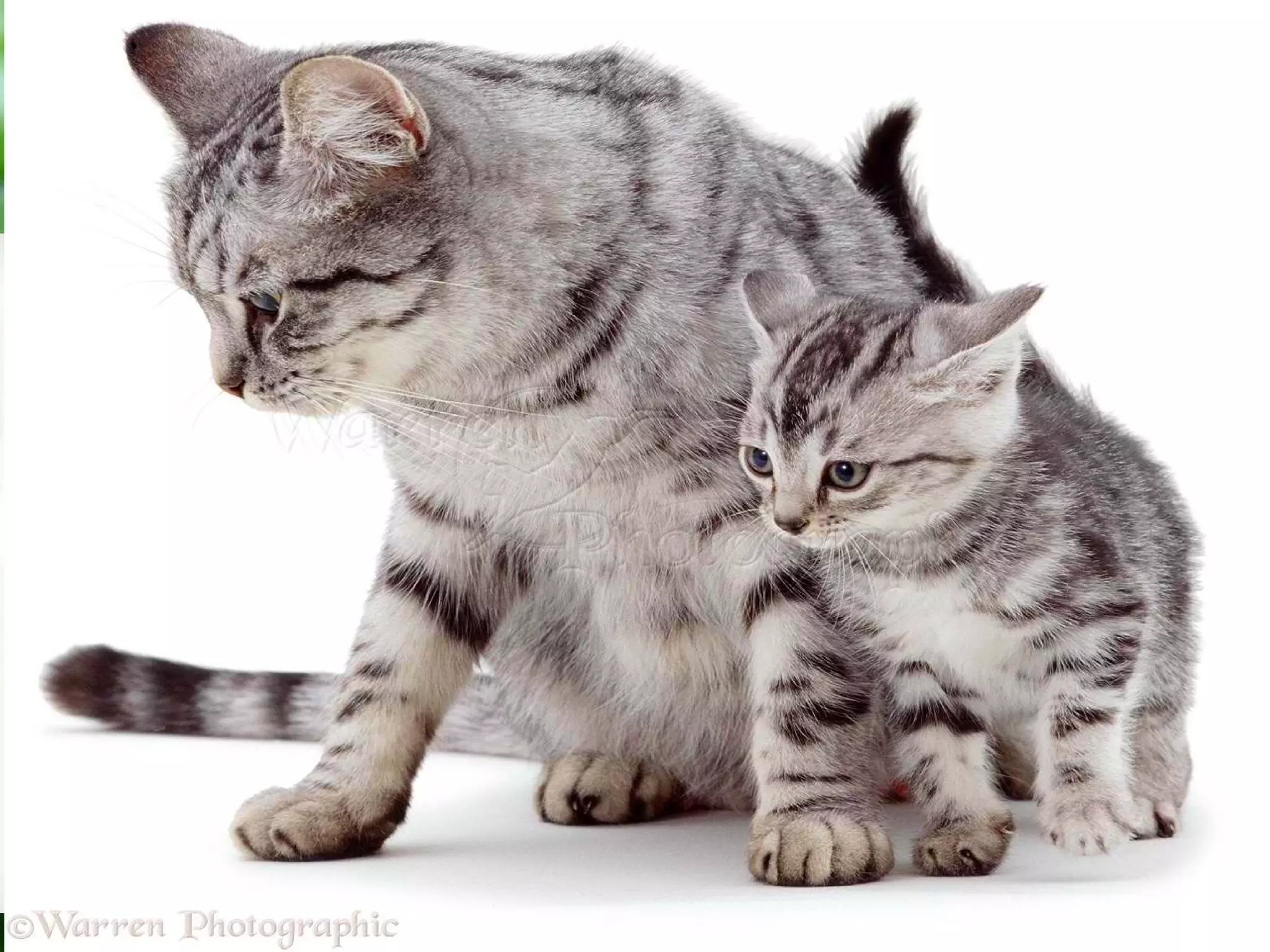
Reproduction is
the ability of living
things to produce
new individuals
closely
resembling them.
Tutorvista.com
7 characteristics of life
Cellular
Organization
refers to parts
and functions of
the cells in an
organism.
Tutorvista.com
7 characteristics of life
Adjustment,
Integration, and
Coordination
refers to the
ability of living
organisms to live
in harmony with
other organism.
Tutorvista.com
7 characteristics of life
Where did the first life come
from?
Theories on the Origin of Life
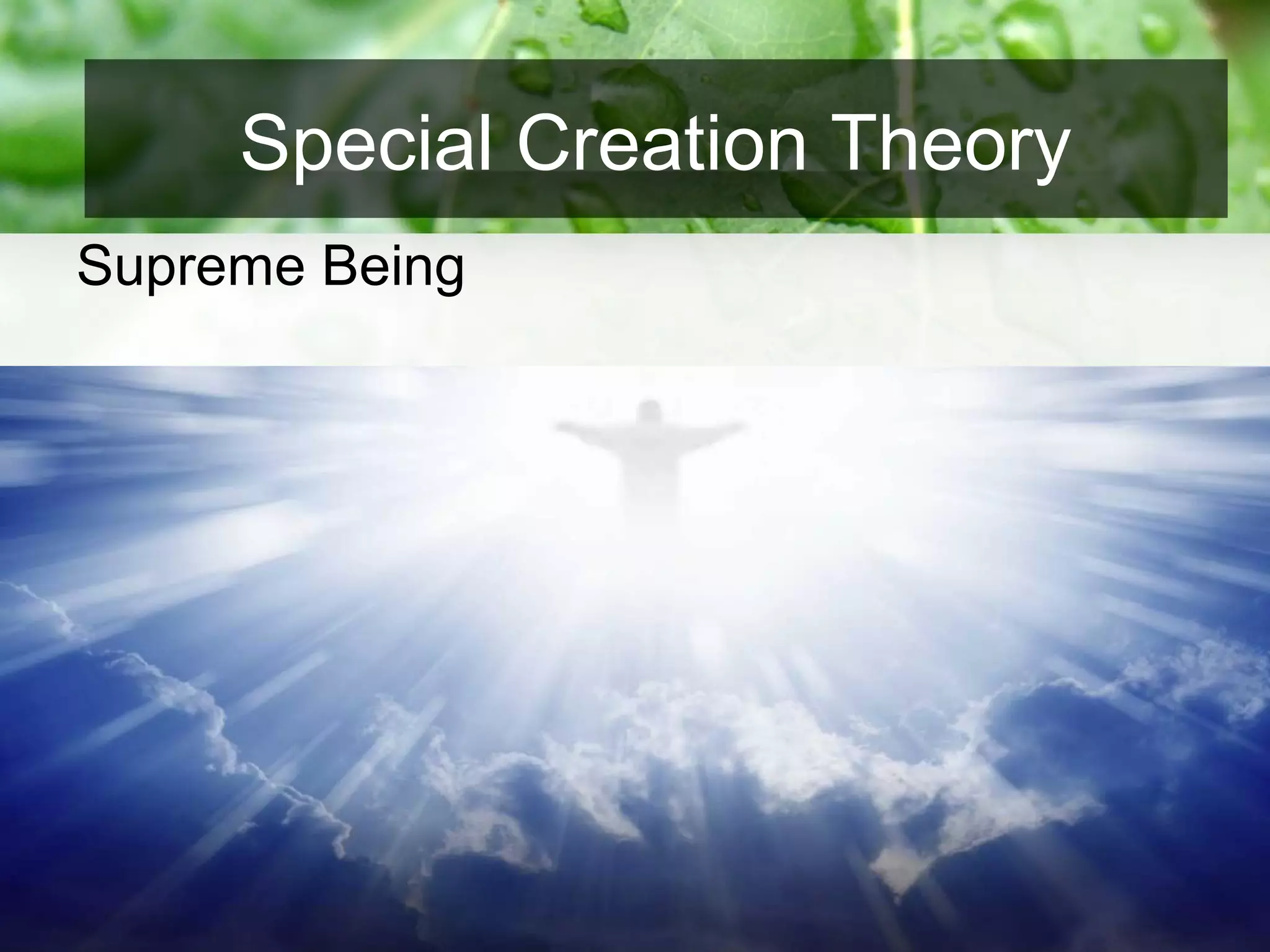
Supreme Being
Special Creation Theory
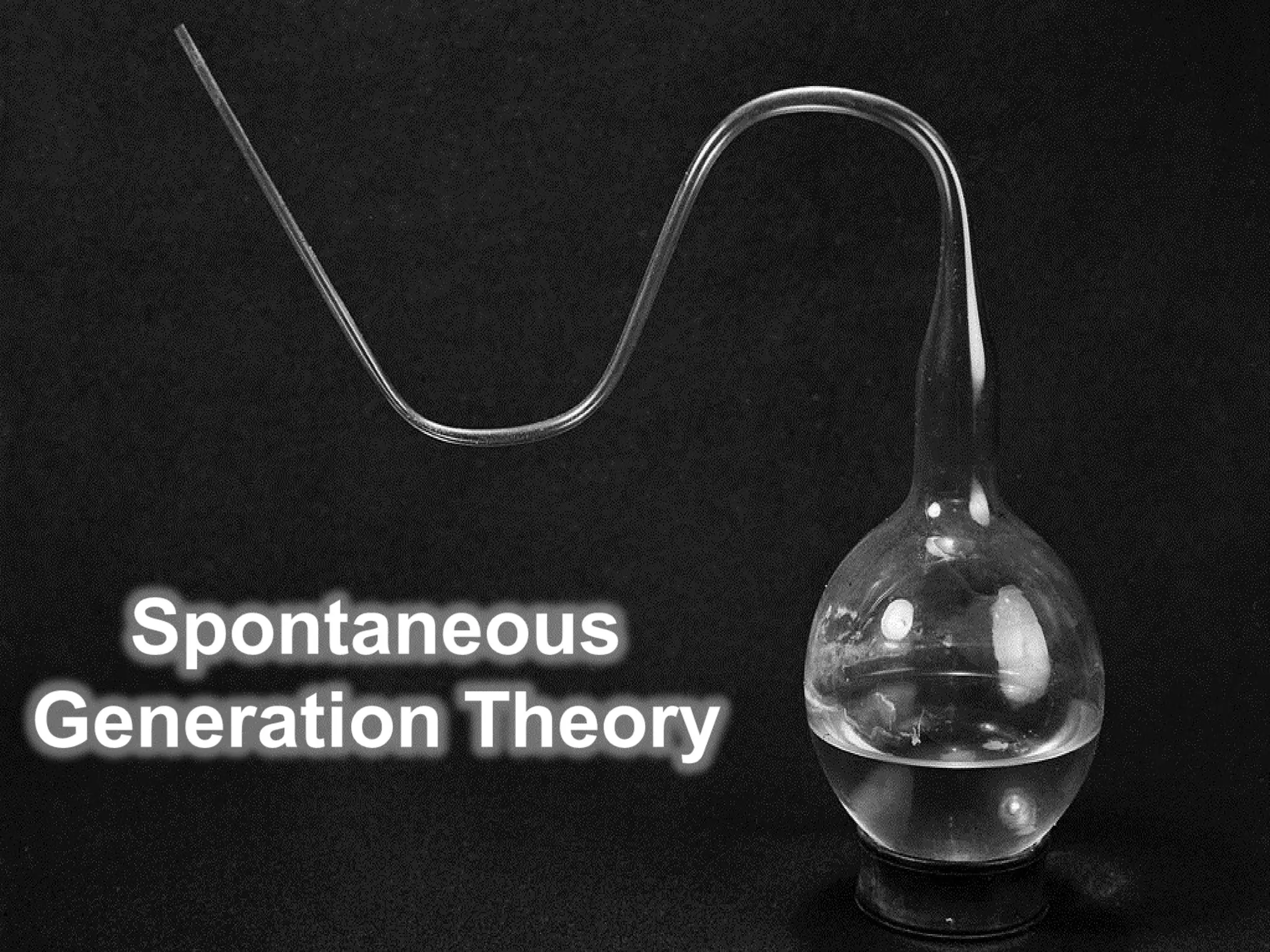
Spontaneous
Generation
Theory
A theory where
living
organisms
arise from non-
living things
Francesco
Redi
1668
• nbn
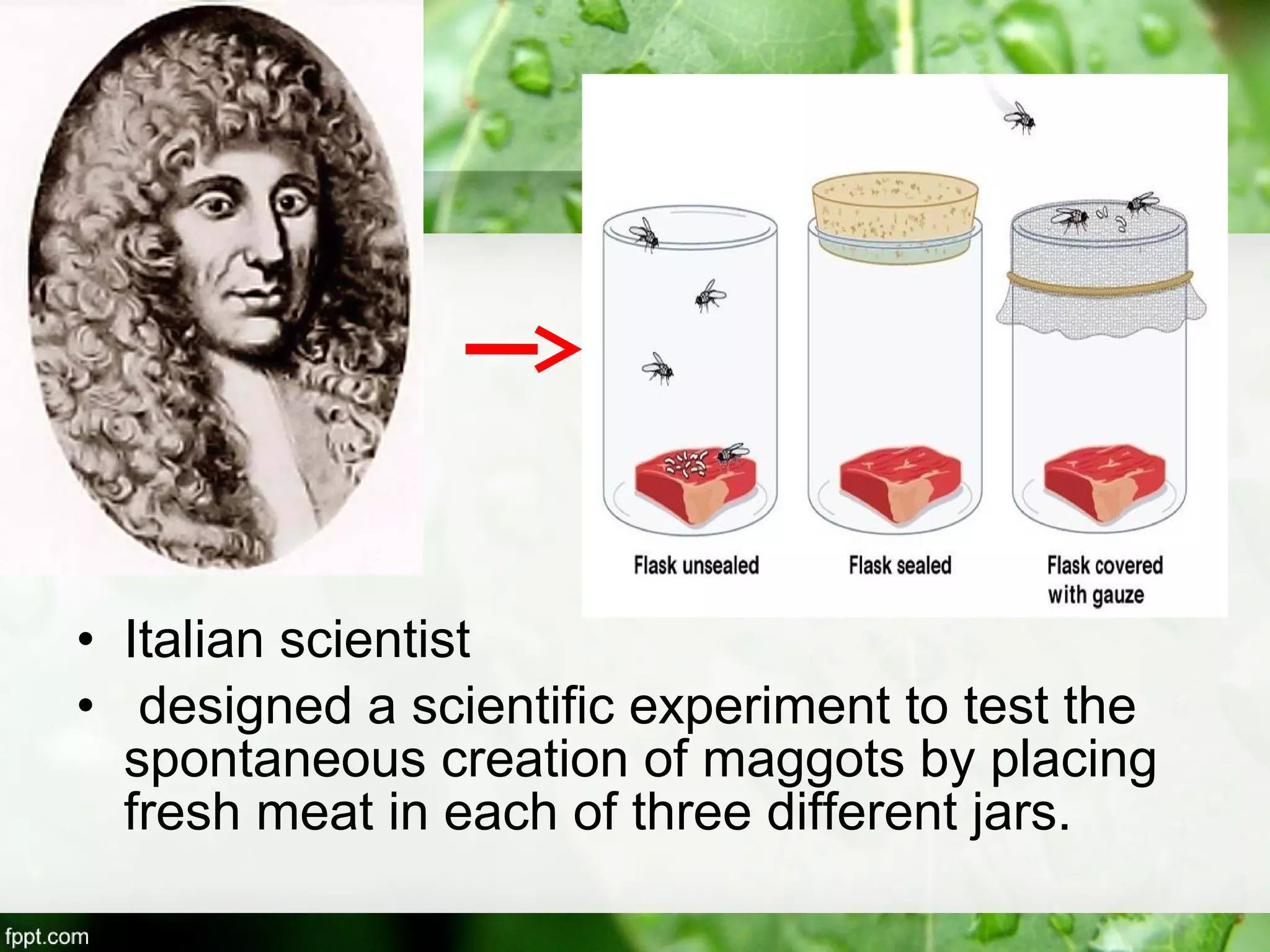
• Italian scientist
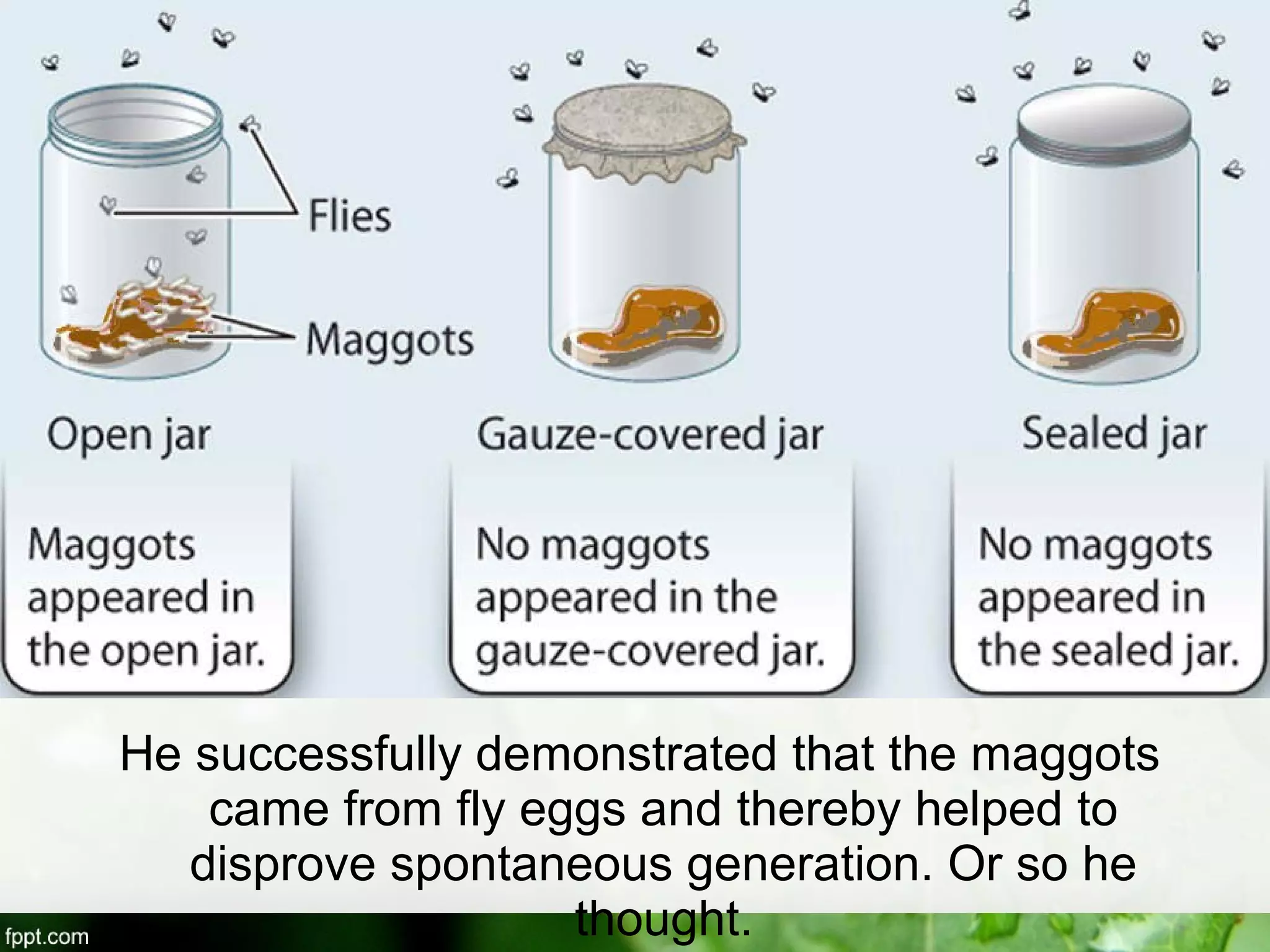
• designed a scientific experiment to test the
spontaneous creation of maggots by placing
fresh meat in each of three different jars.
He successfully demonstrated that the maggots
came from fly eggs and thereby helped to
disprove spontaneous generation. Or so he
thought.
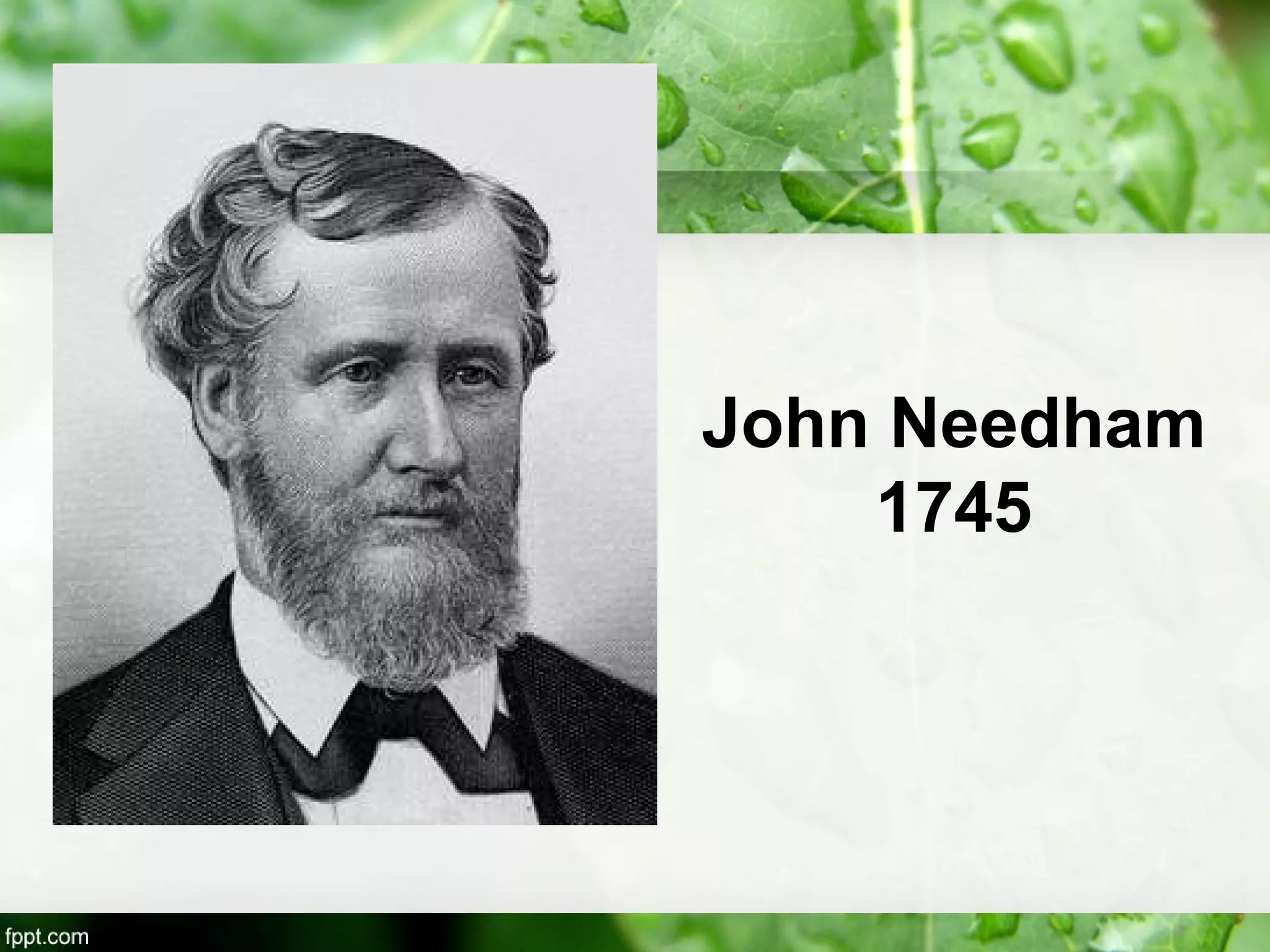
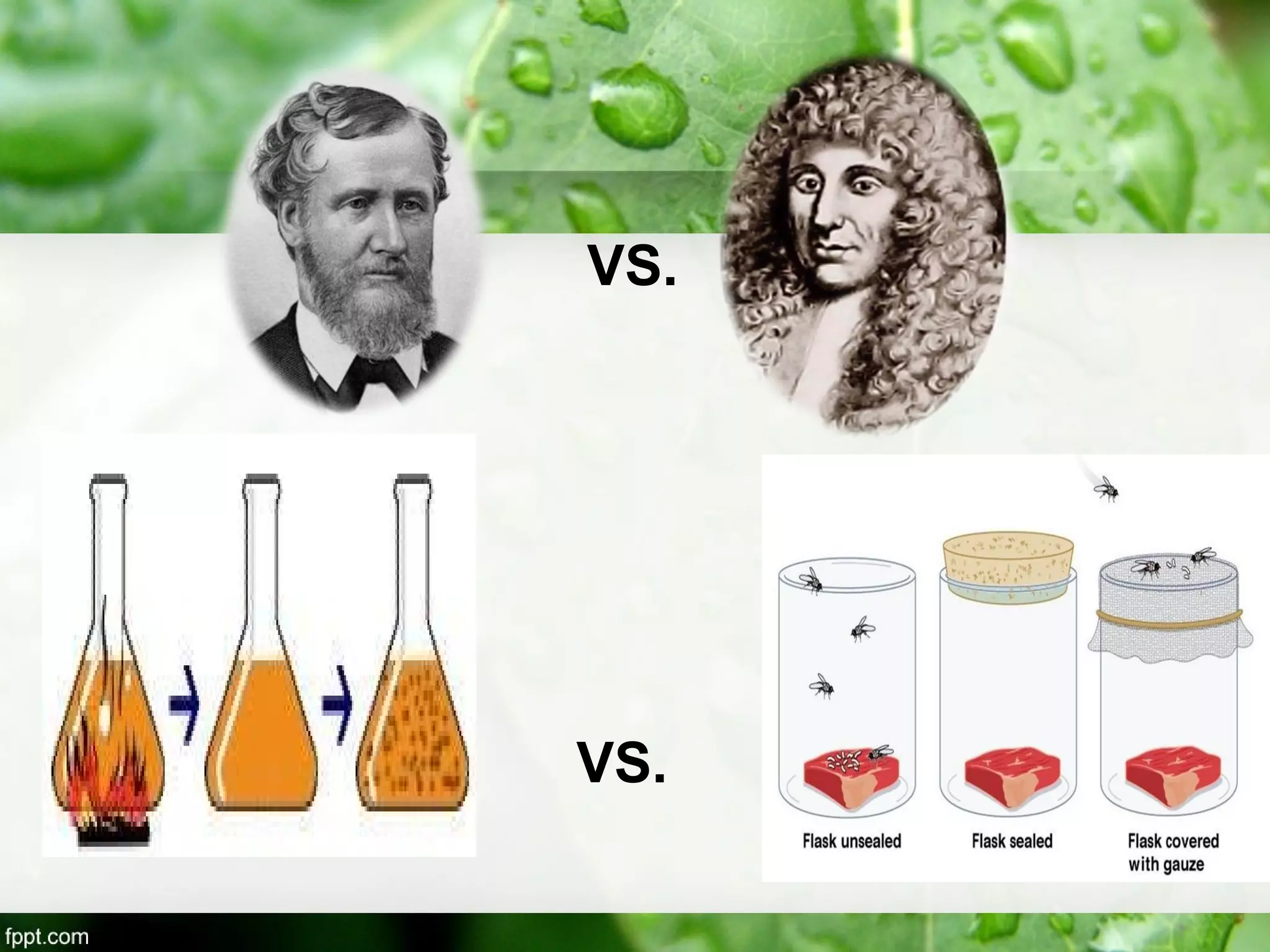
John Needham
1745
VS.
VS.
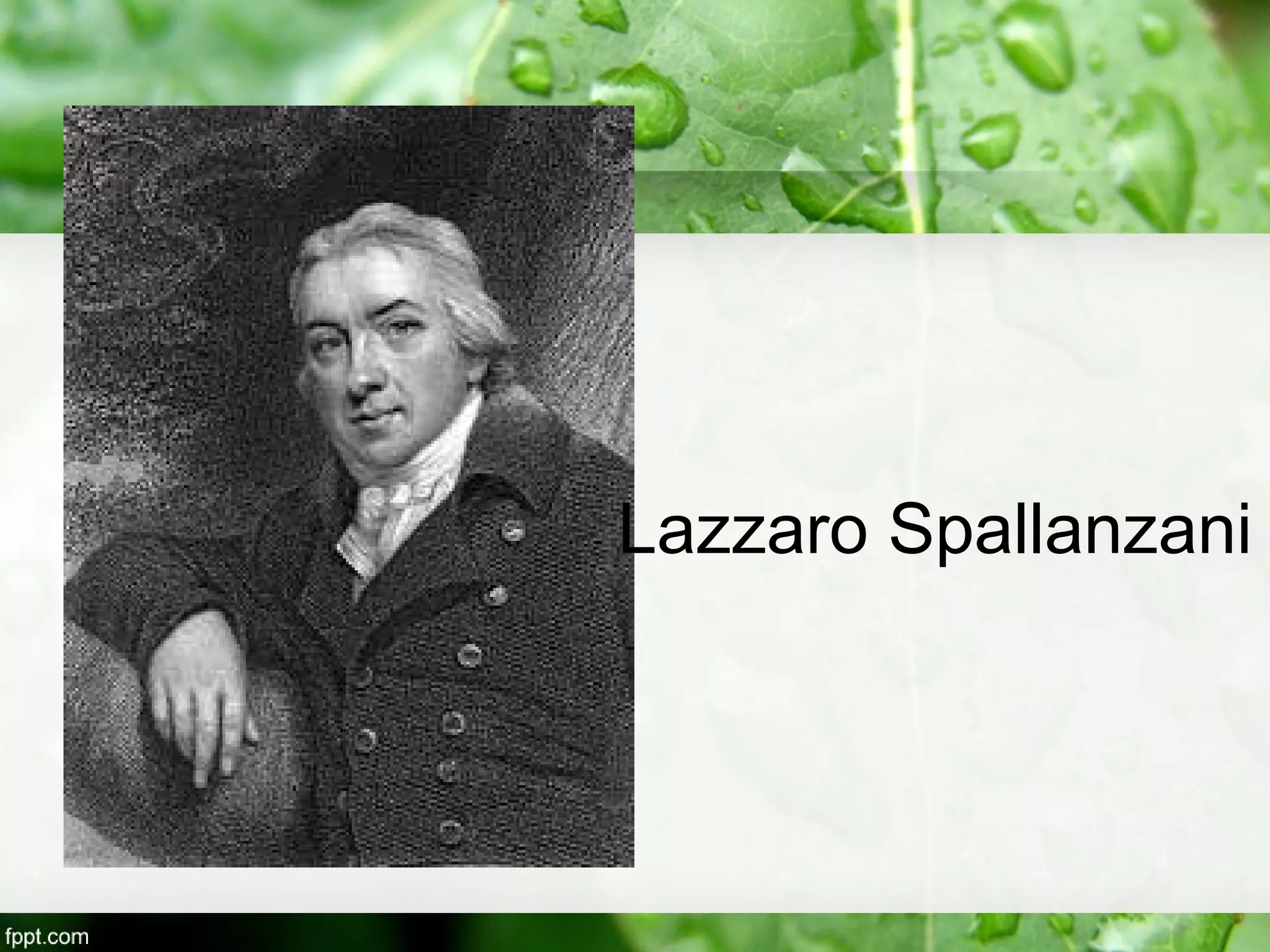
Lazzaro Spallanzani
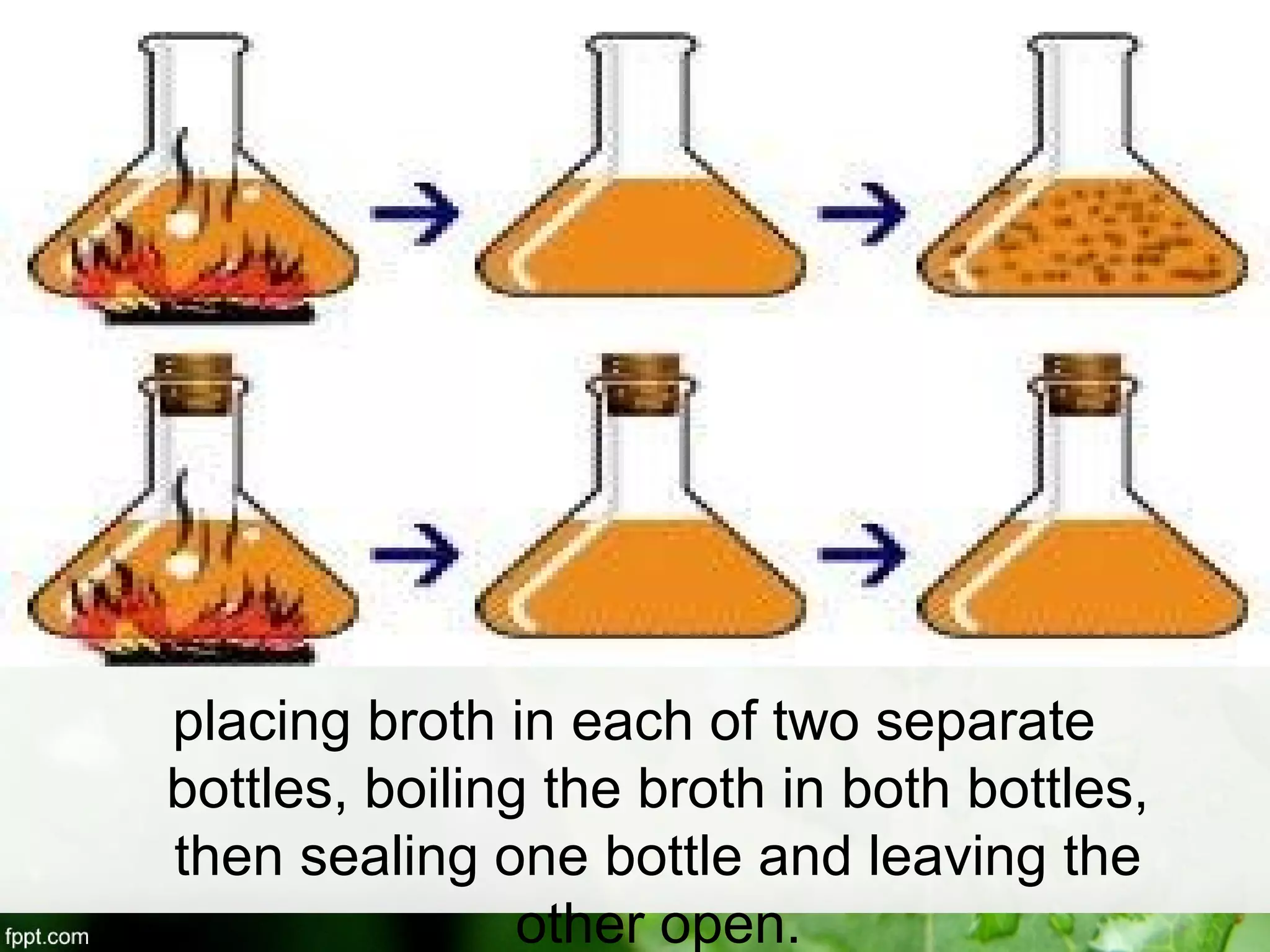
placing broth in each of two separate
bottles, boiling the broth in both bottles,
then sealing one bottle and leaving the
other open.
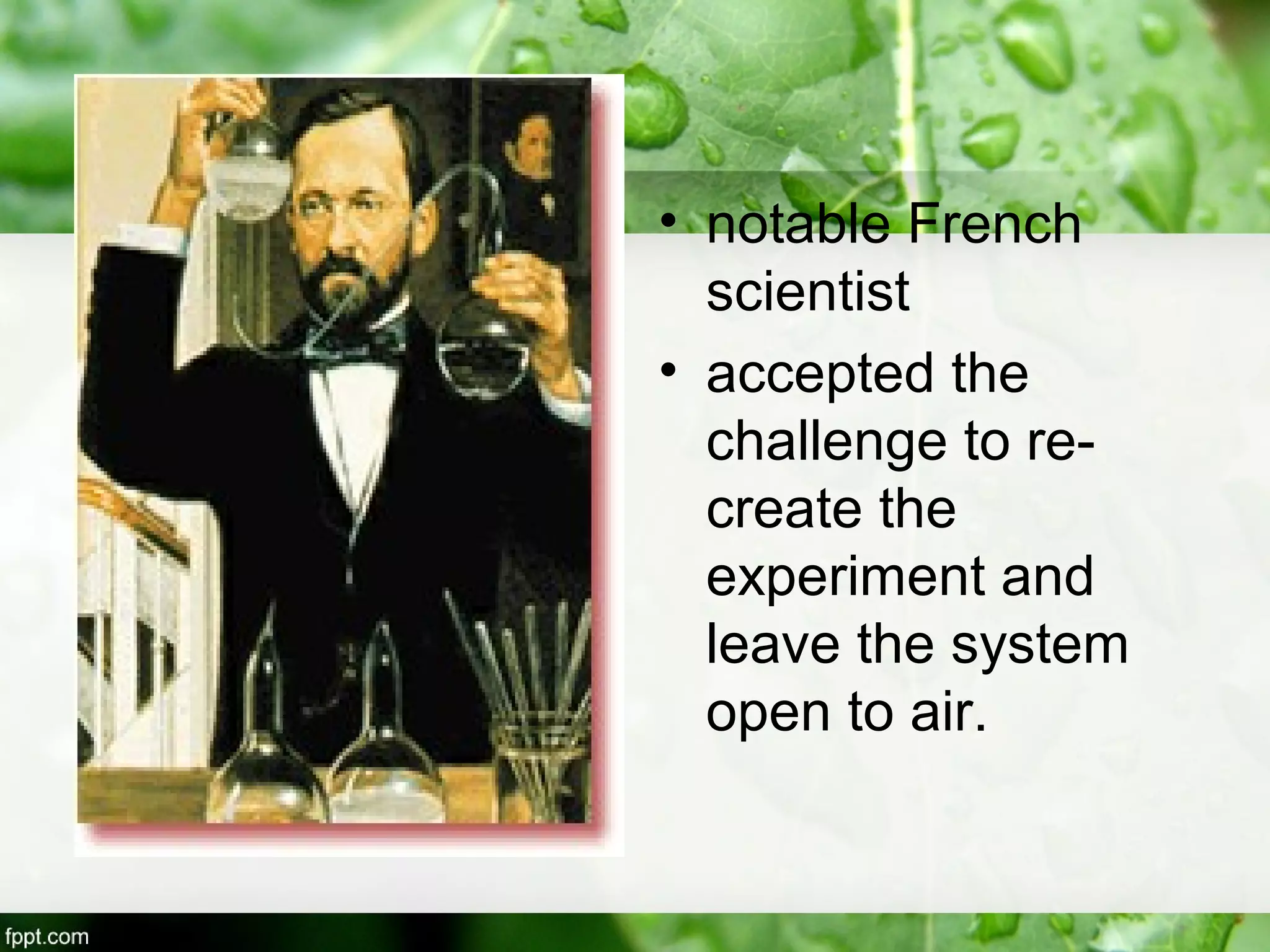
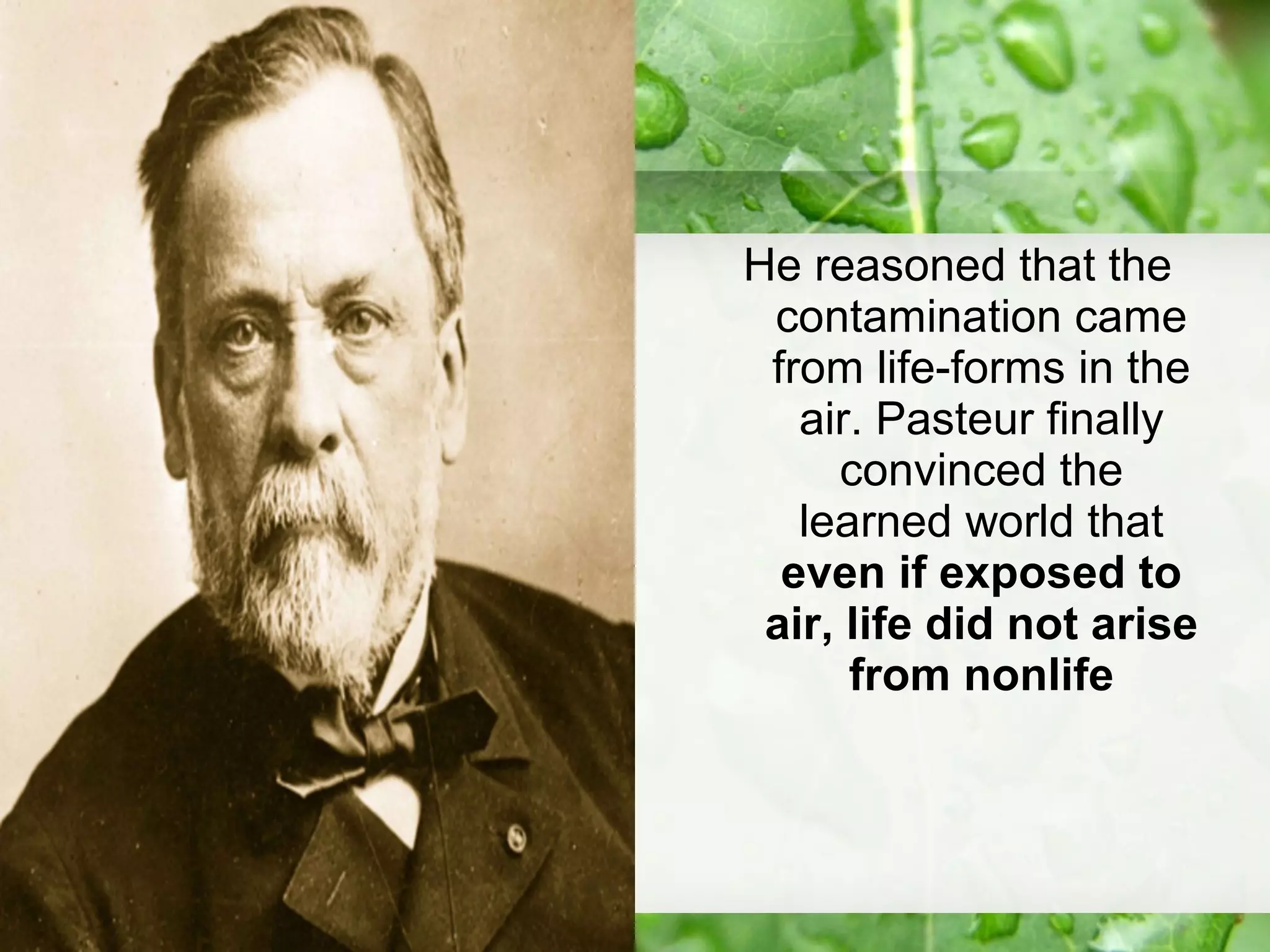
Louis Pasteur
• notable French
scientist
• accepted the
challenge to re-
create the
experiment and
leave the system
open to air.
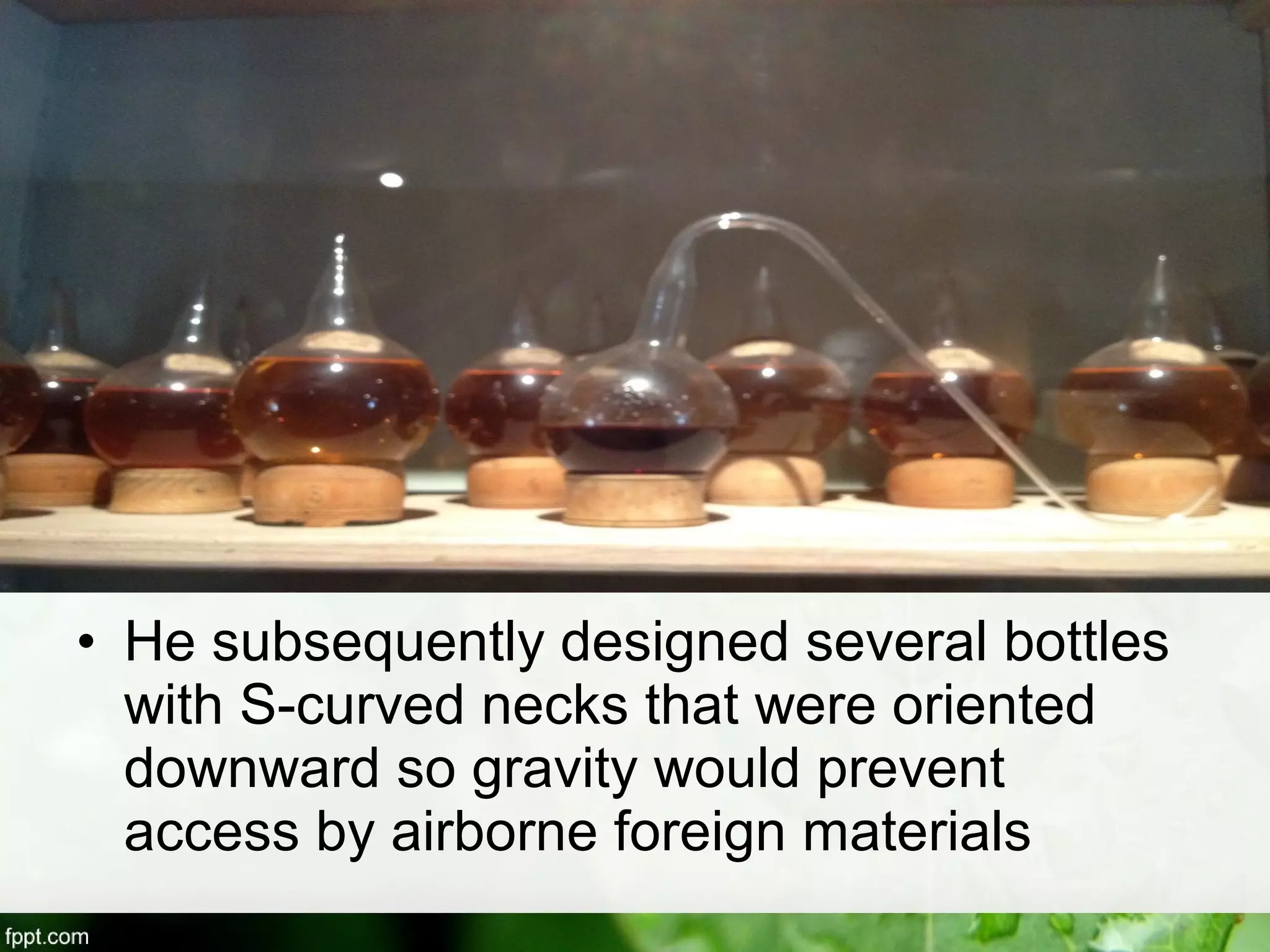
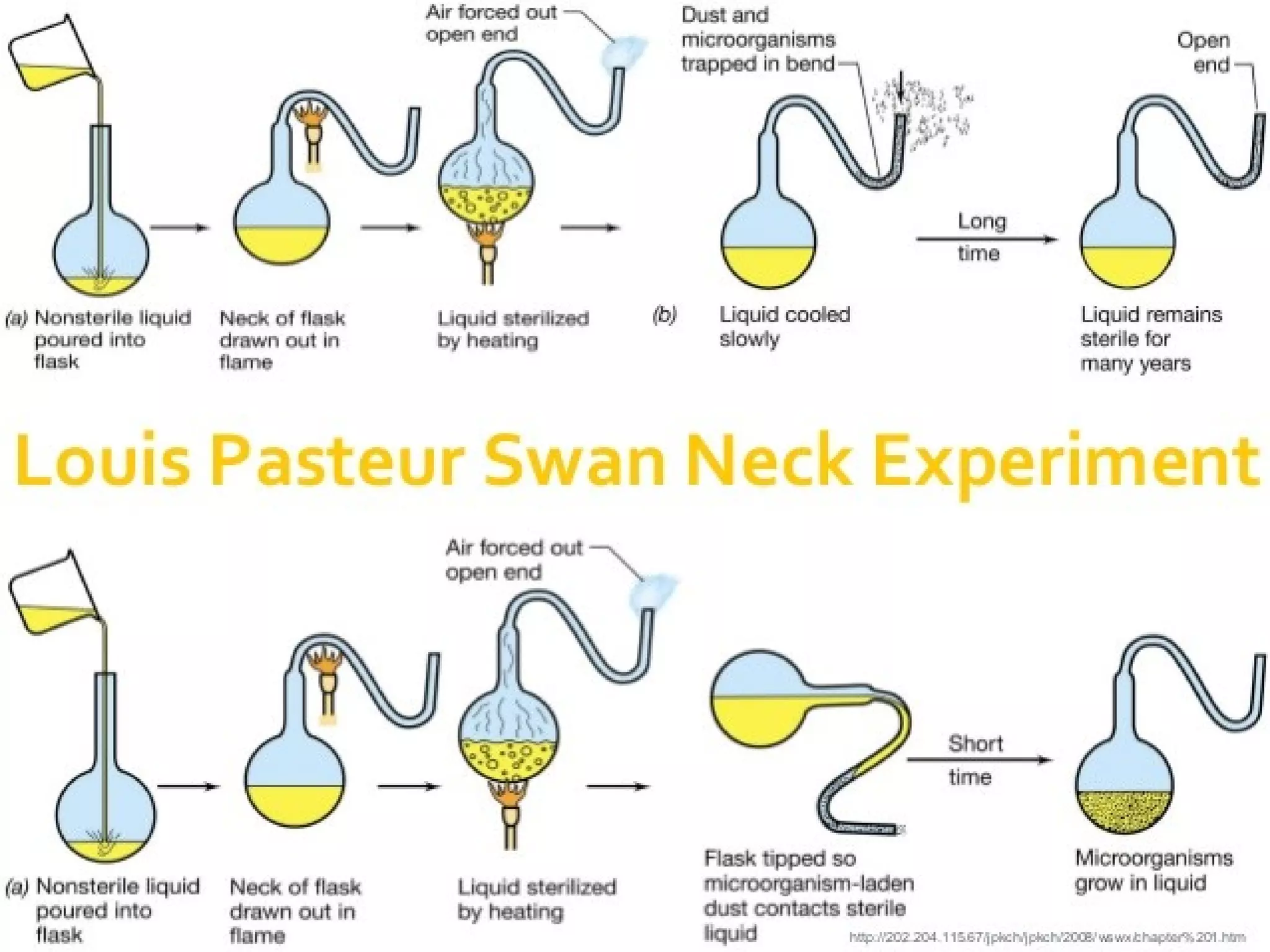
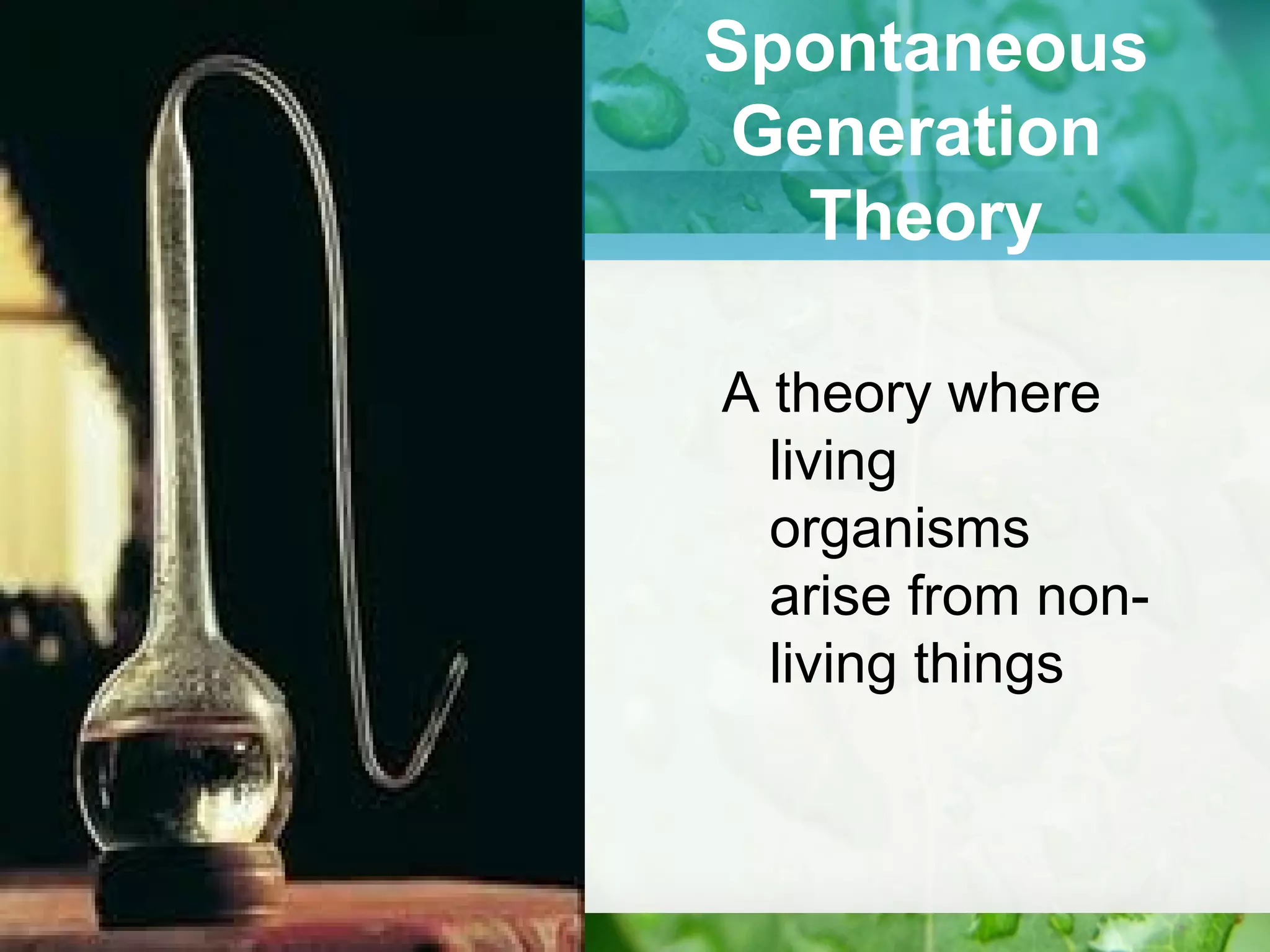
• He subsequently designed several bottles
with S-curved necks that were oriented
downward so gravity would prevent
access by airborne foreign materials
He reasoned that the
contamination came
from life-forms in the
air. Pasteur finally
convinced the
learned world that
even if exposed to
air, life did not arise
from nonlife
Biogenetic Theory
Life begets life
Abiogenetic Synthesis
Theory
Progressive development from
non living things
Other Theories on the
Origin of Life
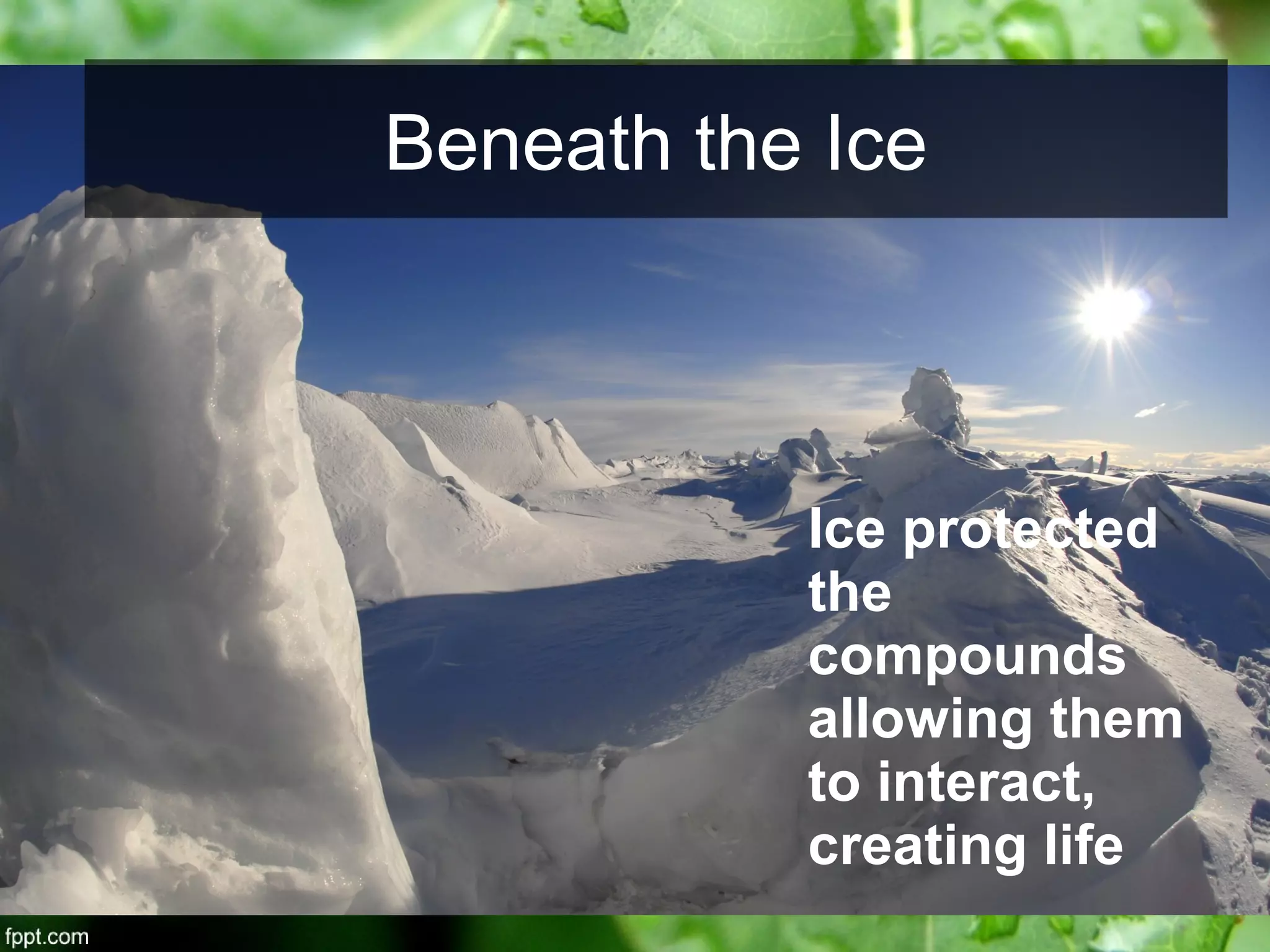
Ice protected
the
compounds
allowing them
to interact,
creating life
Beneath the Ice
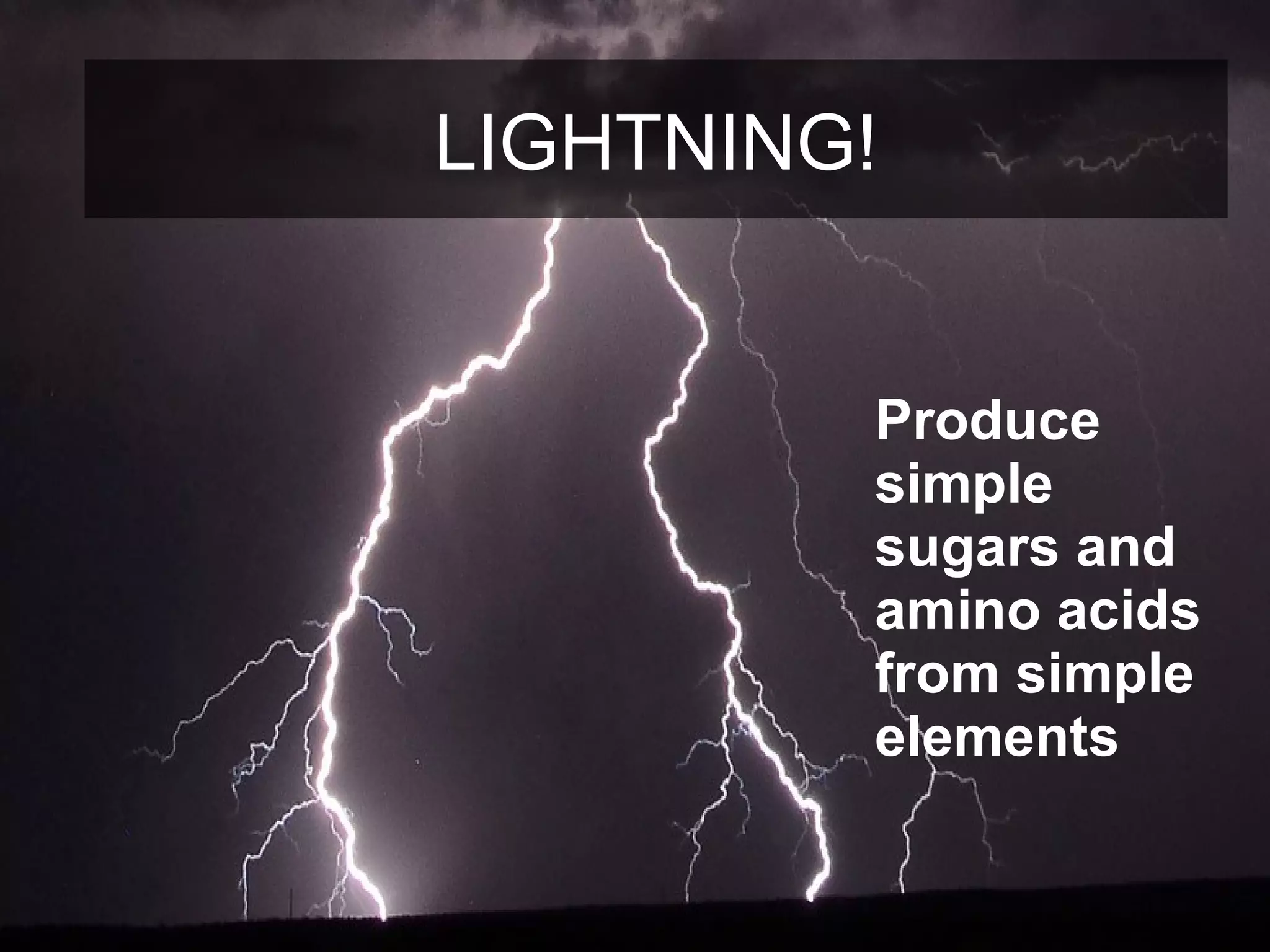
Produce
simple
sugars and
amino acids
from simple
elements
LIGHTNING!
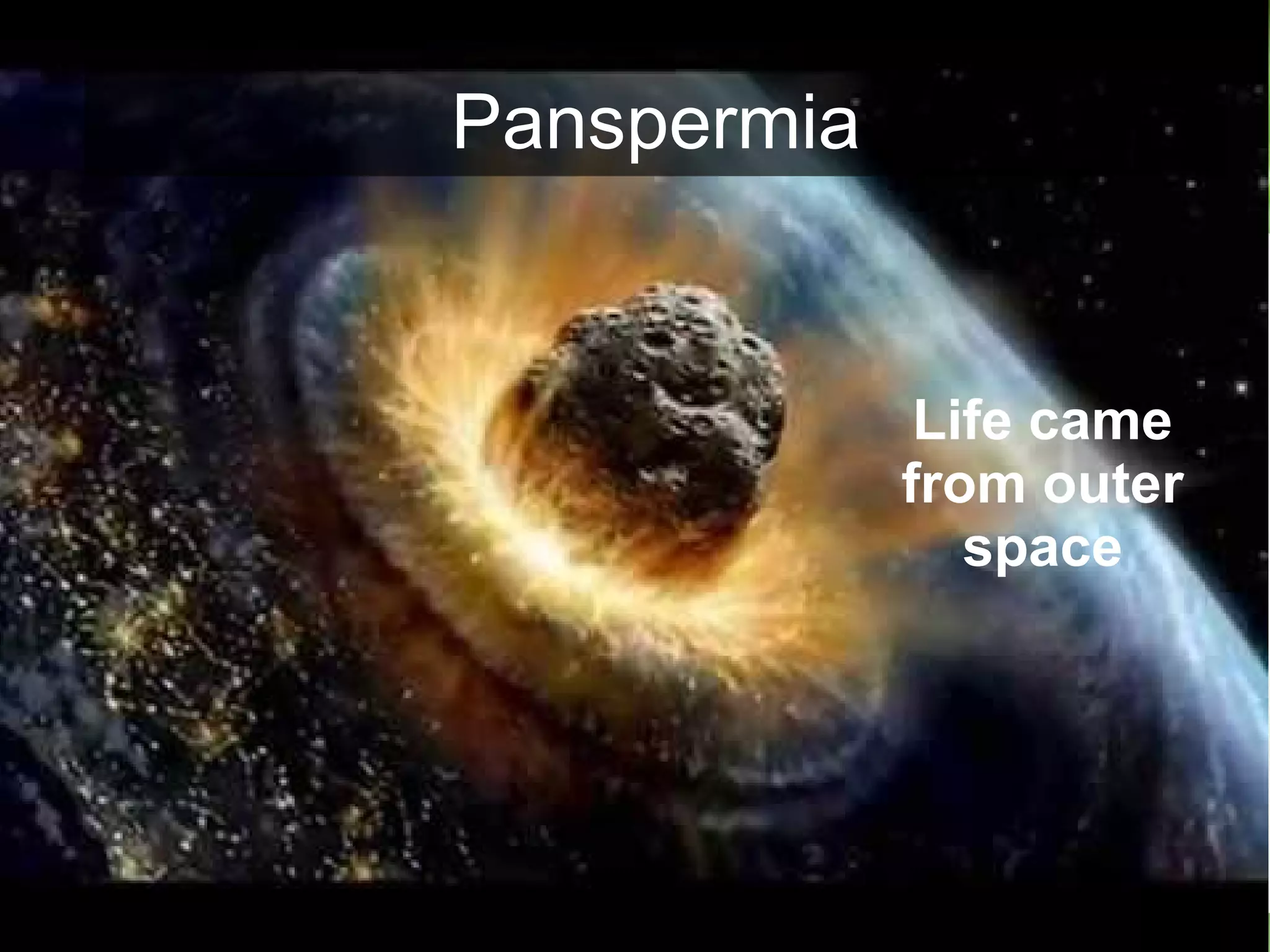
Life came
from outer
space
Panspermia
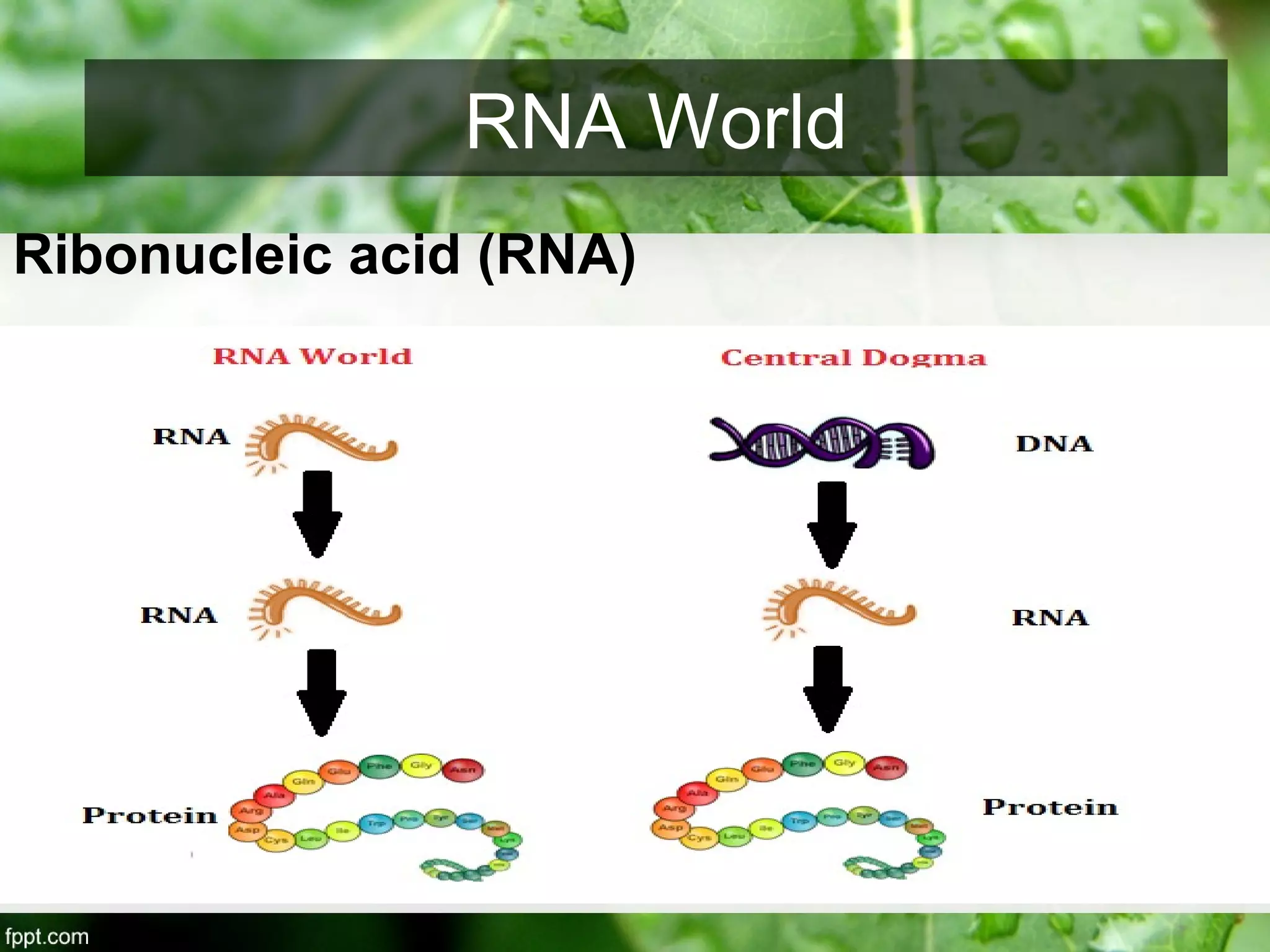
Ribonucleic acid (RNA)
RNA World
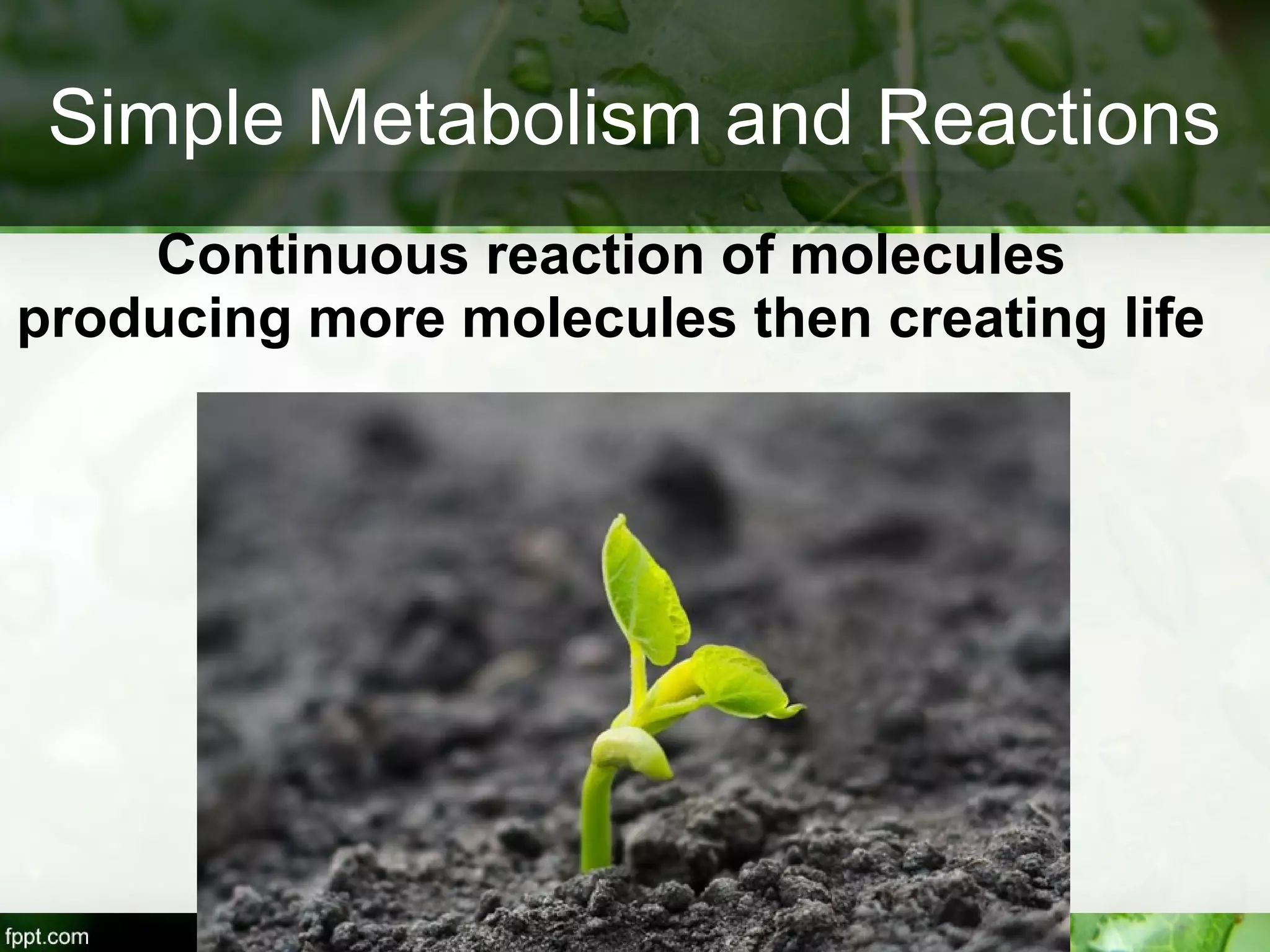
Continuous reaction of molecules
producing more molecules then creating life
Simple Metabolism and Reactions
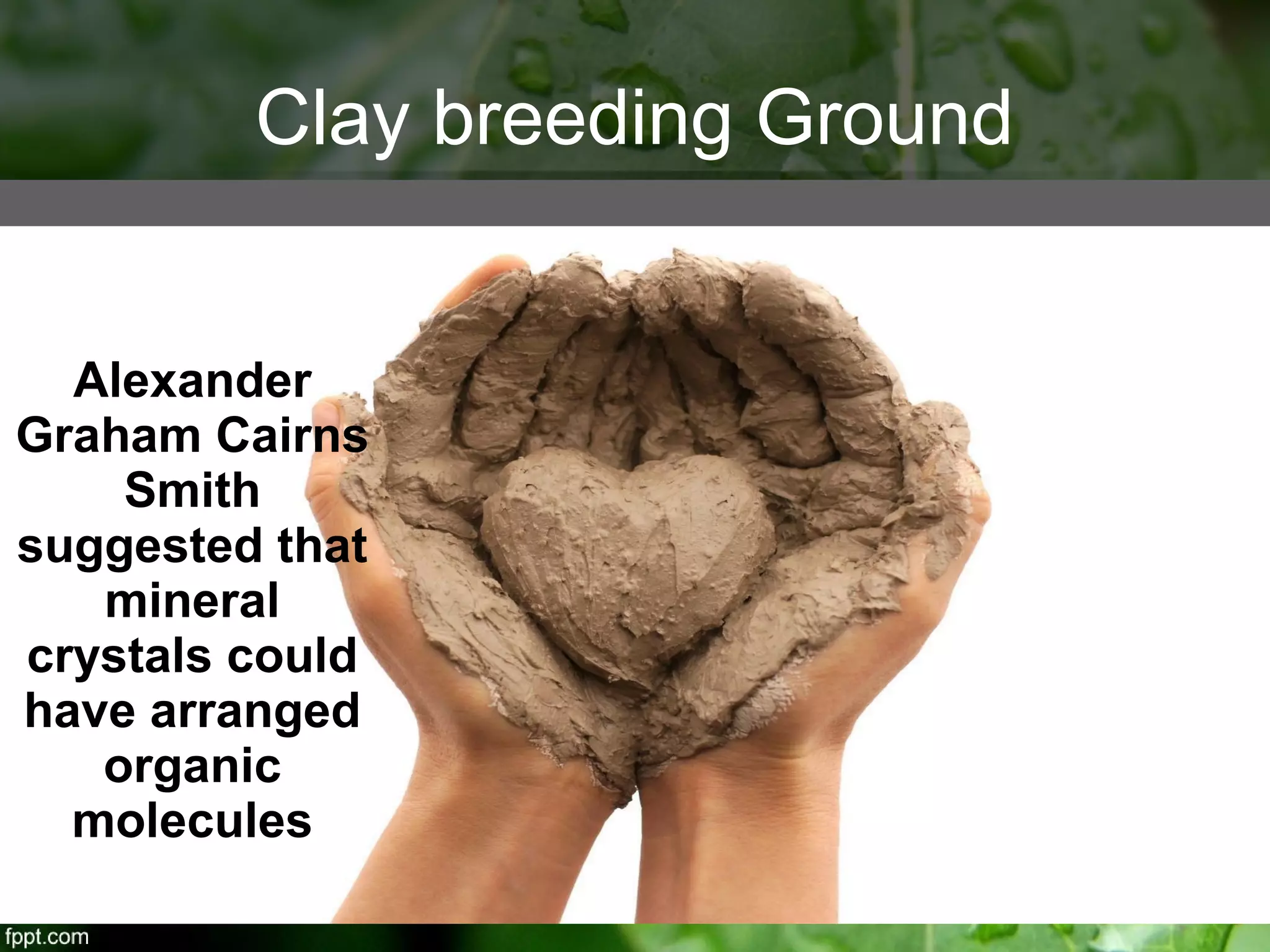
Alexander
Graham Cairns
Smith
suggested that
mineral
crystals could
have arranged
organic
molecules
Clay breeding Ground
Nutrient-rich
environment
filled with
reactive gases
and catalysts,
creates a
habitat
teeming with
life.
http://www.mbari.org/mbari-
discovers-new-deep-sea-
hydrothermal-vents-using-sonar-
mapping-robot/
Submarine Hydrothermal Vents
The Evolution of Life
http://youtube.com/watch?
v=3rHXrA80NH4
Unifying Themes in the
Study of Life
1. Which is greater, the
whole or the sum of its
parts?
Biological Systems
“The whole is greater than the sum of
its parts”
2. What are you made
of?
Cellular Basis of Life
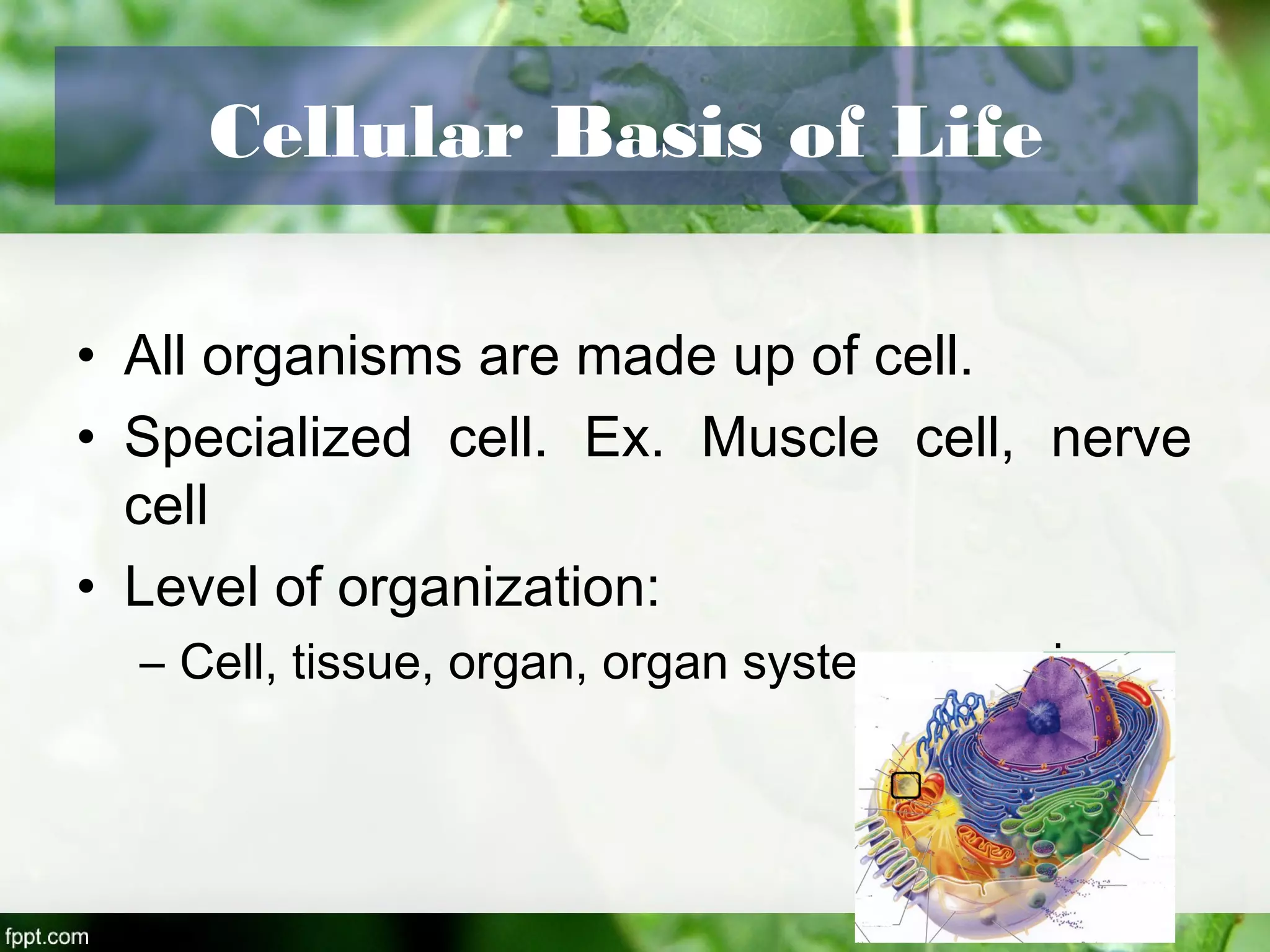
• All organisms are made up of cell.
• Specialized cell. Ex. Muscle cell, nerve
cell
• Level of organization:
– Cell, tissue, organ, organ system, organism
3. How does your body
works?
Form and Function
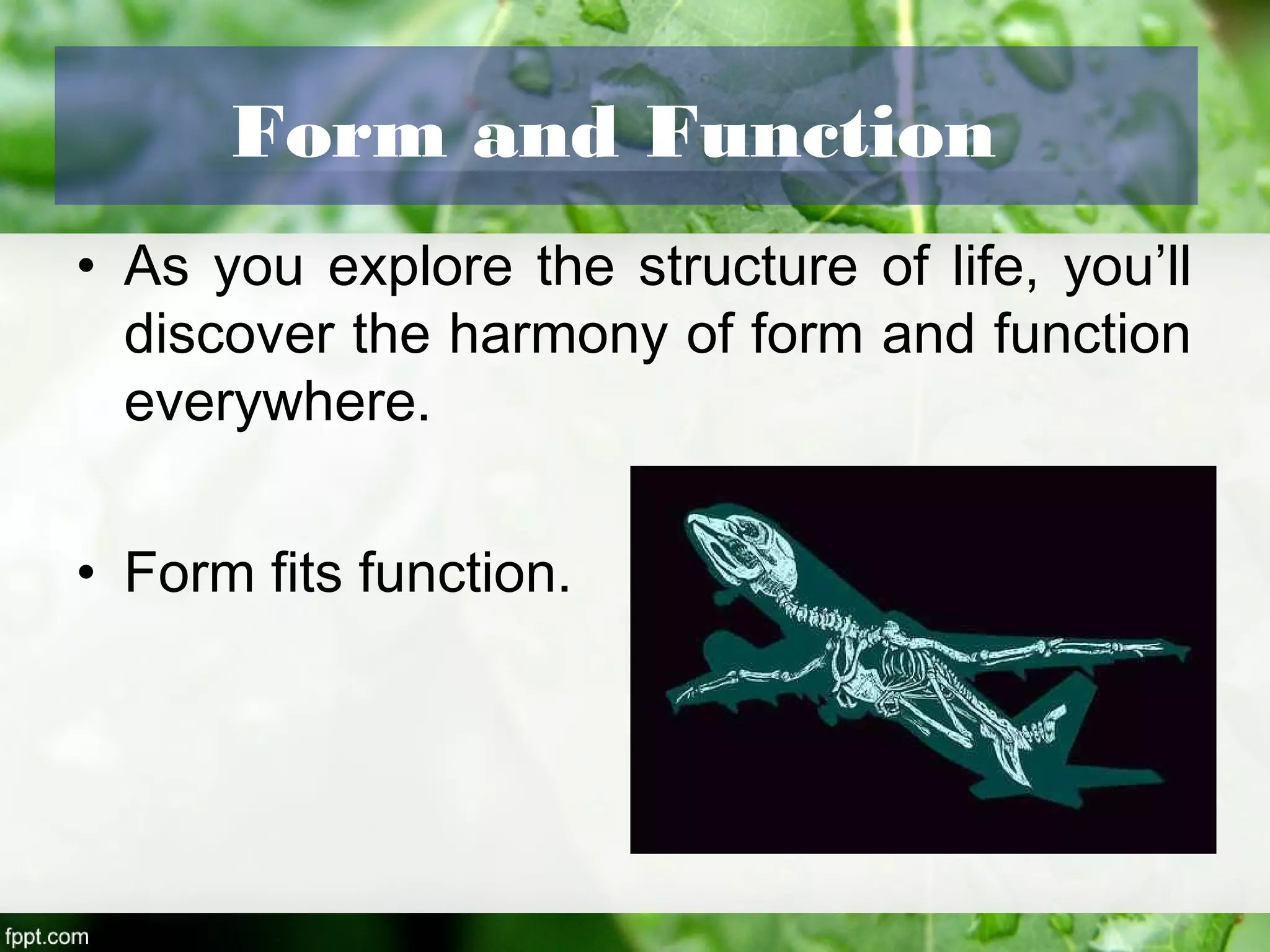
• As you explore the structure of life, you’ll
discover the harmony of form and function
everywhere.
• Form fits function.
3. Why do you look like
that?
Reproduction and
Inheritance
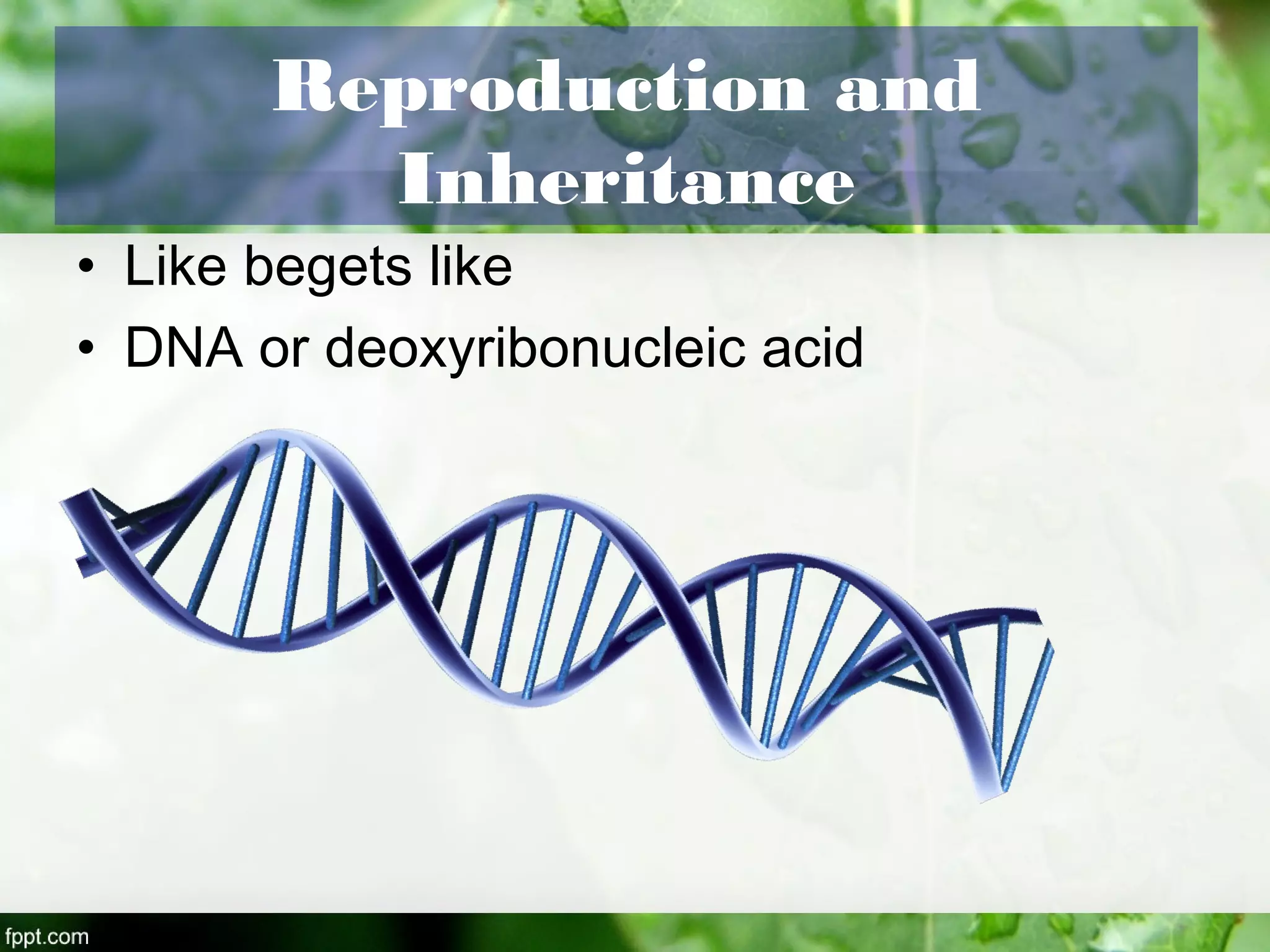
• Like begets like
• DNA or deoxyribonucleic acid
4. Is everything connected
to everything else?
Interaction with the
Environment
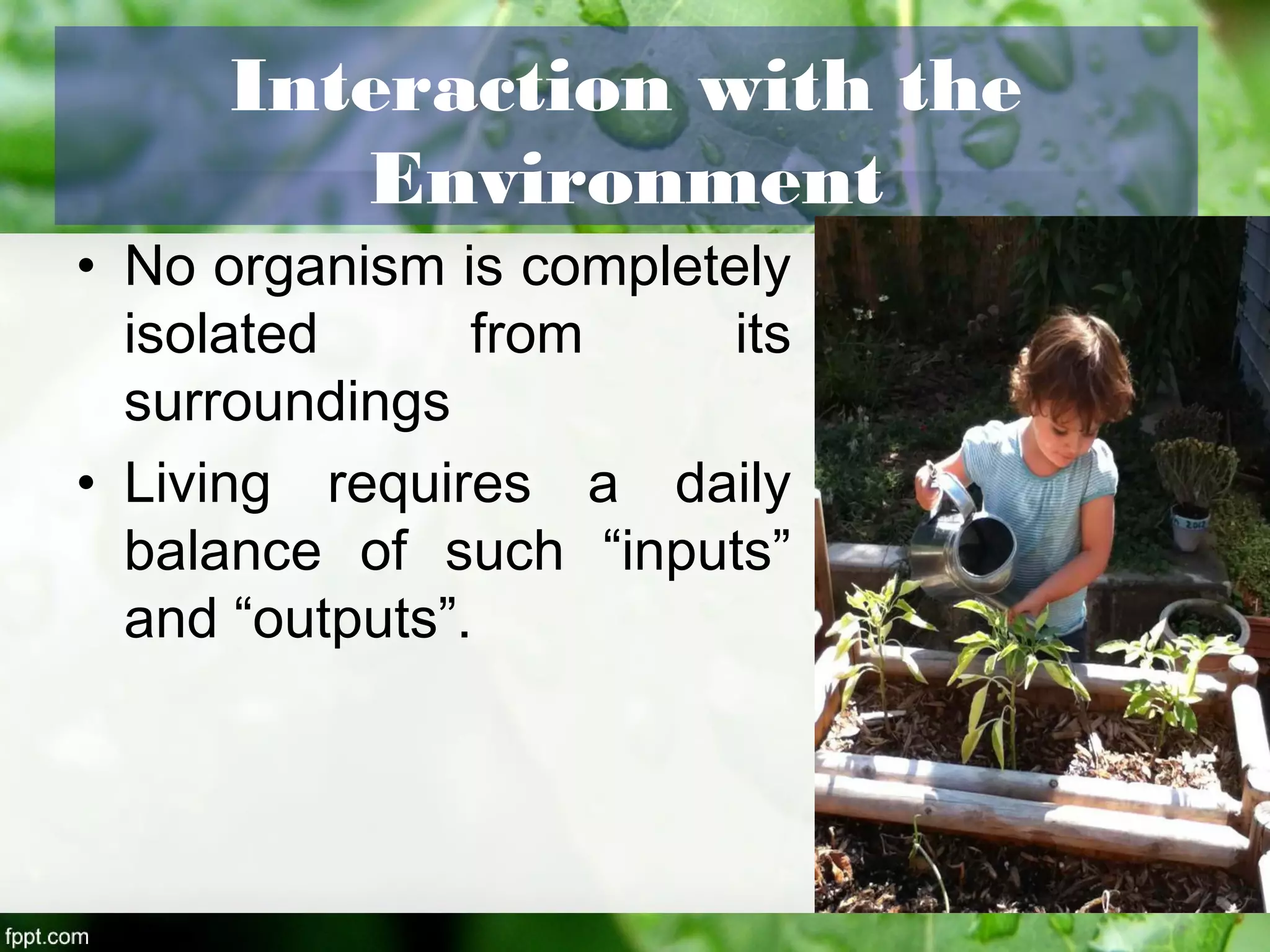
• No organism is completely
isolated from its
surroundings
• Living requires a daily
balance of such “inputs”
and “outputs”.
5. What happens to the
chemical energy stored in
the food the consumers
eat?
Energy and Life
It is converted to other forms of energy
Moving, thinking, breathing, seeing, and
everything else you do require your cells to
convert some of the chemical energy of food
into other forms of enerty.
6. What is homeostasis?
Regulation
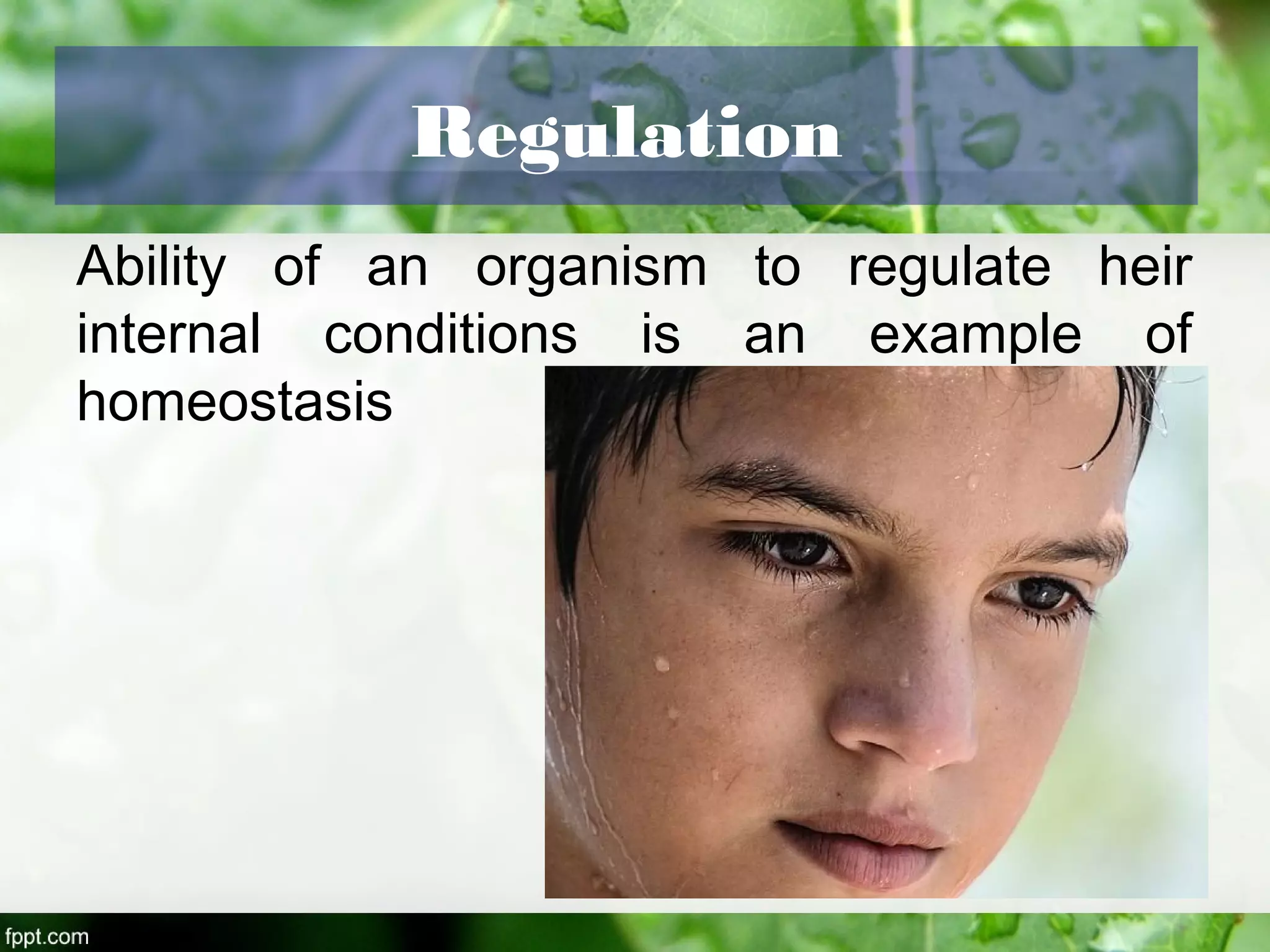
Ability of an organism to regulate heir
internal conditions is an example of
homeostasis
8. How do organisms
survive with its changing
environment?
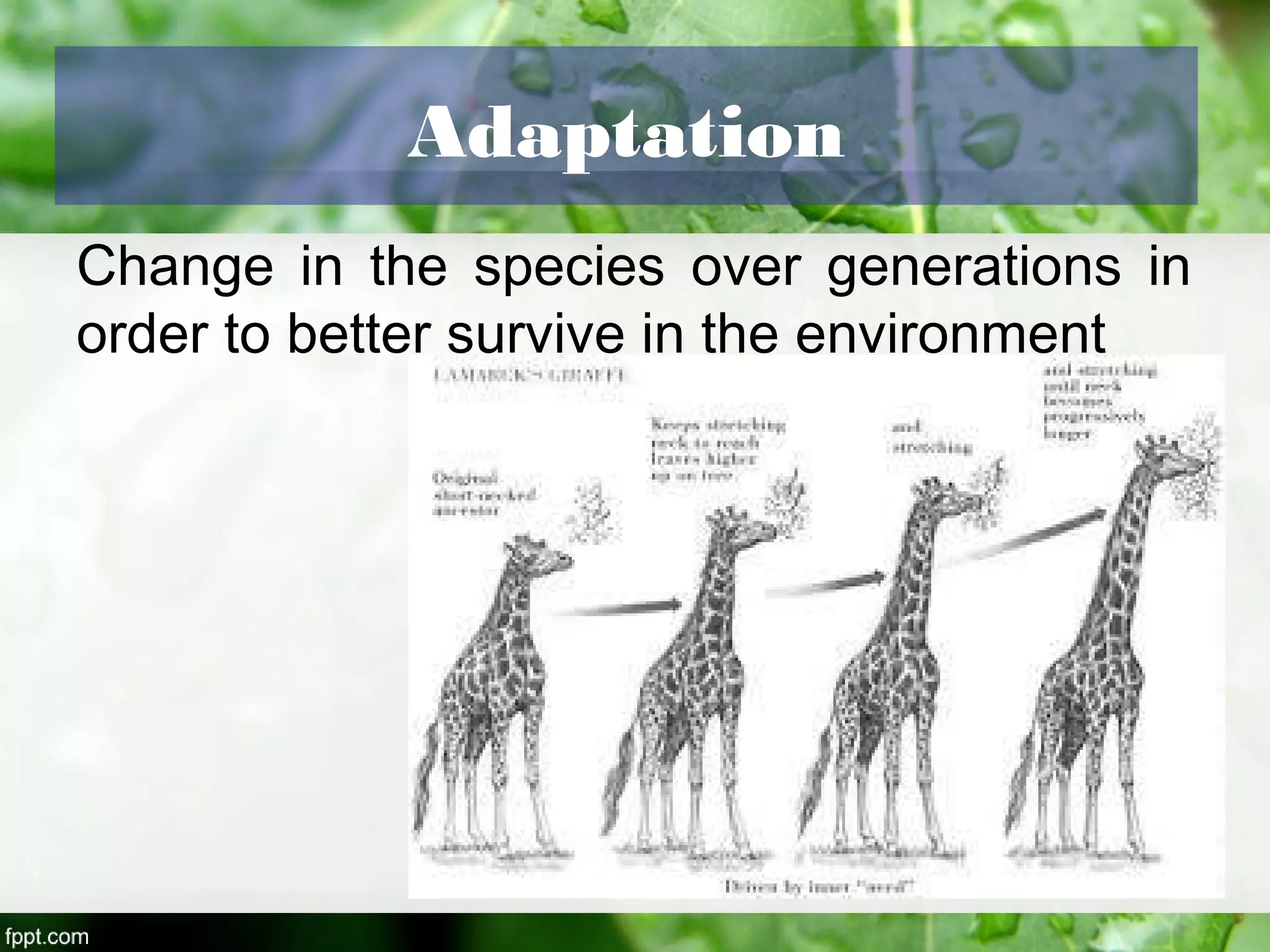
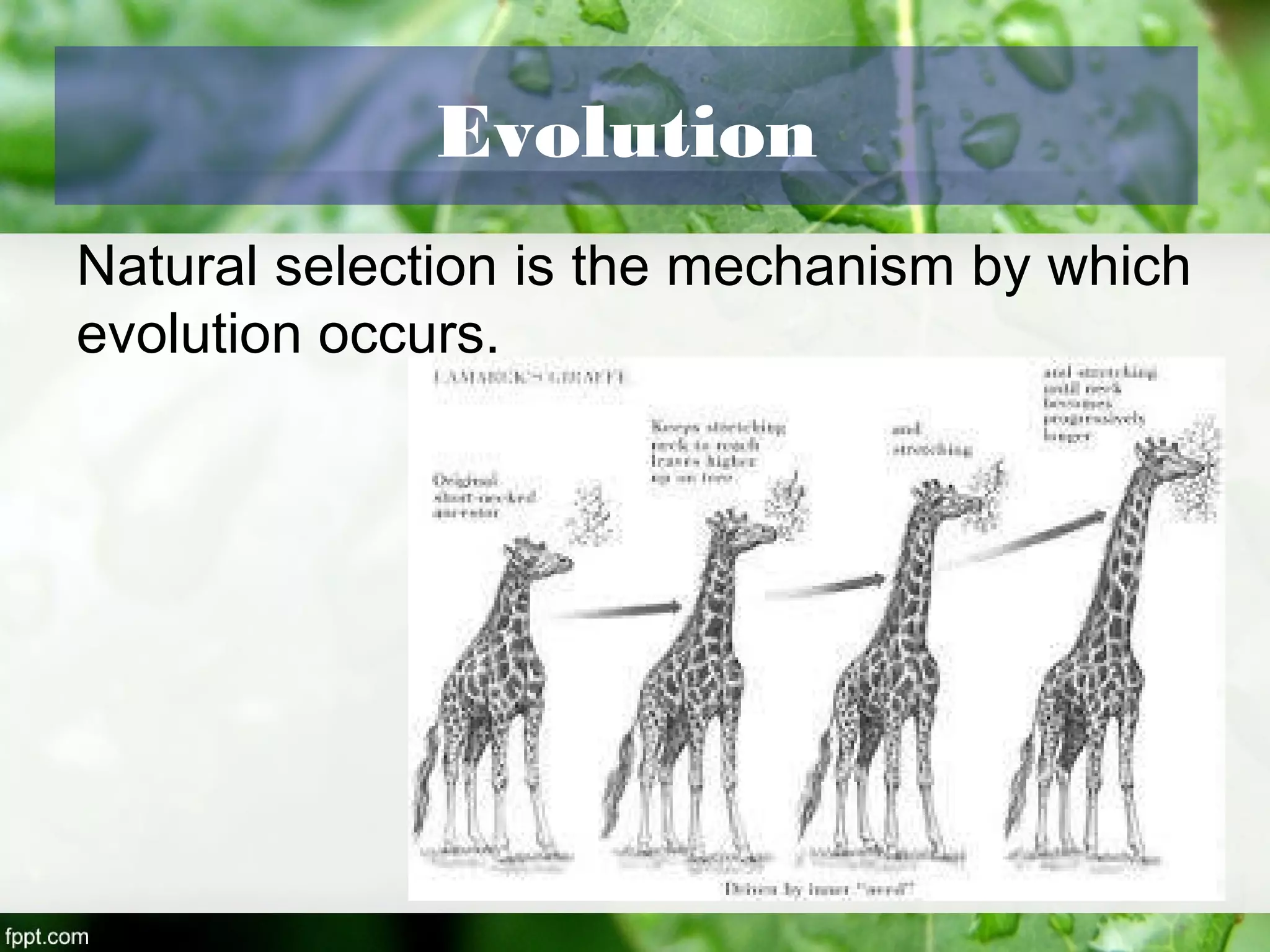
Adaptation
Change in the species over generations in
order to better survive in the environment
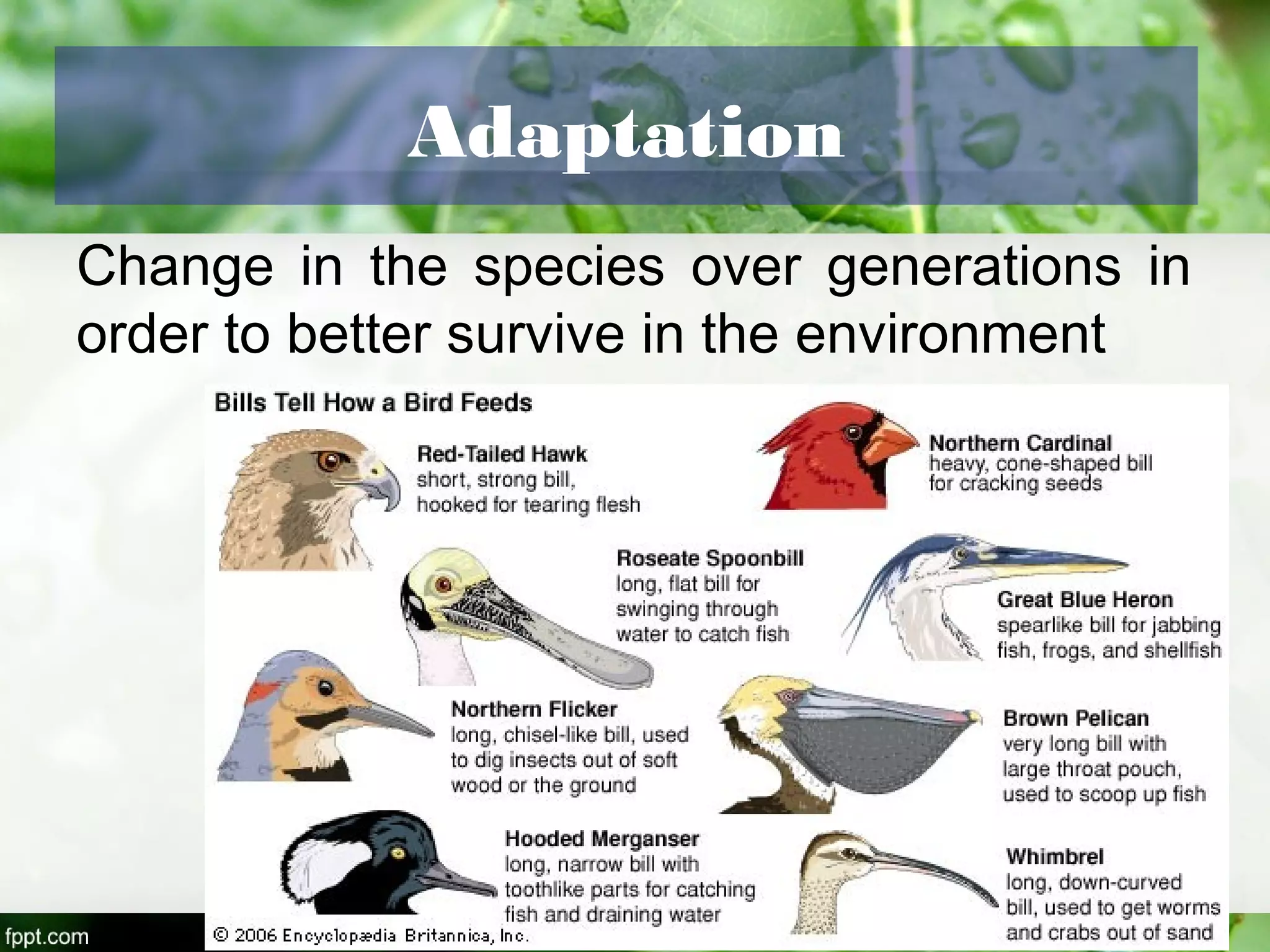
Adaptation
Change in the species over generations in
order to better survive in the environment
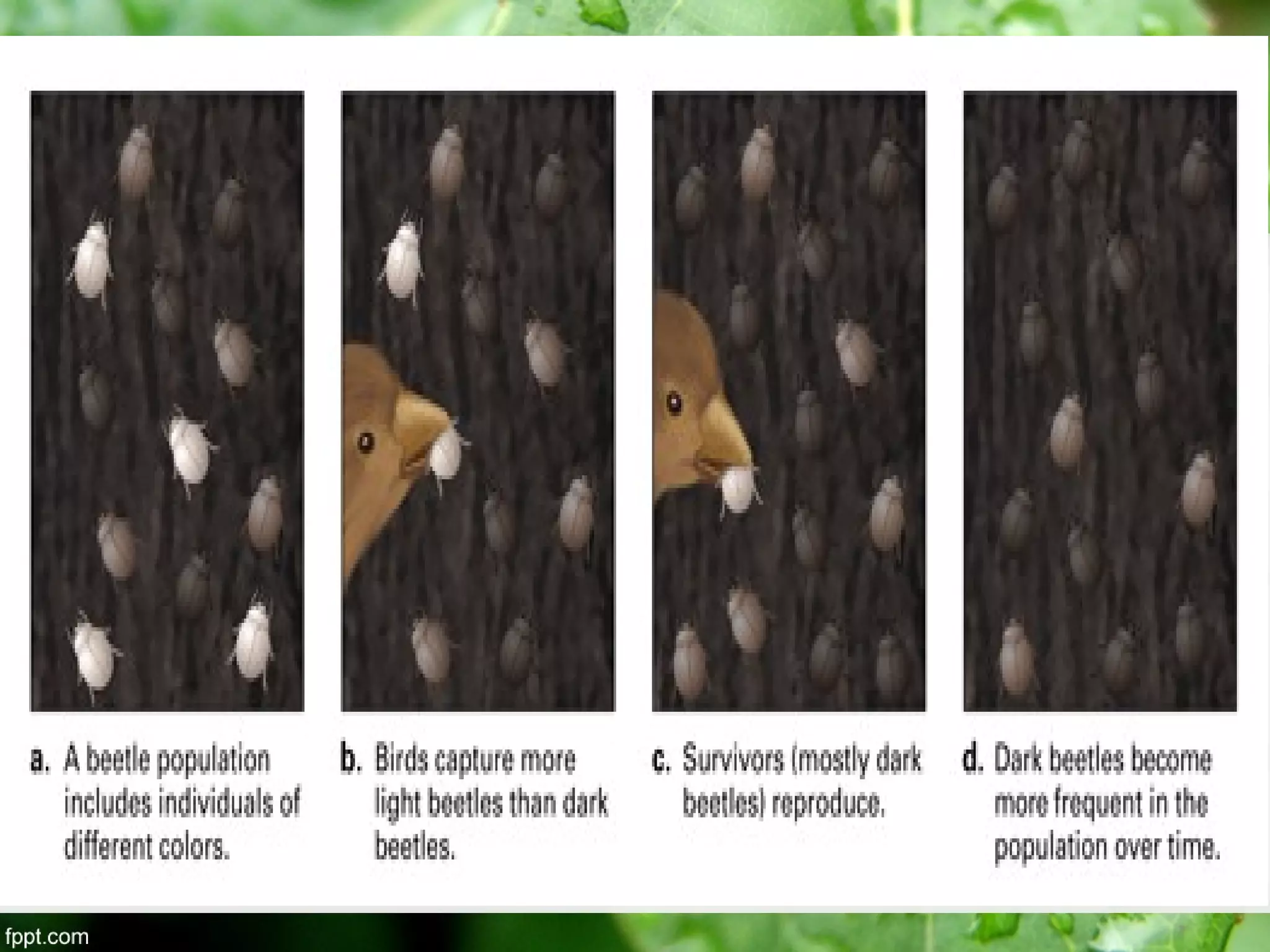
9. Who will most likely
survive, a fat lion or a
thin lion?
Evolution
Natural selection is the mechanism by which
evolution occurs.
10. How do modern
biology change human’s
everyday lives?
• Medicine
• Agriculture
• Environment
• Humans
Biology and Society
Any questions?

Introduction to life science