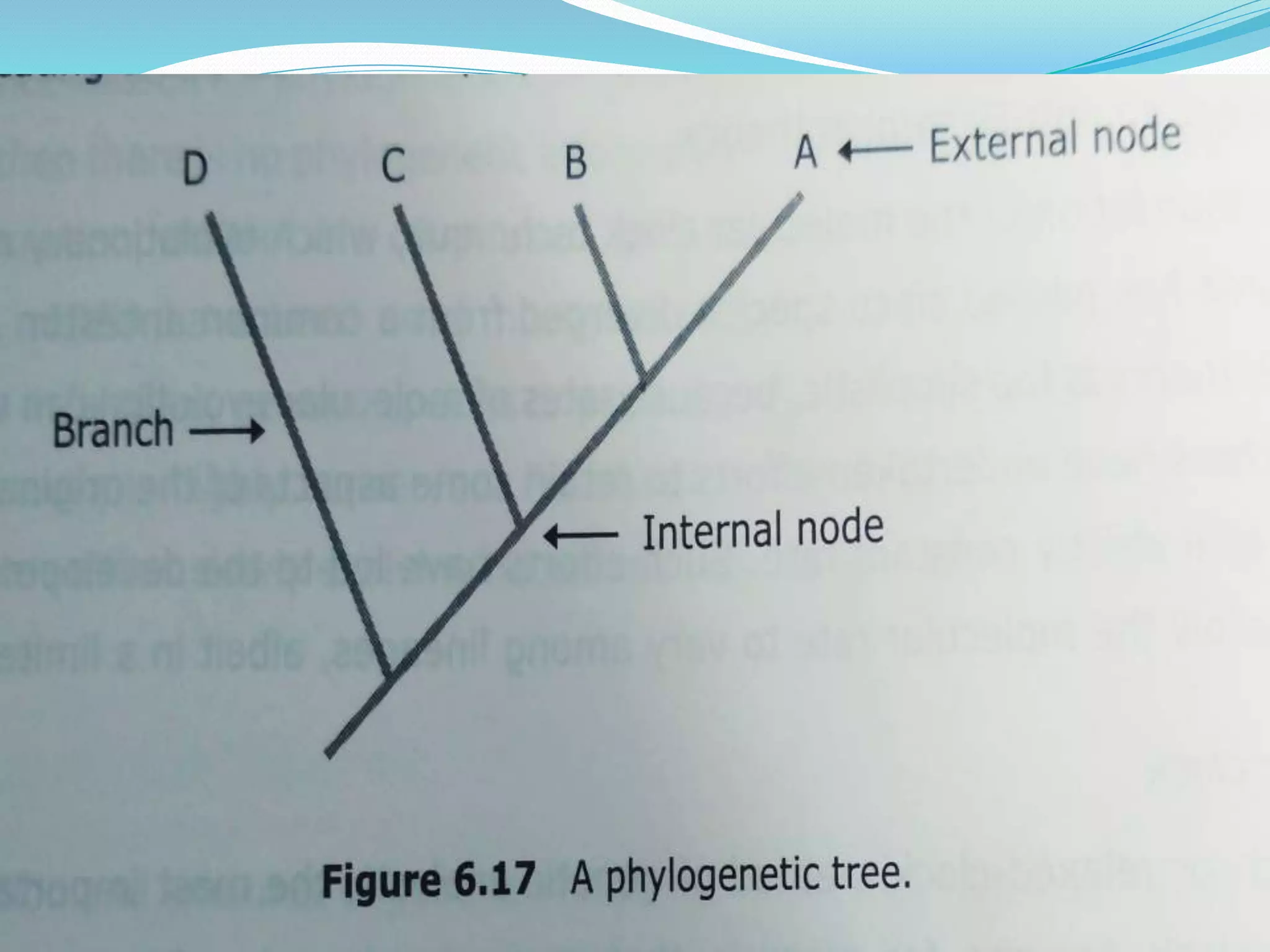
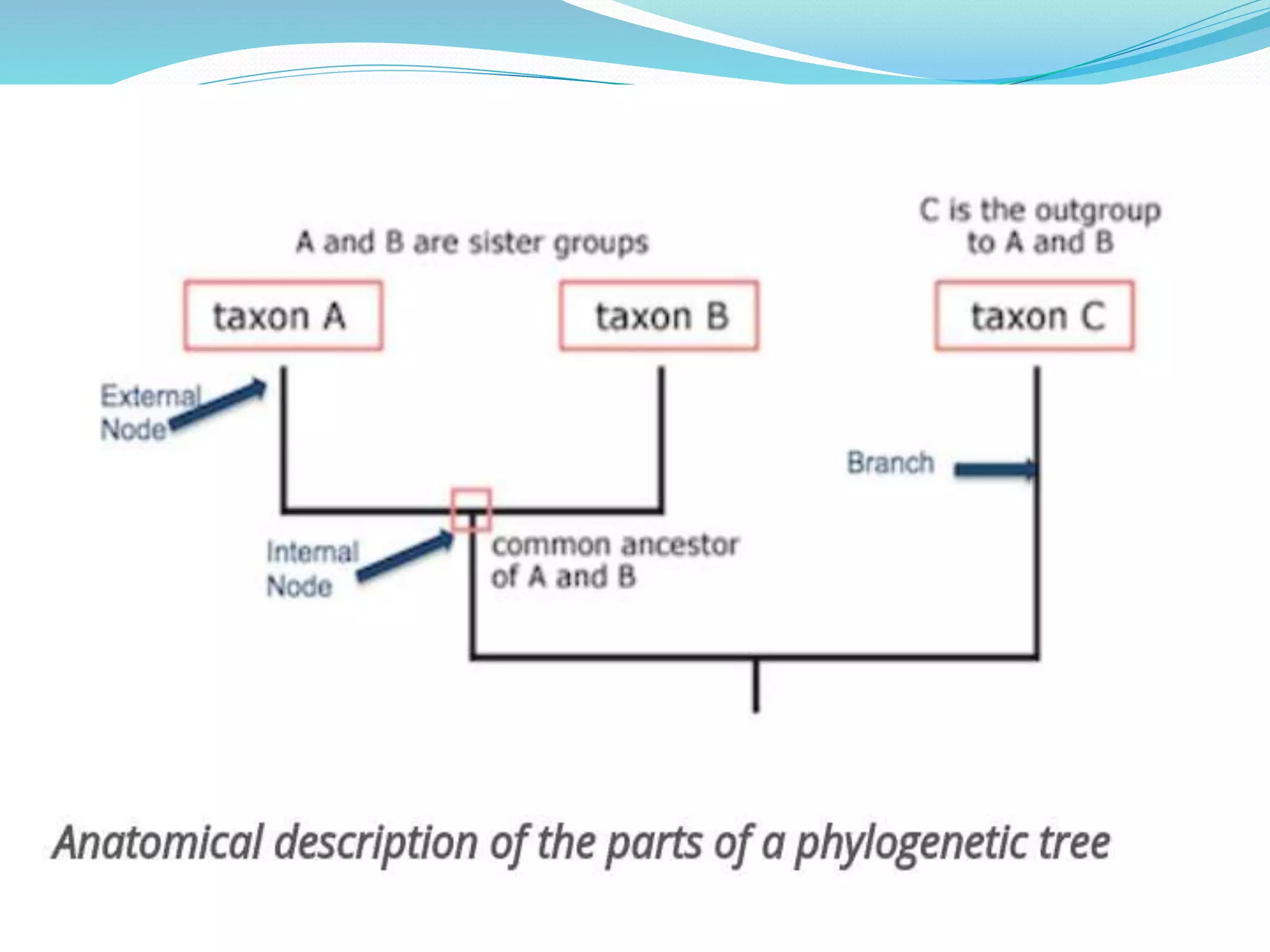
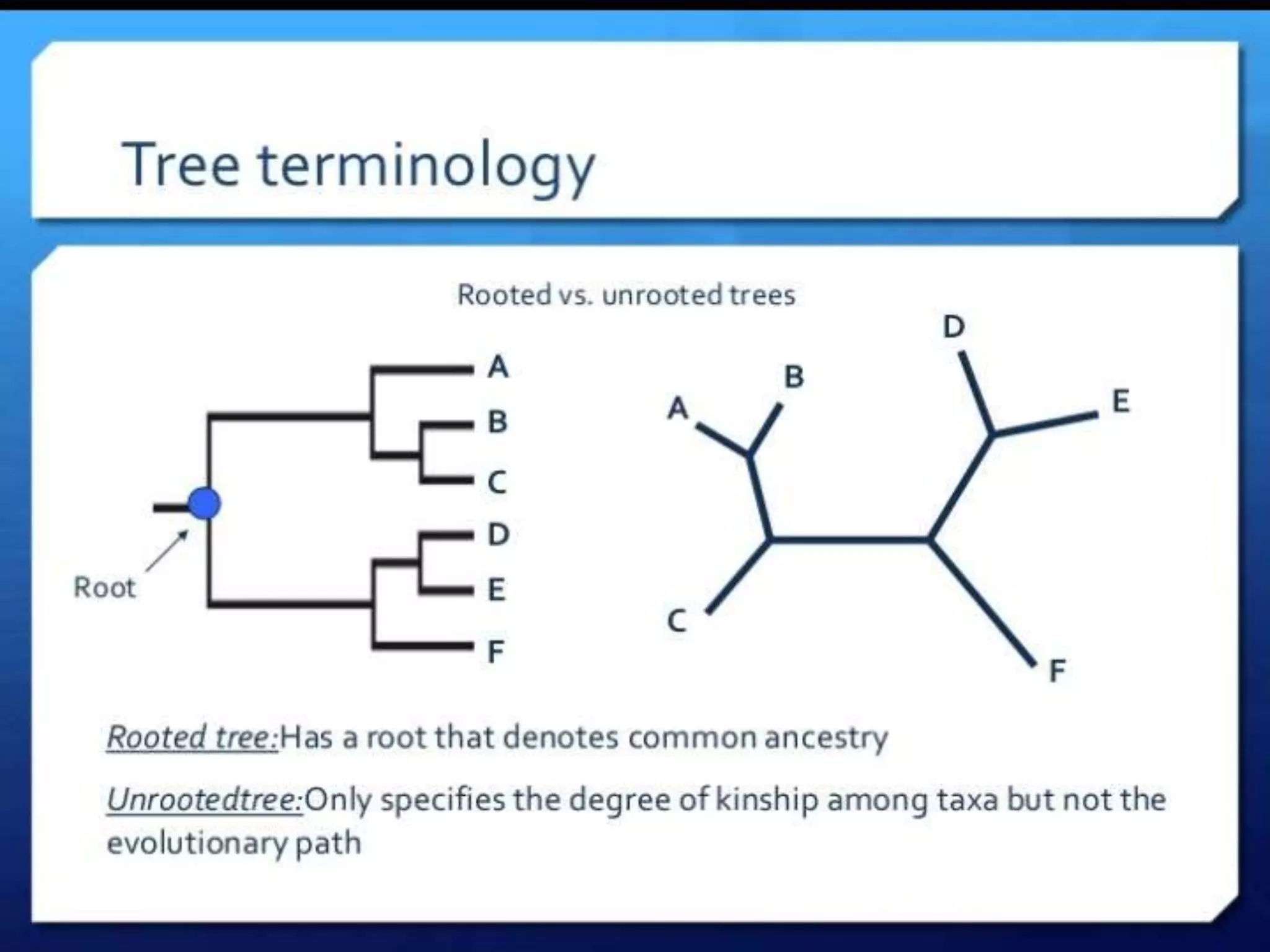
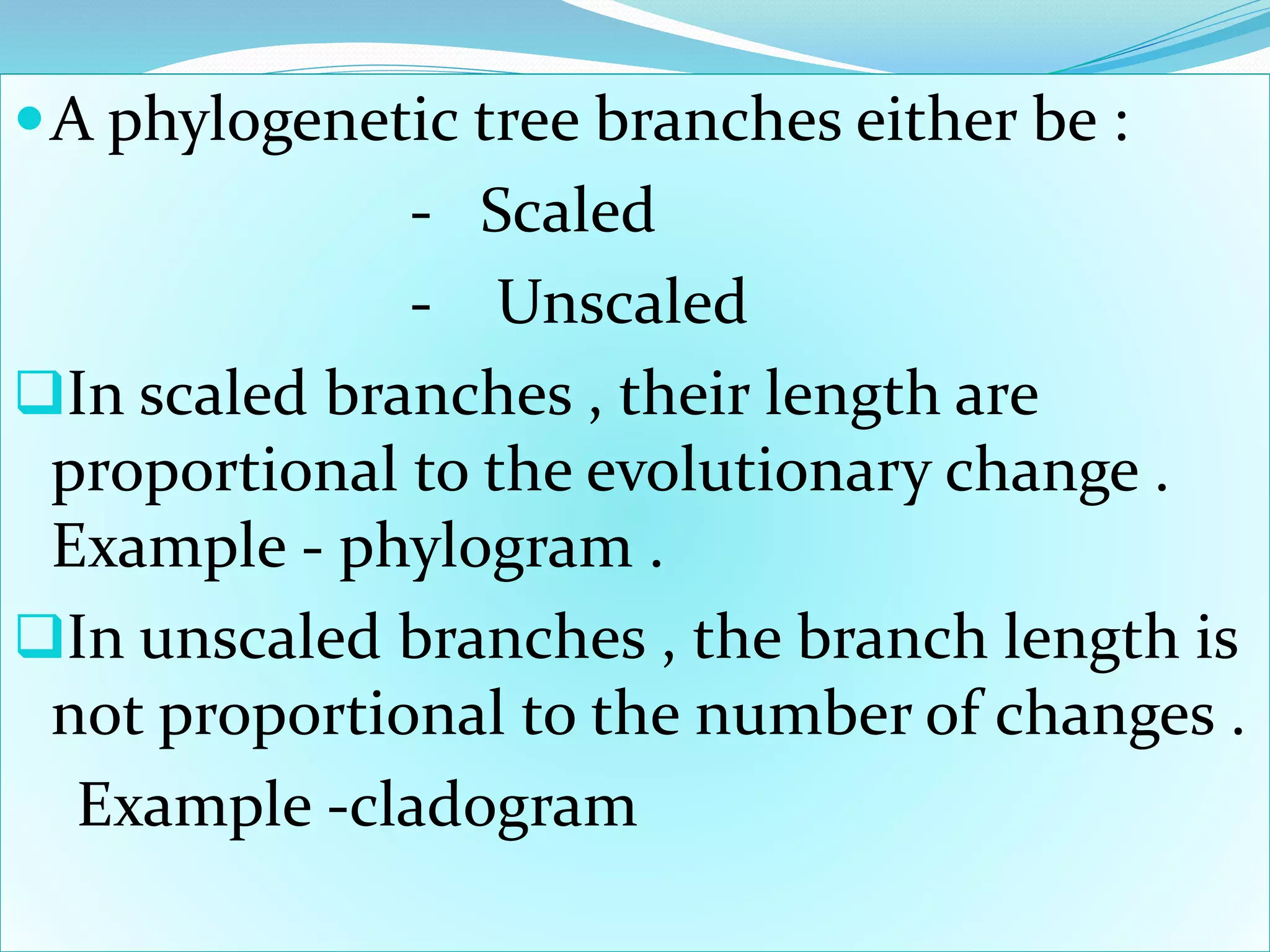
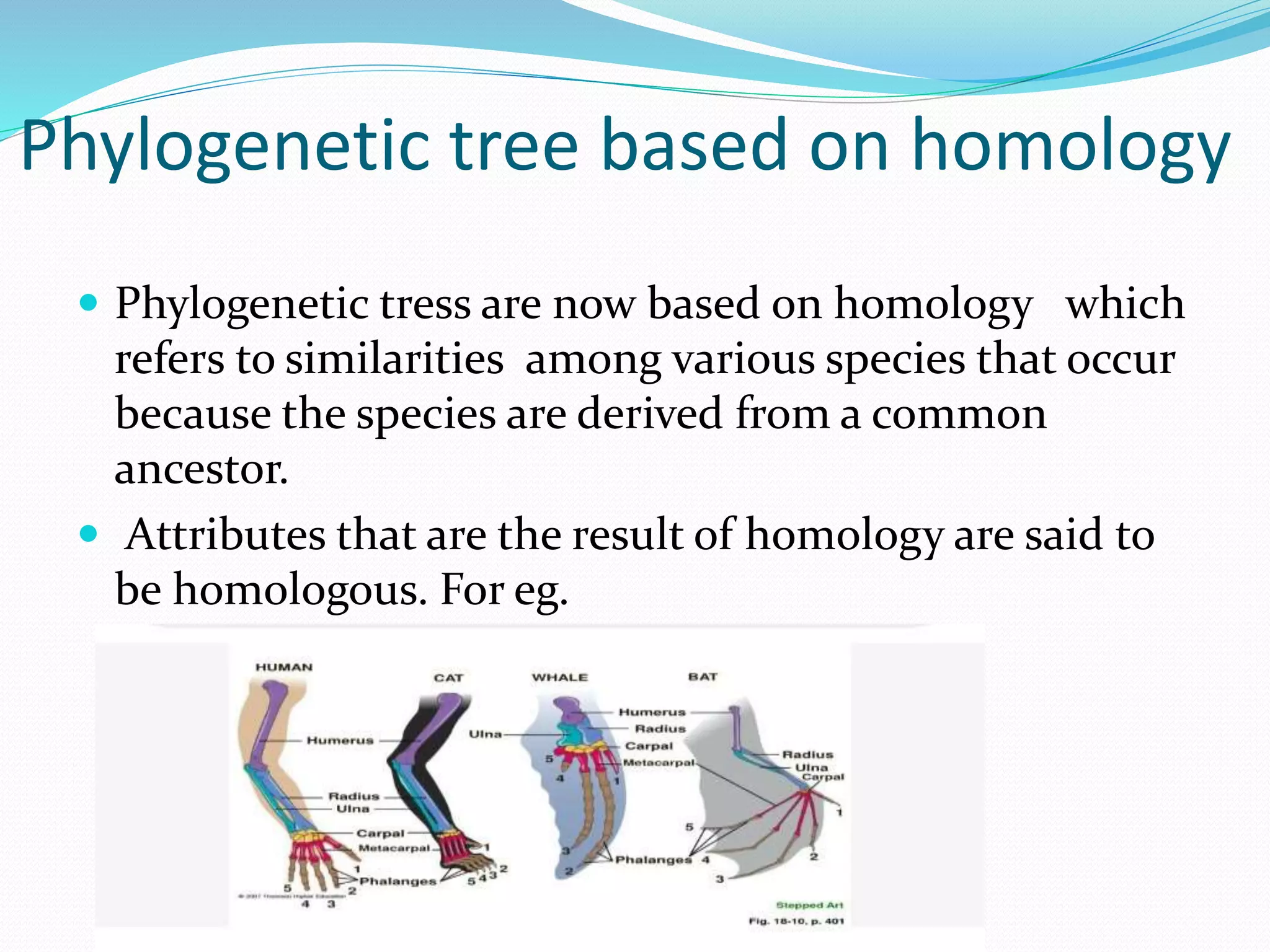
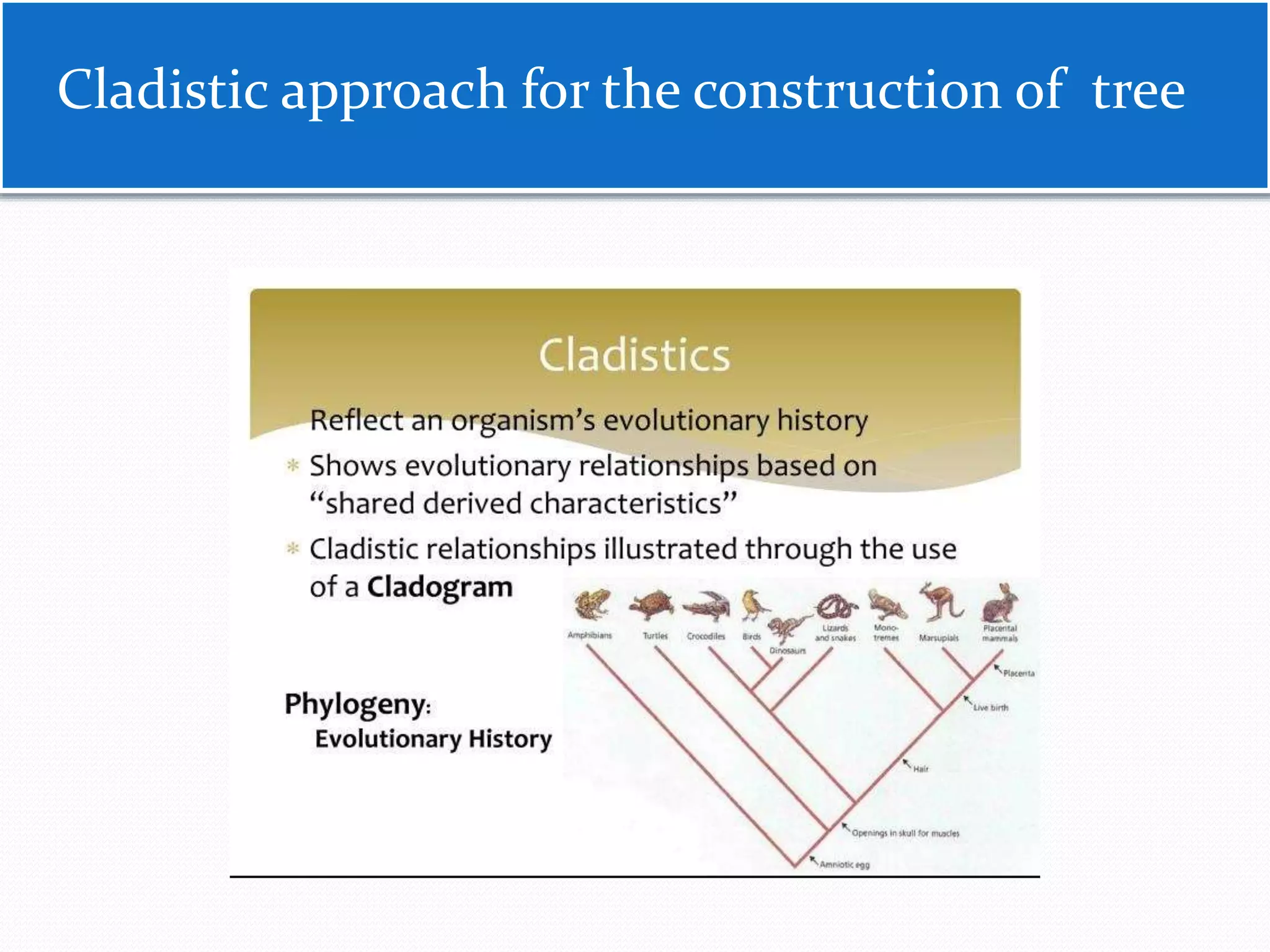
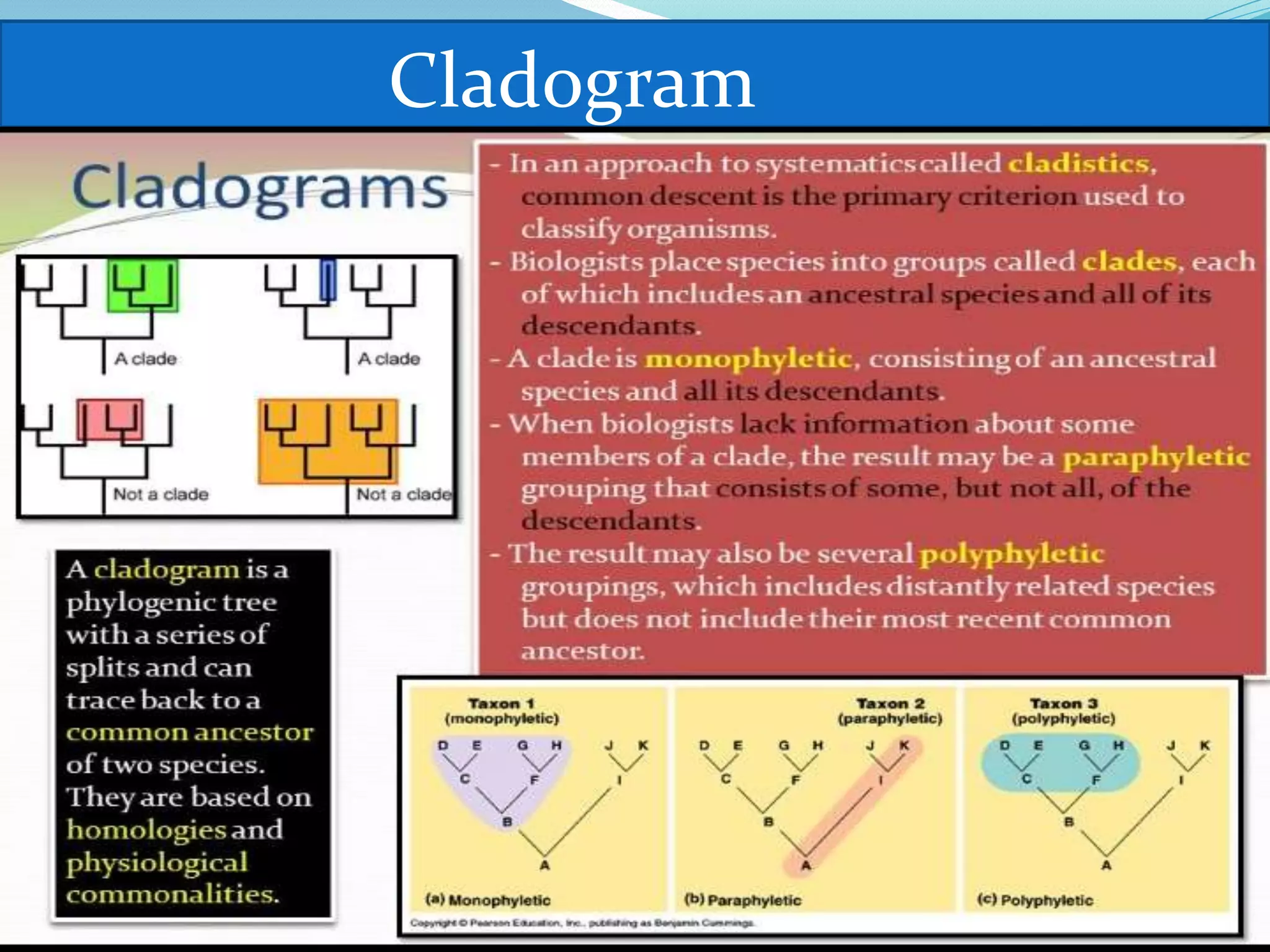
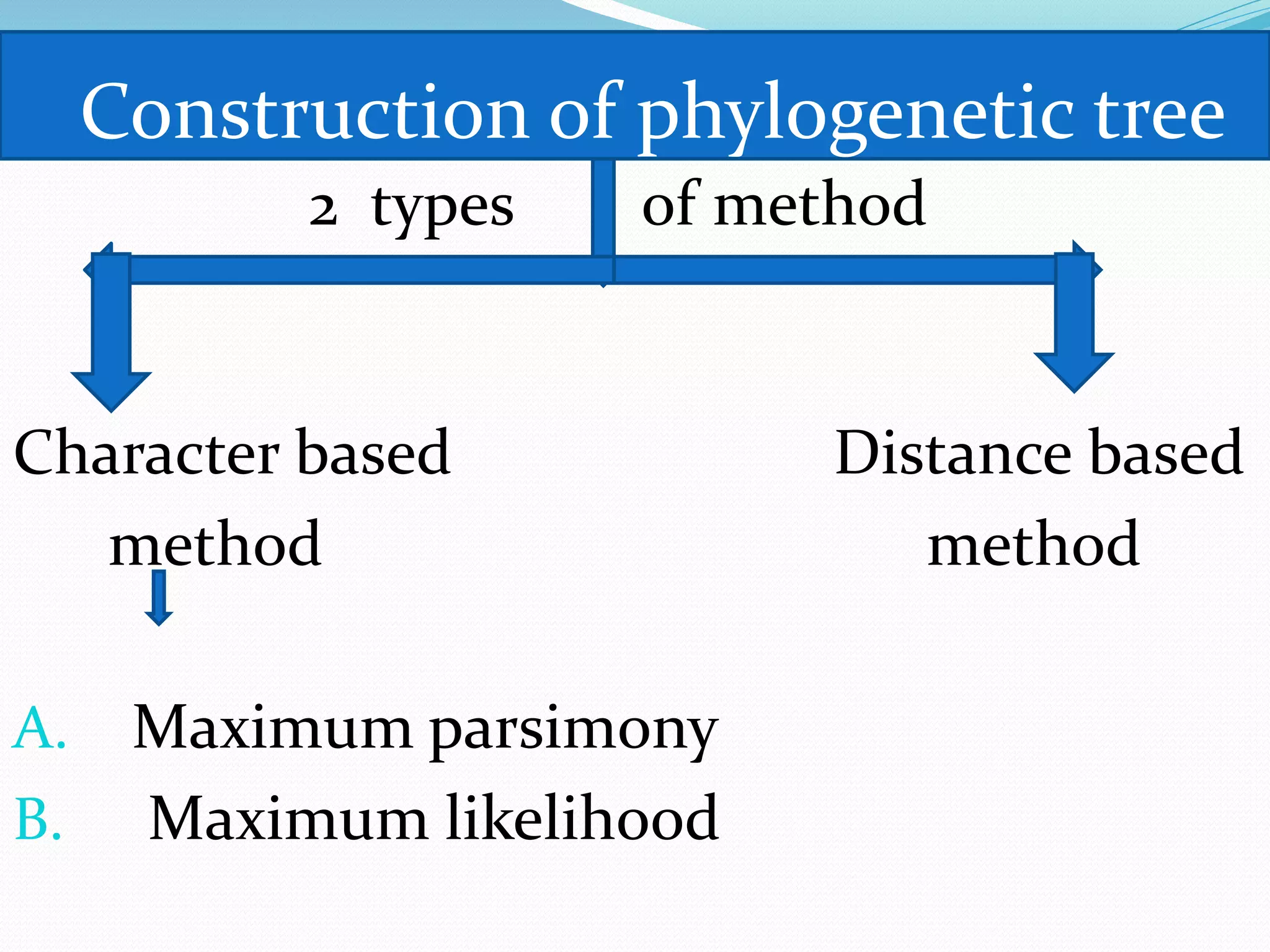
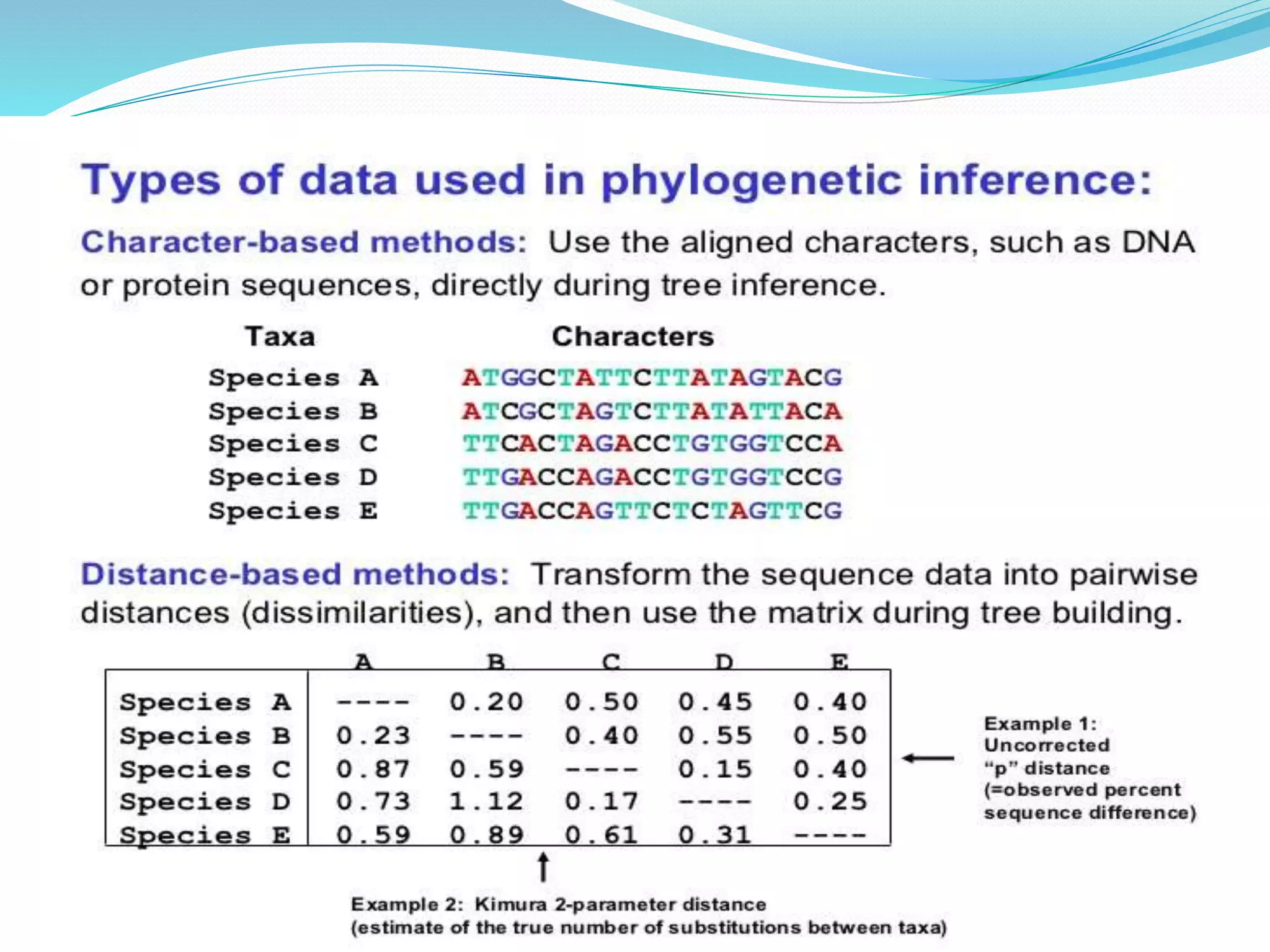
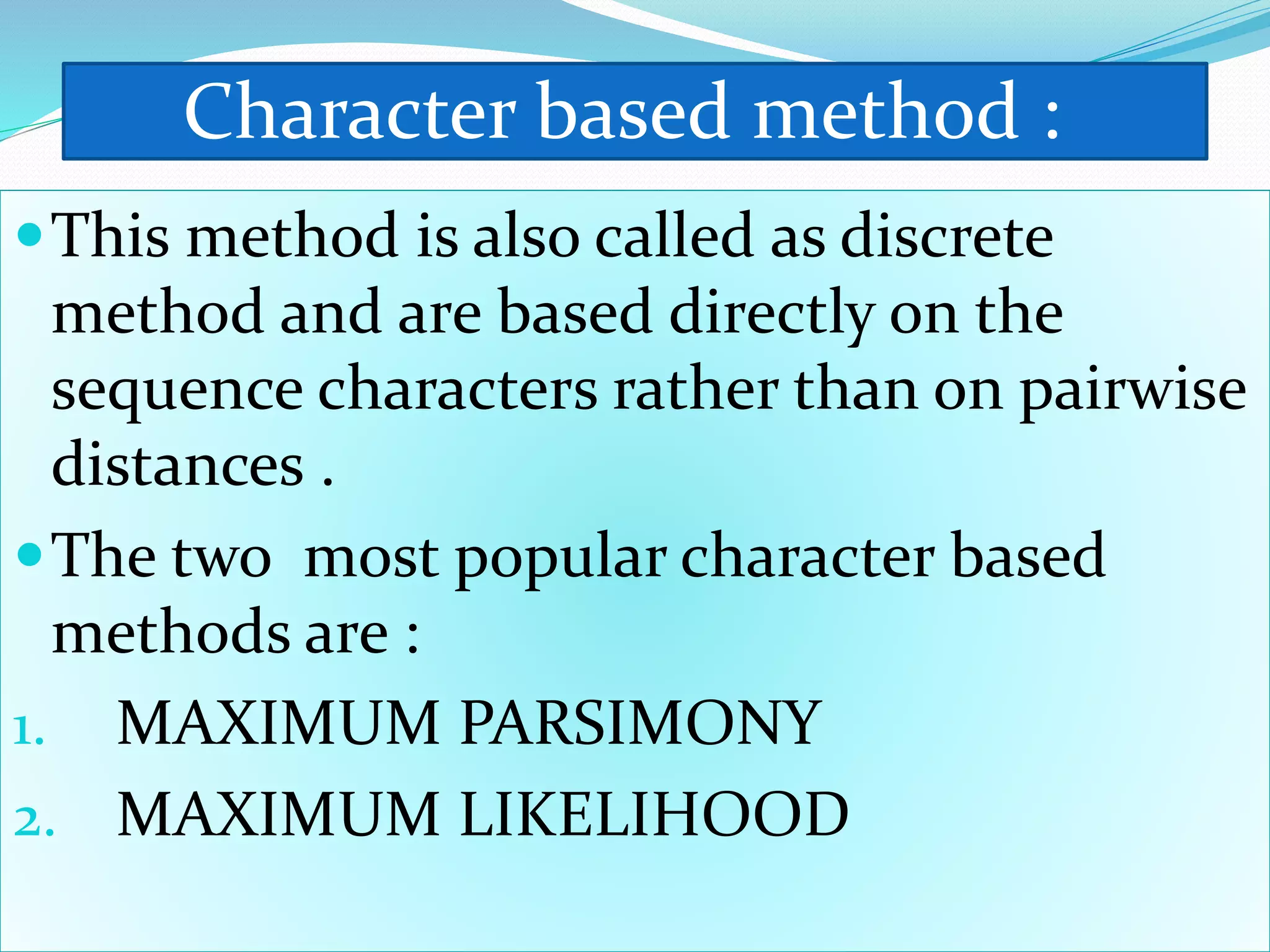
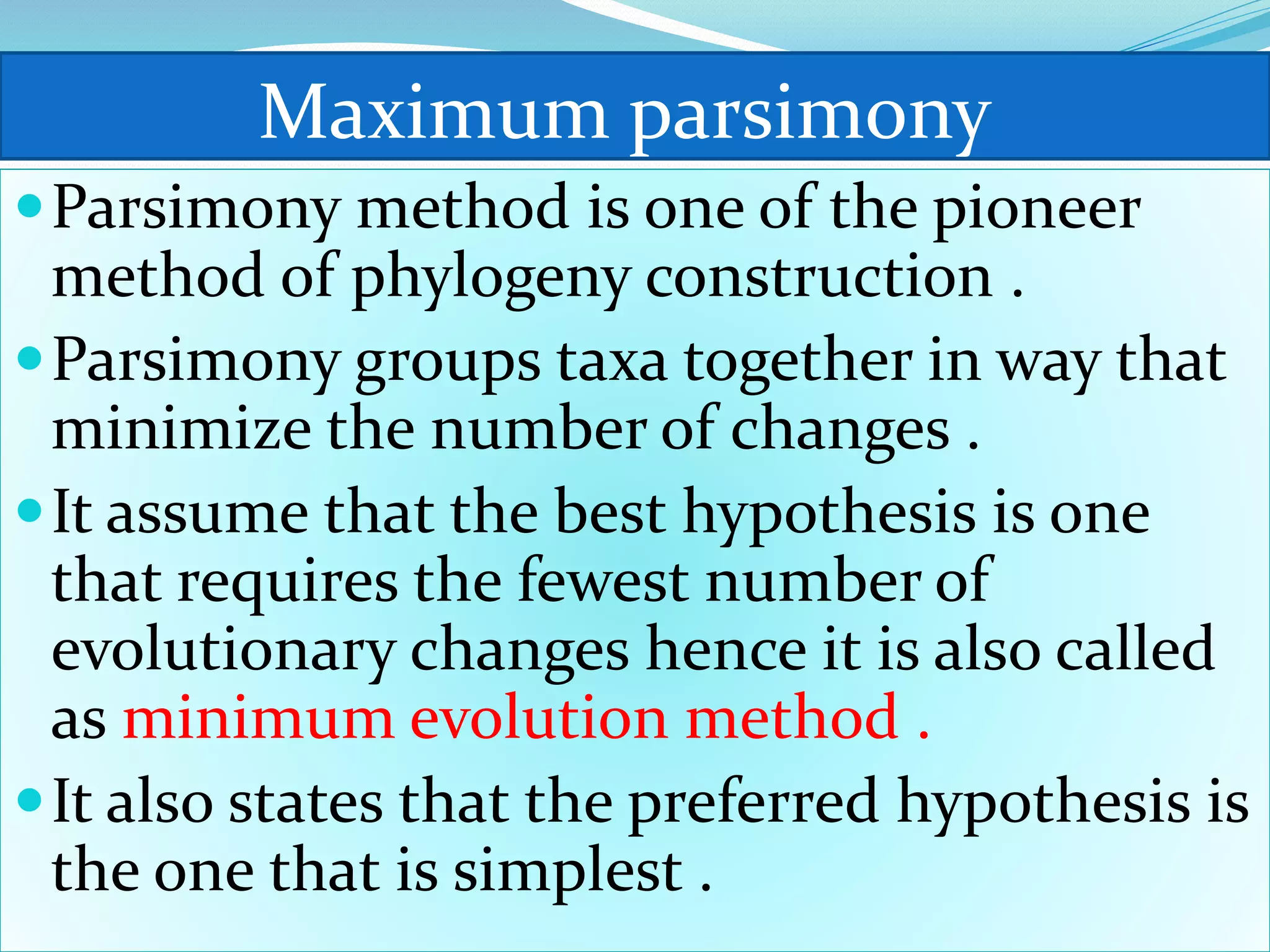
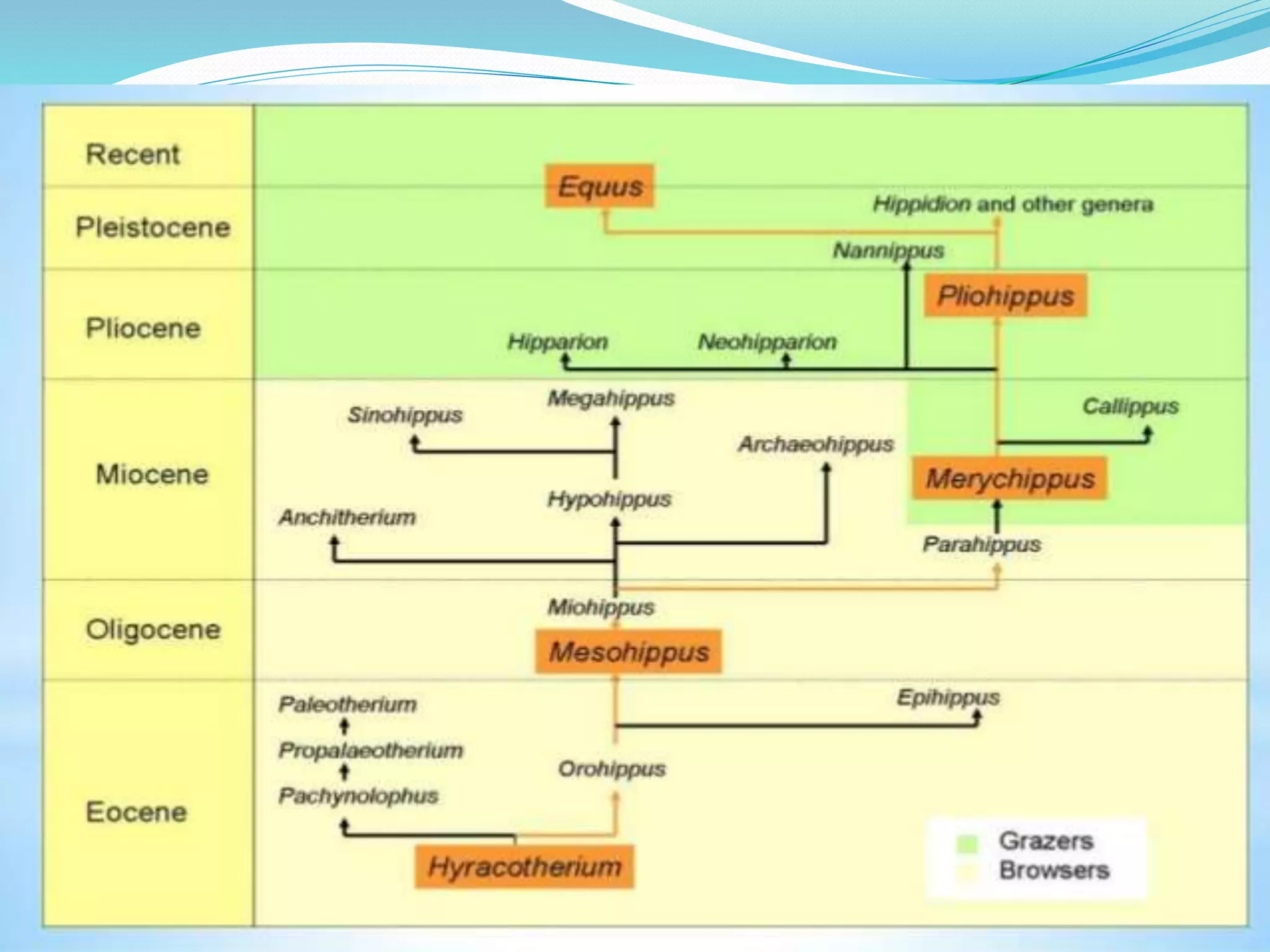
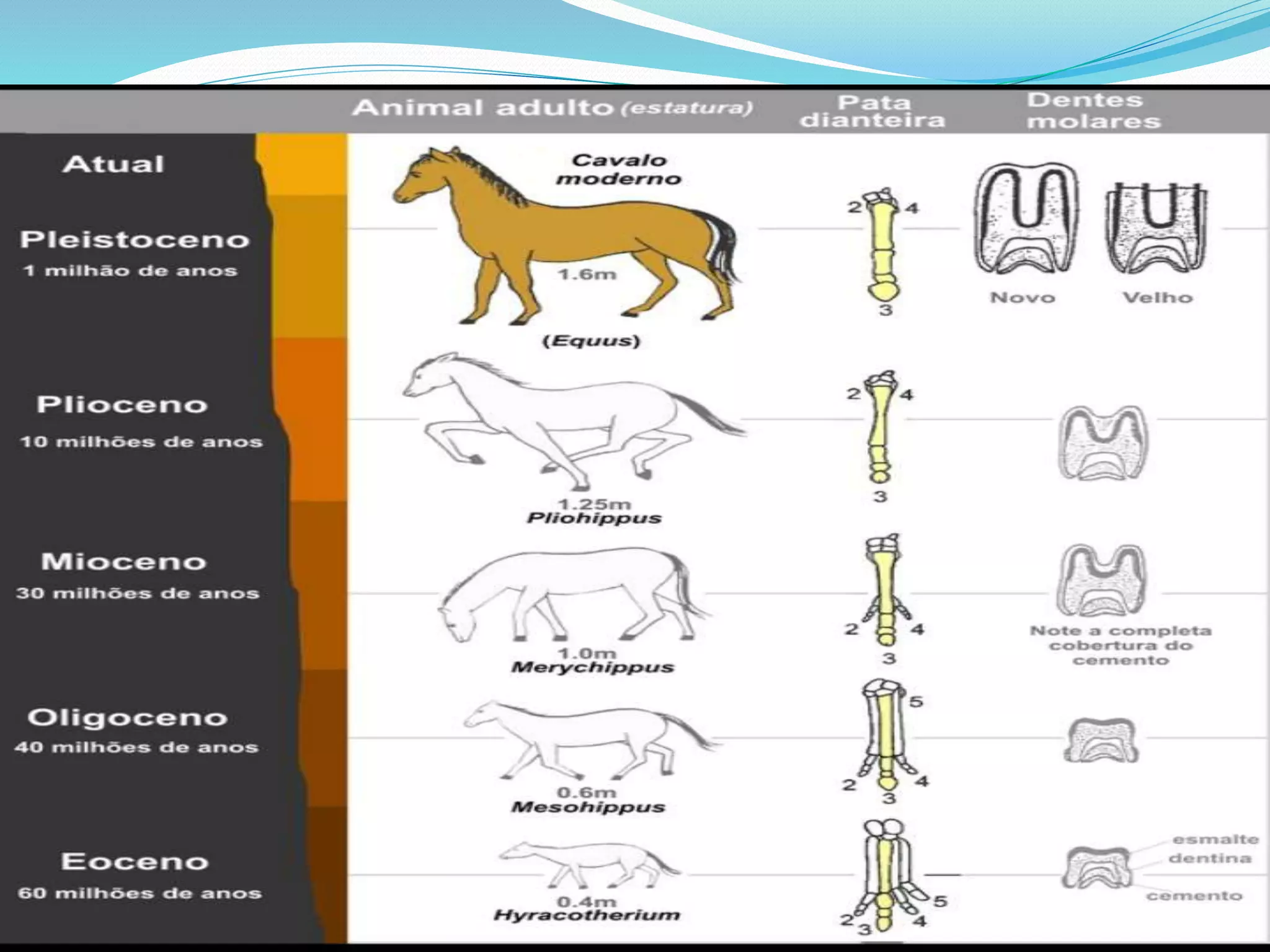
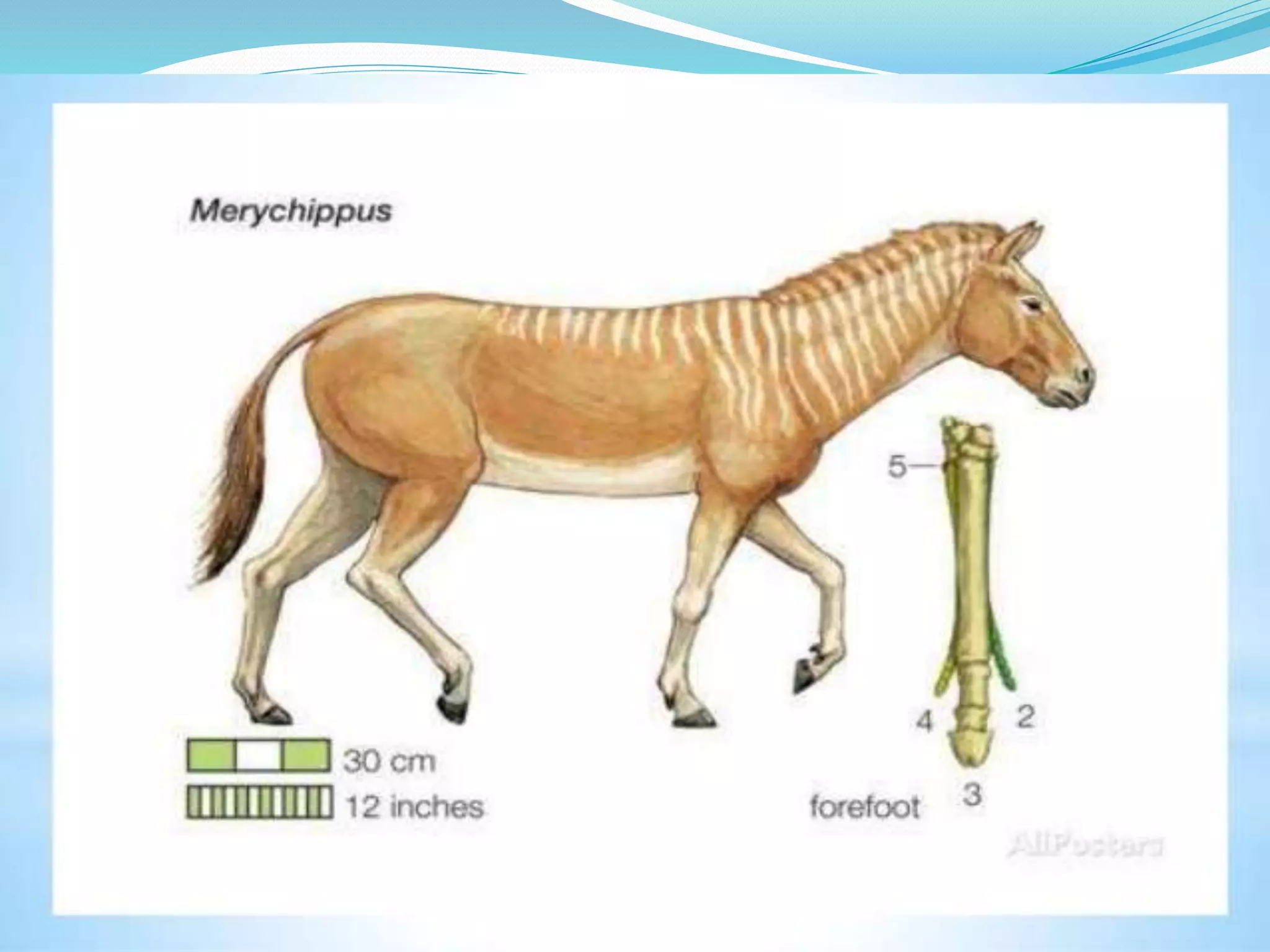
The document discusses phylogenetic trees, which represent the evolutionary relationships among organisms based on shared characteristics and common ancestry. It outlines the methods for constructing these trees, including the maximum parsimony and maximum likelihood approaches, as well as steps involved in analysis like sequence alignment and tree evaluation. The importance of homology in phylogeny and how molecular data has changed the study of evolutionary relationships is emphasized.