Frog’s Circulatory
System
A Frog's Heart Is Central to Its Circulation
 It has two atria and a single ventricle, making it havea total of three chambers.
Here's howit works.
 Deoxygenated blood is sentto the atrium from various organs in the frog's body
through blood vessels and veins. This is the blood being drained from organs, thus
starting the cleansing process. Oxygenated blood then comes from the lungs and
the skin, and enters the left atrium. (This also serves as a gas exchangein most
amphibians.)
 Both atria dump their blood into the single ventricle. Theventricle is divided into
two narrowly separated chambers, which cleverlyreduces the mixing of
oxygenated and deoxygenated blood together. The ventricle contracts, sending
oxygenated blood tothe brain from the left ventricle. It reaches the head by flowing
through the carotid arteries.
 This is an almost pure blood that reaches the brain.
 Theskinandlungsreceive nearlypurebloodfromtherightatriumthrough
pulmocutaneousarteries. Fromtheskinandlungs,freshoxygencanbe
pickedup.Thebloodthatpassesthroughtheaorticarchesisverymixedup,
butstillhasa lotofoxygeninit.Thereisenoughtosupplytherestofthe
bodywhatitneeds.
 Interestingnote:Boththegas exchangeorgansand theinteriortissuesofthe
bodygettheir bloodunderfullpressure.
 TheCirculatorysystemofa frog consistsoftheheart,bloodvessels,and
blood.Frogshavea closeddoubleloopcirculatorysystem.
 Aclosedcirculatorysystemmeansthatthefrog’sbloodiscontainedwithin
bloodvesselsandtheheart.Thedoubleloopsystemmeansthattheblood
goesbacktothehearttwotimesbeforethebloodgoesthroughthewhole
systemofthefrog’sbody.
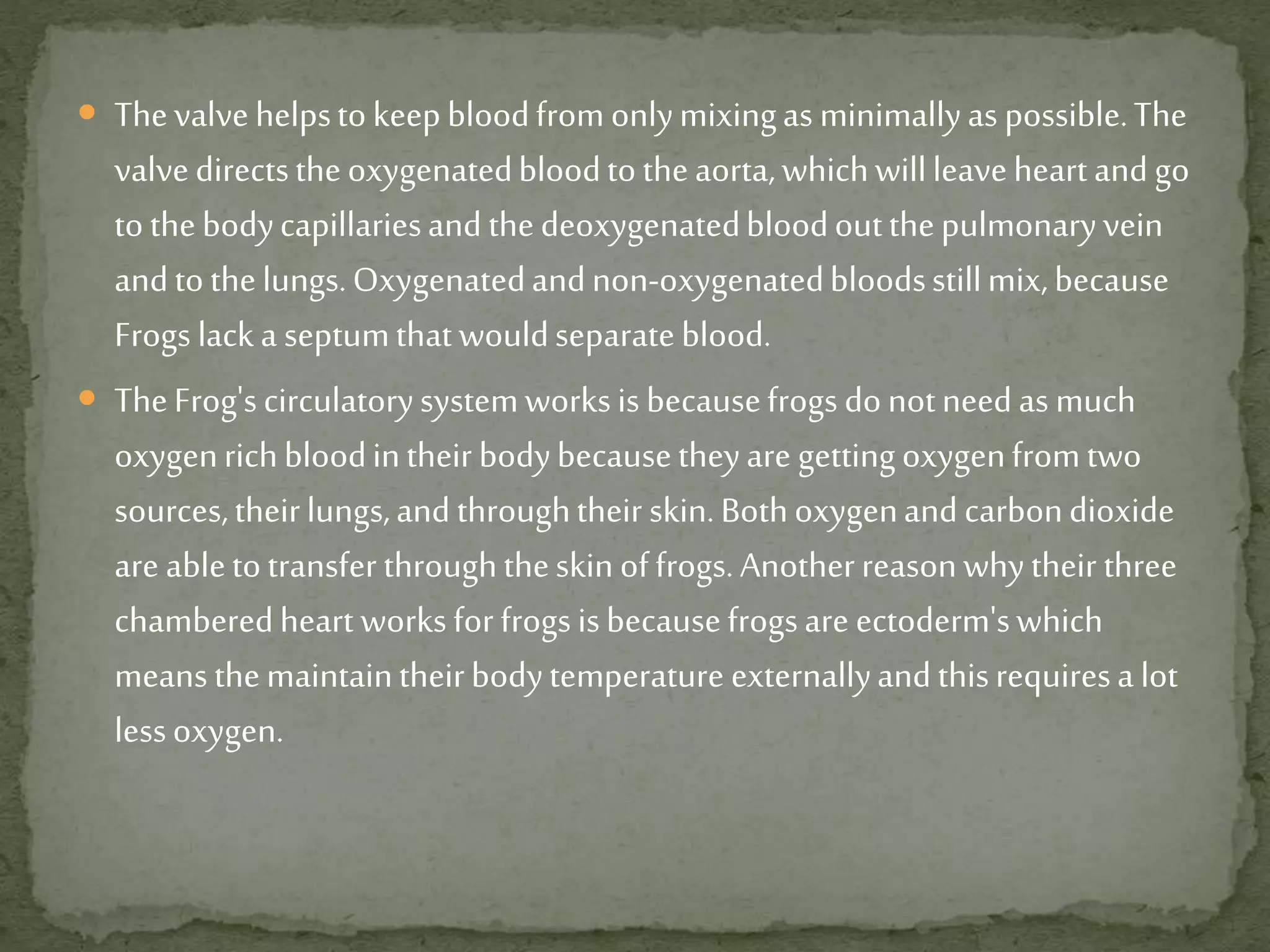
 Thereare threechambers consistingofoneventricleandtwoatria.
 Theventriclepumpsbloodthrougha singleartery(truncusarteriosus)witch
distributesbloodthoughtthebody.
 Oxygenatedbloodcomingbacktotheheartfromlungsenterstheheartinto
differentatria than thede-oxygenatedblooddoescomingfrom thebody
capillaries.
 Thevalvehelpstokeepbloodfromonlymixingas minimallyas possible.The
valvedirectstheoxygenatedbloodtotheaorta,whichwillleaveheartandgo
tothebodycapillariesandthedeoxygenatedbloodoutthepulmonaryvein
andtothelungs.Oxygenatedandnon-oxygenatedbloodsstillmix,because
Frogs lacka septumthatwouldseparateblood.
 TheFrog'scirculatorysystemworksisbecausefrogsdonotneedas much
oxygenrichbloodintheirbodybecausetheyare gettingoxygenfromtwo
sources,theirlungs,andthroughtheir skin.Bothoxygenandcarbondioxide
are abletotransferthroughtheskinoffrogs.Anotherreasonwhytheir three
chamberedheart worksforfrogsisbecausefrogsare ectoderm'swhich
meansthemaintaintheirbodytemperature externallyandthisrequiresa lot
lessoxygen.
Circulatory system of frog

Circulatory system of frog

  • 1.
  • 3.
    A Frog's HeartIs Central to Its Circulation  It has two atria and a single ventricle, making it havea total of three chambers. Here's howit works.  Deoxygenated blood is sentto the atrium from various organs in the frog's body through blood vessels and veins. This is the blood being drained from organs, thus starting the cleansing process. Oxygenated blood then comes from the lungs and the skin, and enters the left atrium. (This also serves as a gas exchangein most amphibians.)  Both atria dump their blood into the single ventricle. Theventricle is divided into two narrowly separated chambers, which cleverlyreduces the mixing of oxygenated and deoxygenated blood together. The ventricle contracts, sending oxygenated blood tothe brain from the left ventricle. It reaches the head by flowing through the carotid arteries.  This is an almost pure blood that reaches the brain.
  • 4.
     Theskinandlungsreceive nearlypurebloodfromtherightatriumthrough pulmocutaneousarteries.Fromtheskinandlungs,freshoxygencanbe pickedup.Thebloodthatpassesthroughtheaorticarchesisverymixedup, butstillhasa lotofoxygeninit.Thereisenoughtosupplytherestofthe bodywhatitneeds.  Interestingnote:Boththegas exchangeorgansand theinteriortissuesofthe bodygettheir bloodunderfullpressure.
  • 5.
     TheCirculatorysystemofa frogconsistsoftheheart,bloodvessels,and blood.Frogshavea closeddoubleloopcirculatorysystem.  Aclosedcirculatorysystemmeansthatthefrog’sbloodiscontainedwithin bloodvesselsandtheheart.Thedoubleloopsystemmeansthattheblood goesbacktothehearttwotimesbeforethebloodgoesthroughthewhole systemofthefrog’sbody.  Thereare threechambers consistingofoneventricleandtwoatria.  Theventriclepumpsbloodthrougha singleartery(truncusarteriosus)witch distributesbloodthoughtthebody.  Oxygenatedbloodcomingbacktotheheartfromlungsenterstheheartinto differentatria than thede-oxygenatedblooddoescomingfrom thebody capillaries.
  • 6.
     Thevalvehelpstokeepbloodfromonlymixingas minimallyaspossible.The valvedirectstheoxygenatedbloodtotheaorta,whichwillleaveheartandgo tothebodycapillariesandthedeoxygenatedbloodoutthepulmonaryvein andtothelungs.Oxygenatedandnon-oxygenatedbloodsstillmix,because Frogs lacka septumthatwouldseparateblood.  TheFrog'scirculatorysystemworksisbecausefrogsdonotneedas much oxygenrichbloodintheirbodybecausetheyare gettingoxygenfromtwo sources,theirlungs,andthroughtheir skin.Bothoxygenandcarbondioxide are abletotransferthroughtheskinoffrogs.Anotherreasonwhytheir three chamberedheart worksforfrogsisbecausefrogsare ectoderm'swhich meansthemaintaintheirbodytemperature externallyandthisrequiresa lot lessoxygen.