
Types of Egg
SANDIP RATHOD
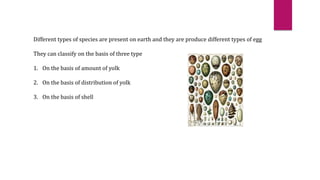
Different types of species are present on earth and they are produce different types of egg
They can classify on the basis of three type
1. On the basis of amount of yolk
2. On the basis of distribution of yolk
3. On the basis of shell
1. On the basis of the amount of Yolk: on the basis of the amount of yolk egg are of the following three type
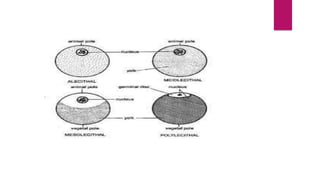
•Alecithal: the amount of yolk present in an organisms egg is of a negligible amount.
Example: Eutherian egg, Mammal
• Microlecithal / oligolecithal - The amount of yolk present in an organism's egg is of a very small amount.
Example - Sea urchin, Amphioxus,
•Mesolecithal - In this type of egg, the yolk amount is medium or moderate.
Example - Amphibian, Dipnoi fishes, lungfishes, Petromyzon
•Polylecithal / macrolecithal / megalecithal - The amount of yolk content is very large.
Example - prototherian mammals, insects, annelids, reptiles
2. On the basis of the distribution of yolk - On the basis of the distribution of egg, eggs are of the following
type-
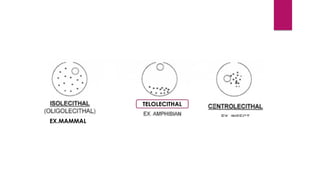
•Isolecithal / homolecithal Egg - The yolk is equally distributed in the whole egg.
Example - Alecithal , micro, oligolecithal egg.
•Teloleithal Egg - Here the yolk is found on the one pole of the egg. Usually, the egg has two opposite pole,
one is the animal pole and the other one is the vegetal pole. Telolecithal types of the egg are those in which
yolk is present on the vegetal pole while the other pole is free.
Example - amphibian egg.
•Centrolecithal Egg - The yolk is present in the center of egg i.e., cytoplasm, surrounded by superficial layer.
Example - insect
TELOLECITHAL
EX.MAMMAL
3. On the Basis of Shell - on the basis of a shell, there are two types of eggs –
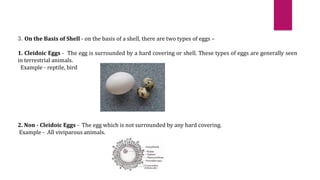
1. Cleidoic Eggs - The egg is surrounded by a hard covering or shell. These types of eggs are generally seen
in terrestrial animals.
Example - reptile, bird
2. Non - Cleidoic Eggs - The egg which is not surrounded by any hard covering.
Example - All viviparous animals.
Types of egg

Types of egg

  • 1.
  • 2.
    Different types ofspecies are present on earth and they are produce different types of egg They can classify on the basis of three type 1. On the basis of amount of yolk 2. On the basis of distribution of yolk 3. On the basis of shell
  • 3.
    1. On thebasis of the amount of Yolk: on the basis of the amount of yolk egg are of the following three type •Alecithal: the amount of yolk present in an organisms egg is of a negligible amount. Example: Eutherian egg, Mammal • Microlecithal / oligolecithal - The amount of yolk present in an organism's egg is of a very small amount. Example - Sea urchin, Amphioxus, •Mesolecithal - In this type of egg, the yolk amount is medium or moderate. Example - Amphibian, Dipnoi fishes, lungfishes, Petromyzon •Polylecithal / macrolecithal / megalecithal - The amount of yolk content is very large. Example - prototherian mammals, insects, annelids, reptiles
  • 5.
    2. On thebasis of the distribution of yolk - On the basis of the distribution of egg, eggs are of the following type- •Isolecithal / homolecithal Egg - The yolk is equally distributed in the whole egg. Example - Alecithal , micro, oligolecithal egg. •Teloleithal Egg - Here the yolk is found on the one pole of the egg. Usually, the egg has two opposite pole, one is the animal pole and the other one is the vegetal pole. Telolecithal types of the egg are those in which yolk is present on the vegetal pole while the other pole is free. Example - amphibian egg. •Centrolecithal Egg - The yolk is present in the center of egg i.e., cytoplasm, surrounded by superficial layer. Example - insect
  • 6.
  • 7.
    3. On theBasis of Shell - on the basis of a shell, there are two types of eggs – 1. Cleidoic Eggs - The egg is surrounded by a hard covering or shell. These types of eggs are generally seen in terrestrial animals. Example - reptile, bird 2. Non - Cleidoic Eggs - The egg which is not surrounded by any hard covering. Example - All viviparous animals.