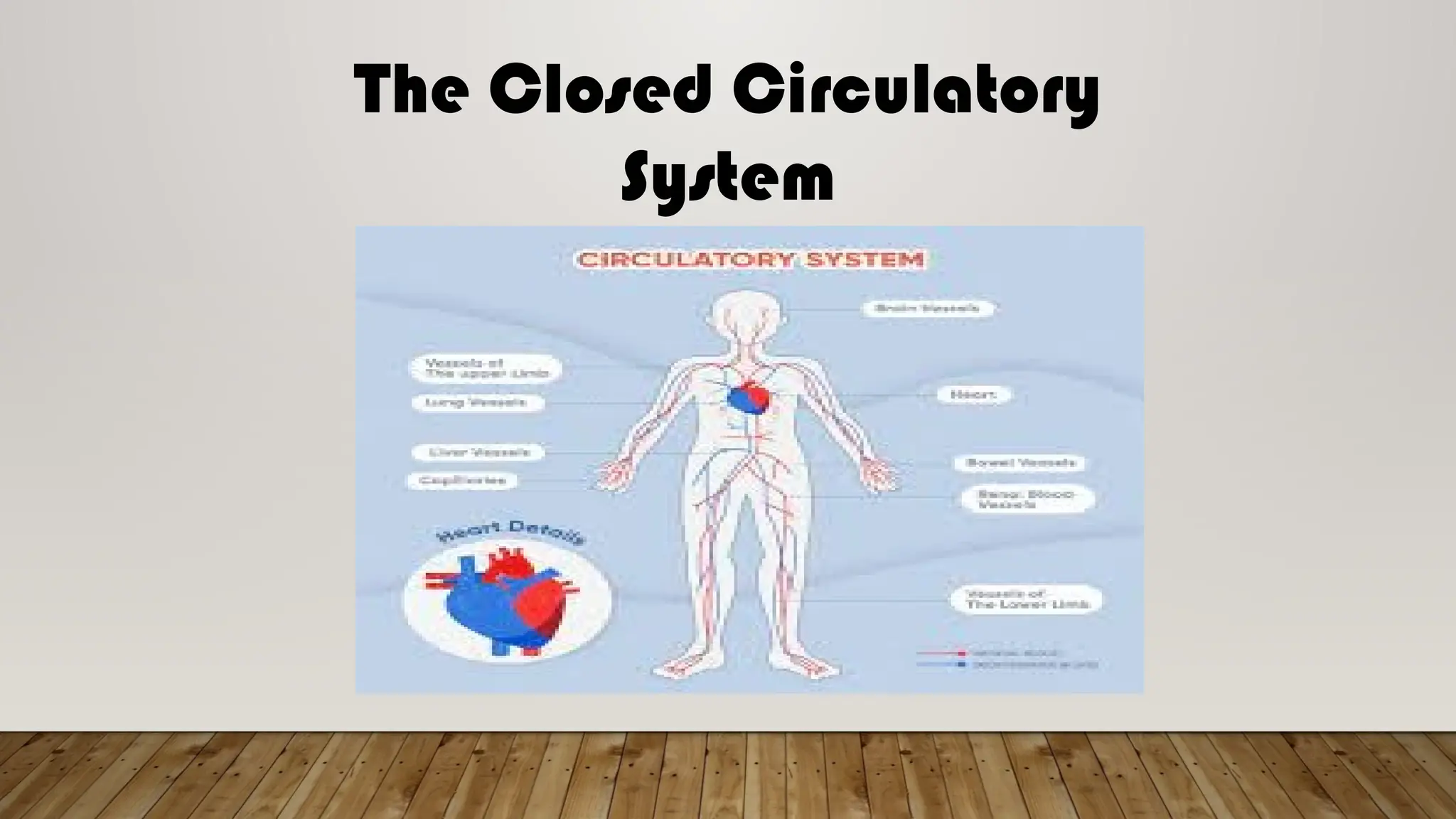
The Closed Circulatory
System
The closed circulatory system is composed
primarily of a muscular pump (heart), a fluid
(blood), and a series of channels (blood vessels)
that allow the fluid to be circulated.
Unidirectional Flow
● A characteristic of the closed
circulatory system is that it
has unidirectional blood flow.
● This means that the blood
flows in only one direction,
and no backflow occurs.
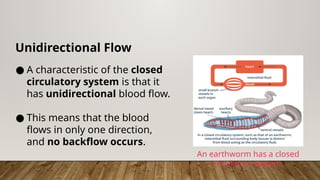
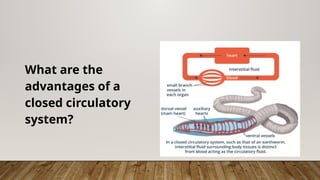
An earthworm has a closed
circulatory system.
Closed Circulation: Organisms
● All vertebrates have a
closed circulatory system.
● Other organisms with a
closed circulatory system
include the cephalopods
and the annelids.
Cephalopods have a closed
circulatory system.
Single vs Double Circulation
● In single circulation, blood only passes the heart once
to make a complete circulation cycle.
● In double circulation, blood passes the heart twice,
once before oxygenation and once more after
oxygenation.
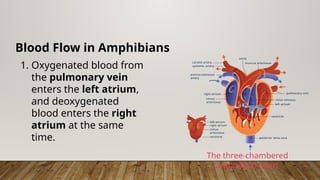
Blood Flow in Amphibians
1. Oxygenated blood from
the pulmonary vein
enters the left atrium,
and deoxygenated
blood enters the right
atrium at the same
time.
The three-chambered
amphibian heart
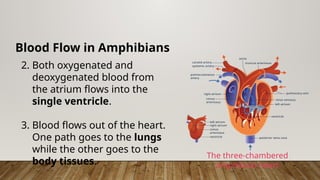
Blood Flow in Amphibians
2. Both oxygenated and
deoxygenated blood from
the atrium flows into the
single ventricle.
3. Blood flows out of the heart.
One path goes to the lungs
while the other goes to the
body tissues.
The three-chambered
amphibian heart
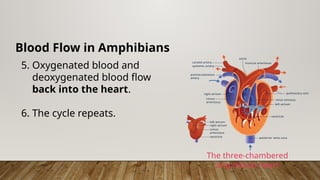
Blood Flow in Amphibians
5. Oxygenated blood and
deoxygenated blood flow
back into the heart.
6. The cycle repeats.
The three-chambered
amphibian heart
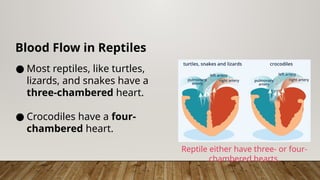
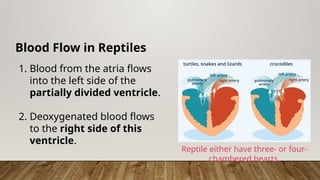
Blood Flow in Reptiles
● Most reptiles, like turtles,
lizards, and snakes have a
three-chambered heart.
● Crocodiles have a four-
chambered heart.
Reptile either have three- or four-
chambered hearts.
Blood Flow in Reptiles
1. Blood from the atria flows
into the left side of the
partially divided ventricle.
2. Deoxygenated blood flows
to the right side of this
ventricle.
Reptile either have three- or four-
chambered hearts.
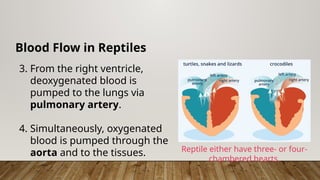
Blood Flow in Reptiles
3. From the right ventricle,
deoxygenated blood is
pumped to the lungs via
pulmonary artery.
4. Simultaneously, oxygenated
blood is pumped through the
aorta and to the tissues. Reptile either have three- or four-
chambered hearts.
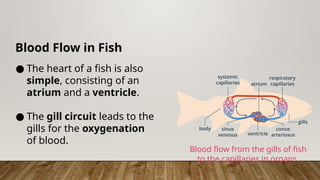
Blood Flow in Fish
● The heart of a fish is also
simple, consisting of an
atrium and a ventricle.
● The gill circuit leads to the
gills for the oxygenation
of blood.
Blood flow from the gills of fish
to the capillaries in organs.
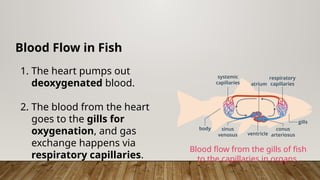
Blood Flow in Fish
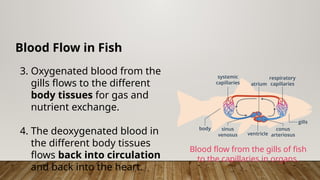
1. The heart pumps out
deoxygenated blood.
2. The blood from the heart
goes to the gills for
oxygenation, and gas
exchange happens via
respiratory capillaries.
Blood flow from the gills of fish
to the capillaries in organs.
Blood Flow in Fish
3. Oxygenated blood from the
gills flows to the different
body tissues for gas and
nutrient exchange.
4. The deoxygenated blood in
the different body tissues
flows back into circulation
and back into the heart.
Blood flow from the gills of fish
to the capillaries in organs.
Blood Flow in Fish
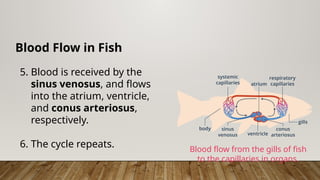
5. Blood is received by the
sinus venosus, and flows
into the atrium, ventricle,
and conus arteriosus,
respectively.
6. The cycle repeats. Blood flow from the gills of fish
to the capillaries in organs.
In a closed circulatory system, the circulatory fluid
or blood is contained inside the blood vessels.
1
The closed circulatory system has unidirectional
blood flow. This means that the flow of blood is only
in one direction, and no backflow occurs.
2
All vertebrates have a closed circulatory system.
Some invertebrates also have this.
3
Identify if the statements are true or false.
1. Cephalopods have a closed circulatory system.
2. Frogs have a three-chambered heart.
3. The atria of frogs contain either oxygenated or
deoxygenated blood.
4. Fish have a closed circulatory system.
5. In fish, oxygenated blood does not pass through the
heart again until it becomes deoxygenated.
What are the
advantages of a
closed circulatory
system?

The Closed Circulatory System 3-18.pptx

  • 1.
  • 2.
    The closed circulatorysystem is composed primarily of a muscular pump (heart), a fluid (blood), and a series of channels (blood vessels) that allow the fluid to be circulated.
  • 3.
    Unidirectional Flow ● Acharacteristic of the closed circulatory system is that it has unidirectional blood flow. ● This means that the blood flows in only one direction, and no backflow occurs. An earthworm has a closed circulatory system.
  • 4.
    Closed Circulation: Organisms ●All vertebrates have a closed circulatory system. ● Other organisms with a closed circulatory system include the cephalopods and the annelids. Cephalopods have a closed circulatory system.
  • 5.
    Single vs DoubleCirculation ● In single circulation, blood only passes the heart once to make a complete circulation cycle. ● In double circulation, blood passes the heart twice, once before oxygenation and once more after oxygenation.
  • 6.
    Blood Flow inAmphibians 1. Oxygenated blood from the pulmonary vein enters the left atrium, and deoxygenated blood enters the right atrium at the same time. The three-chambered amphibian heart
  • 7.
    Blood Flow inAmphibians 2. Both oxygenated and deoxygenated blood from the atrium flows into the single ventricle. 3. Blood flows out of the heart. One path goes to the lungs while the other goes to the body tissues. The three-chambered amphibian heart
  • 8.
    Blood Flow inAmphibians 5. Oxygenated blood and deoxygenated blood flow back into the heart. 6. The cycle repeats. The three-chambered amphibian heart
  • 9.
    Blood Flow inReptiles ● Most reptiles, like turtles, lizards, and snakes have a three-chambered heart. ● Crocodiles have a four- chambered heart. Reptile either have three- or four- chambered hearts.
  • 10.
    Blood Flow inReptiles 1. Blood from the atria flows into the left side of the partially divided ventricle. 2. Deoxygenated blood flows to the right side of this ventricle. Reptile either have three- or four- chambered hearts.
  • 11.
    Blood Flow inReptiles 3. From the right ventricle, deoxygenated blood is pumped to the lungs via pulmonary artery. 4. Simultaneously, oxygenated blood is pumped through the aorta and to the tissues. Reptile either have three- or four- chambered hearts.
  • 12.
    Blood Flow inFish ● The heart of a fish is also simple, consisting of an atrium and a ventricle. ● The gill circuit leads to the gills for the oxygenation of blood. Blood flow from the gills of fish to the capillaries in organs.
  • 13.
    Blood Flow inFish 1. The heart pumps out deoxygenated blood. 2. The blood from the heart goes to the gills for oxygenation, and gas exchange happens via respiratory capillaries. Blood flow from the gills of fish to the capillaries in organs.
  • 14.
    Blood Flow inFish 3. Oxygenated blood from the gills flows to the different body tissues for gas and nutrient exchange. 4. The deoxygenated blood in the different body tissues flows back into circulation and back into the heart. Blood flow from the gills of fish to the capillaries in organs.
  • 15.
    Blood Flow inFish 5. Blood is received by the sinus venosus, and flows into the atrium, ventricle, and conus arteriosus, respectively. 6. The cycle repeats. Blood flow from the gills of fish to the capillaries in organs.
  • 16.
    In a closedcirculatory system, the circulatory fluid or blood is contained inside the blood vessels. 1 The closed circulatory system has unidirectional blood flow. This means that the flow of blood is only in one direction, and no backflow occurs. 2 All vertebrates have a closed circulatory system. Some invertebrates also have this. 3
  • 17.
    Identify if thestatements are true or false. 1. Cephalopods have a closed circulatory system. 2. Frogs have a three-chambered heart. 3. The atria of frogs contain either oxygenated or deoxygenated blood. 4. Fish have a closed circulatory system. 5. In fish, oxygenated blood does not pass through the heart again until it becomes deoxygenated.
  • 18.
    What are the advantagesof a closed circulatory system?