Types of Fish Scales
Dr. Karri Rama Rao
Dept. of Zoology
 In many vertebrates, the exoskeleton covering of
body is made of two types of scales- epidermaland
dermal.
 They are well developed in terrestrial vertebrates
such as reptiles, birds and mammals.
Dermal scales are mesenchymal in origin and
especially developed in the fishes.
They are small, thin, cornified, calcareous or bony
plates which fit closely together or overlap.
They are most often imbricated and overlap like
shingles on the roof, so as to minimise the friction of
water.
Fishes possess dermal scales on the body for
protection.
Each scale is made of dentine that is secreted by
dermal papilla
The exposed portion of scale is covered with a layer
of hard enamel to minimise wear and tear.
Ancient fishes generally had thick bony scales while
the modern fishes have evolved thin and flexible
scales for more agility.
TYPES OF SCALES
The following types of scales are found in living and
extinct fishes
1. Cosmoid Scales
They were found in ancient crossopterygian fishes
of Devonian period and covered the body like thick
bony plates, more or less like crocodiles have today.
A cosmoid scale is made of a thick layer of cosmine
that is dentine type of material covered on the
surface by a hard proteinous layer called
vitrodentine.
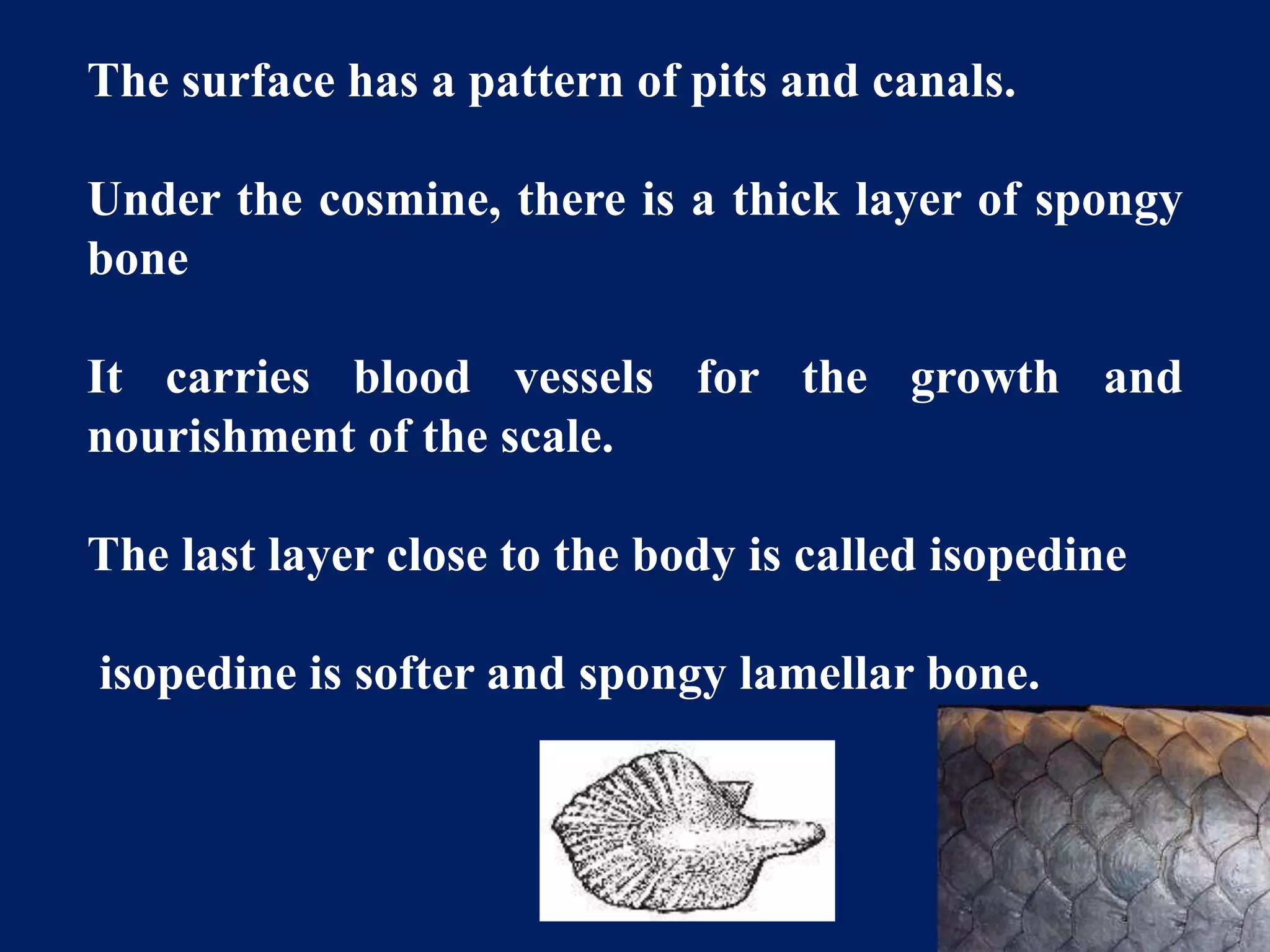
The surface has a pattern of pits and canals.
Under the cosmine, there is a thick layer of spongy
bone
It carries blood vessels for the growth and
nourishment of the scale.
The last layer close to the body is called isopedine
isopedine is softer and spongy lamellar bone.
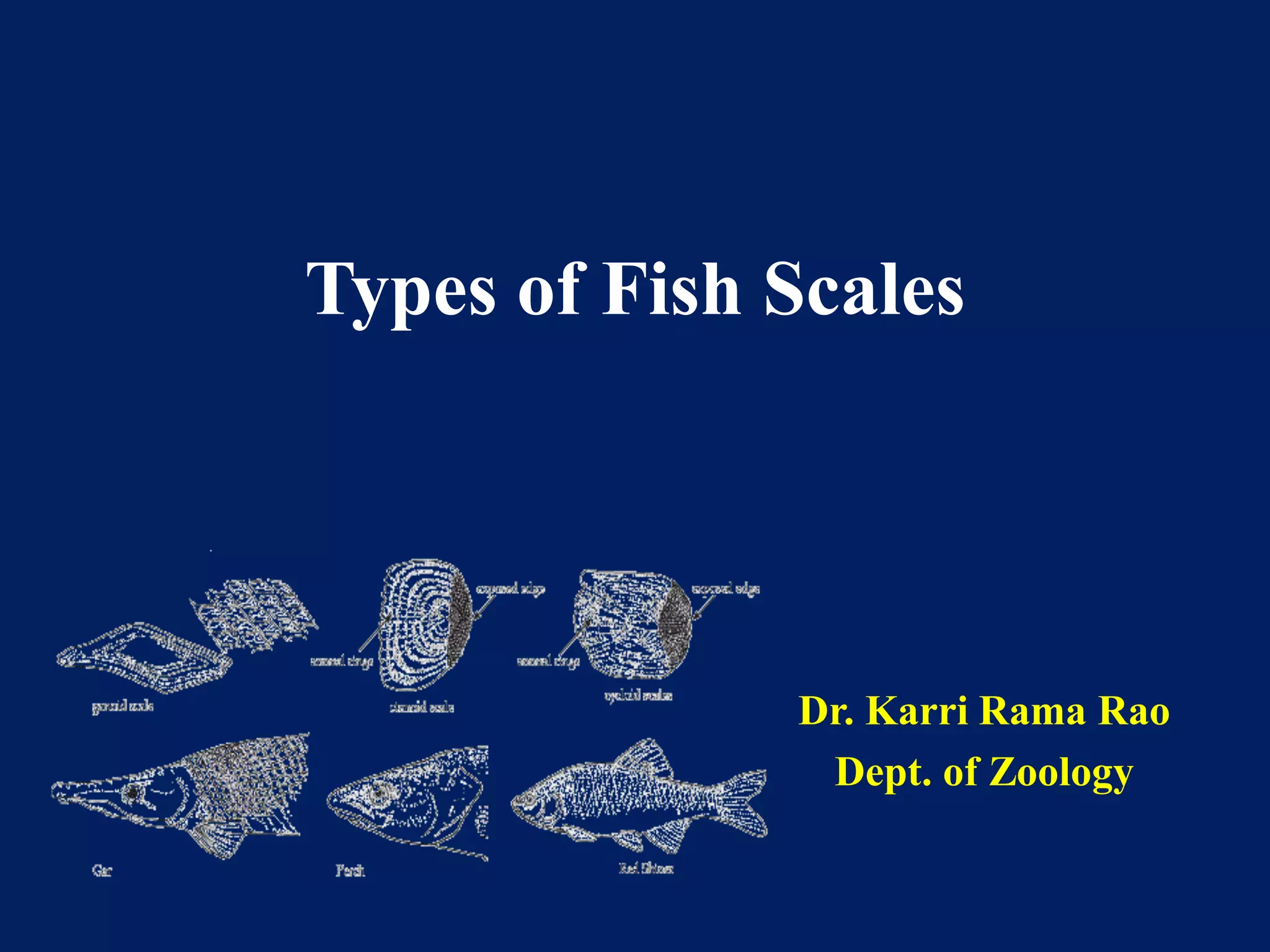
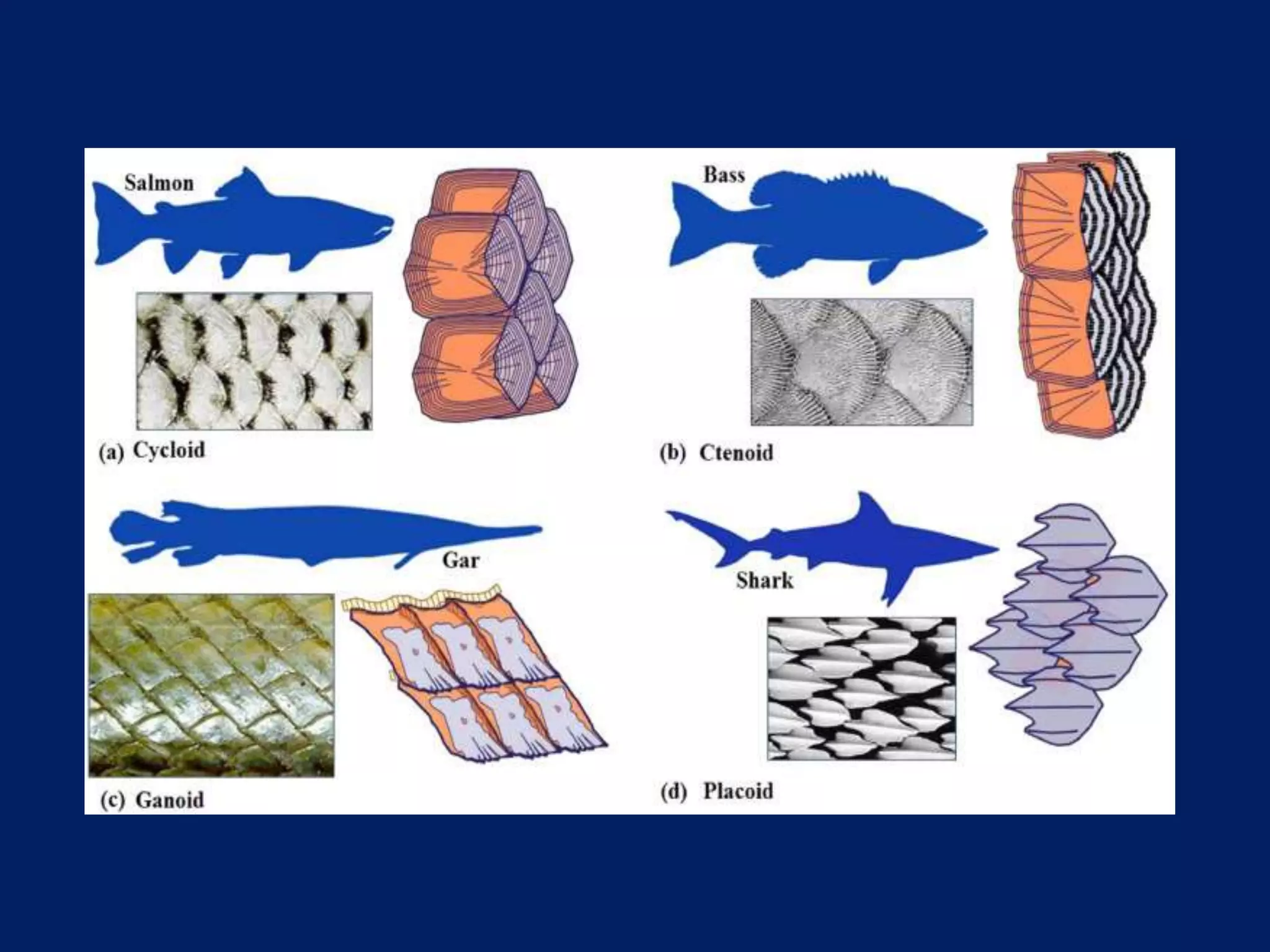
2. Ganoid Scales
Scales are thick and rhomboidal, the surface is coated
with a hard enamel-like ganoin material and lacunae
and canaliculae.
The structure is made of the dentine type bone and a
lower layer that is called isopedine.
Such types of scales are called Palaeoniscoid type
that occurs in Chondrostei such as Polypterus.
This type of scales is called Lepidosteioid type.
Ganoid scales are comprised of bone.
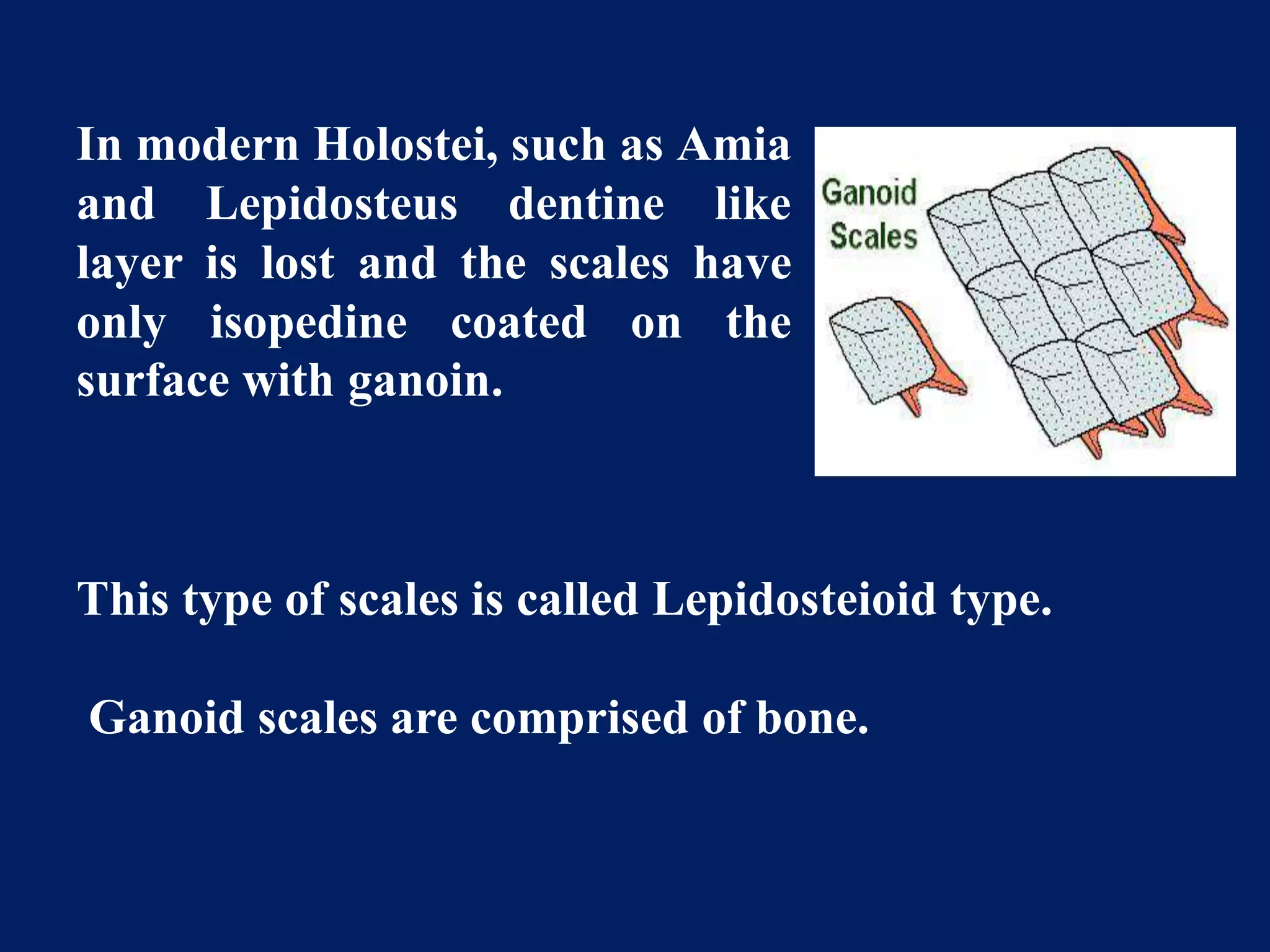
In modern Holostei, such as Amia
and Lepidosteus dentine like
layer is lost and the scales have
only isopedine coated on the
surface with ganoin.
3. Placoid Scales
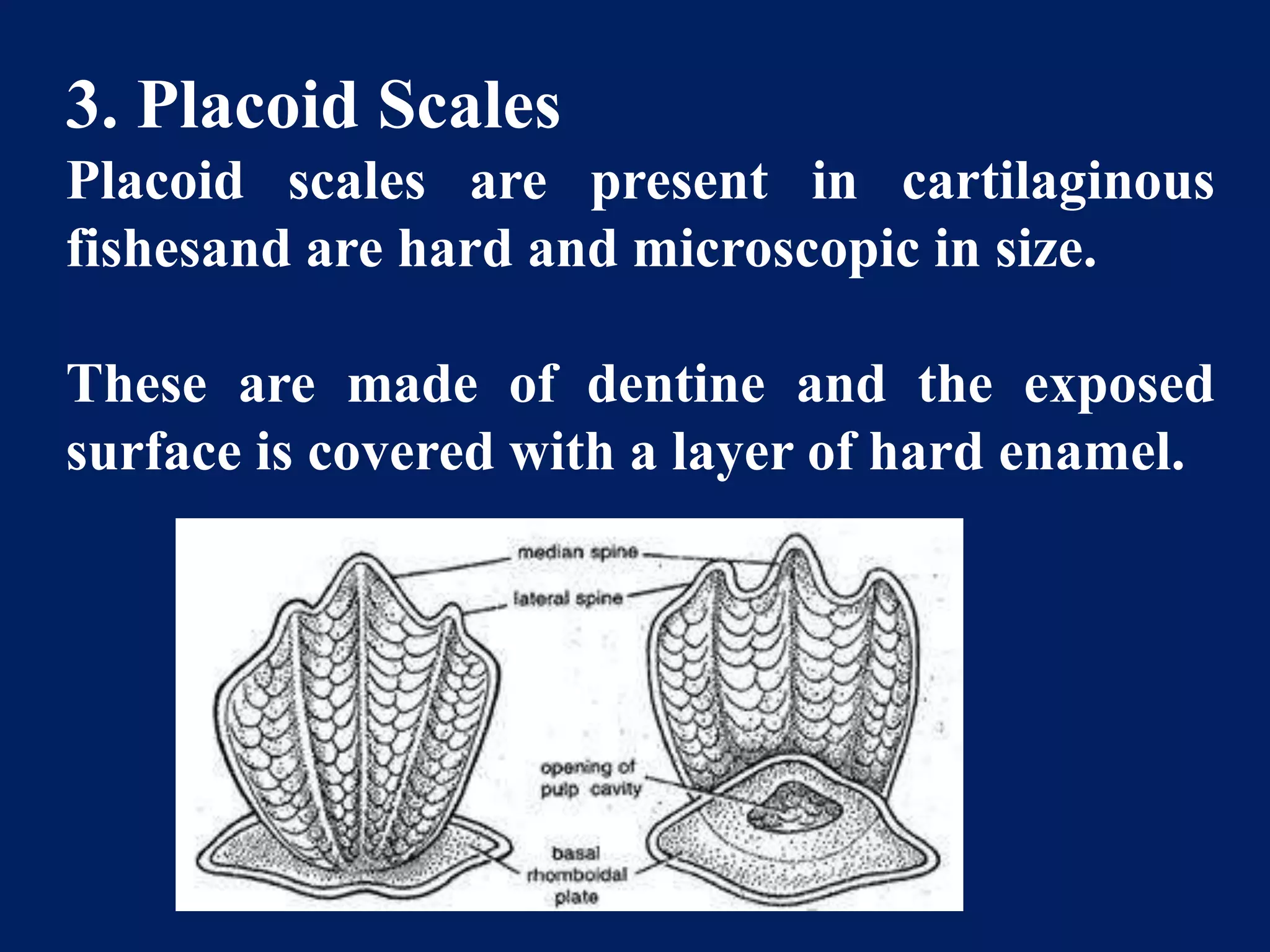
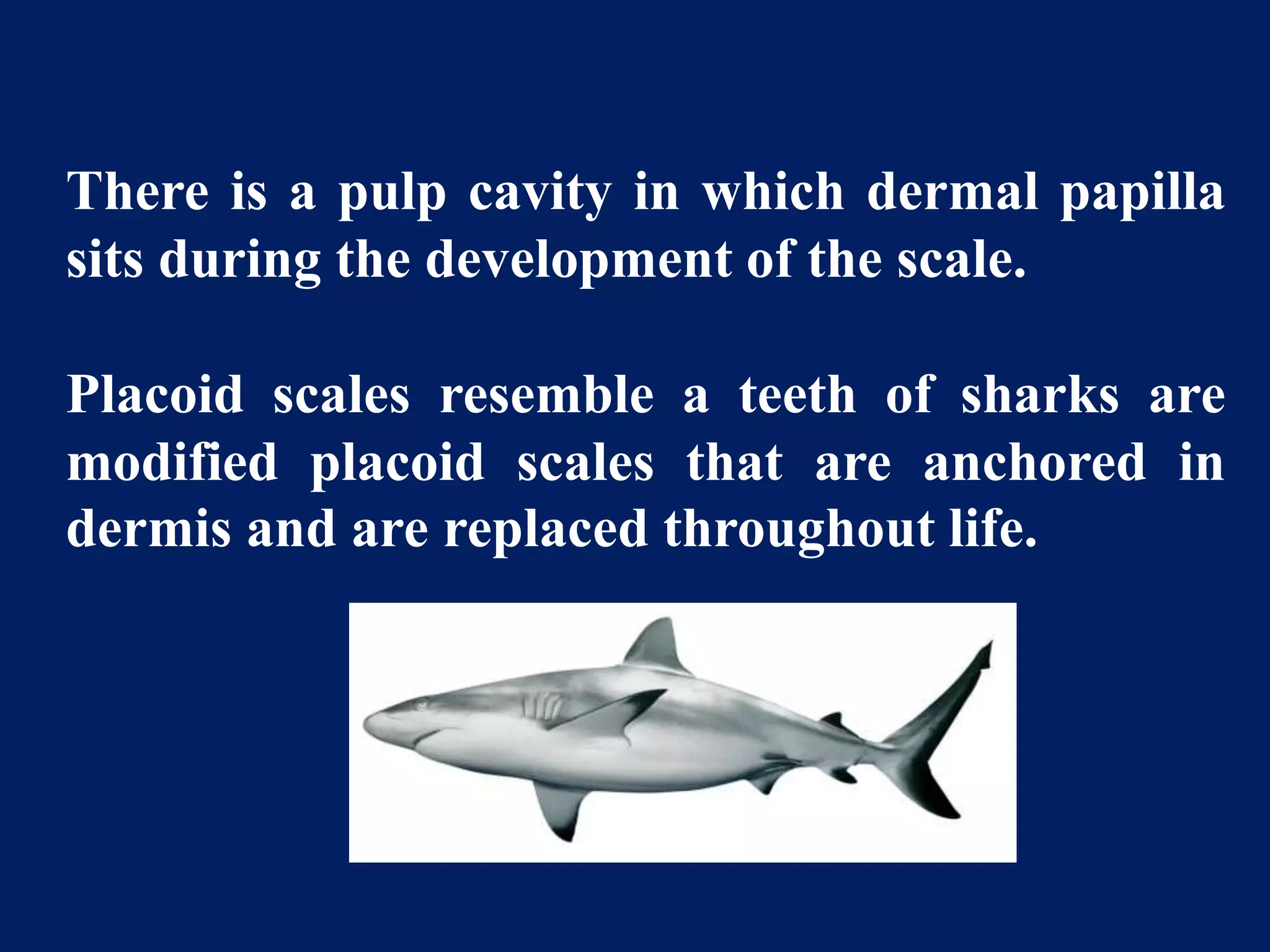
Placoid scales are present in cartilaginous
fishesand are hard and microscopic in size.
These are made of dentine and the exposed
surface is covered with a layer of hard enamel.
There is a pulp cavity in which dermal papilla
sits during the development of the scale.
Placoid scales resemble a teeth of sharks are
modified placoid scales that are anchored in
dermis and are replaced throughout life.
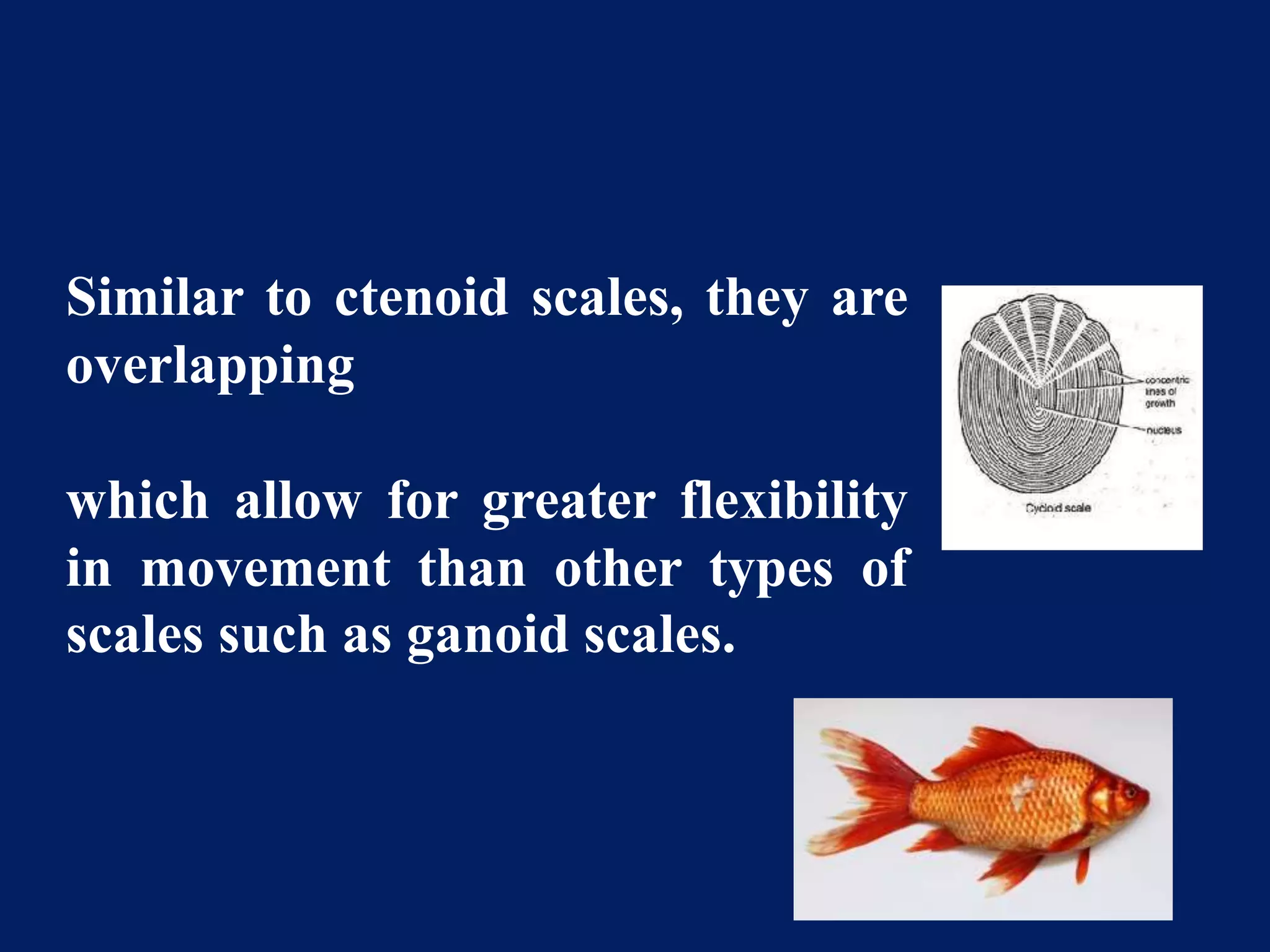
4. Cycloid Scales
Cycloid scales are smooth edged scales are thin,
strong and extremely flexible.
Predominately found in lower order teleost fishes,
such as salmon, carp and other soft fin rayed fish.
They are large, oval in shape and made of only
isopedine with an underlying layer of collagenous
fibres that provide them with strength and
flexibility.
Similar to ctenoid scales, they are
overlapping
which allow for greater flexibility
in movement than other types of
scales such as ganoid scales.
5. Ctenoid Scales
Ctenoid scales are comb like edge found in higher
order teleost fishes, such as perch and sunfish.
Cteni are the tiny teeth on the posterior margin of
the scale.
Cycloid scales are large, thin, and round or oval in
shape, and they exhibit growth rings.
Similar to cycloid scales, they
are overlapping which allows
for greater flexibility in
movement than other types of
scales such as ganoid scales
Evolutionary modifications of scales in
fishes
Ostracoderms and placoderms, which were
ancestors of all modern fishes, had their bodies
covered with dermal bony armour for protection
from predators.
In Devonian period some of these fishes gave rise to
predatory sharks that lost dermal armour for
smaller placoid scales in order to achieve flexibility
of body to swim faster and chase prey.
Types of fish scales

Types of fish scales

  • 1.
    Types of FishScales Dr. Karri Rama Rao Dept. of Zoology
  • 2.
     In manyvertebrates, the exoskeleton covering of body is made of two types of scales- epidermaland dermal.  They are well developed in terrestrial vertebrates such as reptiles, birds and mammals. Dermal scales are mesenchymal in origin and especially developed in the fishes. They are small, thin, cornified, calcareous or bony plates which fit closely together or overlap.
  • 3.
    They are mostoften imbricated and overlap like shingles on the roof, so as to minimise the friction of water. Fishes possess dermal scales on the body for protection. Each scale is made of dentine that is secreted by dermal papilla The exposed portion of scale is covered with a layer of hard enamel to minimise wear and tear.
  • 4.
    Ancient fishes generallyhad thick bony scales while the modern fishes have evolved thin and flexible scales for more agility. TYPES OF SCALES The following types of scales are found in living and extinct fishes
  • 5.
    1. Cosmoid Scales Theywere found in ancient crossopterygian fishes of Devonian period and covered the body like thick bony plates, more or less like crocodiles have today. A cosmoid scale is made of a thick layer of cosmine that is dentine type of material covered on the surface by a hard proteinous layer called vitrodentine.
  • 6.
    The surface hasa pattern of pits and canals. Under the cosmine, there is a thick layer of spongy bone It carries blood vessels for the growth and nourishment of the scale. The last layer close to the body is called isopedine isopedine is softer and spongy lamellar bone.
  • 7.
    2. Ganoid Scales Scalesare thick and rhomboidal, the surface is coated with a hard enamel-like ganoin material and lacunae and canaliculae. The structure is made of the dentine type bone and a lower layer that is called isopedine. Such types of scales are called Palaeoniscoid type that occurs in Chondrostei such as Polypterus.
  • 8.
    This type ofscales is called Lepidosteioid type. Ganoid scales are comprised of bone. In modern Holostei, such as Amia and Lepidosteus dentine like layer is lost and the scales have only isopedine coated on the surface with ganoin.
  • 9.
    3. Placoid Scales Placoidscales are present in cartilaginous fishesand are hard and microscopic in size. These are made of dentine and the exposed surface is covered with a layer of hard enamel.
  • 10.
    There is apulp cavity in which dermal papilla sits during the development of the scale. Placoid scales resemble a teeth of sharks are modified placoid scales that are anchored in dermis and are replaced throughout life.
  • 11.
    4. Cycloid Scales Cycloidscales are smooth edged scales are thin, strong and extremely flexible. Predominately found in lower order teleost fishes, such as salmon, carp and other soft fin rayed fish. They are large, oval in shape and made of only isopedine with an underlying layer of collagenous fibres that provide them with strength and flexibility.
  • 12.
    Similar to ctenoidscales, they are overlapping which allow for greater flexibility in movement than other types of scales such as ganoid scales.
  • 13.
    5. Ctenoid Scales Ctenoidscales are comb like edge found in higher order teleost fishes, such as perch and sunfish. Cteni are the tiny teeth on the posterior margin of the scale. Cycloid scales are large, thin, and round or oval in shape, and they exhibit growth rings.
  • 14.
    Similar to cycloidscales, they are overlapping which allows for greater flexibility in movement than other types of scales such as ganoid scales
  • 15.
    Evolutionary modifications ofscales in fishes Ostracoderms and placoderms, which were ancestors of all modern fishes, had their bodies covered with dermal bony armour for protection from predators. In Devonian period some of these fishes gave rise to predatory sharks that lost dermal armour for smaller placoid scales in order to achieve flexibility of body to swim faster and chase prey.