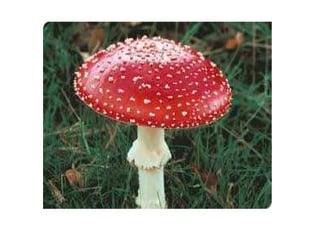
Fungi
Eucaryotic, unicellular to multicellular, microscopic
to macroscopic organisms, spore bearer with
absorptive nutrition and lacking chlorophyll
Distribution
• Terrestrial, fresh water and marine
• Also in polar region
Importance
Beneficial-
• act as decomposer, degrade complex organic
compound
• Carbon, nitrogen, phosphorous and others are
recycled
• Making of bread, wine, beer
• Preparation of cheeses, soy sauce and sufu
• Production of organic acids- citric acid, gallic acid
• Drugs- cortisone
• Antibiotics- penicillin,
Beneficial
• Immunosuppressive drug- cyclosporin
• Important research tool
Harmful effect-
• Pathogenic for plants, animals
• Over 5000 sp attack economically valuable crops,
garden plants and many wild plants
• About 20 new human fungal pathogens are
documented each year
Structure
• Single cell ( yeast) to multi-cellular
• Cell wall is having chitin
• Thallus- vegetative structure
• Thallus consists of long, branched, thread like
structure called hyphae
• Collection of hyphae make mycelia
• Collection of mycelia make thallus
Mycelium
Nutrition and metabolism
• Most fungi are saprophytes
• They grow in dark, moist habitat rich with organic
materials
• Release hydrolytic enzymes to digest substrate
• Chemoorganoheterotroph
• Storage material-glycogen
• Use glucose or maltose and nitrogenous
compounds to synthesize their own amino acids
and proteins
• They are usually aerobic except yeast(facultative
anaerobe)
• Obligatory anaerobes are found in rumen
Reproduction-asexual
1. Transverse fission-
2. Budding-
Reproduction
3.Arthrospore
4.sporangiospore
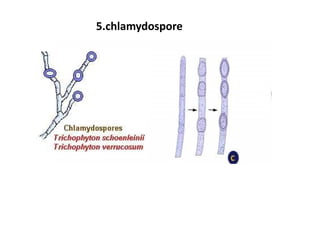
5.chlamydospore
6. Zoospore
7. conidiospore
Sexual reproduction
Zygospore
Ascospore
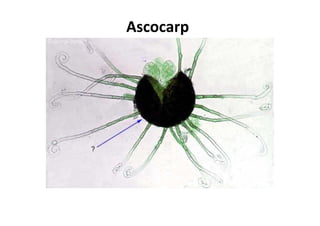
Ascocarp
Basidiospores
1
2
3
4
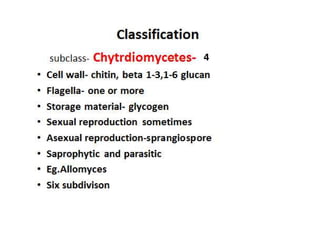
Classification
Sub class- Urediniomycetes
Mycelial or yeast form
5
Life cycle of Yeast
Ustiloginomycetes 6
• Common corn pathogen, causes tumour in plants
• Have specialized hyphae called appresorria for
penetrating host tissue
• With the help of these tomours are formed and
fungi grow inside to produce spores called
teliospores
Glomeramycota 7
• Ecologically important
• Eg. Mycorrhizal fungi- association between fungi
and plants
Importance of Mycorrhiza
• Fungus help protect its host from stress
• Delivers nutrients from soil
• Fungus get carbohydrate from the plant
Microsporidia 8
• Confusing taxonomy(curious fungi)
• Considered as protist
• Some are pathogens
• Are obligatory parasite, infects insects, fish,
human (AIDS patients are the target)
• Causes diarrhoea, pneumonia, encephalitis,
nephritis
• Morphology of spore- unique
polaroplast
exospore
endospore
nucleus
Polar tube
Posterior vacuole

Fungi & Yeast