Downloaded 2,834 times

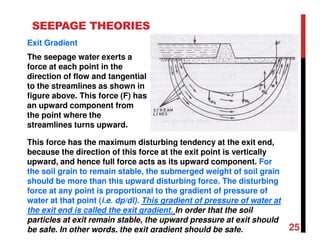
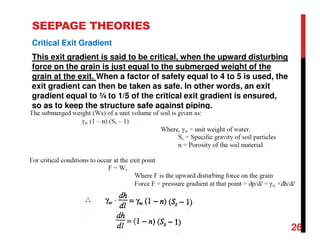
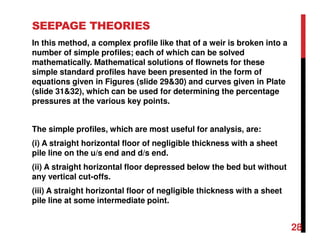

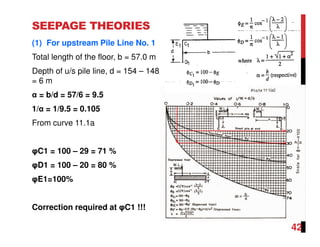
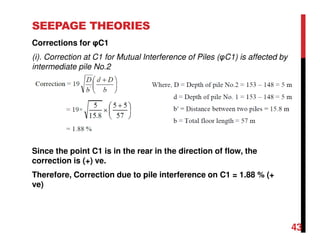
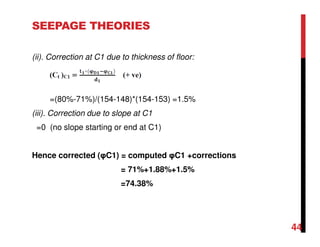
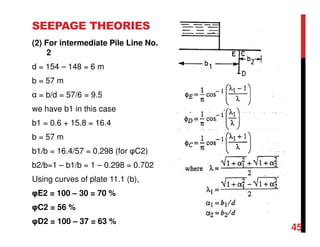
![PRACTICE PROBLEM: 1
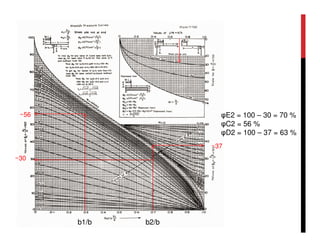
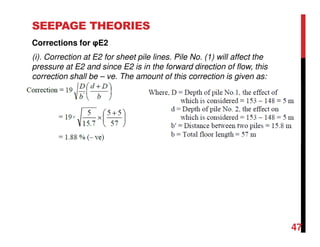
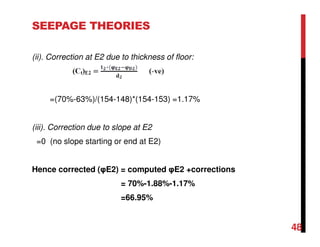
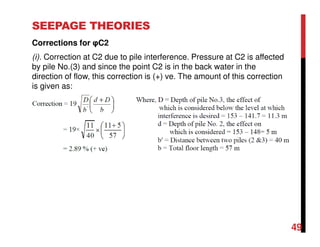
Use Khosla’s curves to calculate the percentage uplift pressure at points
C1, E2, C2, D3 and E3 for a barrage foundation profile shown in figure
below applying necessary corrections. Also determine the exit gradient.
[Assume: floor thickness = 1 m]](https://image.slidesharecdn.com/chapter4seepagetheories-161214131141/85/Chapter-4-seepage-theories-57-320.jpg)


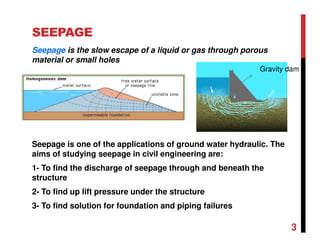
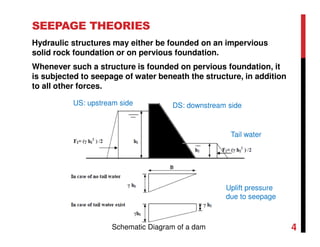
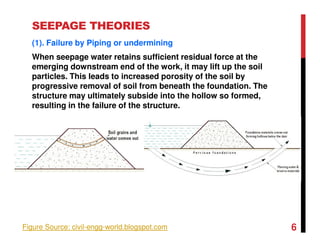
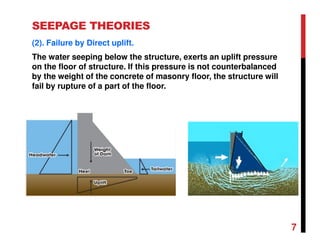
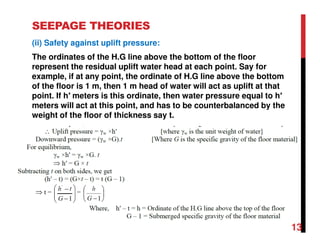
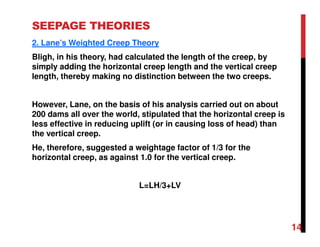
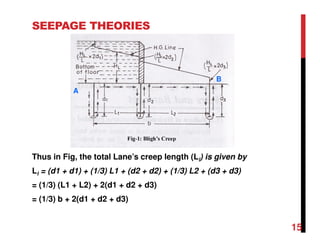
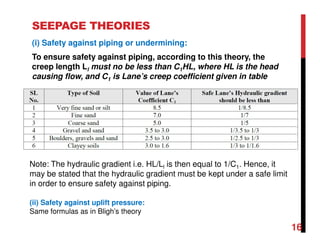
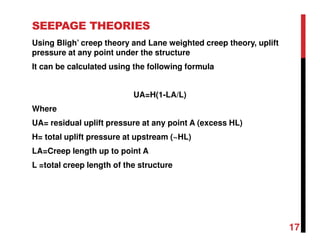
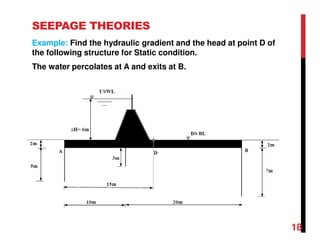
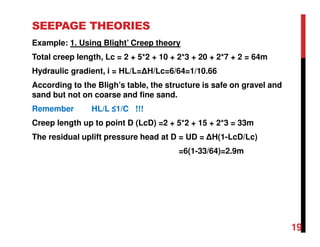
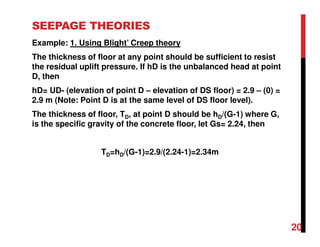
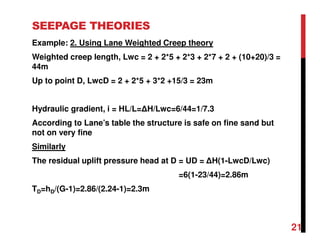
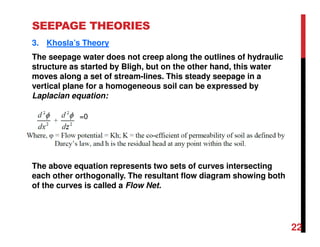
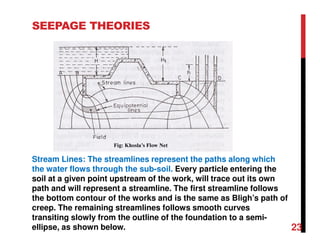
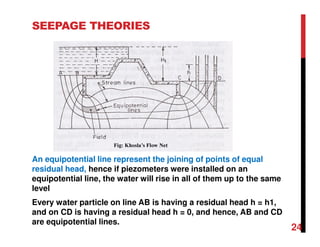
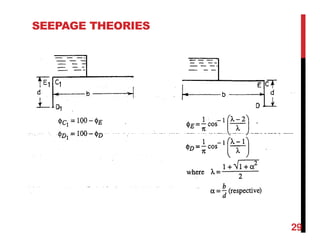
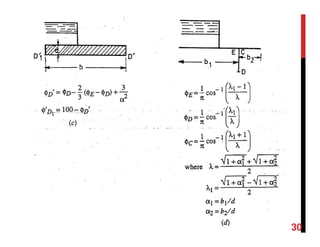
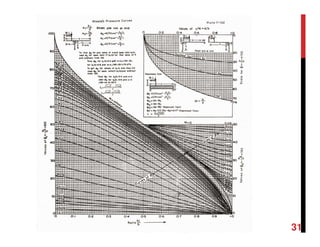
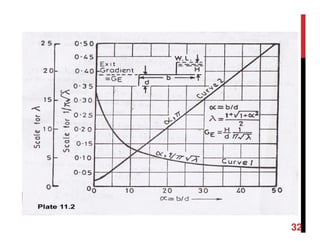
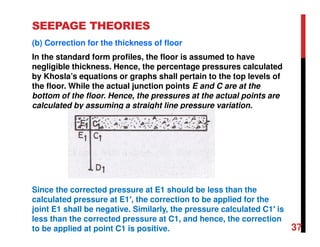
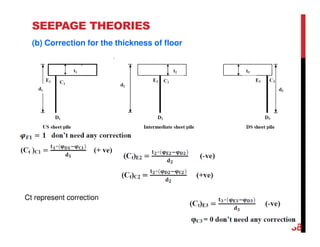
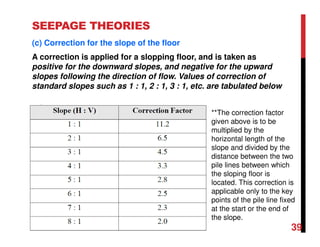
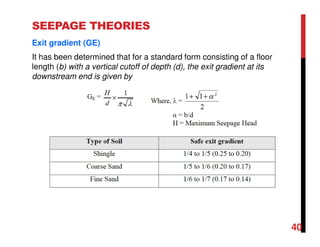
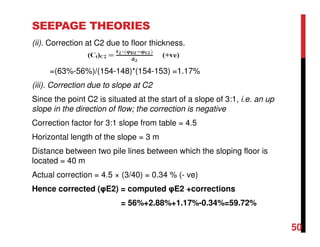
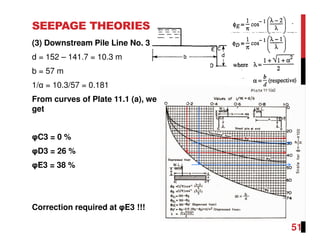
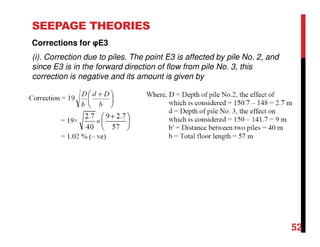
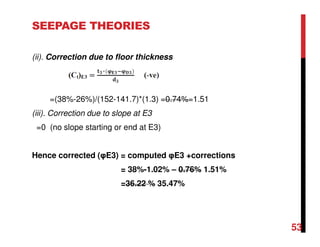
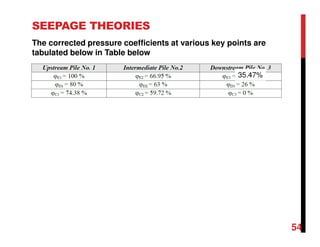
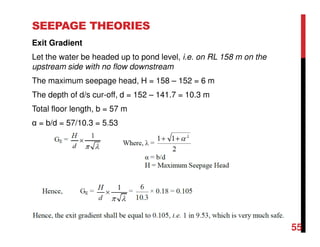
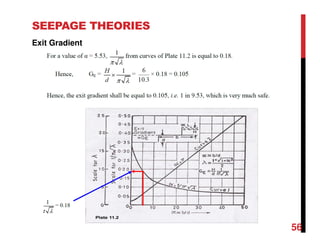
This document provides an overview of different seepage theories used in the design of hydraulic structures. It discusses three main theories: 1) Bligh's creep theory, which assumes seepage follows the base contour of the structure; 2) Lane's weighted creep theory, which applies a weighting factor to horizontal seepage; and 3) Khosla's theory, which models seepage using streamlines and flow nets derived from the Laplace equation. The document explains how each theory can be used to calculate hydraulic gradients, uplift pressures, and ensure safety against piping and structural failure. Examples are provided to demonstrate applying the theories to calculate uplift pressures and required floor thickness at different points.


![Engineering Economics: Solved exam problems [ch1-ch4]](https://cdn.slidesharecdn.com/ss_thumbnails/solvedexamproblemsch1-ch4-200220070043-thumbnail.jpg?width=640&height=640&fit=bounds)


