IRRIGATION ENGINEERING
TOPIC NAME: CROSS SECTION OF THE CANAL,
BALANCING DEPTH, AND CANAL F.S.L.
SUBJECT CODE: 2I70609
BRANCH: CIVIL ENGG,. 7TH SEM
PREPARED BY:
GUIDED BY: PROF. MAMTA PATEL
SR NO. NAME ENROLL. NO.
1. PATEL PRASHANT S. 141100106078
2. PATEL TWINKAL D. 141100106092
3. MISTRY ADITYA P. 151103106009
4. PATEL KAJAL M. 151103106011
5. RATNANI MANISHA N. 151103106016
CONTENT
 Cross section of an irrigation channel
- In cutting
- In filling
- In partial cutting and filling
 Balancing depth
 Canal F.S.L.
CROSS SECTION OF AN IRRIGATION CHANNEL
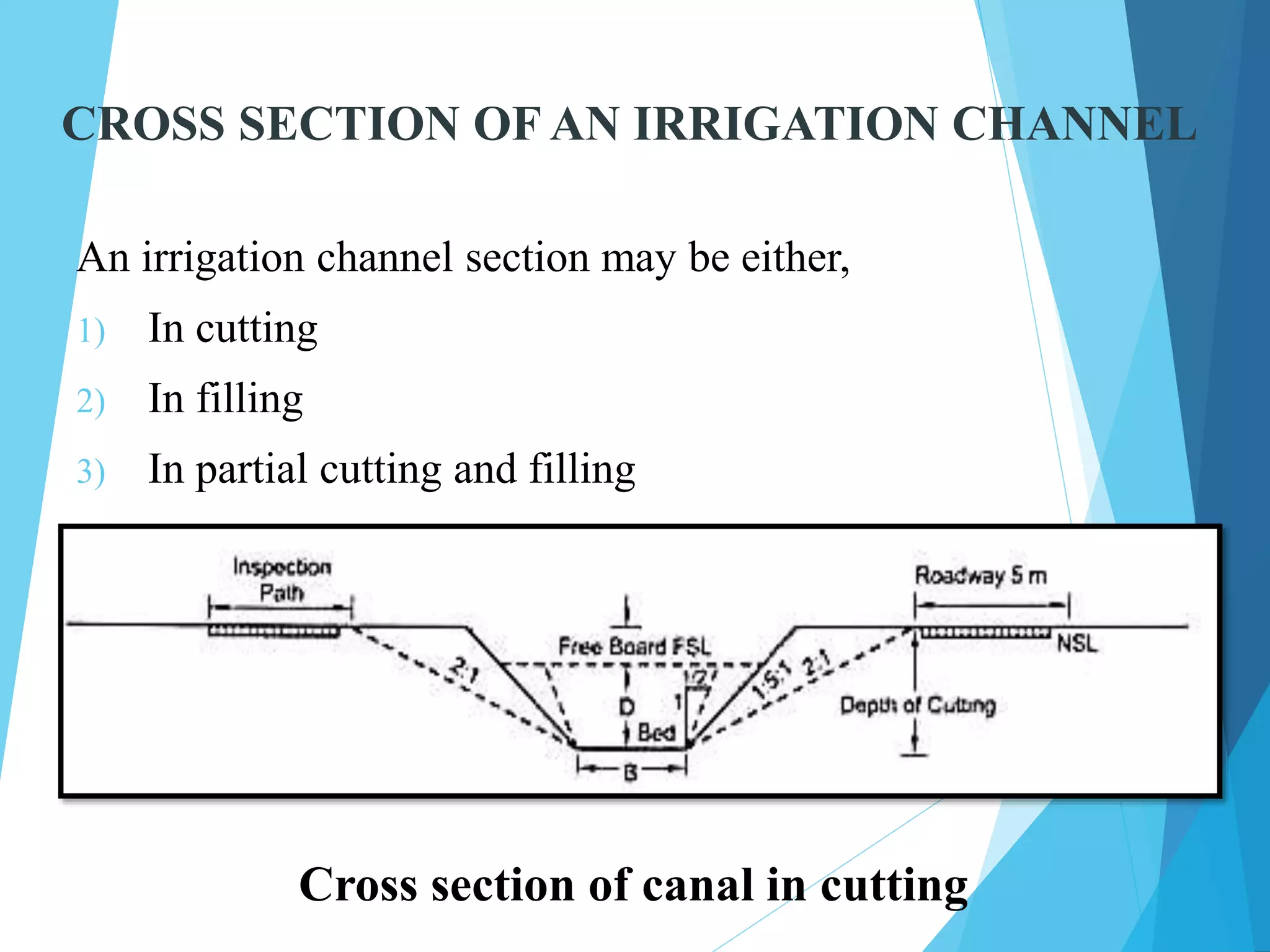
An irrigation channel section may be either,
1) In cutting
2) In filling
3) In partial cutting and filling
Cross section of canal in cutting
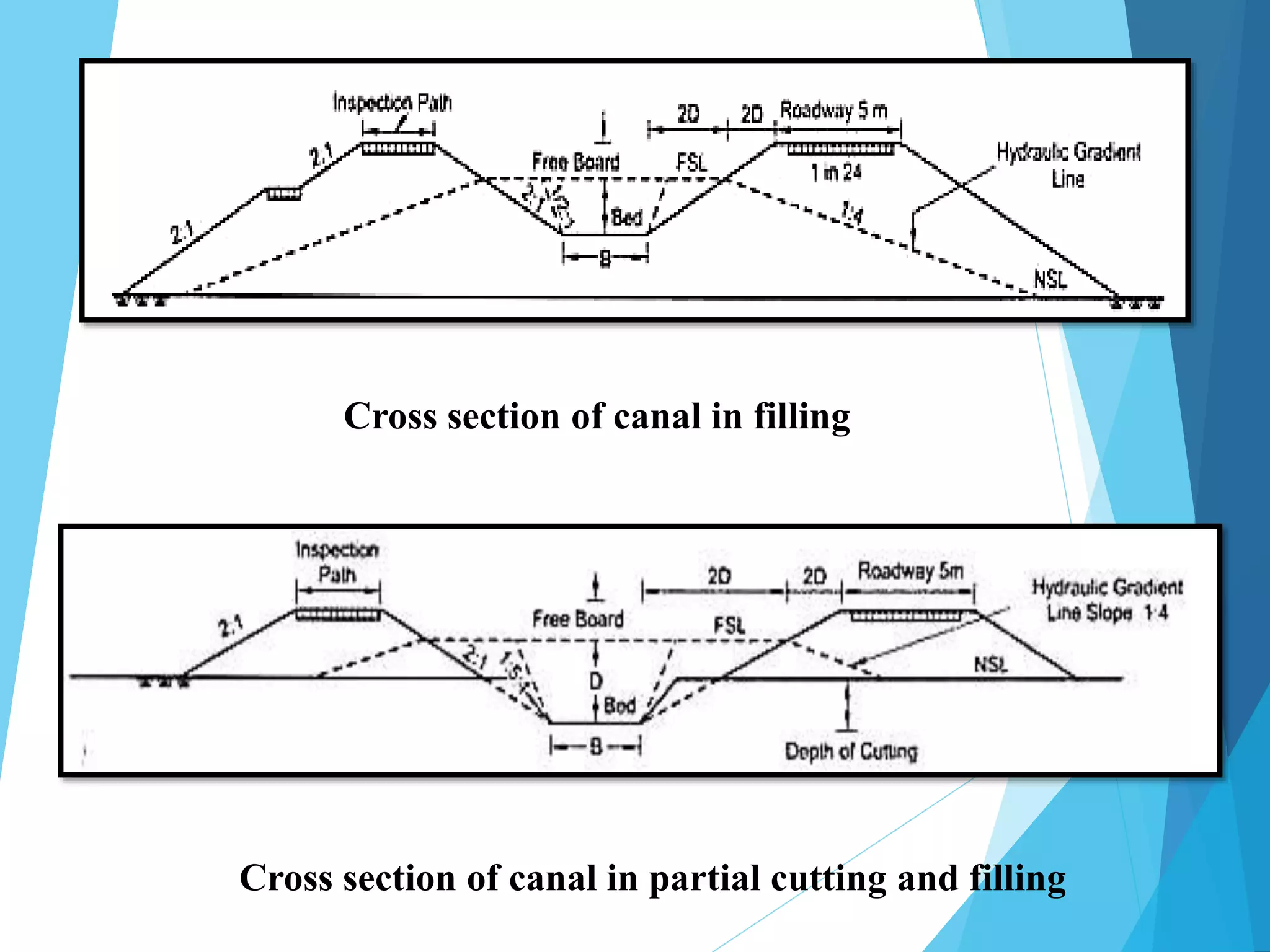
Cross section of canal in filling
Cross section of canal in partial cutting and filling
The main components of the canal cross- section are:
1. Side slope
2. Berm
3. Free board
4. Banks
5. Dowla
6. Inspection road
7. Borrow pits
8. Spoil bank
9. Lang width
10. Counter berm
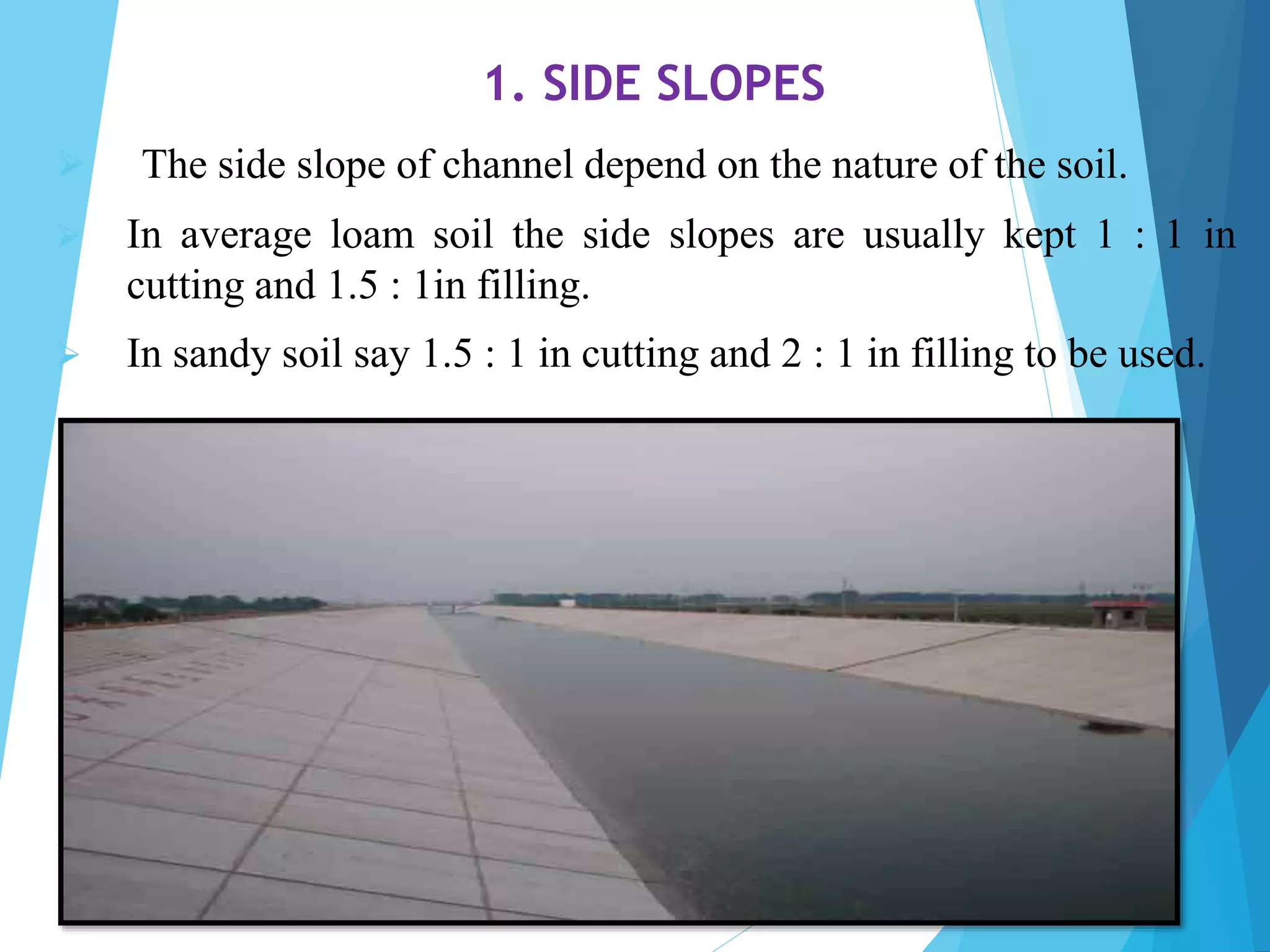
1. SIDE SLOPES
 The side slope of channel depend on the nature of the soil.
 In average loam soil the side slopes are usually kept 1 : 1 in
cutting and 1.5 : 1in filling.
 In sandy soil say 1.5 : 1 in cutting and 2 : 1 in filling to be used.
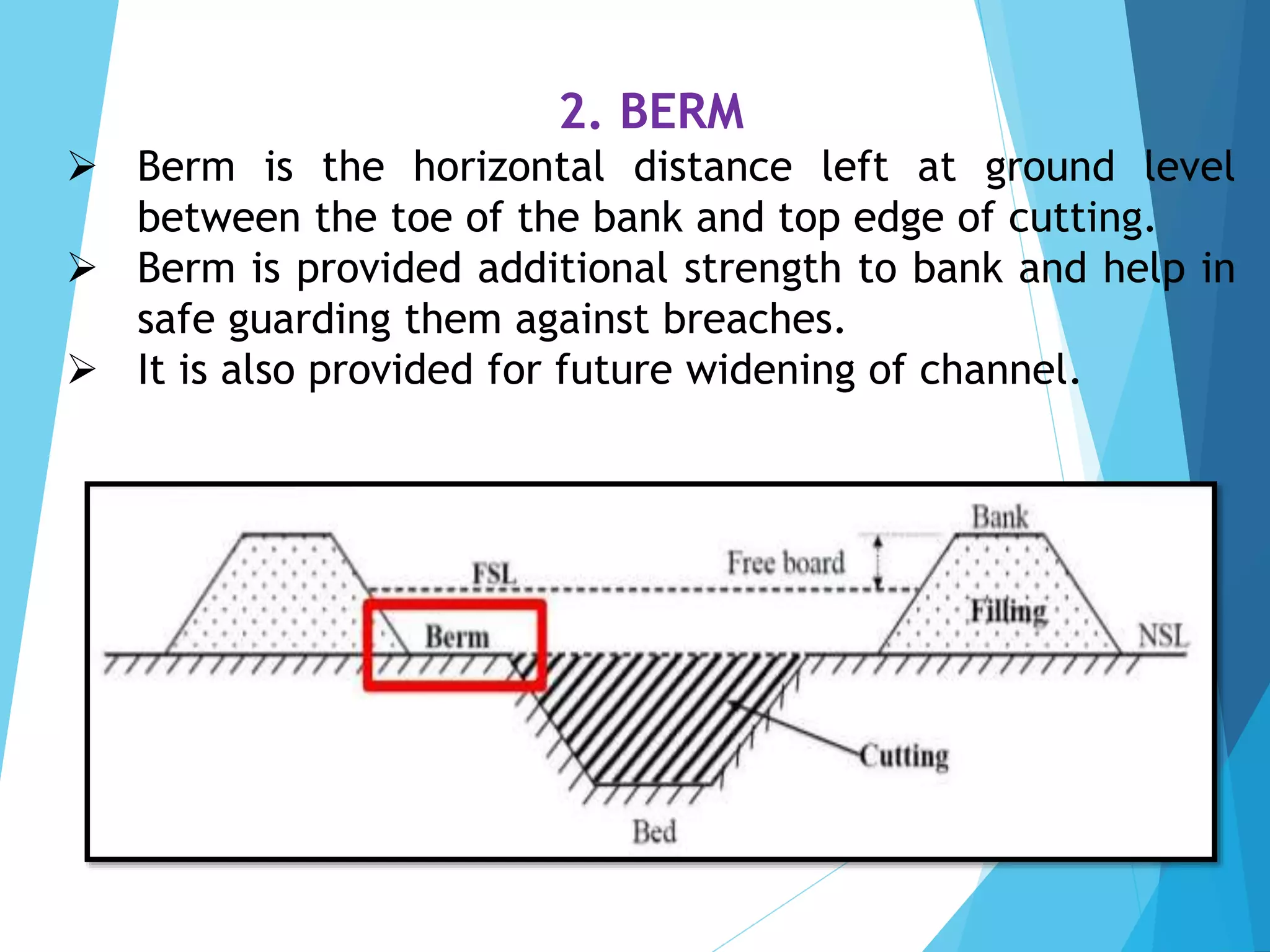
2. BERM
 Berm is the horizontal distance left at ground level
between the toe of the bank and top edge of cutting.
 Berm is provided additional strength to bank and help in
safe guarding them against breaches.
 It is also provided for future widening of channel.
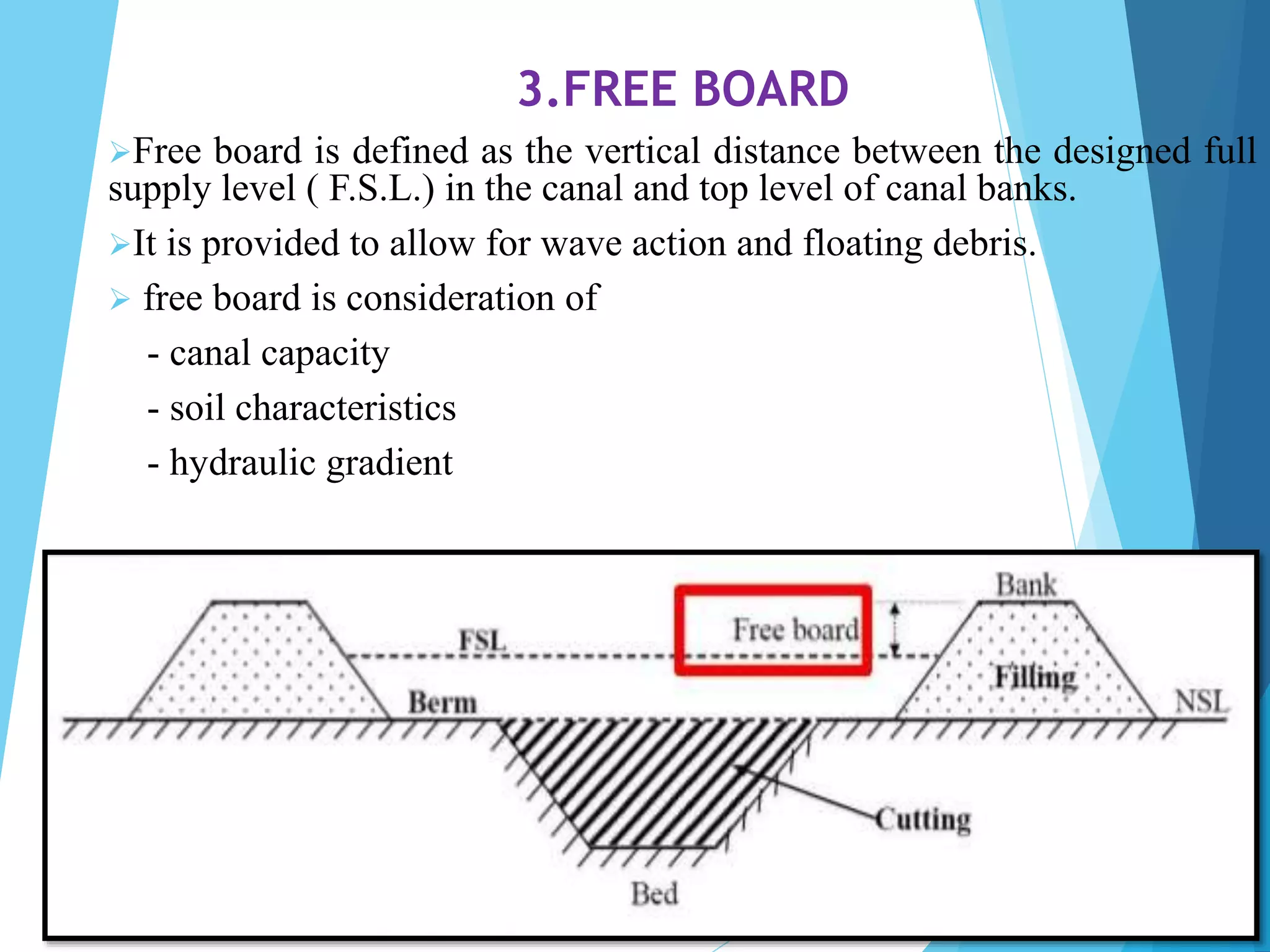
3.FREE BOARD
Free board is defined as the vertical distance between the designed full
supply level ( F.S.L.) in the canal and top level of canal banks.
It is provided to allow for wave action and floating debris.
 free board is consideration of
- canal capacity
- soil characteristics
- hydraulic gradient
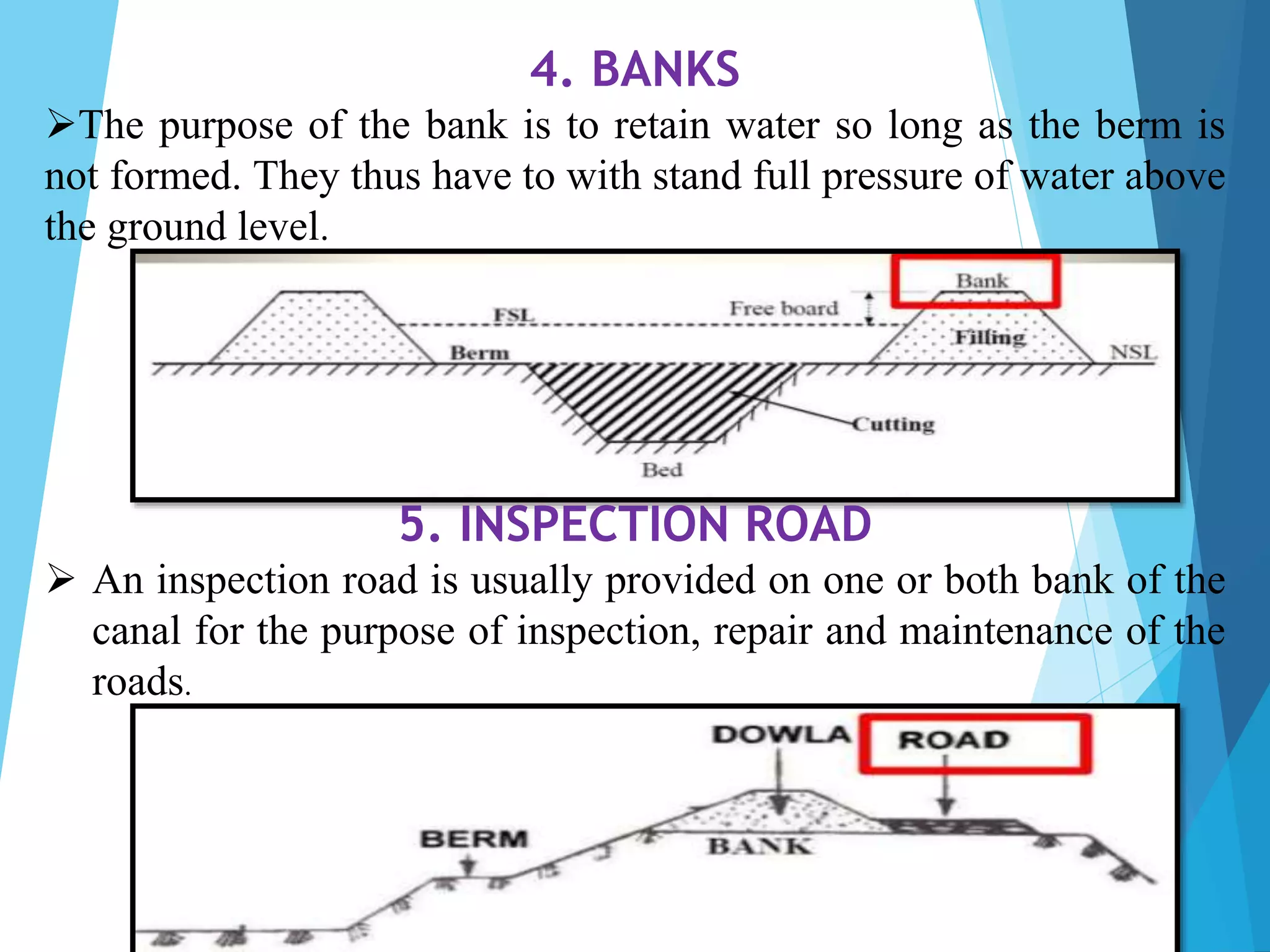
4. BANKS
The purpose of the bank is to retain water so long as the berm is
not formed. They thus have to with stand full pressure of water above
the ground level.
5. INSPECTION ROAD
 An inspection road is usually provided on one or both bank of the
canal for the purpose of inspection, repair and maintenance of the
roads.
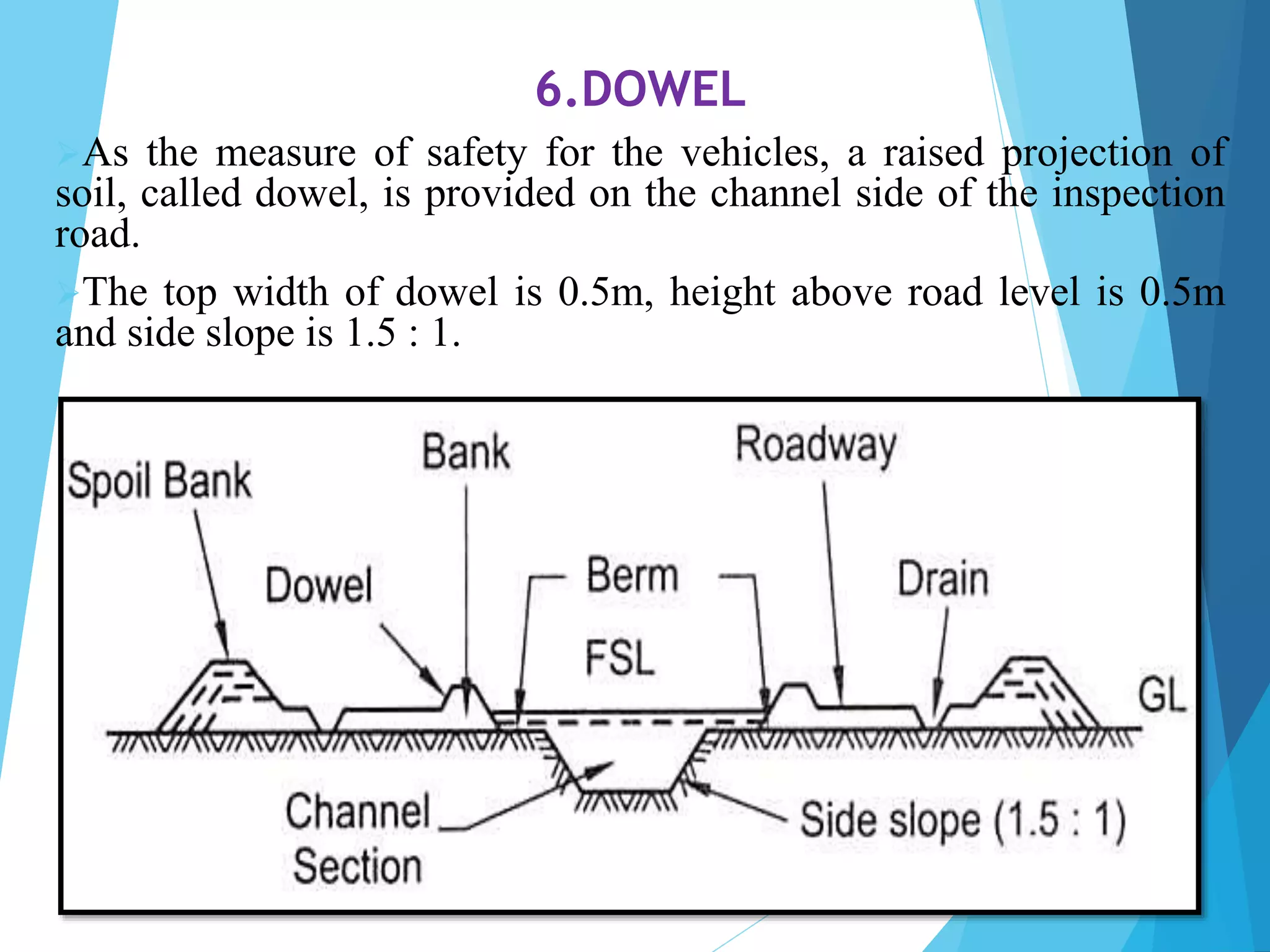
6.DOWEL
As the measure of safety for the vehicles, a raised projection of
soil, called dowel, is provided on the channel side of the inspection
road.
The top width of dowel is 0.5m, height above road level is 0.5m
and side slope is 1.5 : 1.
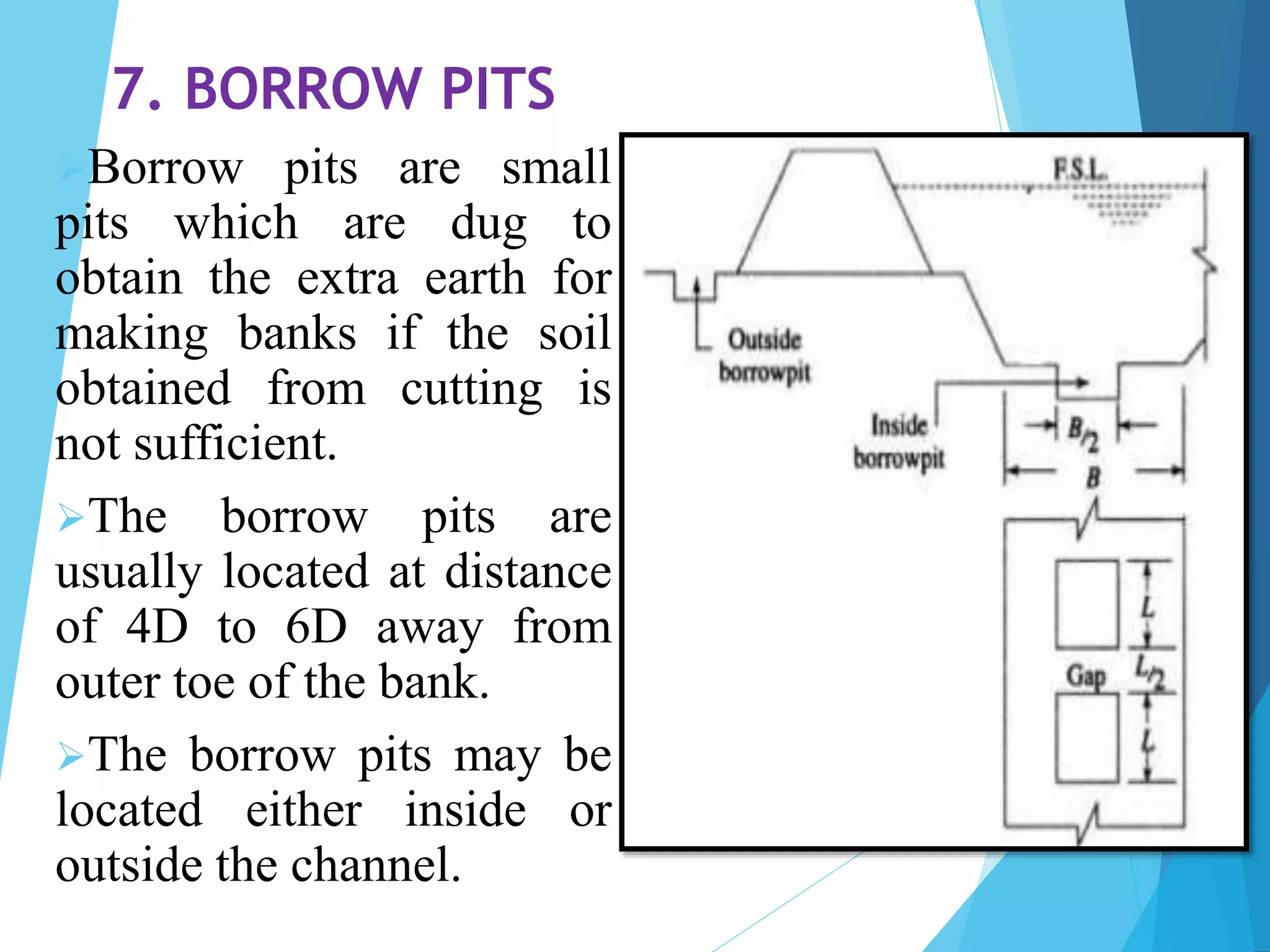
7. BORROW PITS
Borrow pits are small
pits which are dug to
obtain the extra earth for
making banks if the soil
obtained from cutting is
not sufficient.
The borrow pits are
usually located at distance
of 4D to 6D away from
outer toe of the bank.
The borrow pits may be
located either inside or
outside the channel.
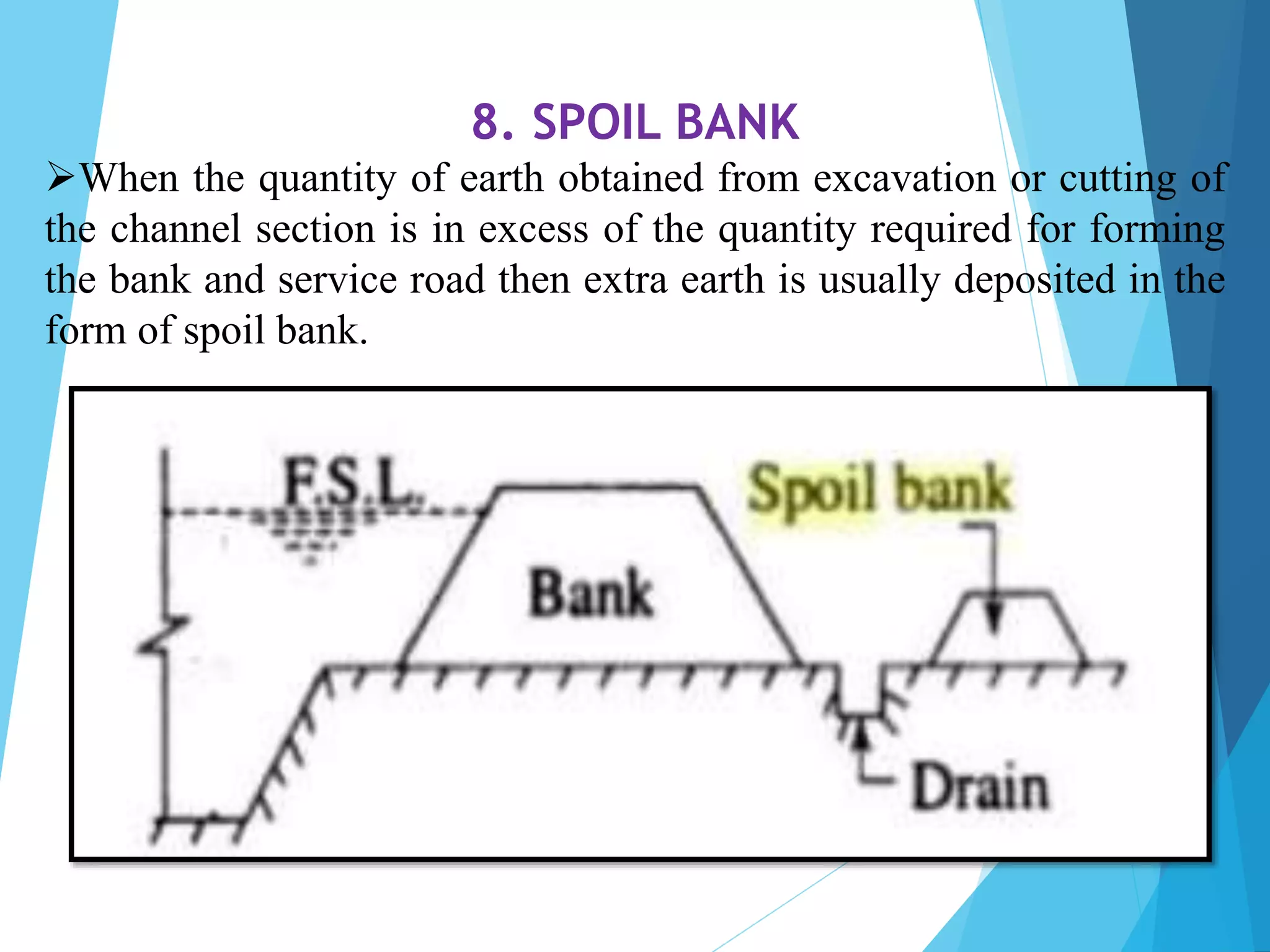
8. SPOIL BANK
When the quantity of earth obtained from excavation or cutting of
the channel section is in excess of the quantity required for forming
the bank and service road then extra earth is usually deposited in the
form of spoil bank.
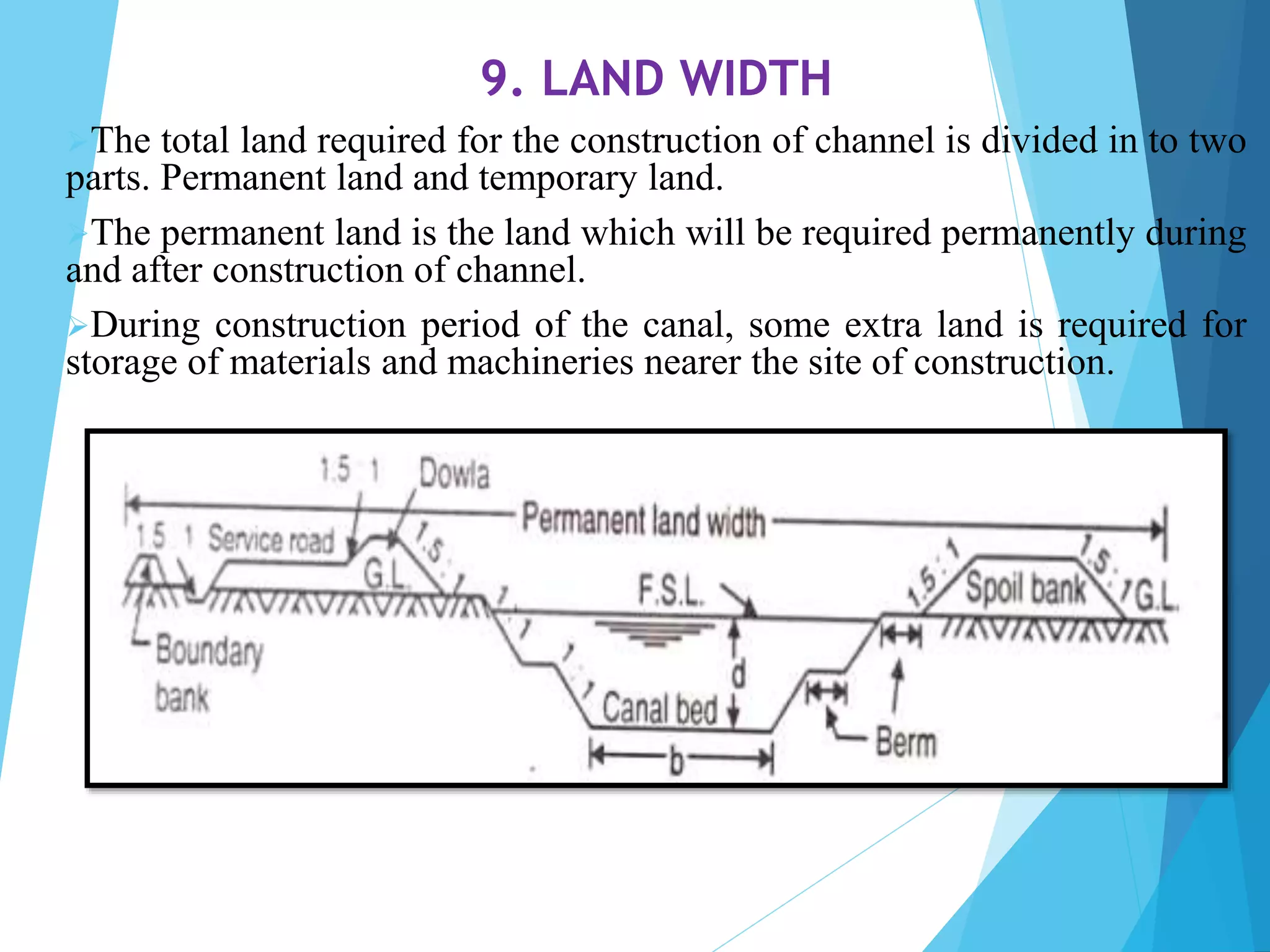
9. LAND WIDTH
The total land required for the construction of channel is divided in to two
parts. Permanent land and temporary land.
The permanent land is the land which will be required permanently during
and after construction of channel.
During construction period of the canal, some extra land is required for
storage of materials and machineries nearer the site of construction.
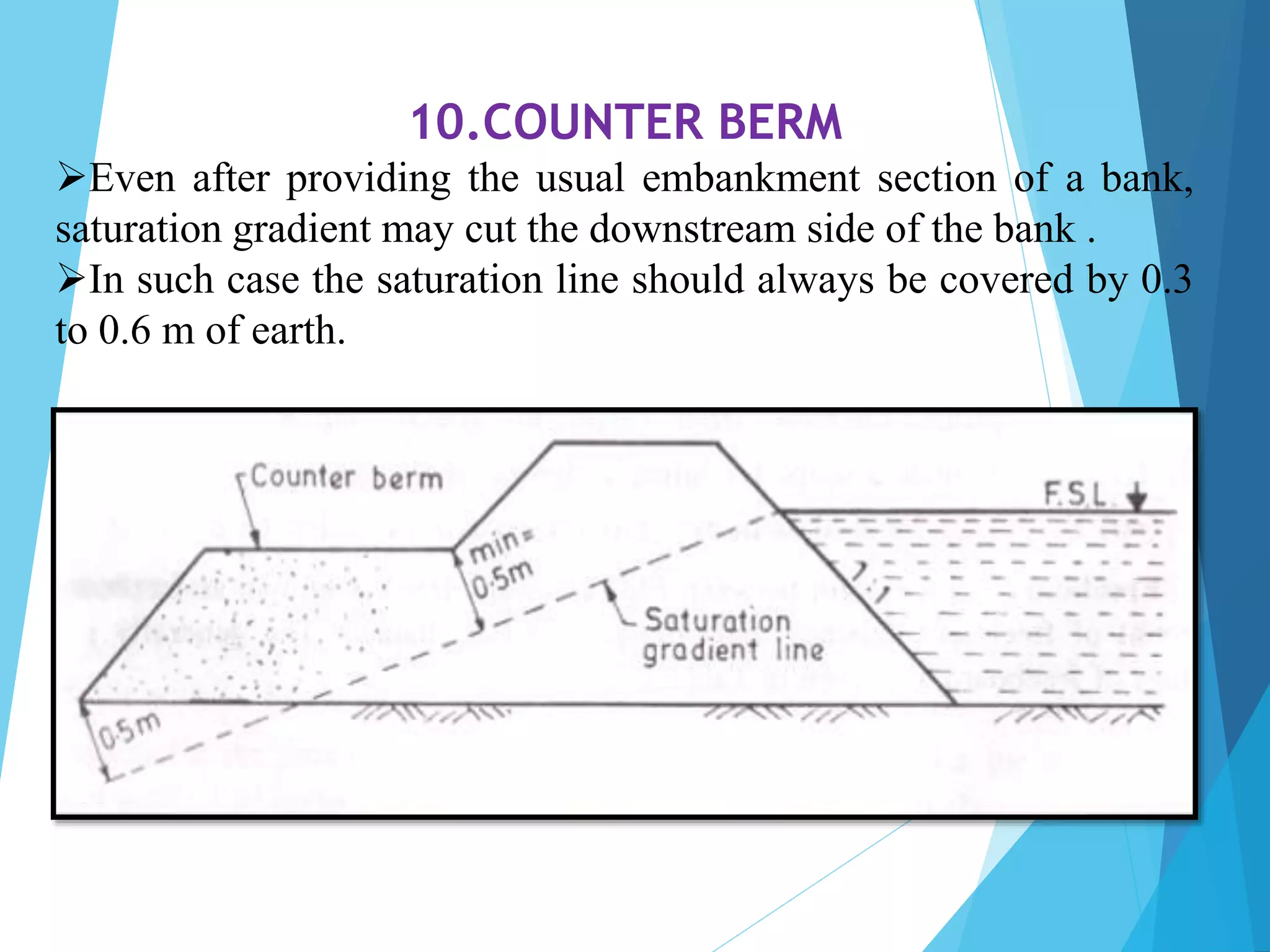
10.COUNTER BERM
Even after providing the usual embankment section of a bank,
saturation gradient may cut the downstream side of the bank .
In such case the saturation line should always be covered by 0.3
to 0.6 m of earth.
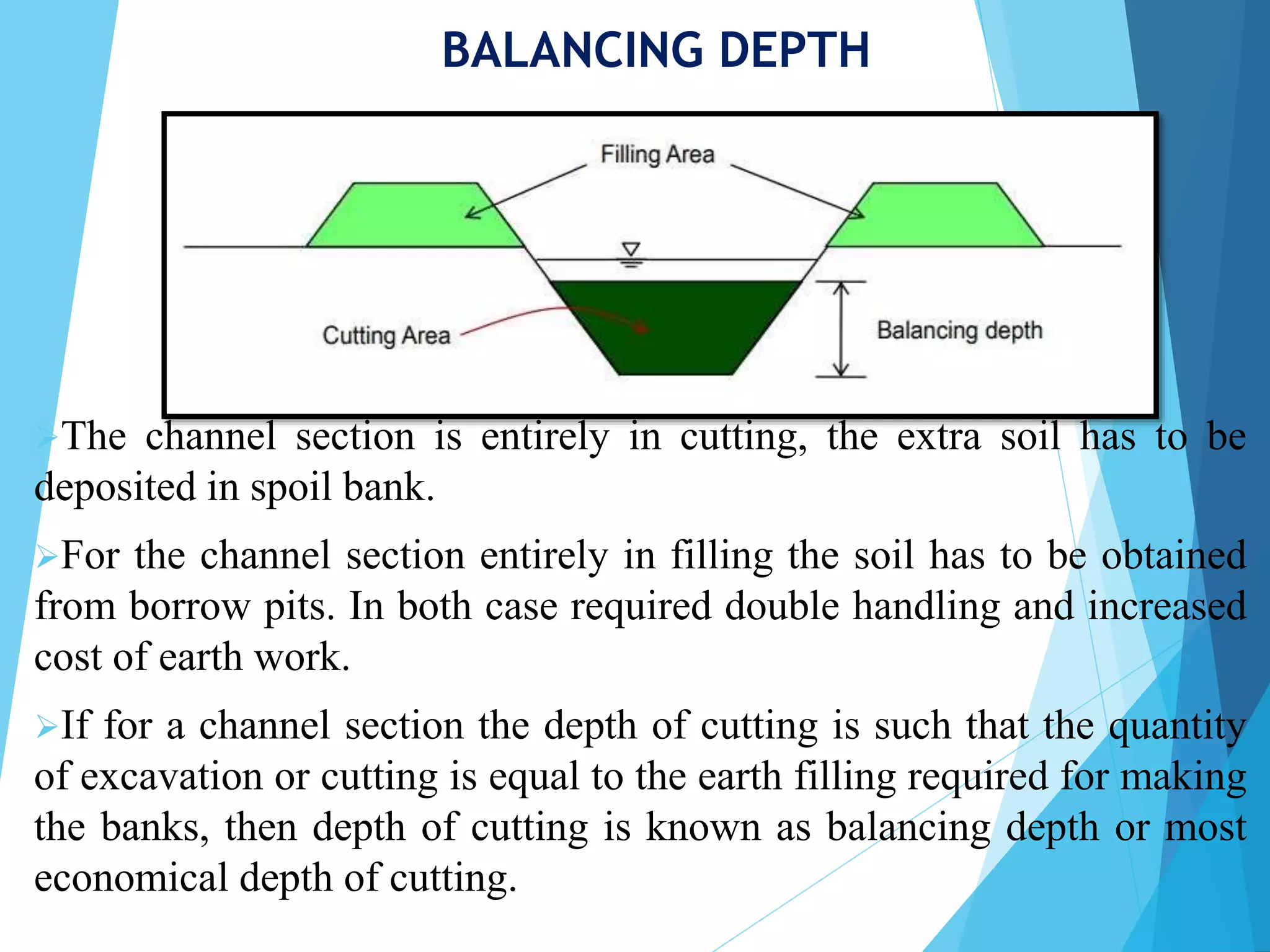
BALANCING DEPTH
The channel section is entirely in cutting, the extra soil has to be
deposited in spoil bank.
For the channel section entirely in filling the soil has to be obtained
from borrow pits. In both case required double handling and increased
cost of earth work.
If for a channel section the depth of cutting is such that the quantity
of excavation or cutting is equal to the earth filling required for making
the banks, then depth of cutting is known as balancing depth or most
economical depth of cutting.
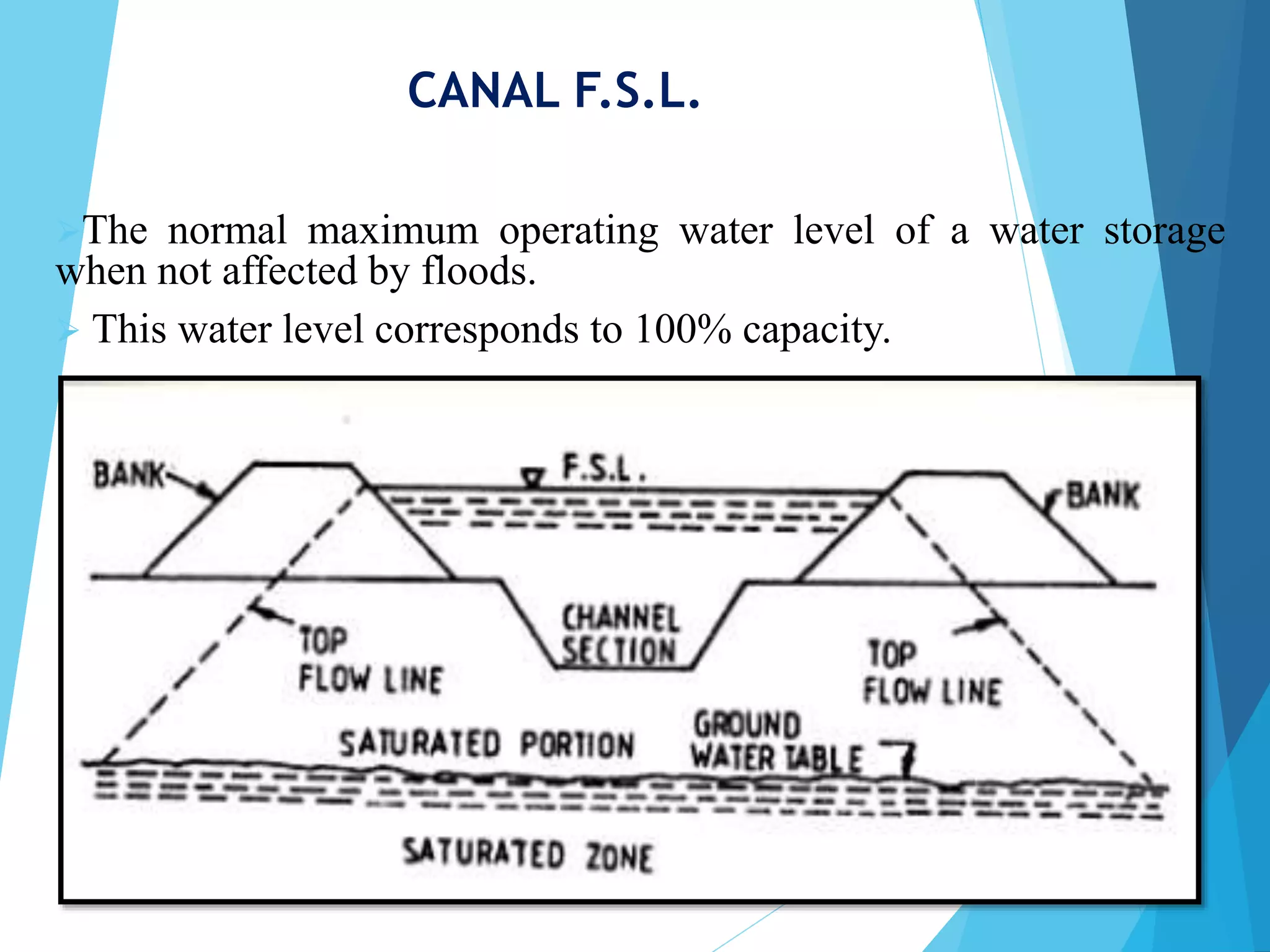
The normal maximum operating water level of a water storage
when not affected by floods.
 This water level corresponds to 100% capacity.
CANAL F.S.L.
THANK YOU

Cross section of the canal, balancing depth and canal fsl

  • 1.
  • 2.
    TOPIC NAME: CROSSSECTION OF THE CANAL, BALANCING DEPTH, AND CANAL F.S.L. SUBJECT CODE: 2I70609 BRANCH: CIVIL ENGG,. 7TH SEM PREPARED BY: GUIDED BY: PROF. MAMTA PATEL SR NO. NAME ENROLL. NO. 1. PATEL PRASHANT S. 141100106078 2. PATEL TWINKAL D. 141100106092 3. MISTRY ADITYA P. 151103106009 4. PATEL KAJAL M. 151103106011 5. RATNANI MANISHA N. 151103106016
  • 3.
    CONTENT  Cross sectionof an irrigation channel - In cutting - In filling - In partial cutting and filling  Balancing depth  Canal F.S.L.
  • 4.
    CROSS SECTION OFAN IRRIGATION CHANNEL An irrigation channel section may be either, 1) In cutting 2) In filling 3) In partial cutting and filling Cross section of canal in cutting
  • 5.
    Cross section ofcanal in filling Cross section of canal in partial cutting and filling
  • 6.
    The main componentsof the canal cross- section are: 1. Side slope 2. Berm 3. Free board 4. Banks 5. Dowla 6. Inspection road 7. Borrow pits 8. Spoil bank 9. Lang width 10. Counter berm
  • 7.
    1. SIDE SLOPES The side slope of channel depend on the nature of the soil.  In average loam soil the side slopes are usually kept 1 : 1 in cutting and 1.5 : 1in filling.  In sandy soil say 1.5 : 1 in cutting and 2 : 1 in filling to be used.
  • 8.
    2. BERM  Bermis the horizontal distance left at ground level between the toe of the bank and top edge of cutting.  Berm is provided additional strength to bank and help in safe guarding them against breaches.  It is also provided for future widening of channel.
  • 9.
    3.FREE BOARD Free boardis defined as the vertical distance between the designed full supply level ( F.S.L.) in the canal and top level of canal banks. It is provided to allow for wave action and floating debris.  free board is consideration of - canal capacity - soil characteristics - hydraulic gradient
  • 10.
    4. BANKS The purposeof the bank is to retain water so long as the berm is not formed. They thus have to with stand full pressure of water above the ground level. 5. INSPECTION ROAD  An inspection road is usually provided on one or both bank of the canal for the purpose of inspection, repair and maintenance of the roads.
  • 11.
    6.DOWEL As the measureof safety for the vehicles, a raised projection of soil, called dowel, is provided on the channel side of the inspection road. The top width of dowel is 0.5m, height above road level is 0.5m and side slope is 1.5 : 1.
  • 12.
    7. BORROW PITS Borrowpits are small pits which are dug to obtain the extra earth for making banks if the soil obtained from cutting is not sufficient. The borrow pits are usually located at distance of 4D to 6D away from outer toe of the bank. The borrow pits may be located either inside or outside the channel.
  • 13.
    8. SPOIL BANK Whenthe quantity of earth obtained from excavation or cutting of the channel section is in excess of the quantity required for forming the bank and service road then extra earth is usually deposited in the form of spoil bank.
  • 14.
    9. LAND WIDTH Thetotal land required for the construction of channel is divided in to two parts. Permanent land and temporary land. The permanent land is the land which will be required permanently during and after construction of channel. During construction period of the canal, some extra land is required for storage of materials and machineries nearer the site of construction.
  • 15.
    10.COUNTER BERM Even afterproviding the usual embankment section of a bank, saturation gradient may cut the downstream side of the bank . In such case the saturation line should always be covered by 0.3 to 0.6 m of earth.
  • 16.
    BALANCING DEPTH The channelsection is entirely in cutting, the extra soil has to be deposited in spoil bank. For the channel section entirely in filling the soil has to be obtained from borrow pits. In both case required double handling and increased cost of earth work. If for a channel section the depth of cutting is such that the quantity of excavation or cutting is equal to the earth filling required for making the banks, then depth of cutting is known as balancing depth or most economical depth of cutting.
  • 17.
    The normal maximumoperating water level of a water storage when not affected by floods.  This water level corresponds to 100% capacity. CANAL F.S.L.
  • 18.