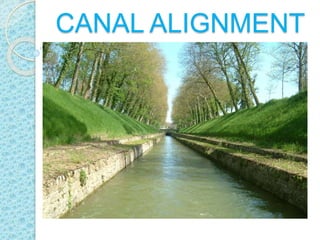
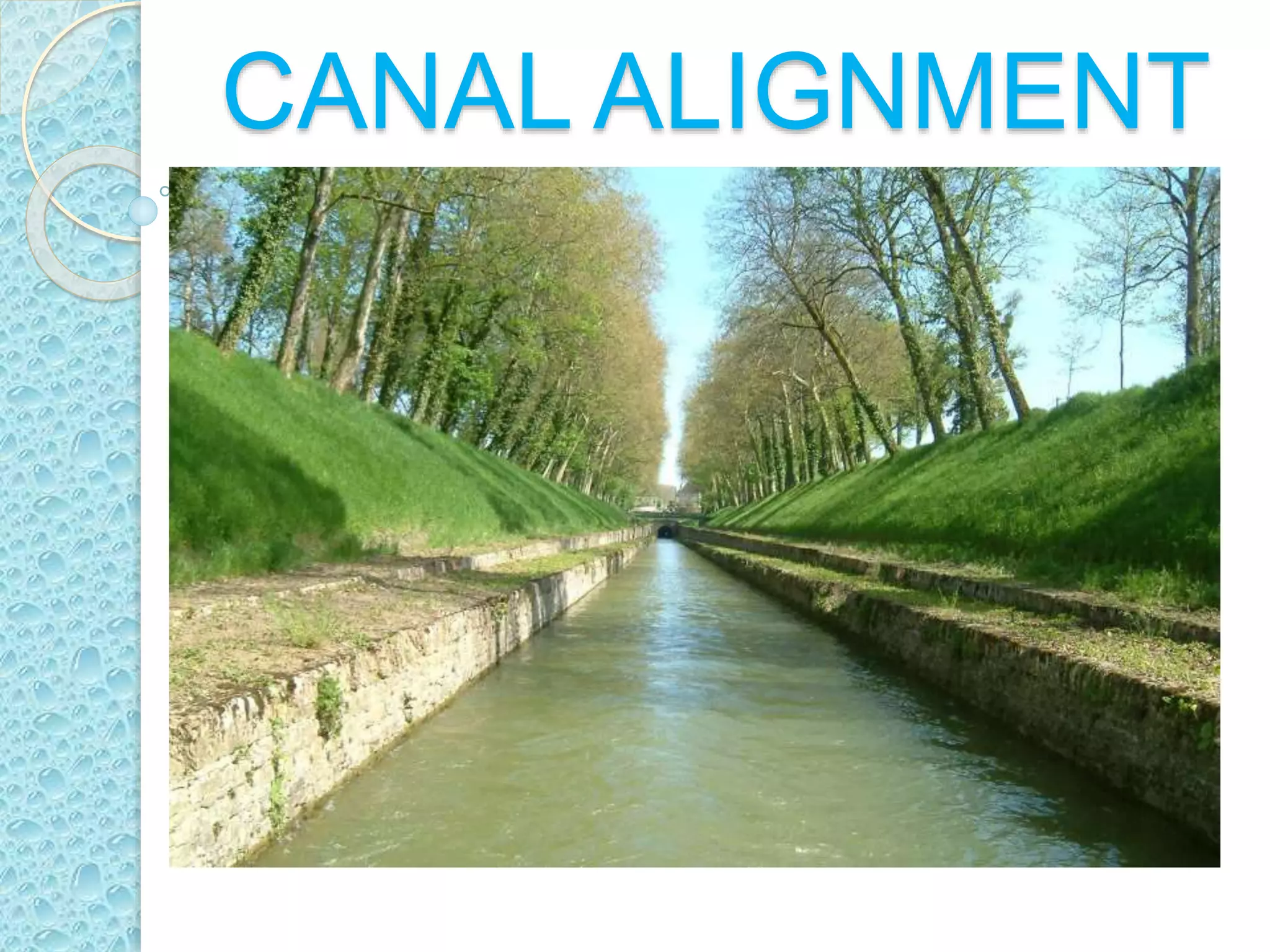
CANAL ALIGNMENT
Content:
 Definition of canal
 Canal Alignment
◦ Contour Canal
◦ Watershed Canal
◦ Side slope Canal
 General considerations for Alignment
 Canal lining
DEFINITION OF CANAL:
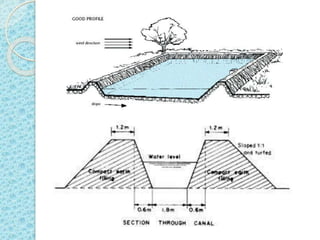
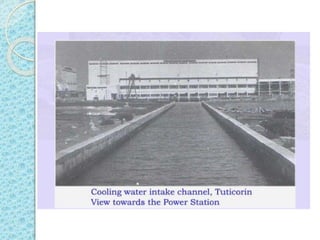
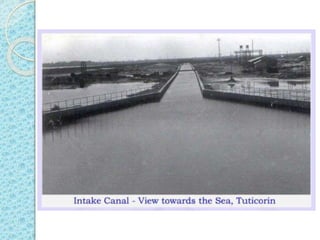
 A canal is an artificial channel, generally
trapezoidal in shape constructed on the
ground to carry water to the fields either
from the river or from a tank or
reservoir.
CANAL ALIGNMENT:
 A canal has to be aligned in such a way
that it covers the entire area proposed to
be irrigated, with shortest possible length
and at the same time its cost including
cost of drainage works is a minimum.
Types of canal Alignment:
 Ridge / watershed Canal
 Contour Canal
 Side slope Canal
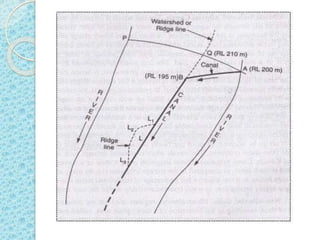
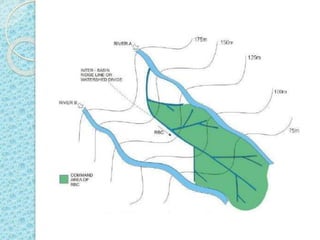
RIDGE CANAL :
 The dividing ridge line between the catchment
areas of two streams (drains) is called the
watershed or ridge canal.
 It is suitable for plain areas, where slopes are
relatively flat and uniform
 This type alignment ensures gravity irrigation
on both sides of the canal.
Advantages:
◦ This canal supply water on both side and
thus large area may be taken under
cultivation.
◦ It is the best irrigation canal and most
economical
Disadvantages:
◦ Suitable only for plain area not for hilly
area.
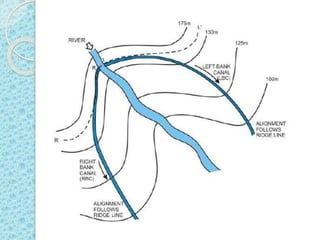
Contour Canal:
 Canal aligned nearly parallel to the contour
line is called contour canal
 They are aligned generally when canals take off
from river.
 Culturable area lies on one side of it. as one of
banks on the higher side.
 Sometime it is called single bank canal.
.
Disadvantages :
 It can only irrigate one side.
Advantages:
 Low initial cost.
 Discharge capacity increases as rain water
from higher side is collected in the canal
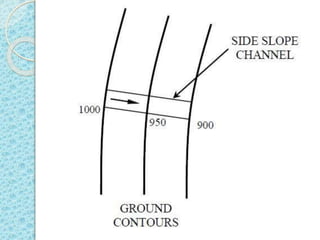
SIDE SLOPE CANAL:
 A side slope canal is that which is
aligned at right angles to the contours;
i.e. along the side slopes.
 It is a canal which is aligned roughly at
right angle to contours of the country
but not on watershed or valley. The
canal thus runs roughly parallel to the
natural drainage of the country and as
such cross drainage works are
avoided.
Advantages:
◦ Construction of cross drainage work is not
necessary.
Disadvantages:
◦ It can irrigate only one side.
◦ Slope is more if it is unlined canal erosion
will takes place.
Factors to be considered during
canal alignment:
 It should serve the entire area
proposed to be irrigated.
 Cost of construction including
cross drainage works should be
minimized.
 Where canal crosses valleys, different
types of cross drainage works are
required.
 There should be Consideration of
economy in alignment of contour
canals.
 All possible alignments should be
studied and the best
suited alignment should be selected.
 Number of rinks and acute curves
should be minimized.
 They should be aligned as far as
possible in partial cutting partial filling.
 Deep cutting should be avoided
by comparing the overall cost of
alternative alignments.
 Reduce the maximum length and
slope.
 Canal have to be lined to avoid
Necessity of Canal Lining:
◦ Maximum velocity limited to prevent
erosion
◦ Seepage of water into the ground
◦ Possibility of vegetation growth in banks,
leading to increased friction
◦ Possibility of bank failure, either due to
erosion or activities of burrowing animals
◦ To avoid water logging
◦ To avoid movement of contaminated
groundwater
◦ To avoid piping through and under
channel banks.
THANK YOU !!!

Canal alignment

  • 1.
  • 2.
    Content:  Definition ofcanal  Canal Alignment ◦ Contour Canal ◦ Watershed Canal ◦ Side slope Canal  General considerations for Alignment  Canal lining
  • 3.
    DEFINITION OF CANAL: A canal is an artificial channel, generally trapezoidal in shape constructed on the ground to carry water to the fields either from the river or from a tank or reservoir.
  • 6.
    CANAL ALIGNMENT:  Acanal has to be aligned in such a way that it covers the entire area proposed to be irrigated, with shortest possible length and at the same time its cost including cost of drainage works is a minimum.
  • 7.
    Types of canalAlignment:  Ridge / watershed Canal  Contour Canal  Side slope Canal
  • 8.
    RIDGE CANAL : The dividing ridge line between the catchment areas of two streams (drains) is called the watershed or ridge canal.  It is suitable for plain areas, where slopes are relatively flat and uniform  This type alignment ensures gravity irrigation on both sides of the canal.
  • 9.
    Advantages: ◦ This canalsupply water on both side and thus large area may be taken under cultivation. ◦ It is the best irrigation canal and most economical Disadvantages: ◦ Suitable only for plain area not for hilly area.
  • 12.
    Contour Canal:  Canalaligned nearly parallel to the contour line is called contour canal  They are aligned generally when canals take off from river.  Culturable area lies on one side of it. as one of banks on the higher side.  Sometime it is called single bank canal. .
  • 13.
    Disadvantages :  Itcan only irrigate one side. Advantages:  Low initial cost.  Discharge capacity increases as rain water from higher side is collected in the canal
  • 15.
    SIDE SLOPE CANAL: A side slope canal is that which is aligned at right angles to the contours; i.e. along the side slopes.  It is a canal which is aligned roughly at right angle to contours of the country but not on watershed or valley. The canal thus runs roughly parallel to the natural drainage of the country and as such cross drainage works are avoided.
  • 16.
    Advantages: ◦ Construction ofcross drainage work is not necessary. Disadvantages: ◦ It can irrigate only one side. ◦ Slope is more if it is unlined canal erosion will takes place.
  • 20.
    Factors to beconsidered during canal alignment:  It should serve the entire area proposed to be irrigated.  Cost of construction including cross drainage works should be minimized.  Where canal crosses valleys, different types of cross drainage works are required.  There should be Consideration of economy in alignment of contour canals.
  • 21.
     All possiblealignments should be studied and the best suited alignment should be selected.  Number of rinks and acute curves should be minimized.  They should be aligned as far as possible in partial cutting partial filling.  Deep cutting should be avoided by comparing the overall cost of alternative alignments.  Reduce the maximum length and slope.  Canal have to be lined to avoid
  • 22.
    Necessity of CanalLining: ◦ Maximum velocity limited to prevent erosion ◦ Seepage of water into the ground ◦ Possibility of vegetation growth in banks, leading to increased friction ◦ Possibility of bank failure, either due to erosion or activities of burrowing animals ◦ To avoid water logging ◦ To avoid movement of contaminated groundwater ◦ To avoid piping through and under channel banks.
  • 23.