Chapter 16 “ Solutions ”
Section 16.1 Properties of Solutions OBJECTIVES: Identify  the factors that determine the  rate  at which a solute  dissolves .
Section 16.1 Properties of Solutions OBJECTIVES: Identify  the  units  usually used to express the  solubility  of a solute.
Section 16.1 Properties of Solutions OBJECTIVES: Identify  the  factors that determine the mass  of solute that  will dissolve  in a given mass of solvent.
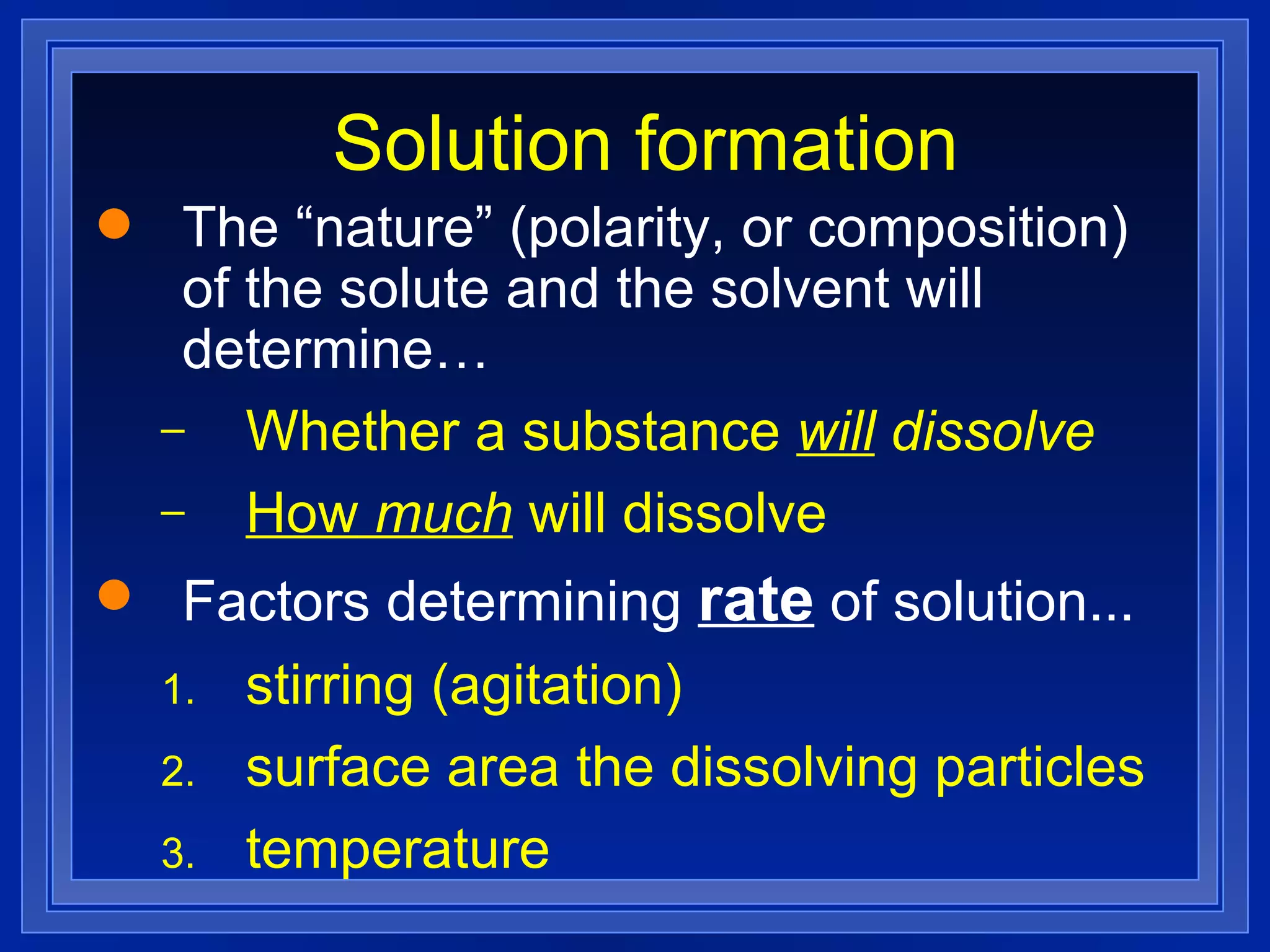
Solution formation The “nature” (polarity, or composition) of the solute and the solvent will determine… Whether a substance  will  dissolve How  much  will dissolve Factors determining   rate  of solution... stirring (agitation) surface area the dissolving particles temperature
Making solutions In order to dissolve, the solvent molecules must come  in contact  with the solute. 1.  Stirring  (agitation)  moves fresh solvent into contact with the solute. 2.  Smaller  pieces increase the amount of surface area of the solute. - think of how fast a breath mint dissolves when you chew it
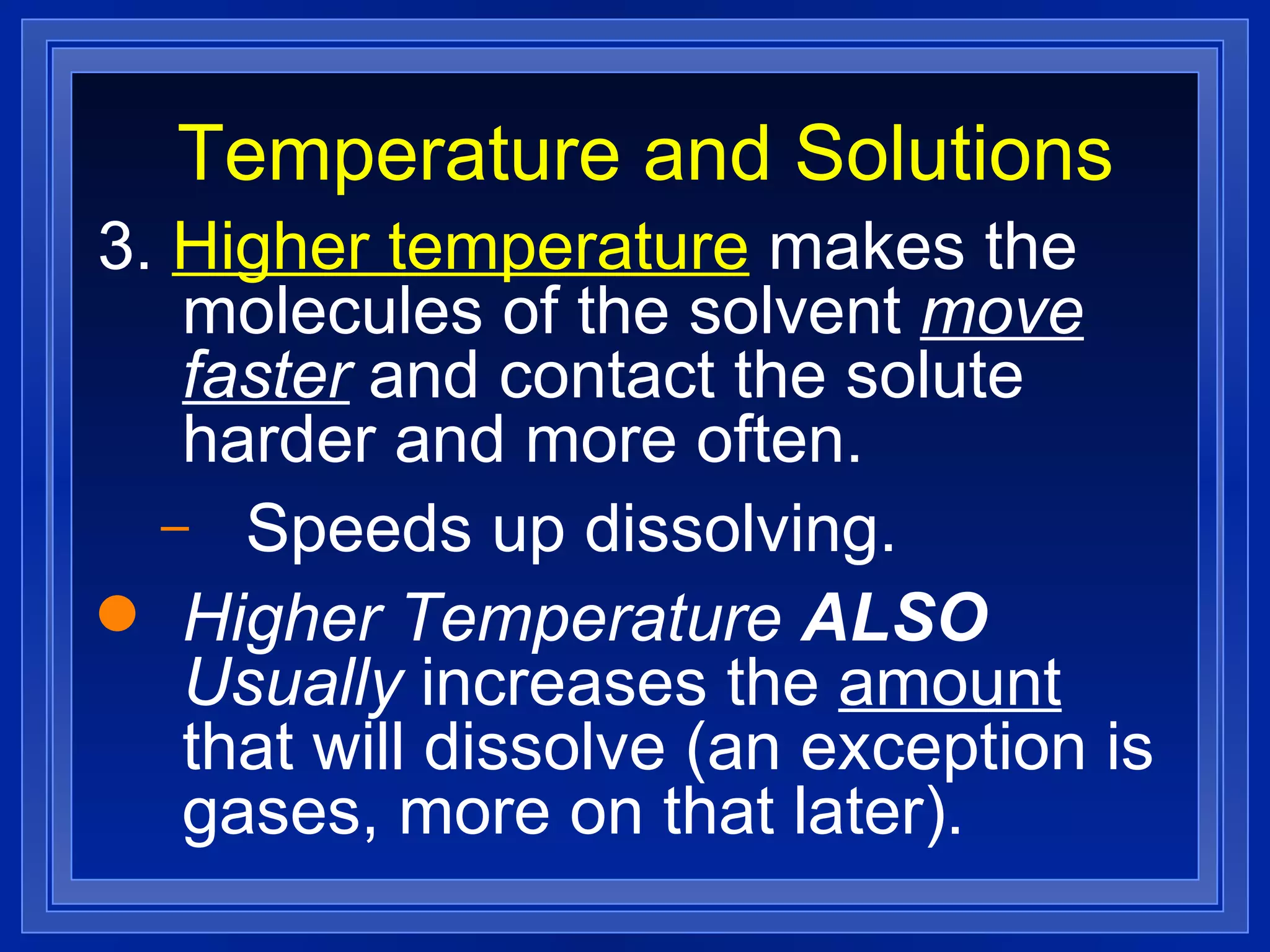
Temperature and Solutions 3.  Higher temperature  makes the molecules of the solvent  move faster  and contact the solute harder and more often. Speeds up dissolving. Higher Temperature  ALSO  Usually  increases the  amount  that will dissolve (an exception is gases, more on that later).
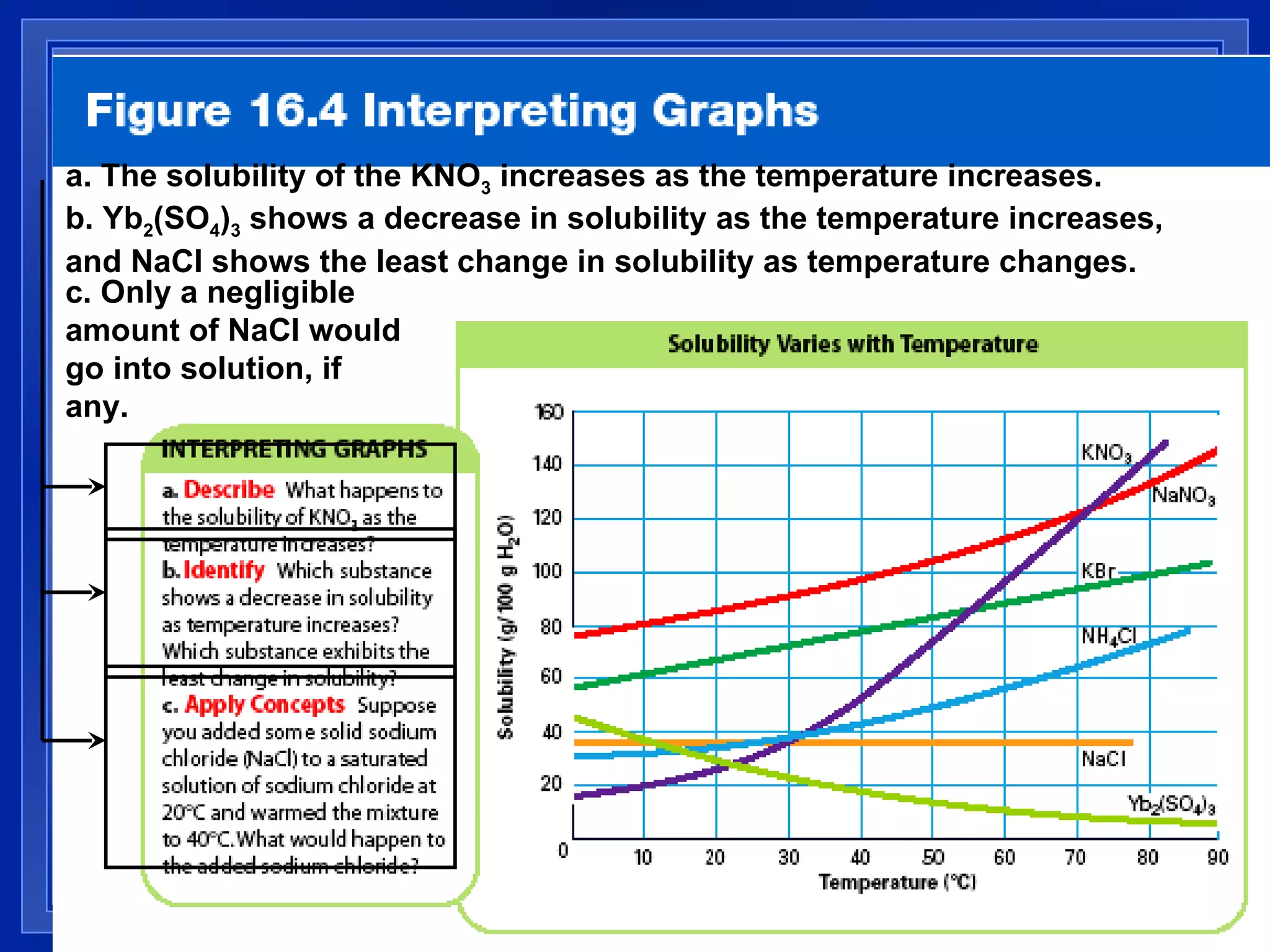
a. The solubility of the KNO 3  increases as the temperature increases. b. Yb 2 (SO 4 ) 3  shows a decrease in solubility as the temperature increases, and NaCl shows the least change in solubility as temperature changes. c. Only a negligible amount of NaCl would go into solution, if any.
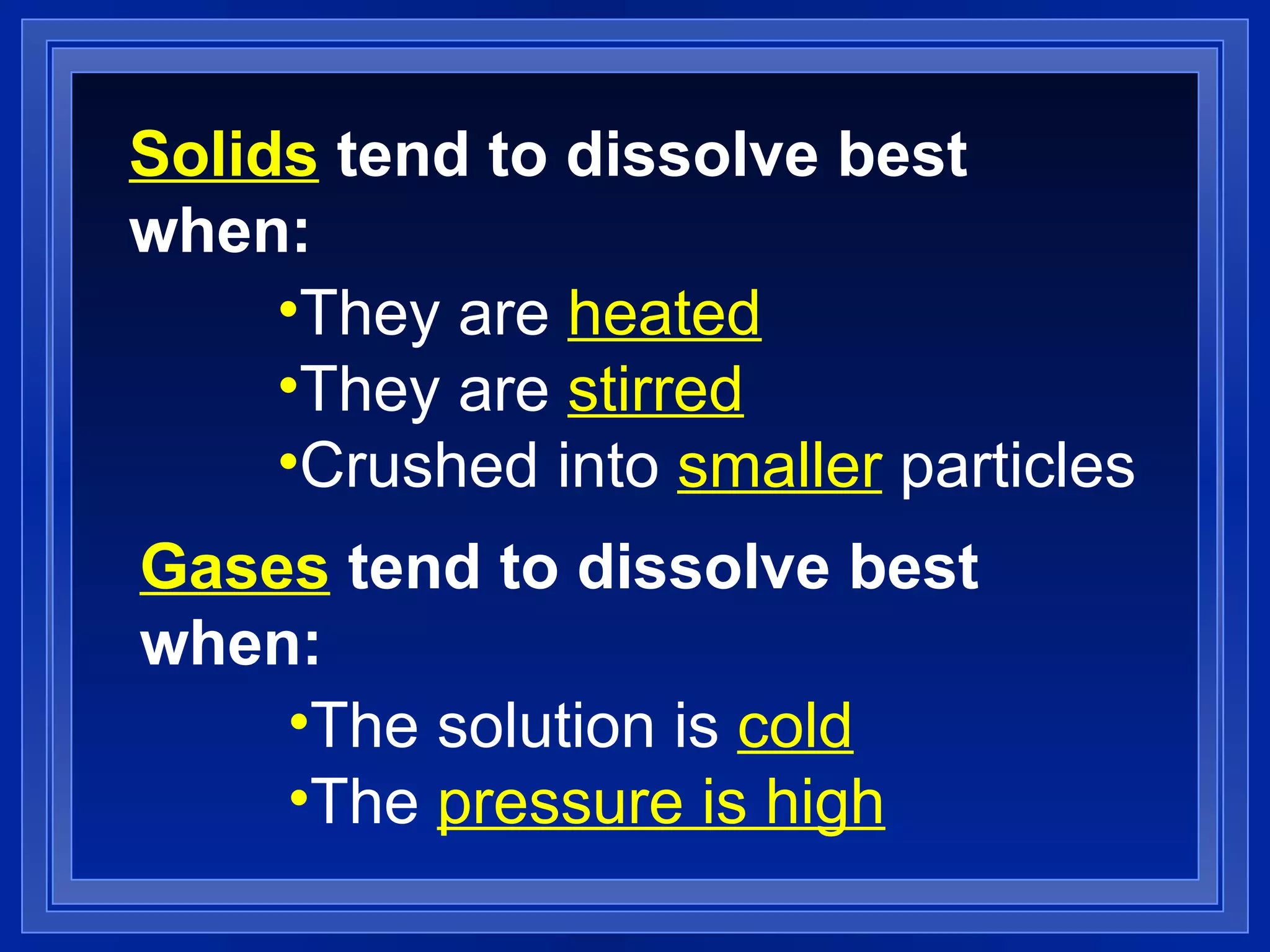
Solids  tend to dissolve best when: They are  heated They are  stirred Crushed into  smaller  particles Gases  tend to dissolve best when: The solution is  cold The  pressure is high
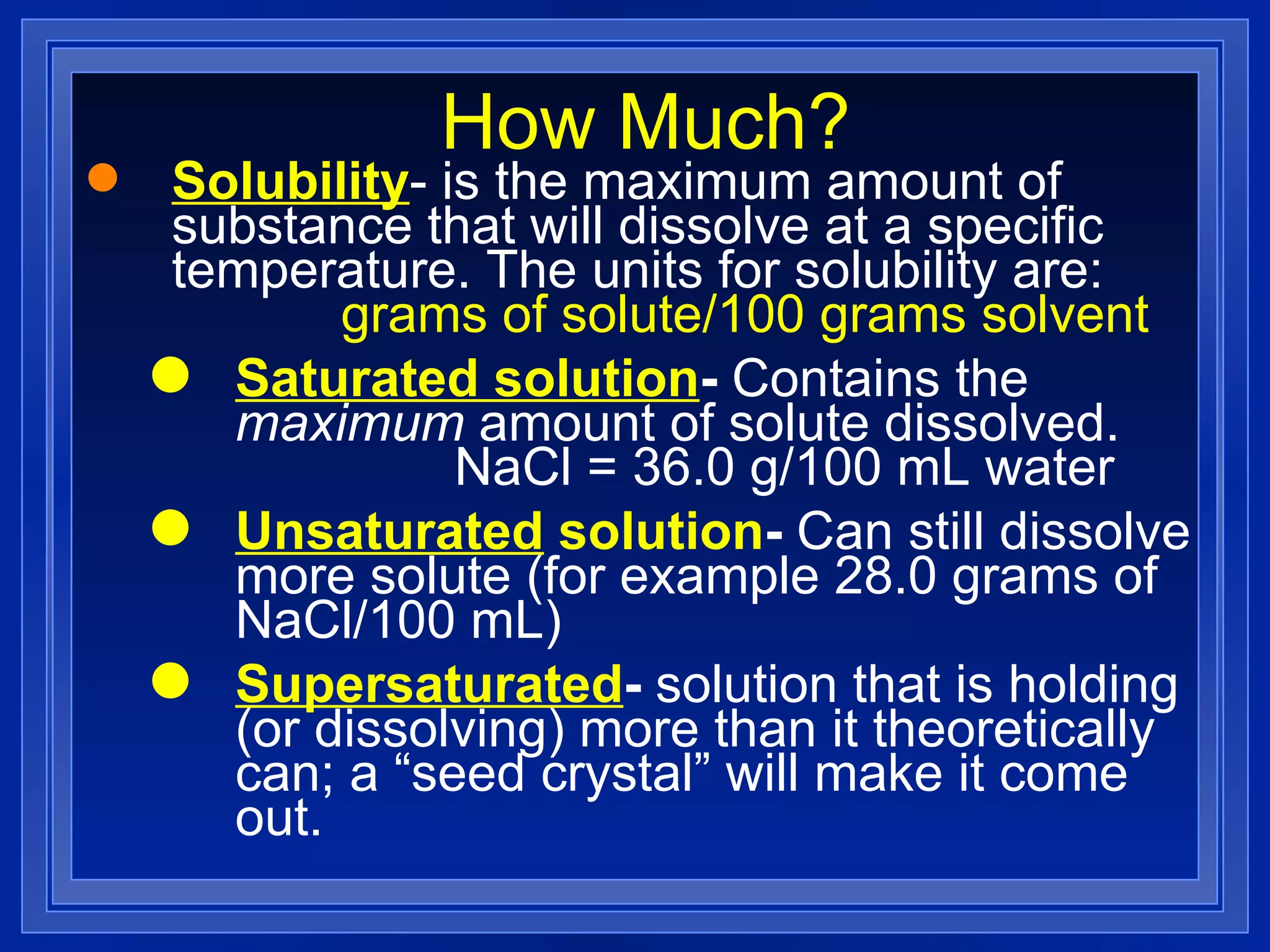
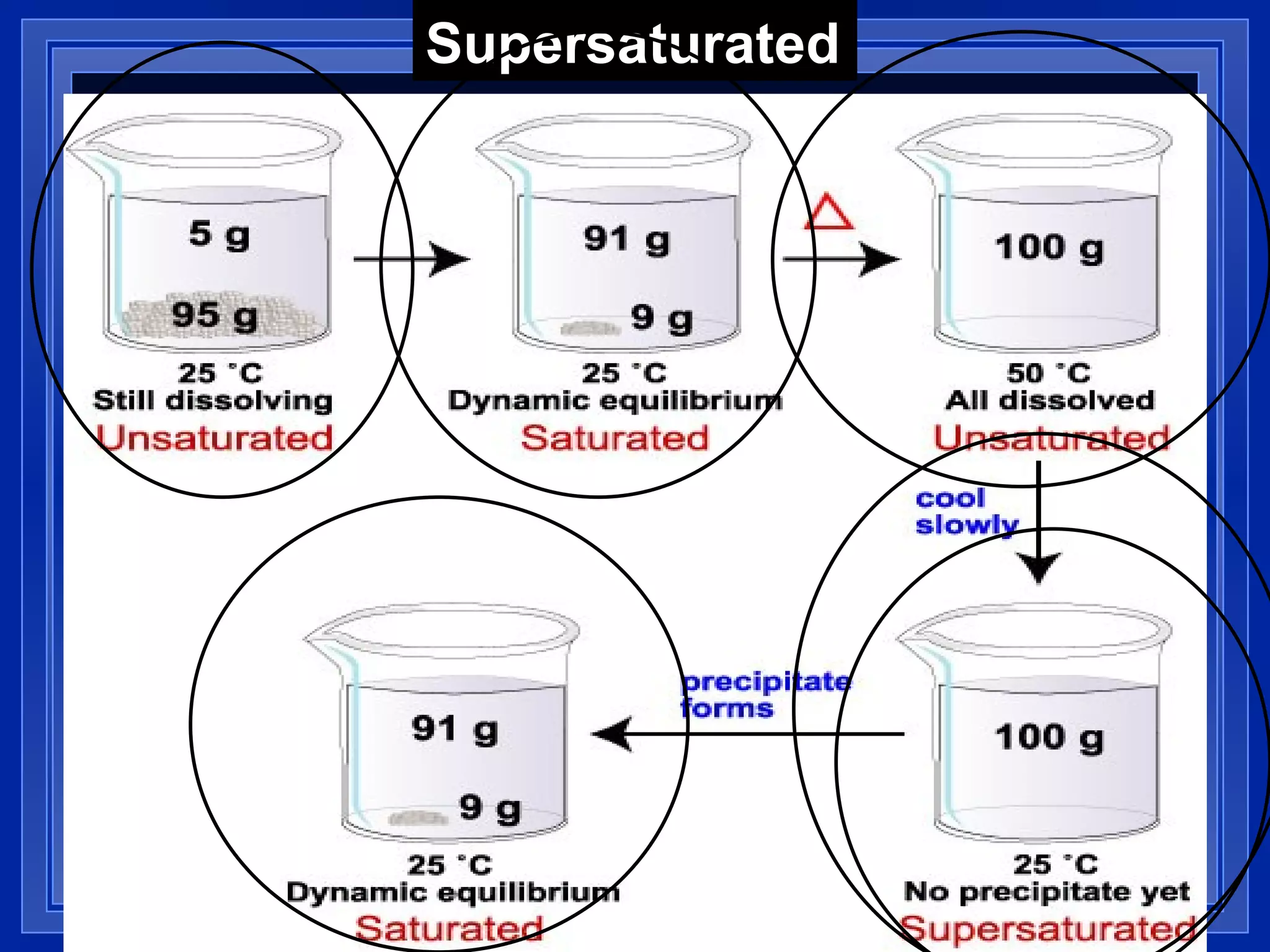
How Much? Solubility - is the maximum amount of substance that will dissolve at a specific temperature. The units for solubility are:  grams of solute/100 grams solvent Saturated solution -  Contains the  maximum  amount of solute dissolved.  NaCl = 36.0 g/100 mL water Unsaturated  solution -  Can still dissolve more solute (for example 28.0 grams of NaCl/100 mL) Supersaturated -  solution that is holding (or dissolving) more than it theoretically can; a “seed crystal” will make it come out.
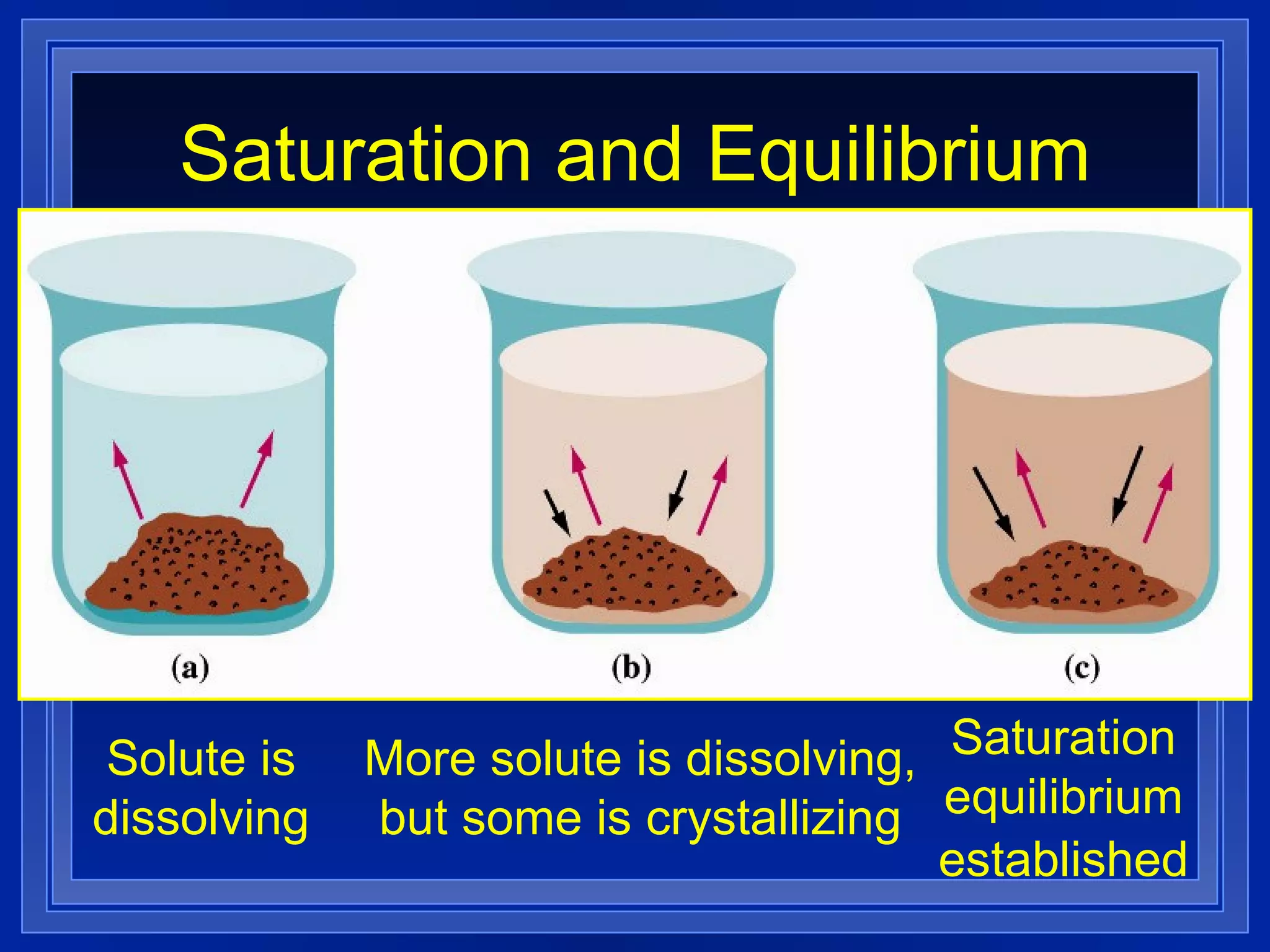
Saturation and Equilibrium Solute is dissolving More solute is dissolving, but some is crystallizing Saturation equilibrium established
Supersaturated
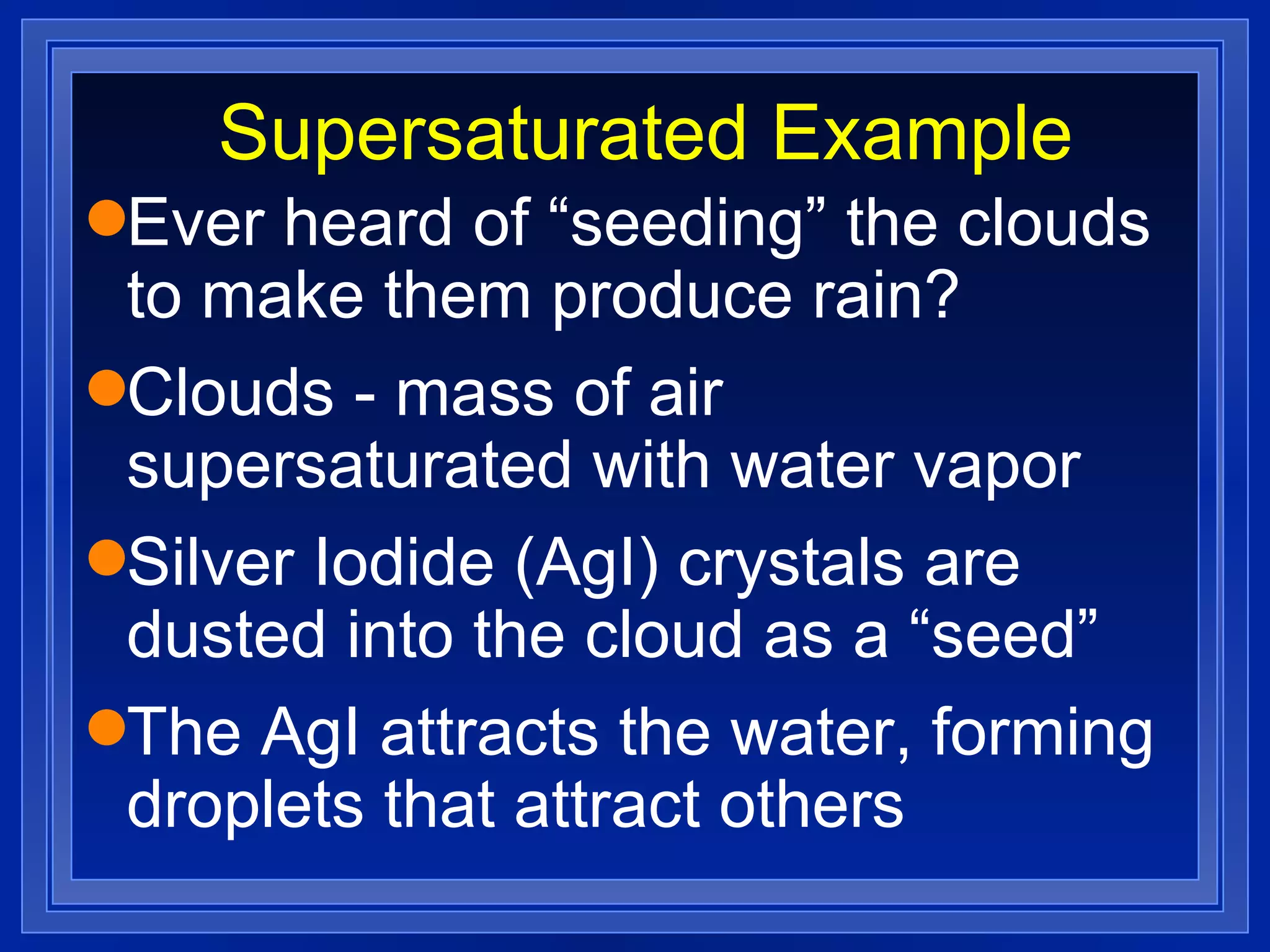
Supersaturated Example Ever heard of “seeding” the clouds to make them produce rain? Clouds - mass of air supersaturated with water vapor Silver Iodide (AgI) crystals are dusted into the cloud as a “seed” The AgI attracts the water, forming droplets that attract others
Liquids Miscible  means that two liquids can dissolve in each other water and antifreeze water and ethanol Partially miscible-  slightly water and ether Immiscible  means they can’t oil and vinegar
Solubility? For solids in liquids, as the temperature goes up-the solubility usually goes up For gases in a liquid, the effect is the opposite of solids in liquids As the temperature goes up, gas solubility goes down Think of boiling water bubbling? Thermal pollution  may result from industry using water for cooling
Section 16.2 Concentration of Solutions OBJECTIVES: Solve  problems involving the  molarity  of a solution.
Section 16.2 Concentration of Solutions OBJECTIVES: Describe  the effect of dilution on the total moles of solute in solution.
Section 16.2 Concentration of Solutions OBJECTIVES: Define   percent by volume  and  percent by mass  solutions.
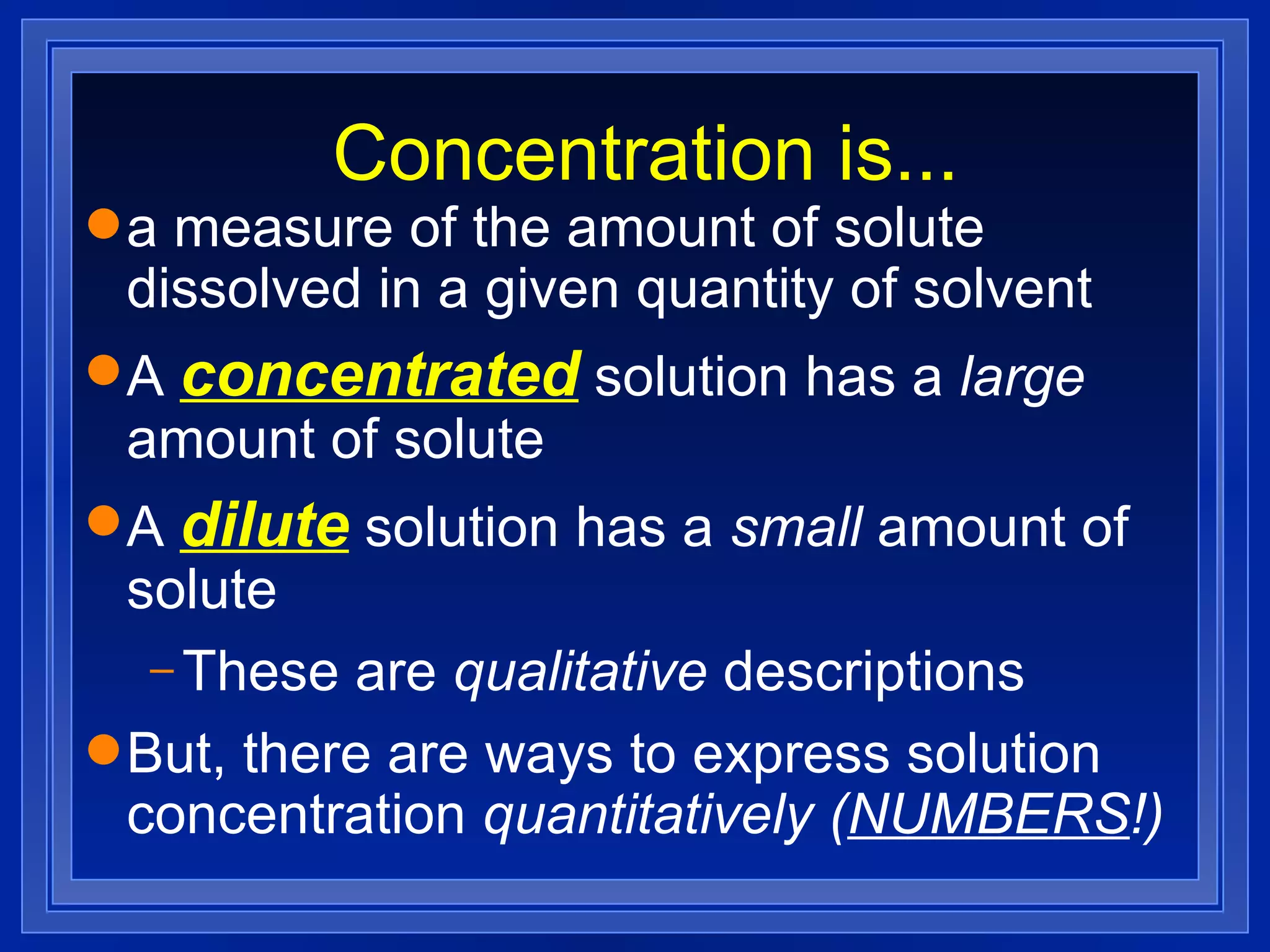
Concentration is... a measure of the amount of solute dissolved in a given quantity of solvent A   concentrated   solution has a  large  amount of solute A   dilute   solution has a  small  amount of solute These are  qualitative  descriptions But, there are ways to express solution concentration  quantitatively ( NUMBERS !)
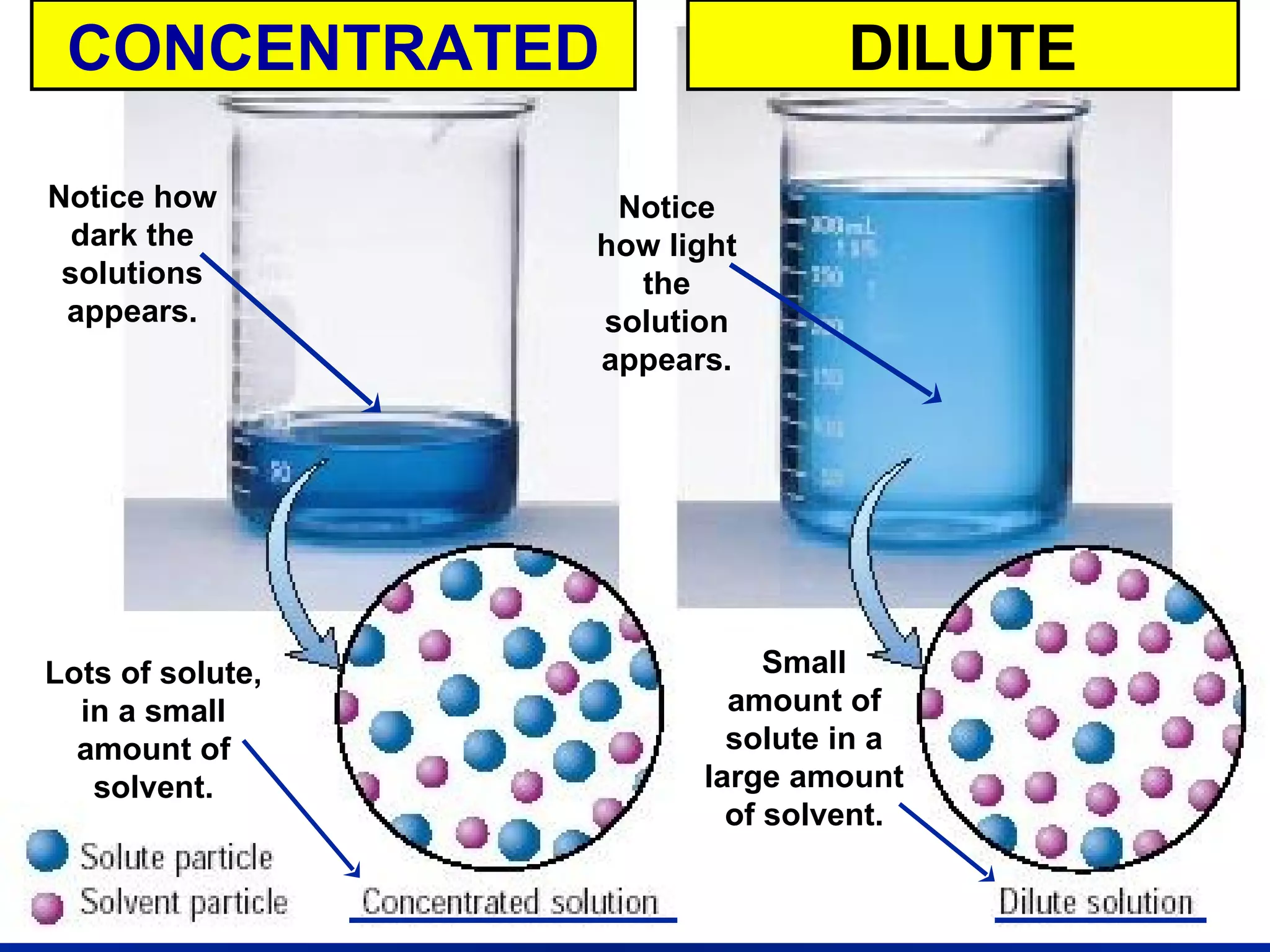
Concentrated vs. Dilute Lots of solute, in a small amount of solvent. Small amount of solute in a large amount of solvent. Notice how dark the solutions appears. Notice how light the solution appears. CONCENTRATED DILUTE
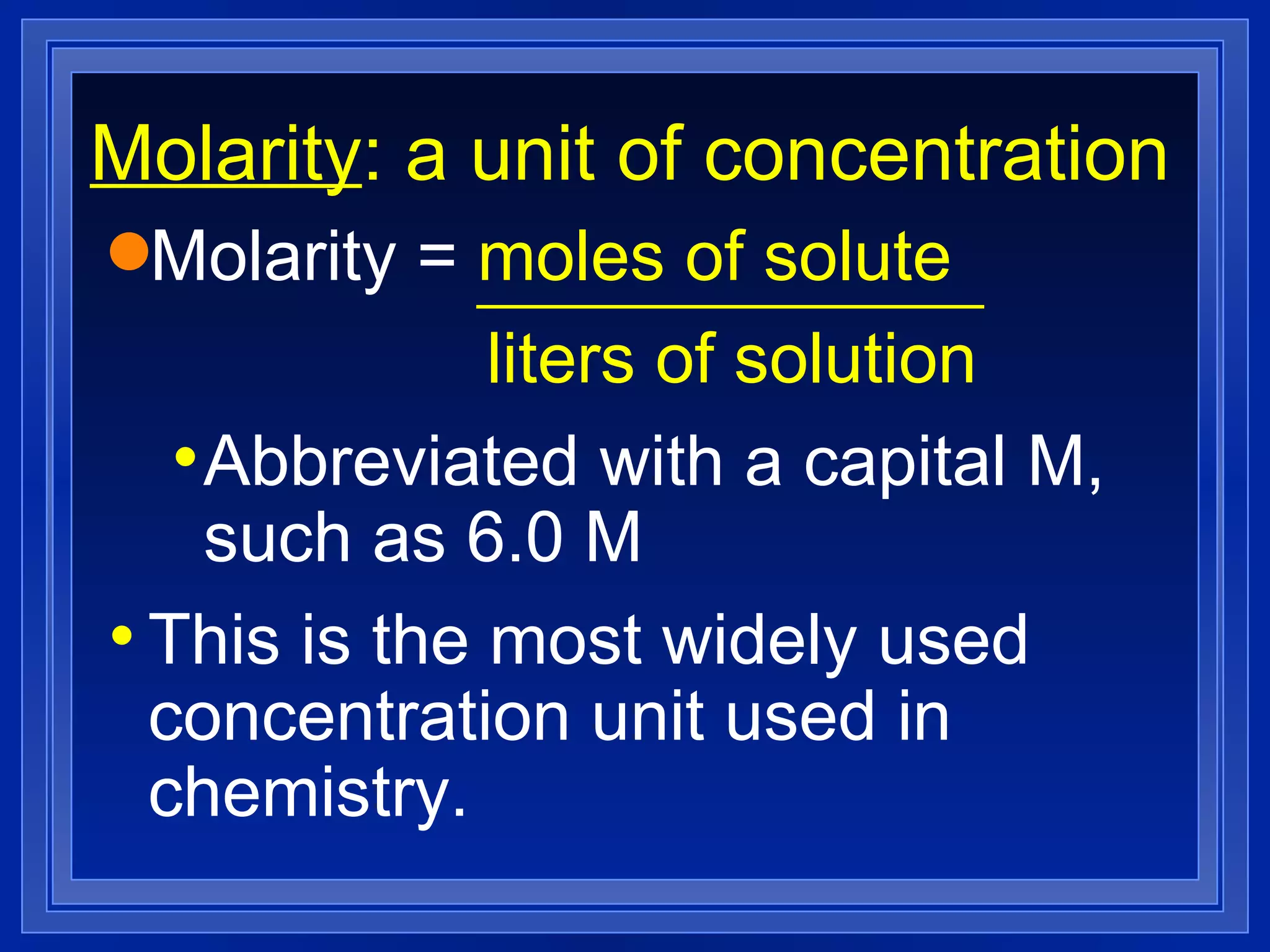
Molarity : a unit of concentration Molarity =  moles of solute liters of solution Abbreviated with a capital M, such as 6.0 M This is the most widely used concentration unit used in chemistry.
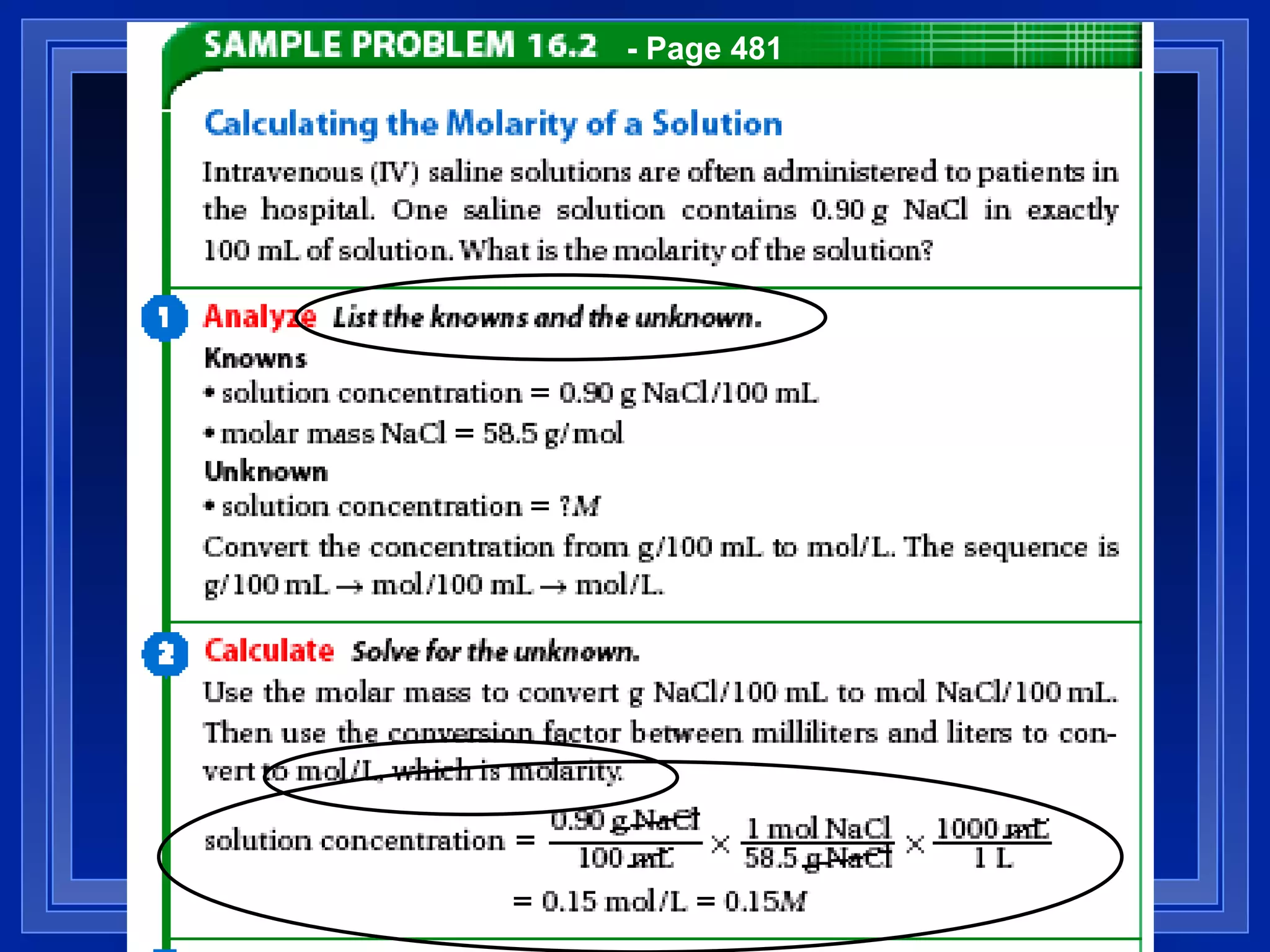
- Page 481

Chemistry - Chp 16 - Solutions - PowerPoint (shortened)

  • 1.
    Chapter16 “ Solutions ”
  • 2.
    Section 16.1 Propertiesof Solutions OBJECTIVES: Identify the factors that determine the rate at which a solute dissolves .
  • 3.
    Section 16.1 Propertiesof Solutions OBJECTIVES: Identify the units usually used to express the solubility of a solute.
  • 4.
    Section 16.1 Propertiesof Solutions OBJECTIVES: Identify the factors that determine the mass of solute that will dissolve in a given mass of solvent.
  • 5.
    Solution formation The“nature” (polarity, or composition) of the solute and the solvent will determine… Whether a substance will dissolve How much will dissolve Factors determining rate of solution... stirring (agitation) surface area the dissolving particles temperature
  • 6.
    Making solutions Inorder to dissolve, the solvent molecules must come in contact with the solute. 1. Stirring (agitation) moves fresh solvent into contact with the solute. 2. Smaller pieces increase the amount of surface area of the solute. - think of how fast a breath mint dissolves when you chew it
  • 7.
    Temperature and Solutions3. Higher temperature makes the molecules of the solvent move faster and contact the solute harder and more often. Speeds up dissolving. Higher Temperature ALSO Usually increases the amount that will dissolve (an exception is gases, more on that later).
  • 8.
    a. The solubilityof the KNO 3 increases as the temperature increases. b. Yb 2 (SO 4 ) 3 shows a decrease in solubility as the temperature increases, and NaCl shows the least change in solubility as temperature changes. c. Only a negligible amount of NaCl would go into solution, if any.
  • 9.
    Solids tendto dissolve best when: They are heated They are stirred Crushed into smaller particles Gases tend to dissolve best when: The solution is cold The pressure is high
  • 10.
    How Much? Solubility- is the maximum amount of substance that will dissolve at a specific temperature. The units for solubility are: grams of solute/100 grams solvent Saturated solution - Contains the maximum amount of solute dissolved. NaCl = 36.0 g/100 mL water Unsaturated solution - Can still dissolve more solute (for example 28.0 grams of NaCl/100 mL) Supersaturated - solution that is holding (or dissolving) more than it theoretically can; a “seed crystal” will make it come out.
  • 11.
    Saturation and EquilibriumSolute is dissolving More solute is dissolving, but some is crystallizing Saturation equilibrium established
  • 12.
  • 13.
    Supersaturated Example Everheard of “seeding” the clouds to make them produce rain? Clouds - mass of air supersaturated with water vapor Silver Iodide (AgI) crystals are dusted into the cloud as a “seed” The AgI attracts the water, forming droplets that attract others
  • 14.
    Liquids Miscible means that two liquids can dissolve in each other water and antifreeze water and ethanol Partially miscible- slightly water and ether Immiscible means they can’t oil and vinegar
  • 15.
    Solubility? For solidsin liquids, as the temperature goes up-the solubility usually goes up For gases in a liquid, the effect is the opposite of solids in liquids As the temperature goes up, gas solubility goes down Think of boiling water bubbling? Thermal pollution may result from industry using water for cooling
  • 16.
    Section 16.2 Concentrationof Solutions OBJECTIVES: Solve problems involving the molarity of a solution.
  • 17.
    Section 16.2 Concentrationof Solutions OBJECTIVES: Describe the effect of dilution on the total moles of solute in solution.
  • 18.
    Section 16.2 Concentrationof Solutions OBJECTIVES: Define percent by volume and percent by mass solutions.
  • 19.
    Concentration is... ameasure of the amount of solute dissolved in a given quantity of solvent A concentrated solution has a large amount of solute A dilute solution has a small amount of solute These are qualitative descriptions But, there are ways to express solution concentration quantitatively ( NUMBERS !)
  • 20.
    Concentrated vs. DiluteLots of solute, in a small amount of solvent. Small amount of solute in a large amount of solvent. Notice how dark the solutions appears. Notice how light the solution appears. CONCENTRATED DILUTE
  • 21.
    Molarity : aunit of concentration Molarity = moles of solute liters of solution Abbreviated with a capital M, such as 6.0 M This is the most widely used concentration unit used in chemistry.
  • 22.