






SPG 
K A P I T M U 
STRIKTONG PAKIKINIG SA GURO 
Ang Kinakailangan
Diversity of Materials in 
the Environment 
Imagination is more important than knowledge. Knowledge 
is limited. Imagination encircles the world.” 
-Albert Einstein
REVIEW 
WHAT IS MATTER?
What is matter? 
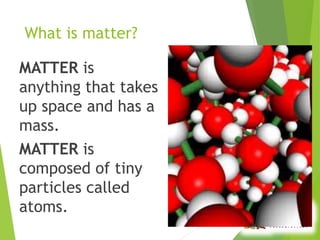
MATTER is 
anything that takes 
up space and has a 
mass. 
MATTER is 
composed of tiny 
particles called 
atoms.
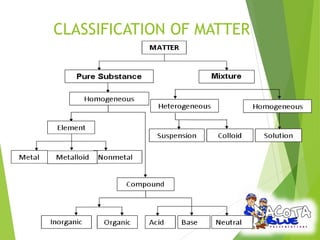
CLASSIFICATION OF MATTER
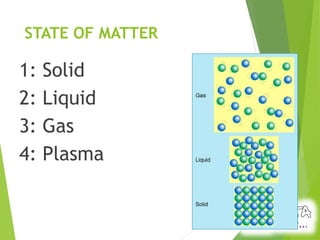
STATE OF MATTER 
1: Solid 
2: Liquid 
3: Gas 
4: Plasma
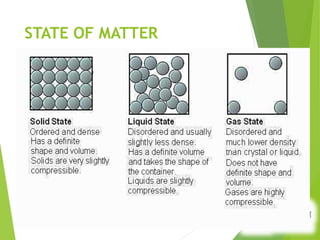
STATE OF MATTER 
1: Solid 
2: Liquid 
3: Gas 
: Plasma
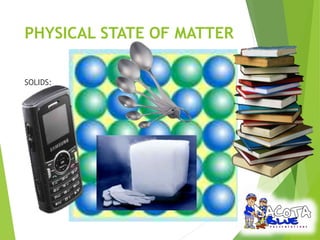
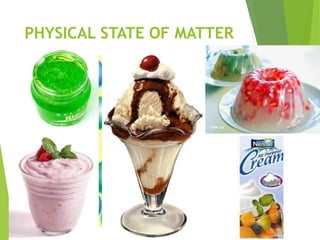
PHYSICAL STATE OF MATTER 
SOLIDS:
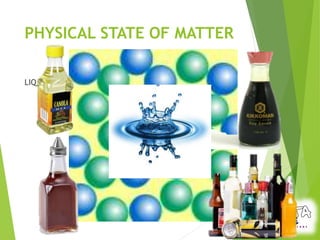
PHYSICAL STATE OF MATTER 
LIQUID:
PHYSICAL STATE OF MATTER 
GAS:
PHYSICAL STATE OF MATTER 
PLASMA:
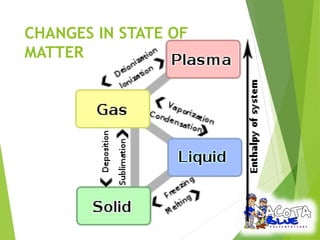
CHANGES IN STATE OF 
MATTER
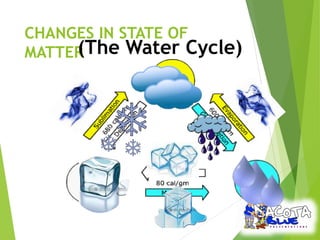
CHANGES IN STATE OF 
MATTER(The Water Cycle)
SOLUTIONS
Overview 
In Grade 6, you have learned about 
different mixtures and their 
characteristics. 
 different mixtures and their 
characteristics. 
 mixing a solid and a liquid or combined 
two different liquids. 
 homogeneous or heterogeneous mixtures
Overview 
Homogeneous mixtures are 
called solutions.
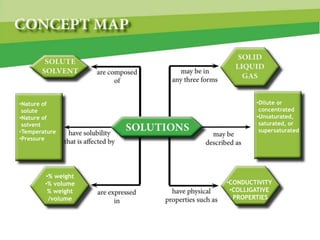
•Nature of 
solute 
•Nature of 
solvent 
•Temperature 
•Pressure 
•Dilute or 
concentrated 
•Unsaturated, 
saturated, or 
supersaturated 
•% weight 
•% volume 
% weight 
/volume 
•CONDUCTIVITY 
•COLLIGATIVE 
PROPERTIES
ESSENTIAL QUESTIONS 
ACTIVITY No. 1
First things first… 
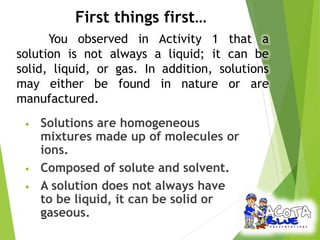
You observed in Activity 1 that a 
solution is not always a liquid; it can be 
solid, liquid, or gas. In addition, solutions 
may either be found in nature or are 
manufactured. 
• Solutions are homogeneous 
mixtures made up of molecules or 
ions. 
• Composed of solute and solvent. 
• A solution does not always have 
to be liquid, it can be solid or 
gaseous.
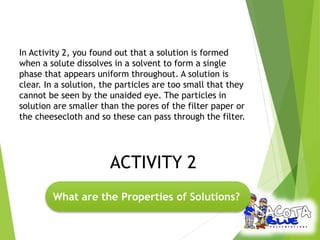
In Activity 2, you found out that a solution is formed 
when a solute dissolves in a solvent to form a single 
phase that appears uniform throughout. A solution is 
clear. In a solution, the particles are too small that they 
cannot be seen by the unaided eye. The particles in 
solution are smaller than the pores of the filter paper or 
the cheesecloth and so these can pass through the filter. 
ACTIVITY 2 
What are the Properties of Solutions?
TYPES OF SOLUTION 
LEARNING COMPETENCY: The learner investigates 
the different types of solutions.
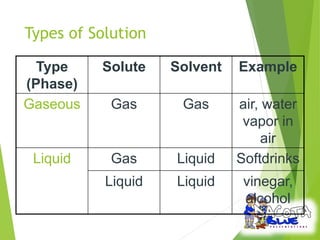
Types of Solution 
Type 
(Phase) 
Solute Solvent Example 
Gaseous Gas Gas air, water 
vapor in 
air 
Liquid Gas Liquid Softdrinks 
Liquid Liquid vinegar, 
alcohol
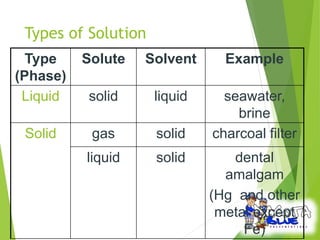
Types of Solution 
Type 
(Phase) 
Solute Solvent Example 
Liquid solid liquid seawater, 
brine 
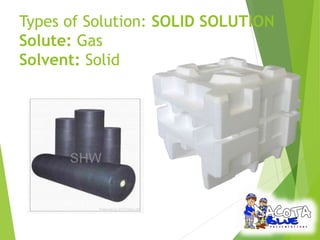
Solid gas solid charcoal filter 
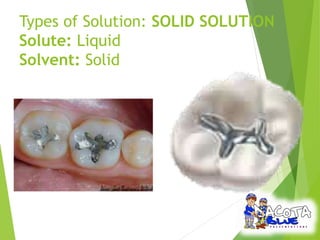
liquid solid dental 
amalgam 
(Hg and other 
metal except 
Fe)
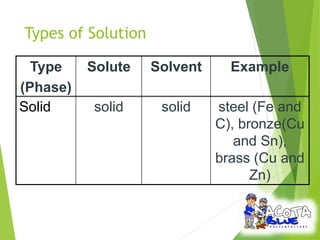
Types of Solution 
Solid solid solid steel (Fe and 
C), bronze(Cu 
and Sn), 
brass (Cu and 
Zn) 
Type 
(Phase) 
Solute Solvent Example
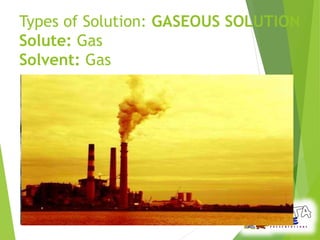
Types of Solution: GASEOUS SOLUTION 
Solute: Gas 
Solvent: Gas
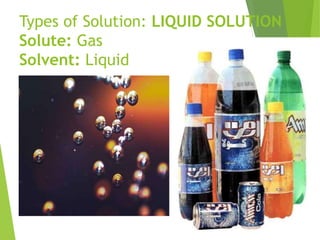
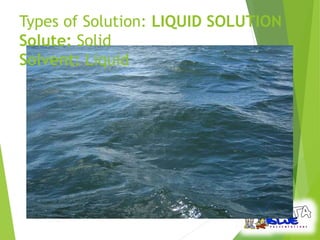
Types of Solution: LIQUID SOLUTION 
Solute: Gas 
Solvent: Liquid
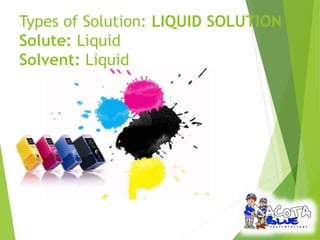
Types of Solution: LIQUID SOLUTION 
Solute: Liquid 
Solvent: Liquid
Types of Solution: LIQUID SOLUTION 
Solute: Solid 
Solvent: Liquid
Types of Solution: SOLID SOLUTION 
Solute: Gas 
Solvent: Solid
Types of Solution: SOLID SOLUTION 
Solute: Liquid 
Solvent: Solid
Types of Solution: SOLID SOLUTION 
Solute: Solid 
Solvent: Solid
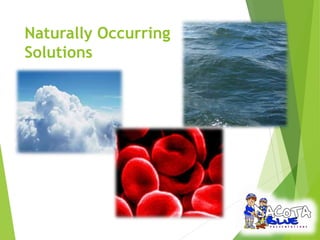
Naturally Occurring 
Solutions
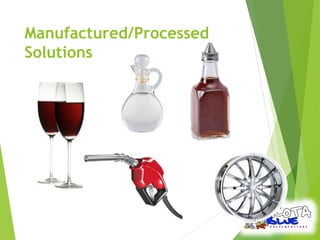
Manufactured/Processed 
Solutions
ALLOYS 
are solid (metal) solutions.
Water as the Universal SOLVENT 
Aqueous solution-A 
solution in which the 
solvent is water.
Naturally Occurring 
Solutions 
Examples of solutions that occur naturally are 
natural bodies of water like the seas and 
ocean, blood plasma, air, and some mineral 
ores.
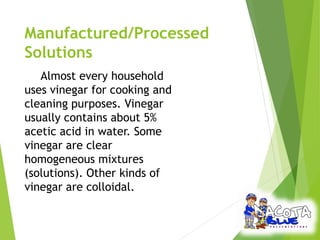
Manufactured/Processed 
Solutions 
Almost every household 
uses vinegar for cooking and 
cleaning purposes. Vinegar 
usually contains about 5% 
acetic acid in water. Some 
vinegar are clear 
homogeneous mixtures 
(solutions). Other kinds of 
vinegar are colloidal.
In Activity 3, you will find out how much solute can 
dissolve in a given amount of solvent and find out the 
type of solution based on whether there is excess solute 
or not. 
At higher grade levels, you will learn more of the 
detailed processes that happen when a solute dissolves 
in a solvent. 
ACTIVITY 3 
What is the Evidence that a Solution 
is Saturated?
In Activity 3, you have observed that there is a 
maximum amount of solute that can dissolve 
in a given amount of solvent at a certain 
temperature. This is what is called the 
“solubility” 
of the solute. From your everyday experience, 
you also observe that there is a limit to the 
amount of sugar you can dissolve in a given 
amount of water.
 The solubility of some solutes decreases as 
temperature increases. 
 On the other hand, there are solutes that 
increase their solubility at higher 
temperatures. For some other solutes, their 
solubility is not affected by an increase in 
temperature. Since the effect of 
temperature on different solutes is more 
accurately explained using solubility curves,
SATURATION 
***Learning Competency: investigates the different types of solutions. 
- unsaturated - saturated - supersaturated
SATURATION 
Saturated 
Unsaturated 
Supersaturated 
My brain really 
hurts! I can’t take 
it anymore… Stress 
week! huhuhu 
During the addition of solid solute 
into a liquid solvent, a condition is 
reached where no more solute 
dissolves. 
The excess solid simply lies 
undissolved at the bottom.
SATURATION
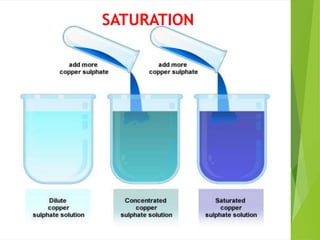
Saturated Solution 
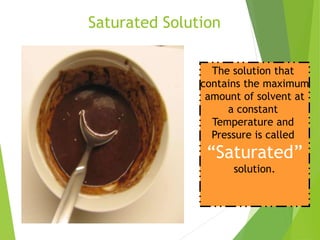
The solution that 
contains the maximum 
amount of solvent at 
a constant 
Temperature and 
Pressure is called 
“Saturated” 
solution.
Unsaturated Solution 
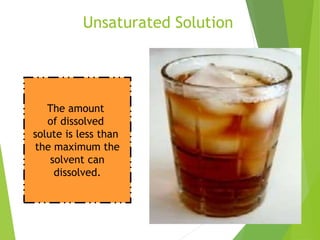
The amount 
of dissolved 
solute is less than 
the maximum the 
solvent can 
dissolved.
Unsaturated Solution 
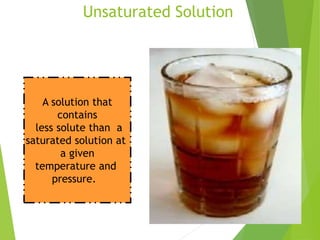
A solution that 
contains 
less solute than a 
saturated solution at 
a given 
temperature and 
pressure.
Supersaturated Solution 
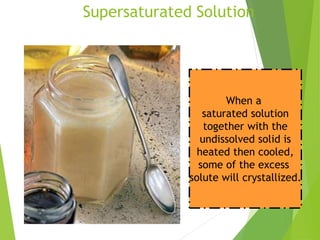
When a 
saturated solution 
together with the 
undissolved solid is 
heated then cooled, 
some of the excess 
solute will crystallized.
Supersaturated Solution 
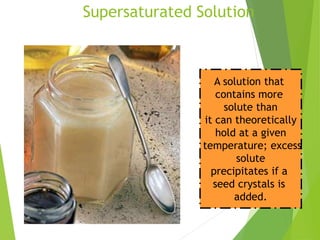
A solution that 
contains more 
solute than 
it can theoretically 
hold at a given 
temperature; excess 
solute 
precipitates if a 
seed crystals is 
added.
Supersaturated Solution 
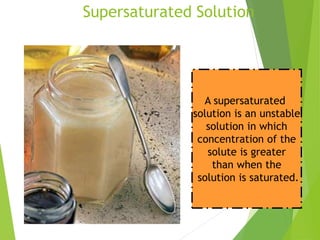
A supersaturated 
solution is an unstable 
solution in which 
concentration of the 
solute is greater 
than when the 
solution is saturated.
Types of Solutions 
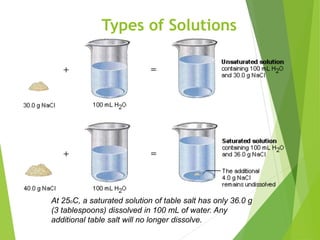
At 25oC, a saturated solution of table salt has only 36.0 g 
(3 tablespoons) dissolved in 100 mL of water. Any 
additional table salt will no longer dissolve.
Concentration of 
Solution 
TEACHER’S DEMONSTRATION 
Go to Link…
EXPRESSING 
CONCENTRATION 
Learning Competency: Explains the difference between Percentage by 
Weight and by Volume solutions.
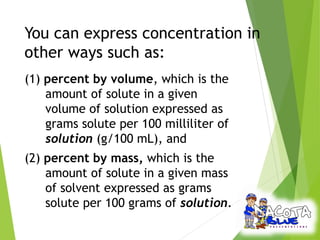
You can express concentration in 
other ways such as: 
(1) percent by volume, which is the 
amount of solute in a given 
volume of solution expressed as 
grams solute per 100 milliliter of 
solution (g/100 mL), and 
(2) percent by mass, which is the 
amount of solute in a given mass 
of solvent expressed as grams 
solute per 100 grams of solution.
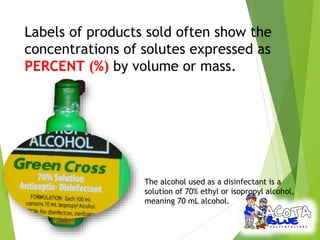
Labels of products sold often show the 
concentrations of solutes expressed as 
PERCENT (%) by volume or mass. 
The alcohol used as a disinfectant is a 
solution of 70% ethyl or isopropyl alcohol, 
meaning 70 mL alcohol.
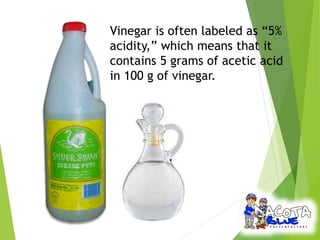
Vinegar is often labeled as “5% 
acidity,” which means that it 
contains 5 grams of acetic acid 
in 100 g of vinegar.
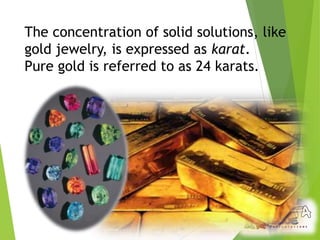
The concentration of solid solutions, like 
gold jewelry, is expressed as karat. 
Pure gold is referred to as 24 karats.
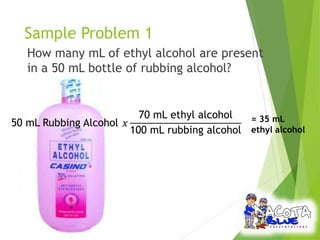
Sample Problem 1 
How many mL of ethyl alcohol are present 
in a 50 mL bottle of rubbing alcohol? 
50 mL Rubbing Alcohol 푥 
70 mL ethyl alcohol 
100 mL rubbing alcohol 
= 35 mL 
ethyl alcohol
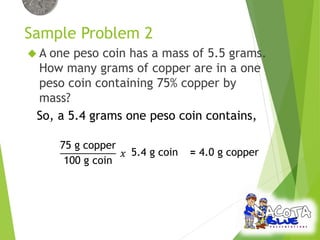
Sample Problem 2 
 A one peso coin has a mass of 5.5 grams. 
How many grams of copper are in a one 
peso coin containing 75% copper by 
mass? 
So, a 5.4 grams one peso coin contains, 
5.4 g coin 
75 g copper 
100 g coin 
푥 = 4.0 g copper
Factors Affecting 
How Fast a Solid 
Solute Dissolves
Factors Affecting How Fast a 
Solid Solute Dissolves 
Stirring or Agitation 
Particle Size 
Increase in temperature 
Concentration of solution 
 Pressure on Gas 
Like dissolves like
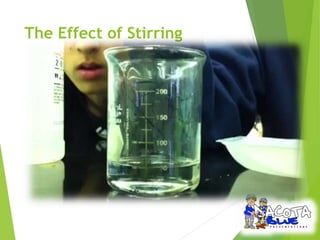
The Effect of Stirring
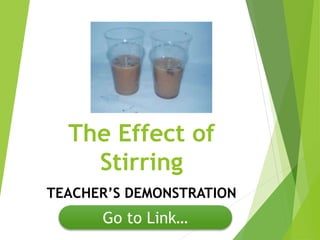
The Effect of 
Stirring 
TEACHER’S DEMONSTRATION 
Go to Link…
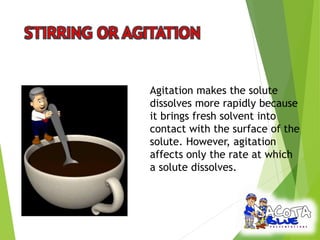
Agitation makes the solute 
dissolves more rapidly because 
it brings fresh solvent into 
contact with the surface of the 
solute. However, agitation 
affects only the rate at which 
a solute dissolves.
It cannot influence the 
amount of solute that 
dissolves. An insoluble 
substance will remain 
undissolved no matter 
how much the system 
is agitated.
Also, particle size does not 
affect solubility. It can 
affect the RATE at which 
something dissolves, but it 
will not change the total 
amount of material that 
can ultimately dissolve 
(solubility).
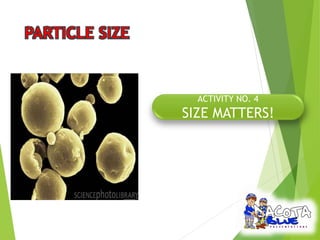
ACTIVITY NO. 4 
SIZE MATTERS!
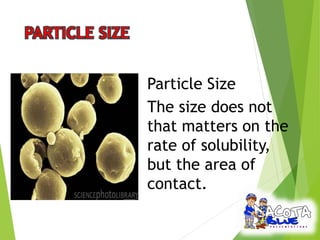
Particle Size 
The size does not 
that matters on the 
rate of solubility, 
but the area of 
contact.
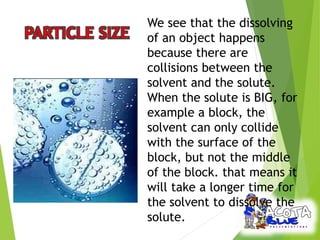
We see that the dissolving 
of an object happens 
because there are 
collisions between the 
solvent and the solute. 
When the solute is BIG, for 
example a block, the 
solvent can only collide 
with the surface of the 
block, but not the middle 
of the block. that means it 
will take a longer time for 
the solvent to dissolve the 
solute.
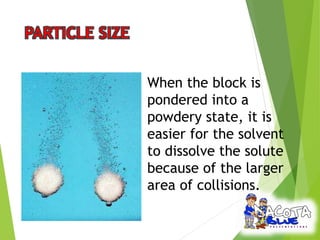
When the block is 
pondered into a 
powdery state, it is 
easier for the solvent 
to dissolve the solute 
because of the larger 
area of collisions.
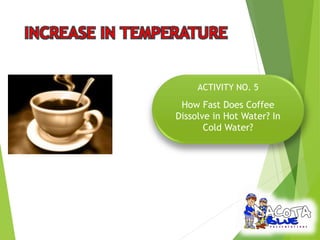
ACTIVITY NO. 5 
How Fast Does Coffee 
Dissolve in Hot Water? In 
Cold Water?
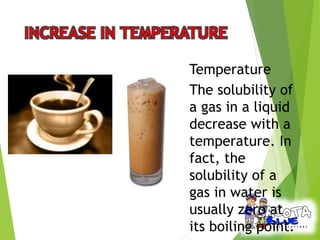
Temperature 
The solubility of 
a gas in a liquid 
decrease with a 
temperature. In 
fact, the 
solubility of a 
gas in water is 
usually zero at 
its boiling point.
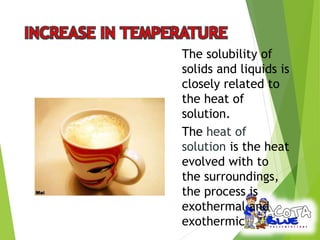
The solubility of 
solids and liquids is 
closely related to 
the heat of 
solution. 
The heat of 
solution is the heat 
evolved with to 
the surroundings, 
the process is 
exothermal and 
exothermic
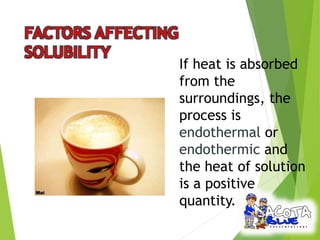
If heat is absorbed 
from the 
surroundings, the 
process is 
endothermal or 
endothermic and 
the heat of solution 
is a positive 
quantity.
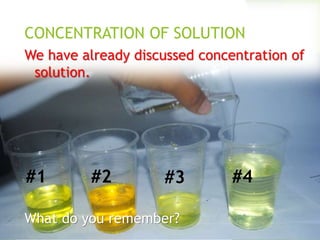
CONCENTRATION OF SOLUTION 
We have already discussed concentration of 
solution. 
#1 #2 #3 #4 
What do you remember?
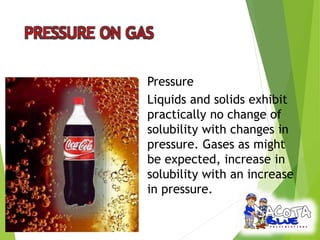
Pressure 
Liquids and solids exhibit 
practically no change of 
solubility with changes in 
pressure. Gases as might 
be expected, increase in 
solubility with an increase 
in pressure.
Henry's Law states 
that: The solubility of 
a gas in a liquid is 
directly proportional to 
the pressure of that 
gas above the surface 
of the solution.
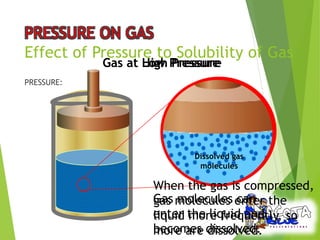
Effect of Pressure to Solubility of Gas 
High Pressure 
Gas Molecules 
PRESSURE: 
Gas at Low Pressure 
Dissolved gas 
molecules 
When the gas is compressed, 
Gas gas molecules molecules enter can 
the 
enter liquid the more liquid frequently, and 
so 
becomes more are dissolved. 
dissolved.
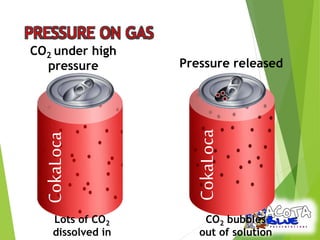
Pressure released 
CokaLoca 
CO2 under high 
pressure 
CokaLoca 
Lots of CO2 
dissolved in 
CO2 bubbles 
out of solution
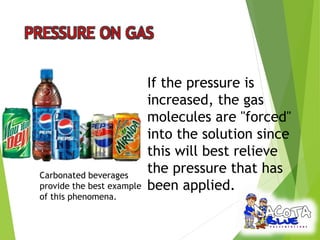
If the pressure is 
increased, the gas 
molecules are "forced" 
into the solution since 
this will best relieve 
the pressure that has 
been applied. 
Carbonated beverages 
provide the best example 
of this phenomena.
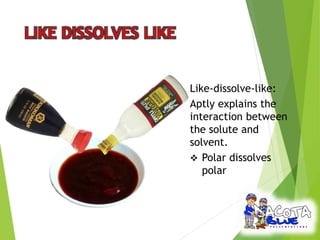
Like-dissolve-like: 
Aptly explains the 
interaction between 
the solute and 
solvent. 
 Polar dissolves 
polar
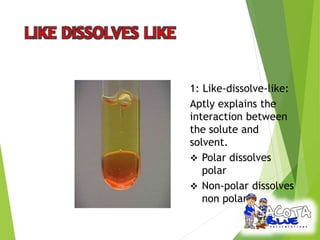
1: Like-dissolve-like: 
Aptly explains the 
interaction between 
the solute and 
solvent. 
 Polar dissolves 
polar 
 Non-polar dissolves 
non polar
What have you learned? 
 Now that you have completed the activities in this module, you have 
learned the properties of a solution, the ways of reporting its 
concentration, as well as the effects of stirring, particle size, 
temperature, and type of solute on how fast a solid dissolves in water. 
 While learning about solutions, you also had the chance to gather 
information and gain new knowledge through the process of 
conducting science investigations. You also learned the importance of 
identifying the variables that had to be controlled in order to make a 
good plan for measuring and testing the variables you are concerned 
about. 
 What you have started doing in these investigations is what scientists 
usually do when they seek answers to a scientific question or problem. 
In the next modules, you will be challenged to ask more questions 
about materials around you. You will try to explain answers to your 
hypothesis 
 (your suggested explanation) after you have done your investigation.
SUMMARY: 
 SOLUTION is a system in which one or more substances are 
homogenous mixed. 
 A solution has two (2) components: SOLUTE AND SOLVENT. 
 SOLUBILITY is the maximum amount of solute that dissolves in a 
given amount of solvent at a specified temperature. 
 The 6 factors that affect solubility are: (a) Stirring or Agitation (b) 
Particle Size (c) Increase in temperature, (d) Concentration of 
solution (e) Pressure on Gas (f) Like dissolves like. 
 The concentration of solution expresses the amount of solute 
dissolved in a given quantity of solvent: Concentration can be 
expressed in different ways: 
 As dilute or concentrated 
 As saturated, unsaturated, and supersaturated 
 Percent by weight, percent by volume, or percent by weight/volume.
QUIZZES 
KNOWLEDGE: 
Process: 
Understanding: 
Oral Recitation: 
Pre/Post Test
DANIEL CORTON TABINGA, JR. 
© 2014