Name __________________________________________ Date ___________________


                              Chapter 8 Study Guide
                                Covalent Bonding
•   What is a covalent bond?

•   What are the characteristics of molecular compounds (covalently bonded compounds)


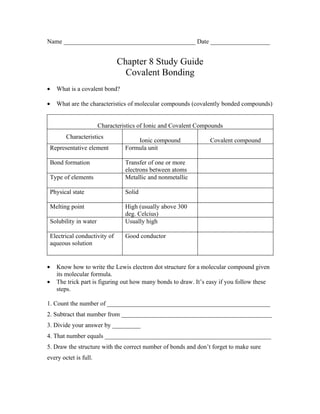
                       Characteristics of Ionic and Covalent Compounds
        Characteristics
                                     Ionic compound              Covalent compound
 Representative element          Formula unit

 Bond formation                  Transfer of one or more
                                 electrons between atoms
 Type of elements                Metallic and nonmetallic

 Physical state                  Solid

 Melting point                   High (usually above 300
                                 deg. Celcius)
 Solubility in water             Usually high

 Electrical conductivity of      Good conductor
 aqueous solution


•   Know how to write the Lewis electron dot structure for a molecular compound given
    its molecular formula.
•   The trick part is figuring out how many bonds to draw. It’s easy if you follow these
    steps.

1. Count the number of ____________________________________________________
2. Subtract that number from ________________________________________________
3. Divide your answer by _________
4. That number equals _____________________________________________________
5. Draw the structure with the correct number of bonds and don’t forget to make sure
every octet is full.
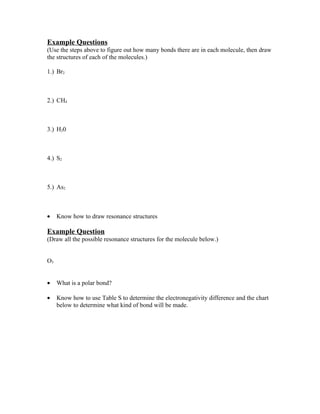
Example Questions
(Use the steps above to figure out how many bonds there are in each molecule, then draw
the structures of each of the molecules.)

1.) Br2


2.) CH4


3.) H20


4.) S2


5.) As2


•    Know how to draw resonance structures

Example Question
(Draw all the possible resonance structures for the molecule below.)


O3


•    What is a polar bond?

•    Know how to use Table S to determine the electronegativity difference and the chart
     below to determine what kind of bond will be made.
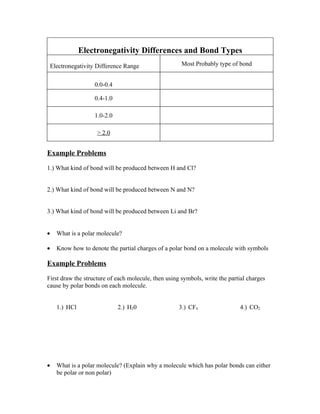
Electronegativity Differences and Bond Types
 Electronegativity Difference Range                   Most Probably type of bond


                   0.0-0.4

                   0.4-1.0

                   1.0-2.0

                    > 2.0


Example Problems

1.) What kind of bond will be produced between H and Cl?


2.) What kind of bond will be produced between N and N?


3.) What kind of bond will be produced between Li and Br?


•   What is a polar molecule?

•   Know how to denote the partial charges of a polar bond on a molecule with symbols

Example Problems

First draw the structure of each molecule, then using symbols, write the partial charges
cause by polar bonds on each molecule.


    1.) HCl                  2.) H20                 3.) CF4                 4.) CO2


•   What is a polar molecule? (Explain why a molecule which has polar bonds can either
    be polar or non polar)
Example problems

1.) Is CO2 polar? Why? (use a drawing of the molecule in your explanation)


2.) Is H2C polar? Why? (use a drawing of the molecule in your explanation)


•    Rank the strengths of the intermolecular attraction forces

1.

2.

3.

4.


***This test will only be 12-15 questions, due to the shortened class time tomorrow. This
review sheet will have the basis of how to answer each question guaranteed. Know this
review sheet and you’ll do great on the test***


***Even though I don’t think you’ll need it, I will allow offer you the opportunity to use
this review sheet on tomorrows test. However if you choose to use it, the highest grade
you may receive will be a 90%***

Chemistry - Chp 8 - Covalent Bonding - Study Guide

  • 1.
    Name __________________________________________ Date___________________ Chapter 8 Study Guide Covalent Bonding • What is a covalent bond? • What are the characteristics of molecular compounds (covalently bonded compounds) Characteristics of Ionic and Covalent Compounds Characteristics Ionic compound Covalent compound Representative element Formula unit Bond formation Transfer of one or more electrons between atoms Type of elements Metallic and nonmetallic Physical state Solid Melting point High (usually above 300 deg. Celcius) Solubility in water Usually high Electrical conductivity of Good conductor aqueous solution • Know how to write the Lewis electron dot structure for a molecular compound given its molecular formula. • The trick part is figuring out how many bonds to draw. It’s easy if you follow these steps. 1. Count the number of ____________________________________________________ 2. Subtract that number from ________________________________________________ 3. Divide your answer by _________ 4. That number equals _____________________________________________________ 5. Draw the structure with the correct number of bonds and don’t forget to make sure every octet is full.
  • 2.
    Example Questions (Use thesteps above to figure out how many bonds there are in each molecule, then draw the structures of each of the molecules.) 1.) Br2 2.) CH4 3.) H20 4.) S2 5.) As2 • Know how to draw resonance structures Example Question (Draw all the possible resonance structures for the molecule below.) O3 • What is a polar bond? • Know how to use Table S to determine the electronegativity difference and the chart below to determine what kind of bond will be made.
  • 3.
    Electronegativity Differences andBond Types Electronegativity Difference Range Most Probably type of bond 0.0-0.4 0.4-1.0 1.0-2.0 > 2.0 Example Problems 1.) What kind of bond will be produced between H and Cl? 2.) What kind of bond will be produced between N and N? 3.) What kind of bond will be produced between Li and Br? • What is a polar molecule? • Know how to denote the partial charges of a polar bond on a molecule with symbols Example Problems First draw the structure of each molecule, then using symbols, write the partial charges cause by polar bonds on each molecule. 1.) HCl 2.) H20 3.) CF4 4.) CO2 • What is a polar molecule? (Explain why a molecule which has polar bonds can either be polar or non polar)
  • 4.
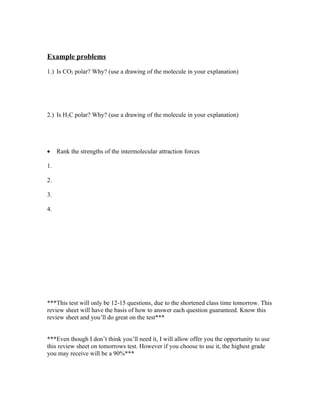
    Example problems 1.) IsCO2 polar? Why? (use a drawing of the molecule in your explanation) 2.) Is H2C polar? Why? (use a drawing of the molecule in your explanation) • Rank the strengths of the intermolecular attraction forces 1. 2. 3. 4. ***This test will only be 12-15 questions, due to the shortened class time tomorrow. This review sheet will have the basis of how to answer each question guaranteed. Know this review sheet and you’ll do great on the test*** ***Even though I don’t think you’ll need it, I will allow offer you the opportunity to use this review sheet on tomorrows test. However if you choose to use it, the highest grade you may receive will be a 90%***