In chemistry, a solution is
a homogeneous mixture
composed of two or more
substances.
Solutions are groups of
molecules that are mixed and
evenly distributed in a system.
In such a mixture, a solute is a
substance dissolved in another
substance, known as a solvent.
The solution more or less takes
on the characteristics of the
solvent including its phase,
and the solvent is commonly
the major fraction of the
mixture.
The concentration of a solute in a
solution is a measure of how much of
that solute is dissolved in the solvent,
with regard to how much solvent is
present.
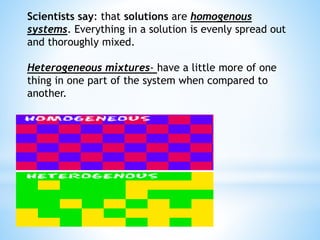
Scientists say: that solutions are homogenous
systems. Everything in a solution is evenly spread out
and thoroughly mixed.
Heterogeneous mixtures- have a little more of one
thing in one part of the system when compared to
another.
“Let's compare sugar in water (H2O) to sand in water.”
Sugar (solute) dissolves and is spread throughout the glass of
water (system).
The sugar-water is a homogenous mixture
(picture example sugar-water)
The sand sinks to the bottom. while the sand-water is a
heterogeneous mixture. Both are mixtures,
(Picture example sand-water)
but only the sugar-water can also be called a solution.
Can anything be in a Solution?
Solutions can be solids dissolved in liquids.
If you mix things up and they stay at an even distribution, it is a
solution.
When you work with chemistry or even cook in your kitchen, you
will usually be dissolving solids into liquids.
Solutions can also be gases dissolved in liquids, such as carbonated
water. There can also be gases in other gases and liquids in liquids.
You probably won't find people making solid-solid solutions.
They usually start off as solid/gas/liquid-liquid solutions and then
harden at room temperature.
Making Solutions
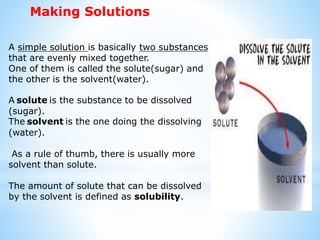
A simple solution is basically two substances
that are evenly mixed together.
One of them is called the solute(sugar) and
the other is the solvent(water).
A solute is the substance to be dissolved
(sugar).
The solvent is the one doing the dissolving
(water).
As a rule of thumb, there is usually more
solvent than solute.
The amount of solute that can be dissolved
by the solvent is defined as solubility.
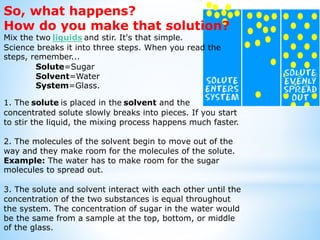
So, what happens?
How do you make that solution?
Mix the two liquids and stir. It's that simple.
Science breaks it into three steps. When you read the
steps, remember...
Solute=Sugar
Solvent=Water
System=Glass.
1. The solute is placed in the solvent and the
concentrated solute slowly breaks into pieces. If you start
to stir the liquid, the mixing process happens much faster.
2. The molecules of the solvent begin to move out of the
way and they make room for the molecules of the solute.
Example: The water has to make room for the sugar
molecules to spread out.
3. The solute and solvent interact with each other until the
concentration of the two substances is equal throughout
the system. The concentration of sugar in the water would
be the same from a sample at the top, bottom, or middle
of the glass.
Can Anything Change Solutions?
Sure. All sorts of things can change the concentrations of
substances in solution.
Scientists: use the word solubility.
Solubility is the ability of the solvent (water) to dissolve the
solute (sugar).
You may have already seen the effect of temperature in your
classes. Usually when you heat up a solvent, it can dissolve
more materials (sugar) and less (carbon dioxide).
“ If your friend was mixing sugar and water, she
would be able to dissolve a lot more sugar into hot
water rather than cold. ”
The solubility of a substance is the
amount of that substance that will
dissolve in a given amount of solvent.
Solubility is a quantitative term.
Solubilities very enormously .
The terms soluble and insoluble are relative.
• A substance is said to be soluble if more than 0.1 g of that
substance dissolves in 100 mL solvent.
• If less than 0.1 g dissolves in 100 mL solvent, the
substance is said to be insoluble or, more exactly,
sparingly soluble.
The terms miscible and immiscible may be
encountered when considering the solubility of one
liquid in another.
Miscible means soluble without limits; for example, alcohol is
miscible with water.
FIGURE : Soluble and insoluble. Alcohol is soluble in water; when added to water, it
forms a clear solution.
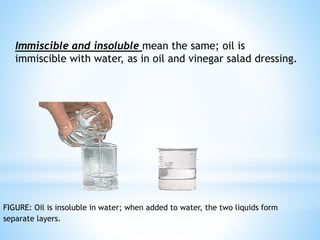
Immiscible and insoluble mean the same; oil is
immiscible with water, as in oil and vinegar salad dressing.
FIGURE: Oil is insoluble in water; when added to water, the two liquids form
separate layers.
solution and solubility

solution and solubility

  • 2.
    In chemistry, asolution is a homogeneous mixture composed of two or more substances.
  • 3.
    Solutions are groupsof molecules that are mixed and evenly distributed in a system.
  • 4.
    In such amixture, a solute is a substance dissolved in another substance, known as a solvent. The solution more or less takes on the characteristics of the solvent including its phase, and the solvent is commonly the major fraction of the mixture.
  • 5.
    The concentration ofa solute in a solution is a measure of how much of that solute is dissolved in the solvent, with regard to how much solvent is present.
  • 6.
    Scientists say: thatsolutions are homogenous systems. Everything in a solution is evenly spread out and thoroughly mixed. Heterogeneous mixtures- have a little more of one thing in one part of the system when compared to another.
  • 7.
    “Let's compare sugarin water (H2O) to sand in water.” Sugar (solute) dissolves and is spread throughout the glass of water (system). The sugar-water is a homogenous mixture (picture example sugar-water) The sand sinks to the bottom. while the sand-water is a heterogeneous mixture. Both are mixtures, (Picture example sand-water) but only the sugar-water can also be called a solution.
  • 8.
    Can anything bein a Solution? Solutions can be solids dissolved in liquids. If you mix things up and they stay at an even distribution, it is a solution. When you work with chemistry or even cook in your kitchen, you will usually be dissolving solids into liquids. Solutions can also be gases dissolved in liquids, such as carbonated water. There can also be gases in other gases and liquids in liquids. You probably won't find people making solid-solid solutions. They usually start off as solid/gas/liquid-liquid solutions and then harden at room temperature.
  • 9.
    Making Solutions A simplesolution is basically two substances that are evenly mixed together. One of them is called the solute(sugar) and the other is the solvent(water). A solute is the substance to be dissolved (sugar). The solvent is the one doing the dissolving (water). As a rule of thumb, there is usually more solvent than solute. The amount of solute that can be dissolved by the solvent is defined as solubility.
  • 10.
    So, what happens? Howdo you make that solution? Mix the two liquids and stir. It's that simple. Science breaks it into three steps. When you read the steps, remember... Solute=Sugar Solvent=Water System=Glass. 1. The solute is placed in the solvent and the concentrated solute slowly breaks into pieces. If you start to stir the liquid, the mixing process happens much faster. 2. The molecules of the solvent begin to move out of the way and they make room for the molecules of the solute. Example: The water has to make room for the sugar molecules to spread out. 3. The solute and solvent interact with each other until the concentration of the two substances is equal throughout the system. The concentration of sugar in the water would be the same from a sample at the top, bottom, or middle of the glass.
  • 11.
    Can Anything ChangeSolutions? Sure. All sorts of things can change the concentrations of substances in solution. Scientists: use the word solubility. Solubility is the ability of the solvent (water) to dissolve the solute (sugar). You may have already seen the effect of temperature in your classes. Usually when you heat up a solvent, it can dissolve more materials (sugar) and less (carbon dioxide). “ If your friend was mixing sugar and water, she would be able to dissolve a lot more sugar into hot water rather than cold. ”
  • 12.
    The solubility ofa substance is the amount of that substance that will dissolve in a given amount of solvent. Solubility is a quantitative term.
  • 13.
    Solubilities very enormously. The terms soluble and insoluble are relative. • A substance is said to be soluble if more than 0.1 g of that substance dissolves in 100 mL solvent. • If less than 0.1 g dissolves in 100 mL solvent, the substance is said to be insoluble or, more exactly, sparingly soluble.
  • 14.
    The terms miscibleand immiscible may be encountered when considering the solubility of one liquid in another. Miscible means soluble without limits; for example, alcohol is miscible with water. FIGURE : Soluble and insoluble. Alcohol is soluble in water; when added to water, it forms a clear solution.
  • 15.
    Immiscible and insolublemean the same; oil is immiscible with water, as in oil and vinegar salad dressing. FIGURE: Oil is insoluble in water; when added to water, the two liquids form separate layers.